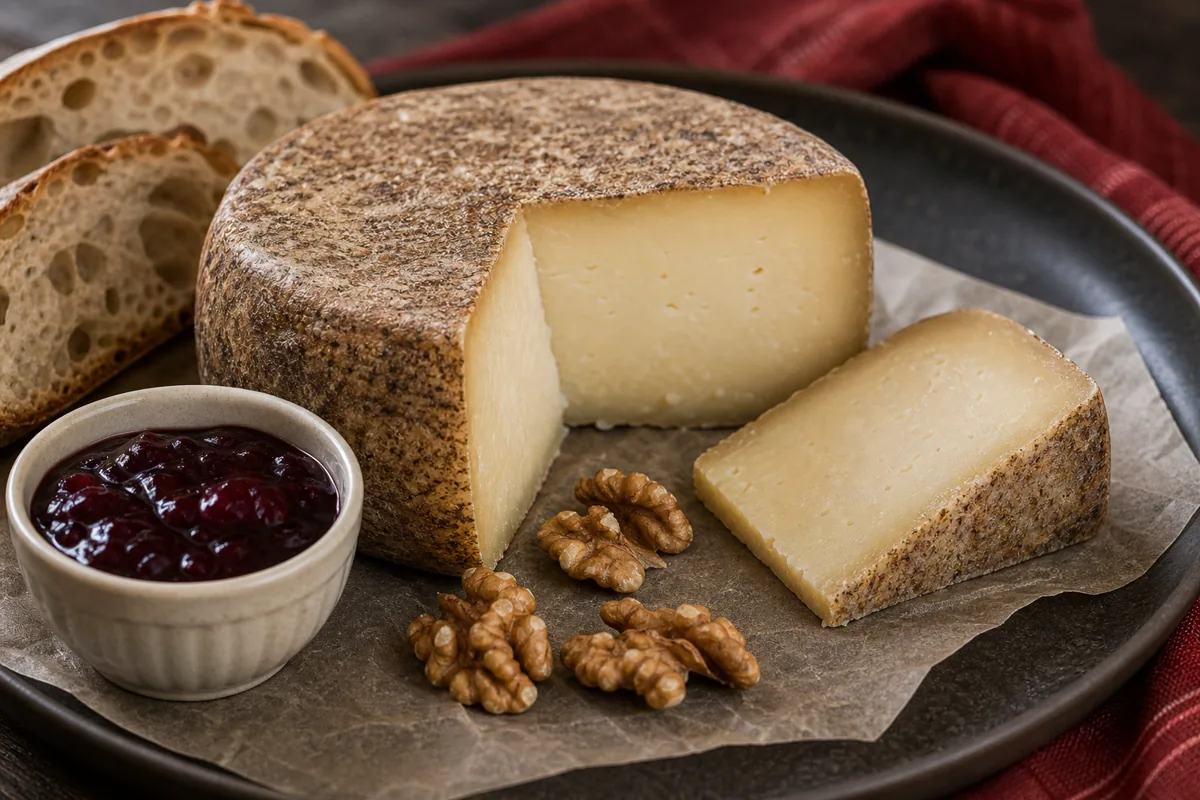
Traditional Abertam was a hard ewe's-milk cheese associated with Abertamy in the Czech lands, but the original recipe has not been recovered.
The current Horský statek Abertamy says it is reviving the town's cheesemaking tradition while developing its own recipes. A modern cheese made in Abertamy should therefore not be sold automatically as the historical product.
You can still buy cheese made in Abertamy, including current cow, goat, and sheep cheeses. What you cannot safely assume is that every local wheel reproduces the Abertam described in older cheese references.
In This Article
What Was Traditional Abertam Cheese?
A 1953 United States Department of Agriculture cheese reference describes Abertam as a hard cheese made from ewe's milk in the Carlsbad region, the historical English name for Karlovy Vary.
That record supports the cheese's broad identity and place without supplying a complete recipe.
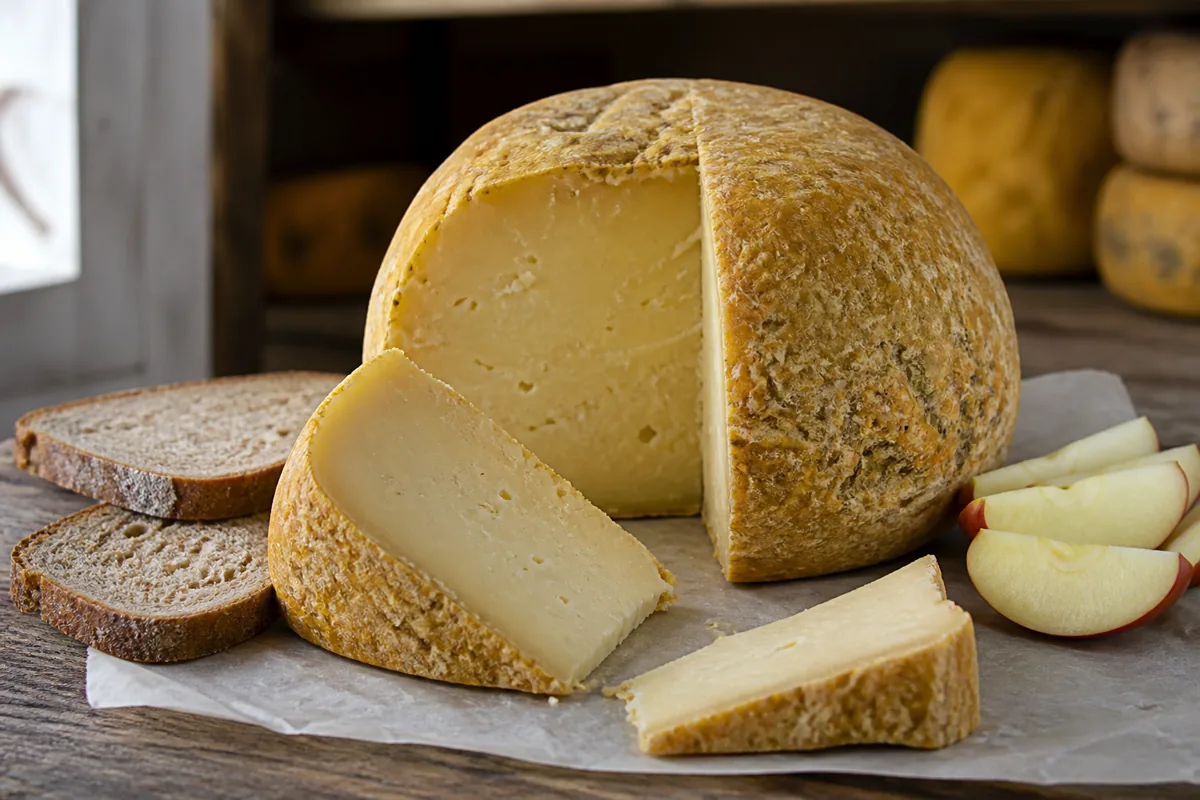
Later references add an irregular ball shape, pale firm paste, a thin yellow-to-orange natural rind, roughly 45 percent fat, and about two months of ripening. Those details are useful as a historical description, but they are repeated more often than they are tied to a surviving producer specification.
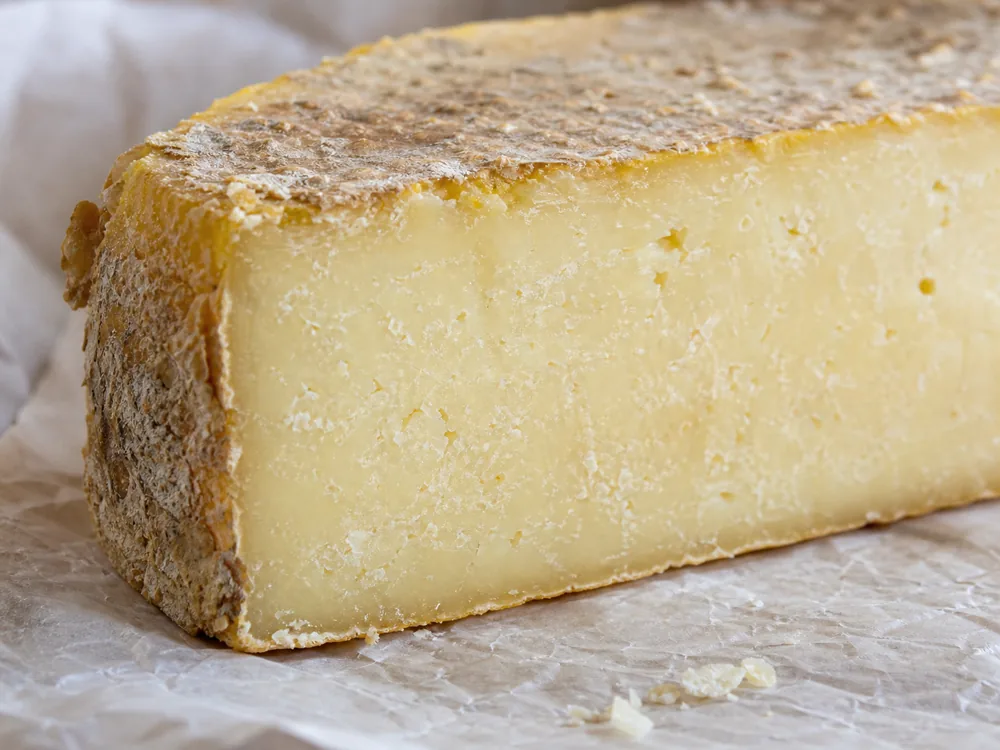
The absence of a protected specification matters. A place name, sheep milk, or rustic rind may resemble the old description, but those traits alone cannot authenticate a cheese as traditional Abertam.
Why Did Abertamy Become Associated With This Cheese?
Abertamy sits in the Ore Mountains near Karlovy Vary, in a highland landscape where livestock, preserved foods, mining, and household trades overlapped. The town's official chronology records cheese production among more than 20 glove factories, lace factories, tanneries, mines, and other local industries in the 1920s and 1930s.
That municipal record matters because it anchors cheesemaking in the town without pretending that one named recipe dominated the whole local economy. It supports a real production tradition while leaving the exact Abertam method unresolved.
The historical USDA description uses Carlsbad, an older English and German form associated with Karlovy Vary. Abertamy and Karlovy Vary therefore describe different geographic scales, not two competing origins.
Use the town name to understand provenance, then use the milk and method to identify the cheese. A modern wheel made elsewhere in the Karlovy Vary region is not automatically Abertam, and a cheese made in Abertamy is not automatically the lost ewe-milk product.
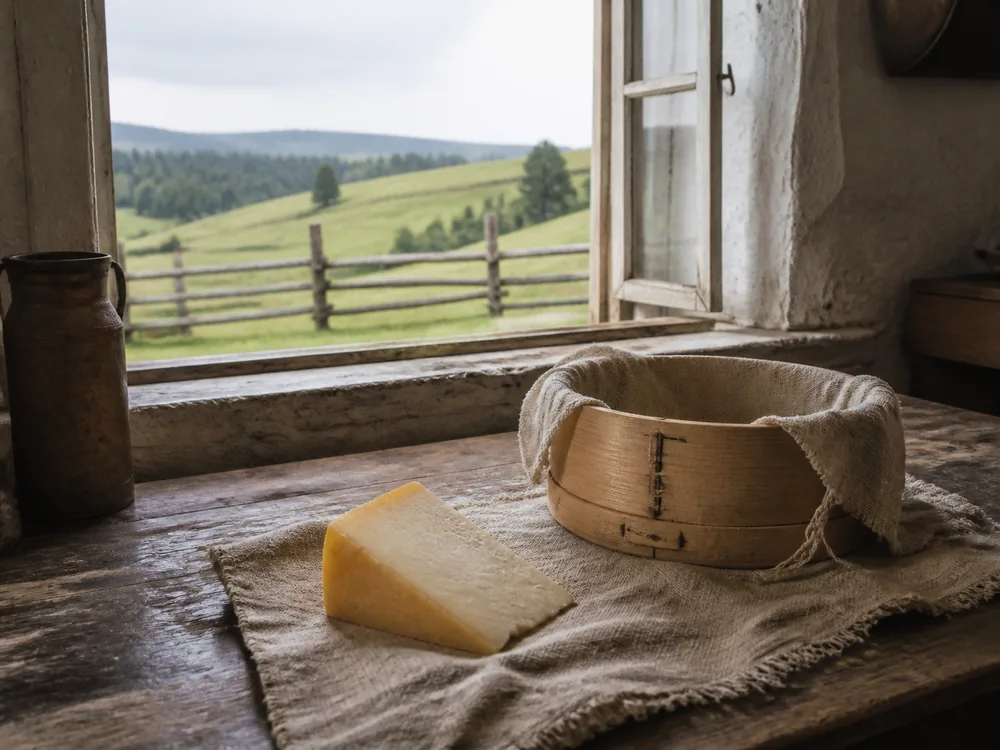
Is Abertam Cheese Still Made Today?
The clearest current answer comes from Horský statek Abertamy. The farm calls Abertam cheese a former legend and says the famous recipe has not yet been found.
The farm now makes fresh and aged cheeses in its own modern dairy from cow, goat, and sheep milk. It describes those cheeses as current recipes and says all of its sheep cheeses carry organic certification.
Treat 'made in Abertamy' and 'traditional Abertam cheese' as different claims. The first identifies a current place of production; the second needs recipe or producer evidence that the official local farm says is still missing.
This does not mean the cheese history is false. It means the historical name survives more clearly in reference works than in a verified continuous product standard.
Which Abertam Details Are Well Supported?
The evidence is strongest for the broad identity and weakest for exact sensory promises. Separating those levels prevents a short encyclopedia description from becoming a fictional current specification.
| Claim | Evidence Position | What It Means for You |
|---|---|---|
| Hard ewe's-milk cheese from the Carlsbad region | Recorded in a historical USDA reference | Strong basis for the cheese's identity |
| Irregular ball and thin yellow-orange rind | Repeated in later reference summaries | Useful description, not a current certification mark |
| About two months of ripening | Repeated in later sources | Reasonable historical context, not a guarantee on a modern wheel |
| Robust, tangy flavor and melting use | Secondary descriptions without a current producer sheet | Treat as an expected direction rather than a precise tasting note |
| Continuous production from the original recipe | Contradicted by the current local farm's statement | Do not assume authenticity from the name alone |
A current label can establish milk, age, ingredients, allergens, and producer. It cannot fill the gap between a modern recipe and the lost historical one unless the maker provides that evidence.
Source dates also matter. The 1953 government reference is closer to the period when the cheese still appeared in formal catalogs, while current summaries often repeat one another without naming a producer or archival recipe.
When two modern pages use the same precise age, fat figure, and rind description, repetition is not independent confirmation. Prefer a producer specification, dated technical sheet, municipal archive, or historical trade reference over a chain of unattributed summaries.
Do Online Abertam Recipes Recreate the Original Cheese?
No published home recipe can be treated as the recovered Abertam formula without documentary evidence. The current farm in Abertamy says the celebrated recipe still has not surfaced, which sets a much stronger limit than an unsourced recipe introduction.
One widely indexed recipe illustrates the problem. It calls for cow's milk, mixed mesophilic and thermophilic cultures, and several months of aging while claiming that Abertam is still made by traditional methods.
Those instructions conflict with the strongest historical description, which identifies ewe's milk, and with the current local farm's statement about the missing recipe. They may produce a firm farmhouse cheese, but they do not establish historical continuity.
If you make an Abertam-inspired cheese at home, label it honestly as an interpretation. Record the milk, cultures, curd temperatures, pressing, salt, and aging conditions so tasters know what was made instead of borrowing certainty from a lost name.
Ewe milk changes more than the flavor label. Its solids and fat can produce a richer curd than cow milk, so switching species while keeping the rest of a recipe fixed changes yield, moisture, texture, and maturation.
A responsible reconstruction would begin with the historically recorded ewe milk and then mark every unverified choice. It would test batches rather than announce that one modern culture blend has recovered a formula the local farm says remains missing.
What Did Traditional Abertam Taste Like?
Later descriptions point toward a firm, robust sheep cheese with noticeable tang and acidity.
A short maturation would fit a paste that is firm and savory without the dry crystals or deep caramel notes of a much older grating wheel.
That is a cautious reconstruction, not a tasting report from a current standardized product. Milk season, moisture, salt, cultures, pressing, and aging conditions could all move the flavor, and the surviving public record does not lock those variables down.
The most defensible expectation is therefore broad: sheep-milk richness, a firm bite, a natural-rind edge, and more acidity than sweetness. Claims about exact aroma, bitterness, or melt should come from the wheel's own maker.
A two-month figure, if accurate for a particular reconstruction, would describe a relatively young hard cheese rather than a deeply aged grating wheel. Expect a firm cohesive slice, not the friable paste and crystalline crunch associated with a year or more of maturation.
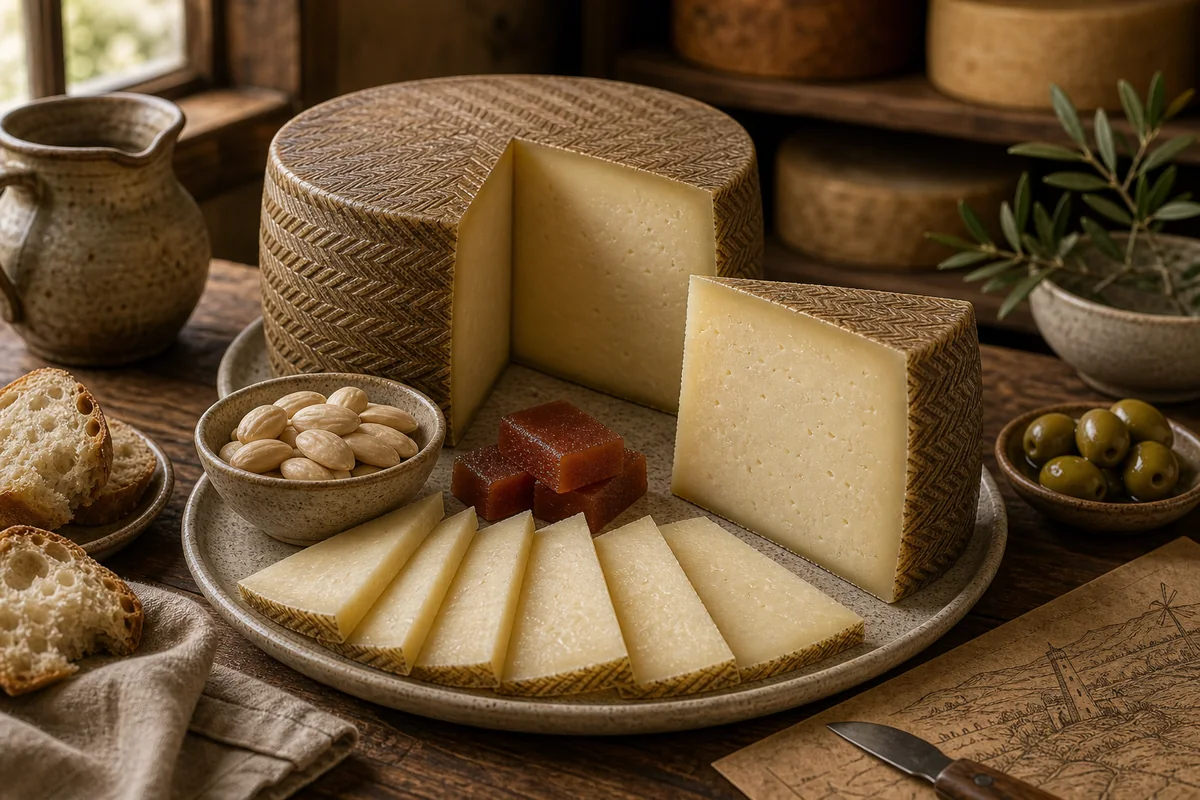
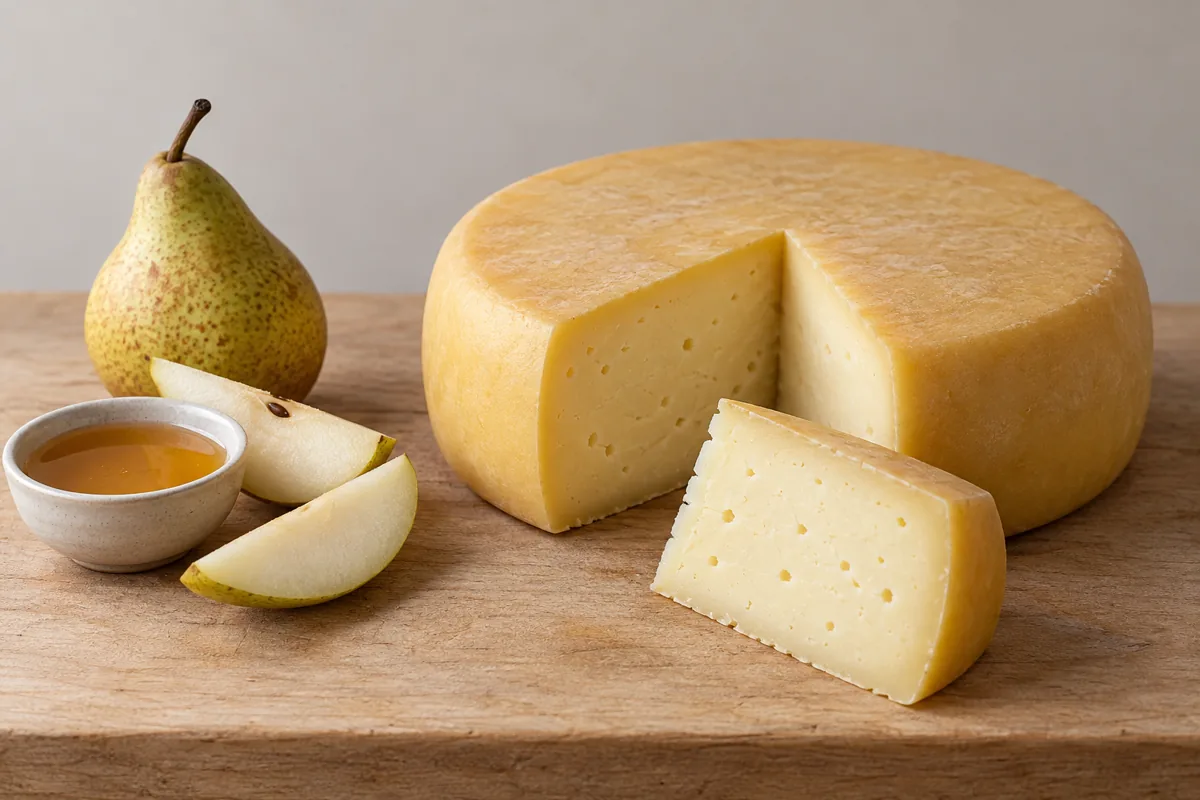
That distinction changes substitution and serving. A young Manchego or Pecorino Toscano is a more useful sensory reference than an old Pecorino Romano, even though all three can be made from sheep milk.
How Was Abertam Used at the Table?
Reference summaries describe Abertam as both a table cheese and a melting cheese. In practical terms, that suggests slicing or shaving a firm sheep cheese and using moderate heat, not expecting mozzarella-like stretch or a perfectly emulsified sauce.
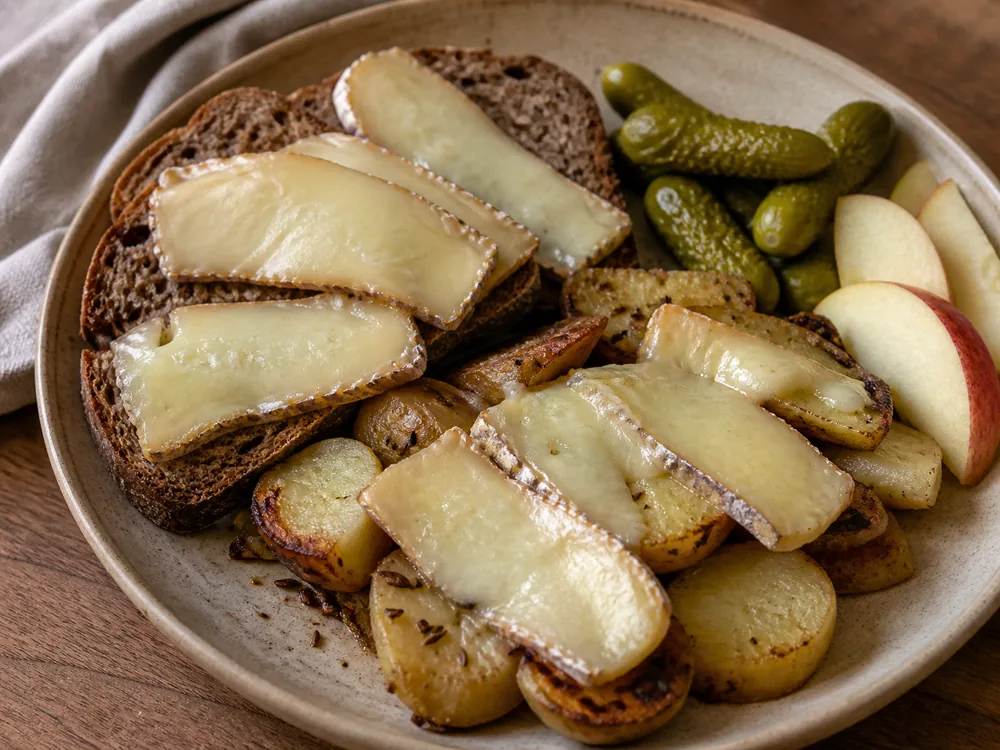
Thin pieces over potatoes, dark bread, onions, mushrooms, or roasted roots fit the reported texture better than thick cubes. Stop heating when the cheese softens and browns lightly, since hard heat can make a salty sheep cheese seem greasy or bitter.
| Use | Sensible Approach | Limit |
|---|---|---|
| Cold plate | Cut thin slices and add apple, rye bread, or pickles | Exact flavor depends on the current cheese, not the historical name |
| Potatoes or toast | Use shavings and moderate heat | Expect softening rather than dramatic stretch |
| Grating | Use a firmer, drier current wheel | A younger moist cheese may clump |
| Sauce | Choose a documented smooth melter instead | The old references do not prove emulsifying behavior |
What Cheese Can You Buy in Abertamy Today?
Horský statek Abertamy currently sells cheeses from its dairy beside the farm's bistro and butcher shop in Abertamy.
Its range includes cow, goat, and sheep milk products, both fresh and aged. The farm says its animals graze on mountain pastures in the Ore Mountains.
Buy those cheeses by the product actually named on the counter. Ask for the milk species, pasteurization status, age, ingredients, rind treatment, and intended use instead of asking only whether the cheese is “Abertam.”
The current farm also states that it avoids preservatives and other additives in its cheeses. That is useful producer information, but it does not recreate the composition of the historical wheel.
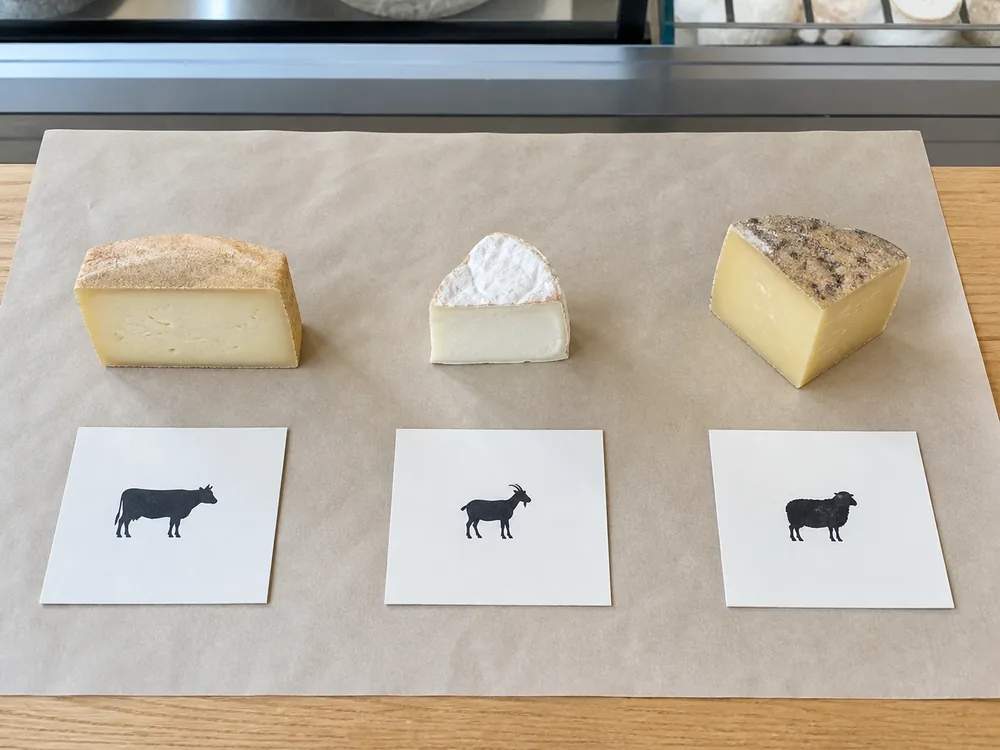
For an in-person purchase, photograph the label or keep the wrapper until you have served the cheese. That preserves the producer, batch, milk treatment, and storage instructions if you want to find the same product again.
For an online listing, reject a page that uses only the word Abertam without a producer name or current product photograph. A historical paragraph is not a substitute for a sell-by date, ingredient list, weight, and delivery conditions.
Which Cheese Can Replace Historical Abertam?
No substitute can reproduce an undocumented lost recipe. Choose by the job supported by the old descriptions.
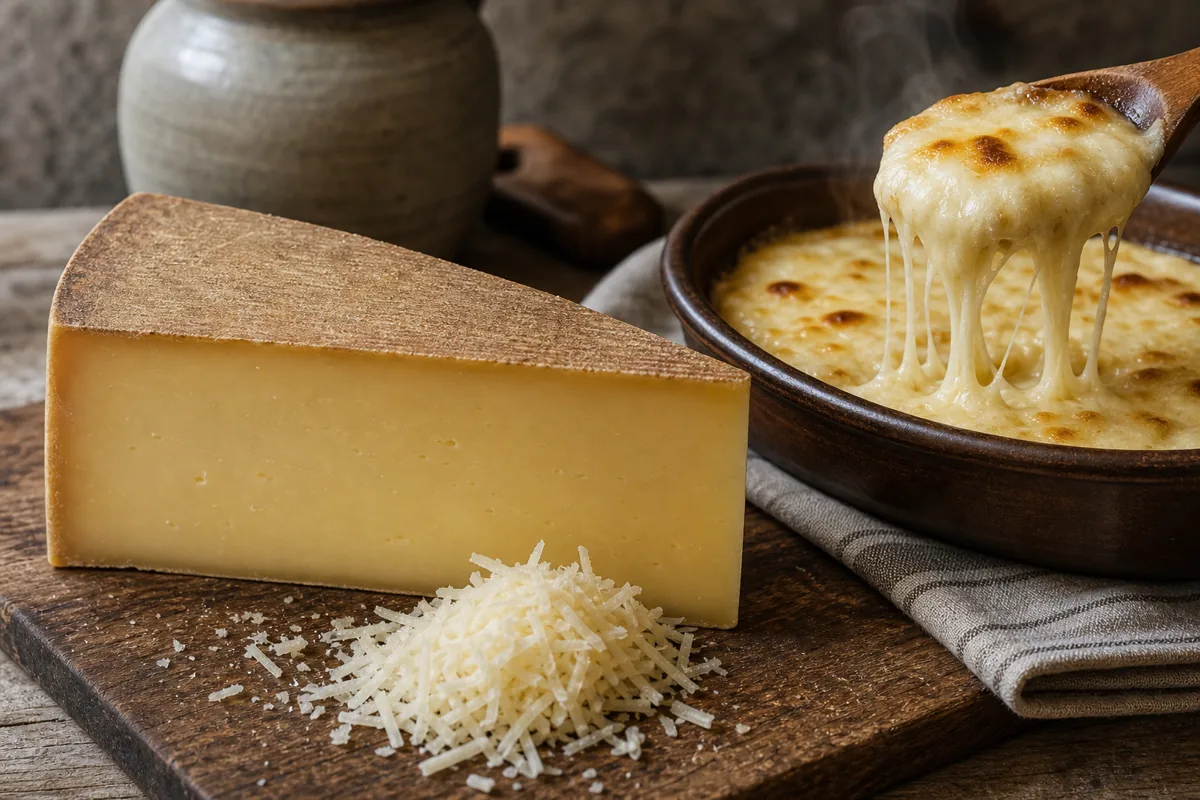
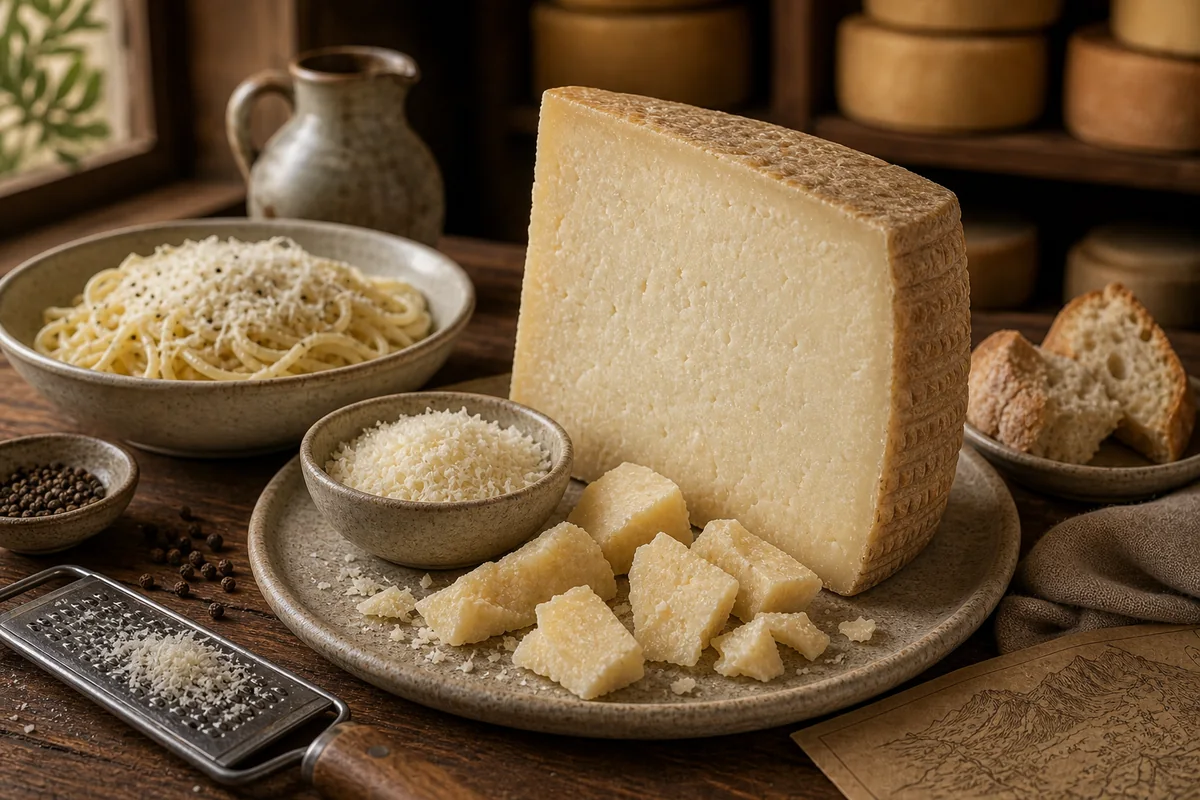
Manchego or Pecorino Toscano can cover a firm sheep-milk table role. Pecorino Romano makes more sense for salty grating, while Gruyère is the safer choice when smooth melting matters more than sheep milk.
- Firm sheep-milk slices: Manchego.
- Gentler table cheese: Pecorino Toscano.
- Salty grating: Pecorino Romano.
- Reliable melting: Gruyère.
A Czech current farm cheese may be the more interesting choice when place matters. It should still be presented under its own name rather than used as proof that traditional Abertam has returned.
Match age as well as milk. A young sheep cheese preserves the reported firmness and tang more closely, while a heavily aged substitute adds salt, dryness, and crystals that the surviving Abertam descriptions do not establish.
What Do the Milk Labels Tell You About Safety and Diet?
The historical description identifies ewe's milk, but it does not establish the pasteurization, salt, nutrition, rennet, or allergen details of a cheese sold today. Those decisions belong to the current package or producer sheet.
Every dairy version contains milk. The current Abertamy farm says it uses rennet, cultures, and salt, but shoppers who avoid animal rennet should confirm which rennet is used in the exact product.
Pregnant people and anyone at higher risk from foodborne illness should check pasteurization and storage conditions rather than relying on the old cheese name. A historical association with hard texture cannot replace current label and medical guidance.