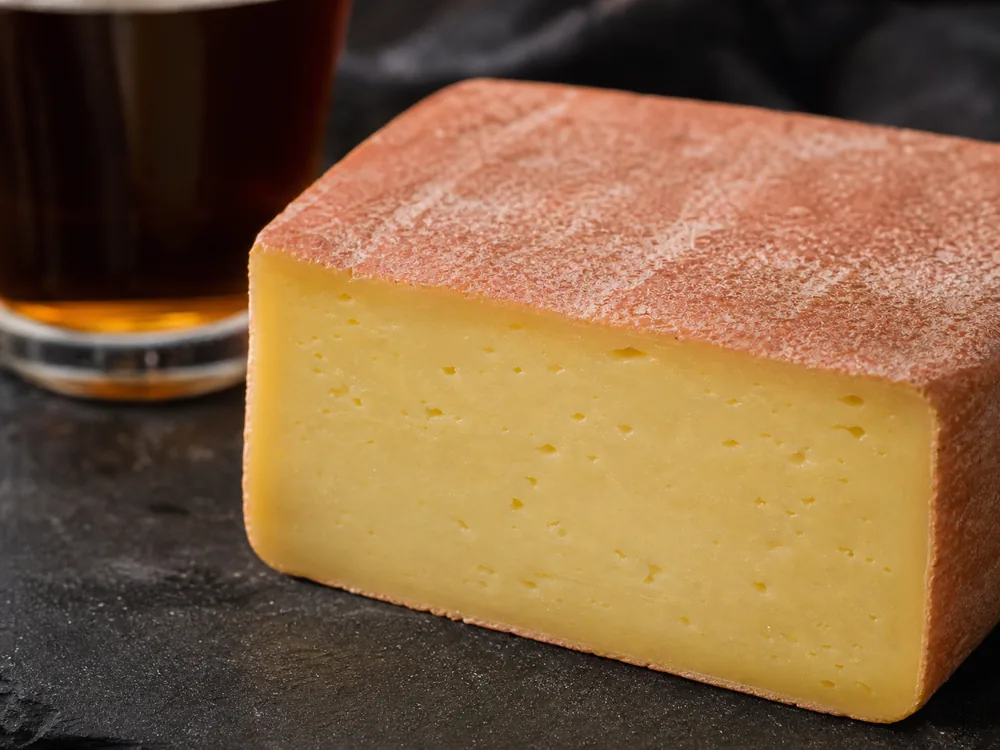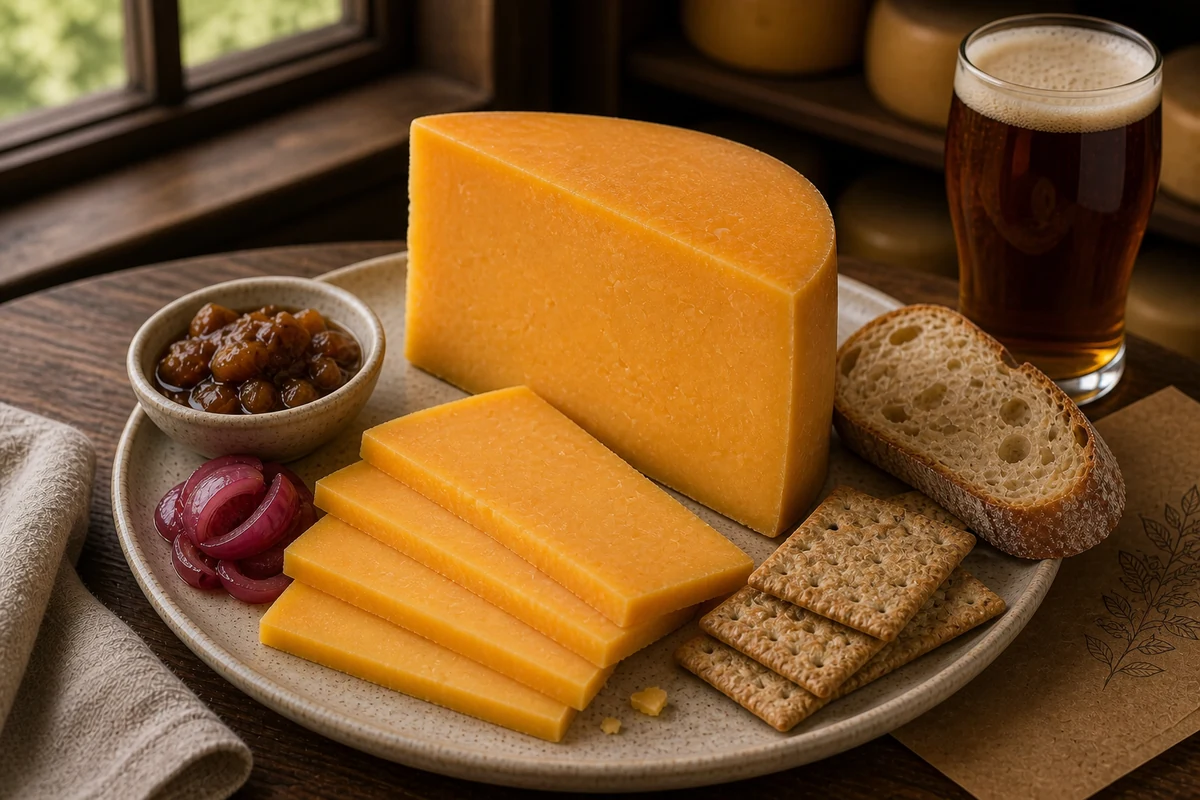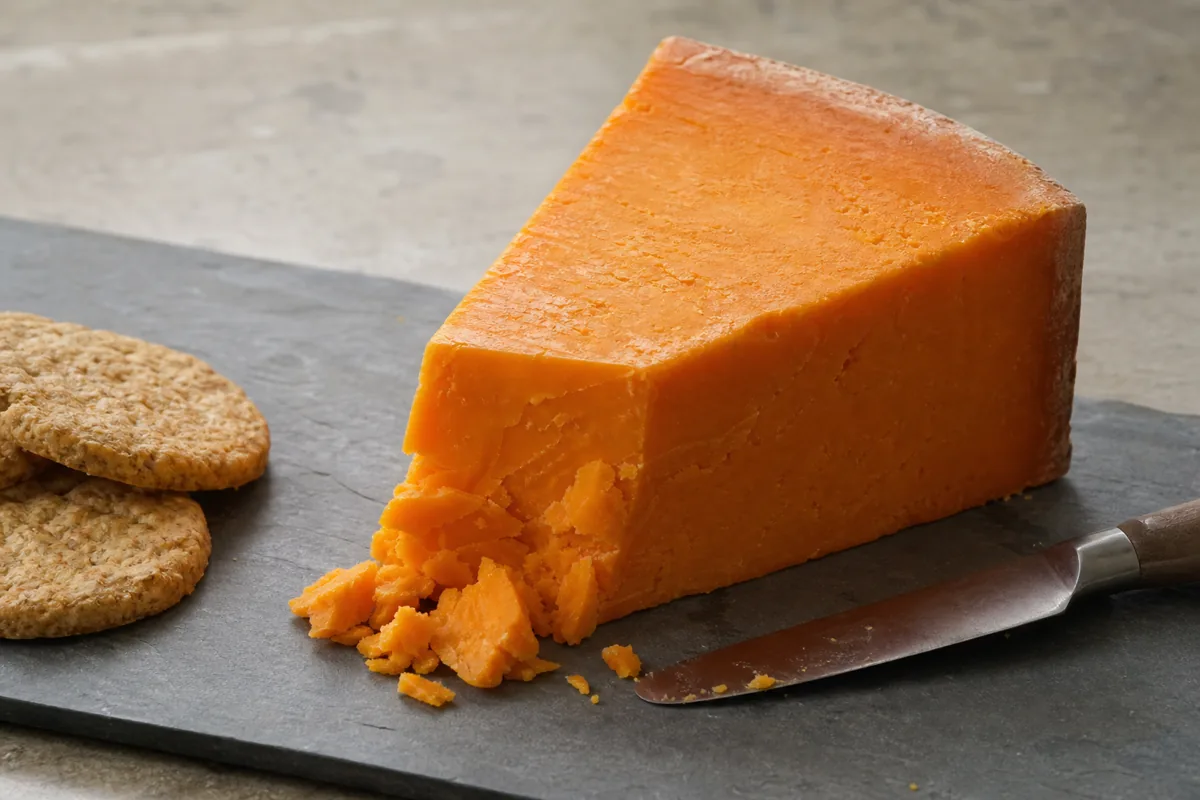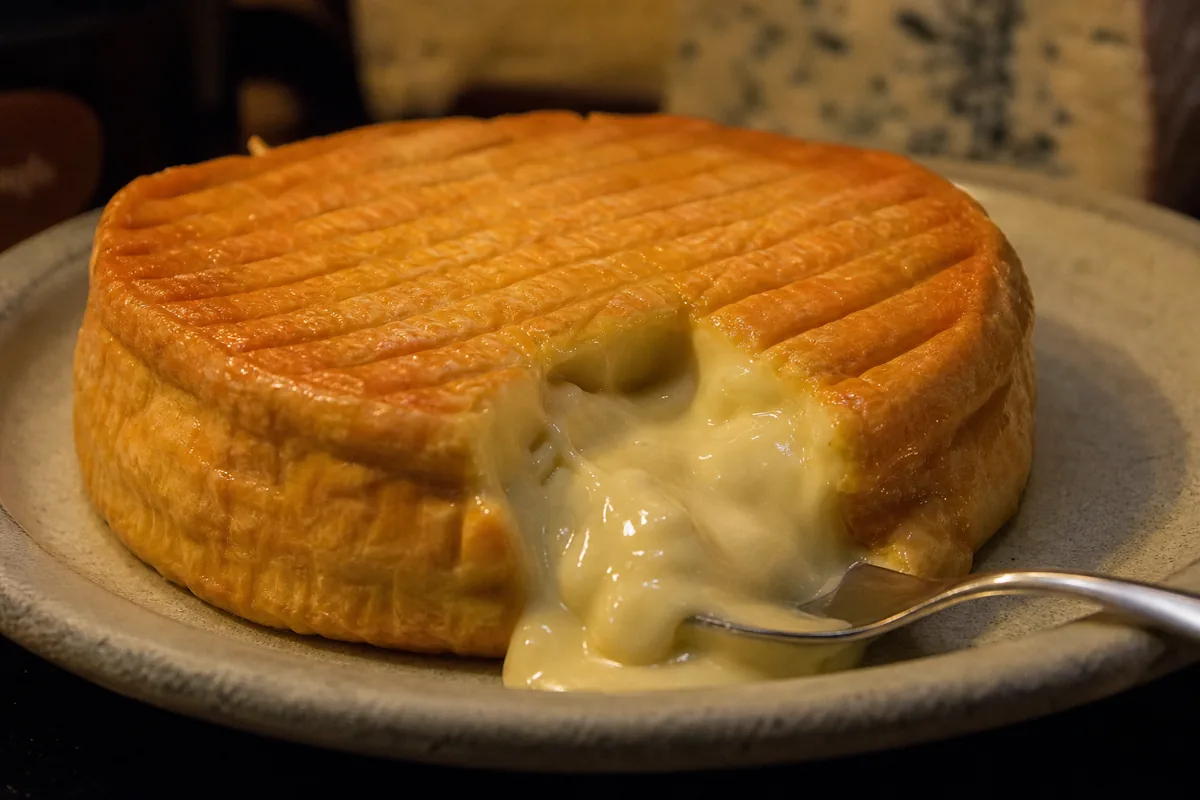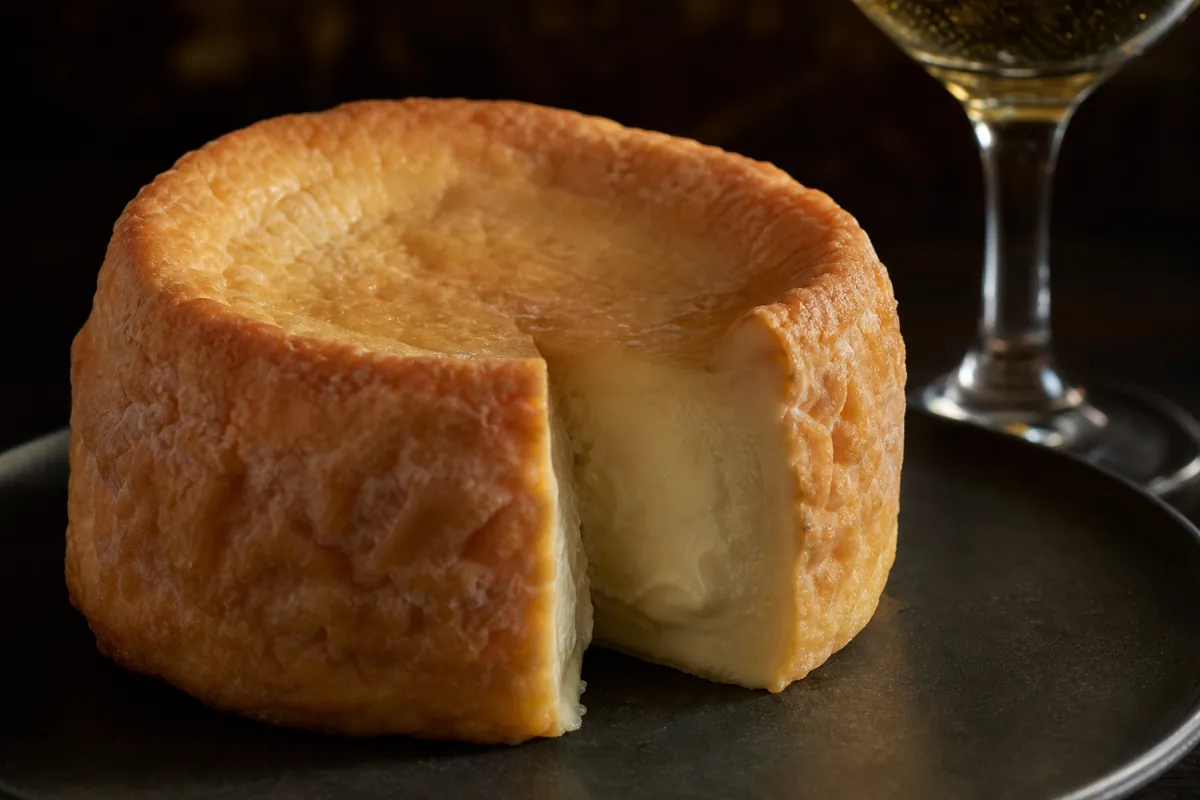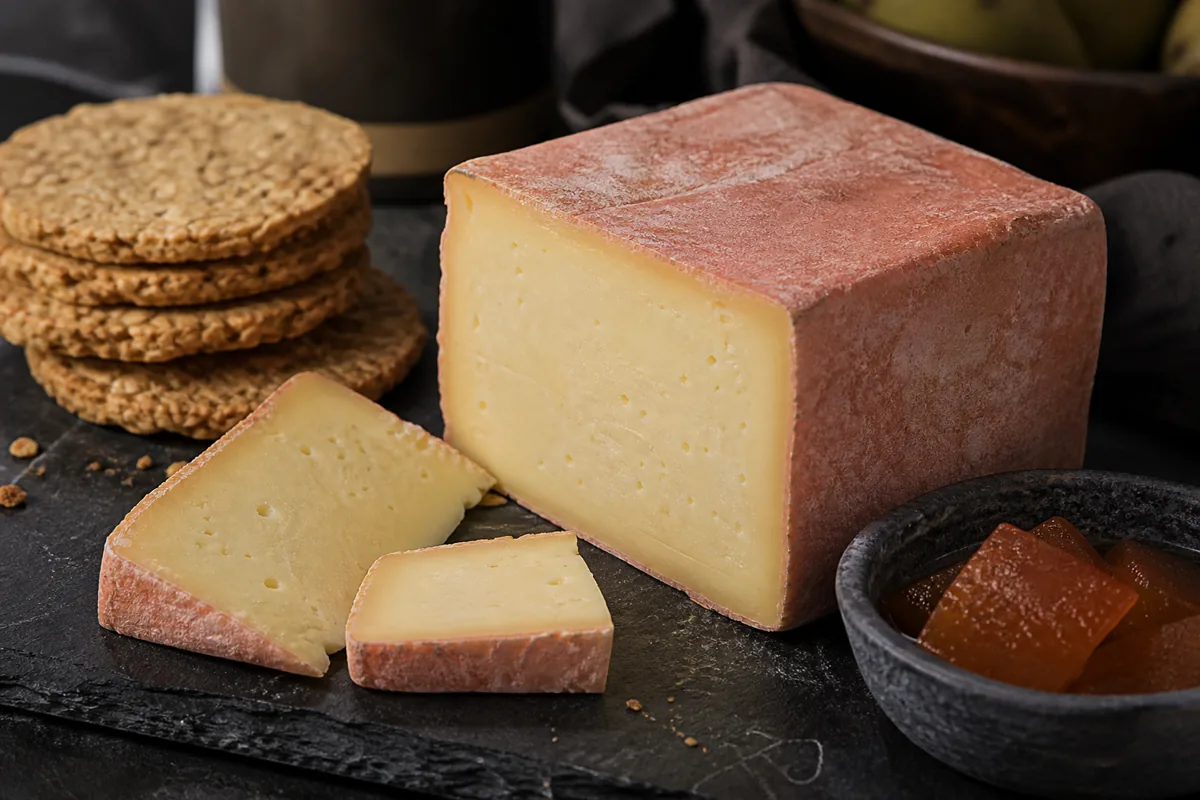
Admiral Collingwood is a raw cow's milk cheese from Doddington Dairy in Northumberland. Its signature is a Newcastle Brown Ale wash that helps form a pink washed rind and a savory finish.
The route has to answer more than flavor. This cheese is made with traditional rennet, contains gluten from the ale wash, and is sold as square truckles or cut wedges. Those details decide whether it belongs on a guest board before anyone thinks about pairings.
Choose it when you want a British washed-rind board cheese with buttery paste, ale-wash aroma, and a clear producer identity. Choose something else when the table needs vegetarian rennet, pasteurized milk, gluten-free handling, or a mild melting cheese.
In This Article
Doddington, Not Pub Cheddar, Owns the Identity
The first job is to separate Admiral Collingwood from generic beer cheese. Doddington Dairy makes it in Northumberland from raw cow's milk, and that producer origin is part of the cheese's identity.
The square truckle format also matters. It gives the cheese a buying cue that differs from round washed-rind cheeses and from ordinary cheddar blocks. A cut wedge should show a cared-for rind and a creamy yellow paste, not a dry center with a vague pub-cheese label.
In British cheese context, Admiral Collingwood sits beside modern regional specialty cheeses rather than old territorial styles. The buyer is paying for Doddington raw milk, ale wash, rind condition, and a board-ready format.
- Identity cue: Doddington Dairy, Northumberland, and square truckle format.
- Milk cue: raw cow's milk, so pregnancy guidance needs care.
- Rennet cue: traditional rennet, so it is not the vegetarian pick.
- Best buyer: someone who wants a characterful British board cheese.
The name has a naval reference, but the article should stay with the eating decision. A searcher needs to know what the cheese is, who can eat it, how the rind behaves, and whether it fits a board or cooked dish.
What Does the Newcastle Brown Ale Wash Change?
The ale wash is not decoration. Doddington says the semi-soft raw-milk cheese is washed in Newcastle Brown Ale, and that wash adds flavor while the characteristically pink rind develops.

That does not mean the cheese should taste like a pint. The better expectation is buttery paste first, then savory fermented rind, then a longer complex finish. The beer is part of the rind work, not a novelty flavor poured over the cheese.
The wash also creates a dietary decision. Doddington states the cheese contains gluten. If someone at the table avoids gluten, this is not a cheese to explain away with a small portion.
Admiral Collingwood contains gluten because of the ale wash. Do not serve it as gluten-free even if the paste looks like ordinary cow's milk cheese.
The rind should smell fermented and savory. Harsh ammonia, sour stickiness, or a chemical edge means the wedge is in poor condition or has been held badly. A washed rind can be aromatic without tasting dirty.
How Do You Judge the Square Truckle at the Counter?
A fresh cut tells you more than the age claim. Admiral Collingwood can be aged up to 10 months, but condition decides whether that age gives depth or dry edges.
Ask for a wedge with visible pink rind, creamy paste, and clear Doddington or Admiral Collingwood labeling. If the exposed face is cracked, chalky, or stale-smelling, ask for a fresh cut or choose another cheese.
The best wedge should feel supple. A piece that breaks into hard flakes has lost the soft board role. A rind that looks wet and smells sour can overpower the paste before guests taste the cheese itself.
Flavor Moves from Butter to Washed-Rind Finish
Admiral Collingwood starts softer than many cheddar-minded buyers expect. The paste brings butter, milk, and creamy body. The rind brings the savory ale-washed finish.
That order matters. If you judge only sharpness, you miss the point. A sharp cheddar gives acid and firm bite. Admiral Collingwood gives soft paste, rind aroma, and a finish that grows after the first bite.
Taste rind and paste together on an oat cake before cooking with it. The cheese can melt, but melting is not the best first test. Heat can blur the rind detail that makes the cheese worth buying.
- Good paste: creamy, semi-soft, and savory without cracking.
- Good rind: pink, washed, and aromatic without harsh ammonia.
- Good finish: buttery first, then savory and complex.
- Bad fit: recipes where chile, smoke, or heavy sauce hides the rind.
If you want louder washed-rind force, Epoisses intensity sits in a different lane. If the board needs salt and blue crumble, Stilton contrast does a separate job.
How Should You Serve Admiral Collingwood?
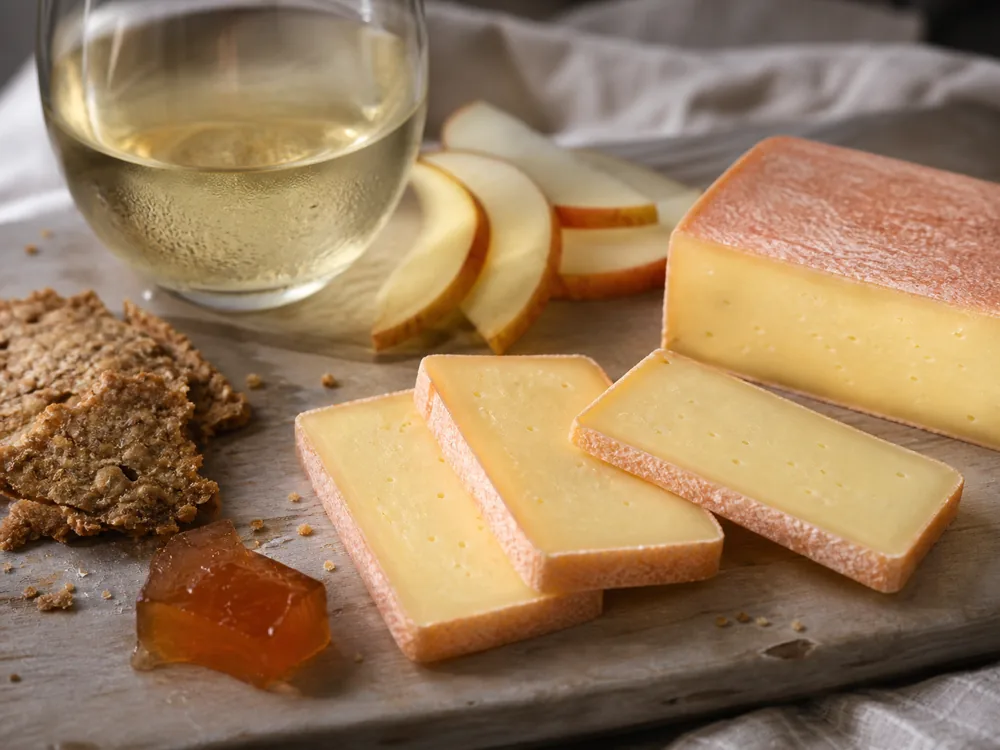
Doddington points toward quince jelly, rough oat cake, and chilled Pinot Grigio. That pairing map works because the cheese needs sweetness, dry crunch, and enough acidity to clean up the rind.

Cut small wedges with rind attached. The rind carries the ale-wash signal, while the paste explains why the cheese is still creamy instead of only pungent. A rind-only bite can make guests think the cheese is harsher than it is.
| Pairing | Why It Works |
|---|---|
| Quince jelly | Sweetness rounds the fermented rind. |
| Rough oat cake | Dry texture absorbs richness and keeps the bite clean. |
| Chilled Pinot Grigio | Acidity lifts the buttery paste. |
| Brown ale | Echoes the wash, but keep the pour moderate. |
| Apple slices | Fresh crunch cuts the rind aroma. |
| Pickled onions | Acid and bite help on a savory British board. |
- Serve before it: mild cheddar, young goat cheese, or Double Gloucester.
- Serve with it: oat cakes, quince, apple, and a small pour.
- Serve after it: Stilton or another blue if the board includes one.
- Keep nearby: pickles or crisp white wine for palate resets.
Serve milder cheeses first, then Admiral Collingwood, then any stronger blue or louder washed rind. A board with mellow Double Gloucester or savory Red Leicester can move from gentle to aromatic without confusing the order.
For drinks, do not force beer just because beer washed the rind. Beer pairing structure helps when the ale echo is welcome. Wine pairing basics explain why a crisp white can be cleaner when the cheese is ripe.
When Does Cooking Help and When Does It Hide the Point?
Cook with Admiral Collingwood when the rind aroma is welcome. It can work in a toastie, a potato bake, a savory tart with onions, or a warm oat cake. Use less than you would use of a mild melting cheese.
| Use | How It Works |
|---|---|
| Cheese board | Serve small wedges with oat cakes, quince jelly, apple, and crisp white wine. |
| Toastie | Use a modest layer with mild bread so the rind does not overwhelm the sandwich. |
| Warm potatoes | Let small pieces soften over hot potatoes, then add herbs or pickles. |
| Savory tart | Use with onions or leeks when the rind aroma is part of the dish. |
Skip it when the recipe only needs smooth melt. Heavy sauce, chile, smoked meat, or strong mustard can bury the ale-washed detail and leave only salt and fat. For that job, reliable melting choices are better.
Brown ale can be a good echo, but it can also make the plate feel heavy. If the wedge is fully ripe, a crisp white wine or pickled onion may do more for balance than another malty layer.
Dietary Limits Are Not a Footnote Here
This article needs a dietary section because the blockers are built into the cheese. Admiral Collingwood is raw milk, traditional rennet, and gluten from the ale wash. Those are not tiny label details when you are serving guests.
If someone needs vegetarian cheese, pasteurized-only cheese, or gluten-free food, pick a different cheese with the right label. Do not rely on scraping the rind, serving less, or assuming all washed rinds behave the same way.
Use raw-milk pregnancy guidance when the eater needs a safety-first answer. The safer move is not to debate the rind. It is to choose a cheese that clearly fits the guest's limit.
Storage and Substitutes Depend on the Blocker
Doddington says dispatched wedges remain good for about four weeks, and whole unopened cheeses can keep longer. Treat that as producer handling guidance. Once a wedge is open, the rind aroma can move into butter, fruit, and mild cheeses nearby.
Keep it wrapped in cheese paper or parchment inside its own loose container. Washed-rind storage matters here because a cut wedge can perfume the refrigerator even when it is still safe.
For a similar mood without the exact identity, try Munster rind aroma, Langres serving style, or Epoisses. For a gentler British board, Double Gloucester is safer. None of those substitutes bring the same Newcastle Brown Ale wash, so use them as flavor substitutes, not identity matches.
Admiral Collingwood Cheese FAQ
These answers focus on the ale wash, dietary limits, and serving choices that matter most.
It is Doddington Dairy's Northumberland raw-milk cheese with a semi-soft paste, a washed rind, and a Newcastle Brown Ale wash.
The rind develops its pink character from washing during aging. Doddington describes the cheese as washed in Newcastle Brown Ale.
Yes. Doddington states that Admiral Collingwood contains gluten because of the ale wash, so it should not be served as a gluten-free cheese.
No. Producer and cheese-reference information describe traditional rennet, so vegetarians should choose a clearly labeled vegetarian cheese instead.
Serve it with oat cakes, quince jelly, apple, pickled onions, crisp white wine, or a moderate brown ale. Keep portions small because the rind is aromatic.