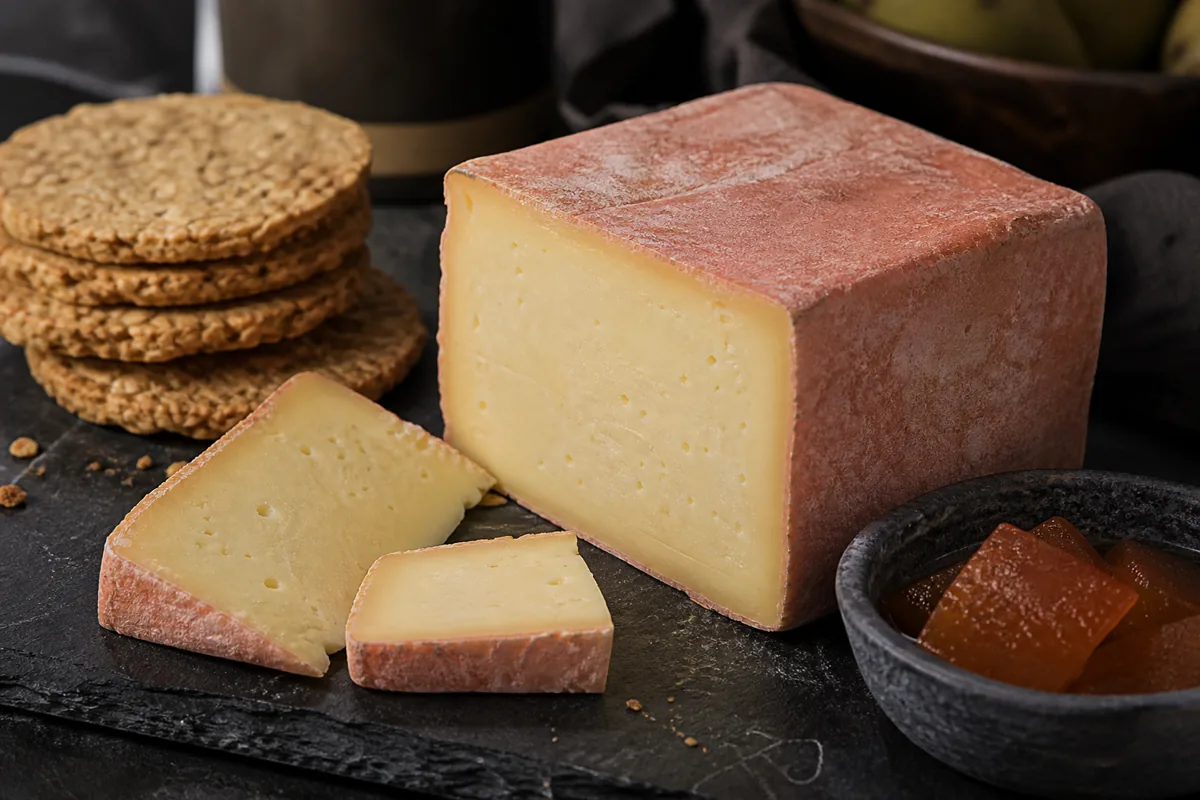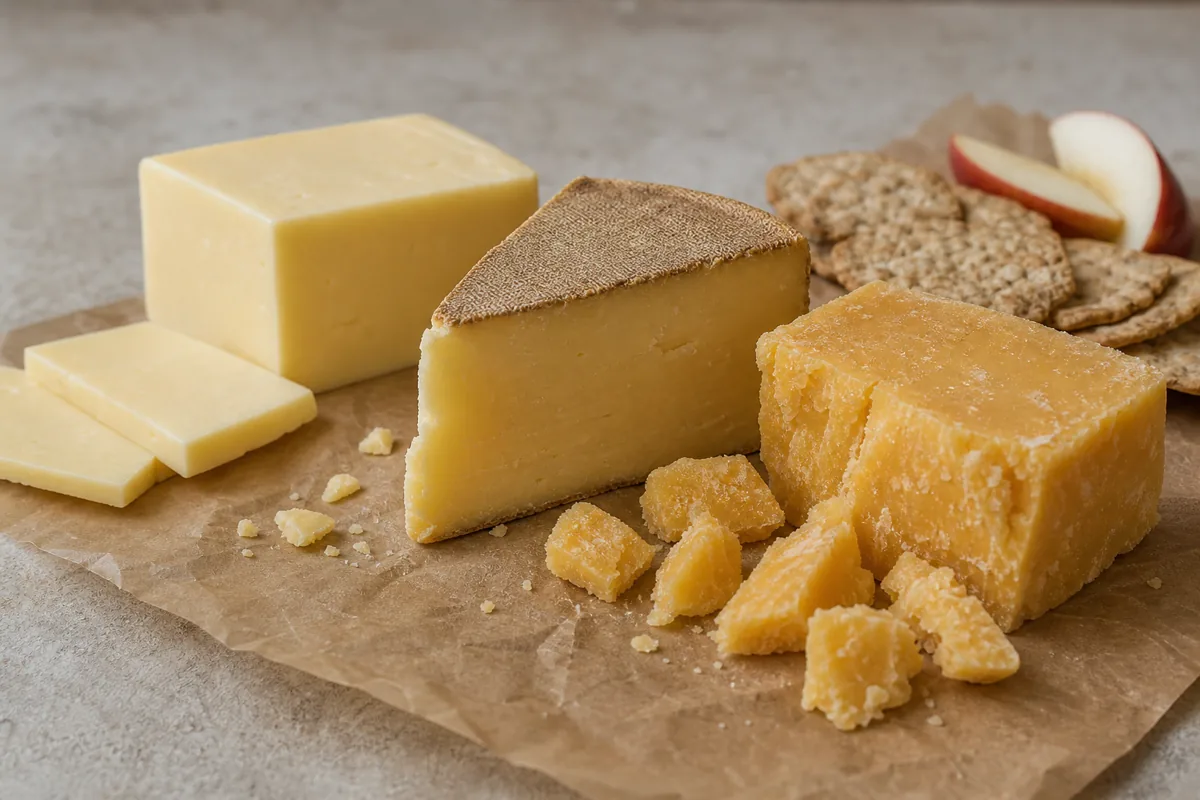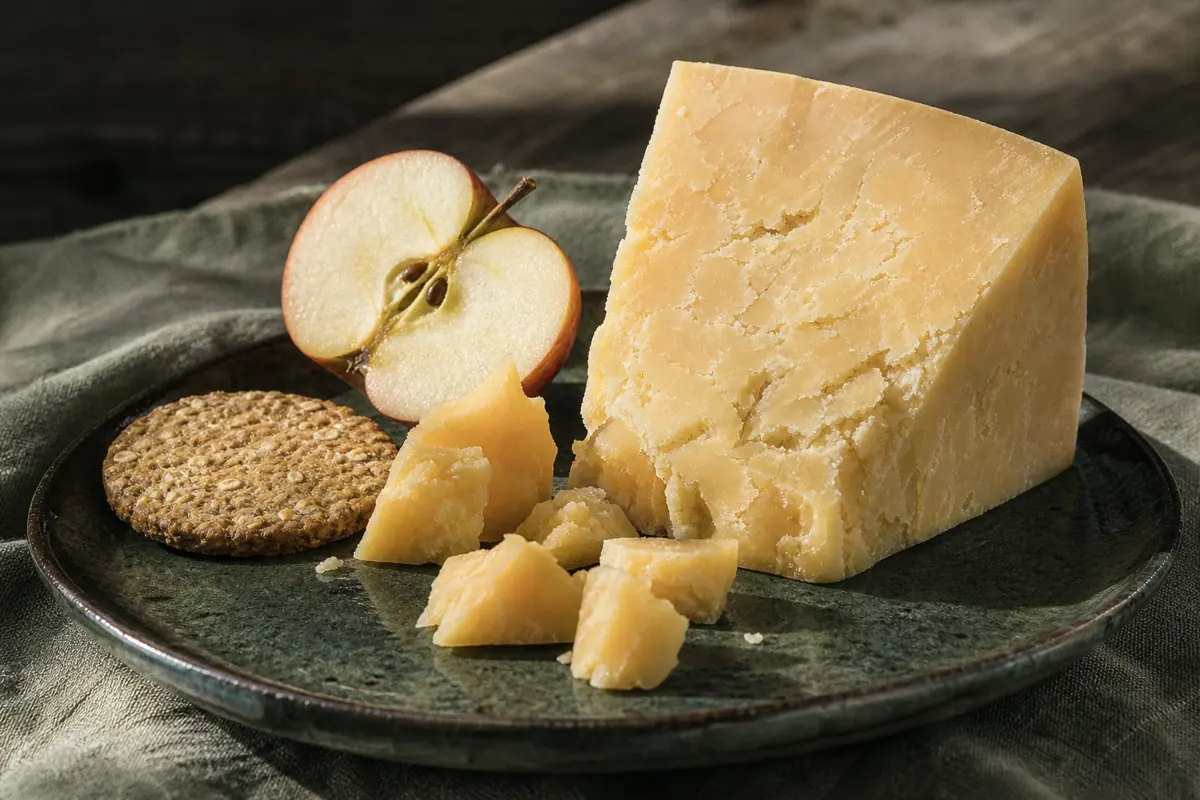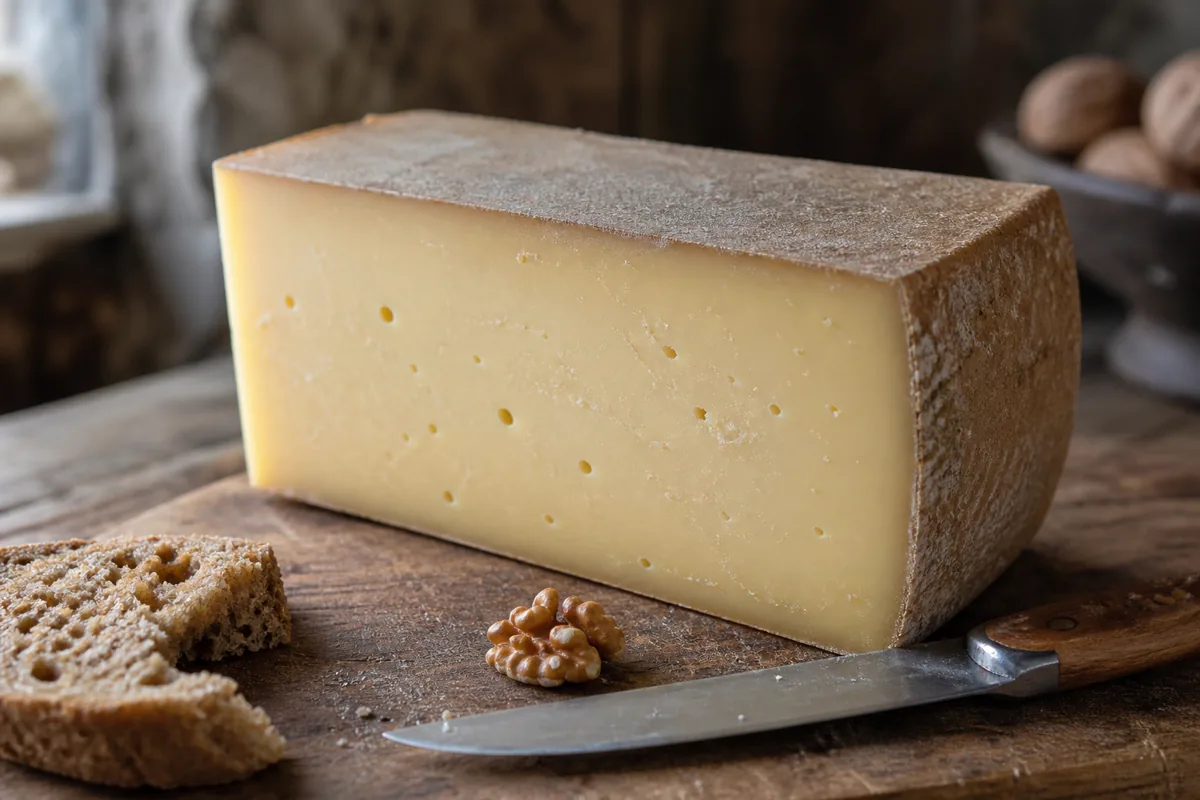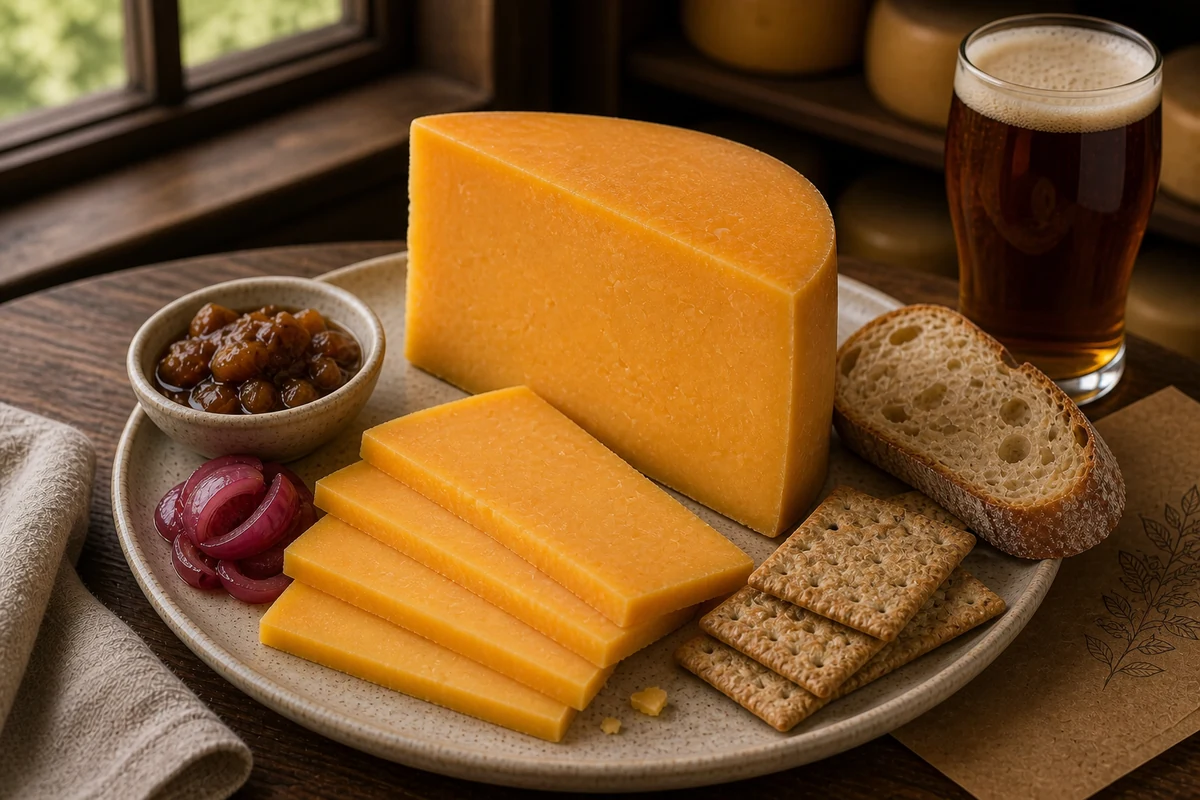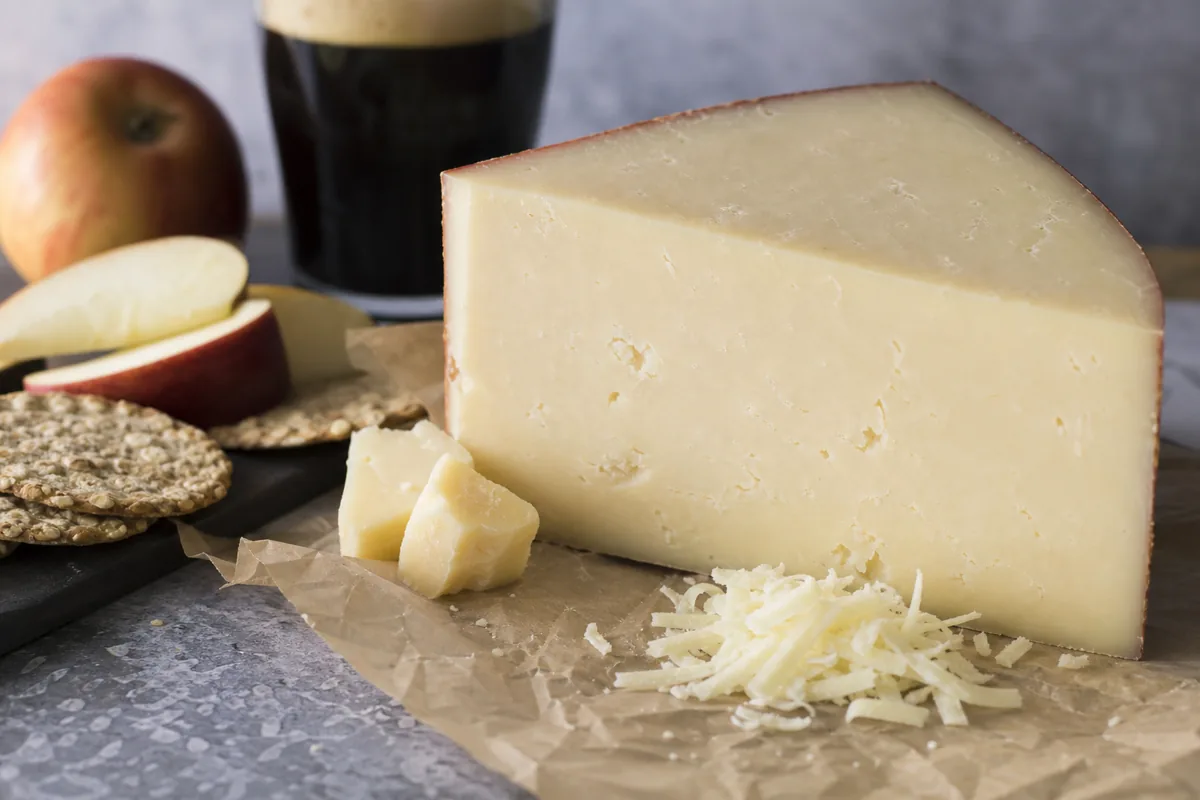
Doddington is a raw cow's milk cheese from North Doddington Farm in Northumberland. Sellers place it between Cheddar and Leicester in style.
Sellers disagree on how old the cheese is and what its outside is made of. This page sets their descriptions side by side.
In This Article
What Is Doddington Cheese?
Cheese.com calls Doddington a British territorial cheese that falls between a Leicester and a Cheddar, made from unpasteurized cow's milk. It lists Doddington Dairy as the producer and says the cheese is not vegetarian.
Neal's Yard Dairy lists the ingredients as raw cow's milk, salt, animal rennet, and cheese cultures, which fits the not-vegetarian note.
Neal's Yard says the Maxwell family has farmed North Doddington Farm in the Cheviot Hills since 1950, and that James Maxwell, who recently learned to make cheese from his aunt Maggie, now makes much of it.
Maggie Maxwell has been the cheesemaker since the family started making cheese in 1992. Fromage Homage says Doddington was the first cheese she developed and that it went on sale in 1993.
The cheese takes its name from the Northumberland village where the farm and dairy sit, so a listing headed Doddington Dairy may be a different cheese. Cheesemongery.com's Doddington Dairy page lists five products, among them Doddington itself, Berwick Edge, Capability Brown, Cuddy Cave, and Darling Blue, and The Cheese Shop Nantwich says Maggie also developed Cuddy's Cave, Admiral Collingwood, and Capability Brown.
Cheesemongery.com describes Doddington as influenced by Red Leicester, Cheddar, and Gouda. The Cheese Lady calls it an intriguing blend of cheddar and gouda styles.
How Is Doddington Made?
Fromage Homage says Doddington was first made to a Red Leicester recipe, in which the curds are scalded, and that Maggie Maxwell has tweaked it over the years. One change is cheddaring the curds, which means stacking them in blocks and turning them to raise acidity and expel excess whey.
The Cheese Shop Nantwich says Maggie makes her range of cheeses five days a week from about 2,000 litres of raw milk, adding starter and rennet before the curds and whey form.
Fromage Homage says the milk travels still warm from the milking parlour to the dairy and goes into a round Dutch vat, and Cheesemongery.com says it is piped directly from the parlour.
Nantwich says the whey is drained, the curds are cut and milled, and the curds are packed into rounded, Gouda-shaped moulds.
The cheese is then pressed mechanically for up to three days, and Nantwich says the milling and the pressure let as much moisture as possible escape.
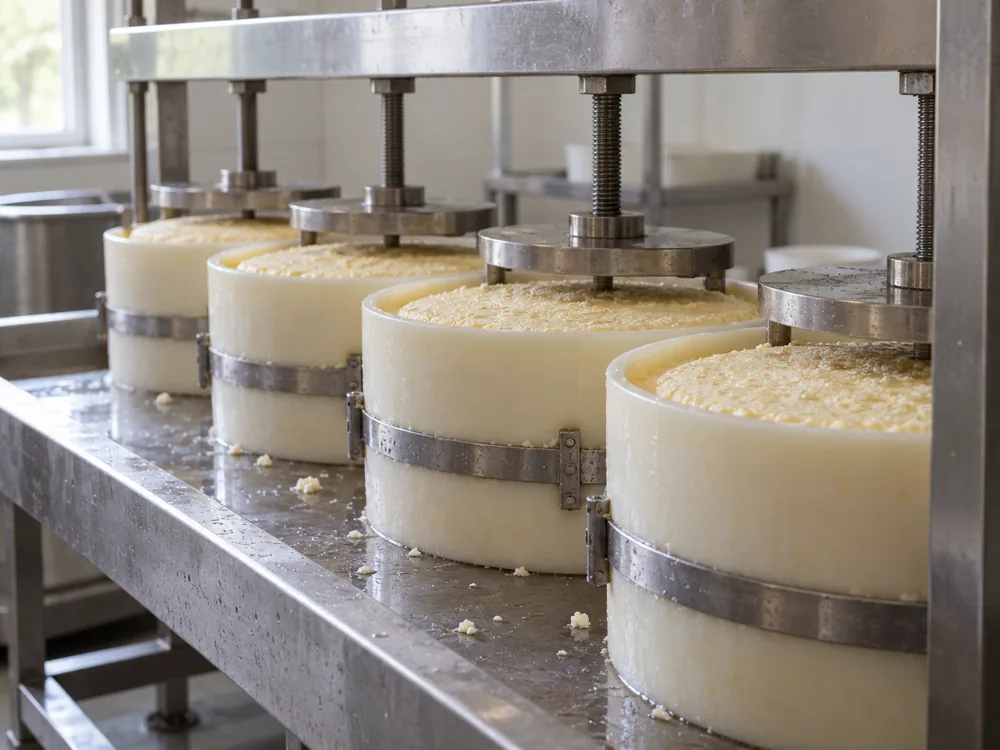
These steps match the three styles sellers name: the scalded-curd recipe belongs to Red Leicester, the cheddaring to Cheddar, and the Gouda-shaped moulds to Gouda.
What Does the Farm's Herd Add to Doddington?
The pages describe the herd three ways. The Cheese Shop Nantwich names a Friesian-Ayrshire herd, Cheesemongery.com lists Ayrshire, Friesian, and Normandy cows, and Fromage Homage's 2014 post counts around 300 cows made up of Friesians, Holsteins, Ayrshires, and some Montbeliards.
No page says whether the herd changed between 2014 and now. The pages also split on the grass: Nantwich says the herd grazes clover-rich pasture for most of the year, while Fromage Homage says the cows graze through spring and summer and come indoors in the cold.
The Cheese Lady attributes Doddington's flavor to the microflora in the farm's raw milk, which it calls unique to the farm, and says the cheeses show seasonal nuances.
The Cheese Shop Nantwich likewise calls the grassy, rich taste redolent of the farm's surroundings. Neither page links this to the batch differences Neal's Yard reports below, but both describe flavor that follows the farm and the season.
How Old Is Doddington, and What Is the Outside?
Six of the eight pages cited for Doddington give an age, and the figures run from over four months to two years. Neal's Yard Dairy gives an average age of 12 to 18 months, and Oxford Cheese Company says 12 to 14 months.
Fromage Homage and The Cheese Shop Nantwich put the top age at two years. The Cheese Lady says only that the cheese is aged for over four months, sometimes longer.
The ranges overlap more than they conflict. Fromage Homage's 10-month minimum and Nantwich's 24-month ceiling describe how long the dairy matures its cheeses, and the 12 to 18 and 12 to 14 months that Neal's Yard and Oxford quote sit inside that span.
The Cheese Lady's over four months is the one figure below Fromage Homage's 2014 minimum. An average also implies a spread, so a single wedge from Neal's Yard's wheels can be younger or older than 12 to 18 months.
| Source | Age | Outside or color |
|---|---|---|
| Neal's Yard Dairy | Average 12 to 18 months | Not described |
| Oxford Cheese Company | 12 to 14 months | Reddish-brown natural rind |
| Fromage Homage (2014) | 10 months to 2 years, on pine shelves | Brick-dust-coloured breathable wax |
| The Cheese Shop Nantwich | Up to 24 months, on open pine shelves | Hard, brownish red rind, edible but very chewy |
| Cheesemongery.com | Over a year | Not described |
| The Cheese Lady | Over 4 months, sometimes longer | Not described |
| Cheese.com | Not given | Plastic rind, yellow color |
The outside is the bigger disagreement: Fromage Homage describes a breathable wax, Oxford Cheese Company a natural rind, and Cheese.com lists the rind as plastic.
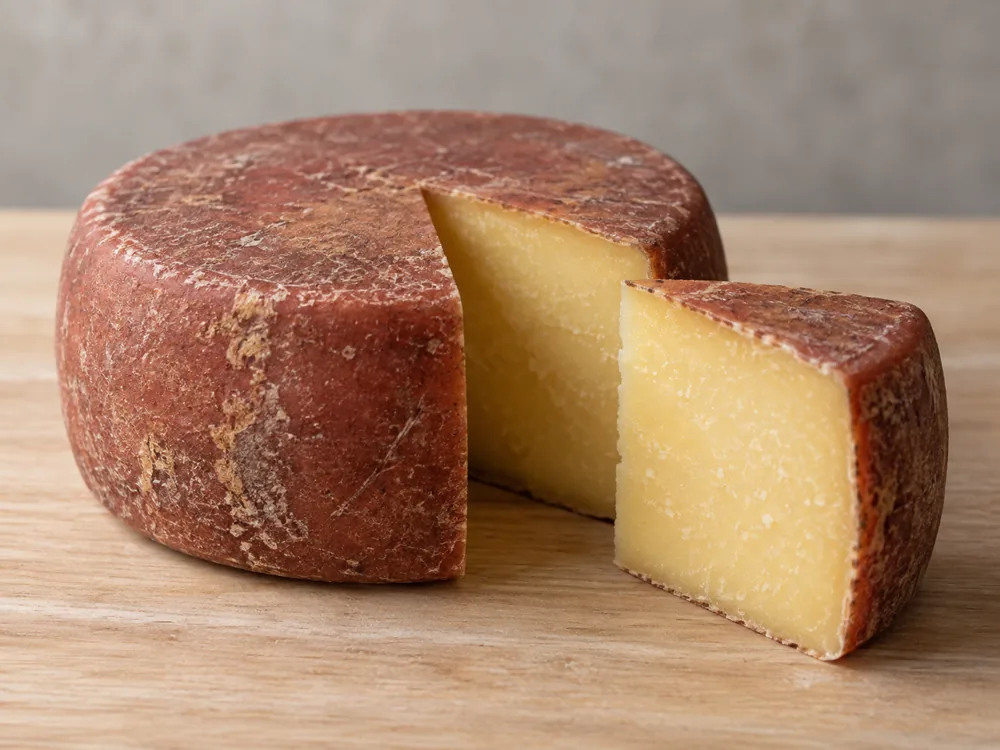
Fromage Homage says the brick-dust-coloured wax is breathable and keeps anything furry from growing while the cheeses mature on pine shelves. Nantwich says the rind forms during that maturing, on open pine shelves where the cool Northumbrian air circulates.
No page says whether the finish changed after Fromage Homage's 2014 post, the oldest account cited.
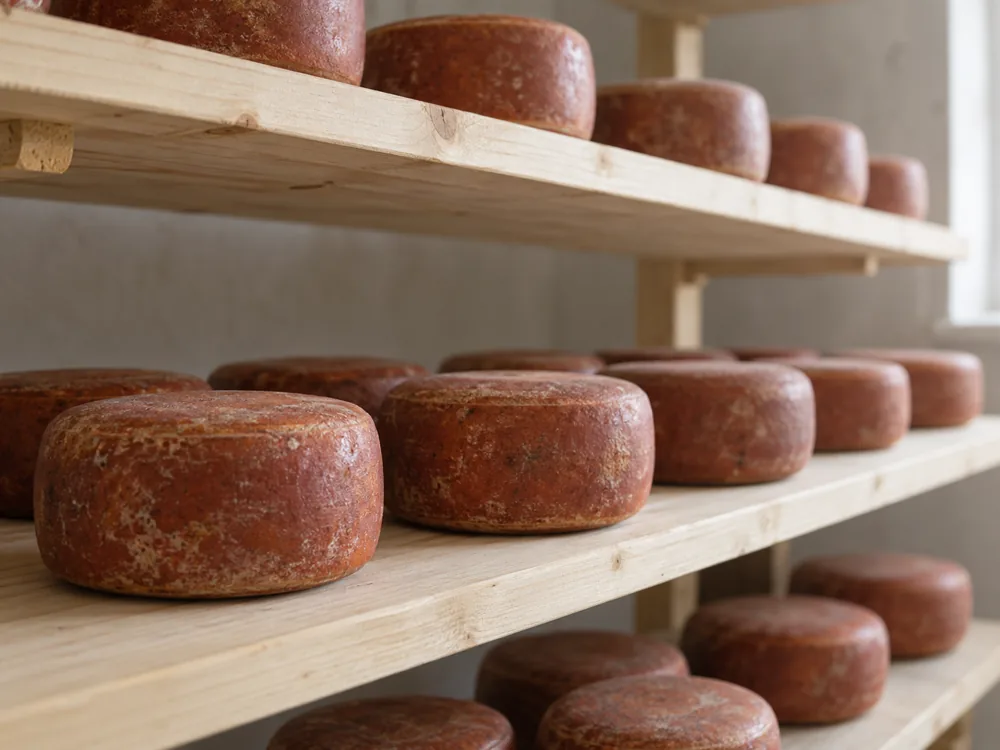
Cheese.com adds that the paste is yellow, and Nantwich calls it bright and creamy rich.
On eating the outside, Nantwich says the rind is edible but very chewy, while Fromage Homage's author told her son it was not edible and says his several seconds of chewing confirmed it. Both accounts describe a rind that is hard going.
Retailers that give a specific age sit between 12 and 18 months, inside the 10 to 24 months that Fromage Homage and Nantwich describe, and only The Cheese Lady's over four months falls below it. The outside is described as wax, natural rind, or plastic, so the label or the counter has to say which one a given wedge has.
What Does Doddington Taste Like?
Neal's Yard Dairy says Doddington's flavors range from bright and grassy through savoury, brothy, and almost Parmesan-like, depending on the batch.
The same page describes the texture as firm and similar to that of Cheddar.
Other sellers describe a sweeter cheese, with Cheese.com and Cheesemongery.com both listing sweet caramel and nutty notes. Fromage Homage says it smells sweet like Gouda and tastes sweet and nutty with hits of caramel.
The Cheese Lady adds buttery notes and some sharpness, and Oxford Cheese Company reports a rich savoury tang. The Cheese Shop Nantwich lists a grassy, rich, slightly salty taste with some sweetness and a long finish.
Cheese.com and Cheesemongery.com call the texture crystalline, and Oxford Cheese Company says dry and almost crystalline. The Cheese Lady says compact and crumbly, while Fromage Homage says dense like Cheddar with a flaky crumble that is not as crumbly as Lancashire.
The make steps described above, cheddaring, milling, and pressing, are the ones that remove whey and moisture, which fits the dry, compact, and crumbly words sellers use for the texture.
Neal's Yard says it has sold Doddington for over 20 years and chooses each monthly delivery from batch samples the dairy sends for tasting.
Two pieces from different batches can therefore sit at different points on that grassy-to-savoury range.
What to Serve With Doddington
Fromage Homage calls Doddington a nice cheeseboard cheese, and The Cheese Lady says its cheddar-like firmness and sharpness suit both cheeseboards and cooking.
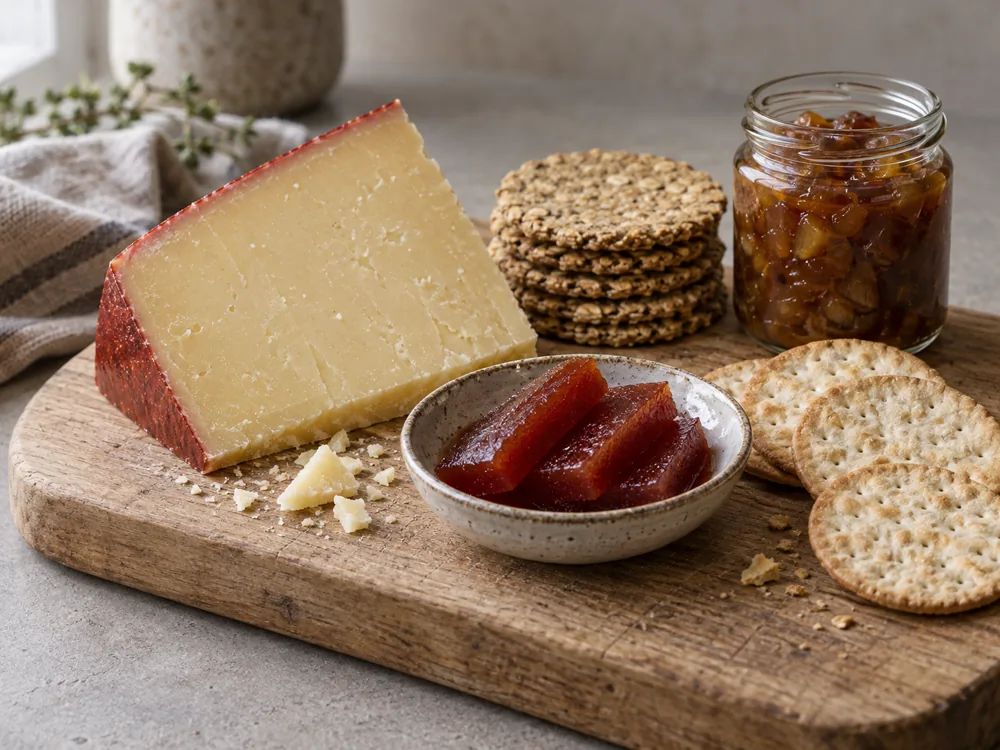
| Pairing | Type | Why It Works |
|---|---|---|
| Scottish oatcake | Food | Named by The Cheese Shop Nantwich; The Cheese Lady lists handmade oatmeal oatcakes with seeds. |
| Water biscuit | Food | Named by The Cheese Shop Nantwich as the alternative to the oatcake. |
| Quince paste | Food | Named by The Cheese Shop Nantwich. |
| Apple chutney | Food | Named by The Cheese Shop Nantwich; The Cheese Lady lists an apple and cider brandy chutney. |
| Medium to full-bodied red wine | Wine | Named by The Cheese Lady, which lists a Cabernet Sauvignon, Merlot, and Shiraz blend. |
| Ale | Drink | Named by The Cheese Lady. |
| Whisky | Drink | Named by The Cheese Lady. |
The Cheese Shop Nantwich offers the oatcake, water biscuit, quince paste, and chutney to a cheese it says combines the umami of a Cheddar with the smoother texture of a Leicestershire cheese.
For cooking, Nantwich cites the chef Mark Birchall of Moor Hall, whose baked carrots topped with freeze-dried Doddington drew plaudits.
Fromage Homage's author guesses Doddington would melt very nicely in a toastie, and the one named dish uses the cheese freeze-dried.
Where Do You Buy Doddington?
Neal's Yard Dairy sells by fraction of a wheel: a sixteenth weighs 625 to 682 g, an eighth 1,250 to 1,364 g, a quarter 2,505 to 2,728 g, and a whole wheel 10,020 to 10,911 g.
Each size is a range, so the fraction is fixed while the weight is not, and whole wheels differ by about 890 g.
The Cheese Lady sells 200 g, 400 g, and 1 kg wedges, and Oxford Cheese Company lists 250 g, 500 g, and 1 kg.
A product listing leaves several points open, so the counter has to supply them.
Is Doddington Safe During Pregnancy?
Every source that states the milk treatment says Doddington is made from raw, unpasteurized cow's milk. No health agency names Doddington, so the answer depends on how the NHS and CDC rules treat a firm raw-milk cheese in pregnancy.
The NHS says any foods made from unpasteurised milk must be thoroughly cooked, and it lists any cheese that's been cooked until steaming hot as safe to eat.
The CDC's milk row puts dairy products made from raw milk on the riskier side.
The CDC also says pregnant women are 10 times more likely to get a Listeria infection, so a midwife or doctor is the right person to ask about a raw-milk cheese.
What Can Replace Doddington?
No source ranks substitutes, so these swaps follow the comparisons the sellers make themselves.
- Mature Cheddar: Neal's Yard calls Doddington's texture firm and similar to Cheddar. Nantwich credits Cheddar for the umami and a Leicestershire cheese for the smoother texture, so a Cheddar swap covers the first and may miss the second.
- Red Leicester: Cheesemongery.com names it as one of Doddington's influences.
- Gouda: Fromage Homage says Doddington smells and tastes somewhat like Gouda but has a very different texture, much closer to the territorial cheeses, so Gouda copies the flavor and not the texture. The Cheese Lady calls it a blend of cheddar and gouda styles.
- Parmesan: Neal's Yard says some batches taste almost Parmesan-like, so a hard grating cheese suits those savoury batches better than the sweeter ones.
Pick the swap by the description of the piece you are replacing, since sellers describe Doddington as anything from sweet and caramel to savoury and brothy.
How Should You Store Doddington?
The Cheese Shop Nantwich is the one cited page that gives Doddington-specific storage advice. It says to rewrap the cheese in the wax paper the cheesemonger used and keep it in the crisper drawer of the fridge, not in cling film or an airtight container.
Nantwich says cheese stored this way keeps for up to 14 days from the date it was cut.
It also says to take Doddington out of the fridge when you open the wine, so the temperature rises slowly.
Culture magazine quotes Formaticum founder Mark Goldman, whose first rule for storing cheese is to avoid plastic film at all costs. He recommends a fridge drawer, away from the temperature swings near the door.
Goldman also advises cutting and serving only what is needed, because repeatedly bringing a whole piece to room temperature and back to the fridge hurts its texture and flavor, and buying less cheese more often, since the spoilage clock on a piece starts when the wheel is cut. Nantwich's 14 days likewise count from the day the piece was cut.
The two sources differ on air: Nantwich says cheese needs to breathe, while Goldman says the wrap or bag should be fully sealed, and Culture notes that his company, Formaticum, sells the two-ply paper and bags he describes.
SOURCES & REFERENCES
What Else Do People Ask About Doddington?
Yes. Cheese.com, Neal's Yard Dairy, The Cheese Lady, Oxford Cheese Company, and Cheesemongery.com all describe it as raw or unpasteurized cow's milk.
No. Neal's Yard Dairy lists animal rennet, and Cheese.com says the cheese is not vegetarian.
The sources split on it. Cheese.com places it between Leicester and Cheddar, The Cheese Lady calls it a blend of cheddar and gouda styles, and The Cheese Shop Nantwich says its texture resembles a cross between a Cheddar and a Leicester.
Neal's Yard Dairy gives an average of 12 to 18 months, while other sellers range from over four months to up to two years.
The Cheese Shop Nantwich says the rind is edible but very chewy. Fromage Homage's author says it is not edible, and her son's chewing attempt agreed.