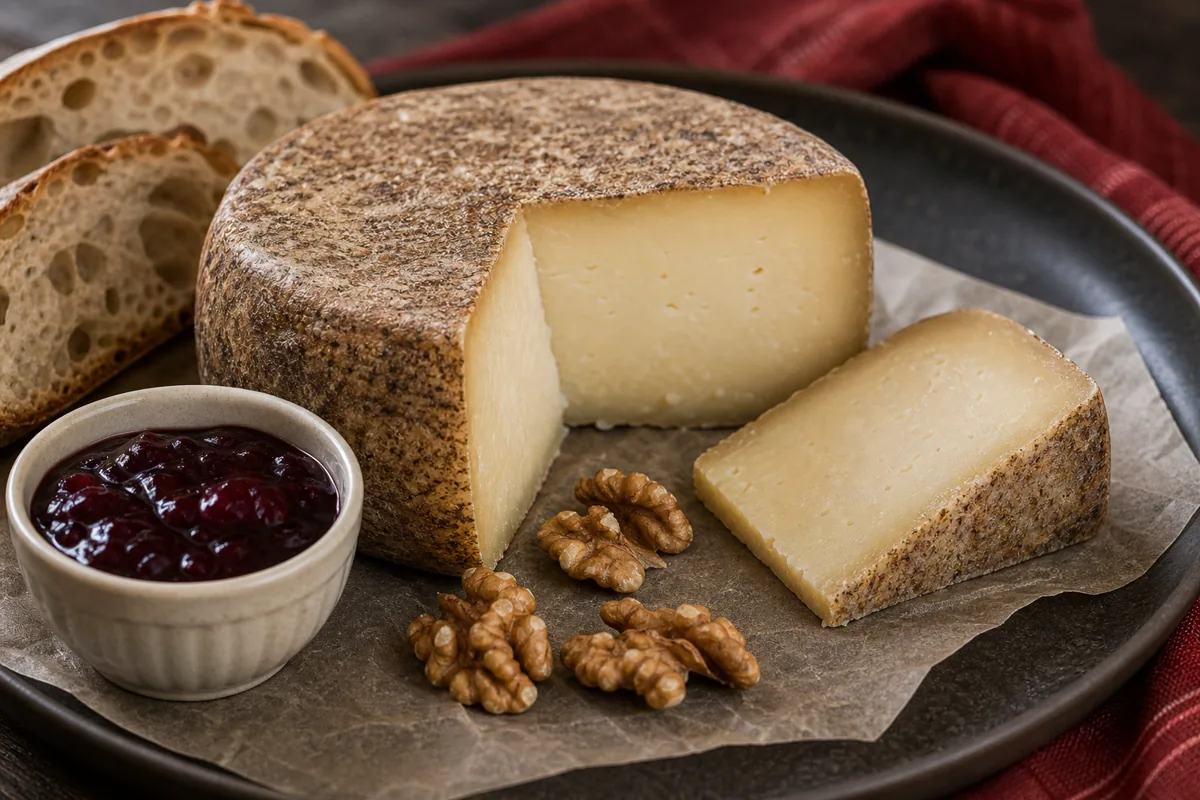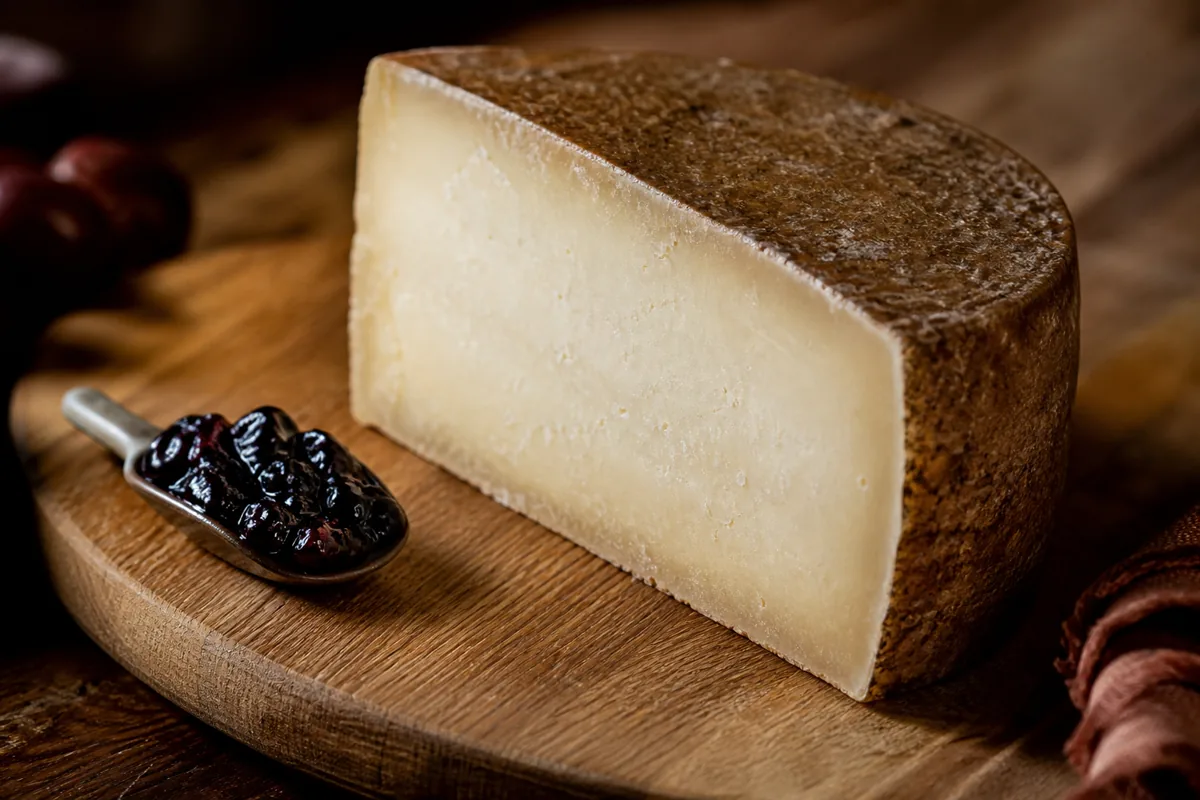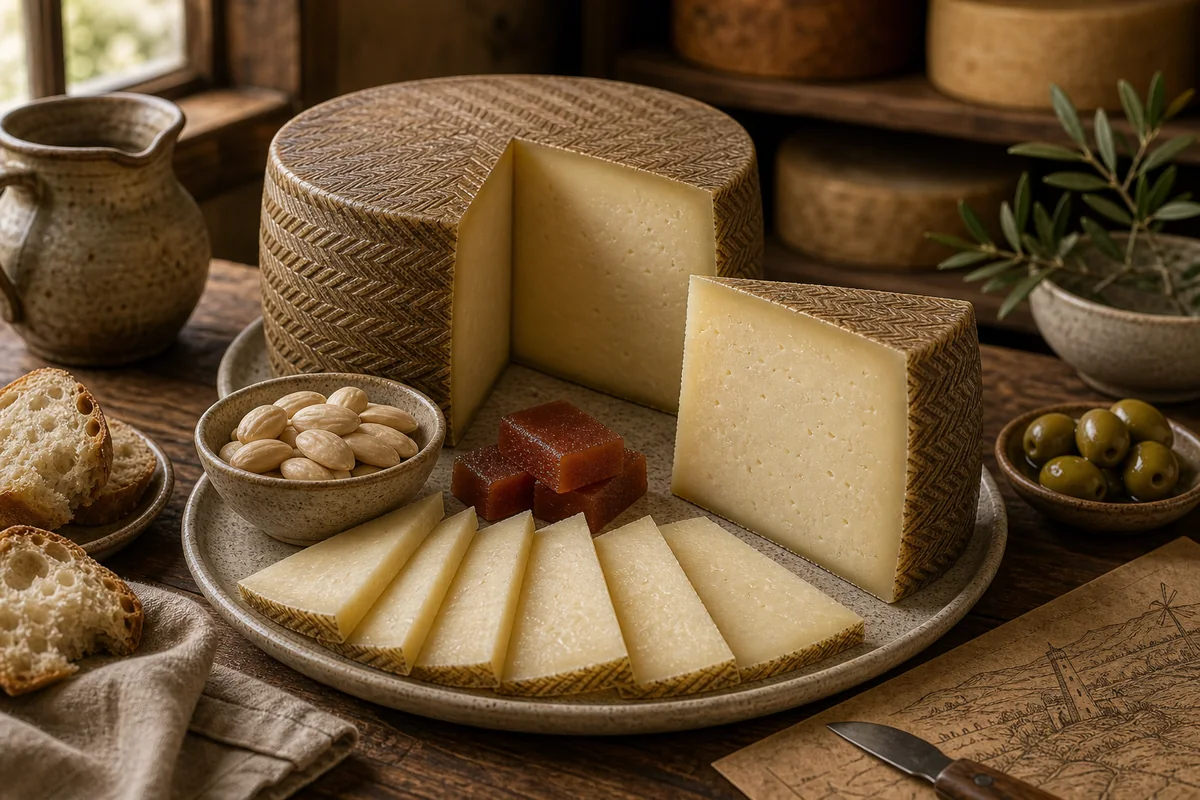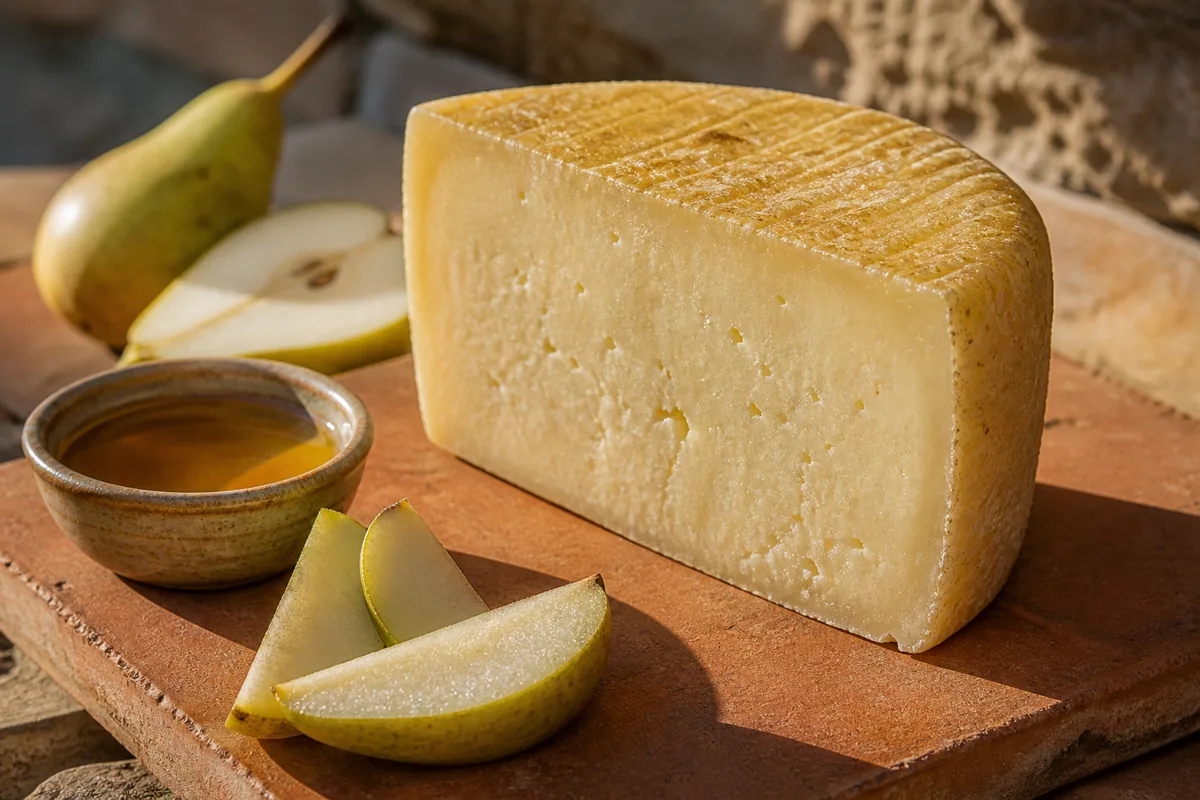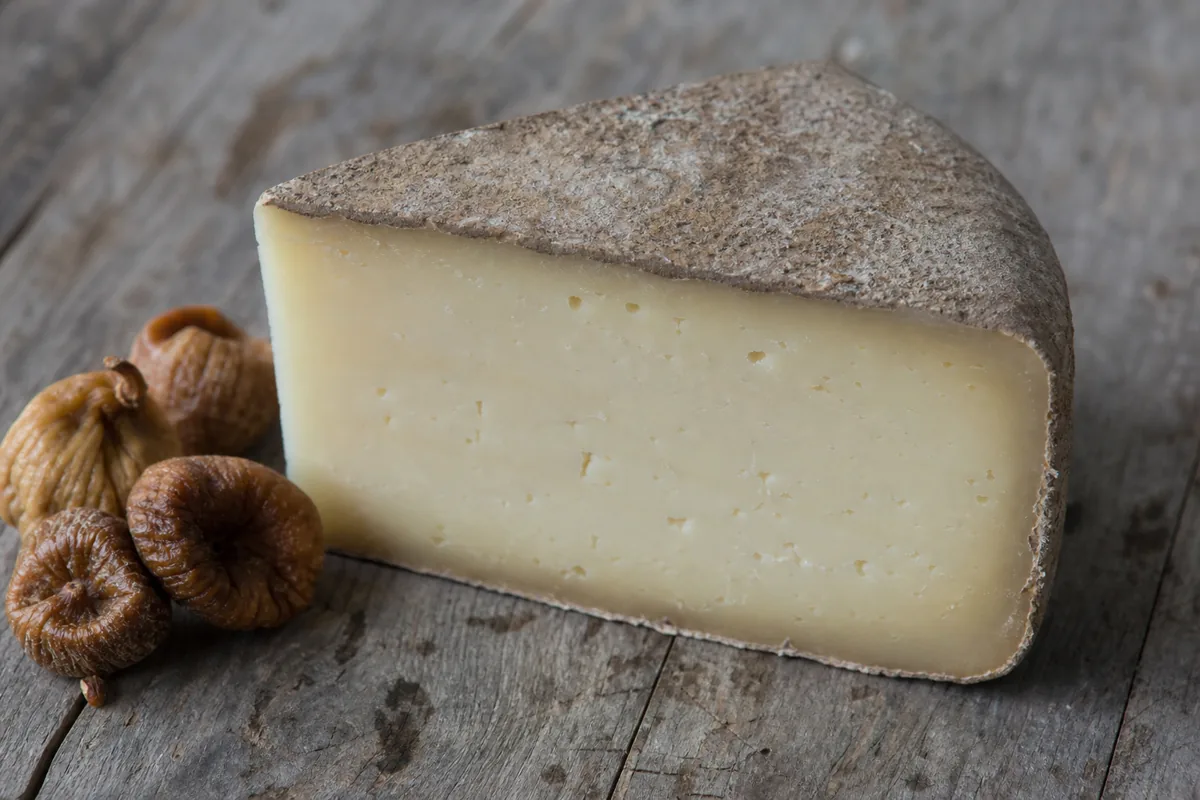
Amou is a sheep milk cheese from Gascony, named for the town of Amou in the Landes. It is a pressed uncooked cheese with a firm elastic paste, a thin natural rind, and an aging window that public sources place from about two to six months.
This is not a page for Brin d'Amour, the Corsican herb-coated sheep cheese with a similar-looking name in search results. It is also not a general French sheep cheese directory.
Amou is the Gascony sheep cheese named after the village.
Published information about Amou is thinner than it is for famous AOP cheeses, so treat precise claims cautiously. The available sources support its milk, origin, make style, aging range, texture, and common serving uses, but not the level of detail available for a protected Pyrenees sheep cheese.
In This Article
What is Amou cheese?
Amou is a farmhouse sheep milk cheese from southwest France. Cheese.com says it is produced in Gascony, named after the town of Amou, and made as a pressed uncooked cheese.
Androuet places the village near Mont-de-Marsan in the Landes and describes a thick disk form.
The name is short and noisy in search. You may land on the town, unrelated romance-word results, or Brin d'Amour.
Amou is a regional sheep cheese with a firm paste and a cave-aged table role.
That make style matters more than fame. Pressed uncooked sheep cheeses usually give you sliceable structure, concentrated milk flavor, and a more savory table job than fresh sheep cheese.
- Best first description: firm Gascony sheep milk cheese from Amou.
- Main texture cue: firm and elastic, not runny or bloomy.
- Main rind cue: thin natural rind, described as brushed, washed, and oiled by Cheese.com.
- Easy mix-up: Brin d'Amour is a different cheese, and Amou is also the name of the town.
The village name is the cheese, not the region
Amou gets its name from the village, so treat the geography as background to the cheese rather than the main story. Androuet says the cheese comes from Amou near Mont-de-Marsan in the Landes.
French Wikipedia also places it in Gascony and the Landes, inside the broader regional French cheese context.
That local name is useful only when it helps the shopper. It tells us to expect a regional French sheep cheese, not a mass-market Dutch-style block or a Corsican herb cheese.
It does not give us license to claim protected status, official rules, or producer details that the sources do not show.
Do not read PDO or AOP status into Amou unless the label proves it. Public sources describe a regional cheese, not a protected name.
What survives that filter is a small set of facts about the cheese, not the broader Gascony food history the name might suggest.
A short village name is not enough evidence for a producer story, a protected label, or a famous regional tradition unless a stronger source says so.
The pressed uncooked paste explains the firm elastic bite
Pressed uncooked cheese keeps more of the sheep milk's direct flavor while still forming a sliceable body. Cheese.com describes Amou with a firm and elastic paste.
Androuet calls it a sheep milk pressed uncooked cheese and gives the shape as a thick disk.
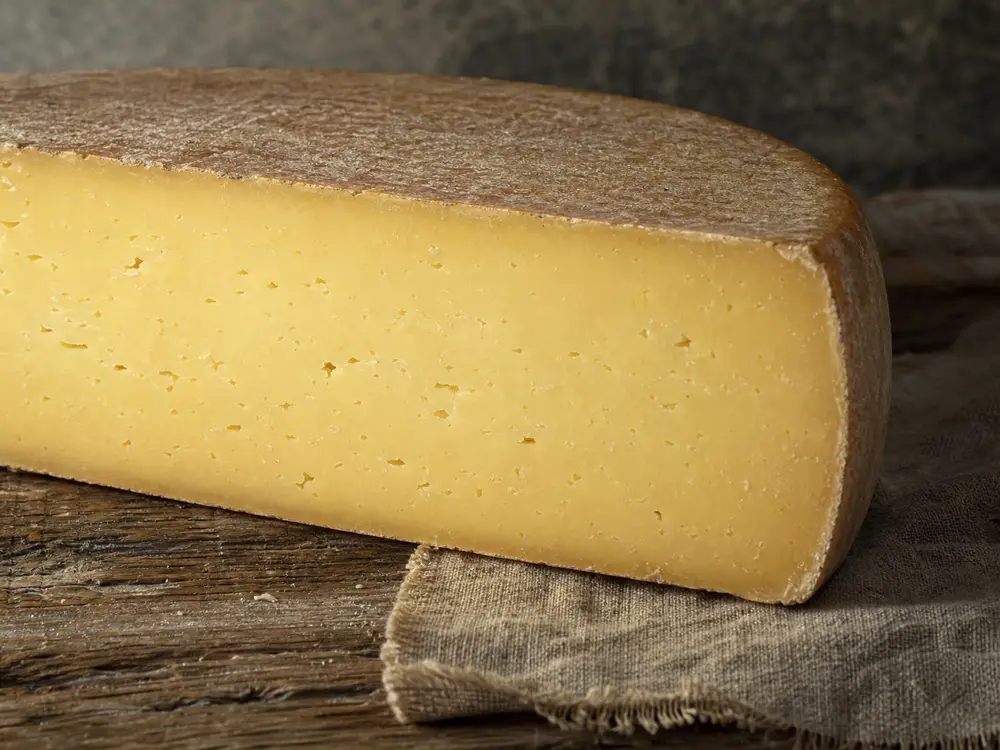
That texture changes how you serve it. Cut thin slices for bread and fruit.
Use small cubes for a snack plate.
Avoid treating it like a melting cheese unless the dish only needs gentle softening.
| Cue | Reader action |
|---|---|
| Firm elastic paste | Slice thin for bread, fruit, and wine. |
| Thin natural rind | Taste a clean edge before trimming. |
| Pressed uncooked style | Expect table-cheese structure rather than full melt. |
| Dry or cracked cut face | Use for cooking or choose a fresher piece. |
Pressing drives the whey out, and uncooked means the curd never gets hot enough to tighten the way a cooked-curd wheel does. Those two steps together are why the paste bends a little under the knife instead of splintering.
Slice it with a thin straight blade rather than a wire. An elastic paste grips a wire and tears at the end of the cut, while a knife wiped between slices leaves clean faces on both the slice and the wedge.
If you know Basque sheep milk tomme, use that only as a loose family reference. Amou's public facts are more limited, and the Gascony origin should stay distinct from the wider mountain tomme family.
How long is Amou aged?
Cheese.com says Amou matures for a minimum of two months and can ripen up to six months. Androuet gives the same two to six month cellar-aging range.
A separate French cheese note gives at least eight weeks, which lines up with the lower end.
That range explains the flavor swing. Younger Amou should be milder, moister, and easier for simple summer plates.
Older Amou can turn sharper, firmer, and more rustic. If you are buying from a shop, ask how long that piece has aged.
Do not judge the cheese only by age. Condition still matters.
A clean rind and pleasant sheep-milk aroma are more useful than a longer number attached to a stale cut.
Age shows on the cut face before it shows in the flavor. A young piece cuts with a slight drag and a moist sheen, while a wheel closer to six months looks matte and breaks a little at the edge of the slice.
Ask for the wedge to be cut while you wait when the counter can do it. A pressed sheep cheese dries from the cut face inward, so a piece cut this morning gives you the aging you paid for and one cut last week gives you a dry band to trim off first.
What does Amou taste like?
Amou tastes like a firm sheep cheese with a sharper edge than a mild cow milk table cheese. Cheese.com calls the flavor sharp and notes a minimum 45% fat.
Androuet describes the taste as lightly rancid in French, which should be read as rustic sheep-cheese intensity, not automatic spoilage.
That rustic note is why serving context matters. Bread, fruit, walnuts, and wine can make the flavor feel rounded.
Sugary jam or heavy sauces can make the same cheese taste blunt and tired.
The best first bite is a thin room-cool slice with bread. That lets you test the sheep milk and rind before adding wine, fruit, or nuts.
If the sheep note feels too strong, pair with bread or pear before choosing a substitute. The cheese may need smaller bites, not a sweeter topping.
The sharp edge builds across a plate instead of arriving on the first bite. Two or three slices in it sits heavier, which is why a small wedge cut thin serves this cheese better than a generous block.
Cold blunts the flavor and warmth exaggerates it. A slice straight from the refrigerator tastes tight and salty, while a wedge left out for an hour pushes the rustic note past useful, so twenty minutes on the counter is about the right window.
Plain bread does more work here than any condiment. A neutral crumb takes up the fat and resets the palate between slices, which is what makes a country loaf the standard partner rather than a flavored cracker.
Serve Amou simply, before the flavor turns heavy
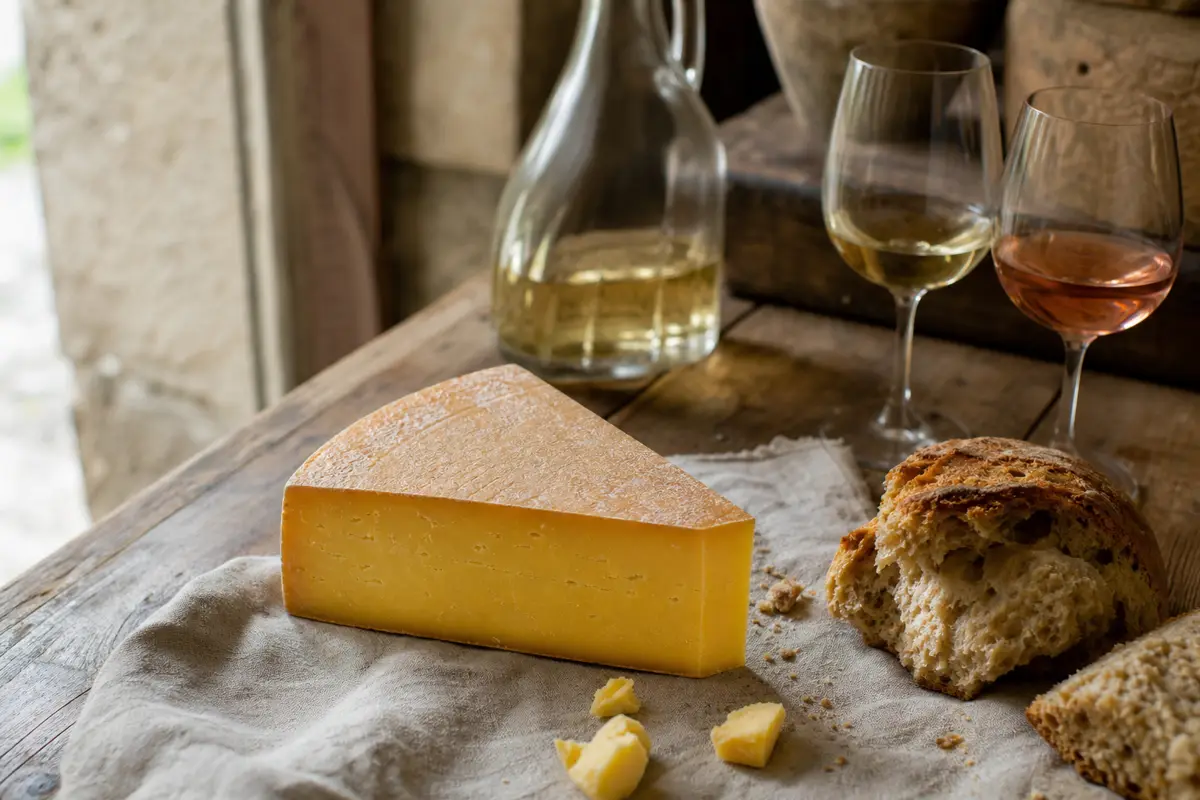
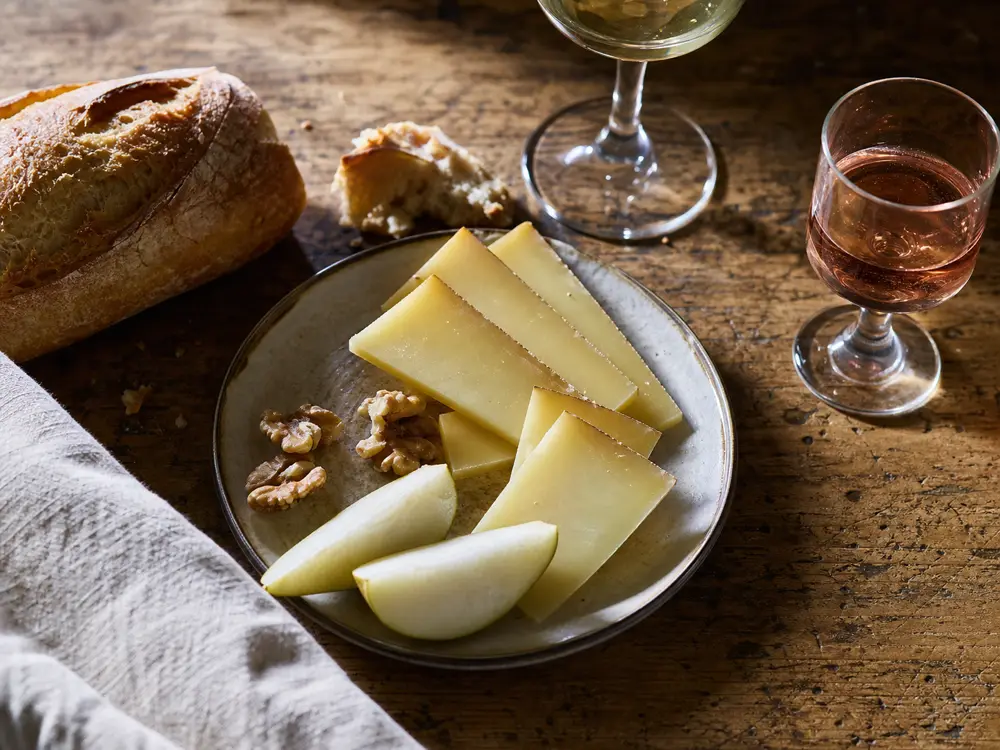
Androuet says Amou suits casse-croûtes, which is the right serving clue. Keep it simple: country bread, pear, walnuts, or a dry white wine, rosé, or light red.
The cheese should be the savory center, not a hidden ingredient.
Cooking is a secondary use. A small amount can season potatoes, eggs, or vegetables, but Amou is not the first choice for a smooth sauce.
If the dish needs reliable melt, choose a cheese selected for melting and save Amou for the plate.
- Best plate: thin slices, bread, pear, walnuts, and a clean dry wine.
- Best snack: cubes with bread and a light drink.
- Best cooked use: small pieces over potatoes or eggs.
- Avoid: heavy sweet jam or hot sauces that bury the sheep flavor.
If your wedge tastes too strong, cut thinner slices instead of adding more sweet garnish. Smaller bites keep the rustic sheep flavor useful.
How should you buy and store Amou?
Buy Amou only when the seller can confirm the name and sheep milk. Public detail on Amou is thin, so labels and cheesemonger notes matter.
Look for a clean rind, firm paste, and aroma that reads sheepy or savory rather than sour, moldy, or dirty.
At home, wrap the cut face in cheese paper or parchment, add a loose outer wrap, and keep it in the refrigerator. Bring a small piece out before serving, then return the rest to the fridge so the cut face does not dry.
Because Amou is firm but not a long-aged grating cheese, storage should protect moisture first. Follow the same cut-face logic we use for proper cheese storage: breathable inner wrap, loose outer cover, and no bare fridge air.
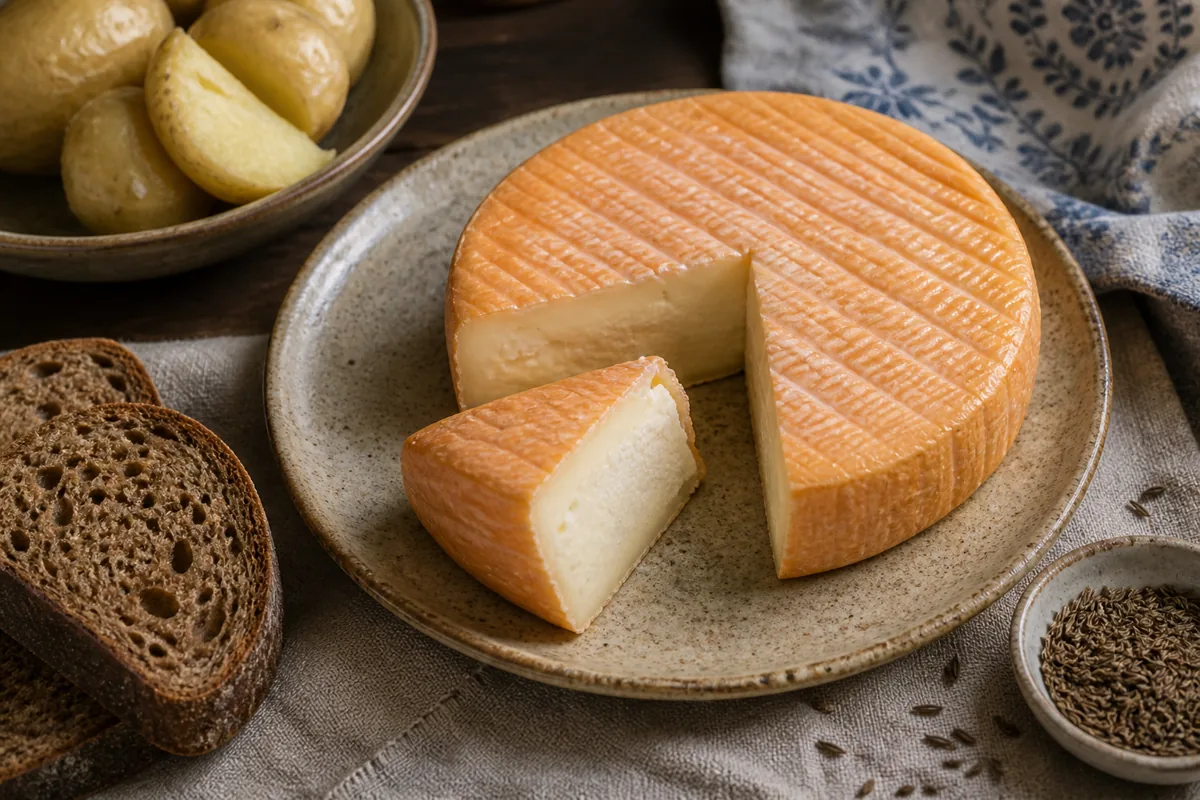
If a label says Brin d'Amour, do not treat it as Amou. Brin d'Amour is a different sheep cheese with herb coating and a different cheese.
For raw-milk caution, check the label. Cheese.com does not give every legal detail a shopper might need, so pregnancy and immune-risk diners should follow medical guidance.
Wrap the cut face closely and the rind loosely. A brushed and oiled rind needs air to stay dry, while the exposed paste is the part that hardens and picks up refrigerator smells.
Give it a middle shelf rather than the coldest corner. A firm sheep paste goes waxy and mute at very low temperatures, and it takes longer to come back than a soft cheese does.
- Check the name: Amou, not Brin d'Amour or another sheep cheese.
- Check the cut: firm paste, clean aroma, and no sour leak.
- Check the label: milk treatment and source matter for cautious diners.
What can you substitute for Amou?
For the closest practical substitute, choose a firm French or Basque sheep milk cheese. Abbaye de Belloc is a good table-cheese comparison.
Ossau-Iraty is easier to find and more documented, though its protected Pyrenees identity is not the same as Amou.
If you only need a firm sheep cheese for slices, young Manchego works. If you need a milder mixed board cheese, use young Pecorino Toscano or another gentle sheep milk wheel.
If the dish needs brine or crumble, use Feta only when you want a different result.
| Closest French sheep table lane | Abbaye de Belloc or another firm sheep tomme |
| Easier retail substitute | Ossau-Iraty |
| Mild sliceable sheep cheese | Young Manchego or young Pecorino Toscano |
| Cooking need | Use a melt-friendly cheese if texture matters more than sheep flavor |
Do not chase a substitute by name similarity. Brin d'Amour, Chaumes, and an Alsatian washed-rind cheese answer different cheese jobs.
SOURCES & REFERENCES
Amou is a firm sheep milk cheese from Gascony in southwest France, named after the town of Amou in the Landes. Public sources describe it as a pressed uncooked cheese with a firm elastic paste.
No. Amou is a Gascony sheep cheese named after a town. Brin d'Amour is a different Corsican-style sheep cheese with herbs, so the names should not be swapped.
Cheese.com and Androuet place Amou around two to six months of maturation. Another French note gives at least eight weeks, which fits the lower end of that range.
It tastes like a firm sheep cheese with a sharp, rustic, savory edge. Thin slices with bread, pear, walnuts, dry white wine, or rosé usually make the flavor easier to read.
Use Abbaye de Belloc or Ossau-Iraty for a French sheep-cheese table role, young Manchego for an easier sliceable substitute, or young Pecorino Toscano when mild sheep flavor matters more than regional match.