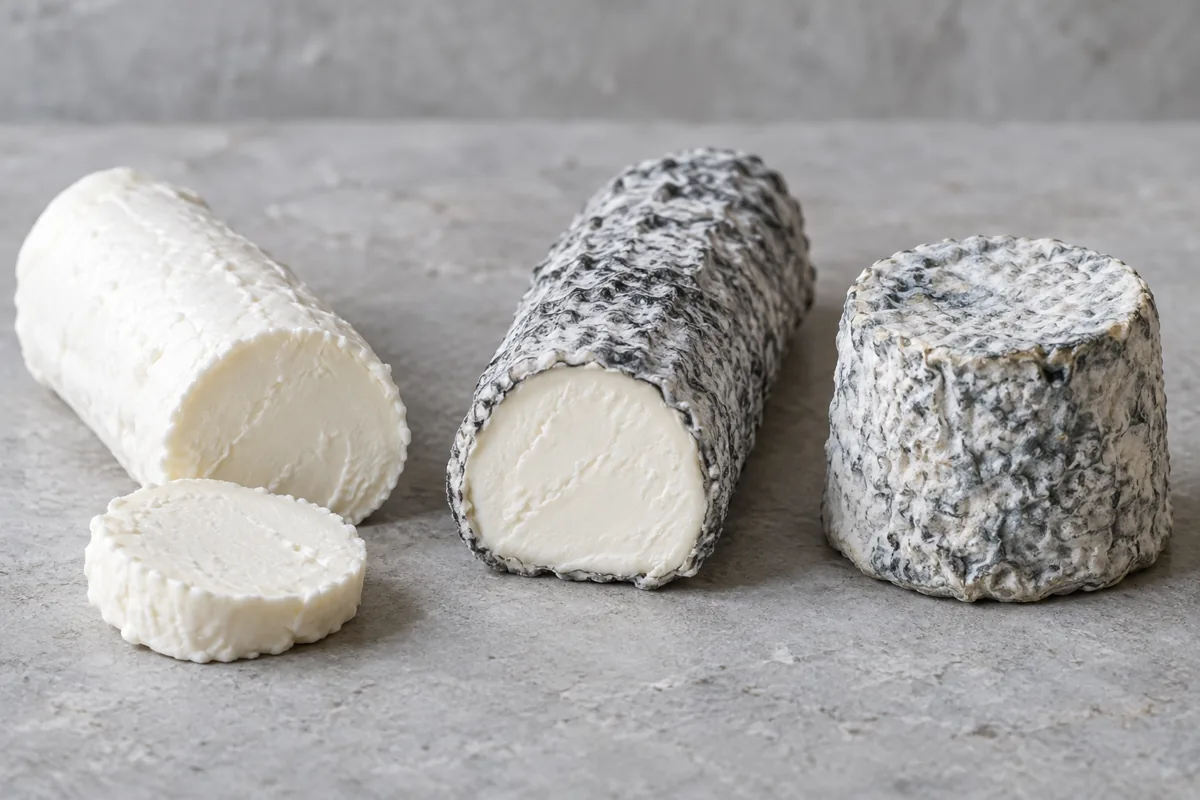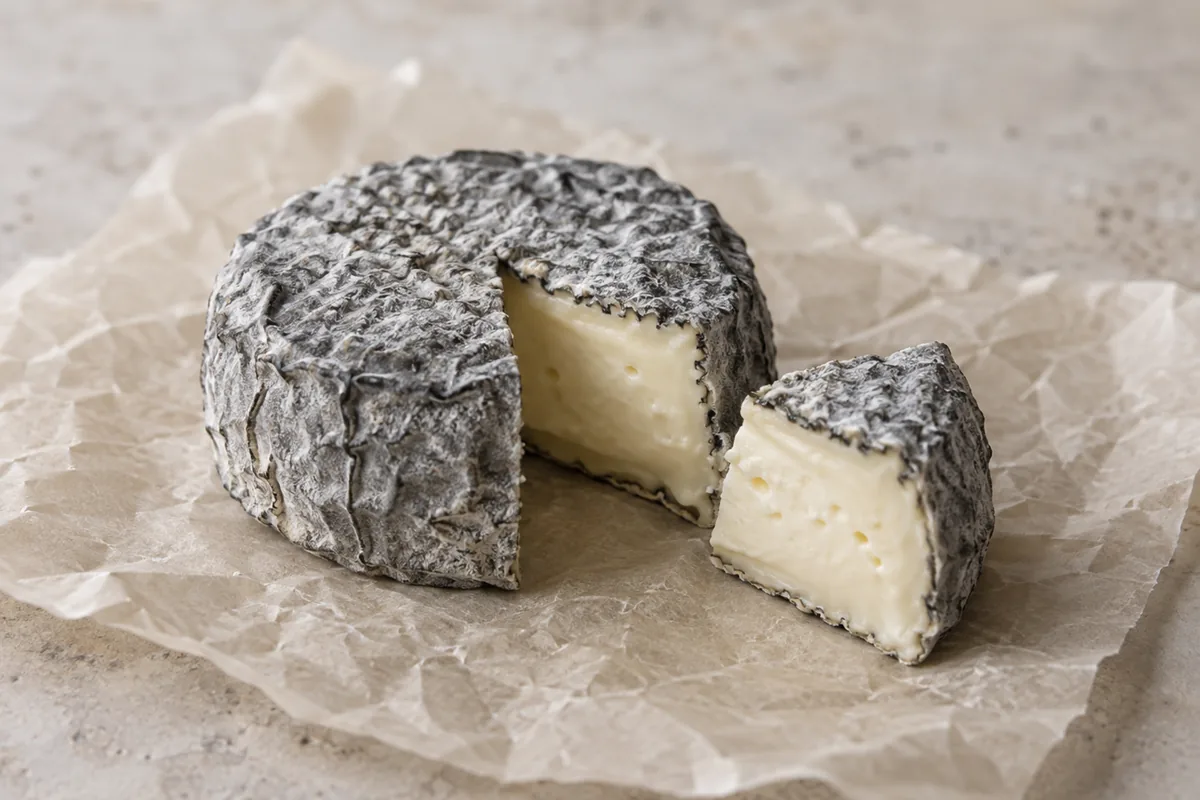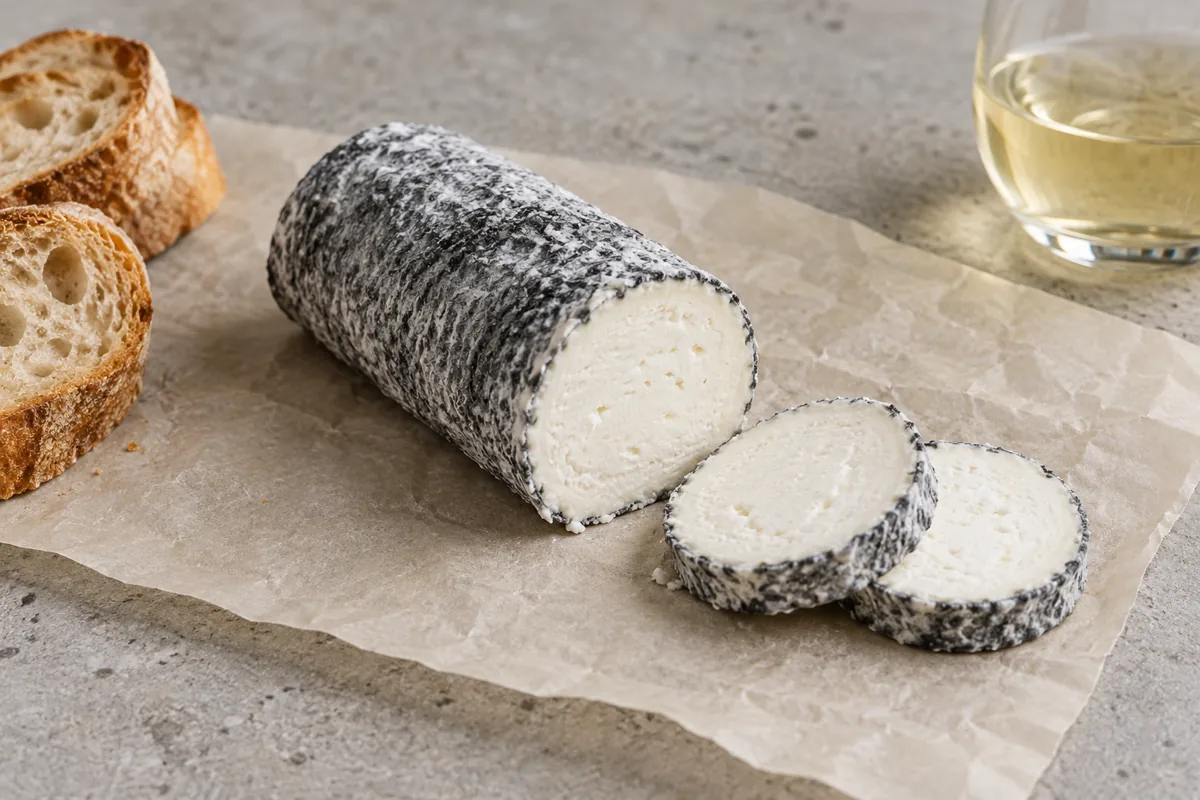
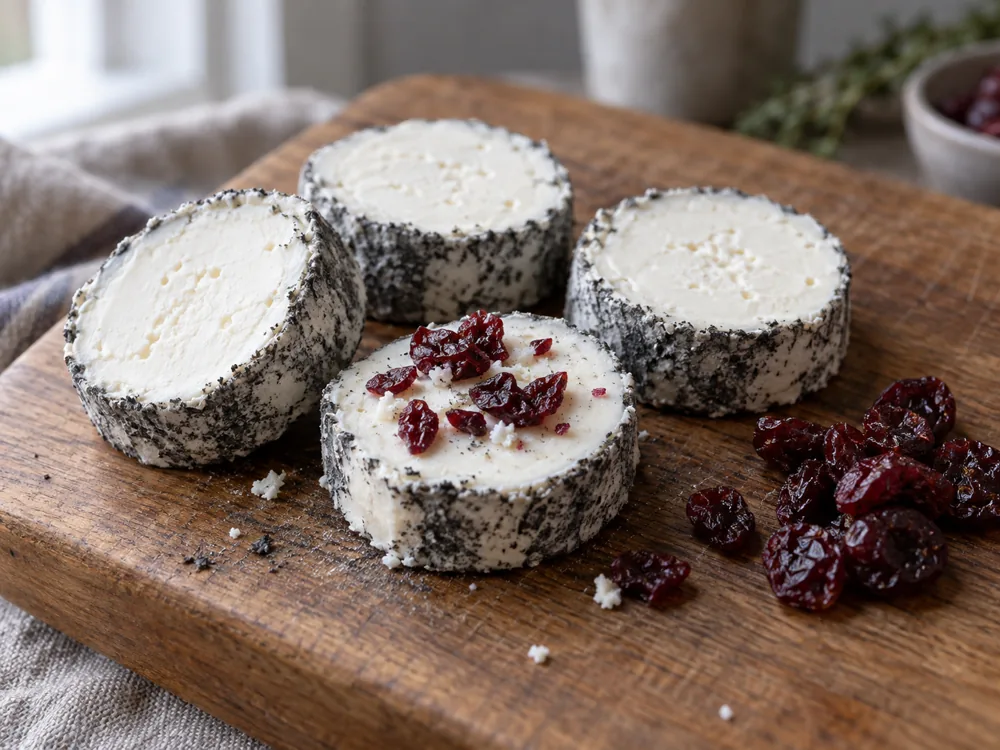
Aged Chelsea is a mold-ripened goat cheese log coated in edible vegetable ash, made from pasteurized goat's milk in Ann Arbor, Michigan.
Zingerman's Creamery created it, and the maker is now Sanilac Creamery.
The producer and Cheese.com agree on a buttery, tangy flavor, while its texture is slightly crumbly in the producer's description and creamy and spreadable in Cheese.com's.
In This Article
Who Makes Aged Chelsea, and What Is It Made From?
Cheese.com lists Aged Chelsea as an American soft cheese made with pasteurized goat's milk, vegetable ash, and animal rennet, and marks it as not vegetarian. The producer's archived product page names it simply Chelsea Cheese, lists goat rennet, and gives its cheese style as aged.
If you are vegetarian, the two rennet entries lead to the same answer, because goat rennet comes from an animal. The producer's allergen line names only goat's milk.
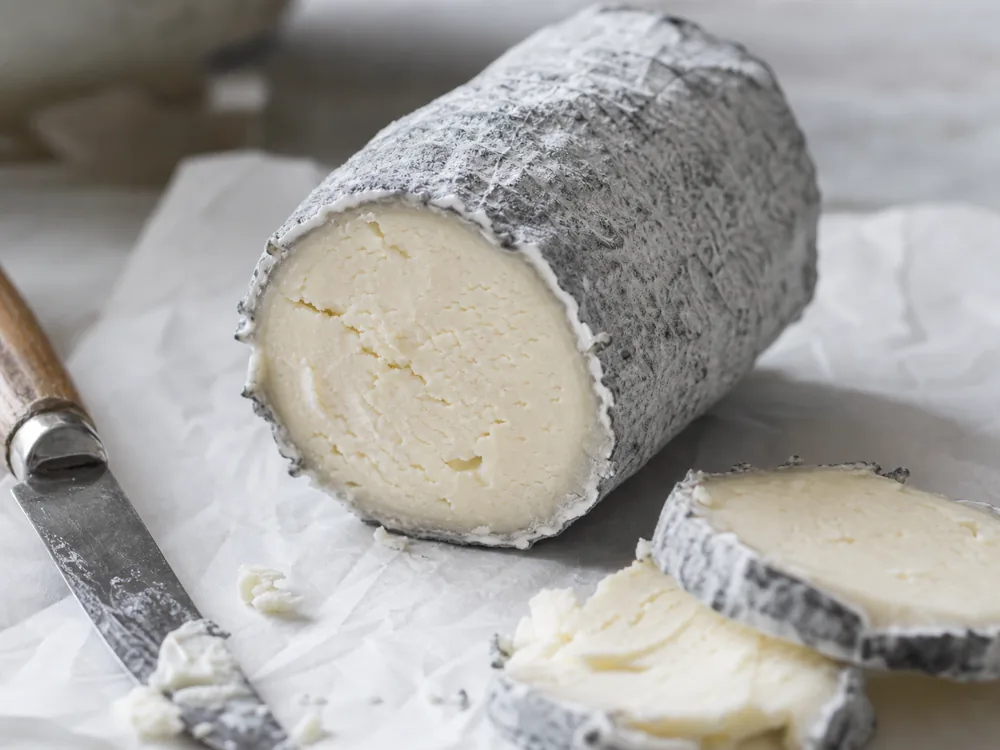
Chelsea was inspired by traditional cheeses of France's Loire River Valley, and it is shaped as a log.
Name check: the producer's archived page calls it Chelsea Cheese and lists its style as aged, while Cheese.com and Zingerman's blog posts call it Aged Chelsea. The sources describe one cheese from one maker.
Why Is Aged Chelsea Coated in Ash?
The producer says the ash is alkaline, that it reduces acidity on the surface, and that it causes the cheese to ripen under the rind.
The Bon Bouche writer, who sources cheese for a food distributor, agrees on acidity and calls ash-ripening a centuries-old tradition that stops a lactic cheese from becoming overly acidic.
Bon Bouche says ash is usually used on bright white goat cheese, and it calls the contrast between rind and paste on Chelsea stark and strikingly lovely.
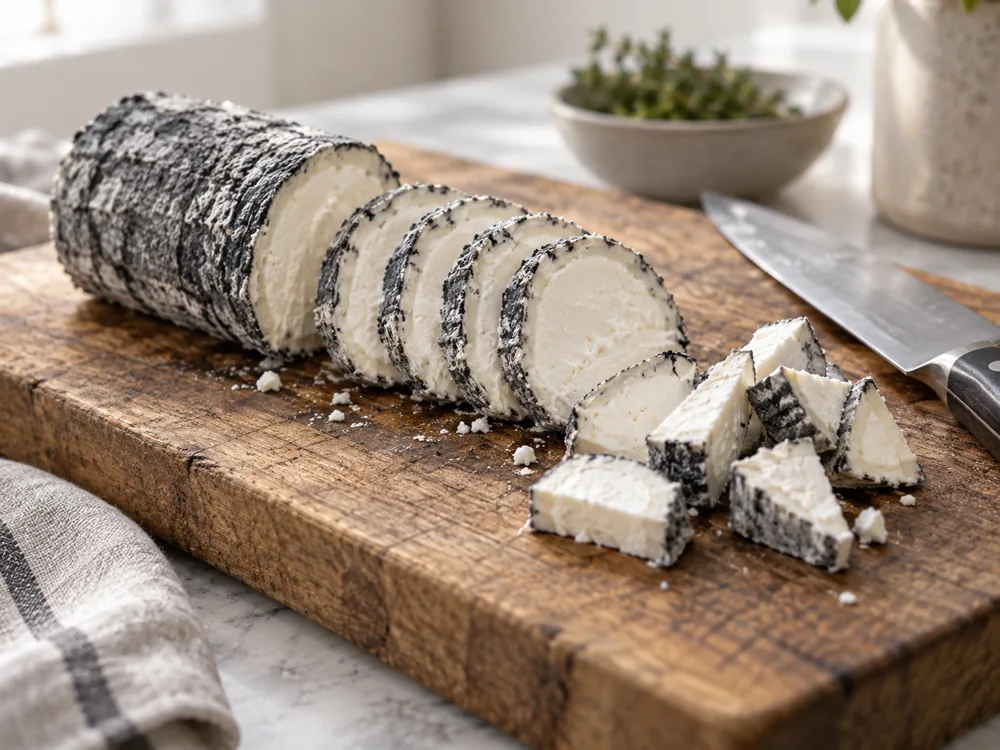
The paste is pale either way: Cheese.com lists it as ivory rather than bright white, and Bon Bouche's sliced discs looked like "fat, snowy coins" on its cheese board.
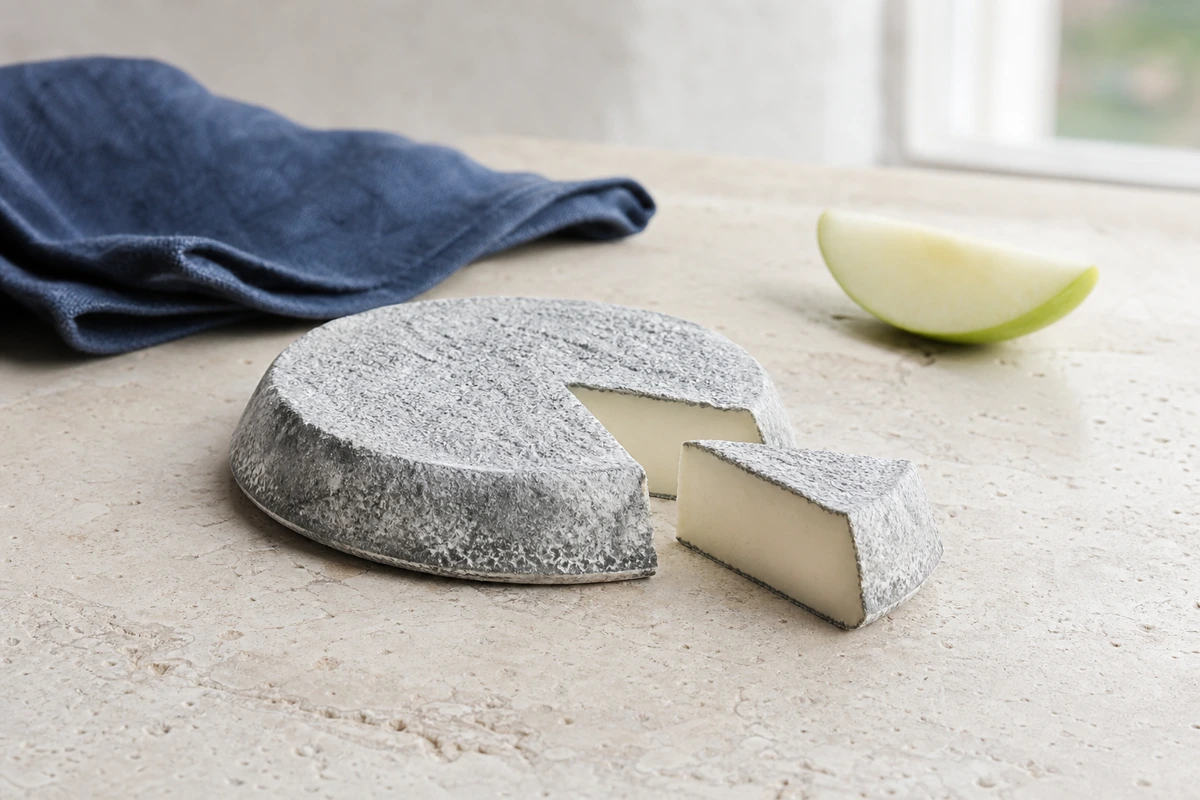
The same device appears on two Loire neighbours: the Selles-sur-Cher AOP specification describes a natural grey ashen rind coated with vegetable charcoal and salt, maturing in caves. The Valençay AOP specification gives it a grey felted rind with blue-to-green hints from the ash.
You can eat the coat with the paste: both the producer and Cheese.com call the ash edible.
What Does Aged Chelsea Taste Like?
Chelsea is buttery, acidic and sweet in two of the three descriptions: the producer's archived page calls it buttery, brightly acidic, and surprisingly sweet, and Cheese.com lists acidic, buttery, and sweet, with a gentle goat-milk taste and a goaty aroma.
The third differs on sweetness: the Bon Bouche writer, who found it tangy, bright, and yeasty, said it calls out for a sweet supplement.
| Source | Texture | Flavor |
|---|---|---|
| Producer page (archived 2019) | Slightly crumbly, but smooth in flavor | Buttery, brightly acidic, surprisingly sweet |
| Cheese.com | Creamy and spreadable; the description adds gooey | Acidic, buttery, sweet; gentle goat-milk flavor; goaty aroma |
| Bon Bouche blog | Sliced discs | Light and luscious, tangy, bright, and yeasty, with the goat's milk in front |
The producer page and Grace Singleton's recipe post are the company's own, Cheese.com lists Zingerman's as the producer, and the Bon Bouche note is a single bar tasting from April 2015.
The texture split is narrower than the table makes it look, because Cheese.com, Bon Bouche and Grace Singleton, who each describe serving the cheese, all cut it: Cheese.com into sliced discs, Bon Bouche into round discs, and Grace Singleton into quarter-inch slices and then bite-size pieces.
Cheese.com describes a creamy, spreadable texture and also lists sliced discs, so its own entry supports a paste that holds a slice and still spreads.
Before you buy, ask the seller whether the piece at the counter holds a slice or spreads.
How Old Is Aged Chelsea When You Buy It?
Chelsea is sold at 2 to 10 weeks old according to the producer, which files it under the cheese style Aged, so the name refers to a ripening of weeks, and 10 weeks is under two and a half months.
The same page lists a wholesale shelf life of 6 weeks, which is shorter than the 10-week top of the age range. If the age at sale can reach 10 weeks, the 6 weeks cannot count from the day the cheese was made, so it most likely runs from delivery.
So ask the seller where in the 2-to-10-week window your piece sits, since the seller is the only one who can tell you for a given piece.
Buying criteria: the producer lists 2 to 10 weeks at purchase and a 6 week wholesale shelf life. Ask the seller for the date and description of the piece.
What Should You Serve with Aged Chelsea?
The pairings for Chelsea lean two ways, so decide first which you want: Cheese.com's sweet whites and the Bon Bouche cranberries add sweetness against the tang, while the producer suggests a minerally white or a bright, unoaked Chardonnay.
| Pairing | Type | Why It Works |
|---|---|---|
| Sweet Loire Valley white wine | Wine | Cheese.com says sweet white wines of the Loire Valley, such as Vouvray, Muscadet, Sancerre, and Pouilly-Fumé, pair best. |
| Minerally white or unoaked Chardonnay | Wine | The producer's archived page suggests a minerally white wine or a bright, unoaked Chardonnay on a cheese plate. |
| Crusty baguette | Food | Cheese.com suggests spreading it on a crusty baguette. |
| Dried cranberries | Food | The Bon Bouche writer crushed dried cranberries into the cheese and called it a perfect pairing. |
Cheese.com also suggests blending it with puff pastry or traditional bries. It says the sliced discs suit a cheese plate because of their striking appearance.
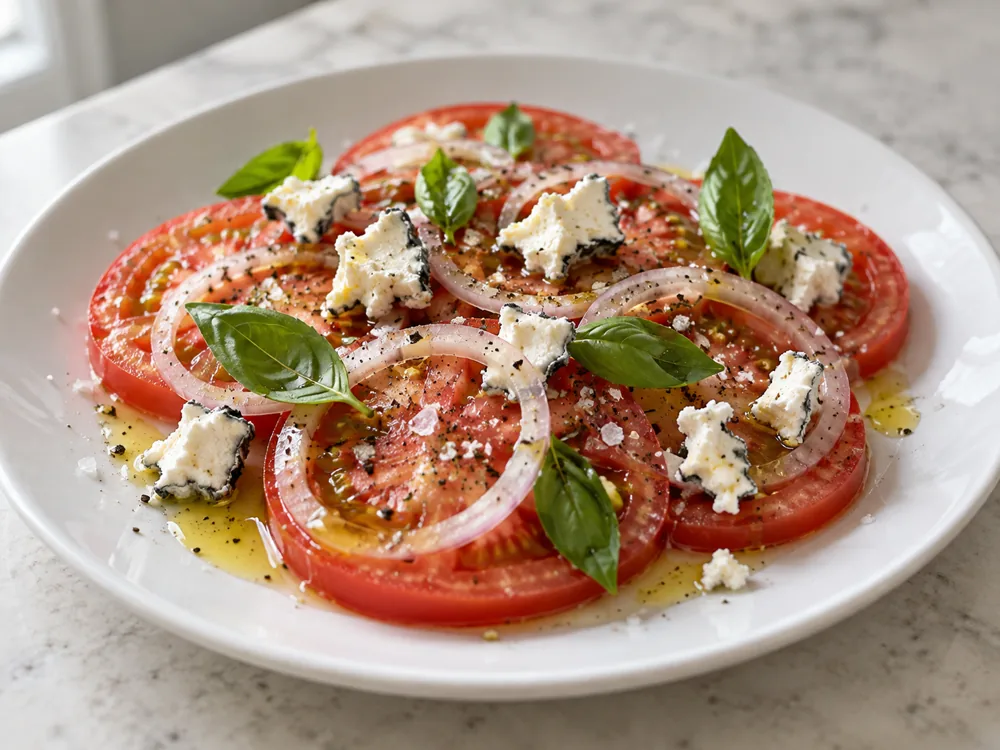
For a dish, Grace Singleton of Zingerman's Deli posted a Michigan summer tomato salad on the Zingerman's Community of Businesses site in 2017. She chose Chelsea after a tasting at a Deli staff meeting left her very impressed.
She cut the log into quarter-inch slices, cut those into bite-size pieces, and sprinkled them over the finished tomato and onion layers as the last step.
She offers it as an alternative to caprese, the go-to tomato salad of fresh mozzarella and basil, and garnishes with thyme, basil, parsley, or chives.
| Ingredient | Amount in the recipe |
|---|---|
| Fresh tomatoes | 2 to 3, sliced a little over ¼ inch thick |
| New-crop sweet onion | ¼ to ½, sliced about ⅛ inch thick |
| Aged Chelsea | 5 to 6 slices, ¼ inch thick |
| Extra virgin olive oil | 3 to 4 tablespoons |
| Rose vinegar | 2 to 3 teaspoons |
| Sea salt and wild pepper | ¼ teaspoon salt, several grinds of pepper |
Her order of work has reasons. The oil is enough to coat the layer without pooling, and the vinegar goes on last because, she says, sprinkling it after the salt and pepper disperses the spices and blends the flavor across the dish.
She also scales the onion to its strength: a strong onion gets a smaller share, and a fresh sweet onion can match the tomato in equal amounts.
The recipe leans on in-season Michigan tomatoes and new-crop onions from the Ann Arbor farmers' market, which she says taste very different from the same vegetables the rest of the year.
Can You Still Buy Aged Chelsea?
Its status is open. Cheese.com's entry for Aged Chelsea says the cheese is currently unavailable on the official site, and a notice on the old Zingerman's Creamery website says the creamery became Sanilac Creamery in fall 2025, left the Zingerman's Community of Businesses, and keeps the same people and recipes.
That notice names its Cream Cheese line, Goat Cream Cheese, and Pimento Cheese as examples of what continues, in a list that ends with "and more," so ask the creamery whether Chelsea is among them.
The notice also names where Zingerman's cheeses are still sold, and those are the places to ask: Zingerman's Bakehouse, Deli, Mail Order, and Roadhouse, plus the creamery's own shop on Plaza Drive.
The Bon Bouche tasting (2015), the tomato salad post (2017) and the producer's archived page (2019) each date from before the fall 2025 change, so confirm the details below with the seller.
If you find a log, its weight, storage and price come from three different places.
- Weight: 5 oz on the producer's archived page.
- Home storage: check the label for wrapping, temperature, and freezing advice.
- Price: ask the seller or check current listings.
Is Aged Chelsea Safe During Pregnancy?
Cheese.com and the producer's archived page both list pasteurized goat's milk for Chelsea. The CDC calls soft cheese made from unpasteurized (raw) milk a riskier choice and pasteurized soft cheeses heated to an internal temperature of 165°F or until steaming hot a safer one.
The NHS says pasteurised or unpasteurised mould-ripened soft cheeses with a white coating on the outside, such as brie, camembert and chèvre, must be thoroughly cooked.
The CDC also lists pregnant women as 10 times more likely to get a Listeria infection.
Eaten cold, a pasteurized mould-ripened soft cheese is a type the CDC list does not cover, so ask your clinician about Chelsea.
Which Loire Goat Cheeses Are Similar to Aged Chelsea?
Selles-sur-Cher, Sainte-Maure de Touraine and Valençay are three Loire goat cheeses to compare with Chelsea, matched using traits from each cheese's official AOP specification.
| Cheese | Rind | Paste | Flavor |
|---|---|---|---|
| Aged Chelsea | Mold-ripened, vegetable ash | Creamy and spreadable | Acidic, buttery, sweet |
| Selles-sur-Cher | Natural grey ashen; vegetable charcoal and salt (AOP spec) | Fresh and yielding when young; firm and tight when ripe (AOP spec) | Slightly acidic and sweet when young; more salty and goaty with hazelnut when ripe (AOP spec) |
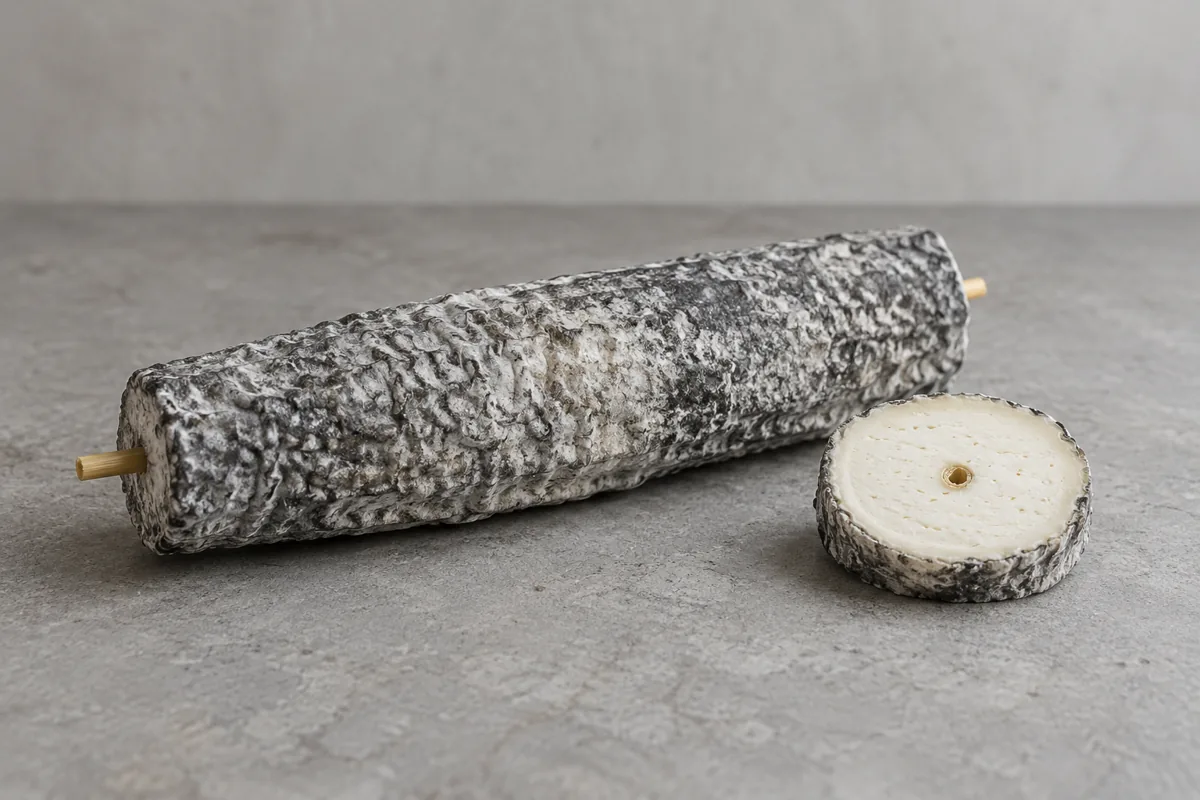
| Sainte-Maure de Touraine | Charcoal ash and salt; straw through the middle (AOP spec) | White-to-ivory; creamy, becomes drier and crumbly with age (AOP spec) | — |
| Valençay | Grey felted natural rind; blue-to-green hints from ash (AOP spec) | Bright white, smooth, dense; may have a creamy edge (AOP spec) | Fresh lactic flavor with light goaty and hazelnut notes (AOP spec) |
The closest match on rind is Selles-sur-Cher, which Cheese.com lists as a Loire goat's-milk cheese with an ash-coated rind. It matches Chelsea on the coat and the tang but not on a spreadable paste, since its interior is firm.
Sainte-Maure de Touraine is a Loire goat cheese with a charcoal-ash-and-salt rind and a white-to-ivory paste that becomes drier and crumbly with age, per the AOP specification. The specification confirms raw goat’s milk, unlike Chelsea.
Valençay also comes from the Loire and has a grey felted natural rind with blue-to-green hints from the ash, per the AOP specification. The specification confirms raw goat’s milk and describes a fresh lactic flavor with light goaty and hazelnut notes, which is gentler than Chelsea’s acidic and buttery profile.
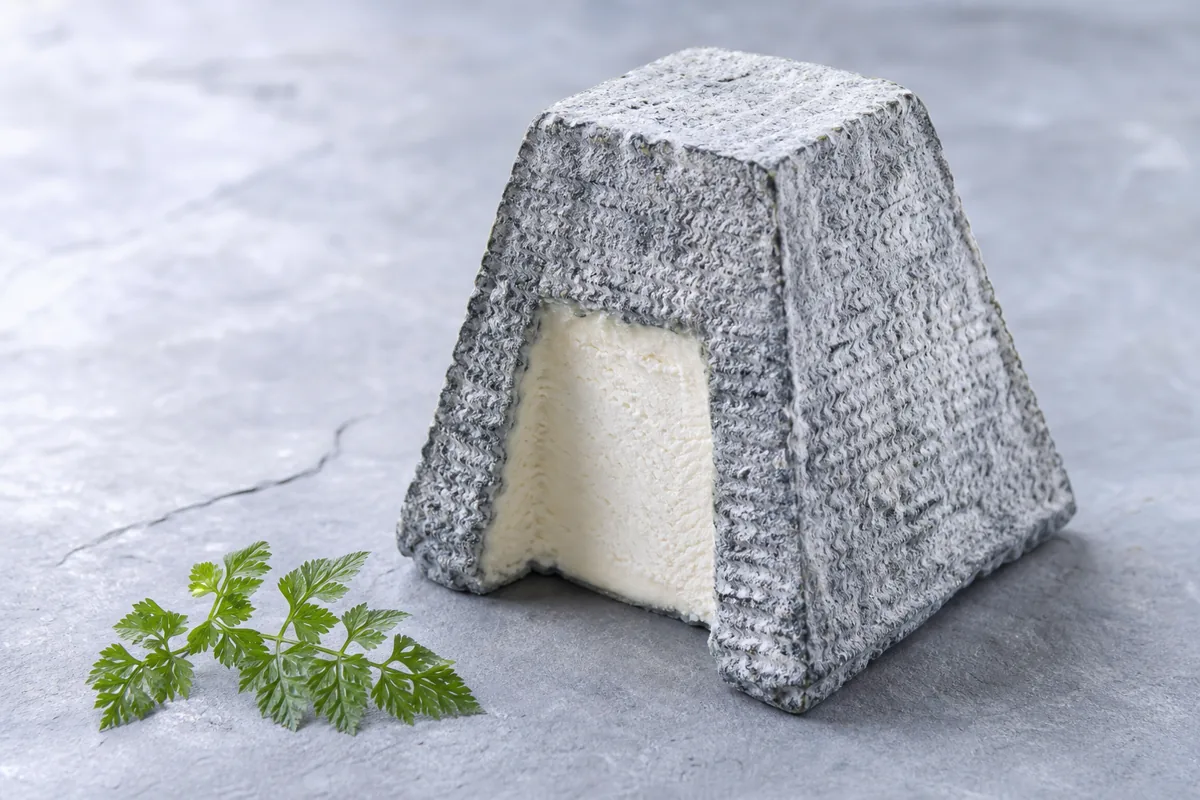
The AOP specification describes Valençay as a square-based truncated pyramid, so its shape separates it from Chelsea's log on sight.
If pasteurized milk matters to you, read the label on any of these, since the Sainte-Maure and Valençay specifications confirm raw goat’s milk.
SOURCES & REFERENCES
Aged Chelsea is a mold-ripened goat cheese log coated in edible vegetable ash and made from goat's milk in Ann Arbor, Michigan. Zingerman's Creamery created it, and Sanilac Creamery is the maker now.
Yes, per Cheese.com and the producer's archived product page. The NHS says pasteurised or unpasteurised mould-ripened soft cheeses with a white coating must be thoroughly cooked, and eaten cold, pasteurized Chelsea is a type the CDC list does not cover, so confirm the label and ask a clinician.
The producer calls it buttery, brightly acidic, and surprisingly sweet, and Cheese.com lists acidic, buttery, and sweet with a gentle goat-milk flavor. The producer describes the texture as slightly crumbly, while Cheese.com says creamy and spreadable.
The producer says the ash is alkaline, which reduces acidity on the surface and lets the cheese ripen under the rind. A Bon Bouche writer adds that ash-ripening stops a lactic cheese from becoming overly acidic.
The producer's archived page lists 2 to 10 weeks at purchase and a wholesale shelf life of 6 weeks. Ask the seller where your piece sits in that range.
Cheese.com names sweet Loire Valley whites such as Vouvray, Muscadet, Sancerre, and Pouilly-Fumé, and the producer suggests a minerally white or an unoaked Chardonnay. Zingerman's Deli also cut it into bite-size pieces over a tomato and onion salad.
Cheese.com says it is unavailable on the official site, and Sanilac Creamery's notice names Cream Cheese, Goat Cream Cheese and Pimento Cheese among what continues, in a list that ends with "and more." Ask the creamery or a retailer for current stock.