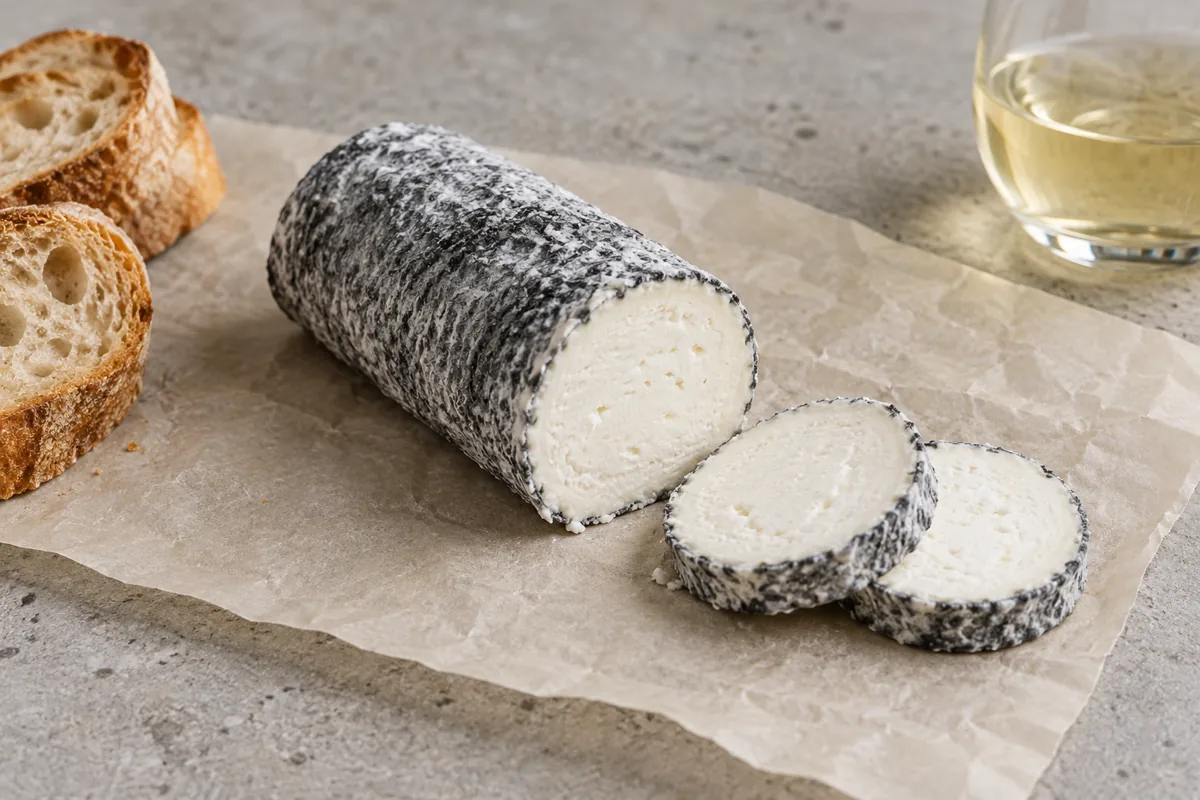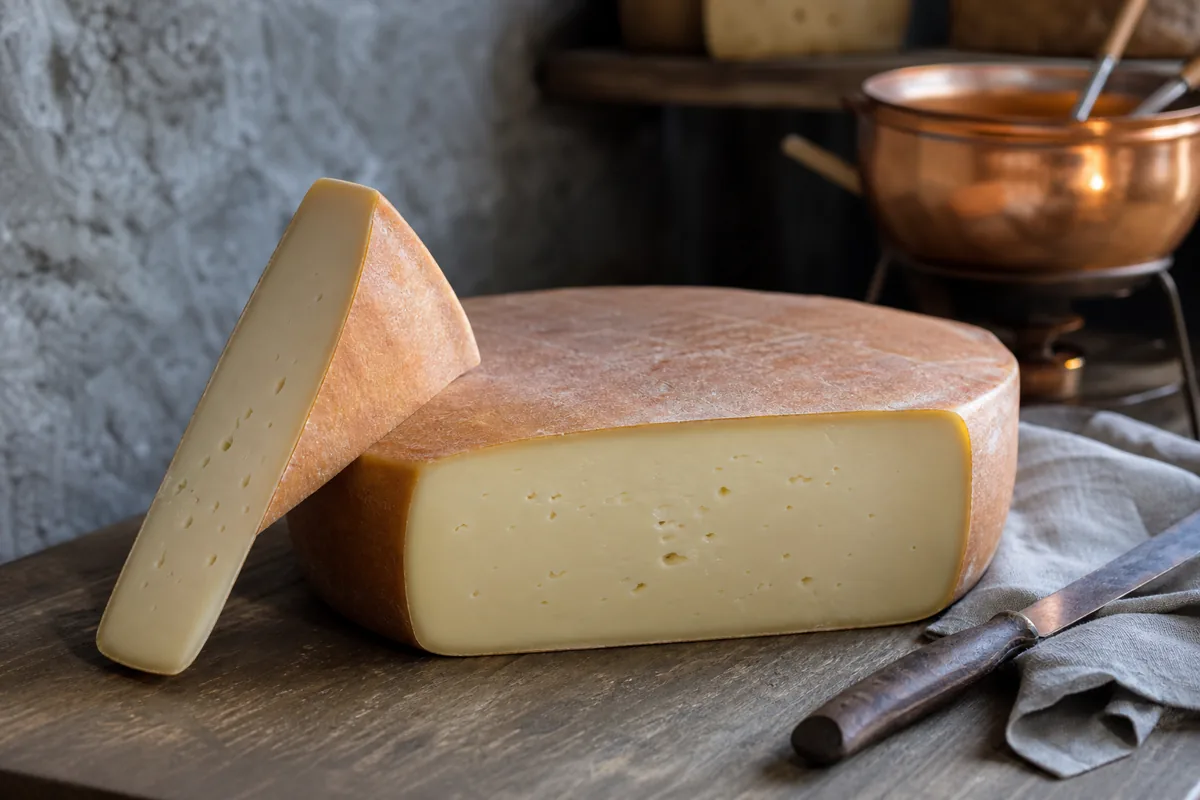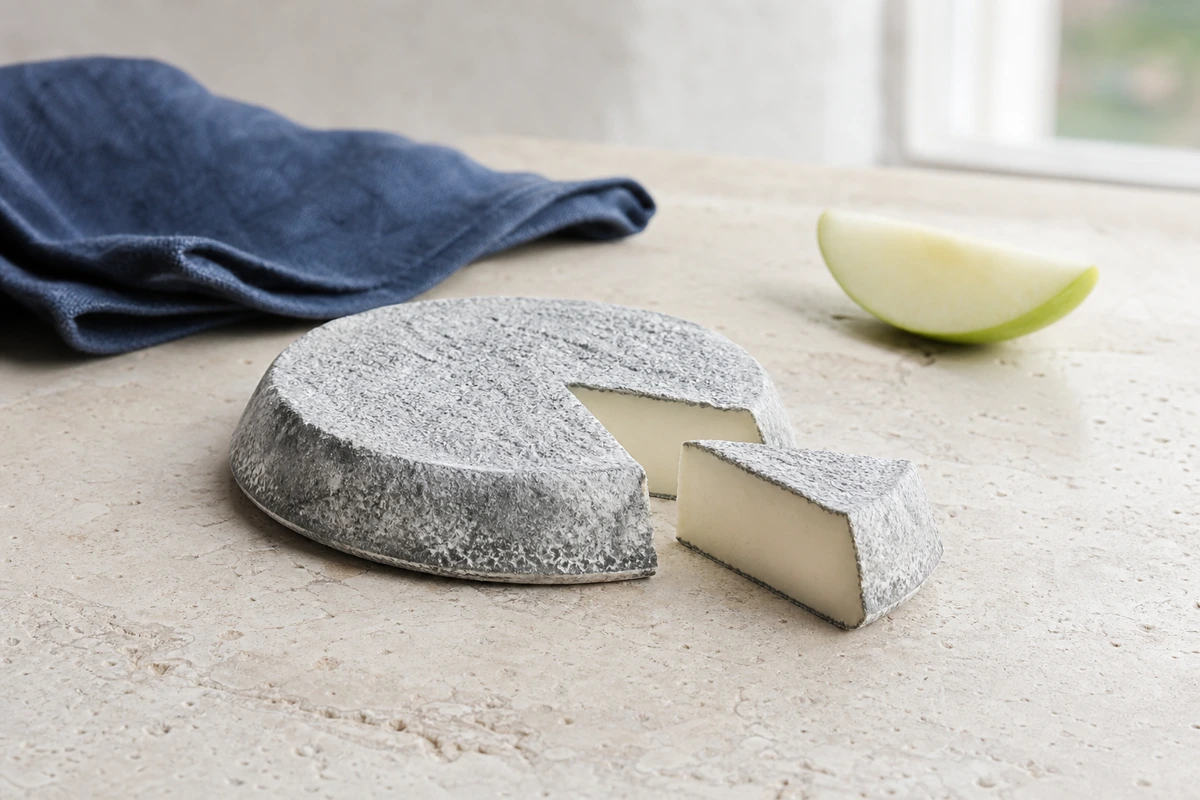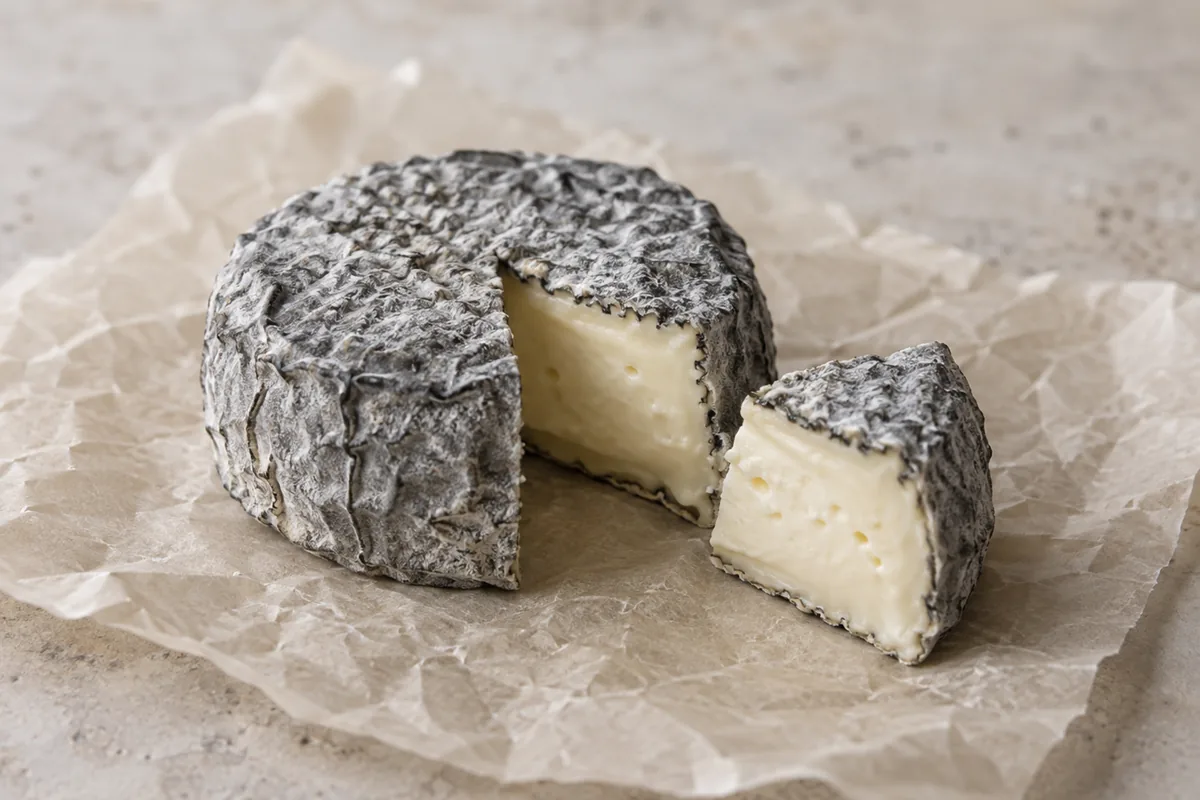
Ashley is MouCo's small ash-coated, soft-ripened cow's-milk cheese from Fort Collins, Colorado. Its useful distinction is time: you can eat it young and tangy, wait for a creamier middle stage, or choose the seven- to eight-week peak for the fullest buttery character.
The grey rind is edible vegetable ash, not spoilage or smoke. Once you understand what the ash and the date label do, the wheel becomes much easier to buy at the ripeness you actually enjoy.
In This Article
What Does the Ash Rind Do?
The vegetable ash raises the surface pH and helps the rind flora establish themselves as the cheese ripens. That controlled surface development softens the paste from the outside inward and gives Ashley its clear grey edge.
MouCo identifies the ash as edible, so you do not need to peel it away. Taste a small piece with the paste first; the rind adds an earthier note and more texture than the creamy centre.
The milk comes from Morning Fresh Dairy near Fort Collins.
MouCo was founded in 2001 by Bavarian cheesemaker Birgit Halbreiter and Robert Poland, and the nearby dairy keeps Ashley's milk supply local to northern Colorado.
That relationship gives you a named maker, place and dairy rather than a vague “American artisan cheese” label.
Ashley is made as a small wheel, so the ripening front does not have far to travel from rind to centre. That short distance helps the wheel develop a clear outer creamline while its centre is still firmer.
The ash also moderates the acidic surface left by cheesemaking, creating friendlier conditions for the rind flora.
Its job is chemical as well as visual: the grey coating helps establish the outside-in ripening pattern that the D8Code dates describe.
Ashley took first place in national ACS judging in 2012, 2013 and 2016, along with awards from other competitions.
Those results are part of the cheese's history, but the date on your wheel still tells you more about how it will eat today.
How Do You Use the D8Code to Choose Your Ripeness?
Each wheel carries MouCo's D8Code with three date windows. Instead of treating the printed date as a simple countdown to spoilage, you can use it to choose between a firmer, brighter cheese and a softer, rounder one.
| Age | What you can expect |
|---|---|
| 0-3 weeks | Firm and dense, with a bright cultured tang. |
| 3-7 weeks | Softer and creamier, with the sharp edge beginning to mellow. |
| 7-8+ weeks | Peak ripeness: buttery richness, mellow sweetness and gentle earthiness. |
Seven to eight weeks is the producer's peak window, and a trade profile gives the same maturity range with an eight-week shelf life. The dates help you choose a style, but the marked consume-by date still sets the limit.
Another production account describes eleven days of early ageing followed by about forty days in the package, which lands near the same seven-week point.
Most of Ashley's visible change therefore happens after packaging rather than during a long stay on an open cellar shelf.

Younger Ashley stays neat enough to cut into clean wedges, while a mature wheel becomes smoother and more yielding without being designed to run like an overripe Brie. If you are serving it to several people, the middle window gives you the broadest compromise between structure and creaminess.
For a sharper, fresher cheese, open the wheel in the first window and expect the centre to remain comparatively dense. For a board where the paste should spread more easily, wait for the middle or peak window without crossing the marked consume-by date.
How Does the Flavour Change?
A young wheel leads with cultured tang and a bright dairy flavour. As it matures, that sharpness settles into butter, mild sweetness and earth, while the rind contributes a more savoury finish.
You may also encounter citrus, mushroom or green vegetable notes in tasting descriptions. Those details vary with age and palate, so use them as possibilities rather than a checklist that every wheel must satisfy.
Citrus and mushroom appear in one account, while asparagus or Brussels sprout appears in another. Both sit around the more dependable progression from cultured tang toward sweetness, butter and earth, which is the change you can reasonably use when buying.
The reliable contrast is simpler: young Ashley is firmer and tangier; mature Ashley is creamier, sweeter and earthier. That change matters more to your purchase than deciding whether one bite resembles asparagus or mushrooms.
Why Is Ashley Different From Brie?
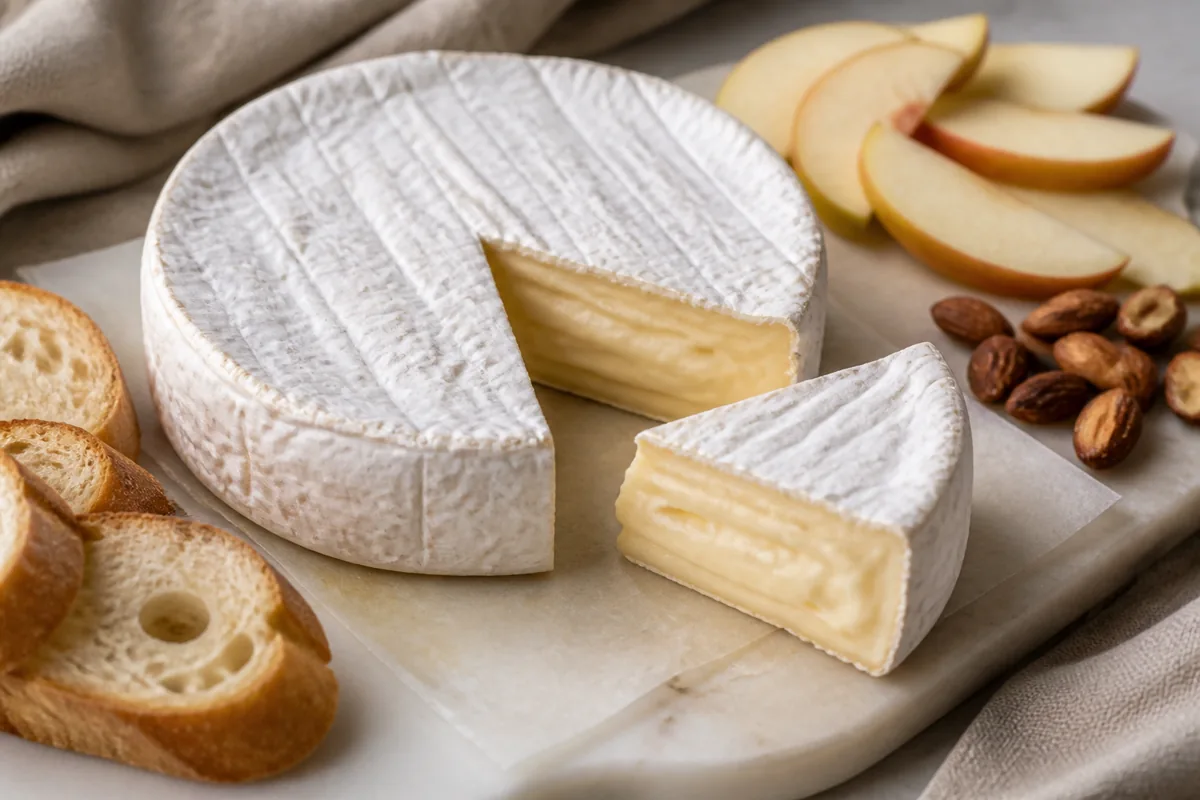
Ashley and Brie both ripen from the surface inward, so they can develop a softer band beneath the rind before the centre catches up.
Ashley's small format, grey vegetable ash and three-window D8Code give you a more explicit way to choose where that progression has reached.
The rind is the clearest visual distinction. Brie is normally recognised by a pale bloomy coat, while Ashley presents a wrinkled grey surface whose ash is meant to be eaten with the paste.
If you need a substitute, a small ash-coated cow's-milk wheel will come closer to Ashley's surface and ripening pattern than plain Brie. Brie still works when your priority is a soft-ripened texture rather than the ash character or the dated stages.
What Should You Serve With It?
Ashley's small format and edible rind make it easy to place at the centre of a compact cheese board. Bread, olives and crackers keep the presentation simple, while acidic fruit or sparkling wine lifts the richer paste as the wheel approaches peak ripeness.
The maker pairs Ashley with wine, fruit, bread, olives and crackers, and the more specific combinations below develop those ideas around sweetness, acidity and texture. You can narrow the set rather than placing every suggestion around one small wheel.
Match the accompaniments to the date window. A young, tangy wheel can take a little honey, while a peak-ripe wheel already has enough sweetness and benefits more from acidity, bubbles or fresh fruit paired with cheese.
| Pairing | Type | Why It Works |
|---|---|---|
| Brut rosé | Wine | Bubbles and acidity cut through a mature wheel's buttery paste. |
| Chardonnay or Champagne | Wine | Choose a fresh style so the wine meets the creaminess without flattening the tang. |
| Toasted baguette, honey, walnuts and thyme | Food | Sweetness, crunch and herbs frame the cheese while leaving the ash rind visible. |
| Prosciutto or whiskey salami | Food | Use a small amount so the cured meat supports rather than covers the delicate centre. |
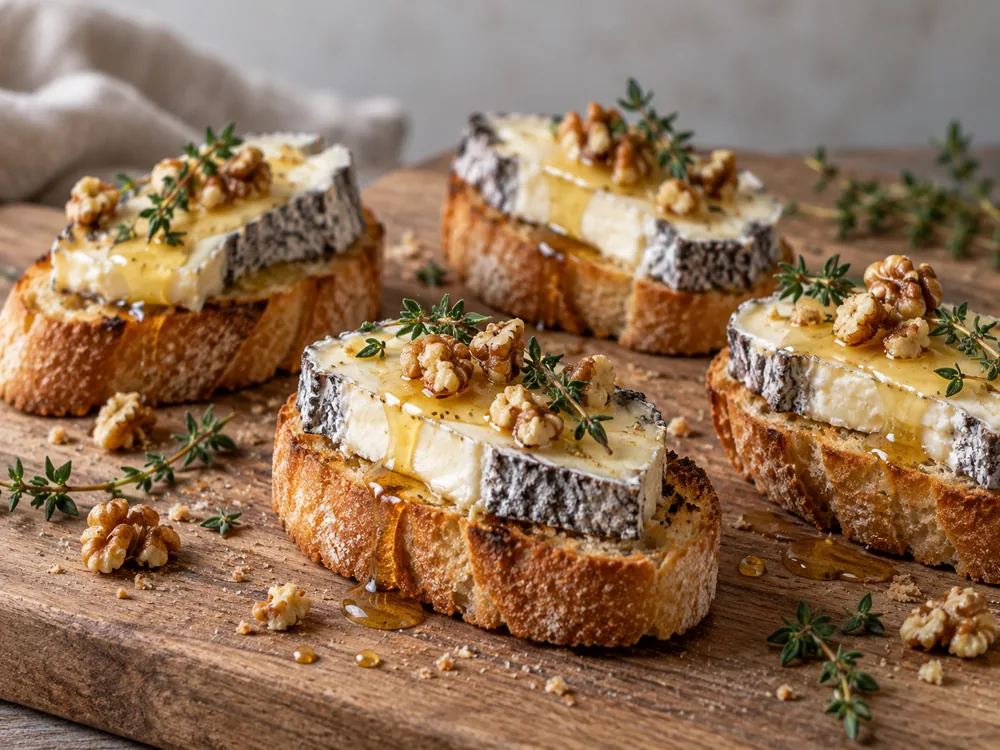
For beer, lager and saison keep enough brightness for the cheese, while chocolate stout creates a darker dessert-like contrast. MouCo also uses Ashley in recipes such as chive strata, so a mature wheel can move from a board into a baked egg dish without needing a separate melting identity.
Heat changes the role of the rind as well as the paste. In a strata, small pieces distribute the earthy surface through the dish; on a board, leaving the wheel whole makes that surface available as a deliberate part of each bite.
How Should You Buy and Store Ashley?
Retail packs are commonly about 4.4 oz, while an older cheese-library entry describes a 5 oz wheel roughly 2.5 inches across. The small size is useful because you can serve a whole wheel during its chosen date window instead of repeatedly exposing a cut face.
The published shelf life is eight weeks, and MouCo ships with cold gel packs. Refrigerate the cheese, keep its wrapping intact until you need it, and let the D8Code guide when you open it.
Once cut, protect the exposed paste while allowing the rind to remain intact; the general principles for storing cheese help, but Ashley's marked date remains the product-specific limit. A wheel that has simply softened within its date is behaving as intended, whereas damaged packaging or an aroma sharply outside its usual earthy profile deserves caution.
Buy the window you intend to eat rather than the oldest wheel automatically. Peak ripeness is a preference for the fullest soft texture, not a rule that makes a younger, brighter Ashley defective.
Is Ashley Vegetarian or Suitable During Pregnancy?
Culture lists animal rennet for Ashley, so you should not treat it as vegetarian unless a current MouCo label says otherwise. Pasteurisation is listed by multiple trade and retail records, but the producer page itself does not make that statement, which makes the current package the cleanest check.
Pasteurisation is an important label check, but it does not settle a soft-ripened cheese because contamination can occur after the milk is pasteurised. CDC guidance lists pasteurized soft cheeses heated to an internal temperature of 165°F or until steaming hot as safer.
Served cold, Ashley is described as a pasteurized soft-ripened, ash-coated cheese that is firm and dense when young, a type the CDC list does not cover, so ask a midwife or doctor.
NHS guidance requires thorough cooking for mould-ripened soft cheese with a white coating, including examples such as Camembert, while Ashley has a grey ash rind and is not named. If you are pregnant, follow the current pregnancy guidance for cheese where you live and use steaming hot throughout as the conservative cooked endpoint unless your clinician advises otherwise.
Yes. MouCo identifies the vegetable ash as edible, and eating it with the paste adds an earthier flavour and more texture.
MouCo marks seven to eight weeks as peak ripeness. The three D8Code windows let you choose a younger tangy wheel or a softer, sweeter one.
Trade and retail sources list pasteurised cow's milk, while MouCo's product page does not state the treatment. Check the current package when that detail matters.
Culture lists animal rennet for Ashley, so it is not vegetarian on that record. Confirm the current label before buying.