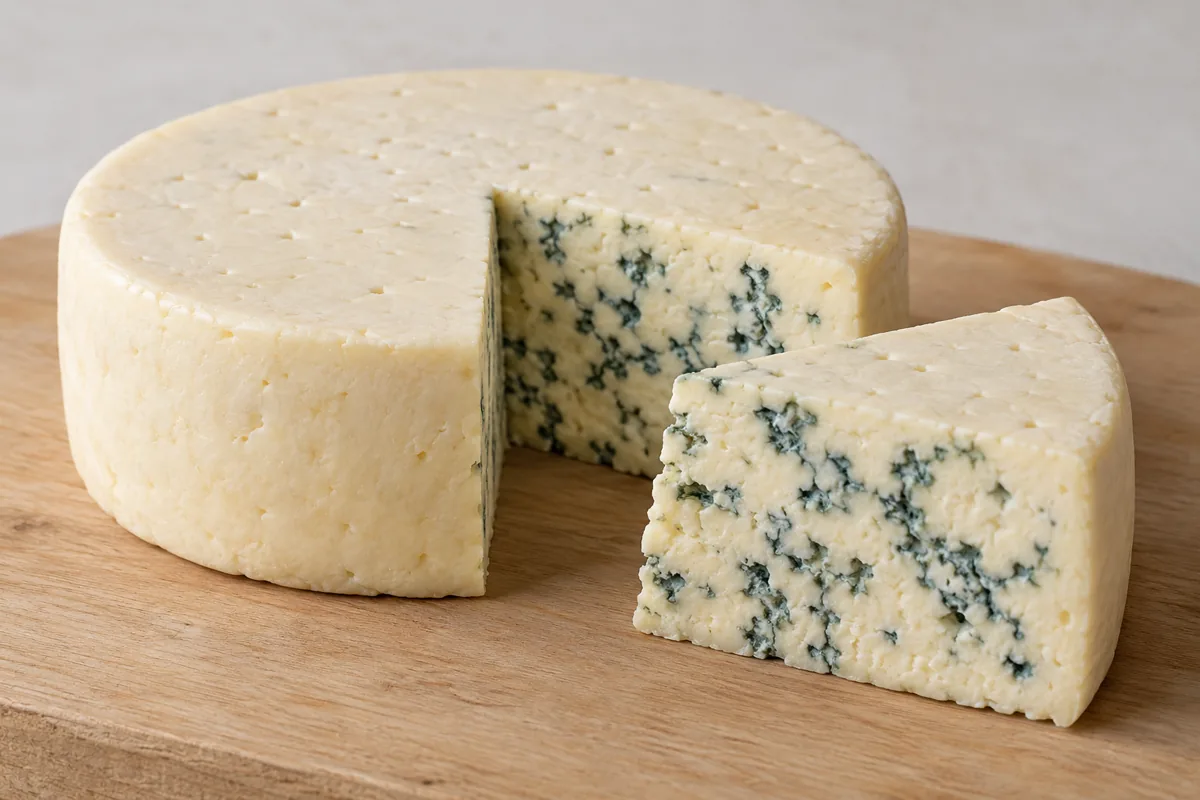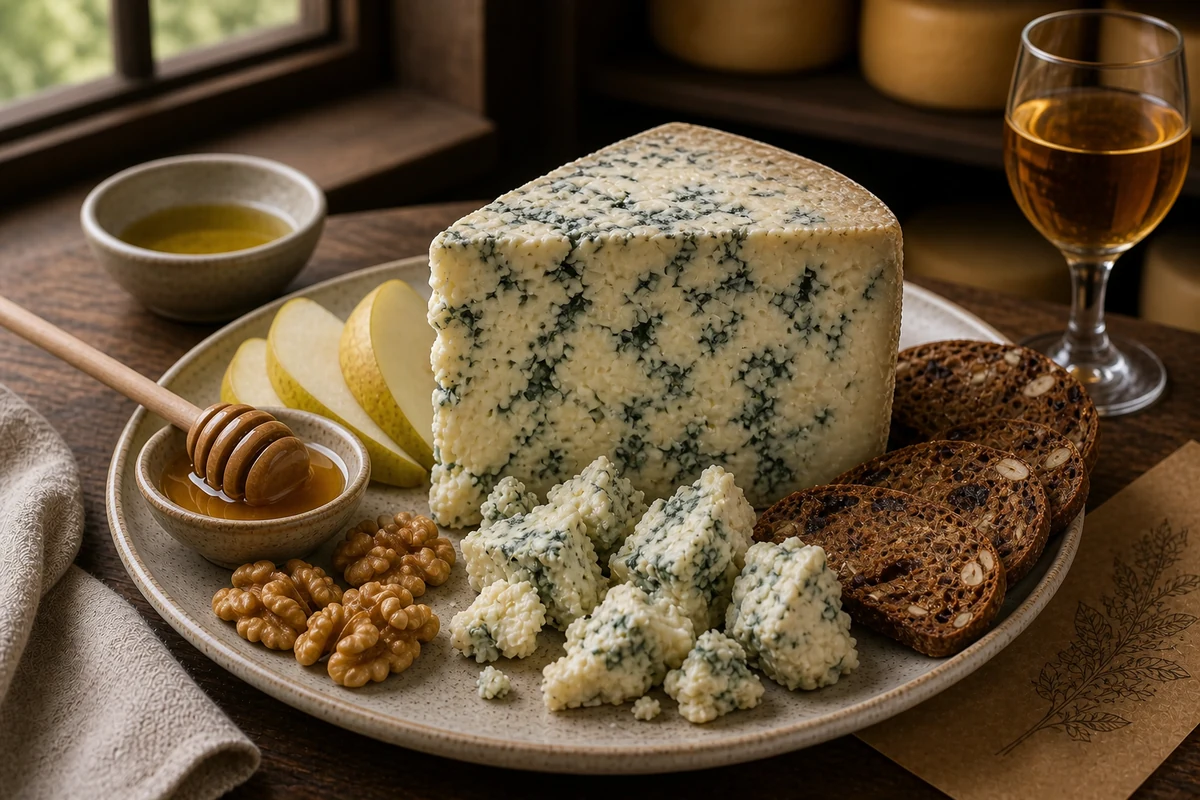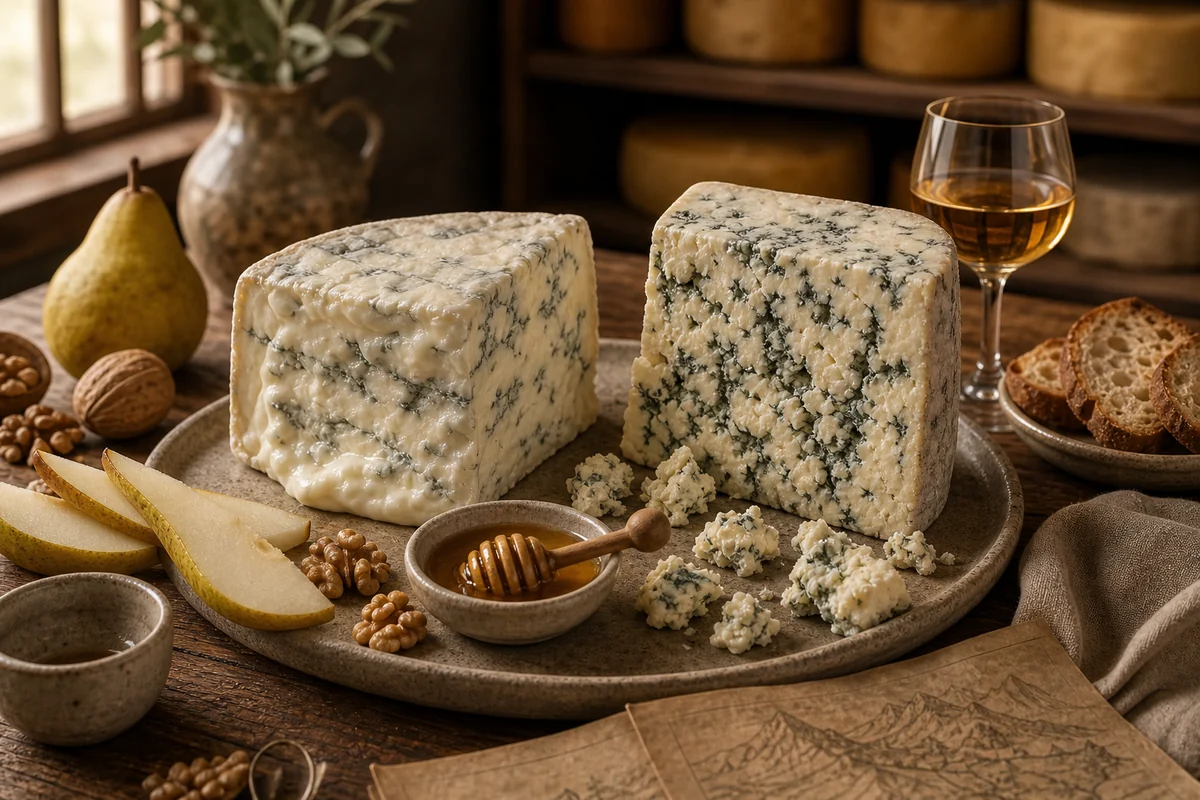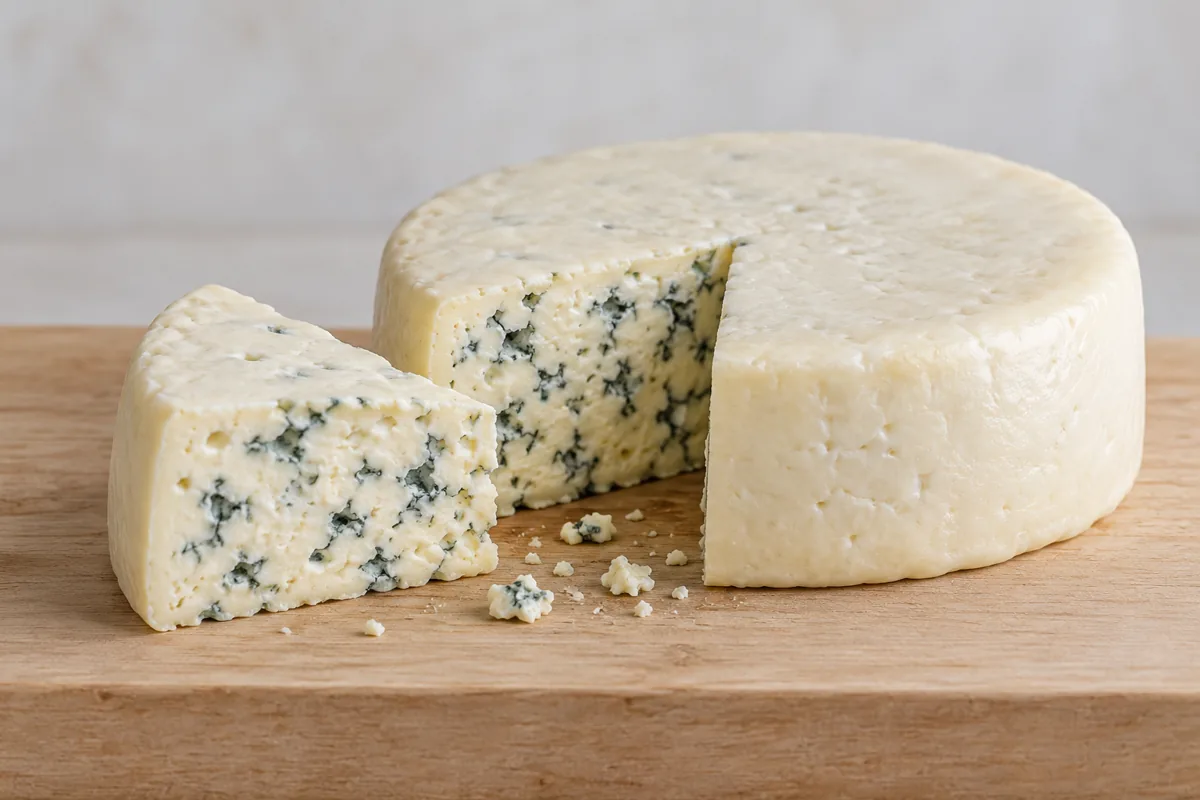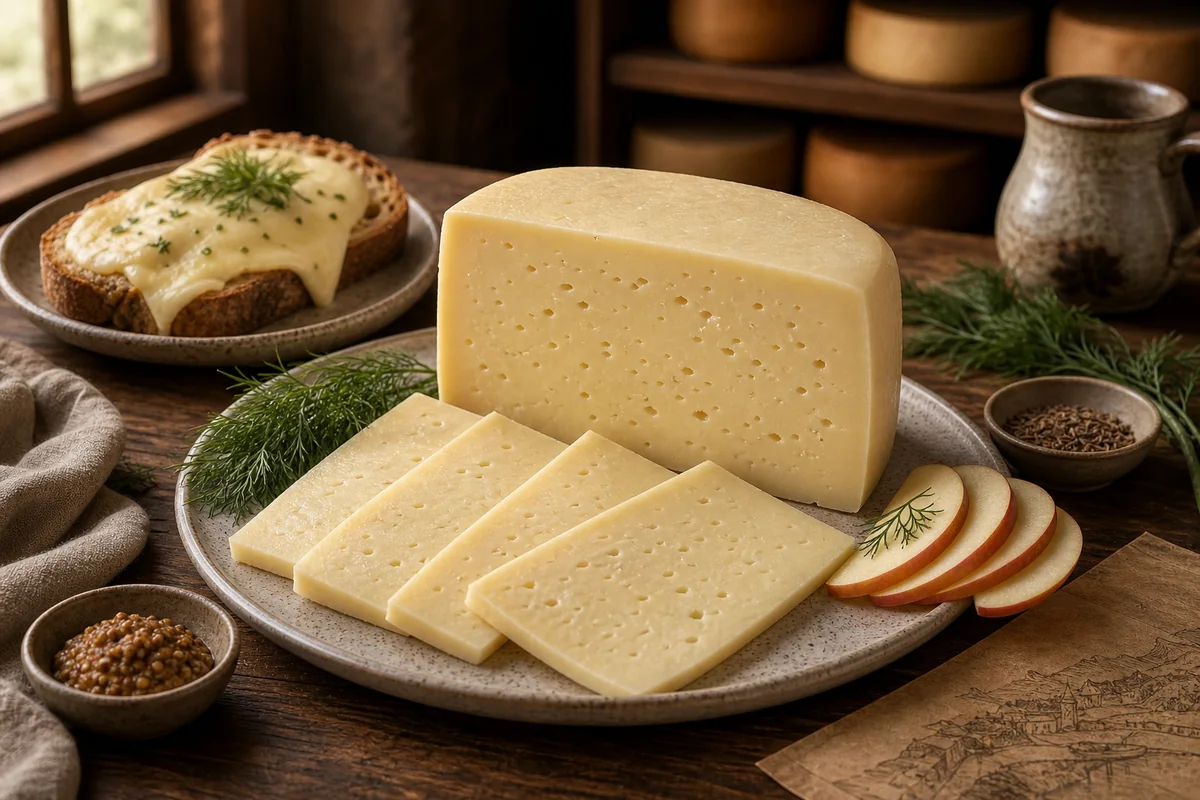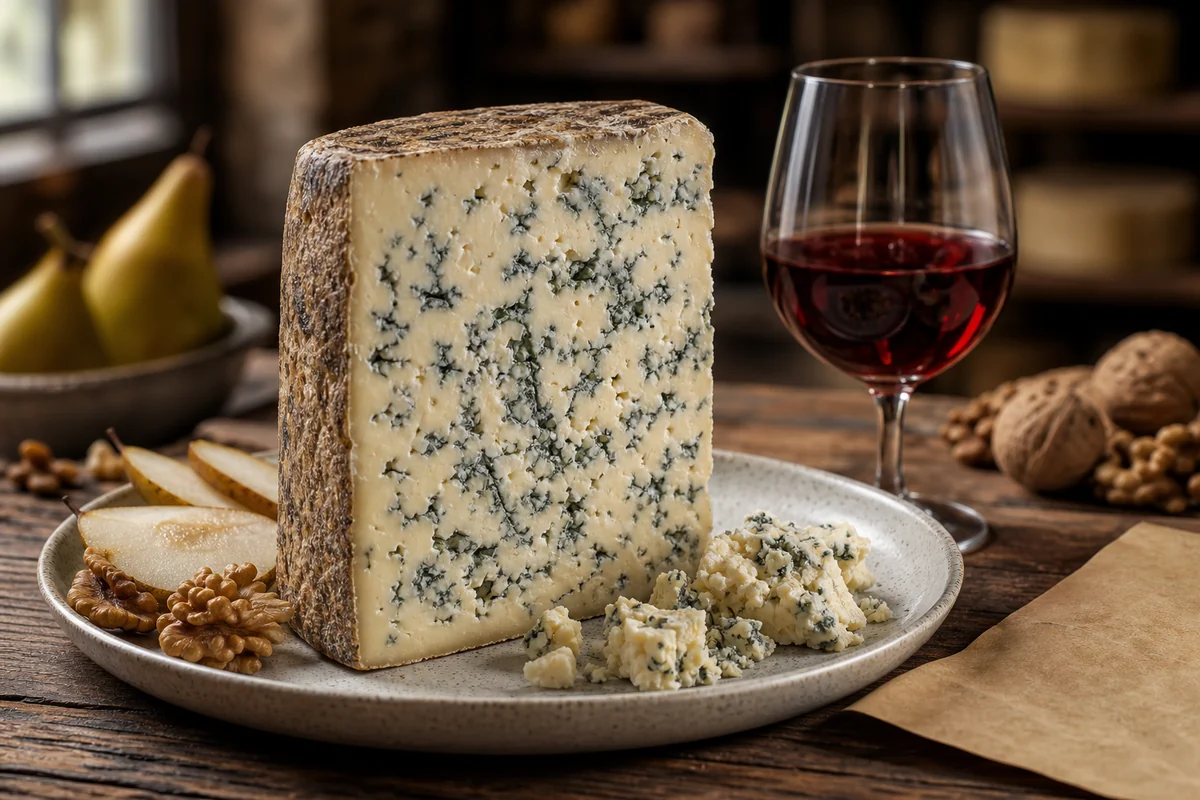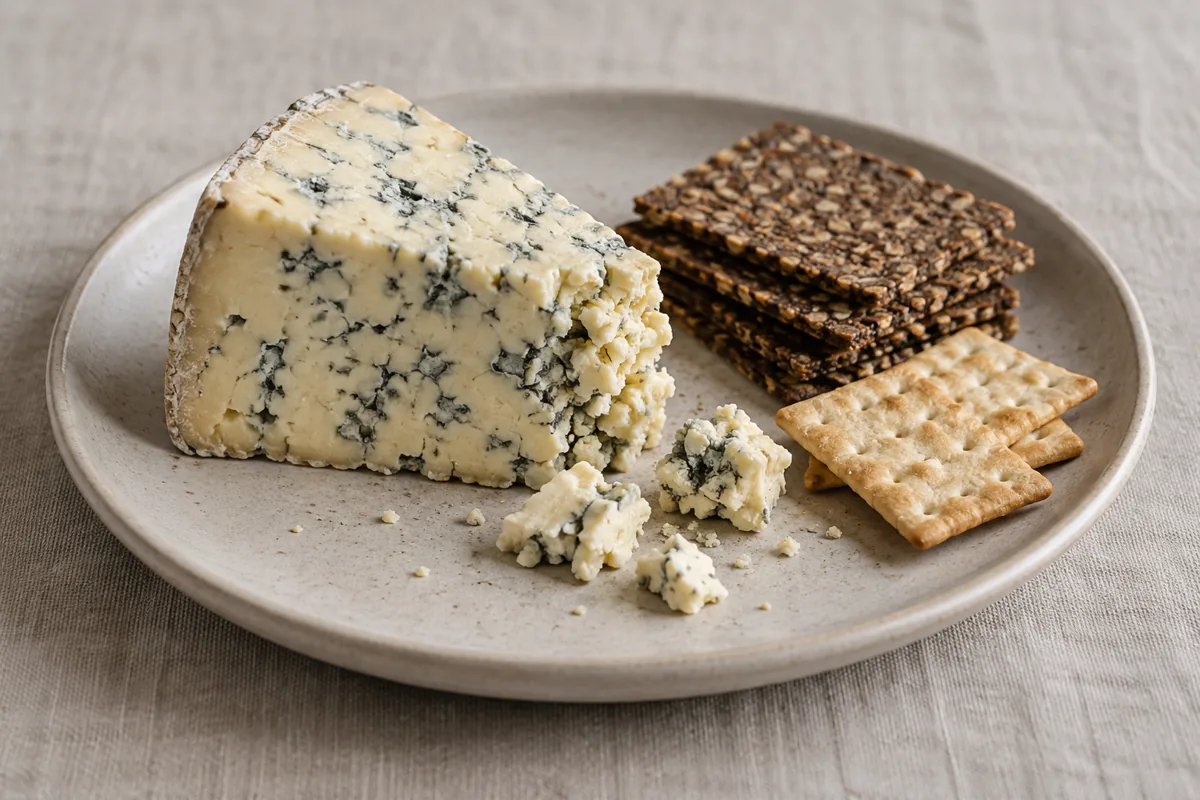
Aura is the blue cheese Valio makes in Äänekoski, Finland, from pasteurized cow's milk. Regular Aura ripens for 6 weeks and Aura Gold for 12 weeks.
If you are pregnant, cooking Aura until steaming hot meets both the NHS and the CDC condition. Eaten cold, it depends on whether Aura counts as soft, because the NHS says soft blue-veined cheese must be thoroughly cooked.
In This Article
What Is Aura, and Who Makes It?
Aura has been sold as a Finnish blue cheese since 1935, and Valio's ingredient list opens with pasteurized milk.
A Danish cheesemaker named Rasmussen began making the cheese in Finland, and it was renamed after the Aura River that runs through Turku. Production moved from Turku to Äänekoski in 1968.
The label also lists a blue mold culture, P. roqueforti, which puts Aura in the blue cheese family.
Outside Finland the same cheese can carry another name: in Canada and the United States it is sold as Midnight Blue, and Wikipedia says Valio's import division, Finlandia Cheese, markets it there.
How Does Regular Aura Differ from Aura Gold?
Valio ripens regular Aura for 6 weeks and Aura Gold for 12 weeks, twice as long.
Cheese.com, Valio Aimo and the Finnish cheese society Juustopöytä give the same two figures, and Finnish Wikipedia says standard Aura is aged at least four weeks.
Valio sells Gold only as a seasonal product, from September to January.
| Detail | Regular Aura | Aura Gold |
|---|---|---|
| Ripening | 6 weeks | 12 weeks |
| Season | No season stated | September to January |
| Fat per 100 g | 29 g | 29 g |
| Salt per 100 g | 3.1 g | 3.1 g |
| Valio's wording | Sharp tang and creaminess | Long-aged and aromatic |
The Finnish labels list the same 29 g fat and 3.1 g salt for both. The extra six weeks show up in Valio's wording and not in the numbers.
What Does the Label Say About Salt, Fat, and Lactose?
Valio's Finnish label for the 170 g piece lists 29 g fat (17 g saturated), 3.1 g salt, and 19 g protein per 100 g. Valio Estonia shows 15 g saturated fat, 18 g protein, and salt at 2.9% in the ingredient list for the same product, so the figures shift a little between markets.
| Source | Fat | Saturated fat | Protein | Salt |
|---|---|---|---|---|
| Valio Finland | 29 g | 17 g | 19 g | 3.1 g |
| Valio Estonia | 29 g | 15 g | 18 g | 2.9% in ingredient list |
| English Wikipedia | 29 g | Not listed | 18.5 g | 3 g |
If you are watching salt, a 30 g piece carries about 0.9 g of salt at the Finnish label's 3.1 g per 100 g.
Valio's Finnish pages list Aura and Aura Gold as lactose-free, and the Gold page shows 0 g lactose per 100 g.
How Does Aura Taste, and What Do Finns Serve with It?
Cheese.com lists Aura as salty, sharp, strong, and tangy with a creamy texture and pale yellow color. Valio's brand page describes the mix as sharp tang and creaminess.
A cheese master quoted by Valio Aimo describes fresh Aura as crumbly, sour, and salty at once, with a slight dandelion-like bitterness. The same article says the flavor turns milder and more complex as the cheese ripens.
Aura's texture is semi-soft in Cheese.com's listing but hard and crumbly in the English Wikipedia entry.
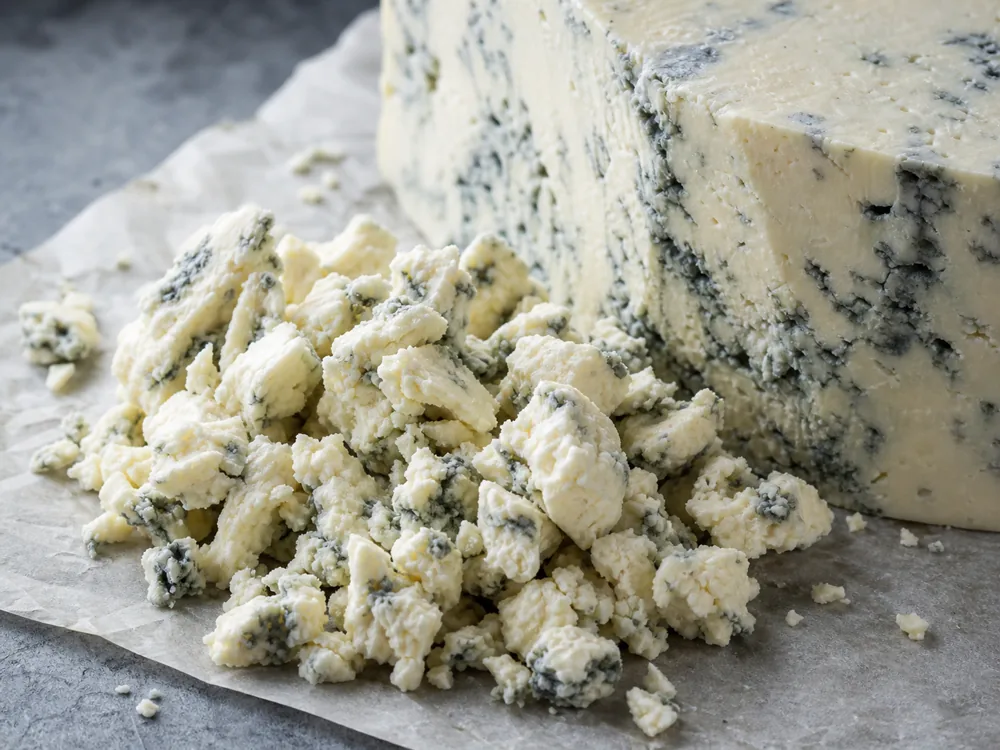
Valio's product page suggests Aura on bread, crackers, or thin rye crisps, and you can cook with it too.
Crumbled Aura goes into pizzas, soups, sauces, and salads, and Valio lists more than 20 recipes that run from pasta and seafood to meat, salads, and desserts.
The Finnish wine magazine Viinilehti paired Aura Gold with three sweet or strong drinks.
| Pairing | Type | Why It Works |
|---|---|---|
| Thin rye crisps | Food | Valio's own serving suggestion for regular Aura. |
| Late Bottled Vintage Port | Wine | Viinilehti's pick for Aura Gold: a 2008 Smith Woodhouse with ripe cherry, fig, and chocolate notes. |
| Sweet Beerenauslese | Wine | Viinilehti's pick for Aura Gold: a 2017 Nittnaus Beerenauslese Exquisit, tropical and sweet. |
| American barley wine | Drink | Viinilehti's pick for Aura Gold: Stadin American Barley Wine, a hoppy, chestnut-brown ale. |
How Does Aura Compare with Roquefort, Gorgonzola, and Stilton?
Cheese.com describes Aura's taste and texture as somewhat similar to Roquefort, yet the two start from different milk. Roquefort is French, made from raw, unpasteurized Lacaune sheep's milk, and matured in the Combalou caves at Roquefort-sur-Soulzon, while Aura is Finnish, made from pasteurized cow's milk, and matured 6 or 12 weeks.
| Cheese | Country | Milk | Cheese.com type | Maturing |
|---|---|---|---|---|
| Aura | Finland | Pasteurized cow | Semi-soft, blue-veined | 6 weeks (Gold: 12) |
| Roquefort | France | Unpasteurized sheep | Semi-hard, blue-veined | Matured in the Combalou caves |
| Gorgonzola | Italy | Pasteurized cow | Soft, blue-veined | 1 to 6 months (dolce); piccante longer |
| Stilton | England | Pasteurized cow | Hard, blue-veined | At least 9 weeks (PDO minimum) |
Like Aura, Gorgonzola is made from pasteurized whole cow's milk. Its dolce (sweet) variety matures for 1 to 6 months and the piccante (aged, stronger) variety ages considerably longer.
Stilton is also pasteurized cow's milk, and its UK PDO specification requires at least 9 weeks of maturation, while Cheese.com listed three months as the minimum.
If you avoid raw milk, Roquefort is the one cheese in the table made from unpasteurized milk.
Is Aura Safe to Eat in Pregnancy?
Aura is pasteurized, which keeps it out of the CDC's riskier group of soft blue-veined cheeses made from raw milk. The NHS goes further and says pasteurised or unpasteurised soft blue-veined cheeses, such as Danish blue, gorgonzola, and roquefort, must be thoroughly cooked in pregnancy.
The NHS also says any cheese cooked until steaming hot is safe, including soft or blue cheese. The CDC likewise lists pasteurized soft cheeses heated to an internal temperature of 165°F or until steaming hot as safer.
The NHS and CDC sort cheese during pregnancy by milk treatment and softness: the NHS lists pasteurised or unpasteurised hard cheeses as safe to eat, and the CDC lists hard cheese, when made with pasteurized milk, as safer. Cheese.com calls Aura semi-soft while English Wikipedia lists it as hard and crumbly, so its place on the soft-versus-hard line is not settled.
Served cold, Aura is described by Cheese.com as a pasteurized semi-soft blue-veined cheese, a type the CDC list does not cover and one the NHS says must be thoroughly cooked, so ask your midwife or doctor before eating it uncooked.
If you are pregnant, crumbled Aura baked on a pizza or stirred into a sauce until steaming hot meets the NHS and CDC condition.
Where Do You Buy Aura, and How Do You Store It?
Valio sells Aura as a 170 g piece, as crumbles, and as whole wheels. Finnish Wikipedia adds cheese packed in wax, resealable boxes, and wedges wrapped in foil.
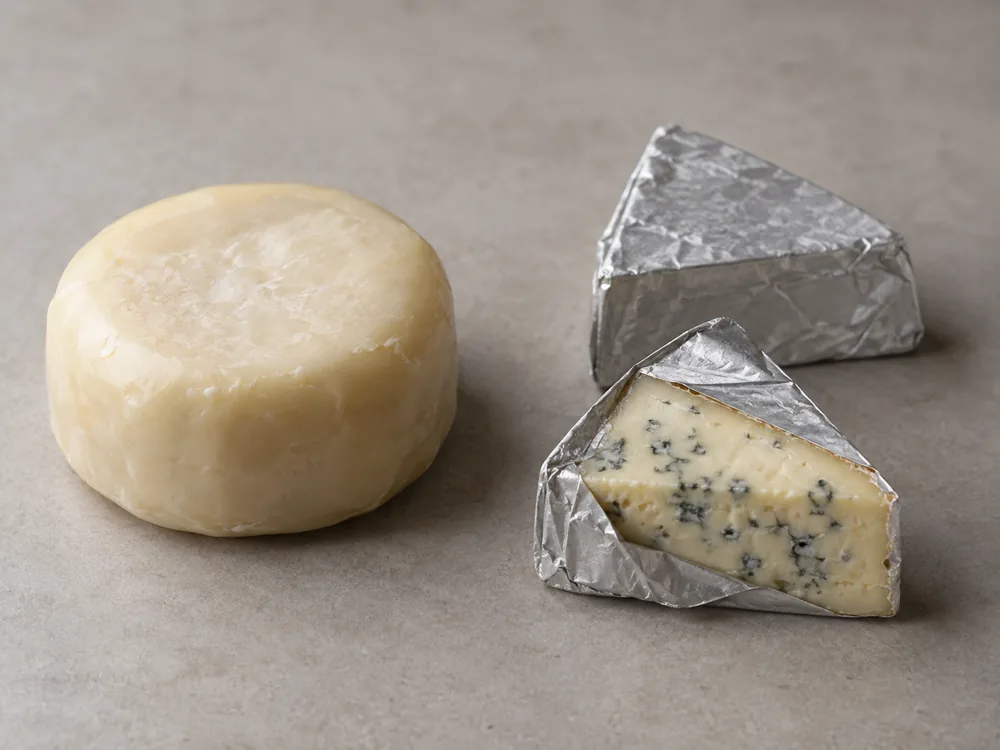
Unopened Aura keeps below +8°C until the date on the pack, and Valio recommends +2 to +5°C for the best flavor. Once you open a piece, follow the date and instructions on your own pack.
SOURCES & REFERENCES
Aura is a Finnish blue cheese that Valio makes from pasteurized cow's milk in Äänekoski. Valio has sold it since 1935, and it is named after the Aura River in Turku.
Regular Aura ripens for 6 weeks and Aura Gold for 12 weeks. Valio sells Gold from September to January, and its Finnish labels list 29 g fat and 3.1 g salt per 100 g for both.
Cheese.com says Aura is sold as Midnight Blue in Canada and the United States. Wikipedia says Finlandia Cheese, Valio's import division, markets it in the US.
Valio's Finnish product pages list both Aura and Aura Gold as lactose-free.
Aura is pasteurized, but the NHS says soft blue-veined cheese must be thoroughly cooked, and sources disagree on whether Aura is soft. Cheese cooked until steaming hot meets the NHS and CDC condition, so ask your midwife or doctor about eating it cold.
No. The Roquefort AOP requires raw unpasteurized Lacaune sheep's milk and maturation in the Combalou caves at Roquefort-sur-Soulzon, while Aura is a Finnish pasteurized cow's-milk cheese matured 6 or 12 weeks.