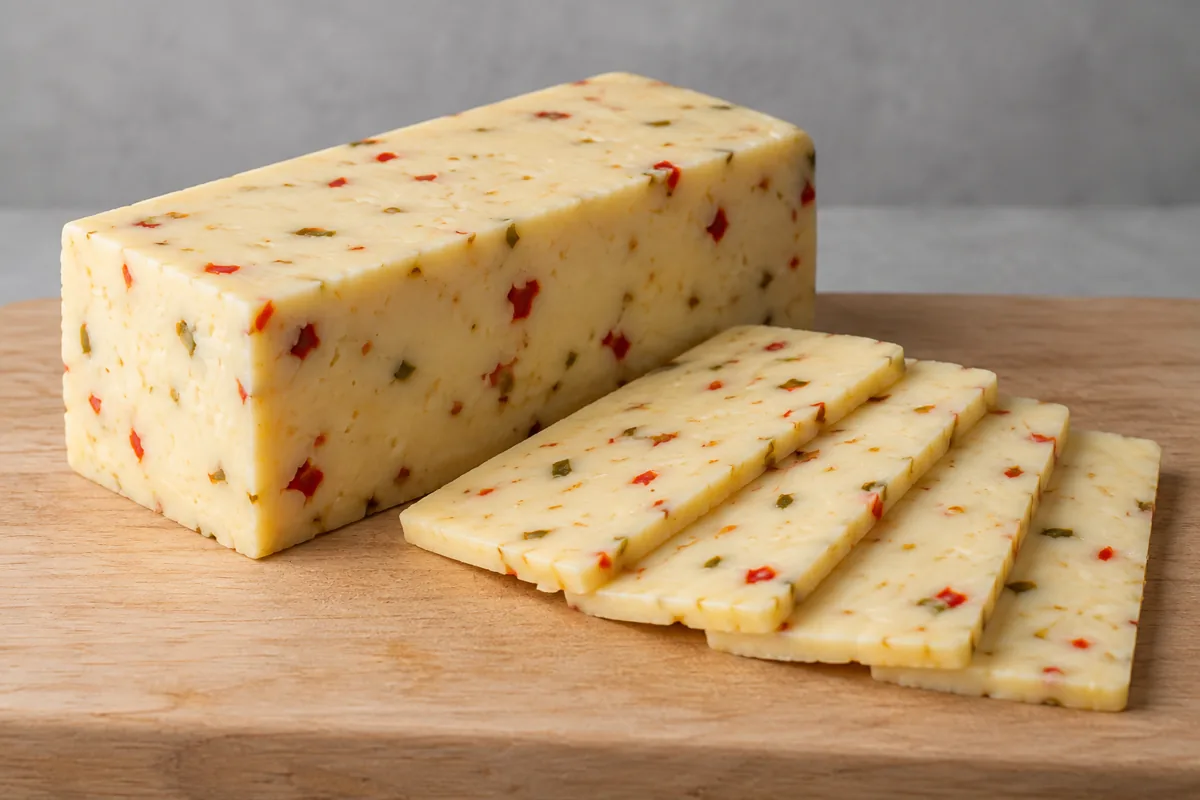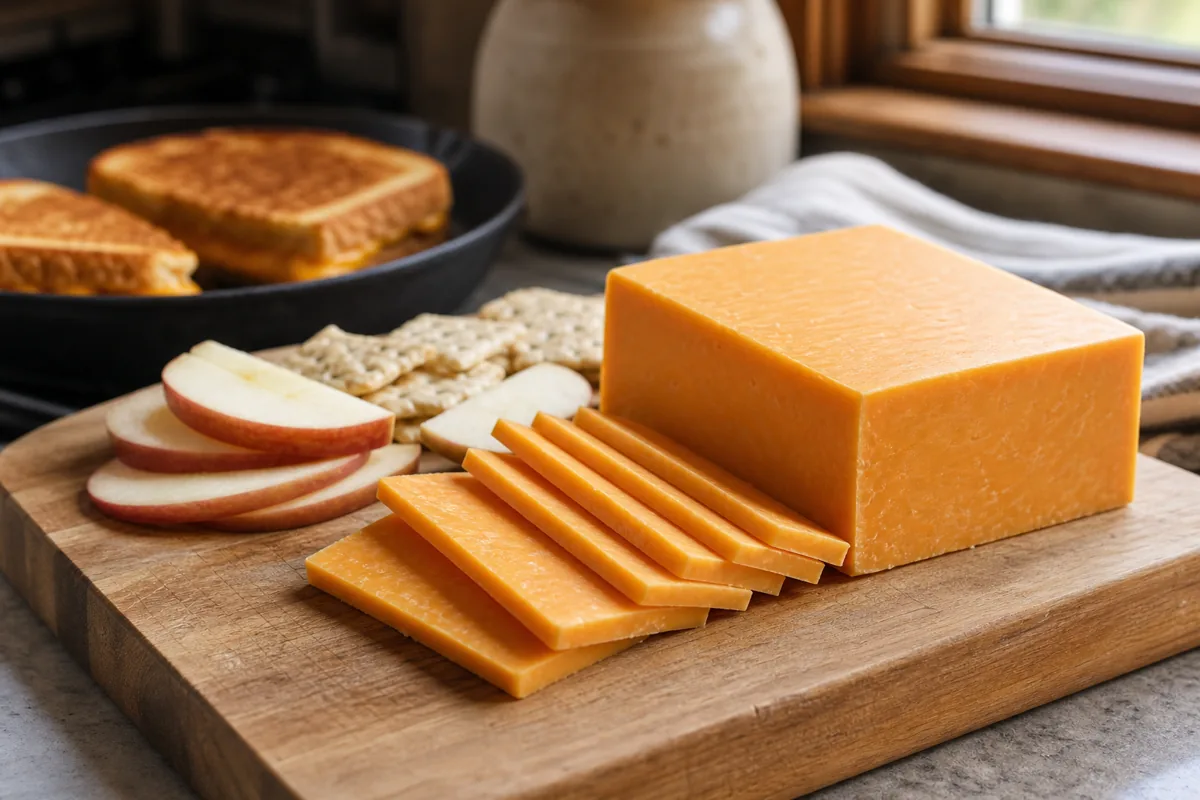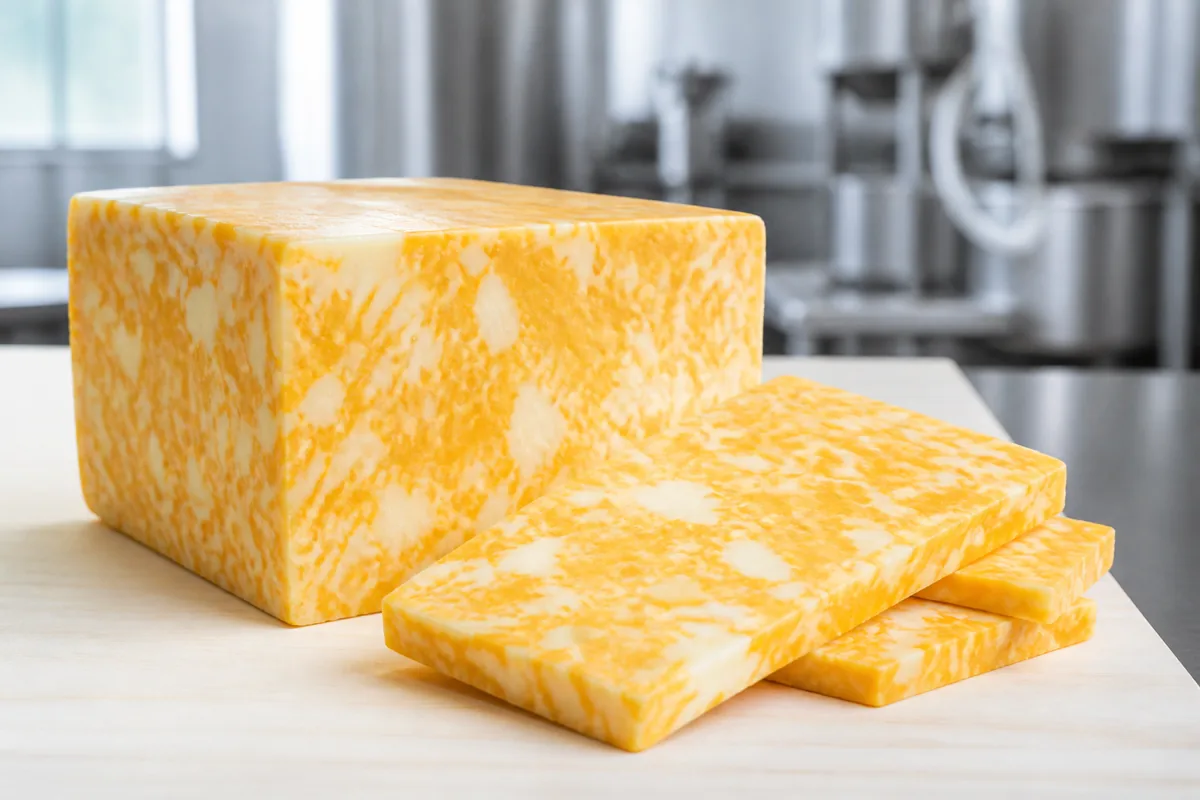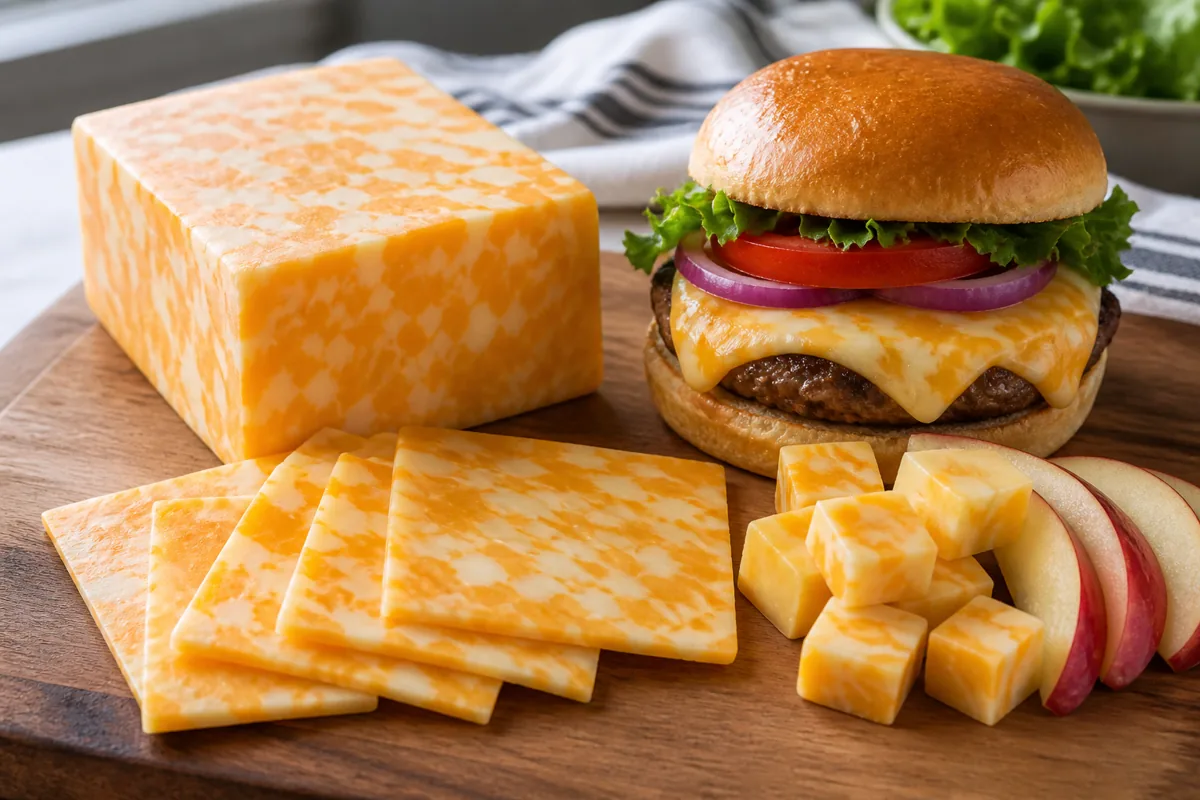
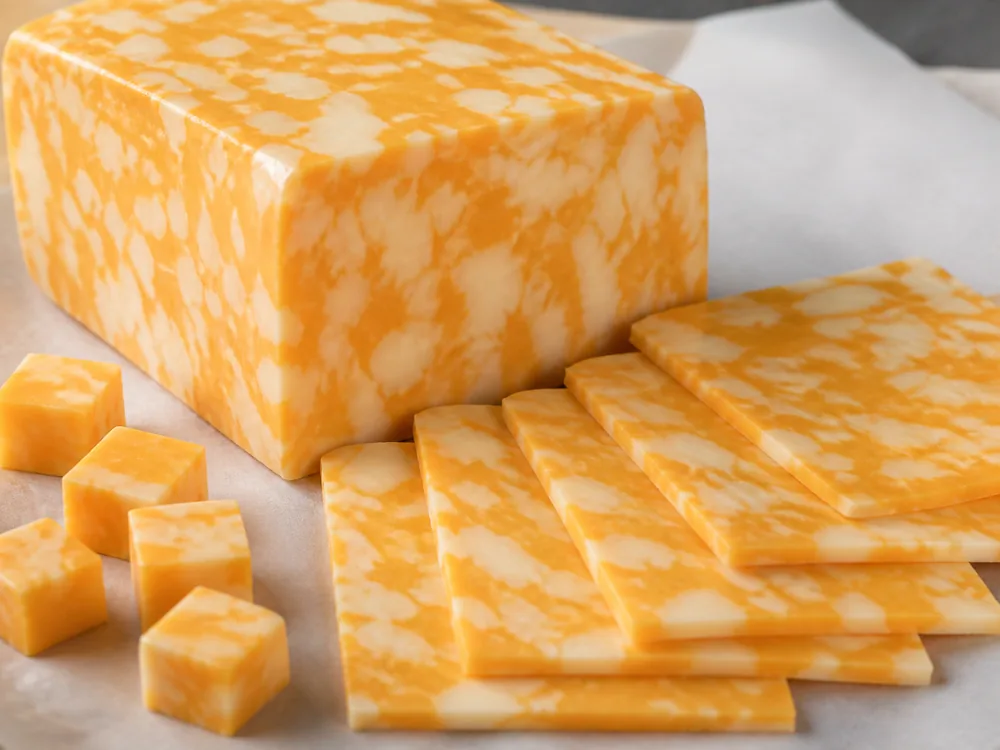
Colby Jack is a marbled cheese from the United States, made by pressing orange Colby curd and white Monterey Jack curd together into one block. The Wisconsin Cheese site says it was first made at Arena Cheese in Wisconsin in 1979.
Wisconsin Cheese, Wikipedia and Cheese.com all call the flavor mild.
In This Article
Where and When Was Colby Jack First Made?
The Colby half is much older. Wikipedia and Wisconsin Cheese both say Joseph Steinwand developed the original Colby in 1885 at his family's factory near Colby, Wisconsin.
Accounts differ on how the cold wash came about. Wikipedia's Colby entry says Joseph Steinwand washed the curd of a cheddar batch with cold water, and that some sources say he had taken a cheesemaking course and meant to make a new cheese while others say he forgot to drain the excess moisture.
Wisconsin Cheese tells the course version, saying he had taken cheesemaking courses at the University of Wisconsin-Madison and designed the cheese as a gentler, creamier alternative to cheddar. Both versions end in a cheese moister than cheddar, and Wikipedia says it became popular quickly because it skipped the complicated cheddaring process.
Wisconsin Cheese says the marble began with leftovers. At the end of a busy day, a cheesemaker at Arena Cheese had a little Colby and a little Monterey Jack left, and because the two share a similar make process, he put them together in the mold.
Monterey Jack comes from California, and Wikipedia's Colby-Jack entry says Franciscan friars first made it in Monterey in the 1700s.
Wikipedia says Colby-Jack is made mainly in Wisconsin and California.
Wisconsin Cheese, the Dairy Farmers of Wisconsin site, says more than two dozen Wisconsin producers make Colby Jack and names Arena Cheese, Burnett Dairy Cooperative, Carr Valley Cheese, Nasonville Dairy and Meister Cheese among them.
Wikipedia's Colby entry, citing a 2016 dairy handbook, says the blend is more popular than either Colby or Monterey Jack sold alone. It puts estimated 2006 supermarket sales of Colby-Jack at 84 million lb.
Wikipedia's Colby entry adds USDA's 2020 totals for "other American varieties", a group that includes Colby and Monterey Jack: 1.5 billion lb from 144 plants, with Wisconsin at 320 million lb and California at 286 million lb. The group is not split by cheese, so the totals do not show how much of it is Colby-Jack.
How Two Separate Curds Become One Marbled Block
Colby and Monterey Jack start in separate batches of cow's milk, and Wisconsin Cheese says each batch follows its own recipe for forming curd and draining whey.
Only the Colby batch gets annatto, a plant-based coloring, so the orange lanes in the finished block are Colby and the white lanes are Monterey Jack.
Wikipedia's Colby entry gives the dose as 70 ml of annatto per 1,000 kg of milk, added together with the rennet.
Wikipedia says Colby skips the cheddaring step used for traditional Cheddar. Instead, about two-thirds of the whey is drained, then cold water brings the mixture down to about 27°C (81°F) for a 15-minute wash.
The same entry says this washed curd gives a moister, softer cheese than Cheddar with a mild, milky flavor. Monterey Jack is made in a similar way, but its curd rests after draining until it reaches a pH of 5.3.
Wikipedia ties the mild, milky flavor to the reduced acidity of the washed curd, and says draining the whey at a high pH leaves Colby relatively elastic next to crumbly cheeses such as English Cheshire. It also says that raising the wash temperature slightly gives a less moist cheese, so the temperature of the wash helps set how moist the Colby half ends up.
Wisconsin Cheese says the two curds are blended while still warm, so the orange and white pieces mix without fully merging. The blended curd is then pressed into forms and aged briefly.
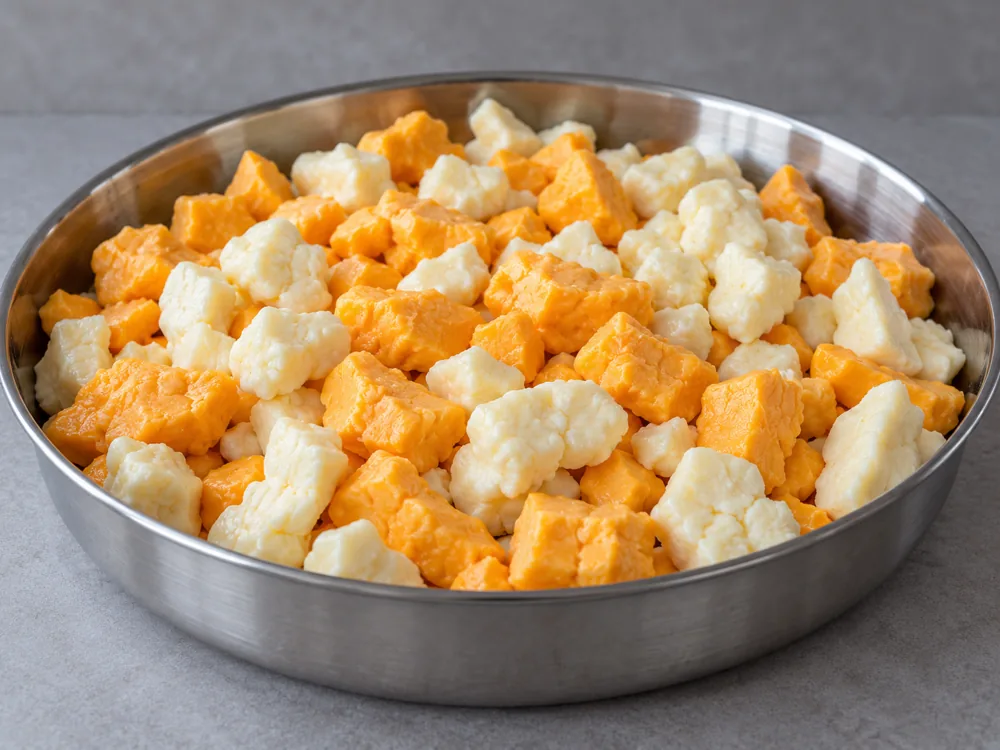
Wisconsin Cheese credits the close match between the two cheeses in texture, moisture and ageing time for the marbled look.
Do the Sources Agree on Colby Jack's Texture, Aging, and Flavor?
All three reference sources describe a young, mild cheese, but they give different ageing times and put it in different texture classes.
| Source | Texture | Ageing | Flavor |
|---|---|---|---|
| Wisconsin Cheese | Semi-soft, smooth and sliceable | A few weeks to a few months | Mild and tangy without any sharpness |
| Wikipedia (Colby-Jack) | Semi-hard in the lead, semi-soft in the ingredients section | Two weeks, up to 14 days | Mild to mellow |
| Cheese.com | Semi-hard | Not stated | Mild and slightly sweet, buttery and creamy, with hints of tangy umami and slight nuttiness |
Wikipedia's 14-day figure rests on a winery's general page about ageing cheese, while the longer range comes from Wisconsin Cheese, which also names the Wisconsin makers producing it today.
For comparison, Wikipedia says plain Colby is ripened for 2 to 3 months at 3 to 4°C. It often turns bitter and extremely soft after 100 days, so that entry recommends eating Colby within three months.
Wisconsin Cheese says the short ageing is deliberate, because it keeps the texture supple and the flavor mild and also preserves the melting properties. It also says Colby Jack is not a fresh cheese: mozzarella, ricotta and queso fresco are not aged at all and hold much more moisture, while Colby Jack gets weeks to months of ageing that give it a firmer texture and more developed flavor.
Wisconsin Cheese's FAQ calls the flavor decidedly mild, with buttery notes and no heat or sharpness, so any spice in a dish has to come from added peppers or hot sauce.
How Colby Jack Differs From Colby, Monterey Jack and Cheddar
Wisconsin Cheese credits Colby with a mild, slightly sweet character and Monterey Jack with a creamy, buttery smoothness. Cheese.com describes Monterey Jack as slightly sweet and nutty and prized for its melting, and plain Colby as mild with a velvety smooth texture.
On composition, Wikipedia says the US standard of identity for Colby, in Title 21 of the Code of Federal Regulations, caps moisture at 40% and requires at least 50% milkfat in the solids, a minimum of 30% total fat. Typical Colby runs 31 to 32% fat and 1.5 to 1.8% salt.
Against cheddar, Wisconsin Cheese says aged cheddars develop sharpness and crumbly texture over the years, while Colby Jack is meant to be eaten young. Wikipedia adds that Colby's higher moisture compared with cheddar gives a weak body that does not hold its quality as long, with slightly less calcium.
On shape, Wikipedia's Colby entry says plain Colby is traditionally pressed into a cylinder called a longhorn, about 33 cm long and 10 to 15 cm across, and can also be pressed into rectangles from which smaller rectangles or half-moons are cut. Its Colby-Jack entry says the blend is generally sold in full-moon or half-moon shapes when young.
The Colby entry also says traditional Colby has an open texture with irregular holes, a trait Wisconsin's standard of identity once required until vacuum packaging, which removes the holes, led to dropping the rule. A tight, hole-free vacuum-packed block therefore fits Colby as described there.
On who it suits, Wisconsin Cheese calls Colby Jack a starter cheese for people who find stronger cheeses intimidating and says it excels in kids' meals and party platters, where it says a cheese needs to be universally appealing.
Does Colby Jack Melt Well, and What Can You Cook with It?
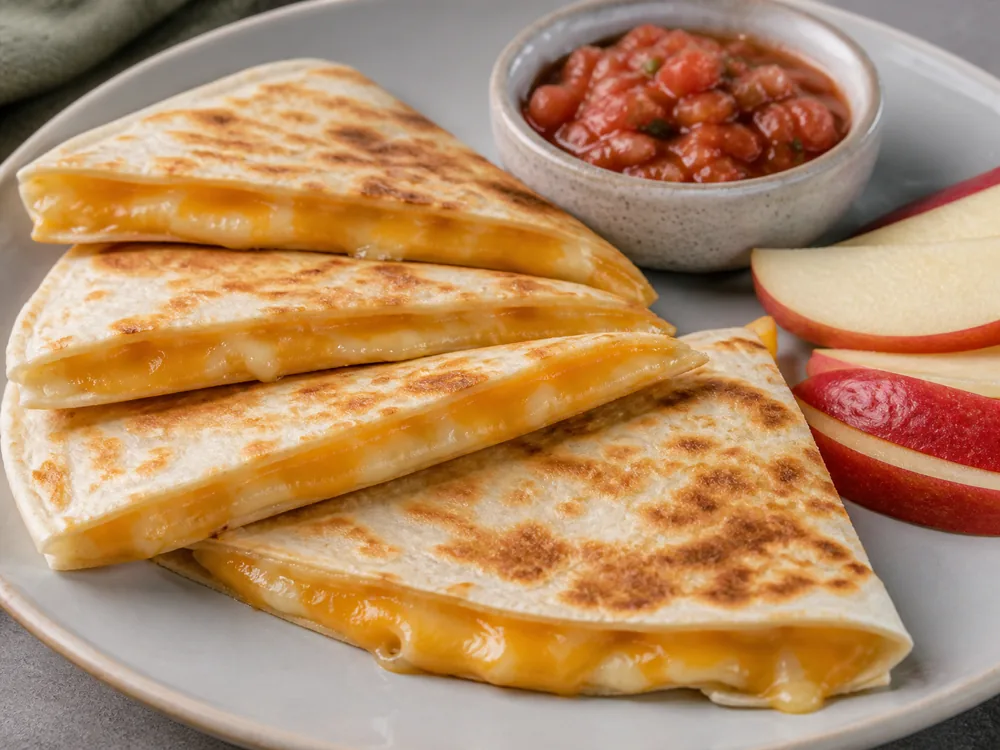
Wisconsin Cheese calls Colby Jack one of the best melting cheeses around, saying it turns creamy and gooey under heat without turning greasy or separating.
Wisconsin Cheese's FAQ credits the cheese's moisture content and semi-soft texture for that consistent, gooey result.
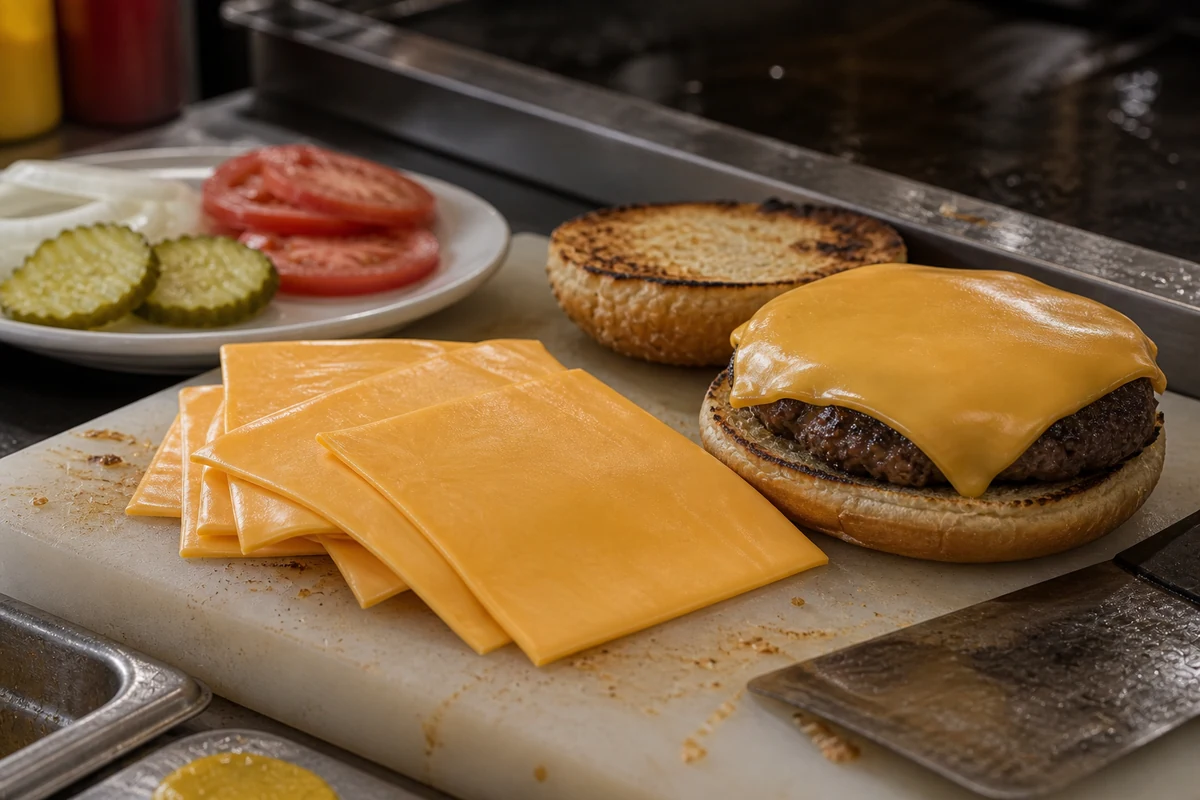
Sargento says its slices give a beautiful melt on cheeseburgers or a plate of nachos. Wisconsin Cheese adds that on a burger patty the cheese brings creaminess without overpowering the meat.
Wisconsin Cheese also sees it in a supporting role. It suggests Colby Jack for dishes with spicier elements, where the heat can shine while the cheese gives a cool, creamy backdrop.
The Cheese.com page carries a note from Ian Jackson saying Colby Jack is as versatile as Cheddar and is his go-to for savory scones or biscuits, where it supplies flavor and a dash of color.
| Use | How It Works |
|---|---|
| Burgers | Named by Wisconsin Cheese, Cheese.com, Sargento and Wikipedia. |
| Quesadillas and grilled cheese | Named by Wisconsin Cheese and Cheese.com. |
| Mac and cheese, pasta bakes and casseroles | Named by Wikipedia and Wisconsin Cheese, and Cheese.com credits its smooth melting for mac and cheese. |
| Eggs | Wisconsin Cheese names scrambled eggs and omelets, and Cheese.com adds quiches. |
| Stuffed peppers and breakfast muffins | Two more Wisconsin Cheese suggestions. |
For shredding at home, Wisconsin Cheese suggests grating the cheese straight from the fridge while it is cold and firm, on the large holes of a box grater. A light coat of cooking spray on the grater helps if the cheese sticks.
What Do Sargento's Colby Jack Slice, Shred, and Stick Labels Show?
Sargento's slices and snack sticks list only pasteurized milk, cheese culture, salt, enzymes and annatto. The shredded bag adds potato starch and powdered cellulose to prevent caking, plus natamycin as a mold inhibitor.
The 16 oz slice pack holds 24 slices, and Sargento pitches it for cheeseburgers and panini sandwiches.
Sargento's shredded page pitches the 8 oz bag, which holds 2 cups, for melting over vegetables, potatoes, meatloaf and casseroles, and its snack-stick page sells 12 sticks in a 9 oz pack for eating on the go.
Each label uses a different serving, so the table compares the numbers as printed.
| Product | Serving | Calories | Fat | Saturated fat | Sodium | Carbohydrate | Protein | Calcium |
|---|---|---|---|---|---|---|---|---|
| Sliced | 1 slice (19 g) | 70 | 6 g | 3.5 g | 130 mg | 0 g | 5 g | 10% DV |
| Shredded, fine cut | ¼ cup (28 g) | 110 | 8 g | 5 g | 180 mg | 2 g | 7 g | 15% DV |
| Snack stick | 1 stick (21 g) | 80 | 7 g | 4 g | 140 mg | 0 g | 5 g | 10% DV |
Only the shredded label shows a carbohydrate figure above zero, 2 g per serving, and it is also the only one of the three that lists potato starch and powdered cellulose.
On the labels' 2,000-calorie basis, a serving supplies 19% of the saturated fat daily value for the slice, 26% for the shreds and 21% for the stick, with sodium at 6%, 8% and 6%.
Cheese.com gives a general figure of about 7 g of protein and 110 to 120 calories per one-ounce (28 g) serving. That sits in line with the Sargento shredded label, which uses the same serving weight.
Scaled to the same 28 g from each label, our arithmetic gives about 103 calories and 192 mg of sodium for the slice, 110 and 180 for the shreds, and 107 and 187 for the stick. Labels round their figures, so gaps that small are not a real difference between formats, and the serving size is what changes the numbers on the page.
Cheese.com's page header lists the type as "semi-hard, processed", while the text of that page describes two cheeses whose curds intertwine.
Sargento's slice page separates the two categories, calling its slices 100% real, natural cheese and saying pasteurized process cheese food is only required to contain 51% natural cheese. Its shredded page says the bag is shredded fresh from blocks of 100% real, natural cheese, so Sargento sells both its slices and its shreds as natural cheese.
What Pairs Best with Colby Jack Cheese?
Both pairing lists lean on the cheese's mildness. Wisconsin Cheese says that on a charcuterie board it balances strong flavors such as salami, pickles and spicy mustards, giving guests a creamy break between punchier bites.
Wisconsin Cheese's FAQ adds that the marbled look gives a board visual appeal and that the mild, creamy cheese balances bolder picks such as blue cheese or aged cheddar. Sargento says its slices look good on an appetizer plate because of their marbled orange and white color.
Its beer pairings cover amber ales, whose malt sweetness balances the mildness, brown ales, whose nutty body complements without overpowering, and hefeweizens, a light citrusy option beside rich melted cheese. For anyone skipping alcohol, the same page lists sparkling apple cider, cranberry spritzers and a virgin Bloody Mary.
The same page says apple cider or even Coca-Cola goes well with Colby Jack in baked goods, and that tomato juice with black pepper gives a savory, umami-rich pairing.
| Pairing | Type | Why It Works |
|---|---|---|
| Chardonnay | Wine | Wisconsin Cheese says its creamy richness mirrors the cheese, and Cheese.com also names Chardonnay. |
| Zinfandel | Wine | Wisconsin Cheese pairs it for fruity contrast with the mild cheese. |
| Riesling | Wine | Wisconsin Cheese suggests it with spicier dishes, where the wine's sweetness balances heat. |
| Light-bodied red wine | Wine | Cheese.com's other wine suggestion. |
| Apples and pears | Food | Cheese.com names both fruits. |
| Almonds and walnuts | Food | Cheese.com names both nuts. |
Is Pasteurized Colby Jack Safe During Pregnancy?
Cheese.com and all three Sargento labels list pasteurized milk. The NHS lists pasteurised semi-hard cheeses such as Edam as safe to eat in pregnancy, and it also lists pasteurised or unpasteurised hard cheeses as safe.
The CDC's safer list names hard cheese made with pasteurized milk, such as Cheddar and Swiss, and deli-sliced cheese heated to 165°F or until steaming hot. Its riskier list names soft cheese from unpasteurized milk, any queso fresco-type cheese and unheated cheese sliced at a deli, so a pasteurized Colby Jack that was not sliced at a deli matches none of the riskier entries.
The CDC counts pregnant women as 10 times more likely to get a Listeria infection, and neither agency names Colby Jack. The milk on the label and where the cheese was sliced decide which advice on eating cheese while pregnant applies.
How Long Does Colby Jack Last After Opening, and What About Mould?
Sargento prints the same line on its Colby-Jack slices and shreds: its resealable pack helps, but the cheese should be used within five days of opening for maximum freshness.
That line covers Sargento's own packs, so for a block from another maker, follow the date and storage line on its own label.
For mould, the USDA Food Safety and Inspection Service splits cheese by type. On hard cheese, it says to cut off at least 1 inch around and below the spot, keep the knife out of the mould, and cover the cheese again in fresh wrap.
The same page says to discard crumbled, shredded and sliced cheese of all types, because the cutting tool can spread contamination. Soft cheese goes in the bin too, since mould can reach below the surface of high-moisture foods.
The USDA page does not name Colby Jack, and the sources above call it semi-soft or semi-hard. Its discard row for soft cheese names cottage cheese, cream cheese, Neufchatel, chevre and Bel Paese, so the page does not say which row either description lands in.
| What you found | USDA action |
|---|---|
| Mould on hard cheese | Cut off at least 1 inch around and below the spot, keep the knife out of the mould, and re-cover in fresh wrap. |
| Mould on shredded, sliced or crumbled cheese of any type | Discard the whole package. |
| Mould on soft cheese, such as cottage cheese, cream cheese, Neufchatel, chevre or Bel Paese | Discard it, because mould can reach below the surface. |
What Can You Substitute for Colby Jack?
The closest swap is a mix. Wisconsin Cheese suggests equal parts Colby or mild Cheddar with Monterey Jack to mimic Colby Jack.
- Mild Gouda, for similar creaminess and a gentle flavor.
- Provolone, for a comparable melt with a touch more tang.
- Muenster, for the same smooth, mild character.
- Butterkäse, for a soft texture and buttery flavor that also melts well.
SOURCES & REFERENCES
What Else Do People Ask About Colby Jack?
It is Colby curd and Monterey Jack curd pressed together into one block, with annatto giving the Colby curd its orange color. Cheese.com and the Sargento labels list pasteurized milk.
Wisconsin Cheese says it was first made at Arena Cheese in Wisconsin in 1979, when a cheesemaker put leftover Colby and Monterey Jack in one mold. Colby itself dates to 1885.
Wisconsin Cheese says it turns creamy and gooey without turning greasy or separating, and names burgers, grilled cheese, quesadillas, casseroles and mac and cheese.
The NHS and CDC lists do not name Colby Jack, so they do not settle it. A pasteurized pack matches none of the CDC's riskier entries, but that list includes unheated deli-sliced cheese, so heat deli slices to 165°F or until steaming hot.
Sargento says to use its opened slices and shreds within five days for maximum freshness. For a block from another maker, follow the date and storage line on its label.
Sargento calls its Colby-Jack slices 100% real, natural cheese, and all three of its labels list milk, culture, salt, enzymes and annatto, with the shreds adding anti-caking and mold-inhibiting ingredients. Cheese.com's page header lists the type as processed while its text describes only a blend of curds.
No. Wisconsin Cheese says it has no heat or sharpness, so any spice in a dish comes from added peppers or hot sauce.