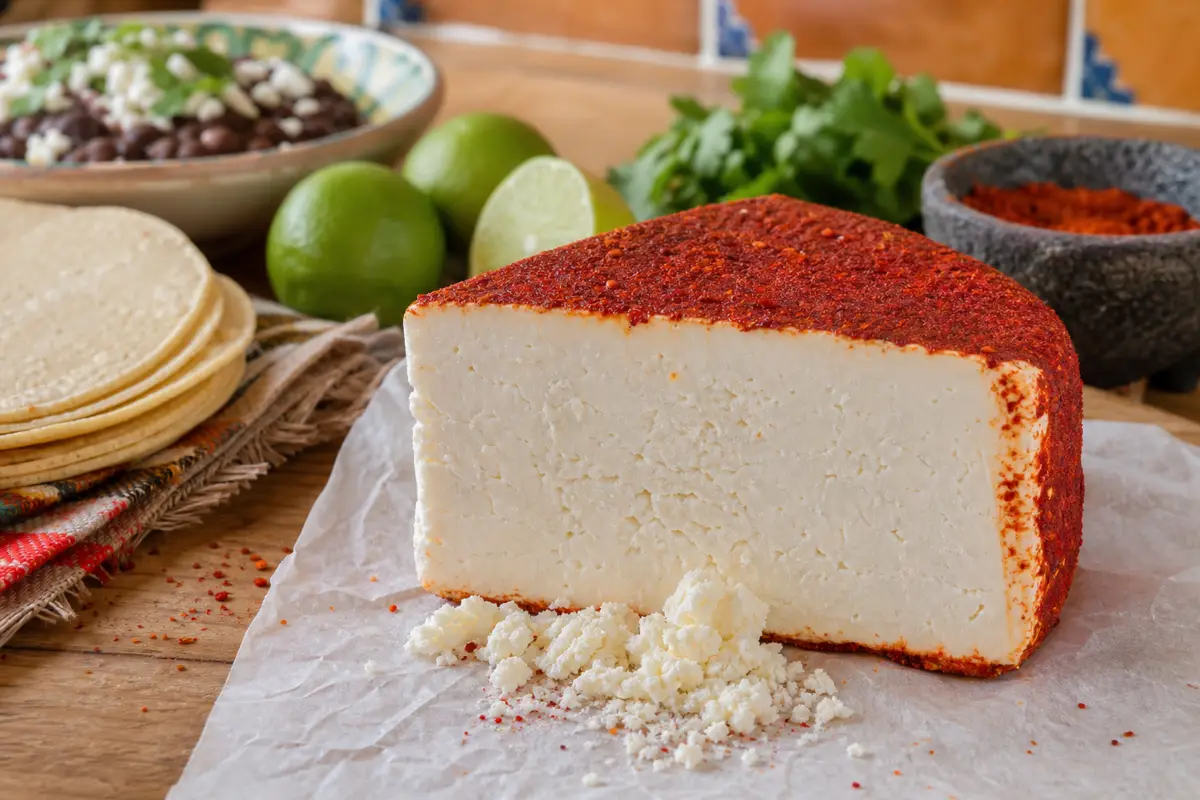
Cotija is a salty Mexican cheese made from cow's milk and named after the town of Cotija in Michoacán. Cooks crumble or grate it over finished food, because it softens with heat but does not melt.
Two quite different cheeses share the name.
Mountain Cotija is a raw-milk wheel made by hand in the Sierra Jalmich and aged for months. Culture magazine says it is not the simple, salty white cheese sold in the United States, where labels such as Cacique list pasteurized milk.
In This Article
Does Cotija Cheese Melt?
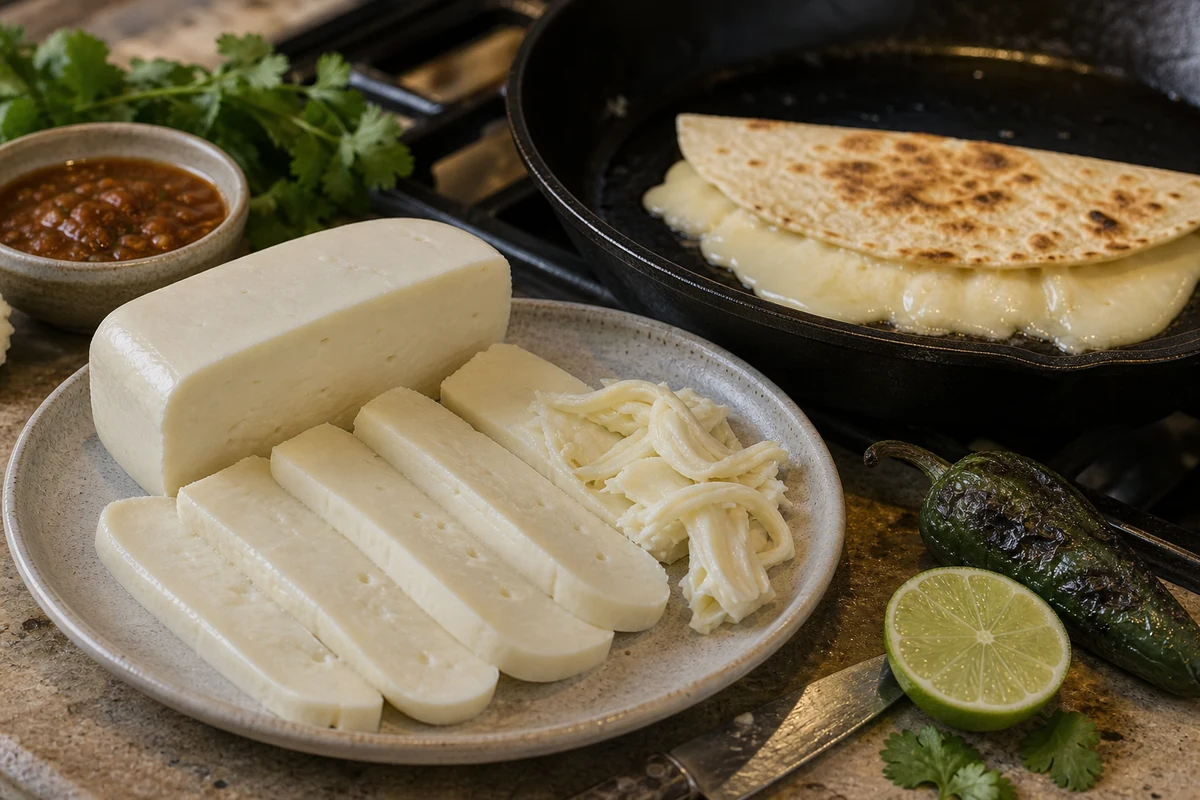
Wikipedia and Bon Appétit say Cotija softens when heated but does not melt, and the U.S. maker Cacique states simply that it does not melt.
Wikipedia adds that cooked Cotija keeps its shape and consistency. In the mouth it breaks up again into a sandy, grain-like texture, which is what it adds to the dishes it tops.
Bon Appétit draws the kitchen line at sauce and warns against trying to emulsify Cotija into a pasta sauce.
Dryness helps inside a mixture, though. The magazine works Cotija into a mushroom and black bean veggie burger and notes that such a dry cheese does not upset the patty's consistency.
Cacique's product page describes its Cotija as mostly a topping or something mixed into sauces, and says in the same entry that it does not melt.
The two statements fit if mixing means stirring in crumbs that stay as grains, which is a different job from the emulsified pasta sauce Bon Appétit rules out.
Where Does Cotija Come From?
The cheese carries the name of Cotija, Michoacán, but Spanish Wikipedia says it was born in the Sierra de Jalmich, a mountain range on the border of Jalisco and Michoacán. Ranchers carried the wheels by mule to the town of Cotija to sell them, and the town's name stuck to the cheese.
The Slow Food Foundation's Ark of Taste dates production in the region to about 400 years ago. Cheesemaking arrived with Spanish settlers and their cattle in the sixteenth century, and Culture reports that the hard, salty cheese was once traded as currency.
Slow Food places the historical area in the Sierra Jalmich, in and around Santa María del Oro, Jilotlán de los Dolores, Tamazula, Valle de Juárez and Quitupan in Jalisco, and Cotija, Tocumbo, Los Reyes, Peribán, Tancítaro and Buena Vista Tomatlán in Michoacán.
English Wikipedia says the makers live in the mountains as high as 1,700 metres (about 5,600 feet), which is why the cheese is called a queso de montaña.
In 2003 producers and academics asked Mexico for a denomination of origin. Mexico's industrial property institute refused and in 2005 granted the collective trademark Queso Cotija de la Región de Origen instead, which Culture calls the first granted to a Mexican heritage food.
Culture says the registration sets standards for where the cheese can be made and how long it must be aged.
The mark has not kept the name to the region. Slow Food and Culture both report that mass-produced "Cotija-style" cheese made outside the designated area is common.
How Is Mountain Cotija Made in the Rainy Season?
Mountain Cotija is made only while the rains last. Slow Food and English Wikipedia give July to October, when the cows graze new pasture, while Spanish Wikipedia gives July to September.
Culture explains the timing: feed is plentiful then, and the air is humid enough that the wheels do not crack while they age.
English Wikipedia credits the same season for the cheese's colour and flavour, because the cows eat only the rich grass that grows on the mountains in the rains.
Spanish Wikipedia adds a reason from the region's history. Rain washed out the roads, so ranchers had to keep their cheese through the season, and the wait aged it.
The herd is a mixed breed. Slow Food says producers keep mostly Holstein cows crossed with Zebu and Brown Swiss, and Culture points to the heat tolerance the Zebu brings.
Slow Food and Culture describe the make in this order.
- Milk: cows are milked by hand, and the milk is pooled and skimmed (Slow Food).
- Acidity: no freeze-dried starter cultures; the lactic bacteria already in the milk do the work (Culture).
- Rennet: calf rennet in Culture's account and animal rennet in Slow Food's sets the milk.
- Salt: the curd is mixed with salt from the Colima coast, rock salt in Slow Food's account and sea salt in Culture's.
- Moulding: bands of maguey fibre hold the curd in Slow Food's account; Culture describes a wooden belt lined with cotton or agave fibre.
- Pressing and turning: about 24 hours in the press, then each wheel is cleaned and turned through its first 15 days until a rind forms (Slow Food).
Culture adds that the time between milking and renneting is often less than three hours, so the cheese is set from very fresh milk.
The accounts also differ on when the salt goes in. English Wikipedia says the milk is salted before fermentation and the curds are milled into small pieces before pressing, while the Slow Food and Culture steps above salt the curd.
The same entry calls mountain Cotija a grain cheese, a name that fits the milled curd and the sandy crumble described earlier.
The sources disagree on the season's end, the finished wheel's weight and the minimum age, so the table sets their figures side by side.
| Source | Season | Wheel weight | Ageing |
|---|---|---|---|
| Slow Food Ark of Taste | July to October | About 20 kg | At least 2 months to carry the Región de Origen name; up to 1 year |
| English Wikipedia | July to October | 28 kg cylinders | 100 to 365 days |
| Spanish Wikipedia | July to September | About 23 kg fresh, about 18 kg after 3 months | At least 3 months |
| Culture magazine | Late-summer rainy season | Not given | At least 3 months |
The Spanish figures explain part of the spread: a wheel loses about 5 kilograms in its first three months, so a weight means little without an age.
That loss is about a fifth of the 23 kg starting weight, and Spanish Wikipedia gives a diameter range of 18 to 40 cm, so wheels differ in size as well as in age.
Spanish Wikipedia also says no maximum age is known, because a well-made wheel can last years, while Slow Food and English Wikipedia stop at about a year.
Culture calls mountain Cotija's microbiology particularly diverse, citing analysis that found more than 500 types of moulds, bacteria and yeasts in the cheese.
How Do Young Cotija, Aged Añejo and Supermarket Cotija Differ?
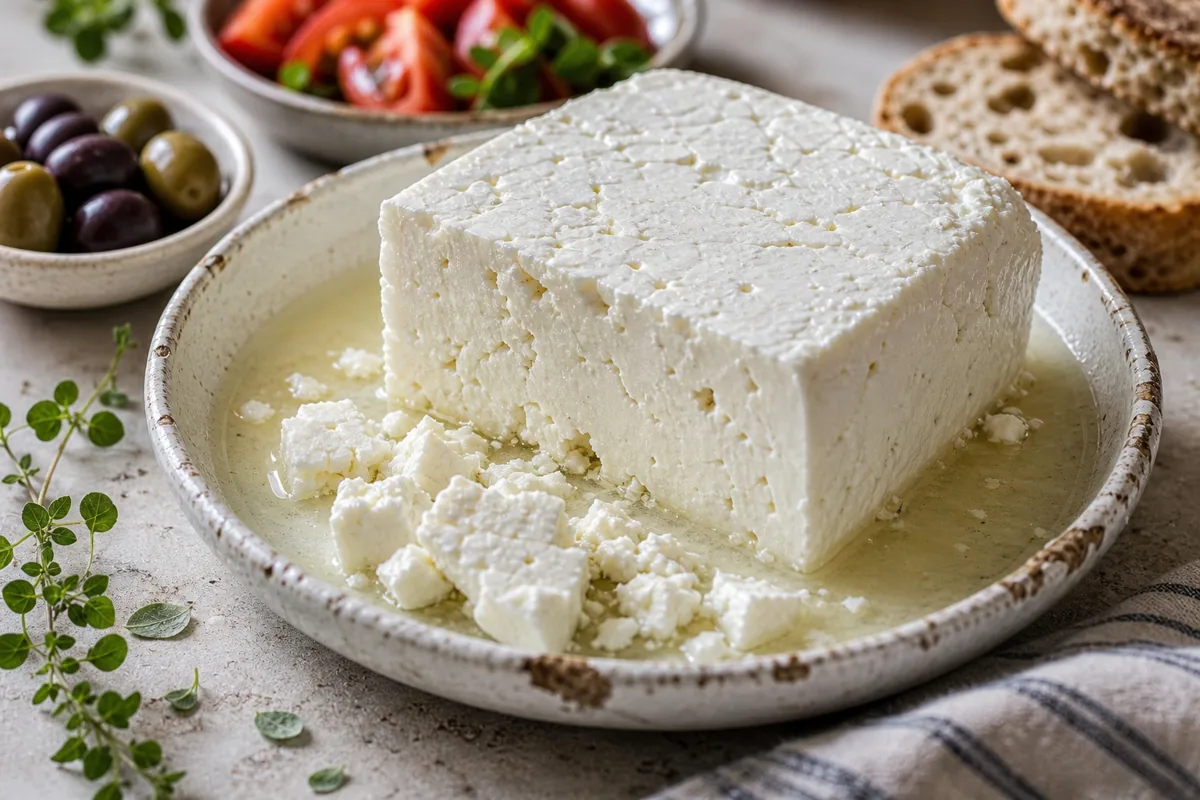
Younger Cotija is moist and crumbly, and both Bon Appétit and Wikipedia compare it to a mild feta. Aged Cotija turns sharper and firmer, closer to Parmesan.
Spanish Wikipedia names the stages: a cheese aged three to six months is queso añejo, and one aged beyond six months is queso rendido.
Slow Food describes the mountain wheels as tangy and salty with notes of sour butter, and with pineapple in some seasons. As the cheese matures it becomes less creamy and sharper, and its salt reads more sharply too.
Culture describes a firm, crumbly, golden paste that tastes of cultured butter with a bright acidity. Wheels aged beyond three months become intensely salty and tangy, with a bite the magazine compares to pecorino.
Producer Rafael Torres-Torres of Rancho Cabras in Quitupan, Jalisco, tells Culture that an opened wheel is very aromatic, with pineapple, sometimes green apple and banana skin.
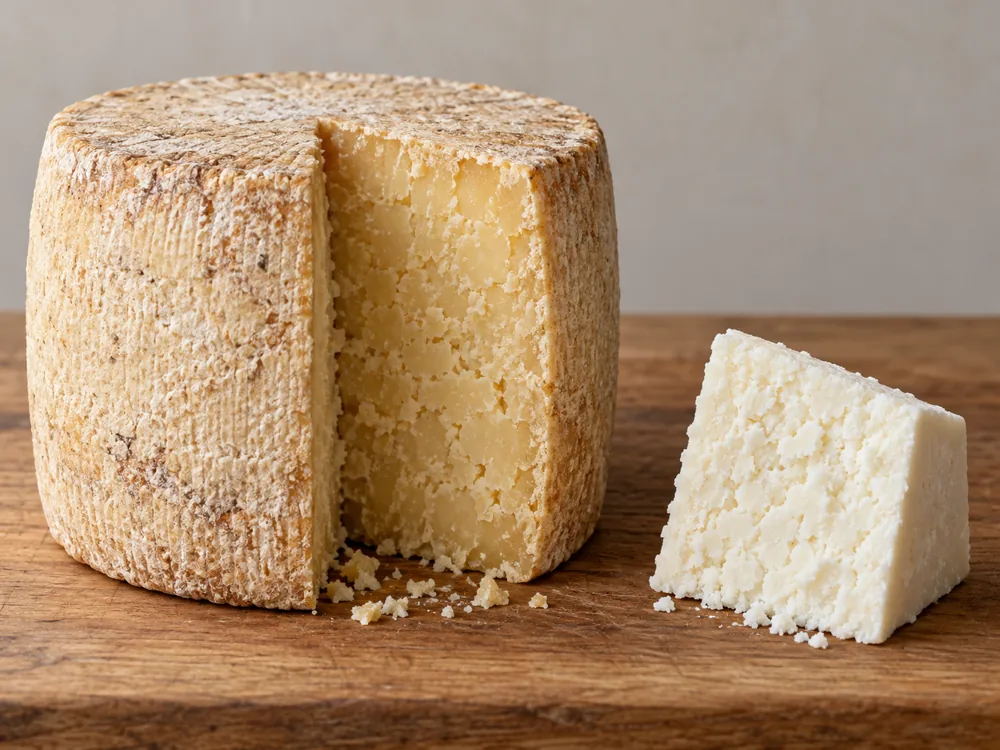
A U.S. supermarket wedge is built differently. Cacique, one U.S. brand, lists cultured pasteurized Grade A milk and skim milk, sea salt and enzymes, and describes its Cotija as dry, salty and granular.
Wikipedia also records a moister variety called tajo, which is fattier and less salty, holds its shape when cut and tastes like Greek feta.
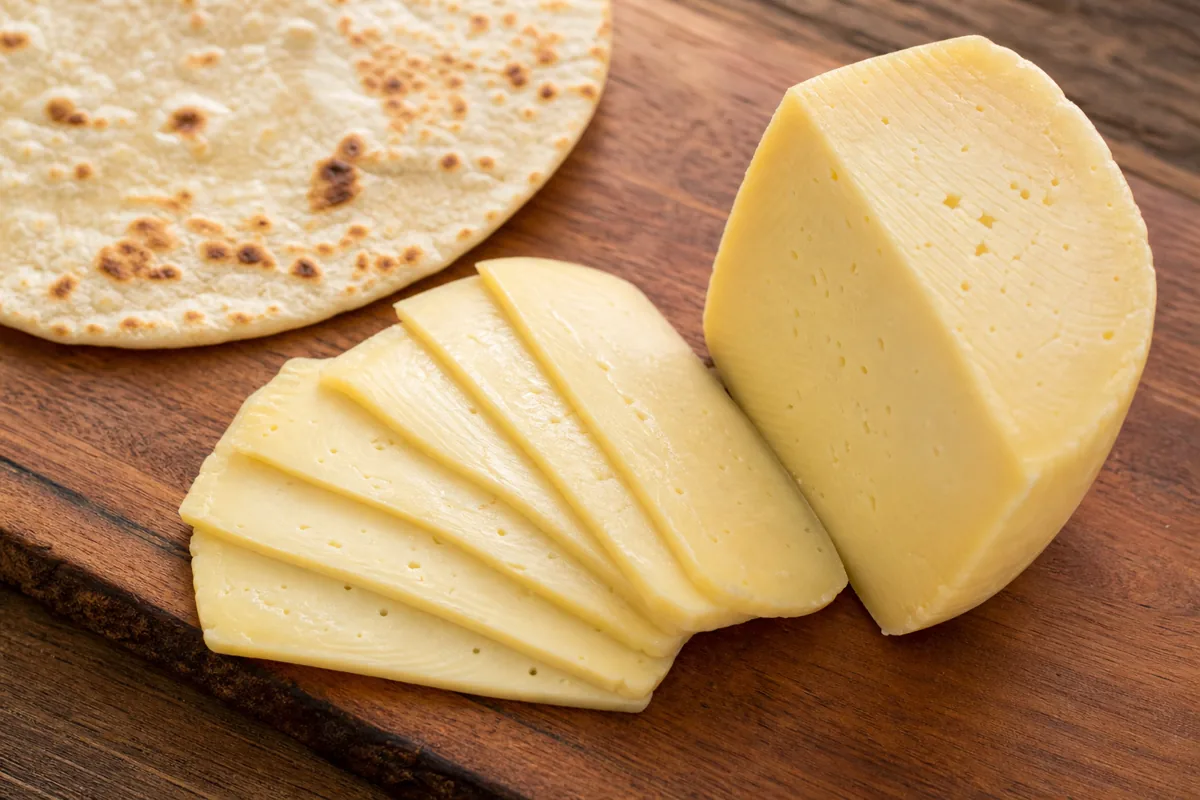
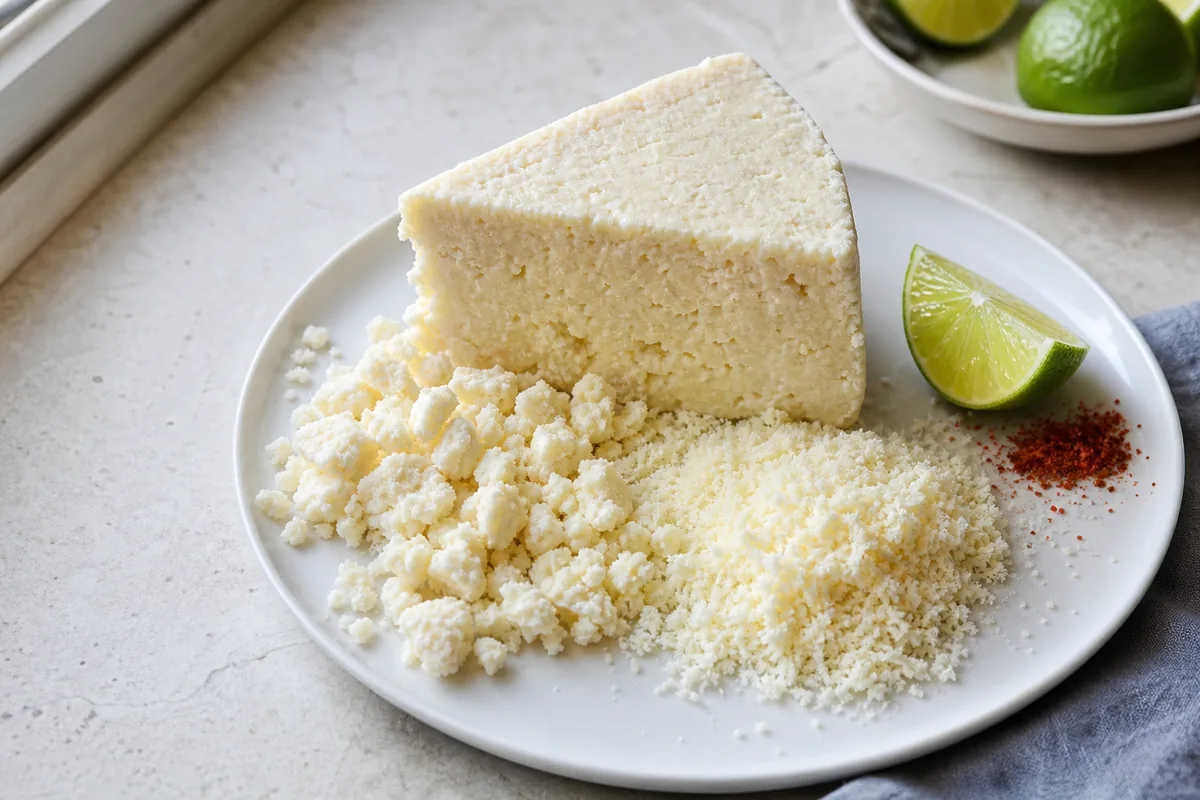
Retail Cotija comes as a block or already grated. Bon Appétit says a block lets you break or shave pieces to any size, while the pre-grated kind looks like fluffy snow and clings to corn.
How to Tell Mountain Cotija From a Cotija-Style Cheese
The sources separate the two on three points: the milk, the age and the place of making.
Cheese.com and Slow Food describe mountain Cotija as a raw-milk cheese, and Culture says its makers use no freeze-dried starter cultures. Cacique's ingredient list, by contrast, opens with cultured pasteurized Grade A milk.
Slow Food ties its two-month minimum to the right to carry the Región de Origen name, while Culture and Spanish Wikipedia give three months as the minimum for the cheese itself. The two figures may measure different things, so a stated age needs the source behind it.
Place is harder to read from a package. Culture says mountain Cotija is not the simple, salty white cheese sold in the United States, and not the same-name versions made outside the region and sold across Mexico either.
Spanish Wikipedia says independent producers in the zone also sell under their own marks, each setting the traits a cheese needs to count as Cotija.
It adds that many large, dry cheeses take the name without those traits, which it calls deception of the buyer to raise the price, and that large industry does this most often.
Looks give weaker clues, because the descriptions vary. English Wikipedia calls the cheese white, Culture describes a golden paste, and Spanish Wikipedia says each producer's method decides whether the paste is pressed, firm, granular or sliceable.
Both Wikipedia entries describe a natural crust on the wheel, cream-coloured in the English one, which pre-grated Cotija cannot show.
Mountain Cotija is raw-milk, aged at least two to three months depending on the source, and carries a natural crust. A pasteurized ingredient list, as on Cacique's, marks the supermarket kind.
How Salty Is Cotija Next to Queso Fresco, Feta and Parmesan?
USDA FoodData Central measures solid Cotija at 1,620 mg of sodium per 100 g, about two and a half times the 626 mg it records for queso fresco.
Cotija also holds less water. The same records give 40.0 g per 100 g for Cotija against 51.4 g for queso fresco and 51.9 g for crumbled feta.
| Cheese (USDA Foundation record) | Sodium | Water | Fat |
|---|---|---|---|
| Cotija, solid | 1,620 mg | 40.0 g | 27.2 g |
| Queso fresco, solid | 626 mg | 51.4 g | 23.4 g |
| Feta, whole milk, crumbled | 1,030 mg | 51.9 g | 19.1 g |
| Parmesan, grated, refrigerated | 1,050 mg | 30.8 g | 29.5 g |
| Parmesan, grated | 1,750 mg | 22.8 g | 28.0 g |
The two Parmesan rows correct a common assumption. Cotija's sodium falls between USDA's two records for grated Parmesan, so these samples do not show Cotija as consistently saltier.
English Wikipedia says the mountain cheese is usually several times saltier than typical cheese, traditionally so that it keeps better.
USDA's records bear that out against queso fresco but only partly against feta, where Cotija's sodium is about 1.6 times higher.
A U.S. label puts the figure in serving terms: Cacique's own nutrition panel lists 490 mg of sodium per 28 g serving, 21 percent of the Daily Value.
The gap matters when one cheese replaces the other. Swapping queso fresco in for Cotija cuts the sodium by more than half, so the dish may need salt from somewhere else.
How to Use Cotija on Elote, Beans and Tacos
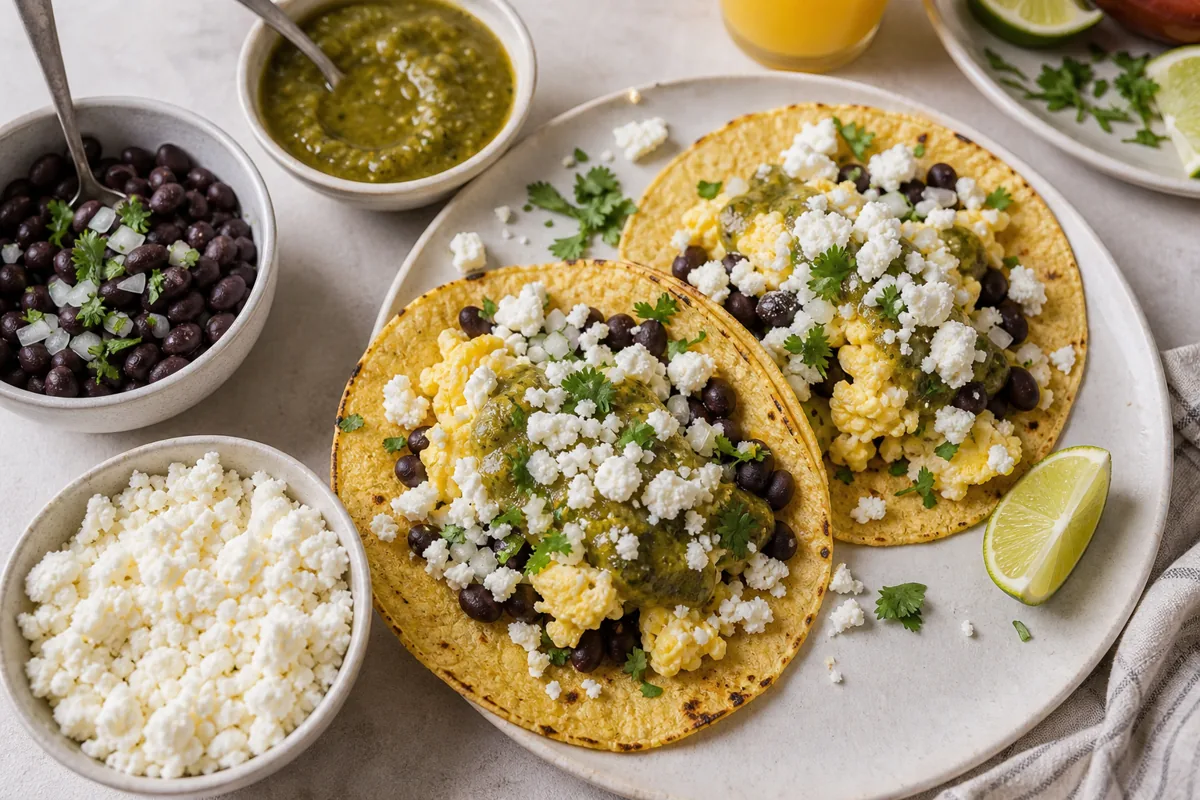
Cotija goes on at the end. Wikipedia calls it a finishing cheese in Mexican cooking, crumbled or grated over the dish.
Bon Appétit calls the dusting of Cotija on elote nearly as important as the corn itself, because it balances the sweet kernels against the tang of sour cream.
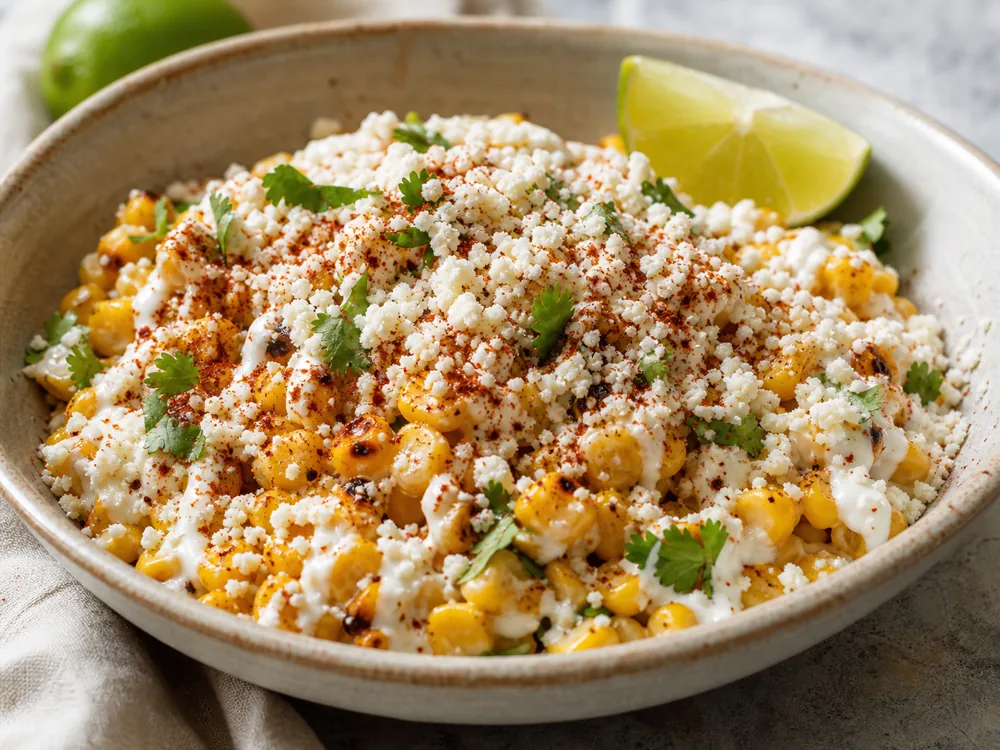
Cacique's product page calls Cotija an enhancer and gives its job as adding saltiness and tang, so it belongs on dishes that want both.
Beyond corn, the sources name a wide spread of dishes.
| Use | How It Works |
|---|---|
| Beans and soups | Cacique suggests crumbling or grating it over pinto beans and soups; Bon Appétit adds posole. |
| Tacos, tostadas and burritos | Wikipedia and Cacique both list tacos, and Wikipedia adds tostadas and burritos. |
| Enchiladas and chilaquiles | Bon Appétit names both among the Mexican dishes Cotija finishes. |
| Tamales | Culture says mountain Cotija's concentrated flavour sends it into dishes such as tamales more often than onto a cheese board. |
| Salads | Bon Appétit grates it over a watermelon-lime salad and uses it in plum and Napa cabbage salads. |
Bon Appétit also lists nachos and the Venezuelan sticky buns called golfeados among the places Cotija turns up, and suggests it on a frittata and on smashed crispy potatoes. Cacique's page links a recipe that puts it inside the food, a Cotija and vegetable stuffed pork chop adobo.
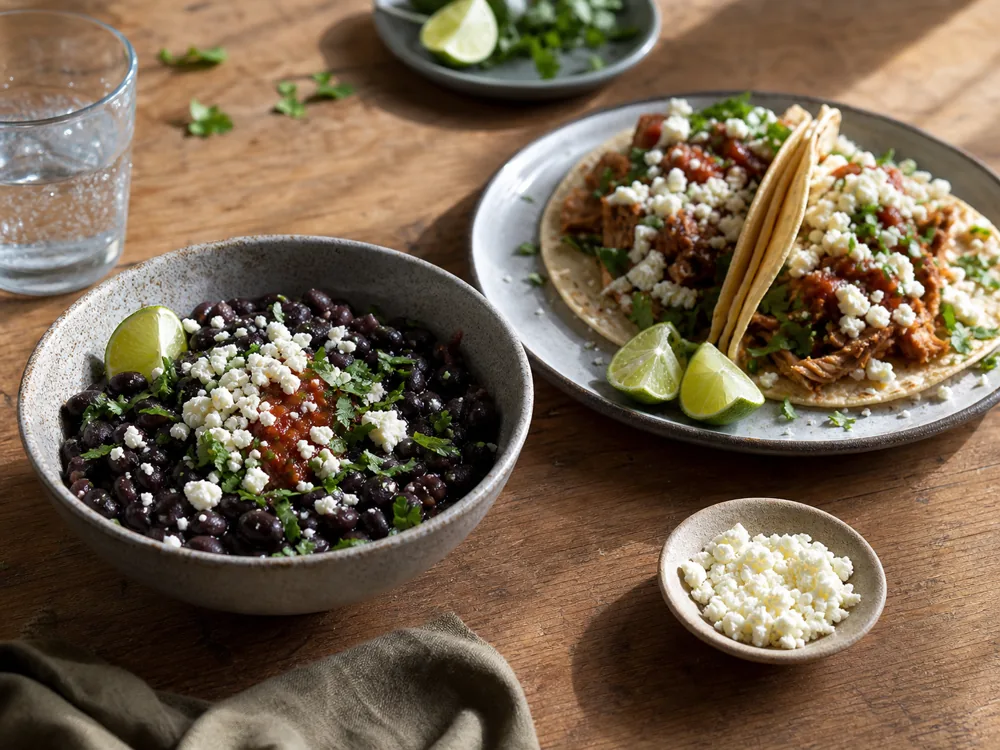
In Mexico it is also eaten plain. Culture notes that locals snack on mountain Cotija, sometimes with a sip of mezcal.
What Can Replace Fresh or Aged Cotija?
Wikipedia splits its substitutes by the age of the Cotija the recipe expects.
For young Cotija it suggests feta or queso fresco. Bon Appétit runs the swap the other way too, using younger Cotija as a stand-in for Greek feta.
For aged Cotija, Wikipedia lists ricotta salata, Parmesan or Romano.
Bon Appétit adds a caution about ricotta salata: Cotija has a distinct funk that the Italian cheese cannot easily copy.
Wikipedia's Romano suggestion lines up with the pecorino bite Culture finds in older mountain wheels, which makes grated Romano a fair match when the recipe wants aged Cotija.
Bon Appétit treats the three cheeses as interchangeable in places: its corn salad calls for Cotija, feta or Parmesan depending on what is in the kitchen, and a feta meatball recipe can take Cotija instead.
The older, harder Cotija can take Parmesan's place in the same recipes, the magazine adds, as long as the dish does not need the cheese emulsified into a pasta sauce.
Wikipedia also records a reverse swap from Salvadoran baking. Cotija can stand in for queso duro in the Salvadoran quesadilla, a sweet bread similar to pound cake.
Is Cotija Safe to Eat During Pregnancy?
The milk decides it. Neither the NHS nor the CDC names Cotija, so the answer comes from how each agency treats milk and texture.
Pasteurized Cotija, such as the Cacique wedge, is on the NHS safe list if it counts as a pasteurised hard or semi-hard cheese. The CDC lists hard cheese made with pasteurized milk, such as Cheddar and Parmesan, as safer, and it does not say whether Cotija belongs to that group.
Raw-milk mountain Cotija is harder to place. The CDC puts dairy products made from raw milk on its riskier list, while the NHS counts pasteurised or unpasteurised hard cheeses as safe but says other foods made from unpasteurised milk must be thoroughly cooked.
Cheese.com calls Cotija a hard cheese and Wikipedia calls it semi-hard, so a raw-milk wheel does not sit clearly in either NHS group. The NHS does count any cheese cooked until steaming hot as safe.
The CDC's separate warning on queso fresco-type cheeses covers fresh, soft cheeses such as queso fresco, queso blanco and requesón even when pasteurized. Neither agency's list settles which group Cotija falls in, so ask a doctor or midwife.
Why Is Mountain Cotija Getting Harder to Find?
Fewer families make it. Dr. María Patricia Chombo Morales, who began working with the producers nearly 30 years ago, told Culture there were then about 100 families making the cheese, and she estimates the number has fallen by at least 20 percent.
Culture reports that the roads to the villages are poorly kept and often impassable in the rainy season when the cheese is made. It adds that climate change brings hotter, less predictable weather and that cartel violence has pushed many residents out over almost two decades.
Slow Food adds that production has fallen since the early 2000s through weak demand, pressure to clear land and families leaving, and that few young people are learning to make or age the cheese.
The town's annual Cotija festival, once a market where makers sold their cheese in the main square, has been fading as drug cartels made Michoacán dangerous, according to Slow Food.
Spanish Wikipedia lists what makers built around the cheese: a regional fair held since 2000, a producers' association founded in 2001 and a collection, ageing and quality-control centre called El Mesón del Queso Cotija.
Some mountain Cotija still reaches the United States by hand. Producer Rafael Torres-Torres told Culture that most of the 3,300 to 4,400 pounds he makes each year from 50 cows goes north of the border with people visiting home.
Torres-Torres adds that few people remain on the ranches and that they are producing less and less.
SOURCES & REFERENCES
What Else Do People Ask About Cotija Cheese?
No. Cotija softens with heat but keeps its shape, so cooks crumble or grate it over food once it is cooked.
Cheese.com gives the pronunciation as koh-TEE-hah.
Wikipedia and Cheese.com both list Queso Cincho and Queso Seco as other names for Cotija.