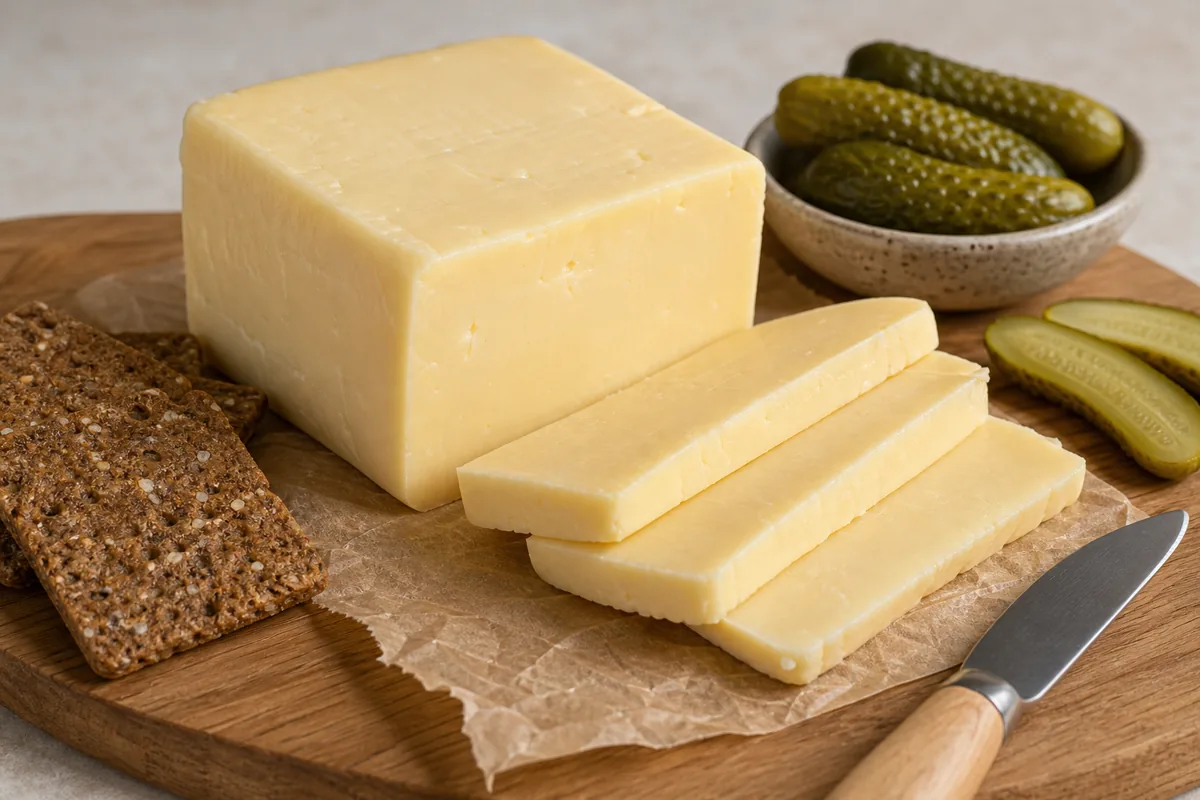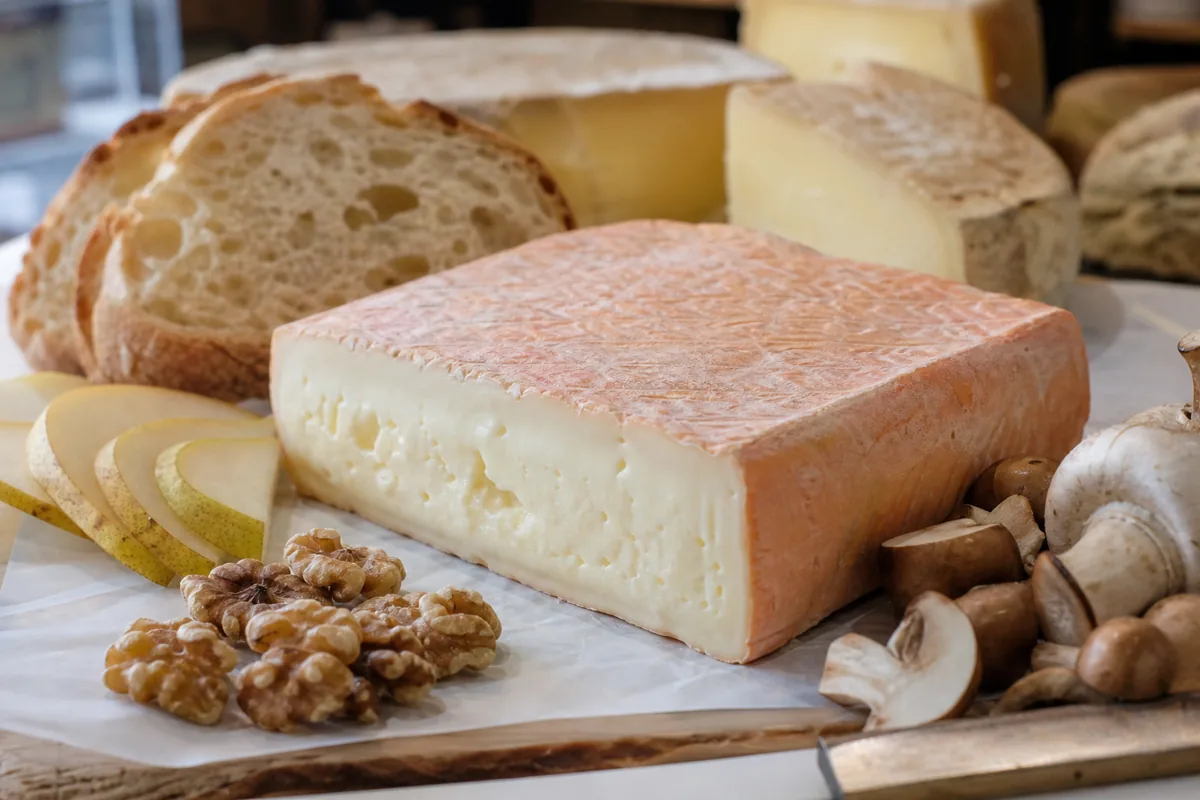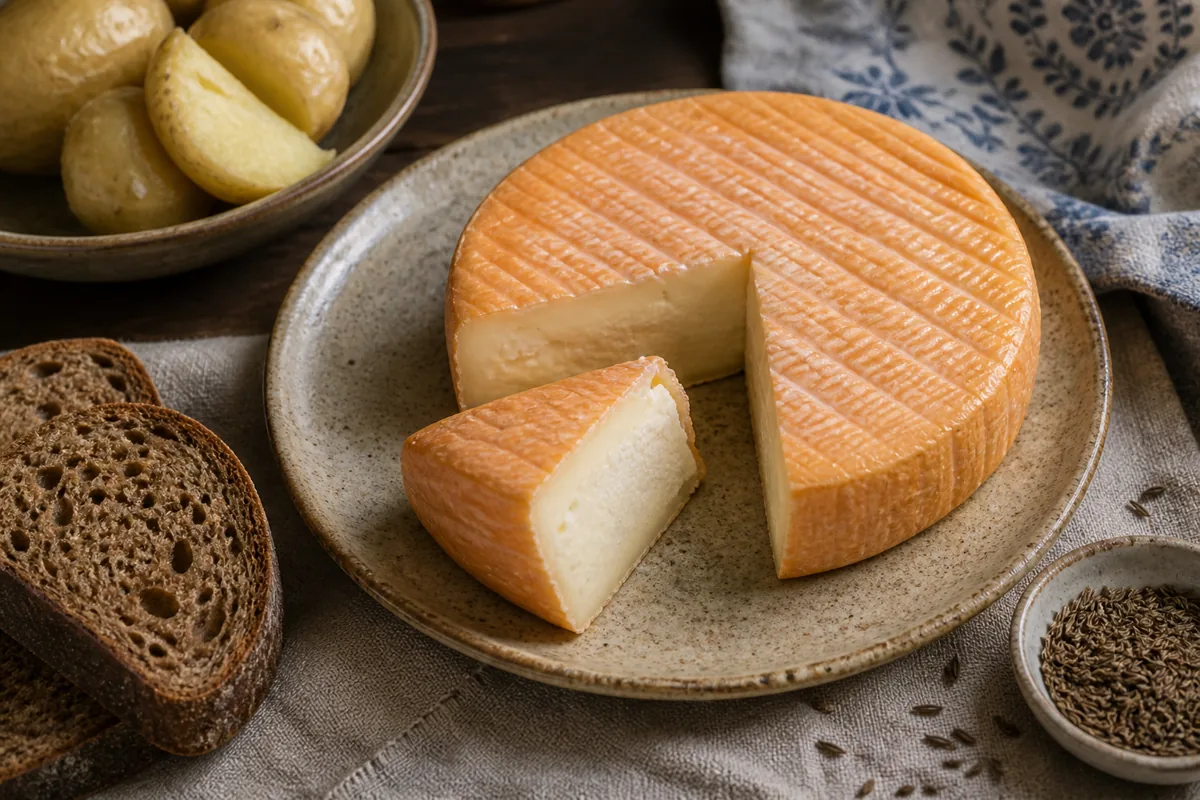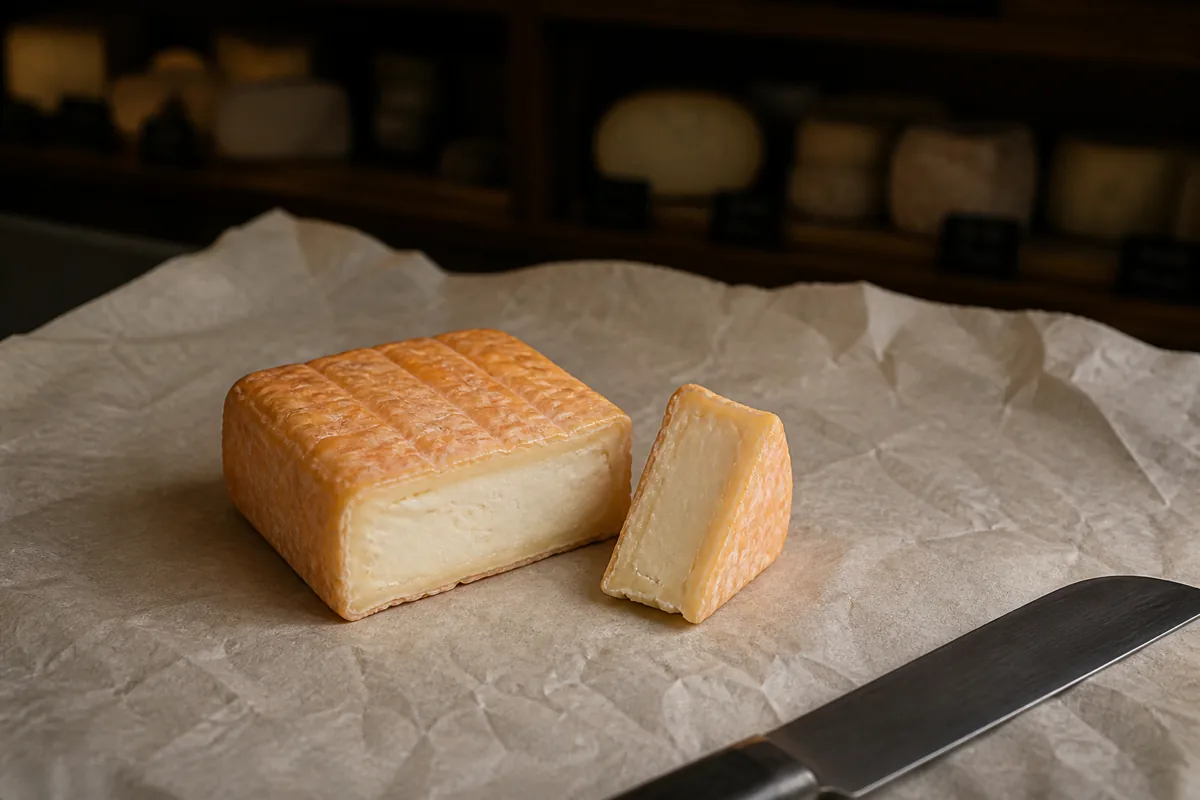
Limburger is a semi-soft, washed-rind cheese made from cow's milk, first made in the Herve area of the old Duchy of Limburg, which is now part of Belgium's province of Liège.
Its smell is famous, yet Wisconsin Cheese calls the flavor mild, and the smell comes from bacteria that makers smear on the rind.
In This Article
Does Limburger Taste as Strong as It Smells?
Under a pungent aroma, Wisconsin Cheese describes a mild, grassy, tangy, mushroom-like taste, and Chalet, the Wisconsin maker, describes a grassy, mushroomy taste with a delicate tang.
The flavor does build as the cheese ripens. Cheese.com calls a young Limburger mild and buttery and an older one tangy and robust, and German Wikipedia has it quite mild when young and stronger and stronger as it ripens.
| Question | Description | Given by |
|---|---|---|
| What is under the smell? | Mild, grassy, tangy and mushroom-like, despite a pungent aroma | Wisconsin Cheese |
| How does the maker describe it? | A grassy, mushroomy taste with a delicate tang; a buttery, mild flavor with a little saltiness | Chalet's own page; Cheese.com repeats the first phrase and the Cheesers listing the second, adding a creamy texture |
| How does it taste young? | Mild and buttery; quite mild | Cheese.com; German Wikipedia |
| How does it taste ripe? | Tangy and robust; stronger and stronger as it ripens | Cheese.com; German Wikipedia |
| How is it described overall? | Very aromatic and spicy | German Wikipedia, in its opening line |
| How does Belgian Herve change? | Sweet inside when young, spicy with age | English Wikipedia |
Cheese.com ties the smell to age as well, saying older cheeses smell more robust, and adds that the smell is not a guide to the taste.
If the smell is too strong for you, the rind is the part to deal with: it is sometimes rinsed or cut off to weaken the odor. What stays behind is the paste that Wisconsin Cheese and Chalet call mild.
Why Does Limburger Smell like Feet?
The smell comes from Brevibacterium linens, the bacterium on Limburger's rind, whose familiar odor comes from sulfur-containing compounds called S-methyl thioesters. The English Wikipedia entry on the bacterium says it also lives on human skin and is partly responsible for body odor, foot odor in particular.
German Wikipedia gives the foot a different bacterium, a close relative called Brevibacterium epidermidis, and keeps Brevibacterium linens for the Limburger smell.
Makers cure Limburger in saltwater brine, smear the bacteria on the surface and wash the rind again and again as it ages, and the liquids that carry the red-smear bacteria, chiefly Brevibacterium linens, go on at the start of ripening and again during it. The washing keeps the rind moist enough for the bacteria, which help the cheese ripen and build its flavor as well as its smell.
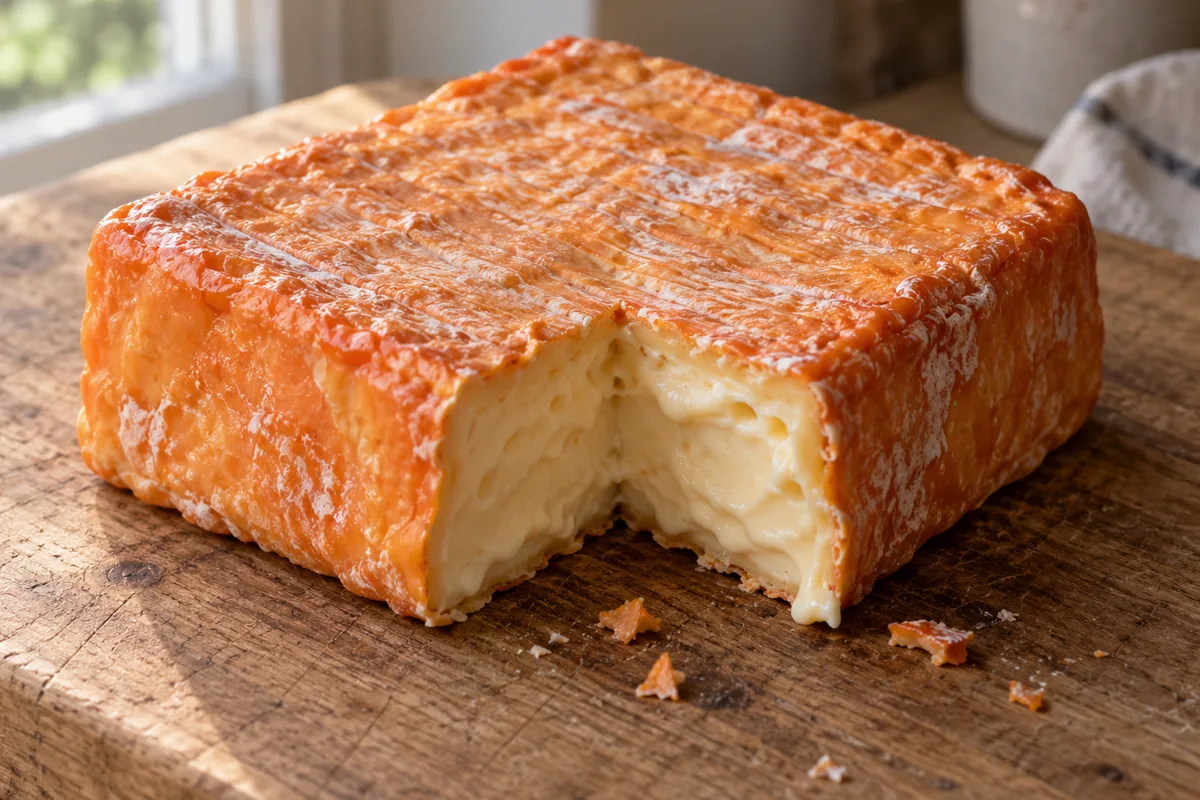
On the surface, the bacteria break down proteins, which builds both the reddish-orange rind and the strong smell. That rind is orange to reddish-brown, elastic, slightly sticky and gritty-grained, and the intense scent and flavor of the ripe cheese come from the smear.
Chalet says to store Limburger in very tightly lidded glass containers, and Cheese.com says it is often kept in airtight containers and served with care for sensitive noses.
Mosquitoes make the same match: a study published in The Lancet on 9 November 1996 found that the malaria mosquito Anopheles gambiae is drawn equally to the smell of Limburger and of human feet, and the work won an Ig Nobel Prize in biology in 2006.
The mosquito finds hosts mainly by the carbon dioxide in breath, and in still air it bites the soles and ankles, where skin bacteria make the short-chain fatty acids behind the cheesy smell.
The mosquitoes are also drawn to what Brevibacterium linens produces, so traps built on Limburger odor compounds have been developed to keep bites down, and traps baited with the cheese itself have been placed in parts of Africa.
How Does Limburger Change as It Ages?
Limburger starts firm and ends spreadable: in its first month it has the crumbly texture of feta, and by three months it is spreadable, with its notorious smell.
| Age | Texture | Given by |
|---|---|---|
| First month | Firm and crumbly, like feta | English Wikipedia (firmer and more crumbly, like feta); Cheese.com (firm and crumbly) |
| About six weeks | Softer at the edges, still firm inside, salty and chalky | English Wikipedia; Cheese.com (chalky and soft) |
| Two months | Mostly creamy and much smoother | English Wikipedia; Cheese.com |
| Three months | Spreadable, with its notorious smell | English Wikipedia |
So ask how old a piece is before you buy it: at six weeks it is still firm inside, and at three months it spreads.
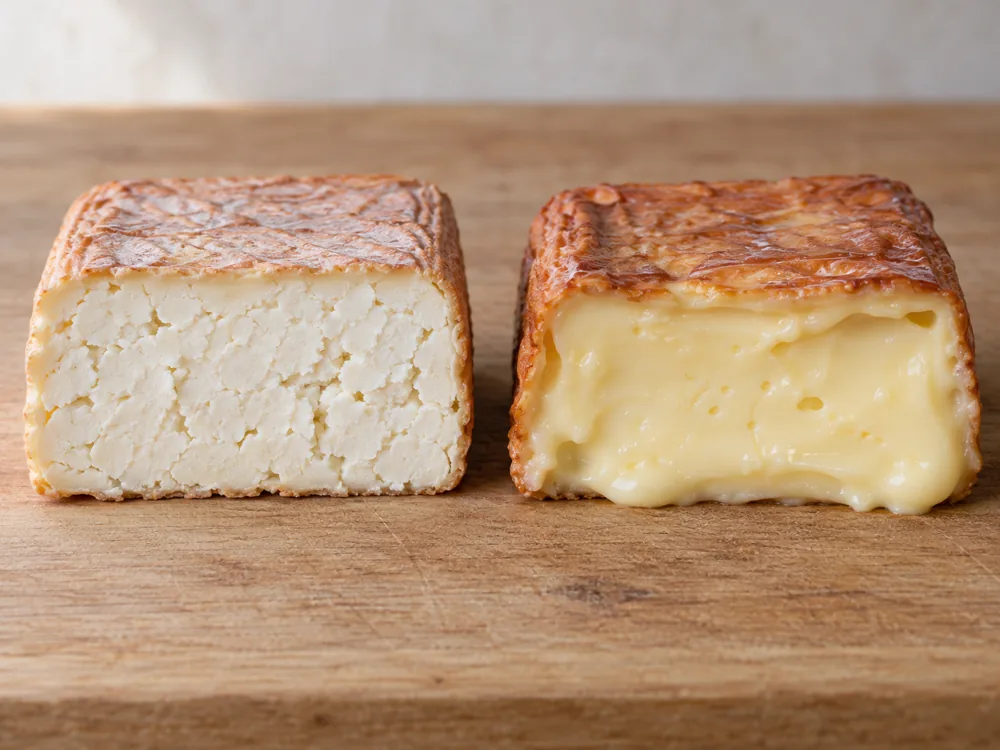
Limburger ripens for two weeks to three months in German Wikipedia's account and for two to three months in English Wikipedia's box.
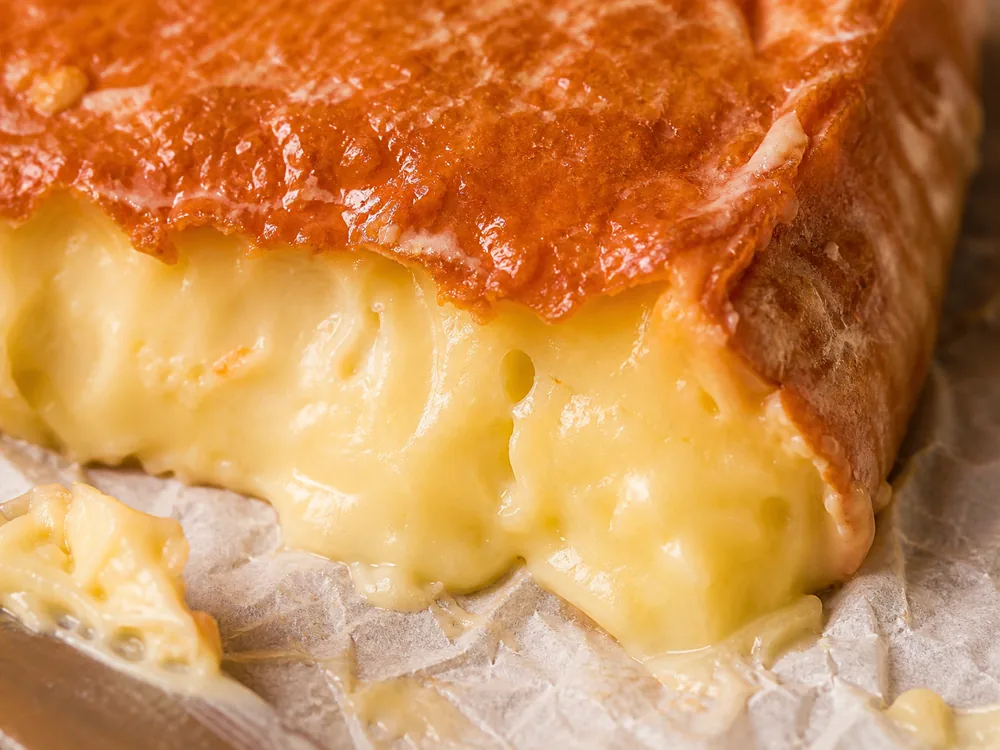
The finished paste is light yellow and dull-glossy, soft but still firm enough to slice, with small irregular holes. The whole cheese is cream-colored under a reddish-brown rind, sometimes with a hint of white mould.
How soft a ripe piece gets is described two ways: German Wikipedia calls it elastic and soft but not flowing, while Cheese.com says the interior turns increasingly runny toward the rind.
If you find a Limburger with a greasy rind and shrunken paste, it has passed its best and is not recommended.
Where Does Limburger Come From, and Who Makes It Now?
Limburger is named for the Duchy of Limburg, whose capital was Limbourg-sur-Vesdre, and today it is made in Belgium as Herve, in Germany's Allgäu and, in the United States, by a single cooperative in Wisconsin.
Herve comes from a hilly area between the Vesdre and Meuse rivers, near Liège and the Dutch and German borders, and the duchy lasted until the French Revolution as part of the Holy Roman Empire.
When the cheese began is disputed. English Wikipedia says it has been made in Herve since the 15th century, German Wikipedia says monks in the duchy's monasteries first made it, and Cheese.com traces it to Trappist monks in 19th-century Belgium.
In Germany, production centres on the Allgäu, where Carl Hirnbein began making soft cheese at Missen-Wilhams in 1830. It is sold there in rectangular bars of 200 g and 500 g, and the brick shape gives it the nickname Backsteinkäse.
The American story has three versions. English Wikipedia credits the Baumert cheese factory in Antwerp, New York, with the first US Limburger in 1854, Wisconsin Cheese says Swiss immigrants in Wisconsin made it first, and Chalet's own page says German immigrants brought it there.
A few years after the Baumert start, 25 factories were making it. Today Chalet Cheese Cooperative in Monroe, Wisconsin, is the only Limburger maker left in the United States.
Five dairy farmers founded the cooperative in 1885, and the dairy farmers who own it now are all in Green County, close to the factory, and supply its milk fresh each day. Its range also covers Wisconsin Brick, Swiss and Baby Swiss made in Monroe.
Cheese.com, and Chalet's own page in nearly the same words, call Germany the only European producer, which leaves out the Belgian Herve made under its protected name.
Is Herve the Same Cheese as Limburger?
Yes: in Belgium the same cheese is called Herve, though Herve is described with different piece sizes, fat and ripening times from Limburger.
Fromage de Herve is now the protected European name for the Belgian cheese, while Limburger is the name for the same style made elsewhere.
That protection dates to 1996, and Herve is the only Belgian cheese with a protected designation of origin.
| Question | Herve | Limburger |
|---|---|---|
| What size are the pieces? | 50, 100, 200 or 400 g (English Wikipedia) | Bars of 200 g and 500 g in Germany (German Wikipedia) |
| How much fat? | 45% (English Wikipedia) | 20% to 60% in dry matter (German Wikipedia) |
| How long does it ripen? | Three weeks to two months in English Wikipedia's box, three months in its text; four weeks for mild Herve, six weeks for strong Herve and two months for Remoudou (Terre de Fromages) | Two weeks to three months (German Wikipedia); two to three months (English Wikipedia's box) |
| What milk? | Raw milk (English Wikipedia) | Raw or pasteurized milk (German Wikipedia) |
Before you compare fat, check whether a Herve label gives its fat in dry matter, the basis of Limburger's 20% to 60%.
Terre de Fromages, the PDO producer group, describes Brevibacterium linens as particular to Herve cheese, giving it its characteristic taste and odour. Its producers wash and turn the cheeses twice a week, giving mild Herve four weeks, strong Herve six weeks and Remoudou two months.
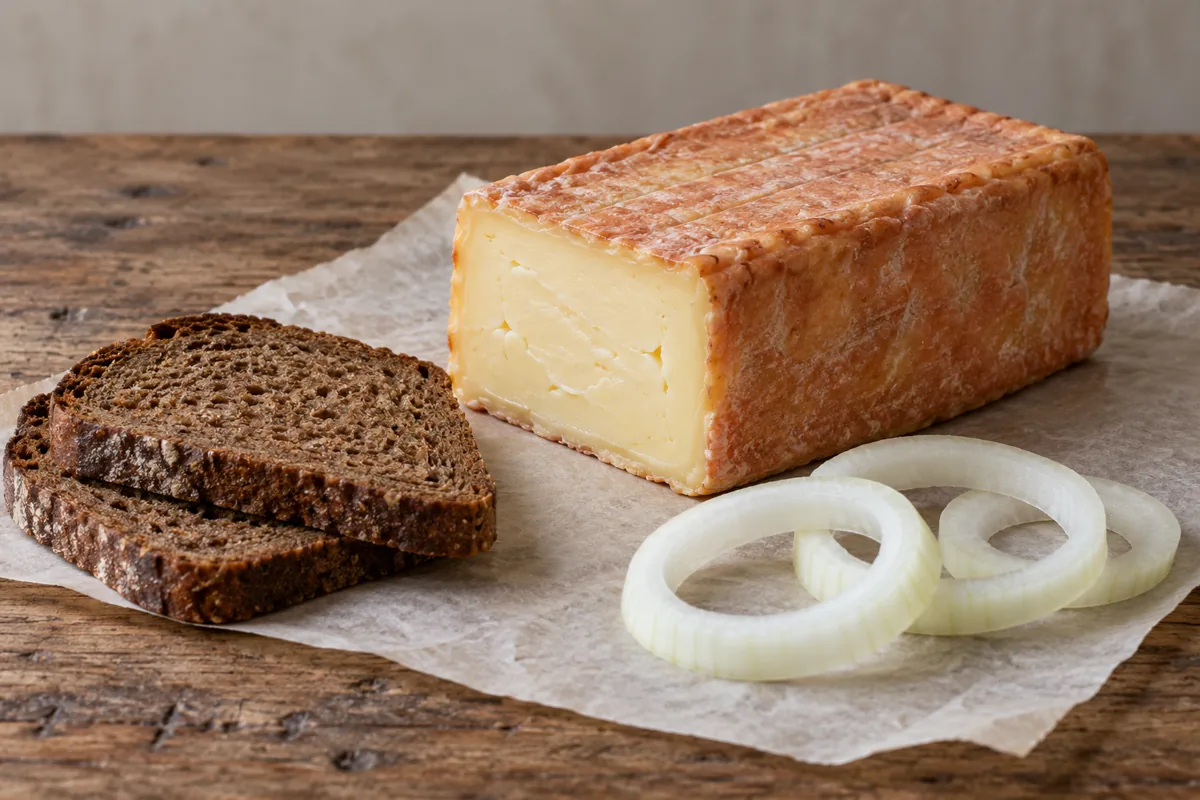
Herve ripens in cellars of the Herve countryside, sometimes cut into chalky rock, and is sometimes flavored with herbs. In the shop it is brick-shaped, with a pale yellow interior under a glossy reddish-brown coating.
The same cheese also goes by Limburg, Rommedoe in southern Dutch usage and Herve in Belgium, and German Wikipedia adds Remoudou.
How Is Limburger Eaten, and What Do You Drink with It?
The best-known serving is the Limburger sandwich: ripe cheese spread more than 0.5 cm thick on firm 100% rye bread under a large, thick slice of onion. Chunks or slices up to 1.5 cm thick can also be cut from the block and laid in the sandwich instead.
The sandwich remains popular among descendants of Swiss and German immigrants in the Midwestern United States, in places including Wisconsin and Ohio.
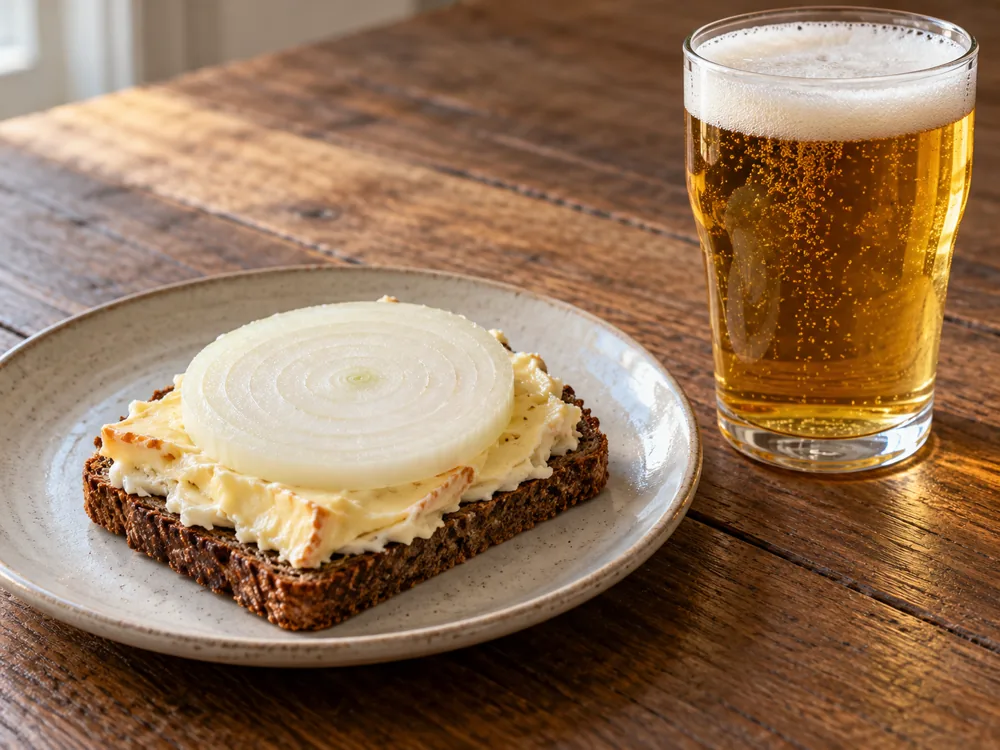
The mustard is where versions part. Wisconsin Cheese's purist sandwich uses horseradish mustard and red onion on rye, Wisconsin restaurants serve it with brown mustard, and Chalet pairs pub mustard with dark rye and thickly sliced raw onion.
The sandwich also comes with bologna, lettuce, tomato or roasted walnuts, and on white or French bread.
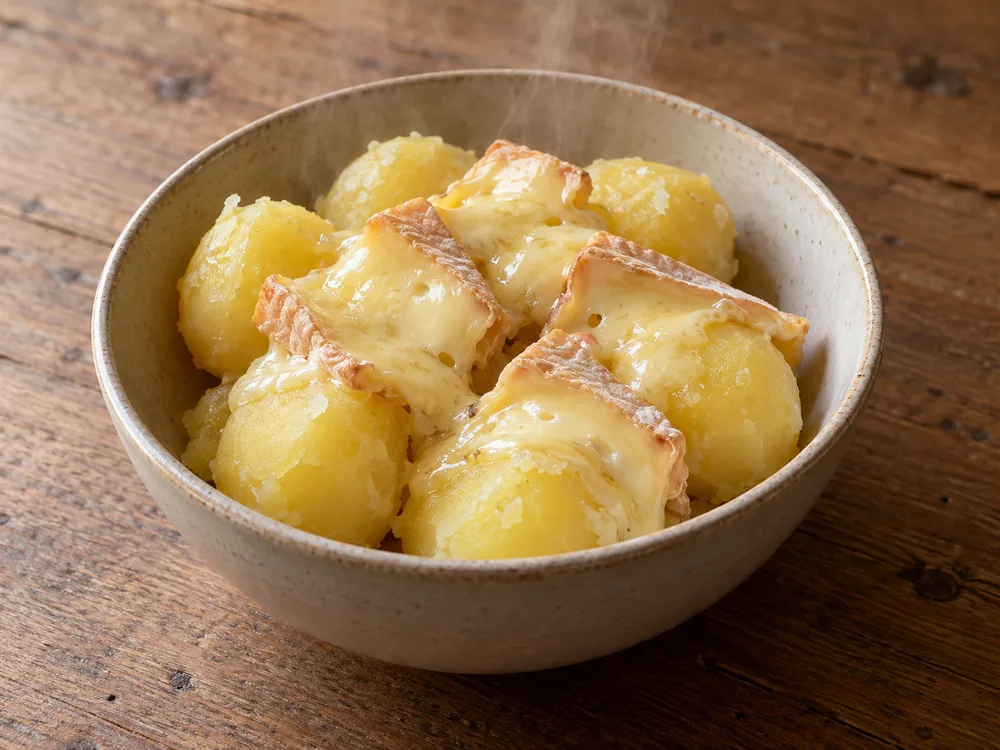
Away from bread, Chalet, Wisconsin Cheese and German Wikipedia all put Limburger on hot boiled potatoes with butter, and German Wikipedia adds cold milk as the drink.
In the Allgäu and Upper Swabia, Limburger is also eaten as a sour cheese dressed in vinegar, oil and plenty of onion rings, with mixed rye bread. German Wikipedia names wholegrain breads such as pumpernickel and raw onion as good partners.
Wisconsin Cheese adds strawberry jam, a pizza topped with caramelized onions, and a cracker plate on which Limburger is the only cheese.
For a drink, descriptions agree on beer, and Chalet gives the longest list, from Belgian-style ales and icy cold bock to stout, pale ale, porter, brown ale and lager.
Wisconsin Cheese says it would not really pair Limburger with wine, and when it does, it names bottles with big personality. Chalet's wine list matches it, with beaujolais added.
Cheese.com names Belgian-style ales and bock too, and adds pickles and cured meats beside pumpernickel, onions and mustard.
| Pairing | Type | Why It Works |
|---|---|---|
| Lager or coffee | Drink | Lager beer or strong black coffee with the rye sandwich, per English Wikipedia. |
| Ales | Drink | Stout, pale ale, porter or Belgian ale, per Wisconsin Cheese. Chalet adds bock and brown ale. |
| Cider and must | Drink | Beer, cider or apple must, per German Wikipedia. |
| Red wine | Wine | Cabernet sauvignon, merlot or red zinfandel, per Wisconsin Cheese. Chalet adds beaujolais. |
| White wine | Wine | Grüner veltliner, per Wisconsin Cheese. |
| Cold milk | Drink | Cold milk with hot boiled potatoes and butter, per German Wikipedia. |
Can You Bake or Melt Limburger?
Yes. Chalet says many bakers cut Limburger up and mix it lightly into bread dough before baking, and that the strong aroma is then highly reduced and the bread has a rich, creamy texture.
It names sourdough, rye and beer bread as the doughs to try. For pizza, Chalet specifies small bits tossed onto a crisp crust with sweet, slow-cooked caramelized onions and the other toppings.
Cheese.com says Limburger makes a creamy topping when melted and adds depth to burgers, quiches, salads and dips.
Is Limburger Safe During Pregnancy?
It depends on the milk and on whether the cheese is cooked, because both agencies sort cheese in pregnancy by milk and cheese type.
Limburger can be made from raw milk or pasteurized milk, and Belgian Herve is described as a raw-milk cheese. The Chalet Cheese Co-op Limburger sold by Cheesers is listed as pasteurized cow's milk, so read the label on your piece.
The NHS says any foods made from unpasteurised milk must be thoroughly cooked, and it counts any cheese cooked until steaming hot as safe. A raw-milk Limburger therefore needs thorough cooking under NHS rules.
The CDC lists soft cheese made from unpasteurized (raw) milk, for example brie and camembert, as a riskier choice, and says pregnant women are 10 times more likely to get a Listeria infection.
For a pasteurized Limburger, the NHS lists pasteurised soft cheeses such as cottage cheese, cream cheese, mozzarella, feta, paneer and ricotta as safe. It says pasteurised or unpasteurised mould-ripened soft cheeses with a white coating on the outside and pasteurised or unpasteurised soft blue-veined cheeses must be thoroughly cooked, and Limburger, a washed-rind cheese with an orange to reddish-brown rind, is neither.
The CDC lists pasteurized soft cheeses heated to an internal temperature of 165°F or until steaming hot as safer. Served cold, pasteurized washed-rind cheese is a type the CDC lists do not cover, so for an uncooked piece, ask your midwife or doctor.
What Is in 100 g of Limburger?
NutritionData puts 100 g of Limburger at 327 calories, 240 of them from fat.
Its fat ranges from 20% to 60% in dry matter, so the label on your piece can differ from these figures.
| Nutrient | Per 100 g |
|---|---|
| Energy | 327 calories |
| Total fat | 27 g |
| Saturated fat | 17 g |
| Protein | 20 g |
| Sodium | 800 mg |
| Cholesterol | 90 mg |
Which Cheeses Are Close to Limburger?
If you like Limburger, Wisconsin Cheese points you toward three other cheeses made in the state.
- Wisconsin Brick: a quieter, tamer cheese that Wisconsin Cheese says is known as the "married man's limburger".
- Liederkranz: a similar texture and aroma to Limburger, but more robust and buttery.
- Blue cheese and gorgonzola: not as smelly as some, but still complex and aromatic.
Brick takes its name from the bricks makers used to press the curds, and Chalet, which makes it, describes it as mild and a little nutty when young and pungent and tangy with age. So if you want the tamer cheese, buy a young Brick.
Limburger closely resembles Romadur, a German cheese pictured with the red smear of Brevibacterium linens on its surface.
Wisconsin Brick is also among the cheeses ripened with the same bacterium as Limburger, and so are Tilsit, Port-Salut and Raclette, and from France, Livarot, Époisses, Maroilles and Munster.
Wisconsin's blue cheeses and Wisconsin-made gorgonzola work differently, since blue cheese uses the bacterium alongside the mould Penicillium roqueforti.
SOURCES & REFERENCES
The rind is ripened with Brevibacterium linens, the same bacterium that lives on human skin and is partly behind foot odor, according to English Wikipedia.
Milder than it smells. Wisconsin Cheese describes a grassy, tangy, mushroom-like taste, and German Wikipedia says the flavor grows stronger as the cheese ripens.
Two weeks to three months in German Wikipedia's account, or two to three months in English Wikipedia's box. It becomes spreadable, with its full smell, at about three months.
On firm rye bread with a thick slice of onion, served with lager or strong black coffee, per English Wikipedia. Wisconsin Cheese adds horseradish mustard and red onion.
Chalet Cheese Cooperative in Monroe, Wisconsin, is the only Limburger maker left in the United States.
It depends on the milk and on cooking: the CDC lists soft cheese made from unpasteurized (raw) milk as a riskier choice, and the NHS says foods made from unpasteurised milk must be thoroughly cooked and any cheese cooked until steaming hot is safe. Pasteurized washed-rind cheese served cold is a type the CDC lists do not cover, so ask a doctor or midwife about an uncooked piece.