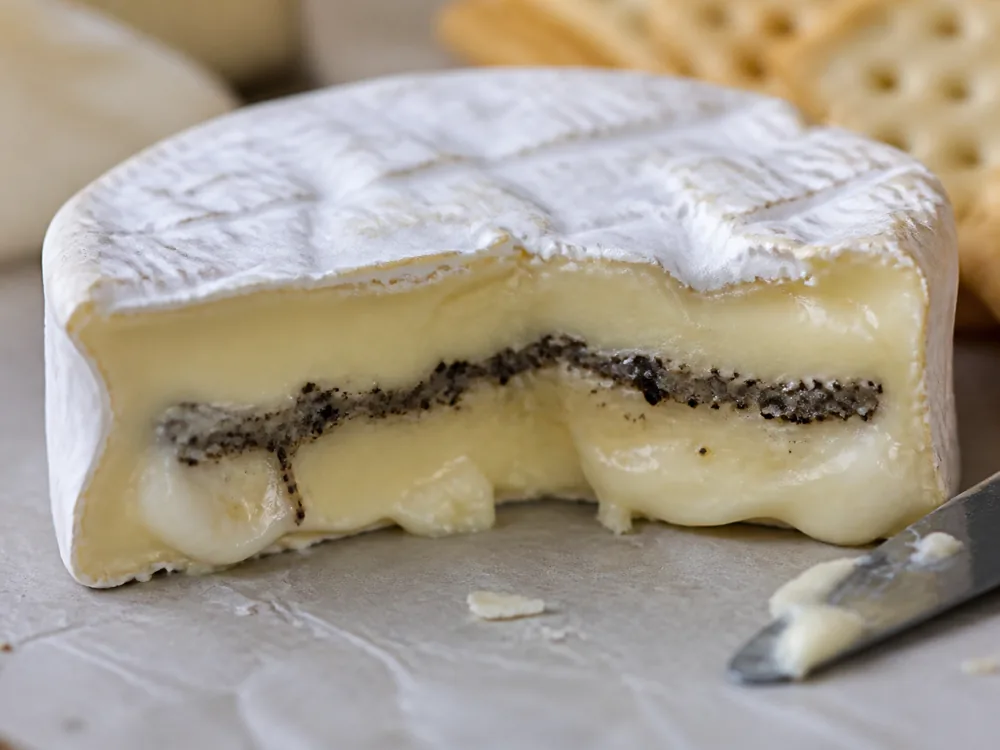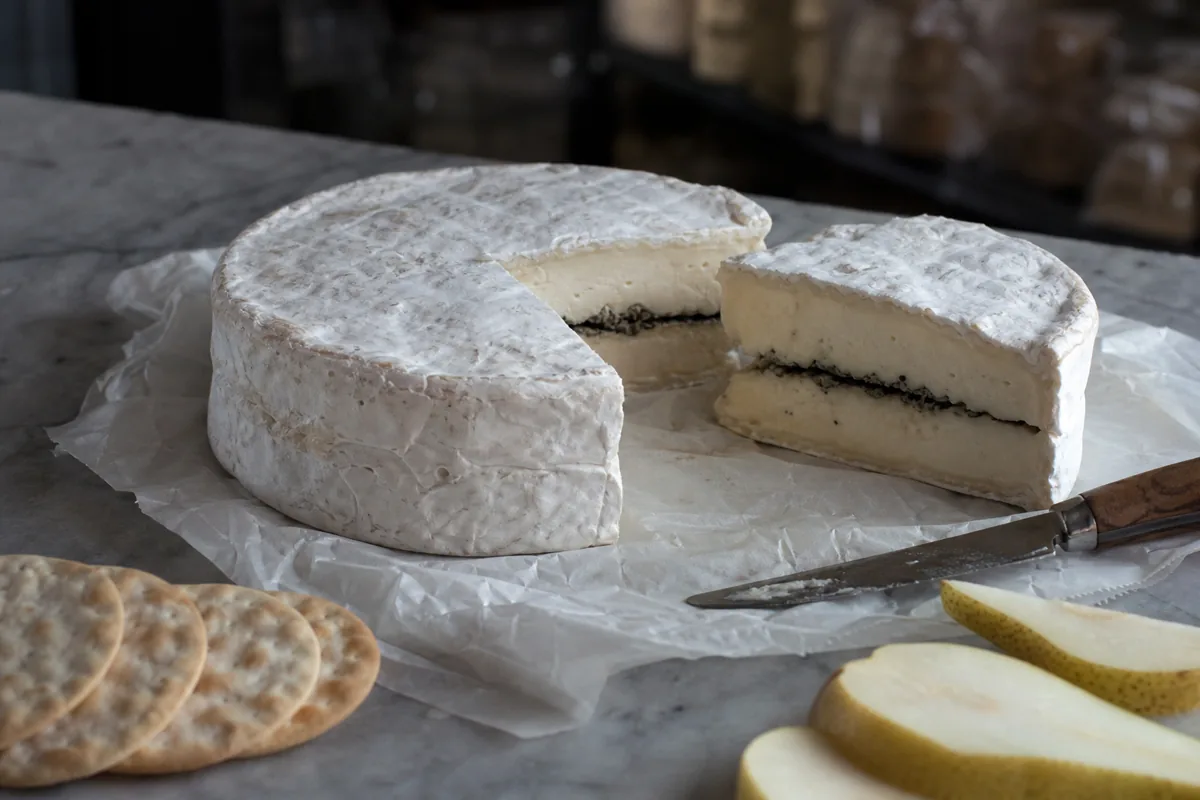
College White With Truffles is a soft bloomy-rind cheese with a black truffle layer running through the middle. Think of it as a small Brie-style cheese that uses truffle as the main accent.
The job is narrow. Buy it when you want a rich starter, a small cheese-board centerpiece, or a soft cheese that smells earthy before anyone takes a bite.
It is not the same job as firm aged Cheddar with truffle, and it should not be treated like a grating cheese. The rind, paste, and truffle seam all point to a soft-ripened table cheese.
In This Article
What is College White With Truffles?
College White With Truffles sits in the soft bloomy-rind family. The white rind should look similar to the rind on a creamy Brie-style wheel, while the center carries a visible truffle line.
That black seam is the article's main buying cue. If you are paying for this cheese, you should see truffle as part of the cheese, not only smell a faint truffle oil note on the surface.
The name can make people expect a rare hard cheese. The cut face tells the truth faster.
If it looks soft, white-rinded, and layered, treat it like a truffled soft cheese.
That boundary protects the serving plan. A hard truffle wedge can be shaved or grated, but this cheese needs a knife, bread, and a short room-temperature window.
The best use is a small plate where every slice crosses the seam. Cut from rind to center so each piece has rind, paste, and truffle.
If you cut around the seam, one guest gets the aroma and another gets plain soft cheese.
- Best first use: serve in small wedges on a starter plate.
- Best visual cue: a clean dark truffle seam through the paste.
- Best texture cue: soft paste that relaxes at room temperature.
- Biggest mistake: using it like a hard truffle cheese.
What does College White With Truffles taste like?
The base should taste creamy, buttery, and lightly mushroomy from the bloomy rind. The truffle layer adds a deeper earthy smell that arrives before the salt or cream.
The flavor is strongest when the cheese is cool-room temperature. Straight from the fridge, the paste can feel tight and the truffle can taste muted.
Too warm, and the rind aroma can take over.
Compared with a stronger bloomy-rind cheese, it leans on truffle aroma rather than barnyard rind power. Compared with washed-rind funk, it should feel gentler and more mushroom-like.
Use a small piece first. Truffle can make a soft cheese feel bigger than its size.
A thin wedge often gives more pleasure than a thick slab.
The rind also changes the flavor as the cheese warms. At fridge temperature, the truffle may seem quiet and the paste firm.
After a short rest, the dairy softens and the mushroom note becomes clearer.
That does not mean longer is always better. Once the paste gets too warm, the rind smell can run ahead of the truffle and make the cheese taste muddier.
How do you know the cheese is ripe enough?
Look at the rind first. It should be intact, white, and soft-looking, not wet, cracked, or aggressively brown.
A little beige near the edge can be normal as a soft cheese ripens.

The cut face should show a creamy layer near the rind and a center that still holds together. If the center is chalky, the cheese may need more time.
If the paste is collapsing and smells sharp with ammonia, it has gone too far.
A good piece smells like cream, rind, mushroom, and truffle. If the first smell is harsh ammonia, buy a different piece or serve it immediately with plenty of bread.
The truffle line should look even enough to flavor each wedge. If one side has most of the truffle, cut narrow wedges across the seam so every portion gets both paste and truffle.
Use the smell as a final check. Good truffle soft cheese smells earthy and creamy.
It should not smell like sharp cleaner, old cabbage, or wet cardboard.
- Good: clean rind, creamy edge, visible truffle seam.
- Too young: chalky center and weak aroma.
- Too ripe: harsh ammonia, wet rind, collapsing paste.
Best ways to serve College White With Truffles
Serve it cool but not cold. Take it out of the fridge about 30 minutes before serving if the room is mild.
Shorter is better in a hot kitchen.
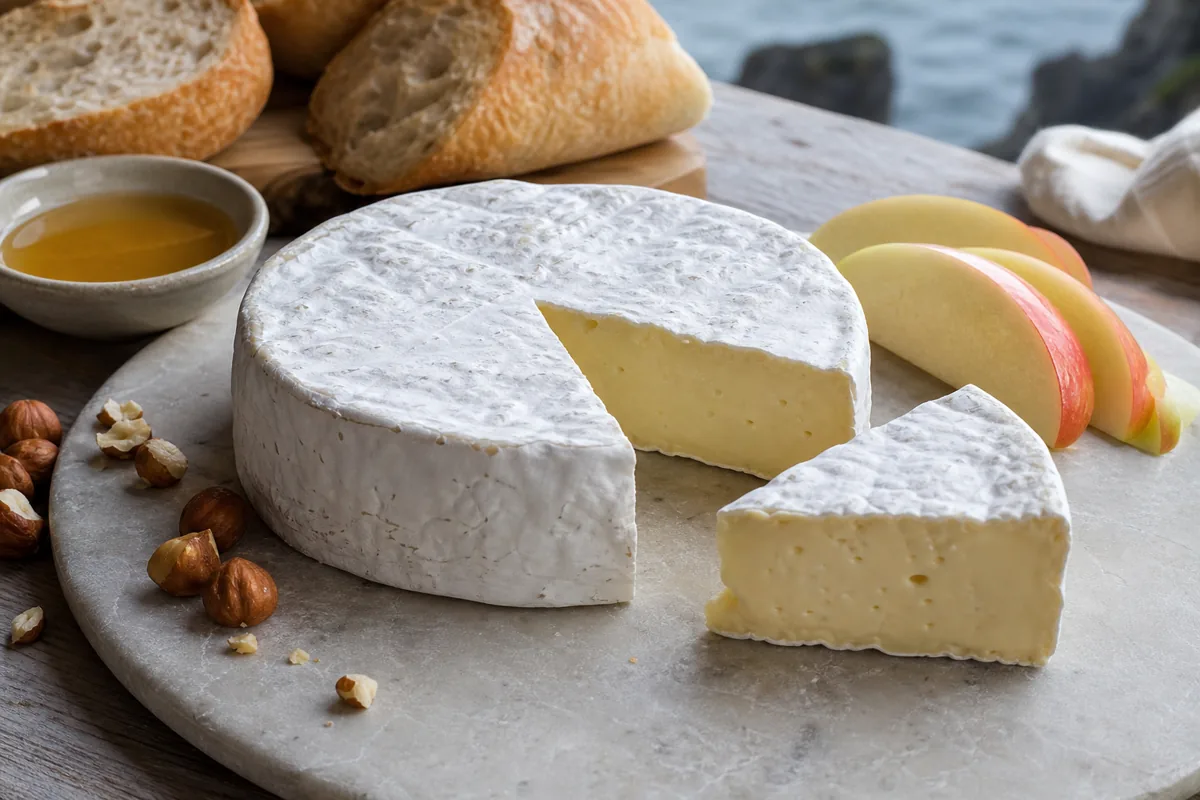
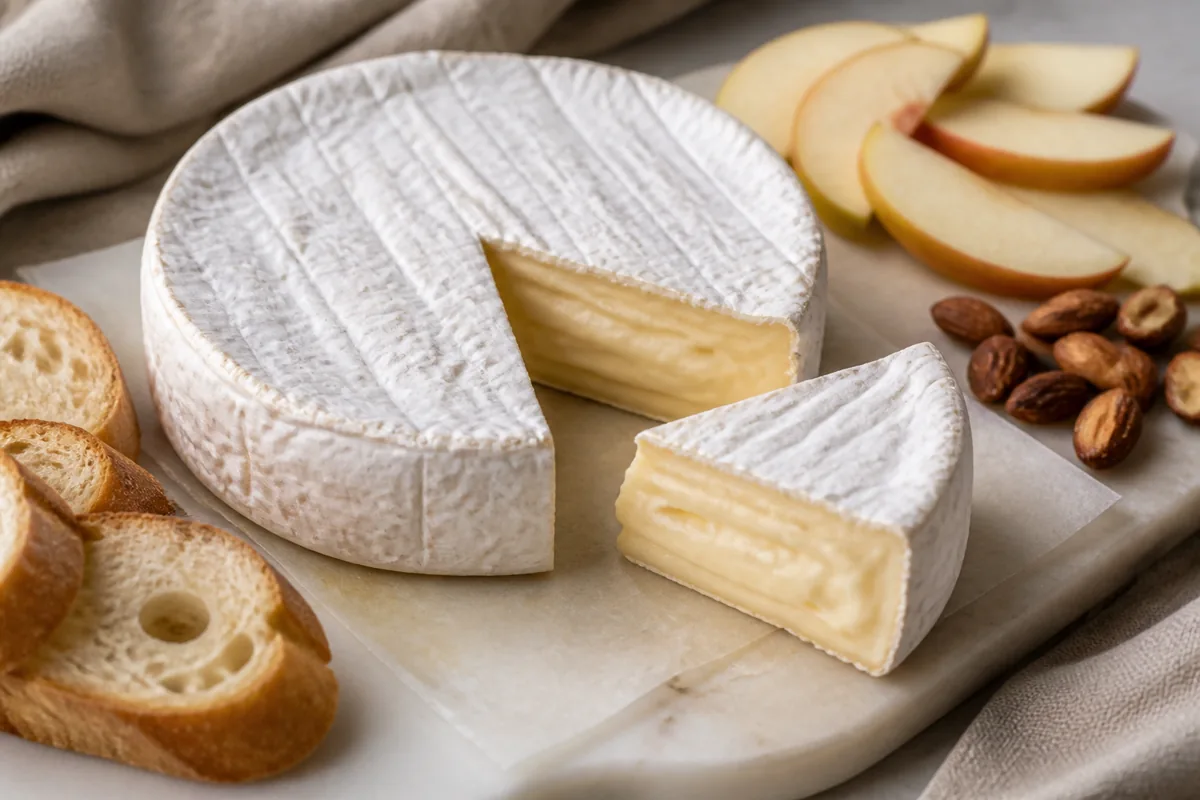
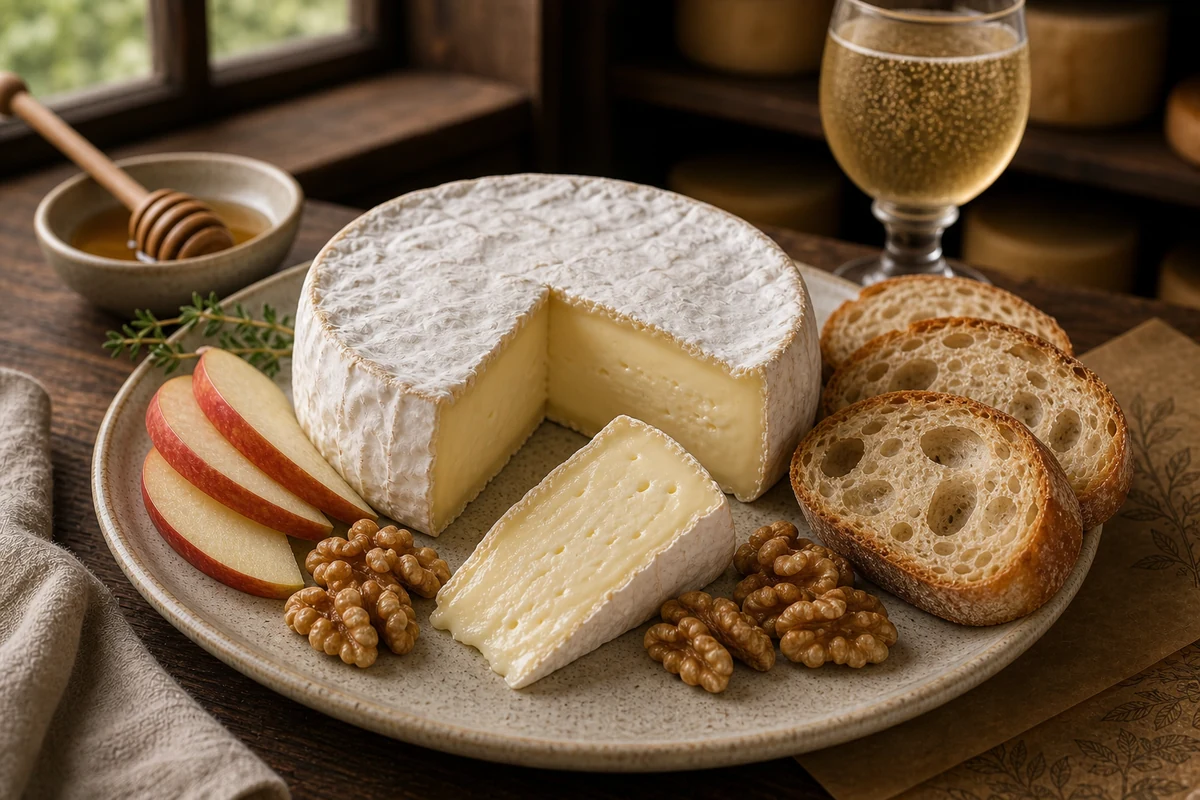
Keep the accompaniments plain. Water crackers, baguette, pear, apple, hazelnuts, and a little mild honey support the truffle without fighting it.
Strong chutney can flatten the aroma you paid for.
| Pairing | Why It Works |
|---|---|
| Pear | Soft sweetness lets the truffle stay clear. |
| Plain crackers | Crunch without extra seasoning. |
| Hazelnuts | Nutty flavor echoes the earthy seam. |
| Sparkling wine | Bubbles reset the creamy paste. |
For a larger board, place it beside a firm cheese rather than another loud soft cheese. A sharper wedge from a balanced cheese board gives contrast while College White supplies the soft texture and truffle aroma.
Put it on the board last if you are serving several cheeses. That keeps the truffle aroma from sitting in the open too long and lets milder cheeses keep their own smell.
Do not hide it under jam. Sweet condiments can work in tiny amounts, but a strong fruit preserve turns the cheese into texture and wastes the seam.
- Cut narrow wedges: so every bite crosses the truffle layer.
- Use plain bread: when the truffle aroma should stay clear.
- Add fruit lightly: pear and apple work better than heavy jam.
- Serve early: before spicy or smoky foods dull the aroma.
What should you pair with truffle soft cheese?
Pairings should clean the palate and leave the truffle in front. Sparkling wine, dry cider, crisp white wine, or a light beer usually works better than a heavy red.
| Clean crunch | Water crackers, baguette, celery leaves |
| Soft sweetness | Pear, apple, mild honey |
| Earthy echo | Hazelnuts, walnuts, roasted mushrooms |
| Drink reset | Sparkling wine, dry cider, light beer |
If you want wine specifically, use the same restraint you would use for soft-rind wine pairing. The drink should lift the cream, not bury the truffle under oak, tannin, or jammy fruit.
For dinner, the cheese works better before the main course than after a spicy meal. Truffle aroma is easy to lose after garlic, chile, or heavy smoke.
For a nonalcoholic plate, use sparkling water with lemon, tart apple, or a light tea. The point is the same as wine: clean the cream and leave the truffle readable.
Keep garlic away unless the whole meal is built around it. Garlic and truffle can taste exciting for one bite, then muddy for the rest of the plate.
- Choose bubbles: when the cheese is ripe and creamy.
- Choose cider: when the plate has apple, nuts, or bread.
- Skip heavy oak: when the truffle seam is the main reason for buying it.
How is it different from Brie or Camembert?
Brie, Camembert, and College White With Truffles share the white-rind soft-cheese family. The difference is not only the name.
The truffle seam changes the buying reason.
Choose plain Brie when you want soft cream and wide crowd appeal. Choose Camembert when you want a stronger rind.
Choose College White With Truffles when the plate needs a small aromatic cheese that feels more deliberate.
| Cheese | Best reason to pick it |
|---|---|
| College White With Truffles | Truffle aroma and creamy soft-rind texture. |
| Brie | Milder soft cheese for a crowd. |
| Camembert | Stronger rind and deeper savory flavor. |
| Comox Brie | Mild Canadian Brie-style cheese without truffle. |
If the truffle layer is the only reason you are buying it, keep the rest of the plate quiet. If you want a simple mild soft cheese, a Canadian Brie-style wheel may be the better fit.
Buying and storage
Buy a small piece from a cold case with quick turnover. Truffle aroma fades after cutting, and soft-rind cheese absorbs fridge odors quickly.
Ask whether the cheese is ready to eat.
A shop may sell one piece for tonight and another for the weekend. That answer matters more than a perfect-looking rind.
Store it wrapped in cheese paper or loose parchment inside a container. Keep it cold, but do not trap it in tight plastic for days if the cut face needs to breathe.
The same clean cheese-storage habits matter more here because truffle and rind both pick up stray smells. Use a clean knife and keep onions, smoked meat, and uncovered leftovers away from it.
Do not save a tiny rind-heavy leftover for a week. The truffle note will fade while the rind gets louder, which is the opposite of why the cheese is worth buying.
If you must keep leftovers, wrap the cut face first and place the piece in a small box. Too much air dries the paste, while too little airflow can make the rind smell trapped.
Plan the serving size before cutting. A small intact piece holds aroma better than several leftover slivers, and it gives you cleaner wedges across the seam.
If you are buying for two people, ask for a smaller piece rather than planning leftovers. Truffle soft cheese loses its reason faster than a plain firm wedge because aroma is part of the value.
If you are buying for a party, cut fewer wedges at first and refresh the plate later. That keeps the paste cleaner and stops the truffle seam from drying on the board.
That small service habit preserves both parts of the cheese: the rind stays neat, and the truffle layer stays aromatic.
It also makes the cheese feel intentional instead of scattered across the board tonight.
Best substitutes for College White With Truffles
The closest substitute is another truffled bloomy-rind cheese. If that is not available, use a mild Brie-style cheese with a tiny amount of truffle honey or shaved truffle on the plate.
| Use | How It Works |
|---|---|
| Use 1 | Use truffled Brie when you need the closest texture and aroma. |
| Use 2 | Use plain Brie plus truffle honey when the board needs a softer substitute. |
| Use 3 | Use Camembert only if a stronger rind is welcome. |
| Use 4 | Use a firm truffle cheese only when the dish needs slices or shavings. |
If the spreadable texture matters more than rind flavor, a small amount of cultured soft spread can help a board feel creamy, but it will not copy the rind or truffle seam.
If the guest is pregnant or high-risk, check pasteurization and storage before serving. The safest guide is a sealed, pasteurized product kept cold and handled cleanly.
Use the same caution you would use for soft cheese during pregnancy.
When the exact cheese is unavailable, decide which part matters most. If truffle aroma matters, use another truffled soft cheese.
If soft rind matters, use plain Brie. If slicing matters, choose a firm truffle cheese and accept that the eating experience changes.
The worst substitute is a strong cheese plus truffle oil. That can smell loud but taste flat.
A quieter soft cheese with a real truffle accent usually lands closer to the original job.
For cooked dishes, use the substitute somewhere else on the plate. A truffled soft-rind cheese is most valuable before heat, where the rind and seam can be seen and smelled.
SOURCES & REFERENCES
It is a specialty soft-rind table cheese where the buying cue is the dark truffle seam inside a creamy white-rind wheel.
It has Brie-style creamy soft-rind texture, but the truffle layer adds a stronger earthy mushroom aroma.
Serve it cool-room temperature with plain crackers, pear, apple, hazelnuts, mild honey, sparkling wine, or dry cider.
Do not use it as a main melting cheese. Gentle warmth can soften it, but high heat wastes the truffle aroma and can make the rind messy.
Use another truffled bloomy-rind cheese. Plain Brie with a small amount of truffle honey can work when the exact cheese is unavailable.