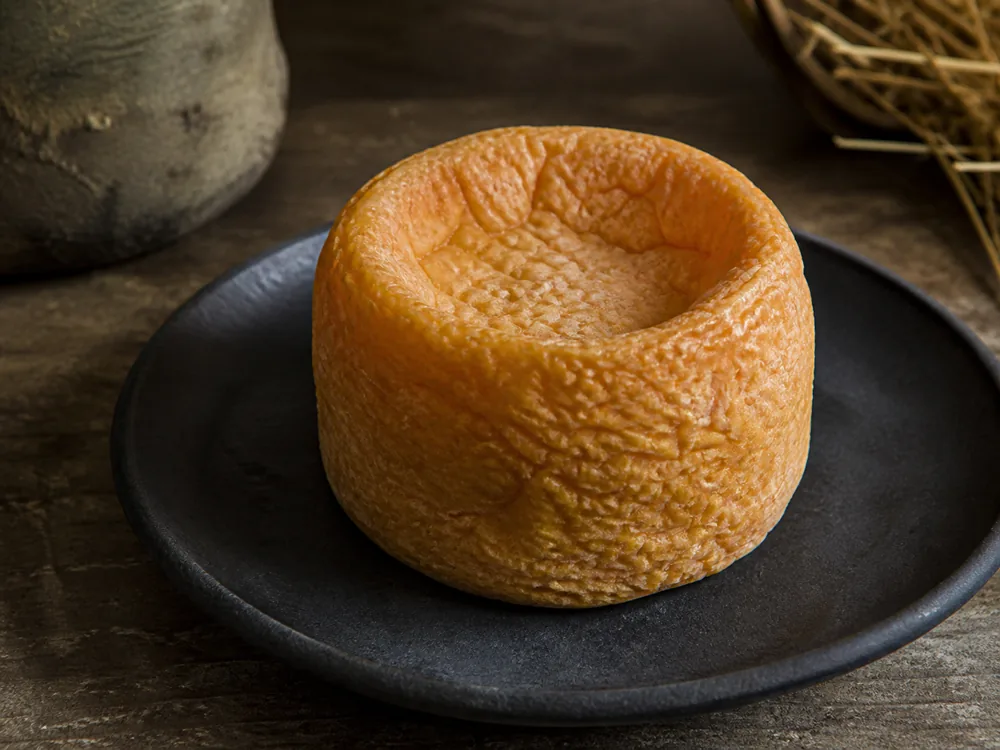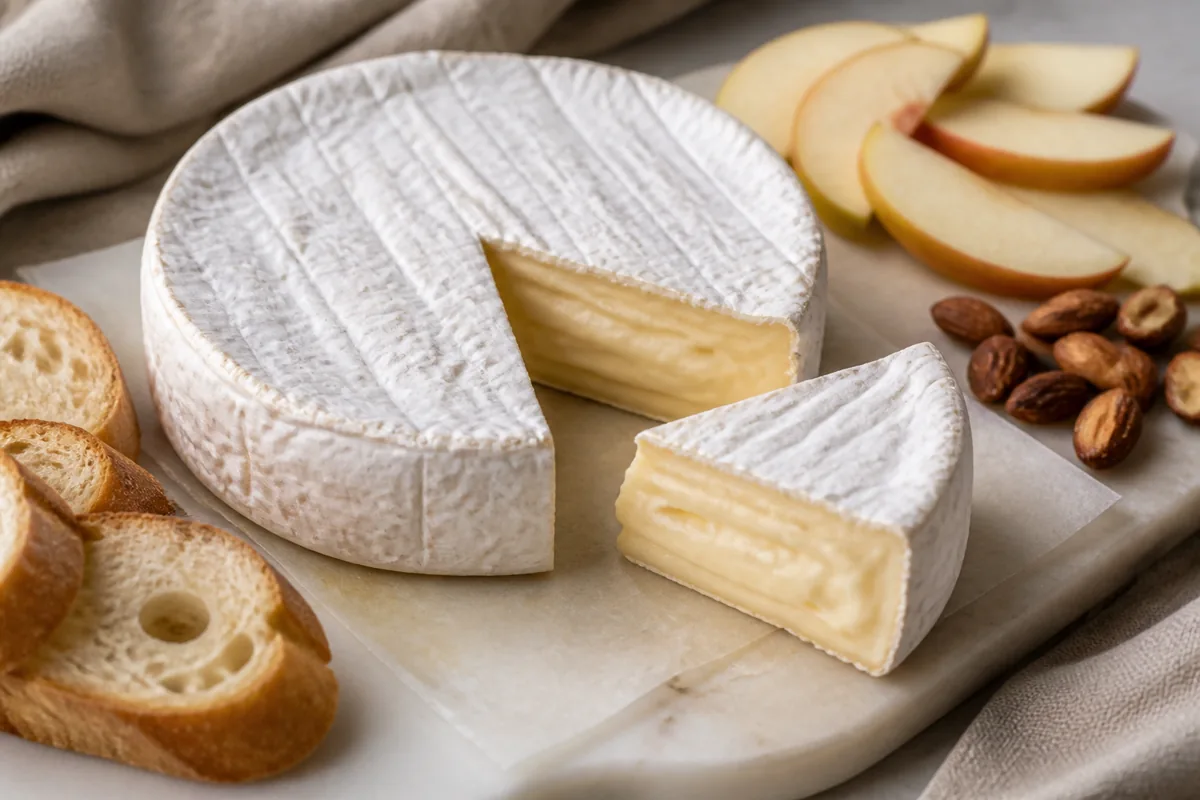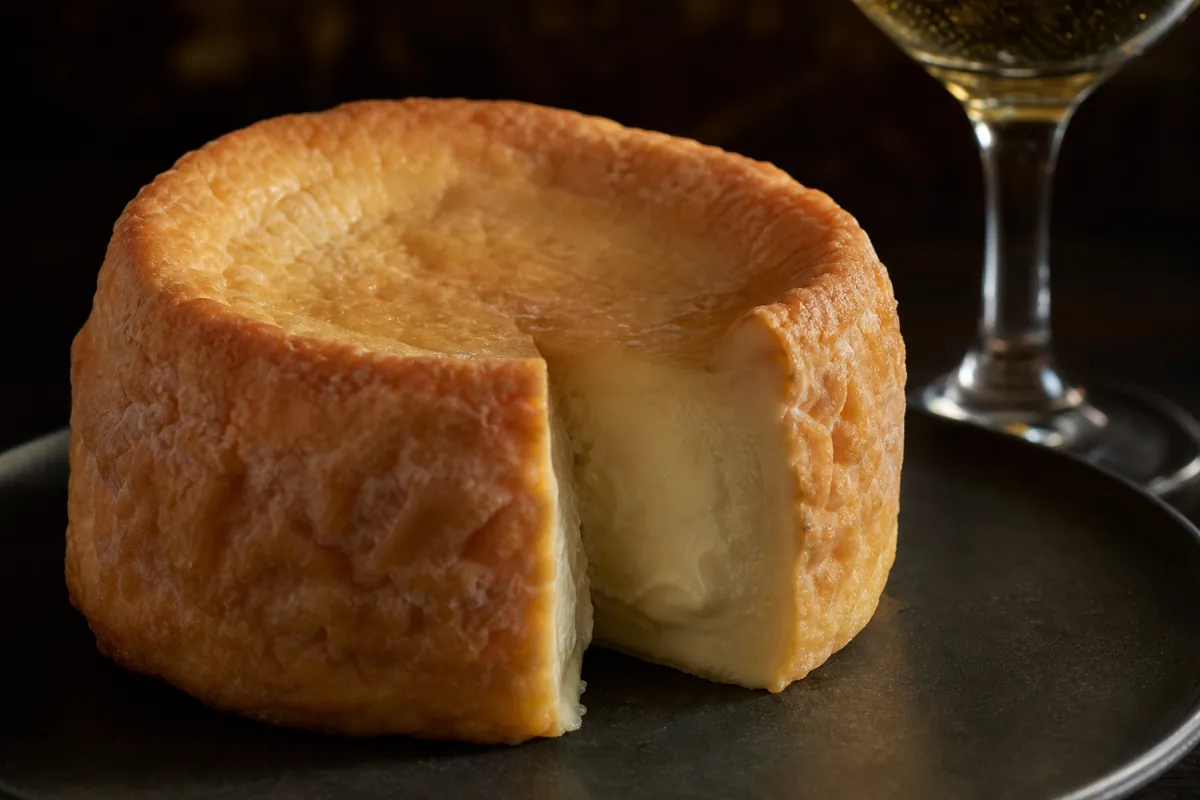
Langres belongs with washed-rind cheeses because the top of the cheese tells you almost as much as the smell. This is the French wheel to buy when you want a soft washed rind with a real serving ritual, not just another orange rind on the board.
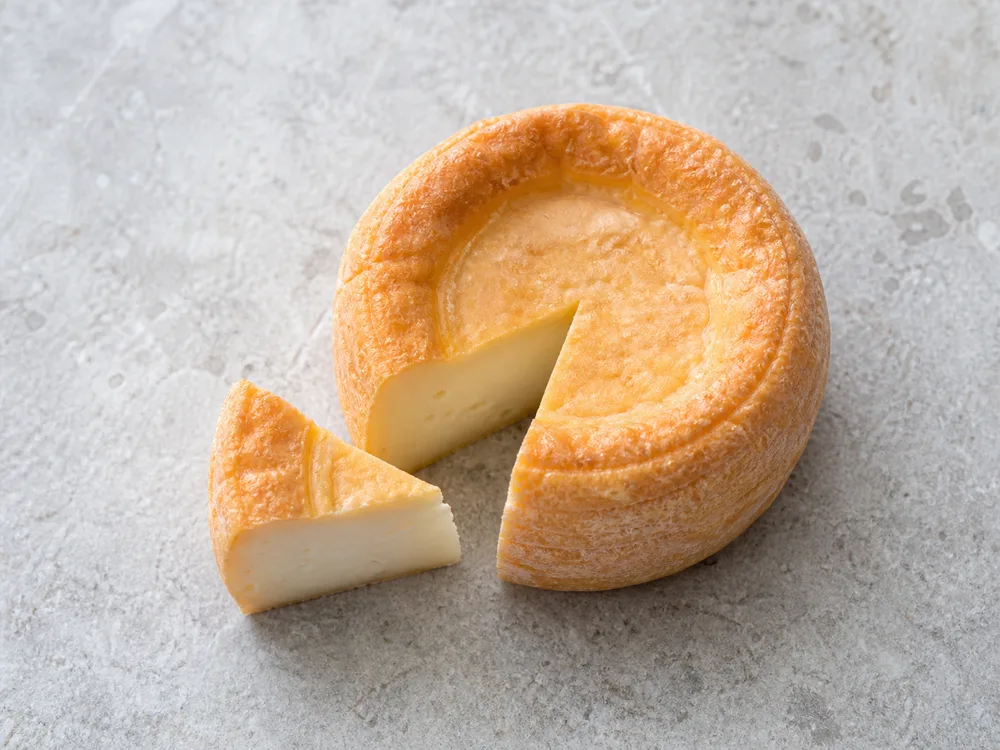
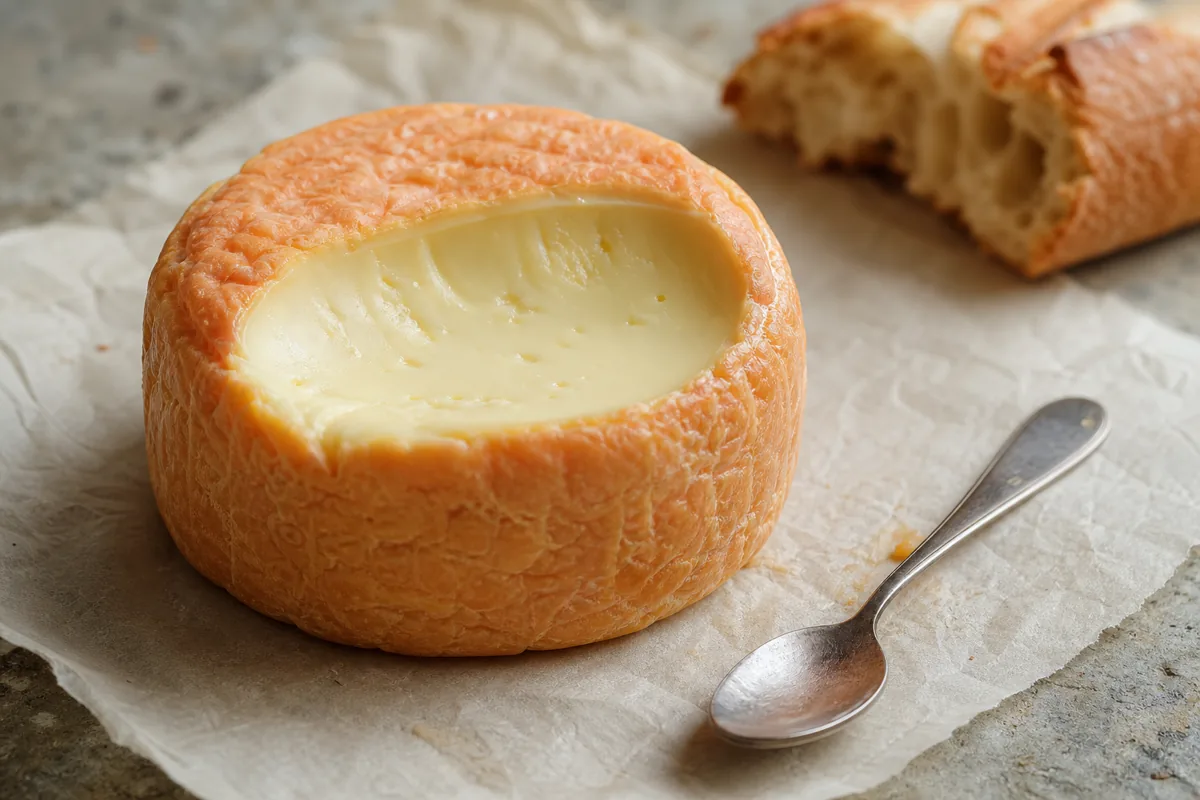
The signature is the hollow at the top, often called the fontaine. That dip forms because Langres is never turned during make and ripening, so the center sinks as the cheese matures.
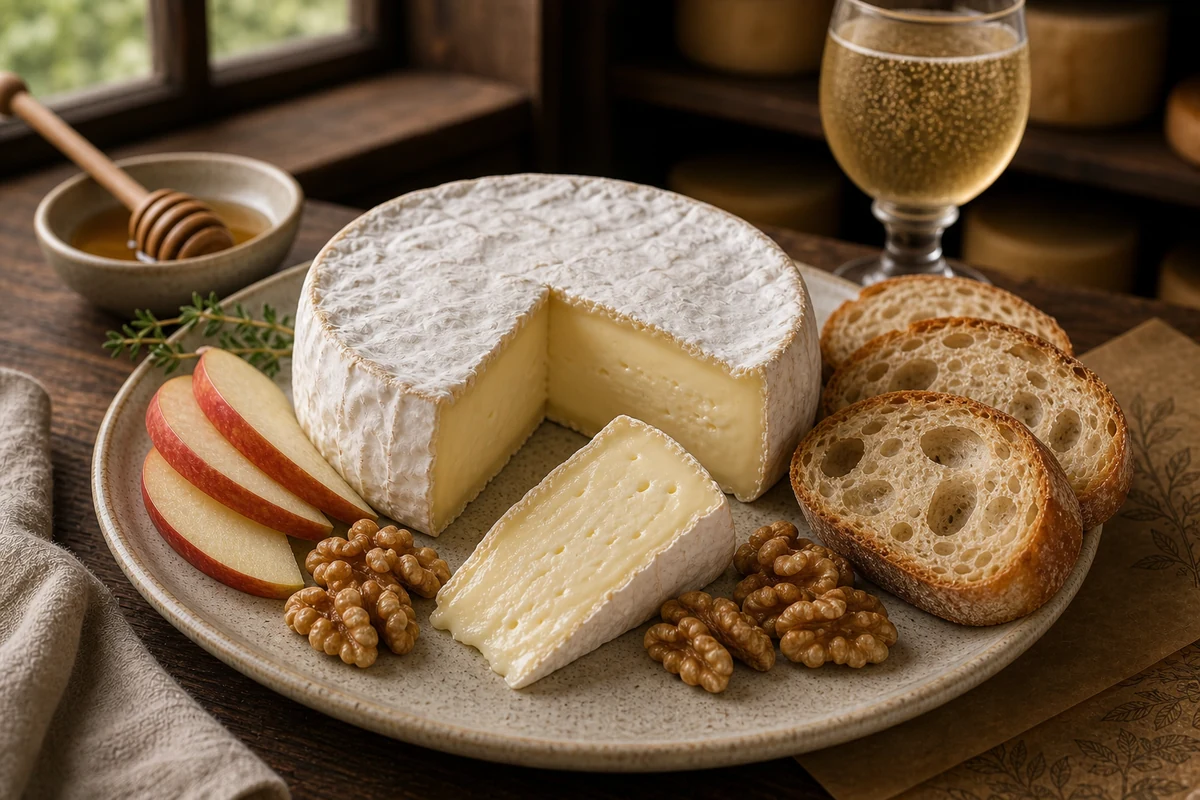
That makes Langres different from other stronger Burgundy washed-rind cheeses. It also behaves differently from bloomy-rind Camembert behavior.
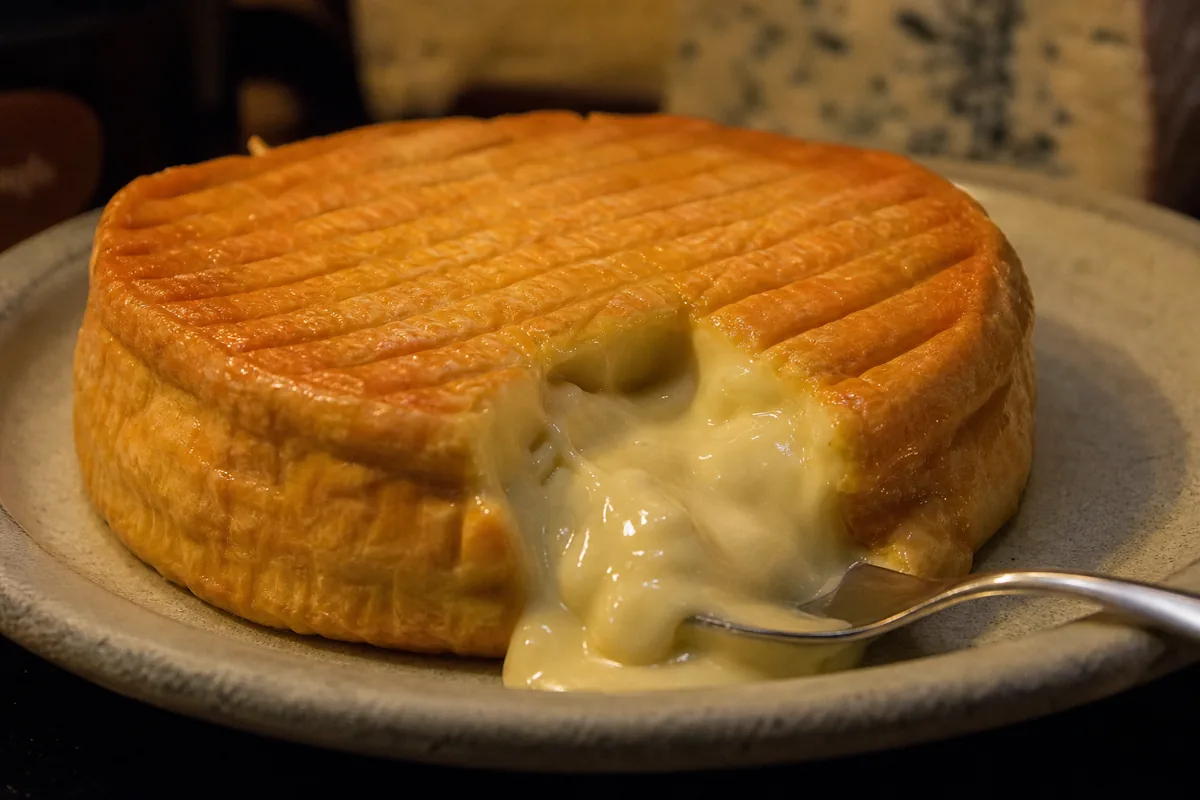
Langres stays supple and aromatic, but it is not meant to slump like baked Brie or hit with the same sticky intensity as the loudest washed rinds.
In This Article
What Langres Cheese Is
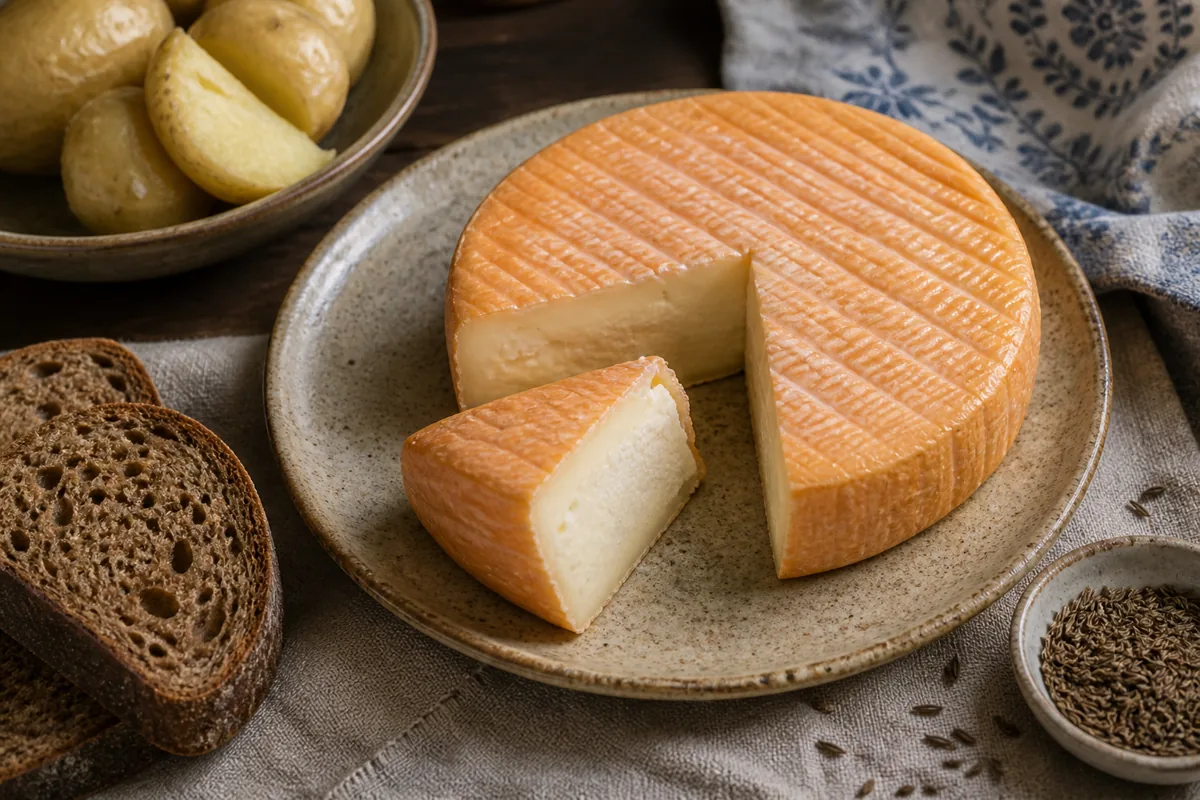
Langres is a soft cow's milk washed-rind cheese from the Langres area of eastern France. Official PDO material describes it as a soft cheese with a light yellow to reddish-brown rind and a fine paste that yields without running.
The name refers to both the cheese and the plateau around the town of Langres in Haute-Marne. PDO protection limits production to the defined area and preserves the make that creates its unusual shape.
That origin matters because an orange washed rind alone does not make a cheese Langres.
The cheese can be made from raw milk or from thermised or pasteurised milk, so the label matters if milk treatment affects your buying decision. Either way, the protected identity stays tied to the same washed-rind style and regional know-how.
Langres also has a very specific visual contract. The top should show a visible dip at least five millimeters deep, which is not a defect but part of the cheese's identity.
Langres PDO comes in three official formats with different minimum ripening times, serving amounts, and proportions of washed rind to paste.
| PDO format | Official weight | Minimum ripening | Practical fit |
|---|---|---|---|
| Small | 150 to 250 g | 15 days | A compact wheel for a small board or first course |
| Medium | 280 to 350 g | 18 days | More portions without losing the strong rind-to-paste contrast |
| Large | 800 to 1,300 g | 21 days | A centerpiece with more interior paste for a larger table |
The minimum age is a legal starting point rather than a promise that every wheel will taste equally ripe. A small wheel with a deep fontaine can be further along than a larger wheel that has only recently completed its required aging.
Every format should retain the cylindrical or slightly tapered form, washed surface, and recessed top within the defined production area around the Bassigny pastures and Langres plateau.
- Milk: Cow's milk, with both raw-milk and treated-milk versions in the PDO.
- Style: Soft washed rind rather than bloomy rind or brined cheese.
- Shape cue: A top hollow, or fontaine, formed because the cheese is never turned.
- Paste: Fine, yielding, and soft without becoming fully runny.
- Core job: Board service and ripe spoonable bites, not long fridge keeping.
That is why Langres should not be treated like a broad buttery Brie family cheese. It is built around rind care, ripeness, and a serving moment that depends on the top well.
Historically, Langres was dried on plane tree leaves before aging moved into damp cellars, an older regional practice that helps explain why the cheese still feels tied to place.
Why the Fontaine Matters More Than the Weight

The most useful buying fact about Langres is that the deeper the top hollow, the more mature the cheese usually is. PDO guidance states this clearly: you can read age from the depth of the dip because the cheese is never turned.
Langres is unusually readable at the counter because the fontaine gives you a clue before you touch the rind. Many other soft cheeses make you press the side and guess.
Read that clue together with the sidewall. A young wheel may have a modest depression, a tauter rind, and paste that resists light pressure.
A ready-to-eat wheel usually has a more defined hollow and a side that gives gently without buckling, but the hollow alone cannot reveal poor storage.
The famous serving trick is to pour a little Champagne or Marc de Bourgogne into the fontaine. That only works when the cheese is ripe enough to absorb the liquid without feeling chalky or tight at the center.
The well is not only for show. It changes how the cheese is cut, because you slice outward from the center instead of hacking straight across the top.
Begin each cut at the middle of the fontaine and carry the knife to the outer edge. Each serving then receives some soft center, some creamline, and some washed rind.
Cutting strips from one side would leave early servings rind-heavy and the last portion mostly center paste.
- Shallow fontaine: Younger cheese with a firmer, milkier interior.
- Deeper fontaine: More advanced ripening and a stronger washed-rind aroma.
- Useful ritual: A few drops of Champagne, not a soak, in the hollow before serving.
- Cutting method: Wedges should radiate from the middle toward the edge.
Few cheeses make a ripeness cue this easy to see. The top crater is a practical signal and part of the eating method.
If you want a washed-rind cheese without this ripeness cue, a flatter washed-rind wheel is easier to portion but less dramatic to serve.
Flavor, Texture, and Ripeness at the Right Moment

Official Langres tasting notes describe a fruity and lactic flavor, with yoghurt-and-cream notes that become more animal as the cheese matures. That progression is exactly what you should look for at the counter and on the plate.
Younger Langres tastes milky, creamy, and slightly yoghurty. As it ripens, the rind smells more animal and the flavor grows fuller, but the paste should still stay yielding rather than pourable.
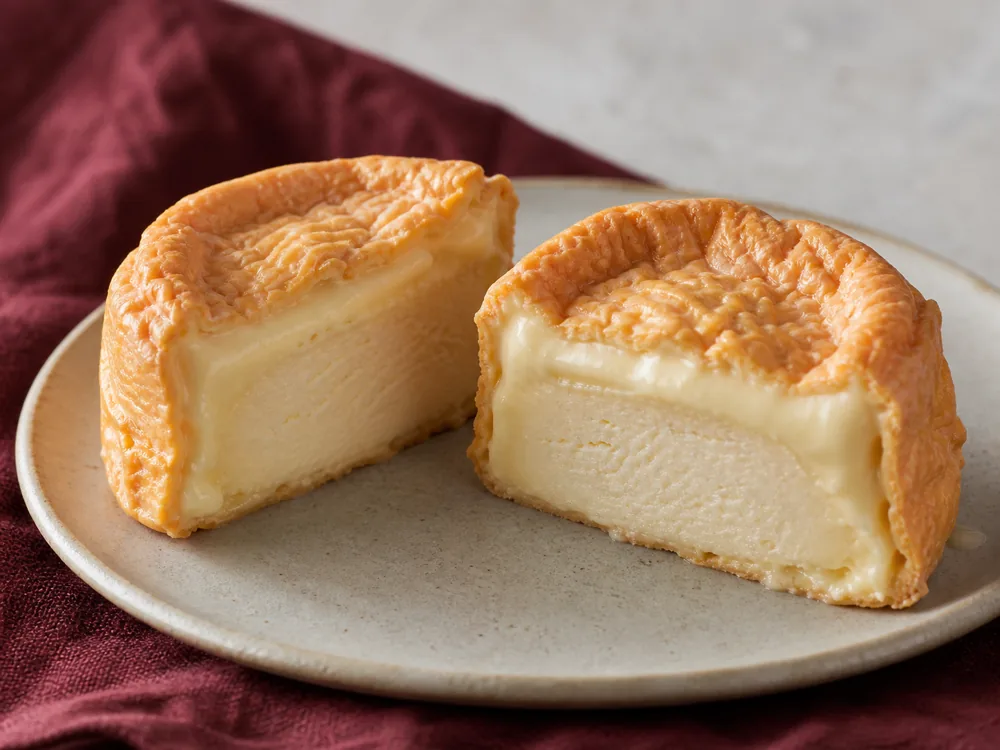
A cut wheel often shows ripening from the outside inward. The band beneath the rind turns glossy and soft first, while the center can remain paler and a little firmer.
That contrast is normal in a developing wheel, and warming it briefly before serving makes the difference easier to taste without forcing the center to become liquid.
Langres is rich in texture without being bland in flavor. Langres is soft and rich, but the washed rind keeps the finish from feeling sleepy.
- Appearance: Light yellow to orange rind, sometimes with sparse white or brownish fuzz.
- Texture: Fine, supple paste that yields but should not fully run.
- Aroma: Animal and distinctive, especially in more mature wheels.
- Taste arc: Milky and fruity first, then more savory and cellar-like with age.
That is why Langres is stronger than it looks. The paste feels gentle, but the rind aroma can move quickly from cream to barnyard if the wheel has gone too far.
A ripe wheel should still taste clean after the first aromatic hit. Sharp ammonia that catches in your nose, a bitter rind, or paste that has separated into an oily puddle points to over-ripeness rather than desirable strength.
A dry chalky core signals the opposite problem and needs more time.
If you want a softer washed-rind cheese that melts more politely into recipes, a flatter Italian washed-rind cheese is the safer hot-use choice. Langres is more about ripe spoonable board bites and less about blanket coverage over food.
How the Washed Rind and Damp Cellar Shape It
Langres is aged in damp cellars, which is one reason the rind develops a washed, aromatic surface instead of the dry crust you would expect on a harder cheese. Moist conditions help the rind stay active while the paste softens from the outside in.
Because the cheese is never turned, moisture and gravity help create a wheel with a visible top dip and a ripe outer zone.
The rind color should move through pale yellow toward orange-brown as the cheese matures. A little fuzz can appear, but the wheel should still smell appetizing and alive rather than stale or ammoniated.
Surface color is not a strength scale by itself. Washing, cellar humidity, and age all affect the rind, so two good wheels can show different shades.
Pair the color with the fontaine, the feel of the side, and the aroma before deciding which one is ready.
If Langres smells strongly of ammonia or feels wet and collapsing rather than supple and fine-textured, it is past the point where the fontaine is charming. Choose a fresher wheel instead.
This aging story is also why Langres is not a fridge project cheese. It already has a narrow useful ripeness window, and the washed rind keeps moving once the shop cuts it.
Think of it as a timing cheese. Buy it for a near-term board, not for a vague plan next week.
Best Uses for Langres
Langres is strongest as a board cheese, a first-course cheese, or a table centerpiece served with bread and a spoon. Its main value is the ripeness contrast between rind, paste, and fontaine, which disappears if you cook it hard.
| Use | How It Works |
|---|---|
| Cheese boards | The best use because the fontaine and washed rind are part of the experience. |
| Champagne service | A few drops in the top well make sense only when the cheese is ripe and balanced. |
| Bread course | Excellent with wholemeal or cereal bread, exactly as the PDO tasting notes suggest. |
| Simple first course | Serve with salad, fruit, and a knife rather than burying it in a recipe. |
| Gentle warming | Possible in moderation, but not the best reason to buy Langres. |
For layout ideas, board serving order matters because Langres works best when the whole table is built around contrast.
It can be warmed gently, but that is not its main job. If you want a French cheese mainly for melting potatoes or toasts, a dedicated Alpine melting wheel makes more sense.
Langres also rewards smaller portions. This is not the cheese to cube casually and scatter around a party tray.

Set the whole wheel out about 30 minutes before eating, then cut one radial wedge at a time so the remaining wheel holds its shape and keeps the fontaine visible.
Pairings That Make the Fontaine Worth Using
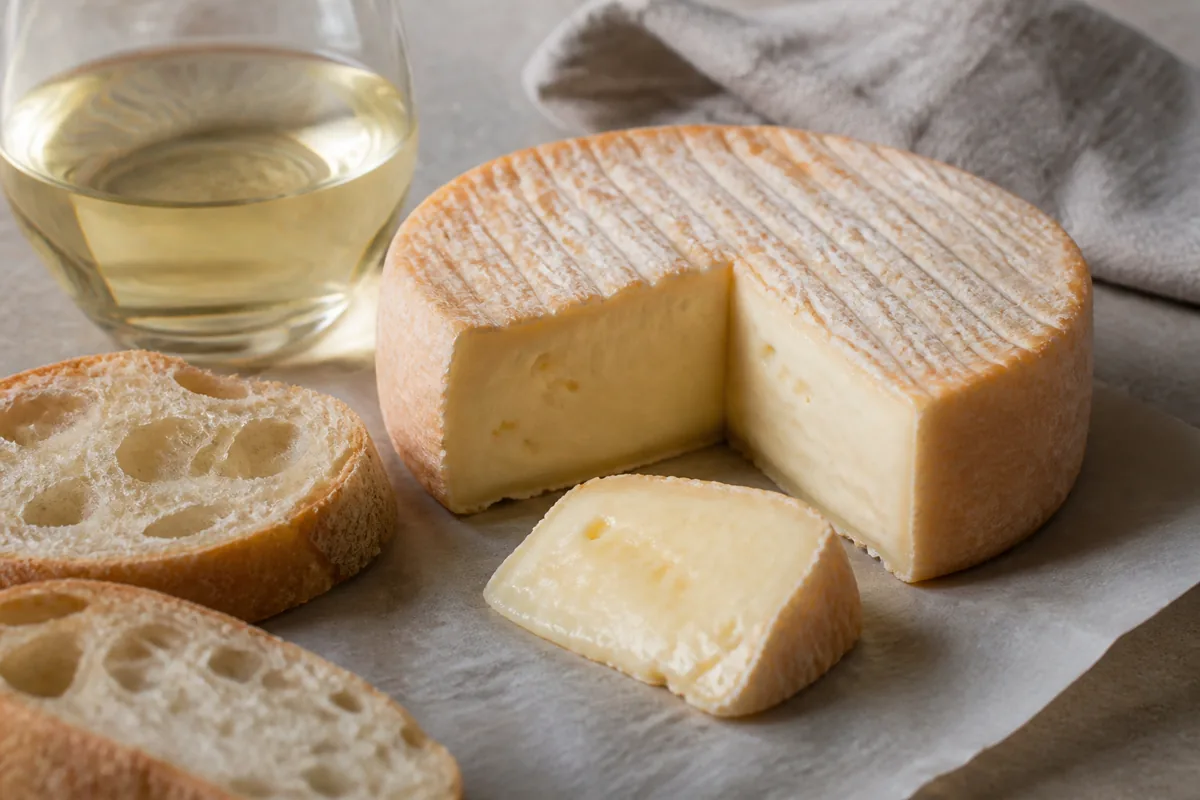
PDO pairing guidance for Langres includes wholemeal or cereal bread, brut Champagne, dry Burgundy white, amber beer, Loire reds, apple juice, and pineapple juice. That list tells you something useful: Langres likes freshness, grain, and moderate structure more than heavy sweetness.
Champagne is the iconic match because the bubbles and acidity clean up the washed-rind richness. It also ties directly into the classic serving move of adding a few drops to the top hollow.
| Pairing | Why It Works |
|---|---|
| Brut Champagne | The classic pairing because acidity and bubbles lighten the washed rind. |
| Wholemeal bread | Grain gives the creamy paste something sturdy to sit on. |
| Dry Burgundy white | A cleaner option than sweet wine or heavy oak. |
| Amber beer | Malt works well with the fruity, milky center. |
| Apple slices | Fresh fruit brightens the lactic side without overpowering the cheese. |
If you are building a regional spread, the French washed-rind context helps place Langres among bloomy-rind and mountain cheeses without crowding the board with too many loud cheeses at once.
Avoid syrupy jam as the main partner. Langres already has enough richness, and too much sweetness makes the rind feel heavier instead of clearer.
How to Buy and Store Langres Without Losing the Window
Buy Langres by ripeness, not just by name. Start with the fontaine depth, then check whether the rind looks alive and the paste still holds its shape.
A good wheel should smell washed-rind strong, but it should not read as harsh ammonia. The paste should feel yielding and fine, not liquefied.
If the counter has a cut wheel, look for a smooth pale center and a softer band beneath the rind rather than a dried edge, separated oil, or a dark line where the paste meets the surface.
Ask when the wheel arrived and when the cheesemonger expects it to peak, then choose a younger, firmer wheel if you need two or three days before serving.
Choose a yielding wheel with a deep, clean fontaine when it will be eaten that evening. This simple timing question prevents most disappointing purchases.
Use soft-cheese wrapping for the broader storage habit, but remember that Langres has less margin for delay than a hard wedge. Once cut, the rind keeps pushing the cheese forward.
If you are serving guests, ask whether the cheese is ready for same-day eating because that timing matters more than the size of the wheel.
At home, keep strong-smelling neighbors in separate wrapping so Langres does not pick up another rind's aroma. Rewrap the cut face after each serving, but leave enough breathing room for the surface to avoid becoming wet and tacky.
Substitutes When You Need the Mood, Not the Exact Cheese
No substitute recreates Langres perfectly because the fontaine is part of the point. Replace the job instead: washed-rind softness, ripe spoonable paste, or French board character.
- Epoisses: Stronger and stickier when you want more washed-rind force.
- Munster: Washed-rind depth without the top hollow ritual.
- Taleggio: Softer and easier in hot dishes, though less French and less dramatic.
- Camembert: Better if you want a gentler mushroomy rind instead of a washed-rind scent.
If the board already has one strong washed rind, using a softer bloomy-rind alternative may create better balance than doubling down on aroma.
But if the job is specifically that Langres serving moment with the top well, buy the real thing. That theatrical detail is part of the value.
Langres Labels May Show Raw or Heat-Treated Milk
Langres is a rich soft cheese, so a modest portion still carries meaningful fat, protein, and calcium. Use the package label for exact numbers because producer and milk treatment vary.
Pregnancy guidance depends on milk treatment and handling. Because PDO Langres can be made from raw milk or from treated milk, the label matters more than the name alone.
A milk-treatment risk check matters when you need the rules spelled out clearly.
SOURCES & REFERENCES
Langres Cheese FAQ
These are the questions shoppers usually ask once they notice the strange hollow on top of the wheel.
The dip forms because Langres is never turned during production and ripening. The deeper the hollow, the more mature the cheese usually is.
It tastes milky, fruity, and lactic at first, with more animal washed-rind character as it ripens.
Yes, but only a few drops. The fontaine can hold Champagne or Marc de Bourgogne, which freshens the ripe paste and turns the top well into part of the serving ritual.
Yes. Brie is usually more buttery and mushroomy, while Langres has a washed-rind aroma and a more savory, animal edge.
Yes. The rind is part of the cheese's flavor, though some people trim older wheels if the washed-rind aroma feels too strong.