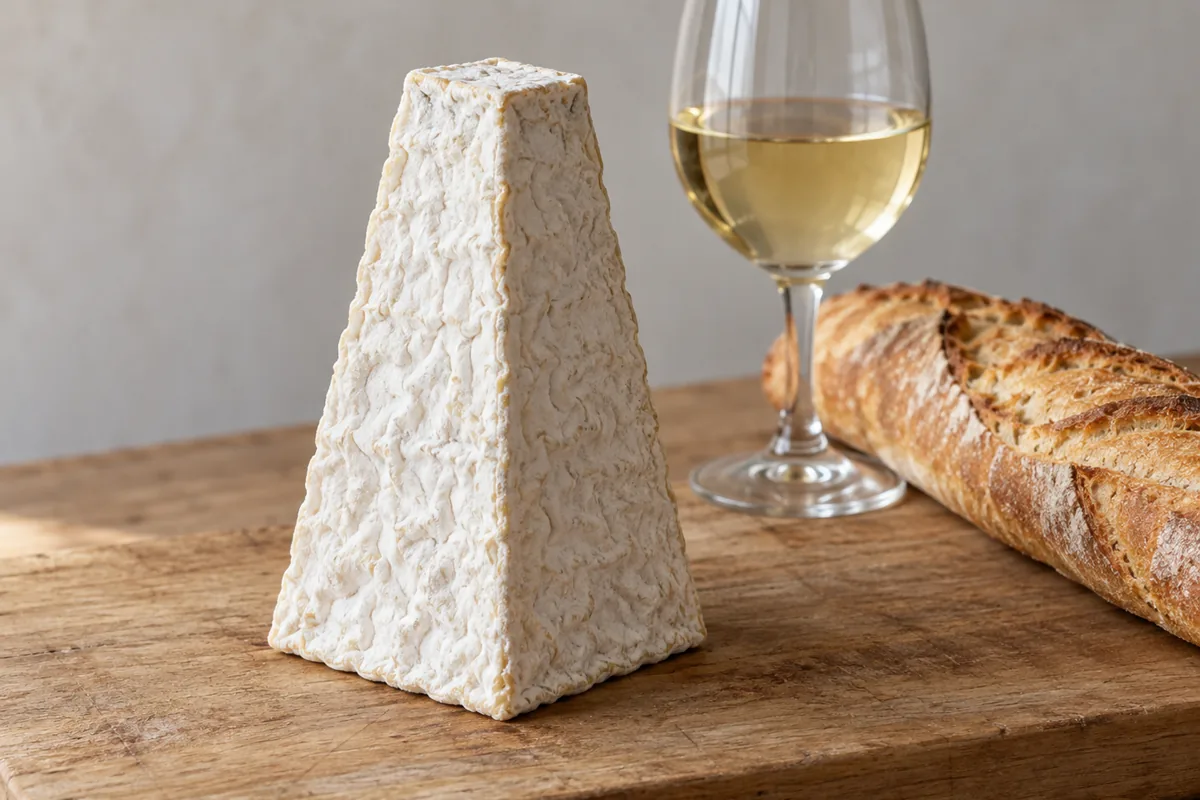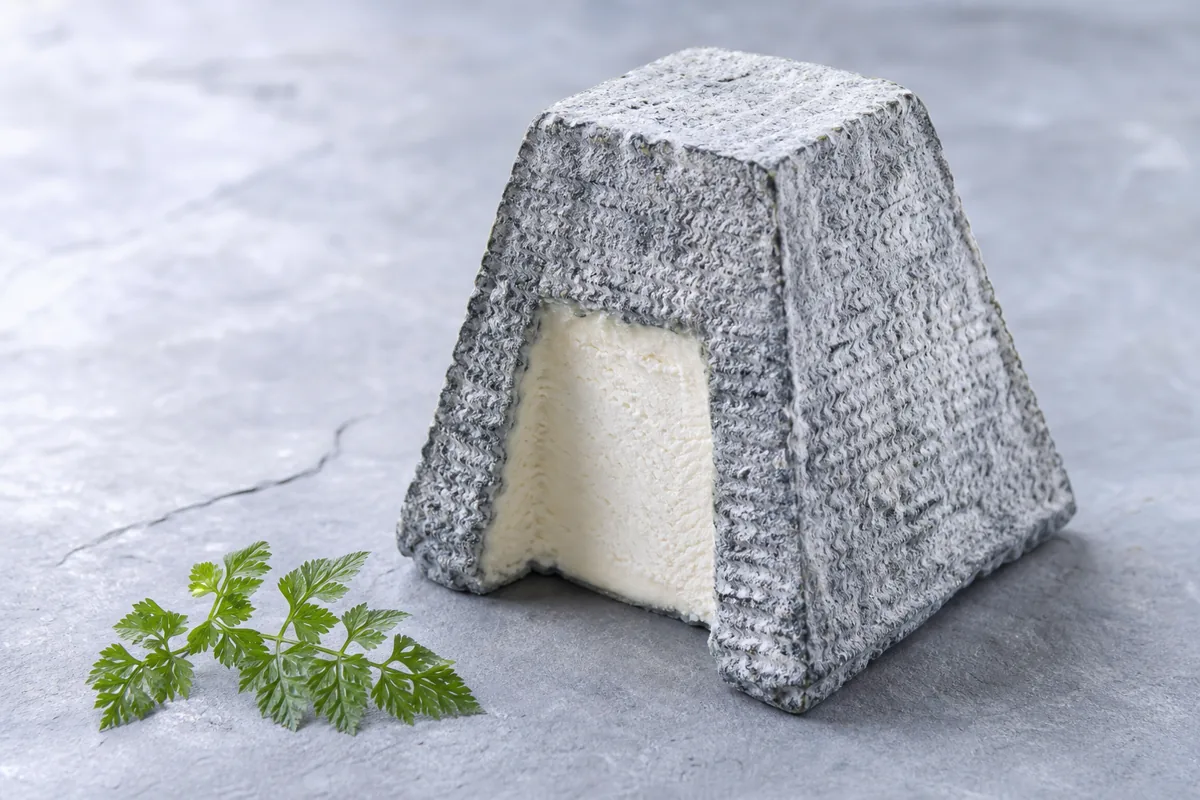
Valencay is a soft goat's milk cheese from the Berry region of France, shaped like a pyramid with the point cut off and coated in salt and vegetable charcoal. Its AOP rules require that flat-topped shape and whole raw milk, and the story that the point was cut off for Napoleon is told only as hearsay.
The paste is porcelain white, smooth and fine. According to the specification it is creamy and melt-in-the-mouth early in ripening and firmer with age, and the goat flavour starts very delicate before becoming stronger.
In This Article
What Is Valencay?
Valençay AOP is a soft, lactic, ripened cheese made only from whole raw goat's milk.
The specification requires milk production, cheesemaking and ageing to happen inside a defined area of communes in four departments: Cher, Indre, Indre-et-Loire and Loir-et-Cher. It groups the area's four farming sub-regions as the Bas-Berry in central France.
INAO, the French body that oversees protected names, says the cheese has held AOP status since 1998.
The specification also makes a claim about identity: Valencay is the only goat's cheese in its region that is ashed, has a bloomy rind and is shaped as a truncated pyramid.
Why Is the Pyramid Truncated?
The flat top is part of the protected form, since the specification lists a truncated pyramid with a square base as the shape and checks it by inspecting both the moulds and the finished cheeses.
A popular story ties the shape to Napoleon. INAO tells it as hearsay: Talleyrand, receiving Napoleon I at his château of Valençay, is said to have ordered the cheesemakers preparing the banquet to cut the point off every cheese so it would not recall the emperor's failed Egyptian campaign.
The specification credits Talleyrand with something more modest. It says he played an important part in changing the mould to the truncated form, which differed from the shape first known in the area, and that he helped the cheese reach aristocratic tables in Paris.
The legend has more than one version. INAO has Talleyrand order the cut, while English Wikipedia, which calls the tale apocryphal, has Napoleon slice the top off with his sword. French Wikipedia records the sword version too and flags it as lacking a source.
The same part of the specification gives the older background: written traces of goats in Berry reach back to Charlemagne's capitularies and to 16th-century archives in La Châtre.
Writings from Talleyrand's time through the First Empire to George Sand describe the taste and fineness of a cheese that was then made on farms for local eating.
The specification places the real popular boom in the 20th century, when the cheese began to sell widely under the name Valençay. It calls the truncated shape today a visual specificity of the cheese.
What Do Valencay Goats Eat?
The specification names Alpine and Saanen goats, or crosses of the two, and allows out-of-season breeding. It then ties most of the ration to the area, so the feed rules are part of what the protected name covers.
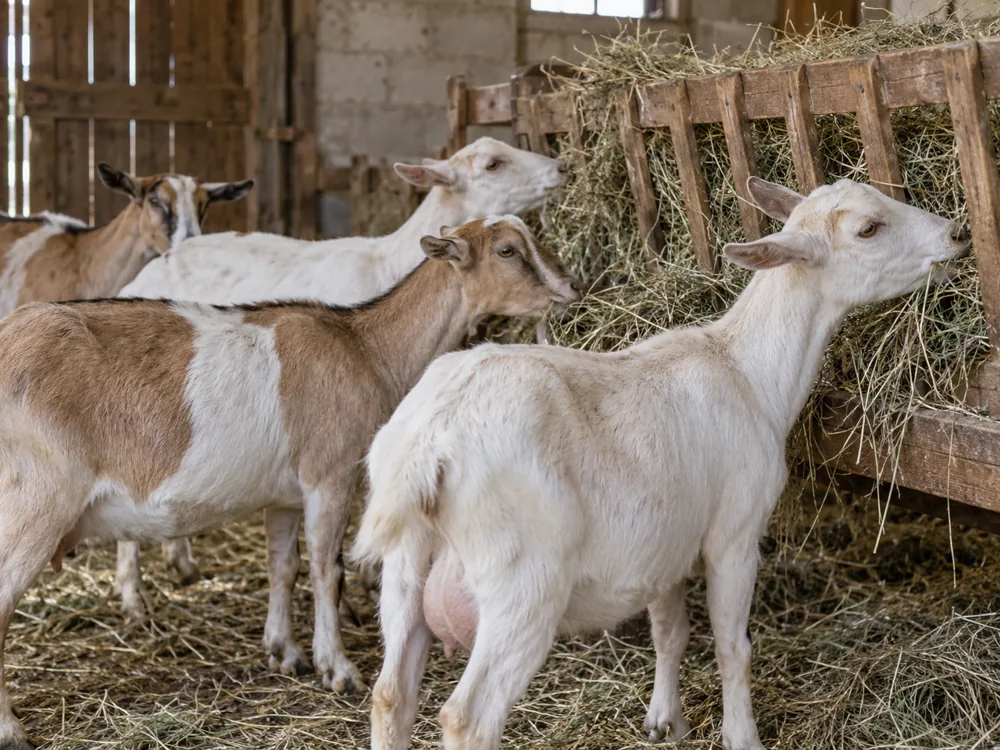
Coarse forage is the base: grasses, legumes and wild annual, perennial or shrubby plants, eaten fresh, as hay or dehydrated, and apart from dehydrated forage it must come from the area.
Silage is banned, and wrapped grass is limited to 1 kg of dry matter per goat a day, only if it holds at least 55 percent dry matter and comes from a first cut.
Complementary feed is capped and listed: cereals, oilseeds, dehydrated alfalfa above 20 percent protein, and sugar-beet pulp or molasses. Animal products are banned apart from fresh cheese whey, genetically modified feed and crops are banned, and a diet of complementary feed plus straw alone is not allowed.
The specification argues that the area itself makes this feed possible. Its silty to stony and clay-limestone soils, an oceanic climate with 650 to 750 mm of rain a year and dry summers suit grasses and legumes, especially alfalfa, which as hay is the base of the goats' diet.
It then makes the causal claim behind the rules: a forage-rich ration gives raw milk with a natural flora that favours the goat, undergrowth, mushroom and floral aromas of the finished cheese.
INAO adds that the production area covers much of the Centre-Val de Loire region, notably the Brenne regional nature park, where the goats find wide meadows.
French Wikipedia puts a goat's intake at about 3 kg of dry matter a day, and the specification caps the stocking rate at 12 goats per hectare of forage area.
A drought order has changed the feed figures for the current year, as the table shows.
| Feed rule | Specification | 1 Oct 2026 to 30 Sep 2027 |
|---|---|---|
| Dry matter from the area (total ration) | At least 820 kg | At least 550 kg |
| Coarse forage per goat | At least 655 kg | At least 450 kg |
| Complementary feed per goat | At most 440 kg | At most 540 kg |
| Ration from outside the area per goat | At most 275 kg | At most 550 kg |
| Dehydrated forage from outside the area | At most 130 kg | At most 200 kg |
| Wrapped grass per goat per day | At most 1 kg | At most 2 kg |
The drought order, published on 10 September 2026, relaxes every one of these limits for one year.
How Is Valencay Made?
The milk must be whole, raw and non-homogenised, and under the specification it comes from no more than the four latest milkings, or the two latest on a farm that makes its own cheese. Removing water from the milk before coagulation is banned.
Rennet is capped at 8 ml per 100 litres of milk, for a rennet with 520 mg of chymosine per litre. The specification describes the curd as one that forms by slow lactic fermentation of the milk, which is where the cheese's lactic character comes from.
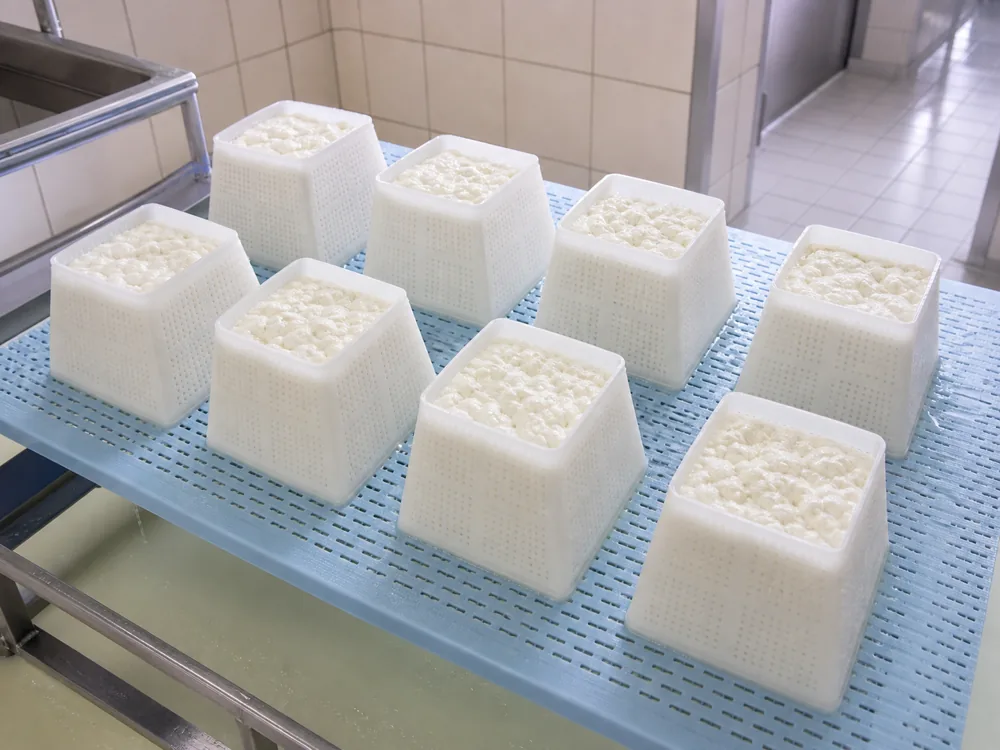
INAO says the curd is first moulded with a ladle. The steps below follow the specification.
The sources give different totals for the make. INAO puts it at 24 to 36 hours, Taste France and French Wikipedia round both the setting and the draining to 24 hours, and the specification sets minimums of 18 hours from renneting and 20 hours from the start of moulding.
Those two minimums add up to at least 38 hours, so INAO's range cannot be a count from renneting to the end of draining. None of the pages says which stretch it covers, and the specification's minimums are the figures a producer is held to.
The specification says moulding is done with care to respect the texture of the curd, and it bans any moulding method that presses the curd. Moulds can be filled in one or several rounds and the surface smoothed afterwards, and the large and small moulds may be fitted with extensions.
The specification links this gentle handling to the cut face: lactic coagulation, direct moulding and slow draining give a paste that is homogeneous, smooth and firm.
After unmoulding, French Wikipedia says the salt and charcoal keep the draining going while the cheeses dry for at least 24 hours, in a drying room or in the making room, and Taste France gives a full day. The cheeses then move to a ripening room.
A cheese leaves the ageing room only once mould is visible to the naked eye over its whole surface, and not before the eleventh day after renneting. The specification also bars the curd from being frozen or held over for later.
Farm makers who deliver to a ripener hold the waiting cheeses at 6 to 10°C until collection. The ripener cannot sell a cheese until at least 7 days after collecting it, and the eleventh-day minimum still applies.
Why Is Valencay Coated in Ash?
Salt and vegetable charcoal go on every face after unmoulding.
The specification says the combination of salting and ashing, the surface mould that follows and slow ripening together regulate exchanges and help the flavour and aroma develop. INAO adds that ashing gives a cheese that keeps longer.
Taste France notes that ash from burnt vine stalks was used in the past, which tied the cheese to areas that also made wine. French Wikipedia says ashing was historically a way to preserve the cheese.
The surface mould comes from three possible places, according to the specification: the natural flora of the raw milk, flora grown in the cheese whey, and commercial cultures of Geotrichum and Penicillium moulds and of Kluyveromyces, Debaryomyces and Trichosporon yeasts. Any other acidifying or flavouring addition is banned.
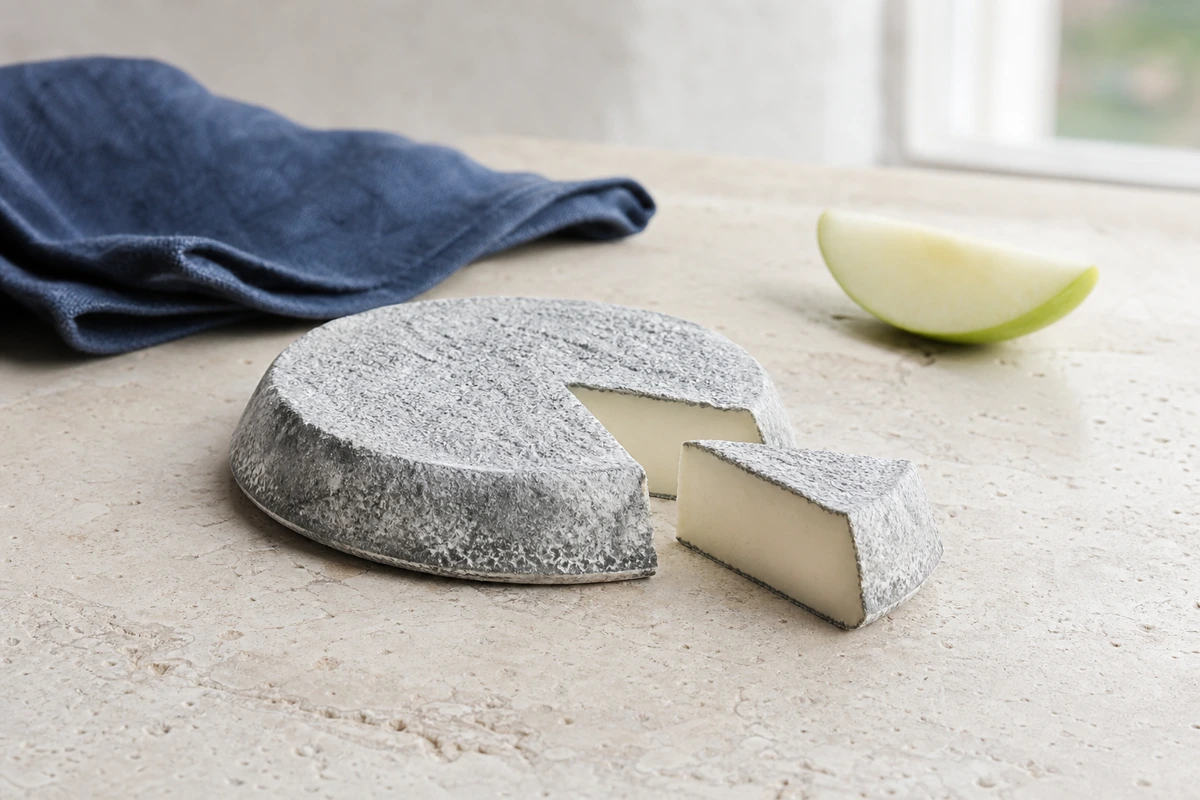
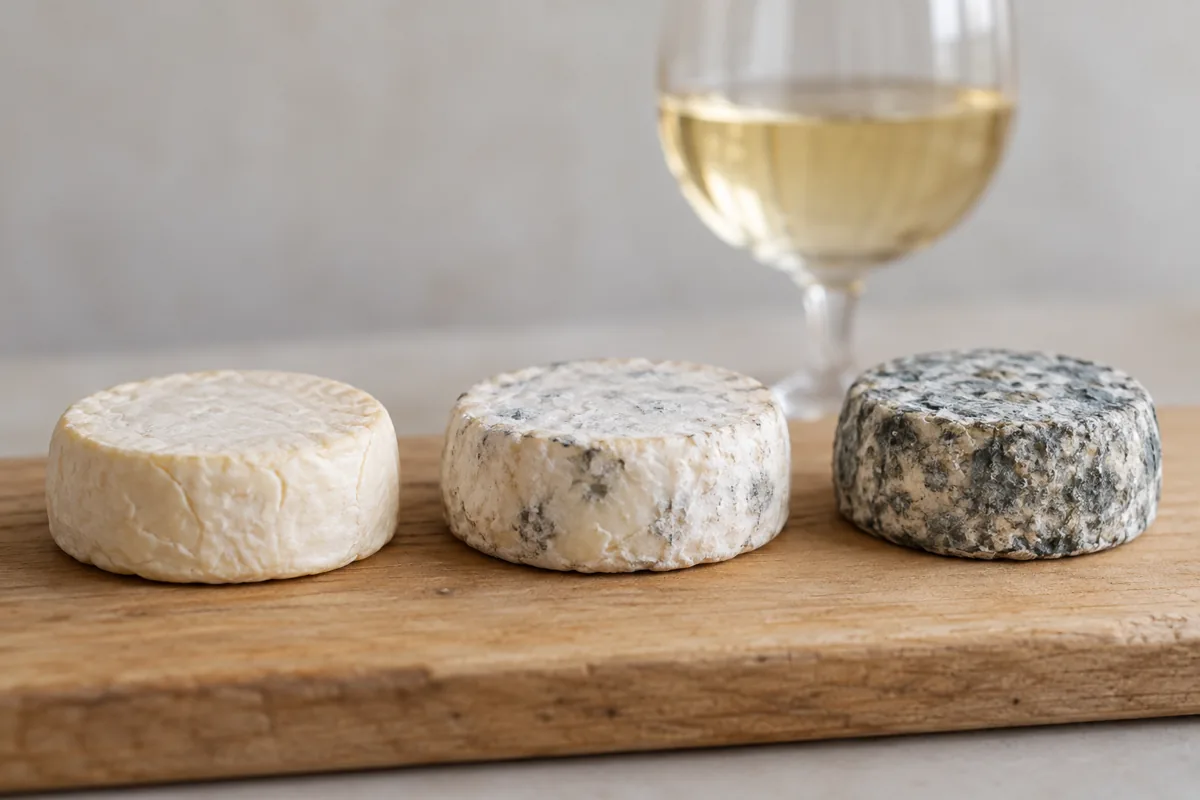
The finished rind is a mix of charcoal and mould. The specification describes a light gray to blue-gray crust formed with the added charcoal, and English Wikipedia says natural moulds make the blue-gray colour that the charcoal then darkens.
How Does Valencay Taste at Different Ages?
The specification describes a creamy, melt-in-the-mouth paste in early ripening that becomes firmer with age. Its goat flavour is very fine at first and more sustained later, and the cheese smells slightly of goat, undergrowth, mushroom and flowers.
| Source | What it says |
|---|---|
| INAO | Both firm and melt-in-the-mouth, with flavours recalling dried fruit, especially hazelnut |
| Taste France | Light and creamy at 11 days, firmer and chalkier with age, with the flavour becoming goatier and nuttier; zesty, citrusy first notes with soil and hazelnut undertones; a natural skin that is slightly crunchy and more flavourful |
| French Wikipedia | Lactic aromas at 11 days, moving to goaty or plant notes of mushroom, undergrowth and flowers in cheeses ripened longer |
| English Wikipedia | Fresh, citric taste when young and a nutty taste with age; ripening takes about three weeks |
The specification and Taste France agree on the direction: the paste firms and the goat flavour grows stronger with age.
French Wikipedia adds the aroma side, with the lactic notes of a cheese at the 11-day minimum giving way to goat and woodland notes later.
English Wikipedia describes the opposite direction for the first weeks: a centre that starts crumbly and softens over about three weeks of ripening.
The two accounts may describe different stretches, and the specification and Taste France give the creamy-first, firmer-later order.
For a buyer, the 11-day figure is a legal floor rather than a typical age, since English Wikipedia puts ripening at about three weeks. A cheese near the minimum should be the lighter, more lactic, creamier one, and an older, drier one the goatier and nuttier one.
On season, INAO calls the cheese especially appreciated in spring for its lightness and freshness, while French Wikipedia puts the best eating period between June and September. English Wikipedia says it is available from March to December, with most made between April and August.
Which Foods and Wines Go with Valencay?
Taste France says to leave Valencay out of the refrigerator for at least 30 minutes before serving.
Taste France suggests a young cheese in a beet salad or a zucchini gratin and an older, drier one in pasta dishes. The same page also tags the cheese with spring and picnic eating.
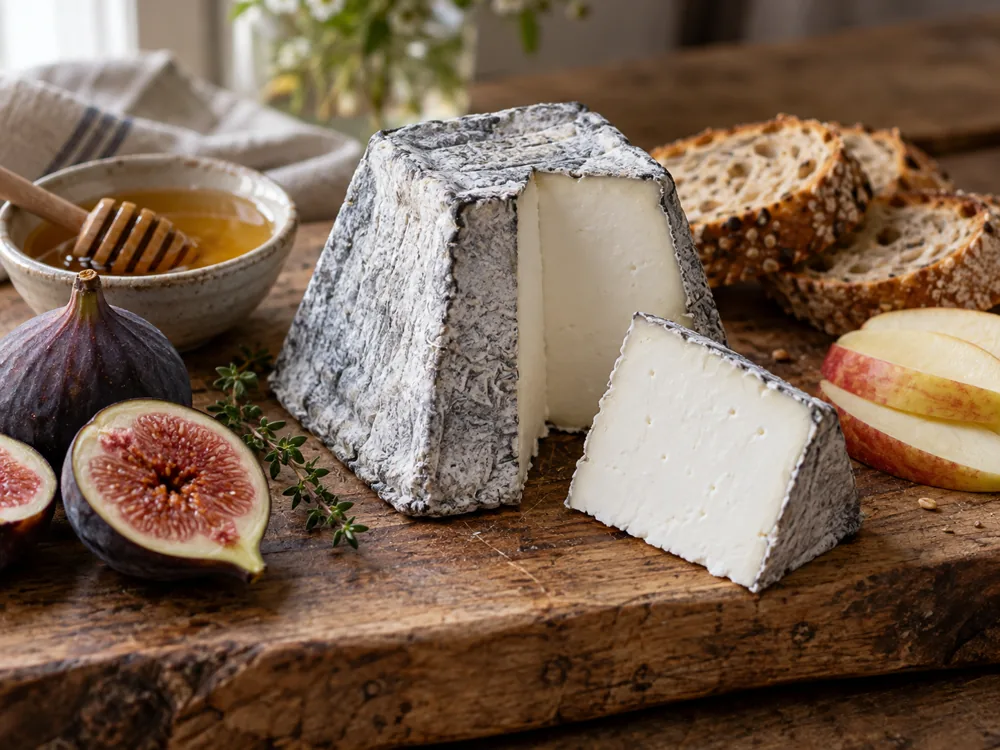
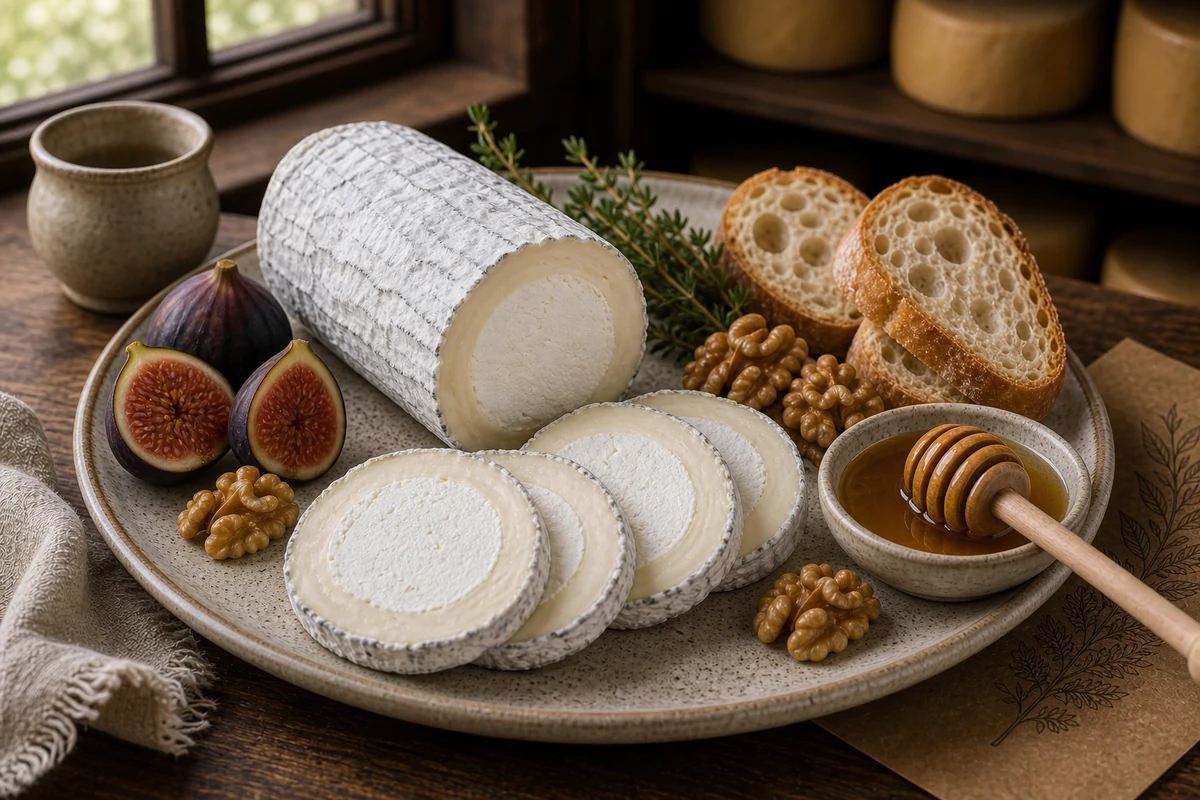
Taste France lists honey, dried fruits, figs, apples, tomatoes, salad and fresh herbs as partners, and says the cheese is best paired with a Valençay white wine.
| Pairing | Type | Why It Works |
|---|---|---|
| Honey | Food | Named by Taste France. |
| Dried fruit and figs | Food | Named by Taste France. |
| Apples | Food | Named by Taste France. |
| Tomatoes and salad | Food | Named by Taste France. |
| Seeded baguette | Food | Taste France suggests it as an accompaniment. |
| Valençay white wine | Wine | Named by Taste France. |
Should You Check the Format Before Buying Valencay?
The specification allows two mould sizes. It sets the mould's lower base at 50 to 55 mm for the large size and 40 to 44 mm for the small one, with a 96 to 102 degree angle between the mould bottom and its side in both.
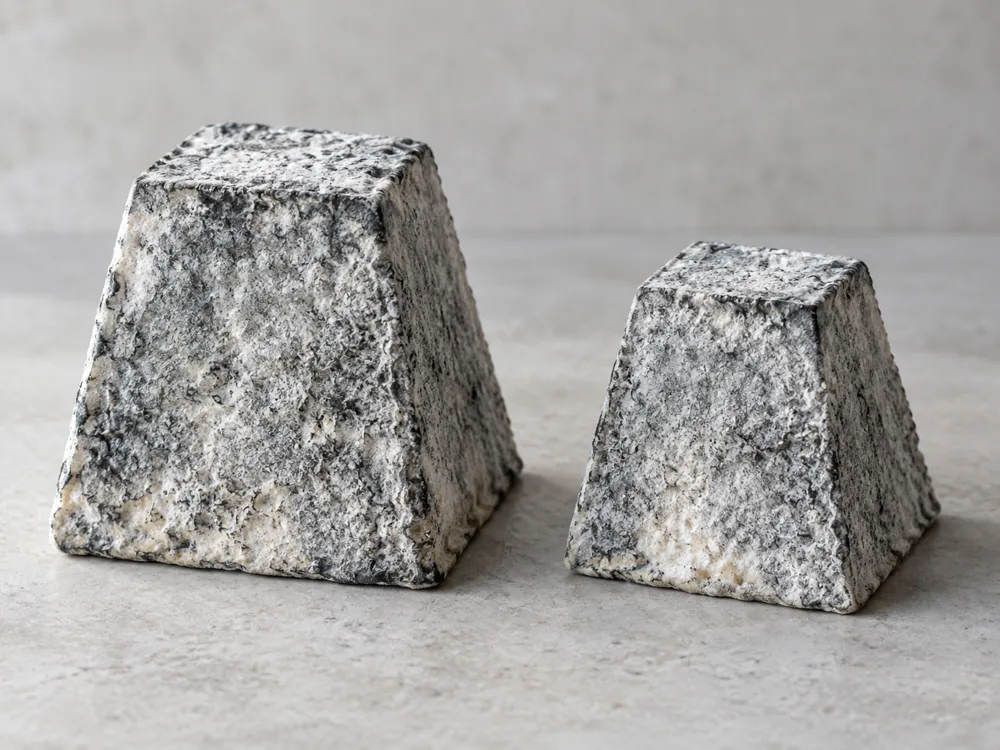
| Format | Mould lower base | Dry matter per cheese | Reported weight |
|---|---|---|---|
| Large | 50 to 55 mm | More than 90 g | About 220 g (French Wikipedia); 200 to 250 g (English Wikipedia) |
| Petit | 40 to 44 mm | More than 45 g | About 110 g (French Wikipedia) |
The specification also requires dry matter to make up at least 40 percent of a cheese's weight, which leaves at most 60 percent water.
Its dry-matter figures are minimums for the solids, not label weights, and French Wikipedia gives a square base of 6 to 7 cm and a height of 7 to 8 cm for a standard cheese.
The two minimums work together: 90 g of dry matter at 40 percent is a 225 g cheese, so a large cheese lighter than that has to be drier than 40 percent to qualify. French Wikipedia's weights of about 220 g and 110 g work out to roughly 41 percent dry matter at the minimums, just above the floor.
The specification says the cheese is sold by the piece with its own label. That label carries the name Valençay in letters at least 1.3 times the size of the largest other characters, the words Appellation d'Origine Protégée and the European AOP symbol.
The word petit marks a cheese from the small mould, and the specification does not let it be attached to the name or placed immediately above it.
French Wikipedia adds that the label is green for a farm cheese and red for one from a dairy, whether industrial or craft.
The specification text sets no label colours, so this comes from the encyclopedia alone. The specification does separate farm production, which may use milk from at most two milkings, from dairy production, which may use at most four.
What Does the AOP Check Before Valencay Is Sold?
Every operator declares itself to the producers' group at least one month before starting, and farms, ripeners and processors file a yearly production declaration before 1 February. Records cover milk volumes, cheeses made and lot numbers, and invoices or contracts show the type, quantity and field of origin of the goats' feed.
At the end of the minimum ripening period, cheeses are sampled for a laboratory analysis and a tasting that checks quality and typicity. The listed checks include the shape of the moulds and cheeses, salt and charcoal, the eleven-day minimum, no cow's milk, dry matter above 40 percent and a favourable opinion from a tasting commission.
French Wikipedia describes that commission as meeting every two months. It examines two cheeses from each maker, tasting one and analysing the other, and scores look, cut and taste out of 20, with taste as the eliminating criterion.
A score below 10 earns the maker a warning, and three warnings suspend use of the appellation for 30 days, according to the same page. The specification names Qualisud as the certifying body, and the state consumer-fraud service DGCCRF also appears as a control body.
Because the specification checks by sampling, the AOP wording on a label shows that the maker works under these controls. It does not mean that the particular piece in the shop was itself tasted or analysed.
How Should You Store Valencay?
The specification bans modified-atmosphere packaging for fresh and ripening Valencay.
Can Another Goat Cheese Replace Valencay?
INAO describes two neighbouring raw goat's milk AOP cheeses that each match Valencay on one identifying trait: Selles-sur-Cher in its ash and Pouligny-Saint-Pierre in its pyramid shape.
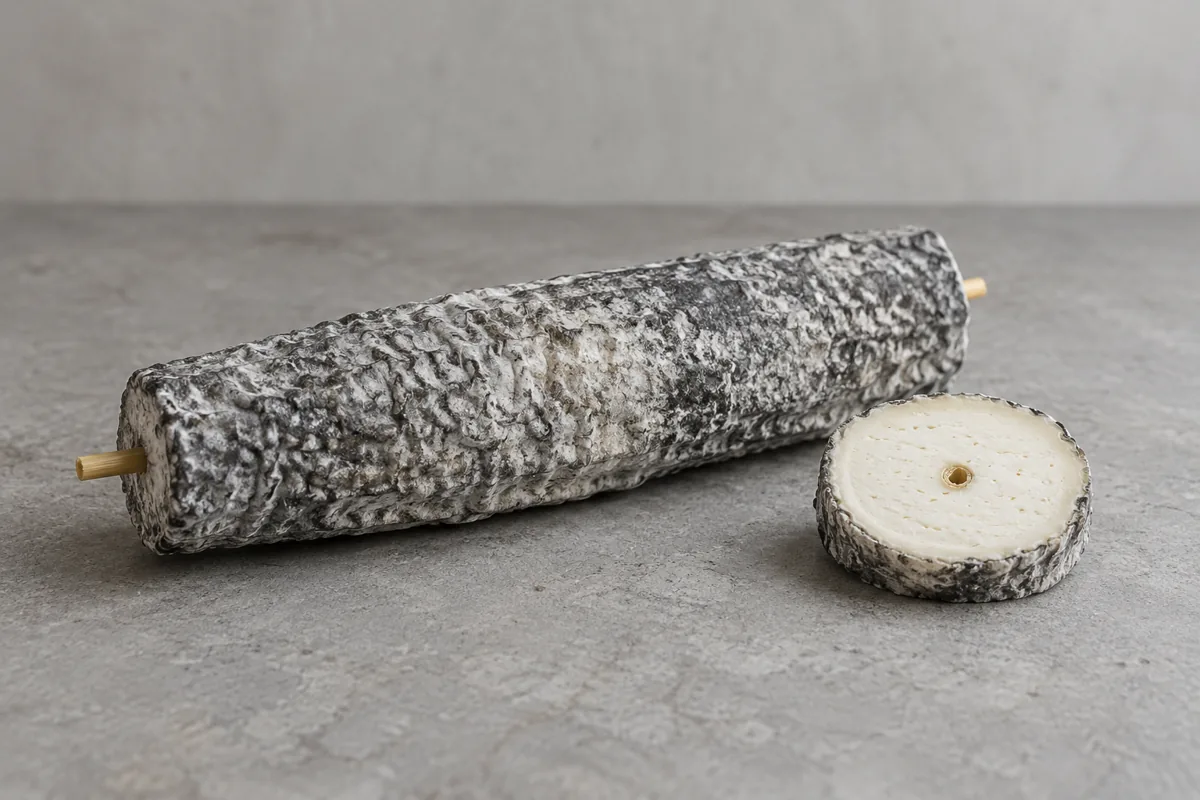
- Selles-sur-Cher as an ashed disc. Ashed with vegetable charcoal, a slightly tapered disc about 9 cm across and 3 cm thick, ripened at least 10 days to a creamy, melting paste with a salty, acid and bitter balance and notes of goat and mushroom.
- Pouligny-Saint-Pierre as a pyramid. A pyramid with an ivory-white coating that can look slightly bluish, formed in a truncated-pyramid mould and ladled by hand, ripened at least 10 days, with goat smells and mushroom notes.
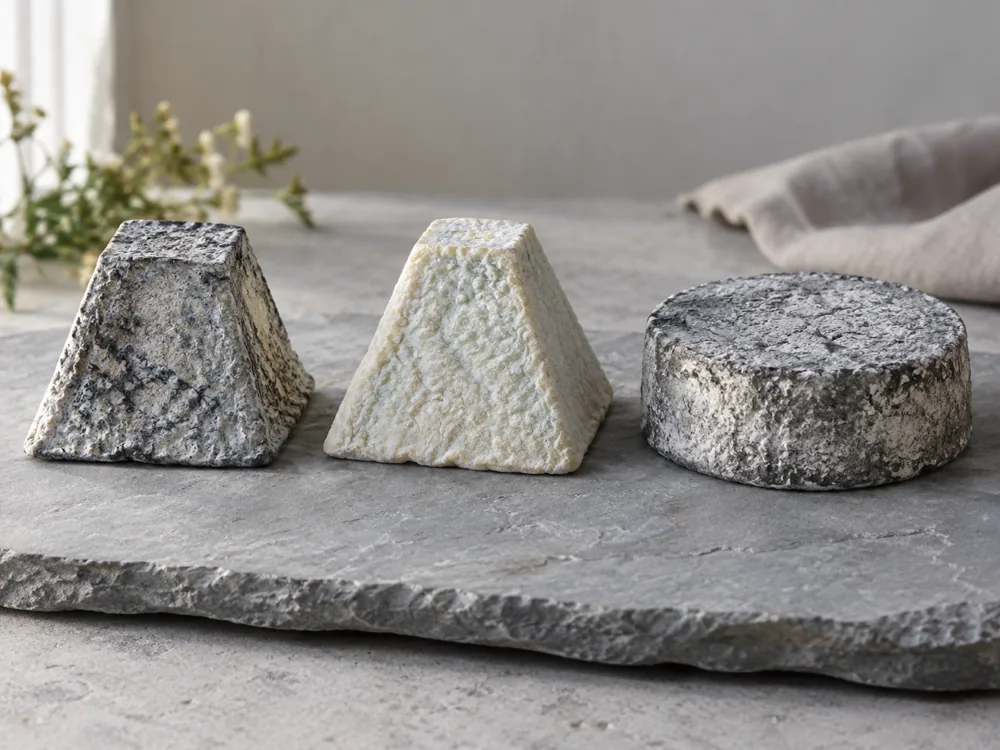
The pyramid shape alone does not identify a Valencay, because INAO describes Pouligny-Saint-Pierre as a pyramid too, with a white-ivory coating rather than a light gray to blue-gray one. Both areas lie partly in the Brenne.
Choose Selles-sur-Cher for the ash on a flatter, wider cheese, and Pouligny-Saint-Pierre for the pyramid form. The three share goat and mushroom notes.
Is Valencay Safe in Pregnancy?
Valencay is a soft cheese made from raw goat's milk, which puts it under both agencies' unpasteurised-milk cautions, even though its ash-gray rind is not the white coating in the NHS example. Of the two, the CDC also gives a figure: pregnant women are 10 times more likely to get a Listeria infection.
SOURCES & REFERENCES
What Else Do People Ask About Valencay?
The AOP specification requires a truncated pyramid with a square base. INAO tells the story of Talleyrand cutting the points off for Napoleon as hearsay, and the specification credits him only with changing the mould.
The specification describes a creamy, melt-in-the-mouth paste and a very fine goat flavour early on, with a firmer paste and a more sustained goat flavour with age. INAO adds dried-fruit and hazelnut notes.
No. The AOP specification requires whole raw goat's milk.
It is cheese from the small mould, which has a lower base of 40 to 44 mm against 50 to 55 mm for the large mould.
Taste France says at least 30 minutes out of the refrigerator.