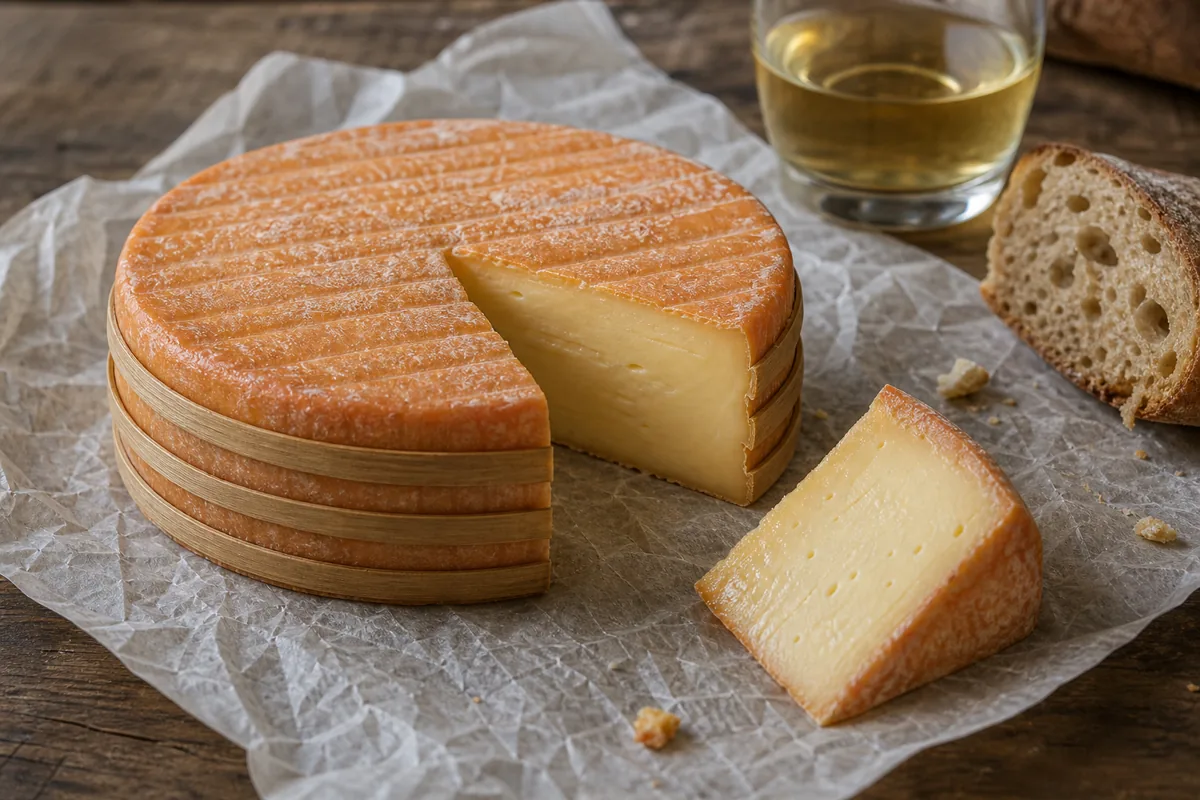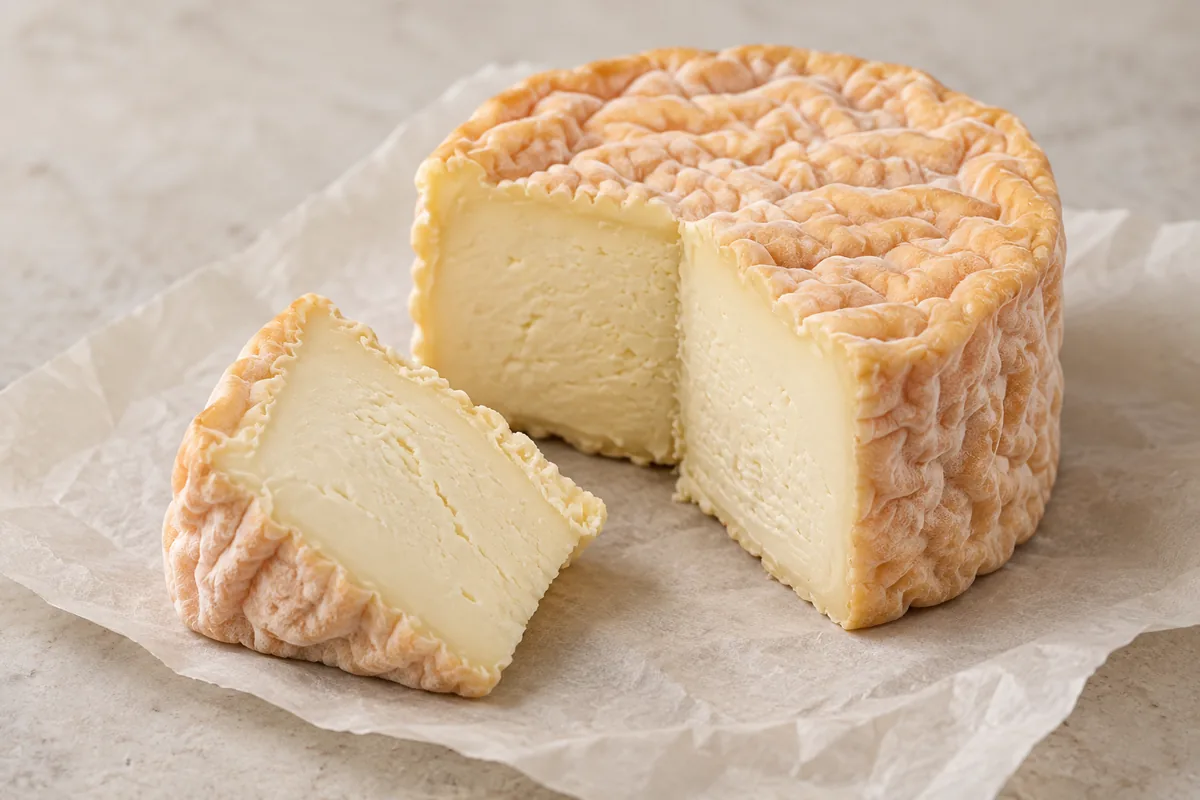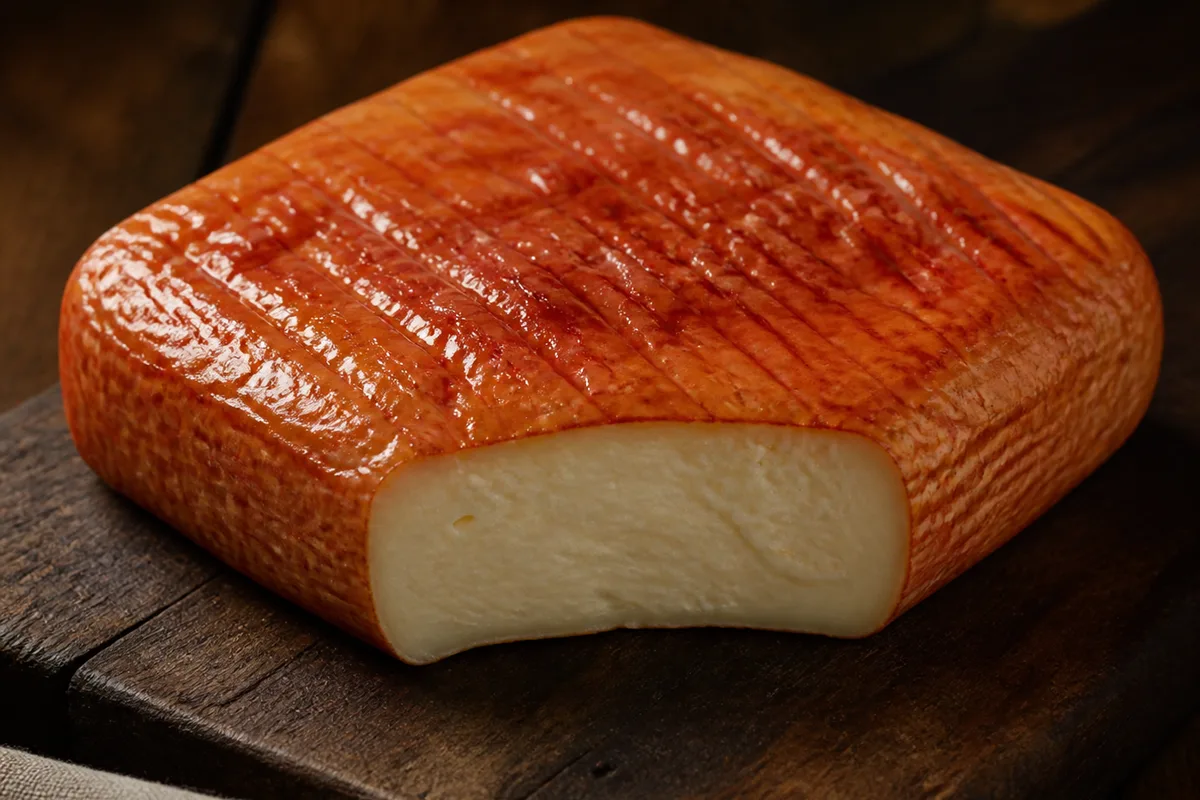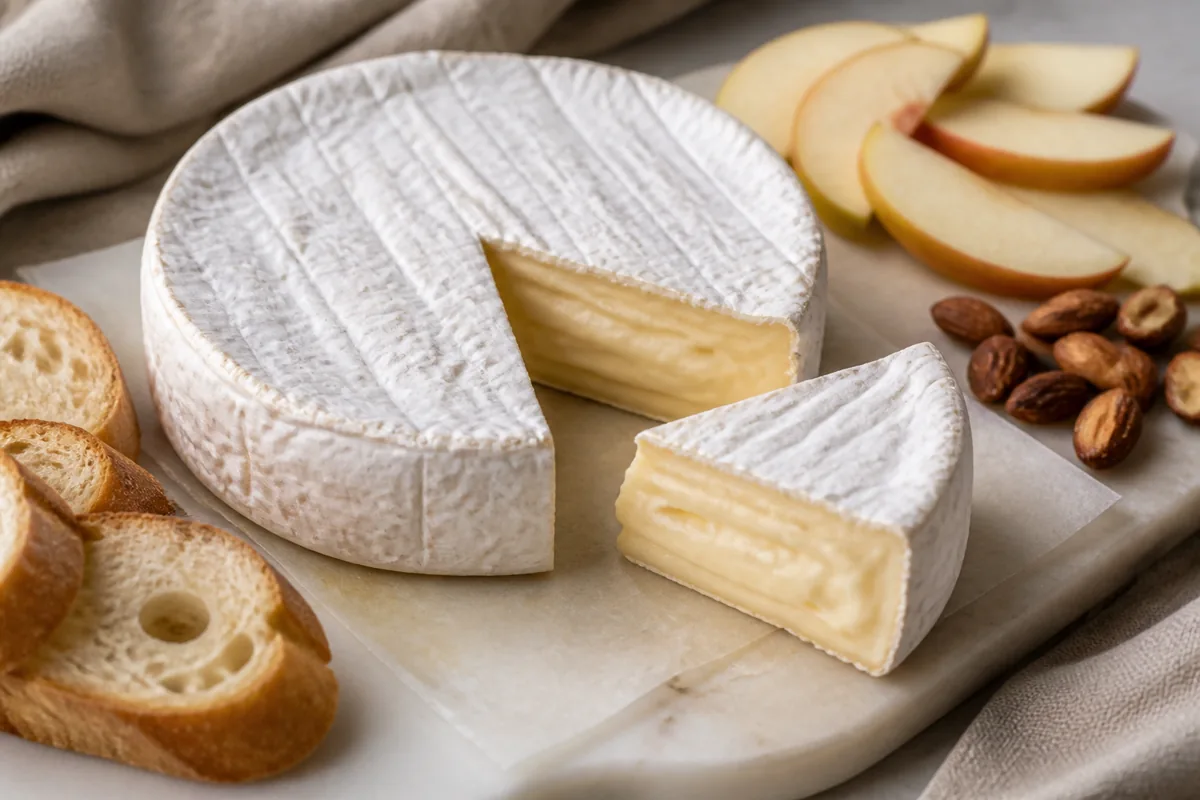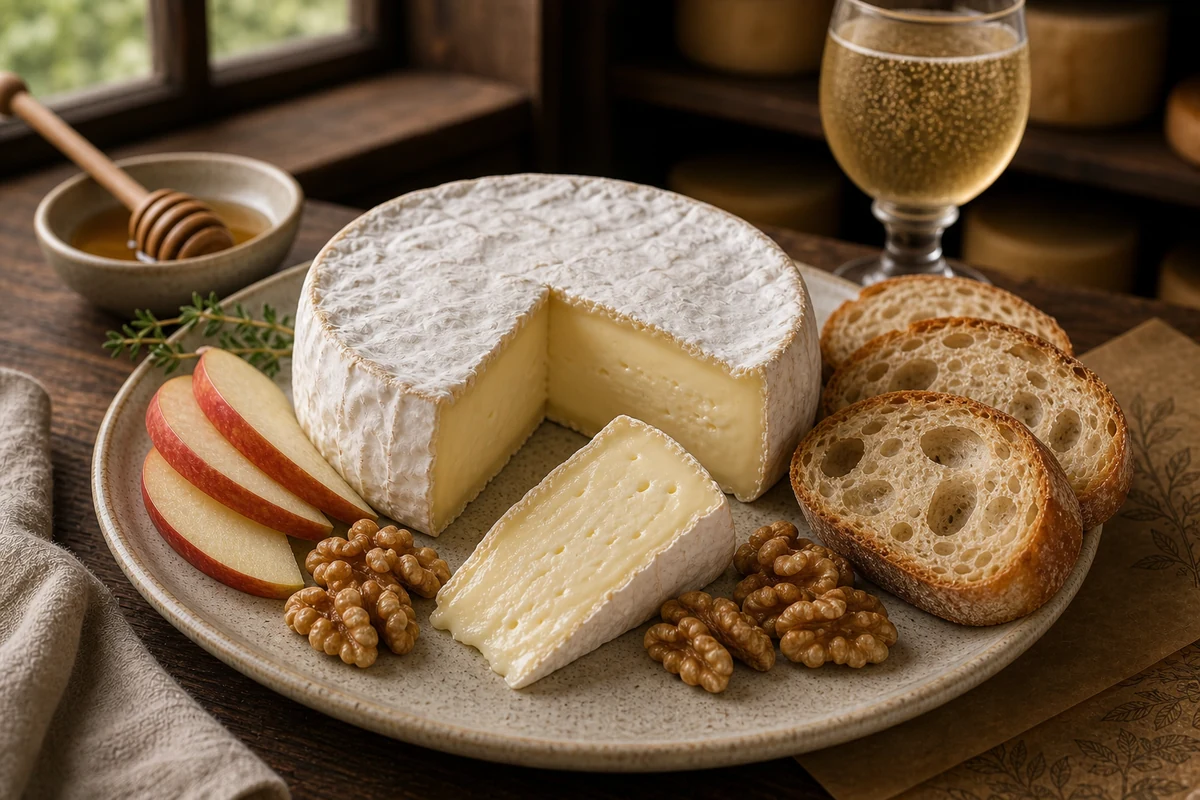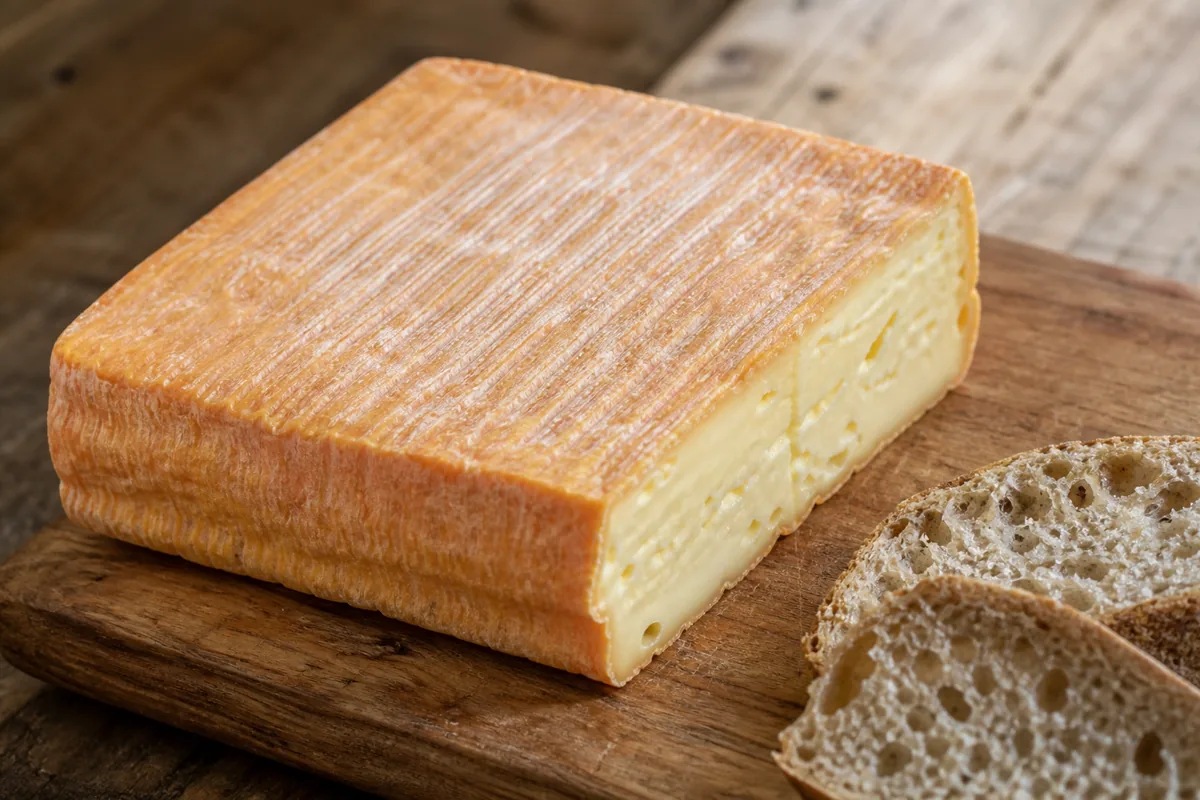
Pont-l'Évêque is a French PDO soft cheese with a square or rectangular form, a whitish-to-reddish rind, and a supple cow's-milk paste. Its four protected formats change the balance of rind and center, so the size matters when you choose a piece.
Although the official description calls the surface a bloomy rind that may be brushed or washed, the package still controls milk treatment, ingredients, nutrition, date, and storage instructions.
In This Article
What the PDO protects
The protected area covers parts of the former Lower Normandy, where milk production, cheesemaking, and maturation take place within defined communities in Calvados, Manche, Orne, and western Eure.
The specification describes a mild ivory-to-straw-yellow paste that is supple, homogeneous, non-sticky, and non-runny, with a few openings allowed and lactic, plant, creamy, or lightly smoked notes.
The official minimum age establishes identity rather than a single ideal serving stage. A retail cheese may have matured longer, so use the package date and its present condition for the buying decision.
Which Are the Four Protected Pont-l'Évêque Formats?
Pont-l'Évêque comes in three square formats and one rectangular Demi, shown here with the package weights and side measurements from the PDO specification.
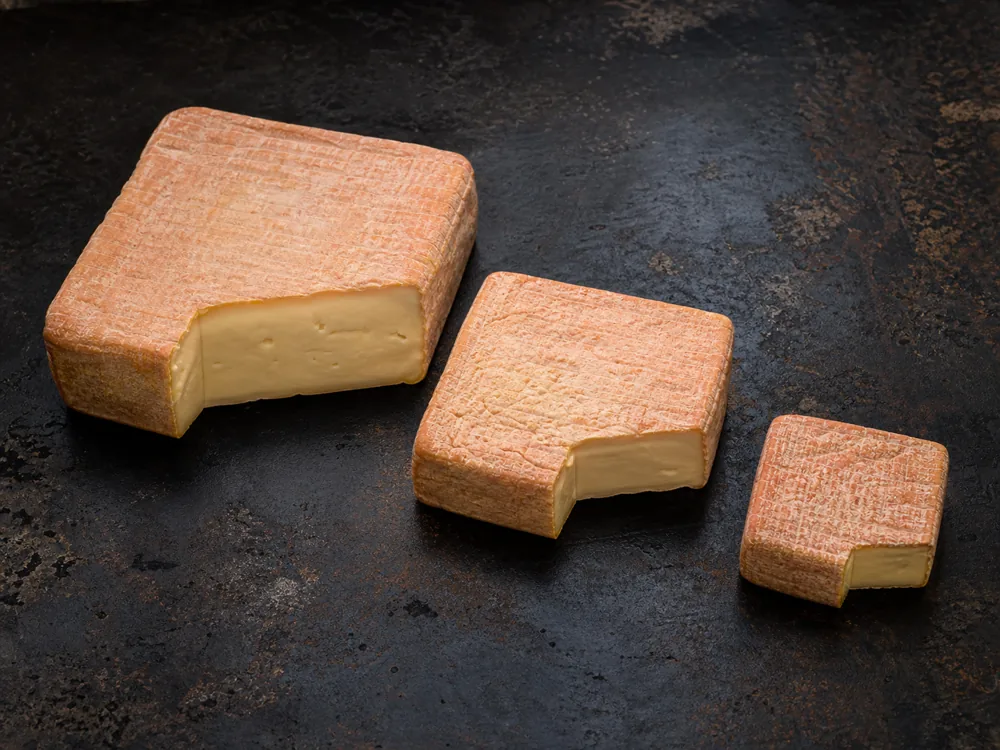
| Format | Shape and dimensions | Package weight | Minimum maturation |
|---|---|---|---|
| Grand | Square, 190 to 210 mm per side | 1.2 to 1.6 kg | 21 days |
| Standard | Square, 105 to 115 mm per side | 300 to 400 g | 18 days |
| Demi | Rectangle, 105 to 115 by 52 to 57 mm | 150 to 200 g | 18 days |
| Petit | Square, 85 to 95 mm per side | 180 to 250 g | 18 days |
A smaller whole cheese has more rind relative to its paste, while a cut from Grand can give you a broader mild center. Pick the format for the number of portions and the amount of rind character you want.
How Do You Judge Pont-l'Évêque Ripeness?
Look for a rind within the official whitish-to-reddish range and a supple, cohesive paste because one exact rind color cannot prove age, quality, or safety.
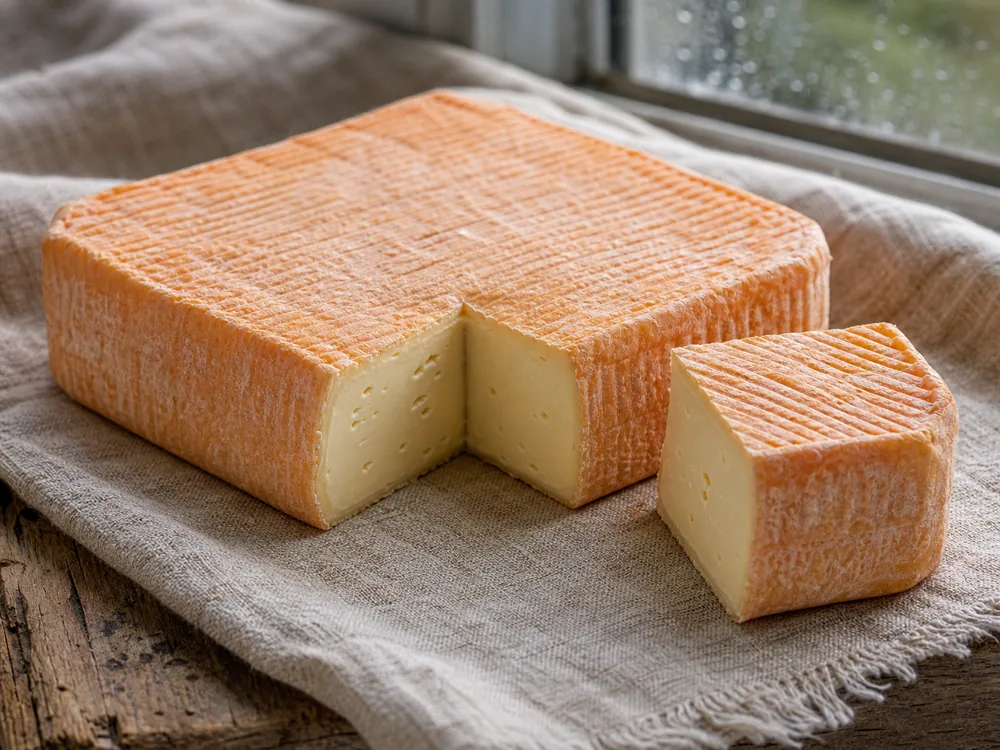
A firmer center suits clean wedges, while more even give through the paste suits spreading or cooking. Avoid a package with a failed seal, unexplained swelling, or evidence that it stayed above safe refrigeration temperatures.
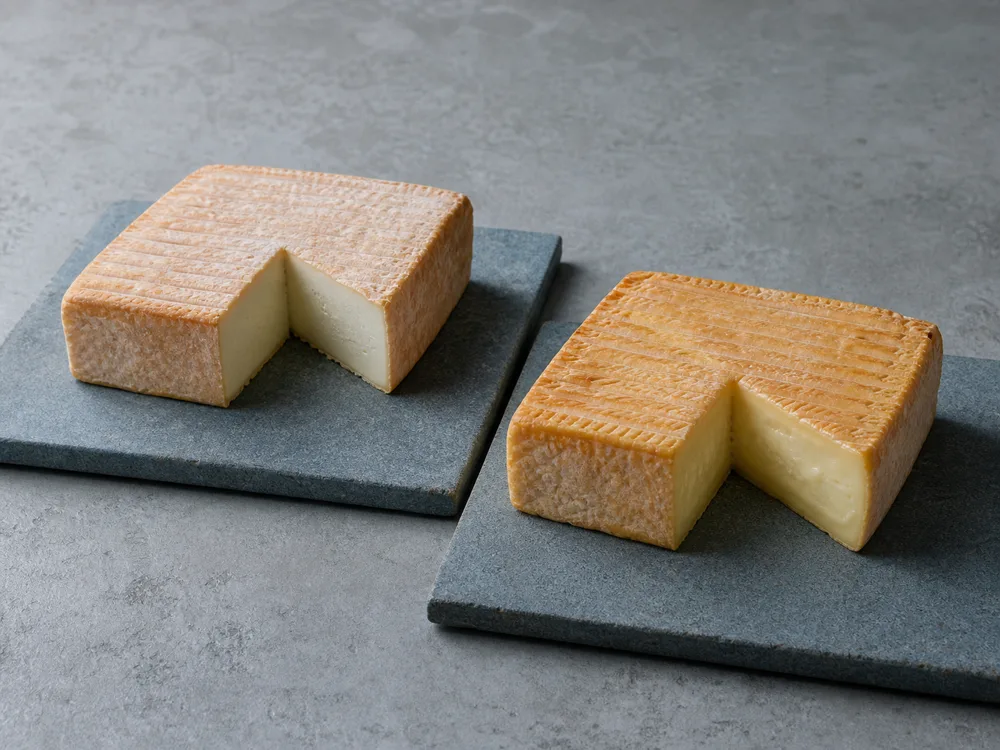
Treat the fruit and undergrowth aromas described by the AOP dairy record as product character, while using package integrity and temperature history for safety decisions.
How Should You Cut and Serve Pont-l'Évêque?
For a square cheese, cut outward from the center in triangles so each portion carries some rind and center. Divide a large cut into workable sections before making smaller wedges.
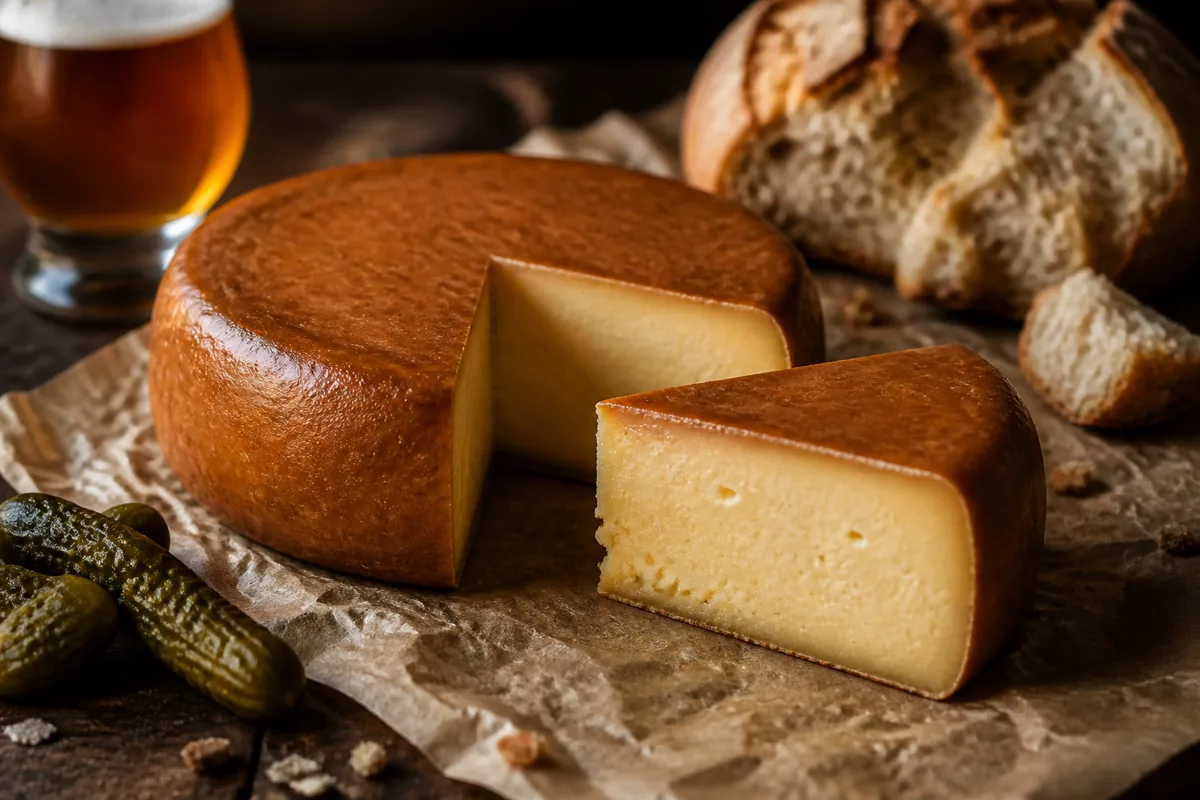
Country bread gives the soft paste structure, while apple brings acidity and crunch and dry cider or an unoaked white wine supports a milder cheese without covering it.
| Pairing | Type | Why It Works |
|---|---|---|
| Country bread | Food | A plain crusty slice carries the soft paste without adding sweetness. |
| Crisp apple | Food | Acidity and crunch contrast with the creamy center. |
| Boiled potatoes | Food | A mild starch supports Pont-l'Évêque in a warm dish. |
| Dry cider | Drink | Acidity and bubbles refresh the palate between bites. |
| Dry white wine | Wine | A fresh, unoaked style leaves room for the mild paste. |
| Sparkling water | Drink | Carbonation provides a simple alcohol-free counterpoint. |
In the kitchen, small amounts melt into potatoes, gratins, toasted sandwiches, and savory tarts. The rind brings more surface aroma, so trim only when the dish needs a milder result.
What Should You Check on the Pont-l'Évêque Label?
Look for the Pont-l'Évêque name, the PDO statement or mark, and the EU PDO logo. Then read the exact package for format, producer, milk treatment, ingredients, nutrition, date, and storage range.
- Identity: Confirm the protected name and PDO mark.
- Format: Match the dimensions and weight to Grand, standard, Demi, or Petit.
- Condition: Choose an intact package and a paste suited to slicing, spreading, or cooking.
- Product facts: Use the package for milk treatment, nutrition, date, and storage.
Do not transfer a nutrition panel or milk-treatment claim from another producer because the protected specification defines the cheese category while the retail label describes the product in your hand.
How Do You Store Pont-l'Évêque After Purchase?
Keep Pont-l'Évêque refrigerated at the temperature printed on its package. The FDA advises keeping a refrigerator at or below 40°F (4°C).
After opening, protect the cut face, use clean utensils, and keep the original date and storage directions with the cheese because no universal opened-life window fits every format, package, and starting condition.
Return perishable food to refrigeration within two hours, or within one hour when the air temperature is above 90°F (32°C). A strong rind aroma cannot confirm that the cheese stayed within safe time and temperature limits.
Can You Eat Pont-l'Évêque During Pregnancy?
Current French public-health guidance tells pregnant people to avoid Pont-l'Évêque when eaten cold and lists it with soft washed-rind cheeses, including pasteurized versions. The same guidance says to remove cheese rinds.
For a cooked dish, the NHS lists any cheese that's been cooked until steaming hot as safe to eat. The CDC lists pasteurized soft cheeses heated to an internal temperature of 165°F (74°C) or until steaming hot as safer, and soft cheese made from unpasteurized (raw) milk as riskier.
The NHS lists pasteurised soft cheeses as safe to eat, but says pasteurised or unpasteurised mould-ripened soft cheeses with a white coating on the outside, and foods made from unpasteurised milk, must be thoroughly cooked. Served cold, a pasteurized Pont-l'Évêque is described as a soft cheese with a bloomy rind that may be brushed or washed, a type the CDC list does not cover, so ask a midwife or doctor.
Check the package milk statement, follow guidance for your country, and ask your clinician if you have individual medical advice.
Pont-l'Évêque vs Livarot
Livarot is a round Normandy PDO cheese with a washed rind and bands, while Pont-l'Évêque is square or rectangular and its bloomy surface may be brushed or washed.
Camembert de Normandie is round and has its own protected bloomy-rind specification. Choose among them by form, rind character, package facts, and the texture you need rather than treating one as an exact copy of another.