Cheese Profile

Abbaye du Mont des Cats Is the Cheese the Monks Actually Make

Abbaye du Mont des Cats is a mild Trappist cheese from French Flanders, washed in roucou brine and aged about a month. How it tastes and what to buy.

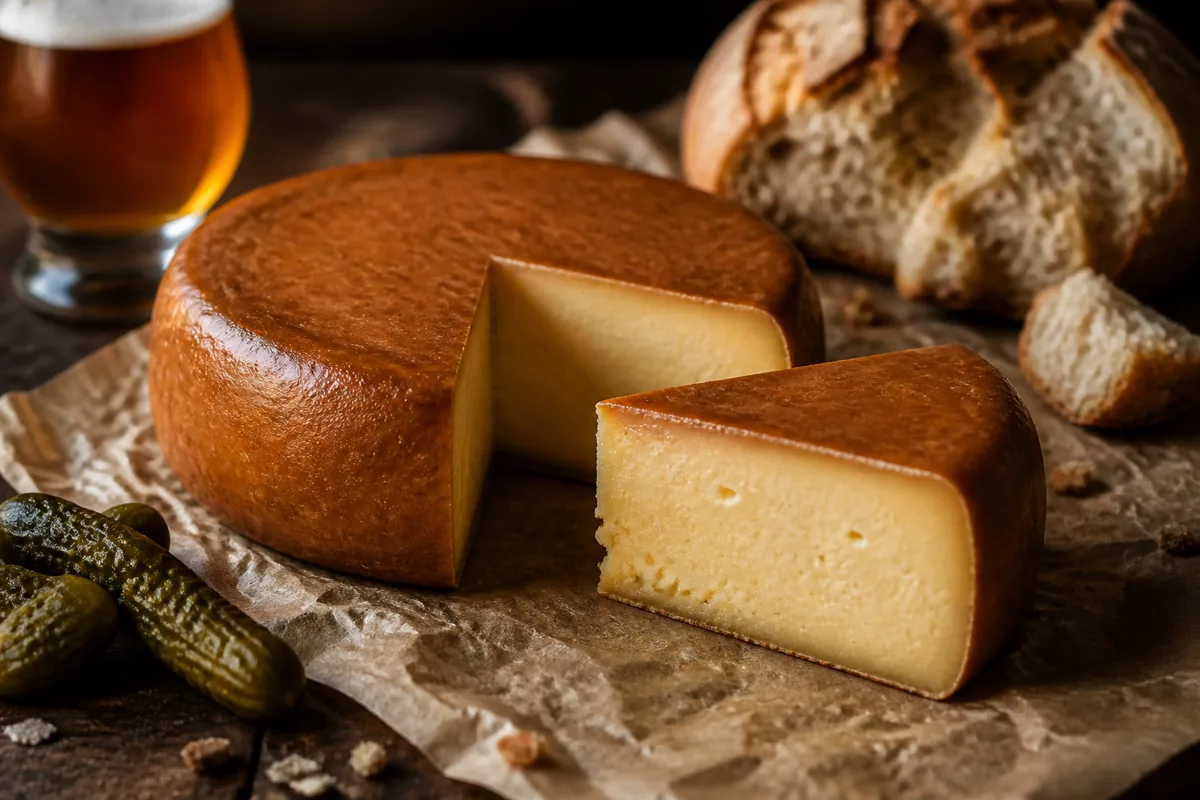
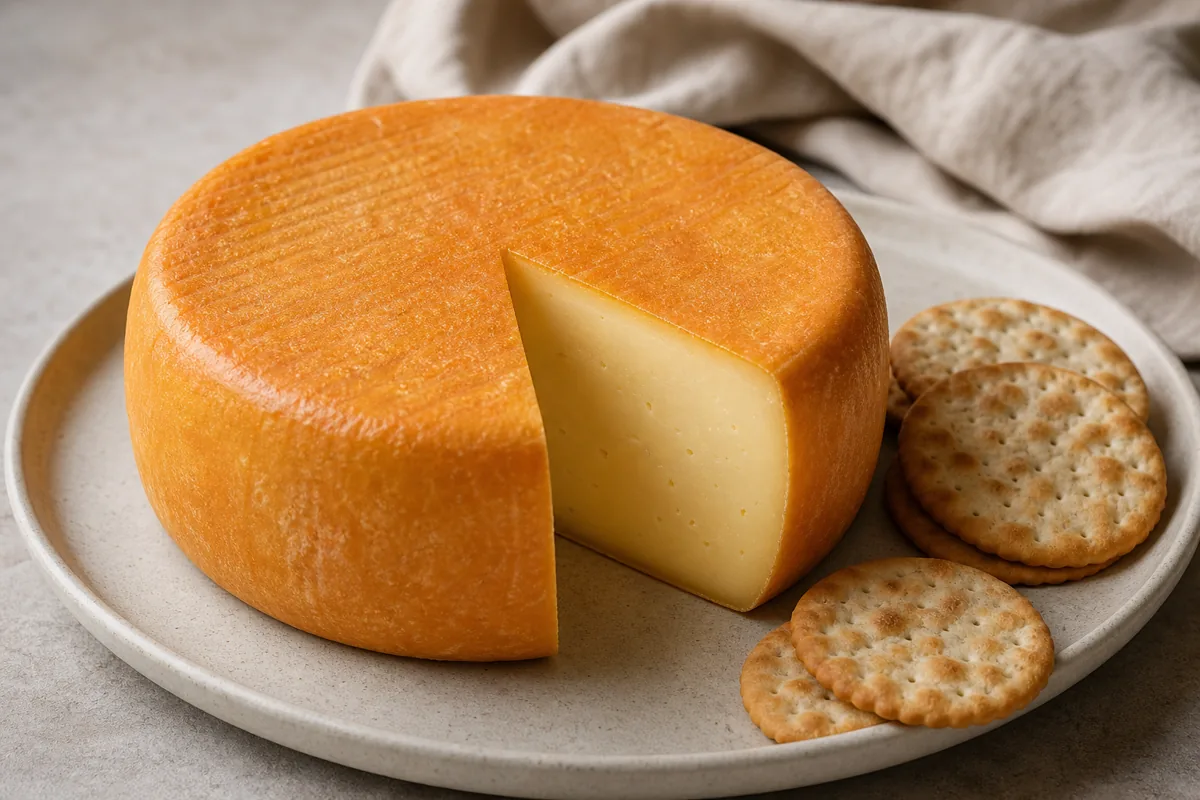
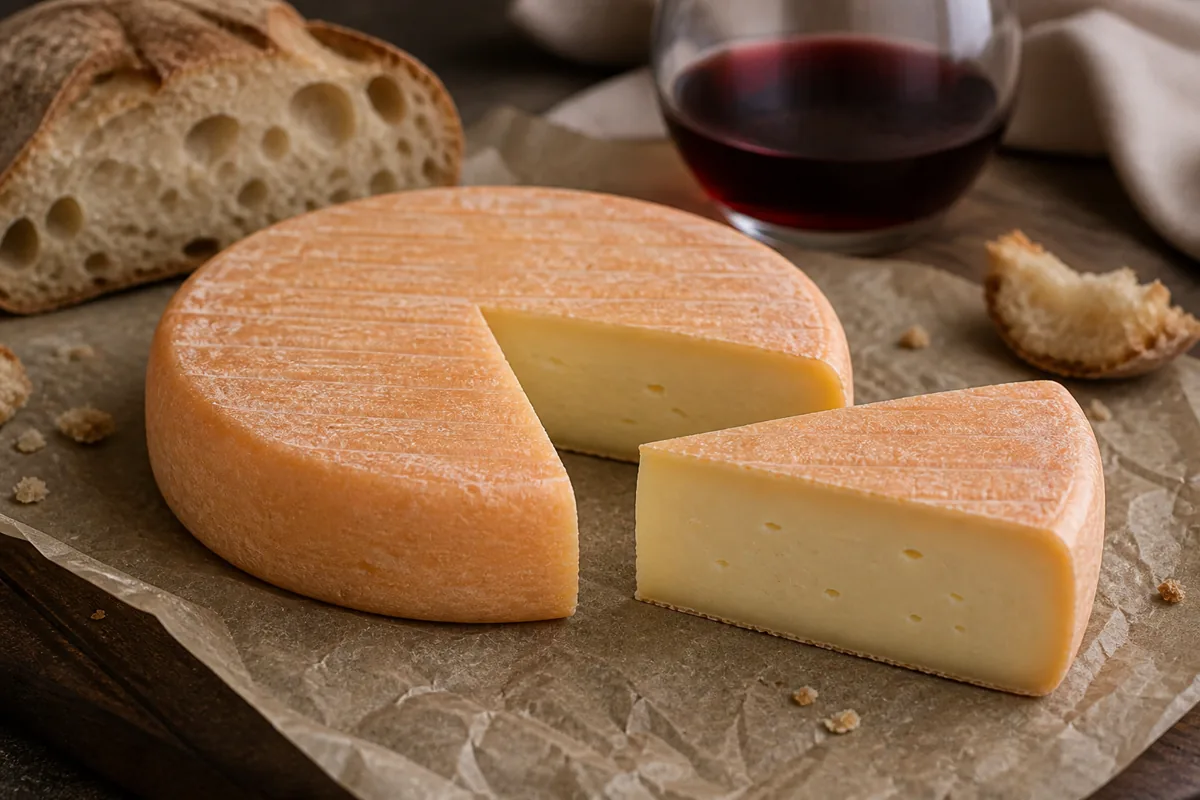
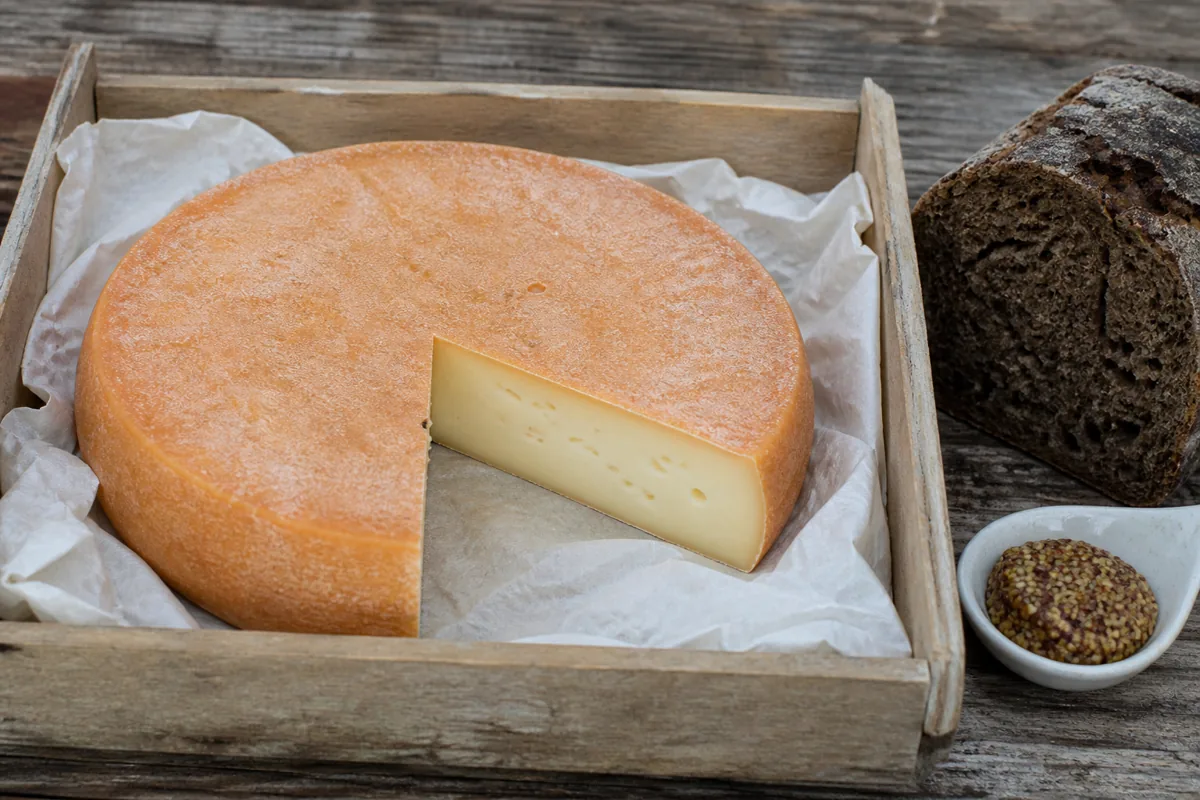
Whole orange-rinded abbey cheese disc with one wedge cut away in a market crate - Abbaye du Mont des Cats | KnowTheCheese
ABBAYE DU MONT DES CATS QUICK FACTS
OriginGodewaersvelde, Nord, France
MilkPasteurized cow milk
TextureSemi-soft, pressed, uncooked, supple with small holes
RindThin damp orange washed rind
AgingAbout one month
Fat Content23 percent of the finished cheese
FlavorButter, fresh cream, a savoury mushroom finish
AvailabilitySpecialty counters and French importers
PriceMid
PregnancyPasteurized, so easier than most French abbey cheeses

Abbaye du Mont des Cats is a mild orange-rinded cow's milk cheese made inside a Trappist monastery in French Flanders, twenty minutes from the Belgian border. It comes as a flat disc about ten inches across, an inch and a half thick, and close to four and a half pounds.

The name causes one specific problem at the counter. There is also a Mont des Cats beer, and the abbey does not brew it.

That split is worth understanding before you spend anything, because it is the clearest signal of what you are actually buying.

Only the Cheese Is Actually Made at the Abbey

The International Trappist Association lists Mont des Cats cheeses as Authentic Trappist Products, made in the abbey's own cheese-making facility. It lists no Mont des Cats beer.

The beer is real, but since 2011 it has been developed and brewed at Scourmont Abbey in Belgium by the Chimay brewers. A product has to be made inside the walls of its own monastery to carry that logo, and the abbey's French brewery was never rebuilt after the First World War.

So when a shop tells you monks make this, the claim holds for the wedge and not for the bottle next to it.

The community settled on the hill in 1826 and built its dairy in 1849, selling a cheese it called Saint-Bernard. The Mont des Cats name has been on the cheese since the 1890s.

Seventeen of the abbey's twenty-three monks still work in production, alongside twenty lay employees. Four master cheesemakers take turns running the make, and one of them is a monk.

What the monks stopped doing is farming. The community gave up its own herd around 1970, and since 2004 the milk has arrived from the Danone collection site at Bailleul, roughly two million litres a year.

That is the honest shape of a monastery cheese today. The making is genuinely monastic, the milk is bought in, and the output runs to about 200 tonnes a year.

A Month in the Cellar Keeps It Mild

Taste it and the first thing you notice is how little it asks of you. Butter and fresh cream run through the middle, then the finish turns savoury and faintly mushroomy from the washed rind.

The paste is pale cream, supple and elastic under the knife, scattered with small holes. It bends instead of crumbling, and it never turns chalky the way a young lactic cheese can.

One month of aging is the reason for all of that. Cut short like this, a pressed cheese has no time to build the crystals, the salt concentration, or the sharpness that longer aging brings.

Culture Cheese Magazine describes the flavour as mild and subtle, with notes of milk and hay. That is fair, and it is also a warning if you came looking for a loud Trappist cheese.

The rind smells stronger than the paste tastes. A light cellar smell is normal on a healthy piece and it does not carry into the middle of the wedge.

Serve it cold and you will get almost nothing from it. Twenty to thirty minutes on the counter is what turns a bland slice into a buttery one.

The Orange Comes From Roucou, the Smell From the Wash

The rind is thin, faintly damp, and light orange, and neither the colour nor the smell arrives on its own.

The colour is dye. During aging the cheeses are washed in a salted solution carrying roucou, the red-orange colouring taken from annatto seeds.

The smell comes from the washing itself. Repeated brine washes feed the surface culture the abbey calls the ferments du rouge, and that bacteria is what gives washed-rind cheeses their savoury, cellar-floor edge.

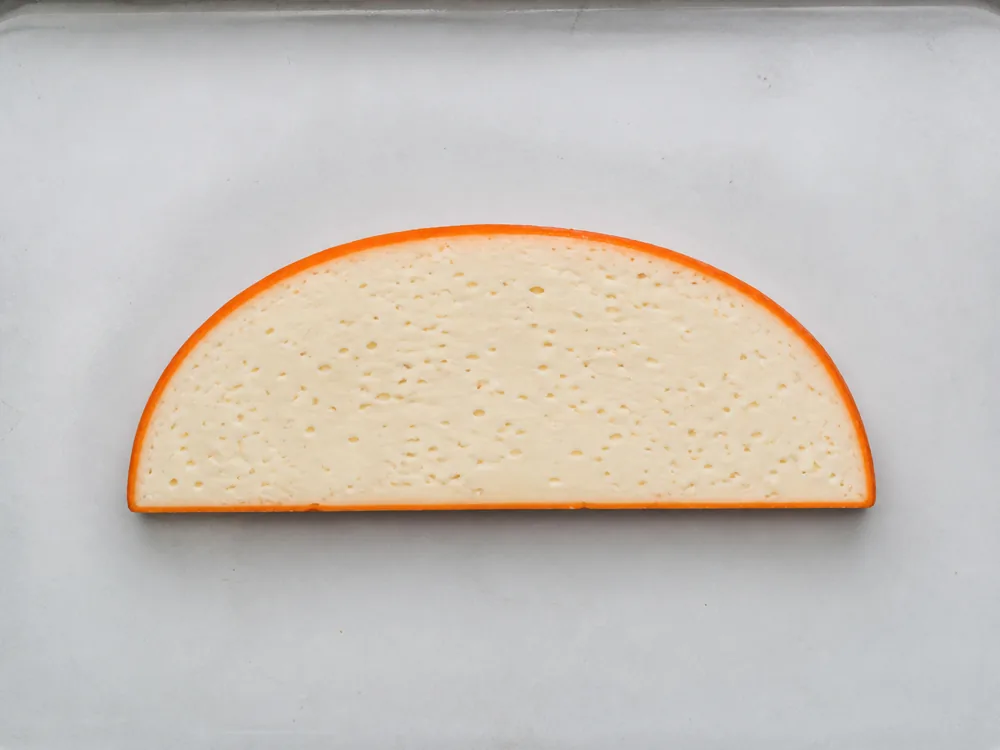
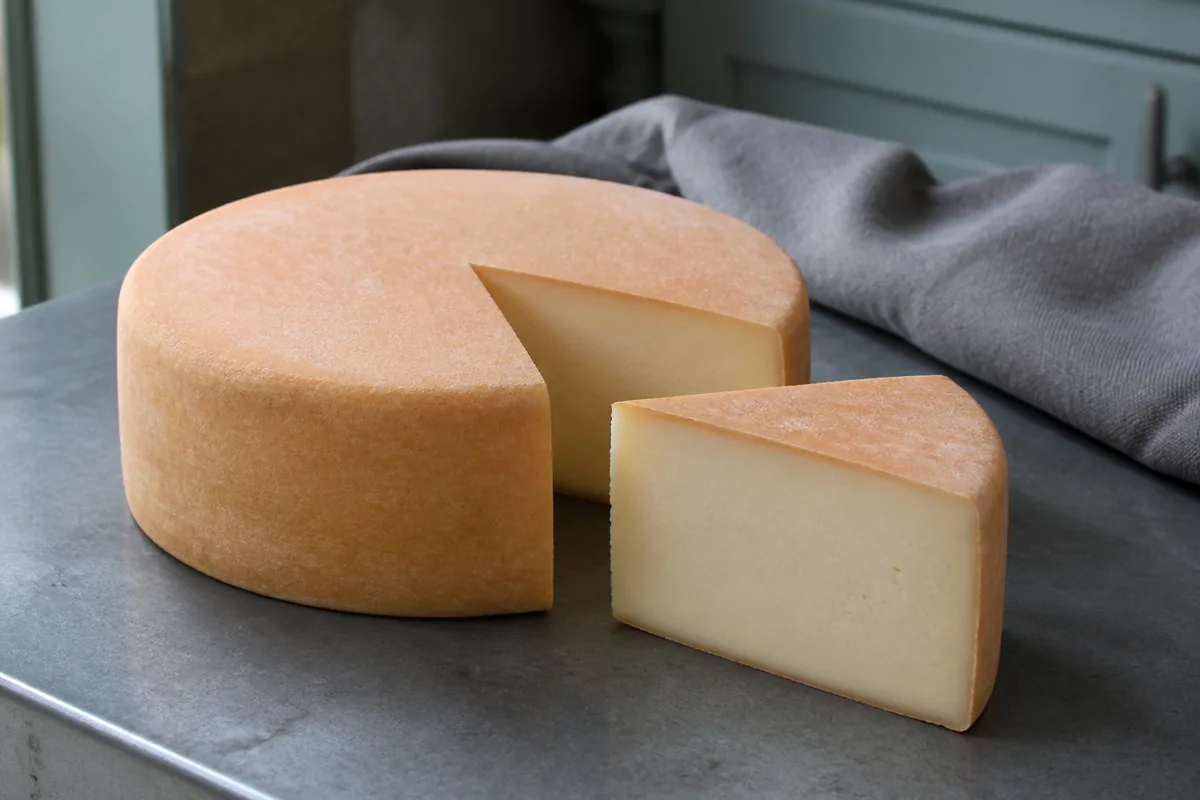
Half disc seen from above with a thin orange rind ring around pale cream paste - Abbaye du Mont des Cats | KnowTheCheese
The roucou wash colours only the outside. Cut the disc and the paste stays uniformly cream, scattered with small round holes.

Separating the two changes what a pale rind tells you. A weakly coloured washed rind has usually been through fewer washes, so it will taste flatter as well as look duller.

One Month in the Abbey Cellars
Pressed for a few hours
The curd goes under presses, which is what makes this a pressed uncooked cheese rather than a soft one.
Dried, then brined
The young discs dry before taking their salt in a brine bath.
Morge applied twice
The surface treatment that builds and colours the crust goes on twice across the month.
Three cellars, turned every two days
Wheels rest on thick spruce boards and are turned and brushed every second day.
Out at about four weeks
The plain disc leaves the cellar at roughly a month. Only the longer-aged cheeses in the range stay past that.

The rind is edible. It is thin enough to eat along with the paste, and if the savoury note is not for you, shave a few millimetres off rather than cutting away a thick layer of good cheese.

Pasteurized Milk Is Why It Reaches US Counters

Mont des Cats is made from pasteurized milk, and for an American shopper that single fact decides whether the cheese exists on this side of the Atlantic.

A raw-milk version could not legally reach a US counter at the age this cheese is meant to be eaten.

THE 60-DAY RULE

Under 21 CFR 133.187, a semisoft cheese made from milk that has not been pasteurized must be cured at not less than 35 degrees F for not less than 60 days. This one is sold at about half that age.

That also explains why some older French references still describe it as a lait cru cheese. Current French trade listings and the abbey's own account of the make both describe pasteurized milk, so read the label on the piece in front of you rather than the reputation.

The same fact makes the pregnancy question simpler here than for most French abbey cheeses. A pasteurized, pressed, washed-rind cheese sits in an easier category than a raw-milk soft cheese, though anyone pregnant should still follow their own doctor's guidance.

Seven Cheeses Carry the Mont des Cats Name

The wedge in the case is one of seven cheeses the abbey sells under the Authentic Trappist Product label, and they are not interchangeable.

The plain 2 kg disc is what most people mean by Mont des Cats. Everything else in the range changes the size, the aging, or the wash.

The Abbey's Seven Trappist Cheeses
Mont des CatsThe standard 2 kg disc, aged about a month
Le dessert des trappistesThe same cheese as a small tomme of roughly 500 g
Le FlamayA 500 g tomme, its russet rind coloured with added roucou
La Bourle trappisteA Flamay grown into a wheel over 2 kg and aged up to six months
L'Immersus 48hSteeped in the abbey's own beer for 48 hours, then aged at least two months
Le dessert long affinageThe small tomme held longer in the cellar
Mont des Cats a la biere trappiste Westvleteren 8Finished with a Belgian Trappist ale
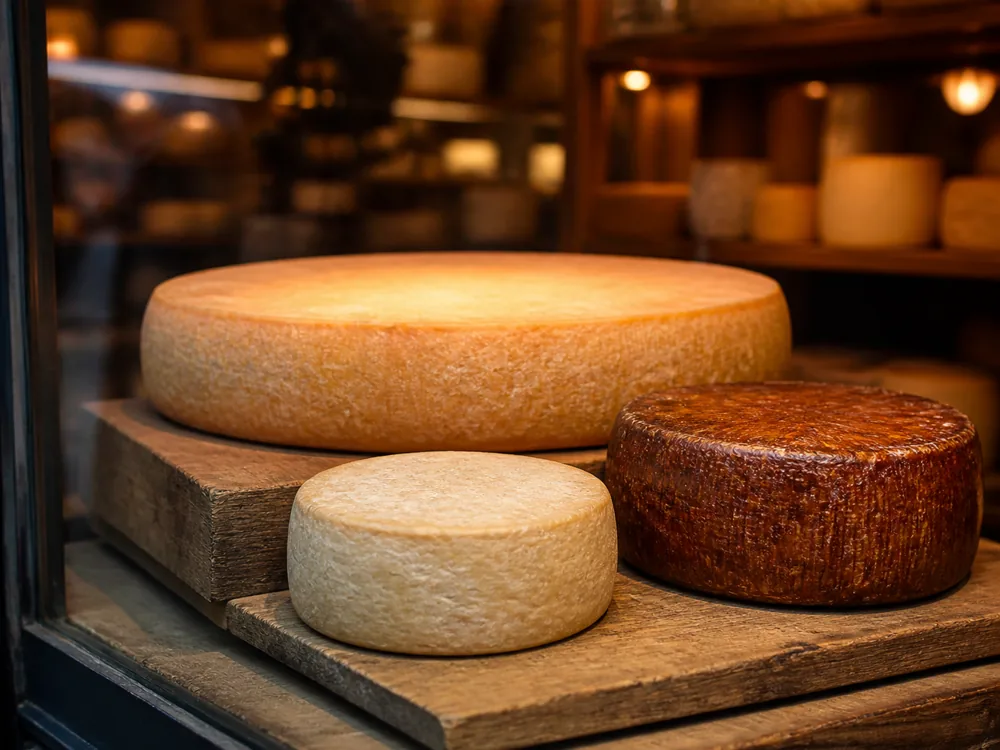
Three abbey cheese formats on stepped risers in a shop window - Abbaye du Mont des Cats | KnowTheCheese
The abbey sells the same cheese in several sizes and finishes. The darker wheel on the right is a beer-washed version.

Two of them are worth singling out. The dessert des trappistes is the practical buy if you are feeding two people and do not want a cut face sitting in the fridge for a fortnight.

The other is the Immersus, which spends 48 hours submerged in the abbey's beer before it ages. The beer brewed at Chimay comes back up the hill and ends up inside a cheese that genuinely is made at the abbey.

US shops that carry the cheese usually list it simply as Mont des Cats, so ask the counter which one they are cutting from. At the abbey shop in Godewaersvelde the difference is on the shelf in front of you.

NOTE

The abbey name covers seven different cheeses, so asking for Mont des Cats gets you whichever one the counter has. Name the size and the finish you want.

It Melts Smooth Instead of Stretching

Heat is where a pressed, high-moisture, month-old cheese behaves differently from the Alpine wheels people usually reach for. It goes soft and creamy rather than pulling into strands.

That makes it good on toasted country bread and poor in anything built around a cheese pull. Grated, it will slump into a smooth layer within a minute or two under a broiler.

Keep the heat moderate. A young washed-rind cheese carries enough moisture to break and weep fat under hard heat, and a flavour this mild gives you nothing back for the risk.

✓ DO
Grate it and let it slump under moderate heat
Put it on toasted country bread or dark rye
Add it late so it only has to soften
✗ DON'T
Expect a cheese pull from a month-old pressed paste
Push it under high heat, which splits the paste and weeps fat
Bury it under chilli, smoked meat, or heavy tomato
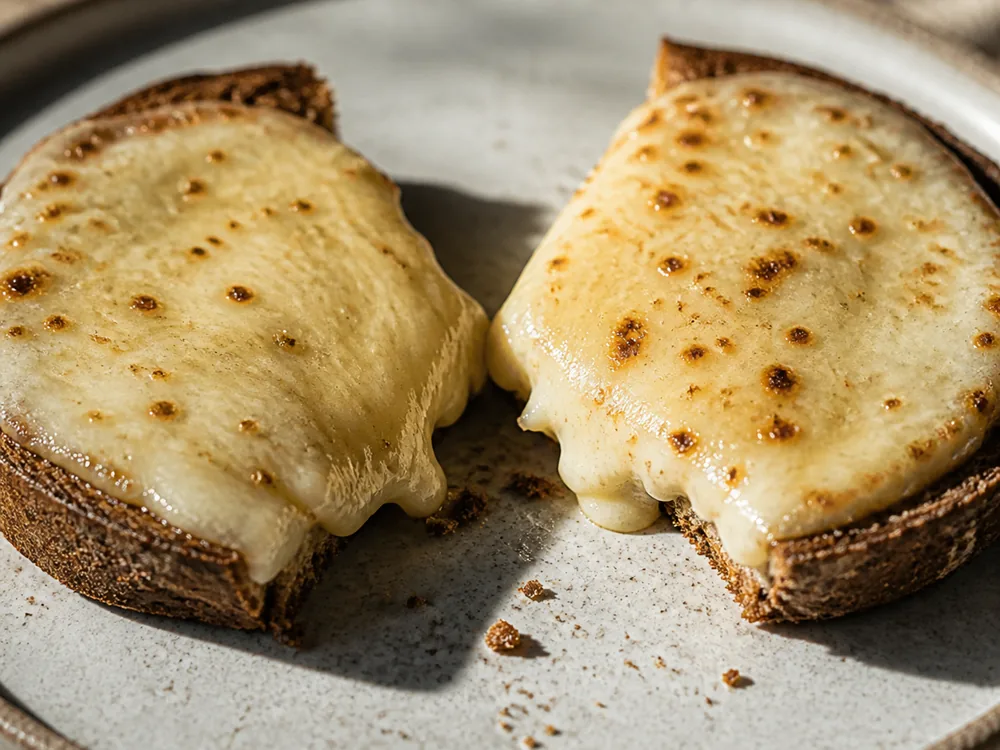
Toasted dark rye with melted cheese broken into two halves showing a short creamy break - Abbaye du Mont des Cats | KnowTheCheese
Under moderate heat the paste slumps into a smooth layer. It breaks short instead of pulling into strands.

It also works cold in ways the melt does not suggest. Thin slices on dark rye with wholegrain mustard use the savoury rind note instead of fighting it.

Dry White and Trappist Ale Pull in Opposite Directions

Androuet points this cheese at Muscadet sur lie, and the logic is straightforward. A dry, faintly saline white cuts the butter without adding flavour the cheese cannot answer.

Belgian Trappist ale goes the other way. Malt sweetness and yeast character meet the washed rind and push the whole plate savoury, which is the better move when the cheese is the point rather than the accompaniment.

For fruit, thin slices of pear or apple are enough. Anything sweeter buries a cheese this quiet.

Skip the strong preserves and the aggressive accompaniments. Fig jam, cured anchovy, or a peated whisky will leave you tasting the accompaniment and nothing else.

Buy a Fresh Cut and Wrap It Loosely

US shops sell Mont des Cats hand-cut by weight rather than as whole discs, so what you are judging is a cut face and a strip of rind.

The paste should look evenly cream-coloured and slightly moist. A dry edge, a cracked cut face, or a rind gone dull brown all mean the piece has been sitting.

The rind should be faintly tacky. Wet and slippery means it has been over-washed or badly stored, and dry and papery means it has lost the surface culture the flavour depends on.

Buy small. A cheese with one month of age and no protective concentration does not improve in your fridge, and the cut face is the first thing to go.

STORAGE GUIDE
In the Fridge
Keep the wrapped wedge in the least cold part of the fridge, not against the back wall.
Wrapping
Cheese paper or parchment against the cut face first, then a loose bag or box.
Opened
Best within about a week of the cut, while the paste is still moist.
Freezing
Freeze only what you intend to melt, and expect a grainier texture.
Room Temp / Serving
Twenty to thirty minutes out before serving.
Signs It Has Gone
A wet slippery rind, an ammonia smell, a sour paste, or mould growing into the cut face.

Tight plastic against the rind is the common mistake. It traps the moisture the wash left behind and turns the surface slimy within days.

BUYING TIPS
Check the rind colour
A soft even orange is right. Patchy grey or a dried edge means the disc has sat.
Press the disc
It should give slightly under a thumb. Firm all through means it is still young.
Name which of the seven
The abbey name covers a range, so ask for the one you want rather than for the abbey.
Buy a fresh cut
Ask for it cut that day. A washed rind left cut on a counter goes ammoniated fast.

Port Salut and Saint-Paulin Are the Closest Swaps

Mont des Cats is made much the way Port Salut is, and that is the first substitution to reach for. Both are pressed, uncooked, washed-rind cow's milk cheeses from the same French Trappist line.

Saint-Paulin is the same recipe made industrially, and it is far easier to find in an American supermarket. Expect it blander and more uniform than the abbey version, which is the trade you are making for the convenience.

For melting alone, a young Gouda or a Havarti gives you the same smooth behaviour. Neither brings the savoury washed-rind finish, so use them where the cheese is doing a job of texture rather than flavour.

If it was the beer-washed version you liked, stay inside the abbey family instead of moving to Gouda. Abbaye de Belval is finished with beer during aging and lands much closer to that darker, saltier profile.

SOURCES & REFERENCES


1.
Abbaye du Mont des Cats producer
Used for the abbey's own account of pressing, calf rennet, cellar aging length, and the ferments du rouge.

2.
International Trappist Association industry
Used for the Authentic Trappist Product status and the seven cheeses in the range.

3.
Culture: the word on cheese reference
Used for pasteurization, the brine wash and annatto, four to five week maturation, tonnage, and the mild milk and hay flavour.

4.
Terres et Territoires industry
Used for the monks and lay employees in production, the Danone Bailleul milk, the morge applied twice, the three cellars, and the spruce boards.

5.
Wikipedia France reference
Used for the 1970 end of farming, the two million litres since 2004, the 2 kg disc and 500 g tome formats, and the roucou brine.

6.
Wikipedia France reference
Used for the Flamay, Bourle and Immersus 48h descriptions and for the beer being brewed at Scourmont.

7.
Androuet reference
Used for the 25 cm by 4 cm disc, the roughly 2 kg weight, the supple elastic paste, and the Muscadet sur lie pairing.

8.
Produits Laitiers industry
Used for the 23 percent fat figure, the pressed uncooked classification, and the Trappe de Bailleul alternative name.

9.
US Code of Federal Regulations Gov
Used for the 60-day cure requirement that applies to semisoft cheese made from unpasteurized milk.

10.
The Cheese Store of Beverly Hills reference
Used for US retail format, hand-cutting to order, and the butter, cream and mushroom tasting description.

Abbaye du Mont des Cats FAQ

Two questions come up that the body of this profile does not answer.

No. The abbey states that it sets the milk with rennet taken from a calf's stomach, so the cheese is not vegetarian.

It is an alternative name for the same cheese on some French listings. Bailleul is the nearby town whose collection site supplies the abbey's milk.