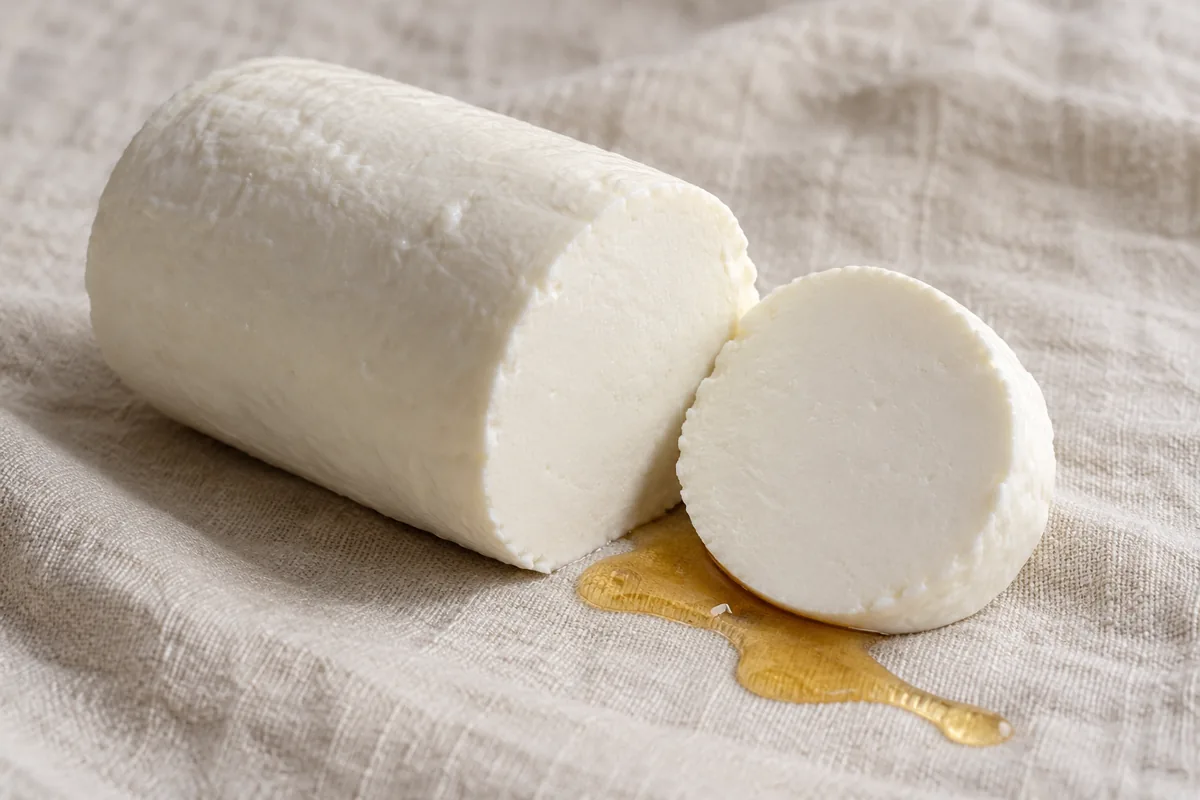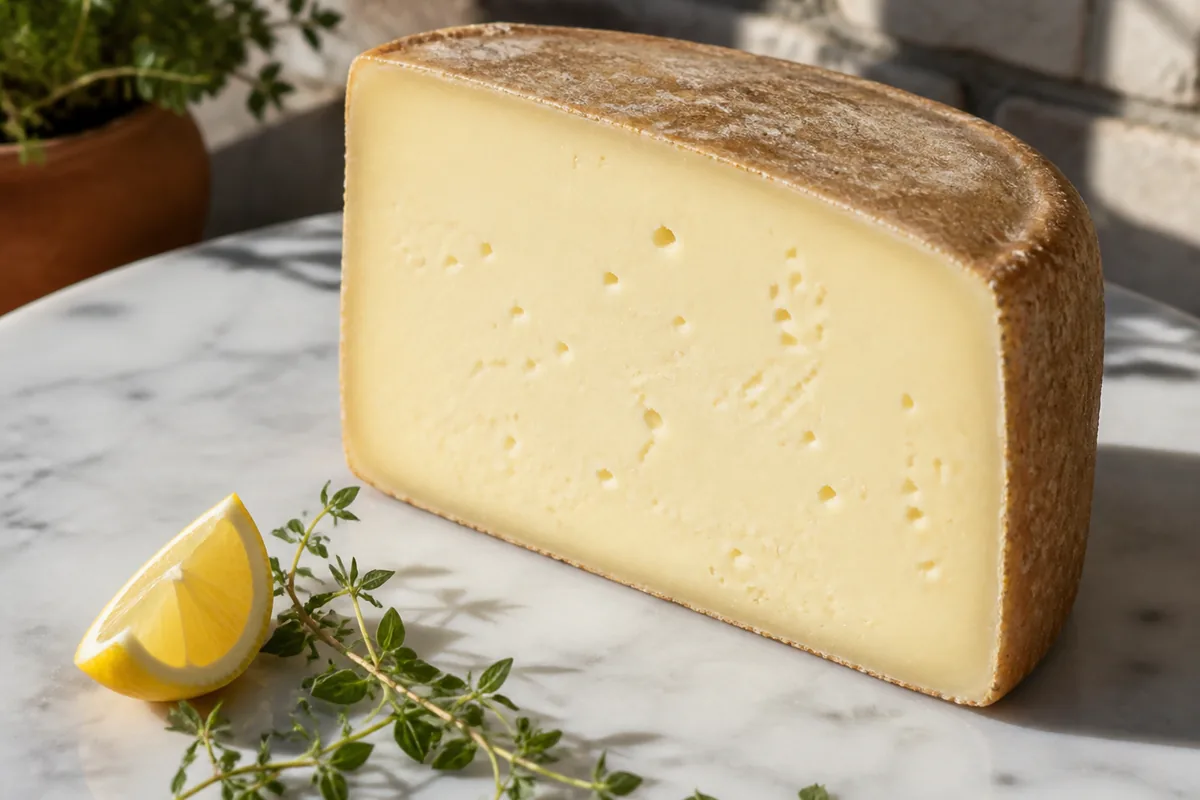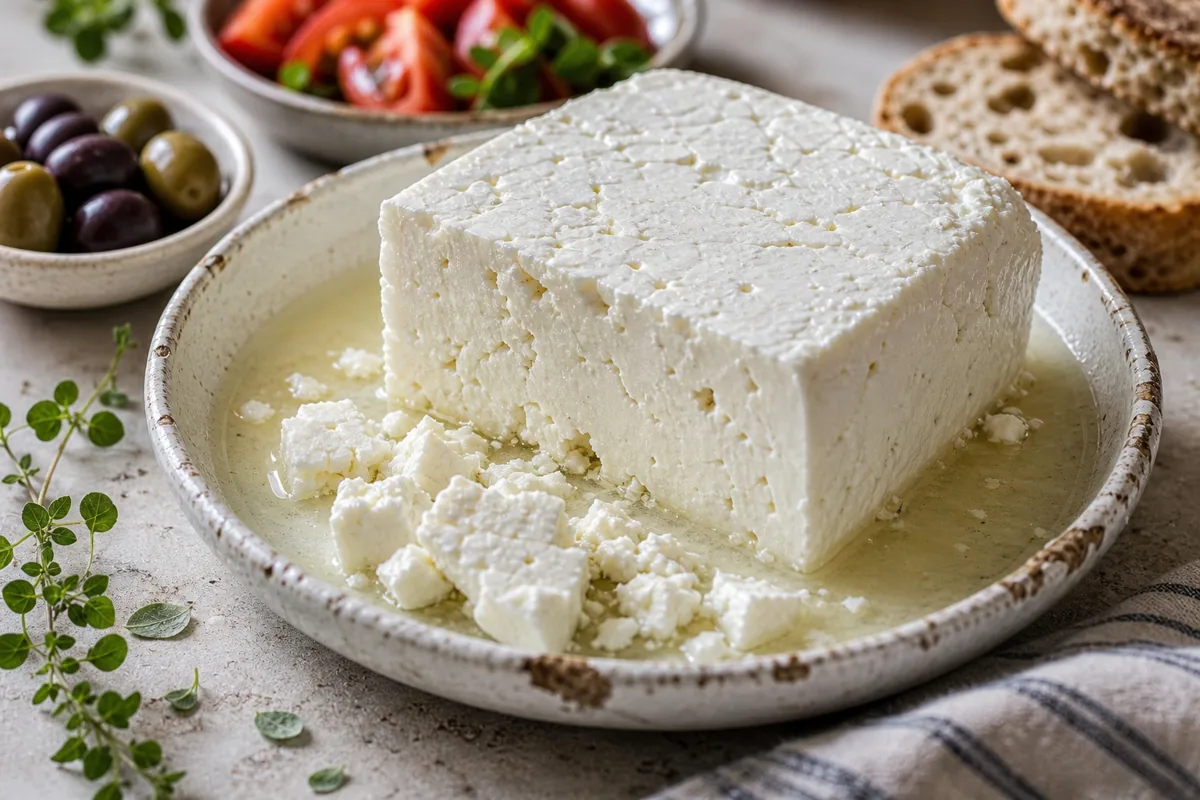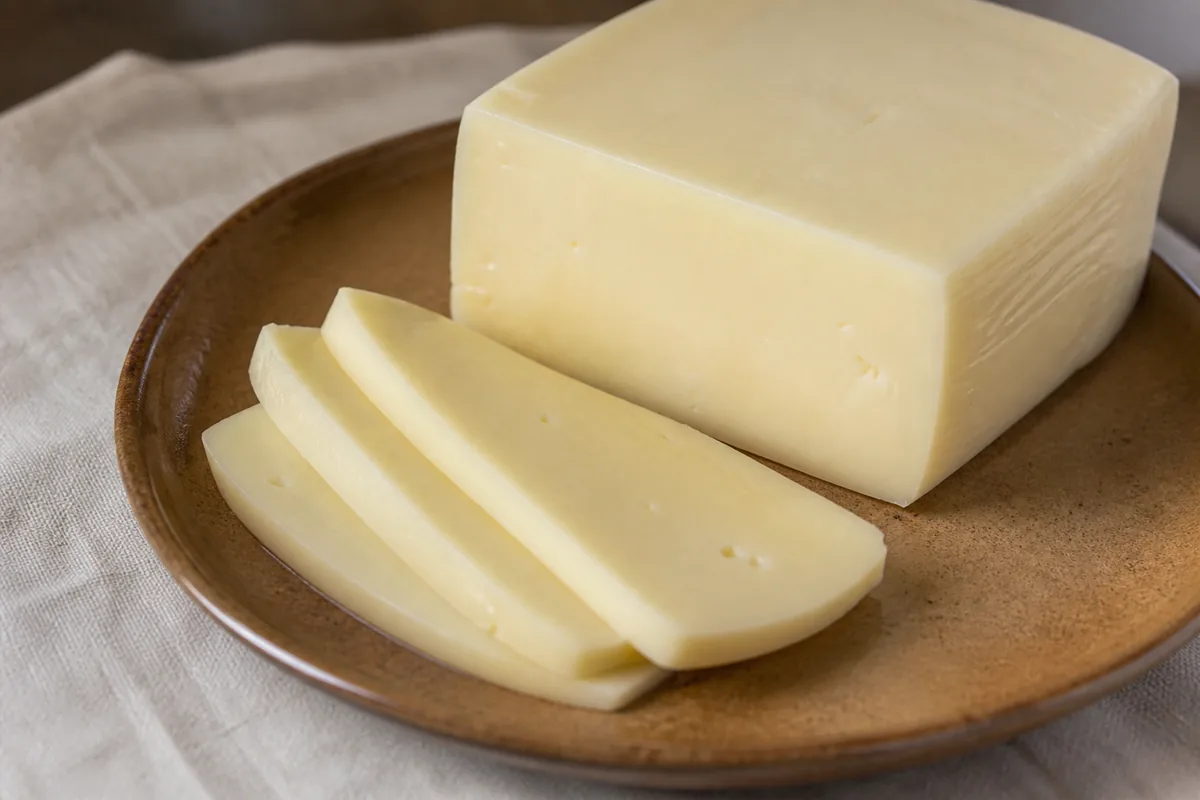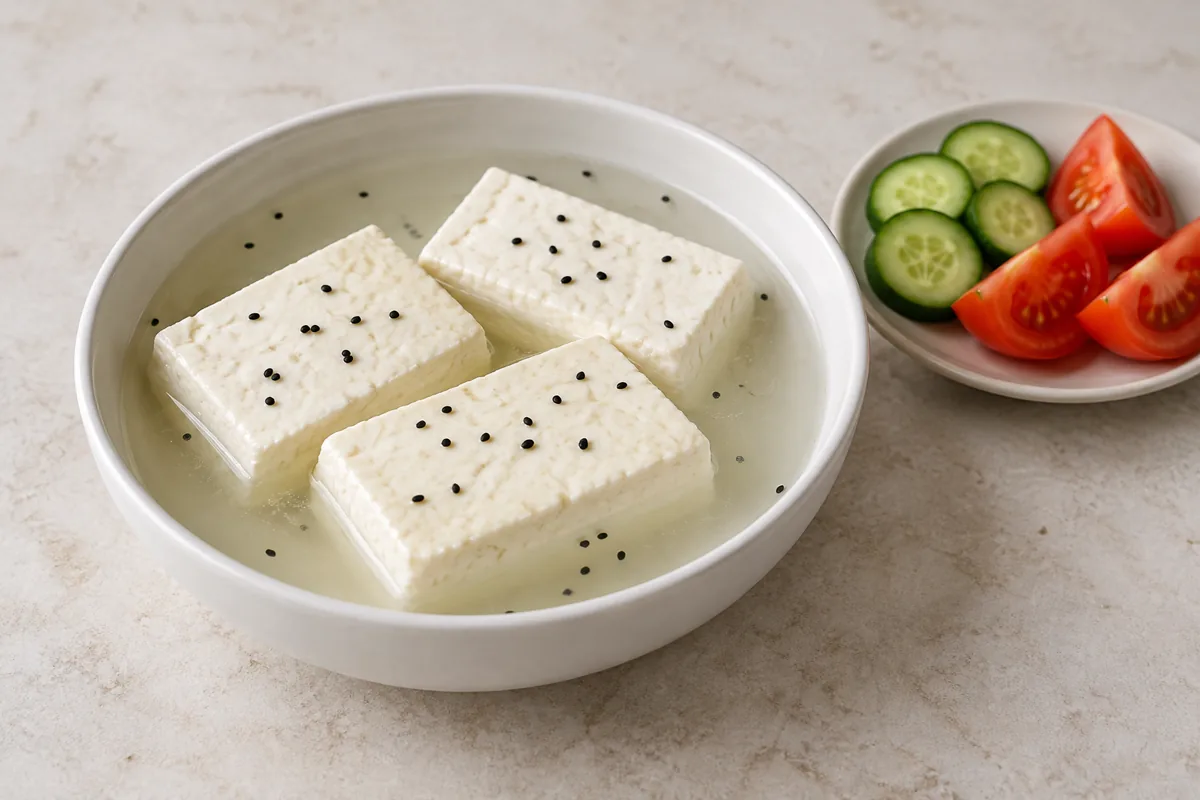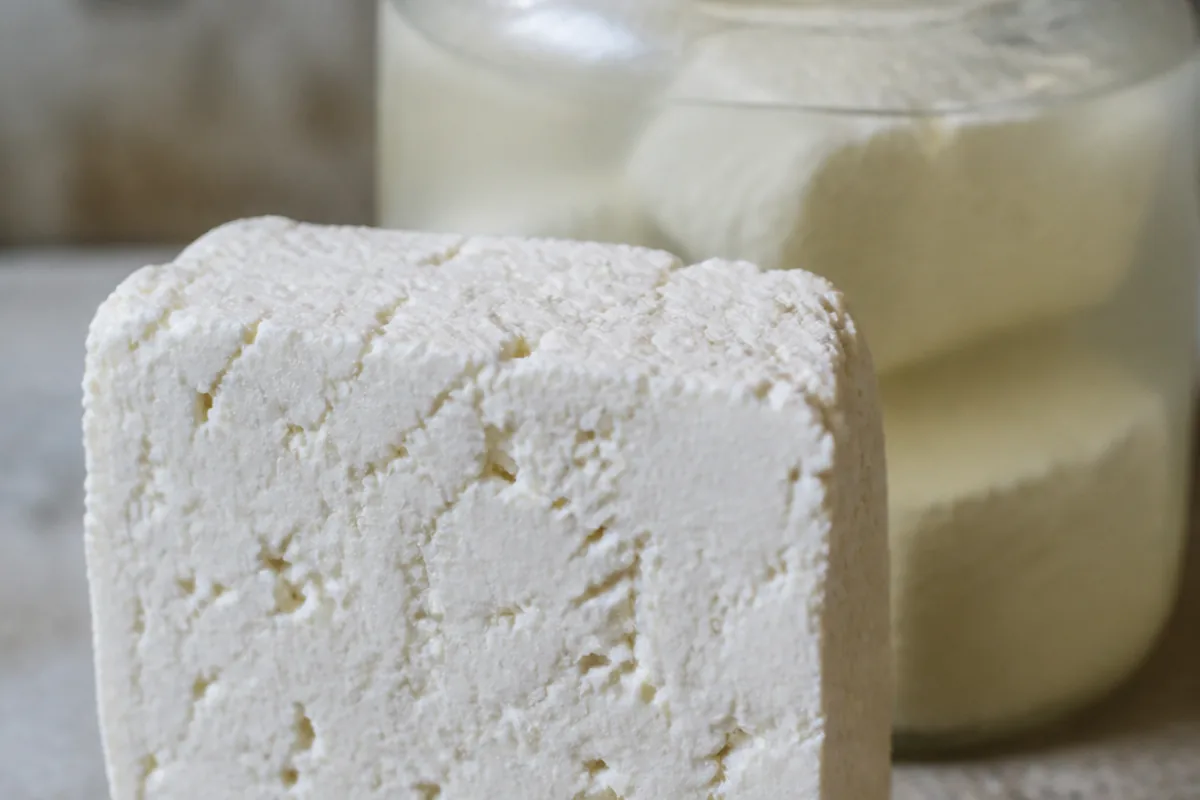
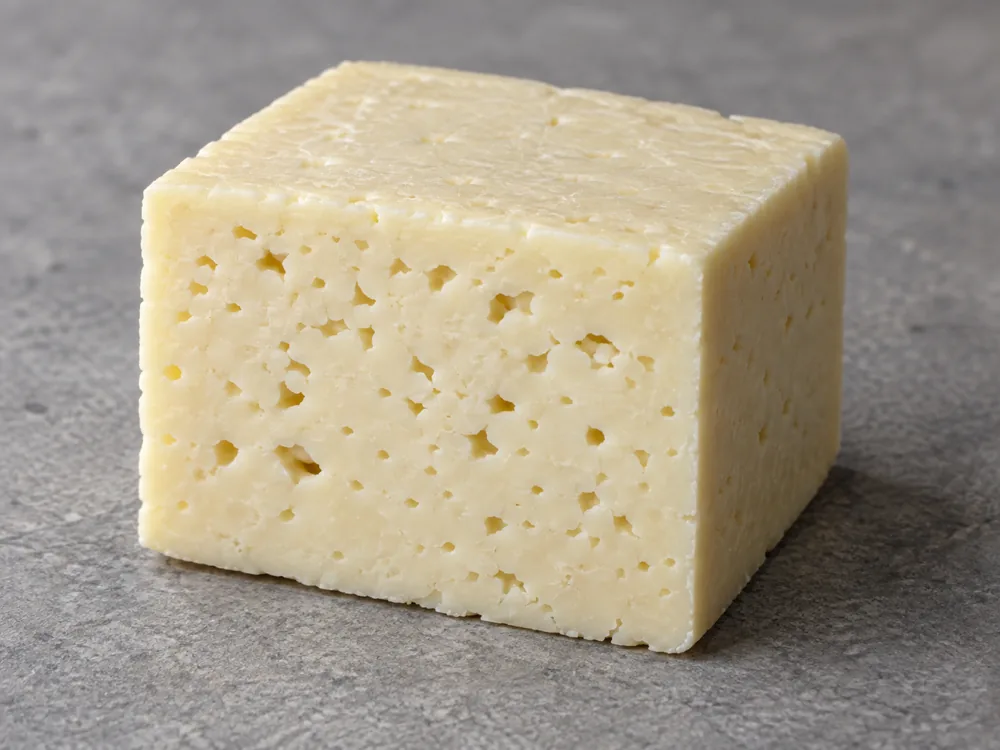
Batzos (Greek: Μπάτζος) is a brined Greek PDO cheese made from sheep's milk, goat's milk or a mix of both. It is white, rindless and full of small irregular holes.
Sources agree on that description. They disagree on fat percentage, ageing time and whether the milk is raw, so this page puts the source next to each figure.
In This Article
What Is Batzos and Where Is It Made?
Wikipedia and Cheese.com place production in Western and Central Macedonia and Thessaly. Greek Wikipedia says it started in the Voio area of Western Macedonia and spread from there.
Greek Wikipedia lists it among the oldest hard cheeses of Greece, older than varieties such as Kaseri and Kefalotyri.
Gastronomy Tours traces the name to the batzario or batzio, the temporary hut where mountain farmers made the cheese, and to the batzios, the cheesemaker. Greek Wikipedia gives a close variant, the Voio shepherd who set the milk.
Greece recognised the name nationally in January 1994, and the EU registered it as a PDO in 1996, according to Wikipedia.
The protected cheese is semi-hard to hard with a white to pale yellow body and no rind. Wikipedia caps moisture at 45 percent by weight, and Cheese.com describes the texture as dry and the shape as square.
How Is Batzos Made?
The PDO milk is partially skimmed sheep's or goat's milk, or a mix, with 15 percent of the cream removed, according to Greek Wikipedia.
Wikipedia says the traditional method repeatedly stirs or beats the thickening milk. That moves a substantial share of the fat into the whey.
Tyropoleio, a Greek cheese shop, describes the same cream removal as striking the curds.
Lefkara Farm counts the beating: about 150 to 200 strokes as the milk starts to set. Another 300 to 350 follow before it fully sets.
The curd is then drained in cheesecloth and the cheese goes into brine containers to ripen, per Wikipedia.
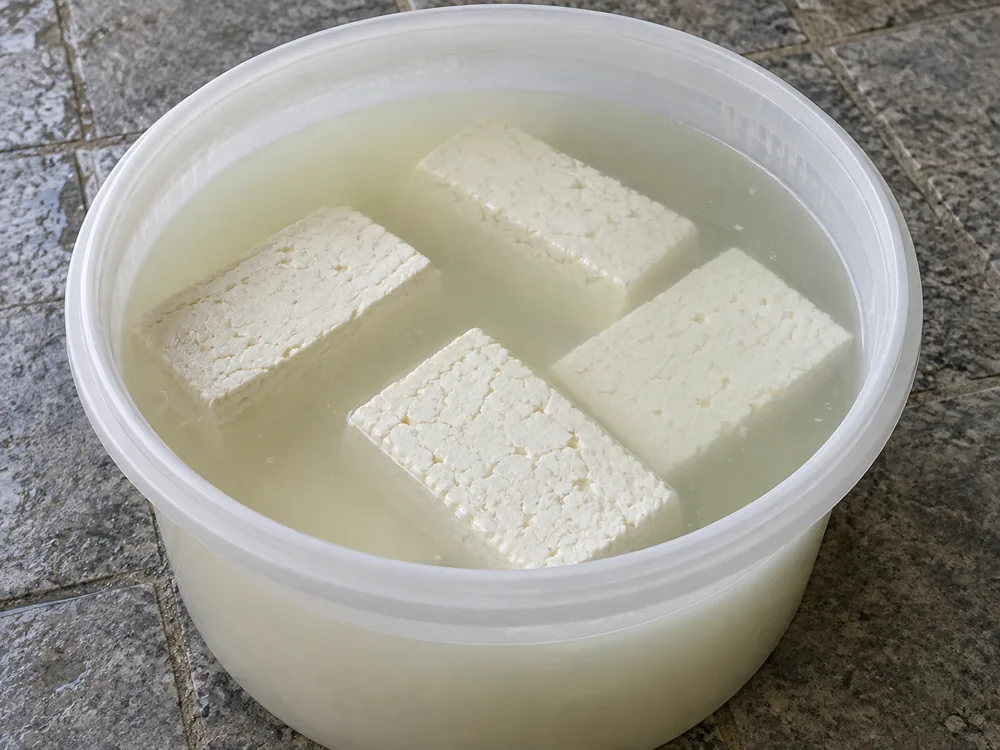
Two sources explain the brine differently. Greek Wikipedia says the cheese is kept in brine because of its low fat content, while Gastronomy Tours says the brine keeps it moist.
Where Do Sources Disagree on Fat, Age and Milk?
Seven sources give figures that do not line up, so the table keeps each one apart instead of averaging them.
| Source | Fat and moisture | Ageing and brine | Milk treatment |
|---|---|---|---|
| Cheese.com | Fat 20% | Brined cheese; no ageing time | Fresh or pasteurized milk |
| Wikipedia | At least 25% fat in dry matter; moisture up to 45% | At least 3 months in brine with 10 to 12% salt | Not stated |
| Proikas (producer) | Not stated | More than 3 months in brine | Not stated |
| Lefkara Farm | Not stated | 3 months; brine of about 8% added after 3 to 4 days | Not stated |
| Plato's Plate | “Relatively low fat” | At least 2 months in brine | Fresh or pasteurized milk |
| Neos Kosmos | “Slightly skimmed” milk | At least 6 months in brine | Unpasteurised |
| Tyropoleio (retailer) | 31% fat, basis not stated | Not stated | Not stated |
Only Wikipedia says what its fat figure is measured against, which is dry matter. Cheese.com and Tyropoleio give a bare percentage, so 20 and 31 cannot be compared with each other or with 25.
Wikipedia, Proikas and Lefkara Farm agree on about three months of brine ripening, while Plato's Plate says two and Neos Kosmos says six.
On milk, Cheese.com and Plato's Plate say fresh or pasteurized, while Neos Kosmos says unpasteurised. The producer and retailer pages we read do not say, so a buyer who needs to know has to read the label.
How Do You Cook and Serve Batzos?
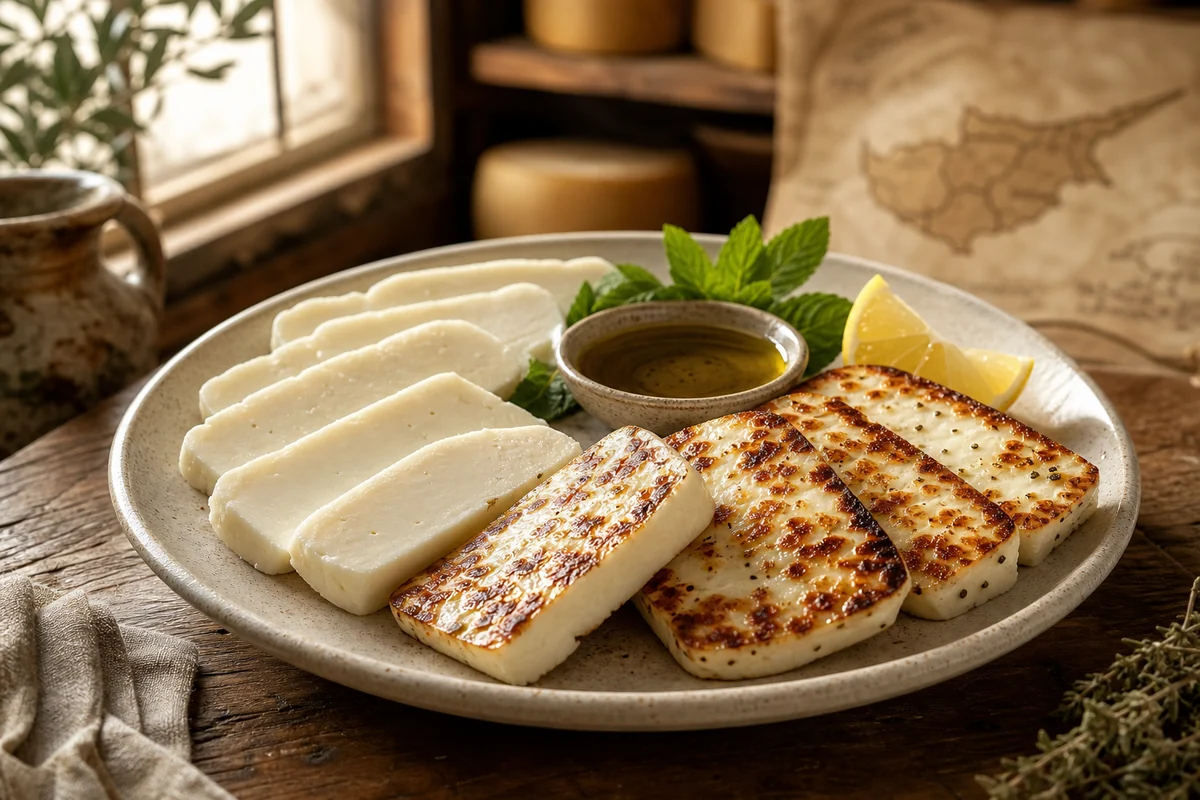
Three sources name saganaki, the fried-cheese dish, as the traditional use. Each of the other uses, from eggs to grating it over pasta, comes from one or two sources.
| Use | How It Works |
|---|---|
| Saganaki | Named by Gastronomy Tours, Tyropoleio and Travel.gr as the traditional fried use. |
| Grilled | Listed by Gastronomy Tours and recommended by Tyropoleio. |
| With eggs | Fried with eggs (Gastronomy Tours, Wikipedia), in omelettes (Tyropoleio) or, in the Grevena saganaki, beside a tomato and egg kagiana (Travel.gr). |
| Grated over pasta | Proikas says the flavour intensifies when the cheese is heated or grated over hot pasta. |
| In salads | Listed by Gastronomy Tours. |
| As meze | Wikipedia also lists it eaten plain, and Greek Wikipedia says it is often served as a meze. |
Proikas also says the cheese melts when heated. No source we read gives a frying time, a pan temperature or a test for how firmly a slab holds its shape, so those details are unknown.
Drinks come from two sources, one naming Greek spirits and the other Greek red wines.
| Pairing | Type | Why It Works |
|---|---|---|
| Ouzo | Drink | Gastronomy Tours pairs the cheese with ouzo. |
| Tsipouro | Drink | Gastronomy Tours pairs it with tsipouro as well. |
| Agiorgitiko | Wine | Neos Kosmos suggests Greek reds such as Agiorgitiko. |
| Xinomavro | Wine | Neos Kosmos names Xinomavro alongside it. |
How Does Batzos Compare With Feta and Kefalotyri?
Cheese.com describes Batzos as semi-hard and dry, Feta as soft and crumbly, and Kefalotyri as firm and flaky.
| Cheese | Texture | Milk | Fat |
|---|---|---|---|
| Batzos | Semi-hard, dry, rindless, brined | Whole goat's and sheep's milk, fresh or pasteurized | 20% |
| Feta | Soft, crumbly and slightly grainy, aged in brine | Sheep's milk or sheep and goat mix, some cow's milk versions | Not stated |
| Kefalotyri | Firm and flaky | Pasteurized sheep's or goat's milk | 40% |
Cheese.com describes brine-aged Feta as rich and tangy, where it lists Batzos as piquant, salty, sour and spicy.
Cheese.com says firm, flaky Kefalotyri is traditionally served fried as saganaki, the same dish Gastronomy Tours gives for Batzos. Its fat figure is twice Batzos's on the same site, although Cheese.com does not say what either percentage is measured against.
Can You Eat Batzos During Pregnancy?
Neither the NHS nor the CDC names Batzos, and the sources disagree on whether its milk is raw or pasteurized, so the label decides.
The NHS says pasteurised or unpasteurised hard cheeses such as cheddar, gruyère and parmesan are safe. It also lists pasteurised feta and halloumi among the soft cheeses it accepts.
The NHS asks for thorough cooking only for mould-ripened soft cheeses with a white coating, soft blue-veined cheeses and soft ripened goats' cheese with a white coating. Cheese.com and Wikipedia describe Batzos as rindless, and the NHS also accepts any cheese cooked until steaming hot.
The CDC says soft cheese made with unpasteurized milk should be avoided, and names hard cheese and feta made with pasteurized milk as safer choices. It does not say where a semi-hard brined cheese falls.
A label that says pasteurized moves Batzos toward those safer lines. A label that says raw, or says nothing, leaves the question open for a clinician.
The same test, milk treatment first and heat second, applies to any cheese eaten during pregnancy.
What Should You Check When Buying Batzos?
Proikas, the producer in the Sochos area, sells Batzos in 300 g airtight packs.
Tyropoleio, a Greek cheese shop, lists a Batzos of Voio, Kozani at 4.95 euros for 250 g, or 19.80 euros per kilo.
SOURCES & REFERENCES
Sheep's milk, goat's milk or a mix of the two, according to Wikipedia and Cheese.com. Greek Wikipedia says the PDO milk is partially skimmed, with 15 percent of the cream removed.
Sources call it lower in fat, but their numbers differ. Wikipedia gives at least 25 percent fat in dry matter, Cheese.com gives 20 percent and a Greek cheese shop gives 31 percent without saying what the figure is measured against.
Wikipedia, Proikas and Lefkara Farm give about three months in brine. Plato's Plate says at least two months and Neos Kosmos says at least six.
Sources disagree. Cheese.com and Plato's Plate say fresh or pasteurized milk and Neos Kosmos says unpasteurised, so the label is the only reliable answer for a given piece.
Neither the NHS nor the CDC names it. Both agencies treat pasteurized milk and cooking as the deciding conditions for soft cheese, so check the label and your local guidance.