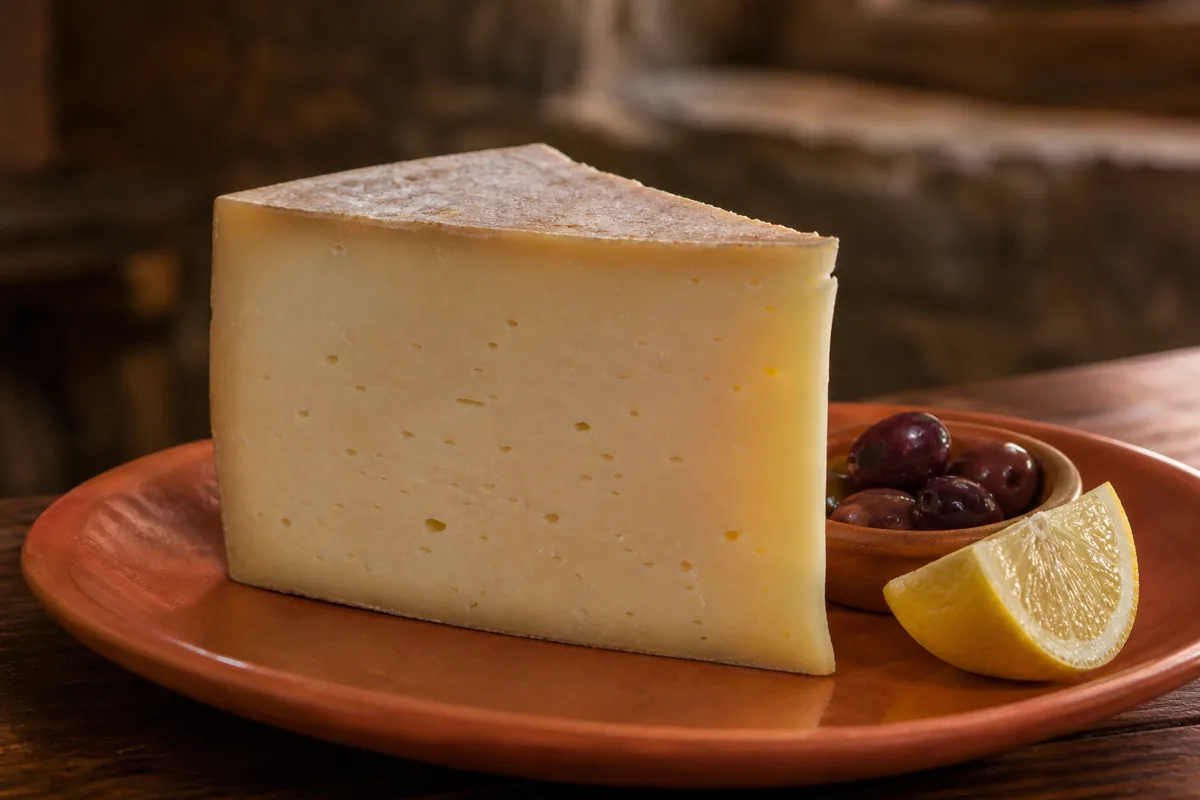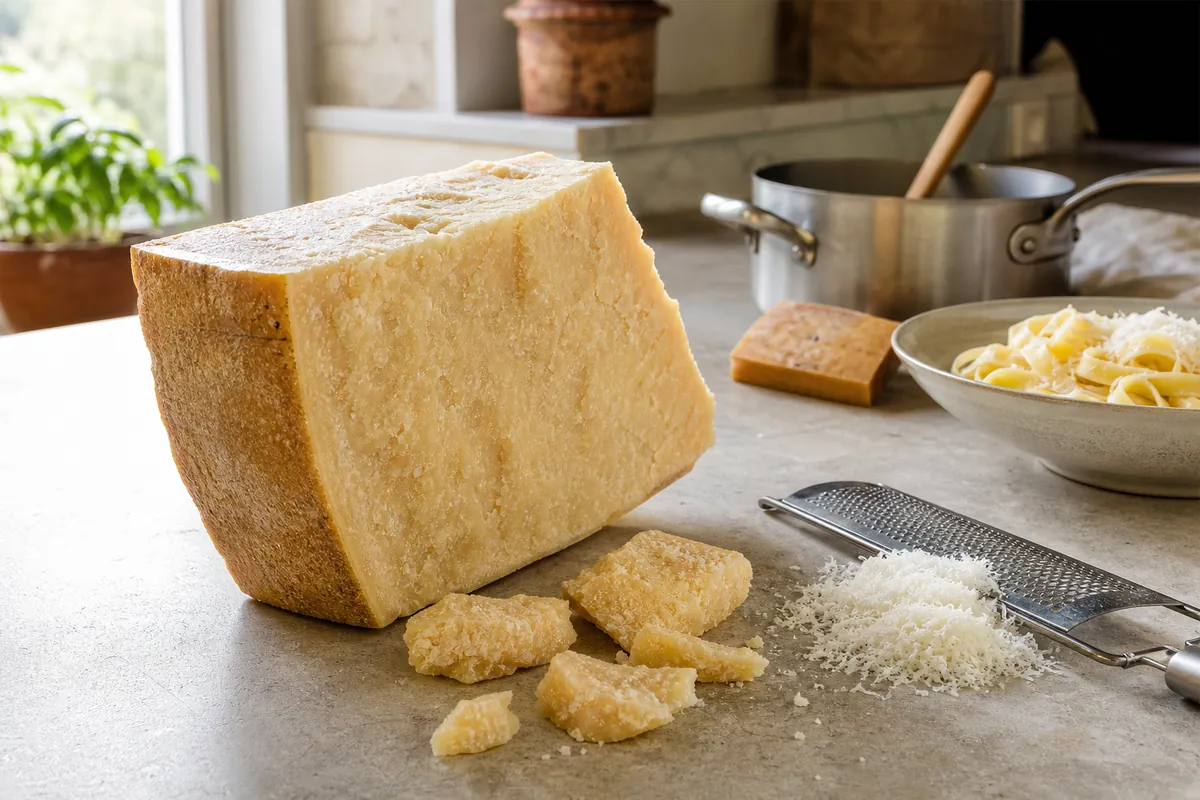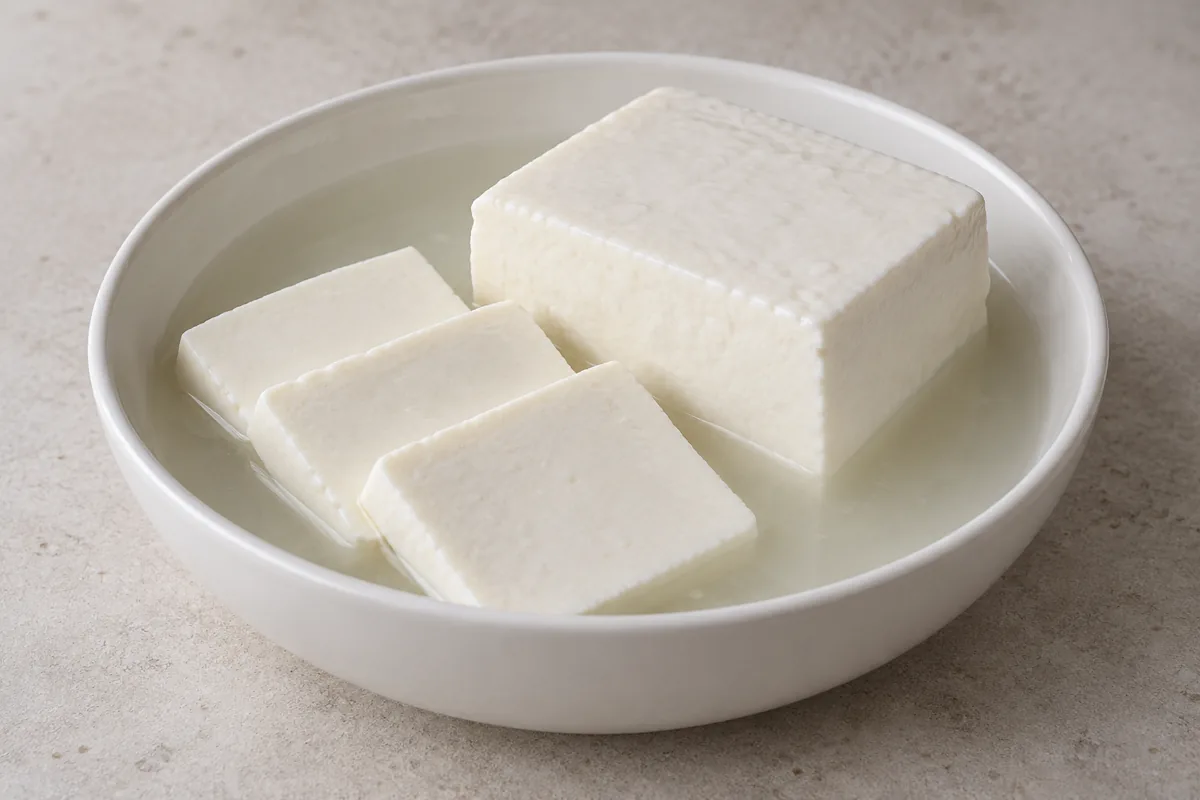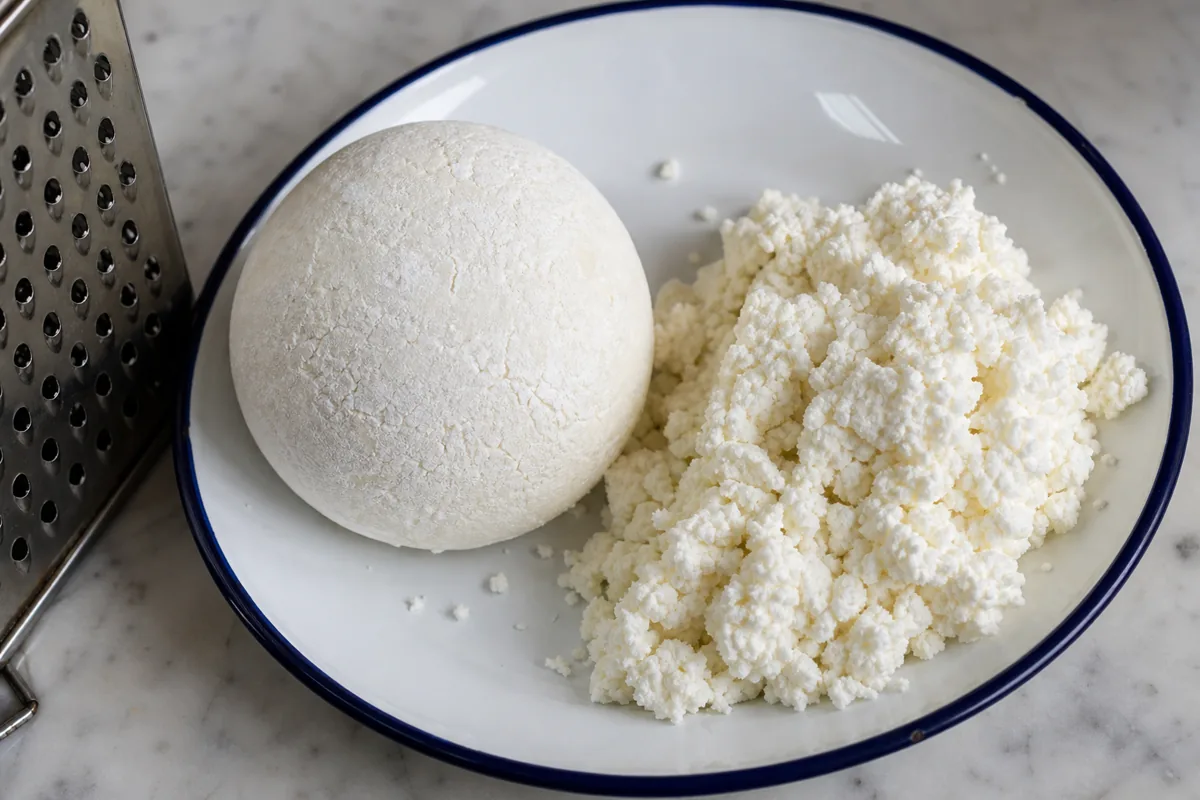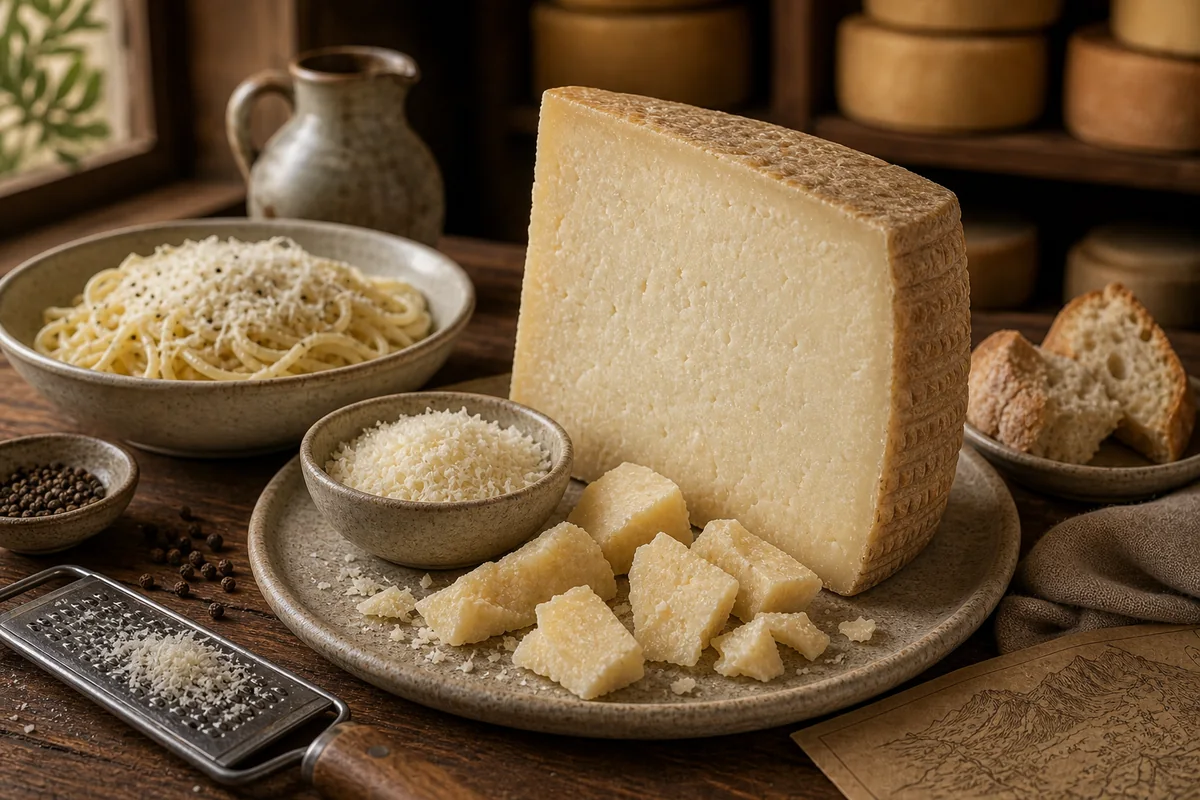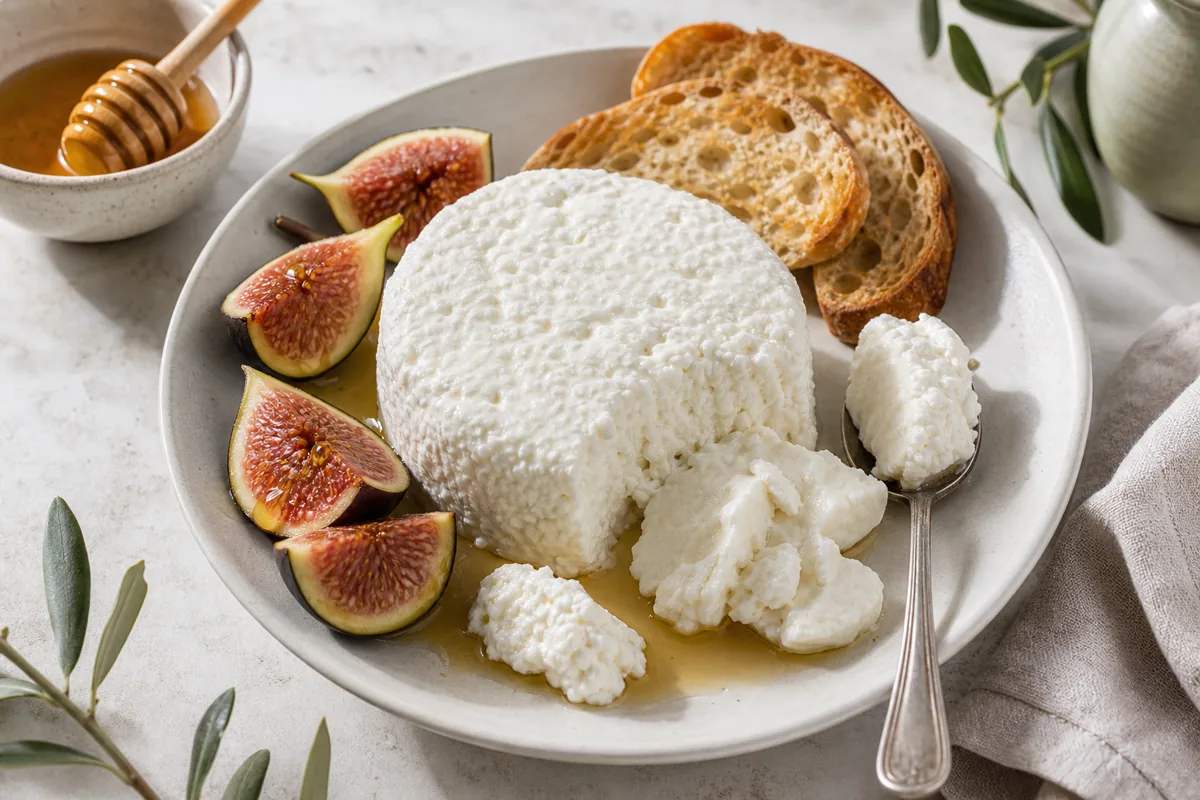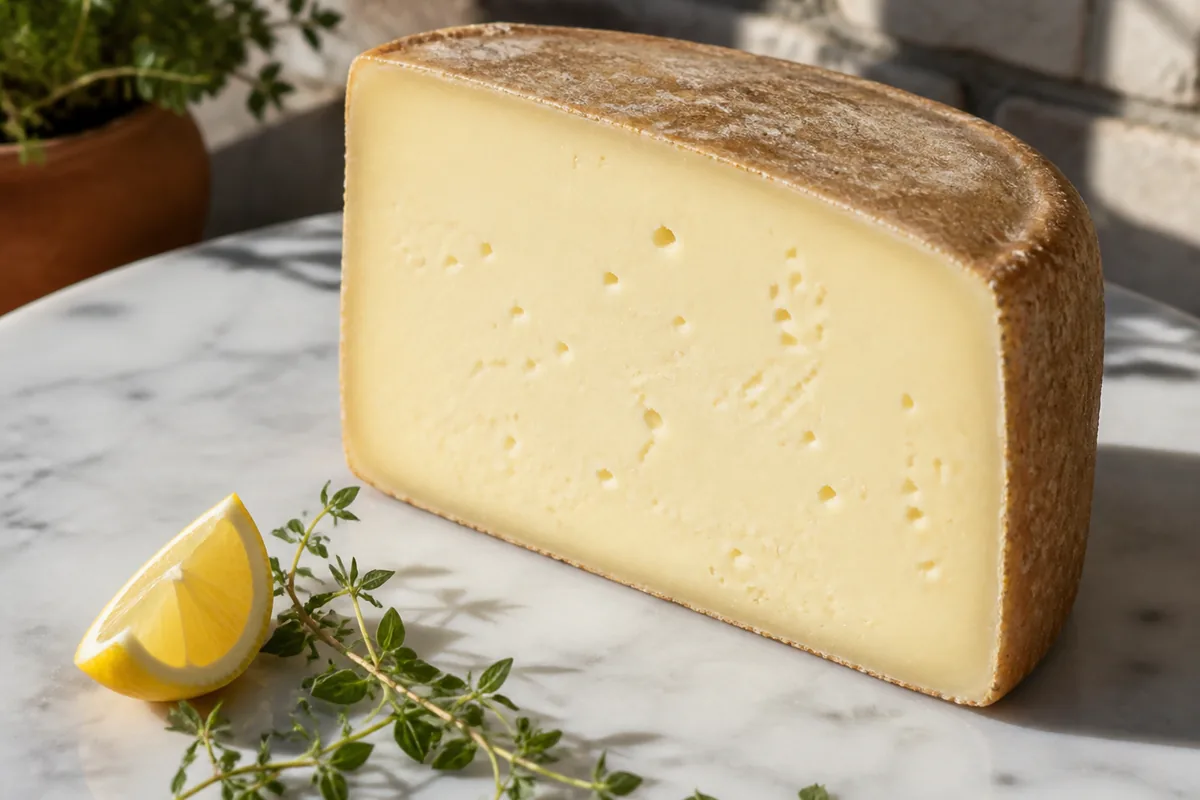
Kefalotyri is a hard Greek cheese name used on products made for grating, cooking, or saganaki. Read the milk statement and intended use before buying because current packages include both sheep-goat and cow's-milk versions.
The name alone does not promise one recipe or one cooking result. TYRAS currently sells a six-month sheep-goat Kefalotyri and a separate cow's-milk product pre-sliced for saganaki, while KOLIOS lists a cow's-milk product in wheel, loaf, wedge, and grated formats.
The useful buying questions are which milk was used, whether the maker recommends frying or grating, and what the package says about refrigeration and use after opening.
In This Article
Does the Kefalotyri Name Guarantee One Recipe?
A 1994 Greek ministerial decision describes Kefalotyri made in named Greek regions from sheep's milk, goat's milk, or a mixture of the two. It sets the product at no more than 38 percent moisture and at least 40 percent fat in dry matter.
That immediately separates it from Greece's more familiar fresh-format exports. Kefalotyri is a harder, more concentrated cheese rather than a brined crumble or a squeaky grilling slab.
Current producer catalogues also use the name for cow's-milk products. That retail evidence is why the front-panel name cannot establish the milk, maturation, protected claim, or kitchen use by itself.
- For the 1994 Greek specification: look for sheep's milk, goat's milk, or a blend from the named Greek production areas.
- For saganaki: buy a product that the maker sells for frying or test one slice before serving.
- For grating: choose a firm product whose package recommends a pasta finish, cooking, or grated use.
- For flavor: use the milk statement and nutrition panel instead of assuming every Kefalotyri is a sheep-goat cheese.
This label-first approach also separates Kefalotyri from brined, crumbly feta. Both names appear in Greek cheese cases, but they solve different cooking problems.
Do not treat sheep-goat milk, cow's milk, six months of maturation, or saganaki performance as universal Kefalotyri facts. Confirm each one on the package or producer record.
What the 1994 Greek Decision Covers
The 1994 Greek decision applies to production in Greece. It names Central Greece, the Peloponnese, Thessaly, Crete, Epirus, Macedonia, the Ionian Islands, and the Cyclades as milk and production areas.
That wide geography is one reason the name can cover more regional variation than a cheese tied to one island or one valley.
Under the Greek specification, the sheep and goats must belong to breeds traditionally raised and adapted to the production area, and their feed must be based on local flora. The rule ties the milk to local herds without claiming that every region produces an identical flavor.
The decision does not define Kefalotyri made outside those Greek areas. A product sold in Cyprus or another market therefore needs to be read from its own package rather than assigned the Greek specification automatically.
For shoppers outside the region, the most informative package details are the country, milk species, producer, and age. A label that gives all four lets you predict the wedge more accurately than a front-panel cheese name alone.
How Does the Milk Label Change Your Kefalotyri Choice?
The current TYRAS sheep-goat Kefalotyri is matured for six months and described as light yellow and highly firm. Its page lists only large vacuum-packed formats, which suits a hard cheese bought for grating or repeated kitchen use.
TYRAS also sells cow's-milk Kefalotyri in a 600-gram vacuum pack sliced for saganaki. KOLIOS lists another cow's-milk Kefalotyri in wheel, loaf, wedge, and grated formats and recommends it for pasta.
- Sheep-goat label: matches the milk family in the 1994 Greek specification.
- Cow's-milk label: identifies a different current retail product under the same name.
- Sliced-for-saganaki pack: gives stronger cooking evidence than a broad age rule.
- Grated or pasta format: points toward finishing hot food rather than freestanding frying.
Use the package format as evidence of what that exact product is built to do. If you are buying a cut wedge from a counter, ask to see the original wheel label before relying on a handwritten sign.
How the Greek Specification Builds the Texture
The same 1994 decision explains how its hard-cheese specification is produced. The milk may be raw or pasteurized, but it must be whole and coagulated within 48 hours of milking under controlled temperature conditions.
The decision excludes concentrated milk, milk powder, added milk proteins, caseinates, colorings, preservatives, and antibiotics from the make. Those limits matter because Kefalotyri is supposed to gain density through curd handling and moisture loss rather than through added solids.
The specified process coagulates the milk at 34 to 38°C, cuts the curd after about 35 minutes, reheats it to about 45°C while stirring, and then presses it in molds.
Heating and stirring drive whey out of each curd grain before pressing joins those grains into a wheel. That sequence explains why the paste can become compact enough to grate while retaining a few small irregular openings.
After pressing, the wheel moves to a room near 14°C and about 85% relative humidity, then spends roughly two days in strong brine. This is one reason the salt feels built into the cheese instead of sitting only on its surface.
The same decision sets a maximum moisture level of 38% and a minimum fat content of 40% in dry matter, then describes an off-white to yellowish hard paste with a thin hard rind, small irregular holes, and a salty, piquant flavor.
These are useful reference points even when a retail package does not claim the protected Greek designation. A wet-looking flexible block, a perfectly smooth processed slice, or a bland young cow's-milk cheese may carry the name in commerce but will not deliver the traditional hard sheep-goat profile described by the specification.
Why Kefalograviera Is a Different Choice
Kefalograviera, a rounder sheep-goat alternative, causes the most useful name check because it can also be fried or grated. Its name combines the lineages of Kefalotyri and Graviera, but it has its own protected production regions and an EU PDO registration dating to 1996.
The Greek specifications use different technical targets, with Kefalograviera curd reheated to about 48°C and allowed up to 40% moisture while the Kefalotyri decision gives about 45°C and a 38% moisture ceiling.
Those numbers do not predict every wedge at the counter, yet they help explain why Kefalograviera is often positioned as a rounder table cheese while Kefalotyri leans saltier, drier, and more direct. Age, maker, and milk still influence either cheese, so taste a sample when the choice matters.
For saganaki, choose by the cut face and flexibility rather than assuming the longer name is automatically better. For grating, decide whether you want Kefalotyri's sharper salty impact or a wheel sold with Kefalograviera's specific PDO identity.
Should You Choose Saganaki by Product or by Age?
A current TYRAS cow's-milk Kefalotyri is sold already sliced for saganaki, which is direct evidence for that product's use. A random wedge with no cooking direction may brown, crumble, or release fat differently.
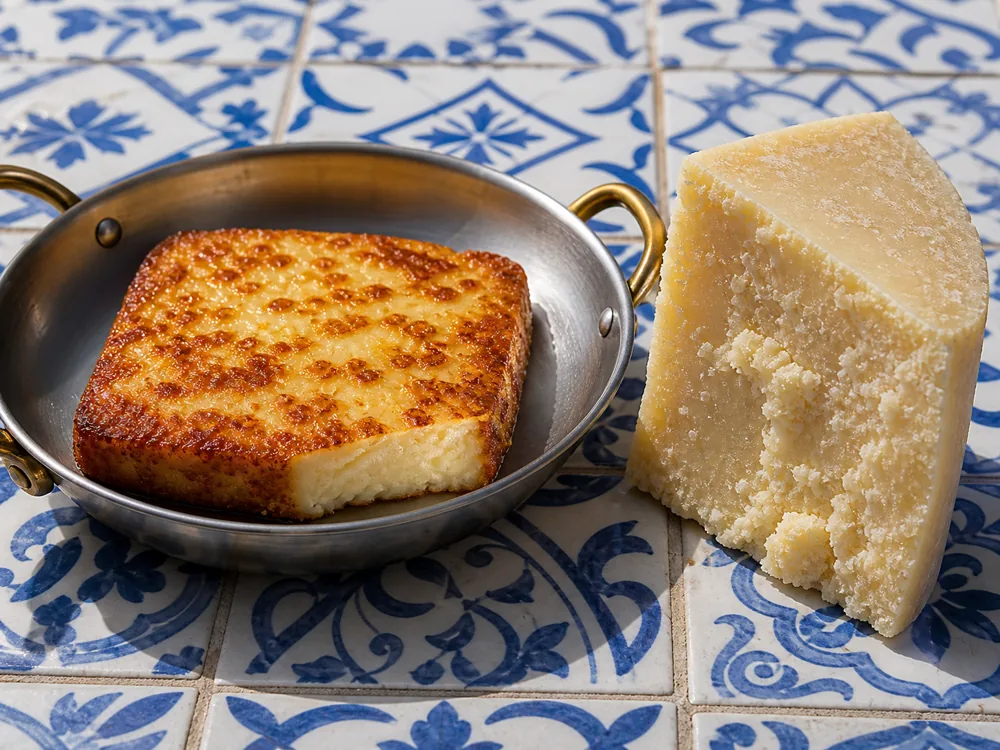
For an unlabeled wedge, test one small slice before committing the rest. A cohesive slice that forms a crust can continue to the pan, while a brittle piece is better redirected to the grater.
| Use | How It Works |
|---|---|
| Saganaki | Use a product sold for frying or test one slice before serving. |
| Pasta finish | A hard grated product adds salt and body to hot pasta, beans, and vegetables. |
| Egg dishes | A small grate seasons omelets, baked eggs, and breakfast plates. |
| Table shards | A firm wedge can be broken into small pieces with fruit or bread. |
| Savory pies | Use a package whose maker recommends cooking or pies. |
Follow the maker's directions for slice thickness and heat when they are available. Otherwise, dry the surface and test a small piece because the current products do not share one milk recipe or one format.
Saganaki shows how a suitable Kefalotyri handles direct heat without losing its hard-cheese structure. It softens inside, but it does not flow across the pan like a high-moisture cheese built to melt.
How Should You Grate, Shave, Fry, or Serve Kefalotyri?
Kefalotyri products cover several uses, but the package should decide the job. A cohesive slice sold for saganaki belongs in the pan, while a hard wheel, wedge, or grated pack belongs over vegetables and pasta.
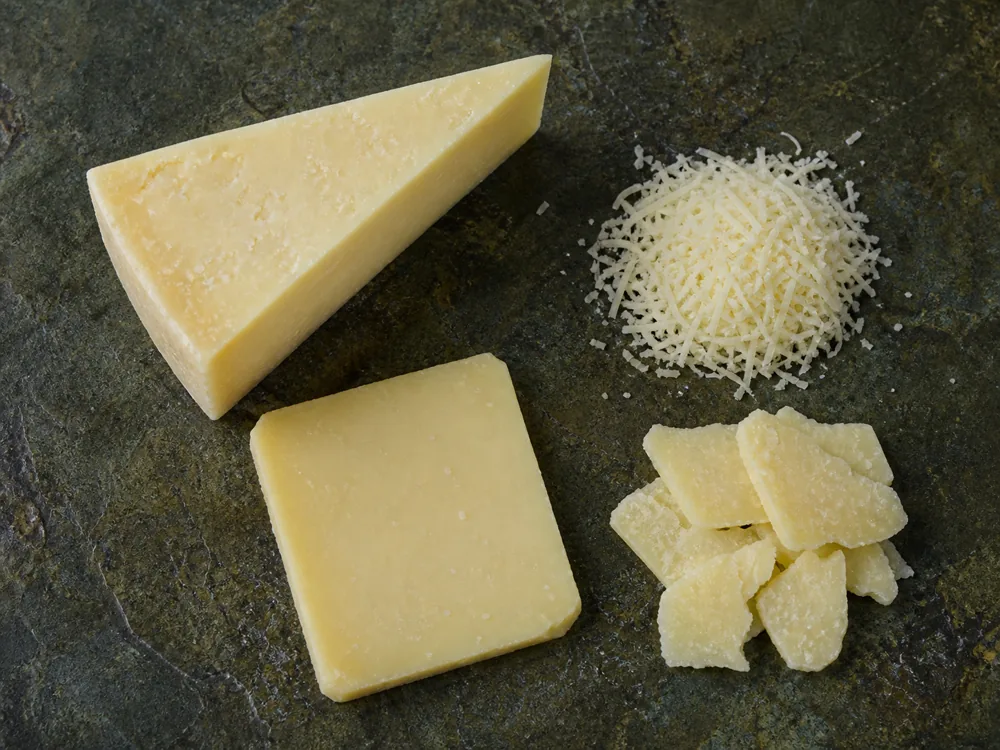
- For frying: choose a sliced product or a cohesive wedge that the maker recommends for heat.
- For grating: choose a hard wedge or grated format whose label recommends pasta or cooking.
- For table use: serve in small shards, not in huge soft-style portions.
- For fillings: use it sparingly because the salt rises fast in baked dishes.
Unlike the sharper Roman grating cheese, Kefalotyri can still sit in a hot pan without feeling like a misuse.
If you are cooking a Greek or Cypriot spread, this range matters more than any one tasting note. It lets one cheese cover several roles without collapsing into a generic hard wedge.
Kefalotyri vs Feta, Halloumi, and Pecorino Romano
The easiest way to place Kefalotyri is to compare it with the cheeses people actually see beside it. It is harder and drier than feta, older and more concentrated than halloumi, and less singularly grating-focused than Pecorino Romano.
- Choose feta: when you need brine, crumble, and easy cold distribution through a dish.
- Choose halloumi: when you need springy grill slabs and a milder cooked bite.
- Choose Pecorino Romano: when the whole job is salty hard grating.
- Choose Kefalotyri: when you want a Greek hard cheese that can still move between the pan and the grater.
This is why feta and halloumi tradeoffs only cover the fresh-format end of the Mediterranean white-cheese decision. Kefalotyri is the harder branch that answers a different kitchen question.
Kefalotyri is what you buy when melt is not the main event and structure matters more.
What Should You Check When Buying Kefalotyri?
Start with the milk statement and the maker's use directions. The current TYRAS sheep-goat product is matured for six months, while its cow's-milk line includes a pack cut specifically for saganaki.
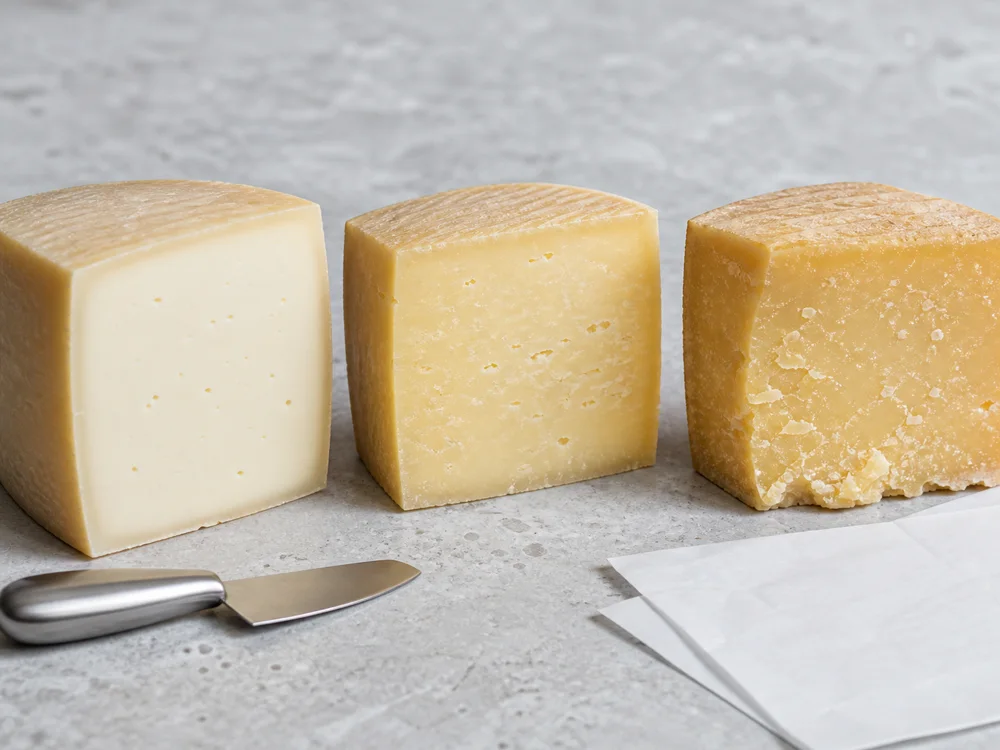
| Package or Counter Cue | What It Establishes | Best Direction |
|---|---|---|
| "Sliced for saganaki" from the maker | The exact product is intended for frying | Saganaki and other pan uses |
| Hard wheel or wedge with pasta guidance | The maker positions it for grating | Pasta, vegetables, eggs, and pies |
| Loose counter wedge without the original label | Milk, age, pasteurization, and storage remain unknown | Ask for the wheel label before buying |
Do not infer pasteurization or protected status from the cheese name. Look for the ingredient list, milk treatment, country, maker, date, and storage directions on the exact package.
Keep Kefalotyri refrigerated at 40°F (4°C) or below and follow the package date and handling directions. After opening, cover the cut face, return it to the refrigerator promptly, and use the maker's instructions instead of a universal number of days.
Cut-face storage guidance explains the wrapping method. Discard a wedge with slime, an abnormal sour odor, or packaging that is swollen or leaking.
What Pairs Well With Kefalotyri?
Kefalotyri likes pears, figs, olives, bread, roasted vegetables, and wines with enough structure to stand up to salt. It behaves more like an accent cheese than like a creamy centerpiece, which is why sweet fruit and starch often make it feel more balanced.
It also works best in modest portions. A table that uses Kefalotyri as a finishing accent or as one sharp salty note usually feels more coherent than a board that tries to turn it into the main soft-eating cheese.
| Pairing | Type | Why It Works |
|---|---|---|
| Figs | Food | Sweetness softens the salt and works especially well with older shards. |
| Pears | Food | A clean match for drier wedges where fruit can round off the finish. |
| Olives | Food | A natural regional partner in small amounts. |
| Rustic bread | Food | Useful because this cheese needs something neutral underneath it. |
| Roasted vegetables | Food | Excellent when the cheese is grated or shaved at the end. |
| Dry red wine | Wine | Often holds up better than delicate whites against the salt. |
For broader mezze planning, mezze board structure is more useful than dessert-cheese logic because Kefalotyri works as a salty accent rather than a creamy anchor.
What Do Kefalotyri Labels Say About Nutrition and Pregnancy?
One generic nutrition panel cannot represent both sheep-goat and cow's-milk Kefalotyri. The current TYRAS six-month sheep-goat product lists 380 calories, 27 grams of protein, 30 grams of fat, 21 grams of saturated fat, 0.5 grams of carbohydrate, and 4 grams of salt per 100 grams.
The figures below keep the producer's per-100-gram basis so they can be checked directly against the source label. The 1994 specification's minimum 40 percent fat in dry matter is a different measure and does not mean 40 grams of fat per 100 grams of cheese.
For pregnancy in the United States, CDC lists hard cheese made with pasteurized milk as a safer choice and lists unheated deli-sliced cheese as a riskier choice. Choose a factory-sealed package that explicitly says pasteurized, avoid treating an unlabeled counter wedge as equivalent, and follow your clinician's or local health authority's advice.
The site's guide explains how pasteurization and deli handling change the pregnancy choice across cheese styles.
Buy Kefalotyri by the exact milk label and intended use. A pack sold for saganaki answers the frying question, while a hard wedge or grated format suits pasta and finishing. The name alone does not establish the recipe, pasteurization, storage life, or nutrition.
SOURCES & REFERENCES
What Do People Usually Ask About Kefalotyri?
These are the practical questions that usually come up when Kefalotyri shows up beside feta, halloumi, and other Mediterranean cheeses.
It tastes salty, savory, and dry with sheep-goat milk depth and a firmer finish than fresh Greek cheeses have.
Some products are. Buy a pack that the maker sells for saganaki or test one small slice because Kefalotyri labels cover different milk recipes and formats.
No. Feta is brined and crumbly, while Kefalotyri is hard, dry, and built for grating, frying, or small shard service.
Yes. Hard wedges and grated formats are sold for pasta, vegetables, egg dishes, and cooking.
Follow the exact package directions and date. Keep it at 40°F (4°C) or below, cover the cut face, and do not apply one opened-life number to every wedge or grated pack.