Kasseri sits in the Mediterranean sheep-milk lane because it answers a question feta and halloumi do not. This is the Greek cheese to buy when you want sheep's milk depth in a cheese that actually melts, stretches a little, and behaves like a real hot-dish tool.
That gives it a different kitchen job from the brined Greek staple. It also melts more cohesively than the famous grill-first slab.
Kasseri is smoother, less salty, and far better at covering toast, pies, or skillet dishes with a cohesive melt.
The PDO rules also make it more specific than "Greek provolone." Kasseri must be sheep-led, can include no more than 20 percent goat's milk, and takes at least three months to ripen.
In This Article
What Kasseri Cheese Is
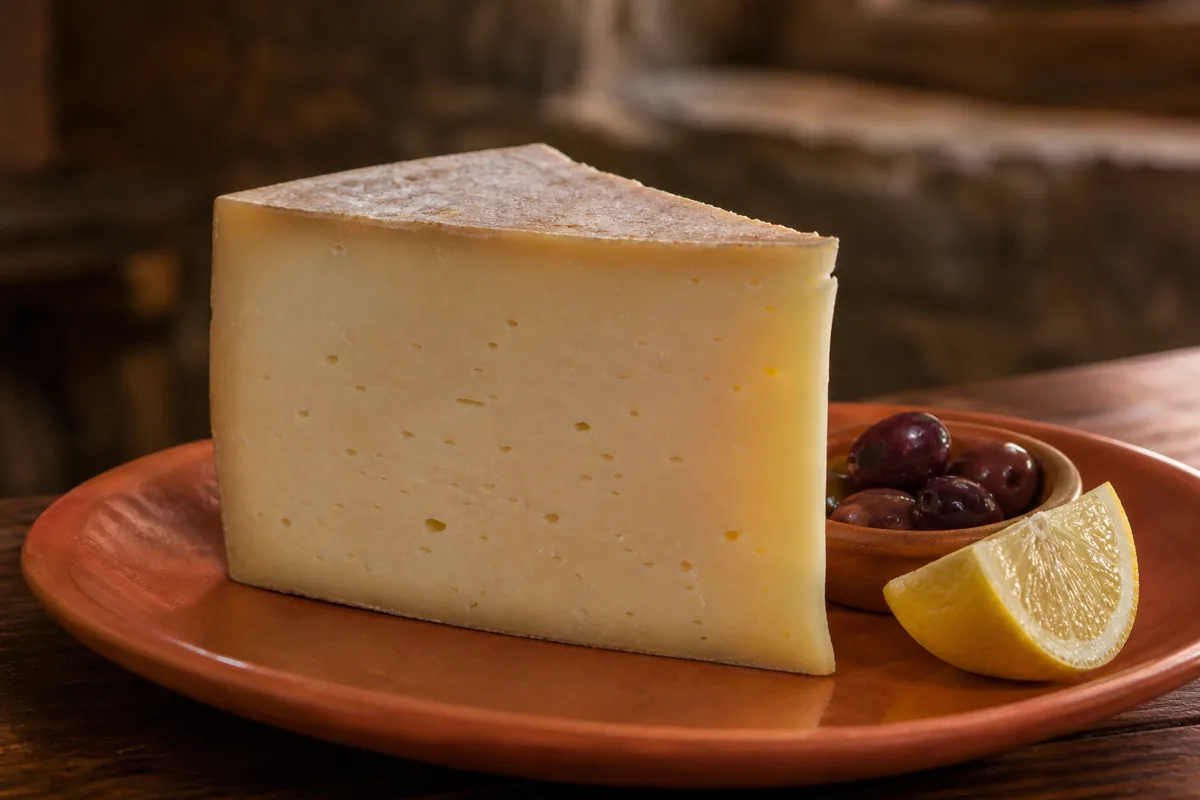
This Greek PDO cheese sits between a table wedge and a melting cheese. It is made from sheep's milk or from sheep's milk blended with goat's milk in a share that cannot exceed 20 percent, and official EU rules describe it as semi-hard with pleasant taste and rich aroma.
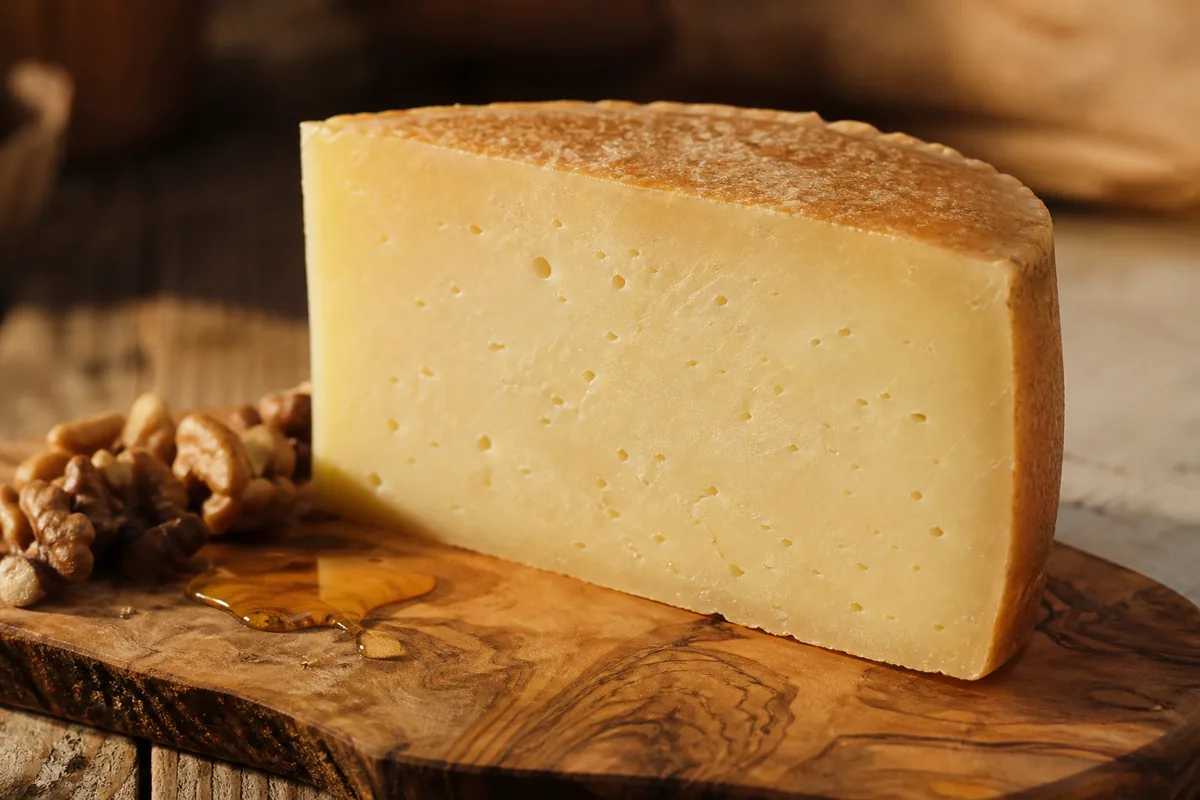
The cheese also has a clearer specification than many shoppers realize. PDO Kasseri must ripen for at least three months, has maximum humidity of 45 percent, minimum fat in dry matter of 40 percent, and usually shows few or no eyes.
The milk can be raw or pasteurized, but it must come from the defined production area, contain at least 6 percent fat by weight, and begin coagulating within 48 hours of milking.
The protected area spans Thessaly, Central and Western Macedonia, selected parts of Eastern Macedonia and Thrace, and Lesvos in the North Aegean. Production, ripening, and initial packaging all take place inside that area.
- Milk rule: Sheep's milk, or sheep's milk with up to 20% goat's milk.
- Ripening: At least three months.
- Shape: Cylindrical or parallelepiped under the PDO.
- Texture: Semi-hard, cohesive, and usually with few or no eyes.
- Main job: Table slices and dependable hot-use melting.
That means Kasseri sits in two families at once. It is unmistakably Greek in milk source and flavor, but it behaves more like a stretched-curd melter than like a brined table cheese.
If you only know Greek cheese through feta, Kasseri can feel like a missing category: sheep's milk flavor without crumble, and a hot-food role without halloumi squeak.
At room temperature, the paste should bend before it snaps and feel compact rather than rubbery. The pleasant aroma described by the PDO becomes easier to notice after a short tempering period, while refrigerator-cold slices can taste flatter and firmer.
Why the PDO Milk Rules Matter
Kasseri PDO milk comes from sheep and goat breeds traditionally raised in the defined area, with their diet based on its local flora.
Those herds graze mainly in mountainous and semi-mountainous country and move toward higher pastures during warm weather. The PDO links that regional feeding pattern to the rich aroma and sheep-led character of the cheese.
The milk cannot be concentrated or supplemented with milk powder, milk proteins, or caseinates, and the specification also prohibits coloring, preservatives, and antibiotics.
For a shopper, these rules separate protected Kasseri from a generic product using the name as a style cue. The PDO mark and traceability details confirm the regional chain that the pale paste alone cannot prove.
Because the PDO permits both raw and pasteurized milk, protected status confirms origin and method but never replaces the milk-treatment statement on the package.
Why Sheep's Milk Plus Pasta Filata Changes the Melt
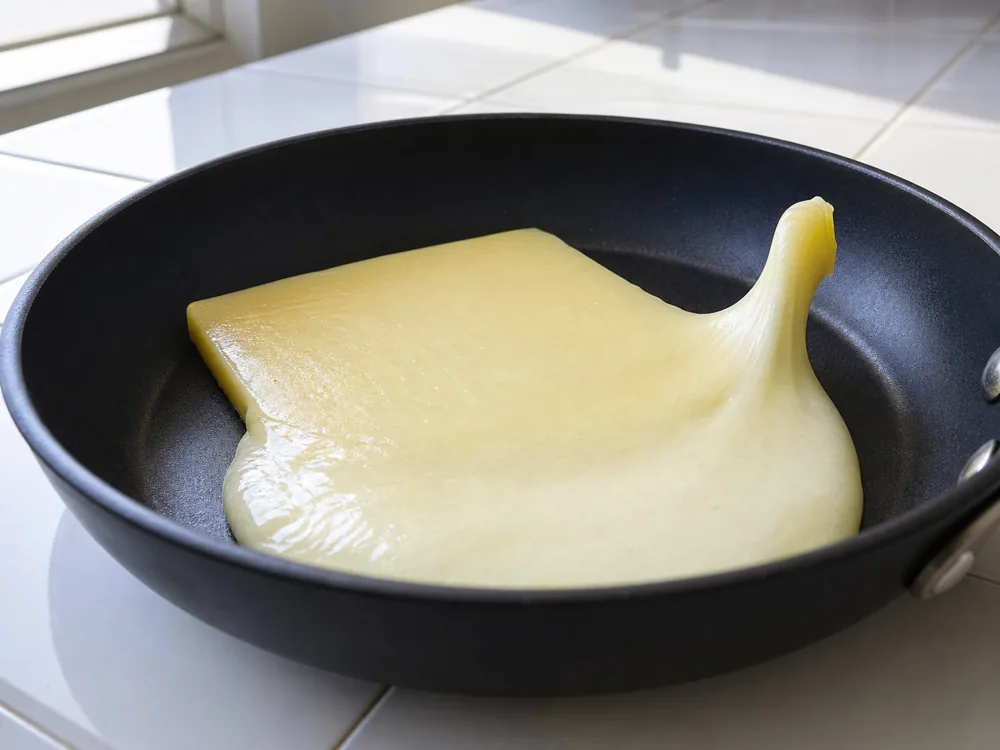
The melt comes from two things working together: sheep-led milk and a pasta-filata, or stretched-curd, make. The milk gives richness and aroma, while the stretched curd keeps the cheese cohesive instead of crumbly.
That combination is why Kasseri tastes fuller than a bland sandwich cheese but still melts more neatly than most salty Mediterranean cheeses.
Expect a smooth blanket and a short pull rather than mozzarella's long elastic strands. Three months of ripening reduce moisture and build flavor, so Kasseri browns readily while remaining cohesive inside.
Slice it evenly before heating because thick and thin pieces soften at different speeds. For a sandwich or pie, grating from a cold wedge distributes the cheese more evenly than dropping large cubes into the filling.
The result brings warmth, savory depth, and enough tang to stay interesting without the dry edge of a hard sheep's milk grating wheel.
- Milk tone: Sheep-led richness with a mild tang.
- Heat behavior: Softens and stretches modestly instead of crumbling.
- Salt level: Noticeable, but lower than brined Greek cheeses.
- Finish: Buttery and savory rather than sharp and dry.
That is why Kasseri surprises people who expect an aggressive sheep's milk cheese. It is flavorful, but still friendly enough for sandwiches and pies.
It also explains why Kasseri can cover a hot dish evenly without tasting anonymous. The milk is doing real flavor work while the stretched curd handles structure.
Once the fat begins to separate and the surface turns oily, more cooking will not create extra stretch, so remove the dish when the cheese is fully softened and lightly browned.
Under a broiler, place Kasseri close enough to color quickly and watch continuously so the surface browns before the interior loses too much fat.
What the Label and Shape Tell You at the Counter
Official PDO material gives you several useful buying cues. A genuine Kasseri label should identify the PDO, and packaging rules require traceability details including the letters KA, a serial number, and the production date.
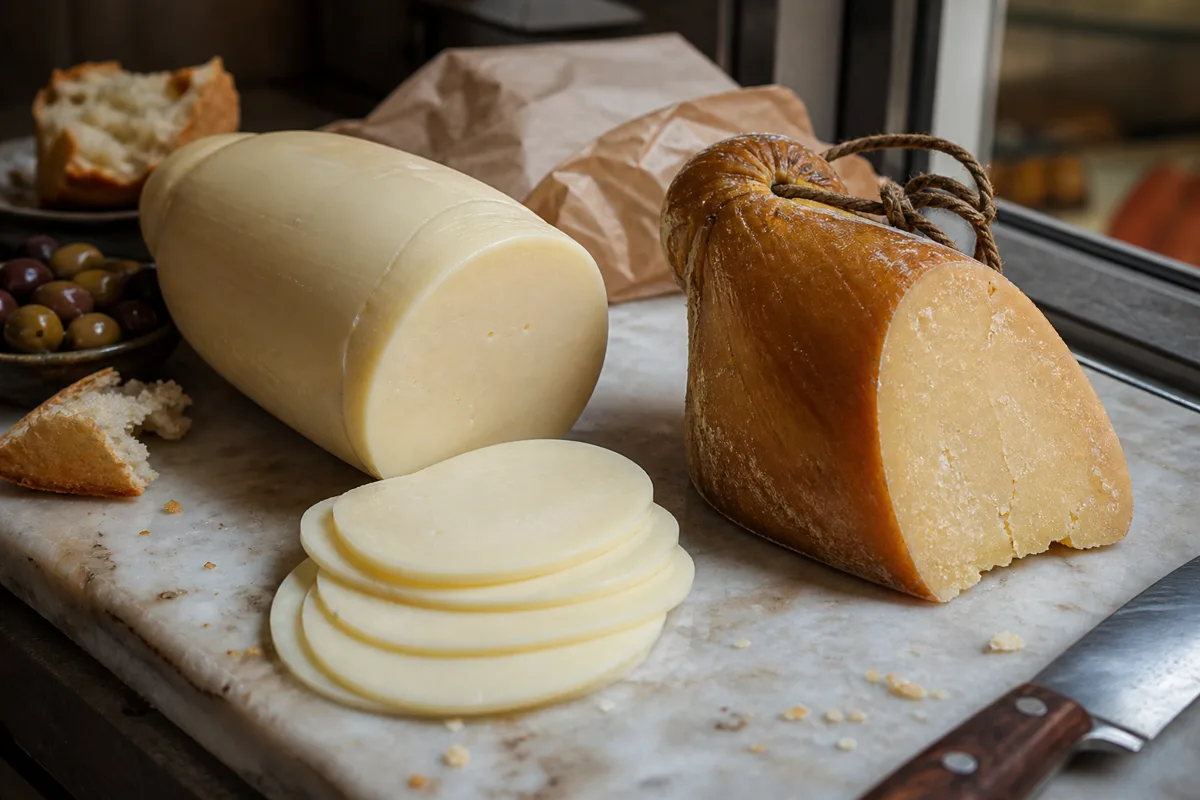
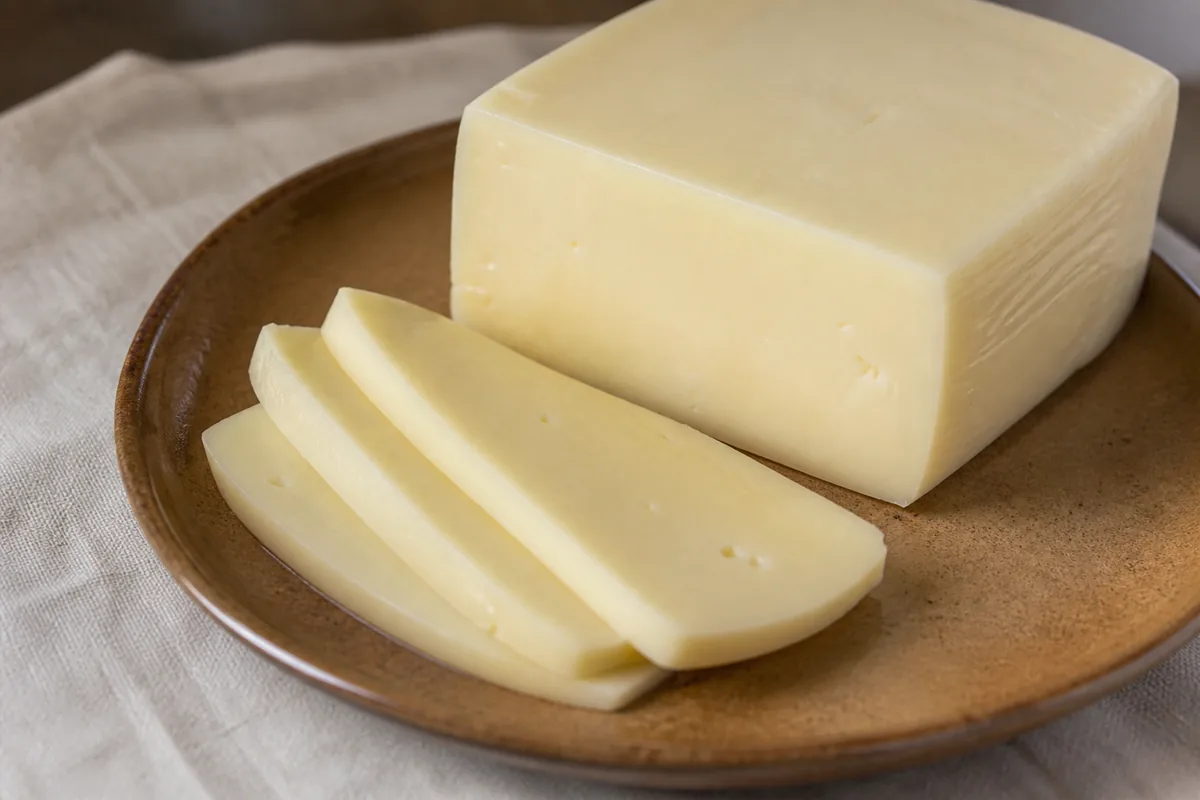
The cheese can be cylindrical or block-like, and retail pieces are often cut from larger forms into easier market sizes. The body should be yellowish white, cohesive, and usually nearly without eyes.
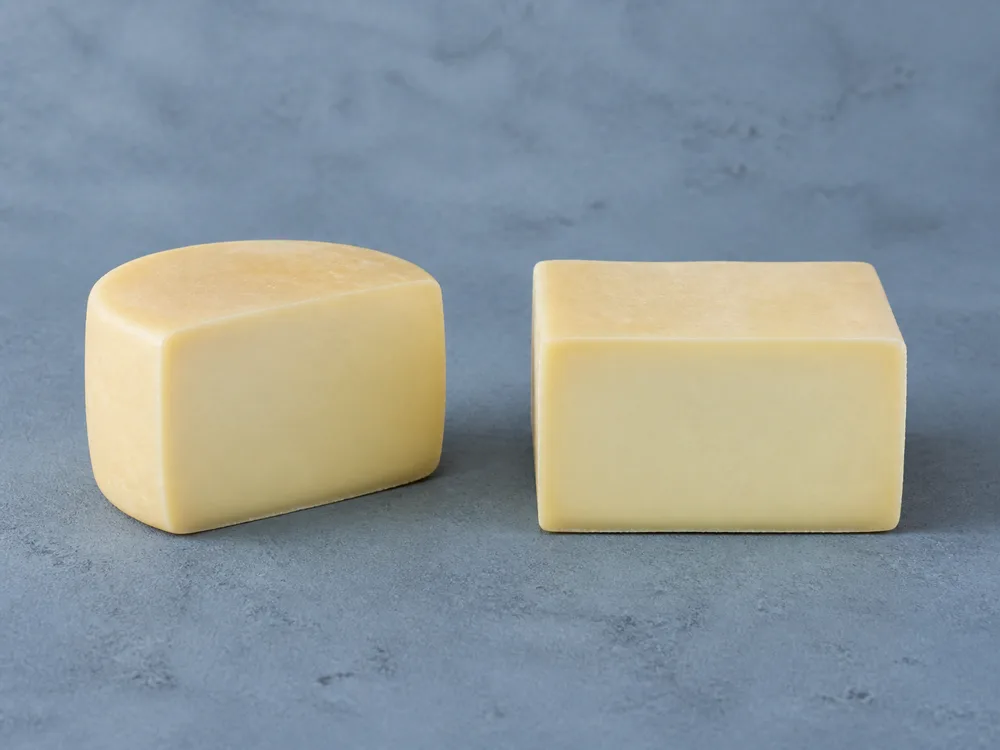
A 2026 specification update allows cylindrical forms up to 30 centimeters in diameter while retaining rectangular forms of variable weight.
Kasseri is sometimes sold with a waxed or paraffin-coated exterior in retail settings. That surface treatment protects the cheese in transport, but the important buying signals are still the PDO label, the sheep-led milk rule, and a clean, cohesive interior once the cheese is cut.
This matters because Kasseri does not always announce itself visually. Without the label, a pale semihard wedge can look generic.
The PDO details are what keep it from being confused with other stretched-curd cheeses.
On a cut piece, reject a paste with widespread holes, dark cracks, or a dried translucent edge. A few small eyes are allowed, but the specification expects a cohesive mass that is usually nearly closed.
Remove any paraffin or protective wax before slicing or heating because it protects the cheese during handling but is not part of the edible paste.
Best Uses for Kasseri
Use it anywhere you want real melt with more personality than bland deli slices. It works in hot sandwiches, baked pastries, savory pies, stuffed vegetables, and mixed cheese dishes where feta would stay too crumbly and halloumi too stiff.
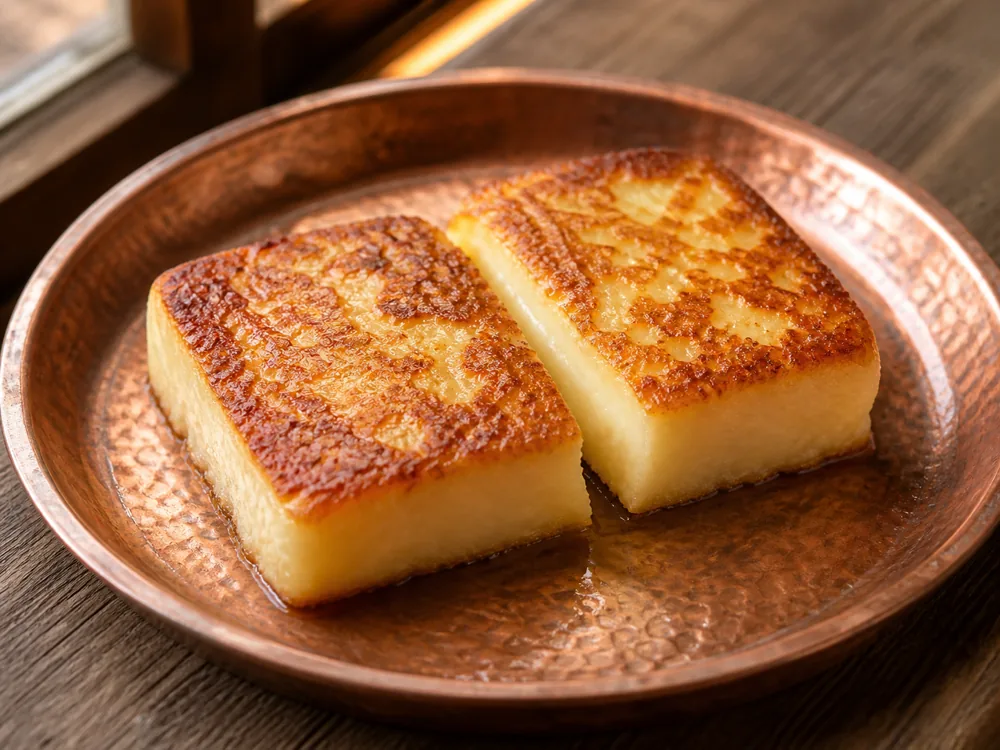
For saganaki-style service, dry a thick even portion so its surface contacts the hot metal instead of steaming.
Use moderate portions in pies and stuffed vegetables because the sheep's milk flavor grows more noticeable as the cheese warms. Mixing Kasseri with a milder cheese can increase coverage, but too much mild cheese erases the reason to buy Kasseri.
For a pie filling, grate Kasseri while cold and distribute it through the other ingredients so each portion receives the same melt instead of one heavy pocket.
| Use | How It Works |
|---|---|
| Hot sandwiches | One of the best jobs because Kasseri melts evenly and still tastes like real cheese. |
| Savory pies | Excellent when feta would be too crumbly or too salty. |
| Baked dishes | Useful in casseroles or stuffed vegetables that need melt plus sheep's milk depth. |
| Saganaki-style service | Possible when you want browning and cohesion instead of halloumi squeak. |
| Table slices | Good at room temperature with bread, tomatoes, and olives. |
Against the broader melting-cheese field, Kasseri is not the stretchiest cheese on the site. It may still be one of the most useful if you want flavor with the melt.
For lunch cooking, Kasseri also belongs among hot sandwich fillings that need more character than standard slices without making the filling taste too salty.
Kasseri stays hard to find, because it still depends on Mediterranean markets and better specialty counters. When you find it, it is worth buying with a hot-use plan already in mind.
How Kasseri Differs From Feta and Halloumi
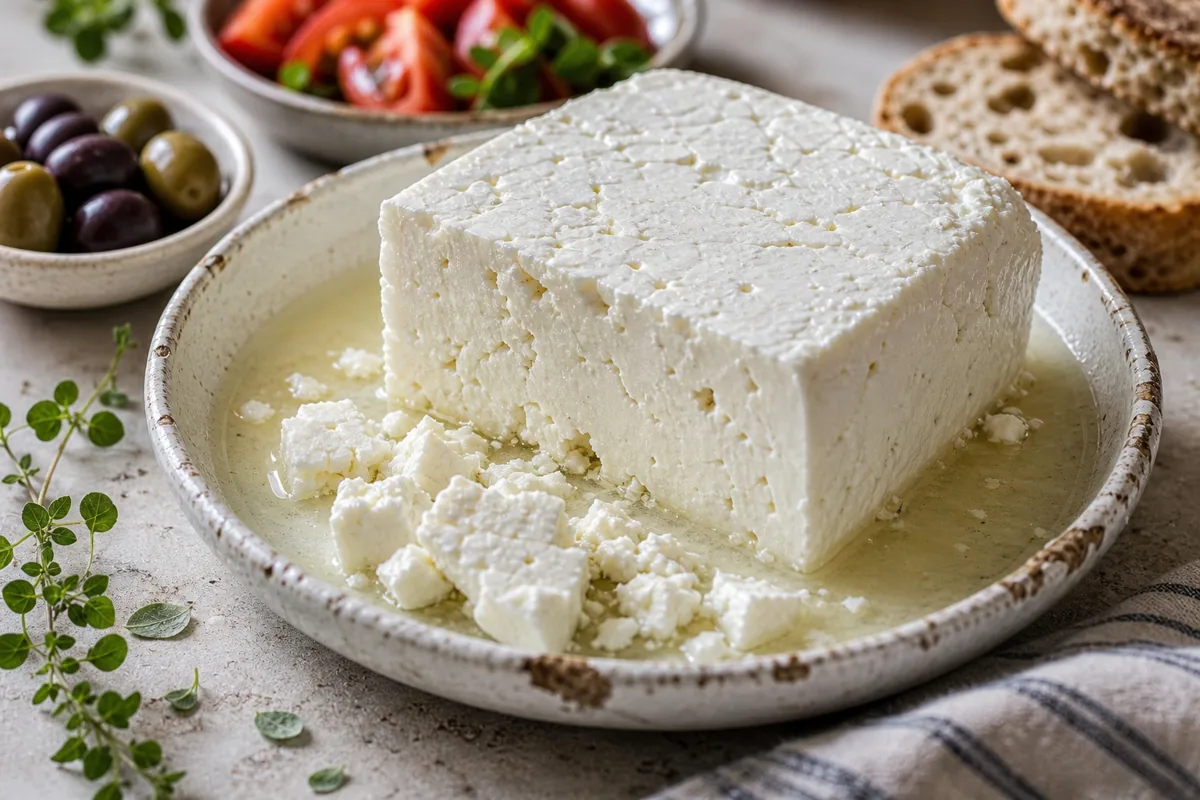
Compared with feta, the flavor is much less briny. Compared with halloumi, the texture softens far more under heat, which makes Kasseri a better bridge between Greek flavor and comfort-food melt.
| Cheese | Cold texture | Under heat | Choose it for |
|---|---|---|---|
| Kasseri | Cohesive and sliceable | Melts and browns | Sandwiches, pies, and soft-centered saganaki |
| Feta | Moist and crumbly | Softens without forming a smooth sheet | Salads, finishing crumbles, and briny contrast |
| Halloumi | Firm and springy | Holds its shape on a grill | Grilling, skewers, and a chewy bite |
- Choose feta: when you want crumble, brine, and salad bite
- Choose halloumi: when you want grill resistance and squeak
- Choose Kasseri: when you want Greek milk flavor in a true melter
If you want the sharper hard-cheese end of the region instead, Romano grating intensity is a different answer entirely. Kasseri is about warmth and flexibility, not dry intensity.
For shoppers stuck between the two famous names, the feta-halloumi contrast clarifies the problem Kasseri solves: neither of those cheeses gives you this exact blend of flavor and melt.
Kasseri can appear in the same meal as feta when their jobs stay separate. Use feta for cold salty accents and Kasseri for the hot cohesive layer instead of asking one cheese to perform both roles.
How Should You Buy and Store Kasseri?
Look for a supple wedge with a clean pale paste and no dry cracking at the cut face. Good Kasseri should smell buttery and savory, not sour, stale, or overly barny.
At home, wrap the cut face and prefer a wedge over pre-shredded cheese because less exposed surface protects both moisture and melting quality.
Check the package for the Greek letters KA or their traceability equivalent, the batch or serial detail, and a production date. Repacked pieces should carry details from the original package together with the repacker's information.
Pasteurization is separate from PDO status because the specification permits both raw and pasteurized milk. Read the milk statement when pregnancy, immune status, or personal preference makes that choice important.
Basic cut-face protection keeps the exposed Kasseri paste covered without trapping it wet.
If condensation collects inside vacuum packaging, dry the surface after opening and rewrap the wedge before returning it to the refrigerator. A clean firm paste is normal, while a slimy surface or sour fermented odor is not.
Keep the unused wedge separate from wet olives or cut tomatoes, which can transfer brine, acidity, and surface moisture to the cheese during storage.
- Buy wedges over pre-shredded cheese when possible
- Keep the cut face covered so the cheese does not dry out
- Freeze only for cooking if you need to extend shelf life
- Temper before serving so the sheep-milk flavor opens
What Should You Eat and Drink with Kasseri?
Freshness and salt are the useful pairing cues. Olives, tomatoes, roasted peppers, bread, and lighter cured meats give enough contrast to balance the sheep's milk without making the cheese disappear.
Crisp white wine, dry rose, light beer, or sparkling water with lemon works better than heavy red wine, which can make melted Kasseri feel blunt.
| Pairing | Type | Why It Works |
|---|---|---|
| Tomatoes | Food | Acidity keeps the cheese from reading heavy. |
| Olives | Food | A natural Greek-table match in small portions. |
| Roasted peppers | Food | Sweetness supports the buttery side of the cheese. |
| Country bread | Food | Lets the texture and melt do the work. |
| Dry white wine | Wine | Usually works better than big reds because Kasseri is smooth, not aggressive. |
| Fresh herbs | Food | Mint or oregano help the finish feel brighter. |
For broader mezze planning, board texture balance matters more than a formal wine script. Kasseri fits best in a mixed savory spread where bread or heat can help it shine.
What Can You Use Instead of Kasseri?
No easy supermarket cheese copies Kasseri exactly, but you can replace the job. The closest substitutions are cheeses that keep a smooth hot texture without turning bland.
Use mild provolone when melt matters most, young Pecorino-style cheese when sheep's milk flavor matters more, and Monterey Jack only for easy texture.
Choose young caciocavallo when you want the closest stretched-curd behavior plus more savory depth. Its cow's milk profile differs from Kasseri, but the way it slices, browns, and softens often fits the same hot dish.
When substituting in saganaki, test one small slice first because a cheese that melts well inside a sandwich may spread too quickly to brown as a freestanding portion.
If the substitute job is grilling rather than melting, halloumi fallback logic points in the opposite direction: firm texture first, sheep-milk warmth second.
- Mild provolone: Best if melt matters more than sheep's milk flavor.
- Young caciocavallo: Best if you want a southern stretched-curd cheese with more savory depth.
- Low-salt young pecorino: Best if sheep's milk character matters more than perfect melt.
- Monterey Jack: Best as a fallback for texture only, not for flavor parity.
Is Kasseri Safe During Pregnancy, and What Are the Nutrition Facts?
Kasseri PDO may be made from raw or pasteurized milk, so the PDO mark does not answer the pasteurization question. People who are pregnant or otherwise at higher risk for listeriosis should choose a factory-sealed package that explicitly lists pasteurized milk and follow their clinician's or local health authority's advice.
Cheese cut or sliced at a deli has another handling step, and CDC notes that deli equipment and surfaces can spread Listeria to cheese. A sealed pasteurized package avoids that added uncertainty when risk is the deciding factor.
Nutrition also varies by producer. The figures below are for OLYMPOS Kasseri PDO per 100 grams, not a universal Kasseri average.
The PDO minimum of 40 percent fat in dry matter describes fat as a share of the cheese's dry solids. It does not mean 40 grams of fat per 100 grams of cheese, so use the nutrition panel on the package you buy.
Pasteurization, handling and packaging change the pregnancy decision across cheese styles.
SOURCES & REFERENCES
What Quick Questions Come Up About Kasseri?
These are the quick shopping and cooking questions that usually come up once people find Kasseri at the counter.
It tastes buttery, lightly tangy, and savory, with more sheep's milk depth than mild cow's milk melters.
Yes. Melting is one of its best jobs, especially in hot sandwiches, pies, and baked savory dishes.
No. Feta is brined and crumbly, while Kasseri is a stretched-curd cheese built for slicing and melting.
Mild provolone, young caciocavallo, or another supple stretched-curd cheese are the closest practical substitutes.
Yes. It can brown and soften nicely, though it is usually a better all-around melter than a pure grill cheese like halloumi.