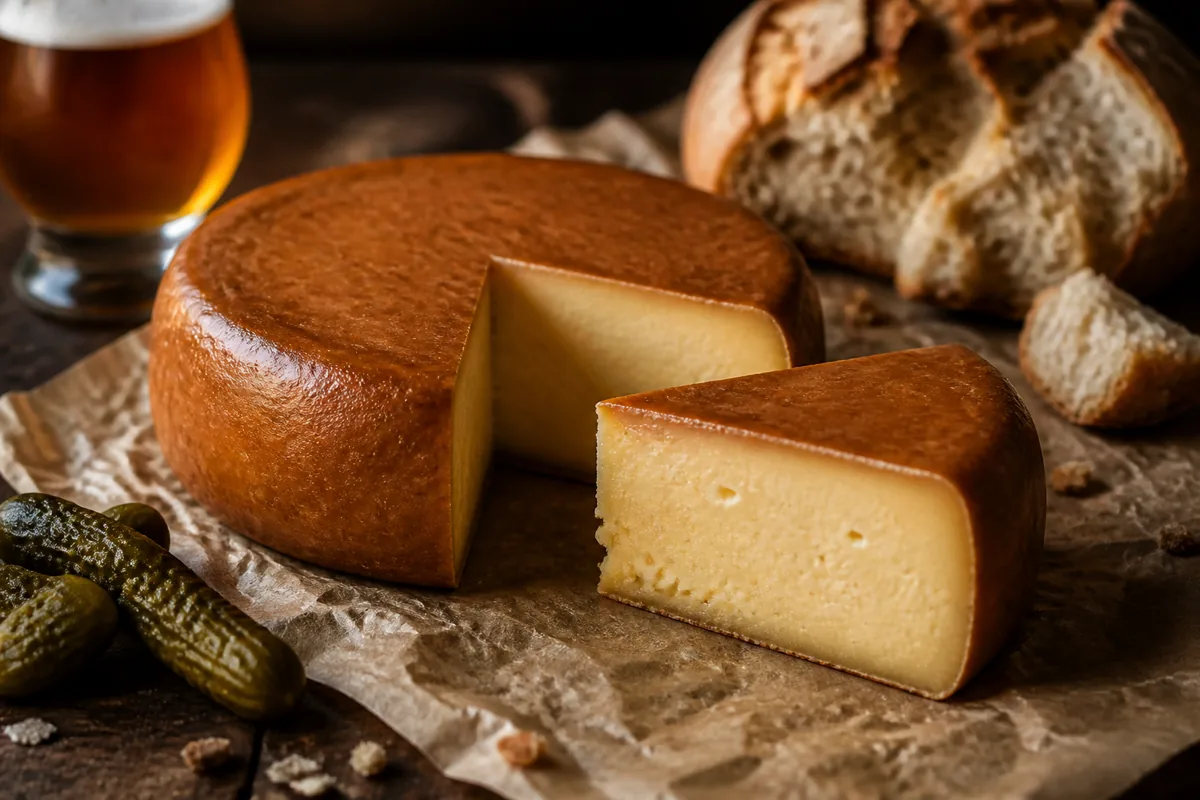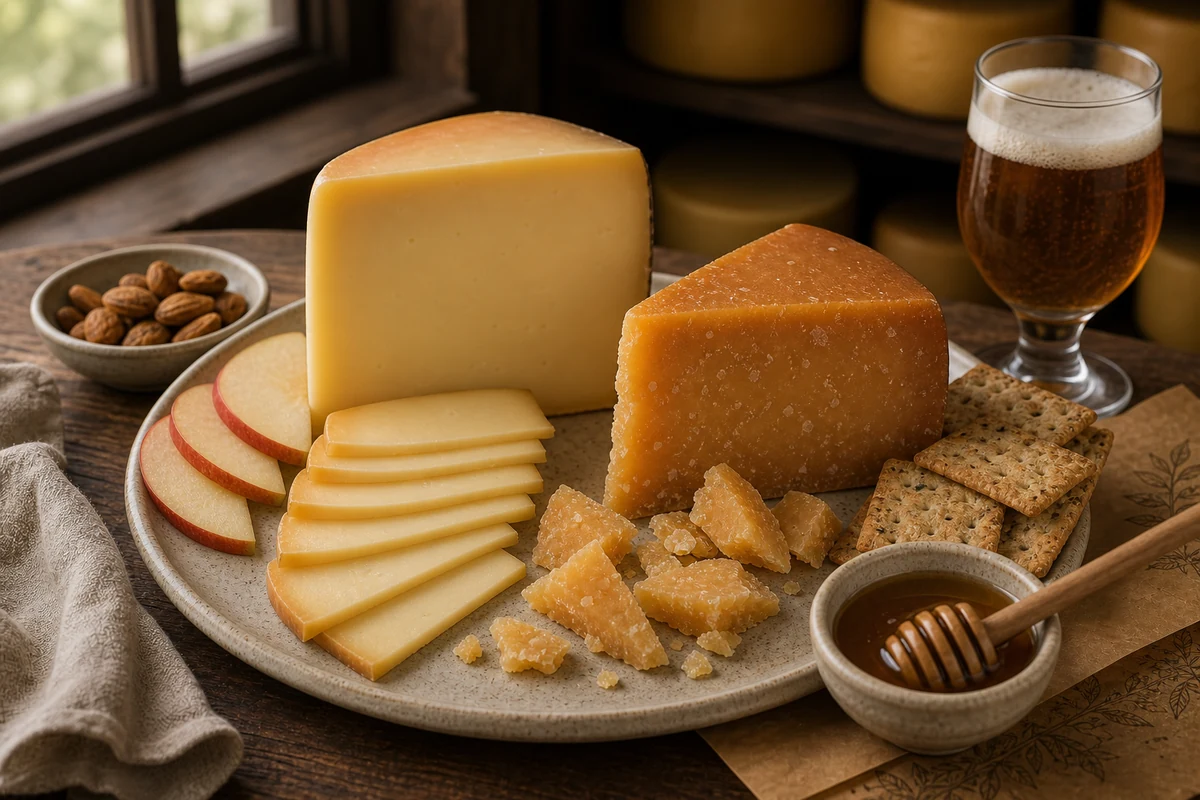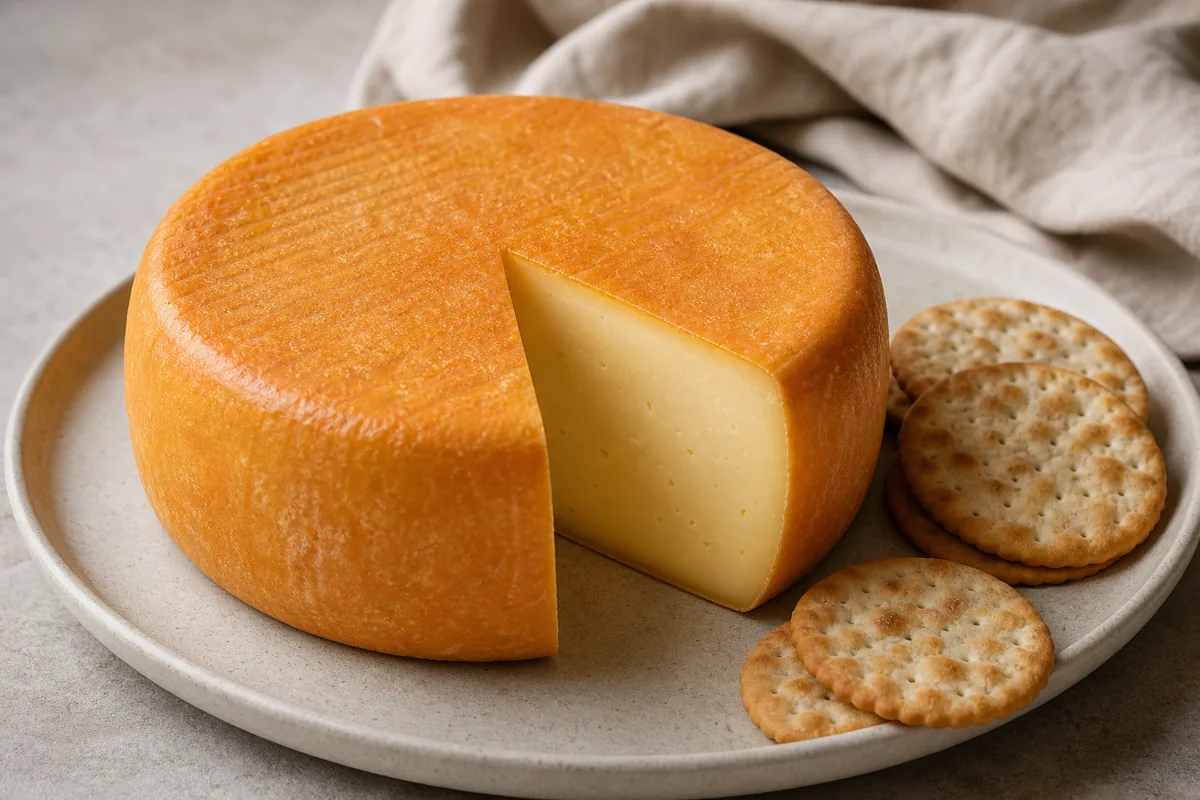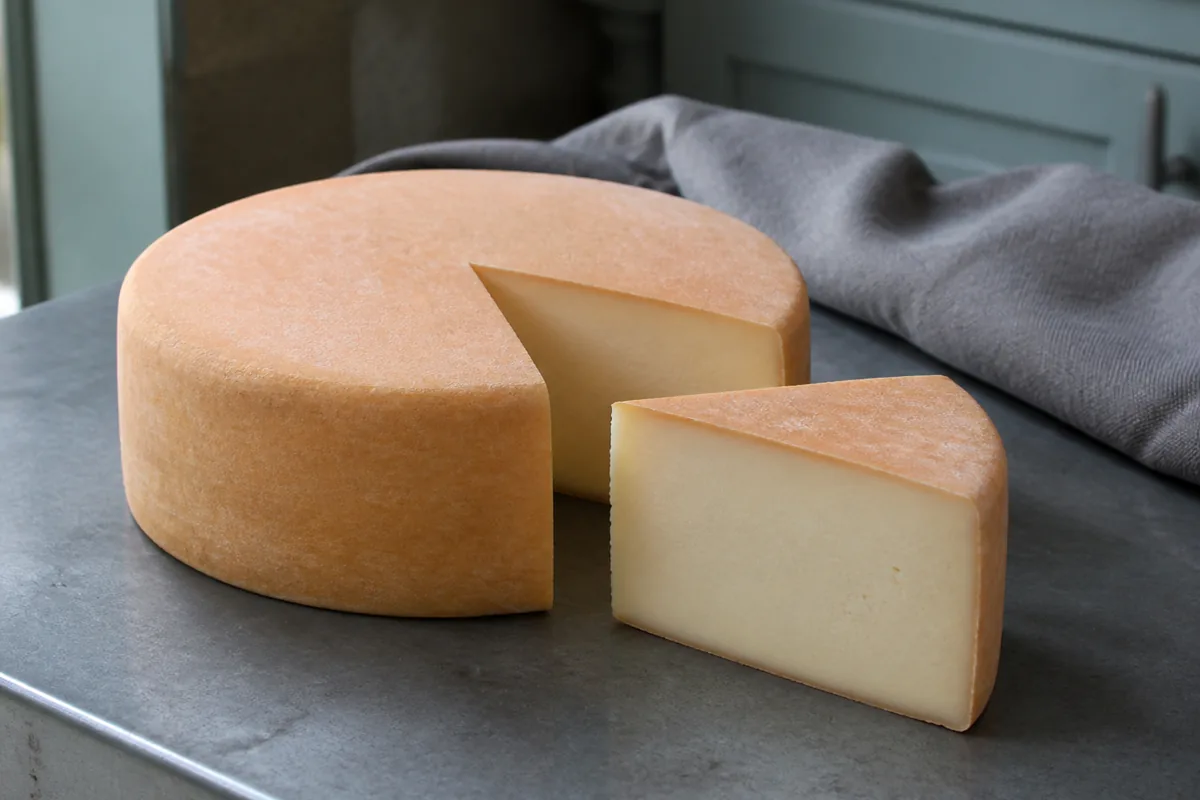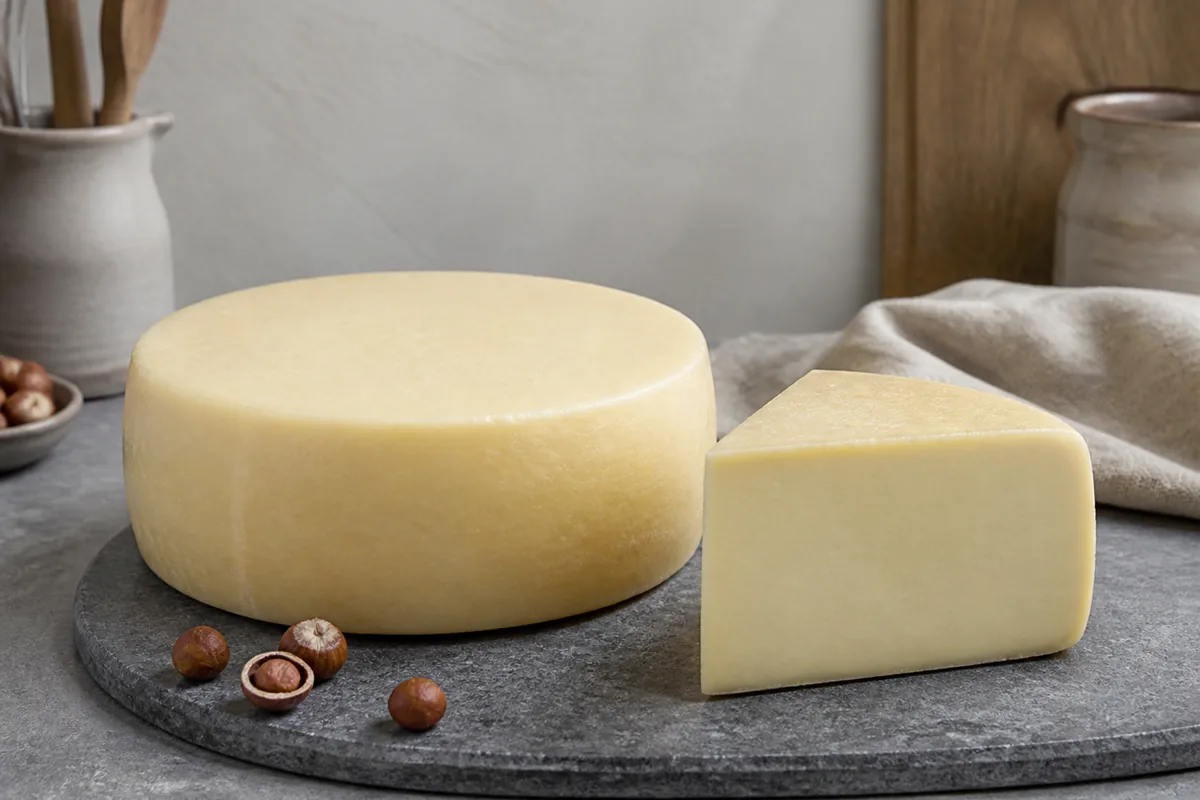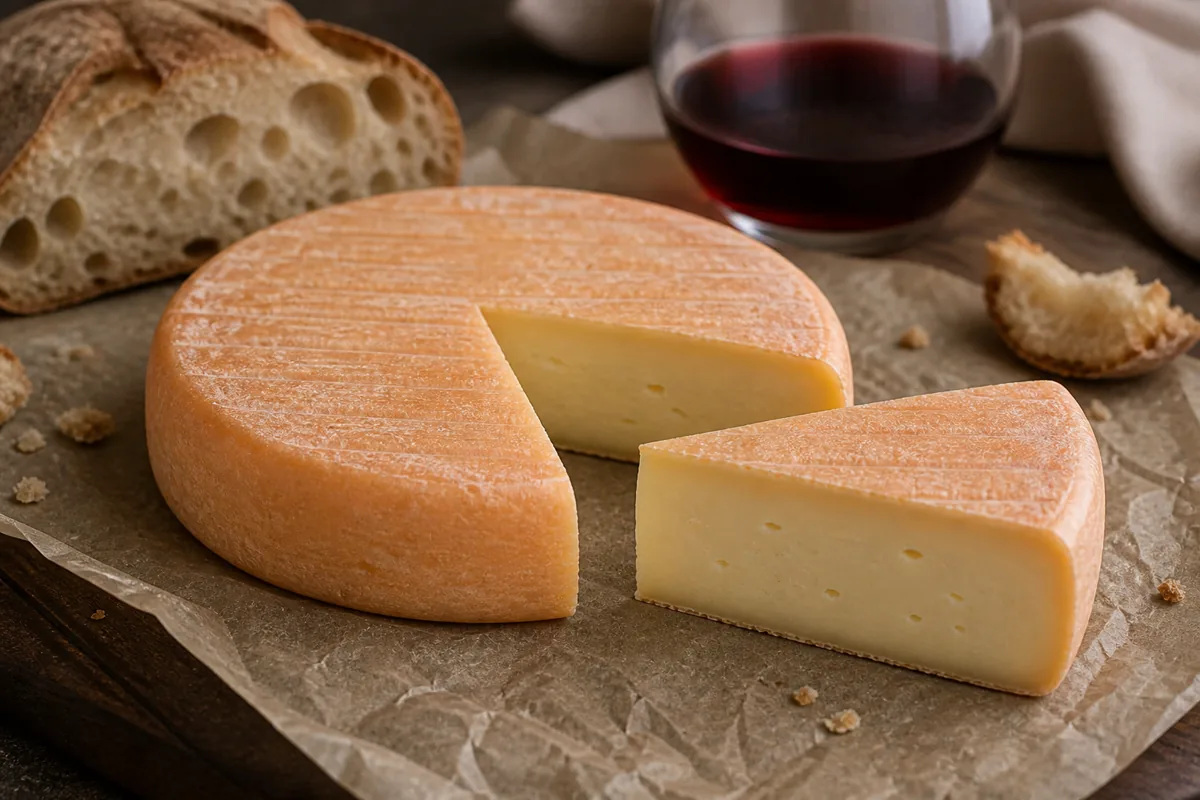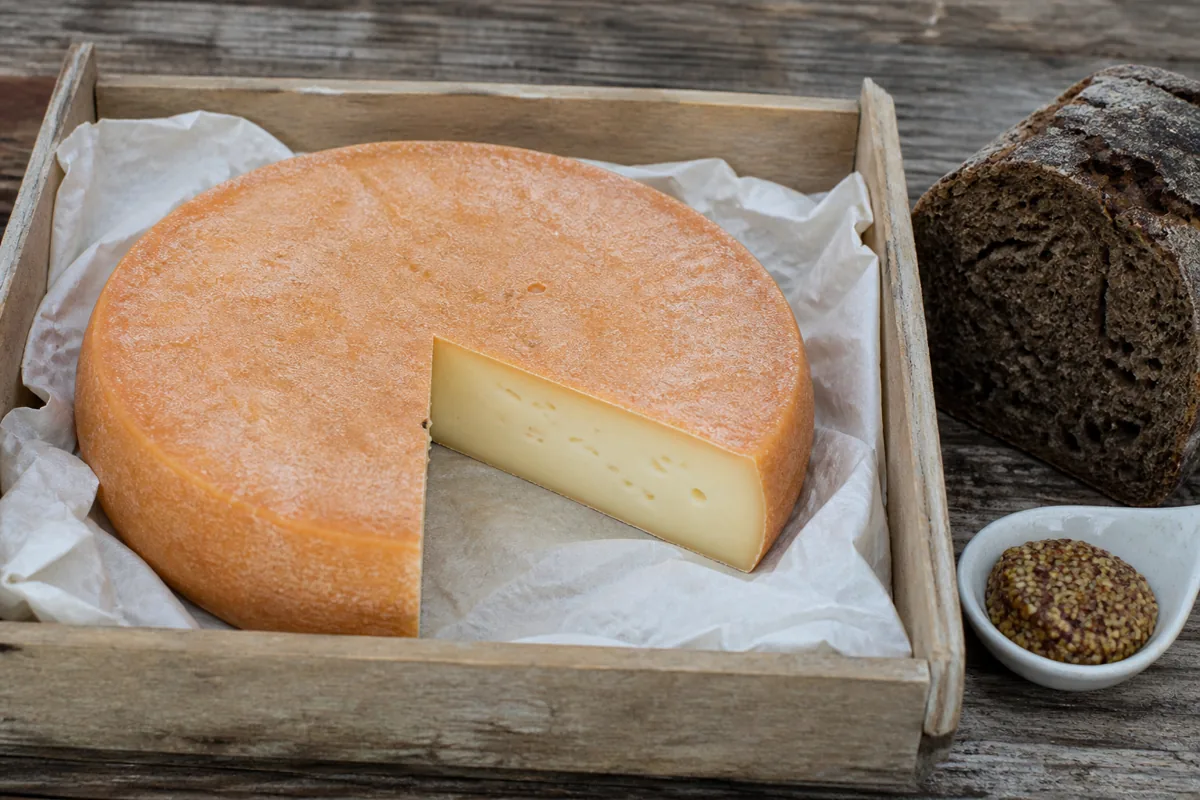
Abbaye du Mont des Cats is a pressed, uncooked cow's-milk cheese with a washed rind, made inside a Trappist monastery at Godewaersvelde in French Flanders. The standard Grand is a yellow-rind disc about 20 cm across and close to 2 kg.
In 2026, the abbey's 200th year, its fromagerie was making about 180 tonnes of cheese a year, close to its ceiling of 200 tonnes, or about 2 million litres of milk.
The name causes one specific problem at the counter: there is also a Mont des Cats beer, and the abbey does not brew it. Knowing which of the two the monks make tells you what the abbey name on a label covers.
In This Article
Is the Cheese Actually Made at the Abbey?
Yes: Mont des Cats cheeses carry the Authentic Trappist Product label and are made in the abbey's own cheese-making facility. Mont des Cats beer is not among the eight beers that the abbey lists with that label, so the label on the abbey's cheese does not cover the bottle next to it.
The abbey launched the beer in 2011, brewed at first under the auspices of Scourmont Abbey in Belgium by the Chimay brewery, and its own brewery, damaged in the 1918 bombing, was never rebuilt. In 2026 the beer was still made at Chimay for the abbey.
In the abbot's words, most abbey cheeses are made by industrial firms with large plants.
Who Makes Mont des Cats Today?
The monastery was founded from Notre-Dame du Gard in 1826 and raised to the rank of abbey in 1847, and the cheese factory is its listed work. Cheese is certain there from 1848, two decades after the founding, and it probably began earlier, first for the monks' own use and soon for sale.
The abbey's first brewery opened in 1848, and the fromagerie followed in 1849. In the abbot's account, the first Trappist monks to return to France after the Revolution settled at the abbey of Port-du-Salut, worked out a cheese there and gave the recipe to the communities founded at the time.
From the 1918 bombing until the early 1970s, the community lived mainly from its farm and its fromagerie. The farm was then stopped and its land let out, and for half a century the fromagerie was the community's main resource.
The recipe is carried out by the monks, and in 2026 the community had 20 monks of four nationalities, with an average age of 72. Monks still work in the fromagerie, but its 25 lay employees hold most of the technical and management responsibility.
When the abbot entered the community in 1978 there were 65 monks and three or four employees, and the monks did all the work themselves, the fromagerie included. As the community aged and brothers died, the abbey took on more lay staff.
How Is Mont des Cats Made?
The abbey no longer has a farm of its own. The milk is whole milk from the Monts de Flandres, and in 2026 it came through Danone, whose dairy at Bailleul, about ten kilometres away, organises collection from the surrounding farms and sends one of its collection tankers on to the abbey.
Cheese is made Monday to Thursday, and the recipe is adjusted a little to the protein and fat levels of the milk, mostly through the final stirring and draining times. The cheese itself changes a little over the months and through the year.
The make room is fairly mechanised: the curd is moulded semi-automatically, while the press room is still very manual. There the moulds are stacked by hand and set under vertical presses for a few hours.
At 7 a.m. on the day after making, the cheeses come out of their moulds and go into a brine tank 1.80 m deep. How long they soak depends on the format and the recipe.
Under the abbey, the cheeses pass through three cellars in turn. They spend days 1 to 6 on racks in the warm first cellar to dry a little, then go twice through the abbey's churn, or baratte, which washes them with a morge heavy in ripening cultures.
Rind care consists of rubbing the cheeses with cultures called ferments du rouge. During ripening the cheeses are washed twice with the morge and twice more with salt water.
The day after the second churn wash, they go onto boards, mostly spruce and of mixed ages and thicknesses, in the second cellar at 12 to 13°C and 95 to 96% humidity. They stay there about two to two and a half weeks, or up to 25 days when the last cellars are full.
They are turned every two days for the first two weeks and then about twice a week. The third cellar is slightly cooler and drier, and it finishes drying the rind before the cheeses are packed.
The Grand, the dessert and Le Flamay have a listed minimum of three weeks, and in practice they spend four weeks in the cellars. L'Immersus stays at least two months, the long-ageing dessert at least eight weeks, and La Bourle at least three months, sometimes pushed to four or six.
Where the make room is mostly automated, the cellar work is still very manual: the cheeses are turned by hand, and the churn is about the only machine in the cellars.
A Mild Paste With Milk and Hay Notes
The flavour is mild and subtle, with notes of milk and hay. The paste is usually supple and cream-coloured.
How Does the Rind Differ by Variant?
The Grand Mont des Cats has a yellow washed rind. Le Flamay is coloured with roucou, or annatto, a natural orange-yellow colouring from the seeds of a tropical tree, and its rind is orange; La Bourle is coloured with a little roucou too.
L'Immersus, which spends 48 hours in Mont des Cats beer, is sold as a cheese with an amber rind. It goes into the beer straight after brining, before its first morge wash, and then follows the same cellar route as the Grand.
Rind colour therefore helps you tell the variants apart.
Is Abbaye du Mont des Cats Pasteurized?
Mont des Cats can be raw or pasteurized, so read the label. The abbey's shop lists pasteurized whole milk for the Grand Mont des Cats, both desserts and Le Flamay, while some French listings give raw milk from nearby farms.
Without a pasteurised label, cook it until it's steaming hot: NHS advice is to cook foods made from unpasteurised milk thoroughly. In the US, raw-milk dairy and soft raw-milk cheese are on the CDC higher-risk list, so get your midwife's or doctor's OK before eating it, cooked or not.
Le dessert long affinage needs cooking until steaming hot whatever the milk. Its yellow washed rind carries a white bloom, and in the UK, mould-ripened soft cheeses with a white coating, like brie and camembert, must be thoroughly cooked.
Any other pasteurised Mont des Cats is on the NHS list of cheeses safe to eat. US guidance differs: heat it to an internal 165°F or until steaming hot, as the CDC advises for soft cheese, or get your midwife's or doctor's OK before eating it cold.
Cheese cut at a deli counter should be heated the same way, to 165°F or until steaming hot, because the CDC lists unheated deli-sliced cheese as riskier.
L'Immersus spends 48 hours in Mont des Cats beer, so check its ingredient list for alcohol. Drinking alcohol in pregnancy can cause long-term harm to your baby, and avoiding it is safest.
Under 21 CFR 133.187, a semisoft cheese made from milk that has not been pasteurized must be cured at not less than 35 degrees F for not less than 60 days.
Which Cheeses Carry the Mont des Cats Name?
Seven cheeses carry the Authentic Trappist Product label: the six core products in the abbey's current shop, and Le Mont des Cats with Westvleteren 8 Trappist beer. Next to the 2 kg Grand, the other cheeses differ in size, ageing, colour or beer treatment.
| Grand Mont des Cats | About 2 kg, yellow washed rind, listed minimum three weeks, about four weeks in the cellars |
| Le dessert des trappistes | About 600 g, yellow washed rind, listed minimum three weeks, about four weeks in the cellars |
| Le Flamay | About 600 g, orange color from roucou, listed minimum three weeks, about four weeks in the cellars |
| La Bourle trappiste | About 2 kg, orange paste and rind, minimum three months, sometimes four to six |
| L'Immersus 48h | About 1.8 kg, immersed in Mont des Cats beer for 48 hours after brining, minimum two months |
| Le dessert long affinage | About 500 g, minimum eight weeks |
| Mont des Cats with Westvleteren 8 | Listed by the association as Le Mont des Cats with Westvleteren 8 Trappist beer |
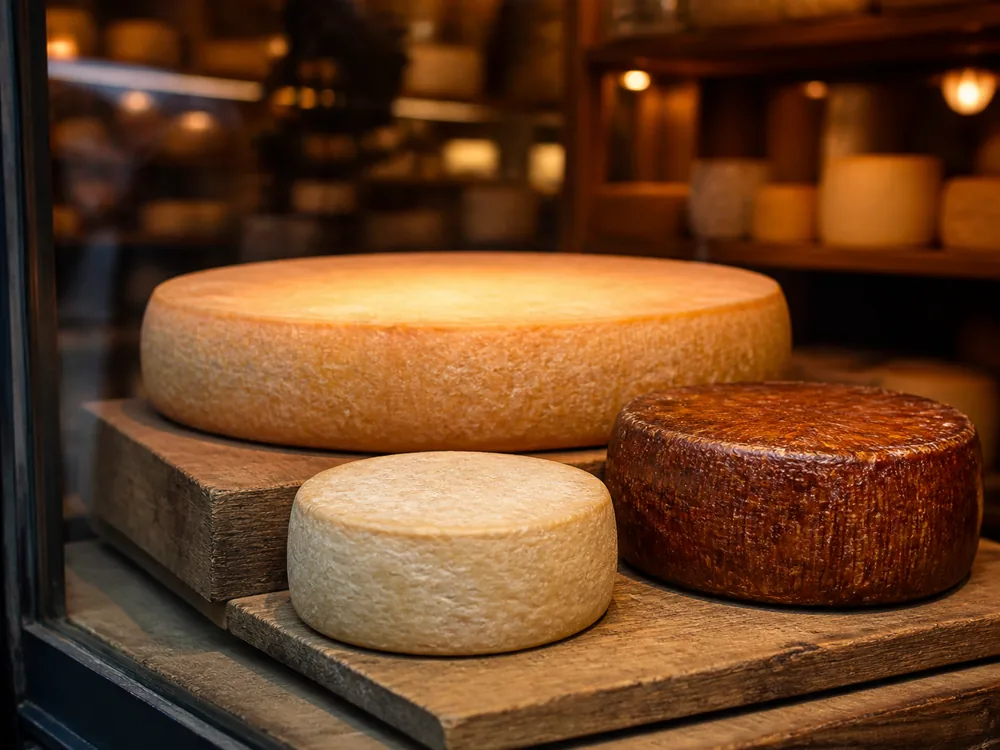
The 600 g dessert des trappistes is almost the same recipe as the Grand in a smaller format. It is the practical buy when a 2 kg Grand would leave a large cut face to store.
L'Immersus starts from the Grand recipe and spends 48 hours in Mont des Cats beer, a 7% brown ale.
The Mont des Cats name covers several sizes, ages, and surface treatments. Ask for the exact product name, size, and finish rather than relying on the abbey name alone.
How Do You Cook with Mont des Cats?
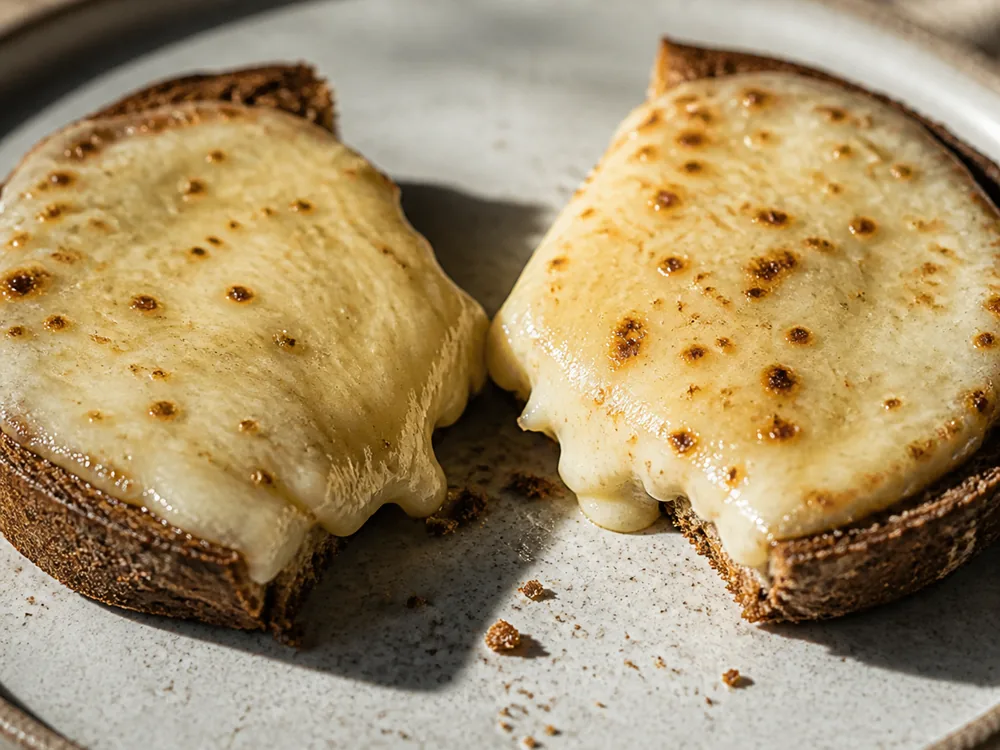
Try it melted on rustic country bread, or try melting it into a tartine. Wholegrain mustard goes well on the side.
What Do You Drink with Mont des Cats?
Muscadet sur lie or another dry white wine goes well with it. Belgian Trappist ale is another match, and so are Pinot Noir, Côtes du Rhône and dry cider.
For fruit, try Bartlett pears, Honeycrisp apples or fresh figs, and for something sweet, cherry preserves or acacia honey.
How Do You Buy and Store Mont des Cats?
Ask for the exact product and its packing date. For a sealed cheese, the abbey's shop sets a best-before date (DLUO) of 2 months after the packing date for five of its six cheeses and 1 month for L'Immersus.
At a cheese counter, ask which of the abbey's cheeses a wedge was cut from. The name alone covers a 600 g dessert, a beer-bathed L'Immersus and a La Bourle aged at least three months.
What Can Replace Mont des Cats?
Mont des Cats is said to be made much the way Port Salut is.
SOURCES & REFERENCES
Rennet and the Trappe de Bailleul Name
Possibly not. The abbey's account of its make names rennet from a calf's stomach as the way the milk can be set, while Culture lists vegetable rennet, so check the ingredient list for animal rennet before you buy it for a vegetarian.
It is another name for the same cheese on Produits Laitiers' listing. Ask for the exact product, because the Mont des Cats range contains several sizes and finishes.