Abertam was a hard cheese made with ewe's milk in the Carlsbad region, associated with Abertamy in the present-day Czech Republic. You can buy modern cheeses from Abertamy, but the local farm's account of the still-missing original recipe means you should buy them under their own names.
That distinction helps when a listing offers Abertam without identifying a maker. The historical name and the present town's dairy products describe different things, even when both involve sheep milk.
In This Article
The Historical Cheese and the Modern Town Are Different Buying Clues
The 1953 USDA reference records hard ewe's-milk cheese from Carlsbad. Carlsbad is the older English and German place name associated with Karlovy Vary, while Abertamy names the town in the surrounding region.
For your purposes, those names give two scales of origin rather than rival birthplaces. Neither the regional name nor sheep milk alone proves that a present-day wheel follows the historical recipe.
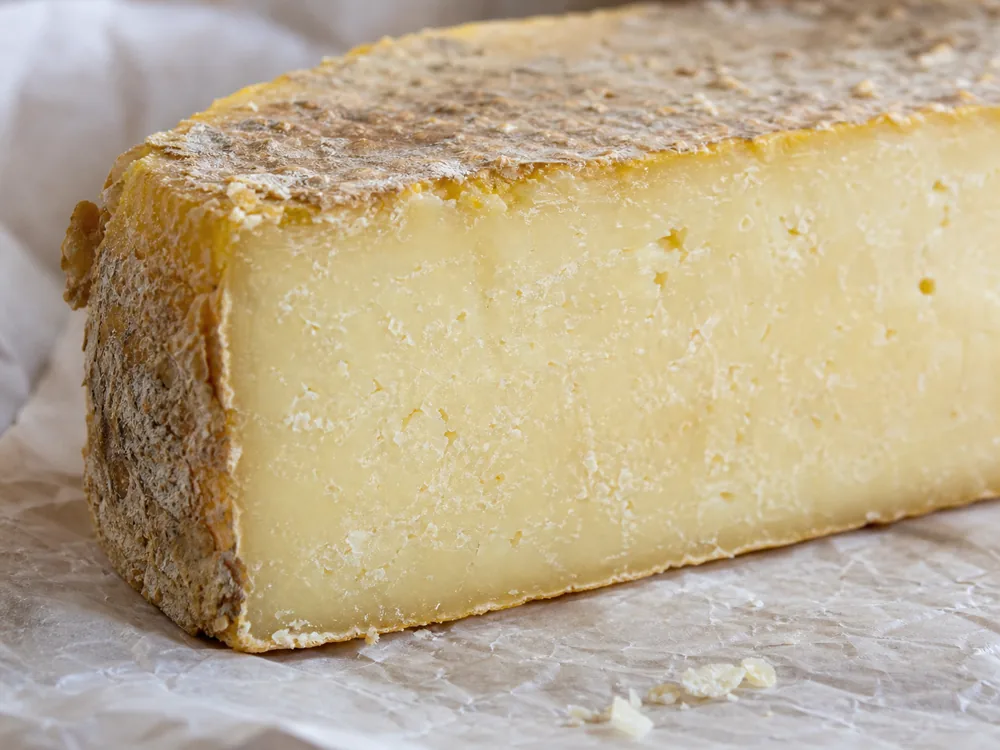
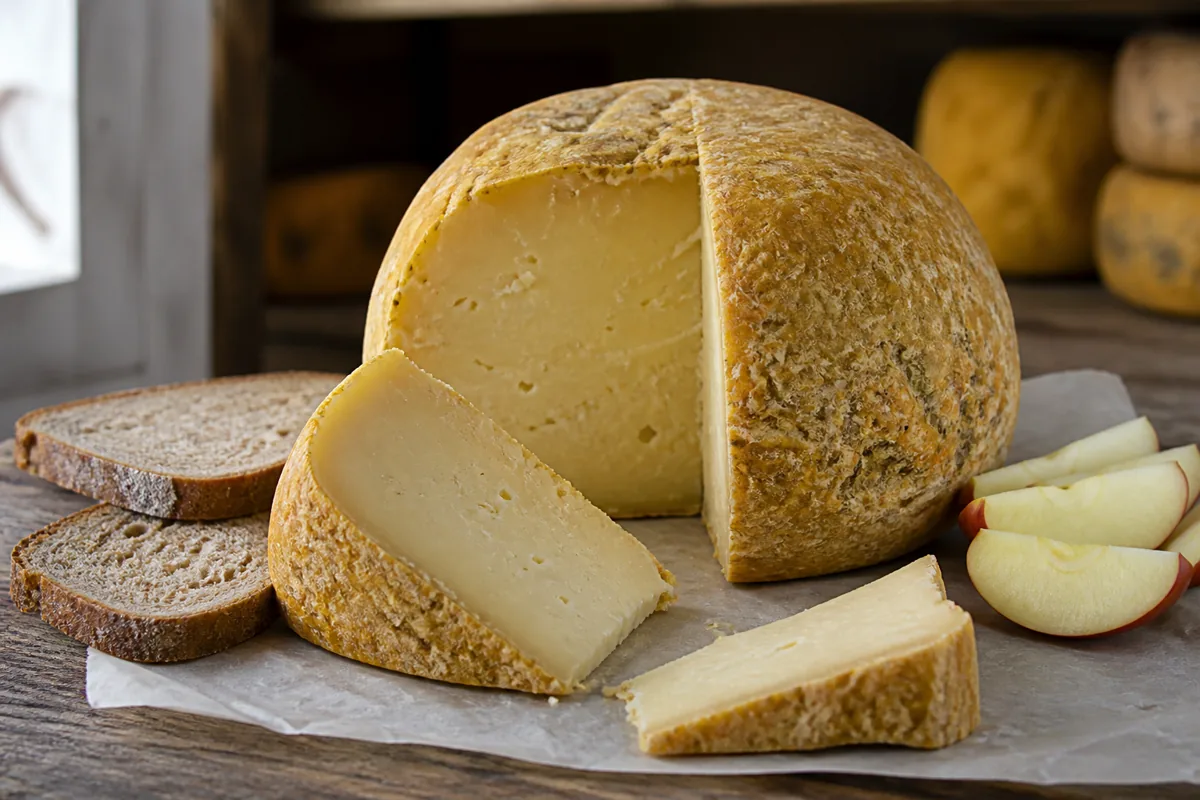
An irregular ball, a pale firm paste, a thin yellow-to-orange natural rind, roughly 45 percent fat and about two months' ripening make up the later Cheese.com description. Keep those details attached to that historical description when you compare a current cheese, rather than treating them as a protected modern specification.
A current label can establish your cheese's milk, ingredients, age, producer and allergens.
Authenticating continuity with the old recipe needs more than a similar-looking rind or a repeated two-month age.
Cheesemaking Belongs to Abertamy's Industrial History
Cheese production appears among the town's trades in the 1920s and 1930s, alongside more than 20 glove factories, lace factories, tanneries and mines in the town's official chronology. Abertamy sits in the Ore Mountains near Karlovy Vary, where livestock and preserved foods were part of that wider economy.
The town's dairy history is therefore broader than one cheese name. You can recognise that tradition without assuming a single recipe dominated local production or survived unchanged.
What Can You Buy From the Abertamy Farm?
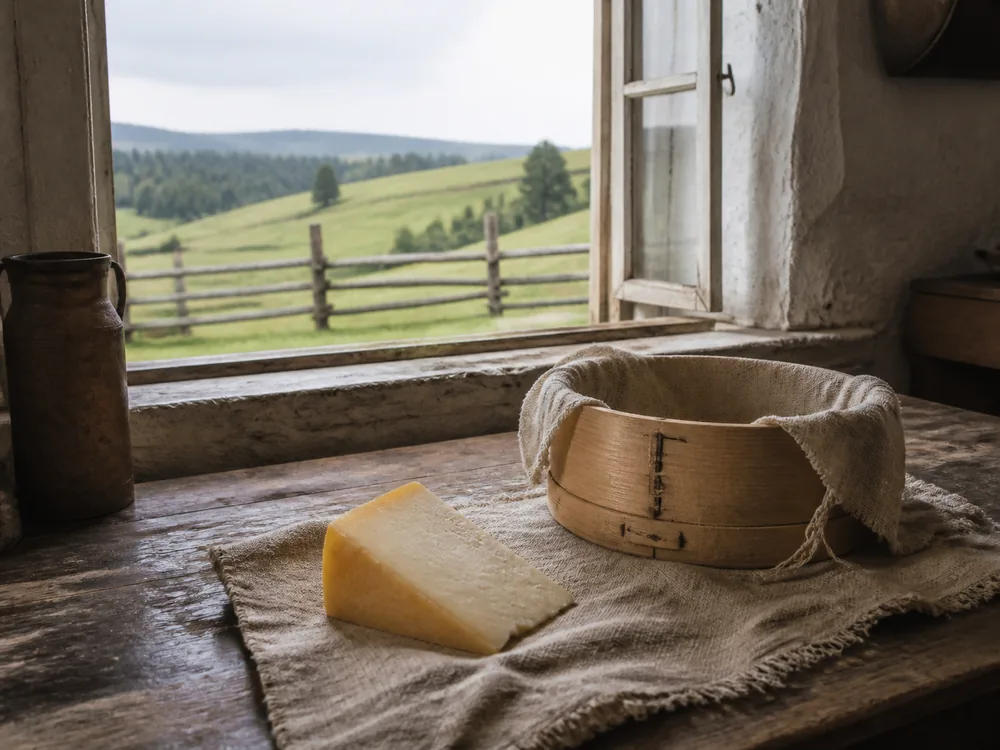
Cow, goat and sheep cheeses, both fresh and aged, form the modern Horsky statek Abertamy range described in its dairy information. Before buying now, confirm the exact product and availability with the farm rather than relying on a historical Abertam listing.
The farm describes a revival built around its own recipes, with the celebrated original recipe still unfound. Its sheep cheeses carry organic certification in its range description, and its animals graze on Ore Mountains pastures.
Treat 'made in Abertamy' and 'traditional Abertam cheese' as different claims. The first identifies a current place of production, and the second needs recipe or producer evidence that the official local farm says is still missing.
In the farm's published range, fresh cheeses and cheeses aged for multiple years coexist. Your choice therefore needs the product name and age as well as the milk species.
The farm's ingredient description names rennet, dairy cultures and salt, without preservatives or other additives. Confirm the rennet type for your exact cheese if you avoid animal rennet, since the word rennet alone does not settle that choice.
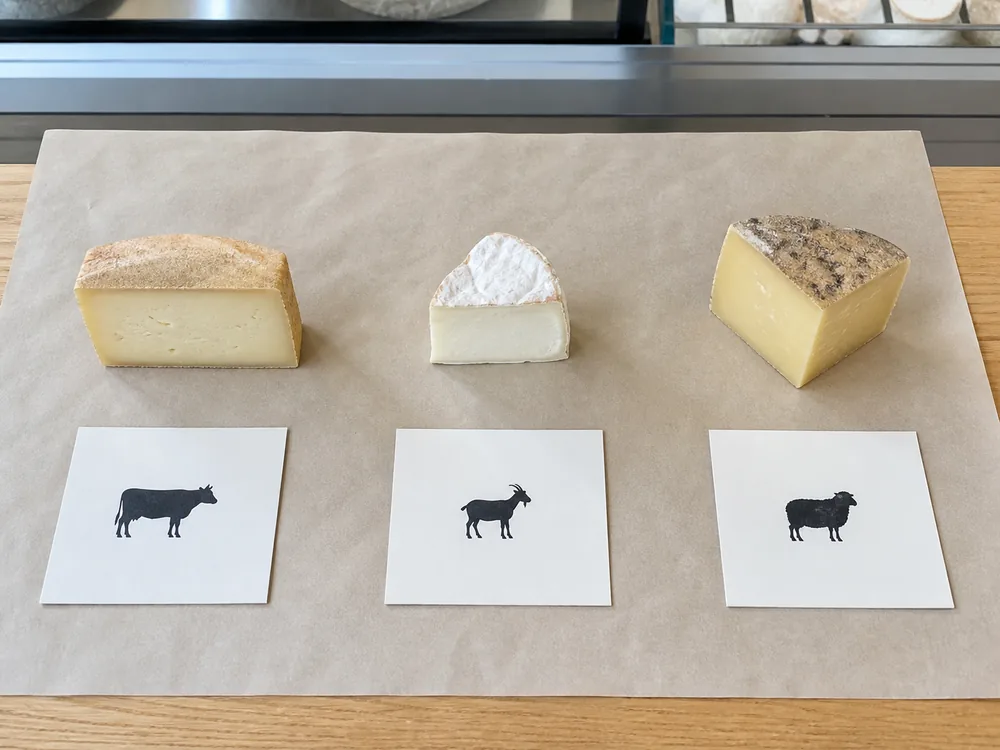
The farm's dairy is described beside its bistro and butcher shop. If you visit, keeping the wrapper or a photograph of the label preserves the producer, batch, milk treatment and storage instructions for a repeat purchase.
For online buying, a current product photograph, producer name, weight, date and delivery conditions tell you more about what will arrive than an encyclopedia paragraph under the word Abertam. Ask for those details before choosing a listing that gives you only the historical name.
Compare a Current Wheel With the Historical Description
Use the old identity and later description as reference points, then judge the wheel in front of you by its own specification. A precise age repeated across summaries is not an independent product guarantee.
| Claim | Evidence Position | What It Means for You |
|---|---|---|
| Hard ewe's-milk cheese from the Carlsbad region | Recorded in a historical USDA reference | Strong basis for the cheese's identity |
| Irregular ball and thin yellow-orange rind | Repeated in later reference summaries | Useful description that carries no current certification mark |
| About two months of ripening | Repeated in later sources | Reasonable historical context that cannot guarantee a modern wheel |
| Strong, tangy flavor and melting use | Secondary descriptions without a current producer sheet | Treat as an expected direction rather than a precise tasting note |
| Continuous production from the original recipe | Contradicted by the current local farm's statement | Do not assume authenticity from the name alone |
The dated 1953 record establishes the hard ewe's-milk identity. For details beyond it, a producer sheet, municipal archive or historical trade reference carries a different evidential weight from modern summaries repeating the same fat, rind and age figures.
You should therefore keep the age and sensory expectations separate from an authenticity claim. A maker may offer a well-documented modern sheep cheese without claiming to have recovered Abertam.
A Home Recipe Makes an Interpretation
A modern recipe can give you a cheese to make, but it cannot recover the original merely by using the name. The Thai Artisan Foods recipe uses cow's milk, mixed mesophilic and thermophilic cultures and several months of ageing, alongside a claim of traditional continuity.
That cow-milk formula differs from the historical ewe-milk identity, and the local farm's missing-recipe account prevents treating the method as an authenticated survival. Keep the recipe's actual ingredients and process attached to the cheese you make.
If you try an Abertam-inspired batch, call it an interpretation and record your milk, cultures, curd temperatures, pressing, salt and ageing conditions. Those details explain what you made without borrowing certainty from the historical name.
Use the Reported Table-Cheese and Melting Roles Cautiously
A table cheese and a melting cheese are the two uses in the later reference description. The flavour and acidity details in the comparison table belong to Cheese.com's broad historical description, rather than a tasting report for a standardised current product.
For your actual wheel, the maker's description should settle aroma, bitterness and cooking behaviour. A two-month reference on its own cannot establish the crystals, sweetness or grating texture of a much older cheese.
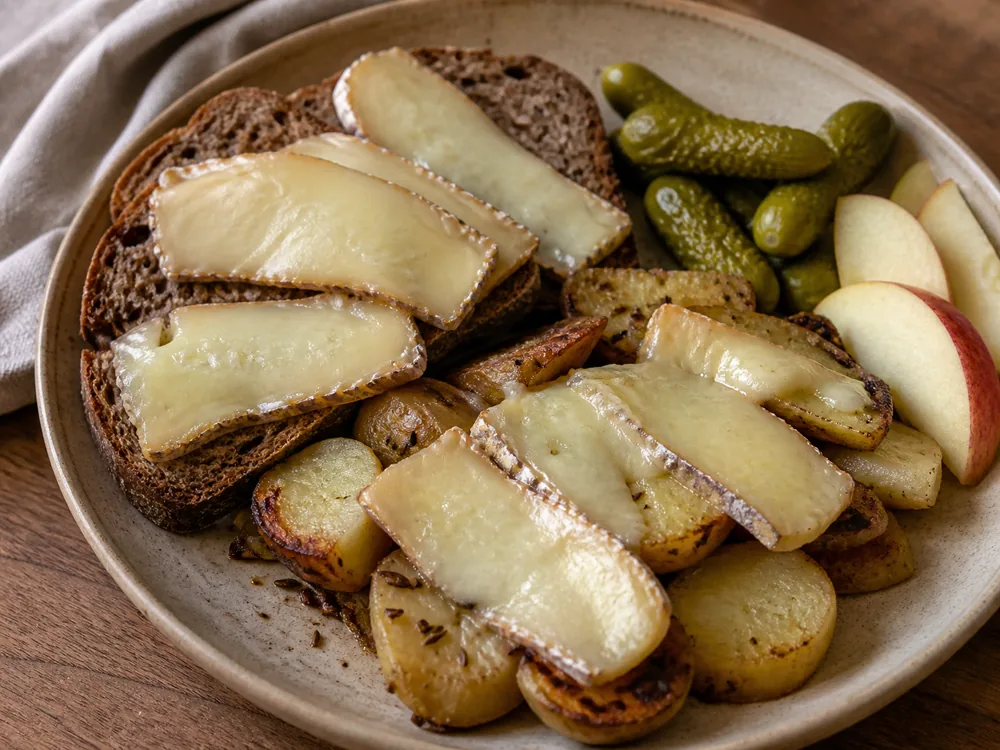
The potatoes, rye bread and pickles shown here are an illustrated serving idea. They do not identify a recovered Czech recipe or prove a mozzarella-like stretch.
| Use | Sensible Approach | Limit |
|---|---|---|
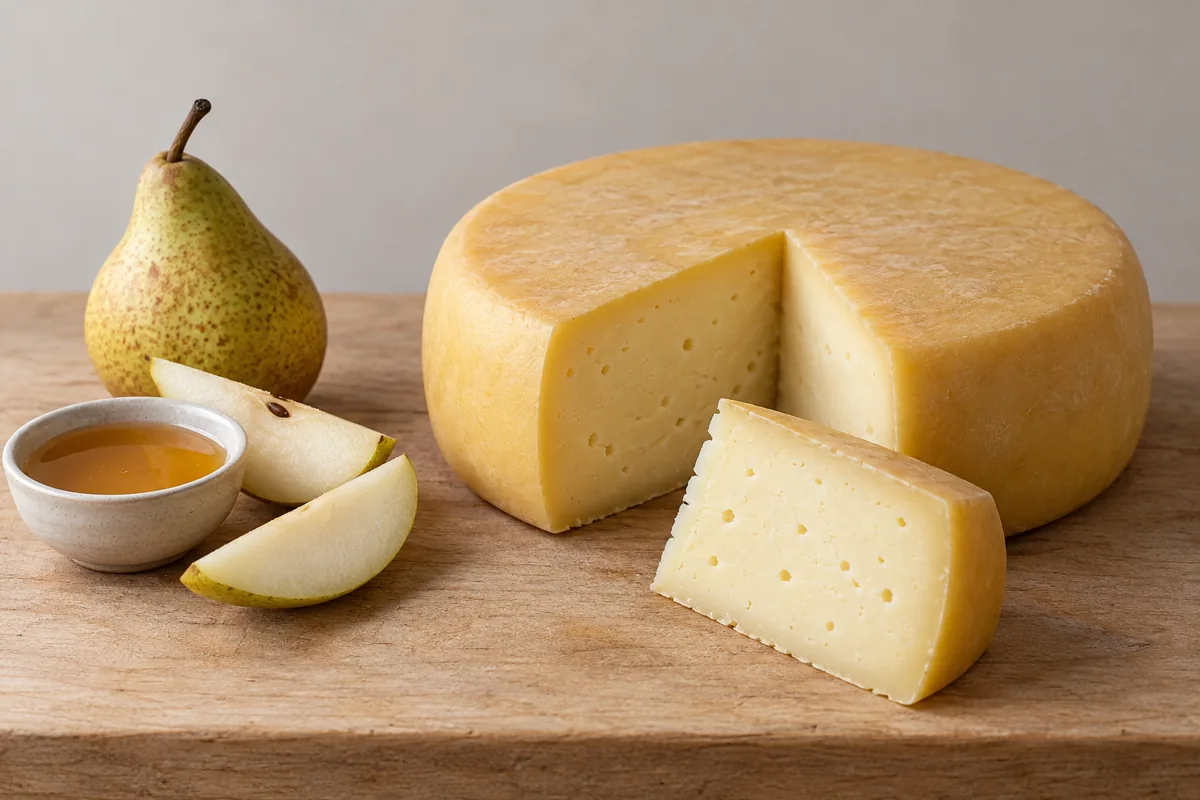
| Cold plate | Cut thin slices and add apple, rye bread, or pickles | Exact flavor depends on the current cheese more than the historical name |
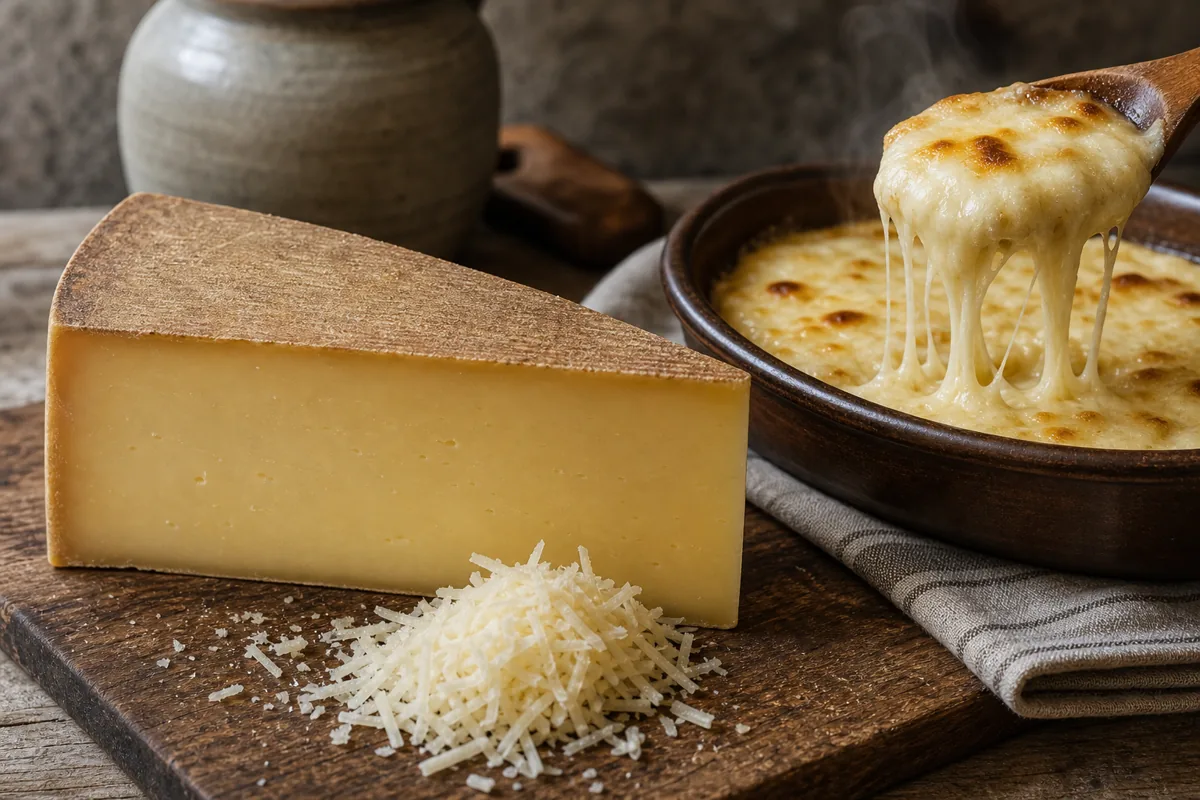
| Potatoes or toast | Use shavings and moderate heat | Expect softening rather than dramatic stretch |
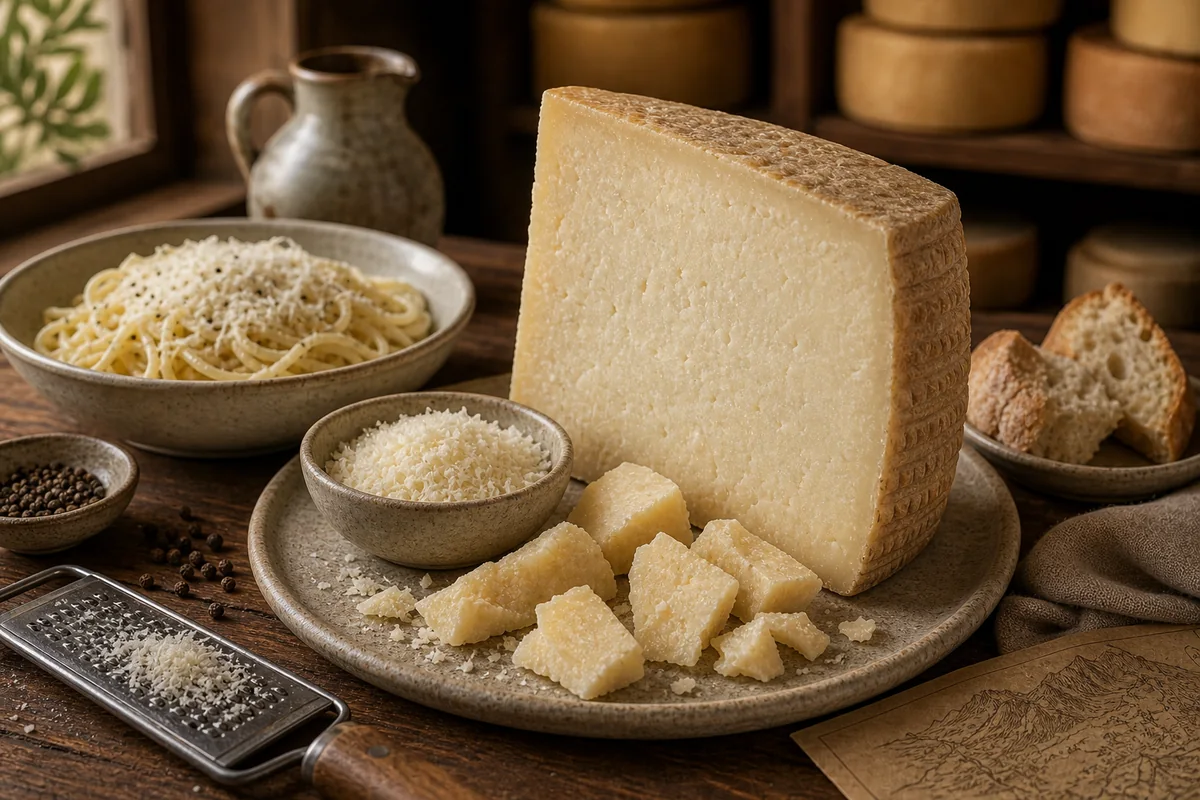
| Grating | Use a firmer, drier current wheel | A younger moist cheese may clump |
| Sauce | Choose a documented smooth melter instead | The old references do not prove emulsifying behavior |
On your cold plate, the current cheese's age and firmness should decide how you cut it.
For a sauce, choose a cheese with documented melting behaviour instead of assuming the historical melting reference promises a smooth emulsion.
Choose a Replacement for the Job You Need
A firm sheep-milk table cheese is a useful direction for your search, but no substitute reproduces an undocumented recipe. The following choices distinguish slicing, grating and melting rather than claiming a historical flavour match.
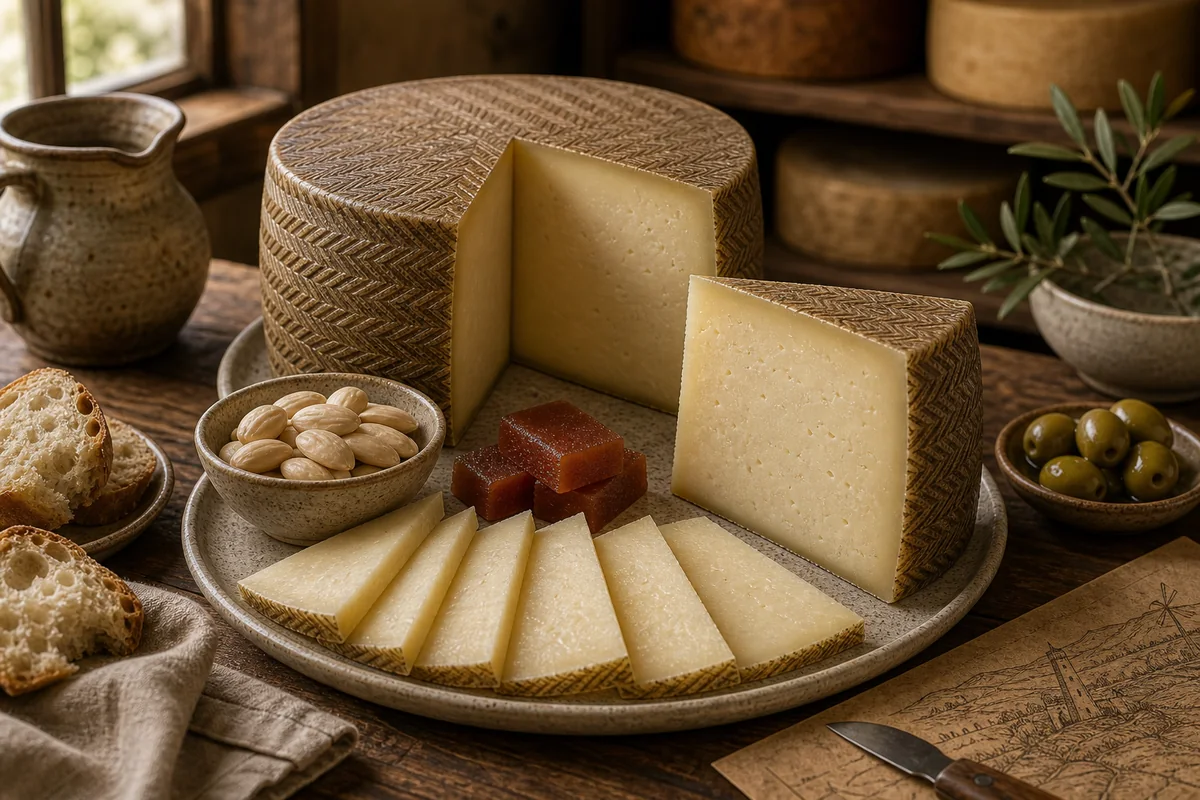
- Firm sheep-milk slices: Manchego
- A table-cheese option: Pecorino Toscano
- Salty grating: Pecorino Romano
- Melting: Gruyère
Match the age to your use as well as the milk. A young table cheese and a heavily aged grating cheese answer different needs, even when both use sheep milk.
When place matters most, you can choose a current Czech farm cheese under its own name. That gives you a documented product without implying that traditional Abertam has returned.
The Current Milk Label Decides Your Pregnancy Precautions
During pregnancy, thoroughly cook a raw-milk or unlabelled current cheese with its centre steaming hot before eating, as the NHS requires for foods made from unpasteurised milk. For the US raw or unlabelled version, the table offers no safer route, because the CDC lists raw-milk dairy as riskier.
A pasteurised modern farm cheese also needs its own texture and product identity established before you choose a cold serving during pregnancy. An unidentified fresh or firm product needs its class shown on the pack, or thorough cooking to steaming hot under the NHS route for any cheese, instead of borrowing the historical hard-cheese description.
The old ewe-milk description does not establish a modern cheese's pasteurisation, nutrition, salt or rennet. Every dairy version contains milk, and the current package supplies the details you need for diet and storage decisions.