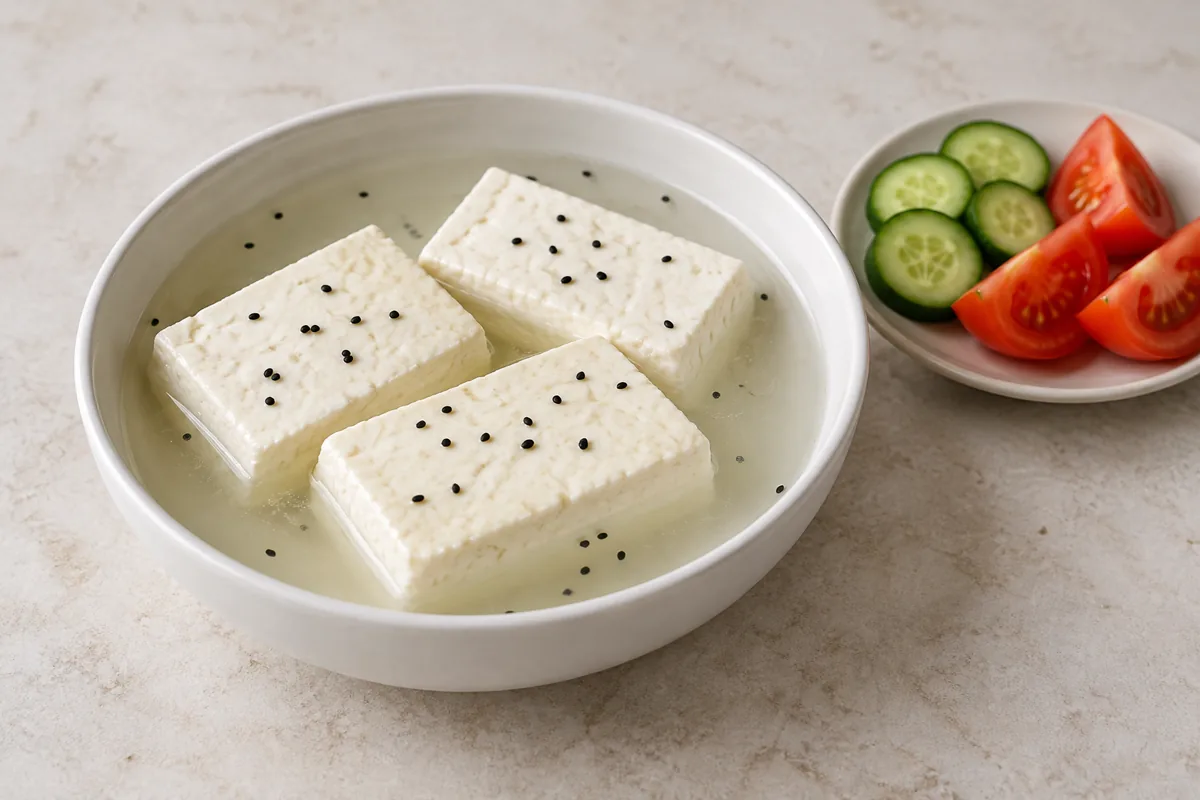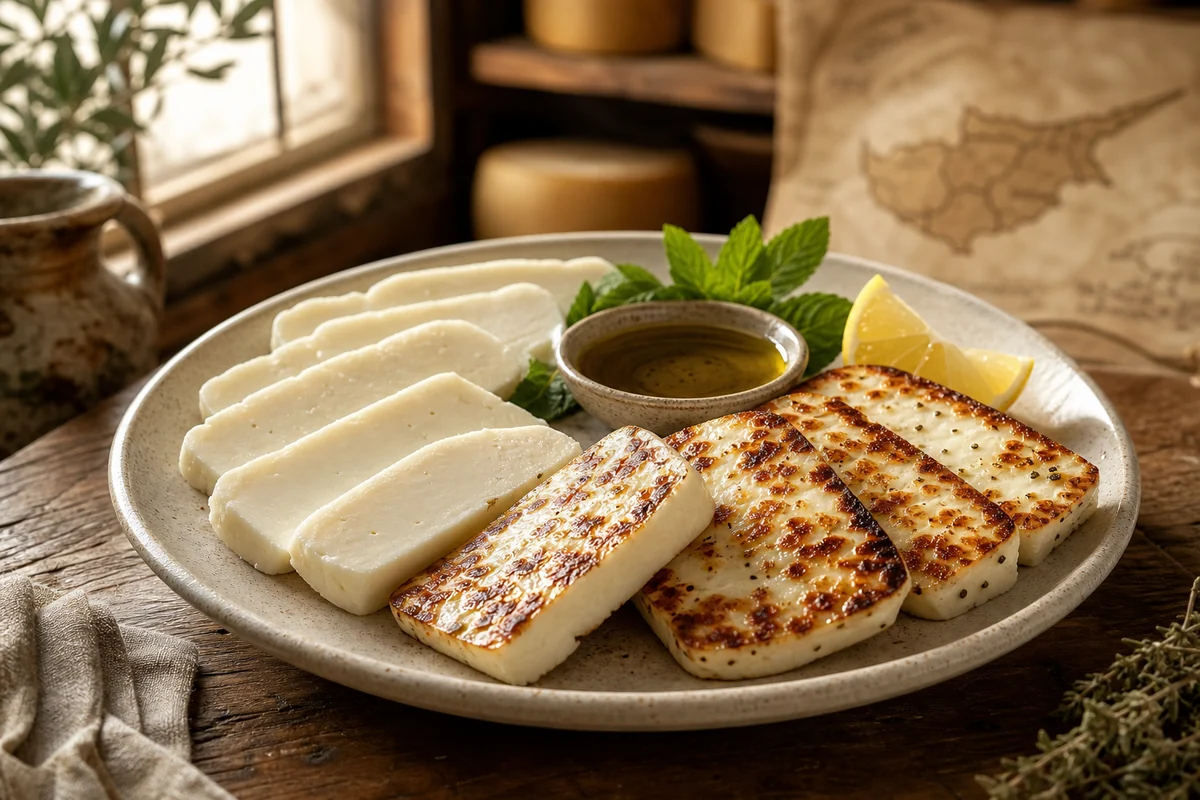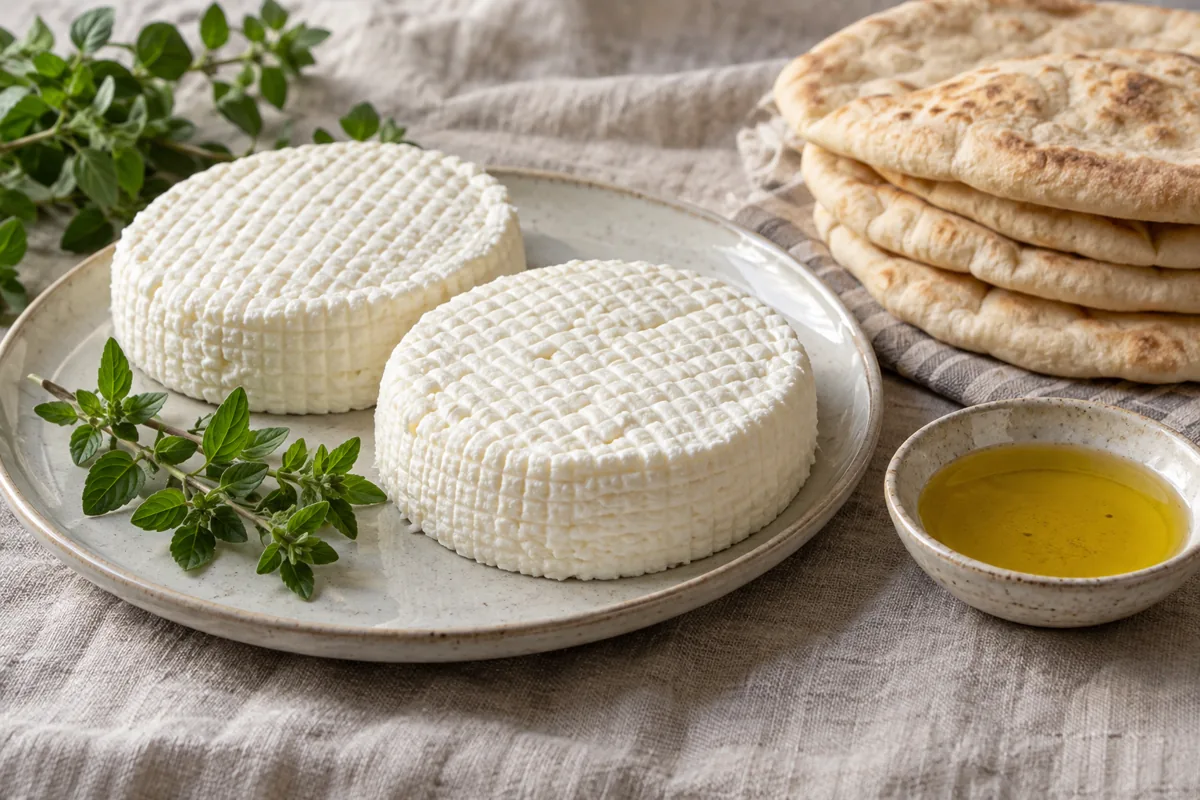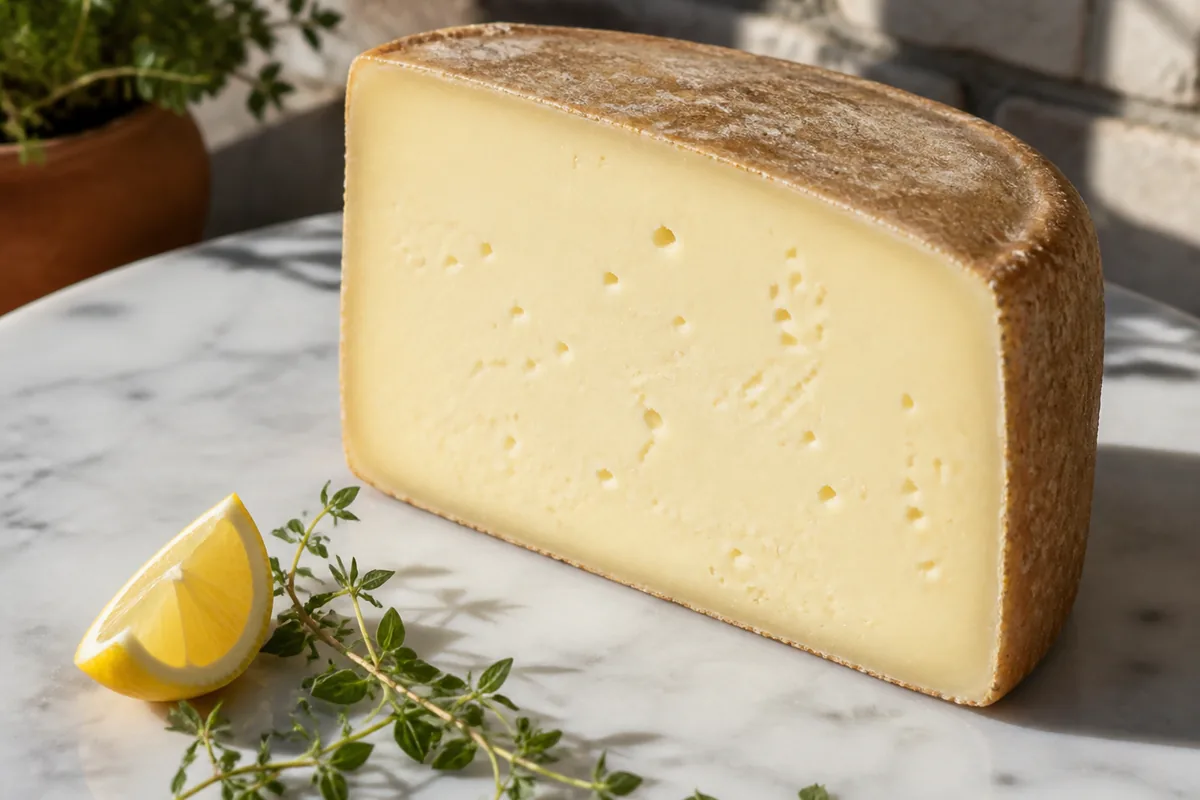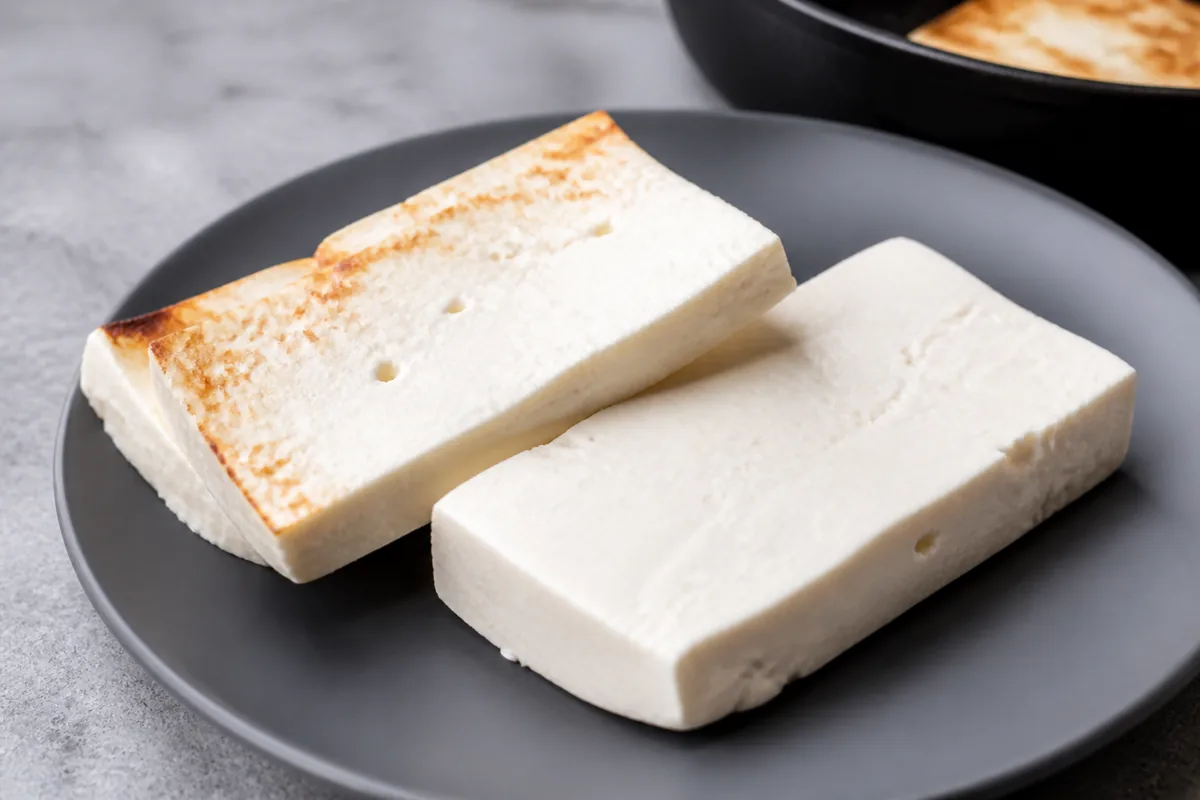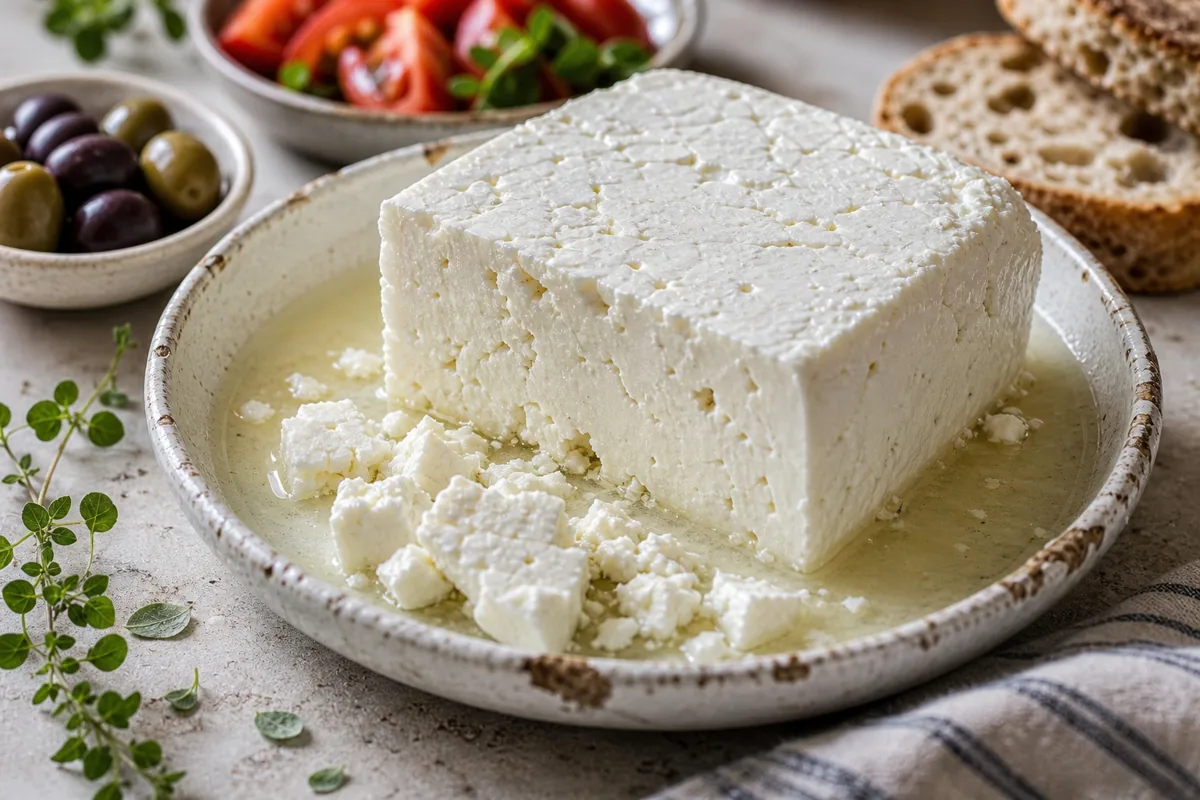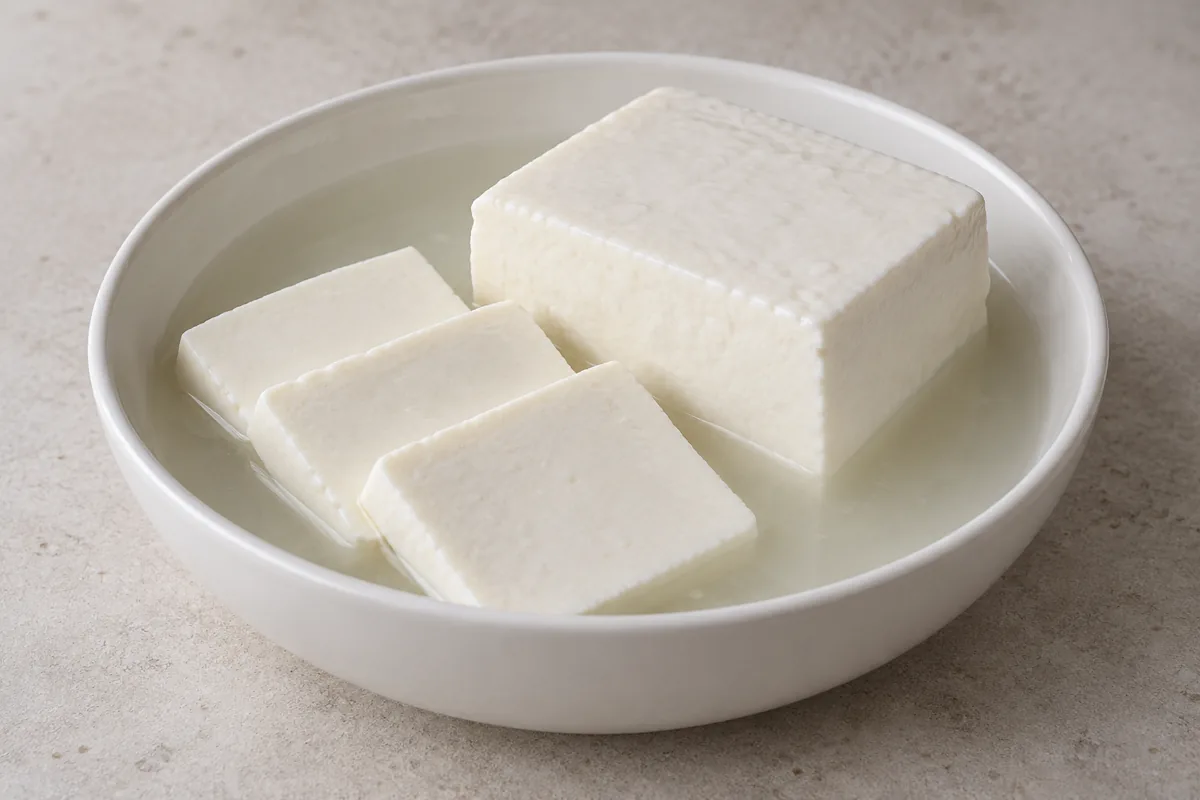
Ackawi, also spelled Akkawi or Akawi, is a white brined cheese named after the port city of Acre, called Akka in Arabic. It is sold in a tub of brine or as a block, and Karoun's Canadian Ackawi is a fresh white cheese.
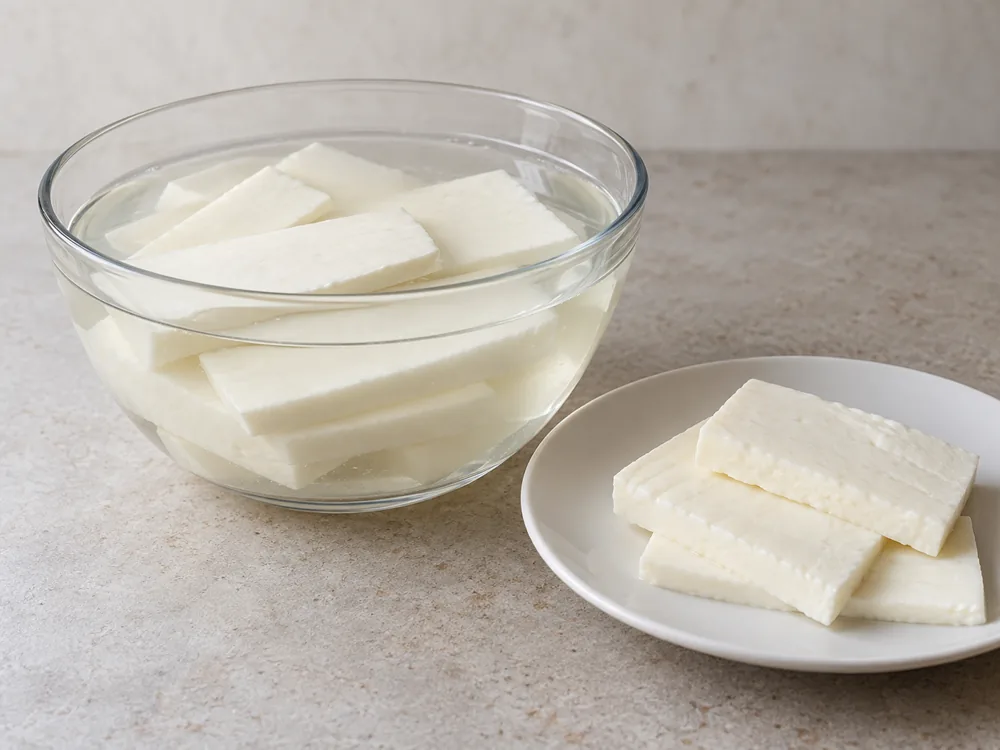
Recipes soak Ackawi in water to draw out its salt: 10 to 15 minutes in hot water before it tops manakeesh, and at least 6 hours in cold water when cheese sold in brine goes into knafeh.
In This Article
What Is Ackawi Cheese?
Ackawi is a Levantine cheese, and its name is an Arabic word meaning "from Acre".
Trade in it goes back more than a century. A 1913 history of Sidon lists 1,200 containers of Akkawi cheese among the goods the Lebanese city imported from Acre and Haifa in 1907.
Today it is produced in Israel, Palestine, Lebanon, Jordan, Syria, Egypt and Cyprus, and Karoun Dairies sells its own versions in Canada and the United States.
Ackawi is commonly made from pasteurized cow's milk, but it can also be made from goat's or sheep's milk.
The make is short, about an hour to set the milk and two days in brine:
- Setting: the milk is heated to 35 to 40°C, rennet is added, and the milk is left to curdle for about an hour.
- Draining: the whey is squeezed out through a cheesecloth.
- Shaping: the curds are hand-packed into square draining hoops.
- Brining: the cheese is cured in a salted whey brine for two days.
Its texture and flavour come from a specific culturing in which the curds are kept together for longer than in simpler-tasting curd cheeses such as Syrian cheese.
What Does Ackawi Look and Taste Like?
Descriptions agree on a smooth, mild cheese, and Wikipedia adds that it is white. They part on firmness, which runs from semi-hard to fresh depending on who describes it.
| Question | Answer | Given by |
|---|---|---|
| Colour | White | Wikipedia |
| Texture | Smooth | Wikipedia; Karoun US; Karoun Canada |
| Firmness | Semi-hard, firm, or fresh | Semi-hard: Wikipedia's infobox. Smooth and firm: Karoun US. A fresh white cheese: Karoun Canada |
| Flavour | Mild | Wikipedia, Karoun US and Karoun Canada |
Wikipedia compares the texture to mozzarella, feta or mizithra.
How Salty Is Ackawi?
A 30 g serving of Karoun's Canadian Ackawi carries 400 mg of sodium, 14% of the Daily Value, as it comes from the pack.
| Nutrient | Per 30 g serving |
|---|---|
| Calories | 90 |
| Total fat | 8 g |
| Saturated fat | 6 g |
| Cholesterol | 25 mg |
| Sodium | 400 mg (14% of the Daily Value) |
| Carbohydrate | 0 g |
| Protein | 5 g |
| Calcium | 15% of the recommended daily intake |
Scaled up, 400 mg in 30 g works out to about 1,330 mg of sodium in 100 g of cheese, before any soak.
Wikipedia and Karoun's Canadian page both call it salty, Karoun likening it to most Middle Eastern specialty cheeses, and Wafa Shami calls Akkawi more of a salty cheese.
Arabic cheeses like Akkawi are loaded with salt for preservation, which is why Tasbih of Cleobuttera treats soaking as a must before knafeh.
The level also differs by pack, since certain cheese brands are saltier than others. Compare the sodium line on your own pack with Karoun's 400 mg per 30 g.
How Do You Soak Ackawi to Get the Salt Out?
You soak it in water, and the time depends on the dish and the pack: 10 to 15 minutes in hot water for manakeesh, and from 2 hours to 6 hours or more in cooler water, changed often, for knafeh.
| Dish and pack | Water | Time | Recipe |
|---|---|---|---|
| Manakeesh, cheese shredded on top | Hot water, then rinsed and shredded | 10 to 15 minutes | Wafa Shami, Palestine in a Dish |
| Knafeh, thin slices | Lukewarm tap water, changed every half hour; bowls go in the fridge if soaking overnight | 2 to 6 hours, until the cheese no longer tastes salty | Tasbih, Cleobuttera |
| Knafeh, cheese sold in brine | Cold water, changed every hour | At least 6 hours | Fatimah, FalasteeniFoodie |
The pack sets the long end. Cheese that comes in salt water is saltier than cheese sold as a block, and that is why the soak of at least 6 hours is for cheese sold in brine.
Tasbih's time moves with how salty the cheese is and how thin she slices it. Because cheeses desalt at different rates, she gives each one its own bowl.
When the slices no longer taste salty, she drains them in a colander and squeezes out the extra water with her hand or the back of a spoon.
The CDC puts the limit for perishable food, which it says includes dairy, at 2 hours out of the fridge, or 1 hour above 90°F, so a soak that runs longer belongs in the refrigerator, as Tasbih's overnight soak does.
Does Ackawi Melt in Knafeh and Manakeesh?
Ackawi does not melt easily, and both knafeh recipes below blend it with other cheeses.
Tasbih of Cleobuttera makes knafeh na'ameh with a layer of molten cheese under a single crust, and Akkawi on its own tasted great but came out rather rubbery for her, without the stretch she wanted.
Her explanation is that the Akkawi sold in Egypt may differ from the Levantine one, and she separates two kinds. Baladya, or generic unspecified Akkawi, tastes great but does not stretch well, while Tchiki has less flavour but good elasticity and a softer texture.
Shredded Ackawi does melt on manakeesh, the flat dough rounds topped with cheese.
Wafa Shami spreads 12 oz of it over 16 to 18 small rounds, sprinkles nigella seeds on top, and bakes them at 420°F for 12 to 15 minutes, until the cheese melts and the edges turn golden brown.
Traditional manakeesh are about the size of a tortilla, and she makes hers smaller so they work as a side dish for gatherings.
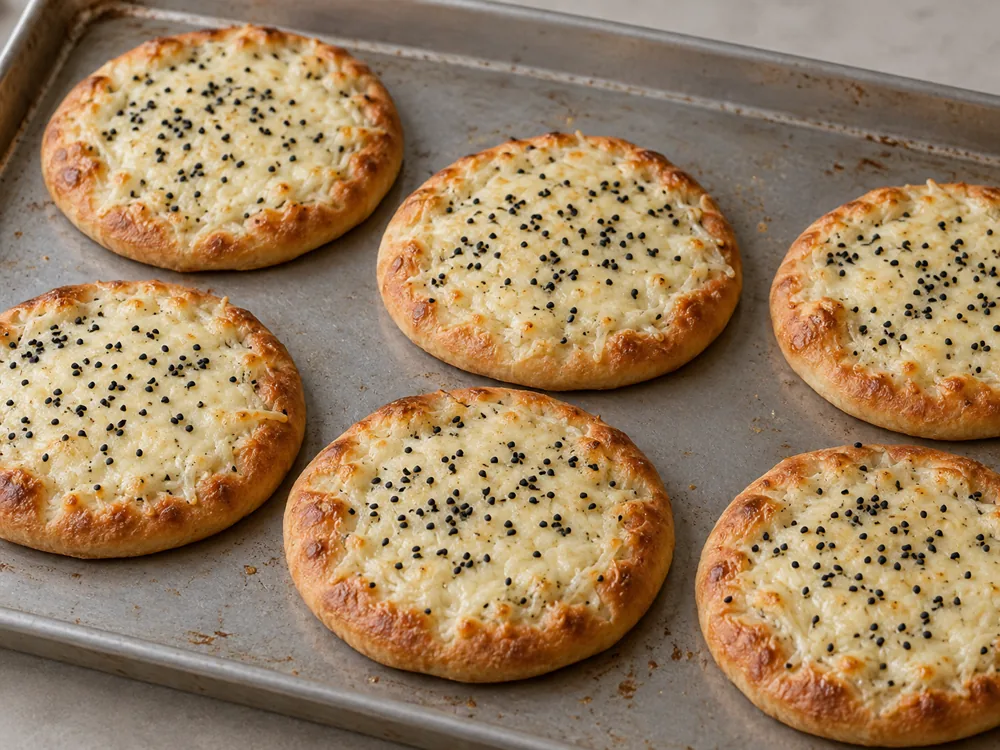
The cheese on manakeesh varies, but Akkawi is the most common, alone or blended with mozzarella and feta.
How Do Cooks Blend Ackawi for Knafeh?
Both knafeh recipes use Ackawi for only part of the filling, about 800 g of cheese in all, and pick the partner cheese for stretch: shelal in Tasbih's main blends, mozzarella in Fatimah's.
| Your Akkawi | Cheese for one knafeh | Recipe |
|---|---|---|
| Tchiki, with shelal | 500 g shelal and 300 g Tchiki Akkawi | Tasbih, Cleobuttera |
| Baladeya, with shelal | 600 g shelal and 200 g Baladeya Akkawi | Tasbih, Cleobuttera |
| Tchiki or Baladeya, without shelal | 550 g Tchiki Akkawi and 250 g majdoula, or 250 g Baladeya Akkawi and 550 g majdoula | Tasbih, Cleobuttera |
| Ackawi, with Nabulsi and mozzarella | Half a pound each of Ackawi and Nabulsi, 8 oz fresh mozzarella and 4 oz shredded mozzarella | Fatimah, FalasteeniFoodie |
Shelal is a Syrian braided cheese whose elasticity, Tasbih says, can be mistaken for melted marshmallows, though she finds its flavour a bit flat. In her mix, shelal supplies the stretch and Akkawi the flavour.
With Baladeya, the Akkawi that stretches less, the shelal share rises from a little less than 2 parts per part of Akkawi to 3.
By Tasbih's account, Baladeya is usually just generic, unspecified Akkawi, so a pack labelled only Akkawi most likely holds it. Tchiki, the stretchier kind, was a lot harder for her to find.
Fatimah gets the stretch from mozzarella instead, mixing fresh with shredded for the cheese pull, and she watches the pan so the cheese does not brown or burn.
The two recipes part on heat. Tasbih tried the oven first, and the crust barely browned after an hour while the cheese hardened.
She cooks on the stove instead, rotating the pan for 10 to 15 minutes until the crust edge turns deep golden brown and the cheese is nearly melted.
Fatimah bakes hers at 450°F for 30 to 35 minutes under foil, until the cheese bubbles and the edges brown. Her semolina and flour dough covers the cheese top and bottom, where Tasbih's is a single crust of ground kunafa dough.
As the cheese melts it releases moisture, so Tasbih pats it with a clean cloth while the pan turns, and sprinkles reserved crust crumbs over the cheese to absorb the rest.
Tasbih serves her knafeh right away, because it has to be eaten warm while the cheese is still gooey.
How Is Ackawi Served at the Table?
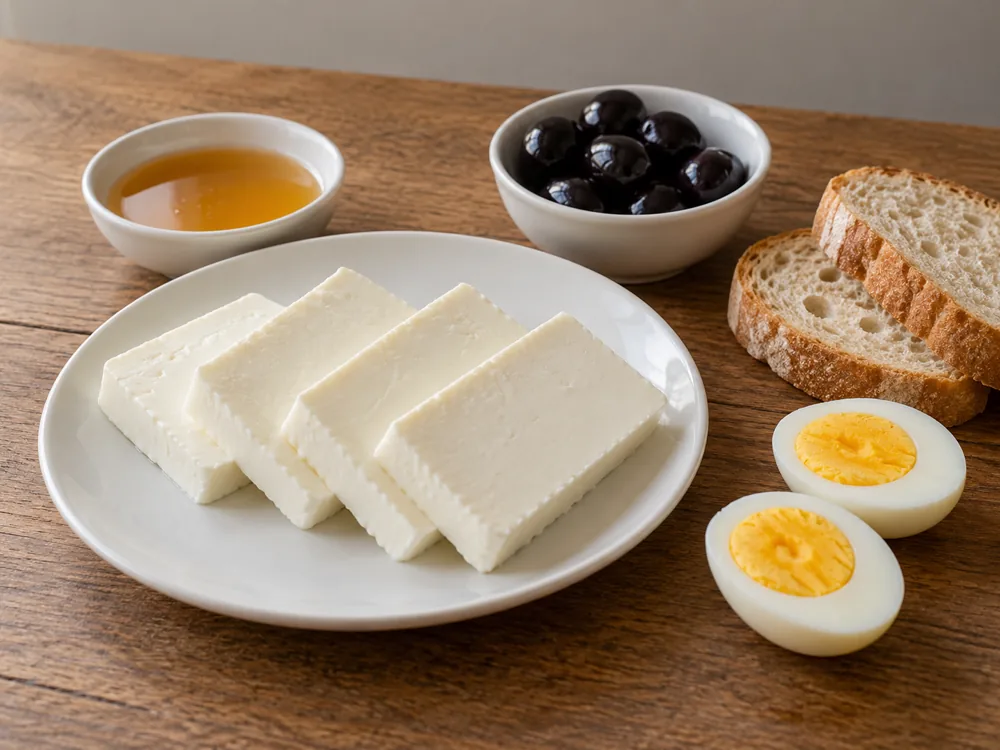
Ackawi is commonly used as a table cheese and eaten by itself. Karoun suggests it for sandwiches and describes a typical Mediterranean breakfast built around slices of white cheese, usually Akkawi.
| Pairing | Why It Works |
|---|---|
| Soft flatbread | Usually eaten with the cheese at lunch and dinner in the Middle East. |
| Fruit | Wikipedia and Karoun both name fruit as a partner for the cheese. |
| Honey | Part of the Mediterranean breakfast Karoun describes. |
| Black olives | Part of the same Karoun breakfast. |
| Boiled eggs | Part of the same Karoun breakfast. |
| Fresh local bread | Karoun's breakfast finishes with slices of fresh local bread. |
The cooked dishes move Ackawi to other parts of the day. Wafa Shami serves cheese manakeesh for breakfast or a snack, with a cup of tea or sliced cucumbers and tomatoes, and manakeesh in general is often eaten at suhoor during Ramadan.
Knafeh is a breakfast choice and a dessert, served at weddings, graduations and Eid, and in Ramadan as a suhoor or an after-iftar dessert.
What Does an Ackawi Label Tell You?
The two Karoun versions show how much one name can cover: their product pages differ on the milk, the coagulant and the other ingredients.
| Detail | Canada | United States |
|---|---|---|
| Milk | Pasteurized milk; Canadian cow milk | Pasteurized whole milk; Real California Milk, rBST free |
| Coagulant | Microbial enzyme | Non-animal kosher rennet |
| Other ingredients | Salt, calcium chloride | Cultures, natural butter flavor, salt |
If you avoid animal rennet, the coagulant line is the one to read. The Canadian label names a microbial enzyme and the US one non-animal kosher rennet, while the general make calls only for rennet, so on another brand, check that line.
Both pages name pasteurized milk, the word the NHS and CDC advice in the pregnancy section turns on.
Karoun's Canadian page calls the cheese low in fat, cholesterol and calories, yet its own panel prints total fat at 24% of the Daily Value for 30 g, with 72 of the 90 calories coming from fat. The 8 g of fat is more than a quarter of the serving by weight, so read the panel rather than the adjective.
Karoun's US page says its ingredient information is a general guide that may not match exactly what is sold in store, and that the most accurate information is always on the product.
At the shop, the label words to check are pasteurized milk, the coagulant (microbial enzyme or non-animal rennet if animal rennet is a concern), a tub of brine or a dry block for the soak, and, for knafeh, whether the pack names Tchiki or only Akkawi.
What Can Replace Ackawi?
The named substitutes are for knafeh. Fatimah of FalasteeniFoodie says Panela or queso fresco can stand in for Nabulsi and Ackawi if they are not available, and she says not to use halloumi.
For Nabulsi alone, she also lists baladi cheese, such as the Arz brand, or simply more Ackawi.
Tasbih falls back on mozzarella, 800 g of it in place of the Arabic cheeses. It needs no soaking if it is not salty, though she warns the knafeh will taste less authentic.
Nabulsi does not fix the stretch problem, since Tasbih found it as rubbery as Akkawi when she used it on its own.
Shortages have forced swaps before. During its civil war, after dairy animals were slaughtered, Lebanon had to import Akkawi from Eastern Europe.
In Los Angeles, people once made a substitute by soaking feta in several changes of water to take out the salt.
How Long Does Ackawi Keep?
Karoun gives its Canadian Ackawi a shelf life of 4 months refrigerated. Keep the tub or block in a refrigerator at 40°F (4°C) or below, the temperature the CDC gives for home refrigerators.
Cooked dishes keep on a shorter clock. Tasbih's knafeh is best eaten the same day it is made, and she reheats it over a simmering water bath.
Wafa Shami keeps baked cheese manakeesh in an airtight container in the fridge for up to a week, or in the freezer for up to 3 months.
For leftovers of either dish, the CDC's safe internal temperature for leftovers and casseroles is 165°F.
Is Ackawi Safe to Eat During Pregnancy?
Whether Ackawi counts as safe cheese during pregnancy depends on its milk, on whether it is served hot, and on whether it falls under the CDC's entry for fresh, soft cheeses.
The NHS lists pasteurised soft cheeses such as mozzarella, feta and halloumi as safe, along with pasteurised semi-hard cheeses such as edam. Pasteurized Ackawi, including both Karoun versions, fits either description.
The CDC is more cautious about fresh cheese. It lists feta and mozzarella made with pasteurized milk as safer, but puts any queso fresco-type cheese and similar fresh, soft cheeses on its riskier list, pasteurized or not.
Karoun sells Ackawi as a fresh white cheese, so before eating it cold, ask a midwife or doctor whether that riskier entry covers the cheese you bought.
Raw-milk Ackawi is on neither safe list. The NHS puts any foods made from unpasteurised milk under foods to be careful with, and the CDC lists soft cheese made from unpasteurized (raw) milk as riskier.
Heat settles it only when the cheese is cooked until steaming hot. The NHS says any cheese cooked until steaming hot is safe, and the CDC lists pasteurized soft cheeses heated to an internal temperature of 165°F or until steaming hot as safer.
A 2012 survey of 350 samples of five brined white cheeses sold in Jordan, including akkawi, found Listeria monocytogenes in 39 of them, or 11.1%, a rate for all five types together.
SOURCES & REFERENCES
What Other Questions Come Up About Ackawi Cheese?
No. They are separate Levantine cheeses: Fatimah's knafeh uses half a pound of each, and Tasbih found each of them rubbery when used on its own.
It depends on the coagulant. Karoun lists non-animal kosher rennet on its US Ackawi and a microbial enzyme on its Canadian one, while the general make calls only for rennet, so check the coagulant line on any other brand.
For manakeesh and knafeh, yes: the recipes soak it first, from 10 to 15 minutes for manakeesh to at least 6 hours for cheese sold in brine going into knafeh.