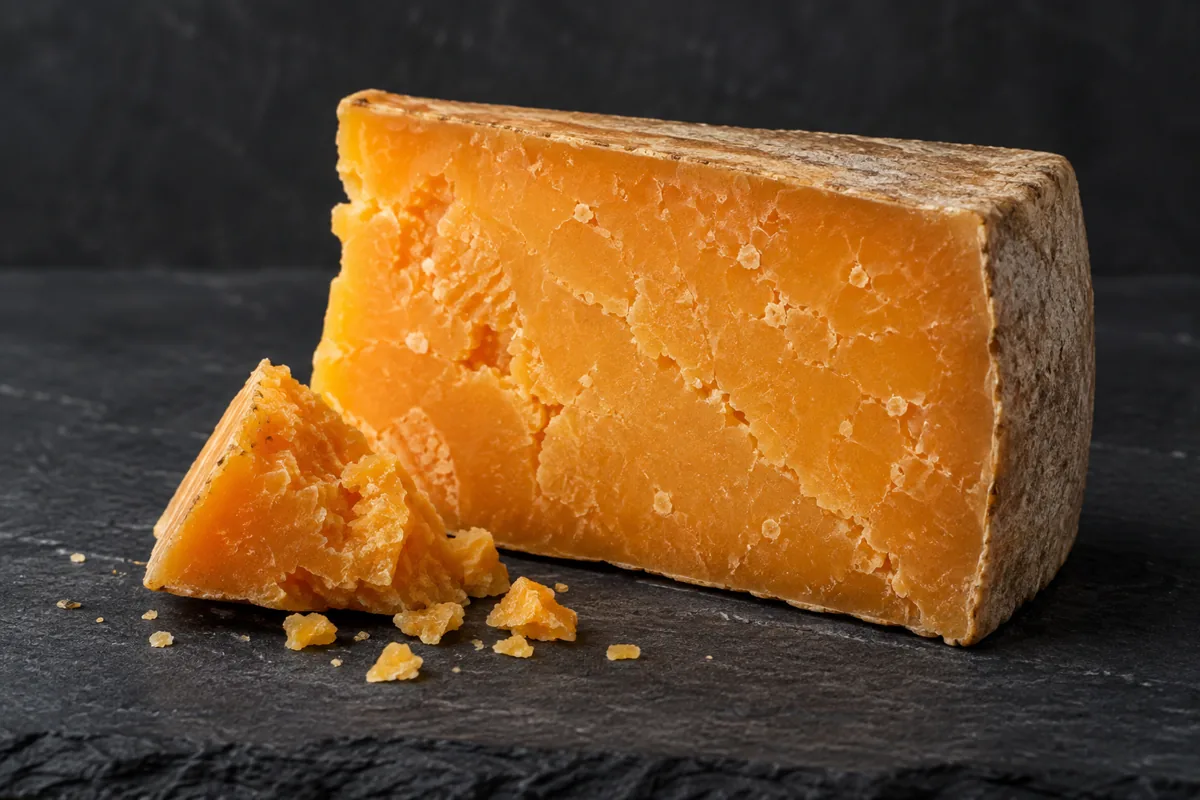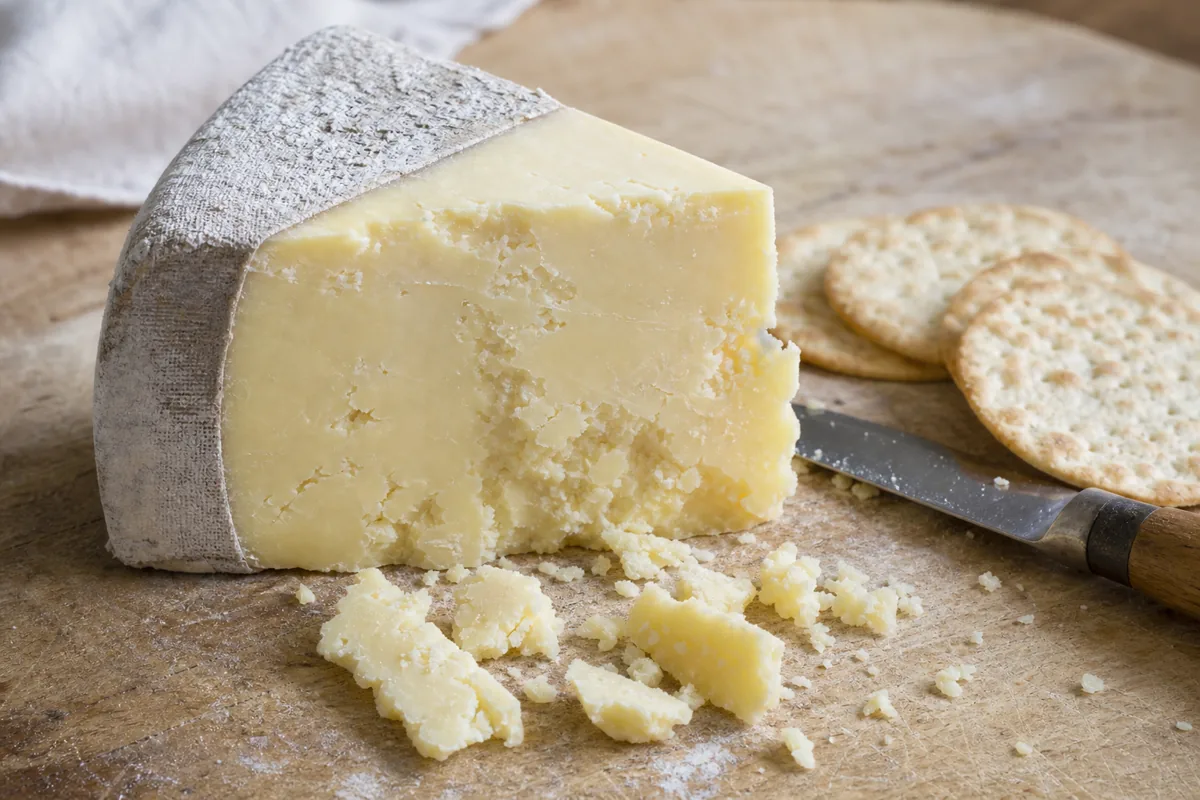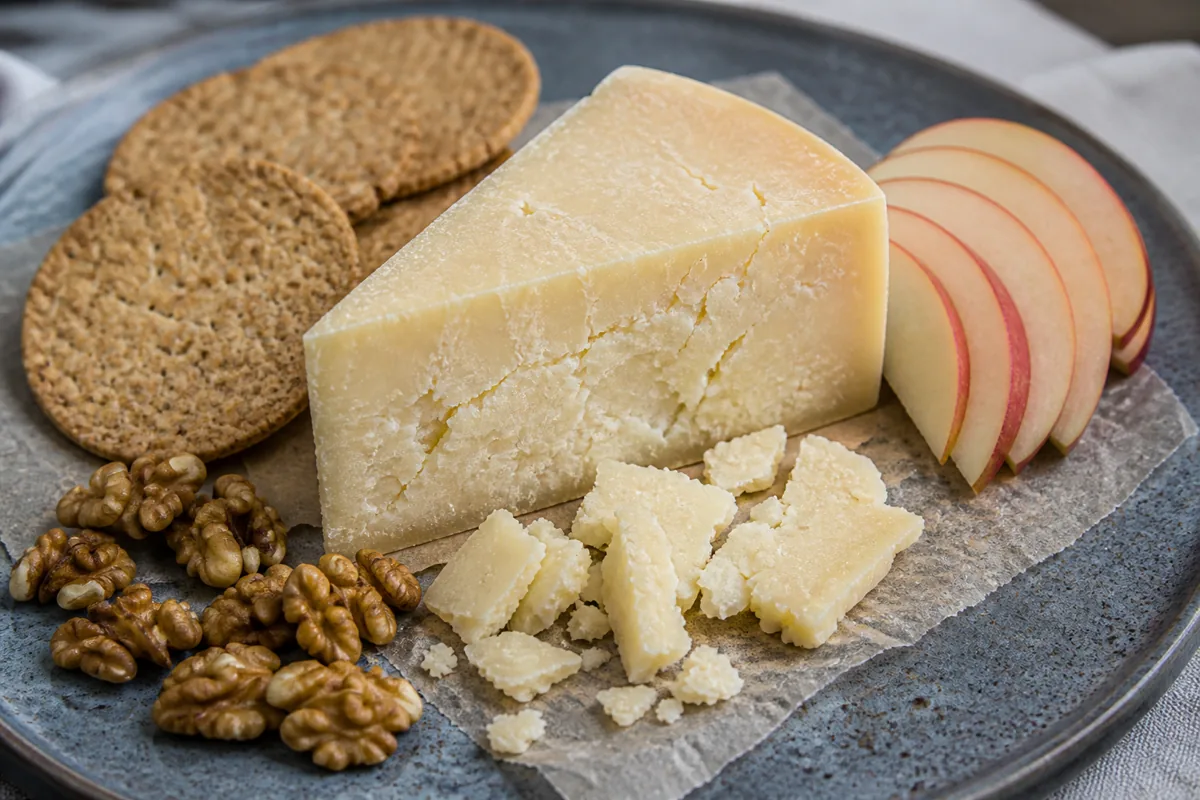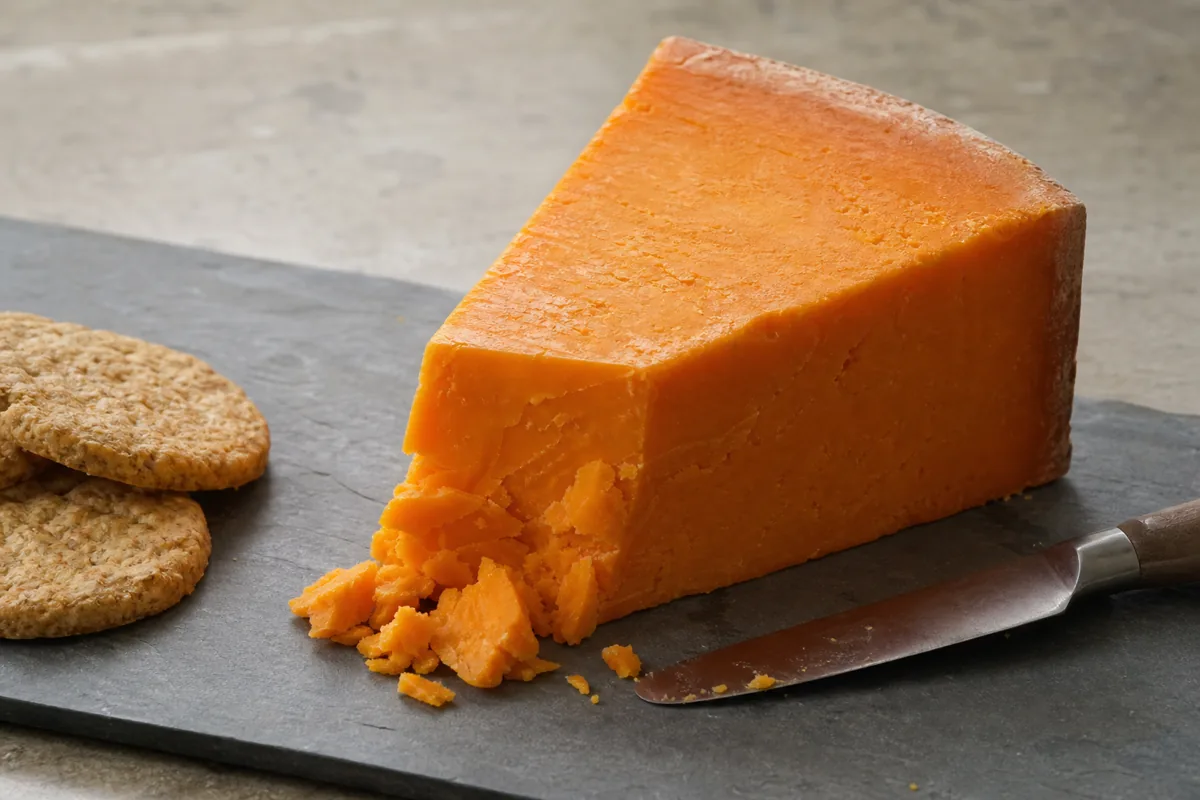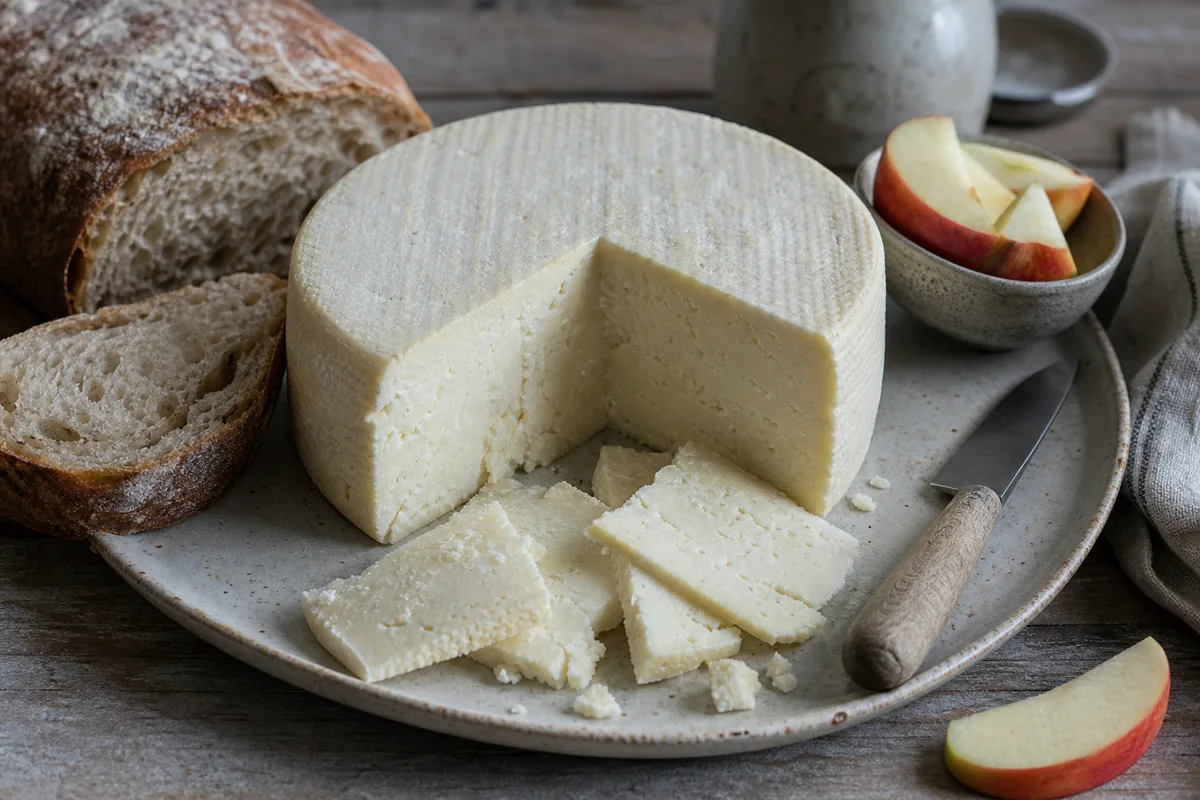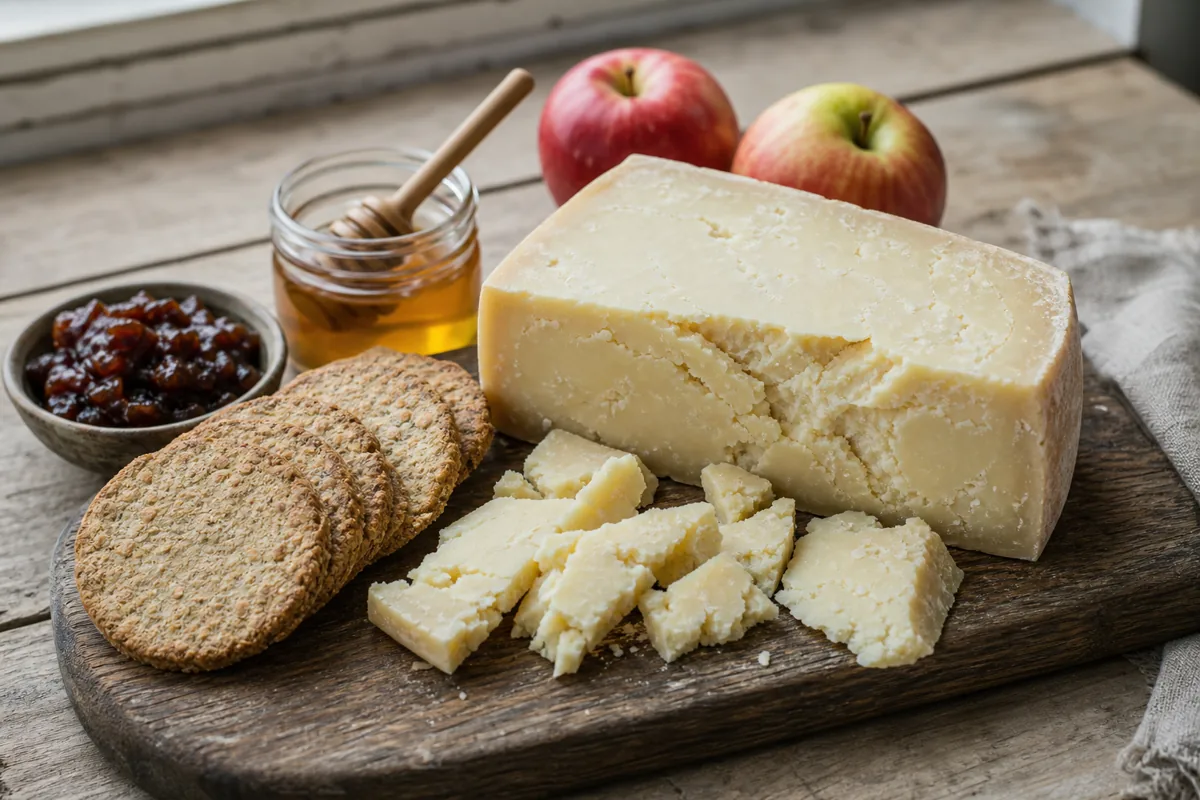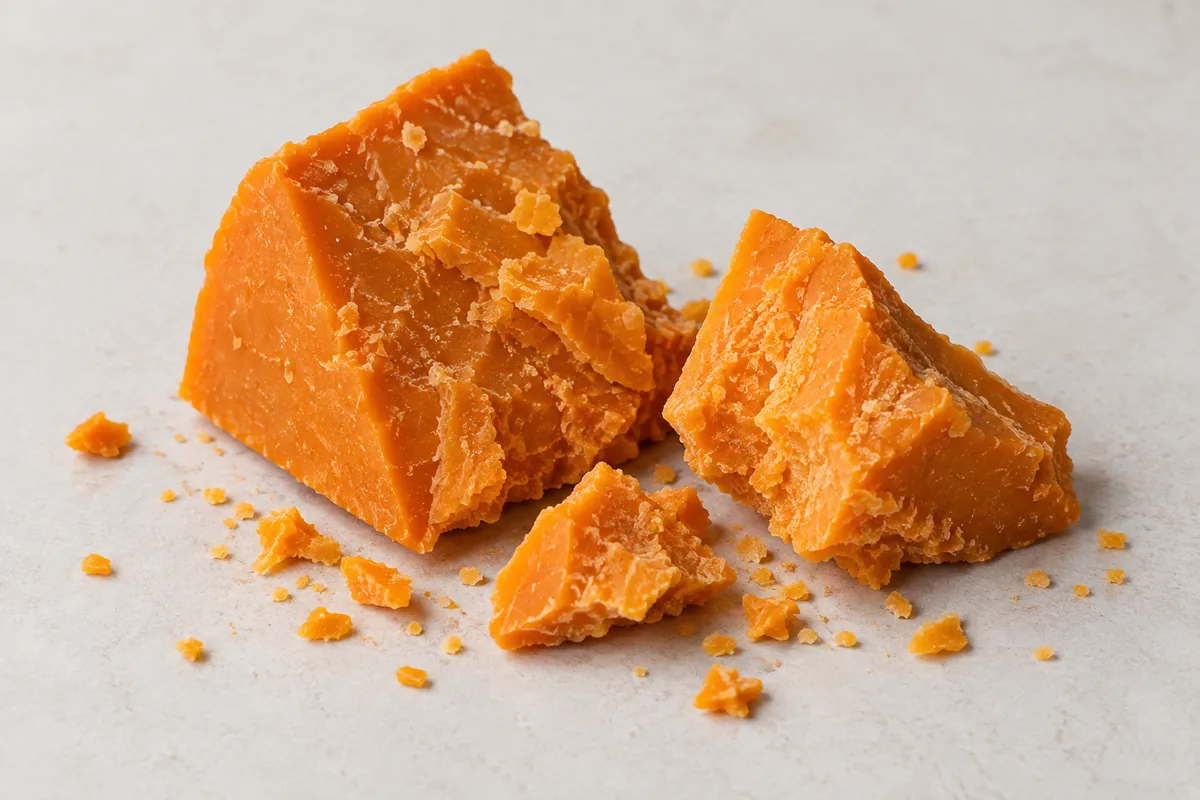
Auld Lochnagar is a crumbly, orange cheese made from unpasteurised cow's milk by the Cambus O'May Cheese Company near Ballater on Royal Deeside, and it is the aged version of the same dairy's Lochnagar.
The Scots word auld means old, and here it points to the ageing. The Scottish Food Guide says Auld Lochnagar matures for up to 12 months, and the plain Lochnagar it is named after eats differently.
In This Article
What Is Auld Lochnagar?
The creamery sits a few miles east of Ballater, inside the Cairngorms National Park, and Fine Cheesemakers of Scotland lists it as a member.
The Scottish Food Guide says the milk comes from the dairy's own Holstein Friesian cows, is not pasteurised, and goes into recipes that have not changed in 50 years.
A write-up in The List says founder Alex Reid raided his grandmother's recipe book to revive the cheeses of his youth. The same piece describes the creamery's cheese as made from a mix of morning curds and evening milk in the traditional farmhouse style, without saying whether that covers every cheese in the range.
Cheese.com classes Auld Lochnagar as a hard cheese with a natural rind and lists the milk as unpasteurised cow's milk.
What Does the Auld Change Compared With Lochnagar?
The two cheeses come from one dairy and one family recipe, so the name is the main thing that separates them on a counter. The Scottish Food Guide describes Lochnagar as creamy, fresh and nutty with a savoury aftertaste, and Auld Lochnagar as the aged version.
| Detail | Lochnagar | Auld Lochnagar |
|---|---|---|
| Ageing | No age figure found | Up to 12 months in cold, damp rooms with regular turning (Scottish Food Guide, Cheese.com) |
| Texture | Creamy (Scottish Food Guide) | Compact and crumbly (Cheese.com) |
| Flavour | Fresh and nutty with a savoury aftertaste (Scottish Food Guide) | Tangy and nutty with a fresh finish (Cheese.com) |
| Colour | No colour found | Orange; deep orange from annatto (Cheese.com, The Cheeselover) |
| Milk | Unpasteurised (Scottish Food Guide) | Unpasteurised (Scottish Food Guide, Cheese.com) |
The ageing figure is up to 12 months, so the age of any one piece depends on what the seller can tell you.
What Colour and Flavour Should You Expect?
The paste is orange. Cheese.com lists the colour as orange, and The Cheeselover, the one first-hand account we found, calls the cheese deep orange and says the colour comes from annatto.
That makes the orange an added colour rather than something the milk or the ageing produces, so a pale piece sold under this name would not match either description.
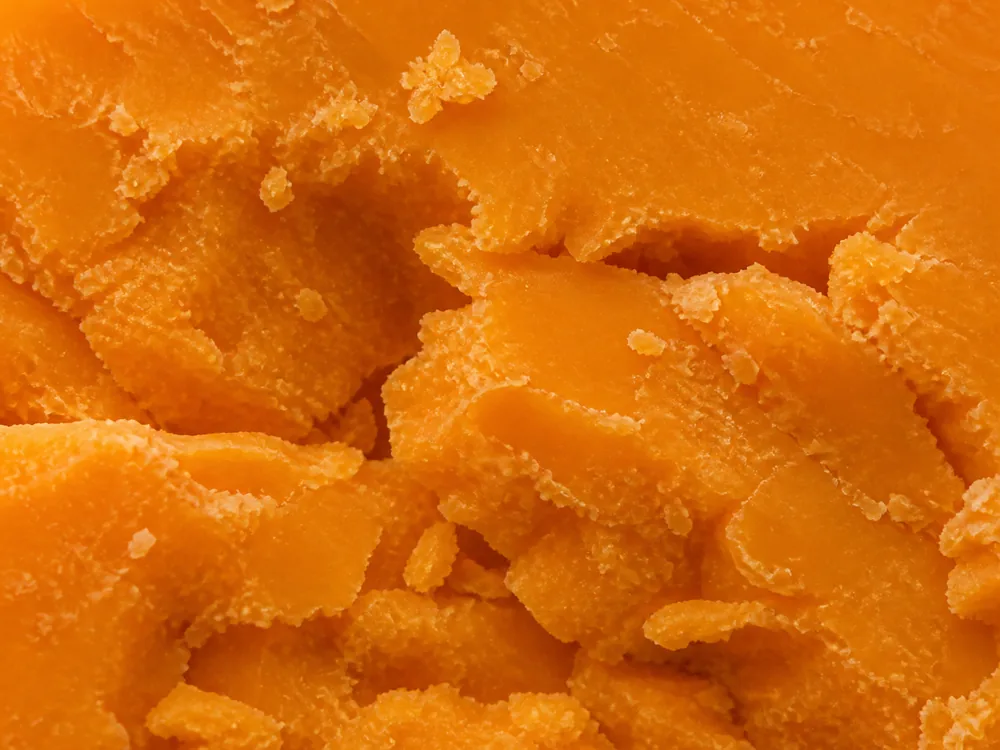
Cheese.com describes the taste as tangy and nutty with a fresh finish, and its attribute list adds grassy, mellow and subtle. The Cheeselover found more bite than the milder Cambus O'May flagship, though not as much as a mature farmhouse cheddar.
Is Auld Lochnagar Raw Milk, Vegetarian, and Safe in Pregnancy?
It is raw milk: the Scottish Food Guide and Cheese.com both say the milk is unpasteurised.
The Scottish Food Guide says the creamery uses traditional rennet, and a profile from Pong Cheese describes the creamery's method as adding rennet from a calf's stomach. That is animal rennet, so a vegetarian should ask the seller about the rennet in Auld Lochnagar.
For cheese in pregnancy the two agencies word raw-milk hard cheese differently. The NHS lists pasteurised or unpasteurised hard cheeses such as cheddar, gruyère and parmesan as safe to eat, while the CDC lists hard cheese made with pasteurized milk as the safer choice and dairy made from raw milk as riskier.
Ask a midwife or doctor about eating Auld Lochnagar during pregnancy.
Where Can You Buy Auld Lochnagar and What Goes With It?
The Scottish Food Guide says the creamery sells through delis and cheese counters and at local farmers' markets, and Visit Cairngorms lists a shop and the Milk Hoose cafe at the creamery itself.
Check the seller's label for price, pack size, and storage guidance.
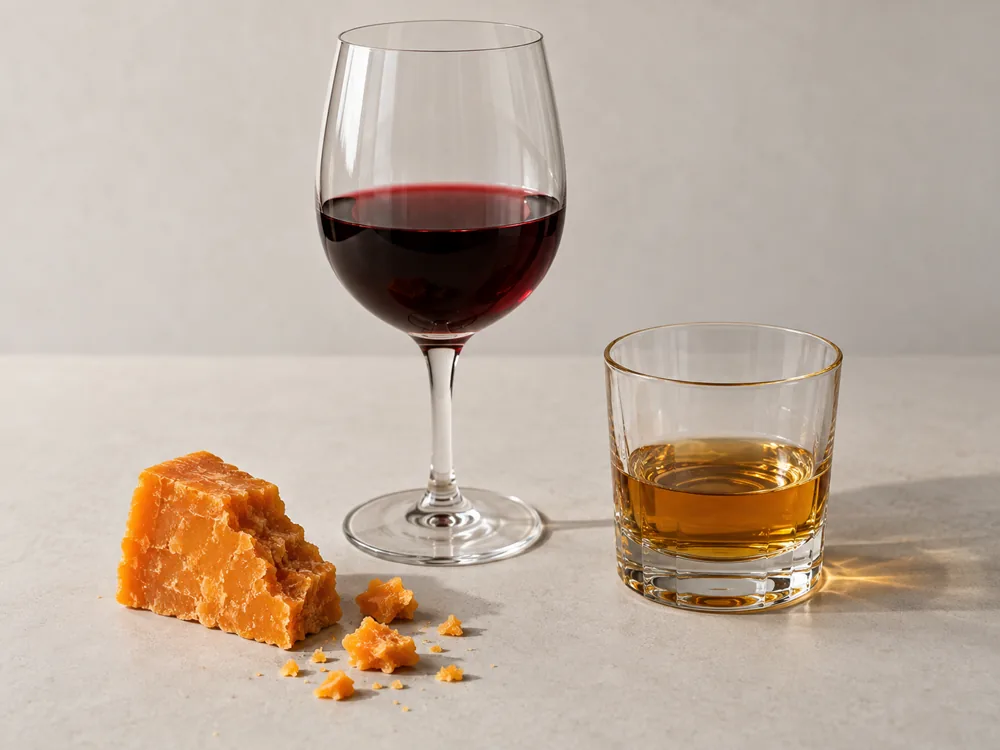
The only pairings we found come from one visit to the dairy, written up by The Cheeselover, and both are drinks.
| Pairing | Type | Why It Works |
|---|---|---|
| Auld Lochnagar + Speyside whisky | Drink | Alex Reid's suggestion, as reported by The Cheeselover. |
| Auld Lochnagar + Chilean Cabernet Sauvignon | Wine | The organic Chilean Cabernet Sauvignon The Cheeselover paired with it successfully. |
What Can You Use Instead?
Outside Scotland the realistic choice is a stand-in, and the closest match on colour is an orange Red Leicester. Wikipedia says it has been coloured orange with annatto since the 18th century and calls it an English cheese similar to cheddar but crumbly.
For texture, a moist, crumbly Cheshire is close, since Wikipedia describes it as dense and semi-hard. Its red version is coloured with annatto to a deep orange.
A crumbly Lancashire gives the crumble without the long ageing. Wikipedia says it dates from the 1950s, is made from a single day's milk and matures for only 6 to 8 weeks.
If the crumble matters more than the colour, a hard, crumbly Caerphilly is the option, and Wikipedia calls it almost white.
Wikipedia says Red Leicester and Cheshire are frequently pasteurised and Caerphilly can be either pasteurised or unpasteurised, so none of these is guaranteed to share the raw milk of Auld Lochnagar.
SOURCES & REFERENCES
What Else Do People Ask About Auld Lochnagar?
No. Both come from the Cambus O'May Cheese Company, but the Scottish Food Guide describes Auld Lochnagar as the aged version, maturing for up to 12 months, while Lochnagar is described as creamy, fresh and nutty.
Orange. Cheese.com lists the colour as orange, and The Cheeselover describes it as deep orange and coloured with annatto.
Probably not. The creamery's method is described as adding rennet from a calf's stomach, so ask the seller about the rennet.
Yes. The Scottish Food Guide and Cheese.com both say it is made from unpasteurised cow's milk, so check current pregnancy guidance for raw-milk hard cheese before serving it to a pregnant guest.