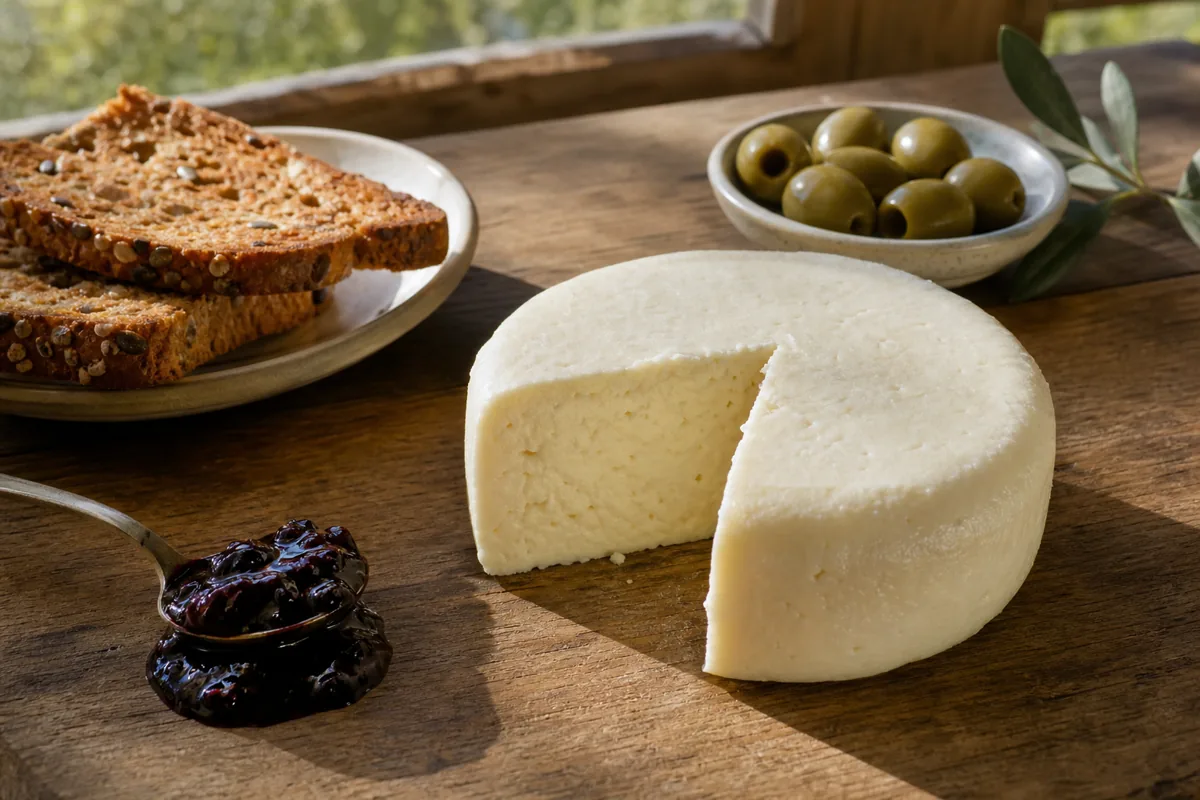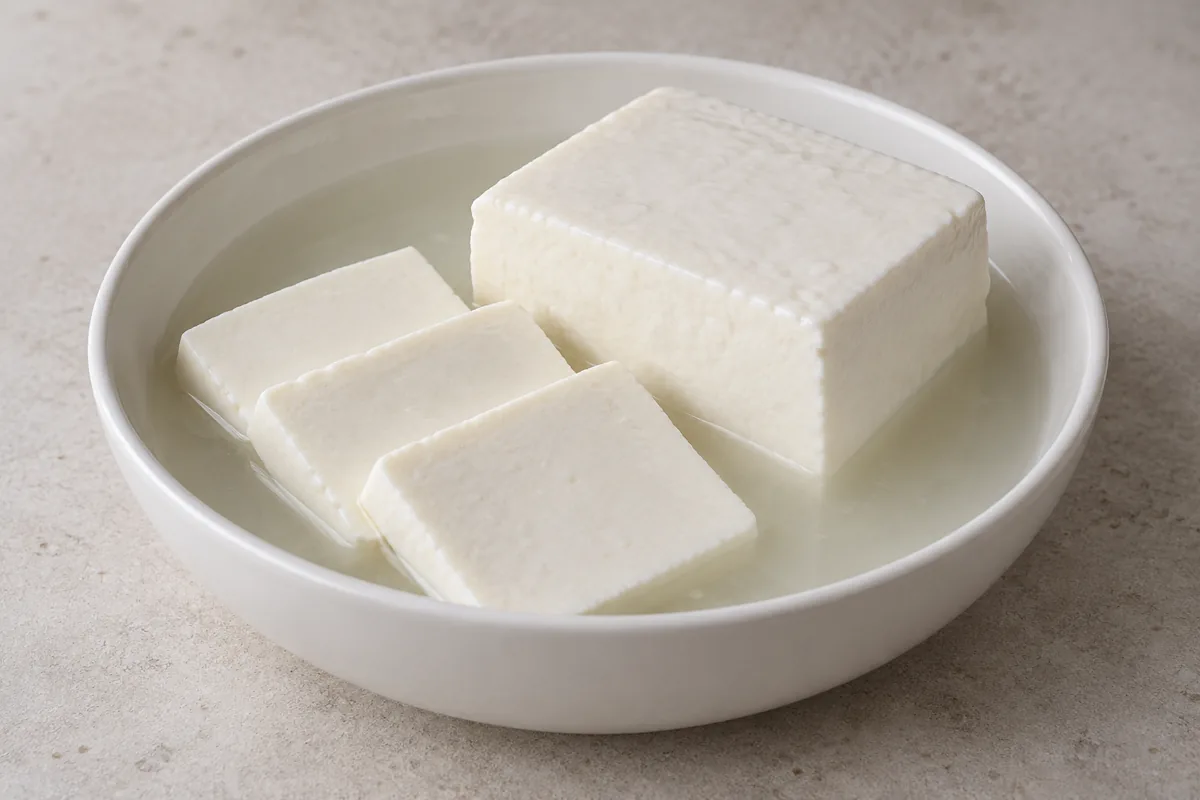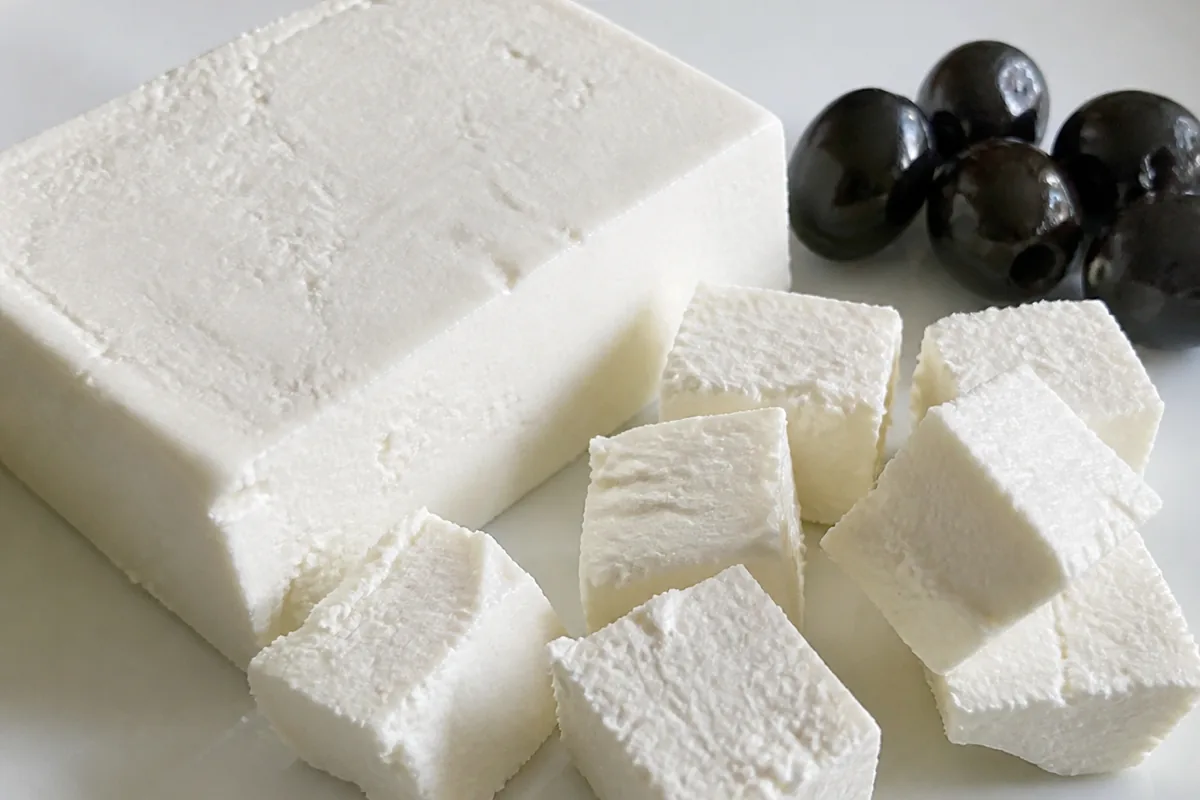
Beyaz peynir is Turkish for white cheese, and it names a family of brined cheeses with no single recipe. Sources describe it as anything from a young curd eaten fresh to a cheese held in brine for more than six months.
The milk, the brine time and the label decide which one you are buying, so each figure below carries the name of the source that gave it.
In This Article
What Is Beyaz Peynir?
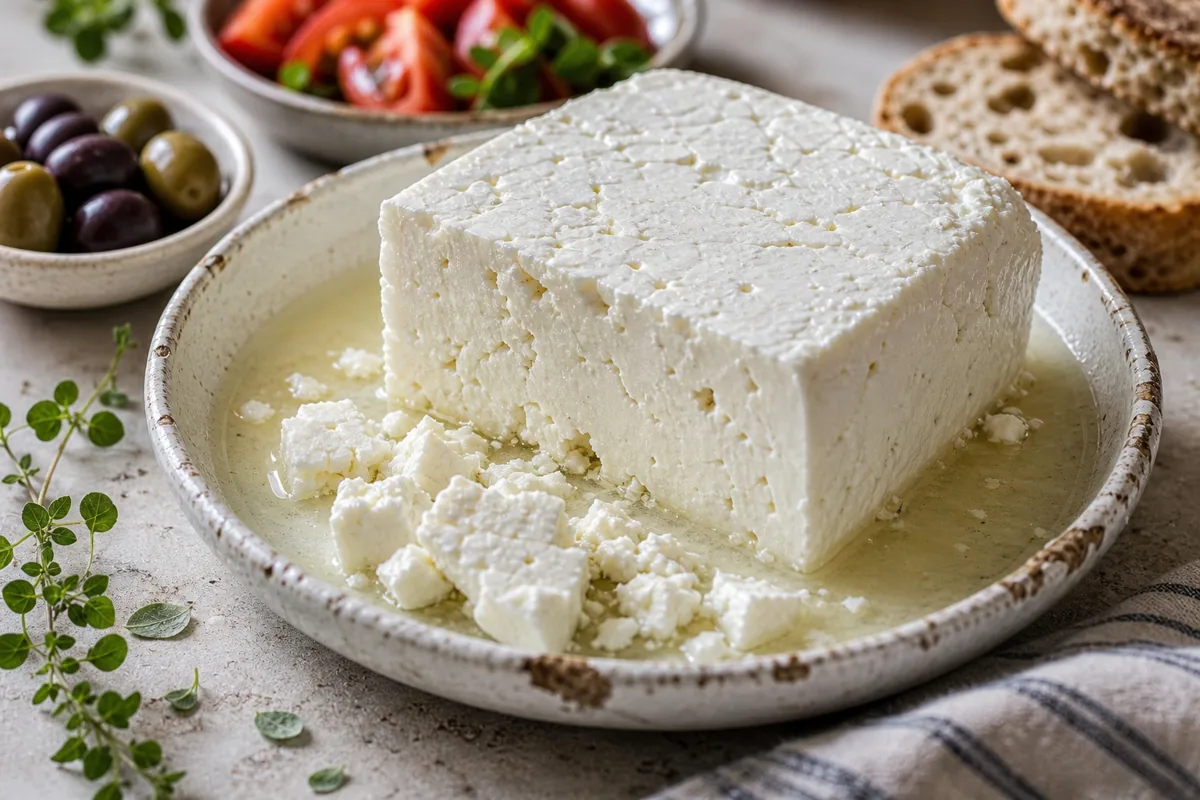
Wikipedia and Cheese.com describe a pure white, rindless brined cheese with a grainy appearance, made from sheep, goat or cow milk. The Turkish Wikipedia entry adds buffalo milk and blends of all four.
MyCheese gives the texture as soft, moist and slightly crumbly, with about 55 percent moisture, a mild milky aroma and a clean salty finish.
Wikipedia says the styles run from non-matured curds to a quite strong mature version, so two blocks sold under the same name can taste very different.
The milk treatment differs between sources. Wikipedia and Cheese.com describe unpasteurized cow, goat or sheep milk, while the Turkish Wikipedia entry gives the pasteurisation rule for cheese milk in Türkiye as 63 to 65°C for 30 minutes or 72 to 75°C for 15 to 20 seconds.
The registered Kırklareli and Edirne cheeses both use pasteurised milk, and the Turkish Wikipedia entry says white cheese made from raw milk should be matured for 90 days before it is eaten.
Rennet is a second point where sources part ways, with Wikipedia and Cheese.com naming vegetable rennet and MyCheese naming microbial rennet. Cheese.com marks the cheese as vegetarian, but the Kırklareli specification names natural animal rennet (doğal şirden mayası).
How Is It Made, and Why Do Brine Times Run From Hours to Months?
Wikipedia describes curds that are pressed, chopped and strained, then cut into blocks, salted and put in brine. MyCheese adds milk warmed to about 32°C, curd cut into walnut-sized pieces and pressed lightly, and a brine of 10 to 15 percent salt.
Sources that quote a few hours and sources that quote six months are describing different stages, because the cheese goes into brine twice.
The Kırklareli specification writes both stages out. The first is 8 to 10 hours in a 14 to 16 Baumé brine, and after two to three days of pre-ripening in tins the cheese matures at least 6 months at 4 ± 2°C under a weaker brine of 6 to 7 Baumé.
Guide Istanbul describes the same two steps, a brine bath of up to 10 hours followed by months in cans.
| Kırklareli specification (TürkPatent) | 8 to 10 hours in the first brine, then at least 6 months at 4 ± 2°C |
| Guide Istanbul | Up to 10 hours in a brine bath, then a minimum of 3 months and up to 2 years in cans |
| Turkish Wikipedia | 2 to 12 hours in the first brine, a rest of 12 hours to 4 days, and 90 days of maturing for raw-milk cheese |
| English Wikipedia | Approximately six months in brine |
| Cheese.com | Usually stored in brine for more than six months |
| MyCheese | Often eaten fresh; artisanal versions up to about two months |
The Turkish Wikipedia entry also lists what the salt does: it protects against unwanted microorganisms and surface spoilage, stops gas-forming and putrefying bacteria, draws out whey and improves taste. Too much salt slows ripening and leaves the curd hard.
Which Beyaz Peynir Has Written Rules? Ezine, Kırklareli and Edirne
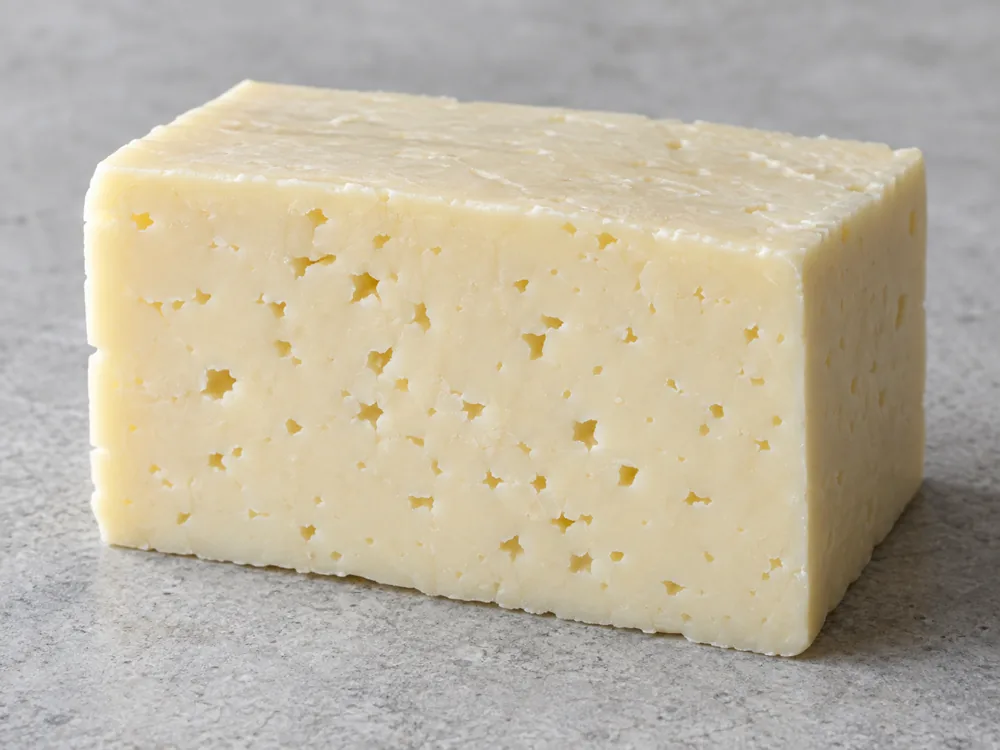
Among the sources checked here, three names carry a written specification: Ezine peyniri, Kırklareli beyaz peyniri and Edirne beyaz peyniri. Only Ezine holds EU protection.
The EU single document calls Ezine peyniri a creamy white cheese made from sheep, goat and cow milk and matured in brine for at least 8 months. Depending on the season, the mix is 35 to 45 percent sheep milk, at least 40 percent goat milk and at most 25 percent cow milk.
The paste is white to light yellow and semi-hard or firm, with small holes and no skin, and the document lists a buttery, cooked-milk aroma and a mild-sweet, salty and sour taste.
The rules reach back to the farm. Milk is collected mainly from March to July, the animals eat only fodder from the defined area of Çanakkale province with no concentrated feed, and sea salt is the only salt used.
Türkiye's agriculture minister, quoted by the EEAS, called it the first Turkish cheese variety granted geographical indication status by the EU. Writing in 2014, before the EU recognition, Guide Istanbul warned that Ezine had become marketing jargon on shop shelves, while the EU document requires the Ezine Peyniri logo on the packaging of the protected cheese.
Kırklareli beyaz peyniri holds a Turkish origin name registered in 2020 under number 636. It is made from cow milk alone or from 30 to 45 percent sheep, 25 to 40 percent goat and 15 to 30 percent cow milk, and it must mature for at least 6 months.
A Kırklareli cheese made only from cow milk has to say so on the label, and the finished cheese must contain at least 49 percent dry matter, 27 percent fat and 17 percent protein.
| Point | Ezine peyniri | Kırklareli beyaz peyniri |
|---|---|---|
| Status | EU protected designation of origin | Turkish origin name, registered 23 December 2020 |
| Milk | Sheep, goat and cow, by season | Cow alone, or sheep, goat and cow |
| Minimum maturing | 8 months in brine | 6 months at 4 ± 2°C |
| Area | Ezine, Bayramiç and Ayvacık districts and listed villages of Çanakkale province | Kırklareli province |
Edirne beyaz peyniri also holds a Turkish geographical indication. The culture portal of Türkiye's Ministry of Culture and Tourism says it is made only from milk, rennet and salt, with the milk pasteurised at 65 to 68°C for 20 to 30 minutes, and it gives no milk ratio or maturing time.
How Is Beyaz Peynir Different From Feta?
Wikipedia and Cheese.com both say beyaz peynir resembles Greek feta, and the two share a white, rindless, brined body. Wikipedia describes feta as crumbly with a slightly grainy texture and small or no holes.
The rules differ. Protected feta made in Greece must use sheep milk or sheep milk with up to 30 percent goat milk from the same area, and it matures at least two more months in brine after dry salting.
None of the sources checked here sets a milk ratio for beyaz peynir as a category, and its milk can be sheep, cow or goat. Wikipedia adds that most cheese sold as feta in the United States is made from cow milk, so a name on the label settles the milk in neither case.
| Feta (EU protected name) | Beyaz peynir |
|---|---|
| Sheep milk, or sheep with up to 30 percent goat milk from the same area | Sheep, cow or goat milk, alone or mixed, with no category ratio in the sources checked |
| At least 2 more months in brine after dry salting | Set by the type, from a first brine of hours to the legal minimums of the named cheeses |
| Crumbly, slightly grainy, small or no holes | Slightly grainy; soft and slightly crumbly per MyCheese, semi-hard with small holes for Ezine |
How Is Beyaz Peynir Eaten?
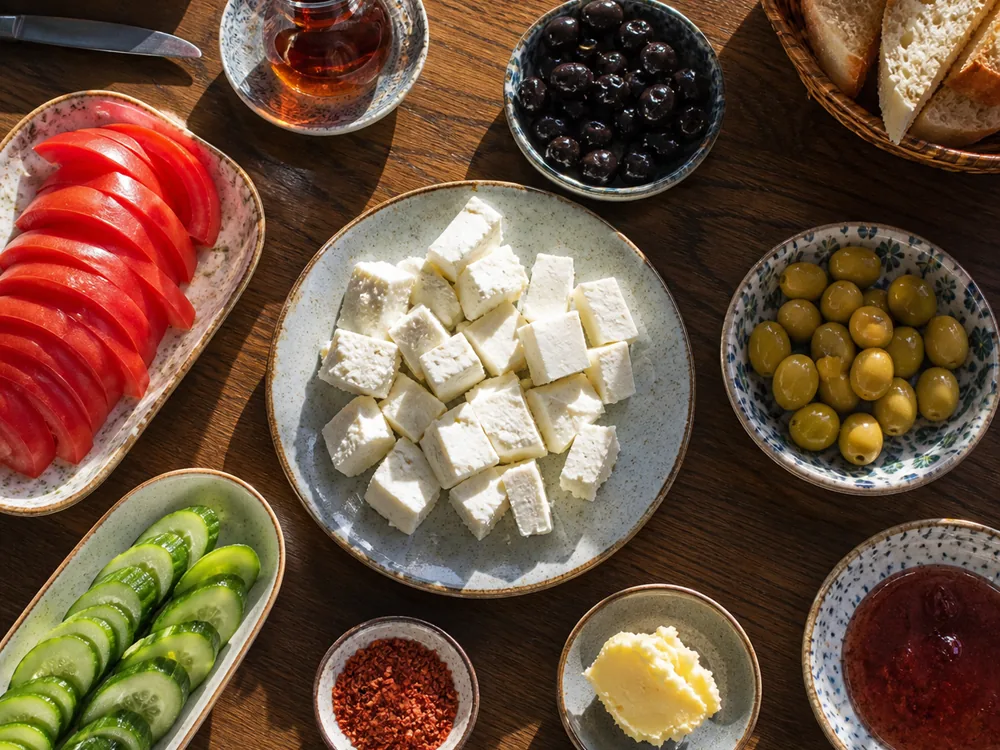
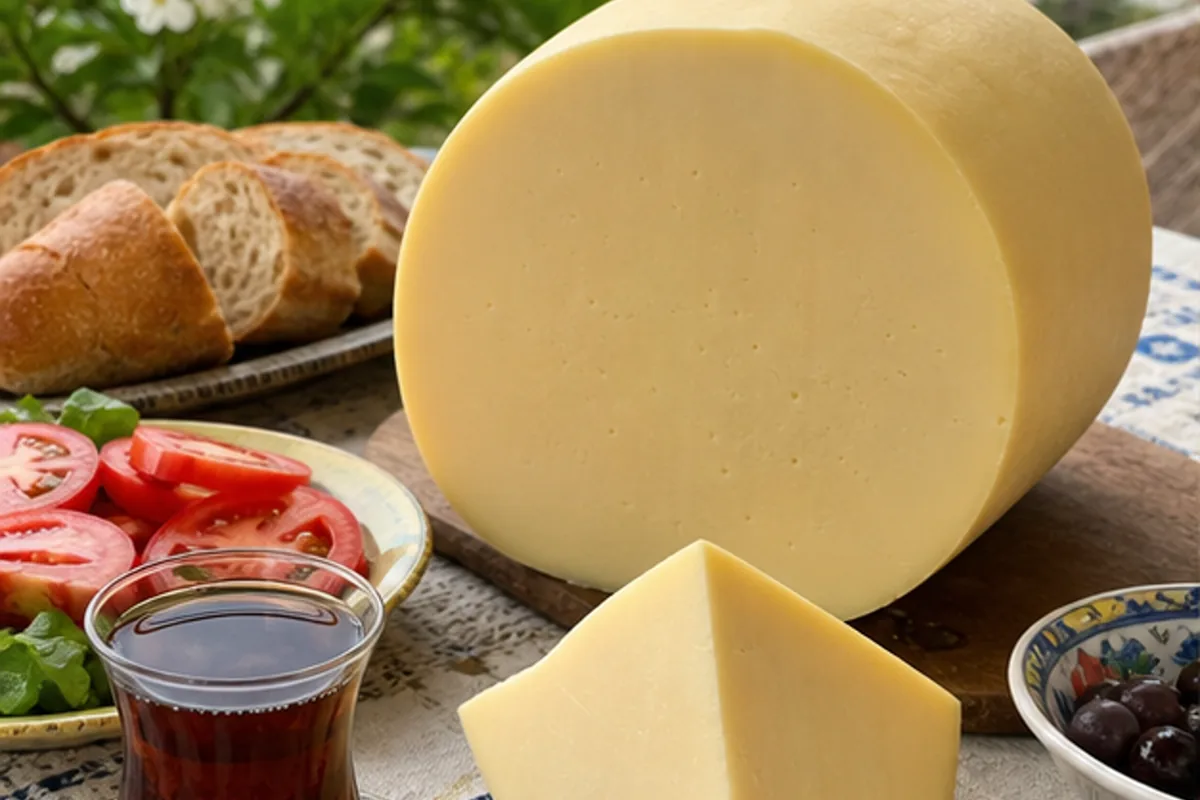
Guide Istanbul says a Turkish breakfast is unthinkable without it, laid out with green and black olives, thinly sliced cucumbers and tomatoes and white bread, and sometimes sour cherry jam. Cooking Gorgeous lists beyaz peynir among the common Turkish breakfast cheeses, next to kaşar, tulum, Ezine, lor and Kars gravyeri.
Outside Türkiye, the same site calls feta the easiest stand-in for beyaz peynir and a mild cheddar-style cheese the stand-in for kaşar.
GoTürkiye describes çay, Turkish black tea, served in tulip-shaped glasses to open the meal, and Cooking Gorgeous calls it the main breakfast drink.
Beyond the breakfast table, Wikipedia names menemen, börek, gözleme and pide as uses, and MyCheese lists salads, pastries and mezze platters. A home cheesemaking page adds that beyaz peynir with sweet melon is an indispensable food on the raki table.
| Use | How It Works |
|---|---|
| Plain at breakfast | Cut from the block and served with olives, cucumber, tomato and bread, the spread Guide Istanbul describes. |
| Menemen | Wikipedia lists the tomato-and-egg dish among its uses. |
| Börek and pastries | Wikipedia, the Turkish Wikipedia entry and MyCheese all name pastry dishes, and MyCheese says it is stuffed into them. |
| Gözleme and pide | Wikipedia lists both; MyCheese says it is melted on pide. |
| Salads and mezze | MyCheese says it is crumbled into salads and served on mezze platters. |
| Melon and raki | A home cheesemaking page calls it an indispensable food on the raki table with sweet melon. |
Can You Eat Beyaz Peynir While Pregnant?
Neither the CDC nor the NHS names beyaz peynir, so the answer depends on how a particular block is made.
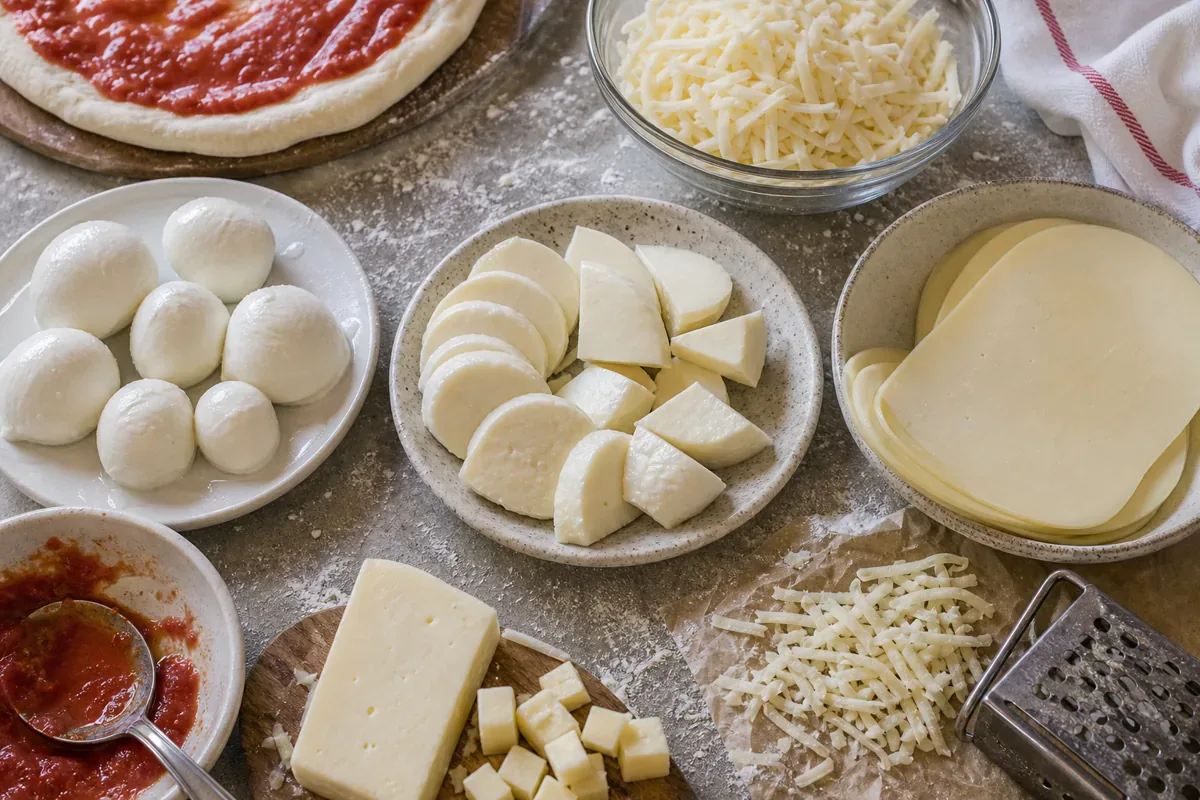
The CDC lists pasteurized feta and pasteurized mozzarella as safer choices and soft cheese from unpasteurized milk as riskier. It adds that pregnant women are 10 times more likely to get a Listeria infection.
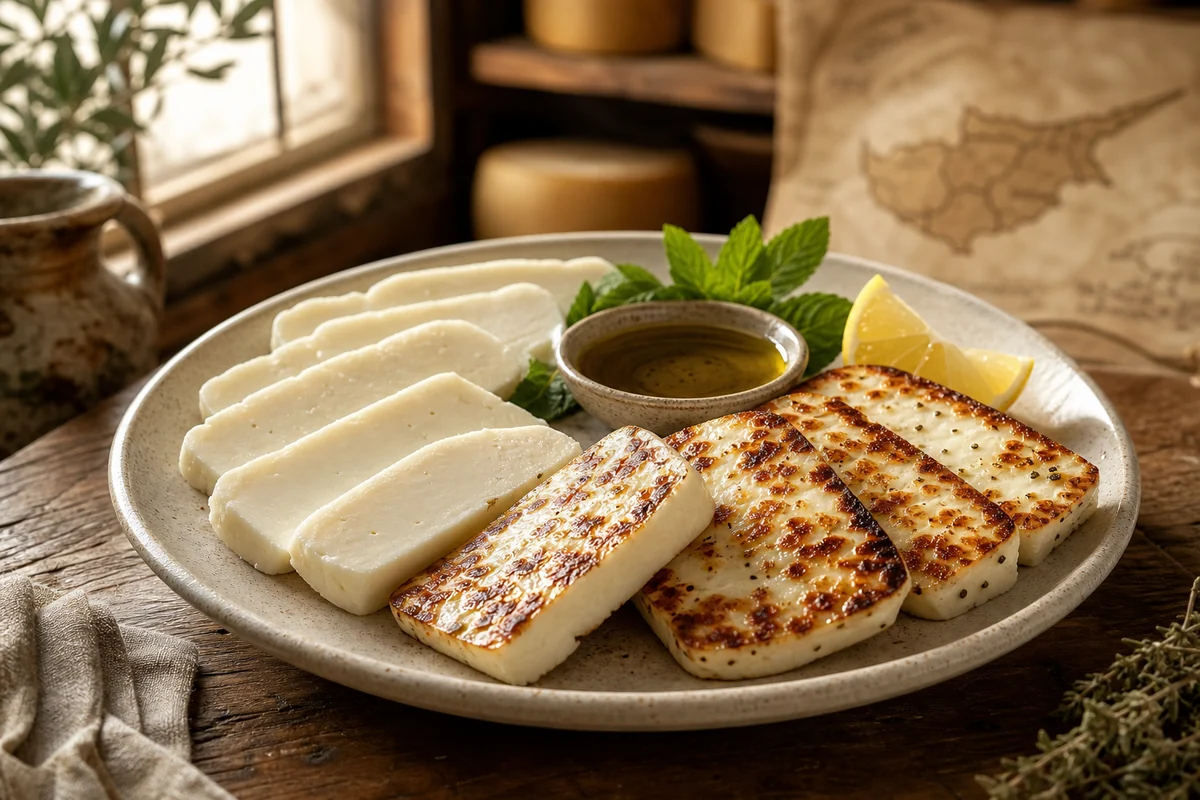
The NHS lists pasteurised soft cheeses such as feta, mozzarella and halloumi as safe, along with any cheese cooked until steaming hot.
Because the milk treatment varies by maker, a pasteurised block sits with the feta and mozzarella lines, and a raw-milk block sits nearer the CDC's riskier line for unpasteurized soft cheese.
How Do You Buy and Keep Beyaz Peynir?
Guide Istanbul says shoppers in Türkiye buy it at supermarkets, corner shops called bakkals and specialty shops, and should say which milk, how firm and how salty they want. The Kırklareli registration lists single-block packs and tins of 3, 5 and 18 kg, and the Turkish Wikipedia entry says white cheese is usually packed in tins but can be cut into packs of 500 g or 1,000 g.
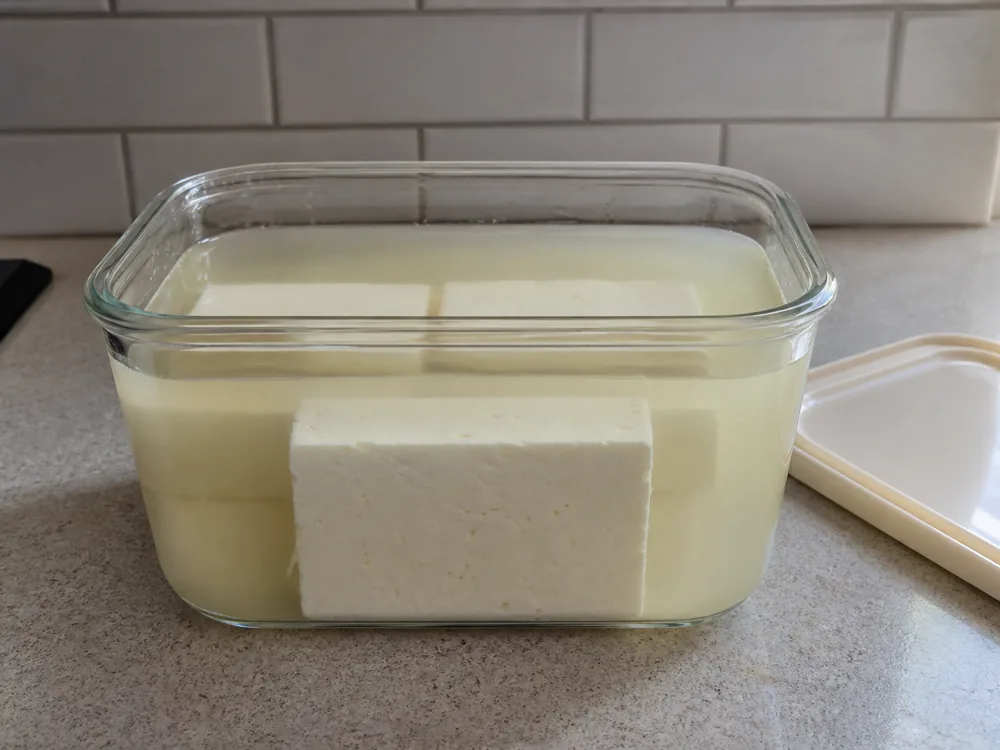
MyCheese says to keep the cheese in its original brine, or in a saltwater solution, in the refrigerator, where it stays fresh for up to three weeks.
That matches how the cheese is sold. The Kırklareli registration has the blocks packed in sealed tins under brine, and the Turkish Wikipedia entry describes storage at 6 to 8°C.
SOURCES & REFERENCES
Beyaz Peynir FAQ
No. Both are white, rindless brined cheeses, but protected Greek feta is sheep milk or sheep with up to 30 percent goat, while beyaz peynir can be sheep, cow or goat milk, and none of the sources checked sets a ratio for the category.
Sources range from eaten fresh to more than six months. The first brine lasts hours, and the named cheeses set minimums of 6 months for Kırklareli and 8 months for Ezine.
Not always. Wikipedia and Cheese.com say vegetable rennet, but the Kırklareli specification names natural animal rennet, so the answer depends on the maker.
Neither the CDC nor the NHS names it. Both treat pasteurised feta as safer, and the CDC lists unpasteurized soft cheese as riskier, so the milk treatment of the block is the deciding fact.