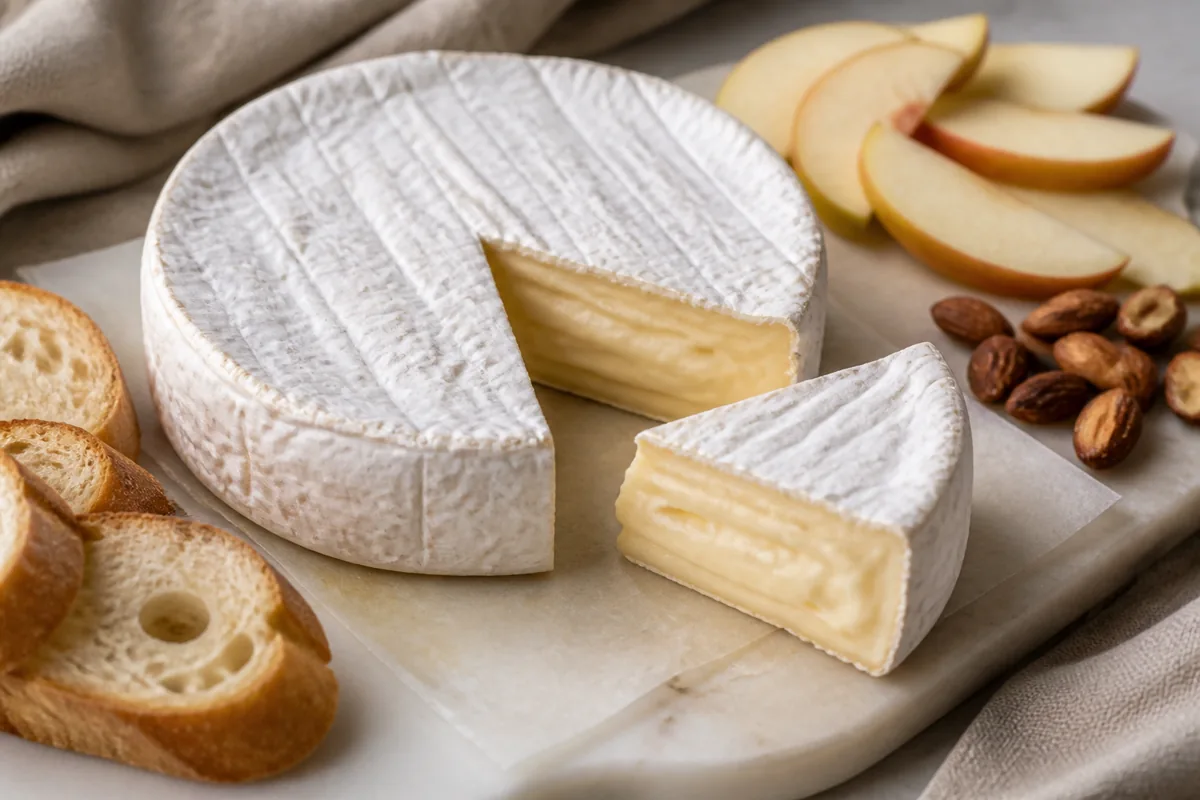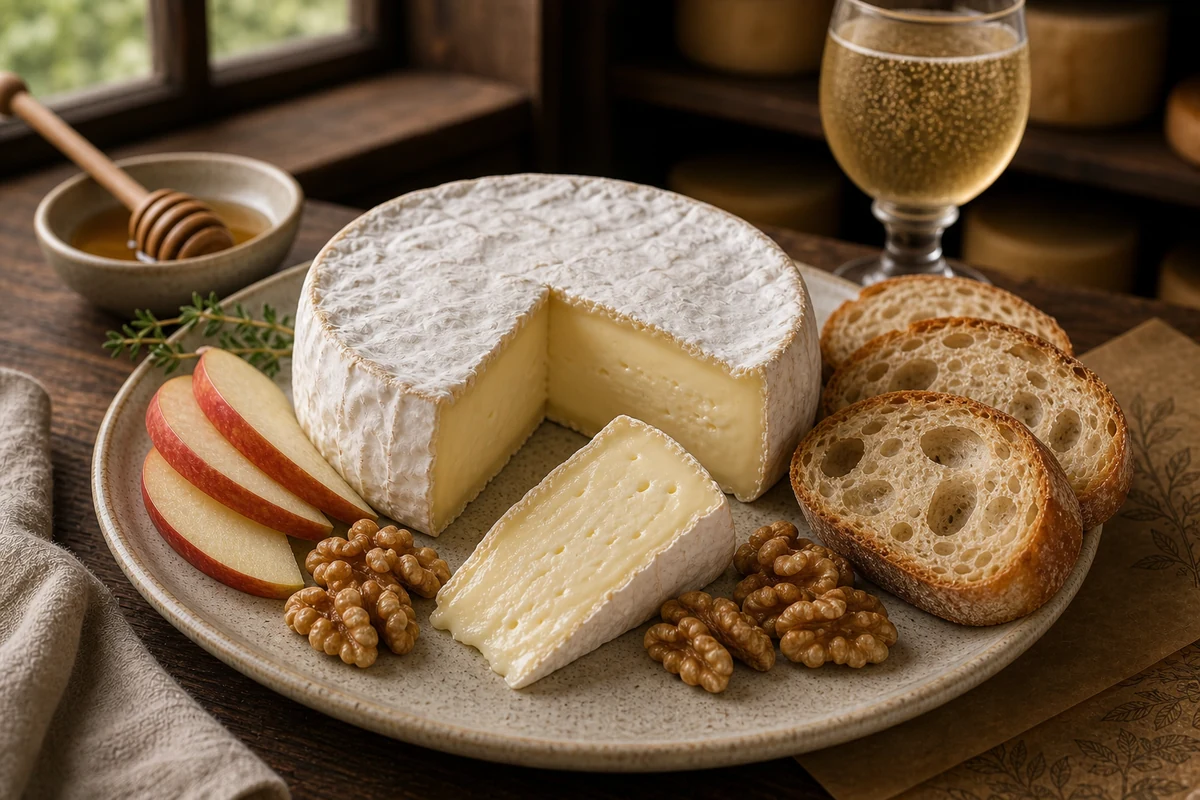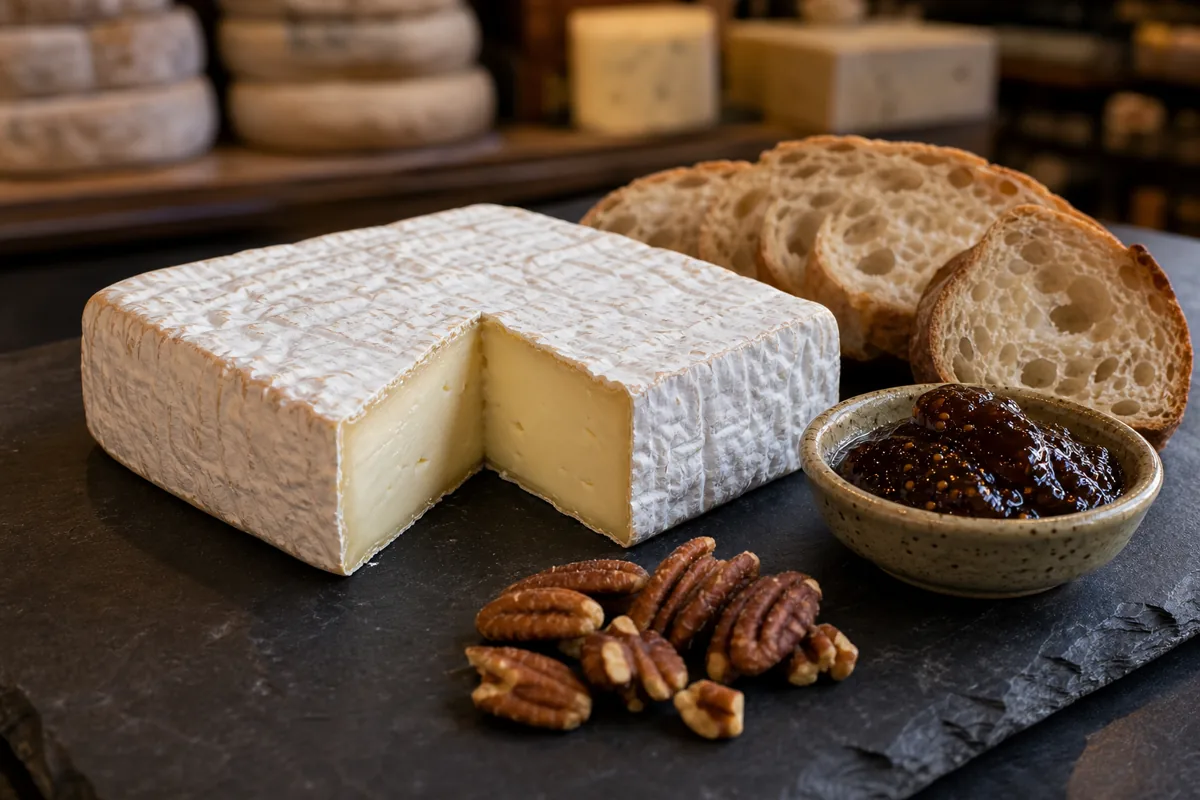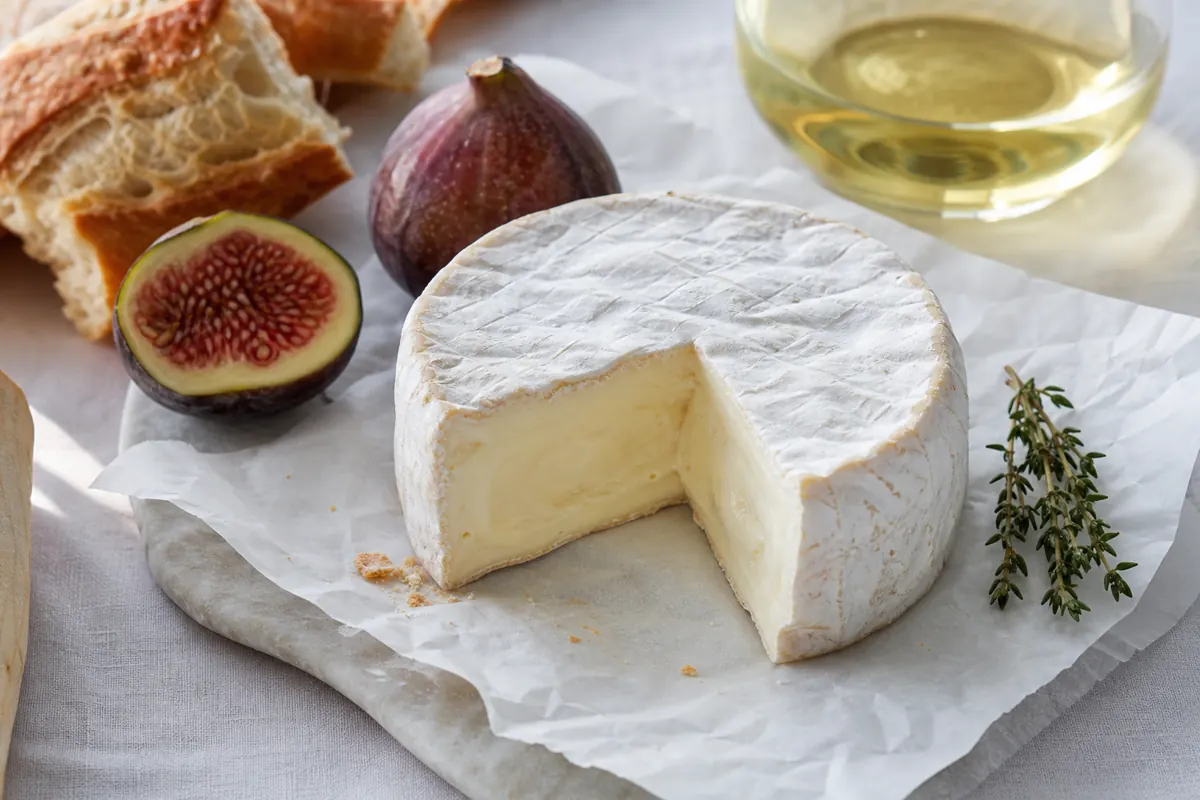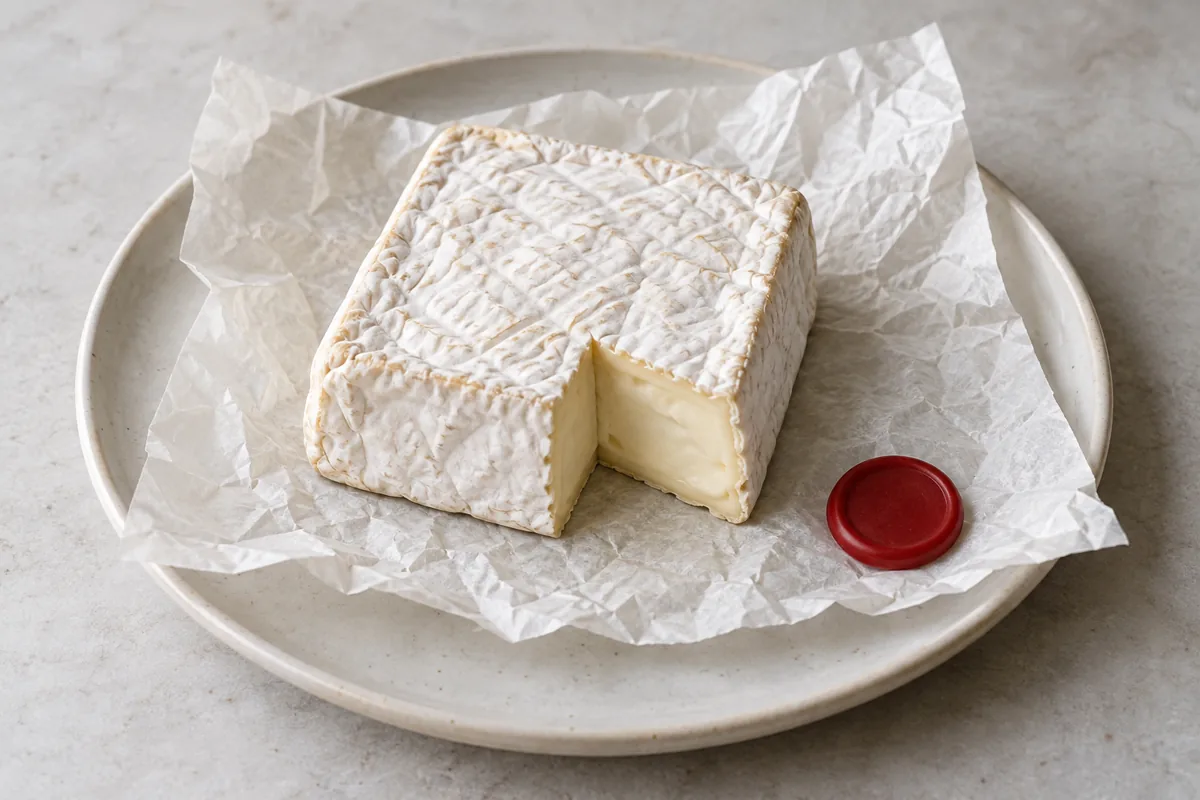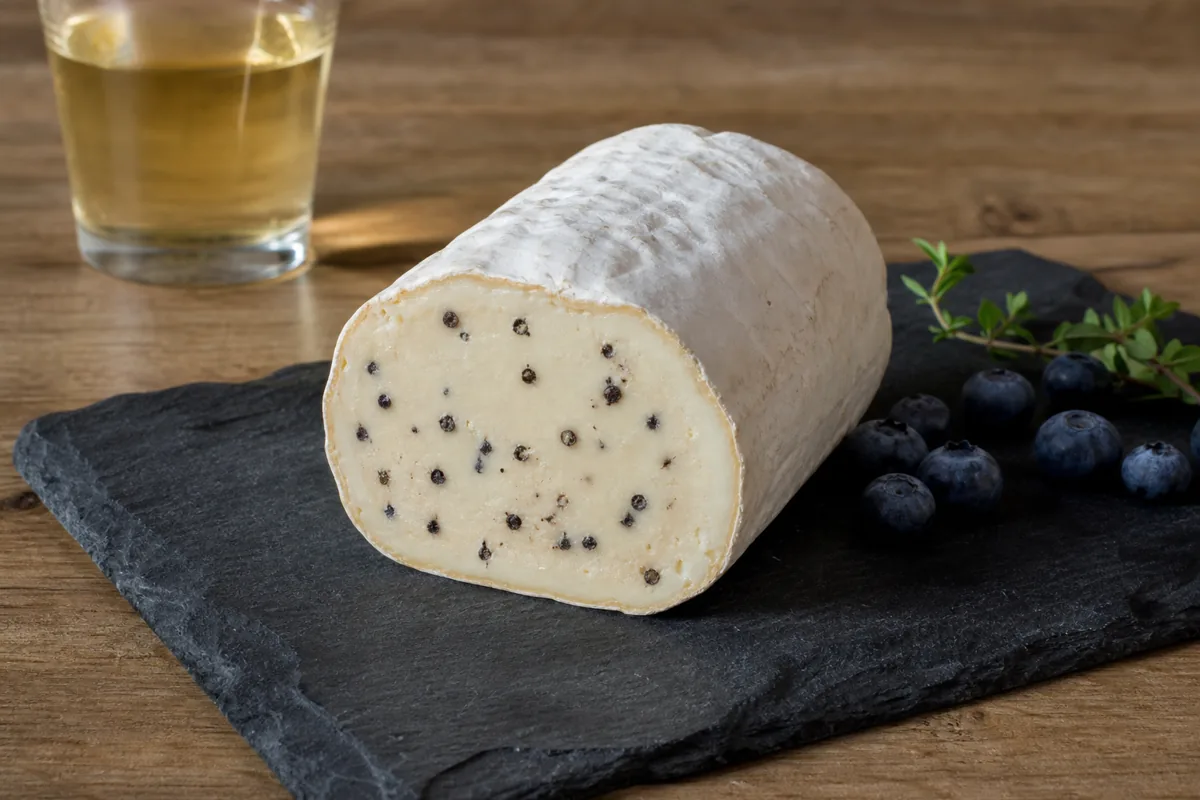
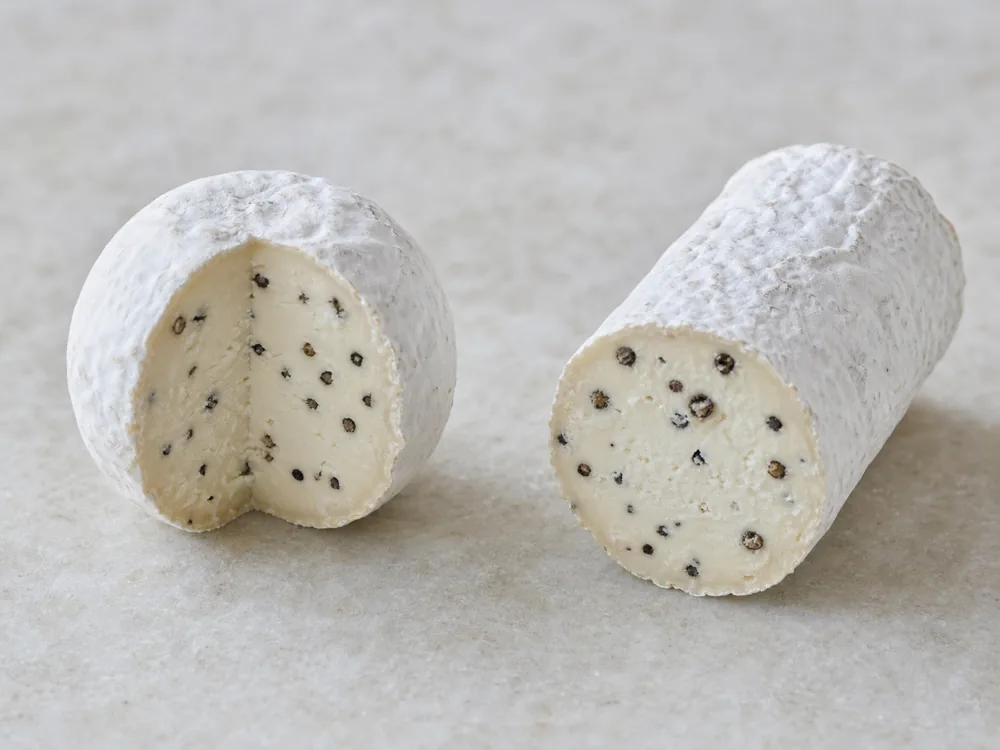
Bridgewater is a soft-ripened cow's milk cheese from Ann Arbor, Michigan, with cracked and whole Tellicherry peppercorns running through a creamy paste under a white bloomy rind. Sanilac Creamery sells it today as a log, while older Zingerman's Creamery material describes a round, snowball-shaped cheese.
Both shapes come from the same base curd, and the producer says the flavor profile of the two formats is "very much the same." Older reviews of the snowball are therefore a fair guide to the log's flavor.
In This Article
Bridgewater now comes as a log, not only a snowball
Zingerman's Creamery created the Bridgewater Log at the request of its restaurant and catering clients, using the same base curd as the 8-ounce snowball-shaped original. The producer wrote that a sphere looks good in a cheese case but gets awkward when a kitchen uses only a little at a time.
On the same product page, the producer says the log is easier to handle, a bit denser in texture, and easier to slice and serve.
A 2013 Zingerman's Community newsletter described the round as a double cream with a fluffy white penicillium mold rind, and said its round shape and black peppercorn garnish made it look like a snowball. Sanilac's current listing calls the cheese a dense, creamy log spiked with fresh-cracked Tellicherry peppercorns, and the log is the only Bridgewater on Sanilac's cheese list.
| Snowball round | Log |
|---|---|
| Small, snowball-shaped, 8 ounces | Log, sold by weight |
| Double cream with a fluffy white rind (2013 newsletter) | A bit denser in texture (producer) |
| Awkward when a kitchen uses only a little at a time | Easier to handle, slice and serve |
| Original base curd | Same base curd, same flavor profile |
Cheese.com still describes a round cheese with a bloomy white rind, so its entry reflects the older form. A 2012 retailer write-up gave the round as 6-ounce domes, against the 8 ounces on the producer's log page, and no source explains the gap.
What do Tellicherry peppercorns do to the cheese?
The 2013 newsletter says the cracked and whole black peppercorns give Bridgewater a full-flavored peppery zing that sits against slight citrus and gentle mushroom notes in the paste. Cheese.com lists its flavor as citrusy, mushroomy, piquant, and spicy.
The Gourmet Cheese of the Month Club, which also calls it a double cream, describes a pale-yellow paste dotted with Tellicherry peppercorns and a buttery, peppery burst with a "super-clean mouthfeel."
A 2012 retailer write-up gives the same order: initial citrus flavors, then an earthy, peppery finish. Because cracked and whole peppercorns are both in the paste, one bite can carry more pepper than the next.
How old is Bridgewater when you buy it?
Three sources give three age figures for the same cheese, and none of them explains the gap.
| Source | Figure | What it describes |
|---|---|---|
| Zingerman's Creamery log product page | 2 to 10 weeks | "Age at purchase" for the log, with a separate wholesale shelf life of 8 weeks |
| The Gourmet Cheese of the Month Club | 2 to 4 weeks | Age before release |
| Cheese.com | About 2 weeks | Aging of the round-shaped cheese it describes |
The producer's 2 to 10 weeks is the widest range and the only one that covers the log, so it is the figure to trust for a piece bought at a shop. The two shorter figures come from a cheese club and a reference site, and neither says which format or date it describes.
The 2013 newsletter says an older Bridgewater develops a flinty texture and a more pronounced pepper, and the club describes the same direction, with the peppercorns becoming more pronounced and the cheese turning spicy.
The club also describes the cut face. Just under the rind the paste turns creamy and fluid, like custard or pudding, while the center stays drier and chalkier, with soft citrus and mushroom flavors.
The flinty description and the creamy-layer description can both be true at different ages, though neither source says exactly when the creamy layer forms.
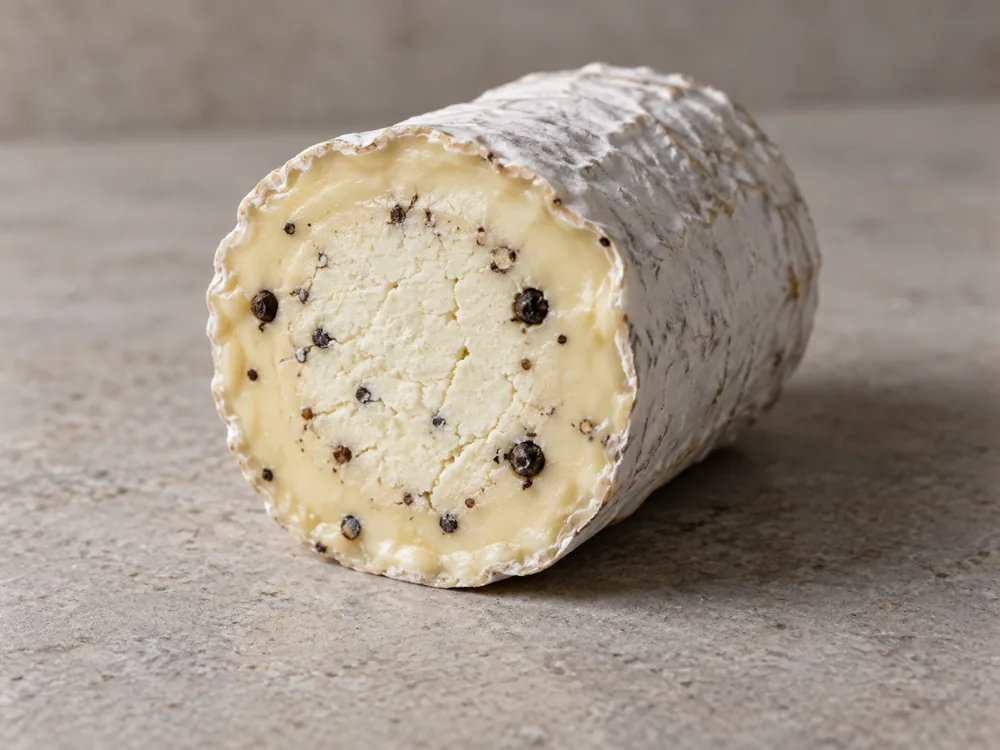
Why did Zingerman's become Sanilac Creamery?
Bridgewater is now made by Sanilac Creamery in Ann Arbor, Michigan.
A notice on Zingerman's Creamery's website says the creamery began a new chapter as its own company, Sanilac Creamery, as of fall 2025, and is no longer part of the Zingerman's Community of Businesses. The same notice says the same people, recipes, and craftsmanship are behind the products.
Older labels, reviews, and retailer records that name Zingerman's therefore describe the same cheese under the earlier company name.
Sanilac's wholesale page names Calder Dairy in Carleton, Michigan, 20 miles away, as a farm partner, with a mixed herd of Holstein, Jersey, and Brown Swiss cows and milk with high butterfat and protein counts. The Zingerman's log page lists pasteurized Calder Dairy cow's milk and animal rennet.
Melt it into sauces or crumble it over salads
Cheese.com and the 2013 newsletter both say Bridgewater works in sauces. The newsletter adds that an older piece can be sprinkled over salads, pasta, and soups.
The club says the stronger pepper in an older cheese suits melting into pasta sauces or crumbling over salads and soups.
| Use | How It Works |
|---|---|
| Pasta sauce | Melt small pieces in; the pepper reads stronger as the cheese ages. |
| Salad | Crumble an older piece over the greens. |
| Soup | Sprinkle an older piece over the bowl. |
| Young piece | Serve it as it is, on plain crackers or oatcakes. |
What pairs with Bridgewater's pepper?
The Gourmet Cheese of the Month Club pairs Bridgewater with tree fruits such as sliced apples and pears, and with a sweet fruit jam or chutney. It also names crusty French or Italian bread and crisp crackers.
For drinks, the club lists Blanc de Blancs sparkling wine, lightly oaked Chardonnay, Riesling, Gewurztraminer, and Beaujolais or Pinot Noir. It also names a fruit-flavored beer and a crisp hard apple cider.
The 2013 producer newsletter takes another route for a holiday treat, a citrusy Bourbon or a strong Madeira, and a 2012 retailer poured a 2008 Chianti Classico with it.
| Pairing | Type | Why It Works |
|---|---|---|
| Apple or pear slices | Food | Named by the club as tree-fruit partners. |
| Fruit jam or chutney | Food | The club calls for a sweet one. |
| Crusty bread | Food | French or Italian loaf, per the club. |
| Blanc de Blancs | Wine | Sparkling Chardonnay, the club's first wine suggestion. |
| Hard apple cider | Drink | Crisp, per the club. |
| Citrusy Bourbon | Drink | The 2013 newsletter's holiday suggestion. |
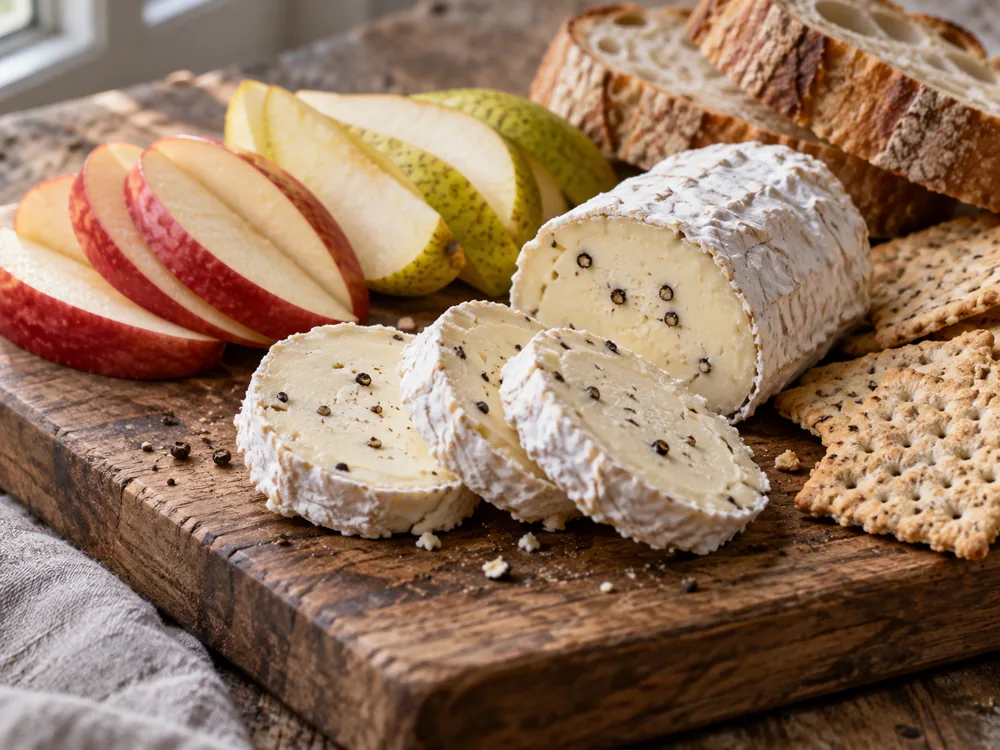
On a cheese board, both the 2013 newsletter and Cheese.com recommend plain crackers or oatcakes.
Can you eat Bridgewater's white rind?
Culture magazine's cheesemonger says the white Penicillium camemberti rind on Brie is edible and adds texture and flavor.
Bridgewater's sources describe a white bloomy penicillium rind of the same kind, and none says to peel it. Culture advises skipping a Brie rind that shows wet, slimy, or brown spots, and warns that older or badly kept Brie can taste bitter or ammoniated in the rind.
The Zingerman's log product page lists animal rennet, and Cheese.com marks Bridgewater as not vegetarian, even though the milk is pasteurized cow's milk.
None of the sources gives a home storage temperature or an opened-log limit for Bridgewater, so the date and handling instructions on the label you buy are the only producer guidance.
What should you buy when Bridgewater is unavailable?
A soft-ripened cow's milk cheese with a white bloomy rind matches the style, and soft-ripened Brie is the easiest to find.
Cracked black pepper added at serving supplies the part that Bridgewater carries inside its paste. Soft-ripened Camembert takes the same treatment.
SOURCES & REFERENCES
Bridgewater is a soft-ripened cow's milk cheese from Ann Arbor, Michigan, with a white bloomy rind and Tellicherry peppercorns in a creamy paste. Sanilac Creamery, formerly Zingerman's Creamery, sells it as a log.
Both come from the same base curd, and the producer says the flavor profile of the two formats is very much the same. The log is a bit denser and easier to slice than the 8-ounce snowball.
Sources describe a peppery zing against citrus and mushroom notes, and Cheese.com lists its flavor as piquant and spicy. The club says the pepper becomes more pronounced as the cheese ages.
Culture says the white Penicillium camemberti rind on Brie is edible, and Bridgewater's sources describe a rind of the same kind. Skip any rind that looks wet, slimy, or brown.
No. The producer's log page lists animal rennet, and Cheese.com marks it as not vegetarian.
It is made with pasteurized milk, but the NHS says mould-ripened soft cheeses with a white coating must be thoroughly cooked. The CDC lists pasteurized soft cheese heated to 165F or until steaming hot as safer, so ask your clinician.
Our suggestion is a soft-ripened cheese with a white bloomy rind, such as Brie or Camembert, with cracked black pepper added at serving.