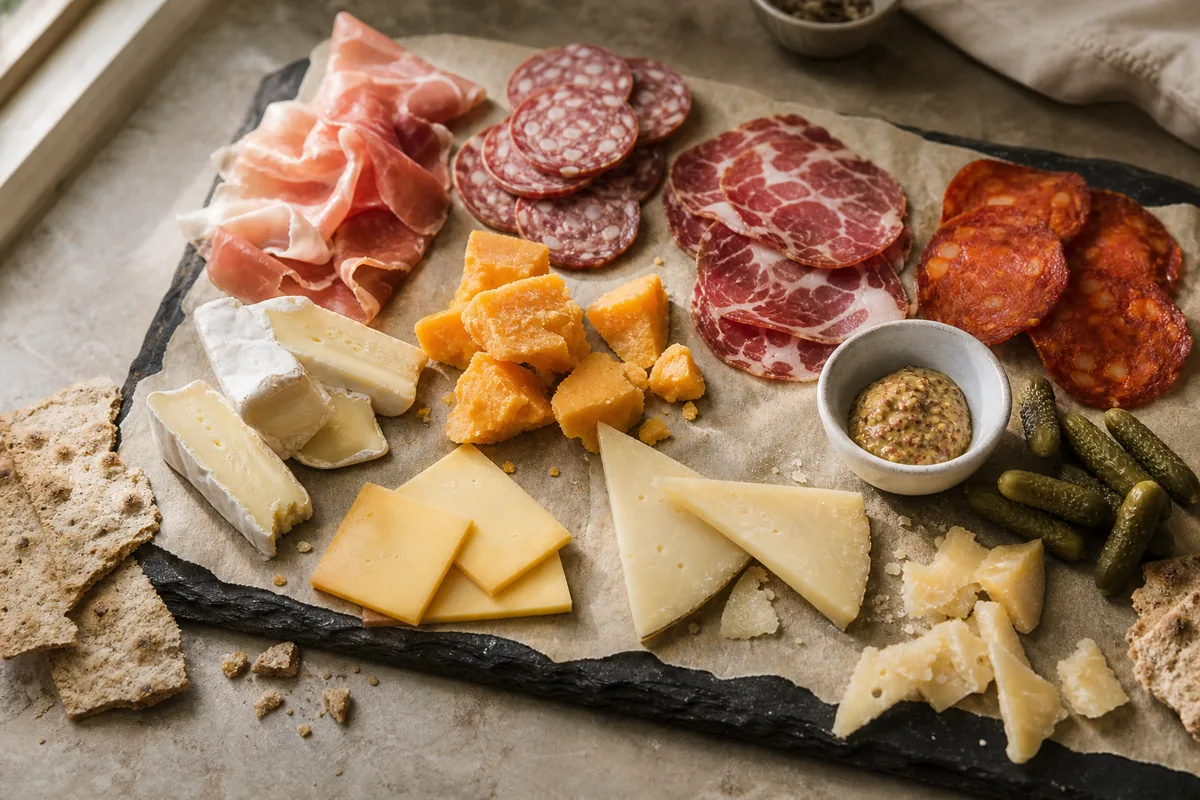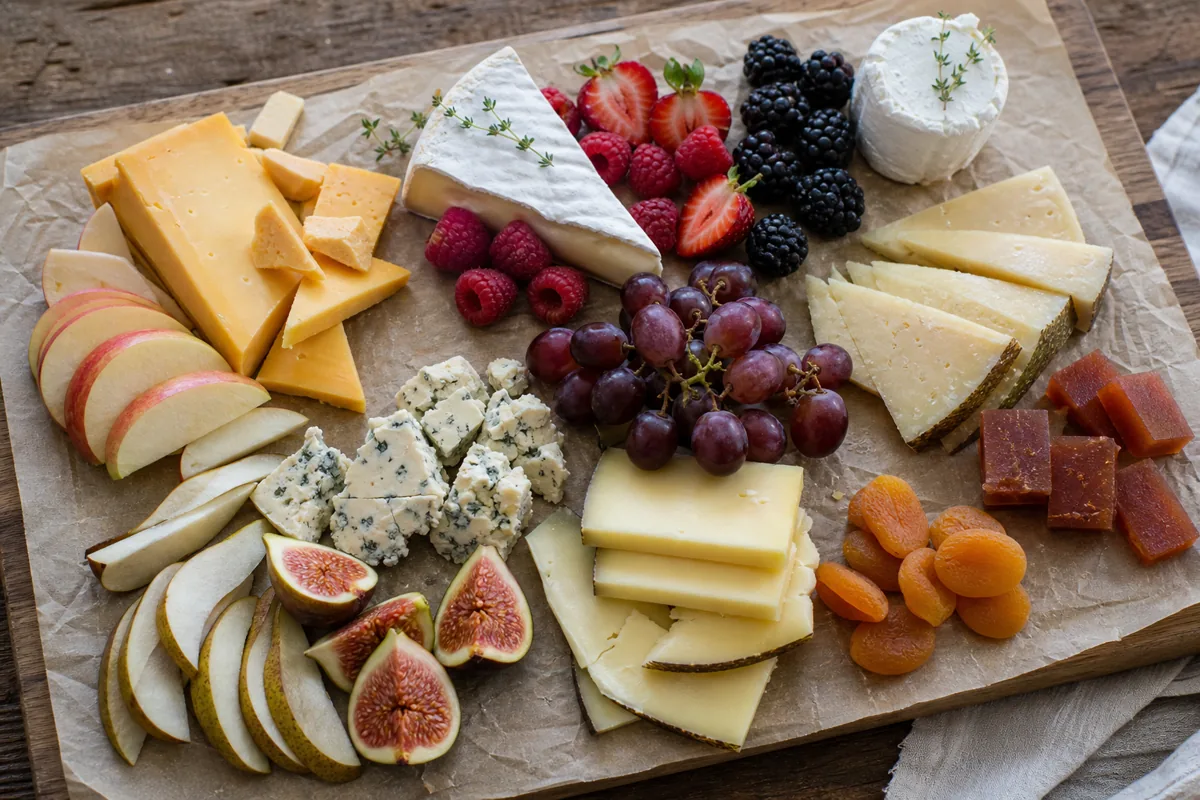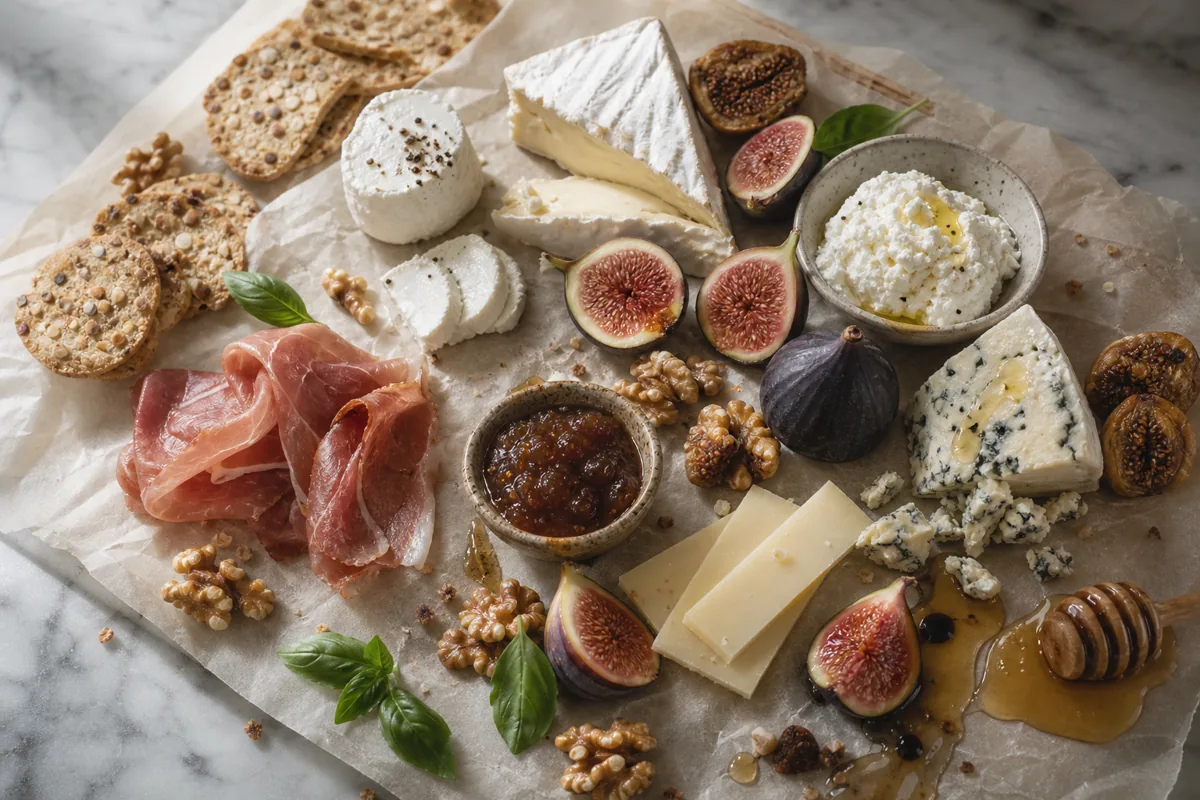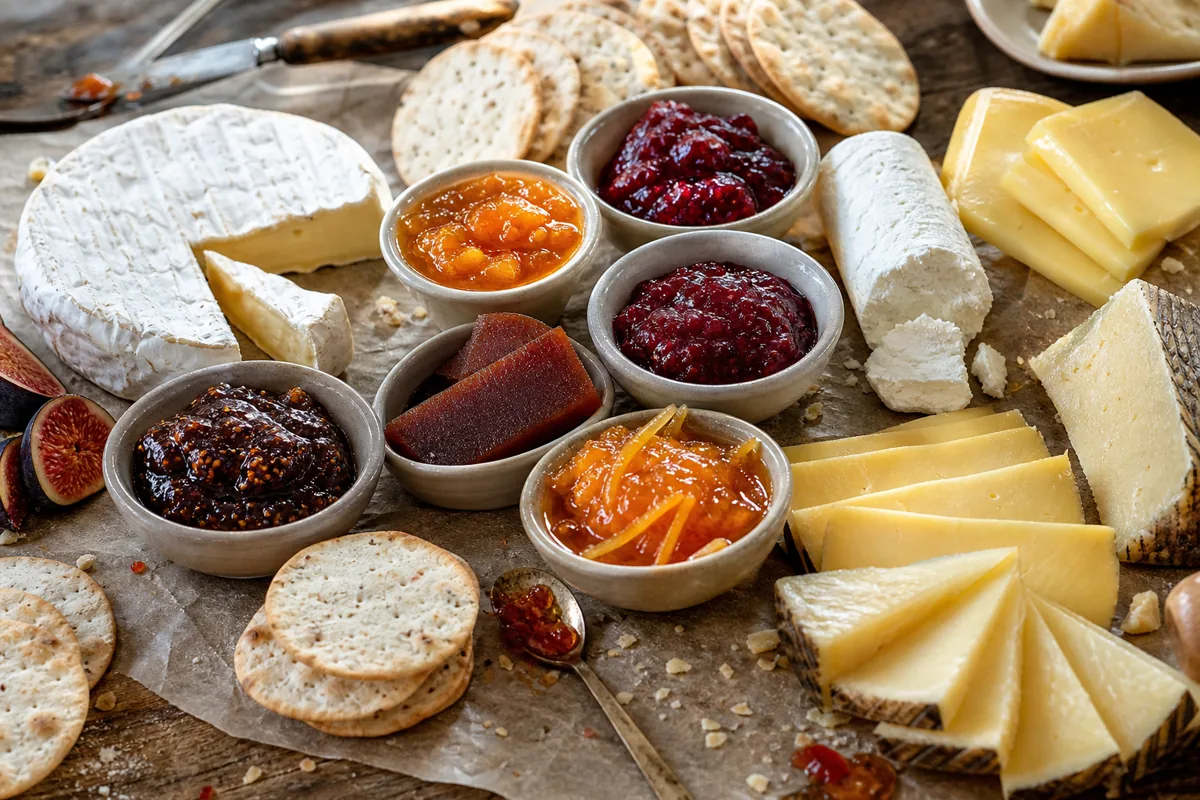
Jam works on a cheese board because cheese is rich, salty and sometimes sharp, as Cheese.com puts it, and a spoonful of fruit offers a sweet contrast.
Every pairing below is credited to the person or company that suggested it, because taste differs.
In This Article
Does Jam Go With Cheese?
It does, and the reason given most often is contrast. The Cheese Professor says the saltiness and nuttiness of cheese set off the sweetness of jams and jellies, and calls cheese and jam probably one of the most classic pairings.
Jason Sobocinski, owner of Caseus Fromagerie Bistro, wrote in Culture magazine in 2009 that with a pungent blue or a robust washed-rind cheese, a bit of jam balances the flavors through its sweetness and acidity and makes the cheese more approachable for a newcomer. He also wrote that there are no rules for serving or eating cheese.
Zoe Brickley, director of communications at Jasper Hill Farm, gives two tests in The Cheese Professor's roundup. The first is matched intensity: in a well-matched pairing you should not be able to say who has won the battle in your mouth.
The second is acidity. Brickley has heard that a drink should be a little more acidic than the cheese, thinks the same holds for jam, and says a bright, tangy jam kept slightly ahead of the cheese has a refreshing effect.
Wisconsin Cheese, the consumer site of Dairy Farmers of Wisconsin, applies the intensity rule to wine as well, saying it always matches the level of intensity whether the partner is jam or wine.
For mild cheese the advice splits. Chef Magnus Young of Clif Family Winery suggests starting with a milder cheese and a sweeter jam or preserve, while Wisconsin Cheese likes soft, sweet cheeses with more bitter preserves or a spicy jam.
That split is why the sections below follow cheese styles, each with the person who made the recommendation.
What Is the Difference Between Jam, Jelly, and Preserves?
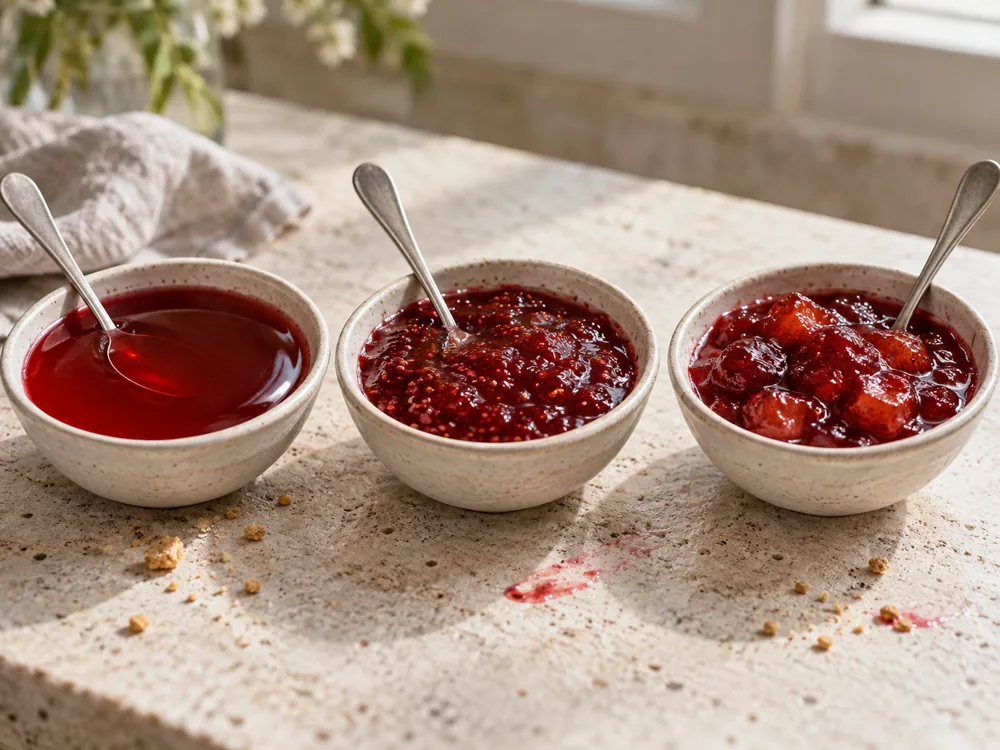
All three are fruit spreads, and Wisconsin Cheese says they differ in how much of the original fruit goes into the jar.
Jelly is the smoothest, made by mixing fruit juice with pectin and heating it until it thickens. Jam is made the same way but keeps small pieces of fruit, such as seeds or fibers, so each mouthful has bits of crushed fruit.
Preserves use the most fruit, chopped small and mixed with sugar before being folded into a syrup or jam, and citrus preserves include the rind.
| Spread | What the sources say it is | Cheeses the sources pair it with |
|---|---|---|
| Jelly | Fruit juice and pectin heated until it thickens (Wisconsin Cheese) | Point Reyes Original Blue with pomegranate jelly (Culture); cream cheese with pepper jelly (Jenkins Jellies) |
| Jam | Crushed fruit with seeds or fibers left in (Wisconsin Cheese) | BelGioioso Parmesan with raspberry jam (Wisconsin Cheese); Limburger with strawberry jam (Chalet Cheese Cooperative) |
| Preserves | The most fruit, chopped small; citrus versions include the rind (Wisconsin Cheese) | Marieke Gouda with apricot preserves (Wisconsin Cheese); burrata with peach preserves (Culture) |
| Marmalade | A citrus spread that Jasper Hill's Brickley avoids on bloomy rinds, where it would add bitterness | Ricotta, mozzarella and burrata with Meyer lemon marmalade (Clif Family Winery); Cabot Clothbound Cheddar with orange marmalade (Jasper Hill) |
| Wine jelly | Wine cooked with pectin and sugar (The Cheese Professor) | Parmigiano-Reggiano with Lambrusco jelly (Forever Cheese); sharp cheddar with red wine jelly (Clif Family Winery) |
| Mostarda | A jelly-like mixture of sweetened fruit and mustard oil (The Cheese Professor) | Harbison with raspberry mostarda (Jasper Hill Farm) |
| Quince paste (membrillo) | The traditional Spanish companion to Manchego (Iberico Club) | Aged Manchego (The Cheese Professor, Iberico Club) |
Texture is where the sources split. Brickley likes contrast, such as a creamy cheese with a preserve that has chunks of fruit or seeds in it, and Wisconsin Cheese says preserves add variety in texture because more fruit is packed into each bite.
Cheese.com points the other way for creamy cheeses like Brie and Camembert, advising a smooth jam that spreads easily and does not swamp the cheese, and saying thick, chunky jams suit firm or aged cheeses.
Kellie Freemire of Chicago's Beautiful Rind adds that not every jam texture goes with every cheese.
What Jam Goes With Brie and Other Bloomy-Rind Cheeses?
The Cheese Professor reports that berry and stone-fruit jams are popular with bloomy and washed rinds. Jasper Hill Farm has partnered with Blake Hill Preserves on bespoke jams for five of its cheeses, and its example is Harbison, a bloomy-rind cheese wrapped in bark, with Blake Hill's raspberry mostarda made with Vermont ice cider.
Brickley says the sweet berry notes can round the edges of robust, ripe cheeses. Culture's 2017 jam roundup adds that the mostarda's touch of heat from mustard powder draws out similar notes in the cheese.
Marmalade is where the sources disagree. Brickley says bloomy rinds are naturally bitter, so Jasper Hill avoids marmalade, which would add more bitterness.
Chef Young pairs Clif Family's Meyer lemon marmalade with brie-style cheeses such as Cowgirl Creamery's Mt Tam triple crème. He describes it as having a citrusy aroma and balanced sweetness with a subtle acidity.
On texture, Cheese.com recommends a smooth jam for Brie, and says a fig jam made with real figs and a little lemon juice brings out the richness of soft cheeses like Brie and Taleggio.
Culture's 2017 list pairs Brie de Meaux PDO with Jammit Jams' strawberry jam made from whole fruit and red wine with a lingering chili heat. It pairs Camembert de Normandie PDO with Crosstown Sweets' apricot and vanilla jam, in which vanilla tames the apricot's tangy edges and the preserves are bursting with big chunks of fruit.
That chunky Camembert jar runs against Cheese.com's smooth-jam advice for the same cheeses.
What Jam Goes With Washed-Rind Cheeses?
Brickley says Jasper Hill's washed-rind cheeses Willoughby and Winnimere tend to have notes of peaches and cream, so the creamery pairs them with apricot or peach jam, such as an apricot and orange jam made with clover honey.
She recommends serving that pairing with an orange wine, since the cheese and the wine both work with the orange rind and the apricot notes.
Jamie Fahrney of Chalet Cheese Cooperative recommends strawberry jam with the co-op's Country Castle Limburger because the sweetness of the jam helps cut the funk of the cheese. He says grape jelly is another option.
What Jam Goes With Blue Cheese?
Cheese.com says a salty blue already has plenty of intensity and needs contrast, which pear jam or cherry preserves can supply by softening the sharp edges without dulling the cheese. It calls strawberry jam a little too sweet for Gorgonzola.
Wisconsin Cheese is more generous with a mild blue. It pairs Roth's Buttermilk Blue, which it calls a perfect mild blue, with blackberry jam, and it lists fig jam among the spreads that suit blue cheese.
Wisconsin's example is a mild blue, while Cheese.com's strawberry warning is about Gorgonzola.
Jasper Hill recommends plum-based jam for blue cheese, and its co-branded pairing is Bayley Hazen Blue with spiced plums with port and anise. Brickley says few people associate anise with blue cheese, yet once it is in the jam it can be picked out of the cheese's other aromas.
Young uses wine jelly as a bridge. Most people would not pair blue cheese with white wine unless the blue is very mild, he says, but Clif Family's Sauvignon Blanc jelly makes it work with Point Reyes Original Blue or Bay Blue.
Culture's 2017 roundup pairs Rogue River Blue with Sallie's Greatest fig, sweet onion and rosemary jam, and Point Reyes Original Blue with PEJU's pomegranate jelly, whose arils add texture to the creamy, mellow cheese.
What Jam Goes With Cheddar?
Wisconsin Cheese names fig jam, strawberry jam and mustard for cheddar and ties the choice to age. A sweeter jam like strawberry suits young, mild cheddar, while a bold aged cheddar goes with hot pepper jelly, mustard or chutney.
Its example for the aged end is Roelli's Red Rock aged cheddar with whole grain Dijon mustard, which the site admits is not a jam. The sharp cheddar, it says, is balanced by the assertive mustard.
Cheese.com warns that a jar built on corn syrup and fruit concentrate buries even a sharp cheddar under sugar. It recommends tomato jam or onion marmalade, which it says are not sweet in the usual sense but add depth and complexity, and names apple butter or quince paste for aged cheddar in fall.
Brickley explains why bitter spreads can work on hard cheese: hard cheeses tend to lack bitterness and to have sweeter aromas, so a bitter element can harmonize. Jasper Hill pairs Cabot Clothbound Cheddar with orange marmalade with ten-year single malt, and she says the peaty Scotch notes interact with the cheese's earthy notes.
She also notes that cheddars tend to have pineapple notes, which makes pineapple preserves a natural match. Culture's 2017 list pairs Cabot Clothbound with a pineapple and vanilla bean jam that draws out the cheese's soft caramel notes.
Freemire reports that Beautiful Rind found a kiwi and mango jam worked with cheddar, two fruits she says she does not automatically think of with any cheese.
What Goes With Gouda, Parmesan, and Alpine Cheeses?
Each pairing below is credited to its source, and the cheeses run from Gouda and Parmesan to Alpha Tolman.
| Pairing | Type | Why It Works |
|---|---|---|
| Marieke Gouda + apricot preserves | Preserve | Wisconsin Cheese: the gouda's caramel and butterscotch notes meet the sweet-tart apricot, and preserves add more fruit, and more texture, to each bite. |
| BelGioioso Parmesan + raspberry jam | Jam | Wisconsin Cheese: the parmesan, aged over 10 months, is sweet and nutty, and a slightly sweet, slightly tart raspberry jam balances it. |
| Parmigiano-Reggiano + Lambrusco wine jelly | Jelly | Chelsea Bryant of Forever Cheese: the jelly distills the fruitiness of the wine, which contrasts with the cheese's umami and its crunchy tyrosine crystals. |
| Alpha Tolman + onion jam | Savory jam | Zoe Brickley of Jasper Hill Farm: the alpine cheese has toasted nut and caramelized onion notes, and with onion jam it tastes like French onion soup in a spreadable format. |
| Comte PDO + raspberry rose preserves | Preserve | Culture magazine, 2017: Quince and Apple's preserves have a blossomy aroma from the fruit and flower blend. |
Sobocinski singles out onion jams as astounding with salty, Swiss-style, pressed-curd cheeses and sharp cheddars, and Young adds red wine jelly for the nutty flavor of an Alpine sheep's-milk cheese.
Cheese.com says a soft cheddar or Comté holds up against fig preserves or marmalade with peel.
What Jam Goes With Goat Cheese, Ricotta, and Other Fresh Cheeses?
Cheese.com says lower-sugar or preserve-style jams often work better with tangy cheeses like fresh goat cheese or creamy robiola, because heavy sugar can make those cheeses taste sour instead of bright. For ricotta or Havarti it suggests brighter flavors such as raspberry or tart apricot.
- Meyer lemon marmalade with ricotta, mozzarella or burrata: Chef Young of Clif Family Winery recommends it for fresher-style cheeses.
- Muscadine grape jam with ginger and rosemary, with Fruition Farms sheep's milk ricotta: Culture, 2017.
- Blood orange and vanilla bean marmalade with ricotta di bufala: Culture, 2017.
- Rosé wine jelly with goat cheese: Clif Family Winery recommends it. Chelsea Bryant of Forever Cheese suggests Lambrusco wine jelly with young cheeses such as Miticaña de Oveja or fresh sheep's milk cheese like Wooly Wooly.
- Blackberry jam with cream cheese: Wisconsin Cheese, which also pairs Havarti with raspberry, strawberry or fig jam, or with onion or bacon jam for a savory match.
- Strawberry-rhubarb jam with bread cheese: Carr Valley Cheese Co. says warmed bread cheese turns soft and caramelized, reminiscent of French toast, and Wisconsin Cheese tops it with the jam.
What Jam Goes With Manchego?
Quince paste, or membrillo, is the classic answer. The Cheese Professor calls it the classic pairing for Spanish Manchego.
Iberico Club, a Spanish food retailer, serves aged Manchego cut in thin triangular wedges with membrillo, marcona almonds and picos camperos. It says the sweet-salty contrast is why the pairing has survived centuries.
Culture's 2017 roundup offers a different jar for Manchego PDO, Rare Bird Preserves' apple caramel preserves, whose chunky-cut apples add texture.
Other sheep's-milk cheeses get their own matches in the same list. Ossau-Iraty PDO goes with Anarchy in a Jar's grapefruit and smoked salt marmalade, in which the smoked salt balances the grapefruit's bitterness, and Idiazábal PDO goes with Three Little Figs' tomato jam, whose umami-rich base calls for a grassy, smoky sheep's-milk cheese.
Freemire says orange or lemon marmalade suits sheep's-milk cheese such as Shepherds Way Farms' Sogn, an all-sheep's-milk tomme, because the two amplify one another, especially in summer.
What Cheese Goes With Pepper Jelly?
Jenkins Jellies, which makes the pepper jellies it pairs, lists eight matches, and five of its eight reasons describe the cheese taming, cooling, softening, tempering or mellowing the heat. Because the maker sells these jars, the list is a recommendation rather than an independent test.
| Cheese | Jenkins Jellies flavor | Reason Jenkins gives |
|---|---|---|
| Aged Manchego | Hell Fire | Nutty, salty depth tames the fire and adds complexity |
| Gorgonzola Dolce | Fiery Figs | Spicy-sweet fig cuts through creamy, funky richness |
| Goat Brie | Passion Fire | Creamy, tangy cheese cools the spice and lets the passion fruit show |
| Gouda | Guava Brava | Buttery, caramelized nuttiness softens the heat and lifts guava's floral notes |
| Humboldt Fog | Blazin' Boysenberry | Earthy, tangy layers bring out the boysenberry's sweetness |
| Gruyère | Sizzlin' Hot Apricot | Smooth, melting texture tempers the heat and deepens the apricot |
| Aged cheddar | Flamin' Cranberry | Sharp, nutty bite balances the sweet-spicy kick |
| Cream cheese | Any pepper jelly | Cool, smooth richness mellows the heat and keeps the fruit forward |
Other sources agree on the cheddar and goat-cheese end. Cheese.com says red pepper jelly shines with sharp cheddar or goat cheese, and Culture's 2017 list pairs a Fresno chili jam that straddles tart, sweet and spicy with fresh chèvre.
The Cheese Professor's tropical examples also use heat. Freemire matched a pineapple and Aleppo pepper jam with Sequatchie Cove Creamery's Cumberland, a mild, buttery, earthy Alpine-style cheese, and called it an unusual combination.
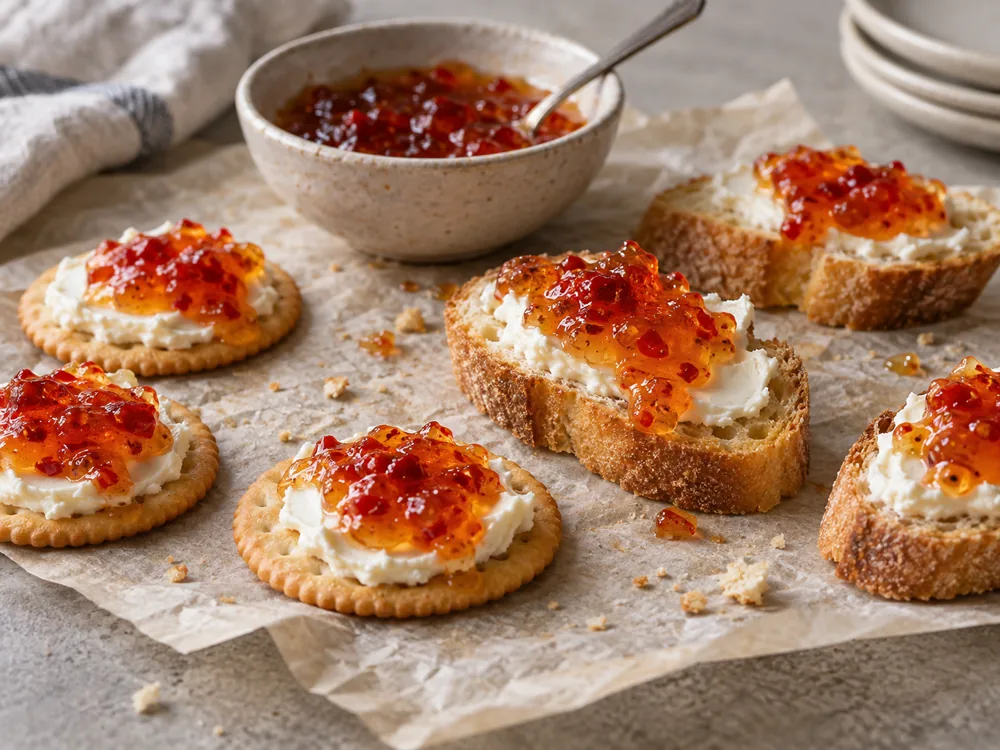
For serving, Jenkins shows its jellies on crackers baked with olive oil and salt or on toasted baguette slices, and suggests adding fresh fruit, nuts and a drizzle of honey to the board.
Which Jam Should Go on a Cheese Board?
Cheese.com starts with the label: fruit should be listed before sugar, and a jar that lists sugar or syrup first goes back on the shelf.
It also favors restraint, saying one or two jams that work with the cheeses on the board do more than a lineup of half-used jars.
Chef Young suggests using a small amount of jam or jelly with the cheese, since more can be added if the pairing works.
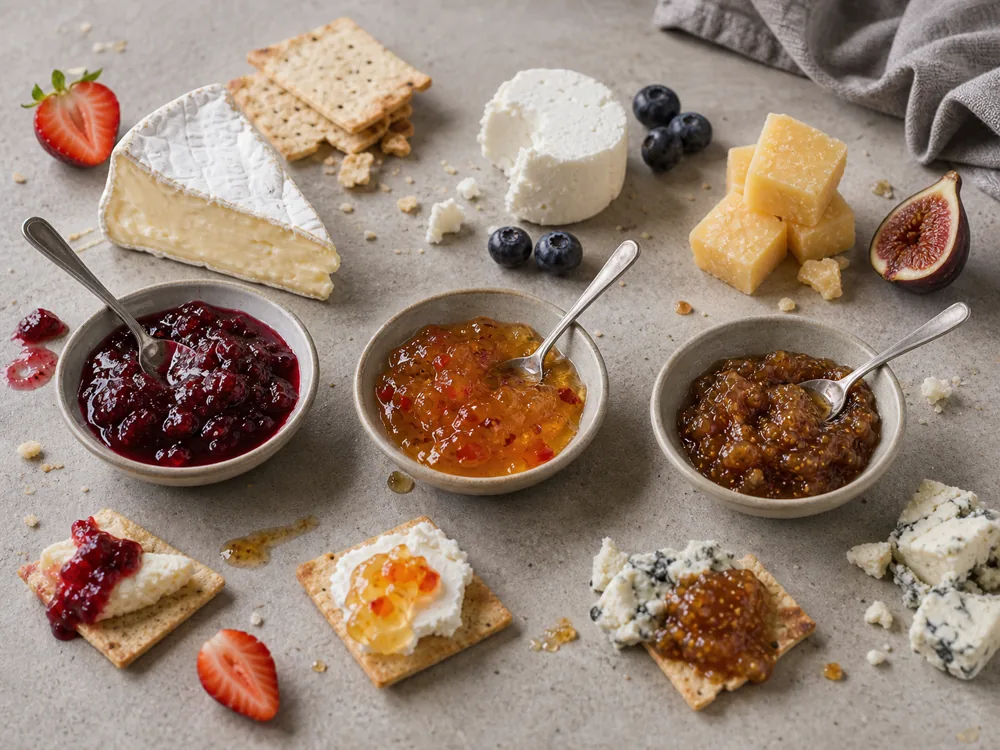
Cheese.com also ties the choice to the season:
- Summer: berry-based spreads with lighter cheeses, such as blackberry jam with burrata or fresh chèvre on crusty bread.
- Winter: fig or spiced plum with nutty Alpine cheeses or aged Goudas.
- Spring: rhubarb or strawberry jam beside soft cheeses like robiola.
- Fall: apple butter or quince paste with aged cheddar, plus chutney-style spreads with savory elements.
Freemire's advice for anyone still unsure is to experiment with cheeses and jams and find what works.