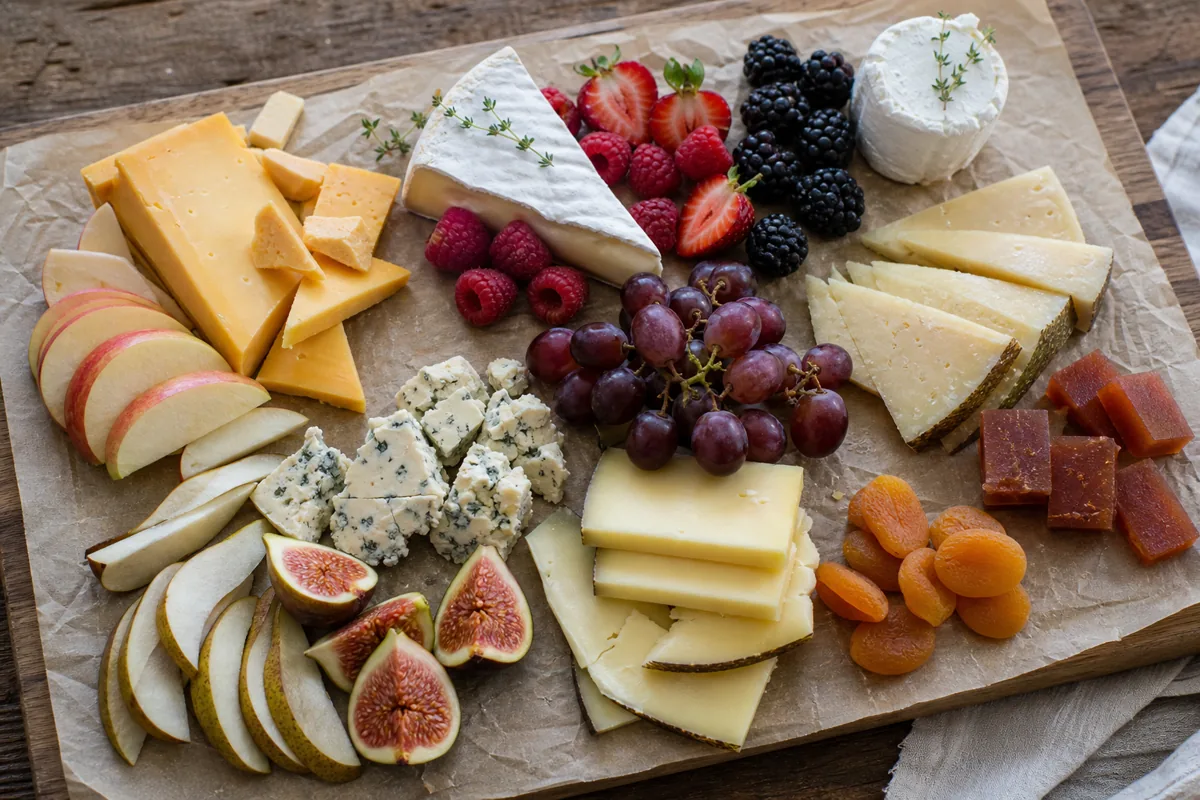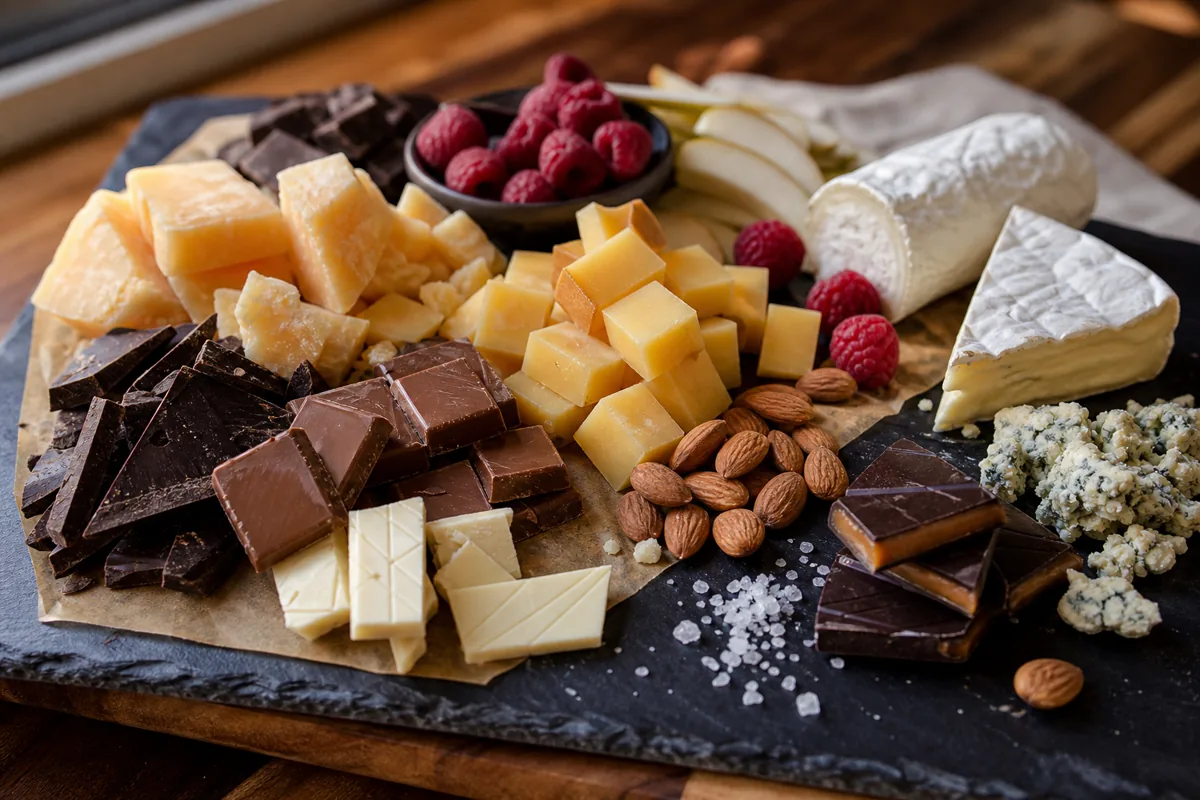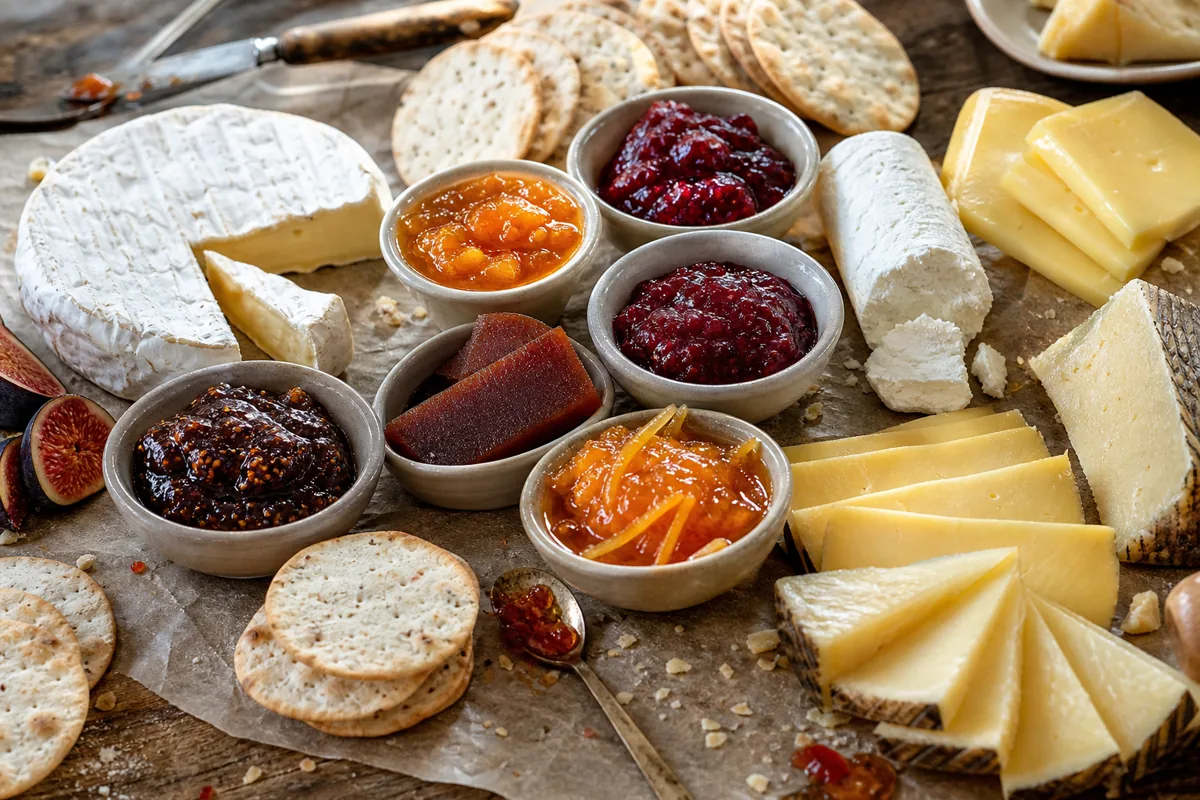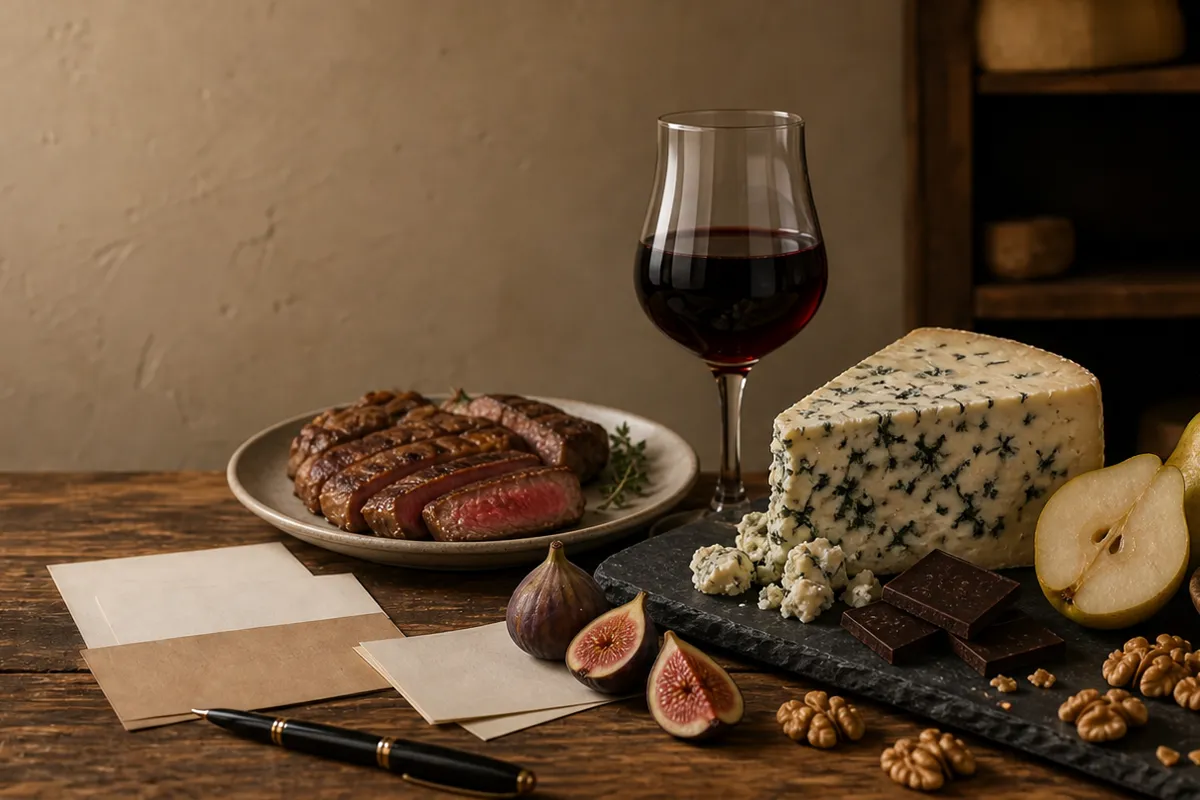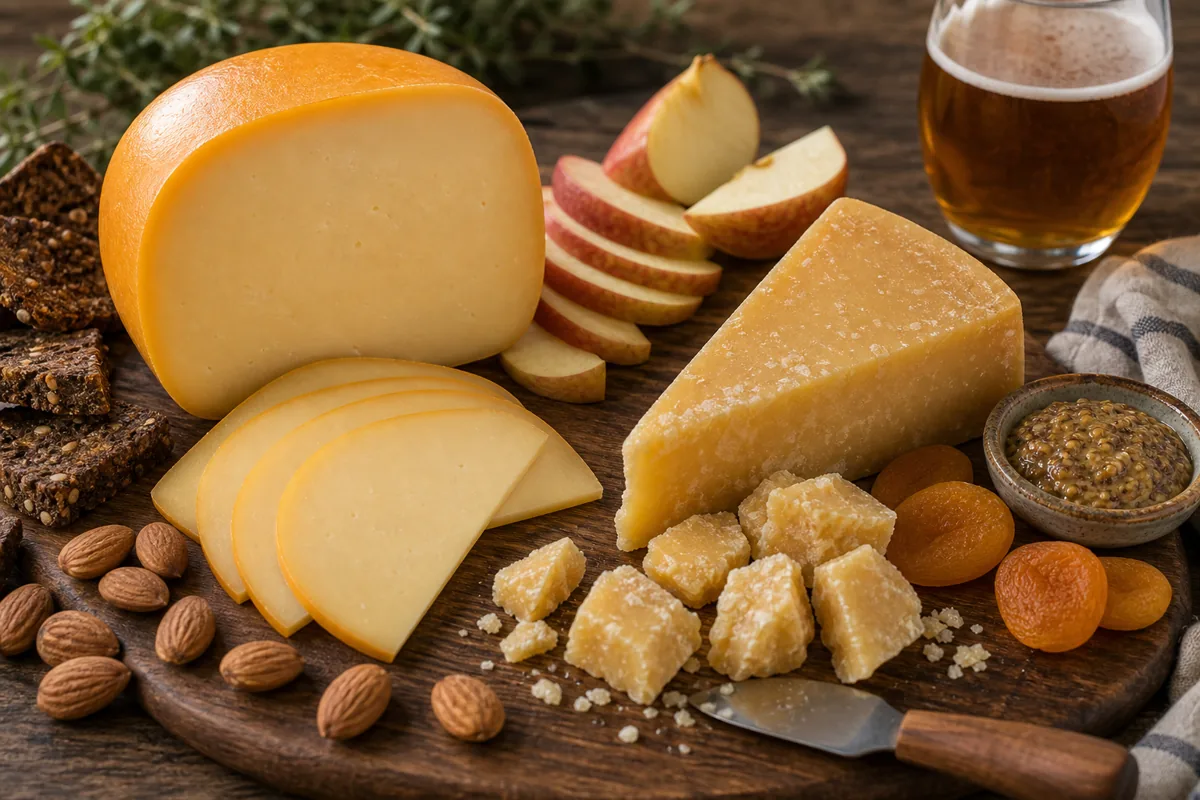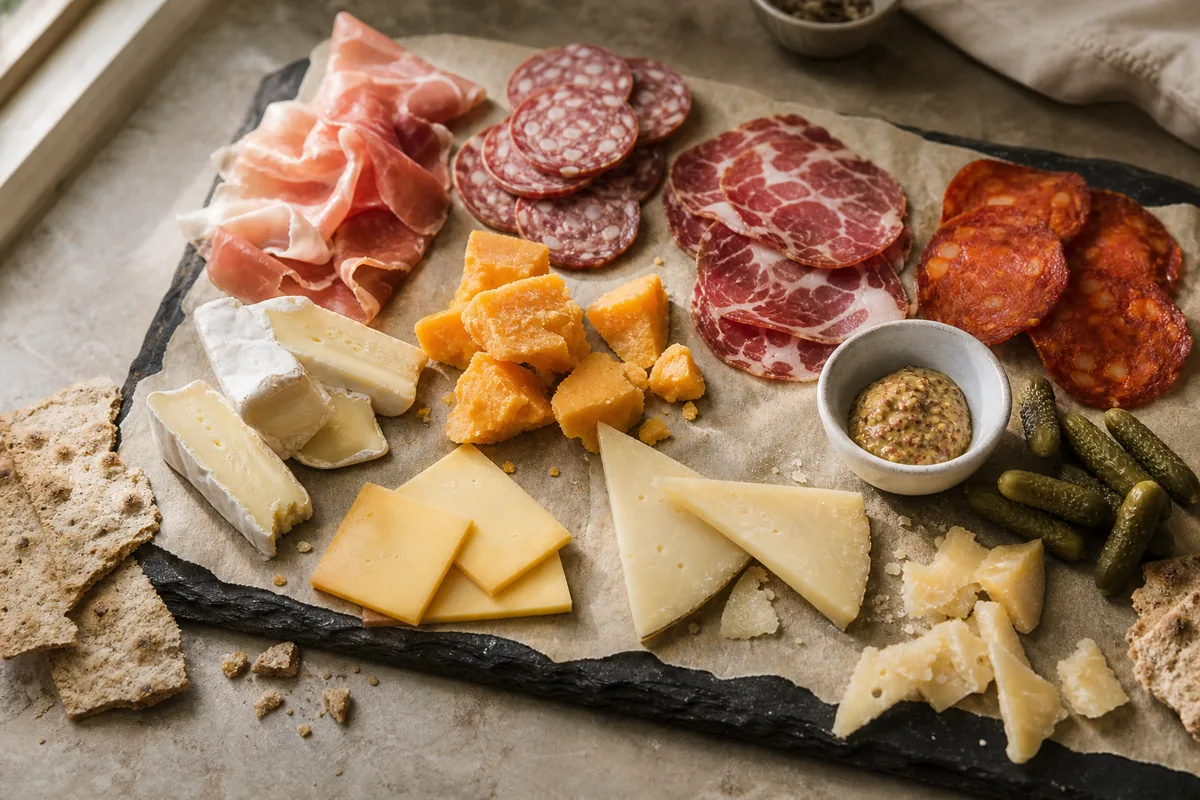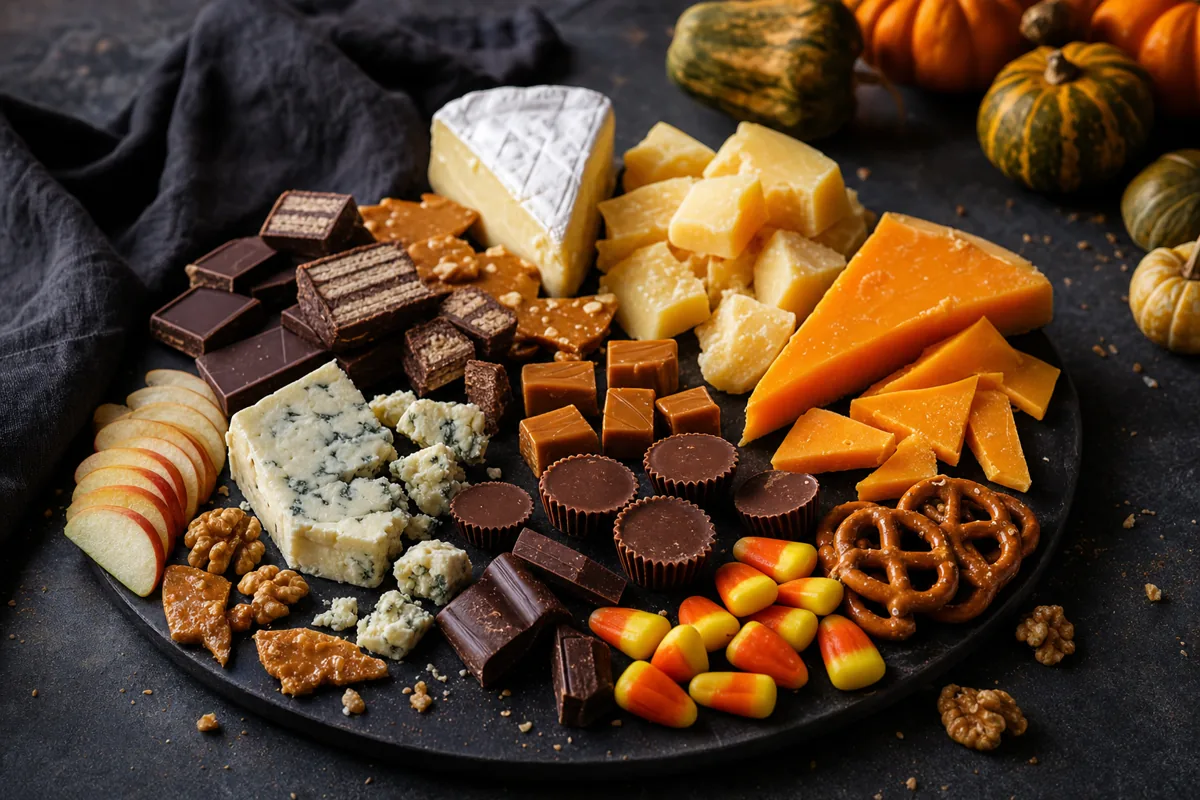
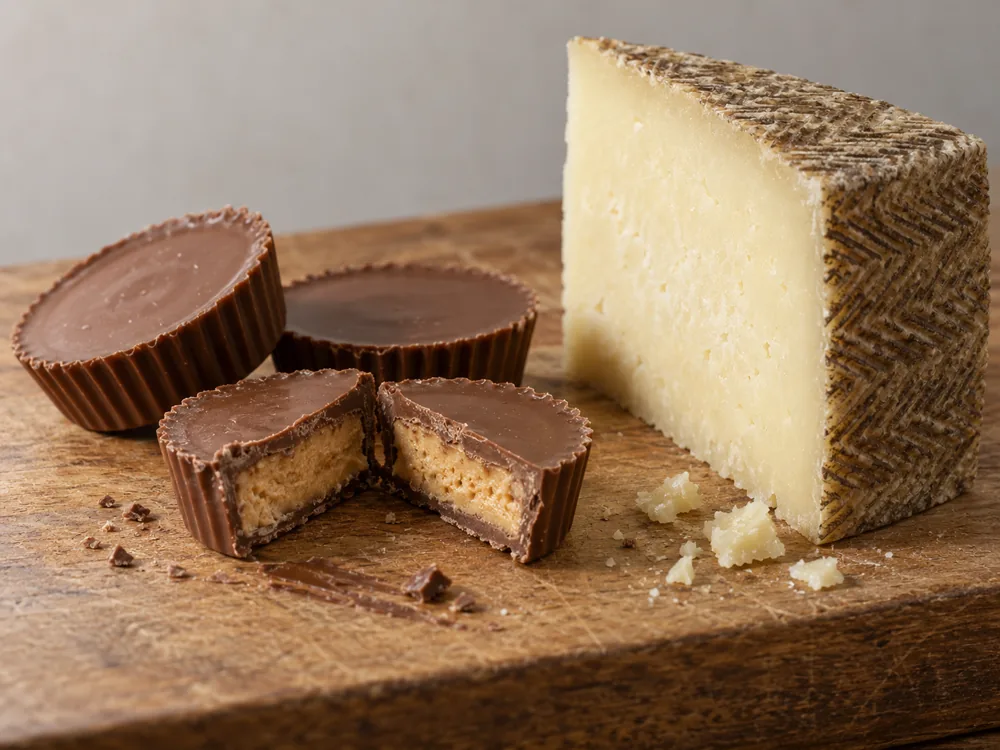
One wedge of young Manchego can serve two of the most common candies on a Halloween table: Hebe Denis in Culture and Marissa Mullen in Food52 name it for Reese's cups, and Christine Clark of The Cheese Professor names it for candy corn.
Those picks come from 26 pairings in three published guides: Culture magazine quoted sixteen in 2025 from cheesemongers, shop owners and a Wisconsin dairy-industry cheese expert, and the Food52 column That Cheese Plate and The Cheese Professor gave five each in 2020.
All three agree that sugar needs salt, fat, acid or a matching flavor beside it.
In This Article
Which Cheese Goes with Which Halloween Candy?
Reese's peanut butter cups, counting the dark chocolate Thins version, appear in five of the 26 pairings, and Manchego is the cheese named most often, in four of them.
| Candy | Cheese | Named by |
|---|---|---|
| Reese's peanut butter cups | Manchego | Hebe Denis (Whole Foods Market, Miami) in Culture; Marissa Mullen in Food52 |
| Reese's peanut butter cups | Red Hawk | John Antonelli (Antonelli's Cheese, Austin) in Culture |
| Reese's peanut butter cups | Roth Grand Cru | Molly Browne (Dairy Farmers of Wisconsin) in The Cheese Professor |
| Payday | Marieke Mature Gouda | Molly Browne in The Cheese Professor |
| Kit Kat | Triple cream | Marissa Mullen in Food52 |
| Kit Kat | Stilton | Christine Clark in The Cheese Professor |
| Twix | Milton Creamery Prairie Breeze | Brooke Johnson (Morton's Gourmet Market, Sarasota) in Culture |
| Twix | Blue cheese washed in red wine | Marissa Mullen in Food52 |
| Snickers | Mimolette aged 12 months | Courtney Johnson and Tailor Kowis (Street Cheese, Seattle) in Culture |
| Candy corn | Brie, young Manchego or Marieke Mature Gouda | Mullen, Clark and Shannon Bonilla (Dairy Farmers of Wisconsin) |
| Lemon Starburst | Humboldt Fog | Brooke Johnson in Culture |
| Sour peach gummy rings | Fresh chèvre | Kyra James (Own Your Funk, Danbury) in Culture |
If your bowl holds Rolos, Hot Tamales, Almond Joy or Bit-O-Honey, Culture has picks for those too. Brandon Wood of The Cheese Parlor names Mimolette with Kit Kat, Midnight Moon with Rolos and Ragged Point with Hot Tamales.
Lissa Knudsen, who says she gravitates to gluten-free candy, names Glacier Blue with Almond Joy and Parmigiano Reggiano with warm Bit-O-Honey.
Why Do Candy and Cheese Pairings Work?
The reasons the guides give come down to how strong each side is and how the two meet: by contrast, by similarity, or by recalling a dish you already love.
Marissa Mullen of Food52 starts from intensity: when trying a new pairing, she advises thinking about how strong each item is, because a pairing changes a bite the way mixing two paint colors makes a third shade.
Christine Clark of The Cheese Professor sorts the reasons into three: a contrast between two flavors or textures, a similarity between two things, and a resemblance to a dish the eater already loves. She counts her Stilton and Kit Kat pairing under the first two.
Mullen's aged Gouda with caramel popcorn is a similarity pairing: she says both have an amber color and butterscotch-caramel notes with salt, and the popcorn's stronger sweet aroma cuts through the sharpness of the Gouda.
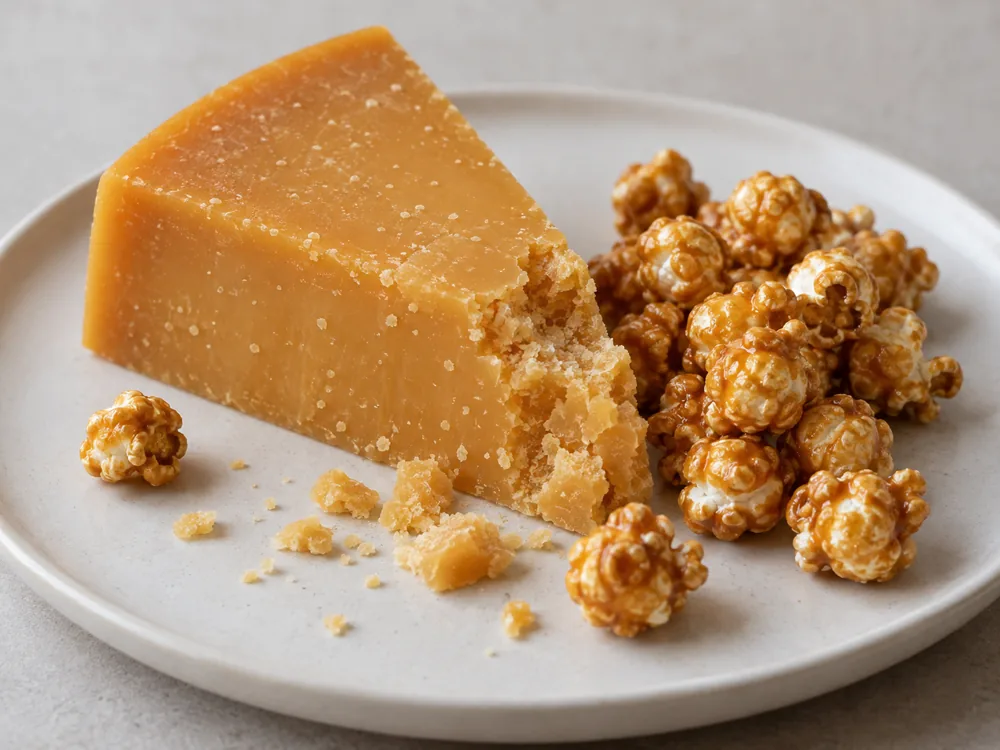
The small crystals she says are visible in the cheese add a crunch beside the popcorn, so the two match on texture as well as on flavor.
Before you plate any of these, take Clark's caution: a pairing you like is a good pairing for you, and you will end up with some terrible pairings along with some gems. She adds that open-minded tasters will be rewarded with memorable ones.
Culture says several of its pairings are consumer favorites from monger-led classes.
What Cheese Goes with Peanut Butter Cups?
For Reese's cups you have four cheeses to choose from across five pairings: Manchego, named twice, plus Red Hawk, Roth Grand Cru and Smokey Blue.
Both Manchego picks describe a young cheese. Hebe Denis chose a three-month Manchego for its sweet, buttery richness and nutty flavor, and says its slight acidity and fresh grassy notes contrast with the rich peanut butter and milk chocolate.
Mullen hears sour cream and cheesecake in a young Manchego, so that with a Reese's cup in the mix the bite becomes a peanut butter cheesecake, sweet, nutty and creamy.
John Antonelli of Antonelli's Cheese pairs the washed-rind Red Hawk from Cowgirl Creamery, whose meaty, savory notes echo the salt in peanut butter, while its creaminess contrasts with the snap of the milk chocolate. He calls the result a grown-up Elvis sandwich and says it is a fan favorite in the shop's Halloween cheese and candy class.
Molly Browne of Dairy Farmers of Wisconsin says the nutty notes of Roth Grand Cru, an alpine-style cheese made from raw cow's milk in Wisconsin, grow stronger beside the peanut butter, with the chocolate adding an indulgent counterpoint.
For Reese's Thins Dark Chocolate Peanut Butter Cups, Mike Bowers of Bowers Cheese takes the dark route with Rogue Creamery's Smokey Blue. In his account the peanut butter rounds out the sharper blue notes and turns the smoke into something like slow-smoked cocoa nibs.
Payday, a bar of salted peanuts bound with caramel, gets two cheeses. Browne pairs it with Marieke Mature Gouda, whose flavor she says the salty peanuts enhance, and says the overall effect recalls peanut butter cheesecake.
Kimi Ceridon pairs Payday with Milton Creamery's 4 Alarm Cheddar, setting super-salty peanuts and extra-sweet nougat against a big, savory cheddar with smoky chipotle and ghost pepper heat.
Among the pairings the guides recommend, cheddar goes with Payday, Snickers and Twix, which all carry caramel or nougat, and with no plain peanut butter cup. Three of the peanut picks are explained by a dish the eater already knows, peanut butter cheesecake for Manchego and for Marieke Gouda, and an Elvis sandwich for Red Hawk.
Which Cheese Goes with Candy Corn?
Candy corn gets Brie, young Manchego or mature Gouda, a different cheese from each of the three guides, so no two name the same one. Mullen also reports the only pairing in the three guides that did not work, a sharp cheddar that made the candy taste sour instead of sweet.
| Guide | Cheese | What the writer says |
|---|---|---|
| Food52, Marissa Mullen | Brie | Cow's milk Brie is mild, nutty and fruity, a base for the candy's flavor; the candy's marshmallow notes blend with the brown butter notes of the cheese and neither overpowers the other. |
| The Cheese Professor, Christine Clark | Young Manchego | The cheese's brown butter meets a marshmallowy, caramelly candy, its salt lightens the sweetness, and its almost waxy texture matches the candy's wax. |
| Culture, Shannon Bonilla | Marieke Mature Gouda | The mature Gouda develops butterscotch notes that the candy corn highlights, and the two share a fudgy texture. |
Candy corn is waxy, with a flavor based on honey, sugar and vanilla, which fits the wax and marshmallow that Clark and Mullen taste in it.
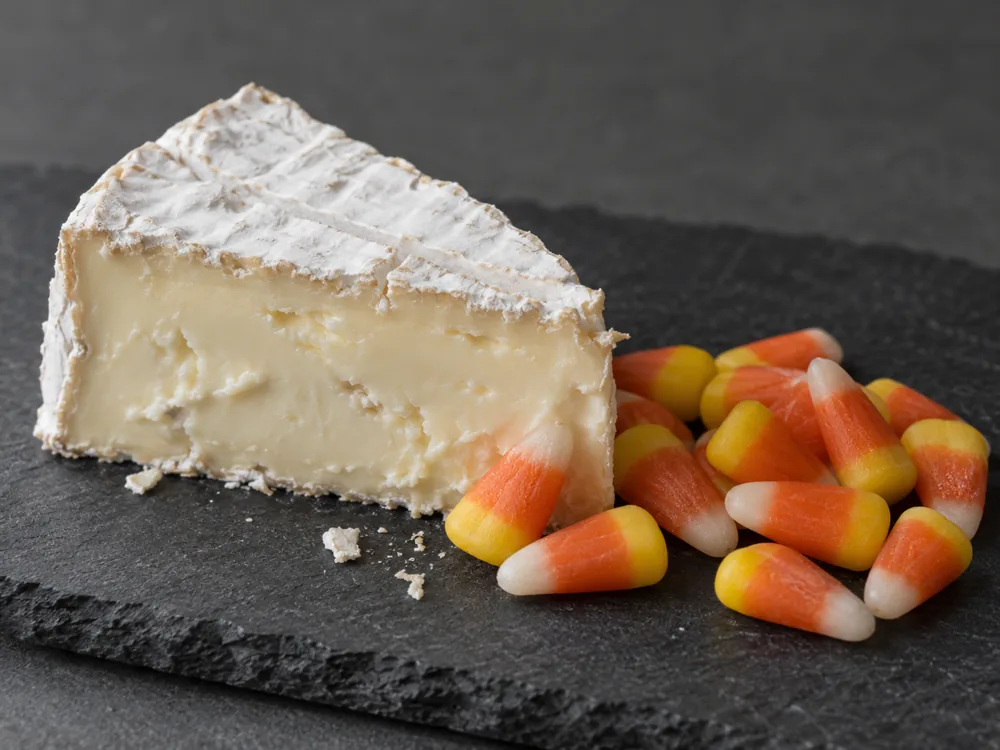
Each of the three picks works a different way. Brie works as a mild, creamy base, young Manchego matches the candy's wax and adds salt, and the Gouda echoes the butterscotch in the candy.
Mullen's failed cheddar fits her intensity rule, since the cheese was strong and sharp and the candy is mild.
Which Cheese Goes with Kit Kat, Twix and Snickers?
Kit Kat gets three cheeses from three people, and two of them, triple cream and Stilton, work in nearly opposite directions.
| Triple cream (Marissa Mullen, Food52) | Stilton (Christine Clark, The Cheese Professor) |
|---|---|
| A cheese with extra cream added before the curd forms, buttery and lush, almost as lush as ice cream. | An English blue made from pasteurized cow's milk. |
| The chocolate cuts through the milky interior. | Mellow milk chocolate meets the spicy blue veining and the salty blue. |
| The wafer adds a crunch that rounds out the bite. | The toasty wafer meets a toasty rind, which can taste a little chocolatey. |
Pick the triple cream if you want the candy to supply the crunch and the chocolate while the cheese supplies the cream. Pick Stilton for sweetness against salt: Clark adds a second match that depends on eating the rind, which is why she tells tasters to get the rind into the bite.
Twix is paired with a buttery cheddar in one guide and an intense blue in another. Brooke Johnson of Morton's Gourmet Market chose Milton Creamery's Prairie Breeze for the way the biscuit, caramel and chocolate play against its buttery, slightly tangy profile, and calls the crunch and caramel a texture-lover's dream with it.
Mullen used a blue cheese washed in red wine, which she calls bold, pungent and slightly spicy, and says it needed a candy that could hold its own beside its strong, fudgy flavor. In her account the Twix's caramel brings out the notes in the blue and its chocolate contrasts the spice and kick.
Prairie Breeze is named twice by two different shop owners. Erika Ponzo of Oh La Vache calls it an aged, crumbly cheddar and pairs it with Snickers, whose caramel, peanuts and milk chocolate she says match the cheese's caramel-y, salty, sweet and nutty notes.
Courtney Johnson and Tailor Kowis of Street Cheese choose a 12-month Mimolette for Snickers or the Lou Whistle bar from Oregon Bark, and say the candy's nutty, caramel notes combine with the cheese's salty, butterscotch notes.
Across the three bars the cheeses split into two groups. A buttery cheddar or an aged, caramel-leaning cheese goes with the caramel candies, and the strongest cheese, the red-wine-washed blue, goes with the Twix that its taster picked to stand up to it.
Which Cheese Goes with Sour and Fruity Candy?
For sour gummies, the cheese two of the guides choose is goat cheese. Kyra James of Own Your Funk calls fresh chèvre with sour peach gummy rings one of her favorites all year, and Clark pairs Haribo Scaremix with Vermont Creamery Goat Log, made from pasteurized goat's milk in Vermont.
Their reasons differ. James says the sour notes of the cheese and the candy cancel out, which lets the sweet peach notes complement the tangy, bright flavors of the cheese.
Clark finds the tougher gummy texture a little distracting beside the fluffy, chalky chèvre, yet says the cheese brightens the gummies in an irresistible way and that the pairing could work with just about any gummy candy you love.
Johnson pairs Cypress Grove's Humboldt Fog, a cheese that contains vegetable ash, with Lemon Starburst, because the lemon's brightness echoes the cheese's acidity and the sweet-tart balance is just right. She adds that it works best when the cheese is slightly warm and oozy.
Two writers treat fruit candy as a stand-in for a fruit spread. James calls Manchego with Kolsvart Raspberry Swedish Fish a membrillo alternative, with a dark fruit sweetness and chewy texture, and says it was the biggest hit of a class she taught last year.
Clark gives the same idea as an example of her third reason rather than a pairing she reports tasting: a nutty alpine-style cheese with gummy raspberry candy, which she says is peanut butter and jelly.
How Old Should the Cheese Be for Candy Pairings?
Age changes what the cheese tastes like, and the guides mostly name a style and an age instead of one brand. For Gouda, Wikipedia lists the six grades Dutch cheesemakers use, which run from four weeks to 21 months:
- Young: 4 weeks
- Young matured: 8 to 10 weeks
- Matured: 16 to 18 weeks
- Extra matured: 7 to 9 months
- Old: 10 to 12 months
- Very old: 12 to 21 months
Wikipedia says Gouda develops a caramel sweetness and a slight crunch from crystals as it ages, especially in older cheeses, which is what Mullen's popcorn pairing relies on. It also quotes a writer who places an almost butterscotch flavor in Gouda aged over two years, while Bonilla hears butterscotch in a Gouda sold as mature.
If you buy the Marieke Mature Gouda, ask for its age in months: Marieke is made in Wisconsin, so the Dutch grades do not govern its mature label. For the crystals and caramel notes, an older cheese is the safer choice.
Mimolette, according to Wikipedia, is made from pasteurized cow's milk, takes its bright orange color from annatto, and gets its gray rind from cheese mites added to the surface. It can be eaten from 2 months to 2 years, tastes like Parmesan when young, and turns hard to chew with a hazelnut flavor when extra-old.
The 12-month Mimolette that Street Cheese chose sits between those two ends, with the nutty and butterscotch notes they describe.
For Manchego, Wikipedia gives the protected designation's rule as at least 60 days of aging, or 30 days for cheeses up to 1.5 kg, and up to two years. It describes the 3 to 6 month curado as caramel and nutty and the one-to-two-year viejo as sharper, with a deep peppery taste.
Denis's three-month cheese sits where Wikipedia's semicurado band ends and its curado band begins, and Mullen and Clark both say young. Those three young picks fit Mullen's point that a strong cheese can overpower a light candy.
Two cheddars, Prairie Breeze and 4 Alarm, are paired with caramel and nougat candy, and the sharp cheddar that overpowered candy corn is the only pick reported to fail.
For the picks in these guides, buy Manchego young, buy Gouda or Mimolette old enough to show crystals or caramel notes, and choose a buttery cheddar over a sharp one for candy.
Can Pregnant Guests Eat the Cheeses on a Candy Board?
The CDC says pregnant women are 10 times more likely to get a Listeria infection, and a candy board serves cheeses from both of the NHS's lists, the safe one and the must-be-cooked one, without cooking any of them.
The cheddars in these guides, Prairie Breeze and 4 Alarm, fall under the NHS's pasteurised or unpasteurised hard cheeses. The CDC's condition is narrower, so check the label of either cheddar for pasteurized milk before you serve it to a pregnant guest.
Brie, Mullen's candy corn cheese, is on the NHS list of mould-ripened soft cheeses with a white coating that must be thoroughly cooked, pasteurised or not, and candy corn does not cook it.
NHS treats chèvre with a white coating the same way, lists pasteurised goats' cheese without one as safe, and says foods made from unpasteurised milk must be thoroughly cooked. The Cheese Professor lists the goat log as pasteurized goat's milk, so check whether it or James's fresh chèvre has a white coating before you serve either.
For Mullen's triple cream and Antonelli's washed-rind Red Hawk, ask the seller what milk each is made from and what its rind is before a pregnant guest eats it.
NHS gives Danish blue, gorgonzola and roquefort as examples of soft blue-veined cheeses that must be thoroughly cooked, so a pregnant guest should eat Stilton, Glacier Blue, Smokey Blue or Mullen's red-wine-washed blue only when cooked until steaming hot, the way the NHS treats soft blue-veined cheese.
For Humboldt Fog, ask whether its rind counts as a white coating, and know that Johnson's slightly warm serving is not the cooking NHS asks for, which is steaming hot.
On raw milk the two agencies differ for hard cheese: NHS lists pasteurised or unpasteurised hard cheeses as safe, while the CDC's safer hard cheeses are made with pasteurized milk. Marieke Mature Gouda and Roth Grand Cru are listed by The Cheese Professor as raw cow's milk cheeses, so they miss the CDC's pasteurized-milk condition, and the CDC lists dairy products made from raw milk as riskier.
Wikipedia calls Gouda semi-hard to hard, and NHS lists unpasteurised hard cheese as safe but only pasteurised semi-hard cheese such as edam. It says foods made from unpasteurised milk must be thoroughly cooked, so serve raw Marieke or Roth Grand Cru to a pregnant guest only cooked until steaming hot, unless the label calls it a hard cheese.
Wikipedia says Mimolette is made from pasteurized milk and Manchego from pasteurised or raw milk, so read the Manchego label to see which.