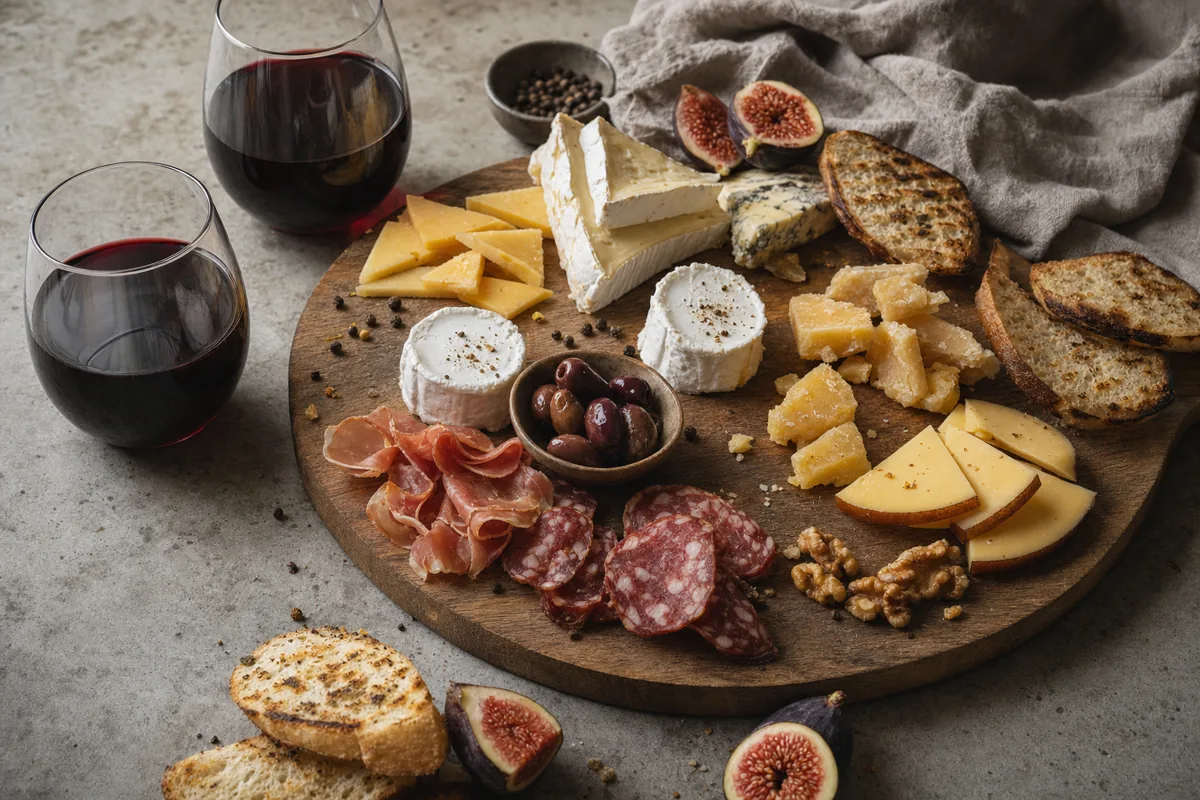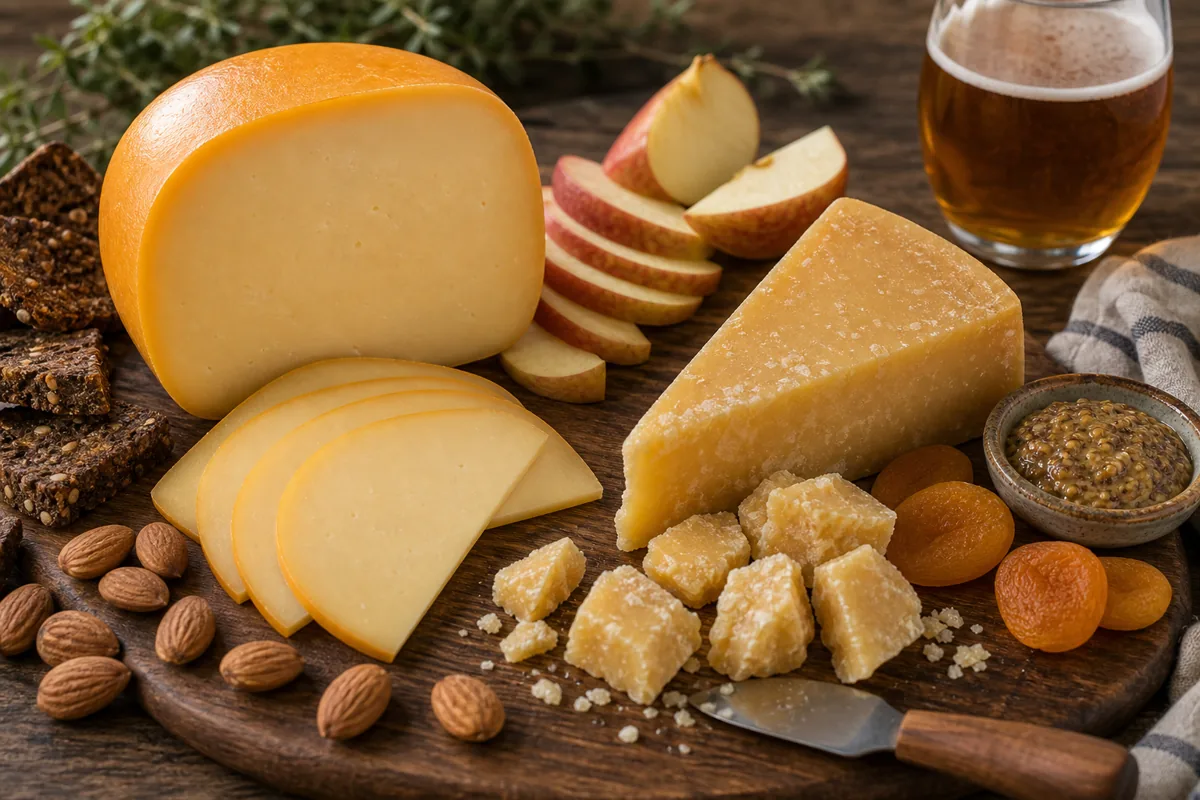
What goes with Gouda depends on how old it is. The same name covers what I am Expat describes as very soft, mild Gouda at four weeks and caramel-sweet, slightly crunchy Gouda at ten to twelve months.
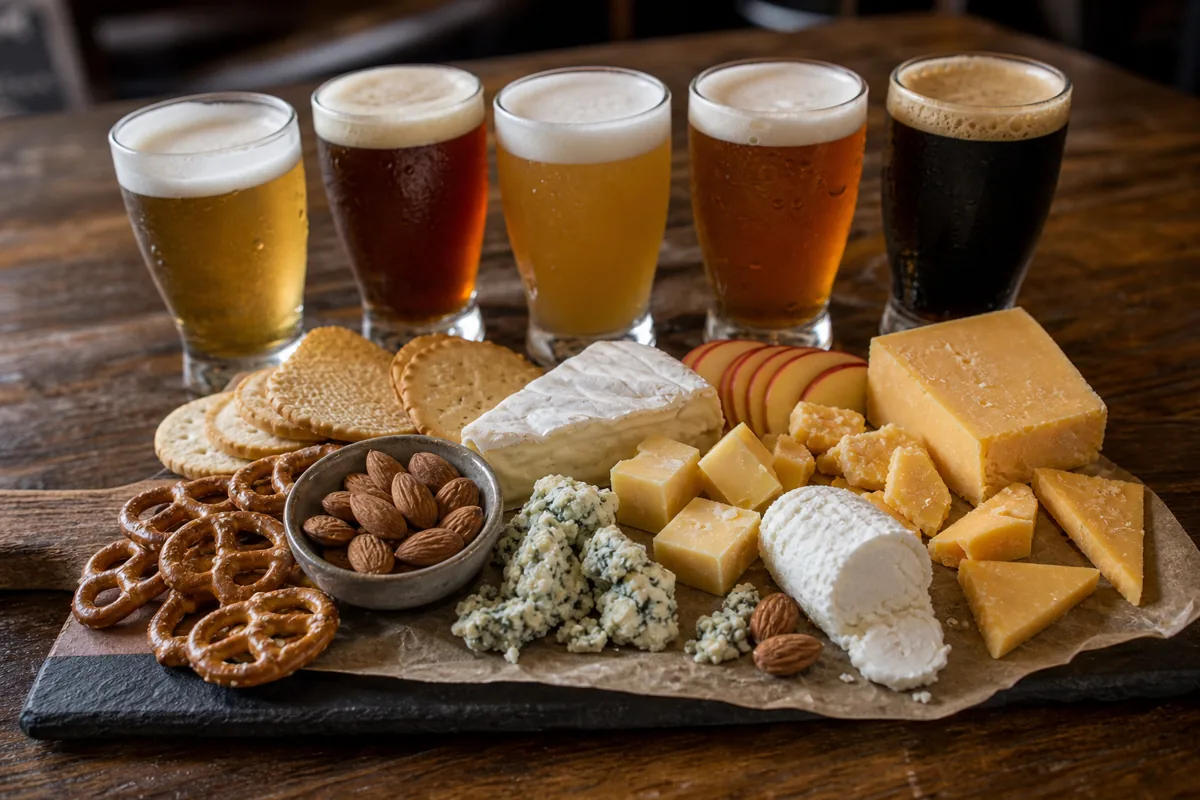
For that spread, cheese expert Steven Jenkins advises beer with young Gouda and a light red or fruity white wine once the cheese is more mature, in The Nibble's feature on Gouda.
In This Article
How Does Gouda's Age Change What Goes with It?
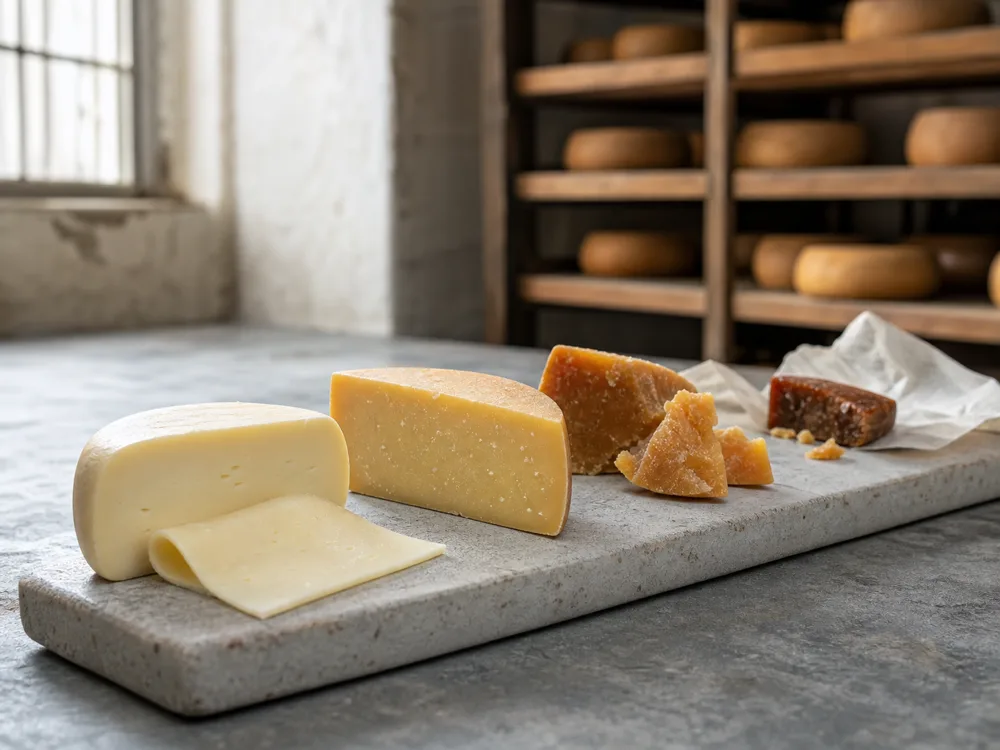
Dutch shops sell Gouda under six age labels, which I am Expat gives as jonge kaas at four weeks up to overjarige kaas at 18 months or more, so the label is your first clue to which partners suit your wedge.
In I am Expat's descriptions, jonge kaas is very soft and mild, belegen is soft enough not to crumble on bread yet old enough to have a good flavour, and extra belegen is harder and crumblier with a much stronger flavour.
Oude kaas picks up a caramel sweetness and a slight crunch from calcium lactate or tyrosine crystals, and I am Expat calls overjarige kaas the strongest cheese in the Netherlands.
The same six steps appear as the classes Dutch cheesemakers generally use, with the same ages for young, young matured and old cheese and different ages for the other three.
| Wikipedia class | Wikipedia age | I am Expat label | I am Expat age |
|---|---|---|---|
| Young | 4 weeks | Jonge kaas | 4 weeks |
| Young matured | 8 to 10 weeks | Jong belegen | 8 to 10 weeks |
| Matured | 16 to 18 weeks | Belegen | 16 to 28 weeks |
| Extra matured | 7 to 9 months | Extra belegen | at least 7 months |
| Old | 10 to 12 months | Oude kaas | 10 to 12 months |
| Very old | 12 to 21 months | Overjarige kaas | 18 months or more |
A wheel sold as belegen can be anywhere from 16 to 28 weeks old on I am Expat's count, against 16 to 18 weeks for Wikipedia's matured class, so ask for the month count when the age matters for your pairing.
Wikipedia quotes one description of young factory Gouda as lightly fudgy with nuts but very mild, and another of mature farmhouse Gouda as having a lovely fruity tang and a sweet finish. The second description adds that an almost butterscotch flavour can appear after two years.
Meg Maker of Maker's Table describes aged Gouda of two or more years as deep golden-orange, grainy, sweet like caramel and distinctly salty. That is older than Wikipedia's very old class, at 12 to 21 months, so her aged-Gouda picks below mean a wheel of at least two years.
Sweetness starts in the make. Gouda is a washed-curd cheese: draining some whey and adding water removes some of the lactose and leaves less lactic acid.
Ageing then reshapes the paste: moisture evaporates, the texture firms and proteins break down into amino acids, and Gardner's Wisconsin Cheese, a cheese retailer, describes the aged cheese as nutty and slightly sweet.
The Nibble's editors place the first visible tyrosine crystals at about six months, in a Sharp Gouda that the California producer Winchester Cheese ages for at least six months. Marieke Plain Premium Gouda, aged more than a year, was amber and a little harder in the same review, with a few tyrosines and more salt than younger Gouda.
Age is not the only variable. The Nibble's reviewer ordered a nine-month Gouda from an Ohio farm expecting a darker, harder paste and found a pale one with a modest aroma and a gentle flavour.
The cheesemaker credited spring milk, which they said gives lighter colour and flavour than summer and autumn milk at the same age. When you choose a partner, look at the colour and firmness of the cut face as well as the months on the label.
Which Wine Goes with Gouda?
Choose the wine by the age of your Gouda. The picks run from Sercial Madeira for young cheese to a tannic Sagrantino or a 30-year-old tawny Port for long-aged wheels with crystals.
| Gouda | Wines named, and who names them |
|---|---|
| Young or mild | Sercial Madeira (Wine Enthusiast, younger Gouda); Riesling, Pinot Noir, Merlot, Sauvignon Blanc, Champagne or Cava (Grapes & Grains, mild Gouda) |
| Starting to turn sharp | Gamay (Wine Enthusiast) |
| About a year, with butterscotch and toffee notes | Off-dry Riesling (Wine Enthusiast) |
| Aged or mature | Dry Riesling, aged white Burgundy or Chardonnay, heartier fruity reds (The Nibble); Chardonnay, Riesling or Tawny Port (Grapes & Grains); Sauvignon Blanc, Port and bold reds (Gardner's Wisconsin Cheese); Syrah or Shiraz (Cheese.com); Malbec (Wine Folly) |
| Aged two years or more | Off-dry Riesling, lightly oaked Chardonnay, Roussanne or Grenache Blanc whites, softer reds, Sherry, Vin Jaune or orange wine (Meg Maker) |
| Long-aged, with crystals | Sagrantino (Wine Enthusiast); 30-year-old tawny Port (The Cheese Professor, for crystalline aged Gouda such as Beemster XO) |
| Gouda in general | Slightly sweet Riesling, oaked Chardonnay, Merlot, Pinot Noir (Cheese.com); Champagne, Chardonnay, Pinot Gris, Riesling, Sauvignon Blanc, Gewürztraminer, Müller-Thurgau, Beaujolais, Malbec and sherries (Wisconsin Cheese) |
If one bottle has to cover mild and aged Gouda on the same board, Riesling is named for both. Cheese.com sets a slightly sweet Riesling with good acidity against Gouda's mildness, and Grapes & Grains lists Riesling for mild and for aged Gouda.
Sauvignon Blanc also turns up at both ends: Grapes & Grains files it under mild Gouda, while Gardner's Wisconsin Cheese names it for aged Gouda as a crisp contrast to its sweetness.
Wisconsin Cheese, a dairy board, calls Holland-born, washed-curd Gouda slightly sweet and says it favours slightly sweet drinks that suit the cheese's nutty, slightly fruity flavour.
Cheese.com's reasons for its other picks are texture and fruit: a buttery, oaked Chardonnay to match Gouda's creamy texture, Merlot for its soft tannins and ripe fruit, and a light to medium-bodied Pinot Noir whose red fruit matches Gouda's smooth, nutty profile.
Which Wine Suits Each Stage of Gouda?
Wine Enthusiast's Nils Bernstein matches a different wine to each stage of Gouda, and his four picks follow how the flavour changes.
| Pairing | Type | Why It Works |
|---|---|---|
| Sercial Madeira | Fortified | For younger Gouda, which Bernstein describes as nutty and buttery. The wine has nutty notes, faint sweetness and an acidity that clears the palate for the next bite. |
| Gamay | Red | For Gouda that has started to turn sharp with age. Its cherry-berry fruit, high acidity and low tannin soften that sharpness into a milder lactic tang. |
| Off-dry Riesling | White | For Gouda of about a year, when butterscotch and toffee notes appear and the salt rises. The wine echoes the caramel notes, and its freshness plays against the salt. |
| Sagrantino | Red | For long-aged Gouda with crunchy crystals. Bernstein pairs the prickly crystals with this rich, tannic red for the contrast in texture. |
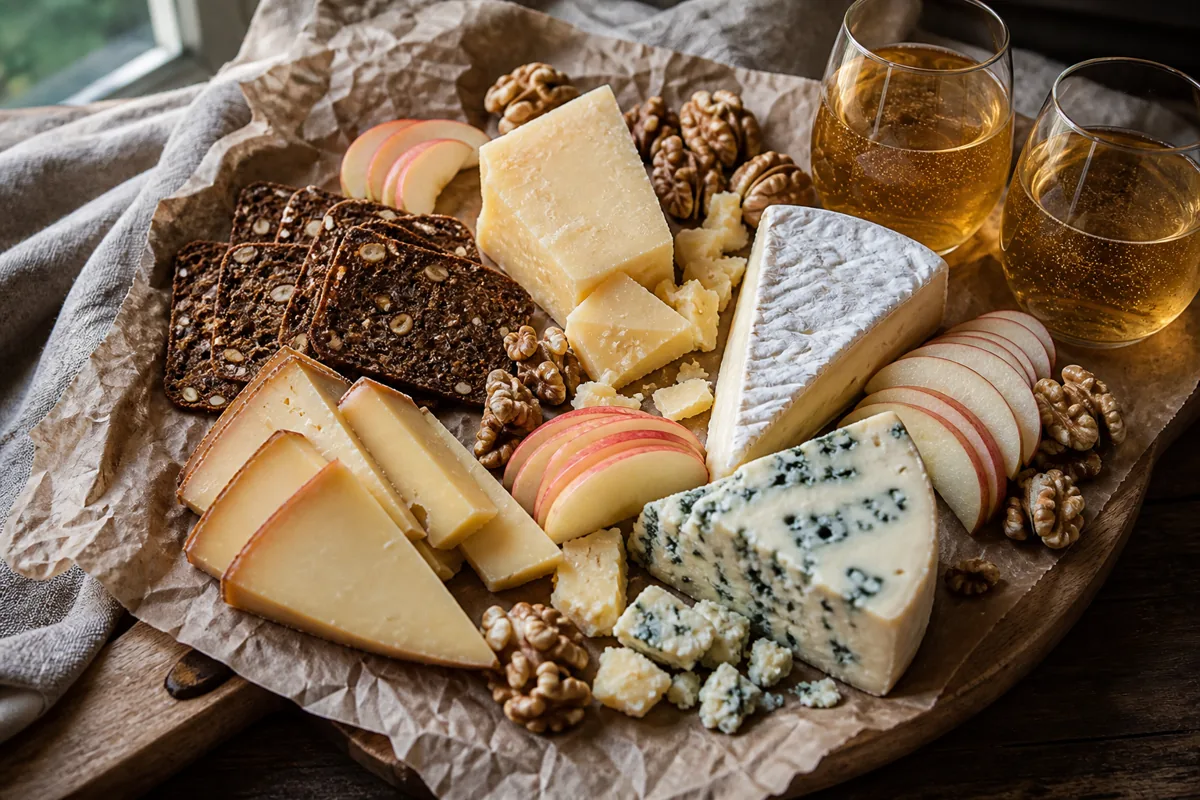
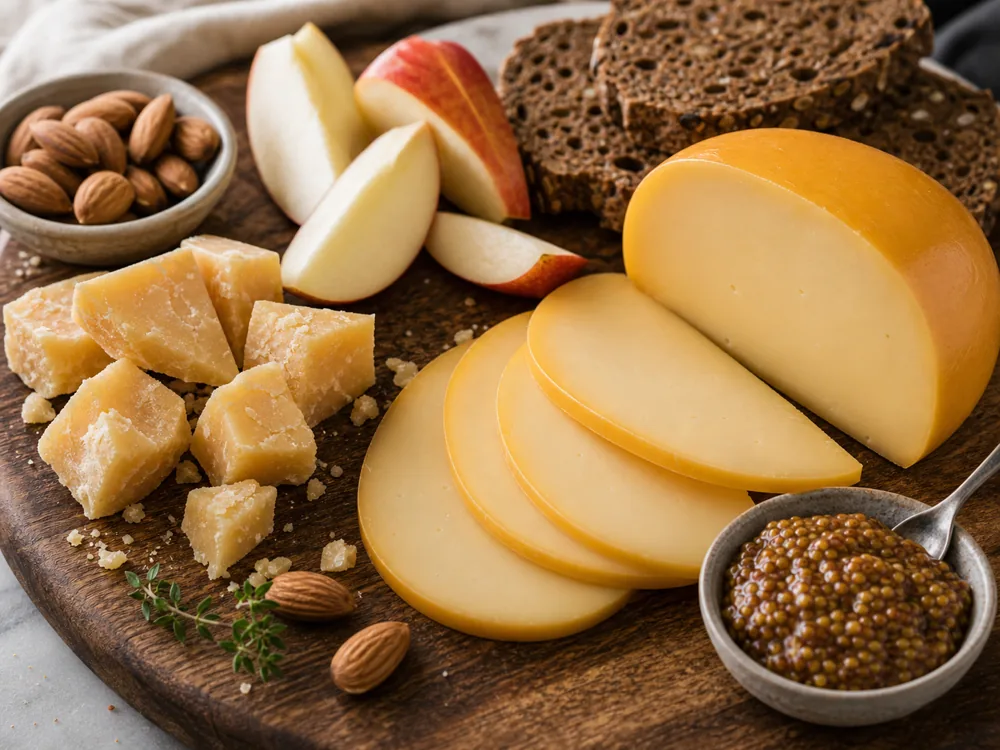
For aged Gouda, pick a heavier or whole grain bread: The Nibble says all types of Gouda go well with fruit and good bread, but an aged Gouda pairs more successfully with the heavier kind.
Beemster pairs its 12-month Royaal Grand Cru with fennel salami, ham, apples, grapes, dried cranberries, walnuts and jam, served with fruit-nut bread or crisps.
How Should You Cut and Serve Gouda?
Wisconsin Cheese says the thick paraffin wax on Gouda, which can be red, yellow, black or brown, should always come off before serving.
For aged Gouda, Gardner's suggests about 1 ounce per serving because ageing concentrates the flavour. Meg Maker suggests thin shavings, grated flakes or narrow wedges for aged cheese, quoting an old rule: "The older the cheese, the smaller the bite."
In Maker's view, aged Gouda can carry a range of wines from the cocktail hour through a dessert cheese course.
Which Meats and Sandwiches Go with Gouda?
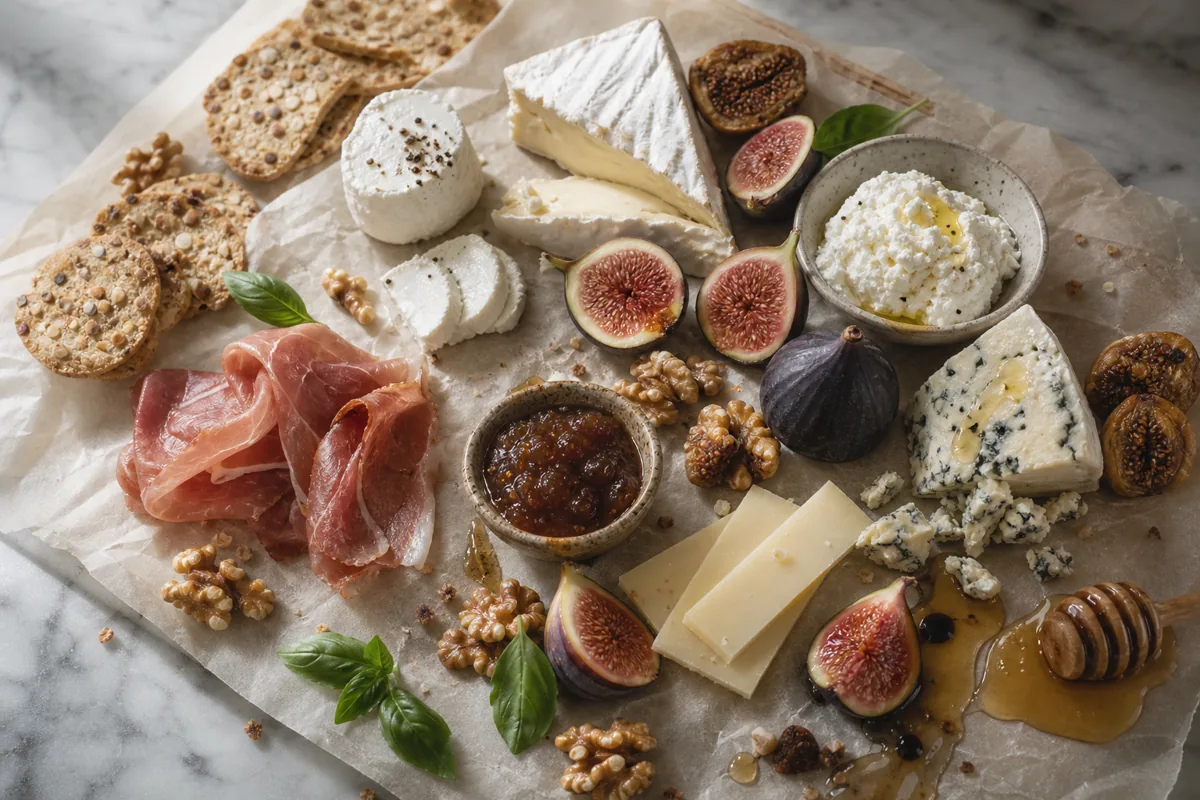
The Nibble suggests a ham sandwich made with speck, an Italian cross between prosciutto and bacon that is dry cured and smoked before sale, and says Gouda pairs with ham, chicken or marinated vegetables as hors d'oeuvres.
Gardner's pairs aged Gouda with garlic summer sausage and smoked meats, reasoning that a bold sausage meets the sweetness of an aged cheese.
Cheese.com says young Gouda melts well on sandwiches and burgers, while aged Gouda is excellent for grating. The Nibble adds that Gouda melts well in general and suggests a Gouda and apple grilled-cheese sandwich.
How Should Smoked Gouda Be Paired?
The wines named for smoked Gouda are all reds, and the beers run from Bock and smoked porter to IPA and several lagers.
| Partner | What is named, and by whom |
|---|---|
| Wine | Shiraz and Syrah (Black River Cheese, for its smoked Gouda); Zinfandel or Shiraz, for a slightly smoked Gouda (Grapes & Grains); Chianti (Castello, for its smoked Gouda); Carménère (Wine Folly) |
| Beer | Bock beer, which has a strong toasted flavour, or a smoked porter (Grapes & Grains); IPA (Castello); American ale, red ale, Märzen lager, Schwarzbier lager and Vienna lager (Black River) |
| Spirits | Peated Scotch or whiskey (Grapes & Grains) |
| Fruit and vegetables | Caramelized pears, cherries, grilled peaches, raspberries, candied ginger, shaved melon, strawberries, and onion and apple chutney (Black River); grilled vegetables (Castello) |
| Meat and fish | Bresaola, pepper-crusted salami, smoked mackerel and smoked speck (Black River); spicy meats (Castello); grilled meats (Wisconsin Cheese) |
| Other food | Nuts (Castello); hot chicken or turkey sandwiches (Wisconsin Cheese) |
Grapes & Grains' reasoning is that nutty, smoky and sweet notes also occur in beer and whiskey, so a peated Scotch or whiskey goes with smoked Gouda too.
Two of the picks come with a smoke level. Castello's smoked Gouda, the cheese its Chianti and IPA are listed with, is smoked lightly over hickory wood chips and rated 2 out of 6 for strength, and Grapes & Grains names its Zinfandel or Shiraz for a slightly smoked Gouda.
The Nibble's reviewer found the smoke in Taylor Farm's maple smoked Gouda delicate, adding a note to the flavour without overpowering it.