Syrah makes a lean, peppery red in cool regions and a ripe, jammy one in hot regions, so a cheese that suits one bottle can fail with the next.
Start with a cheese that has firmness and flavor, the kind the guides keep returning to, from a California wine institute's study guide to a 15-person tasting event. Soft cheeses are where they disagree.
In This Article
What Cheese Goes with Syrah?
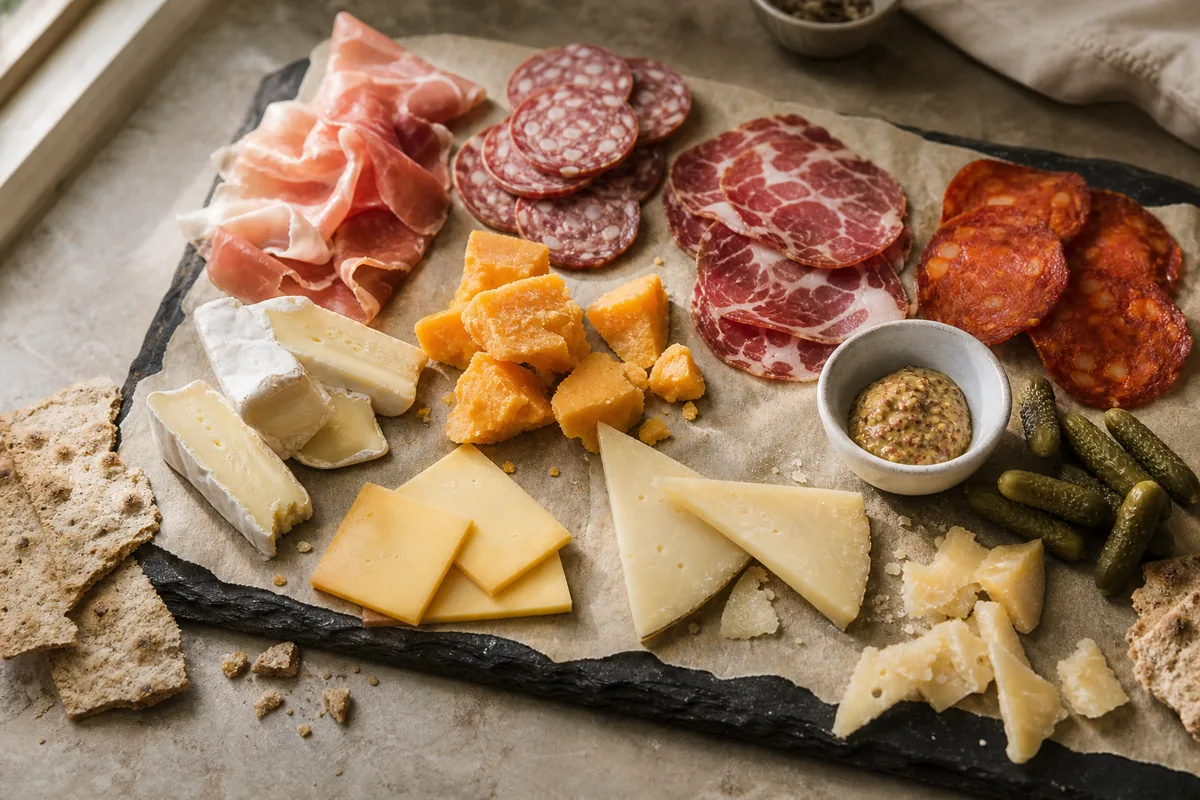
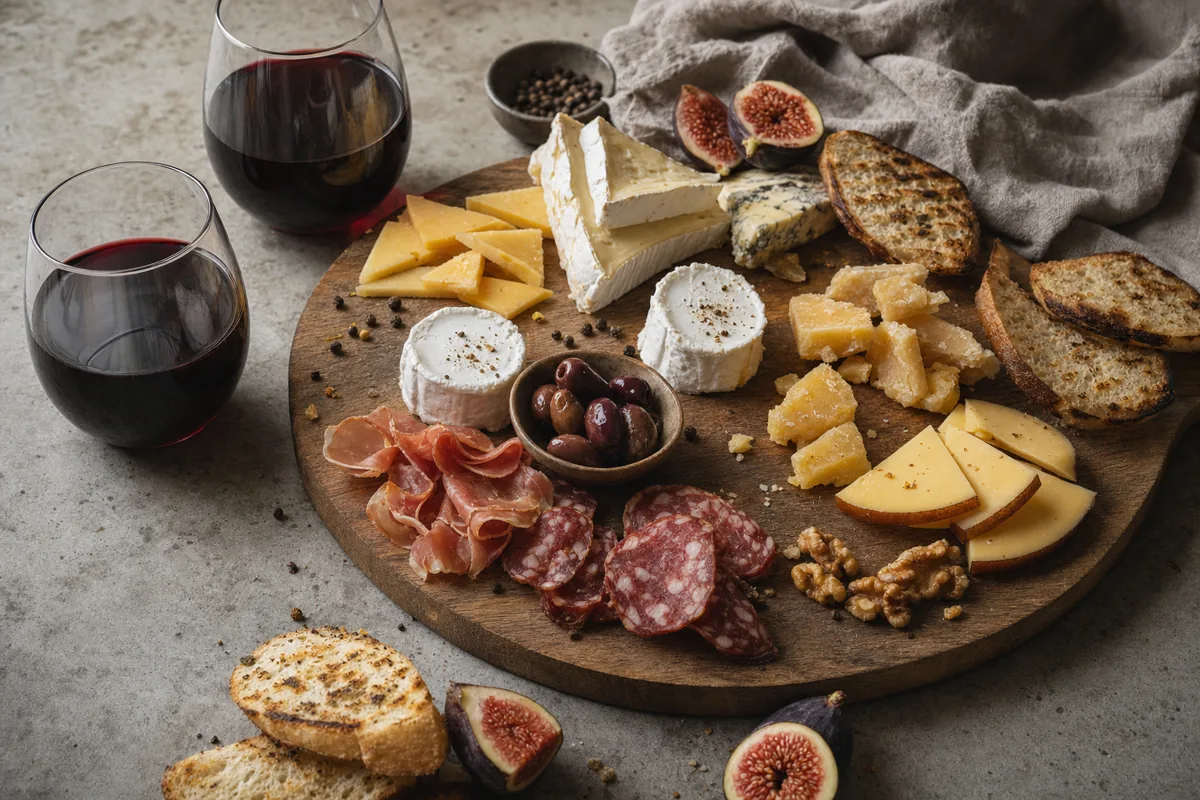
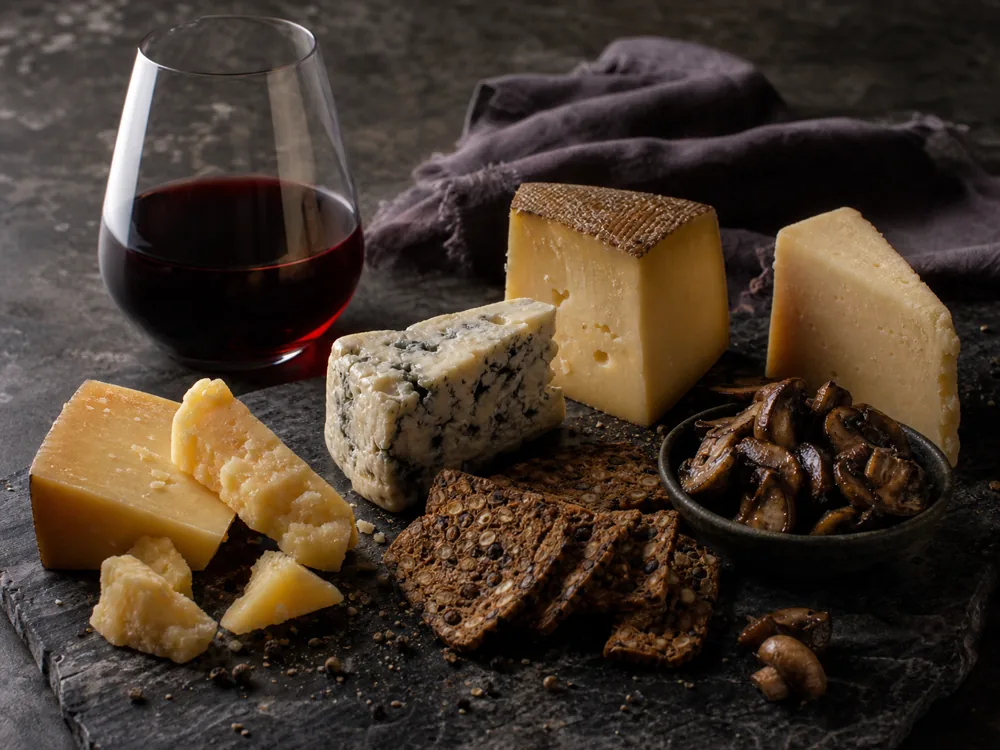
Aged cheddar, sheep's milk cheeses, alpine-style cheeses, peppery hard cheeses and creamy blues are the groups the guides name most often for Syrah.
| Pairing | Type | Why It Works |
|---|---|---|
| Aged cheddar | Firm | Named by Lyle W. Norton, whose Barbers 1833 Vintage Reserve Cheddar was a top-three cheese in his tasting, and by Wine Traveler, which says to go with bolder cheddars; the International Wine and Food Society (IWFS) lists Syrah/Shiraz under Cheddar but not under its Cheddar, Mature entry. |
| Sheep's milk cheese | Firm | Named by Lyle (Idiazabal and Ossau-Iraty), Wine Traveler (Petit Brebicet, Manchego, Ossau-Iraty and pecorino with peppercorns) and tèrravenos (Manchego and truffle pecorino). |
| Alpine-style cheese | Firm | Culture magazine suggests any alpine style, along with Vella Mezzo Secco and Abbaye de Belloc, when the bottle is unknown; the IWFS lists Syrah/Shiraz under Comté and Gruyère. |
| Black-pepper or herb-crusted cheese | Firm | Capstone, the California Wine Institute's study guide, calls Syrah a natural with cheeses crusted with black pepper or herbs; Wine Traveler names pecorino spiked with black peppercorns. |
| Creamy blue cheese | Blue | Lyle's tasters ranked Rogue River Blue and Windsor Blue first; tèrravenos names blue cheese and Gorgonzola; the IWFS lists Syrah/Shiraz under Roquefort. |
| Gouda, smoked Gouda and Parmesan | Firm | tèrravenos pairs smoked Gouda with layered, aged Syrah and Parmesan with earthy, peppery Syrah; the IWFS lists Syrah/Shiraz under Gouda and aged Asiago. |
Lyle W. Norton, who ran the 15-person tasting, writes that pairing cheese with Syrah is difficult because the grape is so diverse and only a limited number of cheeses stand up to its earthy, spicy flavors.
Wine Traveler's overview makes the broader case against red wine with cheese: white wine usually wins, it says, because red tannins clash with many creamy, salty or funky cheeses and can taste metallic.
The Syrah lists fit that warning, since they lean on firm, strongly flavored cheeses and treat soft ones as the exception.
The six sources differ in kind: a cheese magazine, a wine institute's study guide, a wine society's cheese-by-cheese index, two wine publications and one writer's tasting. Only the tasting reports what a group of people actually drank and ate.
Does the Style of Syrah Change the Cheese?
Yes, and the guides that split Syrah into styles attach different cheeses to each half. Climate sets the style: moderate regions such as the northern Rhône give tannic, peppery wines, and hot regions give softer, jammier ones.
| Style | How the sources describe it | Clues on the bottle |
|---|---|---|
| Lean and peppery | Culture: lean, herbal and acidic, lighter on fruit than usual. Wikipedia, for moderate climates: medium- to full-bodied, medium-plus to high tannin, blackberry, mint and black pepper. tèrravenos: earthy and peppery, with restrained, chalky tannin. | Rhône Valley or cool California corners such as the Sonoma Coast (Culture); alcohol closer to 13 percent than 15 (Culture); an appellation name in place of a grape name (Wikipedia). |
| Ripe and jammy | tèrravenos: opulent, fruit-driven and often full-bodied. Wikipedia, for hot climates: consistently full-bodied, with softer tannin, jammier fruit, licorice, anise and leather. | Barossa Valley, McLaren Vale or Crete (Wikipedia); Shiraz on the label, loosely (Wikipedia); a price under $10 (tèrravenos). |
The label clue is unreliable: most Australian and South African wines say Shiraz and most European wines say Syrah, producers elsewhere sometimes choose Shiraz to signal a riper, more fruit-driven style, and the rule of thumb is applied unevenly.
A northern Rhône red may not name the grape at all: appellation rules generally keep varietal names off the label, so the bottle reads Crozes-Hermitage, Hermitage or Côte-Rôtie, and Syrah is the only red grape used in that region.
Age and oak add a second layer to the style. tèrravenos says Syrah often spends time on oak, which adds smoke, chocolate and even coffee.
With age, tèrravenos says, tobacco and leather appear, and Wikipedia adds that earthy notes such as leather and truffle develop in the bottle.
Culture calls the lean bottles excellent table companions and says they often take time to show themselves, with more details to notice as they open.
Petite Sirah is a different grape, a cross of Syrah and Peloursin that Wikipedia describes as even more full-bodied and tannic than Shiraz.
So read the region, the alcohol figure and the exact grape name on the label before you choose a cheese.
What Did a 15-Person Syrah and Cheese Tasting Find?
Lyle W. Norton, a freelance writer with a weekly wine column, paired six cheeses with Syrah-based wines at an event supporting a local high school art project and published the results on June 9, 2014.
He asked the tasters to judge each wine for color, texture, bouquet and flavor, then to taste in a fixed order: a sip of wine, a bite of cheese and a second sip.
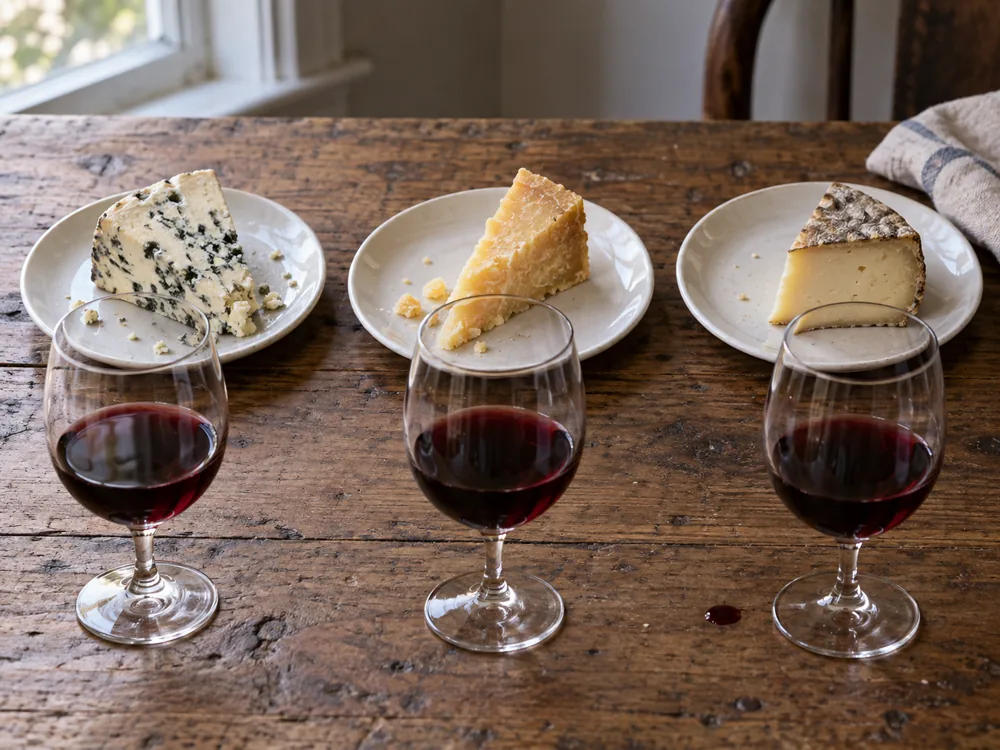
| Wine | Cheese | The cheese as Lyle describes it | His verdict |
|---|---|---|---|
| Bonny Doon Sparkling Syrah 2011 (83 percent Syrah, 17 percent Grenache) | Rogue River Blue | Creamy blue that lacks aggressive bite | Worked; one of the day's favorites |
| Bonny Doon Syrah, Jespersen Vineyard 2010 | Idiazabal | Semi-firm sheep's milk cheese from the Basque region; smoky and buttery | Enhanced the wine |
| Halliwell Syrah-Grenache 2007 (Barossa Valley) | Windsor Blue | New Zealand cow's milk blue, a 2006 Supreme Champion; creamy, buttery and delicate | Possibly his favorite pairing |
| Twisted Oak Syrah-Viognier 2008 (Calaveras County) | Barbers 1833 Vintage Reserve Cheddar | Intense, deep flavors | The group's top wine |
| Crozes-Hermitage 2009 (northern Rhône) | Ossau-Iraty | Nutty, salty sheep's milk cheese | Among his preferred pairs |
| Bonny Doon Syrah, Bien Nacido Vineyard 2007 | Tomme de Savoie | Earthy and meaty | Not stated |
The group's favorite cheeses were Rogue River Blue and Windsor Blue, with Barbers 1833 Vintage Reserve Cheddar close behind, and its favorite wine was the Twisted Oak Syrah-Viognier.
Lyle describes the two blues as moderate in flavor with an exceptionally creamy texture, so the favorites ranged from two moderate, creamy blues to a cheddar he credits with intense, deep flavors.
Several pairings turn on a flavor the wine and the cheese share. The Crozes-Hermitage and the Ossau-Iraty both showed flavors Lyle lists from black olives and pepper to currants, licorice and caramel, and the wine augmented the cheese's caramel notes.
Idiazabal worked through restraint: Lyle says its smokiness and buttery texture were subdued enough to enhance the fruit-forward wine without deflecting it, and that the cheese is best mature but not over-aged.
The Twisted Oak pairing turned on intensity. Lyle says the older, tannic wine needed a cheddar with intense, deep flavors, and that the Barbers 1833 pushed the pair over the top.
For the Bien Nacido wine he chose Tomme de Savoie for its earthy, meaty qualities, a reasoned choice rather than a tested result.
The result comes with limits Lyle states himself: conversation among the 15 tasters shaped each person's top two choices, and he built the pairings, which he says leaves him partial to all of them.
Lyle also decanted the older Twisted Oak before serving because he feared its tannins.
Which Firm Cheeses Suit Syrah Best?
Lyle writes that semi-firm cheeses with intense flavor are the best matches for seasoned Syrah, and that Old World cheddars, blues and Spanish sheep's milk cheeses with forceful flavors seem to balance the wine on the palate.
Cheddar is a pick for Wine Traveler, whose Syrah entry says bolder cheddars are where to go, and for the IWFS, which lists Syrah/Shiraz under Cheddar and Gouda but leaves it off its Cheddar, Mature entry.
Sheep's milk cheeses are named by Lyle, Wine Traveler and tèrravenos, and Wine Traveler gives a reason: Syrah tends to like sheep's milk cheeses from rugged regions, similar to where it thrives in France.
Wine Traveler singles out Petit Brebicet because a hint of funkiness in the cheese complements the gaminess of Syrah.
The IWFS list does not follow this pattern: its Manchego, Pecorino and sheep cheese entries leave Syrah/Shiraz off, and its Syrah/Shiraz entries are aged Asiago, Cheddar, Comté, Gouda, Gruyère and Roquefort. An absence from the IWFS list is not a verdict against the pairing.
For a bottle of unknown style, Culture's fallback is something milky, firm and smooth: Vella Cheese Mezzo Secco, Abbaye de Belloc or any alpine style.
Pepper is the other thread. Capstone calls Syrah a natural with cheeses crusted with black pepper or herbs, and Wine Traveler says pecorino spiked with black peppercorns has a burst of spice that highlights Syrah's spiciness.
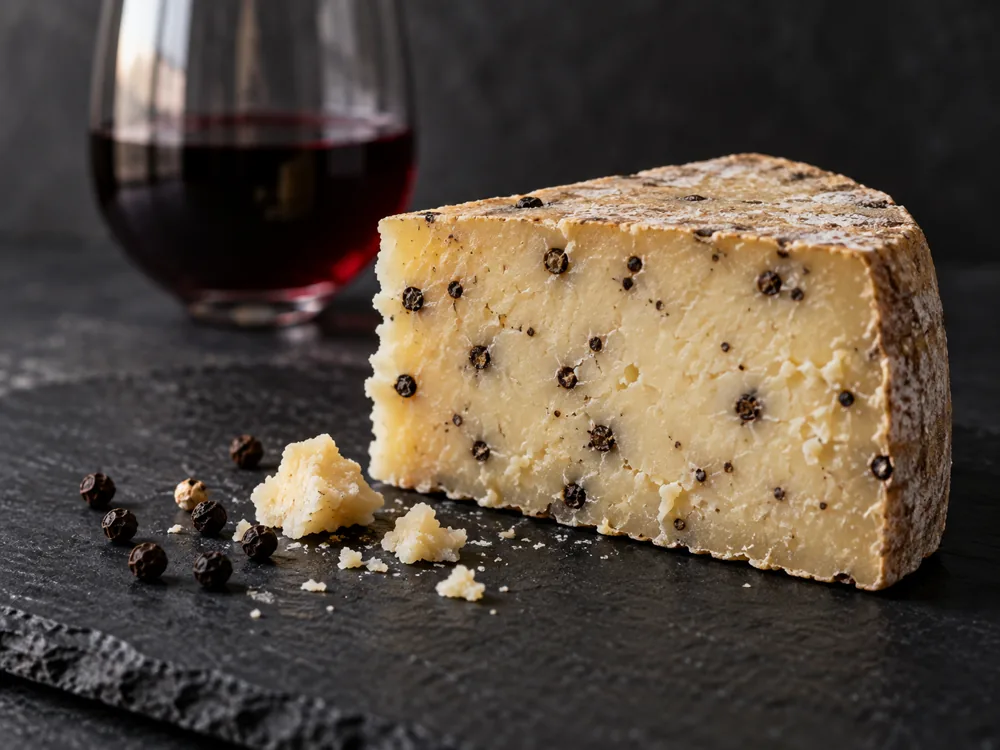
tèrravenos adds Pepper Jack, a mild, creamy cheese with jalapeño, to the earthy, peppery style, saying it enhances the wine's earthy and peppery tones.
It also pairs Parmesan and truffle pecorino with that style, and smoked Gouda with layered, aged Syrah.
Where a reason is given, it is often an echo: pepper in the cheese meets pepper in the wine, and caramel in the cheese meets caramel in the wine.
For a bottle of unknown style, the firm-cheese shortlist is an alpine style (Culture), aged cheddar (Lyle and Wine Traveler, with the IWFS listing plain Cheddar) or a sheep's milk cheese (Lyle, Wine Traveler and tèrravenos).
Does Brie or Goat Cheese Work with Syrah?
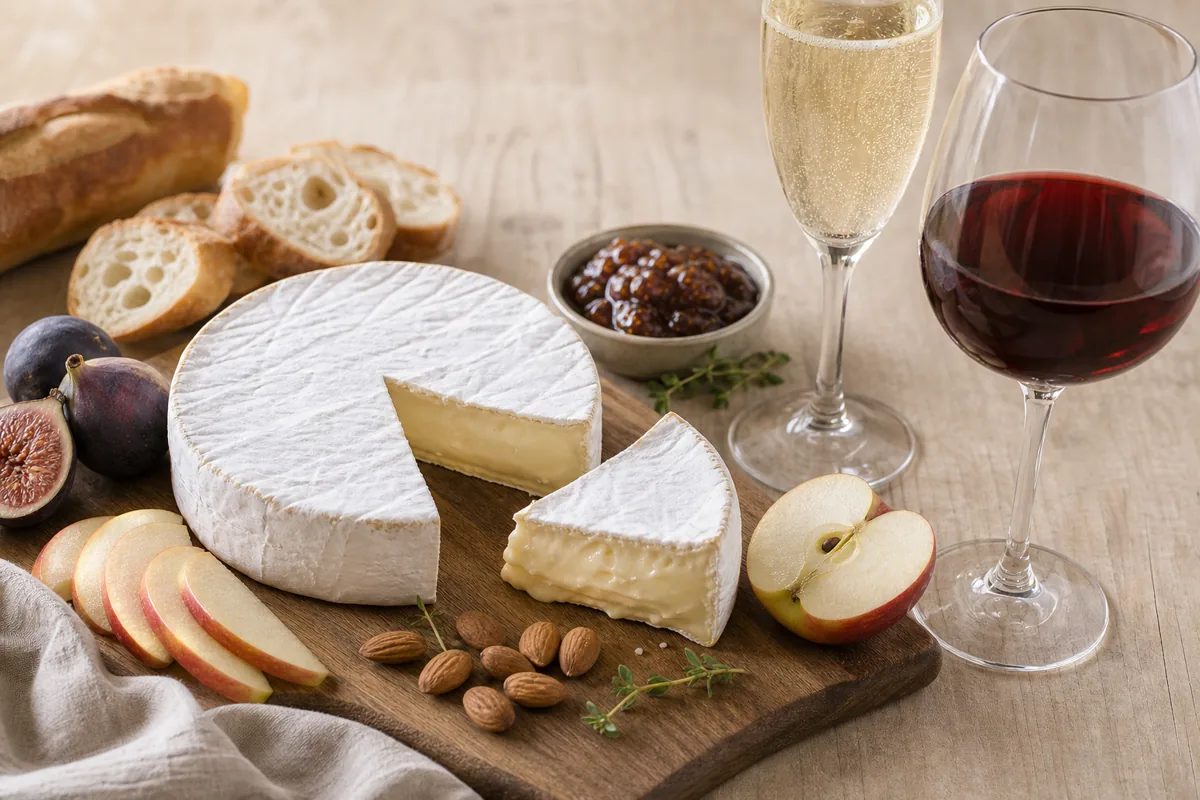
Soft cheese splits the advice on Syrah more than any other group: two guides name it for opposite bottles, two rule it out and one leaves it off its list.
| Source | Position | Syrah it applies to |
|---|---|---|
| Culture | Rich bloomy-rind cheeses can suit lighter bottles; externally rinded goat's milk blues suit frisky, peppery ones. | Lighter, peppery, cool-climate |
| tèrravenos | Brie and Havarti, plus fig-infused goat cheese and blueberry-infused cheese. | Jammy, fruit-forward |
| Capstone | Avoid soft, mild cheeses. | All styles |
| Lyle W. Norton | Triple-cream cheese and Brie are out of the question, though generally excellent with sparkling wine. | Syrah in general, written while planning a tasting that opened with a sparkling Syrah |
| IWFS | Its Brie, Camembert, triple-cream and goat cheese entries list no Syrah/Shiraz. | Not stated |
The two guides that support soft cheese describe opposite bottles, so no single trait of the wine explains the match.
Their reasons differ too. Culture says lighter Syrahs can yield to the creamy flavors of rich bloomy rinds, while tèrravenos says jammy Syrah enhances buttery, slightly sweet Havarti and that fruit-infused cheeses echo the wine's own fruit.
Across the table, soft cheese gets named for bottles described as lighter or fruit-first, and gets ruled out in the guides that describe seasoned, earthy or spicy Syrah.
If you want goat cheese with Syrah, the goat's milk cheeses named here are Culture's blue with an external rind and tèrravenos's fig-infused goat cheese.
None of the six cheeses in Lyle's tasting was a Brie-style soft cheese.
Does Blue Cheese Work with Syrah?
Two blues were the favorite cheeses in Lyle's tasting, and both are moderate in flavor: he describes Rogue River Blue as lacking aggressive bite and exceptionally creamy, and Windsor Blue as creamy, buttery and as delicate as blues come.
Rogue River Blue is also wrapped in syrah grape leaves soaked in brandy, a detail Lyle calls novel.
Both blues were poured with fruit-led wines: a sparkling Syrah Lyle describes as candied berries with savory flavors, and a Barossa Syrah-Grenache blend whose fruit he says shows more in Australia's heat than in the Rhône.
Wine Traveler's quick rules say sweet wine balances the salt and piquancy of blue cheese better than anything dry, and its Syrah entry lists firm and sheep's milk cheeses instead.
tèrravenos goes the other way: it names blue cheese with a strong, pungent flavor for robust, earthy Syrah, and Gorgonzola for more restrained styles.
It adds that Syrah works with Cobb salads and other salads dressed with blue cheese.
The IWFS lists Syrah/Shiraz under Roquefort but not under its general blue cheese, Gorgonzola or Stilton entries.
The tasting is the strongest evidence for blue cheese here, so if you choose a blue, a creamy, moderate one has that evidence behind it, while a stronger blue rests on tèrravenos and one IWFS entry.
What Cheese Goes with Sparkling Syrah or Shiraz?
Blue cheese and Cheddar are the only two cheeses the IWFS lists Sparkling Shiraz under.
Australian sparkling Shiraz has traditionally had some sweetness, although some makers now make a full-bodied dry version, and sweetness is the quality Wine Traveler says balances blue cheese. Find out whether your bottle is a sweet or a dry one before you put it with blue cheese.
Lyle served his one dessert Syrah, the brandy-fortified Longoria Vino Dulce, with chocolate rather than cheese.
What Else Belongs on the Board with Syrah?
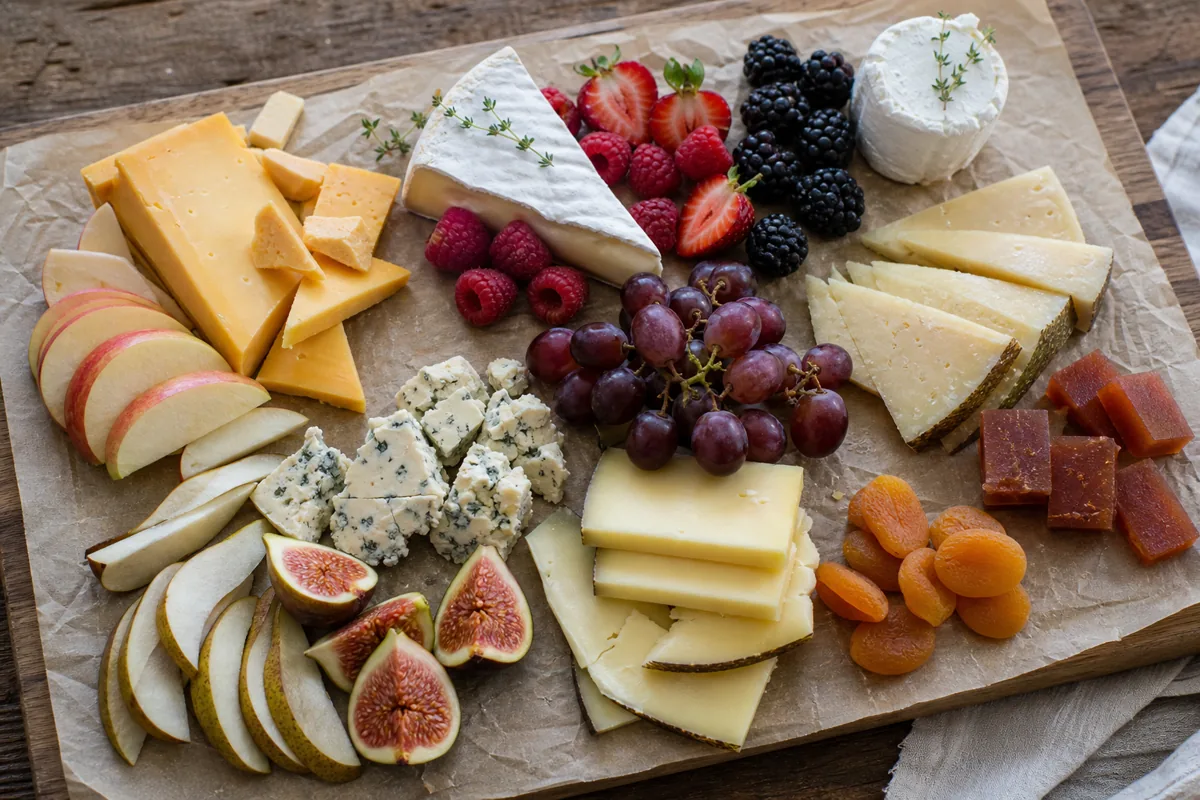
Match the extras to the bottle's style: Capstone's food guide lists what suits each Syrah style, and several of its items are things a cheese board holds.
- All styles: black pepper and hard cheeses, with very sour ingredients kept out of the main role.
- Classic Old World style: black olives, French-style herbs such as rosemary and fennel, green peppers and mushrooms, with grilled foods.
- Fruit-forward New World style: fruit chutneys, cinnamon, clove and farm-style sausages.
Capstone adds that coarse-textured foods such as polenta, black beans and whole-grain mustard sauce give the wine something to rub against.
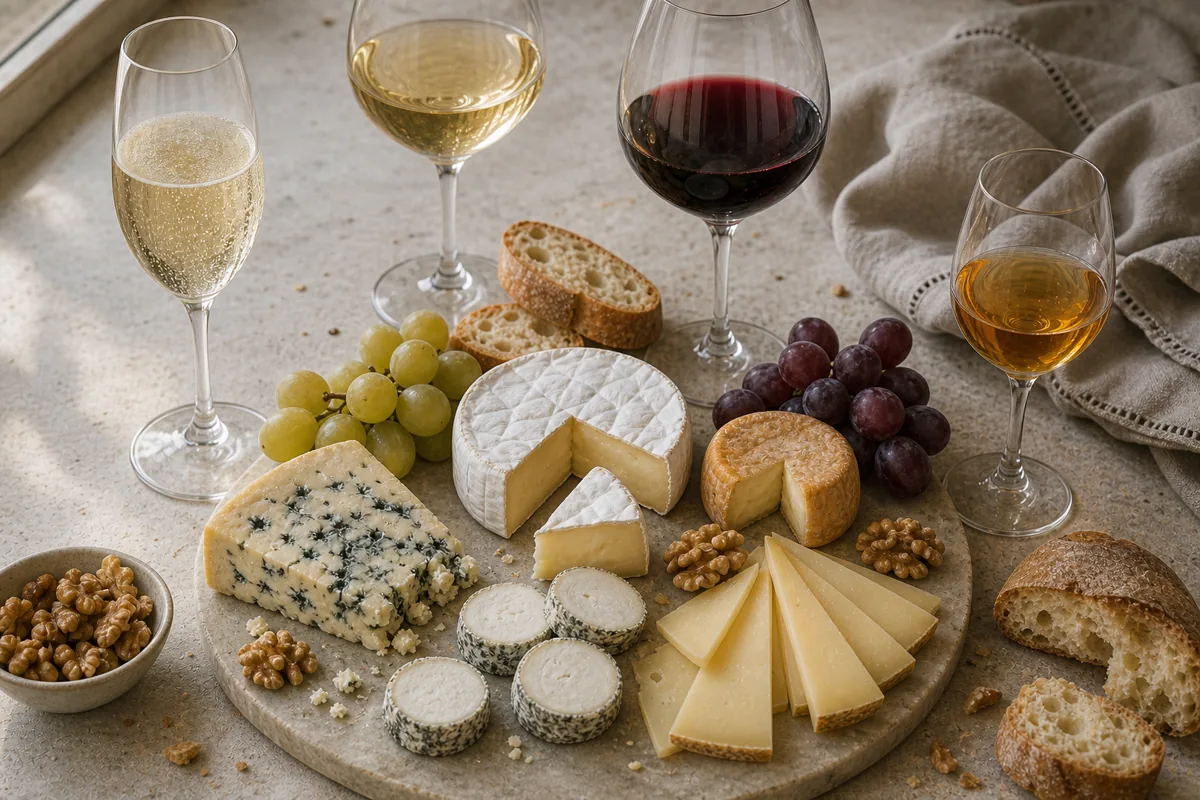
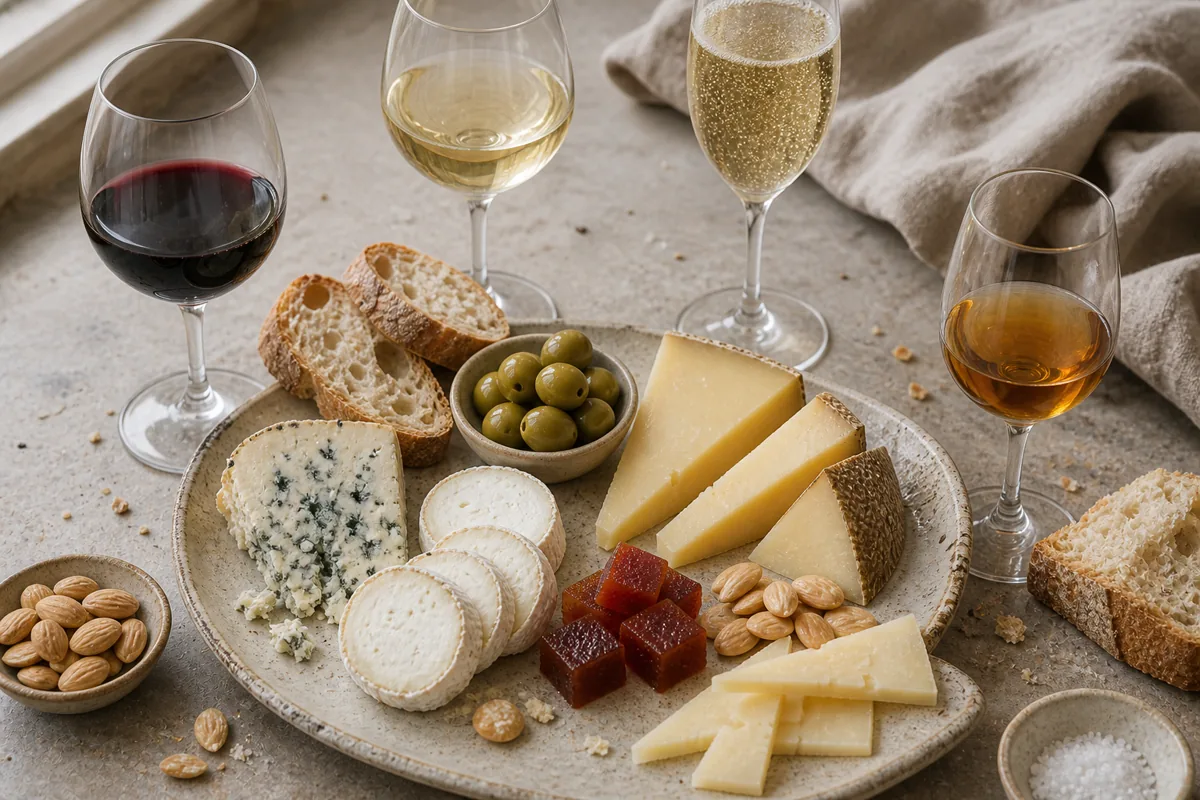
tèrravenos suggests settling the Syrah style first, then setting out more than one block of cheese beside the wine to bring out the interplay of flavors and textures, which is the one-cheese-per-glass logic of Lyle's tasting.
What Temperature Should Syrah and the Cheese Be?
For the wine, Wiens Cellars, a winery in Temecula, California, puts full-bodied reds such as Cabernet Sauvignon and Syrah at 63 to 68°F (17 to 20°C), and fuller-bodied reds at 60 to 65°F (15 to 18°C) in a later passage.
Wiens Cellars says a red served too warm feels heavy, even flabby, with its alcohol more pronounced, and Capstone calls almost all Syrah generous in alcohol.
Academy of Cheese says cold cheese can taste dull and rubbery and gives 68 to 72°F (20 to 22°C) as the target, which sits at or above the top of the wine range.
Its rule of thumb is at least an hour out of the fridge, up to two hours for ripe, runny Brie, and 30 minutes for fresh cheeses such as mozzarella, ricotta and young goat's cheese.
CDC says never to leave perishable food out for more than 2 hours, or 1 hour above 90°F, and lists dairy among perishable foods. A two-hour warm-up for a ripe Brie, the longest the Academy of Cheese suggests, uses that whole allowance before the cheese reaches the board.