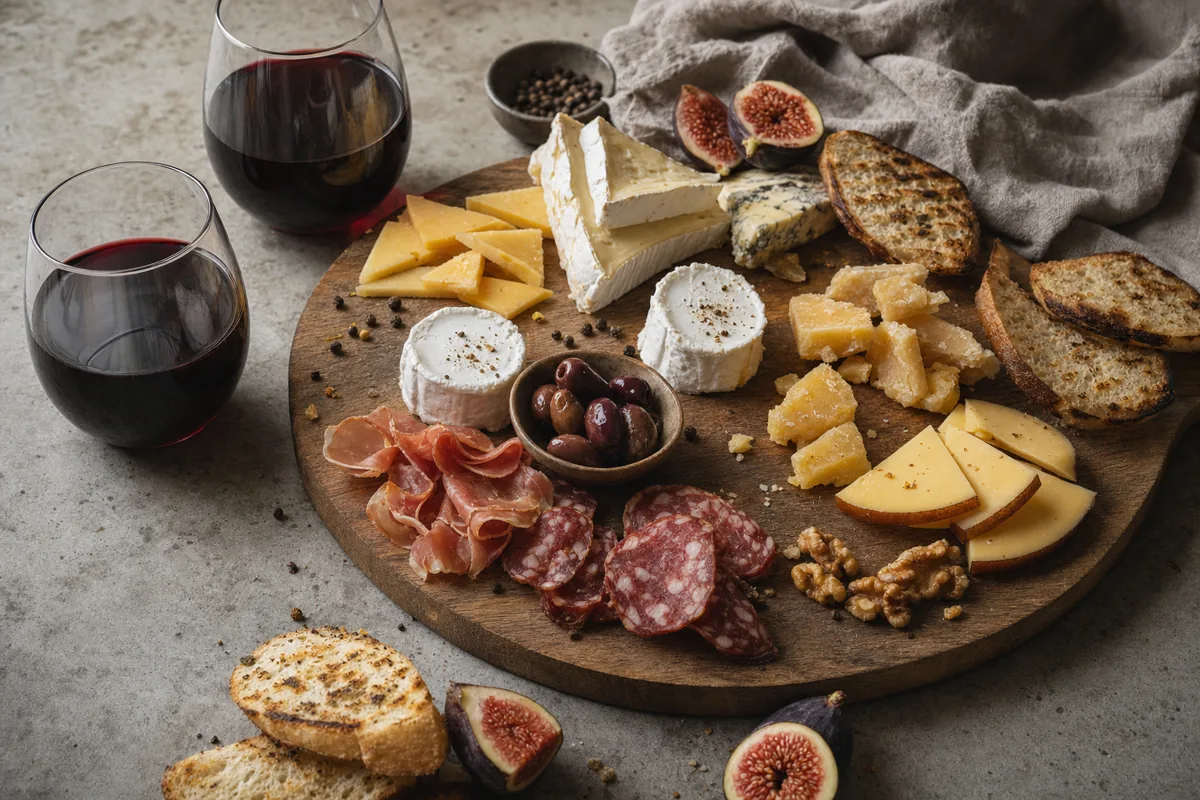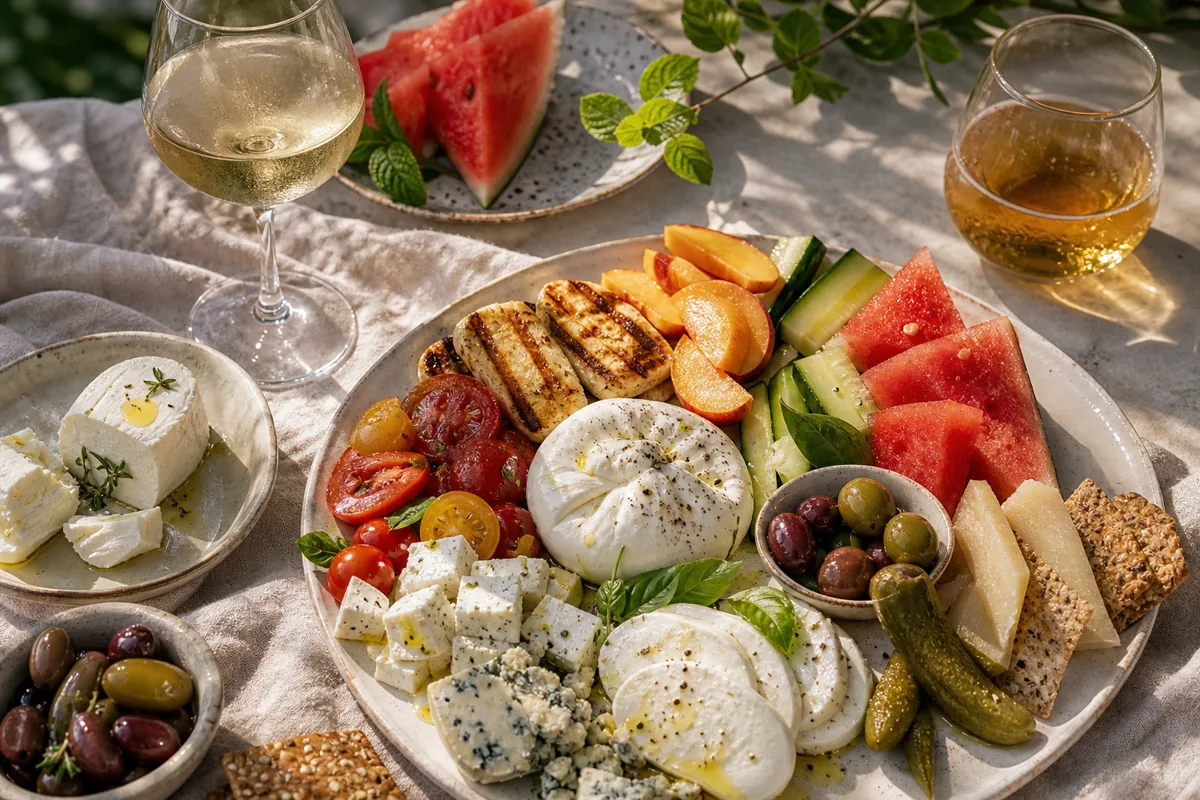
Summer pairing starts from two problems that the cheesemongers and chefs quoted below keep returning to: cookout food is heavy, and a warm table is hard on soft cheese.
Every pairing here carries the name of the person who suggested it. Food & Wine asked four cheese professionals in June 2026 to name a cheese of the summer, and its headline reports that they could not pick just one.
In This Article
What Cheese Goes With Watermelon, Tomatoes, and Stone Fruit?
Six cheese-and-fruit pairings appear across Culture's 2014 and 2025 summer pieces, by cheesemonger Amanda Puckett and with recommendations from Zach Sievers of Zingerman's Delicatessen in Ann Arbor, and in Food & Wine's June 2026 survey.
| Cheese | Partner | Suggested by |
|---|---|---|
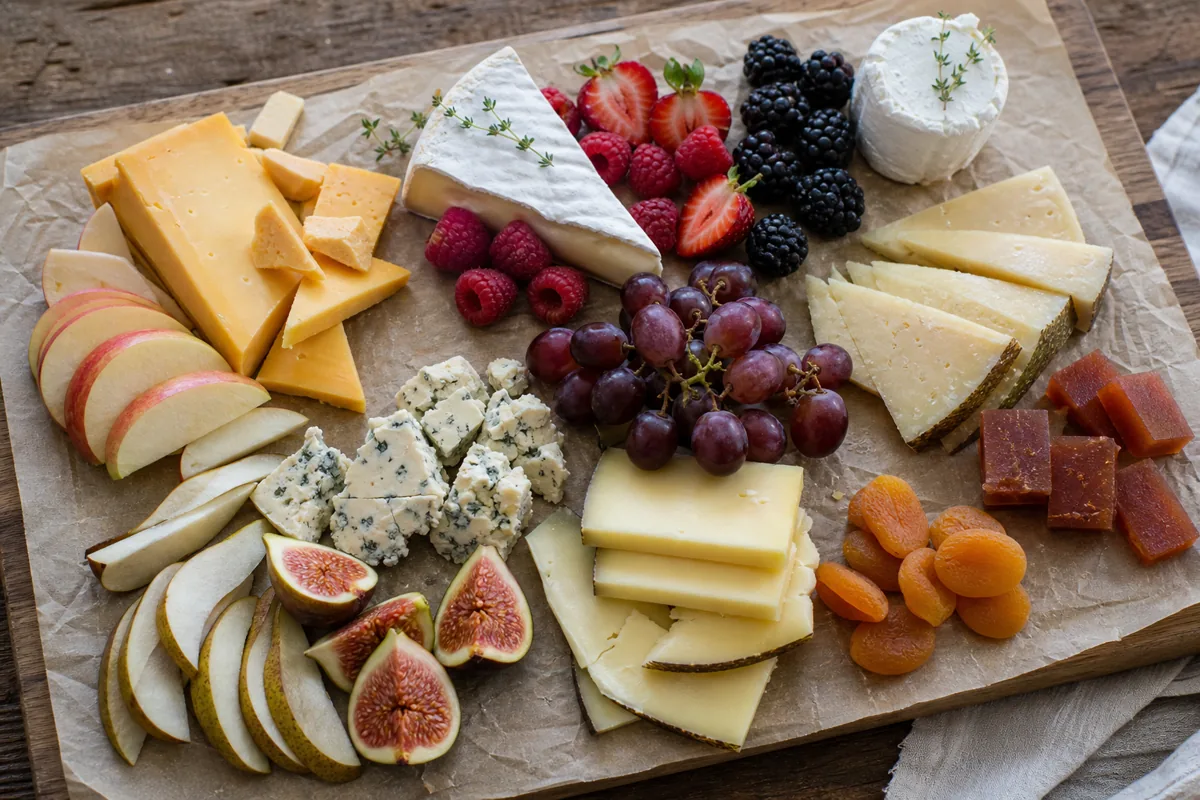
| Greek feta PDO, pasteurized sheep's milk | Pickled watermelon | Zach Sievers, Zingerman's Delicatessen (Culture, 2025) |
| Vermont Creamery goat's milk feta | Redcamper's Whiskey Peach Deliciousness, made with Colorado peaches, whiskey, and Madagascar vanilla | Amanda Puckett, cheesemonger (Culture, 2014) |
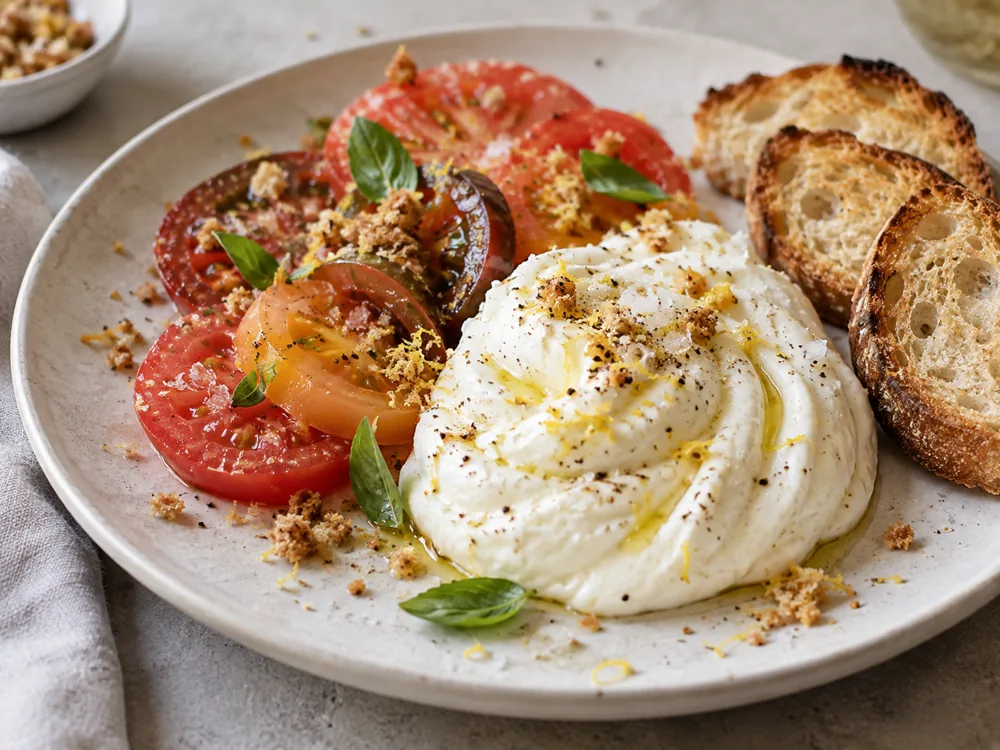
| Burrata, whipped with salt and lemon zest | Heirloom tomatoes, micro basil, a crunchy basil dust, and thin toast | Ruby Oliveros, Claremont Resort & Club (Food & Wine, 2026) |
| Bellwether Farms whole milk basket ricotta | Grilled apricots with a touch of olive oil | Zach Sievers (Culture, 2025) |
| Afterglow, Blakesville Creamery | Gooseberries | Pascal Vittu, Daniel, New York City (Food & Wine, 2026) |
| Point Reyes Farmstead Original Blue | Dried tart cherries | Amanda Puckett (Culture, 2014) |
Two of those pairings use the word feta for different cheeses. The Greek feta on Sievers' list is a PDO cheese, and according to Wikipedia the EU limits the name to cheese from mainland Greece and Lesbos made from sheep's milk, or sheep's milk with up to 30 percent goat's milk.
Outside the EU, the name feta is often used generically for white brined cheeses, which is how a goat's milk feta like Puckett's can sit beside the Greek kind.
Puckett describes hers as crumbly, with a pronounced goaty flavor and a mild briny finish, so the milk on the label tells a buyer which of the two is in hand.
Wikipedia also describes two PDO varieties: a firm one that is tangier and considered higher in quality, and a soft one that is almost spreadable and mostly used in pies.
Feta dries relatively quickly even when refrigerated, and Wikipedia says that if it is kept longer than a week it should sit in brine or lightly salted milk.
Oliveros chose burrata for summer because it pairs particularly well with summer fruit, and she says fresh mozzarella is good too but does not give the same creaminess in the middle.
She whips the burrata with salt and lemon zest to brighten it, then pipes it onto a plate and serves it cold.
The partners do different jobs. Culture describes the pickled watermelon as making briny little bites with the feta, Oliveros adds salt and lemon zest to the cream, and Puckett uses dried tart cherries to make a bite that is sweet, salty, and savory.
Vittu's gooseberries work the other way round: he calls them sweet but not too sweet, so the cheese remains the focus.
Why Do Summer Pairings Lean on Acid and Lighter Cheeses?
Sievers ties acidity to the food on the table. As he puts it, “Cookouts tend to be heavy, so bringing some acidity with cheese tends to be the way I go.”
Vittu's reason sits in the milk: he prefers goat and sheep's milk cheeses in summer because their fat content feels a bit lighter than cow's milk cheese when the weather is warm, and he says the acidity plays a big role.
Culture says Sievers is intentional about balancing heavier grilling classics with delicate food, and he wants cheese that can “play with grilled and smoked meats as well as veggies.”
Vittu also likes Tomme Brûlée from France's Basque region for its “lightly burnt rind, offering a caramelized note over a dense, buttery interior.”
Lamar Sloss, chef and owner of Fromagio's Artisan Cheese in Anchorage, Alaska, thinks of semi-firm cheeses for summer. In his words they are flavorful but not so rich that they overpower a glass of Champagne, a mimosa, or some rosé outside.
One of his picks is Alp Blossom from Murray's Cheese, a dense but creamy cheese covered in dried flowers that add a floral flavor.
Another is Tomme Per Diou, an earthy and tangy French goat cheese he finds really bright, and Food & Wine suggests crusty bread or thinly sliced charcuterie with both.
Puckett follows the seasons. She names creamy washed rinds and Alpine cheeses as winter choices and fresh chèvre as a spring one, and for 90-degree weather in Florida she wants a board with a mix of textures and flavors where anything light and fresh is a good companion.
The three fixes point at different cheeses: acid next to the cheese from Sievers, a lighter-feeling milk from Vittu, and a cheese that does not dominate the glass from Sloss. That spread is why these sources never settle on one summer cheese.
Which Cheeses Hold Up on a Hot Table?
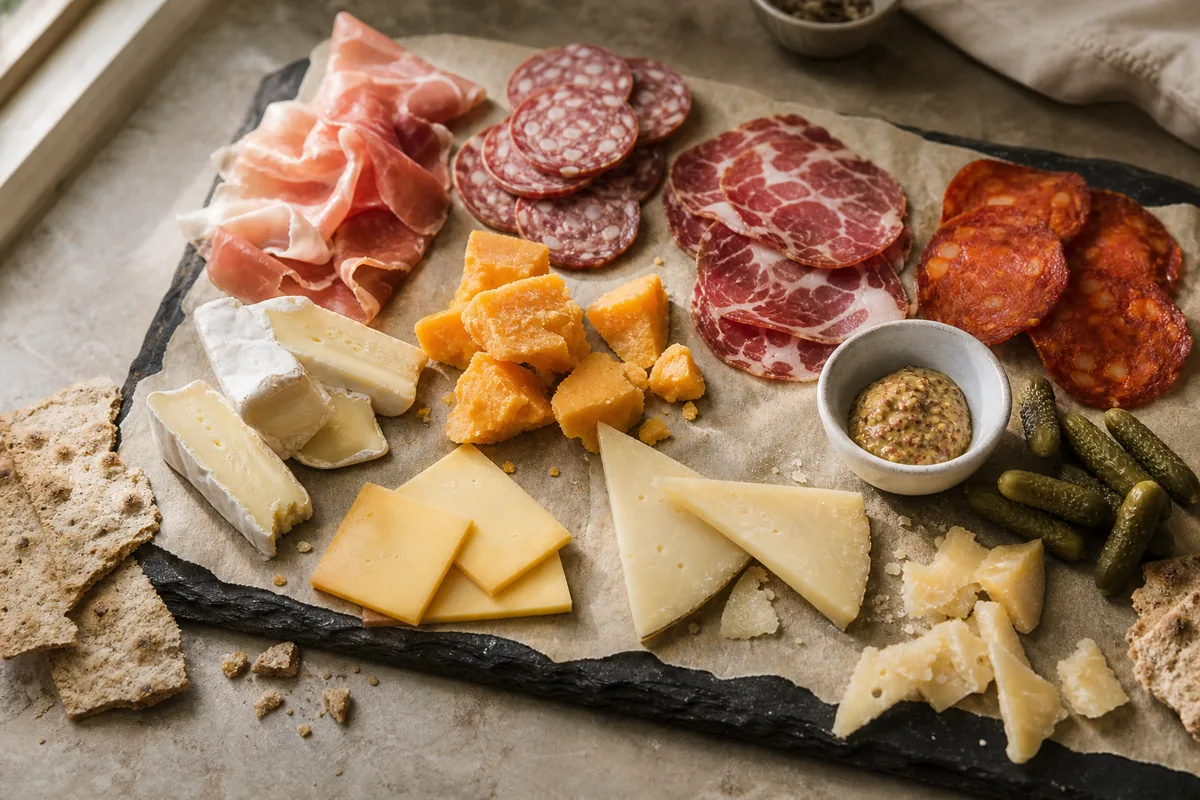
Chad Galer, vice president of product innovation and food safety at Dairy Management, Inc., told Food Republic in 2023 that a picnic should “primarily focus on firm or hard cheeses.”
| Cheese | What the source says about heat | Source |
|---|---|---|
| Aged cheddar | A good bet for a picnic | Galer, via Food Republic |
| Parmesan and aged Gouda | Work well at a picnic | Galer, via Food Republic |
| Camembert | Can go soggy or melt in the heat | Food Republic |
| Roquefort | Can go soggy or melt in the heat | Food Republic |
The table splits along texture: the cheeses that hold are firm or hard, and the two that do not are a soft cheese and a blue.
Blue is where the sources pull apart. Food Republic puts Roquefort among the cheeses that can go soggy or melt, while Puckett pairs Point Reyes Farmstead Original Blue with dried cherries on a board she describes for a day in the Florida sun.
Neither gives a time or a temperature for blue, so how long a blue wedge lasts on a warm table is not something these sources settle.
Puckett's board also holds an Alpine cheese: Herve Mons Meule de Savoie, a raw cow's milk cheese aged 10 months that she calls a lighter, creamier alternative to Gruyère or Comté, with gentle sweet fruit tones and a sharp nutty finish.
Food Republic's advice concerns texture only: whether a cheese looks and eats well after an hour in the sun. The time a board can stay out comes from the CDC, covered below.
What Cheeses Can Be Grilled?
Wikipedia names halloumi as a cheese for the grill and gives the reason: it has a higher-than-typical melting point, so it can be fried or grilled until brown without melting.
Traditional halloumi is hemispherical and weighs 220 to 270 grams, with about 25 percent fat by wet weight, and its firm texture when cooked makes it squeak against the teeth.
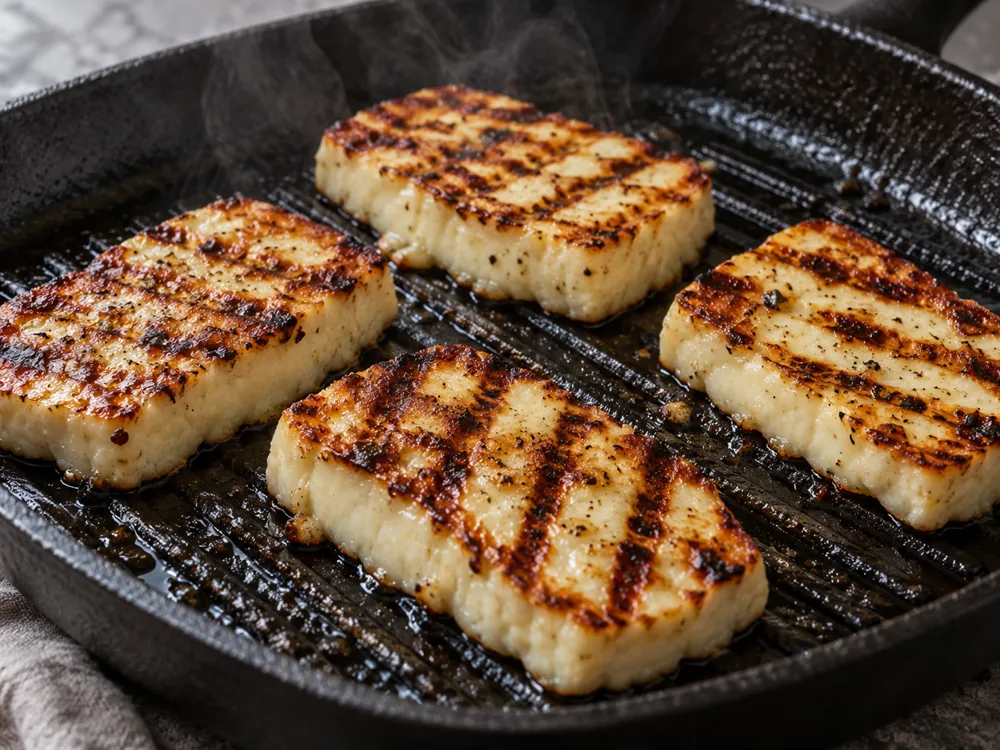
Two types exist. Fresh halloumi is semi-hard and elastic with a milder, less salty flavor, while mature halloumi, kept in brine whey for at least 40 days, is harder, drier, and saltier.
The behavior on the grill traces to production: the pressed curds are boiled in hot whey for at least 30 minutes, a scalding step Wikipedia calls the most crucial one for the cheese's characteristic texture.
Galer also recommends bread cheese, a semi-soft Finnish cheese, juustoleipä or leipäjuusto, named for the charred crust that comes from baking the curds until lightly toasted.
With a mild, slightly sweet taste, it can be eaten hot or cold, and it turns softer and less squeaky when heated, like halloumi.
In the United States it is made with pasteurized cow's milk rather than the traditional reindeer milk, and Galer says it “doesn't melt when heated, not even on the grill.” He suggests heating it a minute or two on each side for “a silky smooth texture and toasted cheese and butter flavor,” served with a sweet preserve or marinara.
Culture's cookout list grills one cheese: Finca Pascualete Retorta, a custardy raw sheep's milk cheese from Spain that is lightly grilled, has its top removed, and goes in the middle of a vegetable tray where a dip would normally sit.
Most of the other cheeses on these lists meet the grill secondhand, as a topping or a partner for grilled food.
- Hornbacher Little Brother (Switzerland, raw cow's milk): shaved thin over a bratwurst hot off the grill, where Culture's list says its younger age gives a fudgy texture and onion notes that suit a caraway bratwurst.
- Capriole's Sofia (Indiana, pasteurized goat's milk): an ash-ripened, citrusy, dense cheese beside grilled eggplant with garlic and herbs.
- Jack n' Dill (Shullsburg Creamery, Wisconsin): Cameron Smith of The Inn at Little Washington melts it over a grilled hot dog with pickle relish and mustard, and serves salt-and-vinegar chips alongside.
What Wine, Cider, or Beer Goes With Summer Cheese?
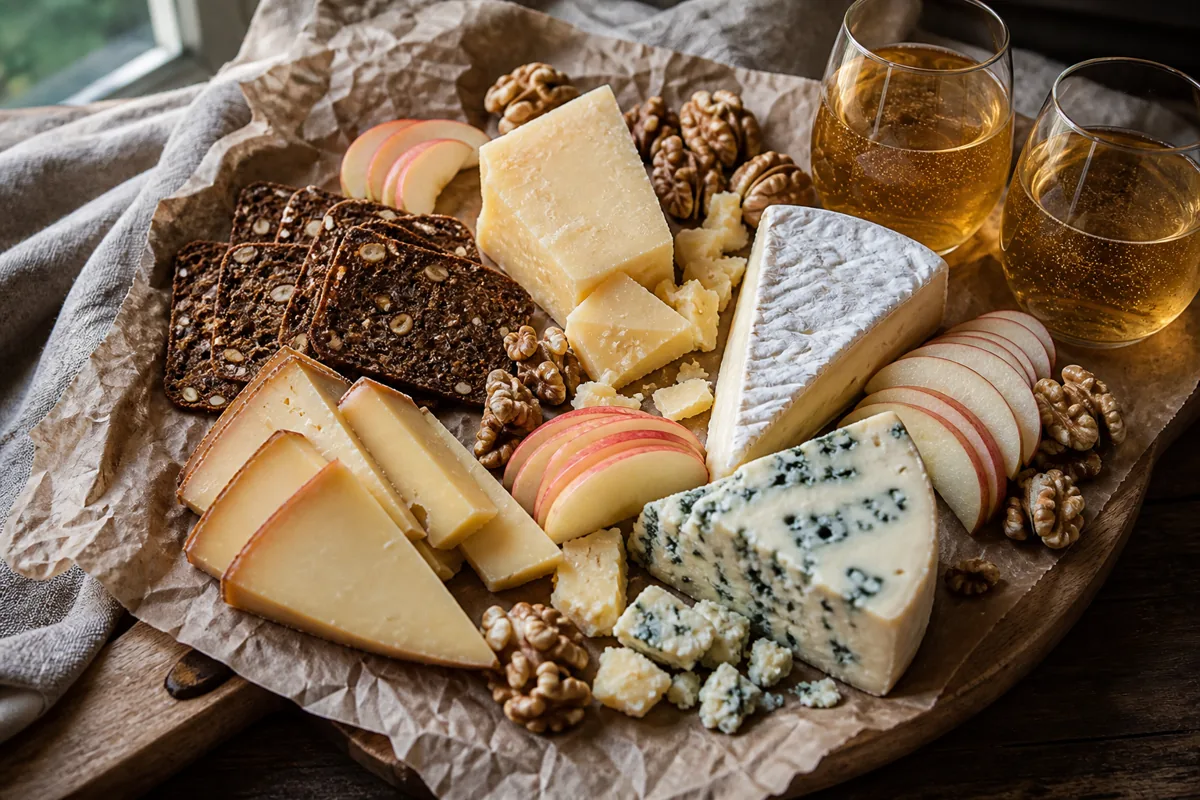
Culture's Emily Dangler credits cider's carbonation with adding freshness to creamy, decadent cheeses and cleaning the palate between bites. She quotes Sascha Inram of Murray's Cheese: “Slicing through butterfat and salt, cider's acidity elevates the nuanced and complex flavors in cheese.”
Fiona Beckett, who runs Matching Food & Wine, makes the same point for wine: with the salads, roasted peppers, and beetroot that sit beside goat cheese, a wine with fresh acidity of its own helps.
Her wider list of crisp whites for goat cheese runs from citrusy Bacchus, Côtes de Gascogne, and Rueda to Albariño, Chablis, Picpoul de Pinet, Pinot Grigio, dry Riesling, and Grüner Veltliner.
| Pairing | Type | Why It Works |
|---|---|---|
| Goat cheese + Sauvignon Blanc | Wine | Fiona Beckett: Loire whites such as Sancerre, Pouilly Fumé, and Sauvignon de Touraine work especially well, and the classic match is Sancerre with Crottin de Chavignol. |
| Goat cheese + crisp dry rosé | Wine | Fiona Beckett: crisp dry rosé, especially Provençal rosé, is a great match with goat cheese, and she ties it to summer picnics. |
| Semi-firm cheese + Champagne, a mimosa, or rosé | Wine | Lamar Sloss (Food & Wine): semi-firm cheeses are flavorful but not so rich that they overpower the glass. |
| Fresh chèvre + dry cider | Drink | Emily Dangler (Culture): dry ciders are more acidic, so she matches them with a similarly fresh, slightly tangy cheese. |
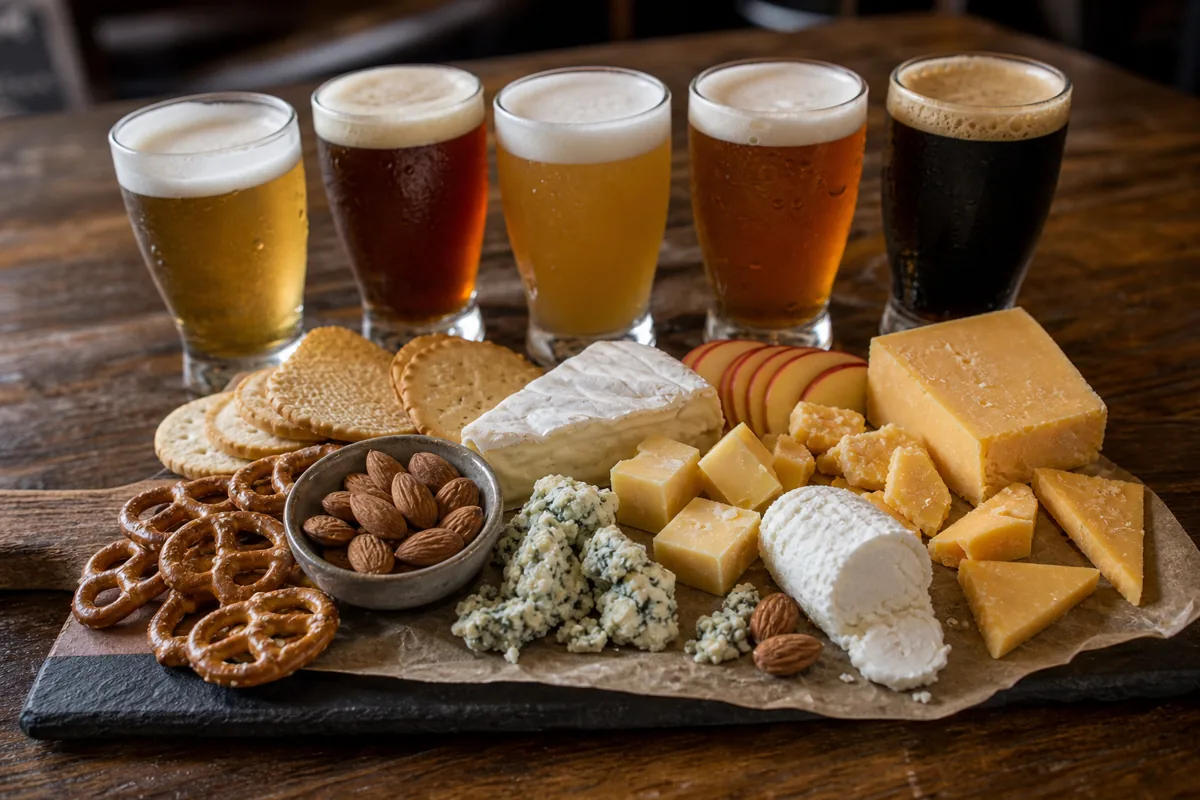
| Melted Jack n' Dill + porter | Drink | Cameron Smith (Food & Wine): a thick, dark beer such as a porter goes with the cheese melted over a grilled hot dog. |
| Parmesan or aged Gouda + lemonade | Drink | Food Republic: both are named as picnic cheeses that pair well with a refreshing glass of lemonade. |
One of Dangler's guidelines for cider is to combine similar flavors, which is why the dry cider in the block above lines up with chèvre. Beckett's wine advice follows the same logic, with acidity in the glass answering acidity in the food.
Beer has the thinnest support in these sources. Puckett names only a local craft beer for her board, and Smith's porter is chosen for a hot dog rather than a cheese board.
How Long Can a Summer Cheese Board Sit Out?
A summer board runs into one rule that comes from a health agency rather than a cheesemonger.
CDC: never leave perishable food out for more than 2 hours, or 1 hour if it is exposed to temperatures above 90°F.
CDC's list of perishable foods that need refrigeration within those windows names meat, seafood, dairy, cut fruit, some vegetables, and cooked leftovers, so cheese and cut watermelon sit under the same clock.
CDC also lists cut melon among foods more likely to carry germs that can make people sick, which puts the watermelon in a feta pairing under the same rule.
CDC names dairy on that list with no exception for hard cheese.
CDC calls the range between 40°F and 140°F the Danger Zone, where bacteria can multiply rapidly, and asks for a refrigerator at 40°F or below.
Which Summer Board Cheeses Are Safe in Pregnancy?
Which of these cheeses a pregnant guest can eat depends on the cheese and on whether it is pasteurised, and the NHS lists them by type.
Applied to this page, the NHS safe list covers the burrata, feta, ricotta, and halloumi, provided the label says pasteurised, and the cheddar and Parmesan from Food Republic's picnic picks.
Food Republic's two heat-shy cheeses both sit on the NHS cook-first list: Camembert as a mould-ripened soft cheese with a white coating, and Roquefort as a soft blue-veined cheese, so each must be thoroughly cooked, pasteurised or not.
Whether Point Reyes Farmstead Original Blue joins them depends on whether it is soft, which Culture does not say.
Goat cheese depends on its rind: the NHS lists pasteurised goats' cheese without a white coating as safe and asks for a white-coated chèvre to be cooked. Culture calls Capriole's Sofia ash-ripened and Food & Wine calls Tomme Per Diou earthy and tangy, and neither describes a coating, so the NHS category for either depends on one.
Culture marks Hornbacher Little Brother and Finca Pascualete Retorta as raw milk cheeses. The NHS says any food made from unpasteurised milk, such as a soft ripened goats' cheese with a white coating, must be thoroughly cooked, and it lists hard cheeses as safe pasteurised or unpasteurised.
Culture's instruction to grill Retorta lightly falls short of the NHS's cooking condition: the NHS lists any cheese cooked until steaming hot, soft or blue included, as safe to eat.