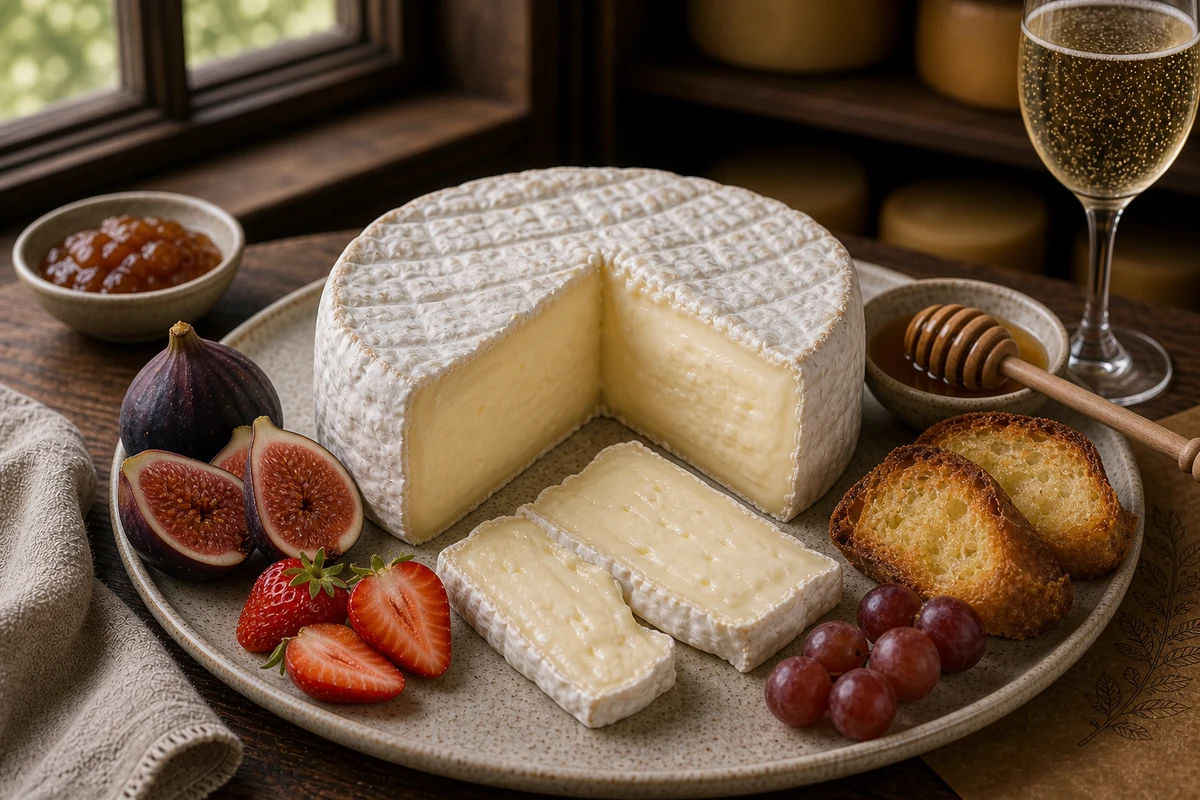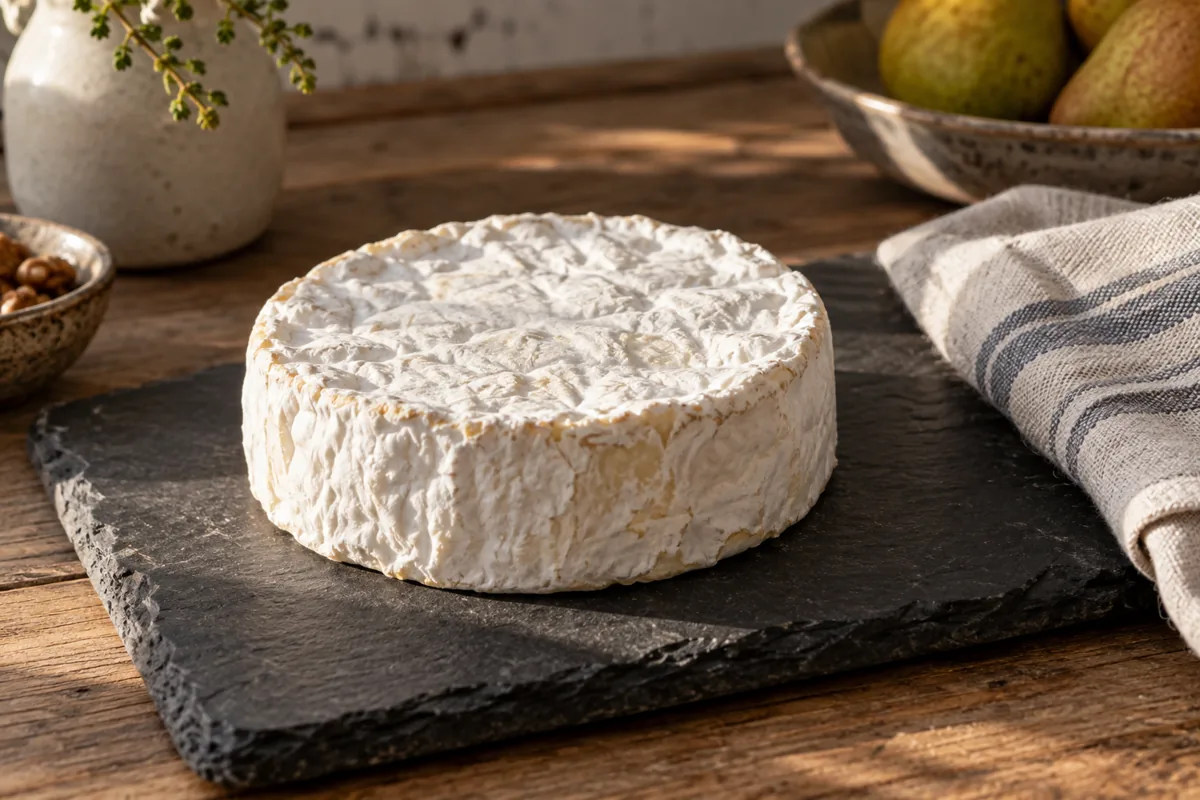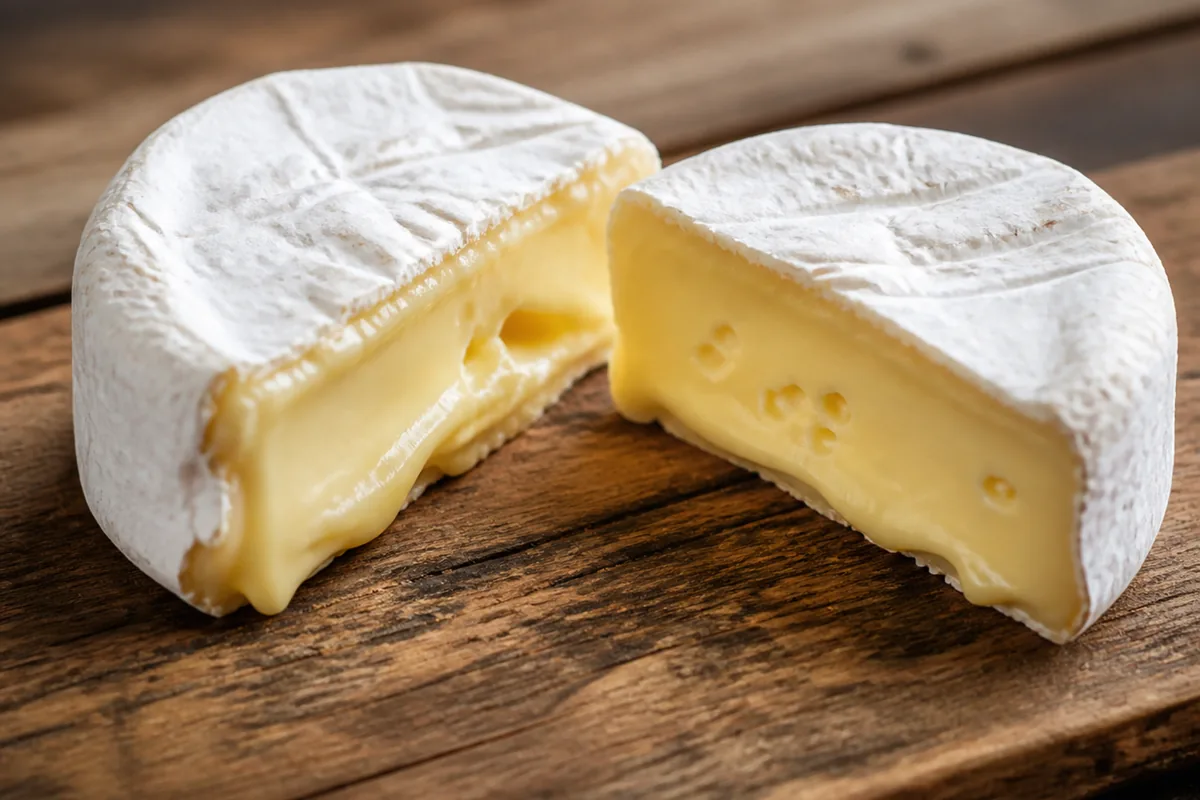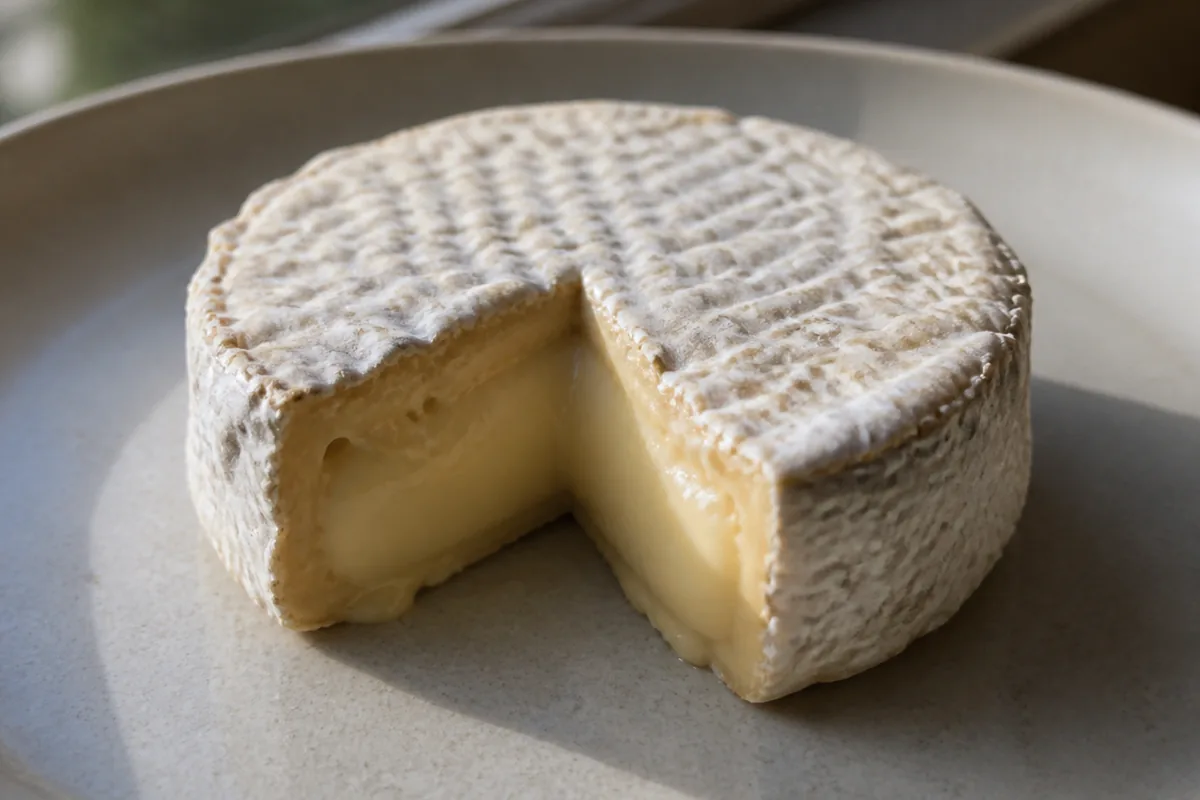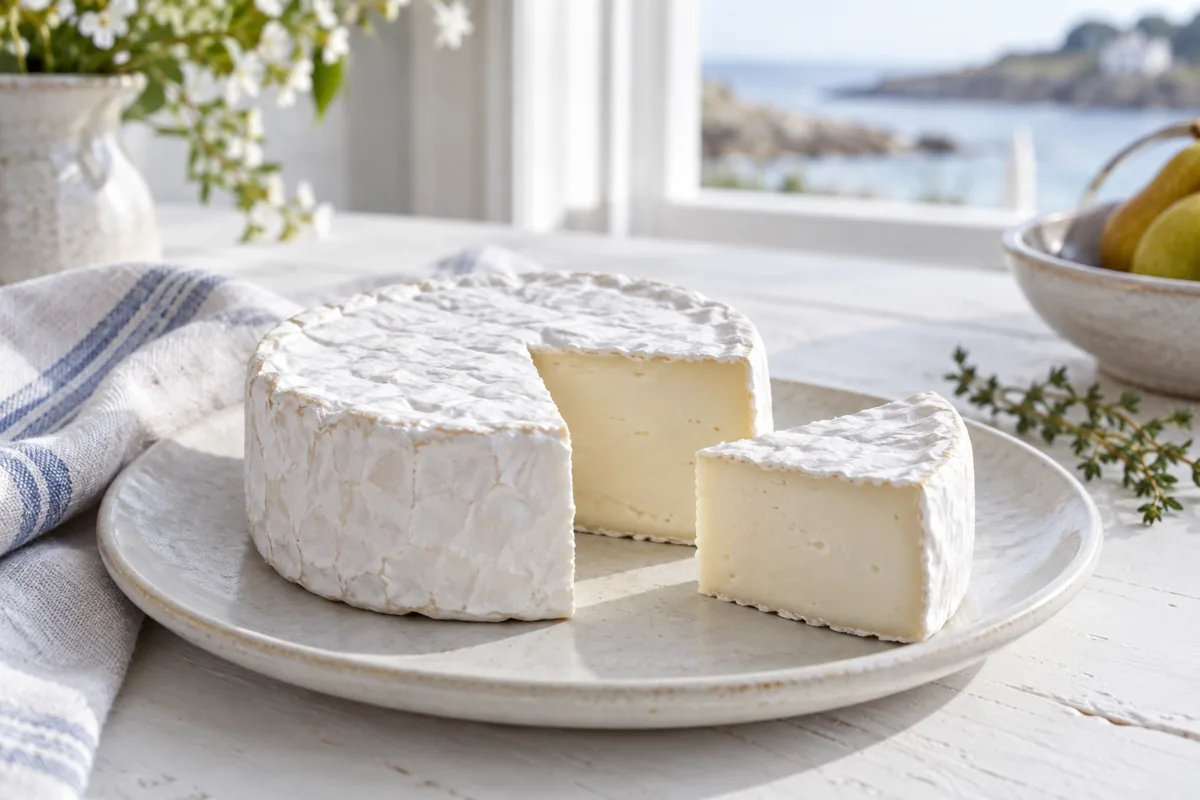
Mt Tam is an organic triple cream from Cowgirl Creamery in California, made from pasteurized cow's milk and cream with microbial (vegetarian) rennet and finished with a white bloomy rind. The maker calls it its best-selling cheese.
The creamery's shops have closed, and the cheese is still made at its creamery in Petaluma.
In This Article
How Does Mt Tam Taste as It Ripens?
Cowgirl Creamery says Mt Tam goes from fudgey firmness to buttery softness, with flavors that span bright creme fraiche to complex and mushroomy.
At every age the maker lists salted butter, cream, fresh pasture and white mushrooms. It ties the flavors to North Bay's lush green and gold pastures and to its organic, locally sourced milk.
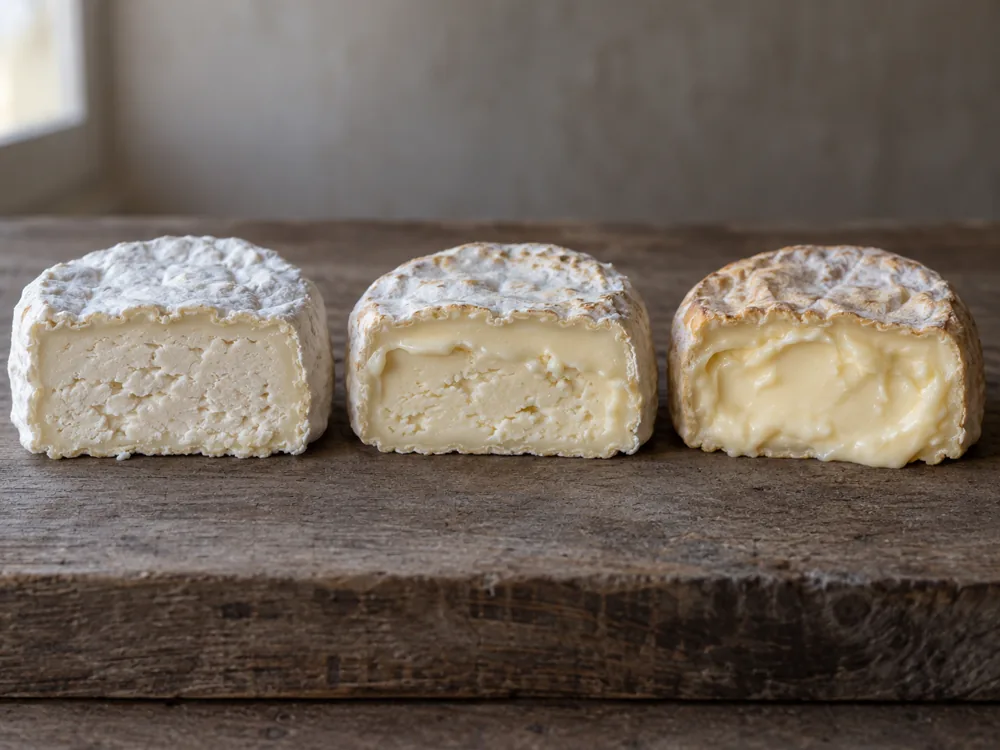
That range is one wheel changing over time, so what you taste depends on how far along your wheel is. The maker's page on the cheese's life splits it into three stages.
| Stage | Rind | Inside | Flavor |
|---|---|---|---|
| Young | White, with minimal browning | Paste crumbly and firm; creamline starting to develop | Tangy and lactic, fresh milk and pronounced salt; creme fraiche and cultured butter |
| Ripe | Slight browning | Thicker, smooth creamline; some crumbliness at the core; more fudgy | Mushroomy note more pronounced; milky and salty-briny, but richer and buttery |
| Mature | Chewy, almost leathery | Creamline and paste merged into a creamy, pudgy texture, similar to soft butter at room temperature | Rind's mushroomy flavor stronger, with slight bitterness; deeper umami, brown butter and cultured cream |
Rind color, creamline thickness and the firmness of the middle move together in the maker's description, which gives you something to look at when choosing. A white rind and a firm cut face point to the tangy end, a browned rind and a soft center to the buttery end.
On the maker's flavor profile the rind looks anything from pillowy to birch bark, and the supple rind changes in texture as the cheese matures.
The maker's glossary names the causes: proteolysis, the enzymatic breakdown of proteins, creates the creamline just under the rind, and lipolysis, the natural breakdown of fats, gives distinct aromas and flavors.
Because the band starts at the rind, the three stages read as one layer thickening inward, from a creamline only starting to develop, to a thicker one with some crumbliness left at the core, to a mature wheel where creamline and paste have merged.
If a mature wheel shows some ammonia, the maker describes that as expected and says it should dissipate fairly quickly.
The maker's tagline is "organic triple cream with a heart", and the heart is the fudgy core: its 2020 post says Mt Tam "retains a fudgy core as it ripens".
What Makes Mt Tam a Triple Cream?
Mt Tam is a triple cream on Cowgirl Creamery's label, and a triple cream, a style that originated in France, has a fat floor of 75 percent butterfat, against 60 to 74 percent for a double cream, with the fat measured as a share of dry matter.
The cheesemaking supplier behind those figures, New England Cheesemaking Supply, says triple cremes are defined by law at that floor. Dry matter is the cheese with its water removed, so the figure describes the solids and not the wedge.
At the roughly 45 percent moisture the supplier gives for a high-fat brie or a double or triple cream, 75 percent of the solids comes to about 40 percent fat in the wedge, against 22 to 28 percent for a cheddar.
The fat gets there because cream goes in with the milk before cheesemaking starts, and Mt Tam's ingredient list shows it: organic pasteurized cow's milk, organic pasteurized cream, salt, cultures and enzymes.
A home-cheesemaking example shows the scale of the addition: 10 to 12 ounces of heavy cream added to 118 ounces of 3.25 percent milk makes a gallon of milk at 6 percent butterfat, which becomes 75 percent once the water is removed.
The supplier describes triple cream as camembert or brie taken further by cream enrichment.
The supplier says Brillat-Savarin gets hot cream to reach 75 percent and is cured for about three weeks under a thin bloomy rind, and that it should be served young. Mt Tam's maker describes a longer arc, through a mature stage it calls approachable for any triple cream lover.
The white rind is mold: in their account for Culture, the founders write that Mt Tam ordinarily grows a fluffy white Penicillium candidum coat within four or five days.
How Is Mt Tam Different from Red Hawk?
Red Hawk began in 2001 as a Mt Tam that went wrong. In the account the founders gave Culture, Sue Conley went to turn the wheels and found them bald and mottled: cheese mites had jumped off a Stilton in the same aging room and were stopping the mold from growing.
Spraying the rind with a solution of Penicillium candidum and water was meant to restart the mold. It killed what was left, and wild Brevibacterium linens took over a rind that turned light pink and sticky.
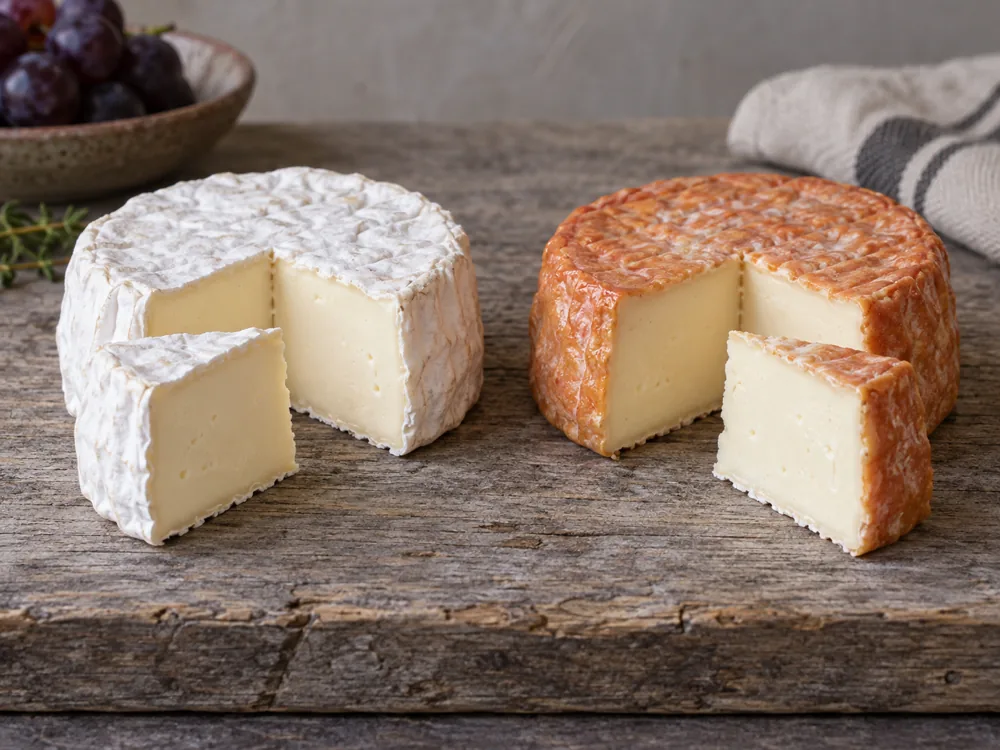
In the founders' account, Kate Arding of Neal's Yard Dairy, who had come to help set up a proper cheese counter, found the forgotten wheels three weeks later still ripening and strongly scented. She cut one open to a gooey texture and called it rich, savory and almost meaty, with a hint of anchovies and lemon and a long sweet-cream finish.
Red Hawk became a cheese of its own, and the maker says it is named for the local red-tailed hawk. The founders add in Culture that it was judged Best of Show at the American Cheese Society competition in 2003, the first washed-rind cheese to win.
The founders describe the aroma as almost alarmingly strong and the flavors as seductively mellow, so Red Hawk smells bolder than it tastes.
B. linens, they write, thrives in cool, humid climates and grows faster when salt is present, and the wild strain around Point Reyes grows everywhere, so they never had to inoculate the rind as most makers do.
They name it as the dominant bacterium used to wash the rinds of big-flavored cheeses such as Taleggio, which makes Red Hawk's rind a bacterial one where Mt Tam's is mold.
| Feature | Mt Tam | Red Hawk |
|---|---|---|
| Style | Triple cream, bloomy rind | Small format triple cream, washed rind |
| Flavor | Salted butter, cream, fresh pasture, white mushrooms | Cured meats, roasted peanuts and ocean brine behind a pungent funk |
| Best placings the maker lists | 2nd, California State Fair 2022 and 2025 | 1st, International Cheese & Dairy Awards 2022 and American Cheese Society 2025 |
The maker's ingredient lists for the two cheeses are identical, so the difference sits in the rind and in what the rind does to the flavor. The maker calls Red Hawk Mt Tam's "funky cousin" and describes a "rough and rowdy aroma".
Mt Tam's style line on the maker's page reads Washed Curd while Red Hawk's reads washed rind, so the washed on Mt Tam's line refers to the curd and not to its bloomy rind.
Smell alone will not tell you which one you have, because the maker calls a mature Mt Tam pungent and calls Red Hawk's funk pungent; the rind will.
Their pairing lists do not overlap: for Red Hawk the maker names Pinot Noir, Gewurztraminer or Riesling, amber to dark ales, barrel-aged sours, root beer, pickles and charcuterie, and onion jam or shallot confit.
Choose Mt Tam for salted butter, cream and white mushrooms under a white bloomy rind, and Red Hawk for cured meats, roasted peanuts and ocean brine under a washed rind. A mature Mt Tam and Red Hawk are both pungent, so the rind is what tells them apart.
How Do You Eat Mt Tam?
Serve Mt Tam at room temperature, where Cowgirl Creamery describes a dense fudgy core wrapped in an evolving, pudgy creamline.
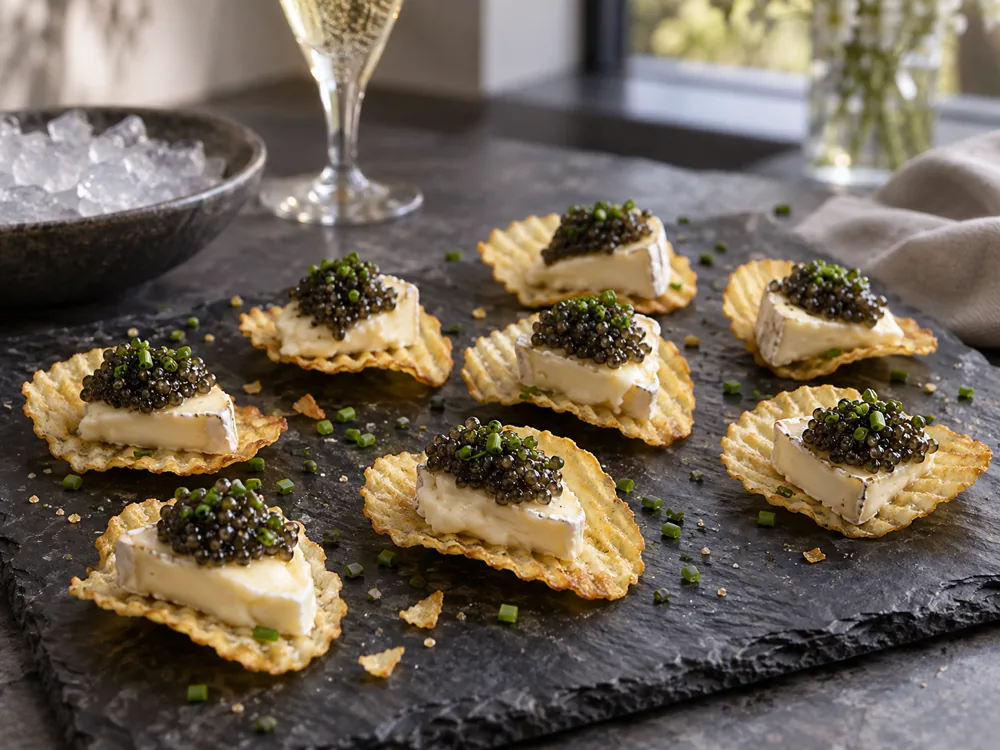
The maker's recipes take the wheel out of the refrigerator 30 to 45 minutes ahead for a caviar and potato chip platter and about an hour ahead for a bagel board.
The Brussels sprout tart recipe sets the wheel out while the tart bakes for 30 to 35 minutes at 350°F, "so it has time to bloom", which puts the maker's waits between half an hour and an hour. The caviar recipe gives the purpose of the wait as letting the cheese "come to serving temperature".
If you are putting a plate together, these are the partners the maker names on its page and in its recipes.
- Sparkling wine: the maker lists Champagne, Prosecco and Cava.
- California Chardonnay and sparkling dry cider: both on the maker's list.
- Drinking chocolate and sweet snacks: the maker lists preserves and honey among the snacks.
- Salty and savory plates: the maker's recipes put a wedge on a potato chip under white sturgeon caviar, and spread wedges across a bagel board with smoked salmon, bacon, cucumber, tomato and capers.
Mt Tam also takes heat in the maker's recipes. Three or four thin slices go into a truffle grilled cheese that cooks two to three minutes a side until the cheese has melted.
A Brussels sprout tart gets wedges laid on after baking, where they begin to melt into the sprouts. A brulee recipe broils the wheel for two to three minutes until the sugared top is hardened.
Can You Eat Mt Tam While Pregnant?
The NHS puts pasteurised or unpasteurised mould-ripened soft cheeses with a white coating on the outside, such as brie, camembert and chèvre, in the group that must be thoroughly cooked. Mt Tam is a soft cheese with a white bloomy rind, so that wording covers it even though its milk and cream are pasteurized.
The same NHS page lists any cheese cooked until steaming hot, including soft cheese, as safe to eat.
The CDC lists soft cheese made from unpasteurized milk among the riskier choices and pasteurized soft cheeses heated to an internal temperature of 165°F or until steaming hot among the safer ones. It adds that pregnant women are 10 times more likely to get a Listeria infection.
If you are pregnant and cooking it, check that the cheese is steaming hot all the way through: a sugared top broiled for two to three minutes or a sandwich cooked until the cheese melts does not by itself show that.
Served cold, Mt Tam is described as a pasteurized soft triple cream with a white bloomy rind, a type the CDC list does not cover, so ask a midwife or doctor.
Did Cowgirl Creamery Close, and Is Mt Tam Still Made?
The shops closed and the cheesemaking carried on. Cowgirl Creamery's retail shop and former factory in Point Reyes Station closed permanently on 5 September 2022 after 25 years.
The shop opened in 1997 as the company's headquarters barn, where the founders introduced Mt Tam and Red Hawk among other cheeses and visitors could watch Red Hawk curds and whey being separated through glass panels.
That places Mt Tam's first wheels between the barn's 1997 opening and 2001, the year the founders' Culture account has Mt Tam wheels in the aging room.
Sonoma Magazine, citing the Point Reyes Light, lists wastewater limits among several ongoing problems at that shop: they ruled out more customer bathrooms and scaling up Red Hawk production. The Ferry Building shop in San Francisco had closed in 2021, which the same article ties to COVID-19 slowing foot traffic to a trickle.
Production moved to the current Petaluma facility in 2008, so the closure did not move the cheesemaking. A 2020 post from the maker says Mt Tam is made in its Petaluma creamery with Straus Creamery organic milk and added cream.
The maker's own pages show the cheese outlived the shop: its Mt Tam recipe posts run from November 2024 to June 2025, and its award list for Mt Tam includes a second place at the California State Fair in 2025.
The closure came five years after Cowgirl Creamery was sold to Emmi, a Swiss dairy conglomerate, and founders Sue Conley and Peggy Smith stepped back from daily operations in 2019 and retired in 2021.
Where Can You Buy Mt Tam?
To find it near you, the maker's site points to a store locator titled "Find Cowgirl Creamery Cheese Near You", and its Mt Tam page links to six online collections sold through Goldbelly, from the Cowgirl Classic to a seasonal cheese club.
If you want Mt Tam and Red Hawk together, two of the six, Cowgirl Creamery Deluxe and The Ultimate Cowgirl Experience, are also listed on the Red Hawk page.
For a single wheel, the maker's 2020 serving post says to ask a local cheesemonger, and its caviar recipe calls for a 7 oz wheel.
How Many Mt Tam Wheels Does Each Recipe Need?
The maker's recipes count the cheese in wheels: the caviar recipe uses the 7 oz wheel from the buying routes above, and the other four give a count or a fraction.
| Dish | Wheels used | How the cheese is cut | How it is served |
|---|---|---|---|
| Caviar and potato chips | One | A small wedge on each chip | Unheated |
| Bagel and lox board | One or two | Cut into 8 to 10 wedges | Unheated, beside six toasted bagels |
| Truffle grilled cheese | Half | Long, thin slices | Pan-cooked between buttered bread |
| Brussels sprout tart | One | Cut into slices | Added after baking, then begins to melt |
| Brulee | One | Top removed, then sugared | Broiled in a dish |
If you are making the bagel board, plan on one or two wheels, the largest order of the five. Half a wheel fills one grilled cheese in the recipe, so a single wheel makes two.
The brulee is the only recipe that treats the wheel as a dish: the maker removes the top, sprinkles on 1 tablespoon of sugar, broils it, and serves it warm with crackers and raspberries, blackberries and blueberries.
Why Is It Called Mt Tam?
Cowgirl Creamery named the cheese for Mount Tamalpais, which rises over San Francisco Bay in Marin County.
"Mt Tam" is also the short name of the mountain, so the bare phrase can mean either one. When you search, adding "cheese" or the creamery's name gets you to the cheese.