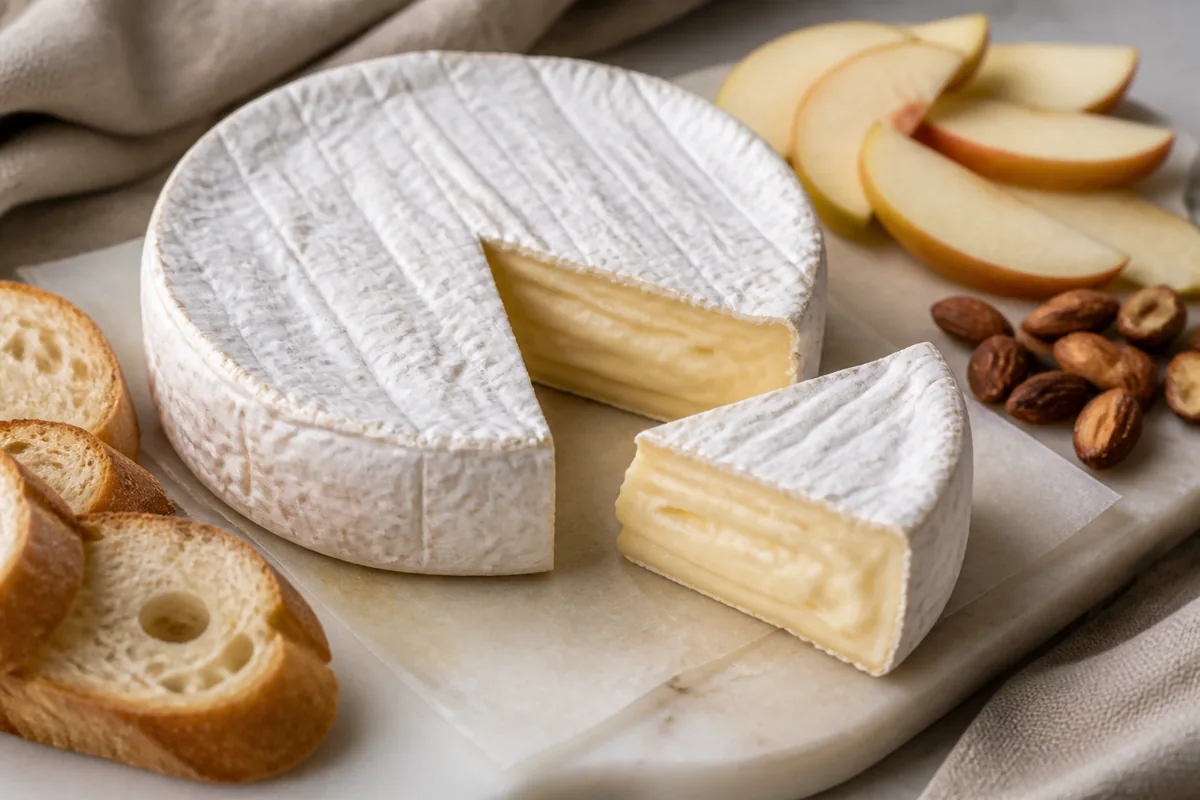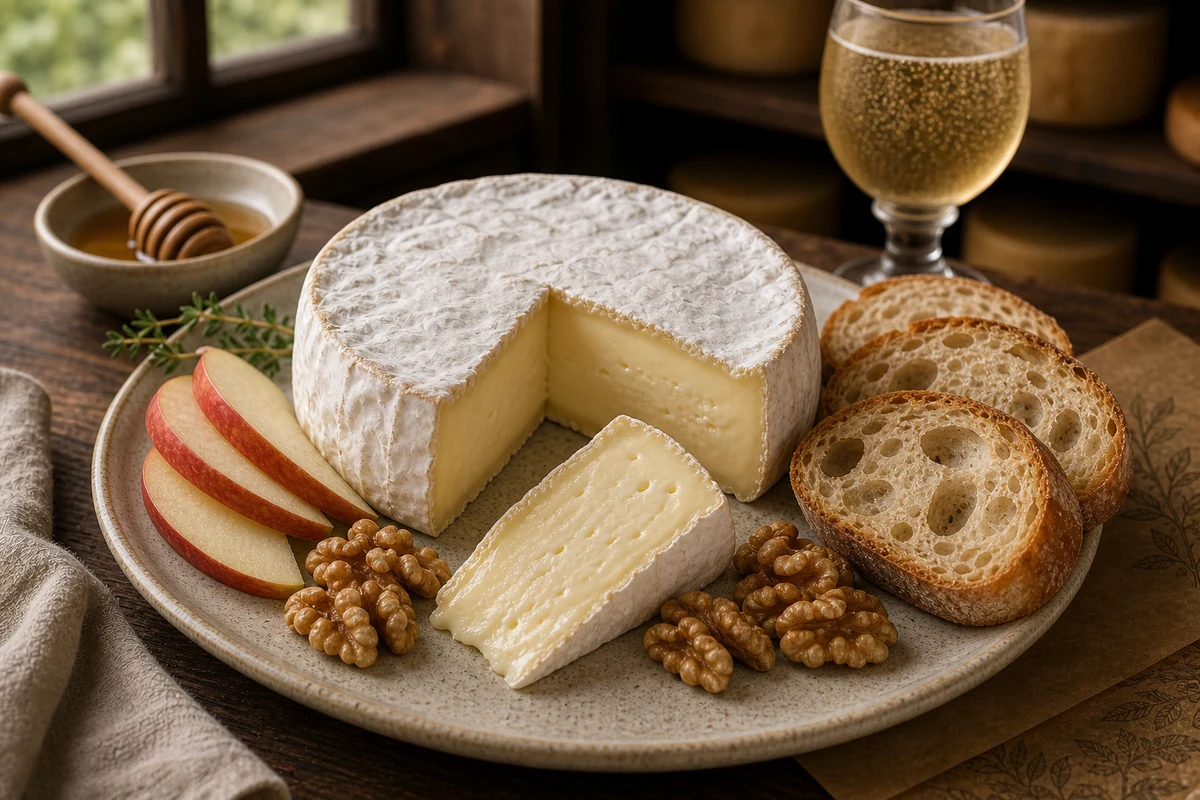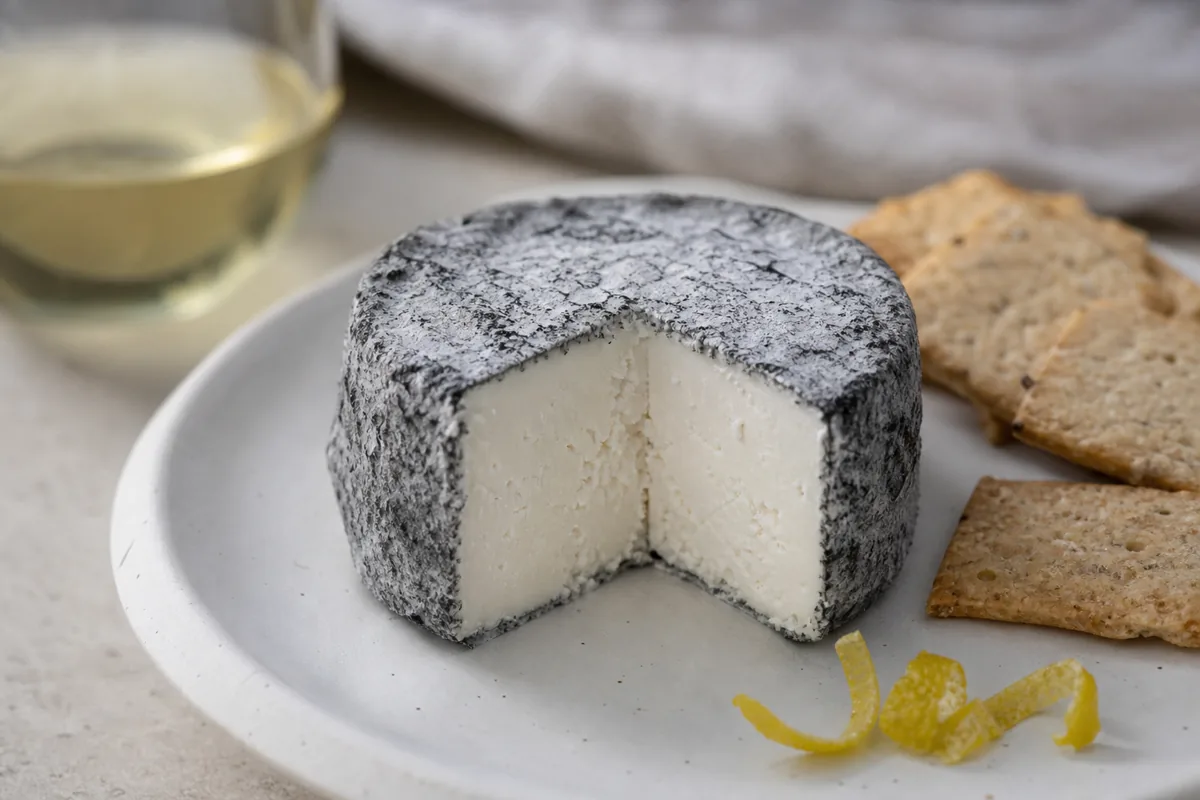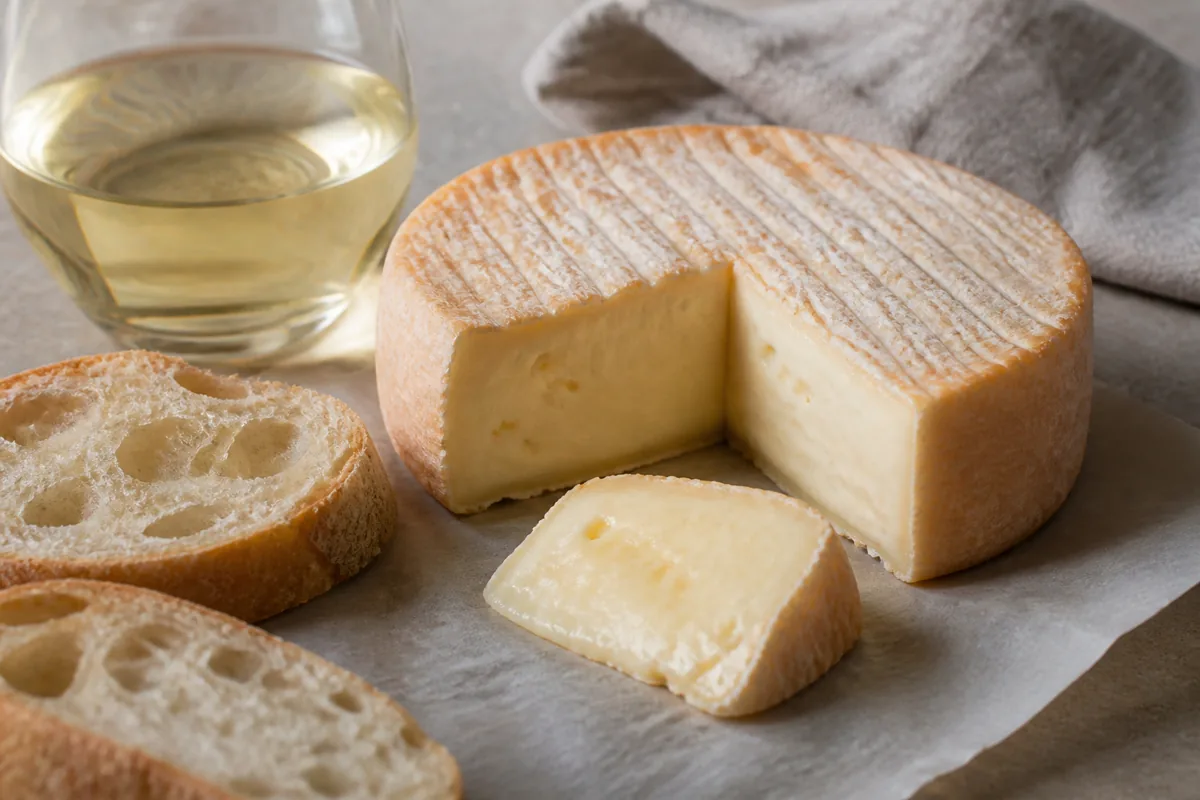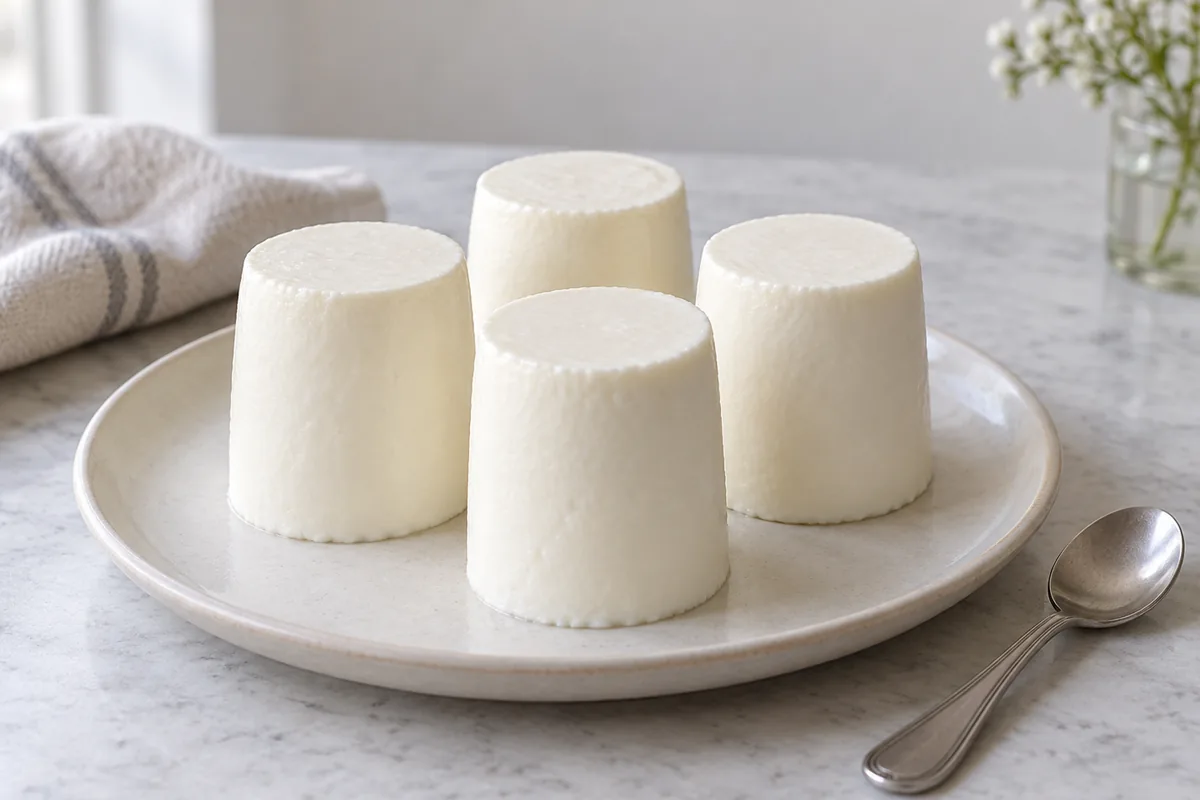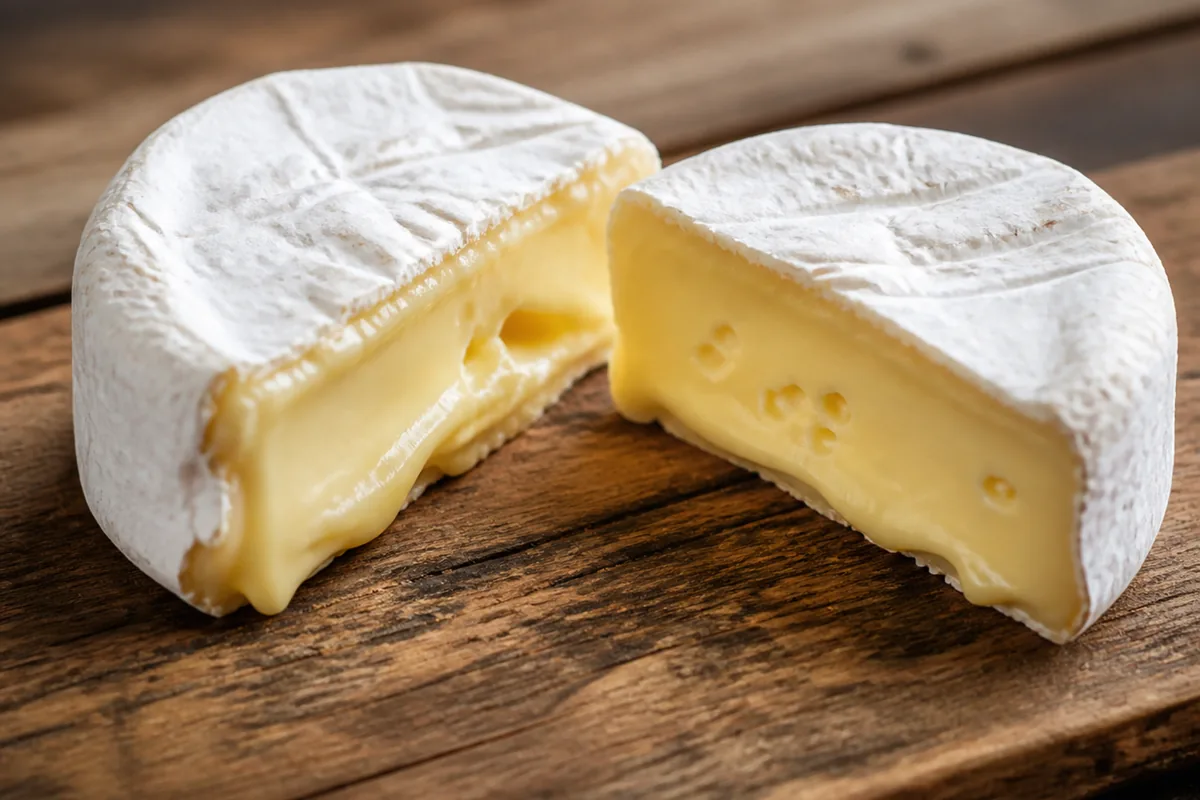
Green Hill is a pasteurized, double-cream, soft-ripened cow's-milk cheese that Sweet Grass Dairy in Thomasville, Georgia makes in the style of camembert. A wheel weighs 7.5 to 8 ounces, with a golden-yellow paste under a thin bloomy rind.
In This Article
What Kind of Cheese Is Green Hill?
Green Hill belongs with Brie and camembert: it is handcrafted in a camembert style, a soft-ripened cheese with a mold-ripened rind. Expect a wheel of 7.5 to 8 ounces, 3.75 by 1.25 inches.
The ingredient list is short: pasteurized grass-based cow's milk, cultures, Atlantic sea salt, and traditional rennet. That rennet is animal, so if you avoid animal rennet, Green Hill is not a cheese for you.
Why Is It Called Green Hill?
Green Hill is named after a farm: the first rotational-grazing dairy in the family of co-owner Jessica Little. Her parents, Al and Desiree Wehner, converted their dairy to grazing.
Other Sweet Grass names come from the family as well: Asher Blue is named for the Littles' second son.
How Did a Grazing Farm Become a Cheese Company?
The Wehners moved from barn milking to grazing in 1993, a change that took the family from Florida to Georgia. The cheese followed seven years later, in 2000.
Before that, Al and Desiree Wehner spent more than a decade milking Holsteins in barns in Florida. Al was working 80 to 90 hours a week, waste management was a constant problem, and the land was not healthy.
He thought of what his grandfather, from an Upstate New York farming family, would have said: a sick cow put on grass would get healthier.
Desiree sent him to a 1992 conference in Wisconsin, where a New Zealand farm organization explained grazing.
The Wehners' business partners would not convert the Florida dairy, so the Wehners sold out and bought inexpensive land in Georgia. The Holsteins they brought did not take well to grazing, and after the switch to Jerseys, three people could run 500 cows.
Desiree launched the cheesemaking. Jessica, still in college, carried samples of her mother's cheese to chefs.
Jessica and her husband Jeremy joined in 2002 or 2003, and Jeremy became head cheesemaker. The couple bought the company in 2005.
By March 2021 the company was moving into a new creamery three times the size of the old site, with triple the production capacity.
The dairy had become "too small to be big but too big to be small," in Jessica Little's words, after being in "scarcity management mode for some time," and she was confident the demand would justify the move.
In 2023 the company made about 350,000 pounds of cheese a year.
How Is Green Hill Made?
In 2017, Green Hill took a five-hour make, with the curds ladled into molds by hand.
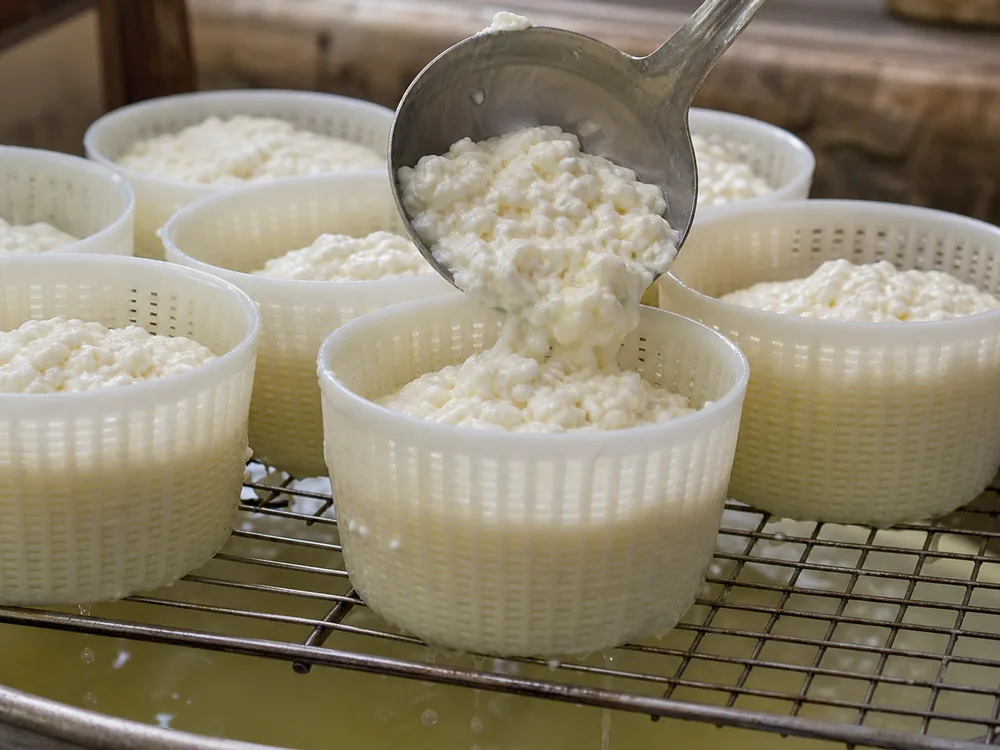
Green Hill ages for two weeks, the figure today and in 2017, though the figure in 2020 was 60 days.
Those two weeks end when each wheel is hand-wrapped, so a wheel at the counter is already older than two weeks.
Only four ingredients go in: milk, cultures, salt and rennet. Those same four make hundreds of different cheeses, and the shape of the molds, the aging, the amount of salt and the timing of the brine change the result.
The new creamery's upgrades include an HTST (high-temperature short time) pasteurizing system and a French-built finishing-room air handling system. In 2020 the rest of the Sweet Grass line was raw milk, while Green Hill is pasteurized.
Is Green Hill Made With Grass-Fed Milk?
Whether the milk is grass-fed depends on the wording: the dairy's own ingredient line says grass-based cow's milk, while Culture and Tallahassee Magazine call the milk grass-fed.
In 2020, supplemental feed (organic non-GMO corn, cottonseed hull, citrus pulp, and hay) made up about 10 percent of the diet. That share fits the dairy's "grass-based" wording better than a flat grass-fed claim.
The herd moves to a new pasture every 12 hours and grazes outdoors 365 days a year, on grass grown year-round under the Georgia sun, a system the dairy has named "Barn-Free".
The herd is about 50 percent Jersey, crossed with Friesian, Norwegian red, shorthorn, senepol, and Limousin, a mix of cows smaller than Holsteins.
All of the milk for Sweet Grass cheeses comes from the family's grazing herds, on a single 350-acre farm or on three family farms. The creamery gets it directly from the Wehners' cows several times a week.
In 2021 the herds numbered 1,500 cows and produced much more milk than the creamery needed.
What Does Green Hill Taste Like?
Green Hill has "a sweet butter and popcorn backbone with notes of grass and cream," a touch of cellar and funk, a silky, mouth-coating texture under a thin rind and lingering aromas of cream and sautéed mushrooms, in Culture's library entry.
To judge how ripe a wheel is, check the paste. A young Green Hill is firm, "with a texture similar to cold butter," turning softer and creamier immediately under the bloomy rind as it ripens, until the paste is uniformly honey-like, as Sweet Grass's trade sheet describes it.
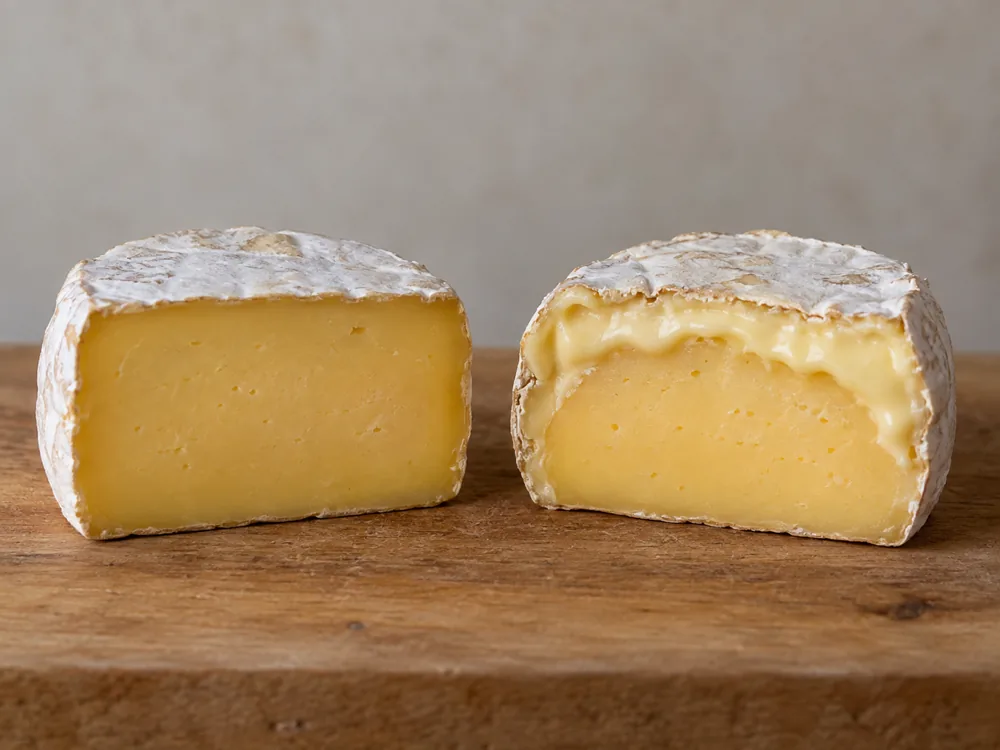
In the trade sheet's description, the paste runs from firm like cold butter in a young wheel, through a softer, creamier band just under the rind partway through ripening, to a uniform honey-like paste at the end.
What Awards Has Green Hill Won?
Green Hill's dated awards run from 2007 to 2015: three American Cheese Society first places and a World Cheese Awards gold medal.
| Year | Competition | Result |
|---|---|---|
| 2007 | American Cheese Society | 1st place |
| 2008 | American Cheese Society | 1st place |
| 2015 | American Cheese Society | 1st place |
| 2015 | World Cheese Awards | Gold Medal |
Sweet Grass bills Green Hill as its most popular cheese and an eight-time winner at the American Cheese Society's annual conference, though only three of those wins come with a year.
By 2023 the whole Sweet Grass line had won more than 40 international and national awards.
How Do You Serve Green Hill?
Warming lets Green Hill's buttery paste soften, bringing out the natural flavors of a cheese that is very easily melted, so well suited to any dish needing some gooey deliciousness, in Sweet Grass's account. So let a wheel warm to room temperature before you serve it.
That warm-up has a limit: the CDC lists dairy as a perishable food and says, "Never leave perishable food out for more than 2 hours (or 1 hour if exposed to temperatures above 90°F)."
To drink, try sparkling wine, such as Champagne. For beer, pick a Belgian trippel ale.
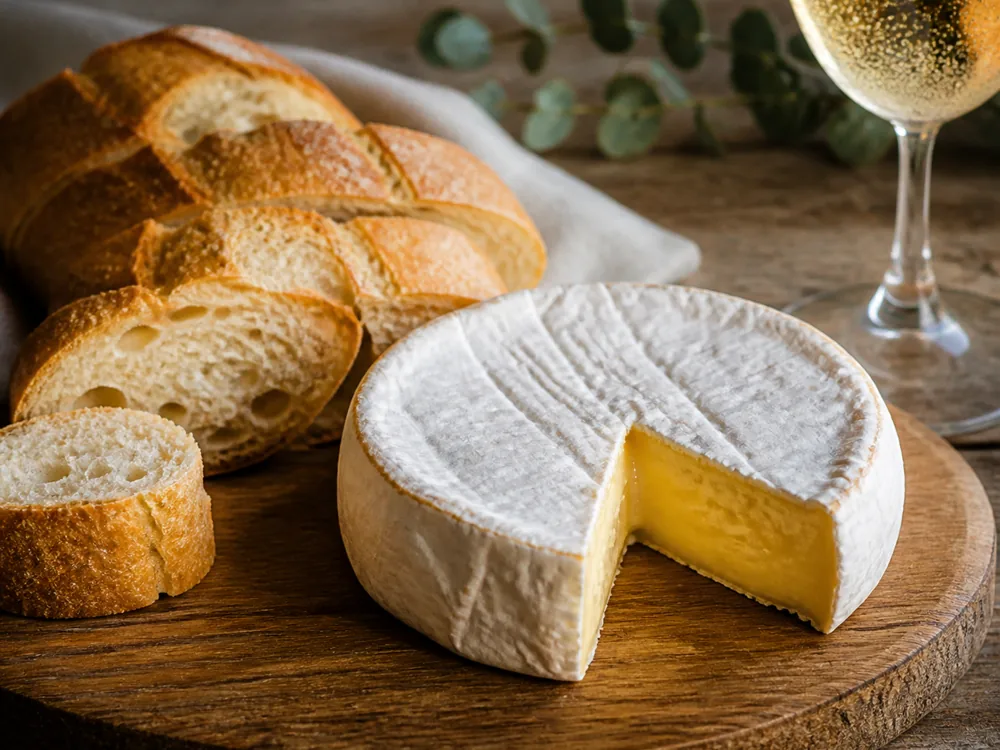
You can also let the cheese warm, smear it on baguette and pour sparkling wine alongside.
| With | Try |
|---|---|
| Wine | Champagne or another sparkling wine, or a light white wine |
| Beer and cider | A Belgian trippel ale, or a crisp apple cider |
| Bread and honey | Crunchy French bread or baguette, with honey drizzled over a slightly warm wheel |
| On a board | A cheese board with jams or sweet preserves, nuts, crisp apples, dried figs, mild salami and bright fruit such as watermelon |
Is Green Hill Safe During Pregnancy?
If you are pregnant, cook Green Hill until it is steaming hot before you eat it: Sweet Grass Dairy makes it as a soft-ripened cheese with a thin bloomy rind, and the NHS says pasteurised or unpasteurised mould-ripened soft cheeses with a white coating on the outside, such as brie, camembert and chèvre, must be thoroughly cooked, and lists any cheese that's been cooked until steaming hot as safe to eat.
If you follow US advice, heat Green Hill to an internal temperature of 165°F or until steaming hot, or ask a midwife or doctor before you eat it cold: the CDC lists pasteurized soft cheeses heated to an internal temperature of 165°F or until steaming hot as safer, and served cold, Green Hill is described as a pasteurized soft-ripened, double-cream, silky, mouth-coating, buttery or firm cheese, a type the CDC list does not cover.
Warming the wheel to room temperature, the way Sweet Grass likes to serve it, does not cook it, and neither does melting it short of steaming hot, so a wheel served either way still needs the actions above. The CDC says pregnant women are 10 times more likely to get a Listeria infection.
What Is on Green Hill's Nutrition Label?
On Green Hill's nutrition label, a 1-ounce serving carries 120 calories and 7 g of saturated fat, 35% of the daily value, with 7.5 servings per container.
- 120 calories
- 11 g total fat (14% of the daily value), of which 7 g is saturated fat (35% of the daily value)
- 40 mg cholesterol (13% of the daily value)
- 190 mg sodium (8% of the daily value)
- 0 g carbohydrate
- 4 g protein
At 7.5 servings per container, a whole 7.5-ounce wheel works out to about 900 calories and 52.5 g of saturated fat. On the label's 2,000-calorie basis, that is roughly 260 percent of the saturated-fat daily value, and the wheel's sodium comes to about 1,425 mg, 60 percent of the daily value.
Where Can You Buy Green Hill?
Sweet Grass sells the wheel directly for $14.00, which on the dairy's own weight of about 7.5 ounces works out to roughly $1.87 an ounce.
Retailers can buy it by the case of eight 7.5-ounce wheels, and in 2023 Sweet Grass cheeses were sold in all 50 states.
In 2021 Sweet Grass worked with distributors in major markets coast to coast and had taken part in Whole Foods' 12 Days of Cheese promotion. Closer to home, in 2023 the cheeses sold through supermarkets, small food and wine shops, and the Red Hills Online Farmers Market.
What Can You Buy Instead of Green Hill?
When Green Hill is out of stock, shop by its style: double cream, soft-ripened, camembert style, with a bloomy rind.
That style group is why a Camembert or Brie can stand in.
How Long Does Green Hill Keep?
Green Hill has a shelf life of 55 days. Store it refrigerated, at 35 to 37.5°F.
The CDC says to keep your refrigerator at 40°F or below, so a fridge that meets the CDC figure can still be warmer than Green Hill's 35 to 37.5°F.