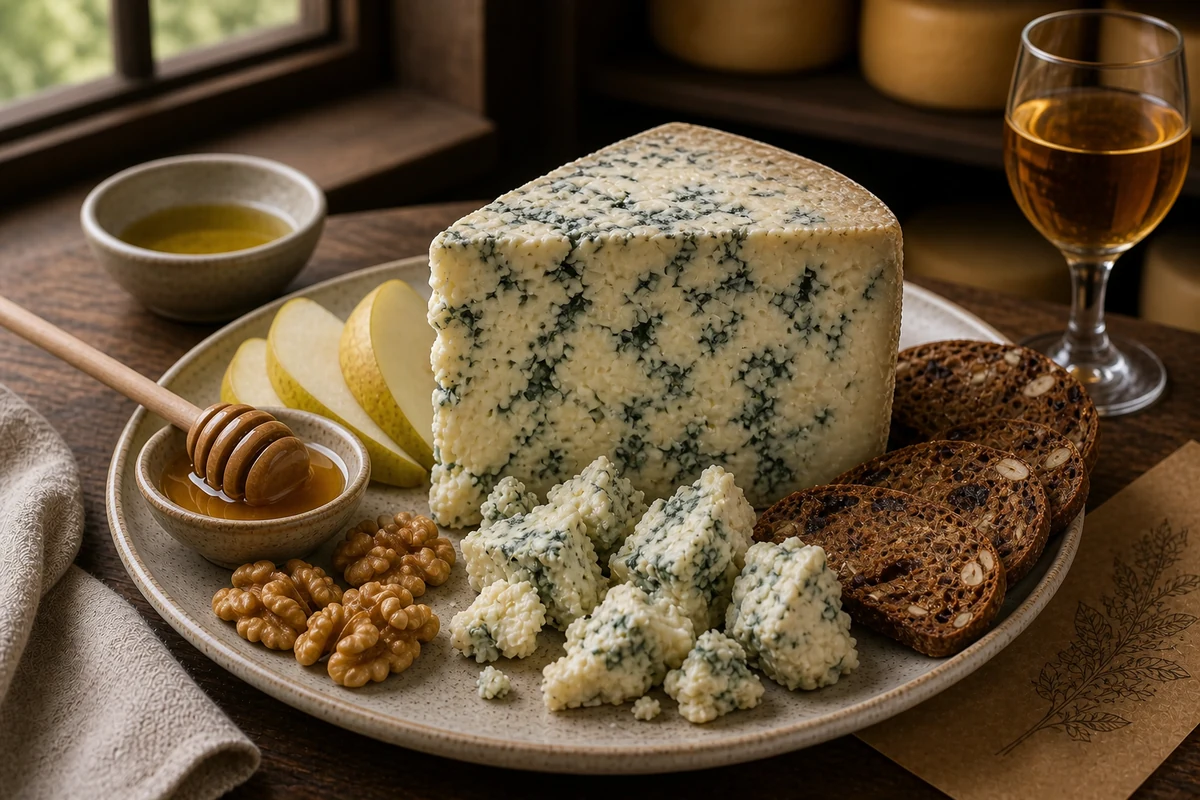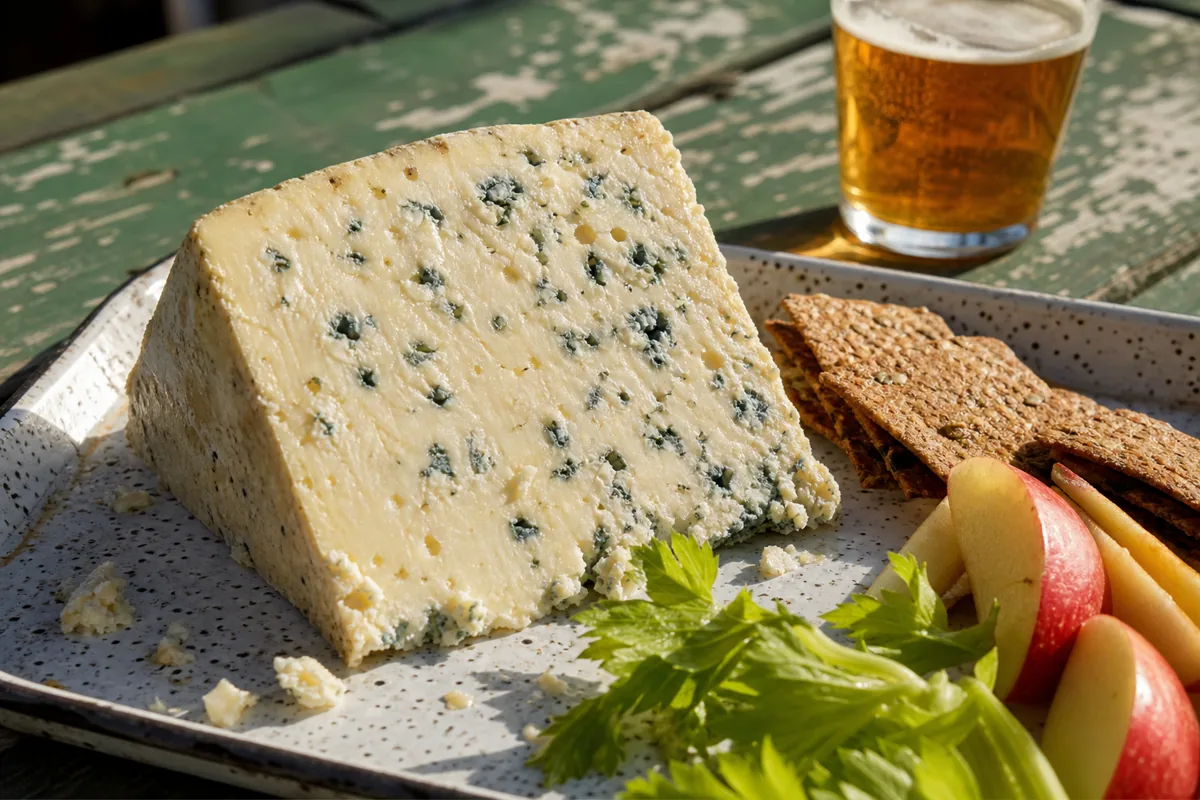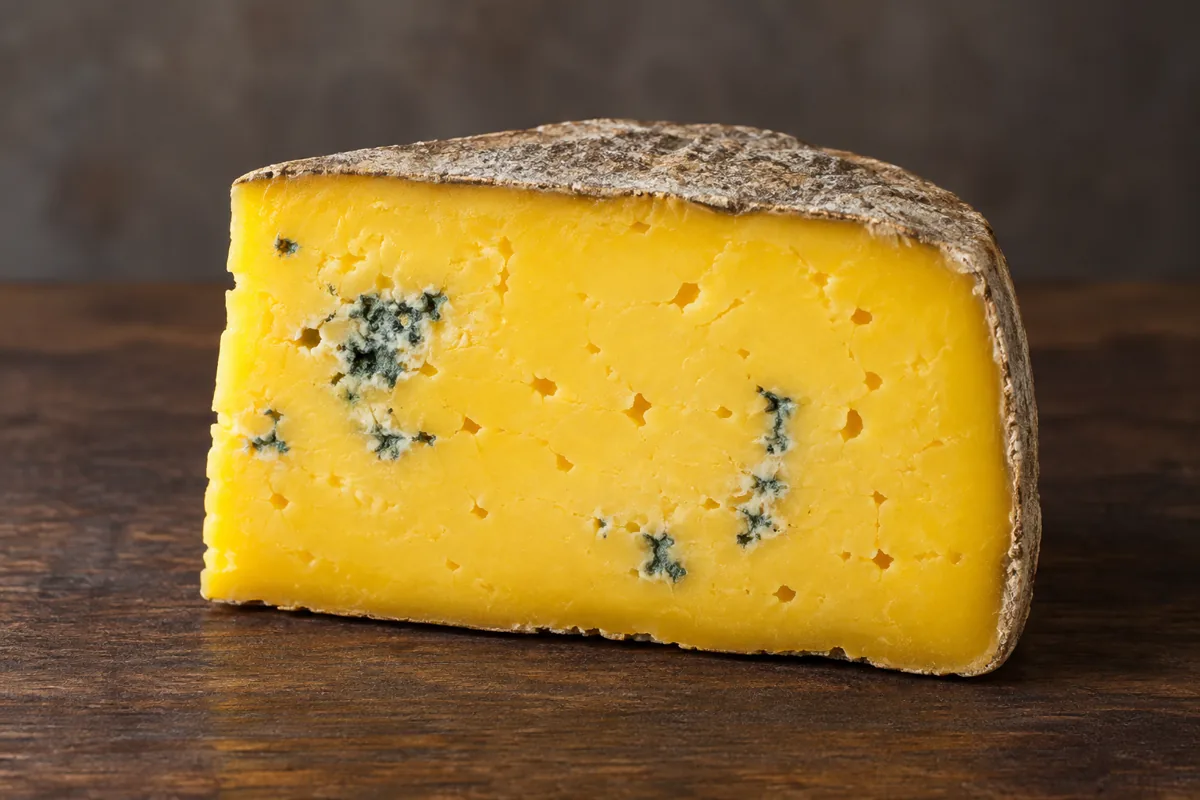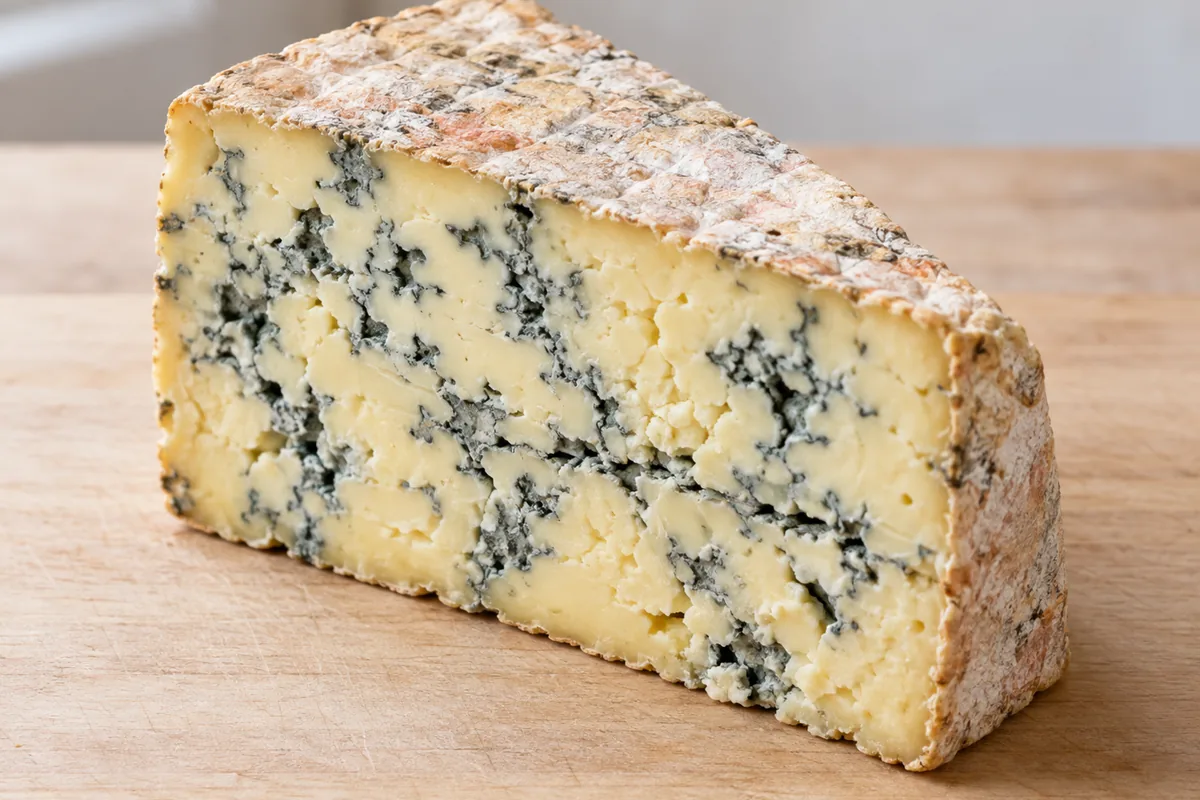
Asher Blue is a raw cow's milk blue cheese from Sweet Grass Dairy in Thomasville, Georgia, with a natural rind and a creamy-crumbly paste. Cheese.com describes it as one of the few blue cheeses in the United States with a natural rind.
The milk is unpasteurized and the cheese is blue-veined, so pregnancy guidance applies to it.
In This Article
How Is Asher Blue Made?
A foodservice distributor's record for the cheese lists unpasteurized grass-based cow's milk, cultures, traditional rennet, sea salt and Penicillium roqueforti. The cheese is inoculated with mold and then pierced fifty times on each side, and Sweet Grass says that lets oxygen reach the inside so the mold can grow during ageing.
Cheese.com puts that ageing at about 90 days.
| Detail | What the sources say | Where it comes from |
|---|---|---|
| Milk | Raw, unpasteurized cow's milk | Sweet Grass Dairy, Culture, Cheese.com, GFI Foods |
| Rind | Natural | Sweet Grass Dairy, Culture, Cheese.com, GFI Foods |
| Texture | Creamy-crumbly; Cheese.com also lists semi-soft and blue-veined | Sweet Grass Dairy, Culture, Cheese.com |
| Ageing | About 90 days | Cheese.com only |
| Rennet | Traditional rennet on the ingredient list, rennet type listed as animal, yet marked vegetarian | GFI Foods for the first two, Cheese.com for vegetarian |
If you are vegetarian, ask the producer which rennet it uses before you serve the cheese: GFI Foods lists traditional rennet with an animal rennet type, while Cheese.com marks it vegetarian.
One retailer listing, from Capella Cheese, gives pasteurized milk and 9 to 12 months of ageing, yet the same page's title and description say raw milk. Sweet Grass's product page and the distributor's ingredient statement both say unpasteurized.
What Does Asher Blue Look and Taste Like?
Sweet Grass's product page calls it milder and more approachable than stronger blues, yet the same page pairs it with a strong red wine and calls it a strong cheese, so the mildness is relative to other blues.
That page describes a slightly pungent, mushroomy smell and earthy, grassy flavor that ends in a mild, salty finish.
| Source | Words used |
|---|---|
| Sweet Grass Dairy, product page | Slightly pungent, mushroomy aromas; earthy, grassy flavors; mild, salty finish |
| Sweet Grass Dairy, cheese page | Mild raw-milk blue with an earthy flavor and mild notes of cocoa on the finish |
| Culture | Earth, mushroom and forest floor with a slight mineral tang; mild salty finish with notes of cocoa |
| Cheese.com | Grassy, milky, mushroomy, salty, sweet, tangy; earthy, rich, strong aroma; straw colour |
Expect mushroom or earth: every description in the table names one of them, and all but the producer's cheese page also name salt. Cocoa at the very end comes from that cheese page and Culture.
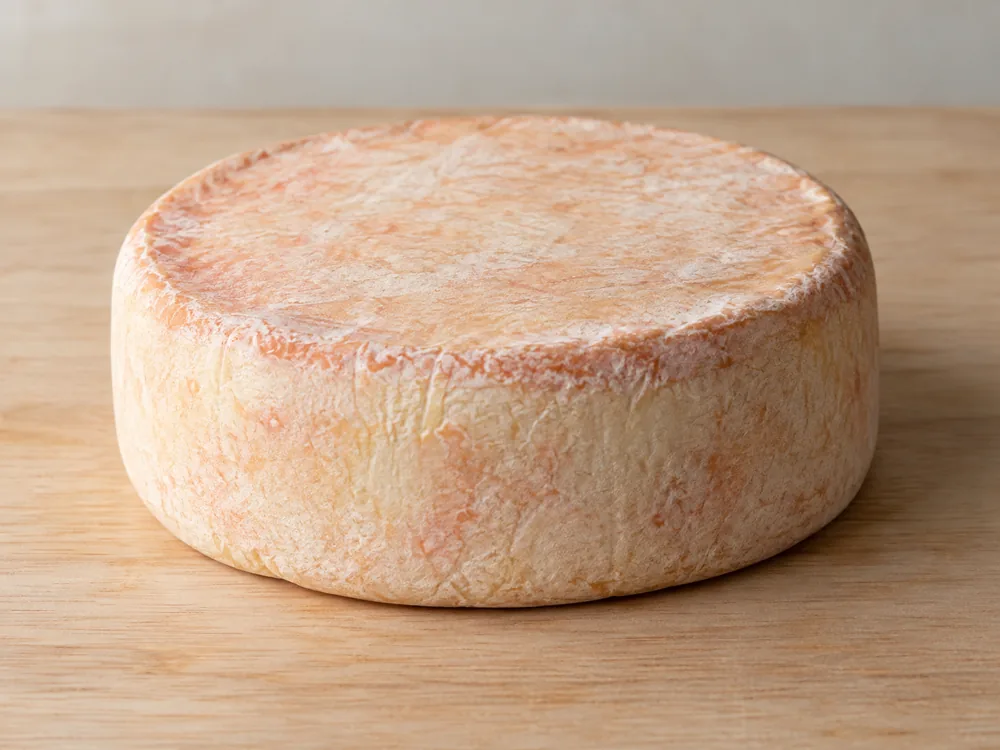
When you unwrap a wedge, look for the rind the distributor's specification describes: an off-white natural rind that can range from dry to slightly tacky, with hues from light orange to pink caused by Brevibacterium linens in the ageing environment.
Is Asher Blue Safe During Pregnancy?
If you are pregnant, Asher Blue falls in the group that current US guidance treats as riskier, because it is made from unpasteurized milk and is blue-veined.
CDC lists soft cheese made from unpasteurized milk, with blue-veined cheese among its examples, as a riskier choice, and names hard cheese made with pasteurized milk as a safer one. FDA's pregnancy page on Listeria lists cheeses made with unpasteurized milk among the foods to avoid.
The NHS words the rule differently and sorts cheeses by type. It says pasteurised or unpasteurised soft blue-veined cheeses such as Danish blue, gorgonzola and roquefort must be thoroughly cooked.
The same page calls hard cheeses such as cheddar, gruyère and parmesan safe whether they are pasteurised or not. None of these pages names Asher Blue, and Cheese.com classes it as semi-soft and blue-veined, so we place it with the blue-veined raw-milk cheeses rather than with the hard cheeses.
Ageing does not settle the question. FDA's report on raw-milk cheese says such cheese must be aged at not less than 35°F for at least 60 days under 21 CFR part 133.
Its sampling still found Listeria monocytogenes in 10 of 1,606 raw-milk cheeses aged 60 days, a rate of 0.62 percent. The federal blue cheese standard sets its own floor, that blue cheese is at least 60 days old, and Cheese.com's figure of about 90 days sits above both minimums.
How Much Does Asher Blue Cost, and What Is on the Label?
Sweet Grass lists Asher Blue in pieces of about 5 oz for $12.00, which works out to about $2.40 an ounce.
A whole wheel is far larger: 7 lb at 7.75 by 7.75 by 3.75 inches by Culture's figures, while the distributor's wheel pack holds 96 one-ounce servings, which is 6 lb. If you are buying a whole wheel, ask the seller what that one weighs.
| Nutrient | Per 1 oz |
|---|---|
| Calories | 90 |
| Total fat | 5 g (6% daily value) |
| Saturated fat | 3 g (15% daily value) |
| Cholesterol | 20 mg (7% daily value) |
| Sodium | 230 mg (10% daily value) |
| Protein | 7 g |
| Calcium | 221 mg |
The same distributor record names milk as the only allergen.
What Should You Pour and Cook with Asher Blue?
Most of what Sweet Grass suggests you pour is sweet or dark: dessert wines and a dark ale. It adds a strong red for what it calls a strong cheese.
Cheese.com's list is shorter, a full-bodied red and a strong ale, plus jam and crackers on the plate.
| Pairing | Type | Why It Works |
|---|---|---|
| Port | Wine | Named by Sweet Grass as a dessert wine for Asher Blue. |
| Sauternes | Wine | Named by Sweet Grass, and by Cheese.com alongside Port. |
| Sherry | Wine | Named by Sweet Grass as a dessert wine for Asher Blue. |
| Chocolate stout | Drink | Named by Sweet Grass as the dark ale to try. |
| Gamay or Zinfandel | Wine | Sweet Grass's own pick, a strong red for what it calls a strong cheese. |
| Cabernet Sauvignon | Wine | Named by Cheese.com as a full-bodied red. |
| Jam and crackers | Food | Cheese.com's serving suggestion for eating the cheese. |
Off the cheese board, Sweet Grass's serving ideas run from a salad dressing to a cream cheese frosting on chocolate cake, which it calls the option for the more adventurous.
| Use | How It Works |
|---|---|
| Wedge salad dressing | Sweet Grass says Asher Blue makes a beautiful dressing for a wedge salad. |
| French fry dip | The producer also suggests dipping french fries in it. |
| Crumbled on a salad | Cheese.com suggests crumbling the cheese over a salad or using it as a key ingredient in a salad dressing. |
Who Makes Asher Blue?
Sweet Grass Dairy began in Thomasville, Georgia, in 2000 under Al and Desiree Wehner, and in 2005 their daughter Jessica and son-in-law Jeremy Little bought it.
The dairy makes only cow's milk cheese, sourced from the family's own dairy farm nearby, and the cows graze 365 days a year.
Sweet Grass says blue cheese is one of the hardest cheeses to make and that this was the kind of challenge Jeremy wanted when he started making it. The cheese is named after the owners' second son.
The producer's cheese page lists these awards for Asher Blue:
- Gold Sofi Award, 2023
- Silver Medal, World Cheese Awards, 2023
- Bronze Medal, World Cheese Awards, 2022
- Silver Medal, New York International Cheese Competition, 2021
- Good Food Award, 2020
- Gold Medal, World Cheese Awards, 2019
The product page adds two older bronze medals, from 2009 and 2015, which it lists as World Cheese.
SOURCES & REFERENCES
What Else Do People Ask About Asher Blue?
Yes. Sweet Grass's product page calls it a raw cow's milk cheese, and the distributor's ingredient statement lists unpasteurized grass-based cow's milk.
Cheese.com gives about 90 days. The federal blue cheese standard only sets a minimum of 60 days.
CDC and FDA place cheese made with unpasteurized milk, including blue-veined cheese, among the riskier choices. The NHS says soft blue-veined cheese, pasteurised or unpasteurised, must be thoroughly cooked, so follow the guidance for your country and ask your midwife or doctor.
Sweet Grass describes mushroomy, earthy, grassy flavors with a mild, salty finish, and Culture and the producer's cheese page add cocoa at the end. The producer calls it milder than stronger blues but also calls it a strong cheese.
Sweet Grass lists a piece of about 5 oz at $12.00, which is about $2.40 an ounce.