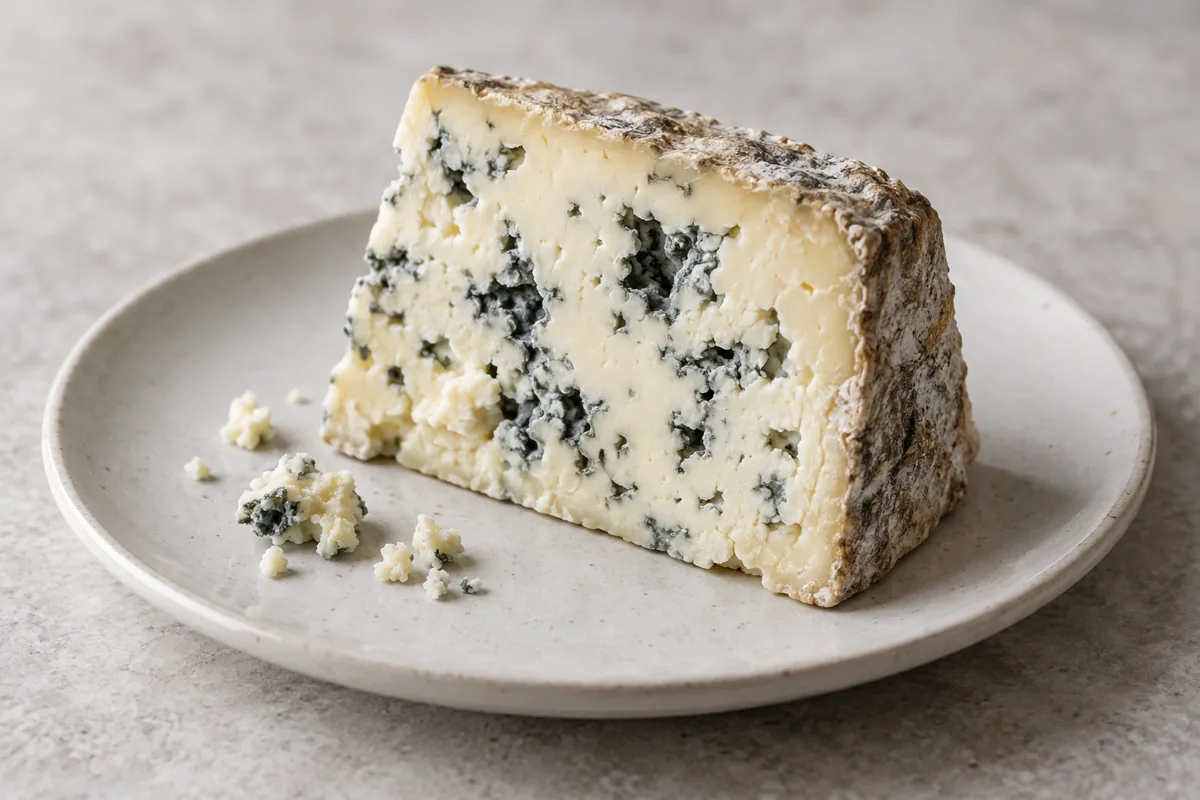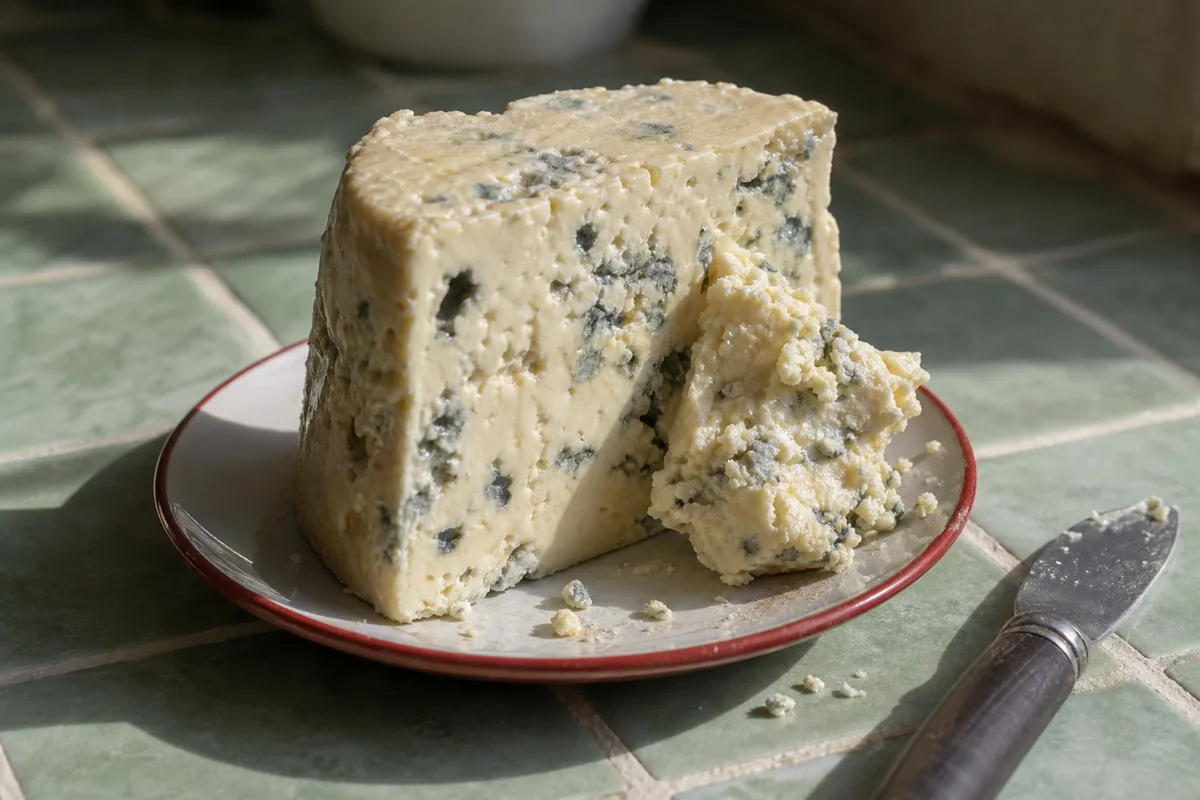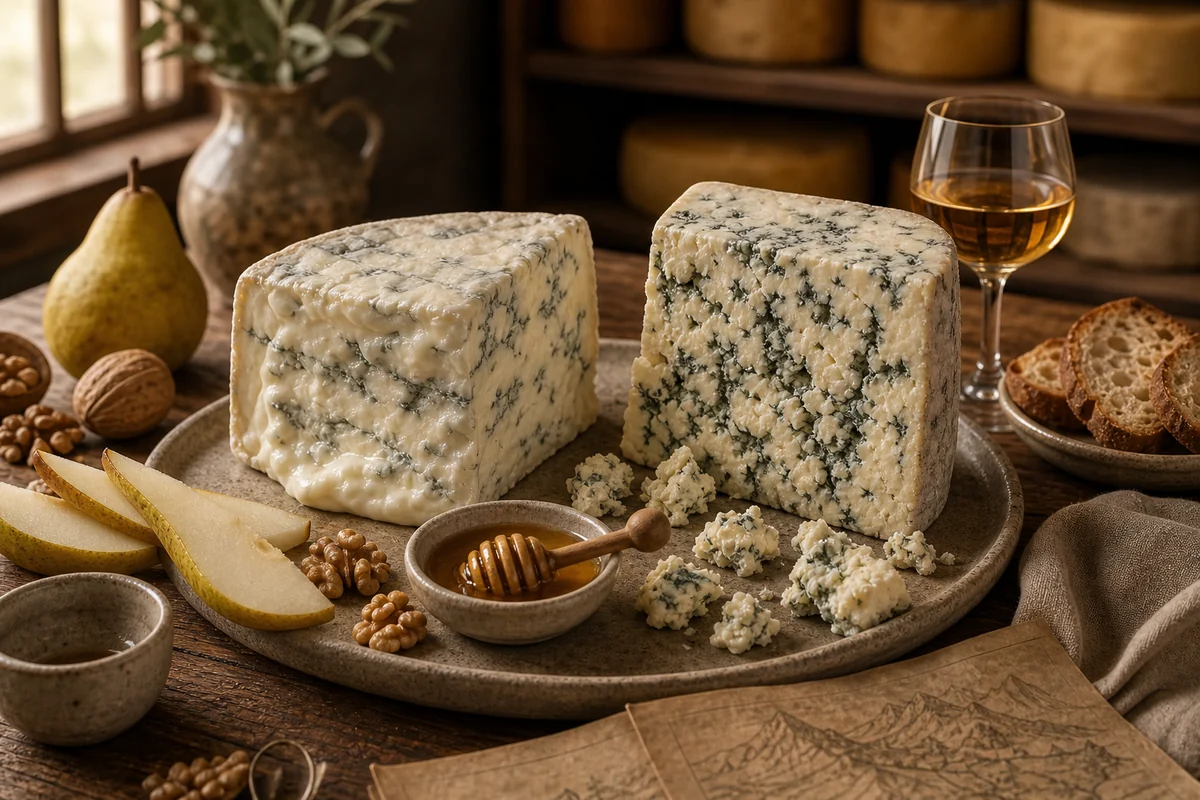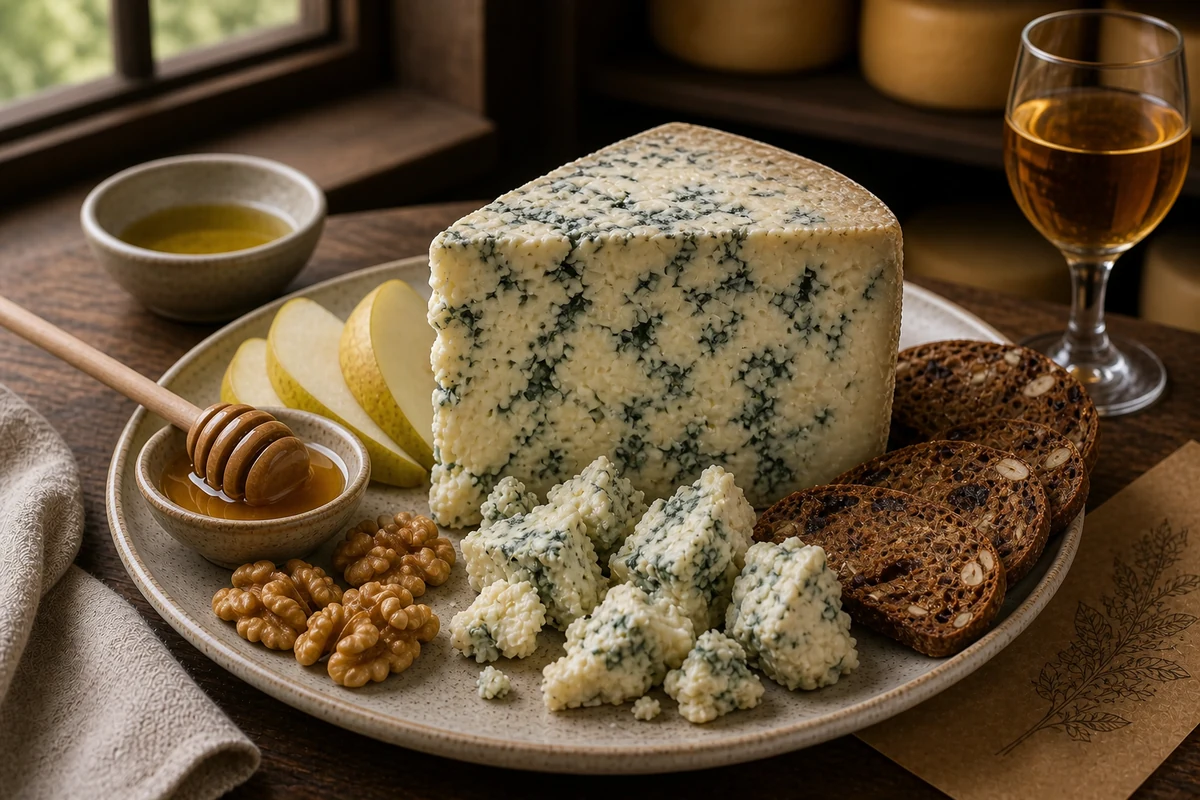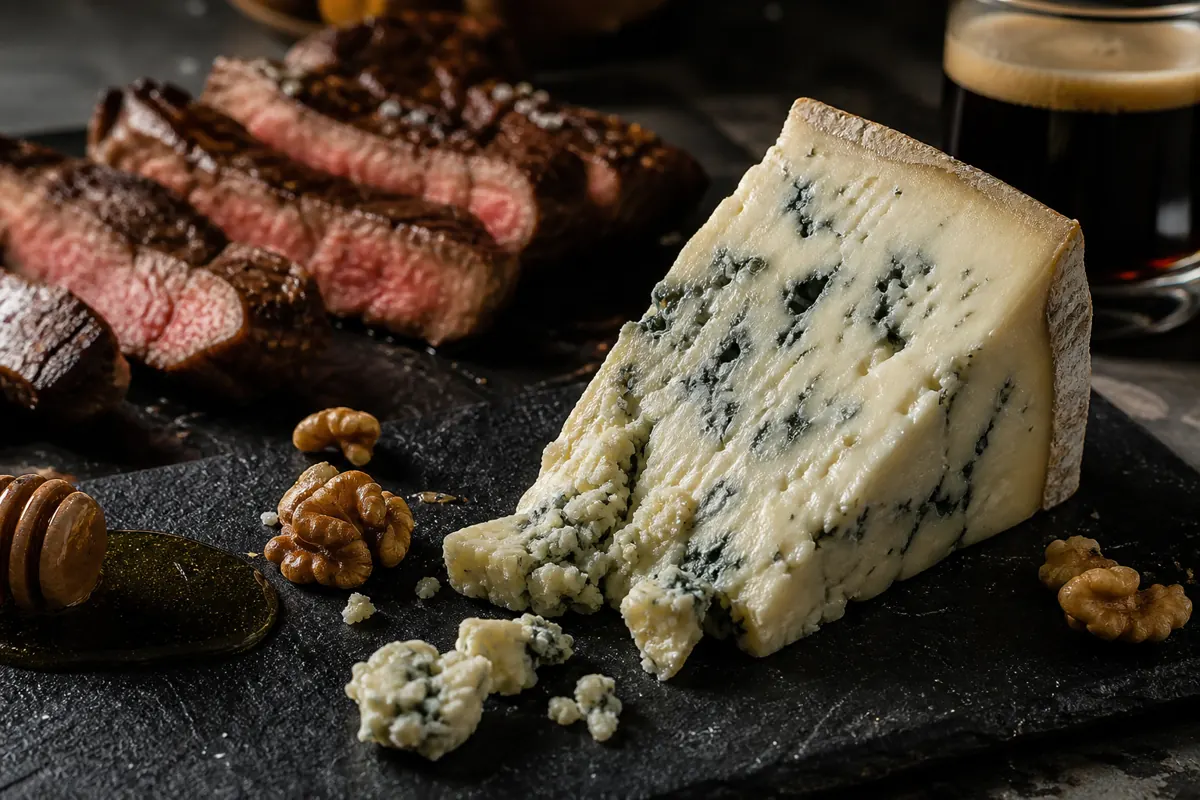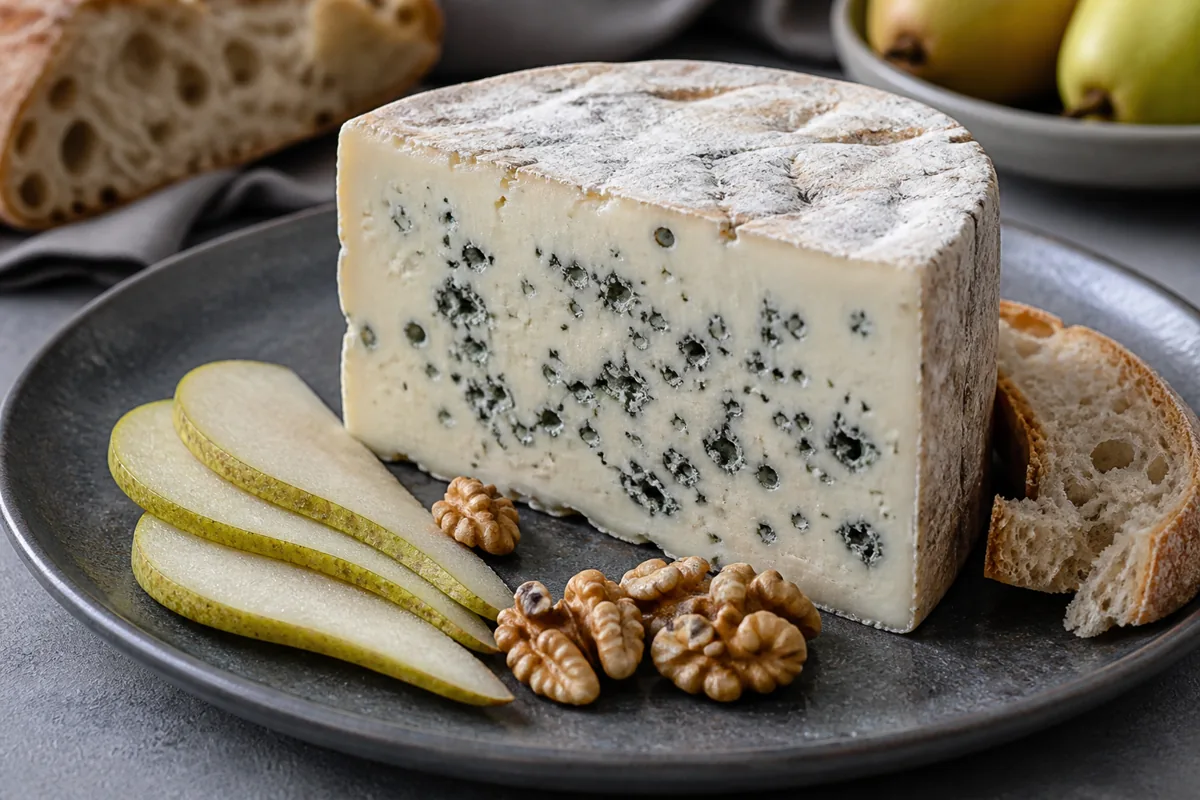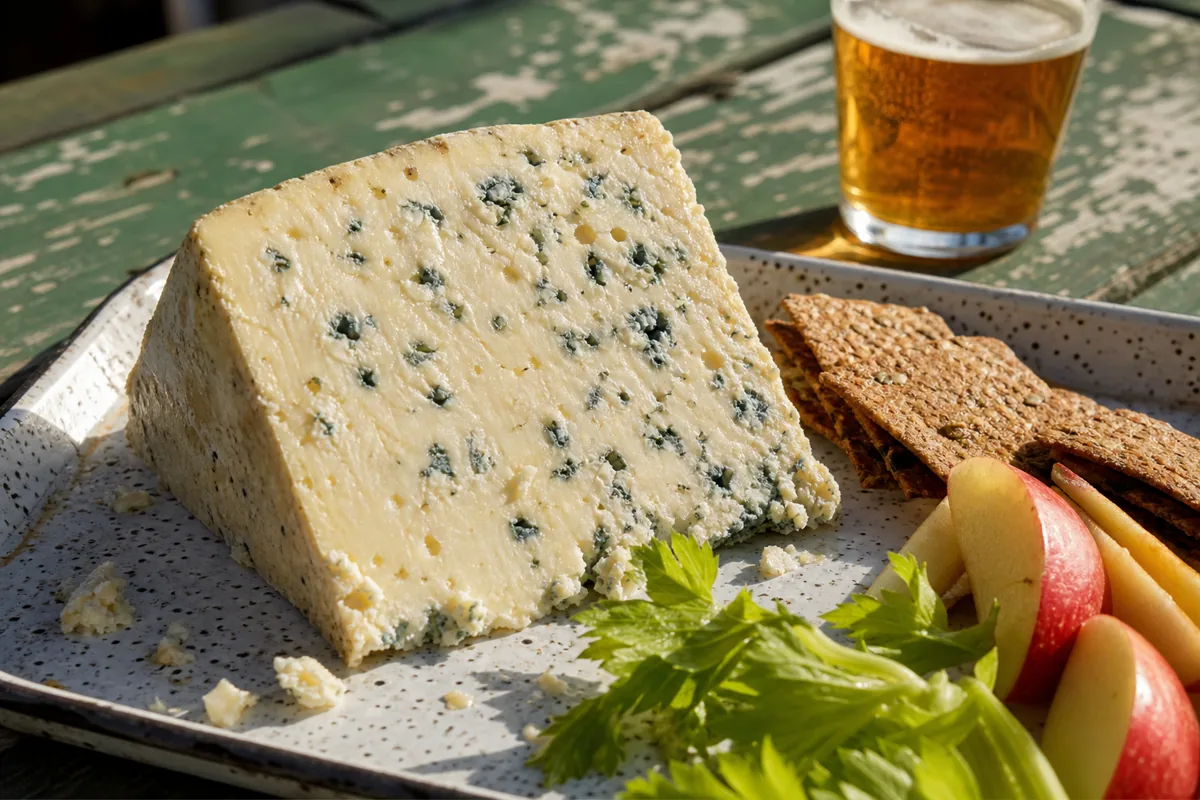
Buttermilk Blue is a Wisconsin blue cheese made by Roth, which describes it as cellar-aged for 2+ months and “tangy, yet mellow.” It is sold as a wedge and as crumbles, and Roth makes a longer-aged Affinée and a Buttermilk Gorgonzola alongside it.
Despite the name, Roth's ingredient list does not include buttermilk. Sources also disagree on whether the milk is raw or pasteurized, so read the package before serving it to anyone who is pregnant.
In This Article
What Is Buttermilk Blue?
Buttermilk Blue is a named Roth cheese rather than a general style of blue cheese. Roth's blue family page lists Buttermilk Blue, Buttermilk Blue Crumbles, Buttermilk Blue Affinée, Moody Blue, and Buttermilk Gorgonzola.
Culture Cheese Magazine profiles it as a natural-rind cow's-milk cheese from Roth Käse USA, with Jersey named as the breed. The Gourmet Cheese of the Month Club places production at Emmi Roth USA in Monroe, Wisconsin.
Culture traces the cheese to a farmers' cooperative in Fond du Lac, Wisconsin, that sold its predominantly Jersey milk to two Danish cheesemakers producing blue cheese before 1993. When that operation failed, the cooperative asked Roth Käse to take over blue cheese production under the new name Buttermilk Blue.
The Cheese Professor gives a different date and says Roth Käse developed Buttermilk Blue in 1997.
Roth lists Best of Class at the 2014 World Championship Cheese Contest, a Bronze at the 2016 World Cheese Awards, and second place at the United States Championship Cheese Contest in 2013 and 2017.
Does It Contain Buttermilk?
Roth's wedge, Affinée, Gorgonzola, and crumbles pages all list the same ingredients: cultured milk, salt, enzymes, and Penicillium roqueforti. Buttermilk does not appear on any of those lists.
The buttermilk in Culture's description is a flavor: it describes a pronounced aroma with notes of buttermilk and blue mold and a robust milk tang that cuts through the rich, creamlike center.
A recipe that says buttermilk blue cheese can mean this Roth cheese or a blue cheese used together with buttermilk. Buttermilk is not on the ingredient list, so this cheese cannot replace liquid buttermilk in a dressing, batter, or biscuit recipe.
What Does It Taste Like From Center to Edge?
Culture describes an ivory paste with blue-gray veins and pockets that stop short of the edge. Flavors near the rind are fairly salty, while the center is rich and creamlike with a robust milk tang.
Roth calls the original tangy yet mellow and describes its blue family as having a mellow, earthy flavor and a soft, creamy finish. The Cheese Professor calls the blue character restrained, adds a hint of white pepper and anise, and compares the cheese to a shy, cow's-milk cousin of feta.
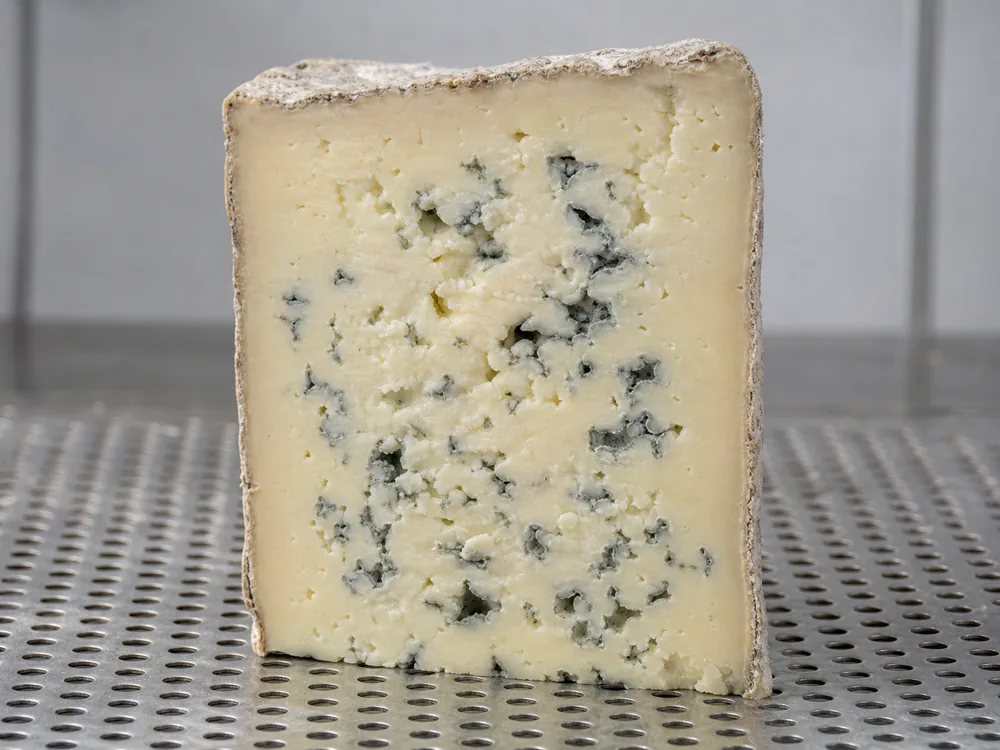
The Gourmet Cheese of the Month Club credits a higher butterfat content than most blue cheeses for a smoother, creamier texture. Sources disagree on firmness, since Cheese.com lists the cheese as semi-hard and creamy and crumbly while the same club calls it semi-soft.
Because Culture puts the salt near the rind, a slice cut from the center should taste creamier and a slice with more edge should taste saltier.
How Does the Original Differ From Affinée and Gorgonzola?
Roth separates its three blues mainly by aging time and by its own flavor wording.
| Roth cheese | Stated aging | Roth's flavor wording |
|---|---|---|
| Buttermilk Blue | Cellar-aged 2+ months | Tangy, yet mellow |
| Buttermilk Blue Affinée | Selected wheels aged 6+ months | Piquant and earthy |
| Buttermilk Gorgonzola | Aged 3+ months | Assertively piquant, with a peppery finish |
Roth says the Affinée uses selected wheels aged for 6+ months, which it credits with a deliciously piquant and earthy flavor.
Roth describes its Italian-style Buttermilk Gorgonzola as a blue with a pillowy texture. Its own guide calls Buttermilk Blue creamy and mild by comparison, an accessible starting point for anyone unsure about mold.
Roth's nutrition panels for all four products list the same figures per ounce, so the label cannot tell the versions apart.
Wedge or Crumbles?
Roth pitches the wedge for cooking or serving on a cheeseboard and the crumbles for topping salads or burgers. The ingredient lists differ more than Roth's pages suggest, because a distributor listing adds potato starch to the crumbles.
| Wedge | Crumbles |
|---|---|
| Roth: perfect for cooking or serving on a cheeseboard | Roth: perfect for topping salads or burgers |
| Roth ingredients: cultured milk, salt, enzymes, Penicillium roqueforti | Roth ingredients: the same four items, no starch named |
| GFI Foods wheel listing: cultured pasteurized milk, salt, enzymes, Penicillium roqueforti, natamycin (natural mold inhibitor) | GFI Foods crumbles listing: blue cheese plus potato starch (to prevent caking) |
Read the ingredient list on your package to see which version you have. The same distributor also lists natamycin on a wheel of the wedge, while Roth's own wedge list has only four ingredients.
What Can You Cook With It?
Roth's crumbles page names salads, roasted vegetables, steaks, and burger toppings.
It also suggests stirring the crumbles into risotto or mac and cheese dishes and using them in blue cheese dips and dressings.
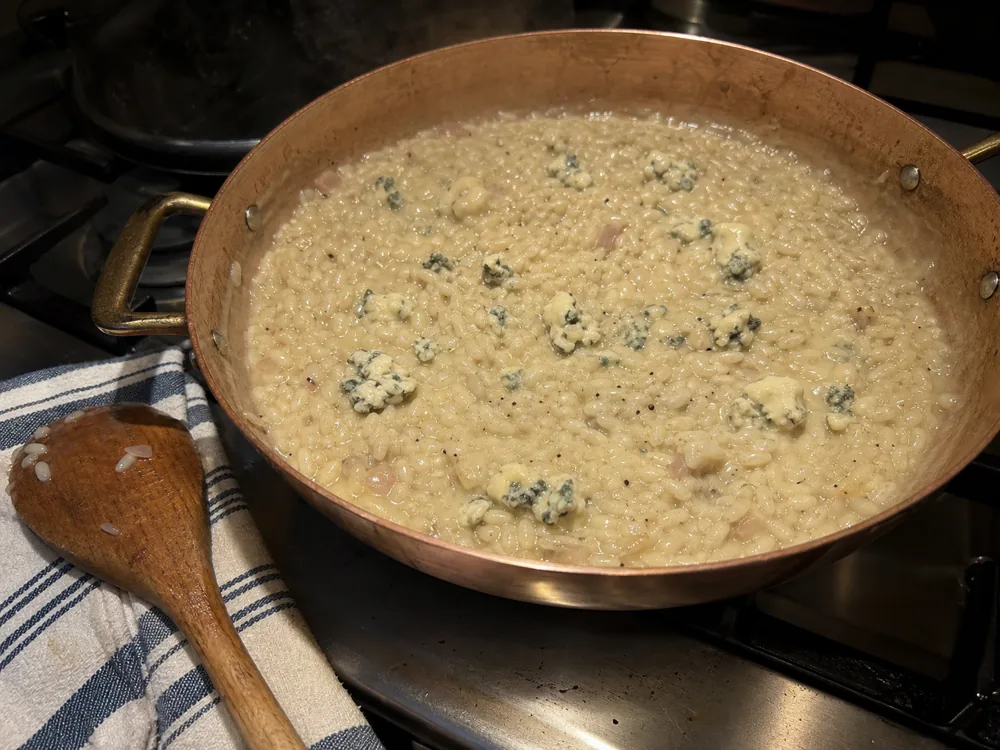
The Gourmet Cheese of the Month Club lists salads, pizzas, dips, and burgers, and The Cheese Professor adds cheese balls and says the cheese is also good eaten plain.
Which Pairings Do the Sources Name?
Every pairing here comes from a source: Roth's product page, Culture's profile, or a retailer or reviewer listing.
| Pairing | Type | Why It Works |
|---|---|---|
| Honey | Food | Roth's page says to drizzle it over the cheese. |
| Figs, pears, dates | Food | Named together on Roth's product page. |
| Dark chocolate | Food | Named on Roth's page and on Cheese.com. |
| Dark beer | Drink | Named on Roth's page. |
| Riesling | Wine | Named on Roth's page. |
| Gin | Drink | Named on Roth's page; The Cheese Professor names a gin and tonic. |
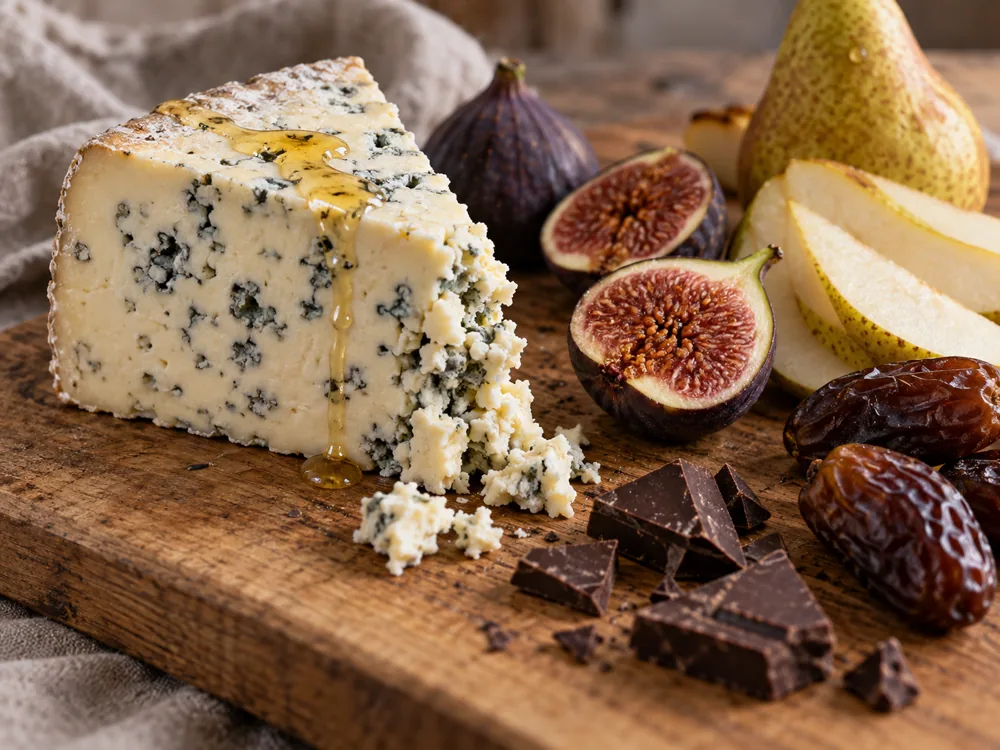
Culture warns that the tang is a challenge for most red wines and points to a Sauternes-type dessert wine or a high-alcohol beer such as Chimay Blue instead.
The Cheese Professor adds walnuts, lemon zest, rosemary, and Marcona almonds in honey to the list.
Is Buttermilk Blue Pasteurized, and Is It Safe in Pregnancy?
Sources split on the milk: Roth's product pages say only cultured milk, two sources say pasteurized, and two say raw.
| Source | Wording |
|---|---|
| Roth product pages | “Cultured milk”, with no pasteurization statement |
| GFI Foods wheel listing | “Cultured pasteurized milk” |
| The Cheese Professor | Pasteurized |
| Good Eggs crumbles listing | “Raw cultured cow's milk” |
| Cheese.com | Made from unpasteurized cow's milk |
Read the milk wording on the package in your hand first, because a raw-milk answer changes the pregnancy advice.
For Buttermilk Blue, the stricter NHS rule is the one for soft blue-veined cheeses such as Danish blue, gorgonzola and roquefort: pasteurised or unpasteurised, they must be thoroughly cooked in pregnancy.
The NHS lists pasteurised or unpasteurised hard cheeses such as cheddar, gruyère and parmesan as safe, but with the sources split between semi-hard and semi-soft for this cheese, the blue-veined rule is the safer one to follow.
A raw-milk Buttermilk Blue would sit on the CDC's riskier list, which names blue-veined cheese among its examples of soft cheese made from unpasteurized milk, and the CDC says pregnant women are 10 times more likely to get a Listeria infection.
If the package says pasteurized, the CDC's safer choice for a soft cheese is heating it to an internal temperature of 165°F or until steaming hot.
What Does One Ounce Contain?
Roth's label lists these figures for a one-ounce (28 g) serving.
The same serving lists 6 g of saturated fat, 148 mg of calcium, under 1 g of carbohydrate, and 0 g of sugar. Roth does not call any of its blue cheeses lactose-free, so the sugar line is not a promise for anyone with a strong dairy sensitivity.
Roth also lists the crumbles as gluten-free, rBST-free, and vegetarian.
What Should You Check Before Buying?
Roth's pages give one storage instruction, which is to keep the cheese refrigerated. For how long it keeps, follow the date and handling directions on the package.
The Cheese Professor describes the retail wedges as four-ounce pieces and the cheese as affordable.
SOURCES & REFERENCES
Roth's ingredient lists name cultured milk, salt, enzymes, and Penicillium roqueforti. Buttermilk is not listed as an ingredient.
Roth calls the original tangy yet mellow, and its own guide calls it creamy and mild next to Buttermilk Gorgonzola. Culture notes that flavors near the rind are fairly salty.
Roth ages the original for 2+ months and the Affinée for 6+ months on selected wheels. Roth describes the Affinée flavor as piquant and earthy.
Sources disagree. A distributor wheel listing and The Cheese Professor say pasteurized, while Cheese.com and one crumbles listing say raw, so check the package.
Roth names honey, figs, pears, dates, dark chocolate, dark beer, Riesling, and gin. Culture suggests a Sauternes-type dessert wine or a high-alcohol beer instead of most red wines.