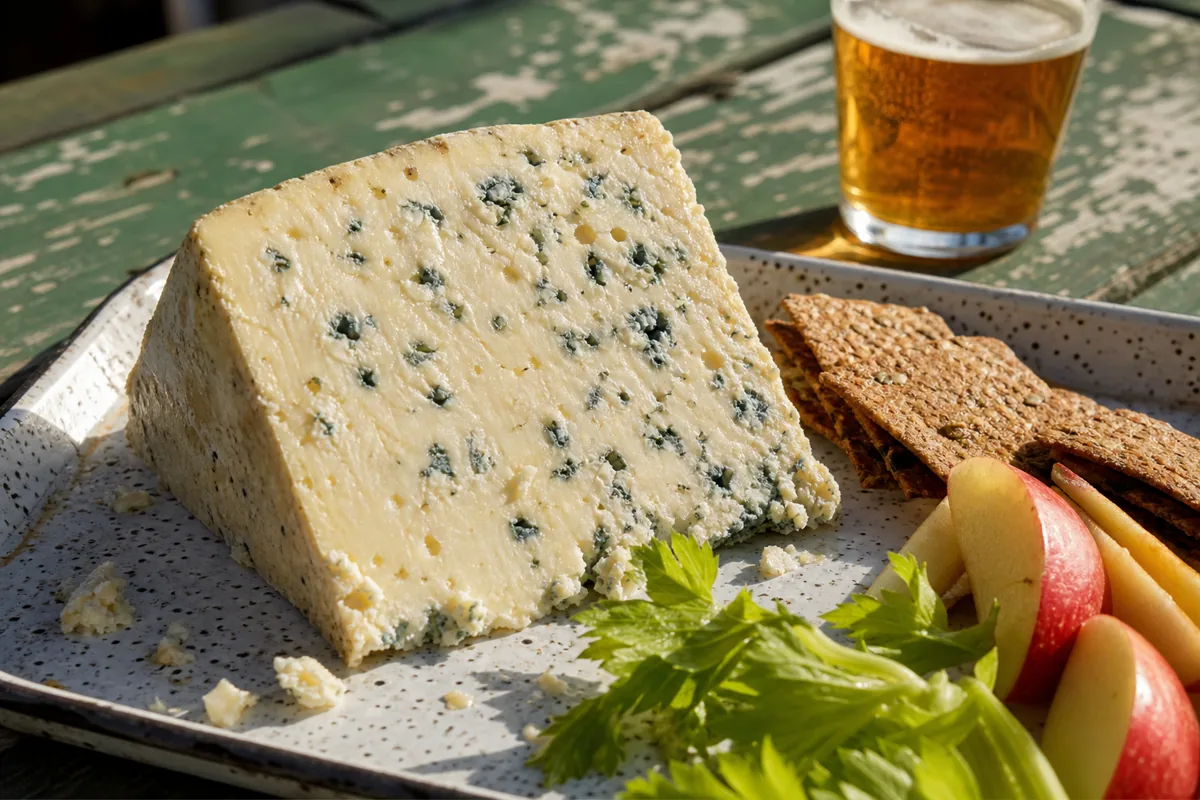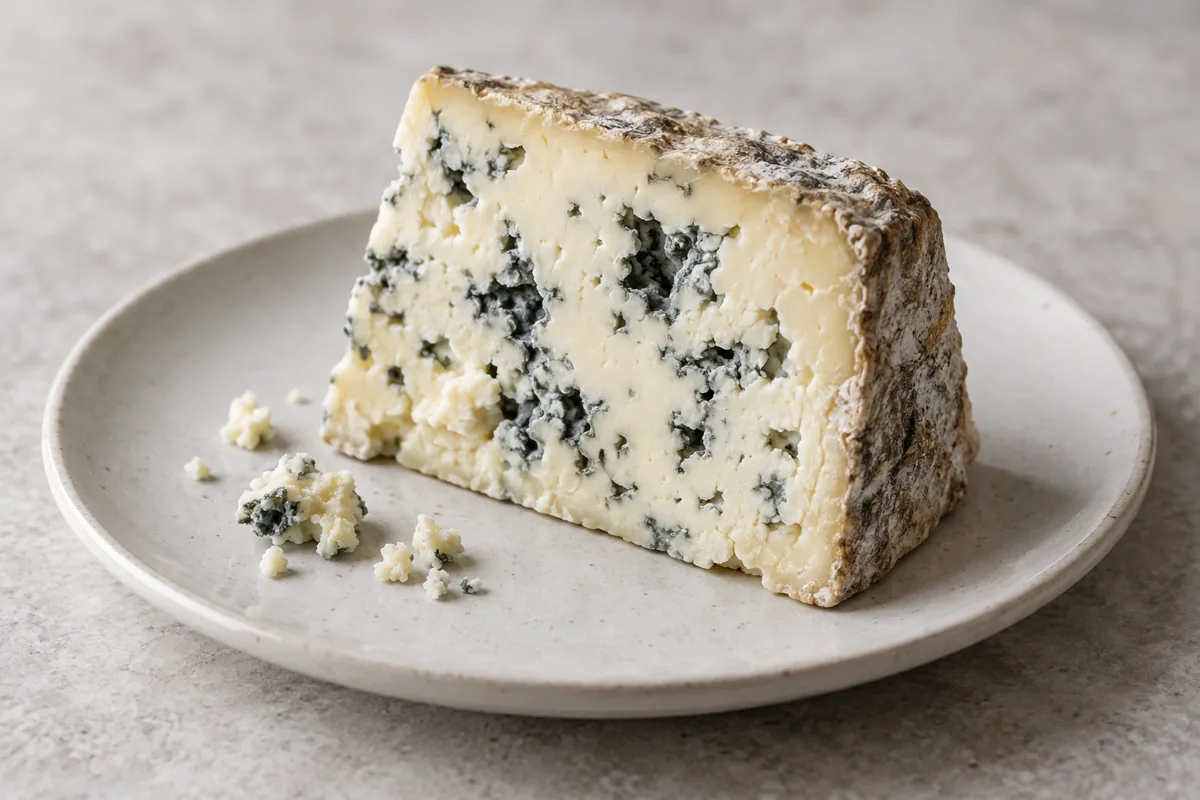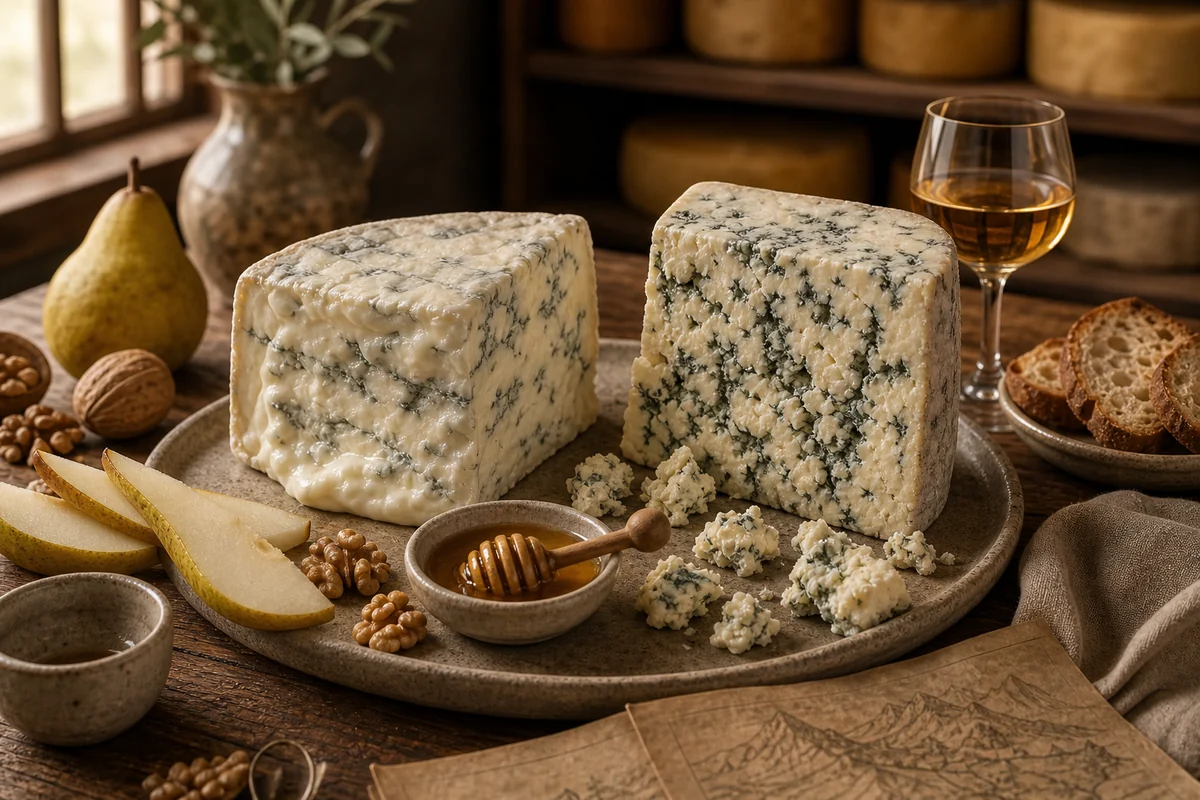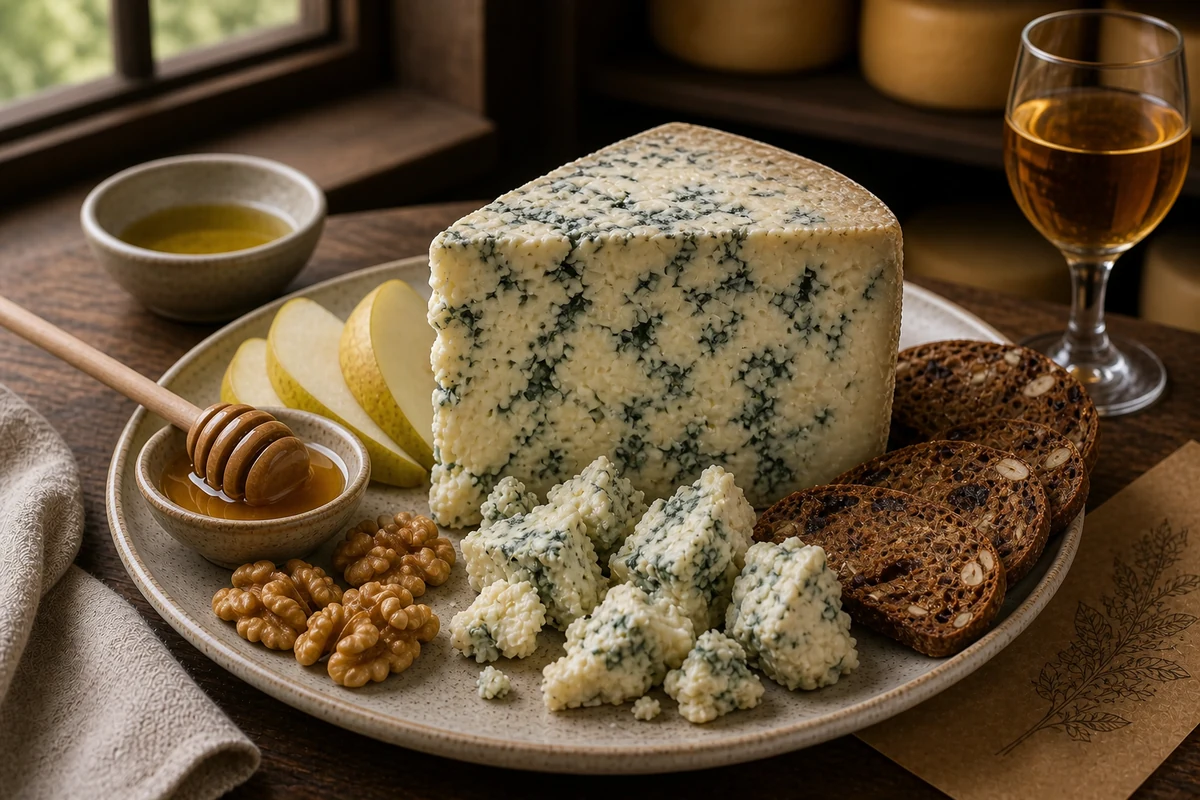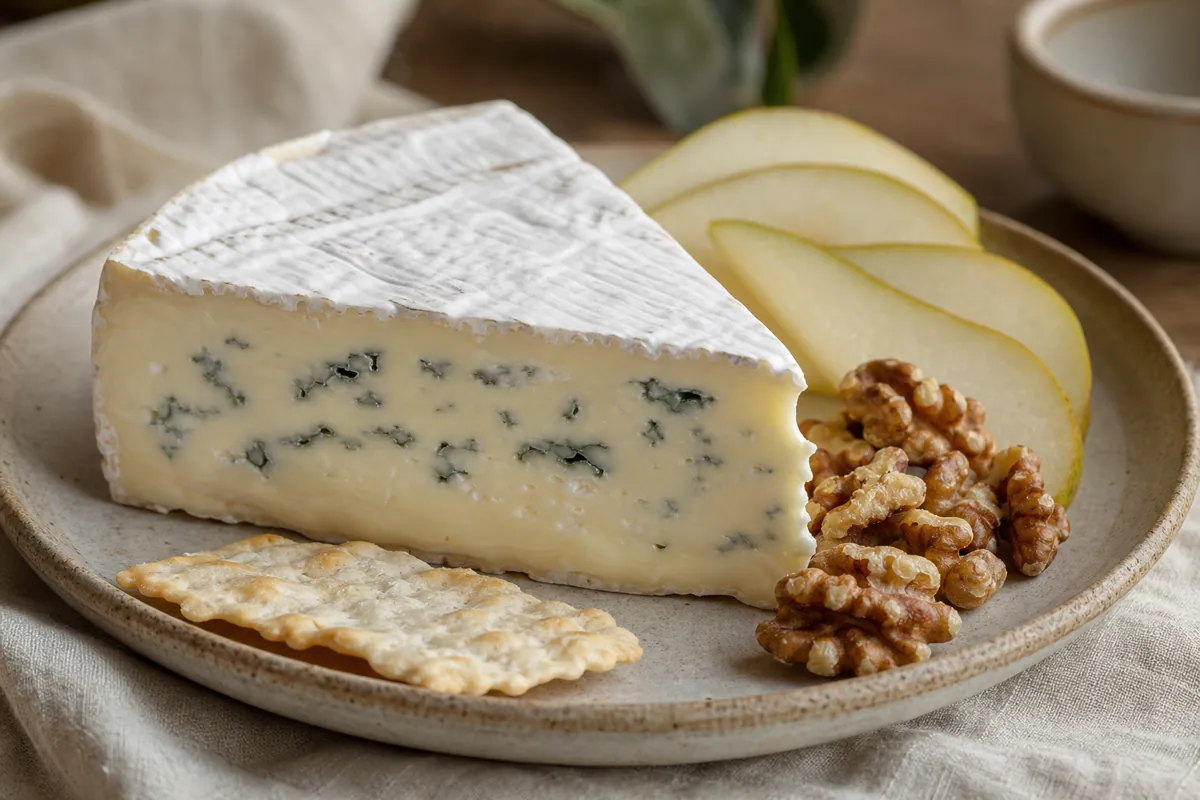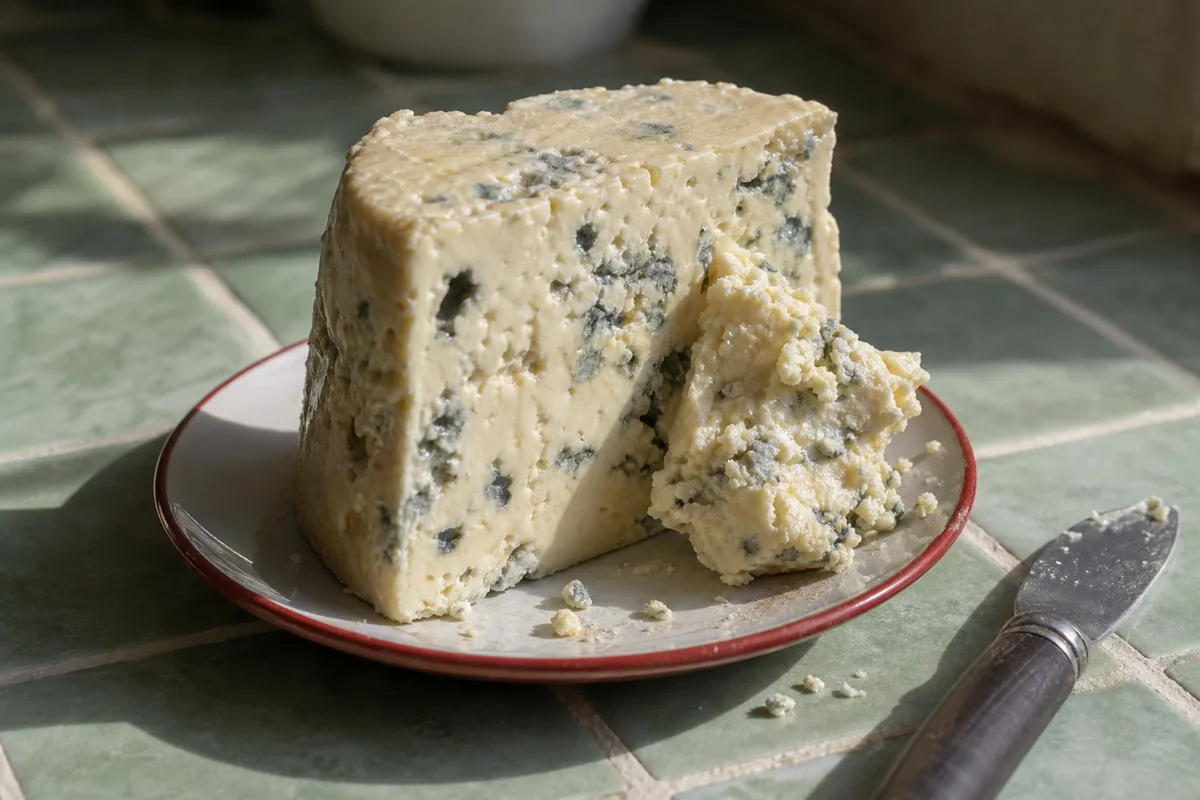
Buttermilk Gorgonzola is a Wisconsin blue cheese made by Roth, which describes it as Italian-style and aged 3+ months. Roth's product page promises a full earthy flavor, a pillowy texture, an assertively piquant taste, and a complex peppery finish.
The name invites two mix-ups. You will find no buttermilk on Roth's ingredient list, which reads cultured milk, salt, enzymes, and Penicillium roqueforti, and the cheese you are buying is not Gorgonzola PDO from Italy.
Roth suggests stirring it into risotto or sprinkling it over salad, and it names pears, apples, figs, bacon, gin martinis, and pale ales as pairings.
In This Article
What Is Buttermilk Gorgonzola?
Roth sells the cheese as a wheel. Cheese.com describes it as a cow's milk cheese with a natural rind and a pale yellow color.
Its texture is pillowy in Roth's description and crumbly and semi-soft in Cheese.com's. The piece in your hand is the better judge of which description fits.
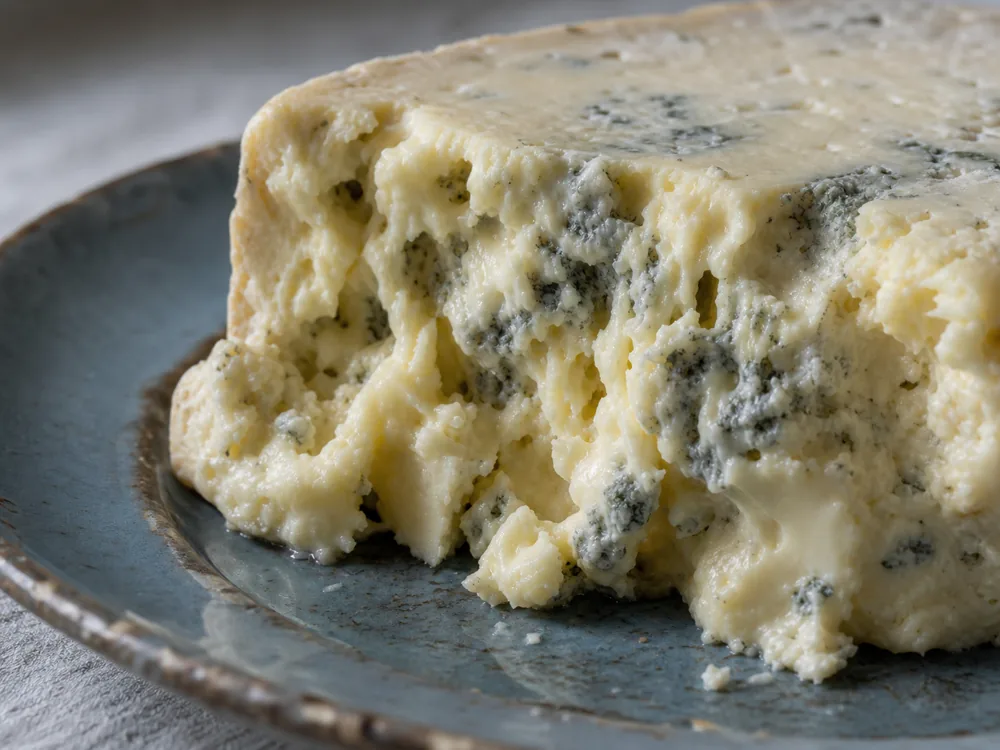
On age, Roth's 3+ months of aging and Cheese.com's at least 90 days line up.
- Producer: Roth Cheese, part of Emmi Roth
- Origin: Wisconsin, United States
- Minimum age: 3+ months
- Certifications on Roth's page: Gluten-free, rBST-free, and vegetarian
- Storage instruction on Roth's page: Keep refrigerated
It sits in Roth's blue-cheese range beside Buttermilk Blue, Buttermilk Blue Crumbles, Buttermilk Blue Affinée, and Moody Blue.
You may meet either of two names. Roth's product page uses Buttermilk Gorgonzola, while Emmi Roth's 17 November 2025 World Cheese Awards release lists a Bronze medal for Roth Gorgonzola.
The release gives Roth Gorgonzola the same 3+ month description, and that matching wording suggests one cheese.
Is It the Same as Italian Gorgonzola?
No. Gorgonzola PDO is a protected Italian cheese, while Buttermilk Gorgonzola is a Wisconsin cheese that Roth calls Italian-style.
Gorgonzola PDO comes from provinces in Piedmont and Lombardy, including Novara, Bergamo, Brescia, Cremona, Milan, and Pavia, and the EU registered it in 1996. Roth's award text says only that its cheese is inspired by the cheeses of Italy, which describes influence rather than origin.
| Point | Buttermilk Gorgonzola | Gorgonzola PDO |
|---|---|---|
| Made in | Wisconsin, United States (Roth) | Named provinces of Piedmont and Lombardy (Wikipedia) |
| Legal status | Roth's own Italian-style product | EU-registered PDO since 1996 (Wikipedia) |
| Milk | Unpasteurized cow's milk (Cheese.com); Roth: Not stated | Pasteurized, unskimmed cow's milk (Cheese.com) |
| Age | 3+ months (Roth) | Typically three to four months (Wikipedia) |
| Texture | Pillowy (Roth); crumbly (Cheese.com) | Crumbly and firm (Cheese.com) |
Age will not tell you which one you have, because Roth's 3+ months overlaps Gorgonzola's typical three to four months from Wikipedia. Origin, legal status, and the milk treatment Cheese.com records do separate them.
Origin is the label test. Buttermilk Gorgonzola is made in Wisconsin by Roth, and only cheese made in the Italian production area is Gorgonzola PDO.
How Does Buttermilk Gorgonzola Taste Beside Roth's Other Blues?
Buttermilk Gorgonzola is full and earthy, assertively piquant, with a complex peppery finish, in Roth's words. Cheese.com lists the flavor as piquant and spicy and the aroma as rich, and its description adds pronounced tangy notes.
No pepper appears in Roth's ingredient list, so the peppery finish is a flavor description and not an added spice.
Roth selects a few Buttermilk Blue wheels to age 6+ months as Buttermilk Blue Affinée, so Roth's three named blues sit at 2, 3, and 6 months, with this Gorgonzola in the middle.
Roth describes its original Buttermilk Blue as tangy yet mellow at 2+ months, while the Gorgonzola is described as fuller and more piquant at 3+ months. The descriptions differ by more than the one-month gap.
| Roth blue | Published age | Roth's description and named uses |
|---|---|---|
| Buttermilk Blue | 2+ months | Tangy yet mellow; suited to cooking or a cheeseboard |
| Buttermilk Gorgonzola | 3+ months | Full earthy flavor with a pillowy texture; risotto and salad |
| Buttermilk Blue Affinée | 6+ months | Rich and creamy, with a piquant and earthy flavor |
Roth's panels list identical per-ounce nutrition for all three, so flavor and use are what you are choosing between.
How Do You Use Buttermilk Gorgonzola in Risotto and Salad?
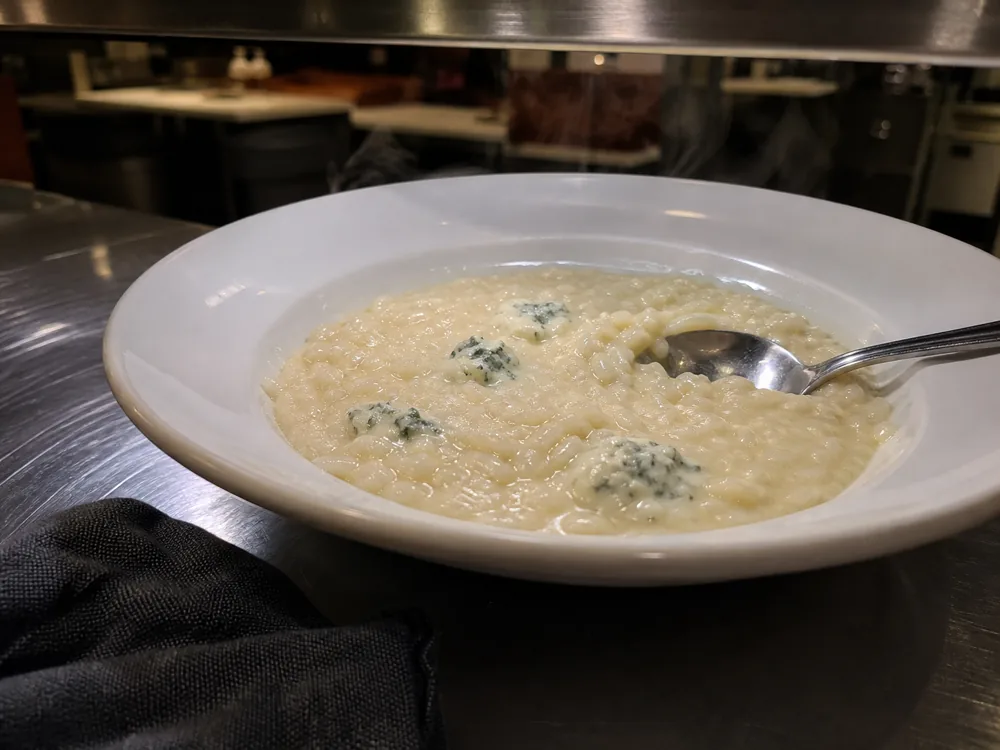
Risotto is the use that Roth and Cheese.com both name. Roth's other use is sprinkling it over a salad, and Cheese.com adds salad dressings.
When you season the dish, count on 380 mg of sodium per ounce, 16% of the Daily Value on Roth's panel.
| Use | How It Works |
|---|---|
| Risotto | Roth's first named use is stirring the cheese into the dish. |
| Salad | Roth's second named use is sprinkling it over a salad. |
| Salad dressing | Cheese.com adds salad dressings as a use. |
What Should You Pair with Buttermilk Gorgonzola?
For food, Roth's product page names pears, apples, figs, and bacon.
For a drink, a gin martini or a pale ale is the pick Roth and Cheese.com share. Roth names a gin martini or an American or Indian pale ale, and Cheese.com's description names gin martinis, Chianti, and pale ales.
| Pairing | Type | Why It Works |
|---|---|---|
| Pears | Food | Named on Roth's product page. |
| Apples | Food | Named on Roth's product page. |
| Figs | Food | Named on Roth's product page. |
| Bacon | Food | Named on Roth's product page. |
| Gin martini | Drink | Named by both Roth and Cheese.com. |
| Pale ale | Drink | Roth names American and Indian pale ale; Cheese.com names pale ales. |
| Chianti | Wine | Named by Cheese.com only. |

Roth's other blues come with pairings of their own. Roth's milder Buttermilk Blue page also lists figs and pears, along with dates, dark chocolate, dark beer, Riesling, and gin, and its Affinée page moves to dates, olives, roasted red peppers, port, and Cabernet Sauvignon.
What Can You Use Instead of Buttermilk Gorgonzola?
If you cannot find it, Roth's own range gives you two swaps: Buttermilk Blue is the milder one and Affinée the more aged one, judged by Roth's own age and flavor descriptions.
Outside Roth, choose Gorgonzola dolce for a less salty, slightly sweet finish or piccante for a more pungent, firm, crumbly cheese, going by Wikipedia's descriptions. Any swap changes the taste, so a dish built on the peppery finish will read differently.
What Are the Nutrition Numbers and Storage Rules?
Roth's product page gives its nutrition panel for one ounce (28 g), and it also marks the cheese as containing milk.
Roth marks the cheese gluten-free, rBST-free, and vegetarian, and Cheese.com also lists it as vegetarian.
If you are limiting lactose, Roth's panel shows under 1 g carbohydrate and 0 g sugar per ounce.
Roth's storage instruction is to keep it refrigerated.
Is Buttermilk Gorgonzola Safe During Pregnancy?
Cheese.com lists Buttermilk Gorgonzola as made from unpasteurized cow's milk and classes it as semi-soft and blue-veined, which puts it in the group that pregnancy cheese rules single out.
The NHS says pasteurised or unpasteurised soft blue-veined cheeses, such as Danish blue, gorgonzola and roquefort, must be thoroughly cooked. It counts any cheese cooked until steaming hot, including soft or blue cheese, as safe to eat.
The CDC lists soft cheese made from unpasteurized (raw) milk, blue-veined cheese included, among riskier choices, and pasteurized soft cheeses heated to an internal temperature of 165°F or until steaming hot among safer ones. It adds that pregnant women are 10 times more likely to get a Listeria infection.
Served cold, Buttermilk Gorgonzola made with pasteurized milk is described as a semi-soft, crumbly or pillowy blue-veined cheese, a type the CDC list does not cover, so ask a midwife or doctor.
The FDA tells pregnant people to make sure all dairy products are made with pasteurized milk and to check the label.
SOURCES & REFERENCES
It is Roth's Wisconsin-made, Italian-style blue cheese, aged 3+ months and described by Roth as full, earthy, and pillowy with a peppery finish.
No. Gorgonzola PDO is made in a defined area of Piedmont and Lombardy, while Buttermilk Gorgonzola is made in Wisconsin.
Roth's ingredient list says cultured milk, salt, enzymes, and Penicillium roqueforti. It does not list buttermilk.
Roth describes a full earthy flavor, an assertively piquant taste, and a complex peppery finish in a pillowy cheese.
Yes. Stirring it into risotto is the first use Roth names.
Cheese.com lists the milk as unpasteurized. Check the package for the milk treatment, especially during pregnancy.