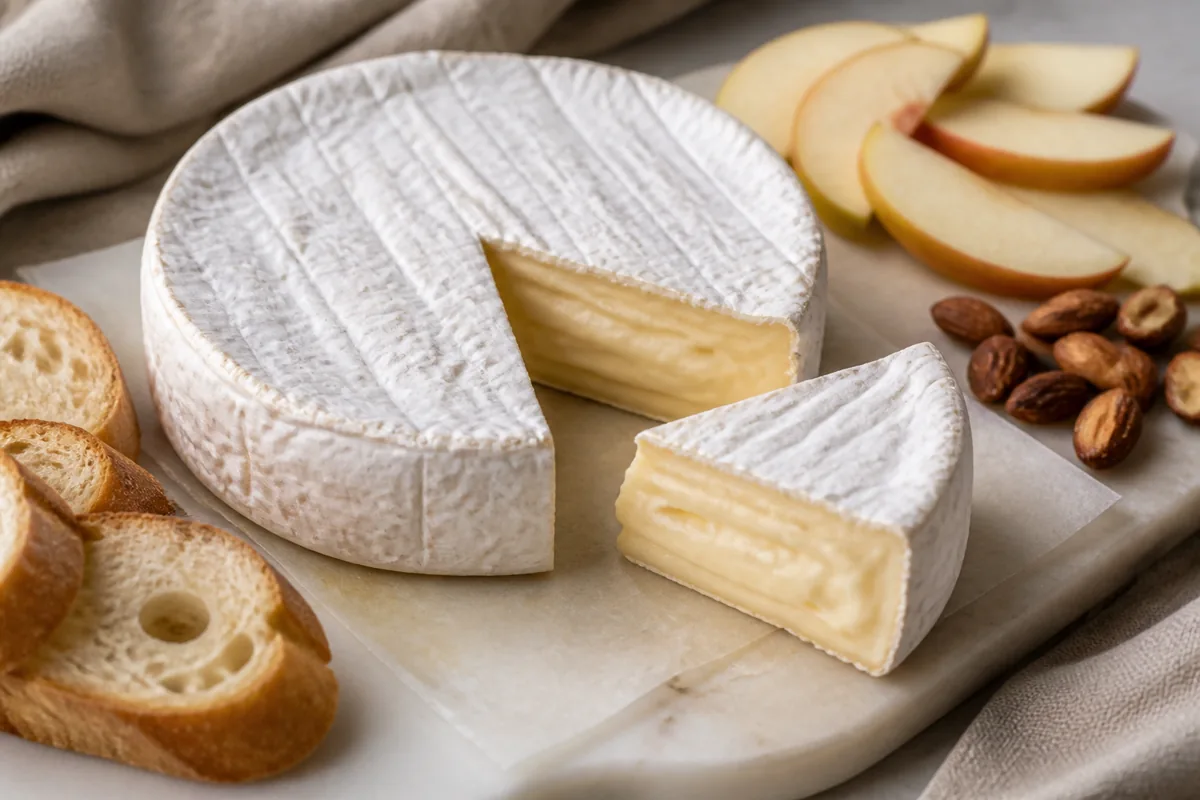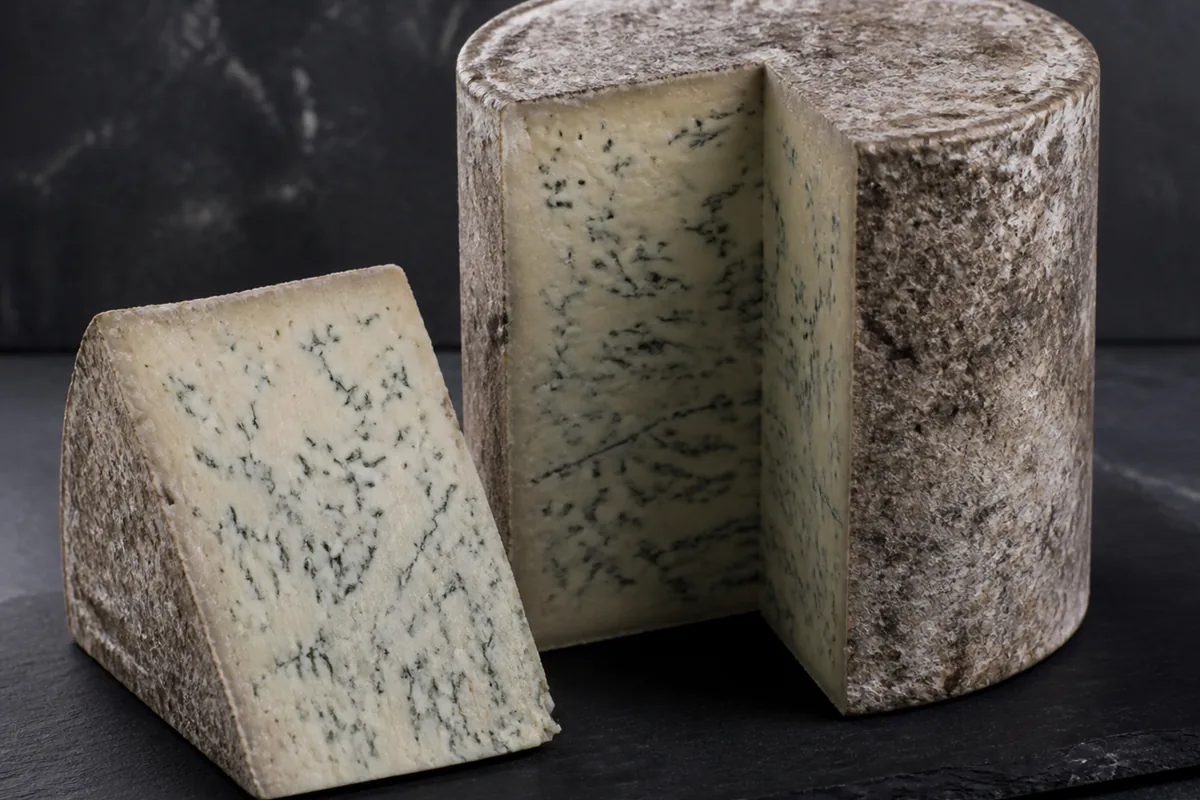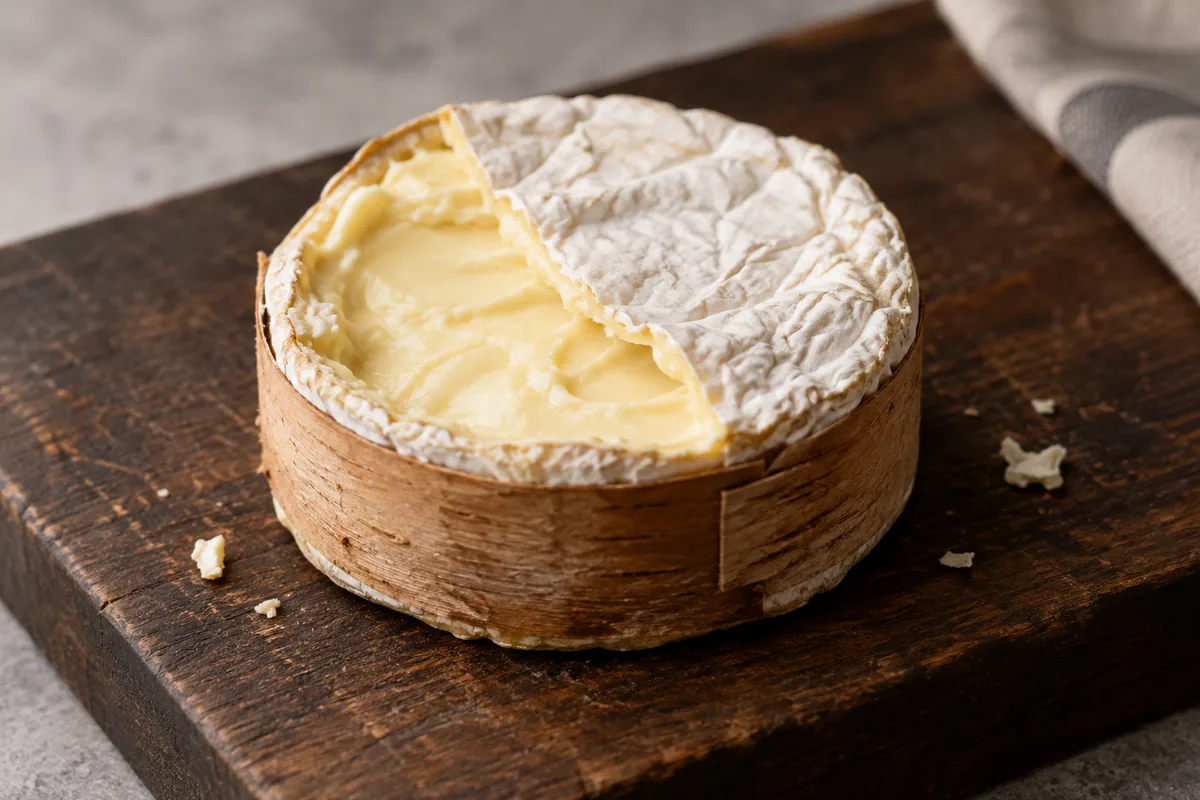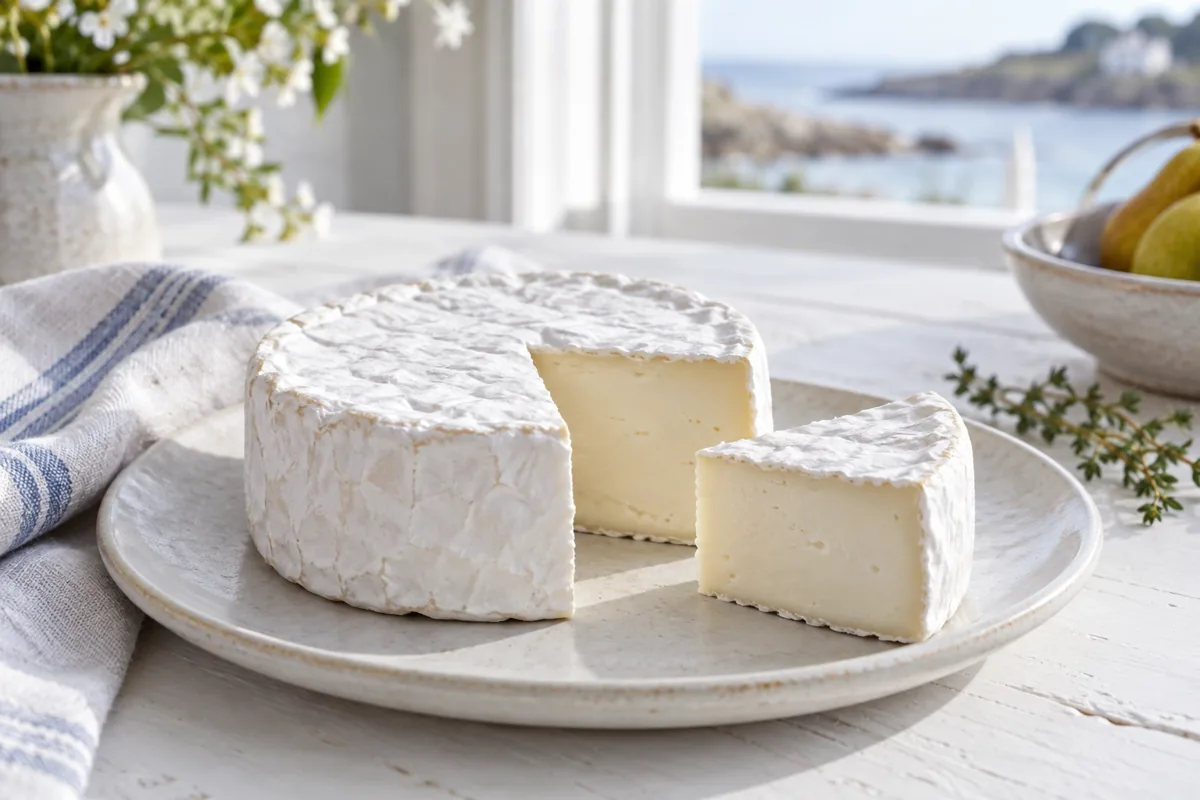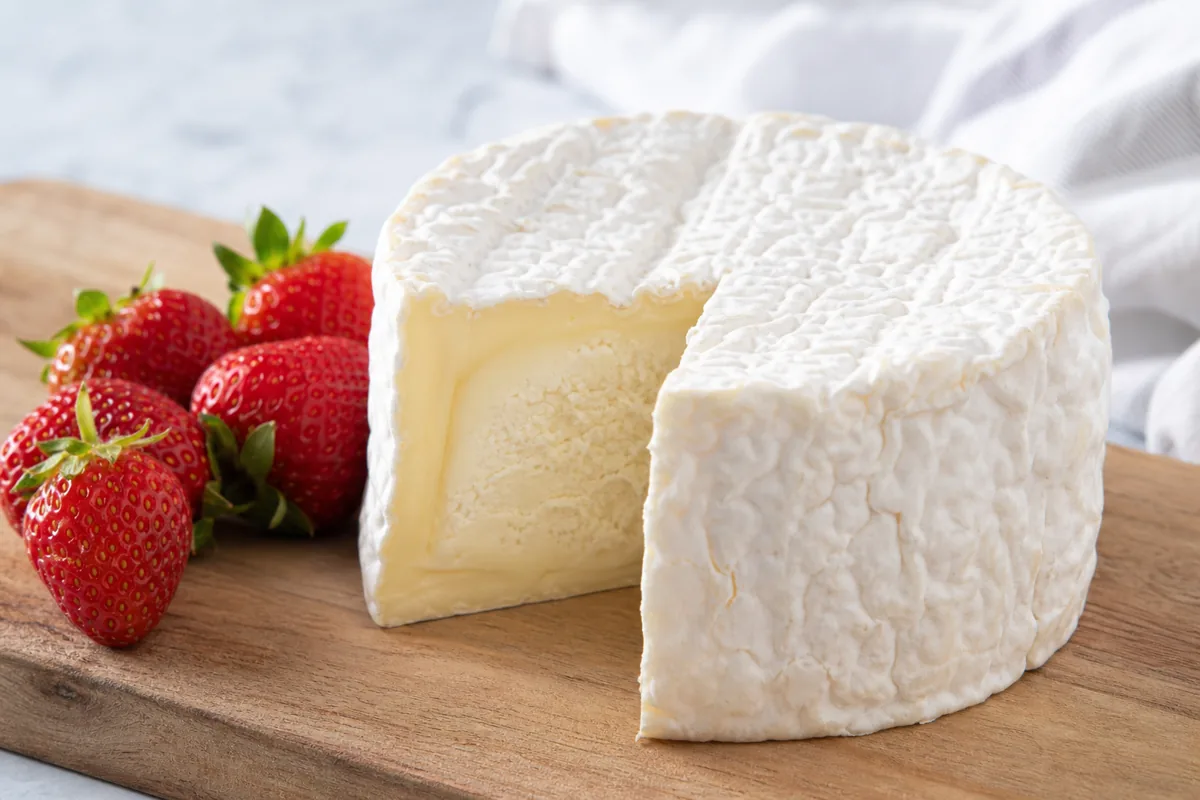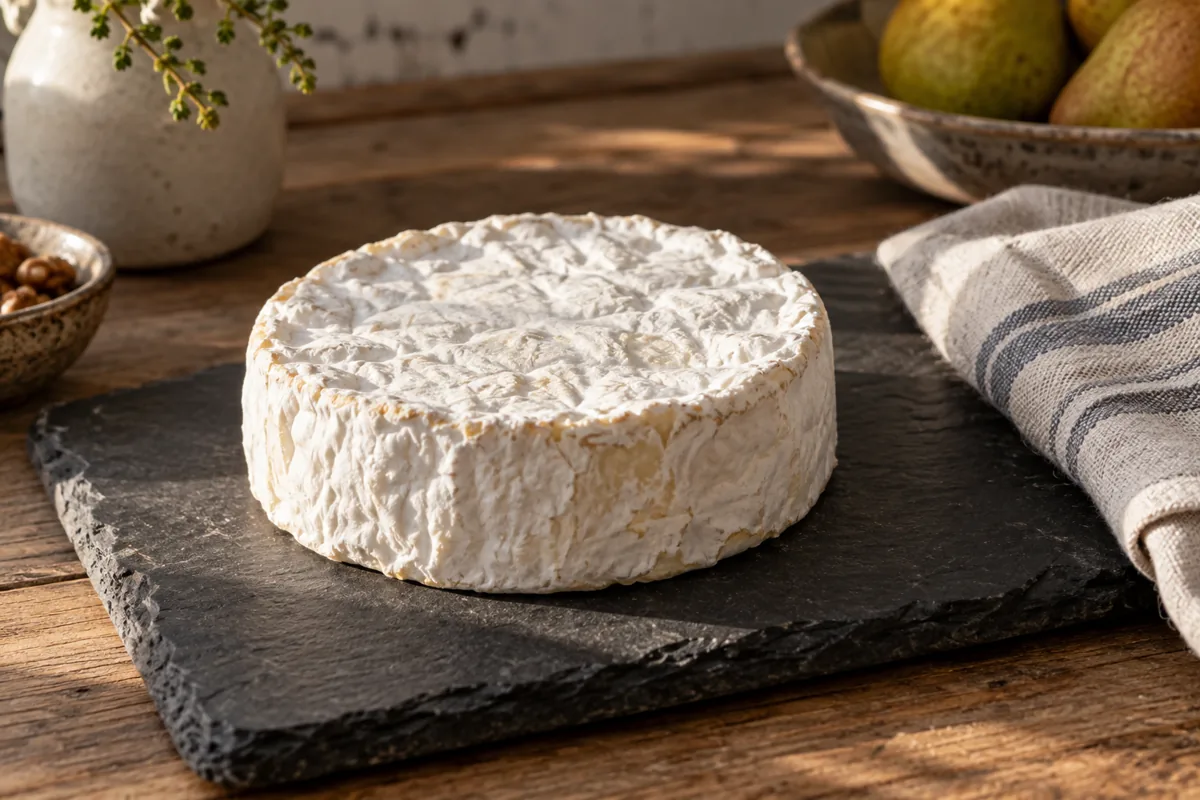
Moses Sleeper is a soft, bloomy-rind cheese from Jasper Hill Farm in Greensboro, Vermont, made from pasteurised cow's milk and aged for six to twelve weeks. Jasper Hill sells it as a 16 oz wheel and describes it as an original recipe inspired by classic French brie.
The name comes from a Revolutionary War scout who, the story goes, was killed defending a blockhouse in Greensboro, which the last section covers.
In This Article
Who Makes Moses Sleeper, and How Is It Aged?
The milk comes from local pastured herds, and Say Cheese Review describes the make in three steps: the curds are cut, ladled into molds and drained before the 16 oz wheels go to age.
The same review sets the aging range against brie, which it gives as four to ten weeks, so Moses Sleeper's six to twelve weeks starts and ends two weeks later.
After the make, the wheels age in the Cellars at Jasper Hill, which Murray's describes as huge stone caves on the side of a hill with 22,000 square feet of underground space.
Murray's says the bloomy-rind caves have wet stone beds on the ground to keep moisture at the right level, which suits Penicillium camemberti, the rind mould that Cheese Scientist says thrives in cool, humid environments.
The ingredients on Jasper Hill's 2022 info sheet are pasteurised cow milk, salt, rennet and cultures, and its fast facts list the rennet as traditional. Murray's Cheese lists animal rennet and Say Cheese Review says standard animal rennet, which matters to a vegetarian.
The info sheet shows a 2019 World Cheese Awards gold medal, and Murray's lists an American Cheese Society 2017 second place, though neither says which category.
What Does Moses Sleeper Taste and Smell Like?
Jasper Hill lists the flavour at peak ripeness as cauliflower, crème fraîche and toasted nuts, with a bright, clean finish and a hint of white mushroom aroma after the rich paste. Under the thin rind sits what the maker calls a gooey, milky core.
Retailers and reviewers use different words for the same cheese. Murray's Cheese lists scrambled eggs, button mushrooms and fresh milk, and Say Cheese Review finds a milky, buttery, mushroomy, tangy paste.
Mushroom and milkiness recur in all three, while cauliflower appears only in the maker's list and egg only in Murray's.
Age may explain part of the gap, since Jasper Hill gives its notes at peak ripeness while Murray's calls its wheel young. Say Cheese Review describes the same cheese changing over time, with the paste getting gooier and the flavour turning richer, nuttier, more earthy and more pungent as the wheel matures.
The same reviewer finds the flavour more potent than traditional French brie and likens the cheese to brie's sturdy older brother.
The maker's own notes include a hint of white mushroom aroma, so that smell is intended. A sharper smell is a different matter, covered under ripeness below.
Should You Eat the Rind of Moses Sleeper?
Jasper Hill calls the rind thin and bloomy, and Say Cheese Review describes a white, velvety exterior made by adding Penicillium camemberti. Cheese Scientist, writing about brie, says that mould is added deliberately: it is selected, cultured and encouraged to grow.
Say Cheese Review finds the flavour stronger than brie's but not strong enough to justify one reviewer's washed-rind label, and judges that the white, velvety rind puts it with the bloomies.
Jasper Hill's own list agrees, grouping Moses Sleeper with Harbison, Little Hosmer and Sherry Gray as bloomy rinds, apart from its washed rinds Willoughby, Eligo, Oma and Winnimere.
Cheese Scientist says a brie rind adds complexity rather than intensity, with notes of mushroom, fresh cream, cooked cauliflower and damp cellar plus a subtle bitterness that keeps a rich paste from going flat or cloying. Mushroom and cauliflower are also on Jasper Hill's list for Moses Sleeper.
On texture, the same source describes a brie rind as thin and slightly resilient, faintly fuzzy when young and softer with age, so each bite moves from slight resistance to creaminess.
When Is Moses Sleeper Ripe?
Jasper Hill gives two ranges. The product page lists an aging time of 6 to 12 weeks, the 2022 info sheet says the cheese is ripe at 7 to 9 weeks, and the same sheet gives a shelf life of 95 days.
The info sheet does not say whether the 95 days count from the make date, so the figure cannot be turned into a use-by date without asking the seller. If the count did start at the make date, 95 days would end about 11 days after the 12-week end of the aging range and 32 to 46 days after the 7 to 9 week ripe point.
Ripening in a brie-style cheese moves from the rind inward. Cheese Scientist explains that the mould raises the pH at the surface and the paste then breaks down progressively toward the centre, so a young wheel starts firm, acidic and chalky.
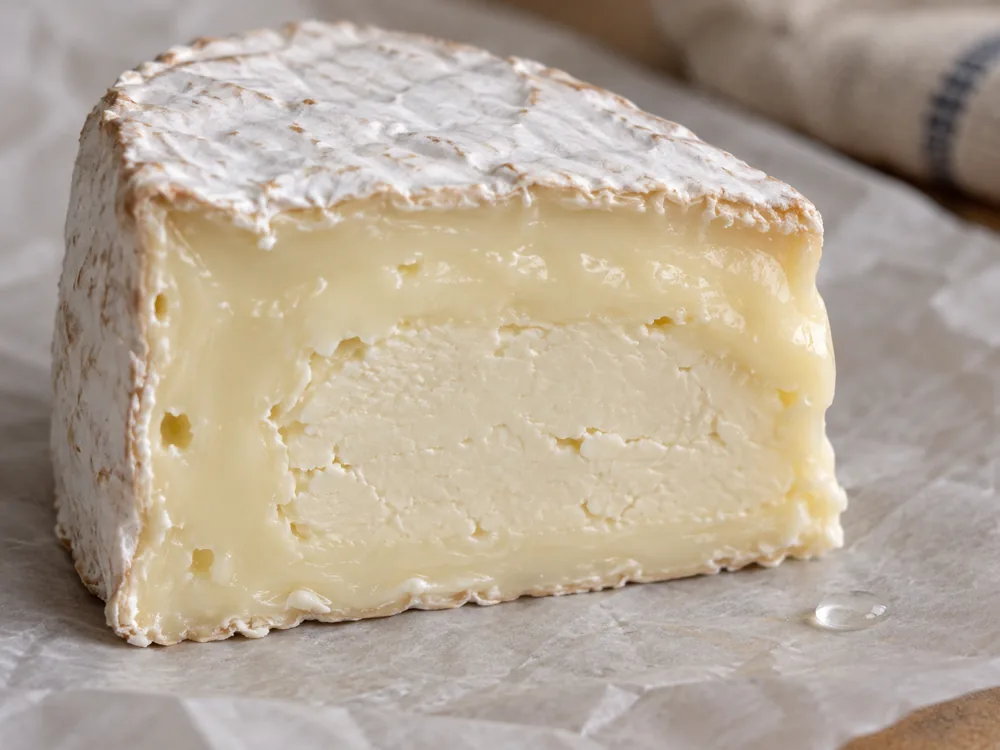
Cheese Scientist, describing brie, separates three stages. A young wheel has a mild, milky rind and a centre that may still be chalky and firm, a ripe one is soft and creamy throughout under a savoury rind, and an overripe one has a sharp rind, ammonia and an overly runny paste.
Jasper Hill describes a wheel at peak as having a gooey, milky core, and at room temperature as pliant and decadent without being runny. That fits the three stages, since a runny paste belongs to the overripe one.
Serving at room temperature has a time limit: the CDC says perishable food, dairy included, should go back in the refrigerator within 2 hours, or within 1 hour above 90°F.
Smell gives the second signal. Cheese Scientist says a light ammonia note is normal in bloomy-rind cheese because protein breakdown releases ammonia, and that an overpowering smell may mean the cheese has ripened too much or been improperly stored.
The Say Cheese Review writer bought the cheese in two shops and found that the first had kept it so far past its prime that the wheel oozed and reeked of ammonia. Sold at the appropriate age, the writer calls it a wonderful brie-like cheese.
Airing can ease a sharp smell. Cheese Scientist suggests unwrapping the wheel for 20 to 30 minutes so some ammonia can escape, and the CDC advises keeping a refrigerator at 40°F or below.
To store the cheese, Murray's recommends the breathable cheese paper it ships in, which stops a cheese drying out while letting it breathe, and warns that cutting off air circulation can make a cheese spoil faster.
To judge a wheel, set its age against the 7 to 9 week ripe point, look for a pliant paste that is not runny, and treat a light ammonia note as normal and an overpowering one as a sign of over-ripeness or poor storage.
Moses Sleeper vs Harbison
Jasper Hill's own figures show where the two wheels part.
| Detail | Moses Sleeper | Harbison |
|---|---|---|
| Wheel size | 16 oz | 9 oz |
| Aging | 6 to 12 weeks | 6 to 13 weeks |
| Outside | Thin bloomy rind | Bloomy rind with a band of spruce bark |
| Flavour profile | Cauliflower, crème fraîche, toasted nuts, white mushroom | Sweet cream, button mushroom, woodsy, raspberry, mustard |
| Serving idea | Cheese board, or baked en croûte | Scooped from the top, or sliced when younger |
| Drinks named | Farmhouse saison, crisp whites | Oaky white wine, barrel-aged sour beer |
Harbison is wrapped in strips of spruce cambium, the tree's inner bark, harvested from Jasper Hill's woodlands, and Jasper Hill says its paste keeps softening on the way to market until it is spoonable.
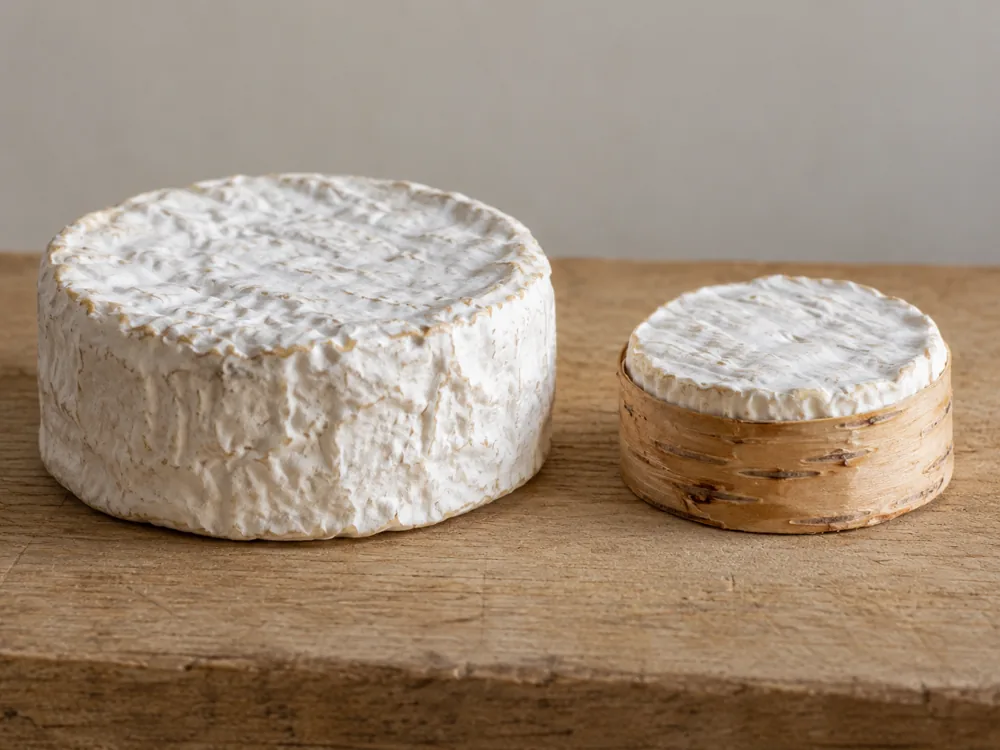
Harbison's page ties serving to how far the paste has softened. A younger wheel can have its bark peeled away for sliced portions, but if the bark has fused with a loosened paste, the maker says to leave it on and spoon portions from the top.
Only one note appears in both flavour profiles. Button mushroom is the aroma the info sheet gives for Moses Sleeper and a flavour in Harbison's profile.
Moses Sleeper has no band and is the wheel to cut into wedges for sharing, while Harbison suits a soft centre to spoon from.
What Can You Cook With Moses Sleeper?
Jasper Hill names baking en croûte, wrapped in pastry, as an elegant dessert, alongside a festive cheese board. Murray's names the same wrap, suggesting the wheel swaddled in puff pastry and baked in the oven.
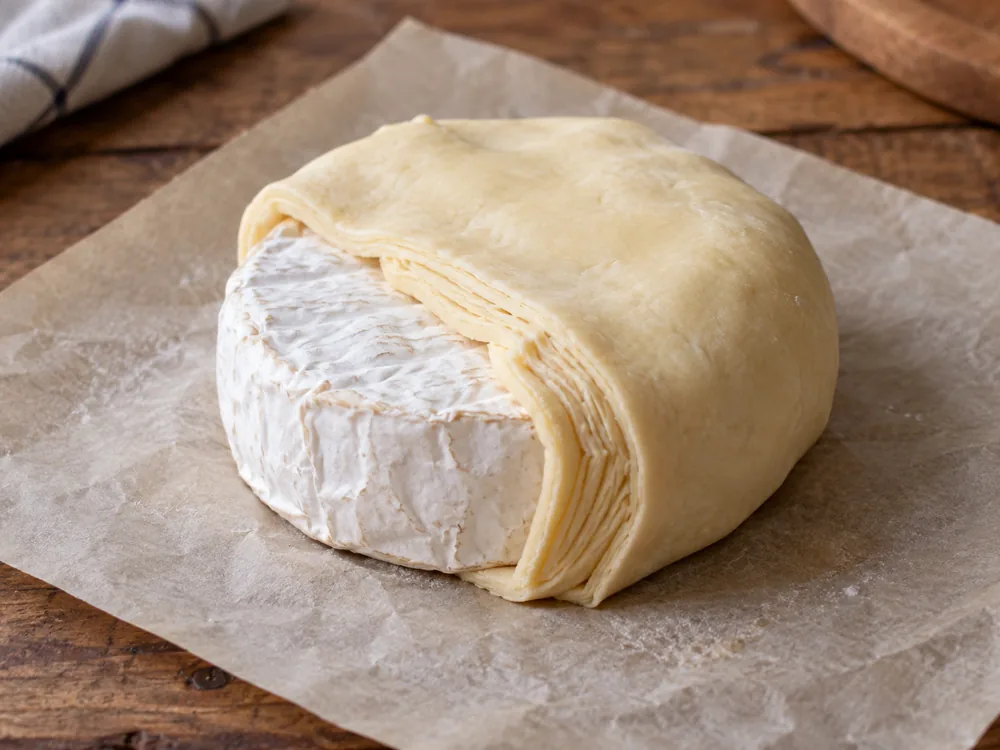
Cheese Scientist, writing about baked brie, says the rind works as a natural container that helps the cheese hold its shape, and that without it the cheese collapses into molten cheese. Jasper Hill's info sheet calls Moses Sleeper brie-style, but none of the sources gives a method for baking it without its pastry.
Murray's links the egg note it finds in the paste to pork, calling the cheese a good addition to a BLT or a breakfast sandwich.
Say Cheese Review says the cheese can be served chaud, meaning hot, en croûte or at room temperature, and names baked dishes such as mac and cheese and a mixed greens salad with fruit and a champagne vinaigrette.
None of these sources gives an oven time or temperature for the wheel, so the timing in a pastry recipe is the working guide. Heating also changes the pregnancy answer, which the pregnancy section below sets out.
What Goes With Moses Sleeper?
Three sources name specific partners, and they differ in detail.
| Source | Drinks | Food |
|---|---|---|
| Jasper Hill | Farmhouse saison, crisp whites | Country pâté, pickled carrots, crusty baguette, grainy bread, arugula |
| Murray's Cheese | Sparkling wine, crisp white wine | Rustic cracker, fig jam |
| Say Cheese Review | Chardonnay, Chenin Blanc, Sauternes, Zinfandel, Californian Pinot Noir, Calvados, Belgian tripel, Bohemian pilsner | Country baguette, stone fruit, apricot jam |
Say Cheese Review also lays out a cheese board for it with red grapes, country pâté, dried salami, dried figs, cornichon, rosemary crackers, toasted almonds and dried tomato slices.
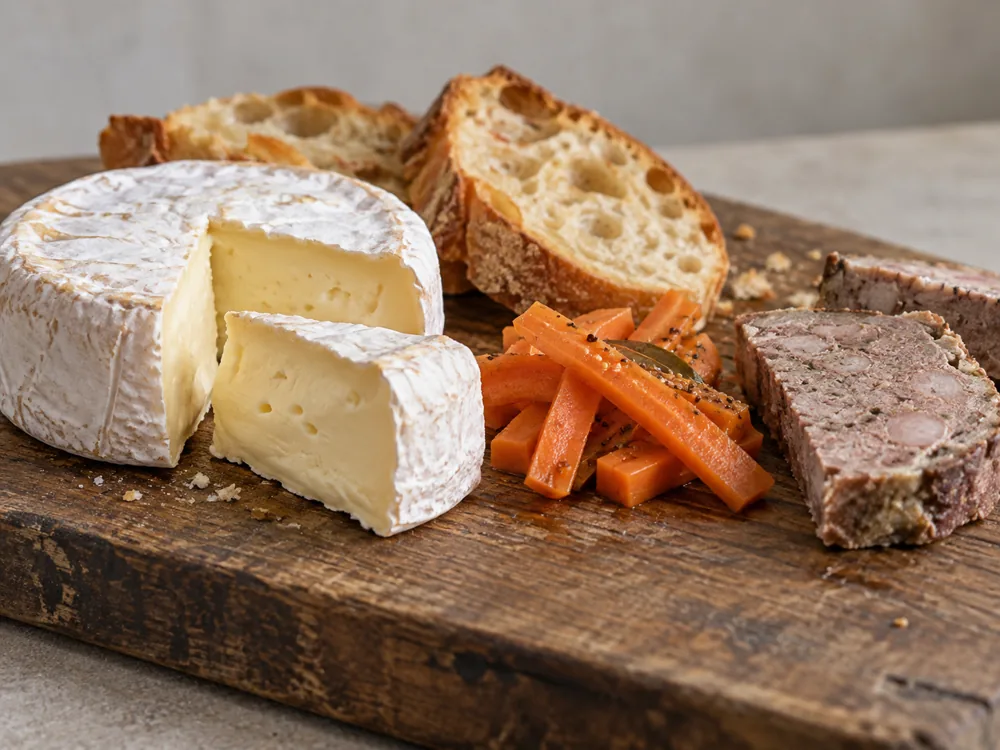
White wine is the one drink all three name, as Jasper Hill's crisp whites, Murray's sparkling or crisp white wine and the reviewer's Chardonnay and Chenin Blanc.
The foods share a second pattern, with crusty bread or a cracker in every list and fruit preserves from Murray's and the reviewer, but none of the three says why these suit the cheese.
Where to Buy Moses Sleeper
Jasper Hill sells Moses Sleeper through its own online shop, and its info sheet lists wholesale cases of four 1 lb wheels. Murray's Cheese lists it at $34.00 per pound, a price seen on the page on 1 October 2026, with quantities from half a pound to five pounds.
Murray's also lists the cheese's age as 3 to 4 weeks, against Jasper Hill's 6 to 12 weeks and its ripe point of 7 to 9. The page does not say what that figure measures, but if it describes the wheel that ships, the cheese arrives younger than the maker's ripe window.
Such a wheel would be 3 to 6 weeks short of the 7 to 9 week point, and none of the sources says whether it keeps ripening after it ships.
Is Moses Sleeper Safe During Pregnancy?
Moses Sleeper is a white-rind, mould-ripened soft cheese, and NHS guidance says pasteurised or unpasteurised mould-ripened soft cheeses with a white coating, such as brie, camembert and chèvre, must be thoroughly cooked. NHS does not name Moses Sleeper, so the answer comes from its style.
Jasper Hill's pasteurised milk therefore does not settle the question, because the NHS rule covers the style whether or not the milk was pasteurised.
The CDC does not address an unheated pasteurized white-rind cheese. Its riskier list names soft cheese made from unpasteurized milk, such as brie and camembert, and its safer list includes pasteurized soft cheeses heated to an internal temperature of 165°F or until steaming hot.
Eaten cold from a board, the wheel falls under the NHS cook-thoroughly rule, which only NHS states for this style, while a wheel baked until steaming hot all the way through meets both agencies' cooked condition. NHS also lists any cheese cooked until steaming hot as safe.
Who Was Moses Sleeper?
Jasper Hill says Moses Sleeper and Constant Bliss were Revolutionary War scouts killed while defending a blockhouse on the Northeast Kingdom's Bayley Hazen Military Road. That road runs through Greensboro, the town where the cheese is made.
The road was a Revolutionary War project. Wikipedia says its southern 54 miles were built between 1776 and 1779, with blockhouses at Peacham, Cabot, Walden and Greensboro, and that the Greensboro one stood on a site still called Block House Hill.
The road takes its name from Jacob Bayley and Moses Hazen, who pushed for it, and Hazen was the Continental Army colonel who restarted construction in 1779, so he is a different Moses from the scout.
Wikipedia says the blockhouses stayed manned after construction stopped and saw occasional skirmishes and scouting actions, and that the Greensboro one was attacked in 1781, when two scouts were killed.
Wikipedia does not name the two scouts, so tying them to Moses Sleeper and Constant Bliss rests on Jasper Hill's account. It adds that a memorial stone was put up near the site 160 years later.
The road was planned to run to Quebec, and Wikipedia says work was abandoned at Hazen's Notch.
Jasper Hill's Bayley Hazen Blue carries the road's own name.