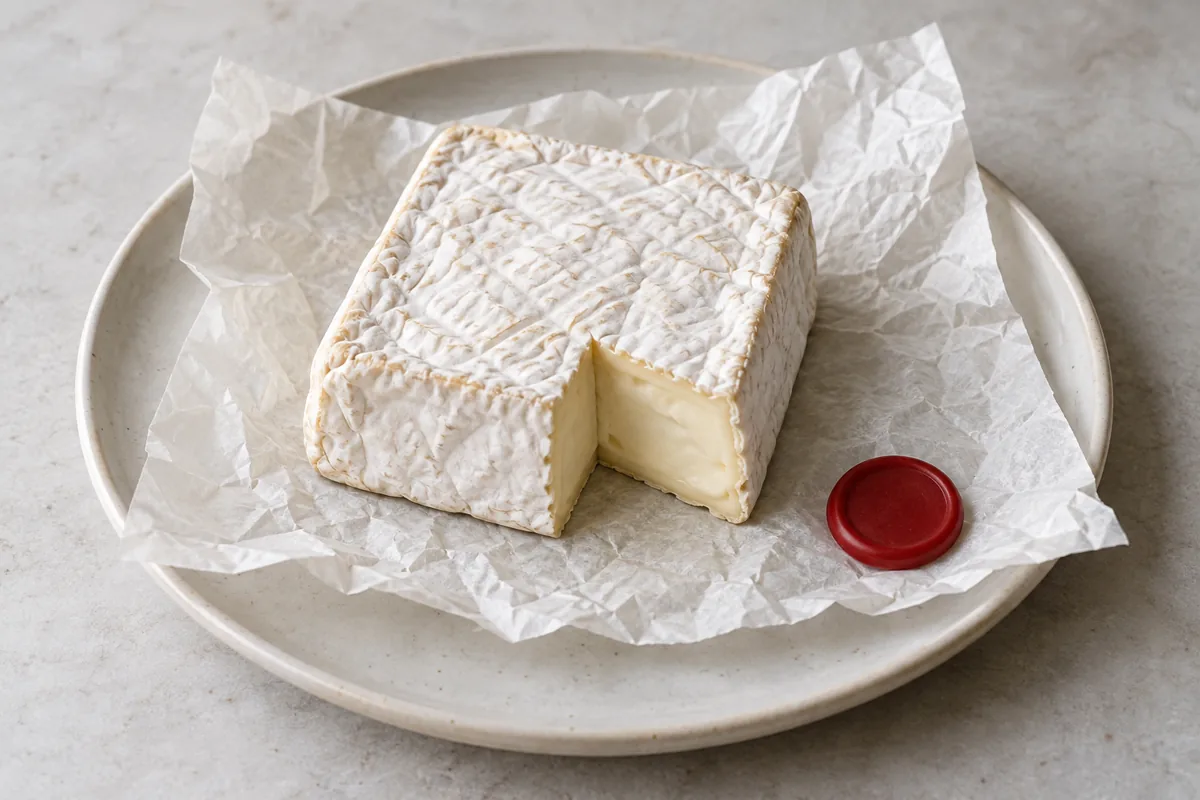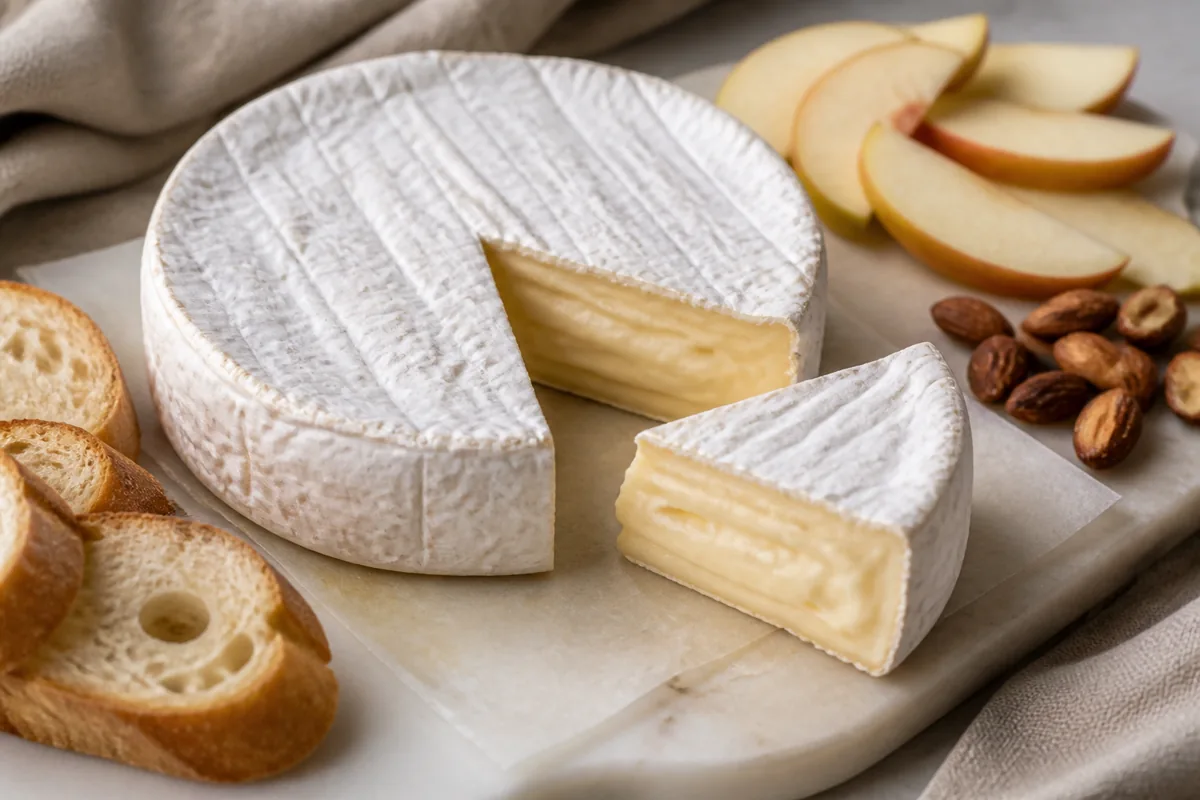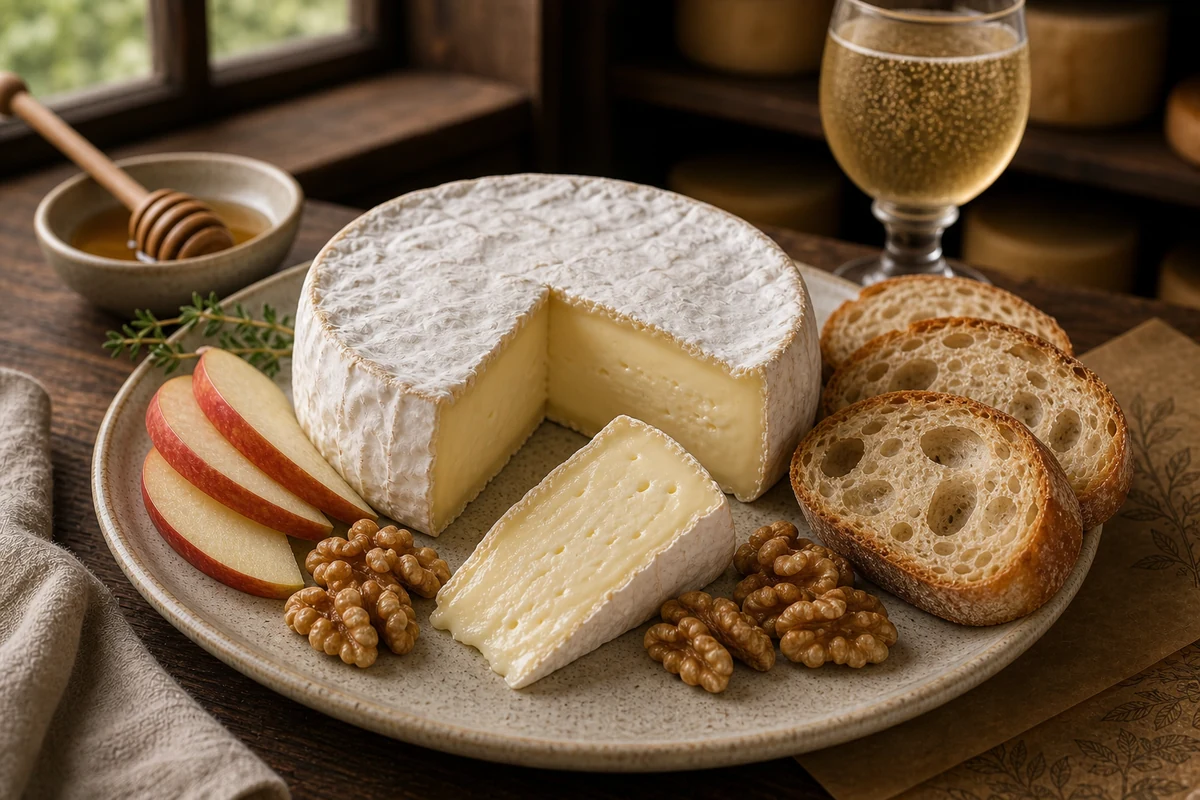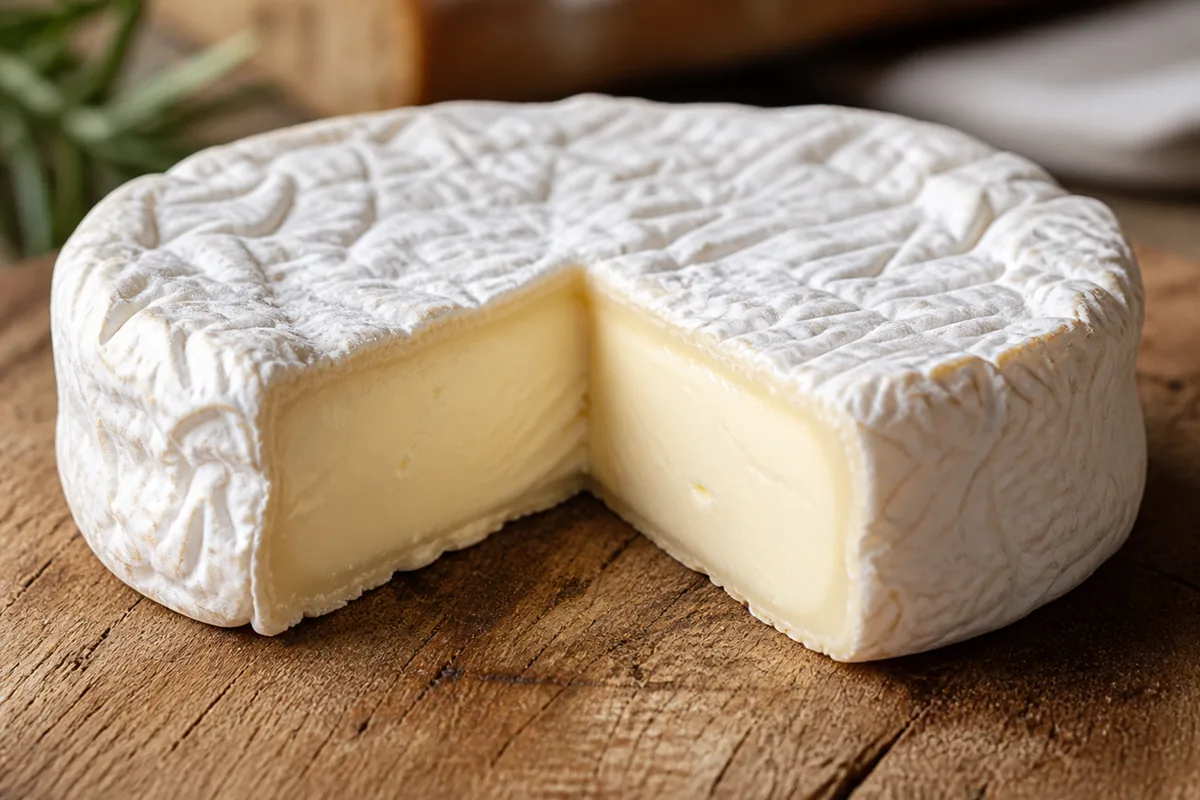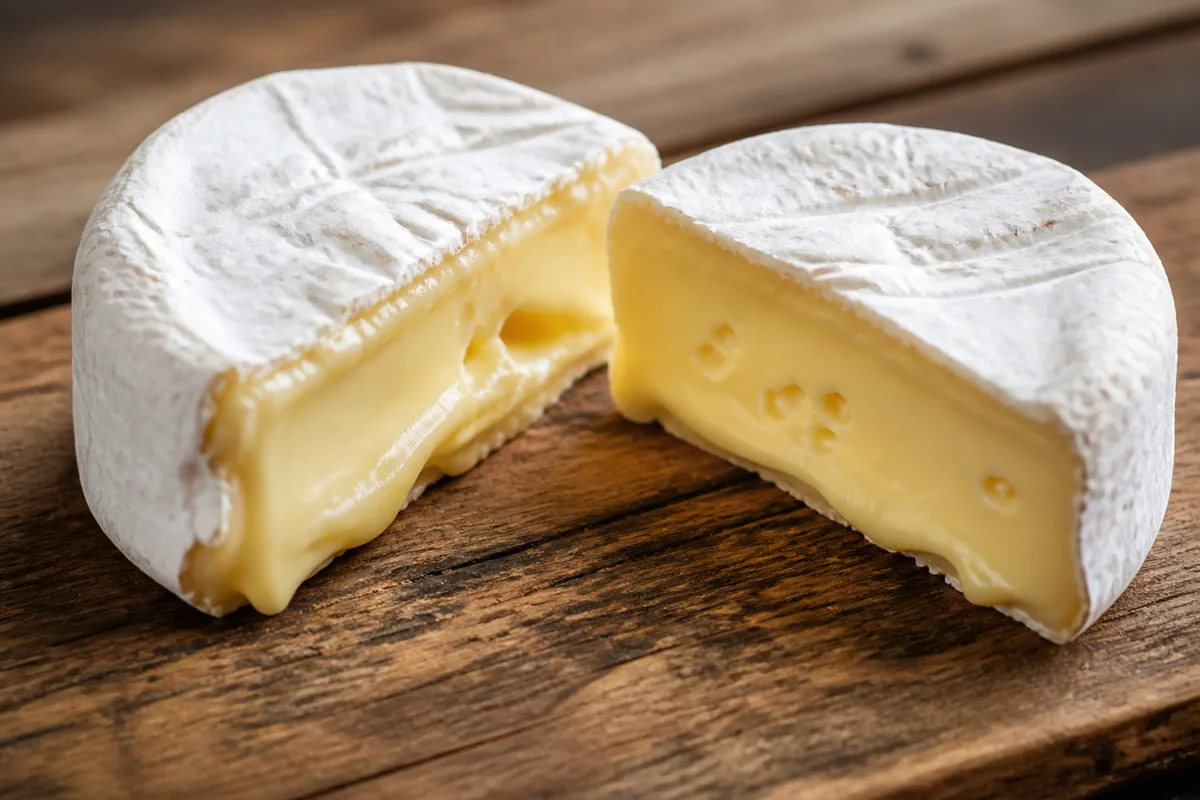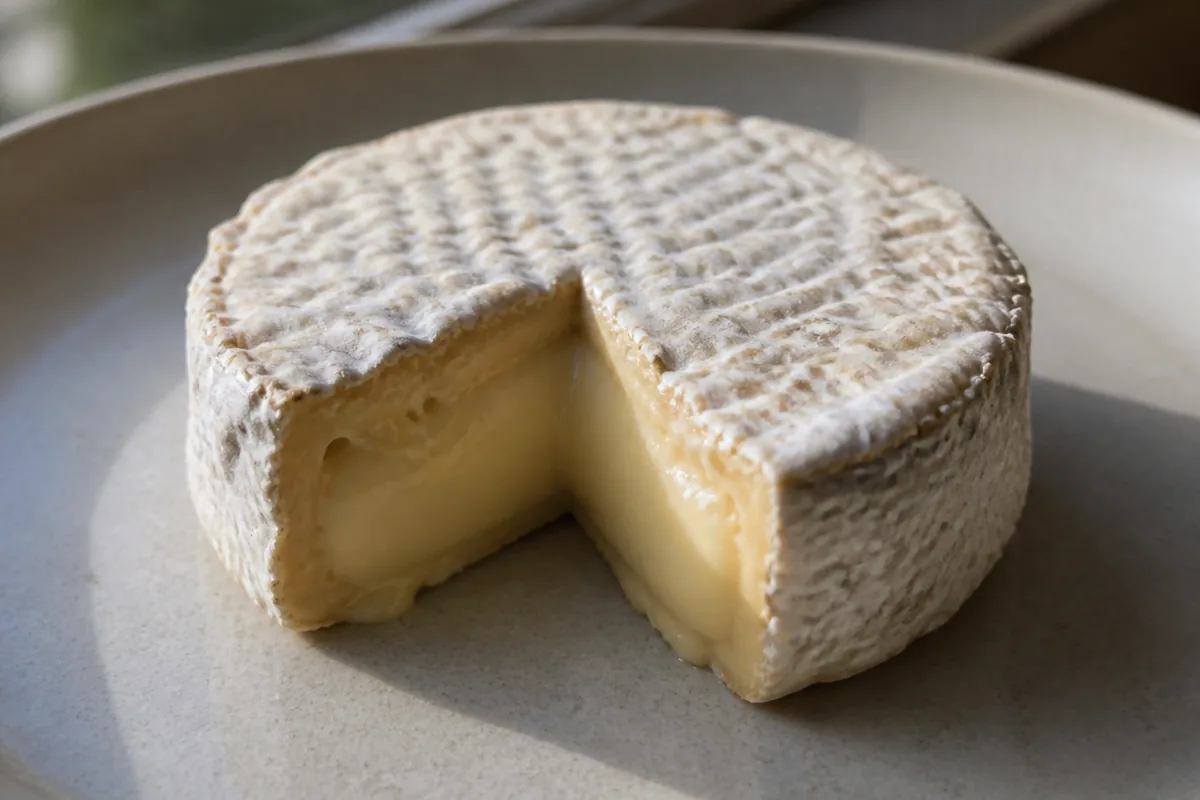
Tunworth is a Camembert-style soft cheese made by hand in Hampshire from pasteurised whole cow's milk, and it is sold as a round in a wooden box.
The quickest way to recognise it is the thin, wrinkly rind, which the Cheese Atlas sets against the thick flat white coat of most British soft cheeses.
In This Article
What Is Tunworth Cheese?
The Hampshire Cheese Company calls Tunworth its "very British Camembert", a soft, white-rinded cheese reminiscent of its French cousin.
The company says it is made entirely by hand, from the first ladle of pasteurised whole cow's milk to the poplar box packaging, and that the finished cheese weighs 250g.
Its milk is collected from a farm every morning just after milking, and the cheesemaking that follows uses traditional methods similar to those used in Normandy, according to the maker.
The maker also attributes part of what makes Tunworth different from the French original to the lush grazing of rural Hampshire.
Ripening takes seven to eight weeks, which the maker says encourages the moulds and yeasts on the surface and gives complex, long-lasting flavours.
Tunworth is not a vegetarian cheese. Paxton & Whitfield's listing says traditional rennet and answers "Vegetarian Rennet: No", and its ingredient line reads cow's milk, salt, rennet and dairy cultures.
Why Was Tunworth Made as an English Camembert?
Stacey Hedges, a cheesemonger from Sydney, Australia, moved to the UK in 2004 and decided to make cheese, according to the Cheese Atlas.
After meeting industry experts from around the country, she settled on a Camembert-style cheese that could rival its French counterparts.
The operation grew from her kitchen into a fully equipped creamery, where Charlotte Spruce, a Hampshire-born food lover, joined to establish Hampshire Cheeses.
Recognition followed. Paxton & Whitfield says Tunworth has twice won Supreme Champion at the British Cheese Awards.
Its listing adds Best Soft Cheese at the Great British Cheese Awards in 2017 and 2018 and two gold medals at the 2018 World Cheese Awards, and the retailer's own account is that Tunworth has won dozens of awards in all.
Why Is Tunworth's Rind Wrinkled, and Can You Eat It?
The Cheese Atlas says the rind is developed with the mould Geotrichum candidum, which it credits with a signature earthiness. It sets the thin wrinkly result against the thick flat white coat typical of most British soft cheeses.
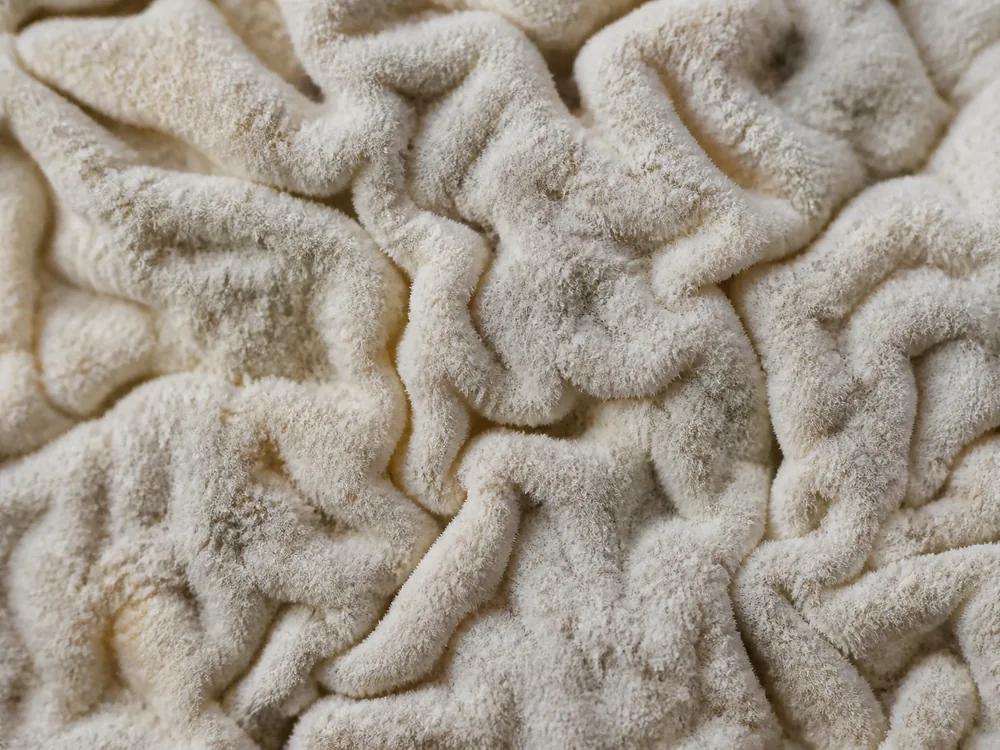
Sellers treat the rind as part of the cheese. Paxton & Whitfield describes it as "bloomy and thin with a very subtle bite" and says a round cheese should be cut like a cake "so that each piece has an equal proportion of rind".
The maker's own description of the finished cheese lists the wrinkled rind alongside its fragrance and flavour, and none of the maker, Paxton & Whitfield or the Atlas suggests cutting the rind off.
What Does Tunworth Taste Like?
Three sources describe the cheese in different words, and the table puts their aroma, flavour and paste descriptions side by side.
| Source | Aroma | Flavour | Paste |
|---|---|---|---|
| Cheese Atlas | A distinct cabbage aroma | Milky, nutty and vegetal, with subtle hints of garlic and salami | Straw-coloured, rich and oozy |
| Paxton & Whitfield | Mushroomy, sometimes cabbagey | Vegetal with almost truffly notes, sometimes a hint of roasted nuts | Dense and fatty, oozing without running away on the board |
| Hampshire Cheese Company | Rich, earthy mushroom fragrance | Long-lasting, sweet and nutty | Soft, with a thin wrinkled rind |
Nutty appears in all three descriptions, vegetal and mushroom in two each, and the truffly note and the sweetness each come from a single source. Garlic turns up twice: in the Atlas flavour notes, and in Paxton & Whitfield's cider pairing line, which calls the aroma garlicky.
The paste descriptions line up better than the flavour ones. All three say soft, and Paxton & Whitfield adds that the dense, fatty paste holds on a board instead of running.
A buyer who dislikes cabbage has a reason to read the aroma column closely: the Atlas and Paxton & Whitfield both mention it, while the maker describes the fragrance as mushroom and earth and leaves cabbage out.
The maker's description is also the only one to call the flavour sweet. The Atlas and Paxton & Whitfield lean savoury instead, with garlic and salami in the Atlas flavour notes and a truffly note in Paxton & Whitfield's.
How Do You Know When Tunworth Is Ripe?
The maker's test is physical: Tunworth is ripe when the centre yields to gentle thumb pressure, and it then only needs unwrapping and placing on a board.
Paxton & Whitfield adds smell as a second cue, saying the cheese is best with a strong aroma and no hint of ammonia, and that it should give to the touch without being squishy.
The two tests differ in where they look. The maker presses the centre, and Paxton & Whitfield asks only that the cheese give to the touch, so a cheese that is soft at the edge and still firm in the middle passes the second test more easily than the first.
Neither gives a number of days after which a ripe Tunworth has passed its best. The maker says only that its cheeses will not last forever and should be eaten quickly while they are still delicious.
Paxton & Whitfield's general storage guidance treats the Use By or Best Before date on the packaging as the shelf-life guide for individual cheeses. The date marks the outer limit, and the thumb test picks the moment inside it.
How Should You Store and Serve Tunworth?
The maker's instruction is to leave Tunworth in its original packaging until it is time to eat it.
Paxton & Whitfield gives the reasoning for paper over plastic: waxed paper lets a cheese breathe without drying out quickly, while cling film left on for long lets moisture build up and encourages mould on the surface.
CDC sets two limits around that advice: keep the refrigerator at 40°F or below, and never leave perishable food out for more than 2 hours, or 1 hour above 90°F.
The maker's hour out of the fridge before serving fits inside CDC's 2-hour limit. Counting that hour against the limit, which is our arithmetic and not CDC's, leaves about an hour on the board before the cheese goes back.
Paxton & Whitfield's general advice is that cheese keeps best whole and that small cut surfaces dry out quickly, so it recommends cutting as small a surface as possible and finishing small pieces soon.
How Do You Bake Tunworth?
Baking Tunworth in its own box is the use sellers describe. The Cheese Atlas says to bake it gently and let it ooze, and Paxton & Whitfield says the poplar boxes can be used for baking and that baked Tunworth is a staple at many gastronomic establishments.
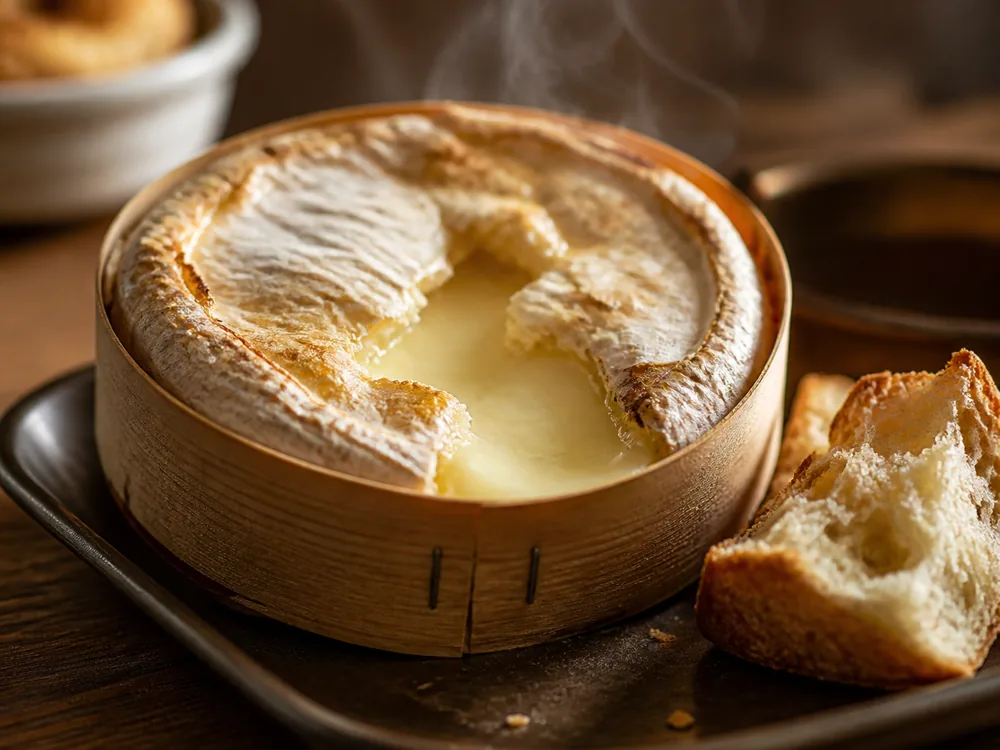
The one complete method on offer is a Paxton & Whitfield recipe that serves two as a starter, which makes one 250g cheese a starter for a pair rather than a dish for a table.
The Atlas mentions no additions at all, so the studding with garlic, olives and tomatoes is the recipe's own choice. The recipe's ingredient list names thyme, while its method step says rosemary.
Paxton & Whitfield treats the box as the baking dish: the cheese goes back into it before it goes on the tray, so the box is the only container the cheese sits in while it softens.
What Goes With Tunworth?
Pairing advice comes from the Cheese Atlas and Paxton & Whitfield, and the two name different wines: the Atlas names Bordeaux or Beaujolais, while Paxton & Whitfield names Chardonnay.
| Pairing | Type | Why It Works |
|---|---|---|
| Warm crusty bread or lavosh | Food | The Cheese Atlas serves baked Tunworth with them. |
| Summer berries | Food | The Cheese Atlas serves them alongside the baked cheese. |
| Crudites and focaccia | Food | Paxton and Whitfield's baked recipe serves radishes, carrots, yellow peppers and beetroot with focaccia or any crusty bread. |
| Spiced plum chutney and buttermilk biscuits | Food | Paxton and Whitfield suggests its own spiced plum chutney, particularly at Christmas, and Cornish buttermilk biscuits. |
| Farmhouse cider | Drink | Paxton and Whitfield pairs its slightly funky, sweet, appley flavours with Tunworth's strong garlicky aromas. |
| Bordeaux or Beaujolais | Wine | The Cheese Atlas suggests either to wash it down. |
| Chardonnay | Wine | Paxton and Whitfield lists it as the recommended drink. |
| Stilton and a clothbound Cheddar | Food | The Cheese Atlas pairs Tunworth with them for a Christmas cheese platter. |
Only the cider pairing comes with a reason, the sweet appley fruit set against a garlicky aroma. The other suggestions are named without explanation.
Tunworth or Camembert: Which Should You Buy?
Paxton & Whitfield calls Tunworth most comparable to Camembert de Normandie, very similar in size, shape and packaging, and says it has "transcended the comparison" on flavour and aroma.
| Point | Tunworth | Camembert (Wikipedia's description) |
|---|---|---|
| Milk | Pasteurised whole cow's milk (Hampshire Cheese Company) | The AOC Camembert de Normandie must be raw milk from Normandes cows; many makers outside Normandy use pasteurised milk |
| Rind | Thin and wrinkled, developed with Geotrichum candidum (Cheese Atlas) | Surface sprayed with Penicillium camemberti |
| Ripening | Seven to eight weeks (Hampshire Cheese Company) | A legally required minimum of three weeks |
| Size | 250g (Hampshire Cheese Company) | 10.2 cm across and 3.2 cm thick, generally 250g |
The milk row has the most consequences. Wikipedia says the AOC variety is only about 10% of Camembert production and is the one required by law to use raw milk, so a Camembert on a supermarket shelf is often a pasteurised cheese like Tunworth.
The rind and ripening rows show where the recipes differ: a different surface mould, and a ripening period of seven to eight weeks at the Hampshire dairy against a legal minimum of three weeks for Camembert.
For baking, Paxton & Whitfield's own recipe says Camembert de Normandie or Bath Soft could be used in place of Tunworth, so a baked cheese does not depend on this one cheese.
Wikipedia's Camembert entry does not give the rennet type, so a vegetarian choosing a Camembert instead has to check that cheese's own label.
Can You Eat Tunworth When Pregnant?
The NHS says pasteurised or unpasteurised mould-ripened soft cheeses with a white coating on the outside, such as brie, camembert and chèvre, must be thoroughly cooked in pregnancy.
The NHS does not name Tunworth; the maker calls it a soft, white-rinded Camembert-style cheese, so we read it as this type and treat an unbaked wedge as falling under that rule. Because the NHS wording covers pasteurised and unpasteurised cheeses alike, pasteurisation does not exempt it.
The NHS lists any cheese cooked until steaming hot, soft cheese included, as safe to eat, and CDC puts pasteurised soft cheese heated to an internal temperature of 165°F or until steaming hot among the safer choices.
CDC also notes that pregnant women are 10 times more likely to get a Listeria infection.
A baked Tunworth counts only if it is steaming hot through the middle. Paxton & Whitfield's recipe gives 15 minutes at 190°C but no internal temperature, so a probe reading of 165°F in the centre is the check that matches CDC's figure.
Where Can You Buy Tunworth, and What Does It Cost?
The maker's Tunworth page points buyers to a stockist finder and an online shop, and Paxton & Whitfield sells the 250g cheese at £12.99.
Paxton & Whitfield aims to give a minimum of 7 days from the date an order is despatched, and each cheese carries its own Best Before or Use By date.
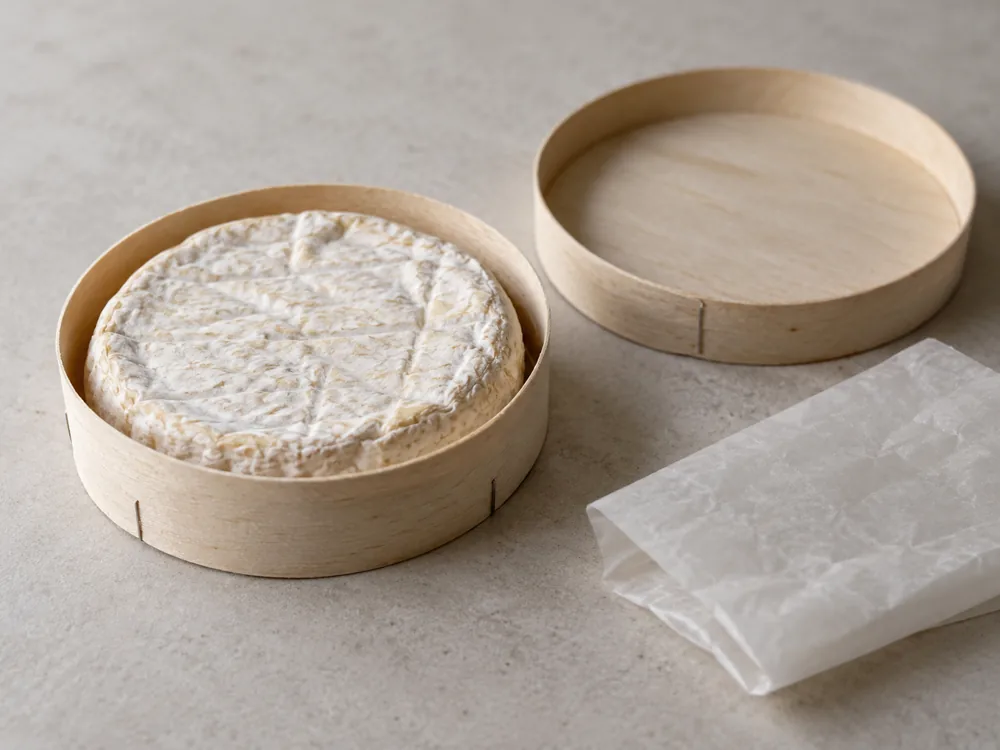
On a shelf, the cues the sources give are the 250g round, the wooden box and the waxed paper.
A Tunworth worth buying is pasteurised and made with traditional, non-vegetarian rennet, comes as a 250g round in its wooden box, and has enough date left to ripen to the thumb test.