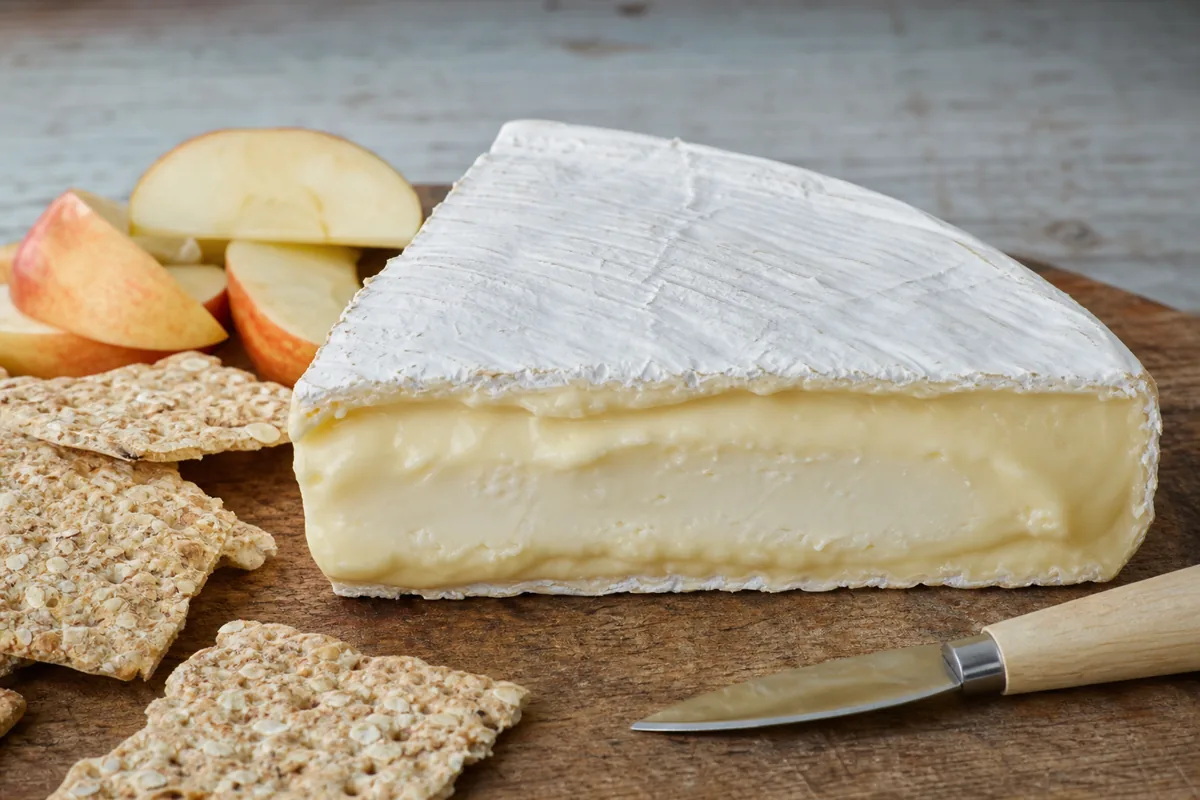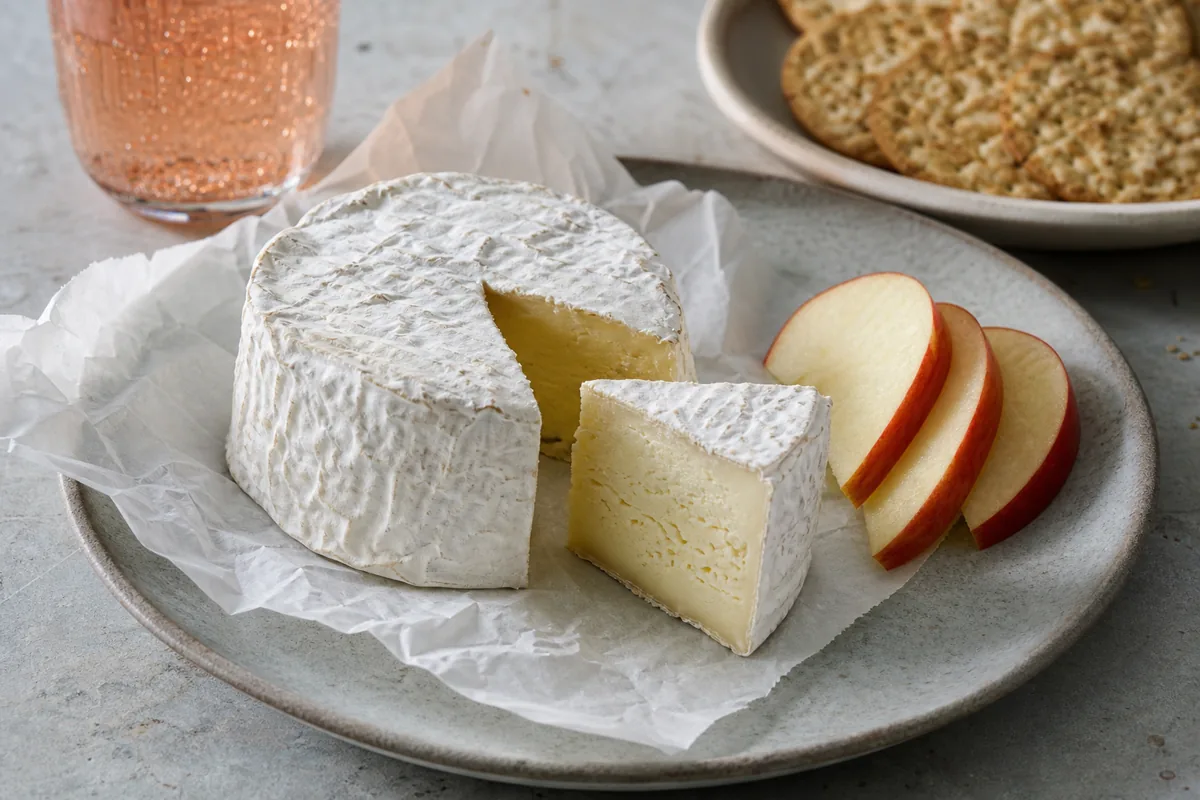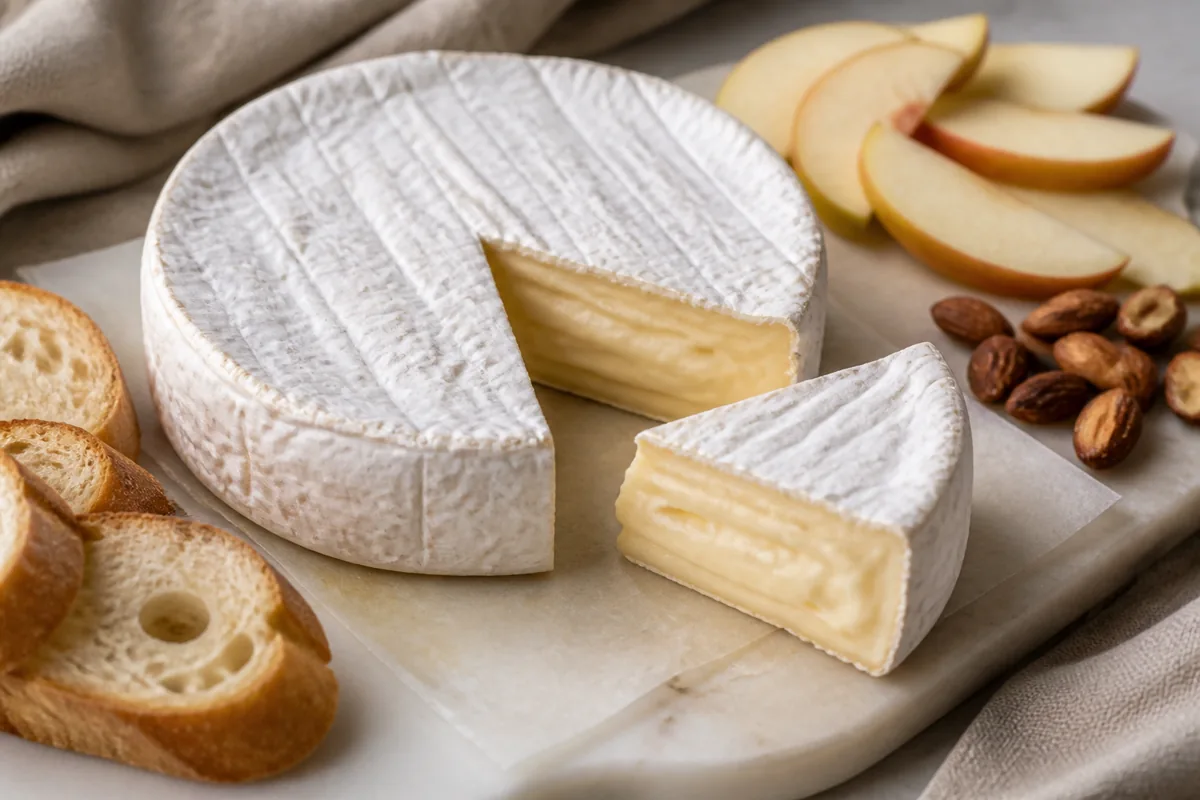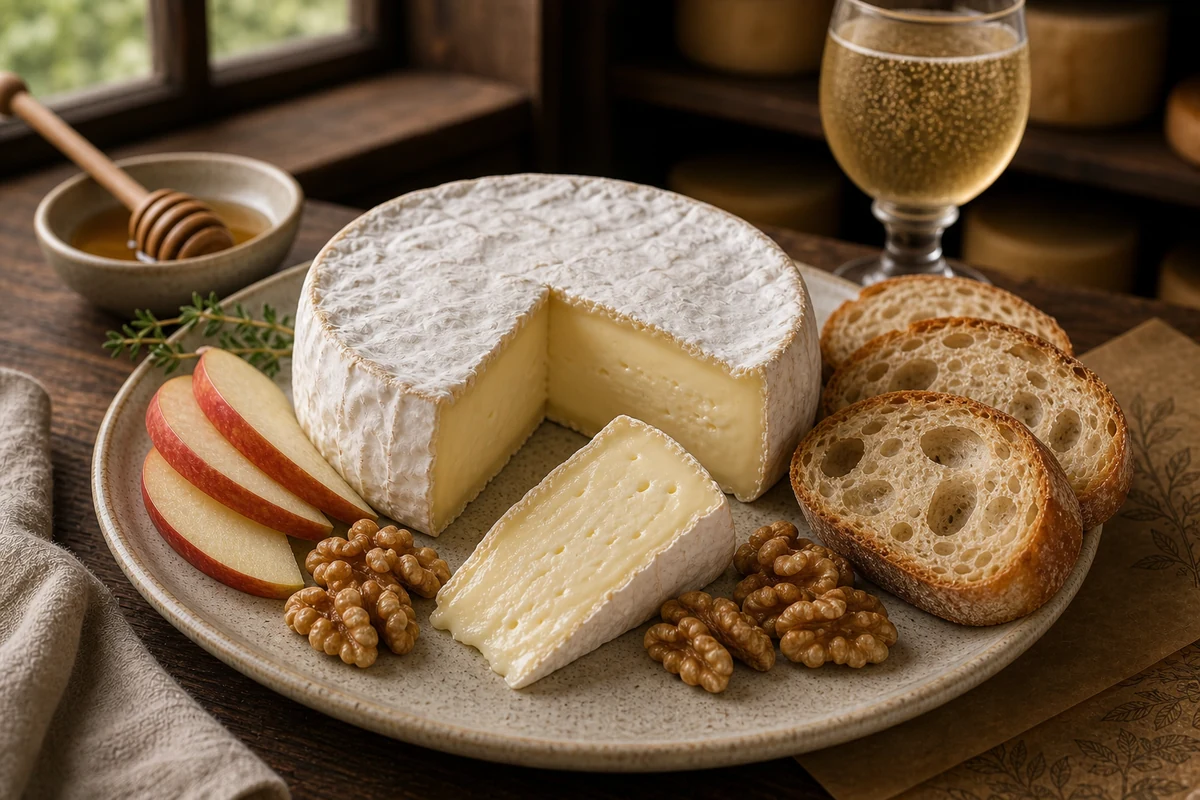
Bath Soft is a square, pasteurised cow's milk cheese with a white bloomy rind, made by The Bath Soft Cheese Co. at Park Farm in Kelston, near Bath.
It contains traditional rennet, so it is not vegetarian.
In This Article
What Is Bath Soft Cheese Made From?
Bath Soft is made from the milk of the farm's own herd, which Park Farm heats and holds at 63°C for 30 minutes to pasteurise it.
It is a bloomy-rind cheese in the Brie family, aged 5 to 8 weeks.
Park Farm makes Bath Soft and Bath Blue with traditional rennet, so neither is vegetarian, while its Wyfe of Bath, Merry Wyfe, mozzarella and Kelston Park are. If you need a vegetarian cheese from Park Farm, look at those four instead.
| Question | Answer | Given by |
|---|---|---|
| What are the ingredients? | Cows' milk (98.35%), sea salt (1.5%), rennet, mould culture | Fine Cheese Co.; The Farm Shop lists cows' milk, salt, rennet and mould culture |
| Which rennet? | Traditional rennet | Park Farm FAQ |
| Is it vegetarian? | No | Park Farm FAQ; The Farm Shop (not suitable for vegetarians); The Cheese Geek |
Pong Cheese calls Bath Soft entirely organic and says the company is registered with Organic Farmers and Growers, and The Cheese Shop Nantwich and a 2013 Fromage Homage post also call it organic. If certification matters to you, look for it on the label of the square you buy.
Per 100 g, Bath Soft has 1,340 kJ (320 kcal) and 28 g fat, of which 18.5 g is saturates, with 18.5 g protein, under 0.1 g carbohydrate and 0.8 g salt. A whole 250 g square therefore holds about 800 kcal and 70 g of fat.
That 0.8 g of salt is per 100 g of cheese, while the 1.5% sea salt in the ingredient list is a share of the ingredients.
How Do the Square Shape and Red Wax Seal Identify Bath Soft?
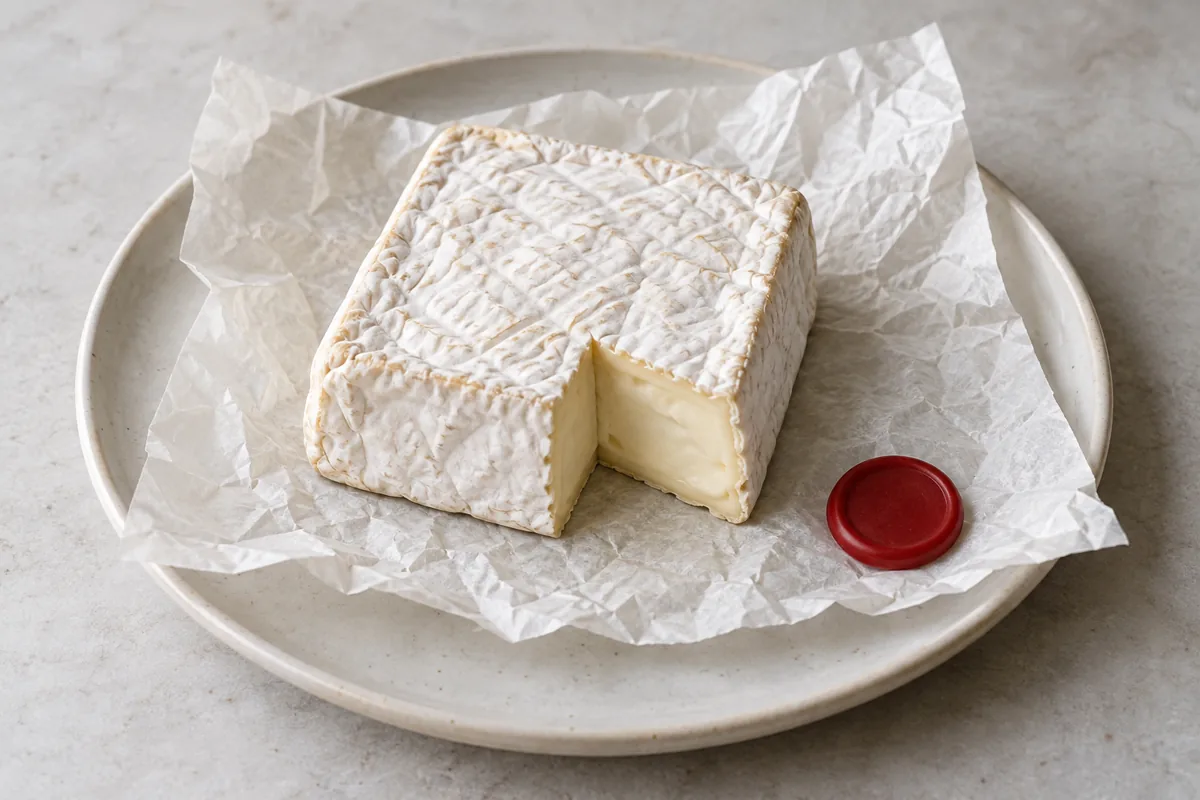
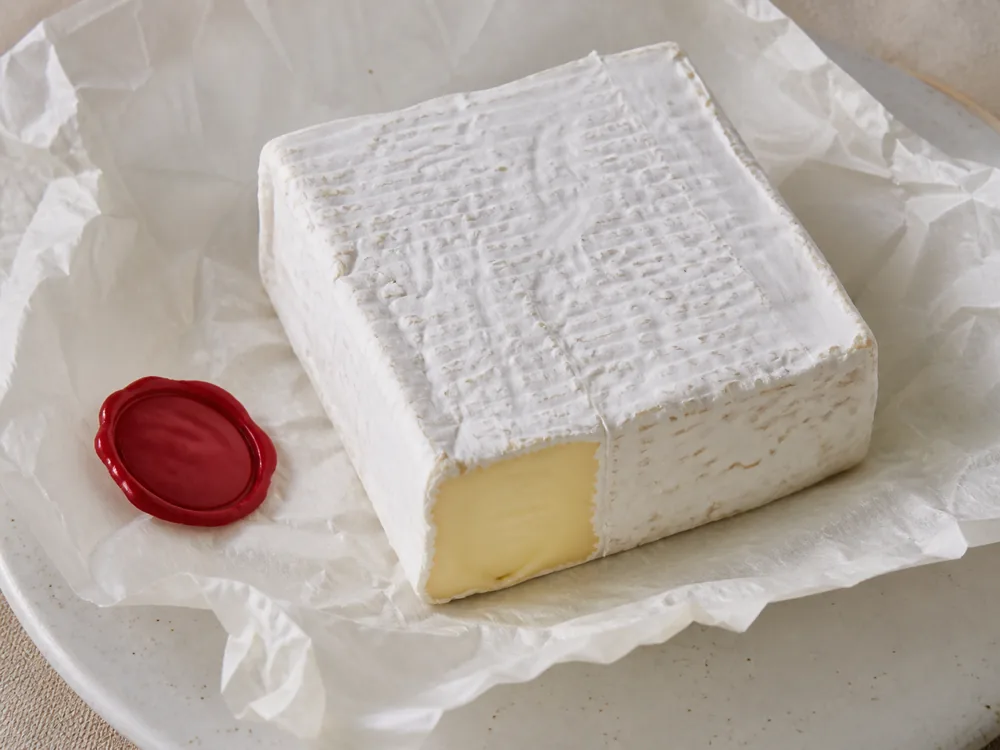
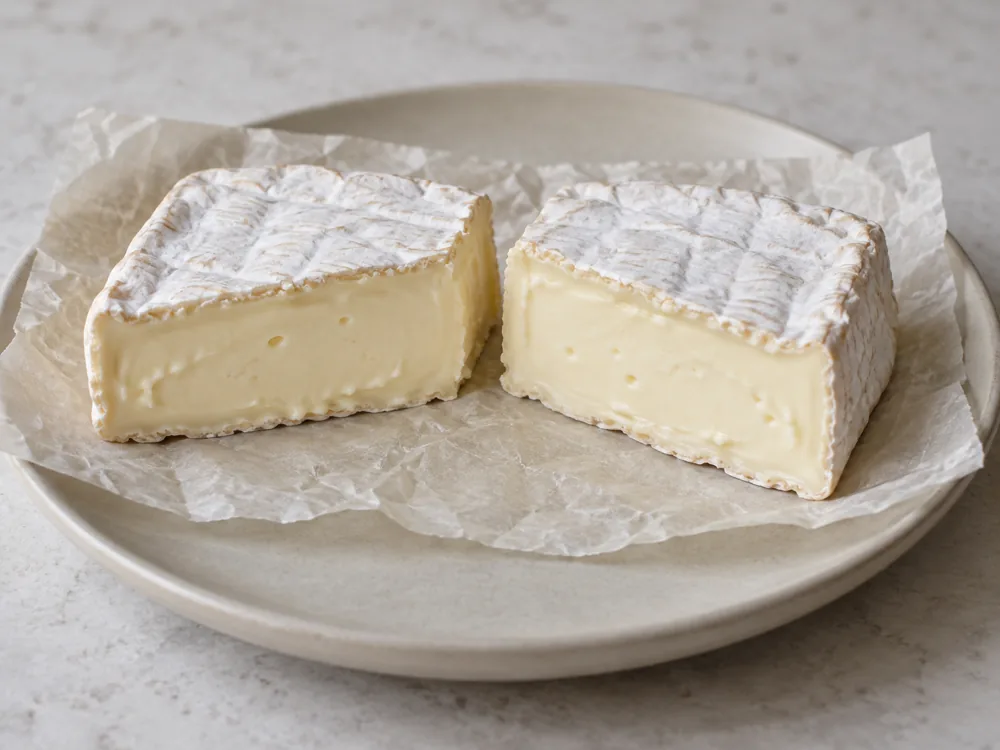
Bath Soft is a four inch square weighing approximately 250 grams, and its white bloomy rind reveals an ivory interior when cut.
It comes wrapped in parchment with a red wax seal, so the red belongs to the wrapping and the rind under it is white.
Prices for the square run from £8.95 to £11.60, and Park Farm's own price of £9.50 sits near the bottom of that range. The Cheese Shop Nantwich lists the square at about 260 g.
| Seller | Weight | Price |
|---|---|---|
| Park Farm | About 250 g | £9.50 |
| Fluffetts Farm | About 250 g | £8.95 |
| The Cheese Geek | 250 g | £11.50 |
| Fine Cheese Co. | 250 g | £11.60 |
| The Cheese Shop Nantwich | About 260 g | Not stated |
What Does Bath Soft Taste Like?
Descriptions of Bath Soft agree on creamy, and Park Farm, Cheese.com, The Cheese Geek and Fromage Homage add mushroom with lemon or citrus.
| Question | Words used | Given by |
|---|---|---|
| What is the texture like? | Soft and yielding; luxuriously creamy; creamy; soft, creamy and buttery; creamy and gooey when cut, spreading on bread like butter when ripe | In that order: Park Farm product page and Fine Cheese Co.; Park Farm cheese page; Cheese.com; The Cheese Geek; Fromage Homage, 2013 |
| What is the flavour like? | Mushroomy and creamy with a hint of lemons; rich buttery flavour with gentle earthy notes; citrusy, lemony and mushroomy; mild and creamy Brie-style; mushroomy, lemony and grassy | In that order: Park Farm product page; Park Farm cheese page; Cheese.com; Fine Cheese Co.; Fromage Homage, 2013 |
| Do the centre and rind differ? | A very mild centre; a rind with earthy mushroom notes and a little citrus | The Cheese Geek |
| How strong is it? | Medium; mild | The Cheese Geek; Fine Cheese Co. |
| What does it smell like? | Aromatic and grassy | Cheese.com |
The Cheese Geek describes a very mild centre under a rind with earthy mushroom notes and a little citrus, so eat the two together if you want the full taste it describes.
On strength the two shops differ: The Cheese Geek rates Bath Soft medium, and Fine Cheese Co. calls it mild.
Is Bath Soft Safe During Pregnancy?
Bath Soft is a soft cheese with a white bloomy rind, made with a mould culture, and the NHS says pasteurised or unpasteurised mould-ripened soft cheeses with a white coating on the outside, such as brie, camembert and chèvre, must be thoroughly cooked.
Park Farm's pasteurised milk does not change that, because the NHS line covers pasteurised and unpasteurised cheese alike.
The CDC lists soft cheese made from unpasteurized (raw) milk, with brie and camembert among its examples, as a riskier choice. It lists pasteurized soft cheeses heated to an internal temperature of 165°F or until steaming hot as a safer one.
Eaten cold, pasteurized Bath Soft is on neither CDC list, so ask your midwife or doctor before eating it uncooked.
Baked until steaming hot, it meets the CDC's safer line for heated soft cheese, and the NHS lists any cheese that's been cooked until steaming hot as safe to eat, soft cheese included.
Park Farm's FAQ says pasteurising kills harmful bacteria such as Listeria and reduces the risk of illness. Its own pregnancy answer quotes the NHS advice on cheese during pregnancy for hard cheeses and for pasteurised cottage cheese, mozzarella, feta and goat's cheese without a white coating.
Bath Soft is neither a hard cheese nor one without a white coating, so the white-coating line above is the NHS line that fits it.
How Long Does Bath Soft Keep, and What Goes with It?
Fine Cheese Co. says to keep Bath Soft refrigerated below 8°C and, once it is opened, to eat it within 5 days.
Park Farm tells buyers to eat its cheeses before the use-by date on the wrapper, and ships them with at least 7 days of shelf life from the date of despatch.
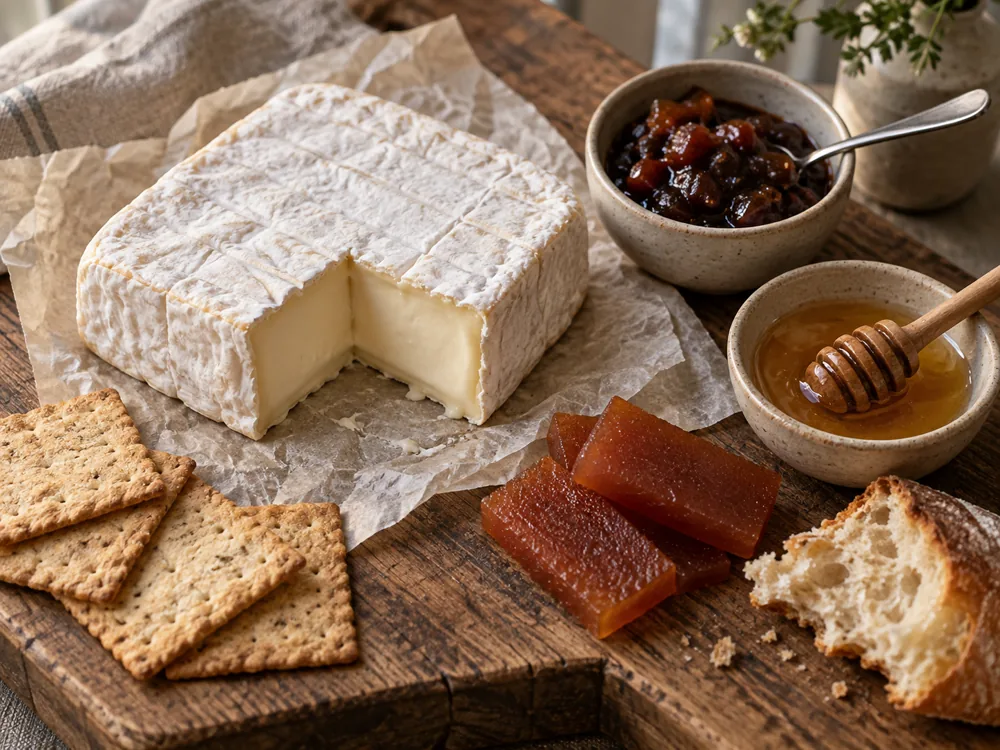
The Cheese Shop Nantwich says to take Bath Soft out of the fridge about one hour before serving. The Farm Shop calls it perfect on a cheeseboard or baked and served with crusty bread.
Park Farm pairs its cheeses in general with chutneys, honey, quince, bread, crackers, wine, beers and cider.
| Pairing | Type | Why It Works |
|---|---|---|
| Chutneys, honey and quince | Food | Park Farm's FAQ lists all three for its cheeses in general. |
| Bread and crackers | Food | Park Farm lists both, and The Farm Shop serves Bath Soft baked with crusty bread. |
| Wine, beers and cider | Drink | Park Farm lists all three for its cheeses. |
Where Does the Bath Soft Recipe Come From?
Graham Padfield relaunched Bath Soft Cheese around 1993, reviving a recipe that Park Farm calls 18th-century and says Admiral Lord Nelson once enjoyed.
He found the recipe in an old grocer's recipe book, which called for full-cream milk, salt sprinkled on the young cheeses with a feather, and a soft finished cheese cloaked in a delicate white mould.
Park Farm rests the Nelson link on an 1801 letter from Nelson's father. It says Sir William and Lady Hamilton had seemed gratified by the flavour of a cream cheese, and that he was sending two or three cheeses of Bath manufacture.
Other accounts give later dates: Fine Cheese Co. calls it an original 19th century recipe, The Farm Shop says the cheese was originally made in the early 19th century, and a 2013 Fromage Homage post gives 1908, for a recipe found in a Bath library.
SOURCES & REFERENCES
What Else Do People Ask About Bath Soft Cheese?
Bath Soft is a pasteurised cow's milk cheese with a white bloomy rind, sold as a four inch square of about 250 g by The Bath Soft Cheese Co. at Park Farm, near Bath.
Pong Cheese says it is entirely organic and that the company is registered with Organic Farmers and Growers, and The Cheese Shop Nantwich and Fromage Homage also call it organic. Check the label if certification matters to you.
No. Park Farm makes it with traditional rennet, so it is not vegetarian.
Yes. Park Farm pasteurises its milk by heating and holding it at 63°C for 30 minutes.
It is pasteurised, but the NHS says pasteurised or unpasteurised mould-ripened soft cheeses with a white coating on the outside must be thoroughly cooked. Eaten cold, Bath Soft is on neither CDC list, so ask your midwife or doctor.