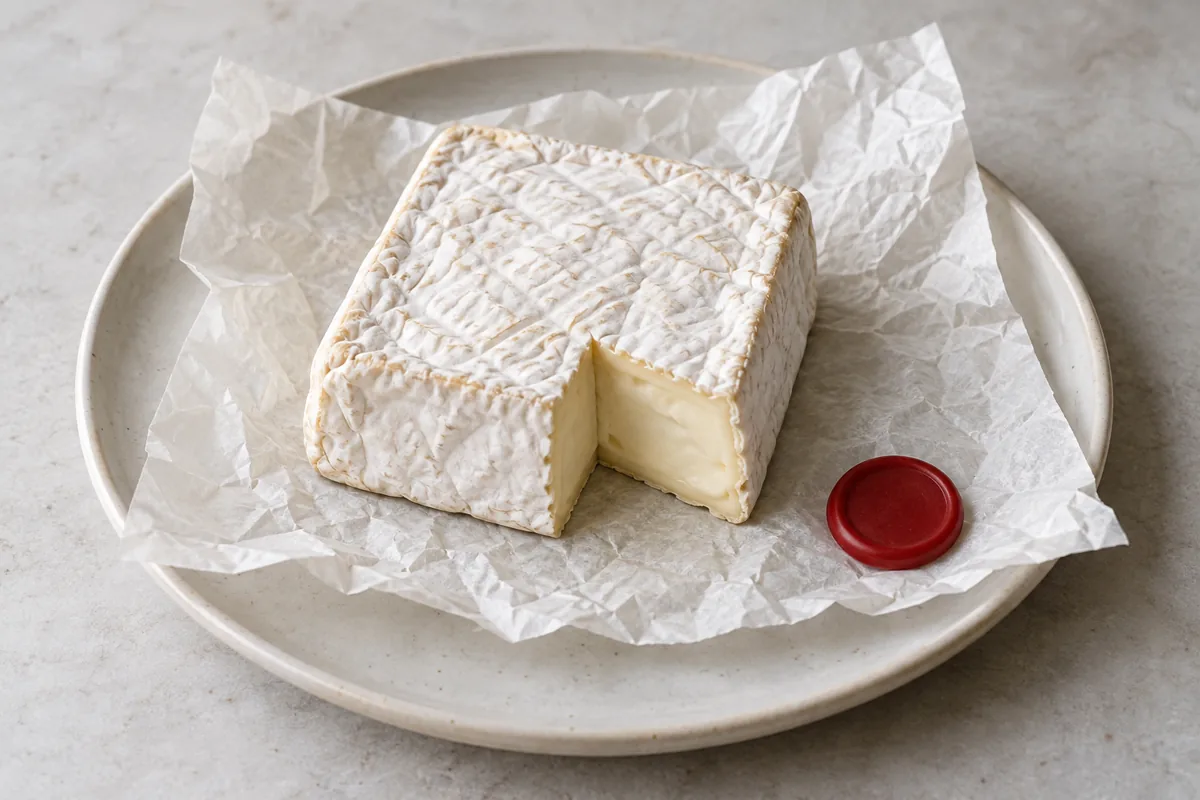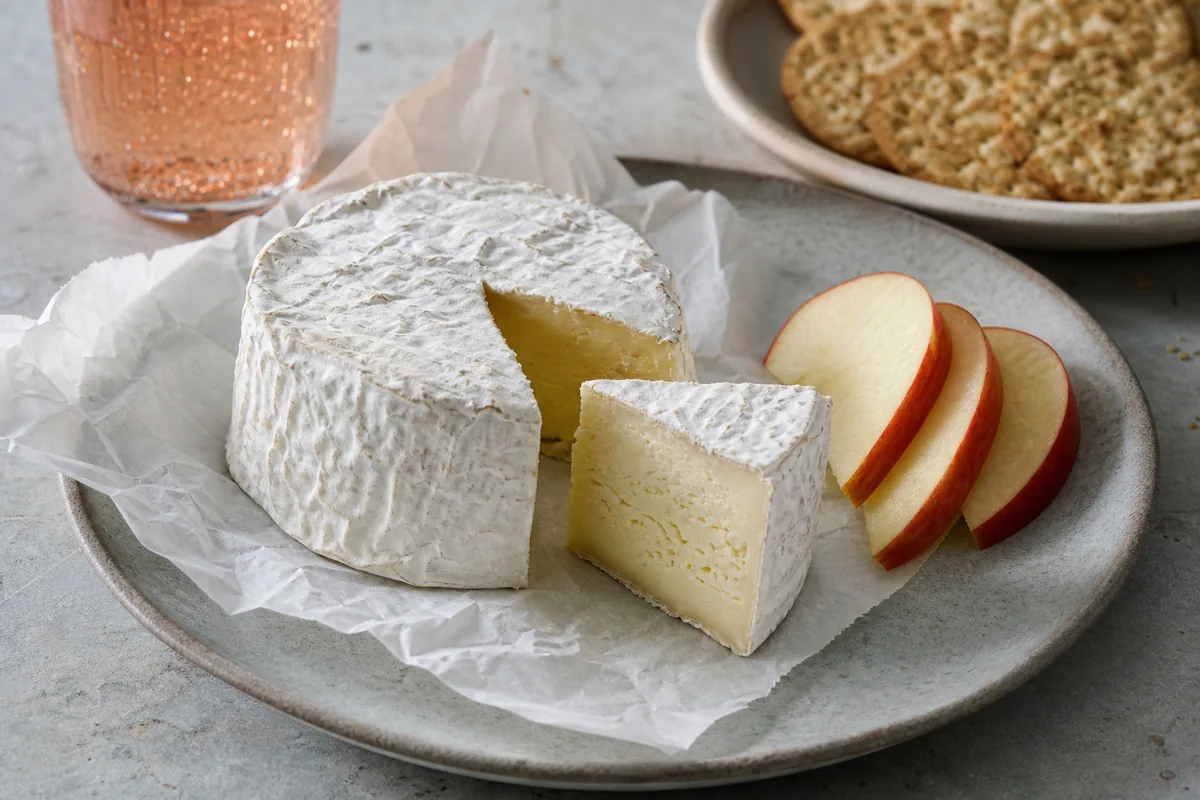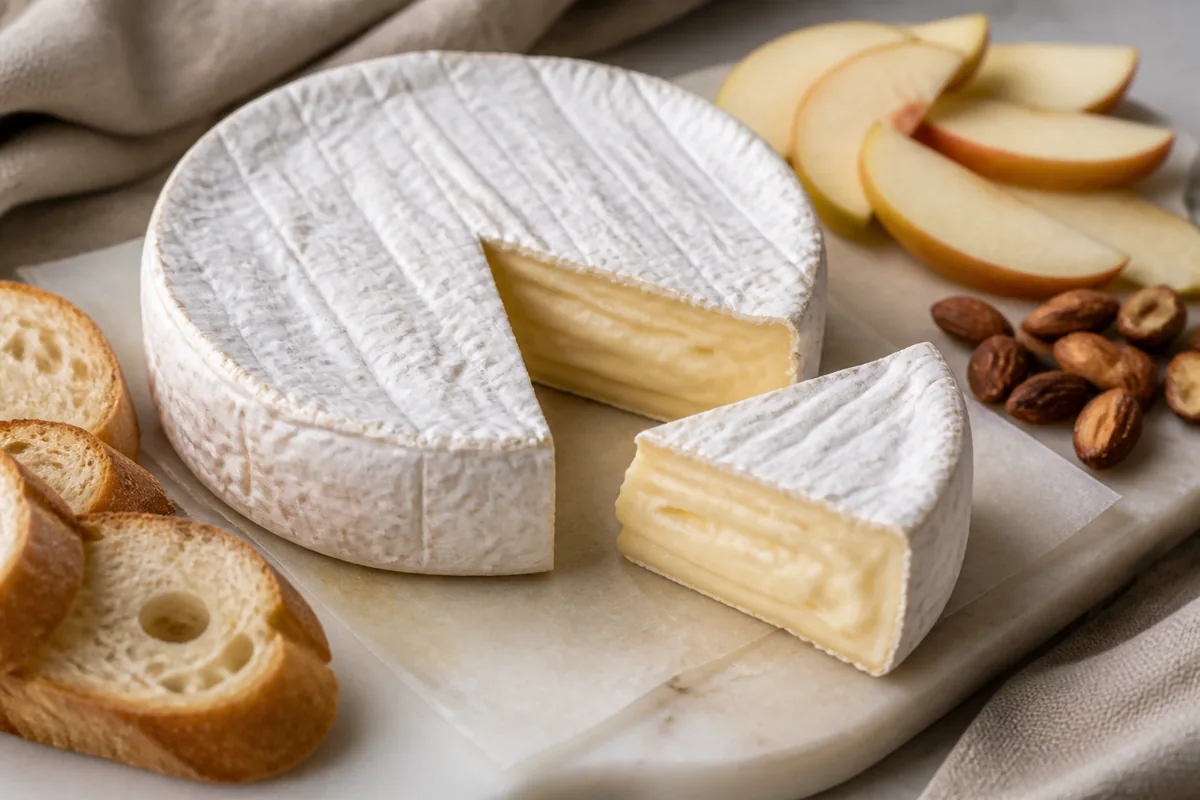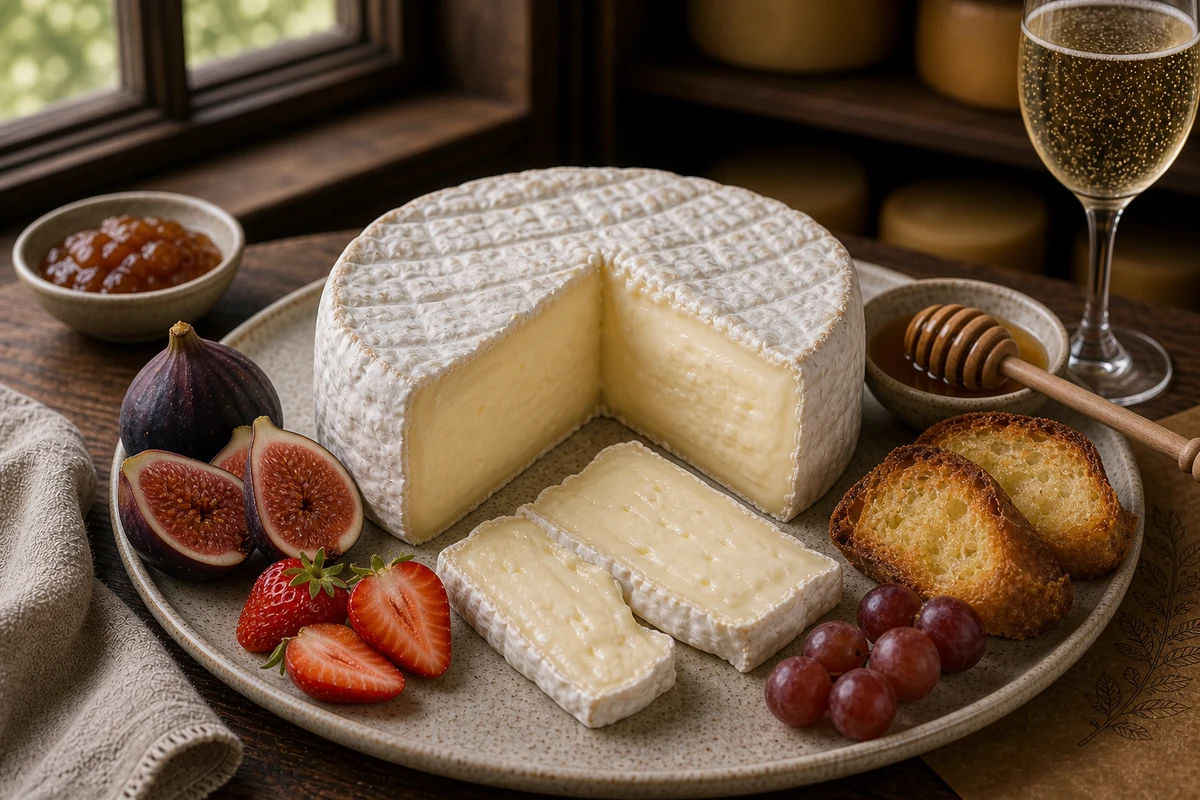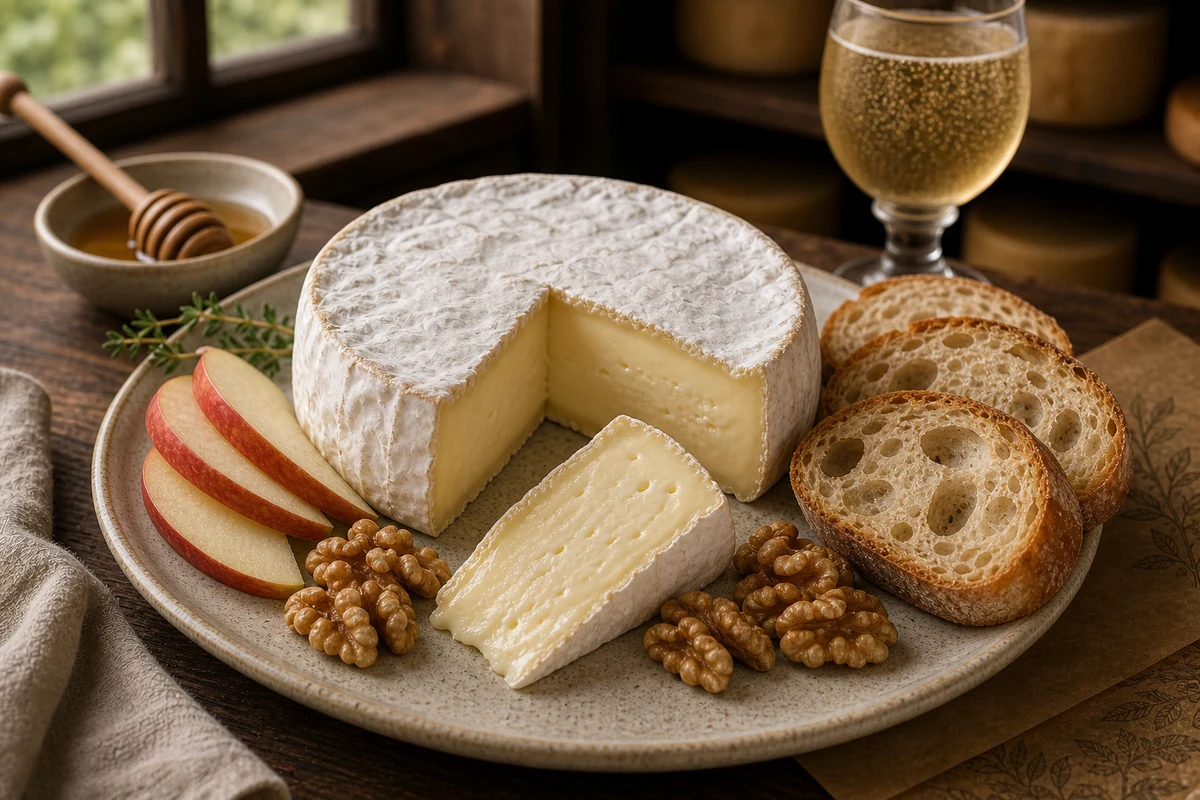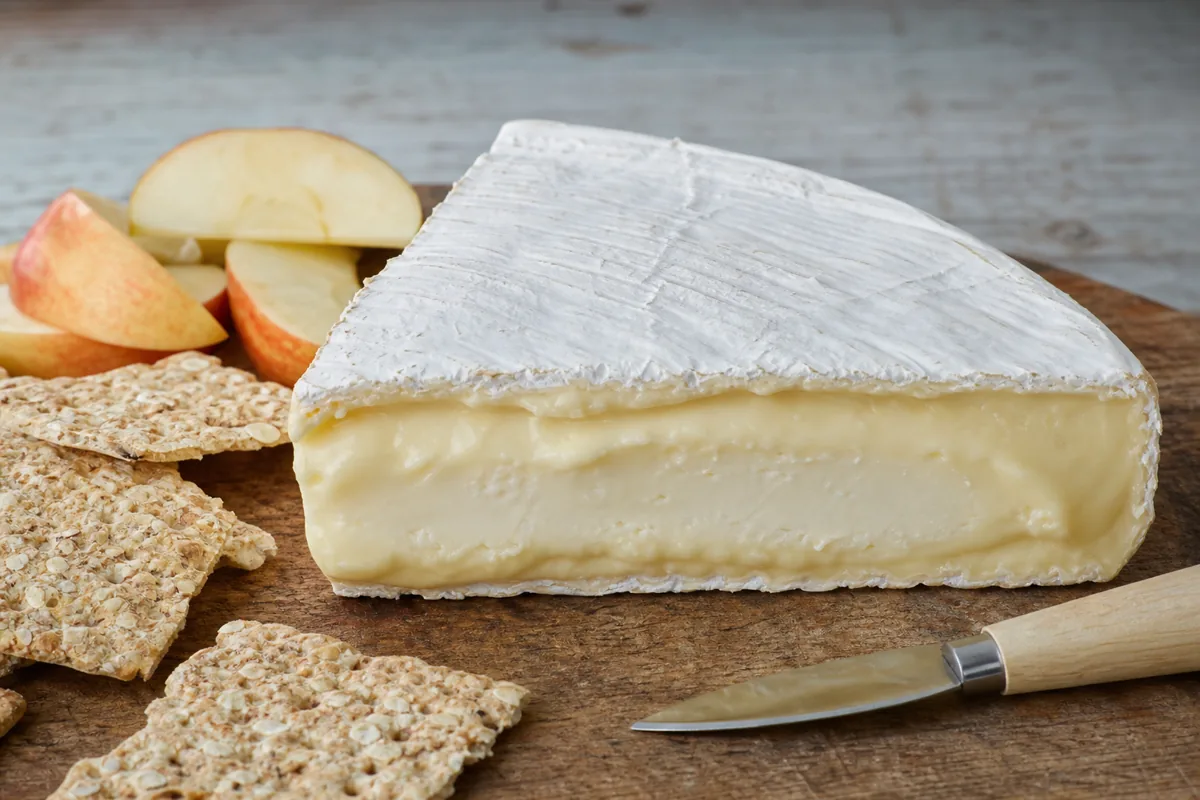
Choose Baron Bigod by its ripeness: at three to four weeks Fen Farm's Brie-style cheese is firmer and lemony, and from five weeks it becomes gooier and more pungent. That choice changes the slice on your plate more than the wooden box does.
Fen Farm Dairy makes it on its Suffolk farm with milk from its Montbéliarde cows. The current plain 1 kg format uses pasteurised cow's milk, wax-paper wrapping and a wooden box, so check a different size or variant on its own label.
In This Article
Pick a Firm Centre or Gooier Edges
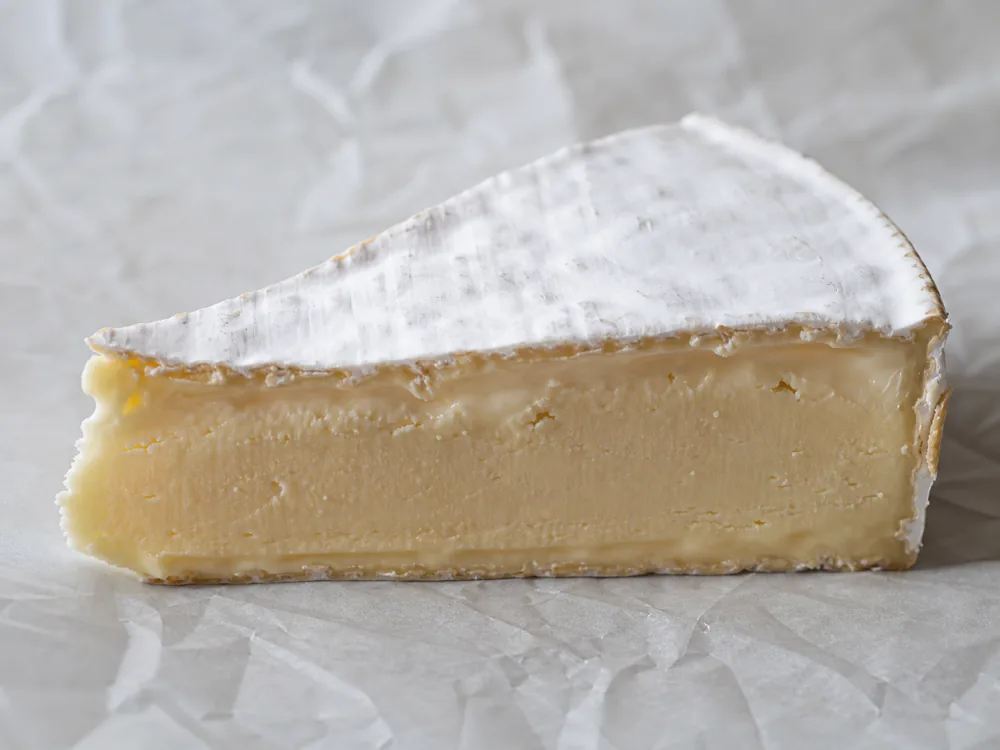
Choose among the three stages in Fen Farm's ripening guide: three to four weeks, firm with lemony lactic flavours, and four to five weeks, a firm centre and gooier edges, and five weeks or older, gooier and more pungent.
Choose the younger stage for cleaner slices and the older one for a softer wheel. Check the batch date under the 1 kg box lid and keep within the package's use-by date.
The age guide describes the producer's intended ripening stages. It is not a substitute for the use-by date or for checking a damaged, leaking, or improperly stored package.
The producer's flavour profile combines warm milky notes with mushroom, earth and farmyard aromas and a nutty rind. Age changes the balance, so those notes describe a ripening cheese rather than an identical flavour at every stage.
The Plain 1 kg Ingredients and Nutrition
The plain 1 kg listing contains pasteurised cow's milk, salt and animal rennet. A handmade wheel can vary slightly in weight, and the nutrition figures below apply to that format.
| Item | Producer information |
|---|---|
| Ingredients | Pasteurised cow's milk, salt, animal rennet |
| Energy | 1501 kJ / 365 kcal per 100 g |
| Fat | 31 g per 100 g, including 22 g saturates |
| Other nutrition | 2 g carbohydrate, less than 0.5 g sugars, 21 g protein, and 1.6 g salt per 100 g |
Use the specific label for a cut wedge, smaller cheese or flavoured version if its figures differ. No exact current lactose amount is established here.
Serving a Wheel from Rind to Centre
The maker suggests one hour at room temperature before serving, so keep it refrigerated until that planned period. Cut a narrow wedge through rind, softer outer paste and centre to show the ripening gradient.
Cut a narrow wedge from rind to centre so one serving includes the surface, the softer layer beneath it, and the centre. Keep the wrapper and label until the cheese is finished.
Apples, pears, medlar, quince and walnuts are the producer's food pairings, and cider, perry and brandy are its drink suggestions. Our board method helps you balance those choices around a soft cheese.
Buy the Right Size and Keep the Box Date
Look for Fen Farm Dairy and Baron Bigod on an intact chilled package with a readable use-by date. The farm's own shop, its current stockist list and specialist cheese counters are the places to check availability.
A plain pasteurised farmhouse Brie-style cheese is a general board substitute if you cannot find it. Brie de Meaux offers a different protected identity and raw milk, so choose that cheese for its own character and handling needs.
Refrigeration, Freezing and Thawing
Keep the current 1 kg cheese refrigerated and finish it before its use-by date. A cut wedge's own instructions determine its keeping period, and there is no single added after-opening window for every seller's cut.
For freezing, the maker's instruction is to freeze on delivery day, thaw in the refrigerator and never refreeze. A large wheel can be portioned first.
For this product, follow the maker's delivery-day freezing instruction. If you want to ripen it further first, ask the maker before departing from that instruction, and keep to the use-by date.
Discard a package that has been left outside safe refrigeration, is damaged, or conflicts with the seller's handling instructions. This article cannot verify the cold chain of an individual order.
Warm Morning Milk to a White Rind
Warm morning milk travels by gravity from the milking parlour to the vats on the same farm. Gentle heat treatment, selected lactic bacteria and acidity monitoring precede rennet, curd cutting, whey removal and hand-ladling into hoop moulds.
The cheeses are turned in their hoops and salted on day two. Continued turning develops the white rind, which Fen Farm identifies with Penicillium candidum, and wax paper and a poplar box then enclose the wheel as ripening continues.
A Suffolk Brie-Style Cheese with Its Own Identity
A 2012 research tour brought 72 Montbéliarde cows from the Jura to Fen Farm, and the first Baron Bigod went on sale in 2013. The dairy controls the milk and makes the named cheese on the same Suffolk farm.
Its white rind and outside-in softening follow the process explained in how Brie ripens. Generic Brie can come from many makers with different milk treatments, ingredients and formats, so it cannot supply the product facts for a particular Baron Bigod.
| Cheese | Origin and milk distinction |
|---|---|
| Baron Bigod | A named Fen Farm Dairy farmhouse Brie-style cheese from Suffolk |
| Generic Brie | A broad retail style whose producer, milk treatment, ingredients, and format can vary |
| Brie de Meaux AOP | A protected French raw cow's-milk cheese with a defined area and specification |
Brie de Meaux AOP, by contrast, has a defined French production area, raw cow's milk only and at least four weeks' maturation under the INAO specification. For a broader size-and-style choice, compare Brie with Camembert.
Pregnancy: Cook the White-Rinded Soft Cheese Through
The current plain 1 kg wheel is pasteurised, but a white mould rind still puts it in the mould-ripened soft-cheese group. The NHS asks for that type to be cooked until steaming hot, irrespective of milk treatment: cook it thoroughly until steaming hot all the way through.
For a confirmed pasteurised soft wheel in the US, follow the CDC line for pasteurized soft cheese heated to 165°F or until steaming hot with an internal 165°F or steaming-hot endpoint. A melted edge or a warm centre is not the stated heating endpoint.
With raw milk or no confirmed pasteurised label, it has no US safer route, even cooked, and raw-milk dairy remains in the CDC's riskier group. Keep the same milk and rind distinctions when choosing cheese in pregnancy.