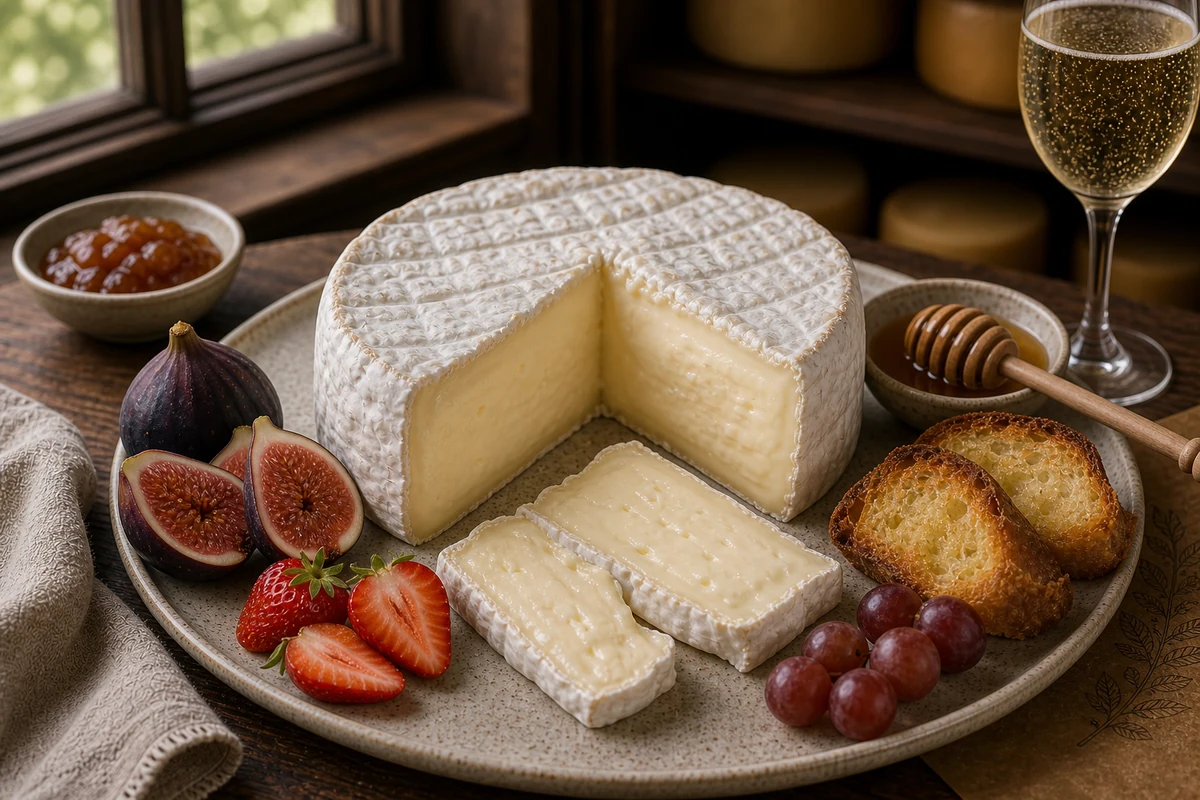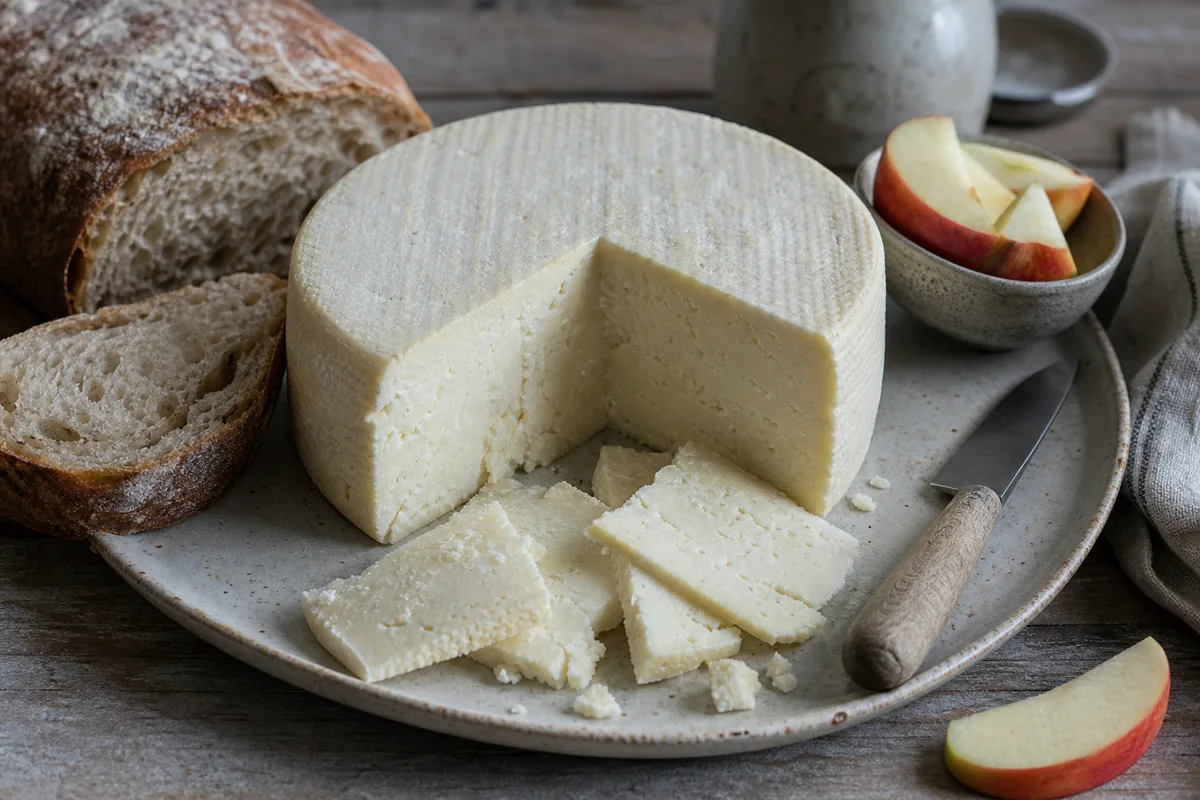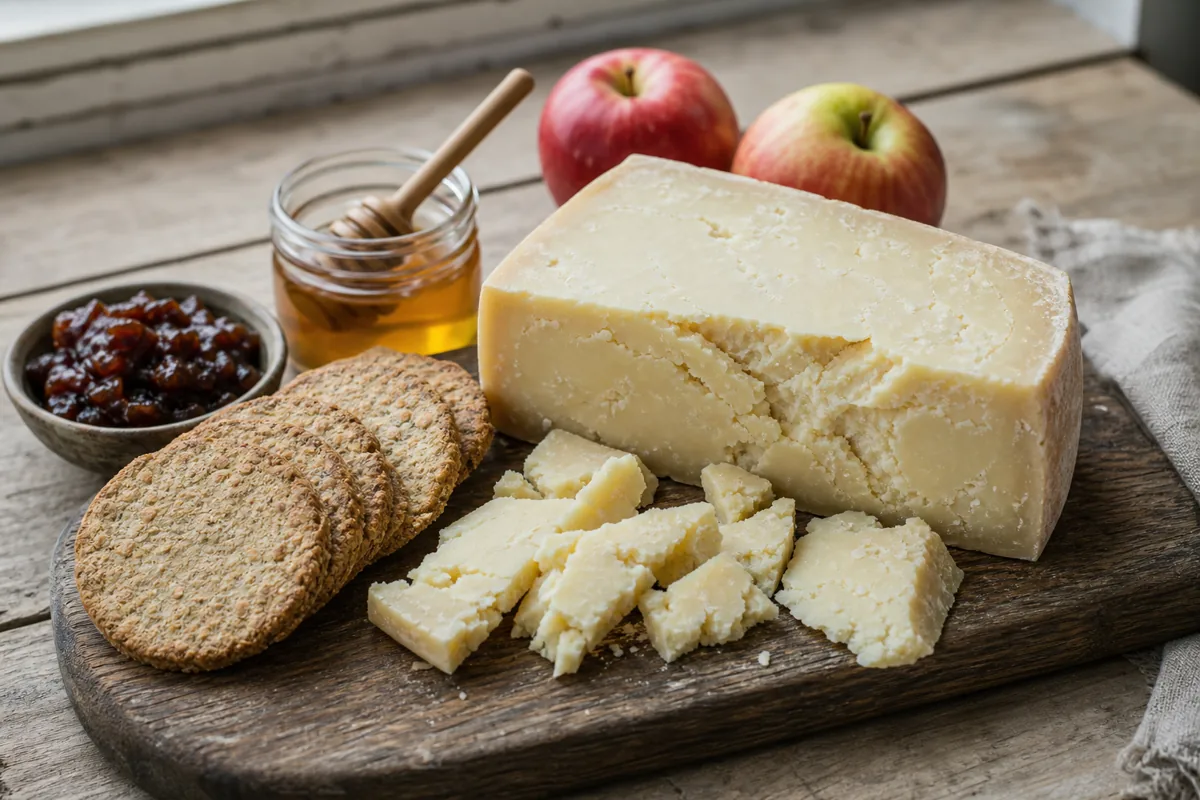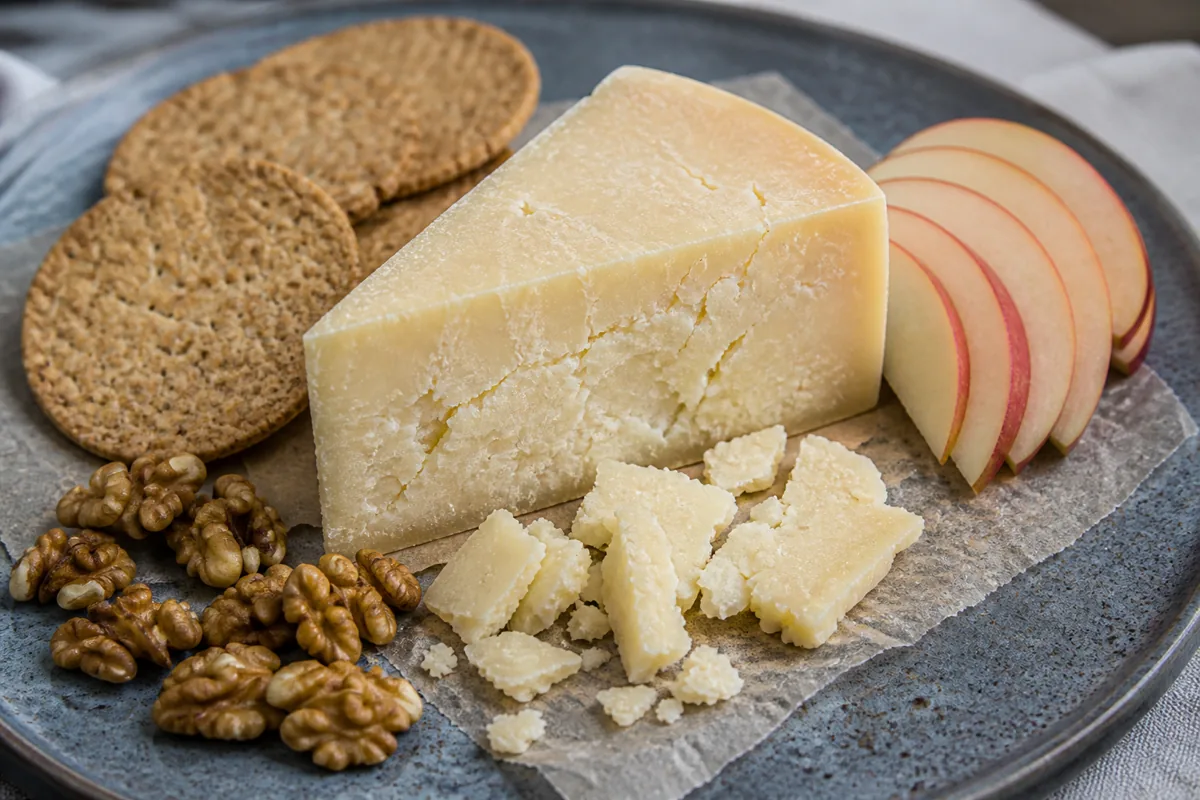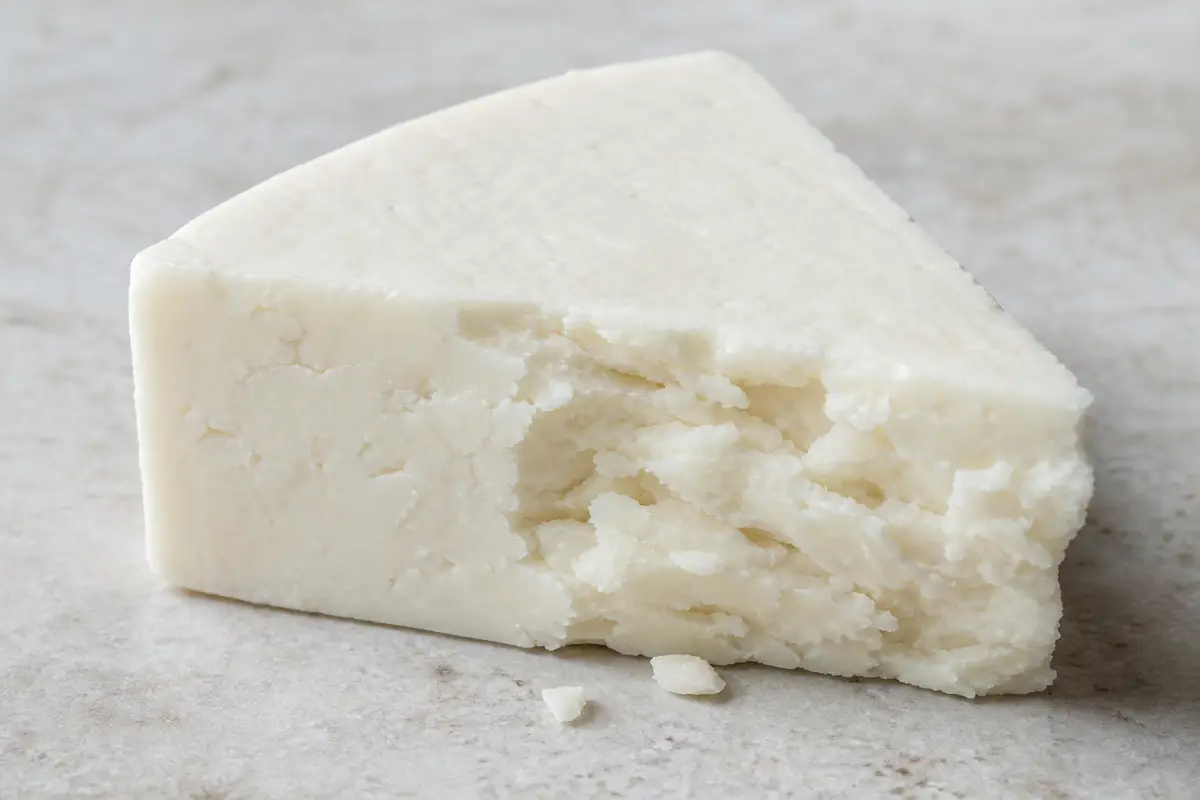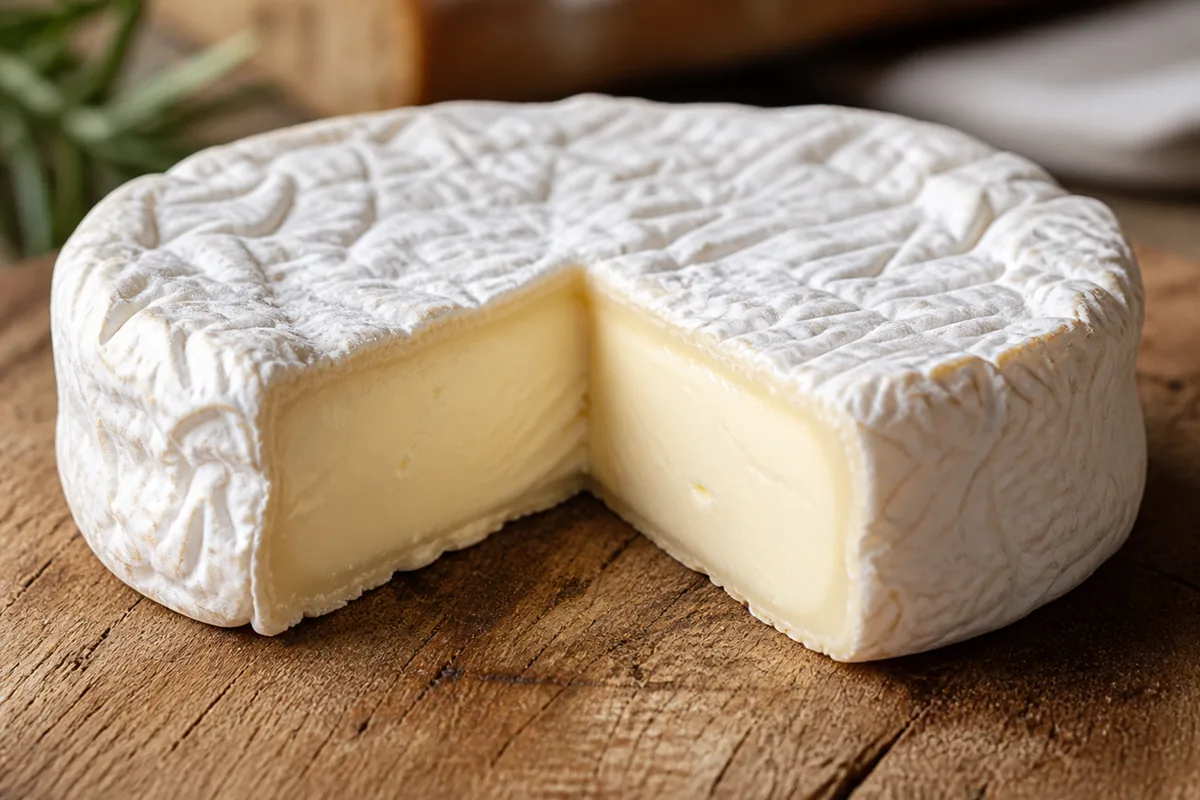
Finn is a soft cow's milk cheese from Neal's Yard Creamery in Herefordshire, England, made from whole milk with extra double cream added. The Courtyard Dairy, a cheese retailer, calls it Britain's first cream-enriched cheese, in the same family as French double and triple crème cheeses.
Readers mostly ask whether it counts as double cream or triple cream, so the fat section below sets out what each seller says and what the numbers allow.
In This Article
Who Makes Finn, and Why Is It Called Finn?
Charlie Westhead was Neal's Yard Dairy's first full-time employee in the 1980s, according to the Courtyard Dairy.
In 1990 the creamery's cheesemakers left, and he was taken out to Sevenoaks, given two days of instruction and left to make cheese. He developed Ragstone, a goats' milk cheese, first, and Finn followed quickly as the creamery's first cows' milk cheese.
He named it after his dog at the time, and Finn is Irish for "great white one".
Westhead and his wife Grainne moved the creamery to Dorstone Hill in Herefordshire in 1996, and Neal's Yard Creamery still lists a Hereford address.
How Is Finn Made?
Adding cream to cheese milk causes three problems, according to the Courtyard Dairy. Cream can settle out during the slow lactic set, it holds more moisture in the curd, and it can break down faster into soapy or bitter flavours.
That is why many hard cheeses, such as Parmesan and Comté, are made with partially skimmed milk.
The Courtyard Dairy credits Westhead with three fixes for Finn: a gentler, slower-working bulk starter, careful handling of the milk with no vigorous pumping that would damage the fat, and a lower temperature when the rennet goes in.
Culture magazine's 2014 account explains why a slow set is risky in cow's milk: cow's milk separates into milk and cream more readily than sheep's or goat's milk, especially at the 22°C or so where lactic cheeses like to set. If the cream rises, it can form a set cream cheese on top, apart from the rest of the curd.
A slower set gives more cream the chance to rise, so the Courtyard Dairy says the buckets are top-stirred every 15 minutes during the setting hour. The stirring runs up to flocculation point, the moment the rennet starts to turn milk into curd.
Culture describes the same step as Haydn Roberts going back after the rennet is added but before it sets and stirring the cream back in. When it works, the curd the next morning has a clear whey pool above it with the cream mixed through, which is what the writer found when checking the pH.
The two sources give different reasons for the lower renneting temperature. The Courtyard Dairy lists it among the fixes for the fat problems, while Culture says it does not protect the fat but lets more complexity of flavour develop from the starter bacteria.
Culture also calls bitter flavours an inevitable part of fat breakdown, which the creamery partly controls by pumping the milk gently as it comes in from the tank.
Fine Cheese Co adds that Finn has a long setting time achieved mainly by acidity rather than by rennet, and that the white coat grows slowly on the surface before the cheese is wrapped to develop its creaminess. Culture places the rennet in the late afternoon and the ladling the following morning, so the set runs overnight.
The Courtyard Dairy says the curd is ladled into moulds the next morning, then turned, dried and aged until a delicate white coat forms. Culture says the creamery bought rigid, interlinked moulds with draining trays, so sets of them stack as high as the person ladling can reach.
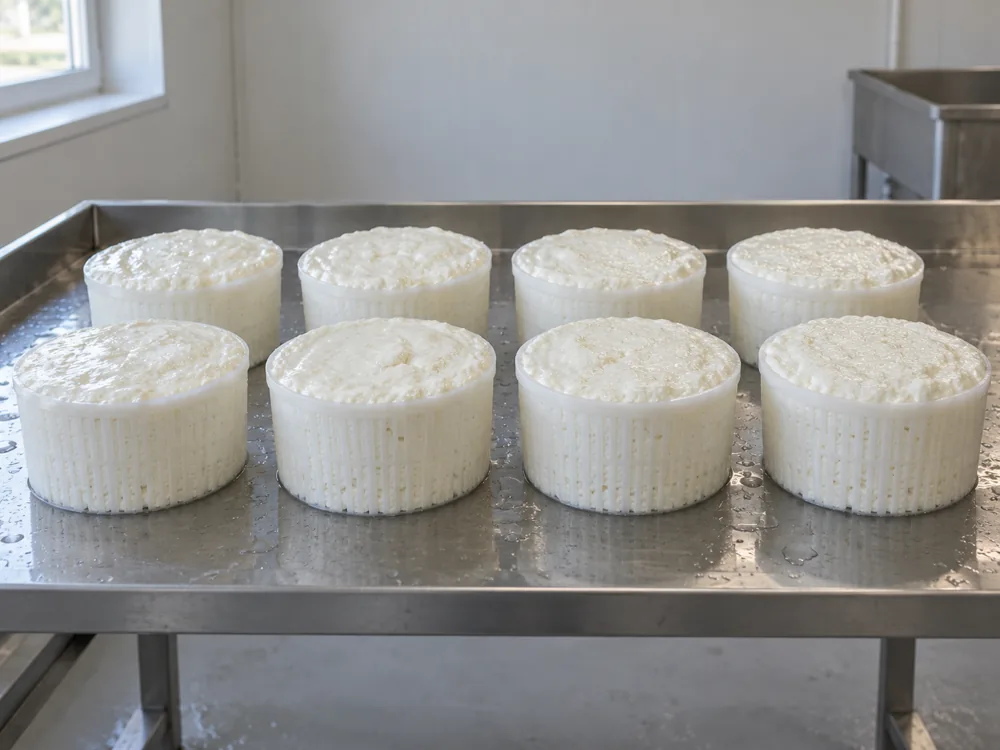
Neal's Yard Creamery says Finn is ripened for 2 to 3 weeks and uses cardoon rennet, a thistle rennet. Fine Cheese Co also lists it as vegetarian, with vegetarian rennet in its ingredients.
Where Does the Milk Come From, and Why Is Finn Seasonal?
In 2013 the Courtyard Dairy named the supplier as Andrew and Rachel Giles at Glasbury on Wye, half an hour from the creamery. They milk New Zealand Friesians with a few Jerseys, and that milk carries much more butterfat and protein than most commercial Holstein-Friesian herds.
Culture's visit in 2014 records the same supplier, the same half-hour trip and the same breeds, and adds that the Jerseys' influence is probably diluted across the herd but gives a little extra richness. Fine Cheese Co's page says the milk comes from the farm next door, a looser description than the half hour that the Courtyard Dairy and Culture give.
The Giles farm milks its cows only while they graze, so calving is timed for February and March to match peak milk with peak grass growth from April to September. Because of that, the Courtyard Dairy wrote that Finn could not be found in February and March.
The Courtyard Dairy says few farms work this way, because milk arrives only while grass is growing and every cow has to calve inside the same tight block. It puts the farm's grass season between calving in February and drying off at the end of November, and it names only February and March as the gap for Finn, so it leaves December and January unexplained.
The Courtyard Dairy also says the cream is organic and Culture calls Finn an organic cheese. Neal's Yard Creamery's product page gives Finn's type as pasteurised and marks only its crème fraîche as organic, and Fine Cheese Co's ingredient list carries no organic mark, so organic status is a point for the label of the round in hand.
The Courtyard Dairy piece dates from 2013 and Culture's account from 2014, and the current Neal's Yard Creamery product page carries no seasonal notice, so the calendar is the pattern those two sources describe.
What Does Finn Look and Taste Like?
Neal's Yard Creamery describes a creamy-white mould rind, a soft paste with a rich double cream texture, and a flavour that is lactic and creamy when young, then turns to walnut and mushroom. Fine Cheese Co describes the same arc as lactic and creamy at the start, then light mushroom and walnut flavours.
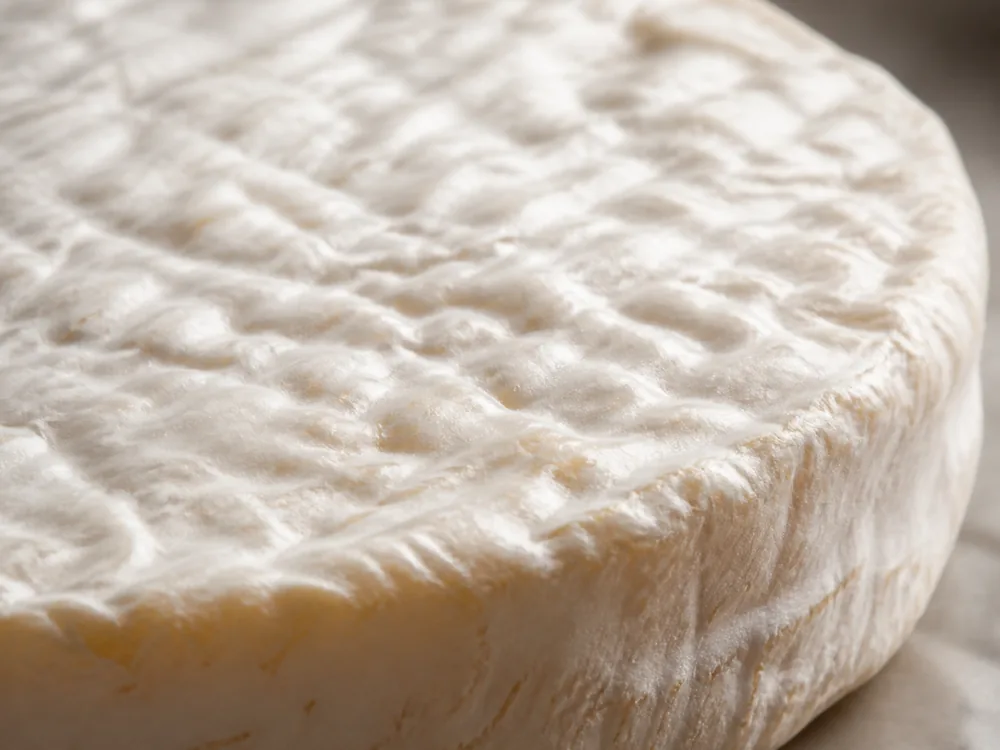
Sellers describe a young Finn differently: Fine Cheese Co writes of a rich ice-cream texture, while Chorlton Cheesemongers compares a young Finn with a Délice or a crumbly Vignotte, mild and rich. Chorlton adds that a fully mature one has a softer, gooey breakdown beneath the rind with fuller toasted walnut and mushroom flavours.
The Courtyard Dairy sells Finn at four weeks old, which it says gives the lactic, hazelnutty flavours time to balance the creamy richness alongside a gentle ice-cream texture. Older than that, it says the cheese breaks down too much and the soapy, bitter flavours start to show.
Chorlton presents the breakdown beneath the rind as part of a mature round's appeal, while the Courtyard Dairy treats breakdown past four weeks as a fault. Neither gives its stages in days, so the choice comes down to which paste a buyer wants.
Culture magazine says Finn closely resembles Manchester from Zingerman's Creamery, though pasture, milk and cow breed differ. It credits Finn with a rich, buttery, lactic flavour that shows the best of the cream.
Young Finn is lactic and creamy, a round near the Courtyard Dairy's four weeks balances lactic, hazelnutty flavour against the cream, and a mature round turns gooey beneath the rind with walnut and mushroom.
Is Finn a Double Cream or Triple Cream Cheese?
Formaggio Kitchen, a cheese retailer in the United States, explains that French law puts a double cream at 60 to 75 percent fat in dry matter and a triple cream at 75 percent or more. Check the label for a fat-in-dry-matter figure to place Finn against those thresholds.
| Seller or publisher | Wording used |
|---|---|
| Neal's Yard Creamery | "a rich, double cream texture" |
| Culture magazine | "double cream lactic-set cow's milk cheese" |
| Fine Cheese Co | Made in the style of the French double creams, with the cream of the milk enriched with double cream |
| Courtyard Dairy | Britain's first cream-enriched cheese, which it says is often called double or triple cream |
| Chorlton Cheesemongers | "Soft, double cream enriched" in one line and "soft triple-cream" in the fuller description |
The one fat figure available is on the Fine Cheese Co label: 30.6 g of fat per 100 g, of which 20 g is saturated.
Formaggio Kitchen explains why that figure cannot be converted: fat in dry matter sets the water aside, and young double and triple creams can be about half water. A cheese listed at 70 percent therefore holds far less than 70 g of fat per 100 g, and the unit exists because moisture falls as a cheese ages while dry matter stays the same.
Formaggio Kitchen's own Brie carries 60 percent fat in dry matter and 31 percent total fat, and its Brillat-Savarin carries 75 percent and 39 percent. Finn's 30.6 g sits within 0.4 g of that Brie and 8.4 g below that Brillat-Savarin, which is only a rough pointer because each maker's cheese holds a different amount of water.
The producer, Culture and Fine Cheese Co all say double cream, and the triple cream wording comes from one retailer's fuller description and from the Courtyard Dairy's remark that such cheeses are often called either, so we use double cream.
How Does Finn Compare With Brillat-Savarin?
The Courtyard Dairy says Finn is made similarly to Vignotte, Brillat-Savarin and various Délices.
Formaggio Kitchen calls Brillat-Savarin the classic triple crème. It descends from Le Magnum, which the Dubuc family made in Normandy roughly 75 years after the first double crème of 1850, so the two differ in fat class even though both rest on added cream.
| Attribute | Finn | Brillat-Savarin |
|---|---|---|
| Origin | Herefordshire, England | Normandy, France (Formaggio Kitchen) |
| First made | After 1990, soon after Westhead began making cheese (Courtyard Dairy) | Ancestor Le Magnum, about 75 years after 1850 (Formaggio Kitchen) |
| Cream class | Double cream (producer, Culture) | Triple cream; 75% fat in dry matter (Formaggio Kitchen) |
| Total fat | 30.6 g per 100 g (Fine Cheese Co label) | 39% (Formaggio Kitchen) |
Chorlton Cheesemongers gives a buyer a stand-in for each stage, a Délice for a young Finn and Chaource for the toasted nut and mushroom tones of a mature one.
A vegetarian buyer has one stated fact to rely on, because Neal's Yard Creamery names cardoon rennet for Finn, and a stand-in needs its own label read for the same.
Formaggio Kitchen names Délice de Bourgogne, Pierre Robert and Gratte Paille as other triple creams, which makes them richer stand-ins rather than twins of a double cream like Finn.
How Much Finn Do You Need, and What Goes With It?
Fine Cheese Co suggests 70 to 120 g per person: 70 g is ample straight after a large meal, and at least 100 g suits a meal where cheese is the main event.
Formaggio Kitchen's pairing advice covers double and triple creams in general rather than Finn by name. It writes that Champagne or something bubbly is the classic match for double and triple creams, with fresh fruit such as raspberries, mango or strawberries.
| Pairing | Type | Why It Works |
|---|---|---|
| Champagne or sparkling wine | Wine | Formaggio Kitchen calls bubbly the classic match for double and triple creams, particularly the triple creams. |
| Raspberries, mango or strawberries | Food | Formaggio Kitchen strongly recommends fresh fruit with double and triple creams. |
| Fresh grapes | Food | Formaggio Kitchen calls grapes a frequent go-to with Brie and other double creams. |

Formaggio compares the pattern to the Wimbledon trio of champagne, strawberries and cream. Its owner, Ihsan, describes a French Brie cut through the middle and spread with truffle butter, with toasted walnuts or mascarpone and truffle shavings as other ideas.
Those are Brie suggestions rather than Finn pairings, though walnut is also the flavour Neal's Yard Creamery names in a ripe Finn.
At those portions, a 200 g round serves roughly two to three people.
Where Do You Buy Finn, and How Long Does It Keep?
Neal's Yard Creamery sells Finn as a 200 g round, and Chorlton Cheesemongers also lists a half round. On 2 October 2026 Fine Cheese Co and Chorlton both showed it as sold out.
| Source | Figure | What it covers |
|---|---|---|
| Neal's Yard Creamery | Ripened 2 to 3 weeks | Ripening period |
| Neal's Yard Creamery | Shelf life 3.5 weeks | Shelf life listed by the producer |
| Courtyard Dairy (2013) | Sold at four weeks old | Older than this, it says the cheese breaks down |
| Fine Cheese Co | Eat within 5 days once open | Storage and an opened round |
These figures measure different things. The producer lists 3.5 weeks of shelf life, while the Courtyard Dairy sold Finn at four weeks old in 2013, so ask a seller how old a round is.
Fine Cheese Co's storage instruction is to eat Finn within five days of opening, and the CDC says to keep a refrigerator at 40°F (4°C) or below. Five days is much shorter than the shelf life the producer lists, so cut only as much as the table needs.
The CDC lists dairy among the perishable foods to refrigerate within 2 hours, or within 1 hour above 90°F, which sets the limit for a round left out on a cheese board.
What Is on the Label, and Is Finn Safe in Pregnancy?
Fine Cheese Co lists the ingredients as cows' milk, double cream, sea salt, starter cultures and vegetarian rennet. Besides the fat figure above, its label gives these values per 100 g:
- Energy: 1425 kJ, or 345 kcal.
- Carbohydrate: 1.1 g, all of it sugars.
- Protein: 14.8 g.
- Salt: 1.7 g.
At Fine Cheese Co's 70 to 120 g portion, those per-100 g values work out to roughly 240 to 415 kcal and 1.2 to 2.0 g of salt.
Neal's Yard Creamery lists Finn as pasteurised, which settles the raw-milk question without settling the pregnancy one. The NHS says pasteurised or unpasteurised mould-ripened soft cheeses with a white coating, such as camembert, must be thoroughly cooked before pregnant people eat them, and Finn has a white mould rind.
The CDC lists soft cheese made from unpasteurized (raw) milk as riskier and pasteurized soft cheeses heated to an internal temperature of 165°F or until steaming hot as safer. Served cold, Finn is described as a pasteurized soft, double-cream cheese with a white mould rind, a type the CDC list does not cover, so ask a midwife or doctor.