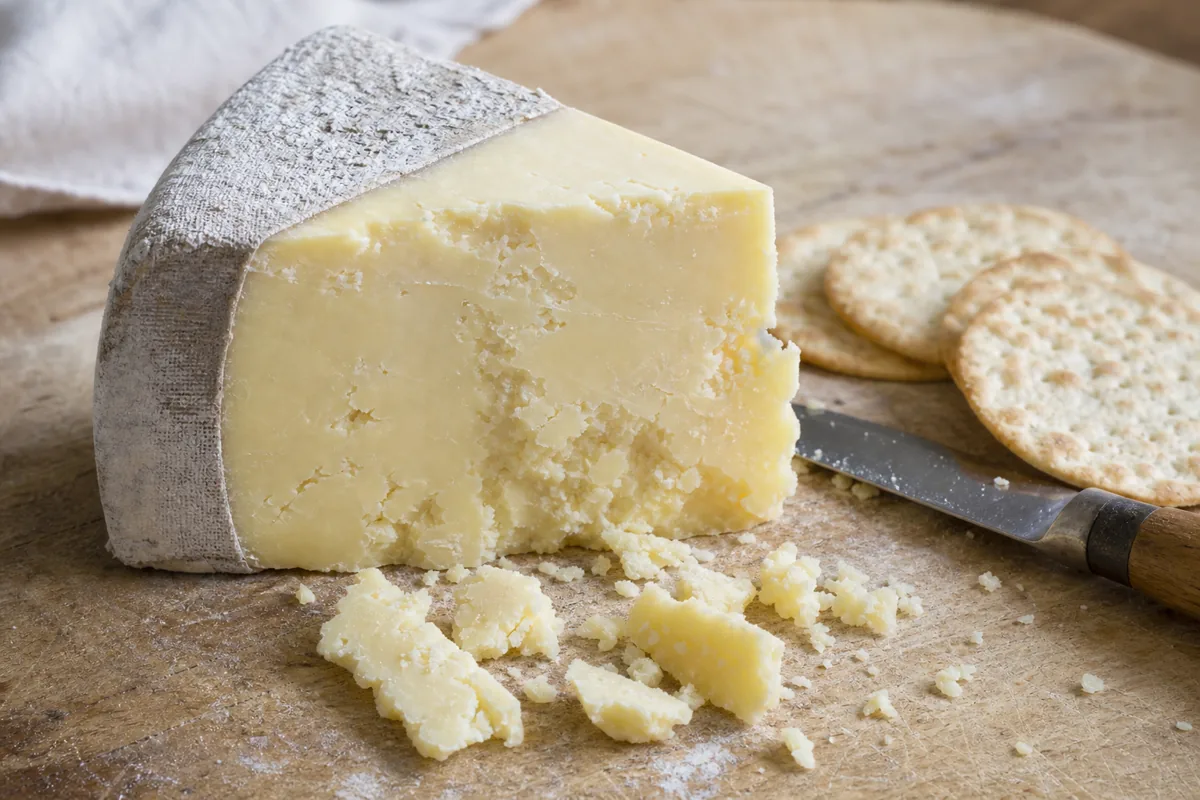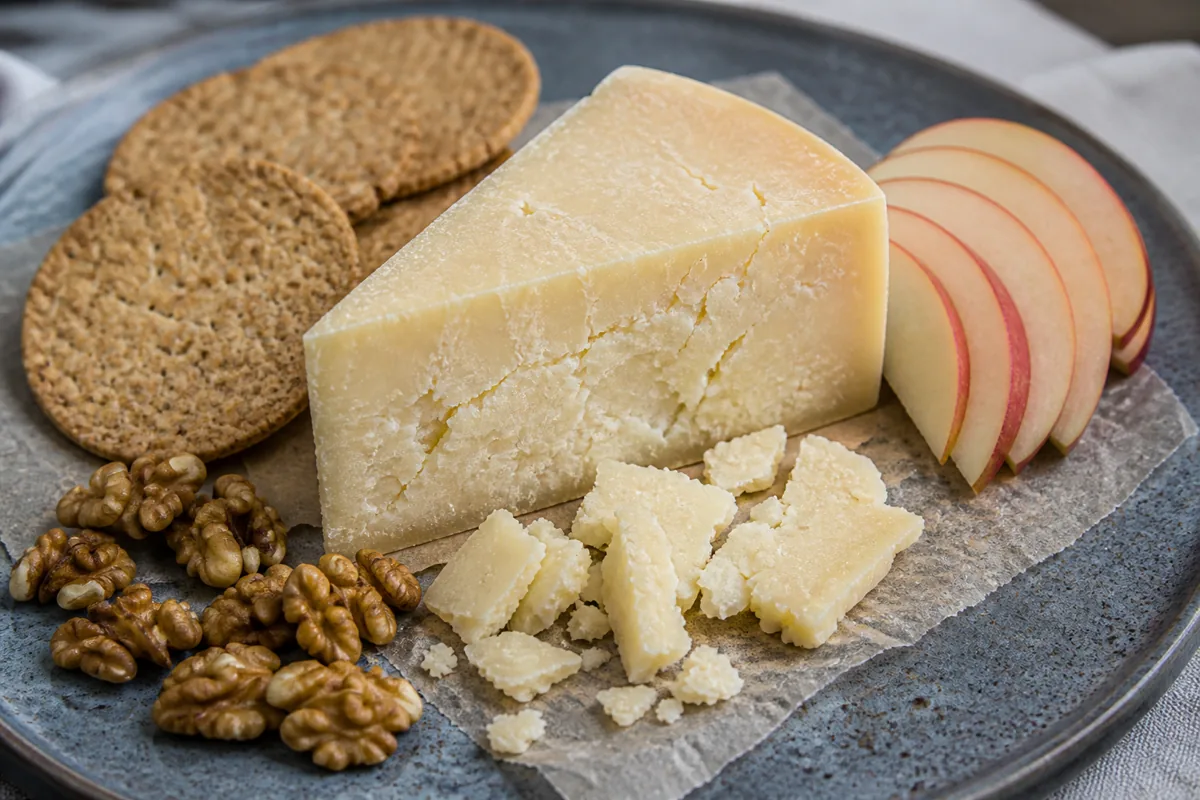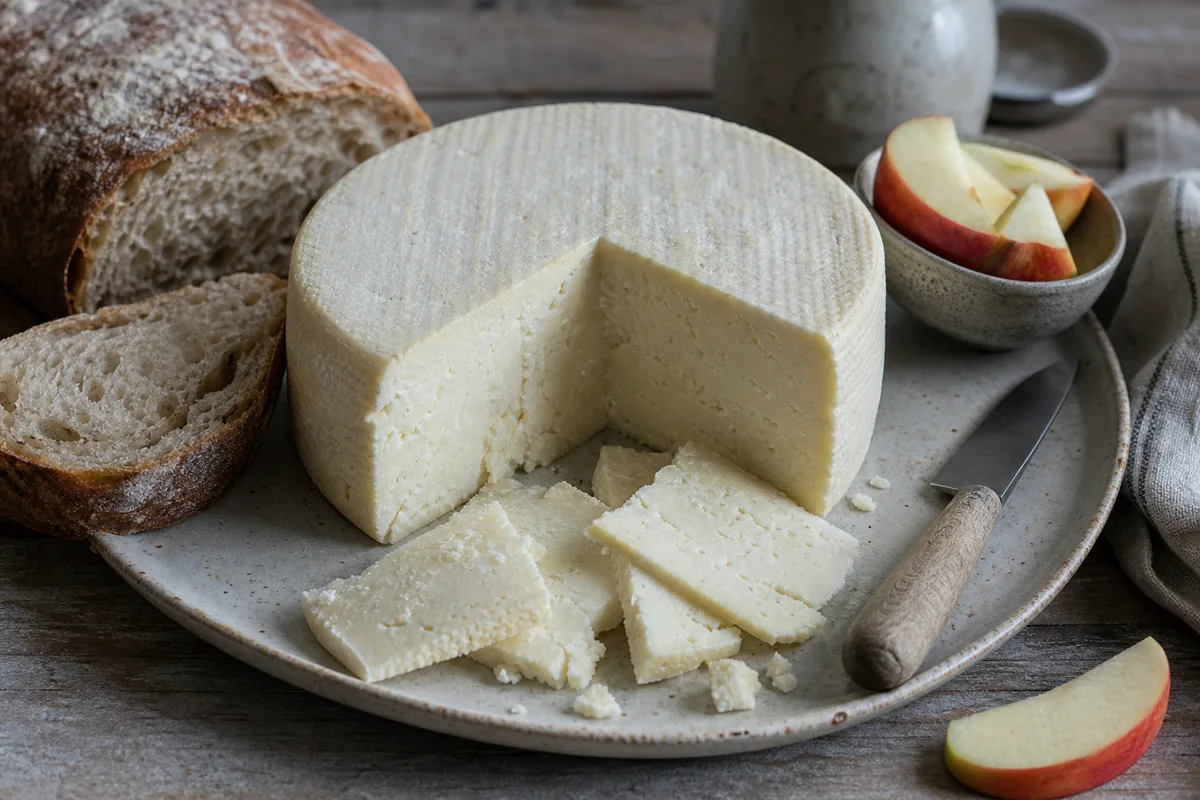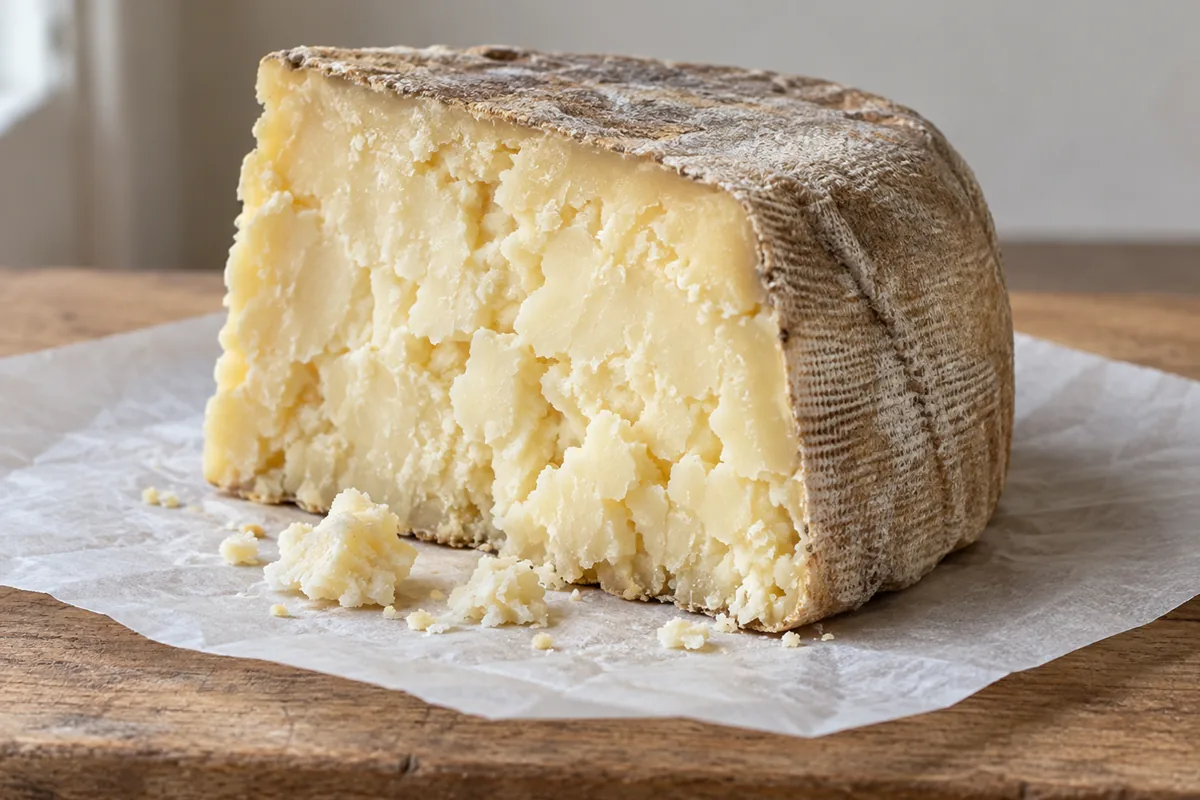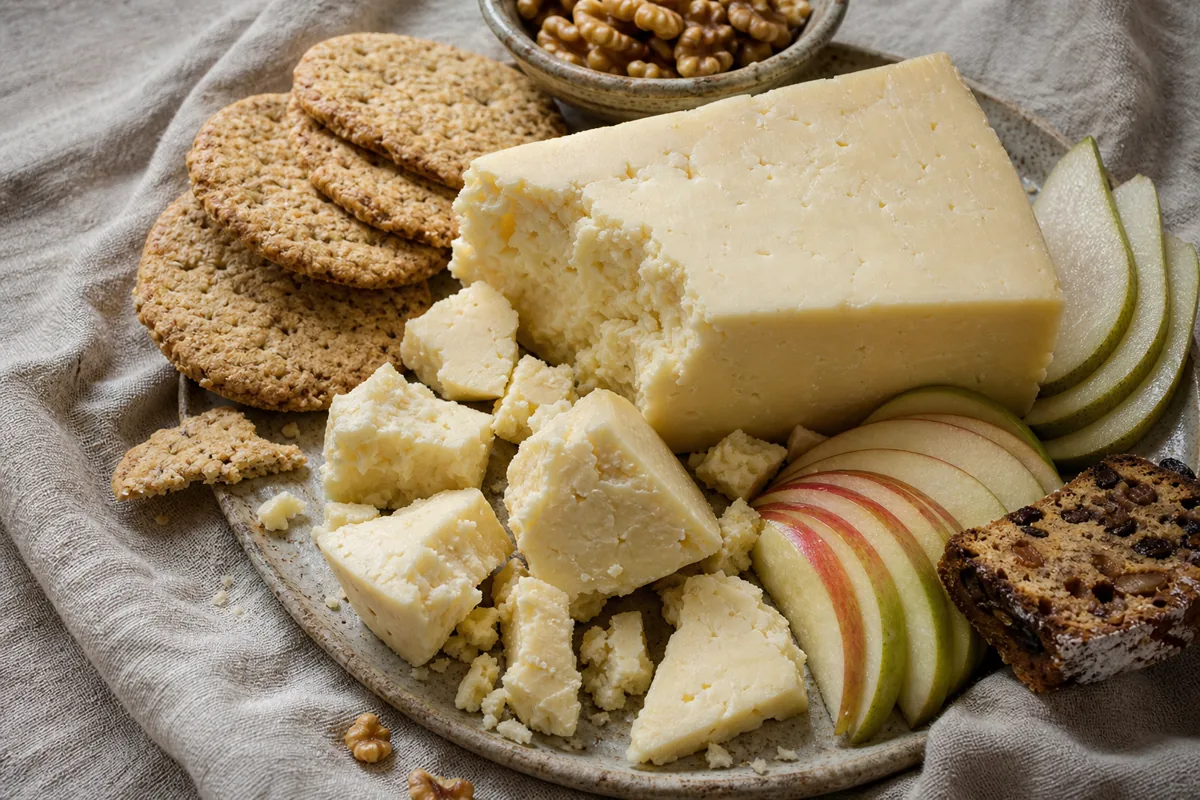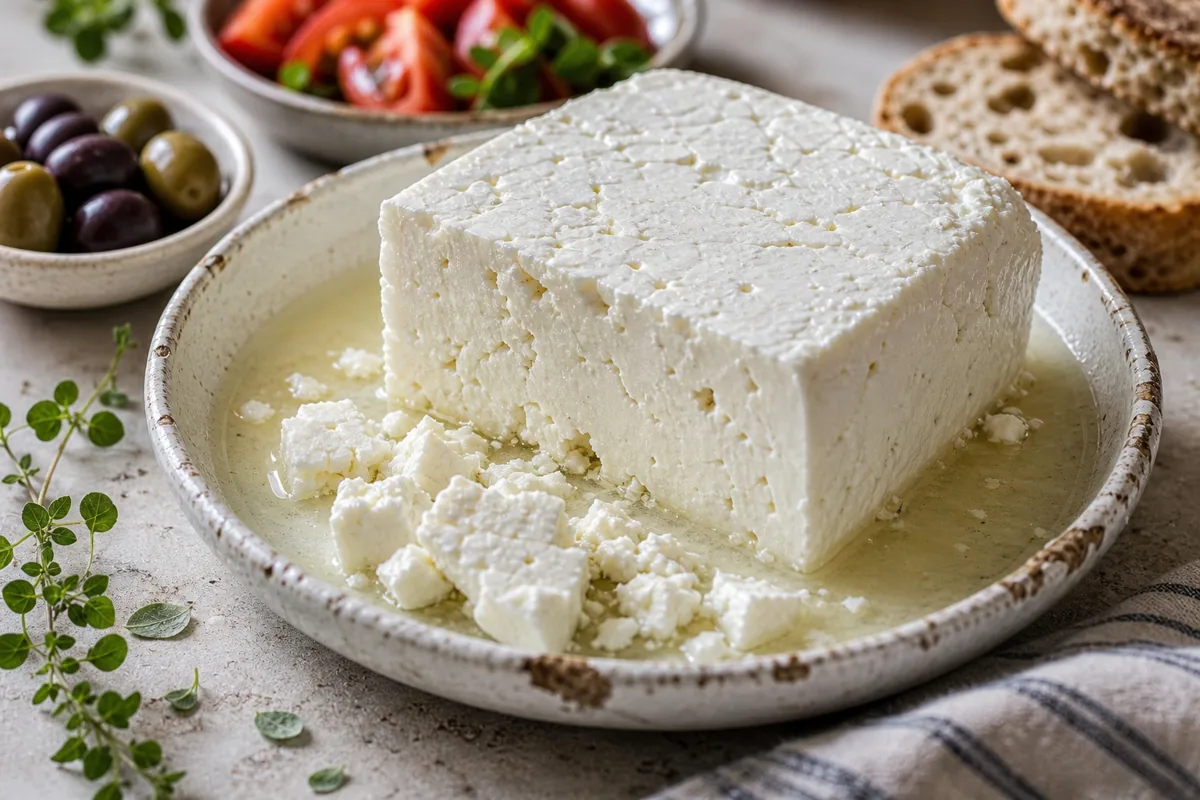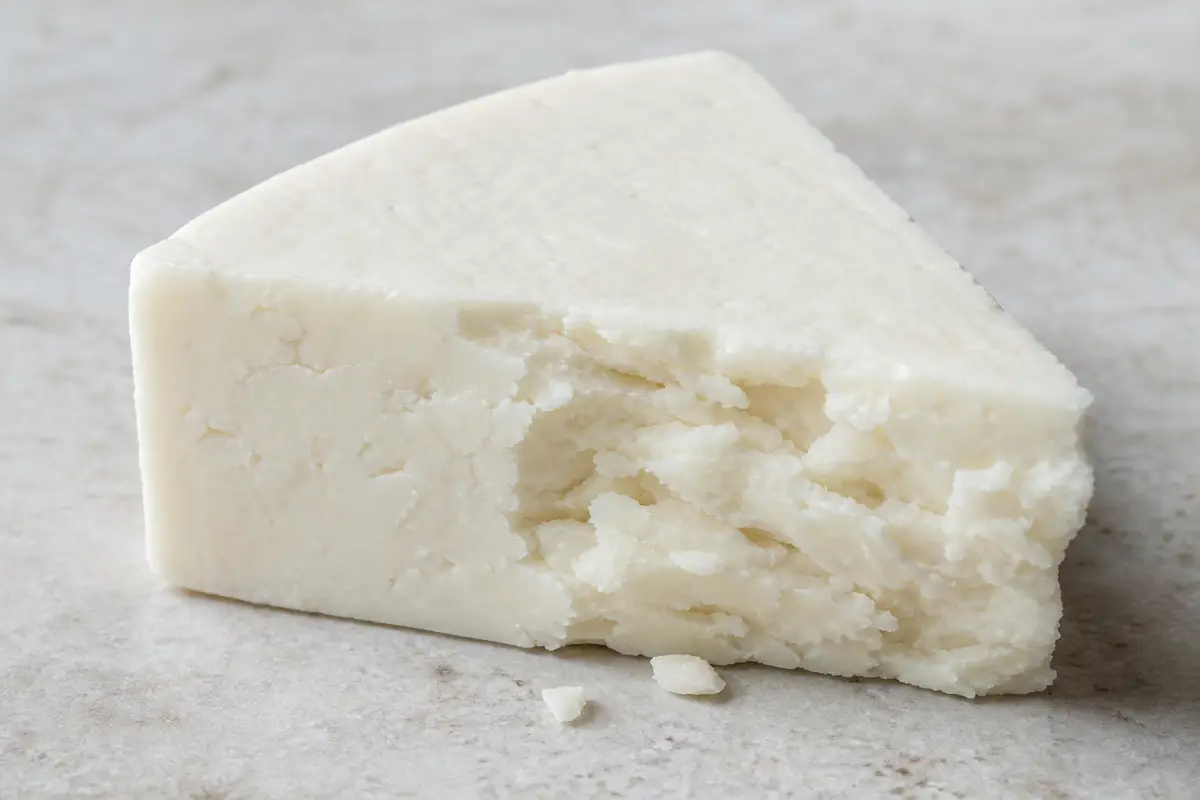
Crumbly Lancashire is the white, single-day-make Lancashire cheese, sold after about six to eight weeks, according to Wikipedia and Cheese.com.
It tastes fresh and slightly acidic, and it breaks into moist pieces. Wikipedia gives Creamy Lancashire a creamy flavour instead.
Creamy and Tasty Lancashire follow traditional Lancashire cheesemaking, which Crumbly skips, so it is a separate cheese and not an under-aged Creamy wedge.
In This Article
What Is Crumbly Lancashire Cheese?
Cheese.com lists it as an English cheese made from pasteurized cow's milk, with a white colour, a crumbly texture and a fresh, slightly tangy flavour. The same entry marks it vegetarian.
The name promises crumbling, but the makers stress moisture too. Greenfields Dairy describes a smooth and moist texture, and Singletons says the cheese breaks into moist, delicate pieces.
Sources do not agree on a firmness class. Cheese.com files Crumbly Lancashire as hard, while a retailer listing for Dewlay's Lancashire Crumbly calls it semi-hard.
The class label is loose even inside a single source. Wikipedia's Cheshire page gives the texture as hard crumbly in its summary box and calls Cheshire dense and semi-hard in the text, so words such as moist, smooth and crumbly describe a wedge better than the class does.
Who Created Crumbly Lancashire?
Greenfields Dairy says Timothy Procter first made Crumbly Lancashire in the early 1950s at Chipping, after customers asked for a bright, white, moist, crumbly cheese as an alternative to the traditional creamy and tasty varieties.
Greenfields adds that Lancashire cheese was entirely farmhouse made until 1913, when the first factory cheese came out of a dairy at Chipping. Crumbly arrived almost four decades after that first factory cheese.
Wikipedia dates the cheese only to the 1950s and calls it a more recent creation than the two traditional varieties.
Greenfields lists its own Crumbly Lancashire as Supreme Champion at the 2015 International Cheese Awards in Nantwich, among more than 4,600 cheeses from 26 countries. The same page lists a gold award from the 2019 British Cheese Awards.
How Is It Different From Creamy and Tasty Lancashire?
Creamy and Tasty Lancashire use the traditional method that blends two or three days' curd, and Wikipedia says Tasty is matured from 12 weeks to 24 months to reach a nutty taste.
Crumbly uses one day's milk and is matured for about six to eight weeks, which Wikipedia says gives a crumbly, fresh, high-acid cheese.
Wikipedia explains why the older method blends curd. On small farms one day's milk was too little for a whole cheese, so each day's curd was kept until there was enough, and Joseph Gornall standardised the method in the 1890s.
A cheese made from a single day's milk therefore depends on a dairy that gathers enough milk in a day to fill it, which fits Wikipedia's description of Crumbly as suitable for mass production.
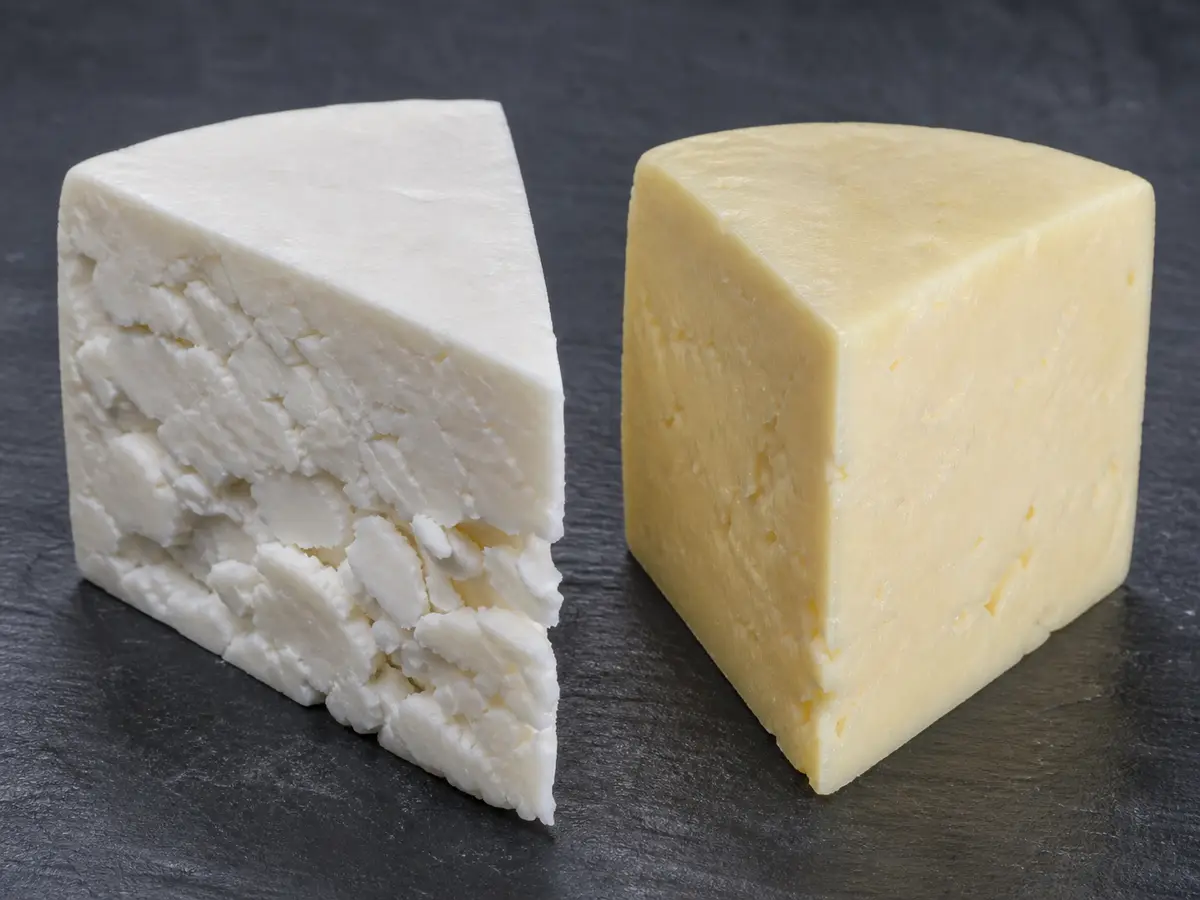
| Attribute | Crumbly Lancashire | Creamy Lancashire |
|---|---|---|
| Make | One day's milk (Wikipedia) | Two or three days' curd blended (Wikipedia) |
| Age | About 6 to 8 weeks (Wikipedia, Cheese.com) | 4 to 12 weeks (Wikipedia) |
| Flavour | Fresh and high in acid (Wikipedia) | Creamy (Wikipedia) |
| Texture | Crumbly and moist (Cheese.com, Greenfields) | Fluffy (Wikipedia) |
| Heat | Bubbles instead of melting like Tasty (Butlers) | Does not turn stringy; good for toasting (Wikipedia) |
Age does not separate the styles on its own. Creamy runs from four to twelve weeks and Crumbly from six to eight, so if you buy a young wedge, the name on the label tells you which style it is.
Cheese.com adds that Crumbly matures faster than Creamy and Tasty. Wikipedia's ranges support that against Tasty but overlap with Creamy's, which leaves the single day's milk as the firmer difference.
Is Crumbly Lancashire Real Lancashire Cheese?
Wikipedia counts Crumbly as one of three distinct varieties of Lancashire cheese, and Cheese.com and Greenfields Dairy both list it beside Creamy and Tasty, so the name marks a recognised style.
No variety is protected under its own name. Wikipedia says the protected designation of origin belongs to Beacon Fell Traditional Lancashire Cheese alone, which must be made from milk produced north of the River Ribble, in the same area, by a designated method.
Where Crumbly is made is a separate question. Wikipedia says it is the only Lancashire cheese produced outside the county, yet the makers named in this article place themselves inside it: Greenfields at Chipping, Dewlay at Garstang, and Butlers and Singletons in Lancashire.
Wikipedia adds that within Lancashire the cheese is more commonly called Lancashire Crumbly, the name on Dewlay's retailer listing, while Greenfields, Butlers and Singletons use Crumbly Lancashire.
What Does Crumbly Lancashire Taste Like?
Every source that describes the flavour uses fresh, acidic or zesty words, and none mentions the nutty taste Wikipedia gives Tasty Lancashire.
| Source | Milk | Age | Colour | Texture | Flavour |
|---|---|---|---|---|---|
| Cheese.com | Pasteurized cow's milk | 6 to 8 weeks | White | Crumbly; hard | Acidic; fresh, slightly tangy |
| Wikipedia | Cow's milk | 6 to 8 weeks | Not stated | Crumbly | Fresh, high-acid |
| Greenfields Dairy | Not stated | Not stated | Bright white was the customer request | Smooth and moist | Fresh, slightly acidic |
| Singletons | Pasteurised cow's milk | Up to 8 weeks | Bright white | Soft, open; breaks into moist pieces | Clean, zesty, with some sharpness |
| Butlers | Pasteurised, local | Not stated | Extremely pale | Crumbly | Mild, zesty |
| Dewlay, via Mr & Mrs Cheese | Pasteurised cow's milk | Not stated | Not stated | Semi-hard | Not stated |
Within that shared profile the makers set the bite differently. Butlers calls its cheese mild, while Singletons describes a zesty flavour with some sharpness, so if you want the gentler version look for Butlers, and if you want more tang look for Singletons.
Does Crumbly Lancashire Melt?
Butlers says Crumbly Lancashire does not melt the way Tasty Lancashire does when cooked, and that it bubbles instead. Wikipedia says Creamy Lancashire does not turn stringy when melted and names it good for toasting.
That puts Crumbly Lancashire in dishes where you want the pieces to stay visible rather than among the best melting cheeses.
Butlers also offers the cheese as a swap for your usual parmesan in cooking.
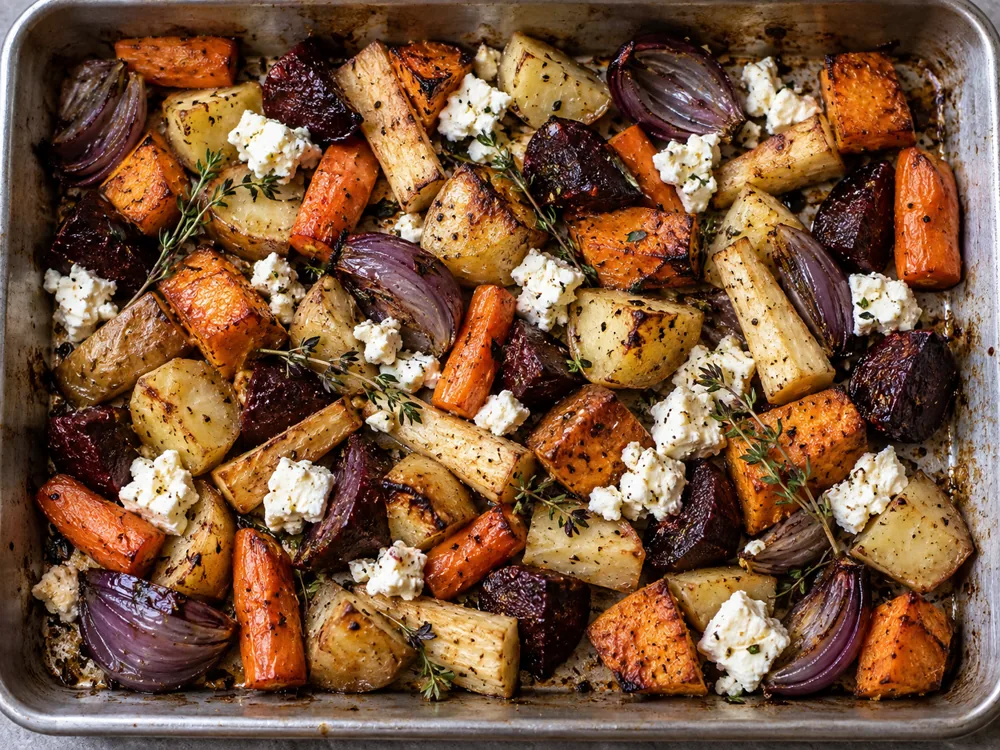
Greenfields' roast root vegetable salad serves four and uses 220 g of cheese. The vegetables, red onions, olive oil, salt, pepper and thyme roast at 200°C for 30 minutes, then the cheese chunks go in for a further 10 to 15 minutes, until the vegetables are golden and the cheese is soft.
Greenfields cuts the vegetables into chunks of about 1 inch and turns them once during the 30 minutes, and it cuts pumpkin or butternut squash larger because they cook more quickly.
The proportions fit what Butlers describes: 220 g of cheese goes over 1.5 kg of vegetables, roughly one part to seven by weight, so the cheese works as scattered soft chunks and not as a sauce. Greenfields serves the result as a roasted vegetable dish or with salad leaves.
Greenfields' wider list of uses runs from salads to soufflés, and Butlers adds one baked idea of its own.
| Use | How It Works |
|---|---|
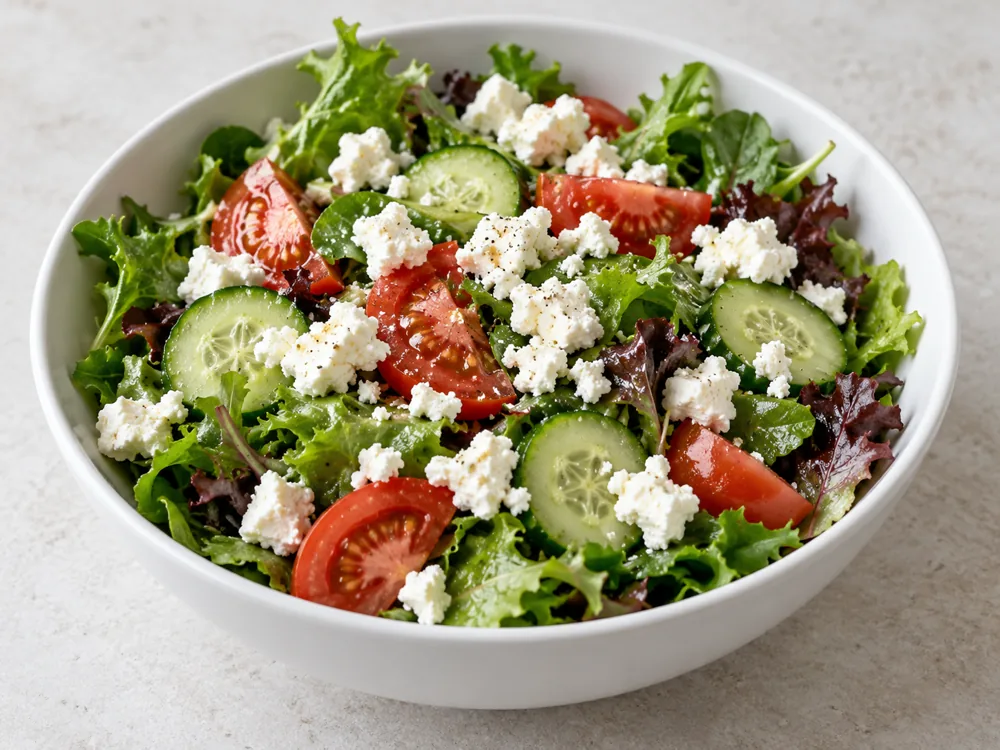
| Salads | Greenfields suggests crumbling the cheese over salads. |
| Sandwiches | Greenfields lists sandwiches among its uses. |
| Omelettes | Greenfields names omelettes. |
| Soufflés | Greenfields names soufflés. |
| Puff pastry tarts | Butlers suggests tarts with a tomato base and vegetables for an easy lunch. |
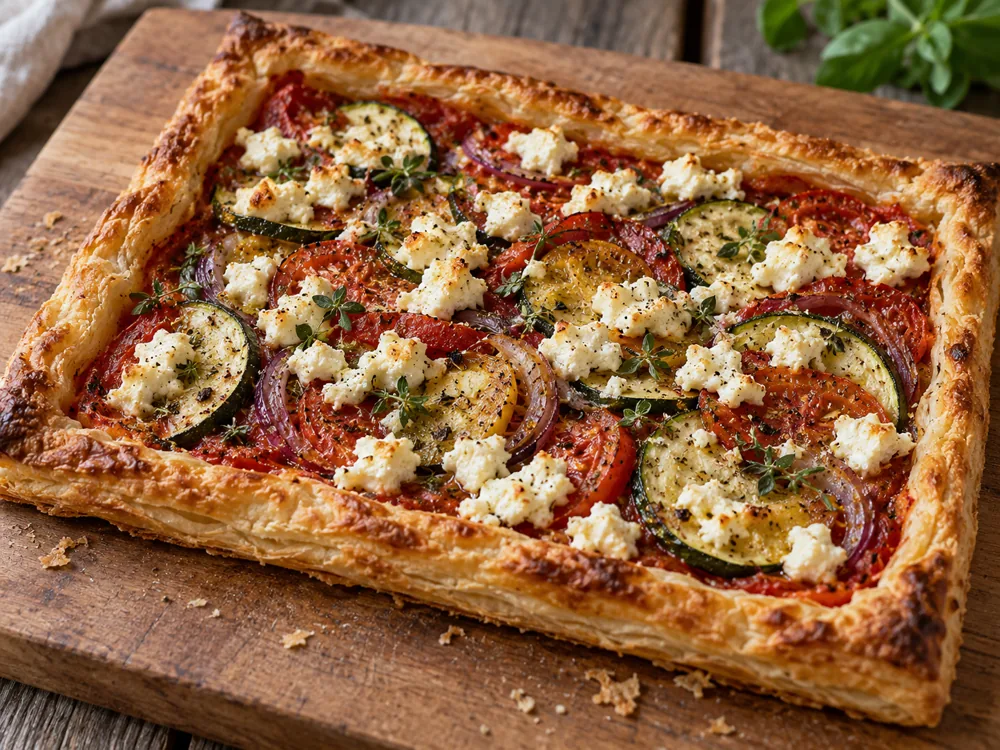
Reviews on Butlers' page add home uses such as cheese on toast and a cheese and onion pie.
How Should You Serve and Pair It?
Greenfields recommends Crumbly Lancashire on cheeseboards and with fruit cake or apple pie.
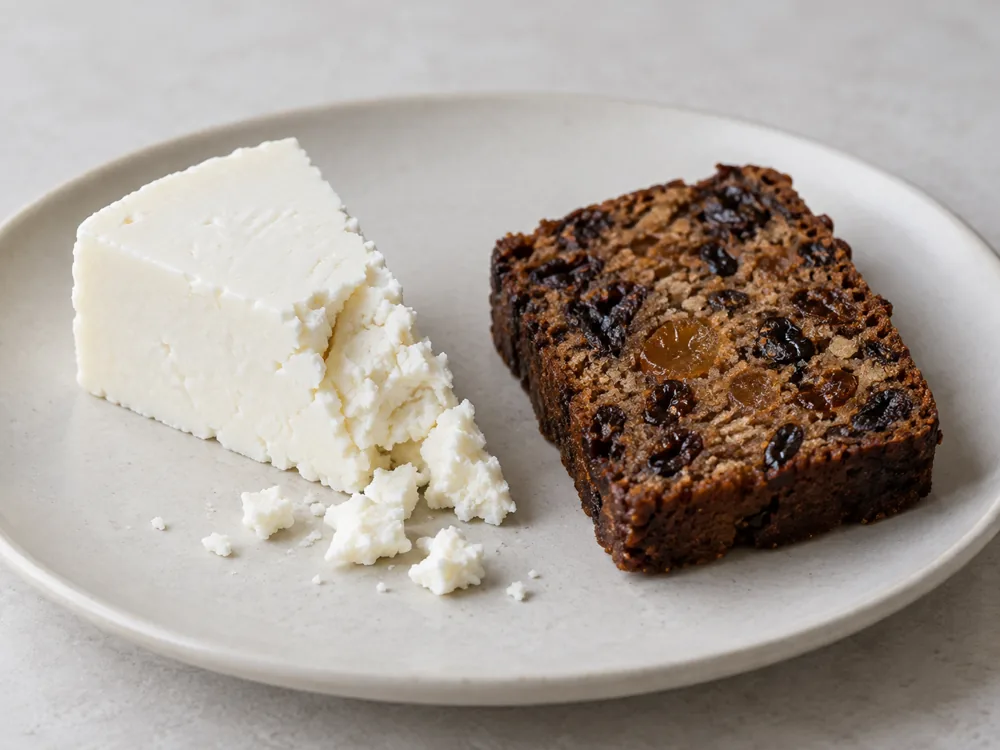
Singletons also names apple pie, the one pairing both makers share, and calls it a truly authentic Lancashire pairing. Its page adds crumbling the cheese into sandwiches or over salads and describes the tang as a refreshing alternative to creamier cheeses.
| Pairing | Why It Works |
|---|---|
| Fruit cake | Greenfields Dairy names fruit cake for Crumbly Lancashire. |
| Apple pie | Greenfields Dairy and Singletons name apple pie for Crumbly Lancashire. |
| Eccles cake | Wikipedia names it for Lancashire cheese in general, not for Crumbly in particular. |
| Chorley cake | Wikipedia names it for Lancashire cheese in general, not for Crumbly in particular. |
What Can Replace Crumbly Lancashire?
Wikipedia says Crumbly Lancashire resembles other crumbly cheeses such as Cheshire and Wensleydale. Of the two, it calls Cheshire the UK's largest-selling crumbly cheese, at around 6,000 tonnes a year.
Wikipedia describes Cheshire as dense, with a moist, crumbly texture, a mild, salty taste and an age of four to eight weeks, which makes it the closer match on age. Its taste word is salty where Crumbly's are fresh and acidic, so a swap keeps the texture and age but changes the bite.
The original Cheshire is plain white and makes up most production, according to Wikipedia, while red Cheshire is coloured with annatto, so a white wedge is the one that matches Crumbly. Wikipedia also says industrial Cheshire tends to be drier and less crumbly, more like a mild cheddar, so the texture depends on the maker.
What Should You Check on the Label?
Butlers, Singletons and Dewlay's listing on Mr & Mrs Cheese all say pasteurised milk, and Cheese.com says the same. Singletons lists pasteurised cow's milk, salt, rennet and starter culture as ingredients and marks the cheese suitable for vegetarians.
Dewlay's listing gives a single ingredient line, Lancashire cheese (cows milk), where Singletons spells out four, so how much a label says varies by listing.
Butlers, Singletons and Dewlay each sell a 200 g pack, with a 300 g option on Dewlay's listing, and two of the listings give nutrition per 100 g.
| Nutrient | Butlers Farmhouse Crumbly Lancashire | Dewlay Lancashire Crumbly |
|---|---|---|
| Energy | 1580 kJ / 381 kcal | 1684 kJ / 382 kcal |
| Fat | 31.8 g | 31.7 g |
| Saturates | 21.1 g | 21.1 g |
| Carbohydrate | 0.1 g | 0.1 g |
| Protein | 23.7 g | 24.1 g |
| Salt | 1.8 g | 1.6 g |
The two panels agree on saturated fat at 21.1 g and differ by 0.1 g on fat. Salt differs more, at 1.8 g against 1.6 g, so one general figure cannot stand in for the panel on the brand you buy.
Three label details separate these packs: the name, which can read Crumbly Lancashire or Lancashire Crumbly, the maturing time of up to eight weeks on Singletons' listing, and the salt, 1.6 g per 100 g on Dewlay's panel against 1.8 g on Butlers'.
How Long Does Crumbly Lancashire Keep?
Butlers says its Crumbly Lancashire is at its best when young, and Wikipedia says the style tends to be matured for only six to eight weeks.
Singletons says to cover the cheese once opened, keep it refrigerated and use it within 7 days, and the CDC says to keep a refrigerator at 40°F (4°C) or below. Butlers lists milk as the allergen.
The CDC lists dairy among perishable foods and says they should not be left out for more than 2 hours, or 1 hour above 90°F, a limit that covers a cheeseboard like any other perishable food.
Is Crumbly Lancashire Safe During Pregnancy?
The NHS says pasteurised or unpasteurised hard cheeses such as cheddar, gruyère and parmesan, and pasteurised semi-hard cheeses such as edam, are safe to eat. It says pasteurised or unpasteurised mould-ripened soft cheeses with a white coating, and pasteurised or unpasteurised soft blue-veined cheeses, must be thoroughly cooked.
The CDC lists hard cheese made with pasteurized milk among the safer choices and soft cheese from unpasteurized milk among the riskier ones. It adds that pregnant women are 10 times more likely to get a Listeria infection.
Pasteurised hard or semi-hard cheese is on the safer side of the lists that govern cheese in pregnancy, and every maker listed here says pasteurised. The firmness class varies between sources, so read the label and ask a midwife or doctor about the cheese you buy.
SOURCES & REFERENCES
Crumbly Lancashire is the white, single-day-make Lancashire cheese. Wikipedia and Cheese.com give about six to eight weeks of maturing, and Greenfields Dairy says Timothy Procter first made it at Chipping in the early 1950s.
No. Wikipedia says Creamy and Tasty Lancashire blend two or three days' curd, while Crumbly uses a single day's milk.
Wikipedia says only Beacon Fell Traditional Lancashire Cheese carries a protected designation of origin, so Crumbly Lancashire is a recognised variety but not a protected name.
Cheese.com, Butlers, Singletons and Dewlay's retailer listing all say pasteurised. Check the label for the milk treatment on the brand you buy.
Butlers says it does not melt the way Tasty Lancashire does and bubbles instead. Greenfields cooks it as chunks added for the last 10 to 15 minutes of a roast.
Greenfields Dairy names fruit cake and apple pie, and recommends the cheese on cheeseboards.