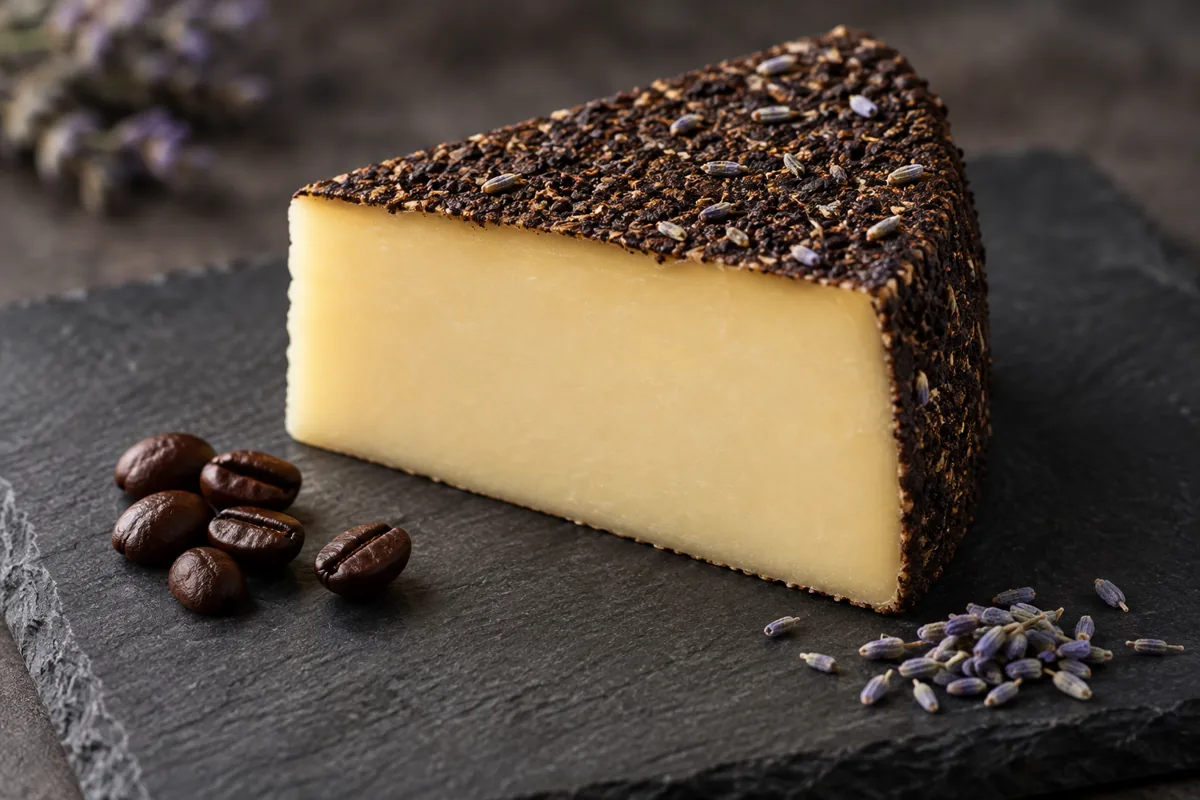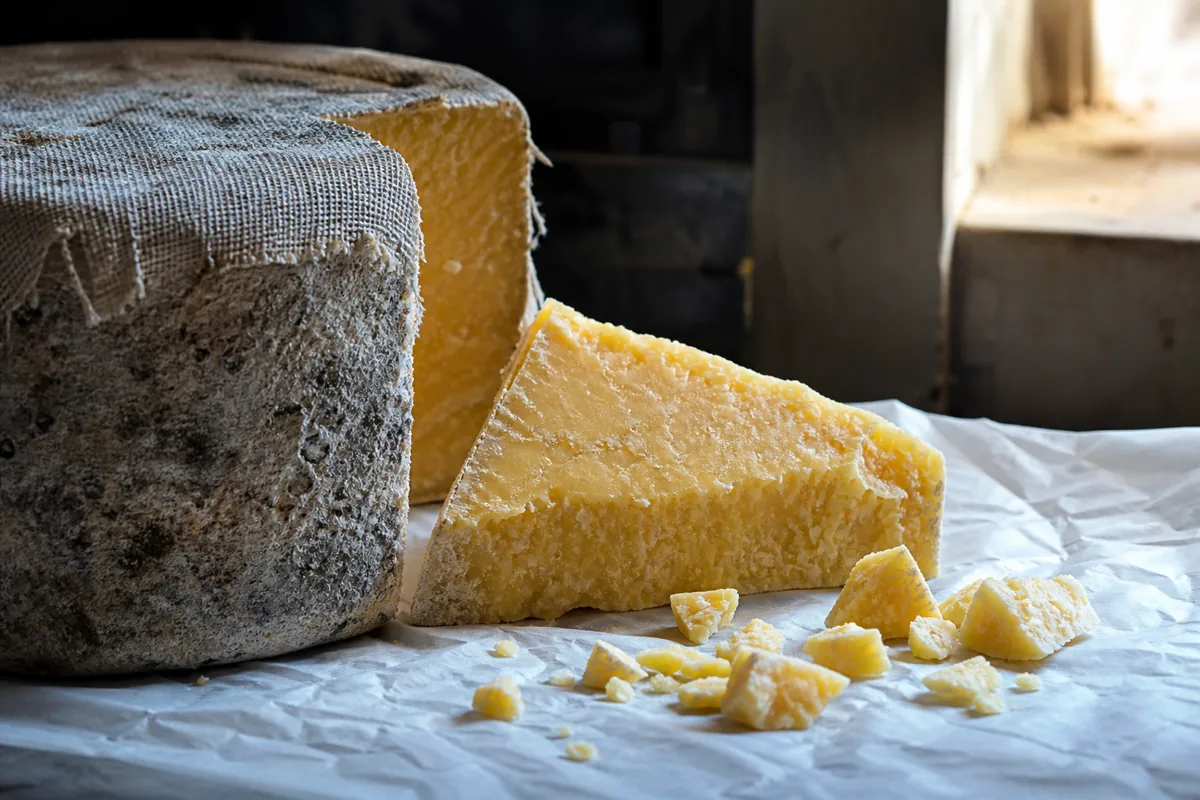
Cabot Clothbound is a pasteurized cow's milk cheddar that Cabot Creamery makes in Cabot, Vermont, and The Cellars at Jasper Hill ages in Greensboro, Vermont, for 9 to 14 months by Jasper Hill's count.
Both producers describe a crumbly cheddar with a nutty aroma, and the flavor notes range from caramel and toasted nut to chicken broth.
In This Article
What Is Cabot Clothbound Cheddar?
Cabot describes it as an approachable but complex natural-rind, bandaged cheddar, and Jasper Hill labels it an English-style cheddar with a bandaged rind. Bandaged means the wheel is wrapped in cloth, which is why the name says clothbound.
It belongs to the cheddar family, and Culture classes it as a hard cheese with a cloth-wrapped rind. Culture lists microbial rennet and Zingerman's lists vegetarian rennet.
Cabot says the milk comes from farm families across the Northeast, and Jasper Hill names the Cabot Cooperative's family farms.
The sources name the cheese four ways: Cabot writes Jasper Hill Farm Cabot Clothbound Cheddar, Jasper Hill shortens it to Cabot Clothbound, Zingerman's sells it as Cabot Clothbound Cheddar Cheese aged at Jasper Hill, and Culture files it as Cheddar (Cabot Clothbound). All four names point to the one collaboration between Cabot and Jasper Hill.
What Do Cabot and Jasper Hill Each Do?
Cabot's anniversary article starts the story in a Boston cheese shop, where the new-products team heard from a buyer about a Vermont clothbound cheddar that was priced too high.
Cabot's Clay Whitney says the company first thought about making a clothbound cheddar without a cave, then decided it needed someone else to age it. Jasper Hill dates the start to 2003, when it says Cabot Creamery asked it to age a special batch of cheddar.
| Step | Who handles it |
|---|---|
| Milk | Family farms in the Cabot Cooperative (Jasper Hill) or farm families across the Northeast (Cabot) |
| Cheddar making | Cabot Creamery, in Cabot, Vermont |
| Aging | The Cellars at Jasper Hill, in Greensboro, Vermont |
Culture sets the two companies far apart in scale, calling Cabot one of Vermont's largest cheese producers and Jasper Hill one of its smallest, and says Cabot's aging facilities and expertise are not suited to cloth-wrapped cheddar. Zingerman's adds that Cabot has made cheddar for over ninety years and that nearly all of it is wrapped in wax.
Samuel Rheume of Jasper Hill says in Cabot's anniversary article that Cabot paid the Kehler brothers what amounted to a regular consignment fee for aging, which gave a young business cash flow. Zingerman's describes a purchase instead: the Kehlers buy wheels of clothbound cheddar from Cabot and age them.
Neither version changes who makes the cheddar and who ages it, so the table above holds under both.
At Jasper Hill, the young cheese is coated in lard and given another layer of cloth, then held in a specially calibrated vault where the wheels are brushed, turned, and monitored.
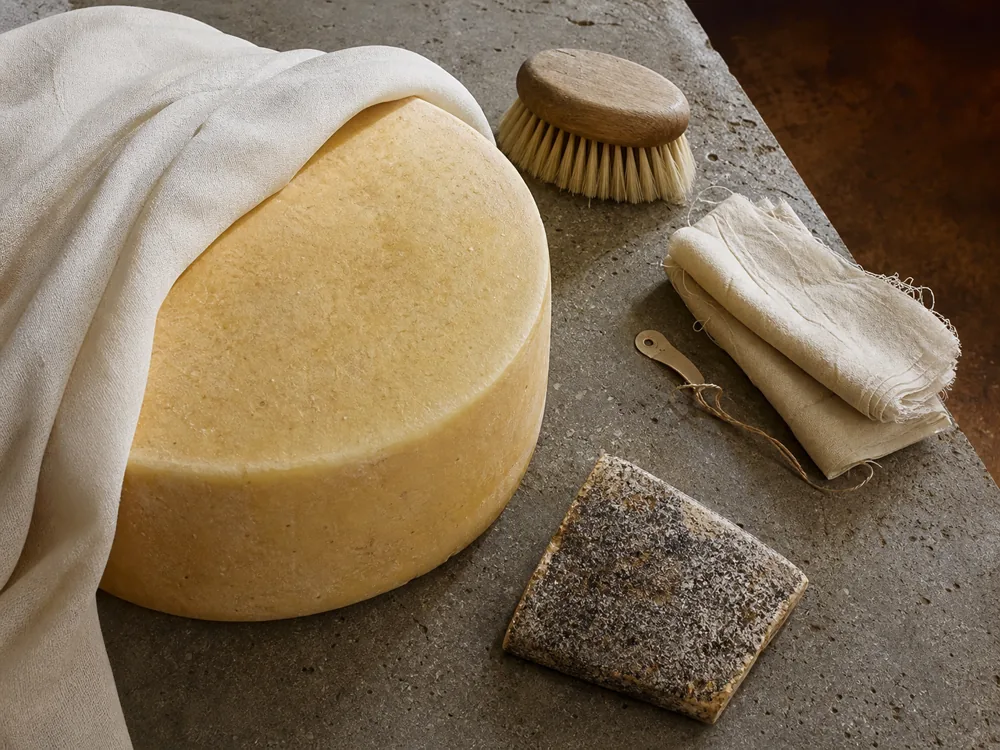
Culture says Cabot makes the wheels already wrapped in cloth, and Zingerman's says they reach its cheesecave still wrapped. That matches Jasper Hill's wording of an additional layer of cloth.
Culture adds that Cabot makes 60 cloth-wrapped wheels every three months and sends them to Jasper Hill. Zingerman's says the team at Jasper Hill specially selects the wheels it receives.
How Do Cloth and Lard Change the Cheese?
Zingerman's says the lard goes on the cloth and never touches the cheese, and that it holds in moisture so the cheese matures more evenly. It adds that cloth, unlike wax or plastic, lets the cheese breathe, which keeps longer-lasting flavors from being overwhelmed.
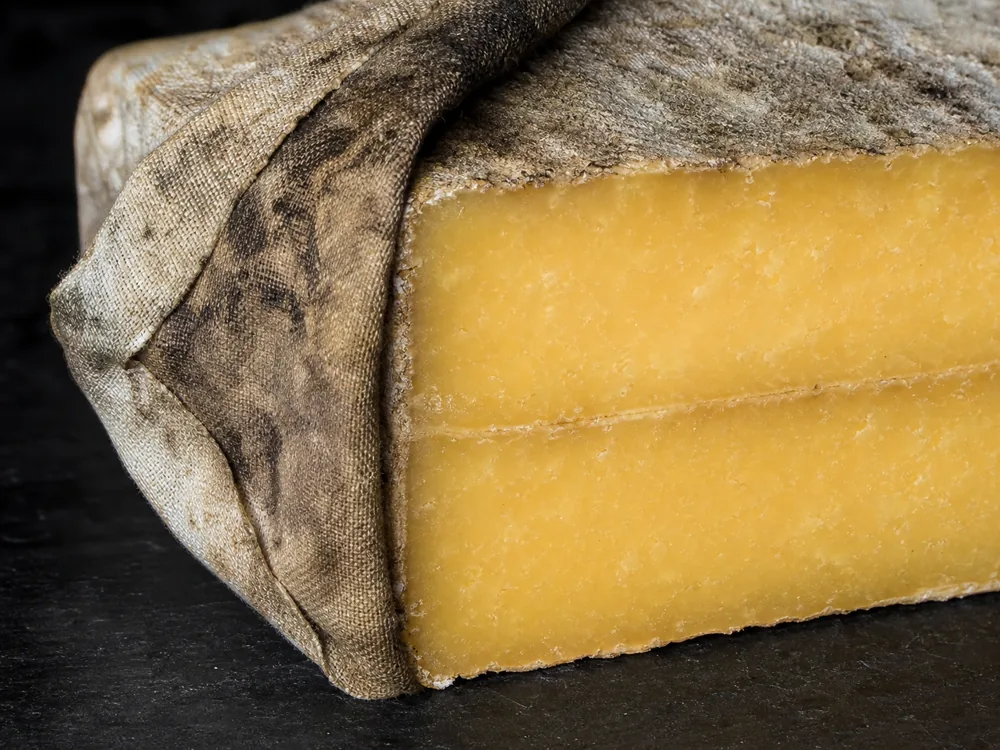
Zingerman's traces the lard to Yankee cheesemakers: England's mild weather suited aging cheese, but New England's hot summers made it age and dry out too quickly, so they covered the cloth with lard, a technique Zingerman's says is still used to make Cabot Clothbound.
Wax arrived by the end of the 19th century, and Zingerman's says it holds in moisture even better than lard while sparing the maker the regular flipping that cloth-wrapped wheels need to mature evenly and the brushing that keeps them clean. That is the work Jasper Hill describes when it says the wheels are constantly brushed, turned, and monitored.
Because cheese is sold by weight, Zingerman's says the moisture that wax and vacuum plastic keep in also means more profit, and it says the savings come at the expense of flavor: a maturing cheese releases gas, which those wraps lock in. Its product page makes the cost point from the other side, saying cloth-aged cheese loses weight faster and so costs more.
How Big Is the Wheel and How Long Does It Age?
Jasper Hill gives a 35-pound wheel aged 9 to 14 months, while Culture lists a 25-pound wheel and a minimum age of 10 months. Zingerman's two pages add a third reading of the age.
| Point | Jasper Hill | Culture | Zingerman's |
|---|---|---|---|
| Wheel weight | 35 lb | 25 lb, about 16 in across and 5 in high | Not stated |
| Age | 9 to 14 months | At least 10 months | Product page: at least 9 months, plus a quoted Food & Wine line giving 9 to 14; article: peak at about 12 months |
Zingerman's own product text says the cheese is aged at least 9 months and quotes Food & Wine for the 9 to 14 range, while its article says the wheels it receives are usually about 12 months old, the age it names as the peak. Jasper Hill, which does the aging, lists the wheel at 35 pounds; Culture lists it at 25 pounds.
Dividing the two wheel weights shows which one fits Jasper Hill's club listing of a ⅛ wheel of about 4 lb and a ¼ wheel of about 8 lb: 35 pounds gives about 4.4 and 8.75, while 25 pounds gives about 3.1 and 6.25. That supports Jasper Hill's 35 pounds for the wheels it sells.
The same club site lists a 12 oz wedge labeled Black Label Select. Zingerman's sells cut pieces of 0.50 lb and 1.00 lb.
Zingerman's explains why clothbound ages stay short: clothbound cheddars age faster than waxed ones, and it says a clothbound wheel kept more than a couple of years would dry out completely and turn far too salty. The long ages that reached the specialty market in the 1990s, two years, seven years and even a decade, are possible only in wax or vacuum plastic by that account.
For a buyer, that separates two goals: a very old cheddar, which Zingerman's says needs wax or vacuum plastic, and a clothbound, which peaks around its first year.
What Does Cabot Clothbound Taste Like?
Jasper Hill describes a nutty aroma and medium acidity, with caramel sweetness and savory notes of chicken broth and toasted nut. Cabot's anniversary article adds a slightly crunchy, rustic crystalline texture and a bit of tang.
Jasper Hill says the crumbly, crystalline paste turns creamy on the palate.
Culture reads the cheese differently: butterscotch and caramel with savory vegetal notes and a pronounced tang, in a smooth, dense, slightly brittle paste that it calls pale straw-colored. Zingerman's sits closer to Jasper Hill, with caramelly, nutty sweetness, brothy notes, some bright fruity flavors, and a classic cheddar tang.
Every source mentions caramel, broth shows up in the Jasper Hill, Cabot and Zingerman's notes, and vegetal appears only in Culture's.
Tang is where the sources are least aligned: Cabot says a bit of a tang, Jasper Hill lists medium acidity and a slightly tangy flavor, and Culture calls the tang pronounced.
Zingerman's, which calls the acidity bright, explains the vocabulary. The sharpness of block cheddar comes from how much acidity the finished cheese holds, and smaller cheesemakers prefer the word acidic, so Jasper Hill's medium acidity reads as a middle grade of that same property.
How Does It Differ From English Cheddar?
Zingerman's sets the American cheese against its English ancestor on flavor, saying English cheddars can be a bit vegetal and piquant where Cabot Clothbound leans caramelly and nutty. Culture's vegetal note sits on the English side of that contrast.
Zingerman's calls clothbound cheddar not new at all: English cheesemakers have used cloth since at least the 1600s, and the first cheddars made in colonial New England were cloth-wrapped.
By Zingerman's 2015 account, farmstead cheesemaking in England all but disappeared in World War II, when the government required milk to be pooled for wartime cheese rations, and only three or four traditional cheddars are made there today. Its product page names Montgomery's as an English maker that still wraps cheddar in cloth.
Zingerman's buyer's guide lists the marks of a traditional cheddar: a round drum about a foot across instead of a block, a bandaged rind, and production on the farm where the cows live.
Cabot Clothbound shares the bandage, while Culture gives its wheel as 16 inches across and 5 high, flatter than that drum, and the milk comes from many family farms in Cabot's cooperative.
Texture gives a test: Zingerman's says real cheddar flakes and breaks when bent, while block cheddar made and aged in wax bends like rubber, and Jasper Hill's crumbly and Culture's slightly brittle descriptions put Cabot Clothbound on the flaky side.
Color gives another: Zingerman's says traditional cheddar runs from cream through soft yellow to gold because of what the cows eat, while orange cheddar is dyed with annatto or food coloring, and Culture's pale straw paste falls inside that natural range.
Zingerman's own suggestion is to buy a wedge from each side of the Atlantic and taste them together, saying the difference is easy to taste.
Can You Eat the Rind?
Zingerman's says the wheels reach its cheesecave still wrapped in cloth and that it takes the cloth off before a piece goes to a customer, so the rind on that piece is edible. It suggests eating the rind or dropping it into broth or risotto for extra flavor, and notes that the rind may show an imprint of the cloth.
That rind answer comes from one seller, so ask your cheesemonger whether your piece still has any cloth on it.
What Goes With Cabot Clothbound?
Jasper Hill and Cabot each publish pairing lists, and the two overlap on honey, cider, hoppy ale, and Cabernet Sauvignon.
| Pairing | Type | Why It Works |
|---|---|---|
| Charcuterie | Food | Listed by Jasper Hill and Cabot. |
| Apple jelly | Food | Jasper Hill lists it; Cabot's board recipe lists jam or chutney, and Zingerman's names cider jelly. |
| Chestnut honey | Food | Jasper Hill names chestnut honey; Cabot lists honey. |
| Off-dry sparkling apple cider | Drink | Jasper Hill's pick; Cabot suggests dry cider. |
| Hoppy ale | Drink | Listed by Jasper Hill and Cabot. |
| Oaked Cabernet Sauvignon | Wine | Jasper Hill's pick; Cabot names Cabernet Sauvignon. |
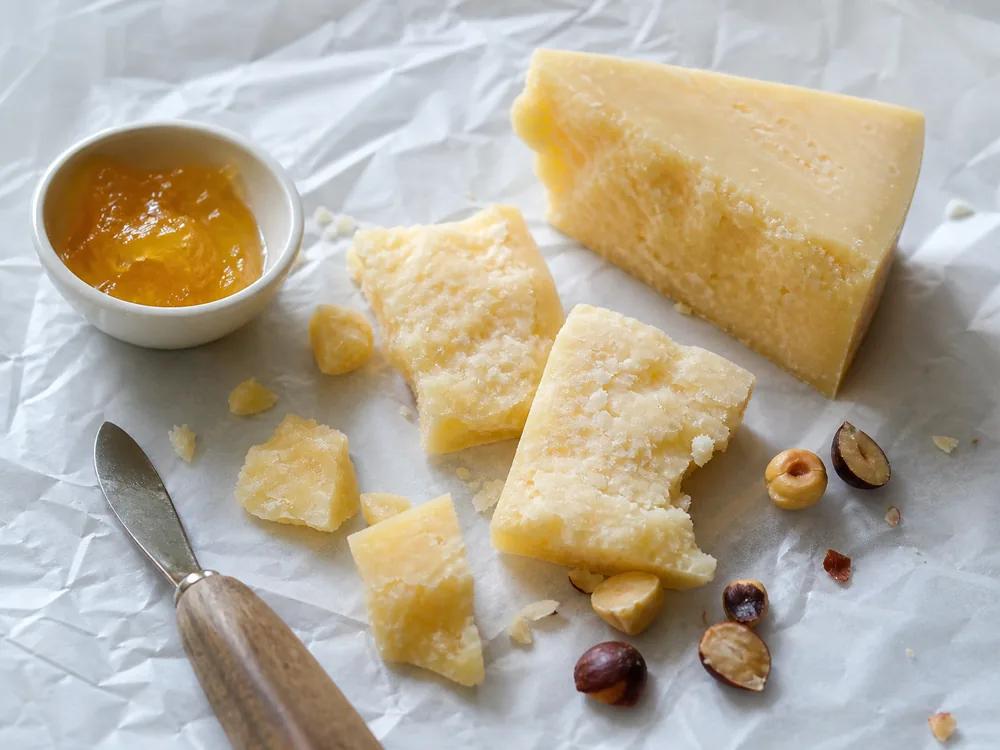
Cabot suggests dry cider, whereas Jasper Hill specifies off-dry sparkling apple cider, so the two producers differ on sweetness.
Both producers name hoppy ale as a beer match.
For wine, Jasper Hill specifies an oaked Cabernet Sauvignon, whereas Cabot names the grape without a style.
Cabot's own cheese board recipe crumbles part of a 6-ounce wedge into bite-size pieces and displays the rest whole. It sets the wedge beside Alpine Cheddar and 10-Year Cheddar, with berries, fruit, hard salami, vegetables, crackers, and fig jam or chutney, and offers olives, nuts, and mustard as options.
The same recipe slices its two smaller cheddar bars into triangles, squares or rectangles, so only the clothbound is crumbled, which fits the crumbly paste Jasper Hill describes.
Jasper Hill lists charcuterie first, and Cabot's board uses hard salami as its cured meat. Jasper Hill gives one reason for its food pairings, the savory-sweet balance of a signature tang and caramel nuttiness.
Zingerman's reaches a similar idea for cider jelly, calling the tangy-yet-sweet flavors an excellent partner, and says the cheese also lifts sandwiches, burgers, and crackers.
Cabot's anniversary article also quotes Murray's Cheesemonger in New York, who describes a crumbly paste with notes of roasted peanuts and pairs it with jam or dark chocolate, the only chocolate match in the cited sources.
Is Cabot Clothbound Safe During Pregnancy?
Jasper Hill, Cabot, and Zingerman's all describe the milk as pasteurized. The NHS lists pasteurised or unpasteurised hard cheeses such as cheddar among the safe choices, and the CDC lists hard cheese made with pasteurized milk, such as cheddar, among its safer ones.
The CDC says pregnant women are 10 times more likely to get a Listeria infection, and its safer listing for hard cheese depends on pasteurized milk, so another clothbound cheddar such as Avonlea's cloth-wrapped cheddar needs its own label check.
How Should You Store and Serve It?
Wrap, freezing and serving steps for this cheese come from Zingerman's product page, and the refrigerator temperature comes from the CDC.
- Where: the refrigerator, kept at 40°F (4°C) or below as the CDC advises.
- Wrap: a waxed bag or parchment paper.
- Freezing: Zingerman's says not to freeze it.
- Serving: take it out 20 to 30 minutes before serving, which Zingerman's says brings out aroma and flavor.
Zingerman's names air as the primary culprit for flavor loss: the rind kept it out of the paste while the wheel was whole, but a cut face is exposed to air that dries it and carries in off-aromas. Its waxed cheese bag lets the cheese breathe yet keeps it from drying out, and Zingerman's says the bag can be reused for almost any hard cheese.
Cutting to order follows from the same logic: Zingerman's says a piece spends only a few hours between cutting and packing, while many sellers ship cheese cut weeks or months earlier and sealed in vacuum plastic, which it says only slows the fading.
Zingerman's storage guide says bigger hunks of cheese last longer.
For cheddar, Zingerman's says the cold, dry air of a refrigerator saps flavor and tightens texture, so the cheese must return to room temperature to be at its best, and it says aromas expand and more fat spreads on the tongue as cheese warms.
The CDC says perishable food, a group that includes dairy, should not be left out for more than 2 hours, or 1 hour above 90°F. The short rest before serving sits well inside that limit, and a board left out at a gathering runs on the same clock.
Which Awards Has It Won?
Cabot lists a gold medal at the 2004 World Cheese Awards. Whitney points to three facts about that win: the cheese had been sold for only about a year, the contest was held in England, which he calls cheddar's hometown, and the milk was pasteurized.
Whitney says the pasteurized milk made the win notable because it was thought that only raw milk could make a great cheddar.
Cabot's anniversary article lists the later results in the table below, and Jasper Hill confirms the 2006 Best in Show.
| Year | Competition and placing |
|---|---|
| 2004 | World Cheese Awards, gold medal |
| 2006 | American Cheese Society, Best in Show |
| 2022 | World Cheese Awards, 2nd place |
| 2023 | American Cheese Society, 3rd place |
| 2024 | World Championship Cheese Contest, 2nd place |
SOURCES & REFERENCES
Cabot Creamery makes the cheddar in Cabot, Vermont, using pasteurized milk. The Cellars at Jasper Hill ages it in Greensboro, Vermont.
Jasper Hill gives 9 to 14 months.
Zingerman's product page says at least 9 months and quotes Food & Wine for 9 to 14. Culture lists a minimum of 10 months, and a Zingerman's article puts the peak at about 12 months.
Zingerman's says the rind on its pieces is edible because it removes the cloth before sale, and suggests adding it to broth or risotto. For a piece from another seller, ask the cheesemonger whether any cloth is still on it.
Jasper Hill lists medium acidity, caramel sweetness, and notes of chicken broth and toasted nut. Culture lists butterscotch, caramel, savory vegetal notes, and a pronounced tang.
Jasper Hill names charcuterie, apple jelly, chestnut honey, off-dry sparkling apple cider, hoppy ale, and oaked Cabernet Sauvignon. Cabot's article adds honey and nuts, and its board recipe adds jam or chutney.
The NHS lists pasteurised or unpasteurised hard cheeses such as cheddar as safe, and the CDC lists hard cheese made with pasteurized milk, such as Cheddar, among its safer choices. Jasper Hill, Cabot, and Zingerman's all give pasteurized milk for this cheese, so check the label and ask your clinician.