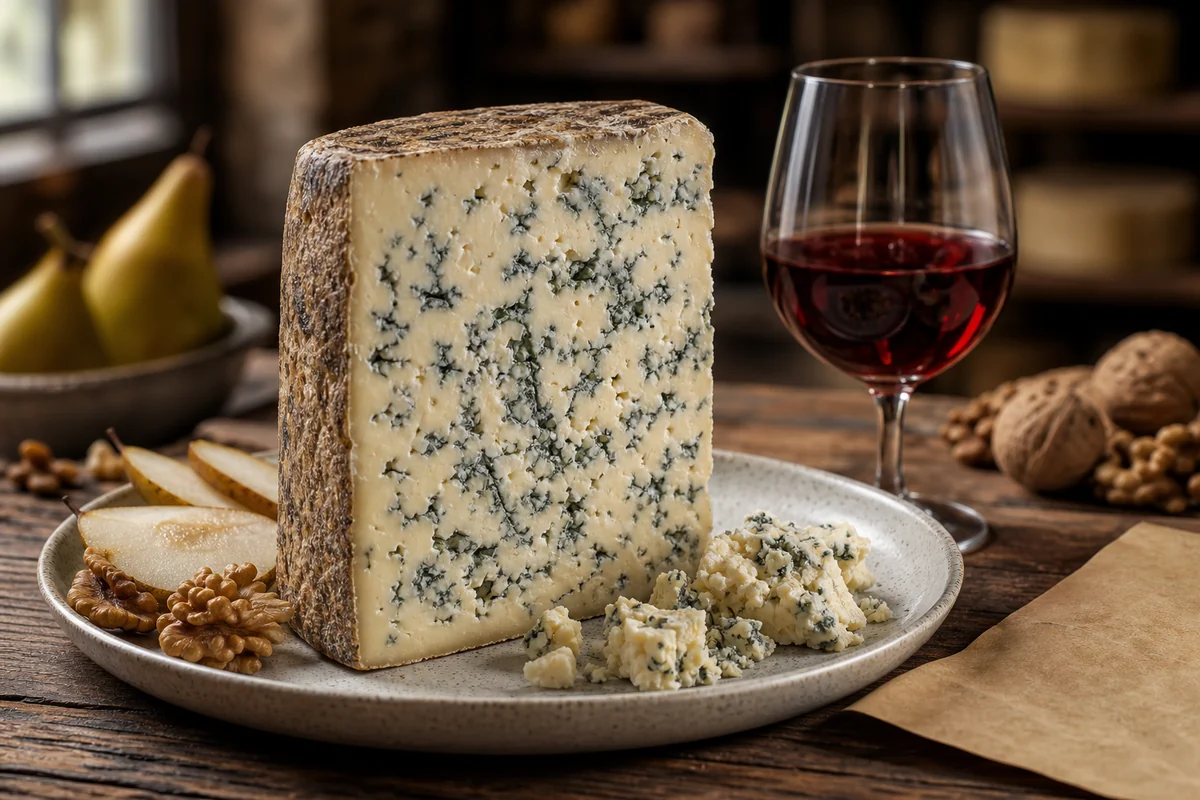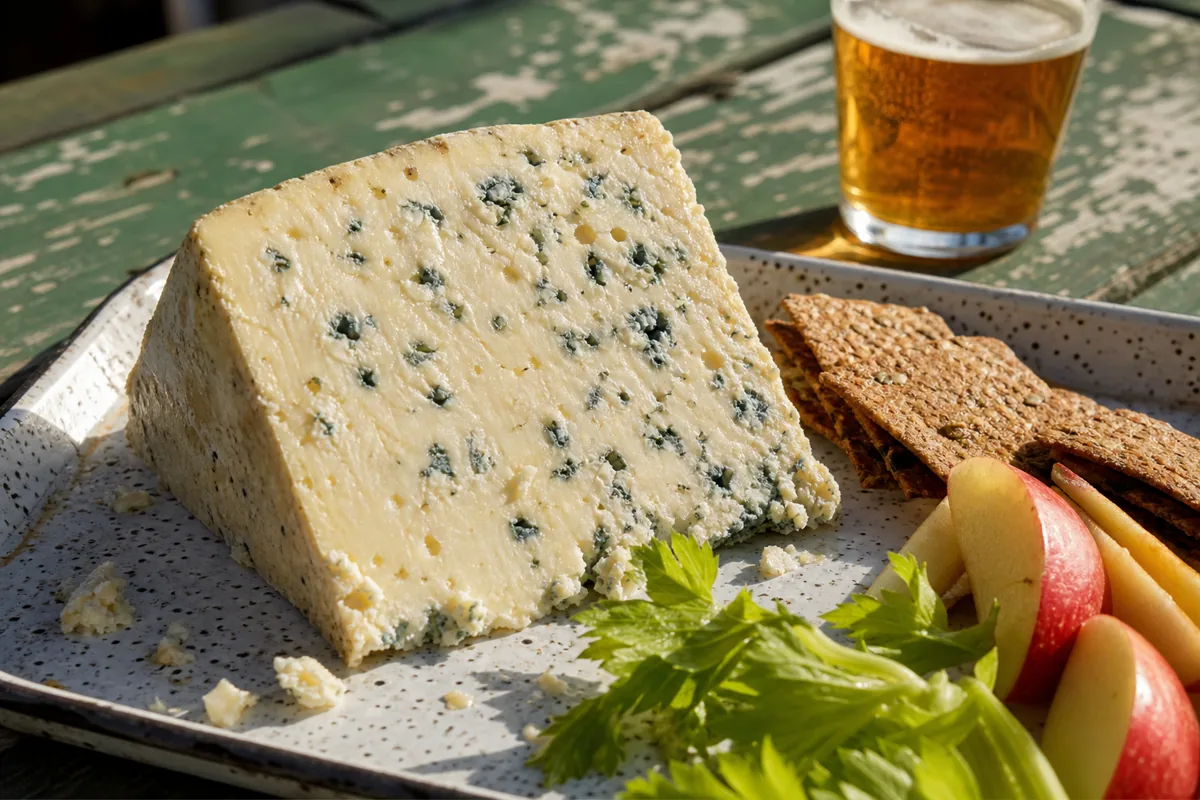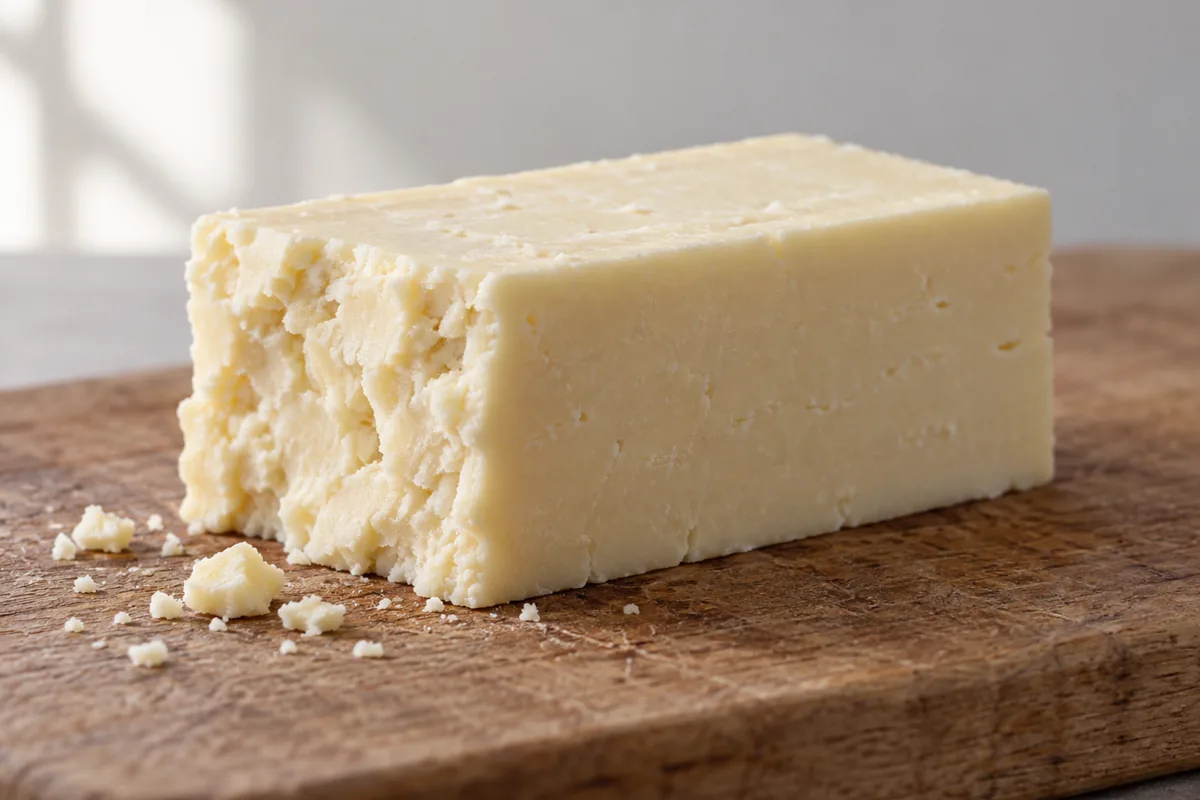
Flagship is the signature cheese of Beecher's Handmade Cheese in Seattle, a semi-hard, pasteurized cow's milk cheese aged 15 months with a nutty flavor and a slight crumble. Beecher's says the first wheel was handcrafted just as its Pike Place Market shop opened in 2003.
The recipe follows a cheddar's method but adds cultures normally used for Gruyère and Emmental, so Flagship is entered in cheddar categories yet tastes less like a traditional cheddar.
Beecher's also sells the same recipe as a clothbound cheese, Flagship Reserve.
In This Article
How Is Flagship Made?
Beecher's says Flagship is a cheddared cheese but not a Cheddar: it goes through the cheddaring step without following the specific recipe of Cheddar cheese. Wikipedia adds that Beecher's does not call it cheddar because of its different taste.
The cultures are ones typically used for non-cheddar cheeses, such as Gruyère and Emmental, and they change the cheese's nature, flavor and texture.
In Wikipedia's account of Beecher's cheesemaking, drawn from press between 2003 and 2008, the milk is pasteurized and then warmed in a trough where the first live cultures and rennet go in. A Beecher's cheesemaker quoted there says that a variation of half a degree in pasteurizing can change the flavor of the cheese.
After the whey drains, a large amount of salt is added to draw out more whey, and the curds are filled into molds, stacked and pressed under a constant 60 pounds of pressure for at least 24 hours before the cheese goes to age.
Standard Flagship ages for 15 months as a rindless block that Beecher's describes as "aged in a cryovaced block, losing no moisture." Pressing is therefore the last step that takes moisture out of the standard block, because the sealed aging after it loses none.
Wikipedia, relaying a 2006 San Francisco Chronicle article, describes blocks of 40 pounds (18 kg) and says the plastic-bag aging is why Flagship, unlike cheddars, lacks a rind, is moister, resembles butter visually and smells milky.
What Milk Does Flagship Use?
Beecher's says the milk is pasteurized cow's milk from local Jersey and Holstein dairy farms. Wikipedia adds that Beecher's owns the herd at Green Acres Farm in Duvall, Washington, and leases the cows back to the farm.
Wikipedia reports that the first milk, from Holstein cows, was sweet but lacked the fat and nuttiness of Jersey milk, and that Beecher's balanced the two until it was satisfied, with Dammeier describing the blend as a 50-50 mix.
WSU Magazine described the same trade-off in 2004: Jerseys and Brown Swiss give higher-fat milk but yield less of it than Holsteins, so Beecher's bought an additional 40 Jerseys to raise the fat, with a goal of 4.2 percent butterfat in its milk.
That profile also named a different supplier than Beecher's names today: Cherry Valley, a small dairy outside Duvall, with mostly Jersey and Brown Swiss cows. So if an older write-up gives you those breed and farm details, they do not describe the milk Beecher's now gives as Jersey and Holstein.
Wikipedia says each farm supplies milk from a single herd, so the diet and environment that shape a batch's flavor stay consistent. Cheesemaker Brad Sinko said he "went and standardized the herd" because Beecher's lacked room for milk-separating systems.
On pasteurizing, Wikipedia quotes Dammeier's 2003 view that he is "convinced that raw milk doesn't create more flavor," adding that he finds his cheeses taste more consistent without it.
Where Did Flagship Cheese Come From?
Kurt Beecher Dammeier had never been a cheesemaker when he founded Beecher's in 2003, after noticing that Molbak's garden store at Pike Place Market was closing and a large retail space was about to open.
In a 2004 Washington State University magazine profile he sums up his position: "I knew how to sell it. I didn't know how to make it."
So he hired Brad Sinko, a microbiologist who had run a family cheesemaking operation in Oregon, to make the cheese.
Flagship's model was Cougar Gold, the cheddar made at Washington State University, where Dammeier graduated in 1982. WSU Magazine reported in 2004 that he traces his passion for cheese to discovering Cougar Gold there, and that Beecher's aged Flagship was inspired by it.
The company takes its name from Dammeier's great-grandfather, Beecher McKenzie, and the make room at the Pike Place shop is walled in glass so shoppers can watch cheese being made.
How Does Flagship Differ from Cougar Gold?
A WSU Magazine writer who tasted a seven-month-old Flagship in 2004 found a cheddar style with a creamy finish rather than the normal sharp one, and described it as a little denser and a little creamier than Cougar Gold.
Dammeier told the writer the reason was fat: the butterfat in Beecher's milk is higher than in the milk behind Cougar Gold, which comes from the university's Holstein herd.
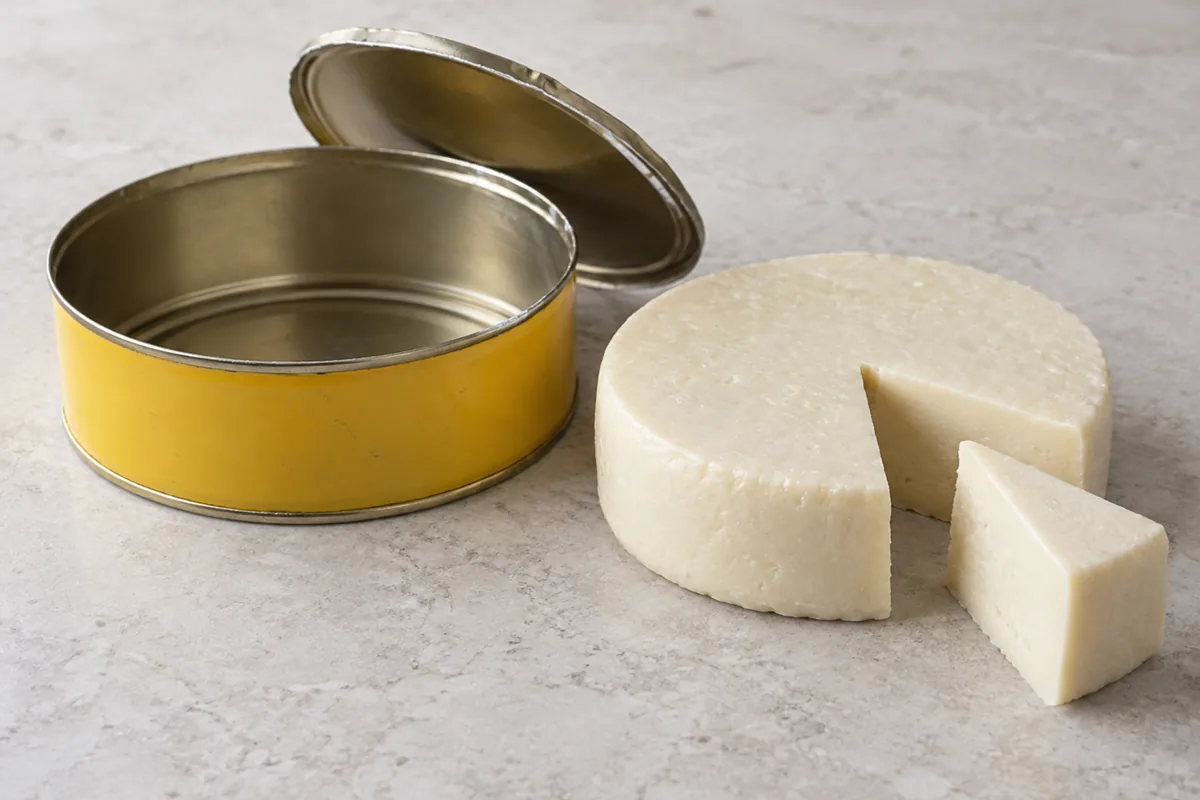
Cougar Gold also comes in a can, a format that Washington State College food scientists began researching in the 1930s because wax around cheese can crack and let it spoil.
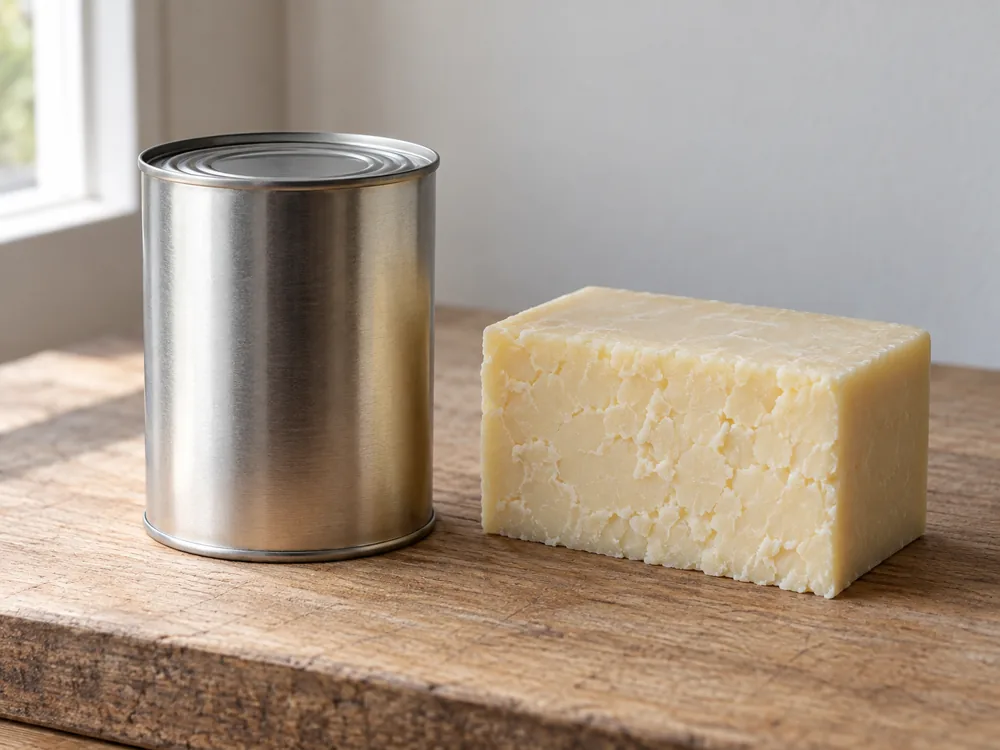
The obstacle was carbon dioxide from bacteria in the cheese, which made cans bulge and even burst, until professor N.S. Golding found that a second starter culture greatly reduced it.
That second culture, known as WSU 19, is also what WSU credits for Cougar Gold's finish, softer and creamier than the bitter notes and sour-milk sharpness it says cheddars generally leave.
Beecher's uses an adjunct culture for Flagship as its homage to Cougar Gold, but WSU says it is not the same culture, and the identity of WSU 19 is closely guarded.
| Attribute | Flagship | Cougar Gold |
|---|---|---|
| Milk breeds | Jersey and Holstein (Beecher's today) | Holstein (WSU's own herd, 2004) |
| Milk butterfat (WSU, 2004) | 3.9 percent | 3.8 percent |
| Aging stated | 15 months (Beecher's) | About a year (WSU, 2004) |
WSU ties Cougar Gold's more crumbly texture largely to its aging, while Beecher's describes Flagship as dense and creamy with a light crumble.
What Does Flagship Taste Like?
Beecher's describes Flagship as robust and nutty, with hints of caramel and browned butter, and as balanced, dense and creamy with a light crumble.
Its cheese-trail page calls the flavor "semi-sharp, rich, and nutty," so some cheddar edge remains despite the Swiss-style cultures. Wikipedia stresses the other side, a sweet finish and a creamy texture unlike traditional cheddar.
How Long Is Flagship Aged?
Standard Flagship is aged 15 months by Beecher's product sheets, but older write-ups give other figures. WSU Magazine reported in 2004 that Beecher's was releasing its aged Flagship that November, and the piece its writer tasted was only seven months old.
Wikipedia, citing a 2006 San Francisco Chronicle article, says Flagship ages for approximately one year. Citing a 2007 Seattle PI profile, it says Sinko had adjusted the formulas, cultures and enzymes and lengthened the average aging to 18 months, while the company publicly claimed only 12.
Those figures date from 2004 to 2007, so the age statement has moved over time. If an older review gives you a different age, go by Beecher's current sheets for what a pack contains now.
What Is the Difference Between Flagship and Flagship Reserve?
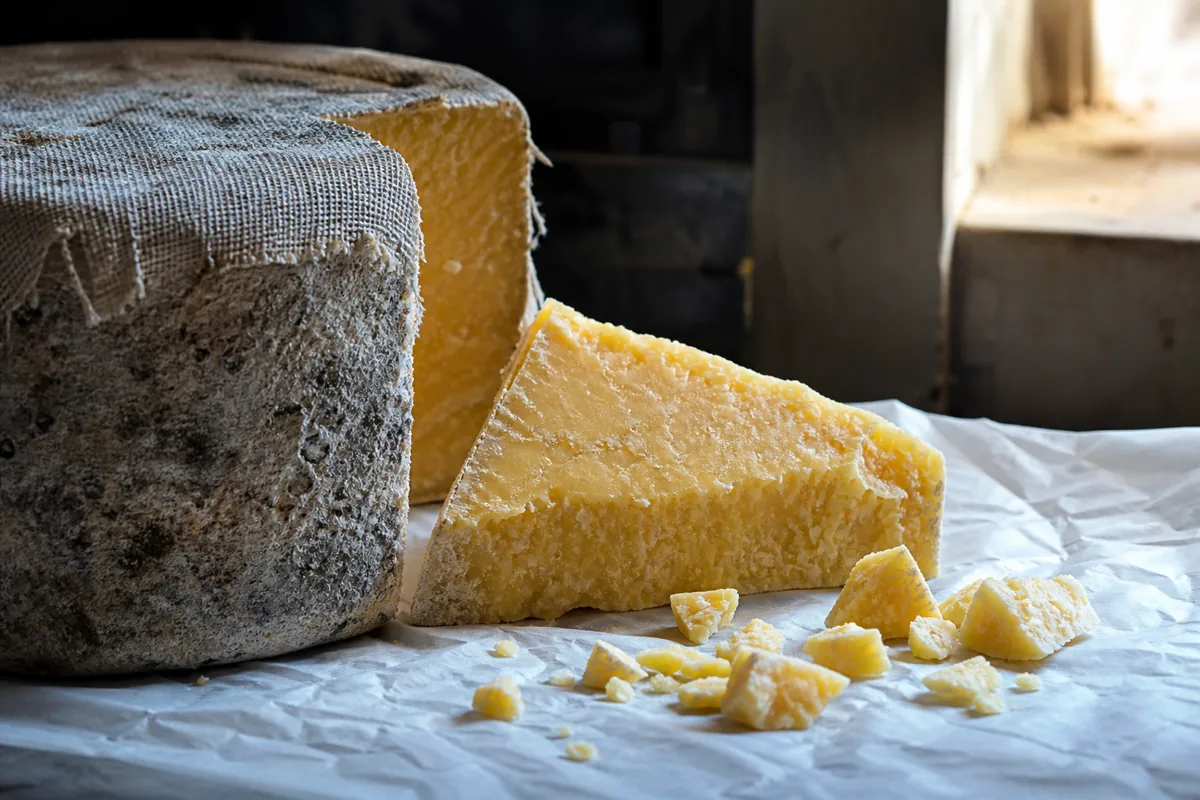
Beecher's calls Reserve the same recipe as Flagship, but says "being a clothbound cheese makes all the difference."
Each Reserve truckle is wrapped in cloth, rubbed with butter and aged at 47°F and 85% humidity, brushed and hand-turned throughout. Wikipedia, drawing on 2007 press, describes the wheels resting on racks in open air and turned daily.
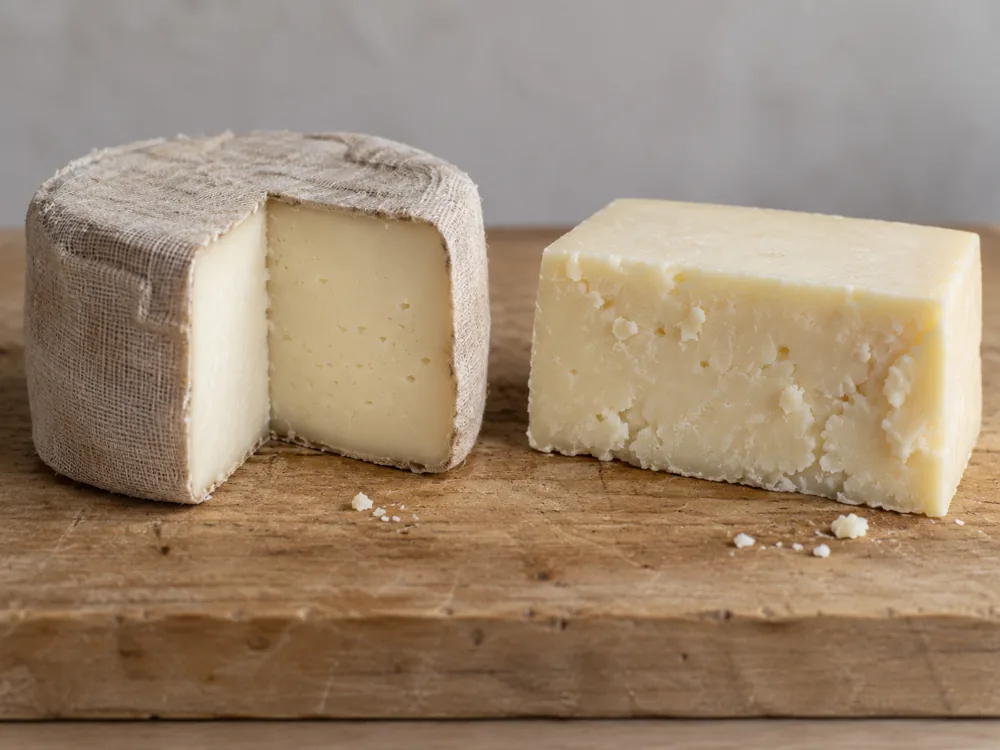
Cloth and open-air aging costs the wheel 14 to 16 percent of its moisture, while the standard block ages sealed and loses none. Beecher's says this concentrates the flavor, and its wholesale sheet adds that the loss allows slightly lower moisture and higher salt.
Wikipedia, citing the same 2007 press, gives a different measure, a loss of up to 12 percent of the wheel's initial weight, so that figure and Beecher's moisture figure count different things.
| Attribute | Flagship | Flagship Reserve |
|---|---|---|
| Format | Rindless block | Clothbound truckle with a natural rind |
| Sodium per 1 oz (28 g) | 170 mg | 210 mg |
| Aging stated by Beecher's | 15 months | 13 or more months |
Reserve is not the longer-aged cheese: Beecher's gives 13 or more months for Reserve and 15 months for Flagship. What sets Reserve apart is the cloth and open-air aging.
Wikipedia relays a Food & Wine view that the shorter aging gives Reserve a sharper, nuttier taste than the block.
Wikipedia, drawing on 2007 press, lists Reserve wheels at 18 pounds, while Beecher's current wholesale sheet lists a 16-pound truckle measuring 8 by 8 by 10 inches.
Beecher's describes Reserve as dense, with butterscotch notes that melt smooth and a long, creamy finish.
The choice comes down to format: standard Flagship ages sealed and loses no moisture, while Reserve ages in cloth, loses 14 to 16 percent of its moisture and ends up saltier, yet it is not the longer-aged cheese.
What Goes Into Beecher's World's Best Mac and Cheese?
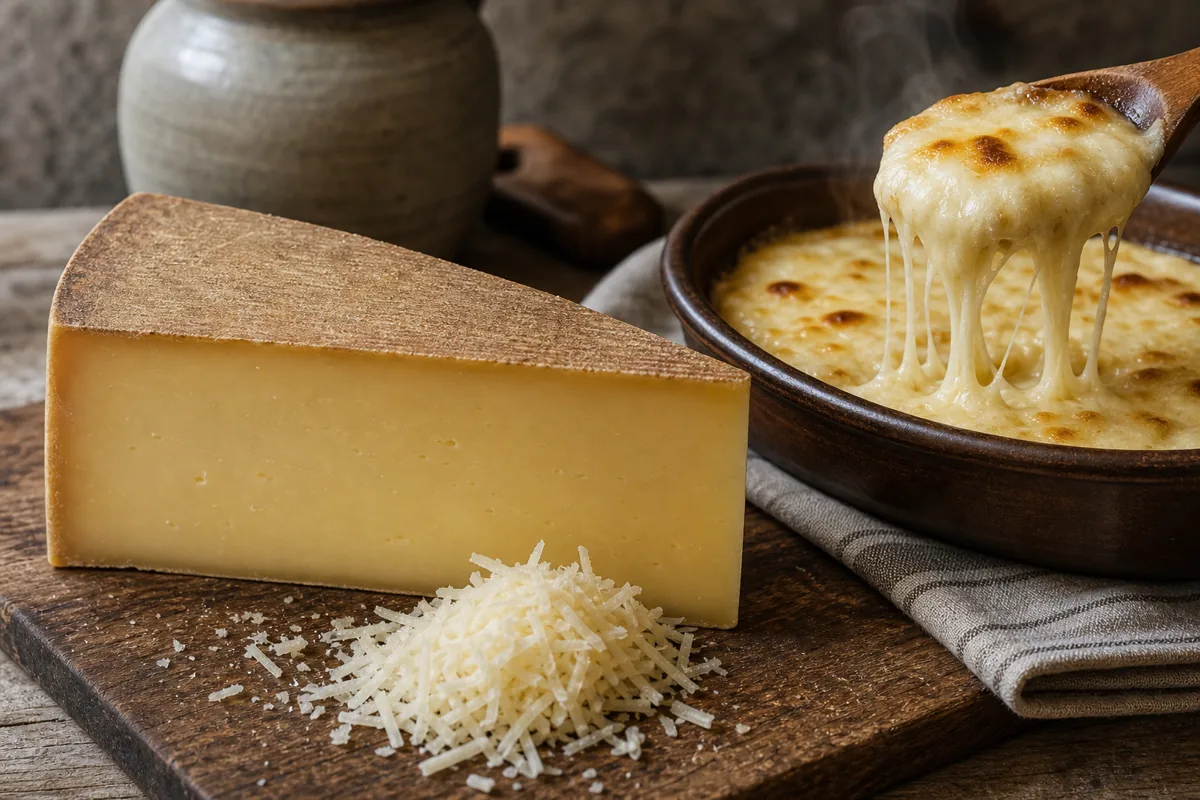
Flagship is the cheese in Beecher's World's Best Mac and Cheese. WSU Magazine reported in 2004, a year after the shop opened, that its café already served what Dammeier called the world's best macaroni and cheese.
The published recipe serves two to four in an 8-inch baking dish and uses 8 ounces of Flagship with 2 ounces of Beecher's Just Jack, a 4:1 ratio, and Wikipedia describes Just Jack as a form of Monterey Jack. Those 10 ounces of cheese go with only 6 ounces of dry penne.
The sauce starts with butter and flour cooked for 2 minutes, then 1½ cups of milk cooked about 10 minutes until it thickens. Off the heat, 1¾ cups of Flagship and ¼ cup of Just Jack go in with salt, chili powder and a pinch of garlic powder, and the rest of the Flagship goes on top.
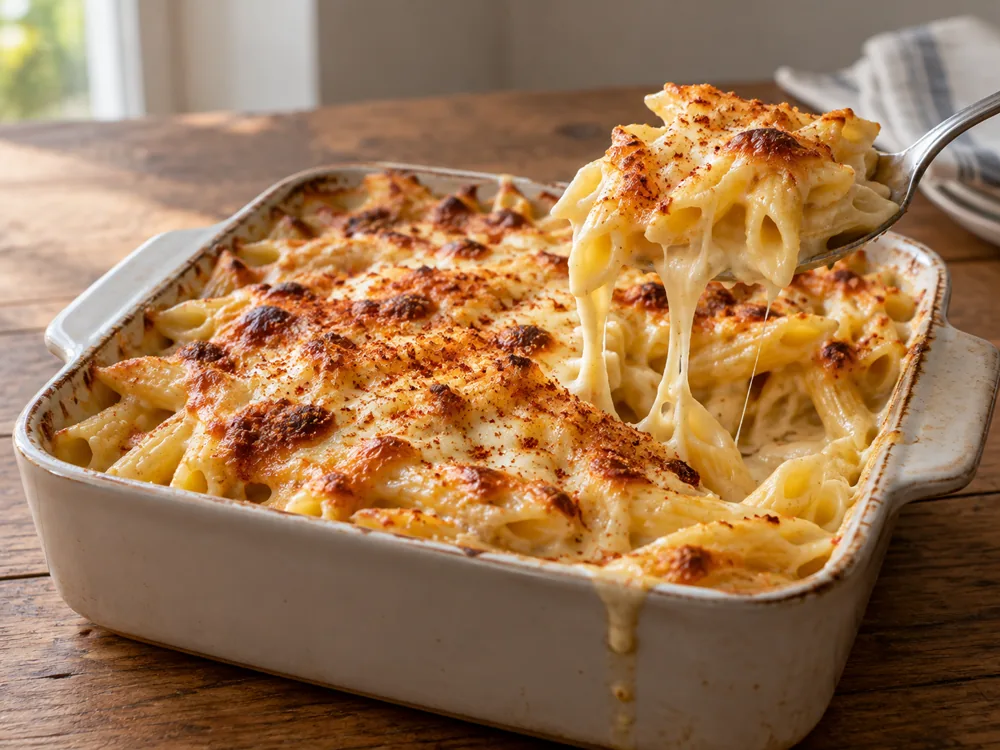
The penne is cooked 2 minutes less than the package time and rinsed, and in an older interview Dammeier gave the key to the dish as undercooking the pasta so that it softens from the sauce as it bakes.
The sauced pasta is topped with more cheese and chili powder and baked uncovered at 350°F for 20 minutes, followed by a 5-minute rest.
Beecher's cheeses appeared twice on The Martha Stewart Show and once on Oprah, with the dish listed among Oprah's Favorite Things.
How Do You Cook with and Pair Flagship?
For Reserve, Beecher's suggests baking chunks into hot breads or shredding it into a roasted vegetable frittata.
For the 6-ounce Flagship pack, the data sheet's only preparation note is to take off the cryovac'd plastic and consume, so the retail cheese is meant to be eaten as it comes.
Beecher's names these pairings for Flagship and Reserve.
| Pairing | Type | Why It Works |
|---|---|---|
| Pouilly-Fuissé | Wine | Beecher's wine pairing for Flagship. |
| Syrah | Wine | Beecher's wine pairing for both Flagship and Reserve. |
| India pale ale or lager | Drink | Beecher's beer pairing for Flagship. |
| Brown ale | Drink | Beecher's beer pairing for Reserve. |
| Berry compote or a crisp apple | Food | Beecher's food pairing for Reserve. |
What Can You Use Instead of Flagship?
If you cannot find Flagship, its Gruyère and Emmental cultures point to an aged cheddar or a Gruyère as the nearest stand-ins.
Cougar Gold, covered above, is the closest named relative, but with its own second culture, a can and a crumblier texture it is a different cheese from a different maker, not a copy.
Where Can You Buy Flagship Cheese?
Beecher's sells its own cheeses at its Pike Place Market shop, and its company locations include Bellevue Square, Seattle–Tacoma International Airport and Paine Field in Everett. Its New York shop closed in October 2022.
Away from those shops, Beecher's products are sold in retail stores across the country, including at artisanal cheese vendors, and the company ships orders through PeriShip.
Beecher's data sheet lists Flagship in 6-ounce retail packs, 16 to a case, with six one-ounce servings in each pack.
Reserve comes as a 16-pound truckle or in 6- to 8-ounce triangles, according to its wholesale sheet.
Which Awards Has Flagship Won?
Beecher's lists second place for Flagship at the American Cheese Society (ACS) in 2022, 2019 and 2009 in the aged cheddar category. It also lists World Cheese Awards bronze in 2025 and 2019 in cheddar classes and in 2005 in a class for new cheeses.
Reserve has taken ACS first place in 2024, 2022, 2019 and 2017, according to its wholesale sheet, which also lists ACS Best of Show in 2024 and 2007.
The class names show where Beecher's itself places Flagship: it calls Flagship cheddared but not a Cheddar, yet it enters Flagship in cheddar classes. WSU Magazine said in 2004 that Cougar Gold's texture and extra flavors kept it out of cheddar categories, and its World Cheese Awards win in 2000 came in the hard pressed non-cheddar class.
What Is in Flagship, and Is It Safe During Pregnancy?
One ounce (28 g) of Flagship has 120 calories, 10 grams of fat (7 grams saturated), 6 grams of protein, 30 milligrams of cholesterol and no sugars, according to Beecher's product data sheet. Reserve lists 7 grams of protein per ounce.
The ingredients are pasteurized milk, salt, culture and enzymes, and the cheese contains milk. Beecher's says its cheeses use no artificial preservatives, food colorings or flavor enhancers.
Beecher's labels the coagulant only as "enzymes," so if you avoid animal rennet, ask Beecher's which type it uses.
Beecher's describes Flagship as semi-hard, and NHS lists pasteurised semi-hard cheeses such as edam among the cheeses that are safe in pregnancy. Eaten cold, a pasteurized semi-hard cheese is a type the CDC list does not cover, so ask a midwife or doctor.
How Long Does Flagship Keep?
Beecher's product data sheet lists a storage temperature of 35 to 37.5°F and a shelf life of 237 days for the 6-ounce retail pack. That 237 days cannot be read as a limit for opened cheese, so once you open a pack, ask Beecher's how long the cut cheese keeps.
The CDC says to keep a refrigerator at 40°F or below.