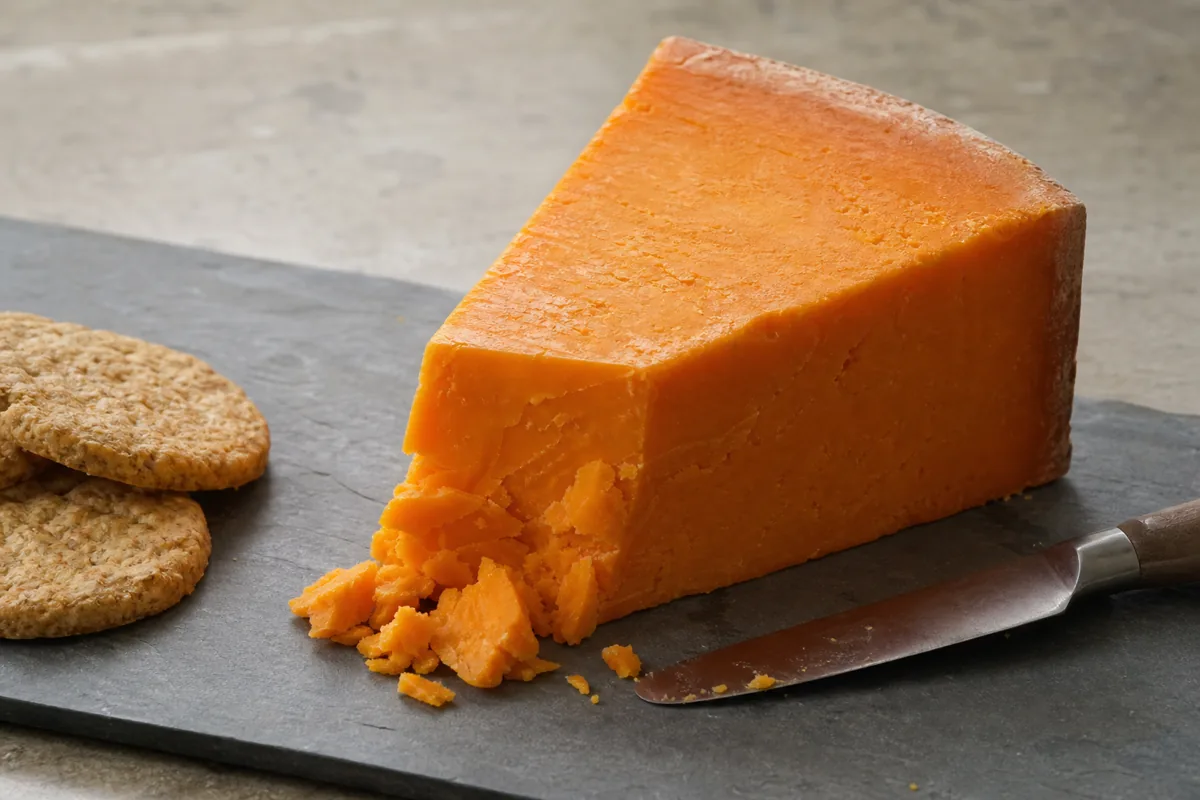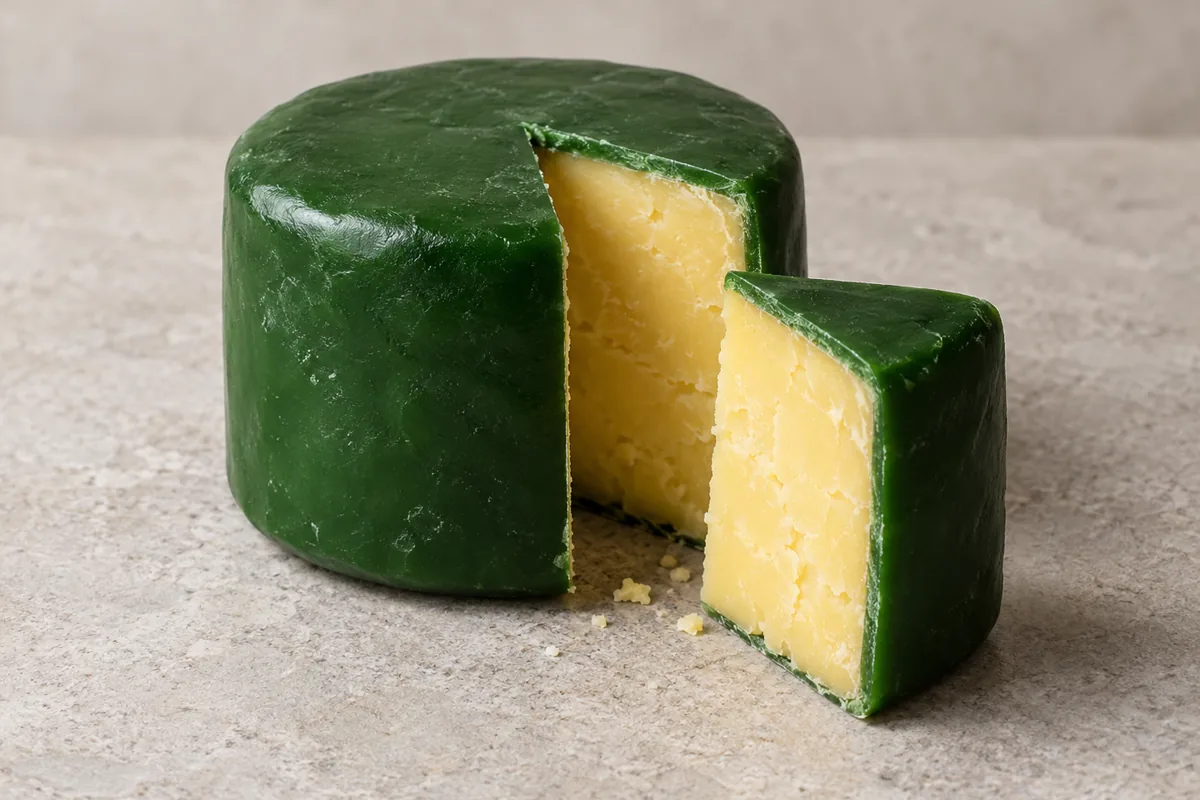
Green Thunder is a mature cheddar from Snowdonia Cheese Company in North Wales, flavoured with roasted garlic and aromatic garden herbs and sealed in emerald-green wax.
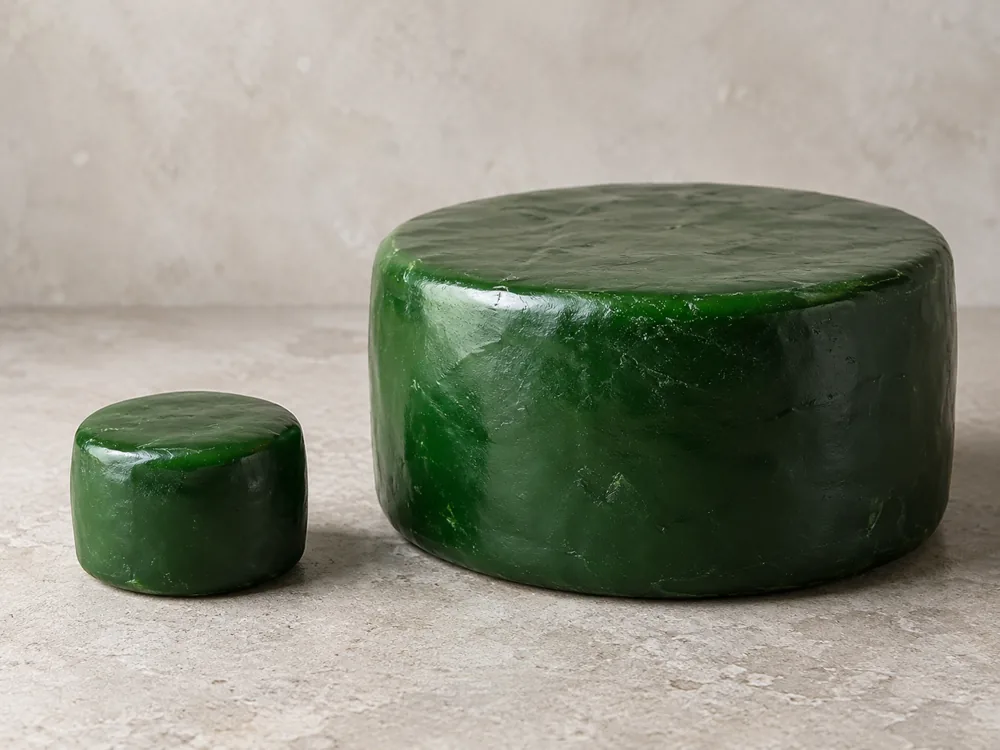
It comes as a 200g truckle or a 2kg wheel, and Snowdonia counts it among the three cheeses the company started with, next to Black Bomber and Red Devil.
In This Article
What Is in Green Thunder Cheese?
Snowdonia's UK ingredient list reads cheddar cheese 98%, whey powder, dehydrated garlic, salt, herbs, spice, dehydrated onion, sunflower oil and herb extract. Cheddar is 98% of the cheese, so the garlic, onion, herbs and everything else share the last 2%.
Snowdonia's description says roasted garlic, while the list says only dehydrated garlic, and it also names dehydrated onion, an unspecified spice, sunflower oil and herb extract that the description leaves out. A buyer who needs to avoid onion has to read the list, since the description mentions only garlic and herbs.
The Manila retailer Terry Selection names the herbs as oregano, basil and parsley, while Snowdonia's own page says only "herbs".
The US pack carries detail the UK page leaves out. An Instacart listing for the 7 oz pack gives the cheese as pasteurized cow's milk, cheese culture, salt and vegetable rennet, and adds sugar to the garlic and herb mix.
Instacart groups everything after the cheese into one garlic and herb mix, the same ingredients as the UK list plus sugar, so salt appears twice on that list, once in the cheese and once in the mix.
Snowdonia marks the cheese as suitable for vegetarians and for coeliacs. Greendale and Terry Selection carry the same vegetarian label, and the vegetable rennet on the US list is the only named rennet.
What Does Green Thunder Taste Like?
Snowdonia's own description is "a sensationally savoury mature Cheddar with roasted garlic and aromatic garden herbs". Terry Selection's tasting note runs from a bold start of roasted garlic to soft garden herbs and finishes on the tang of a mature cheddar, with a texture it calls creamy yet slightly crumbly.
Greendale's product text calls the cheese fresh, smooth and creamy, and only Terry Selection adds slightly crumbly. The one word the two sellers share is creamy, so crumbliness rests on a single retailer's description.
Terry Selection also describes the cut cheese as creamy-yellow and flecked with herbs.
How Should You Serve Green Thunder Cheese?
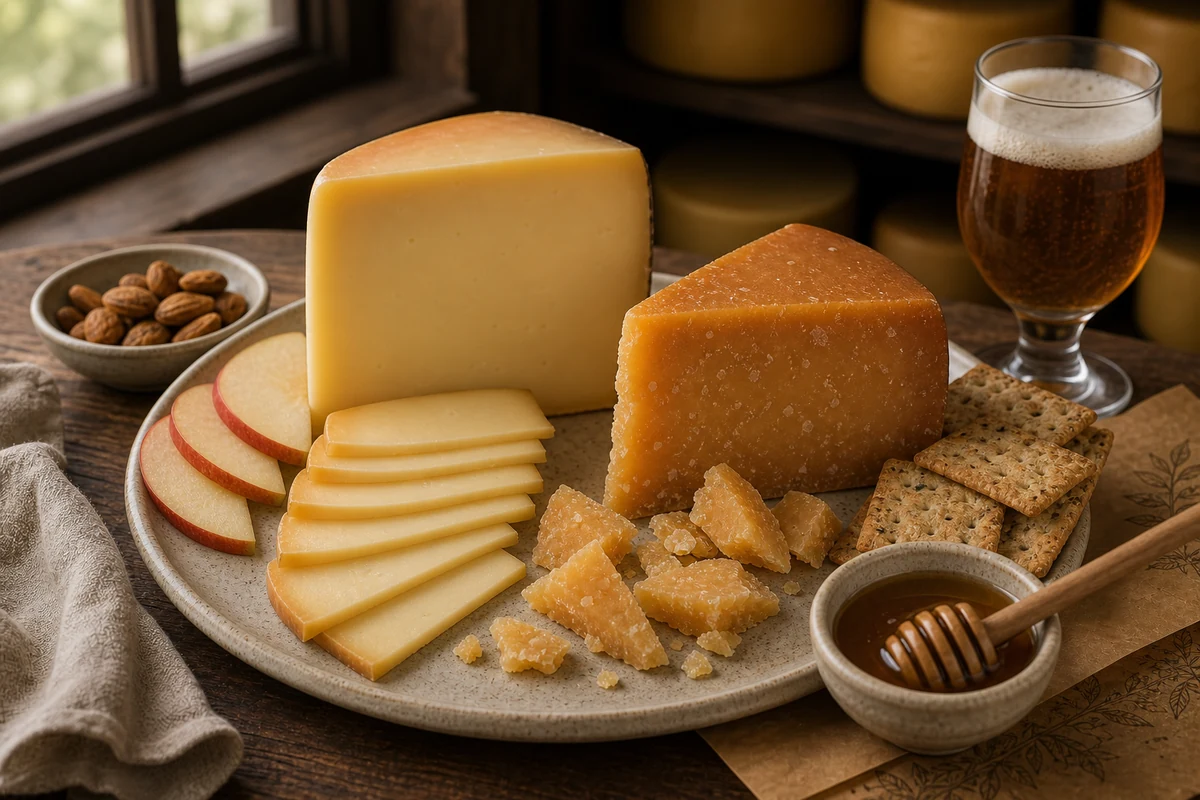
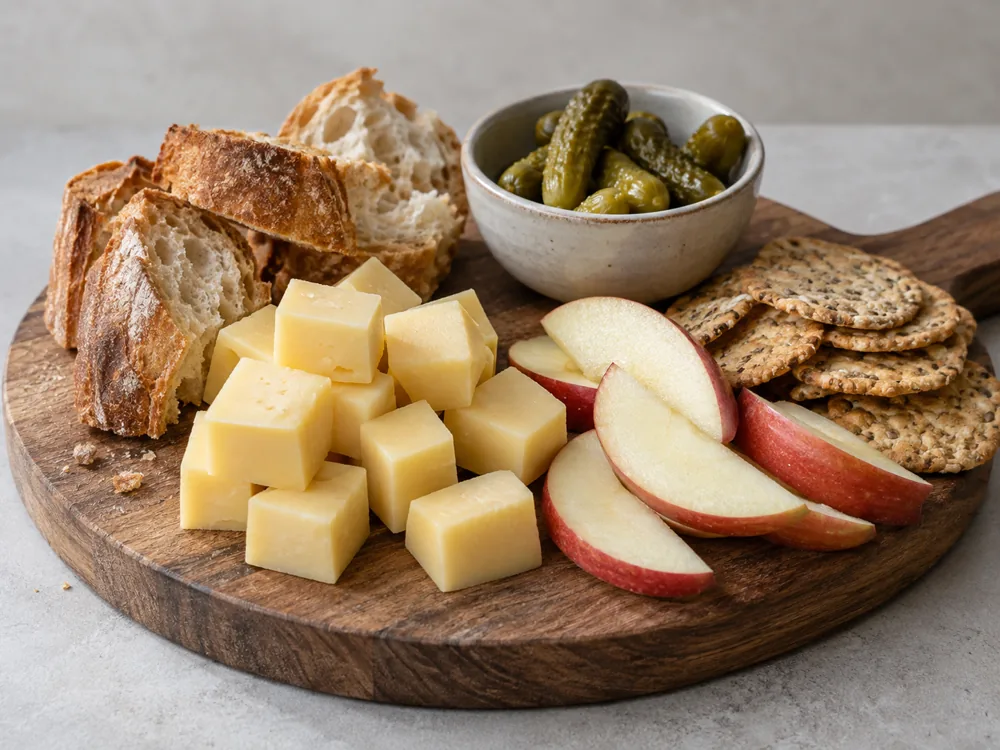
Terry Selection suggests a cheese board with crusty bread or crisp crackers, plus apple slices or tangy pickles.
For cooking it lists garlic bread, jacket potatoes, gourmet burgers, herb-infused quiches and risottos, all dishes that already take garlic or herbs. Greendale's product text names garlic bread too, melted on a homemade loaf, so it is the one dish two sellers agree on.
Instacart's pack directions say the cheese is best served at room temperature, and the CDC's rule for perishable food is never to leave it out for more than 2 hours, or 1 hour above 90°F.
For drinks it names dry sparkling wine, light Pinot Noir and apple cider. Greendale's listing names the first two as well.
Terry Selection says the dry sparkling wine or light Pinot Noir echoes the herbaceous and savoury notes without overpowering them, and it offers the apple cider as the non-alcoholic choice.
Who Makes Green Thunder Cheese?
Snowdonia Cheese Co has made cheese since 2001, and its 25th-anniversary post says the first truckles went to farmers' markets, food festivals and agricultural shows across the UK. The founders are brothers John and Richard, whom the same post calls fourth-generation dairy farmers in North Wales.
Exports began in 2012 and now reach 35 countries, according to the post, which fits the different ingredient lists on the UK and US packs.
Snowdonia's UK site now lists eleven cheeses, while its 25th-anniversary post counts twelve varieties. Black Bomber, Rock Star (a cave-aged cheddar) and Red Storm (a vintage Red Leicester) have no flavouring listed, and the other eight appear in the table below.
| Cheese | Base cheese | What is added |
|---|---|---|
| Beech Wood | Mature cheddar | Natural cold smoke |
| Amber Mist | Mature cheddar | Single malt whisky |
| Bouncing Berry | Cheddar | Cranberries |
| Green Thunder | Cheddar | Garlic and herbs |
| Truffle Trove | Cheddar | Italian truffles |
| Red Devil | Red Leicester | Chillies |
| Purple Vale | Mature cheddar | Caramelised onion chutney and Giusti balsamic vinegar of Modena |
| Ruby Mist | Cheddar | Port and brandy |
Green Thunder is the only cheese on that list flavoured with garlic and herbs.
What Is the Green Wax on Green Thunder?
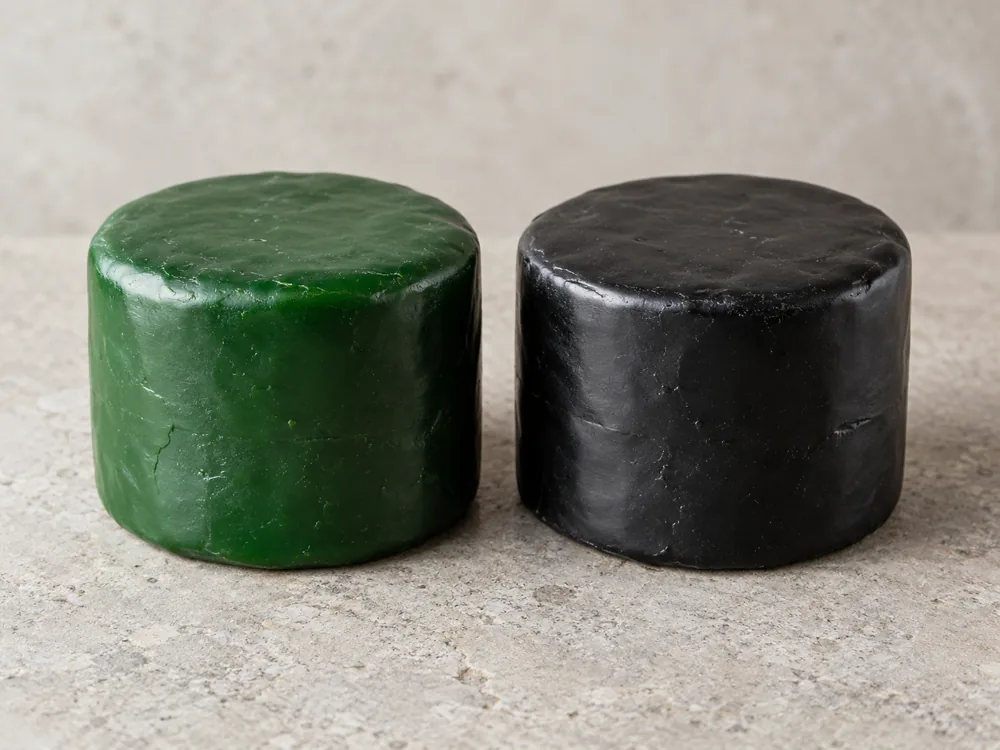
Green Thunder is a truckle, which the retailer Chuckling Cheese Co. defines as a small, cylindrical wheel of cheese sealed in coloured wax.
In the traditional method that source describes, each truckle is hand-dipped in wax after its first ageing, and the seal lets the cheese keep maturing. Terry Selection says Green Thunder's wax keeps the cheese fresh.
Greendale says the emerald wax "pays homage to the rolling valleys of Snowdonia".
Terry Selection and Greendale each describe Green Thunder's wax as emerald, Black Bomber is sealed in black wax, and the 25th-anniversary post describes the whole range as sealed in richly coloured wax.
What Awards Has Green Thunder Won?
Green Thunder won a silver medal at the 2024 British Cheese Awards, according to Snowdonia's results post, the same post in which Rock Star took gold and Red Devil bronze.
That post is dated 9 September 2024 and says the Royal Bath & West Society organises the awards, which ran from 22 to 24 March at the Bath & West Food & Drink Festival in Shepton Mallet, Somerset.
Greendale and Terry Selection both add a gold medal that the results post does not mention, but they name different competitions and neither gives a year. The anniversary post's list of awards names Black Bomber and Ruby Mist but not Green Thunder, so only the silver can be tied to a date and to the producer.
| Source | Medal it names |
|---|---|
| Snowdonia results post, 9 September 2024 | Silver, British Cheese Awards 2024 |
| Greendale | Gold, Global Cheese Awards, no year |
| Terry Selection | Gold, World Cheese Awards, no year |
How Does Green Thunder Compare With Black Bomber and Red Devil?
Black Bomber is the unflavoured extra mature cheddar of Snowdonia's original three, and the anniversary post calls it creamy and intensely savoury.
Snowdonia uses a different age word across its range: extra mature for Black Bomber, mature for Green Thunder, and vintage for Rock Star and Red Storm. The added garlic and herbs are the clearest difference between Green Thunder and Black Bomber.
Rock Star matures in the slate caverns of Llechwedd at Blaenau Ffestiniog, the maturing place the anniversary post names.
Red Devil, which the anniversary post calls fiery, gets its heat from Habanero chillies, peppers and spices, so the three differ by flavour direction: plain, garlic and herb, or chilli.
Black Bomber has the longer record, since the same post says it has been voted Best British Cheese Brand multiple times in the Fine Food Digest Best Brands survey and has won Super Gold at the Mondial du Fromage twice.
Green Thunder adds garlic and herbs to a mature cheddar, Black Bomber is the unflavoured extra mature cheddar, and Red Devil adds Habanero heat to a Red Leicester. Flavour direction is the clearest basis for choosing among them.
Where Can You Buy Green Thunder Cheese?
Snowdonia's UK site sells the 200g truckle at £5.50 and a 2kg wheel, with standard delivery at £6.00 or free on orders of £35 and over, so one truckle ordered alone costs £11.50 delivered.
Snowdonia delivers to mainland UK addresses only, excluding Northern Ireland, the Scottish Highlands and the UK islands, and ships the cheese chilled with a cool pack in 2 to 4 working days.
Greendale lists the same 200g at £7.00 with tax included, which is £3.50 per 100g against £2.75 at Snowdonia, and offers free weekday delivery on orders over £50.
In the US, Instacart lists a 7 oz pack at $17.69, which works out at $2.53 an ounce. Terry Selection lists the 200g size at PHP 1,305.
Can You Eat Green Thunder Cheese While Pregnant?
Green Thunder has a cheddar base, and the NHS lists "pasteurised or unpasteurised hard cheeses, such as cheddar, gruyère and parmesan" among the foods that are safe to eat in pregnancy.
The CDC's safer category is narrower: hard cheese made with pasteurized milk, with cheddar among its examples. The US pack lists pasteurized cow's milk; on a UK pack, check the label for the milk treatment.
Neither agency names a flavoured cheddar, so the answer rests on the cheddar base.
How Much Fat and Salt Does Green Thunder Have?
Snowdonia's UK page gives the values below, and a 30g portion carries about 0.7g of salt.
| Nutrient | Per 100g |
|---|---|
| Energy | 408 kcal / 1690 kJ |
| Fat | 33.6g |
| Of which saturates | 21.3g |
| Carbohydrate | 3.6g |
| Of which sugars | under 0.7g |
| Protein | 22.7g |
| Salt | 2.4g |
Instacart's US listing gives 120 calories, 10g of fat, 7g of protein and 0g of sugar per serving, the same as the UK per-100g values scale to for a 30g portion (about 122 kcal, 10g of fat and 7g of protein).
Terry Selection's label for the 200g pack repeats the 408 kcal and adds values the UK panel omits, including 720mg of calcium, 105mg of cholesterol and 960mg of sodium per 100g.
How Should You Store Green Thunder Cheese?
Greendale, a UK retailer, advises wrapping the cheese in waxed paper or clingfilm, keeping it in the refrigerator and eating it within the use-by date on the packaging.
The CDC says to keep a refrigerator at 40°F (about 4°C) or below.
Instacart's pack directions give a band of 38 to 41°F, so a refrigerator held between 38 and 40°F sits inside both that band and the CDC ceiling.