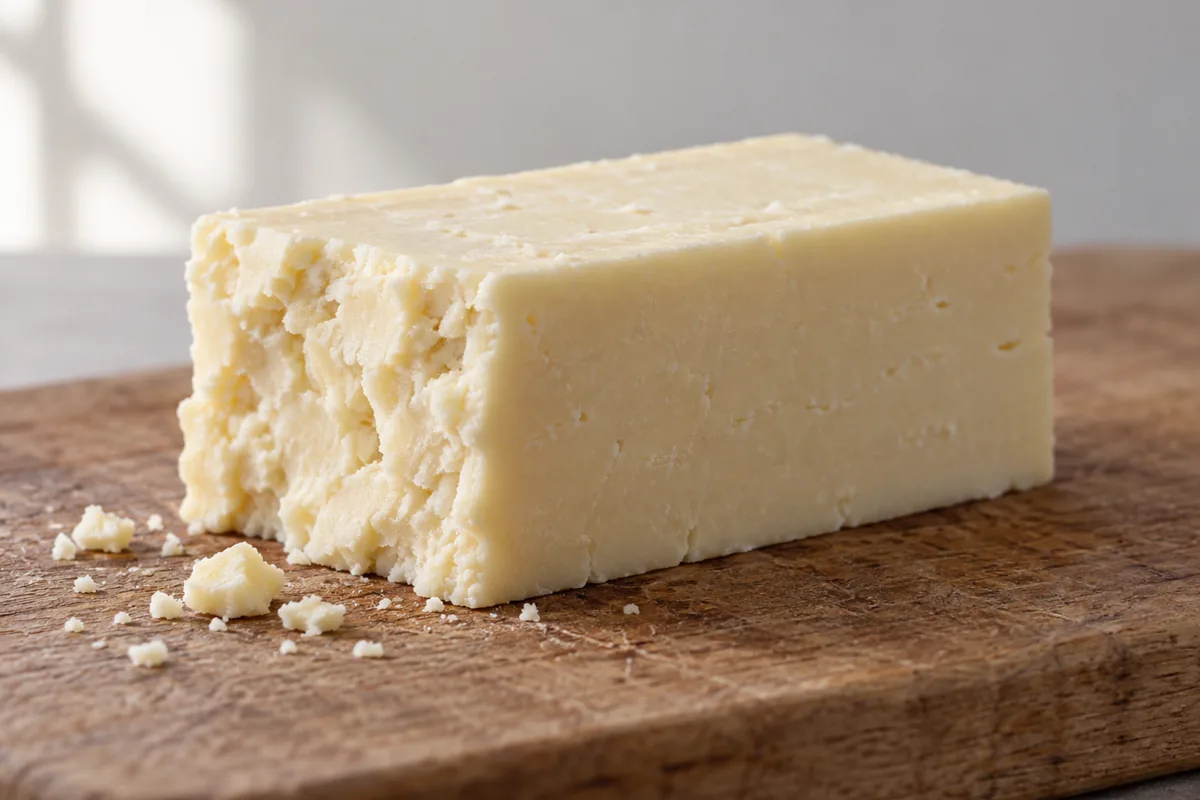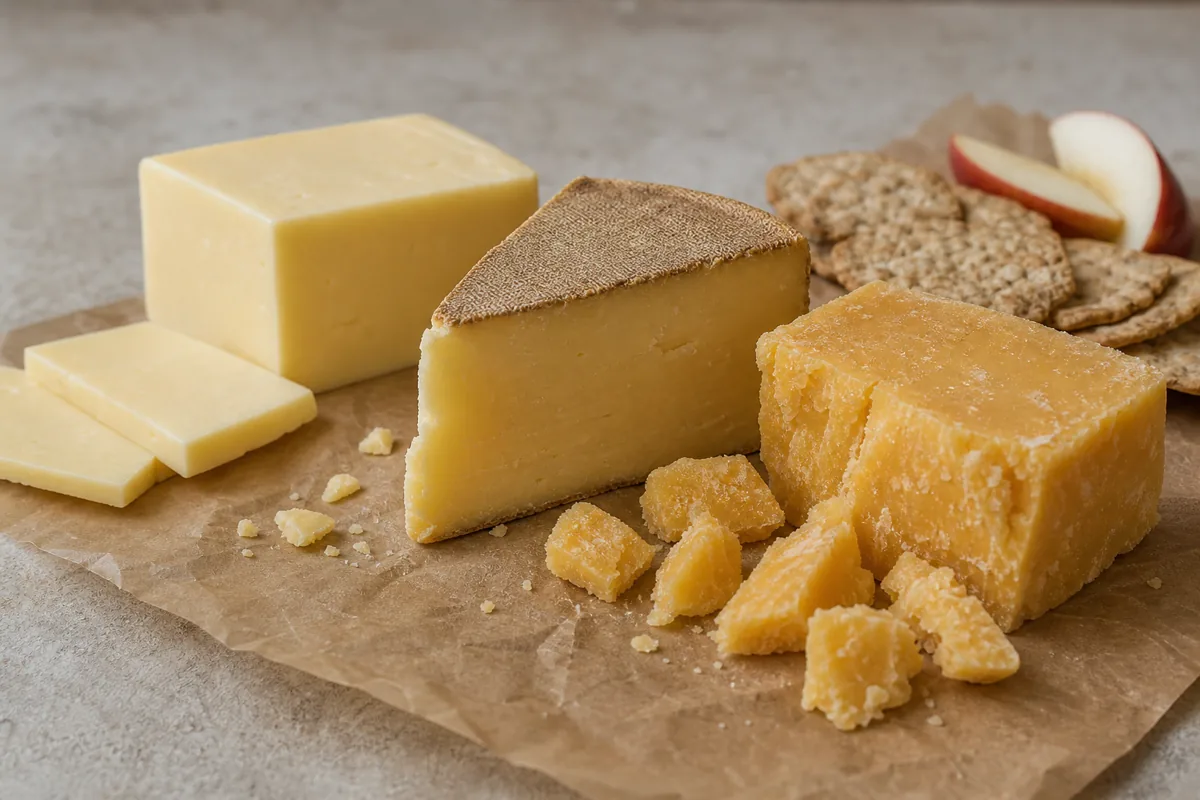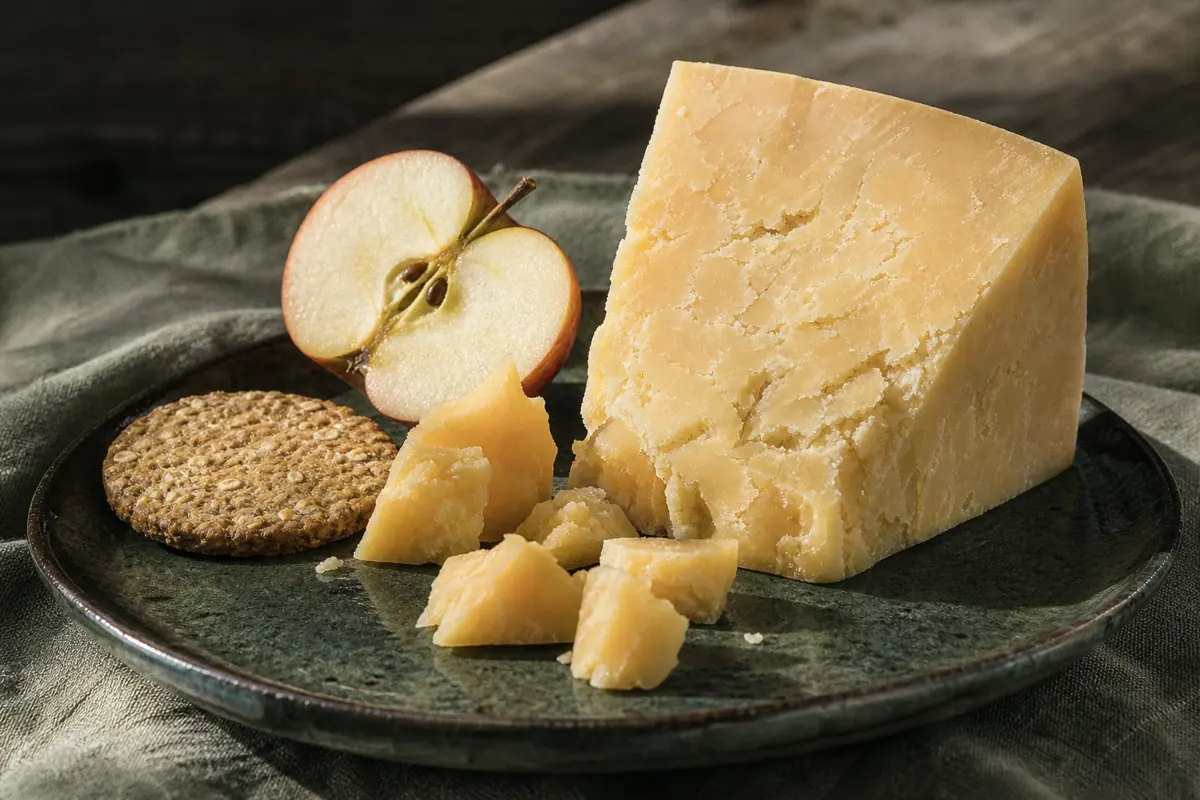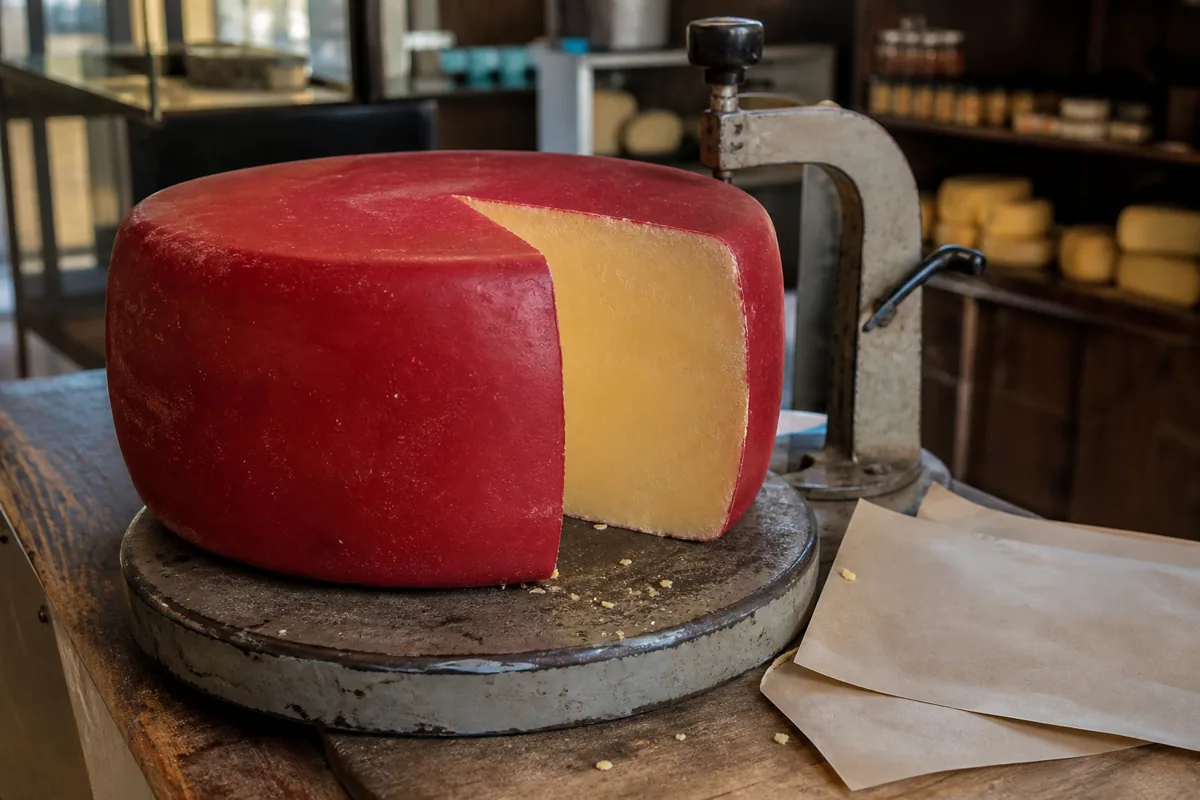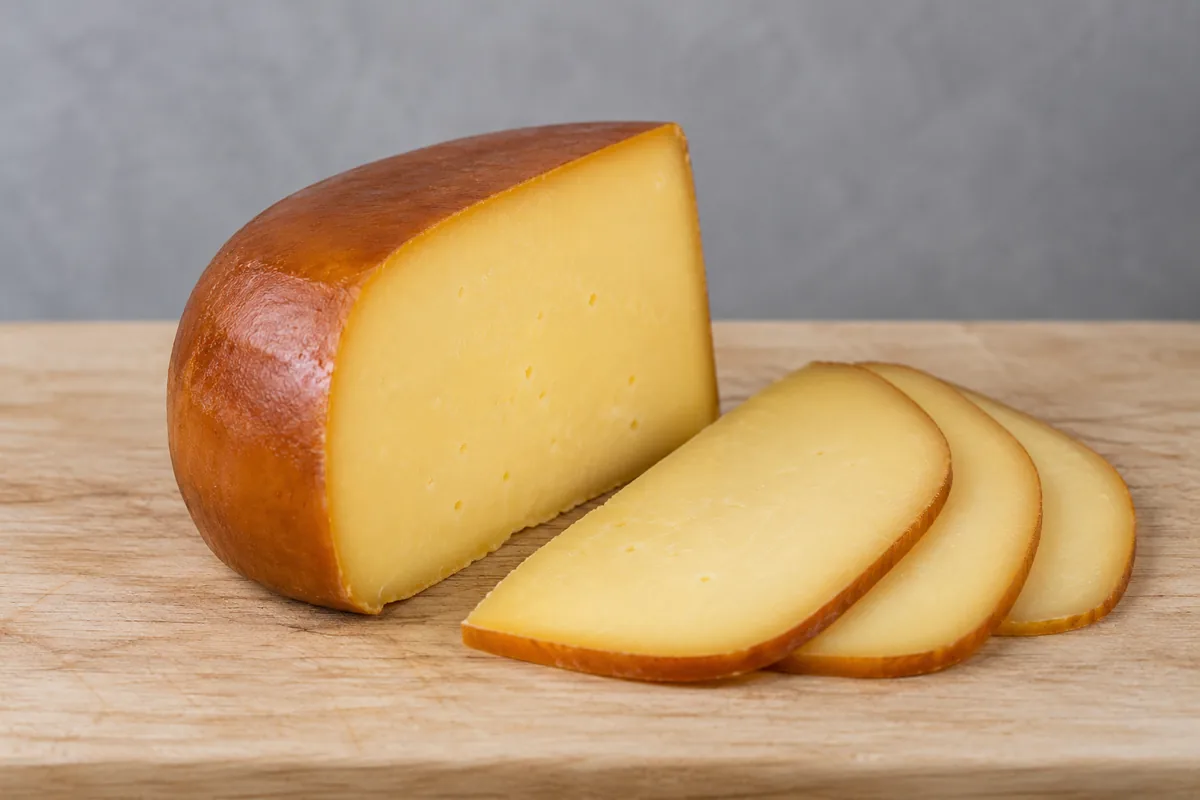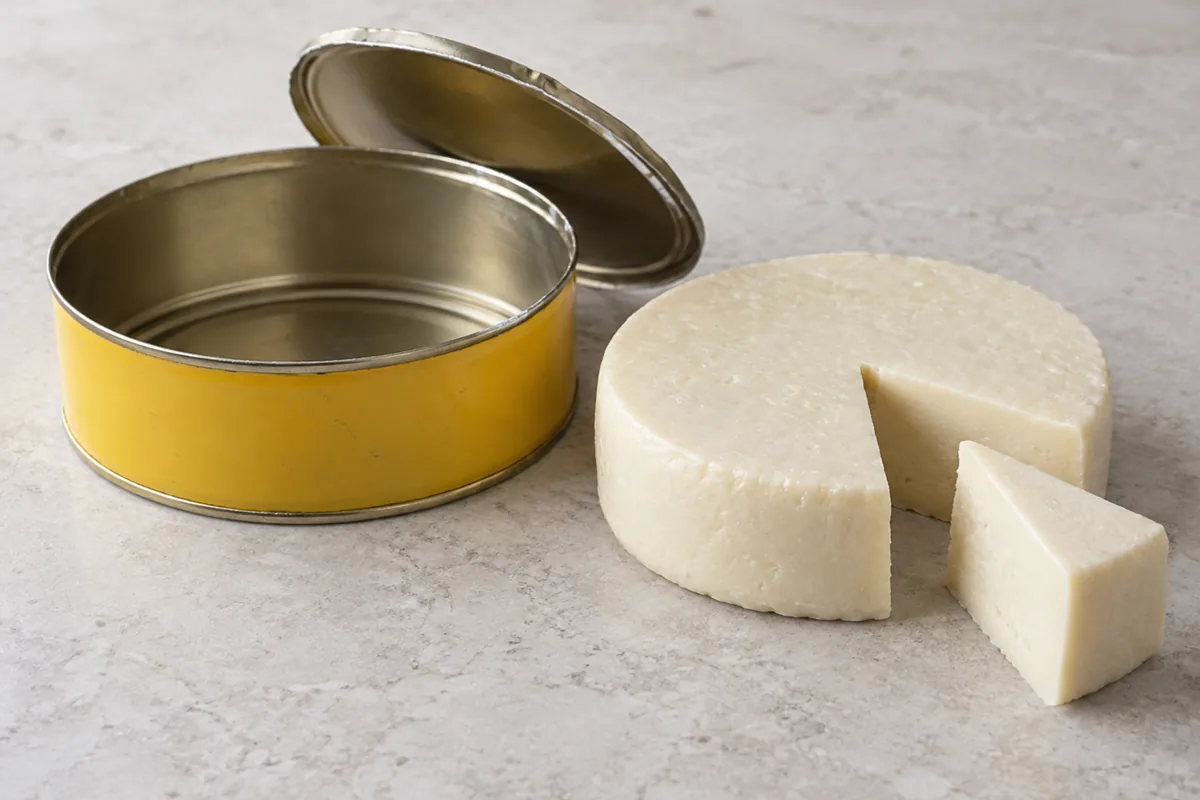
Cougar Gold is a firm white cheddar aged inside a 30-ounce metal can by the Washington State University Creamery in Pullman. WSU calls it a natural cheese, meaning not processed, and says every can must be kept in the refrigerator.
The can is a package for aging, not a pantry shortcut, and WSU says some customers have aged cans for more than 30 years.
In This Article
What Is Cougar Gold?
WSU's flavors page describes it as "a rich, white cheddar with a smooth, firm texture" and says the current stock is "just over one year in age." The ingredients are pasteurized milk, cultures, salt and enzymes, and the creamery says it uses only cow's milk from a herd of Holstein cows.
WSU says its Knott Dairy stopped using rbST in its herd in February 2008, in response to the milk marketing options in eastern Washington. It adds that the FDA has determined that no significant difference has been shown between milk from supplemented and unsupplemented cows.
Every can holds 30 ounces and measures 6 inches across and 2.25 inches high, so the cheese is a wide, short cylinder. WSU sells no smaller size because it would need new equipment and production costs would rise.
Sources split on two details, the texture and whether the cheese is vegetarian. WSU makes the cheese, so this page follows its description where the two disagree.
| Point | WSU Creamery | Cheese.com |
|---|---|---|
| Texture | Smooth, firm | Calls it a semi-soft cheddar |
| Rennet | Chy-Max, a fermentation-produced chymosin, "not from an animal" | Marks it as not vegetarian |
| Minimum aging | At least one year before shipping | At least one year before release |
Cheese.com's own text calls the cheese smooth and firm and lists its texture as creamy, crumbly, crystalline, firm and smooth, so the semi-soft label is the outlier even within that page.
WSU defines rennet as the coagulating enzyme that curdles milk so curds form and separate from the whey, and it describes Chy-Max as a standardized solution of 100% fermentation-produced chymosin. Cheese.com marks the cheese as not vegetarian, so a buyer who avoids animal rennet has WSU's Chy-Max statement as the identified product.
Why Is Cougar Gold Sold in a Can?
In the 1930s the Creamery wanted a better way to store cheese. WSU says cans looked best because plastic packaging did not exist yet and wax coatings sometimes cracked, which let contamination in.
Cans had a problem of their own. CAHNRS, the WSU college newsletter, says carbon dioxide buildup could burst a metal can, and that in the 1940s Norman Golding used funding from the U.S. government and the American Can Company to solve the exploding-can problem.
CAHNRS names Golding, a dairy scientist, as the namesake of Cougar Gold and in many ways the father of the cheese and its signature yellow can.
WSU's FAQ says Cougar Cheese "was created to produce little to no gas during aging so it could be stored in the can," unlike a Swiss cheese, whose holes come from gas.
The cheese also gave the Creamery a use for surplus milk. CAHNRS says most of the college dairy's milk went to the dining halls, and during breaks, holidays and away-game weekends it was sold at a loss to nearby farms or the Spokane market until creamery staff decided in the 1940s to make cheese.
Leonard Hale, a creamery operator in the late 1940s and early 1950s, recalled in 1981 that about five weeks at the end of summer school went to processing cheese every day.
- 1930s: the Creamery starts looking for a better way to store cheese.
- 1948: the first batch is sold, and the earliest sales receipt found is dated Sept. 24, 1948.
- 1975: full production begins as the cheese becomes popular.
- 1992: the move to the Food Quality Building doubles capacity.
CAHNRS counts more than 9 million cans of Cougar Gold since 1948 and says nearly 260,000 cans of Creamery cheese are now made each year. WSU's FAQ calls Cougar Gold by far its most popular cheese.
What Awards Has Cougar Gold Won?
WSU's flavors page calls Cougar Gold the winner of several national and international awards.
Cheese.com names three: a blue ribbon from the American Cheese Society in 1993, a silver medal at the 2000 World Cheese Awards and a gold medal at the 2006 World Cheese Awards.
CAHNRS adds that celebrity chefs have praised the cheese, that it has been carried to the top of Mount Everest and that it has been given to foreign dignitaries.
Does a Sealed Can of Cougar Gold Need the Refrigerator?
Yes. WSU says Cougar Cheese should be stored under refrigeration, and it notes that refrigerator temperatures are generally 37 to 40°F.
The cheese can travel for short periods without refrigeration, WSU adds, but it should go into the refrigerator on arrival. The CDC says to refrigerate perishable food, dairy included, within 2 hours, or within 1 hour above 90°F.
WSU says not to store the cheese in a wine cooler or cellar, garage, basement, pantry or freezer, because the temperature may be inconsistent or too warm or cold. High heat can make the butterfat and whey separate from the cheese and change its texture.
The CDC says to keep a refrigerator at 40°F (4°C) or below, which is the top of WSU's 37 to 40°F range.
What Does the Lid Date Mean?
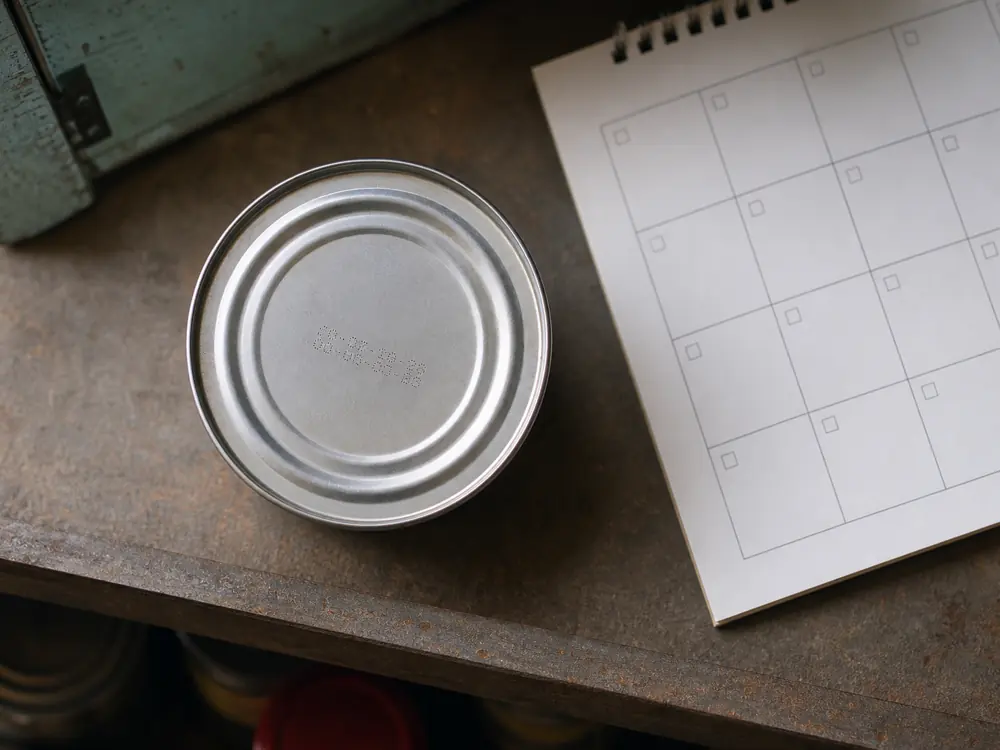
The date on the lid is the date of manufacture, which WSU defines as the day the cheese was sealed in the can. It is not an expiration date.
Counting forward from it gives the cheese's age.
WSU ages Cougar Gold at least one year before shipping, so the date on a can that has just arrived should already be a year or more in the past.
What Does Cougar Gold Taste Like, and How Does Age Change It?
WSU promises "a depth and intensity that most people have never before experienced" and a "creamy, lingering flavor." CAHNRS gives a reason: a secondary culture gives the cheese a special flavor, sweeter than other cheddars, with fullness from its year of aging.
Cheese.com lists the flavor as nutty and sharp, and says the crystals that form with extended aging give the cheese a certain crunch.
The crystals are the amino acid tyrosine, and WSU counts them and the crumbly texture as desired traits of well-aged cheese that grow more prevalent with age.
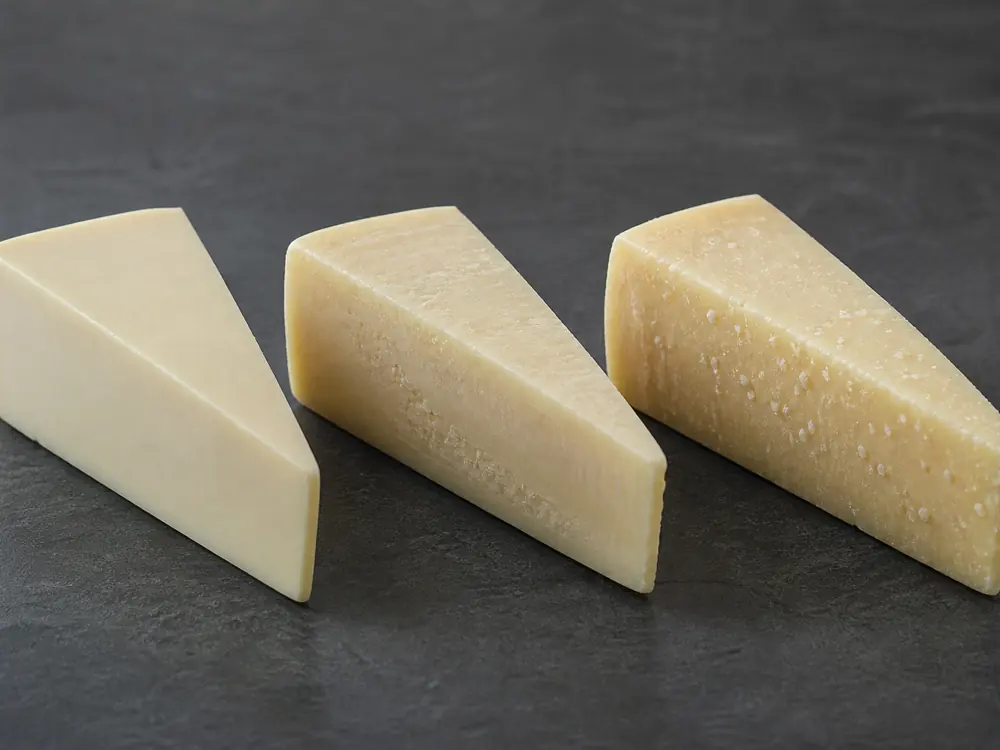
WSU says its Natural Cheddar, Smoky Cheddar and Viking cheeses may turn bitter, especially past two years, but Cougar Gold does not become bitter with age.
A white residue that shows up when you open the can is calcium lactate, WSU says.
For easier slicing WSU suggests bringing the cheese to room temperature and using a wire cutter. It treats the crumbles as part of the cheese, because "this is not a processed cheese."
How Does Cougar Gold Differ From the Other WSU Cheeses?
WSU sells eight standard flavors in the same 30-ounce can, and its FAQ calls Cougar Gold the most popular by far, with Smoky Cheddar, Dill Garlic and Crimson Fire named as other popular flavors.
The nearest sibling is Natural Cheddar, an American-style orange cheddar that WSU also ages for at least one year and describes as bold, sharp and crumbly, where Cougar Gold is described as white, smooth and firm. The ingredient lists show where the color comes from, because Natural Cheddar contains annatto (vegetable) color and Cougar Gold's list has none.
| Cheese | Description from WSU | Aging WSU states | Ingredients on WSU's list |
|---|---|---|---|
| Cougar Gold | Rich white cheddar, smooth and firm | At least one year | Milk, cultures, salt, enzymes |
| Natural Cheddar | Orange, American-style, bold, sharp, crumbly | At least one year | Same, plus annatto (vegetable) color |
| Smoky Cheddar | Creamy, firm, distinct lasting hickory taste | At least 12 months | Same as Natural Cheddar, plus smoke flavor |
| Viking | Creamy-white, semi-soft, tiny cracks, high moisture | Not stated | Milk, cultures, salt, enzymes |
| Crimson Fire | Reduced-fat Viking with jalapeño and cayenne, red, orange and green marbling | Not stated | Adds skim milk, jalapeño and cayenne peppers, water, vinegar |
Smoky Cheddar is Natural Cheddar with natural smoke flavoring added, and WSU says the result is a sharp cheese with a distinct, lasting hickory taste.
The Viking line is a different cheese that WSU calls similar to Monterey Jack. Dill Garlic, Sweet Basil and Hot Pepper add herbs or jalapeño to Viking, and Crimson Fire is a reduced-fat Viking with a third less fat.
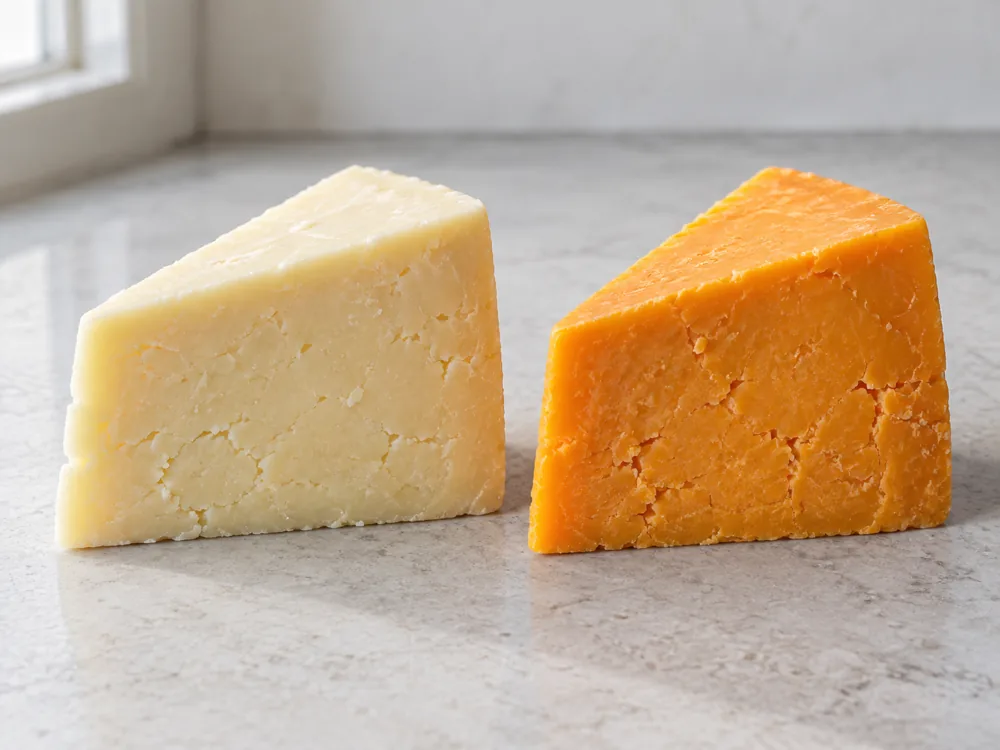
For a white, smooth, firm cheddar that does not turn bitter with age, WSU points to Cougar Gold. Natural Cheddar is the orange, crumblier alternative, and WSU's own grilled cheese recipe accepts it in place of Cougar Gold.
What If the Can Bulges?
WSU says that as the cheese ages, enough gas can eventually build up to distend the can.
WSU still recommends using a bulged can sooner rather than later, because once the process begins it continues until the seal is released.
For a can that leaks or arrives warm, or any doubt about a bulged one, ask the creamery before eating it: WSU lists 800-457-5442 and [email protected] for questions.
How Do You Open, Portion, and Store Cougar Gold?
WSU says to use a sturdy, clean can opener and open the can like any other. If the cheese sticks, run a knife around its edge or cut a wedge out to free it.
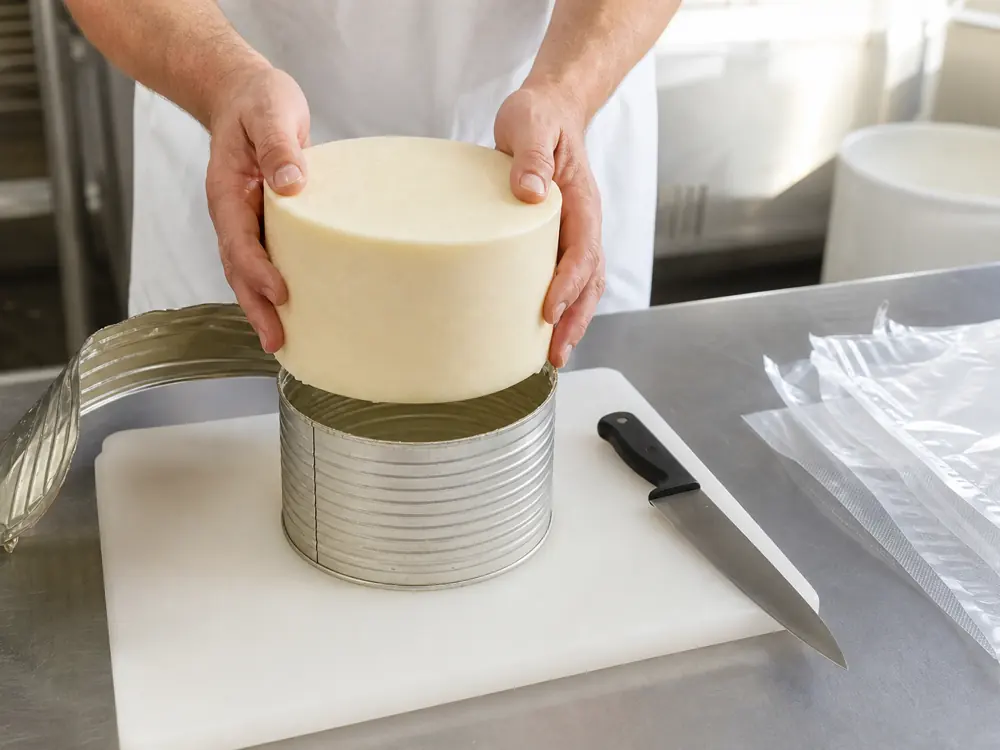
WSU says rust or a black film can develop and lower the cheese's quality. The creamery once supplied lids, but the cut edge of the opened can rusted and contaminated the cheese, so it stopped and strongly discourages lids.
After opening, WSU says the cheese lasts about 4 to 6 weeks, if not longer. It depends on exposure to air, handling, temperature and humidity, and WSU says opened Cougar Gold should last similarly to comparable cheese types, so the wedges follow the ordinary rules for storing cheese.
WSU does not recommend freezing, because the cheese becomes more crumbly and harder to slice, although it says many customers freeze it anyway. Anyone who does should thaw only the portion for immediate use, in the refrigerator.
Which Wines Go With Cougar Gold?
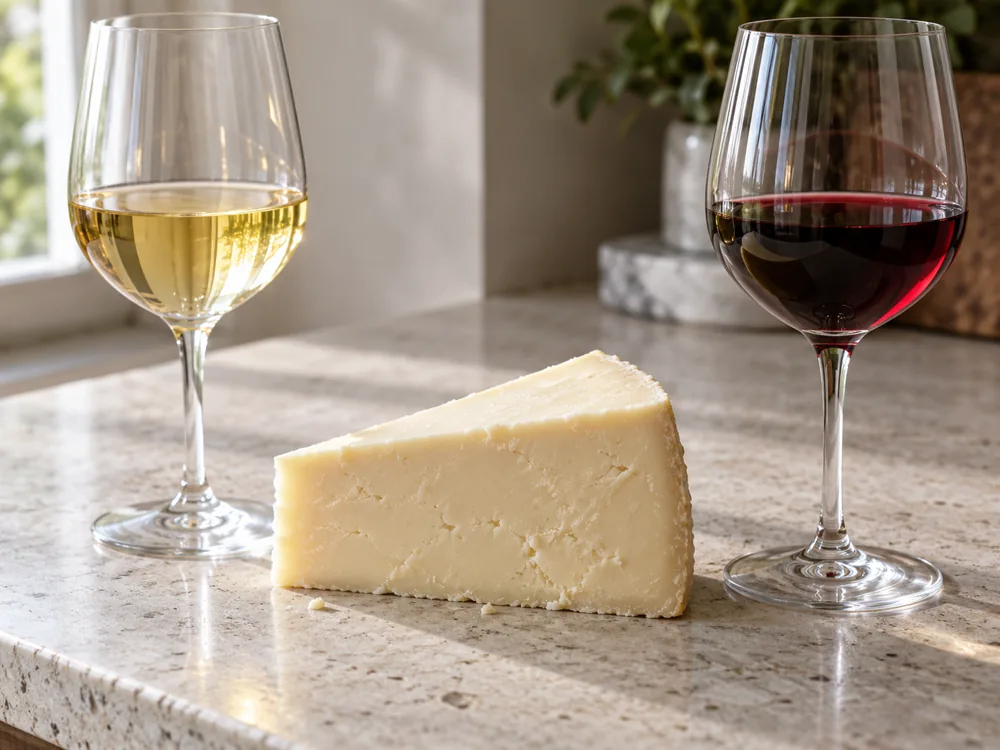
WSU's cheese and wine page says Tillamook Cheese brought Northwest cheesemakers and wine producers together on December 6, 2006, and sixteen culinary experts agreed that Cougar Gold pairs best with Viognier, Sauvignon Blanc, Pinot Noir and Merlot.
WSU also asked wineries, and one suggested a wine with some acidity and not too much sweetness. WSU says the acidity acts to cut the butterfat in the cheese so the taste buds are not covered up.
| Pairing | Why It Works |
|---|---|
| Viognier | Named by the 2006 panel of sixteen culinary experts. |
| Sauvignon Blanc | Named by the 2006 panel and by one winery. |
| Pinot Noir | Named by the 2006 panel. |
| Merlot | Named by the panel and by both wineries WSU quotes, one calling for a bold Merlot. |
| Crisp Riesling, Pinot Gris, Chardonnay | White wines suggested by one winery, which also named Lemberger. |
| Chenin Blanc, Cabernet, Syrah | Suggested by a second winery. |
The advice changes for WSU's flavored Viking cheeses, where WSU says research has found that dry, fruity red wines of light to medium body work well, such as Beaujolais, Pinot Noir, Gamay and light Zinfandels. For the Viking whites it lists Chenin Blanc, White Riesling and Gewurztraminer.
WSU calls these opinions and says the final choice comes down to personal preference.
What Can You Cook With Cougar Gold?
WSU's recipe index lists more than 60 recipes for its cheeses, from soups and salads to casseroles and cupcakes. Five soup titles name Cougar Gold: potato soup, corn chowder, cauliflower soup, apple and onion soup, and a Palouse onion soup with Cougar Gold toasts.
The classic baked macaroni and cheese recipe makes a milk sauce, simmers it for 15 minutes and stirs in the cheese off the heat. WSU says it serves 4 to 6 as a main course or 8 to 10 as a side.
The Creamery's plain grilled cheese needs only grated cheese, hearty bread and butter.
| Recipe | Cougar Gold used | Method note from WSU |
|---|---|---|
| Classic Baked Macaroni and Cheese | 2 ½ cups, grated | Stirred into the sauce off the heat; baked at 350°F for 30 minutes under buttered breadcrumbs |
| Grilled Cheese, Plain and Simple | ½ lb, coarsely grated | Covered pan, about 3 minutes on one side and 2 on the other in 3 tablespoons of butter |
| Cauliflower and Cougar Gold Soup | 15 oz (½ can), grated | Stirred in after the blended soup is simmering with milk, until melted and thickened; 6 servings |
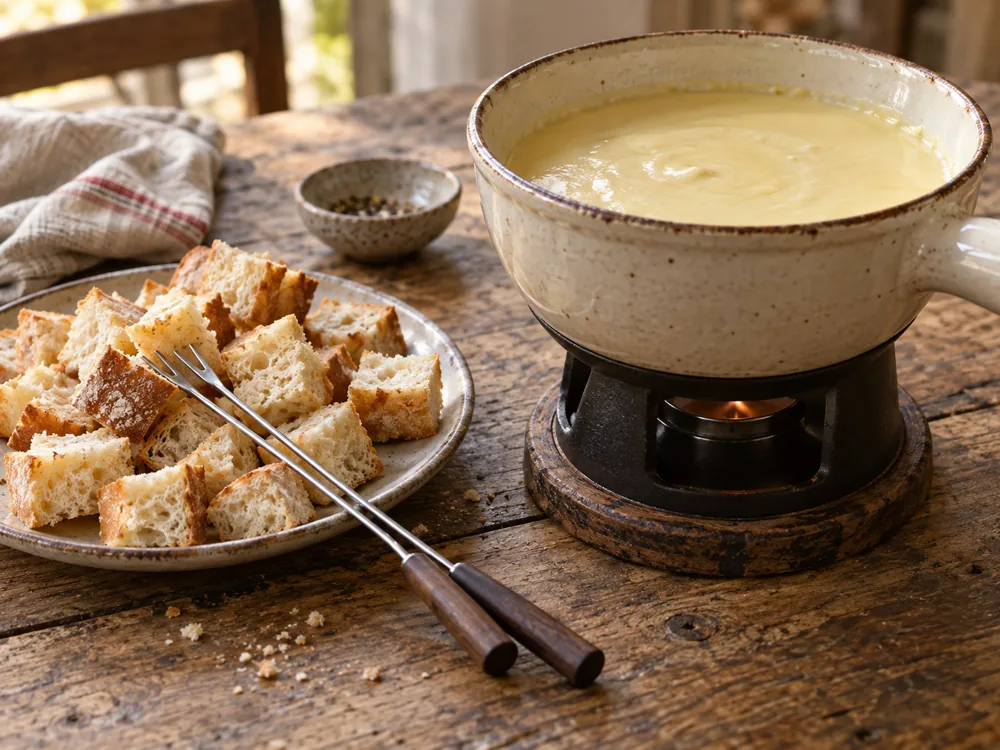
| Traditional Cheese Fondue | 12 oz, grated | Mixed with a heaping tablespoon of corn starch, then melted into 1 cup of white wine; kirsch added at the end; serves 3 to 4 |
| Fettuccini Alfredo | 1 can, cut into small pieces | Stirred into a milk sauce until melted, then tossed with 1 ½ lb of dry fettuccini cooked al dente |
WSU's second cheese fondue, called Mix and Match, uses 4 cups of shredded Cougar Gold and 2 tablespoons of corn starch with a choice of liquid and seasoning.
A 12-ounce fondue leaves 18 ounces in the can, so one can covers two traditional fondues with 6 ounces left over, while the Alfredo takes the whole can.
In the macaroni, soup, Alfredo and fondue recipes the cheese is stirred into a hot base that is already made, while the Palouse onion soup instead tops the bowl with ½ lb of grated cheese.
WSU also prints a faster, lower-calorie macaroni version that uses skim milk heated in the microwave for 5 minutes and stirs the pasta into the sauce, with no breadcrumbs and no baking.

What Are Cougar Gold's Nutrition, Lactose and Allergen Facts?
| Nutrient | Amount |
|---|---|
| Calories | 110 |
| Total fat | 9 g |
| Saturated fat | 6 g |
| Cholesterol | 30 mg |
| Sodium | 176 mg |
| Total carbohydrate | 0.36 g (0 g fiber, 0 g sugars) |
| Protein | 7 g |
| Calcium | 23% of the Daily Value |
A 30-ounce can holds 30 of those servings, and WSU's panel lists the ingredients as pasteurized milk, cultures, salt and enzymes.
WSU prints one panel for Cougar Gold, Natural Cheddar and Smoky Cheddar. Its Viking cheeses list 110 calories and 8.5 g of fat per ounce, and reduced-fat Crimson Fire lists 85 calories and 6 g of fat.
Cheese.com gives the fat content as 14%, which matches the Daily Value percentage WSU prints beside 9 g of fat. As a share of the cheese's weight, 9 g in a 28 g serving is about 32%, so the 14% is probably not a weight percentage.
The panel does not list lactose, but the FAQ explains that most of it leaves with the whey and natural aging breaks down the rest, so WSU states that Cougar Gold contains 0 grams.
WSU also states that "all of our cheese products contain milk," so a zero-lactose figure does not make the cheese milk-free.
It says the cheese is gluten free because no grain products enter the cheesemaking process. The cheese may meet kosher requirements but is not certified kosher.
Is Cougar Gold Safe During Pregnancy?
The CDC says pregnant women are more likely than other people to get sick from germs like Listeria and are 10 times more likely to get a Listeria infection. NHS and the CDC sort cheese in pregnancy by milk treatment and firmness.
The CDC's riskier list holds soft cheese from unpasteurized milk and any queso fresco-type cheese, so the safer answer for Cougar Gold rests on it being a firm cheddar made with pasteurized milk, and it does not carry over to soft styles.
Where Can You Buy Cougar Gold, and What Does It Cost?
WSU lists a shipped price of $34.00 for a 30-ounce can of its standard flavors, about $1.13 an ounce. Special flavors may be priced differently, and WSU accepts Visa, MasterCard and Discover but not American Express, because the university has no contract with that company.
In person, the cheese is sold at Ferdinand's Ice Cream Shoppe on the Pullman campus, and when it is closed the Brelsford WSU Visitor Center, Crimson and Gray, Hampton Inn, Rosauer's, Safeway and The Bookie in the CUB generally stock it. Outside Pullman it is sold at WSU branch campus bookstores in Spokane, Richland and Vancouver.
WSU says prices at other retailers vary and are generally higher than at Ferdinand's, because those retailers receive no discount before their markup, and it suggests calling ahead to check stock. For Christmas delivery it recommends that orders arrive by Thanksgiving, because popular flavors can run out.
A gift can go to as many addresses as the buyer likes, but WSU asks for orders to more than three addresses to be placed online or by mail or fax, and each gift label carries a printed gift message. WSU says purchases help pay student employees and a portion of the revenue supports Food Science students.
How Does Cougar Gold Ship, and Can You Fly With It?
WSU ships by UPS and USPS to street addresses in the lower 48 states, and orders placed before noon Pacific time ship the same day and should arrive within a week. Orders placed after that time typically ship the next business day, and WSU says shipping may take slightly longer in busy periods such as December.
Deliveries to Alaska, Hawaii, the territories, APO, DPO and FPO addresses and PO boxes go by USPS Priority Mail. UPS express service is limited to physical addresses and does not reach PO boxes, military addresses or territories.
WSU no longer ships internationally and lists extra duties charged to customers, damage or loss of product and increased customs restrictions among its reasons. WSU adds that it can ship the cheese to a buyer, who may be able to send it abroad through the Post Office, UPS or another carrier.
For travel, WSU says the TSA website lists no restrictions on Cougar Cheese and that, from employees' and customers' experience, a can can go in carry-on or checked luggage. WSU cannot be responsible for decisions made by TSA agents, and it says a customer recently reported that TSA would not let the cheese through security.