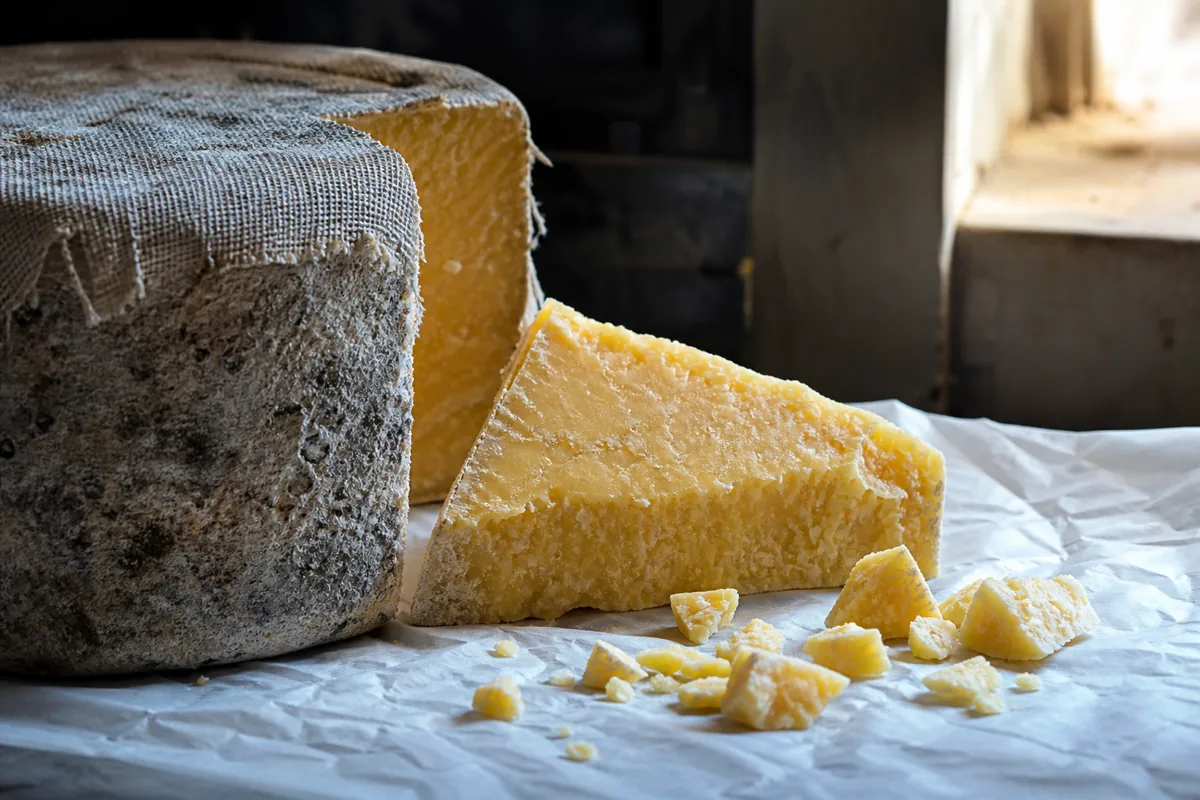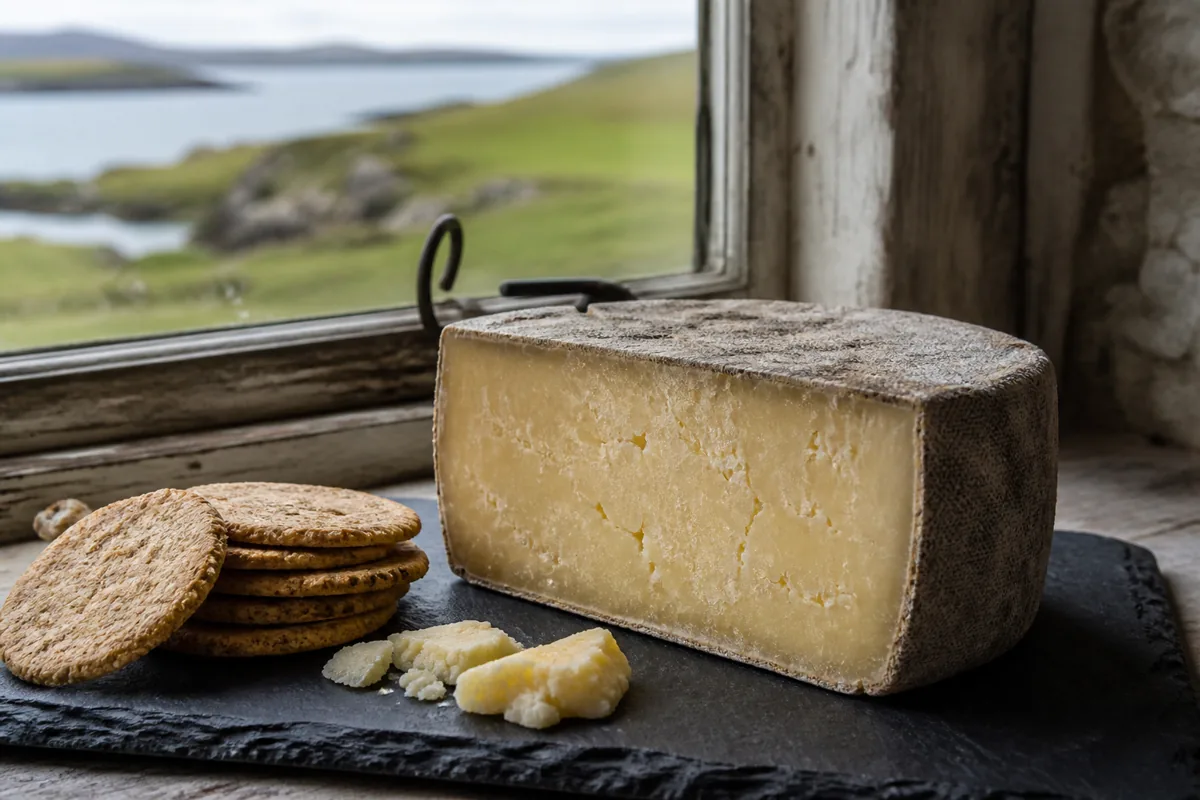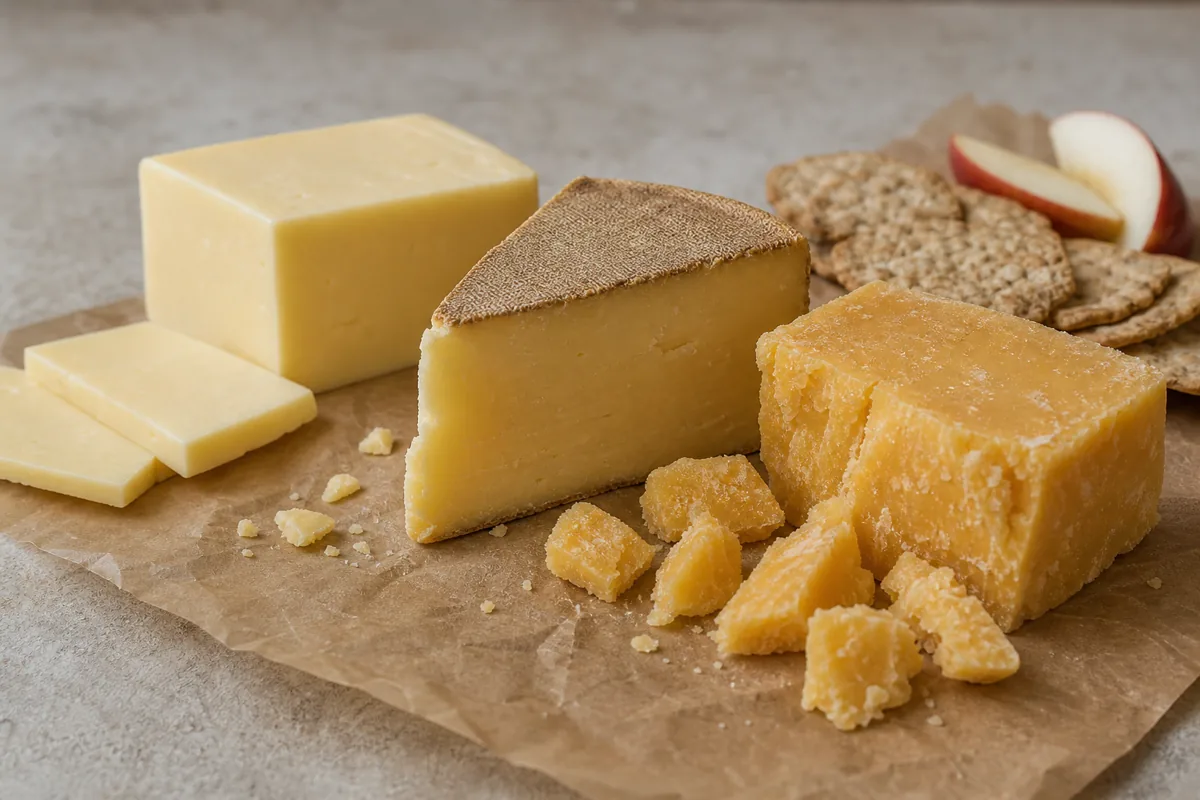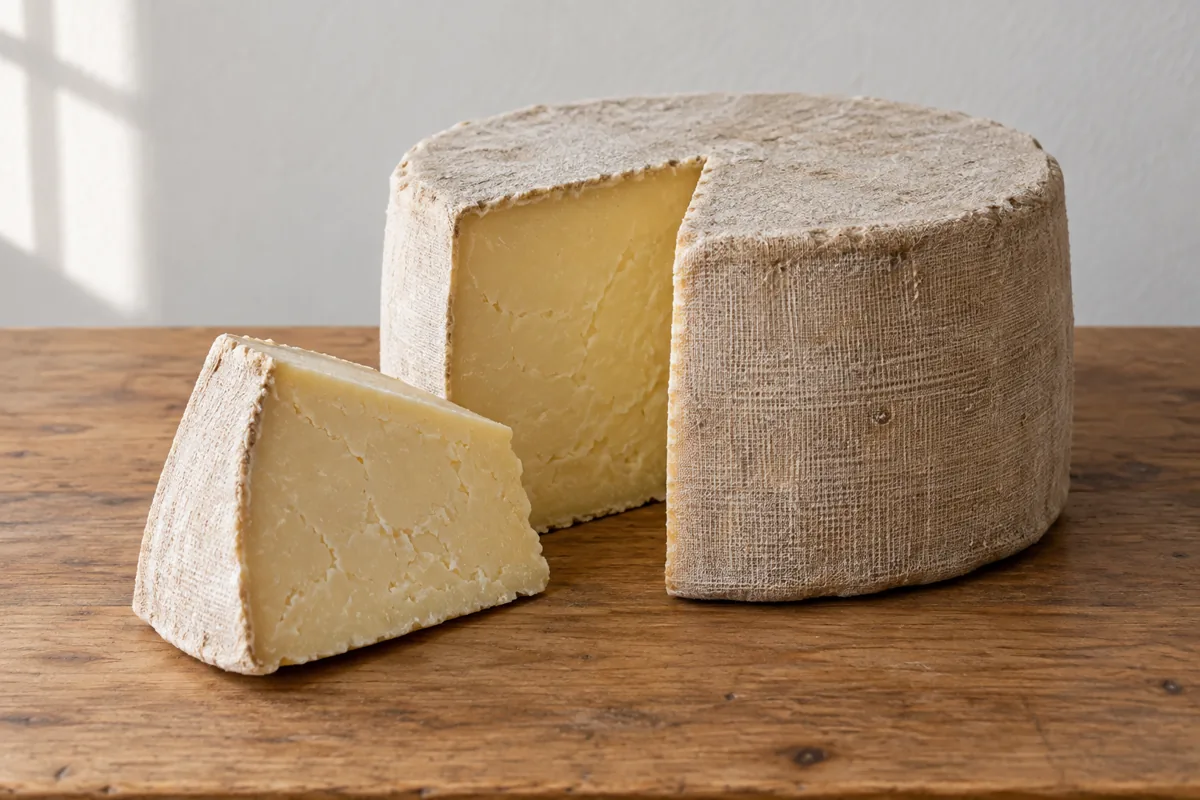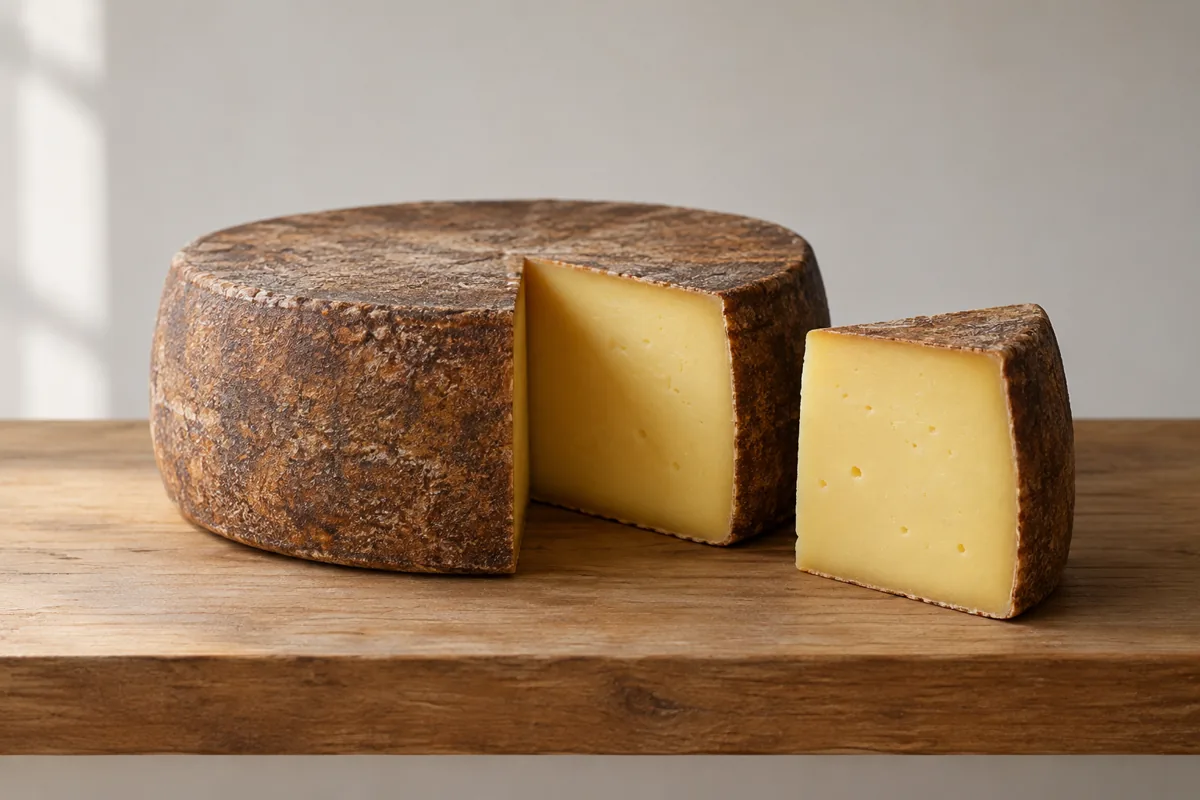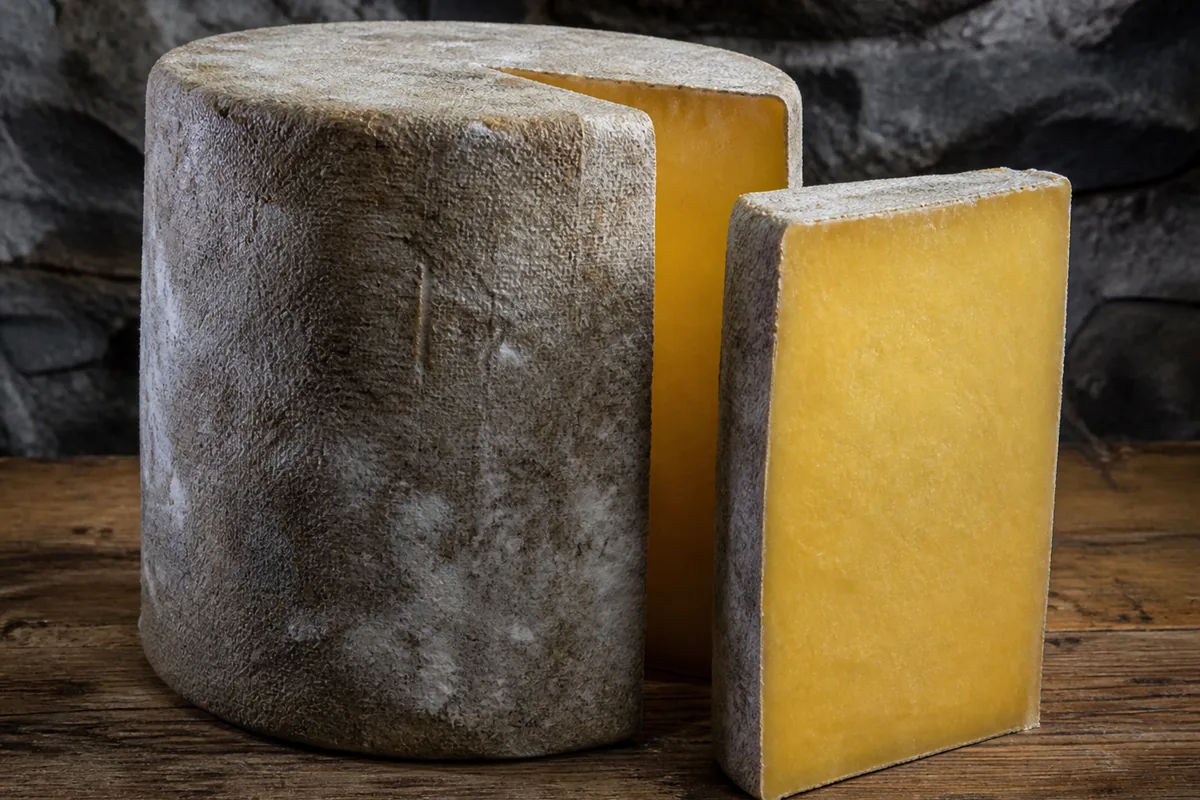
Avonlea Clothbound Cheddar is an unpasteurized cow's milk cheddar made by COWS Creamery on Prince Edward Island, wrapped in cloth and aged in a cave. The recipe comes from the Orkney Islands in Scotland, and the company behind it began as an ice cream business.
The maker and the cloth are the same in every description, while ageing time, texture and flavour vary between them.
In This Article
What Is Avonlea Clothbound Cheddar?
COWS Creamery says it makes Avonlea from the milk of Holstein cows on small local farms in Prince Edward Island, and that the milk is gently heated but not pasteurized. Culture lists it as a hard, cheddar-style cheese with a cloth-wrapped rind, made in Charlottetown.
One distributor, Aux Terroirs, calls the milk thermalized rather than raw, which conflicts with the producer's own wording, so check the milk line on the label of the piece you buy.
Culture names vegetable rennet, and Eataly Toronto's product record lists microbial rennet with no colour added.
What Does the Cloth Do to the Cheese?
COWS says the cloth on the outside of each wheel lets the cheese breathe, and credits it with a rich, robust flavour.
The clothbound method traces back to Somerset, England, and Wikipedia's cheddar entry says traditional cheddar was packed in larded cloth that kept out contaminants while still letting the cheese breathe. The Slow Food specification for Somerset cheddar, as that entry describes it, asks for raw milk, traditional animal rennet and a cloth wrapping.
Avonlea shares the raw milk and the cloth, but the rennet named for it is vegetable or microbial.
Cheese Month Club describes the bandaged rind as mottled grey and says it shapes the flavour. Ask the seller whether to eat or trim the cloth rind before you do either.
How Did an Ice Cream Company End Up Making Cheddar?
The first COWS opened in Cavendish, Prince Edward Island, in 1983. It sold ice cream before it sold cheese.
Owner Scott Linkletter visited the Orkney Islands and liked the local cheese, and COWS moved into cheddar in 2006 with Island cheesemaker Armand Bernard, who made both Avonlea and PEI Cheddar with the company.
Avonlea's recipe came from a local Orkney cheesemaker who partnered with Linkletter, while Cheese.com says Bernard brought it to Canada after learning it in the United Kingdom.
The name Avonlea ties the cheese to the Island's link with Anne of Green Gables, and COWS credits the Island's salt air and iron-rich soil for part of the cheese's character.
How Long Is Avonlea Aged, and How Big Is a Wheel?
Avonlea's ageing runs from 6 months in Culture's figures to 18 months on the producer's page, a gap large enough to change what you buy.
| Source | Ageing | Wheel |
|---|---|---|
| COWS Creamery product page | 12 to 18 months at 10 to 12°C and 90% humidity | About 10 kg full wheel |
| Eataly Toronto (retailer) | 12 to 16 months at 10 to 12°C and 90% humidity | — |
| Cheese Month Club (retailer) | 12 to 16 months | — |
| Wikipedia, Cows Creamery | 12 months | 10 kg (22 lb) |
| Cheese.com | At least a year | — |
| Aux Terroirs (distributor) | Minimum of one year | 10 kg |
| Culture | 6 to 12 months at 50 to 54°F and 90% humidity | 12 in by 12 in, 22 lb |
Six of the seven records start at twelve months or more, and Culture's starts at six. For the cheese sold now, the producer's current page gives 12 to 18 months.
A whole wheel weighs roughly 10 kg, or 22 lb, and at 12 in across and 12 in high it is a drum as tall as it is wide.
What Does Avonlea Taste Like?
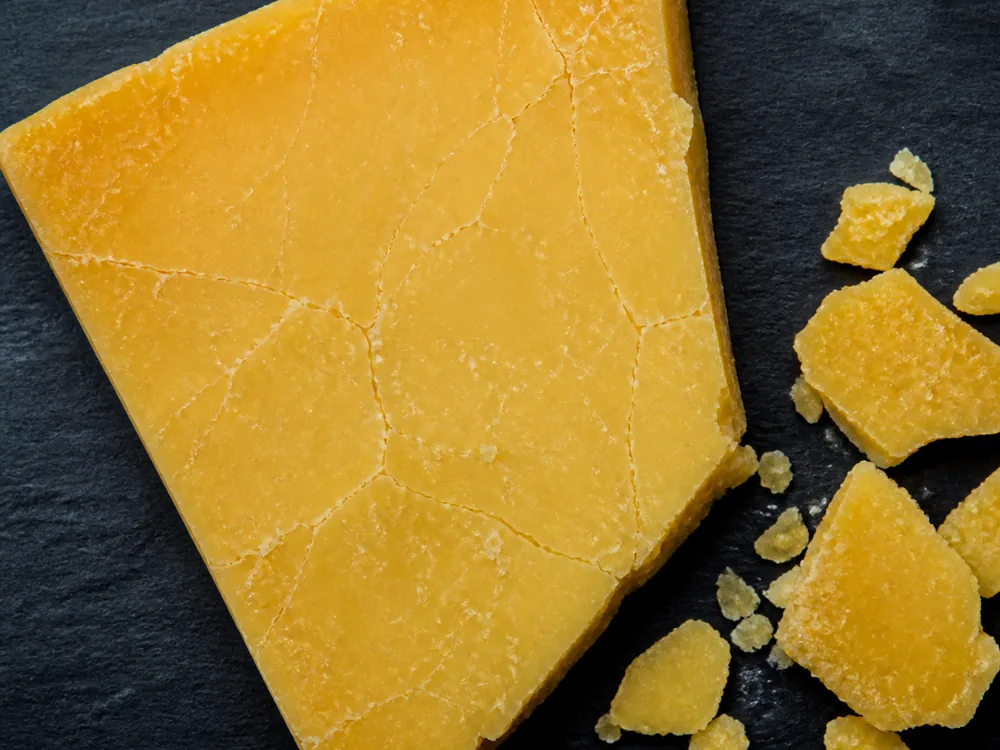
Most descriptions call Avonlea's paste firm, and several mention a tangy bite. Beyond that, the texture runs from smooth in Culture's description to crumbly in Cheese.com's and Aux Terroirs', and the flavour from sweet in Culture's to earthy in Cheese.com's and Aux Terroirs'.
| Source | Texture and colour | Flavour |
|---|---|---|
| Culture | "Amazingly smooth for a clothbound," fudgy, caramel-covered and firm | Sweet and well rounded with background aromas of tomato and peanut butter; sweet and milky aftertaste with brown butter and a tangy bite |
| COWS Creamery | Firm, rich and full-bodied | Aroma of fruit and toasted nuts with a tangy bite at the end; a buttered baked potato finish on its celebration box page |
| Cheese.com | Creamy, crumbly and firm; straw colour that varies with the season | Rich, hearty, savoury flavours of earth and mushrooms with a fruity tang |
| Aux Terroirs | Firm yet crumbly, deep yellow | Grassy, earthy aromas with a sharp potato flavour, fruity and nutty notes |
| Gismondi on Wine | Slightly brittle and flaky, less rich and fatty than typical Canadian varieties, golden hay colour | A hint of horseradish, a woodsy taste and a slight sparkle of spiciness |
| Cheese Month Club | Firm | Powerful umami and mineral flavours with sweet, nutty, fruit-like tanginess |
With descriptions this far apart, taste a small piece at the counter before you commit to a wheel.
What Awards Has Avonlea Won?
Avonlea's best-documented result is the 2015 SuperGold in the Vintage Cheddar category at the World Cheese Awards, reported by Perishable News.
| Year | Result | Reported by |
|---|---|---|
| 2008 | Second prize in its category at the 2008 ACS conference in Chicago | Wikipedia |
| 2015 | SuperGold, Vintage Cheddar, World Cheese Awards, one of the top 16 cheeses from more than 2,600 entries from 33 countries | Perishable News |
| 2016 | Canada's Cheese of the Year | COWS Creamery |
| 2022 | Grand Champion Overall, SIAL | COWS Creamery |
| 2023 | Grand Champion Cheddar, Royal Agricultural Winter Fair | COWS Creamery |
The producer also calls the 2015 result "World's Best Vintage Cheddar." The 2016, 2022 and 2023 entries above come from its own product page, not from an independent record.
What Should You Serve with Avonlea?
Culture says the cheese gets more savoury as it warms, and it recommends serving it at room temperature or wedging it into a grilled cheese sandwich.
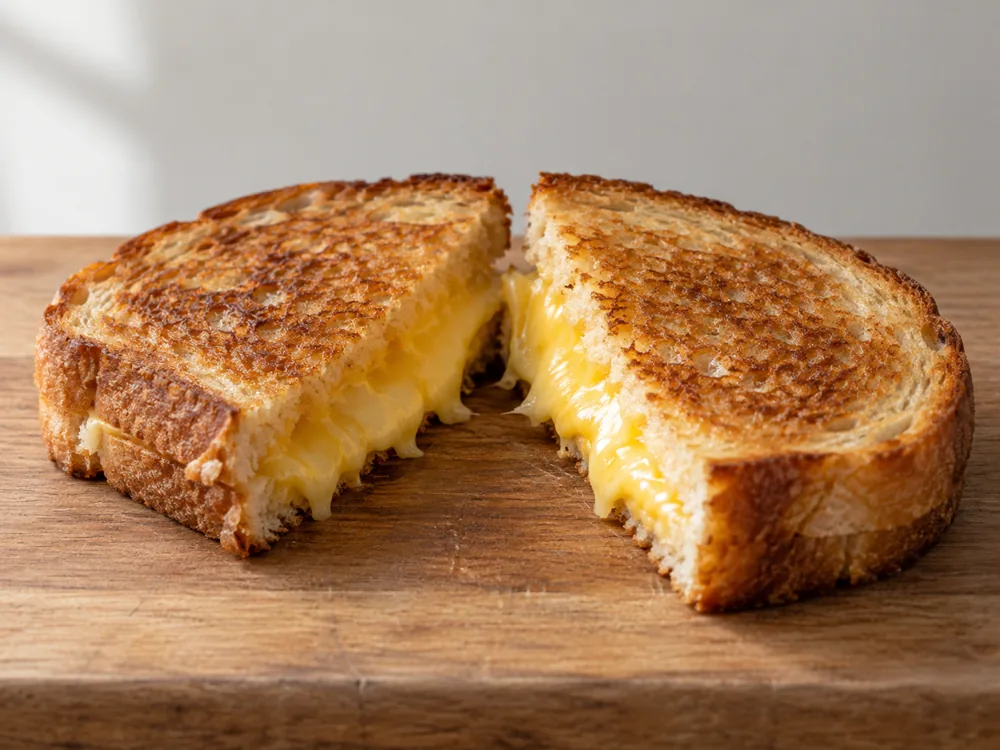
Culture and Gismondi on Wine suggest these cheddar pairings for Avonlea.
| Pairing | Type | Why It Works |
|---|---|---|
| Pinot Noir | Wine | Culture's suggestion for room-temperature Avonlea. |
| Gewurztraminer | Wine | Culture's second wine suggestion. |
| Tawny port | Drink | Gismondi on Wine pairs it with aged tawny port; the same source lists Cremant du Jura and Riesling. |
| Stone fruit and rye bread | Food | Gismondi on Wine suggests stone fruits and hearty rye bread. |
Cheese Month Club gives a longer list of Marcona almonds, pineapple jalapeno jam, strong stouts and ales, sparkling wine and aged Italian reds.
Which Format Should You Buy?
Where you buy sets the size, because COWS sells wheels and packs while shops cut pieces to their own weights.
One Canadian cheese shop lists 200 g at CA$18.30, and Eataly Toronto's online shop lists 150 g at $10.05, or $66.99 per kilogram. Chantal's Cheese Shop cuts and weighs it to order and applies a 25% overage estimate at checkout.
Chantal's listed it as out of stock and the Canadian shop listed the 300 g size as sold out. Confirm availability before you buy.
Is Raw-Milk Avonlea Safe in Pregnancy?
It depends on which agency you follow: Avonlea is made with unpasteurized milk, and the NHS, the CDC and Health Canada treat raw-milk hard cheese differently.
| Source | What it says |
|---|---|
| NHS | Pasteurised or unpasteurised hard cheeses such as cheddar, gruyère and parmesan are safe to eat |
| CDC | Lists hard cheese made with pasteurized milk, such as cheddar, as a safer choice, and says to avoid raw milk and dairy products made from raw milk |
| Health Canada | Lists pasteurized cheddar, and pasteurized and unpasteurized hard cheeses such as Romano, among its safer choices |
If you follow the NHS, Culture's classification of Avonlea as a hard cheese places it in the safe group. If you follow the CDC, only pasteurized-milk cheddar is listed, so you would leave a raw-milk wheel out.
That split follows how the pregnancy rules for cheese work: they depend on both the cheese type and whether the milk was pasteurized.
What Can You Buy Instead of Avonlea?
For another clothbound cheddar, look at Vermont's Cabot Clothbound. Jasper Hill says it coats the young cheese in lard and adds a layer of cloth, while Avonlea's entries describe cloth alone.
Jasper Hill describes Cabot as crumbly with a crystalline texture that turns creamy on the palate, with medium acidity, caramel sweetness and savoury notes of chicken broth and toasted nut.
| Attribute | Avonlea | Cabot Clothbound |
|---|---|---|
| Milk | Unpasteurized, gently heated | Pasteurized |
| Ageing | 12 to 18 months per the producer | 9 to 14 months |
| Wheel | About 10 kg (22 lb) | 35 lb |
| Wrapping | Cloth | Lard coat plus a layer of cloth |
| Made in | Prince Edward Island | Vermont |
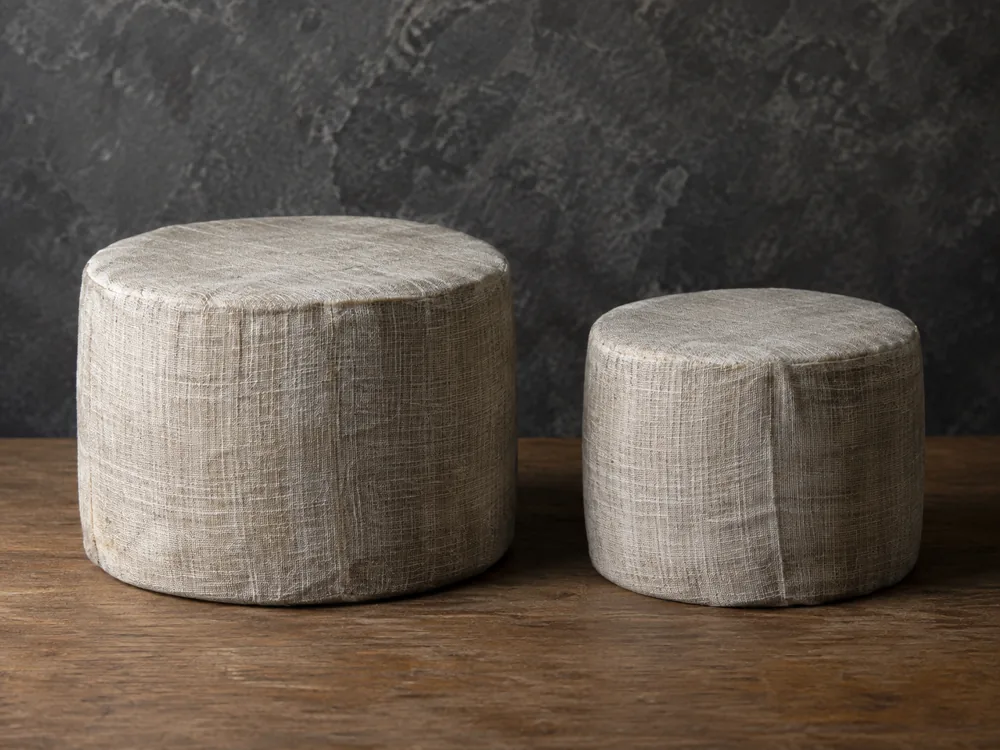
If you follow the CDC, Cabot's pasteurized milk changes the pregnancy answer that Avonlea's raw milk leaves open, because CDC lists pasteurized cheddar as a safer hard cheese.
SOURCES & REFERENCES
What Else Do People Ask About Avonlea Clothbound Cheddar?
Yes. COWS Creamery says the milk is gently heated but not pasteurized, and Culture, Cheese.com and several retailers list it as raw or unpasteurized.
One distributor, Aux Terroirs, calls the milk thermalized.
Culture lists vegetable rennet, Steve Parker Cheese and Wine lists vegetarian rennet, and Eataly Toronto lists microbial rennet. Check the current label for the rennet type.
The producer says 12 to 18 months, and retailers and Wikipedia give 12 to 16 months or 12 months. Culture gives 6 to 12 months, the lowest of these figures.
The NHS lists unpasteurised hard cheeses such as cheddar as safe, while the CDC lists hard cheese only when it is made with pasteurized milk. Ask your doctor or midwife which guidance applies to you.