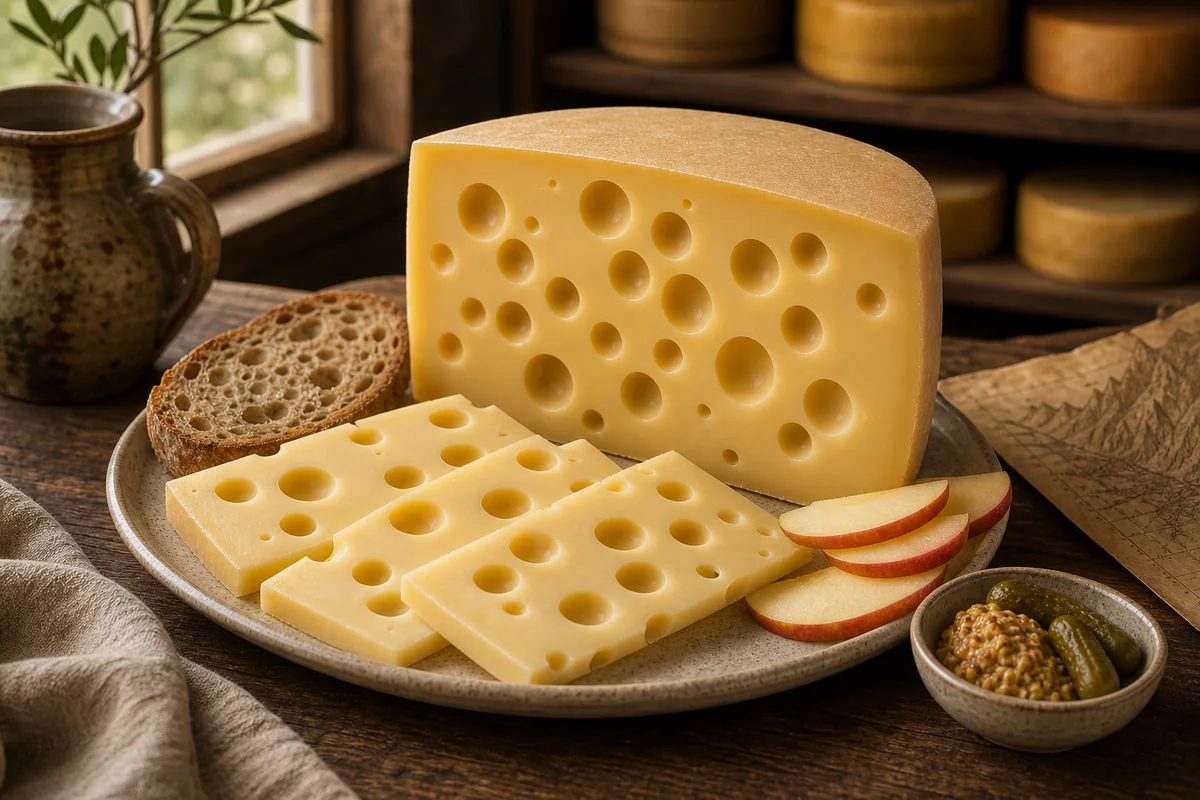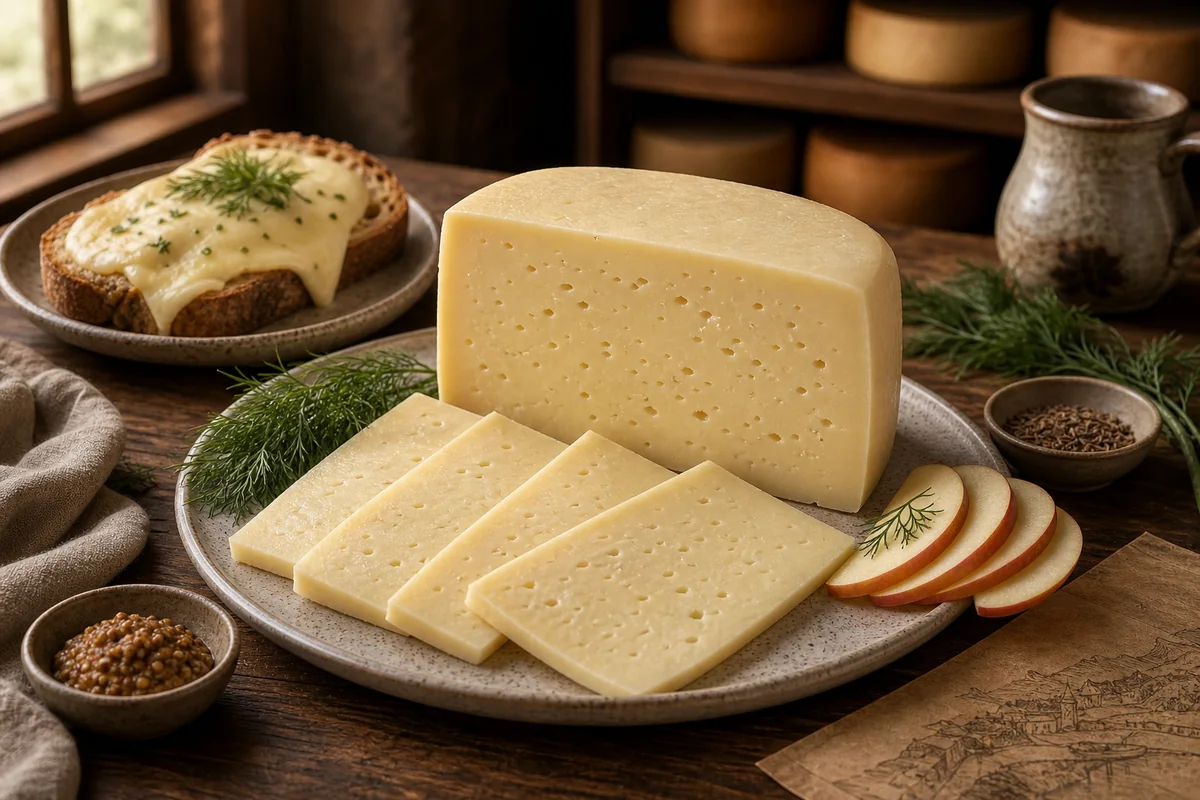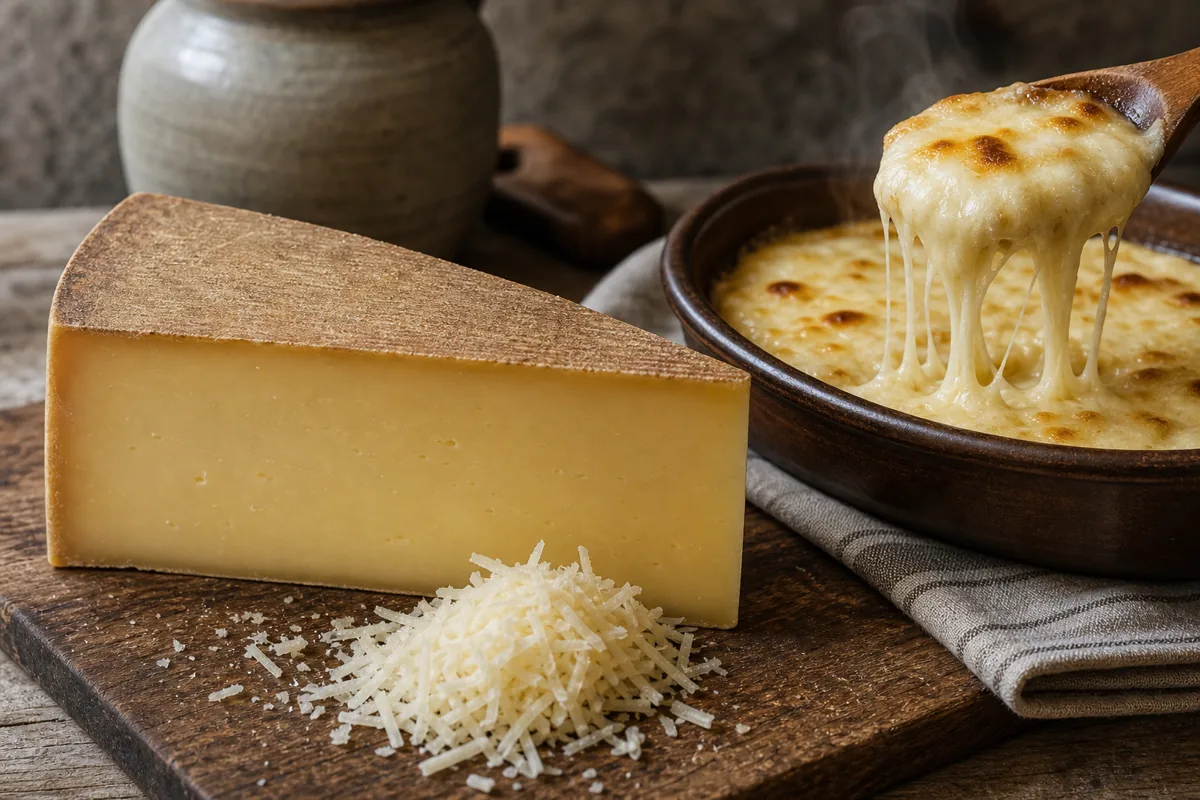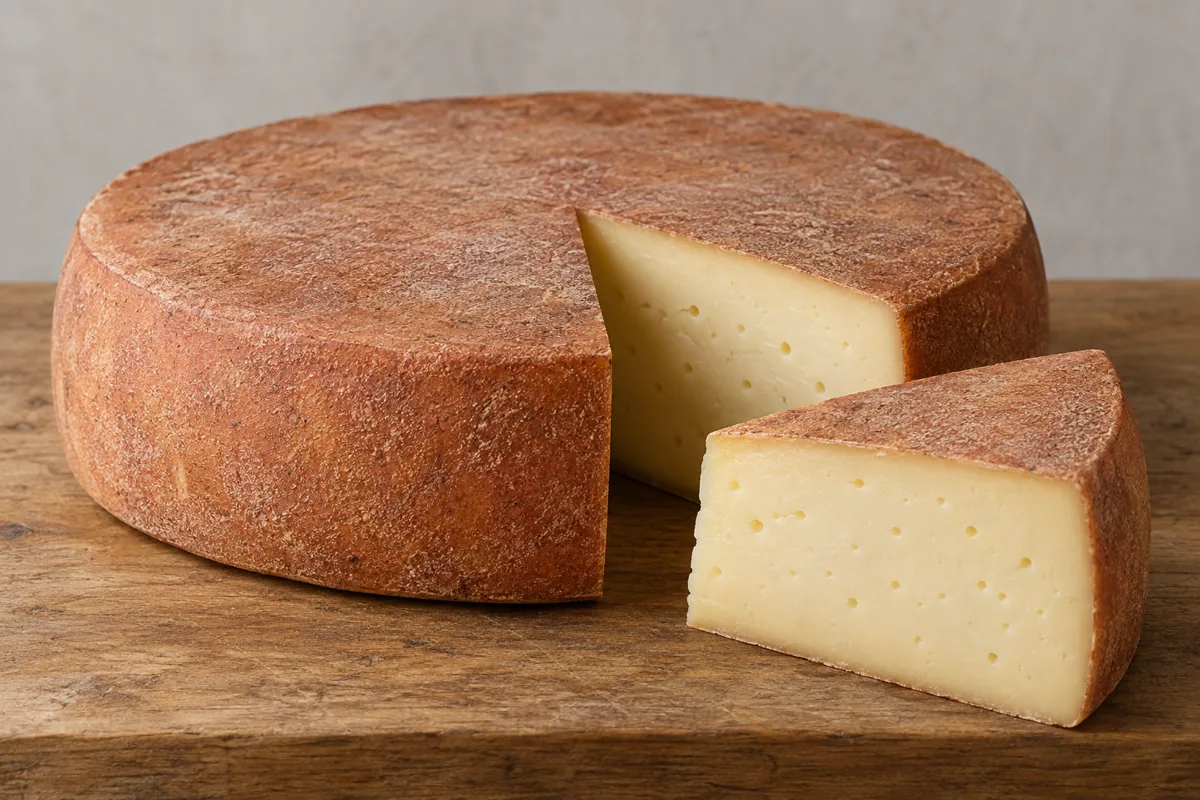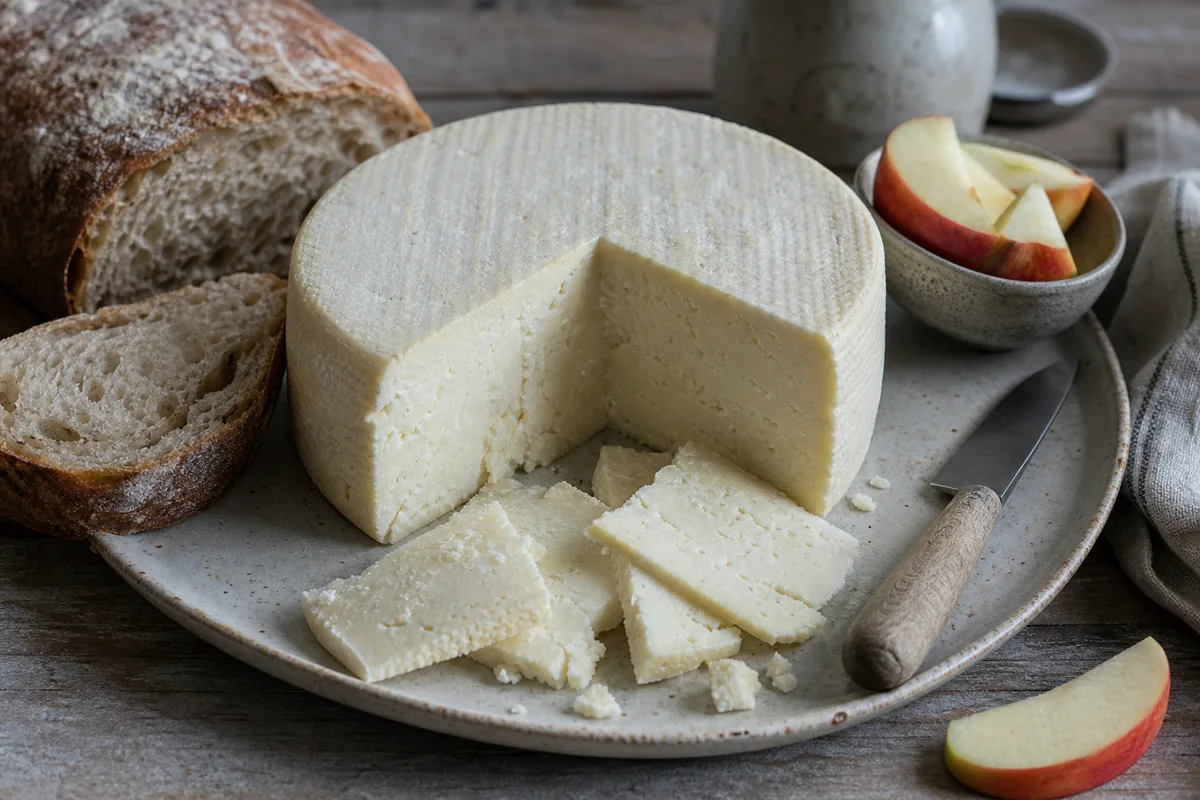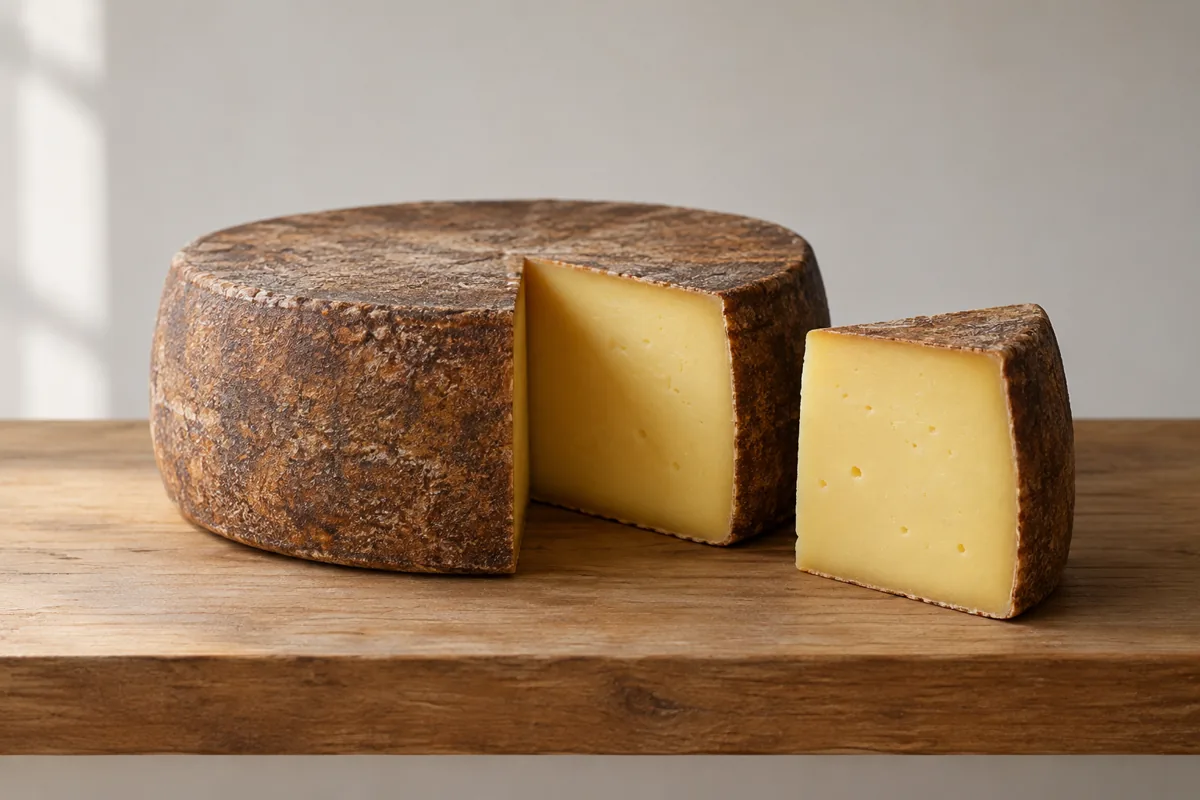
Ascutney Mountain is a raw-milk alpine-style tomme made at Cobb Hill in Hartland, Vermont. If you like the nutty depth of Appenzeller or Gruyère, it gives you a distinctly Vermont version shaped by seasonal milk and a long natural-rind ageing.
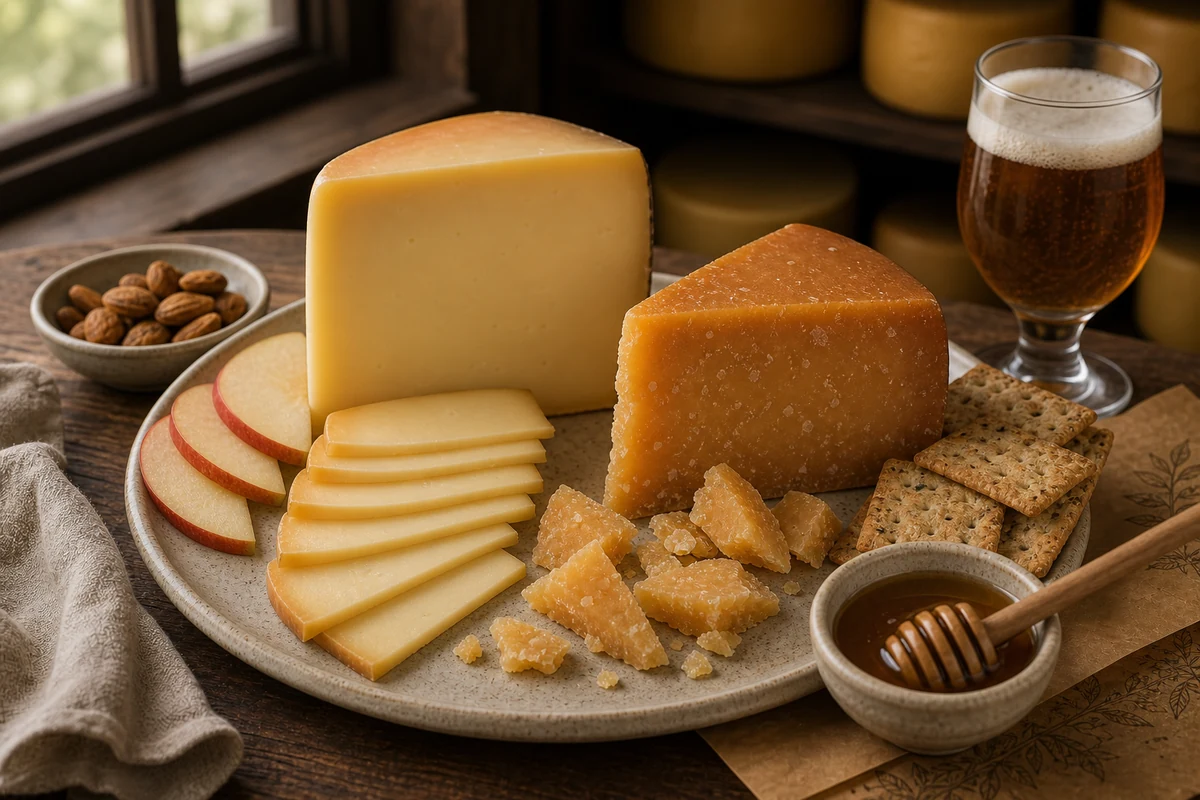
The standard wheel is usually sold around eight to ten months, while Reserve passes thirteen months. Age changes the decision: the younger cheese is the more flexible melter, and the Reserve moves toward a drier, flakier table cheese.
In This Article
Why Do Sources Compare It to Appenzeller and Gruyère?
Cobb Hill identifies Appenzeller as the starting style, and older retail descriptions trace the recipe to the same Swiss cheese. Gruyère appears as a second comparison because the finished wheel shares its mountain-cheese density, nutty sweetness and cooking range.
You do not need to choose one comparison as the only correct answer. Appenzeller explains the recipe lineage, while Gruyère helps you anticipate the firm paste and savoury-sweet flavour.
The word tomme adds a third piece without naming a single Swiss model. It places the cheese among rustic mountain wheels whose identity comes from local milk, natural-rind ageing and the conditions of a particular farm.
This distinction keeps the comparisons useful. You can borrow an Appenzeller expectation for concentrated alpine character and a Gruyère expectation for cooking, while still allowing the Vermont milk and Cobb Hill cellar to produce their own result.
Standard or Reserve?
The standard wheel is aged about eight to ten months, long enough to build sweetness and a firm, close paste. Cobb Hill lists its Reserve at more than thirteen months, concentrating the cheese and drying its edges further.
| Standard wheel | Reserve |
|---|---|
| About 8-10 months | Over 13 months |
| Firm, dense and suited to melting or shaving | Drier and flakier, with a more concentrated table-cheese character |
| Nutty sweetness with a clear tang | Herbal notes and a Parmesan-like texture have been described |
As the wheel matures, pineapple and butterscotch notes may emerge and the broad “Swiss cheese” impression becomes less blunt. If you want one wedge for cooking and snacking, the standard age is the safer choice; choose Reserve when you want the aged texture to be part of the point.
The Reserve has also been described as flaky and Parmesan-like, with sage and thyme notes. That does not turn it into a grating cheese by definition, but it tells you to expect thinner shards and a more concentrated bite than the standard wheel.
Age is therefore a practical product distinction rather than background trivia.
When two listings use the same cheese name, ask whether the cut came from the standard make or the Reserve before comparing price or planning a dish.
What Can the Cut Face Tell You?
Expect a yellow to deep-yellow paste with a thin brown natural rind, but do not treat one colour photograph as a specification. Milk changes through the grazing season, and individual wheels have been described from pale straw to deep buttercup yellow.
The paste is generally firm and dense, with small eyes rather than the large holes associated with generic Swiss cheese. A few irregular openings or crystals can appear, especially as the cheese ages, without changing its identity.
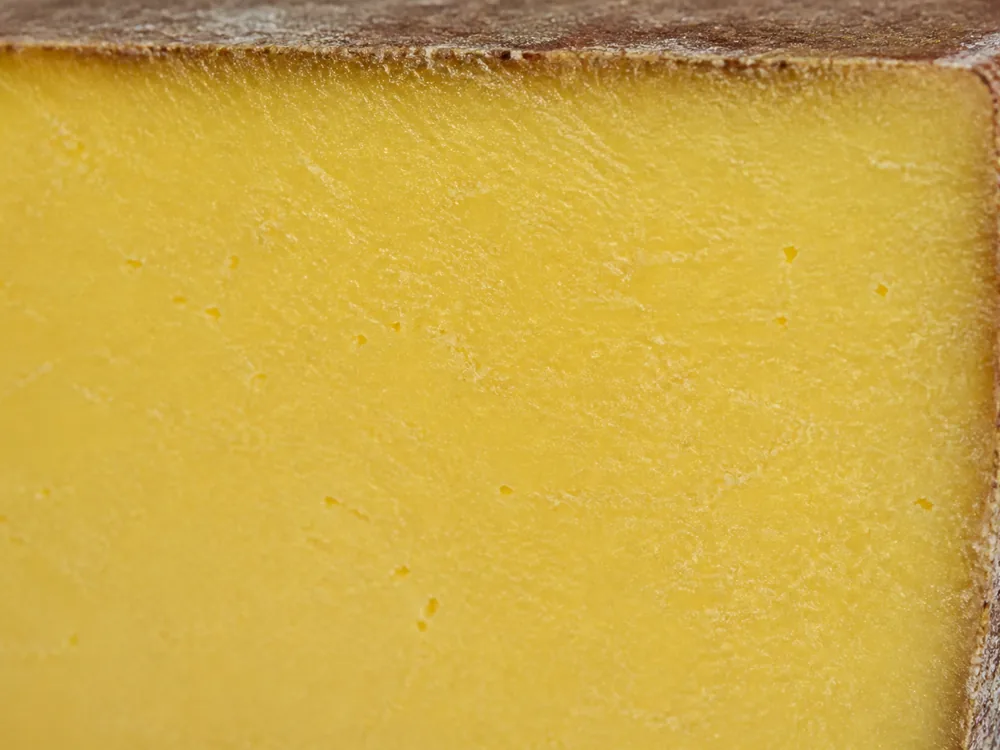
On the palate, the common line is sweet and nutty, with hazelnut, grass, butter and a pronounced tang. Near the rind, you may find earthier or cellar-like aromas; in the paste, the sweetness can suggest fruit, butterscotch or a mild aged-Cheddar funk.
Texture can vary from smooth and close to slightly granular, and a mature wheel has been described with crystals and irregular eyes. Those differences fit a long-aged farmstead cheese, provided the rind, aroma and paste still match the wheel's normal condition.
When you taste a wedge, compare three points: the centre, the area just under the rind and the rind itself.
The centre shows the sweet alpine base, while the outer bite reveals whether you enjoy the cellar-like edge that natural-rind ageing adds.
Cobb Hill's farmstead milk changes with season, feed and stage of lactation. Two legitimate wheels can therefore differ in colour, eye pattern and flavour intensity.
How Is Ascutney Mountain Made, and Where Does the Milk Come From?
Cobb Hill's cheesemaking process begins with raw milk from Cedar Mountain Farm's Jersey and Holstein cows. The herd grazes from May through September, then eats hay from Cobb Hill and nearby farms during the colder months.
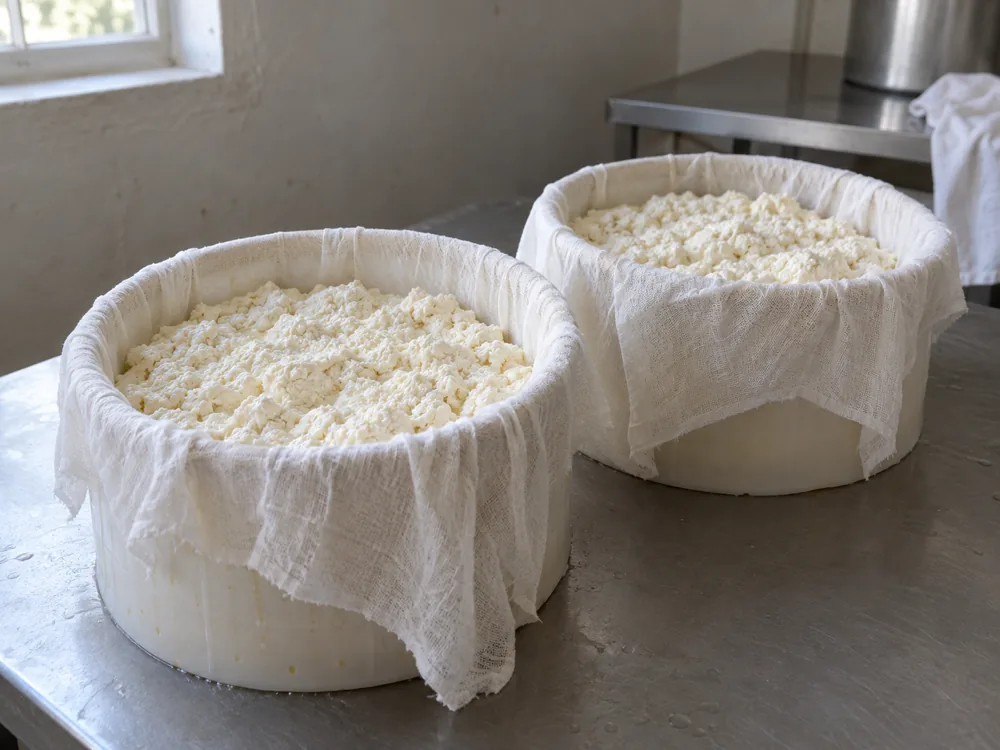
The milk is warmed and set with starter culture and vegetarian rennet, then the curd is cut to rice- or pea-sized pieces and cooked. After the whey drains, the curd goes into cloth-lined hoops and is pressed overnight.
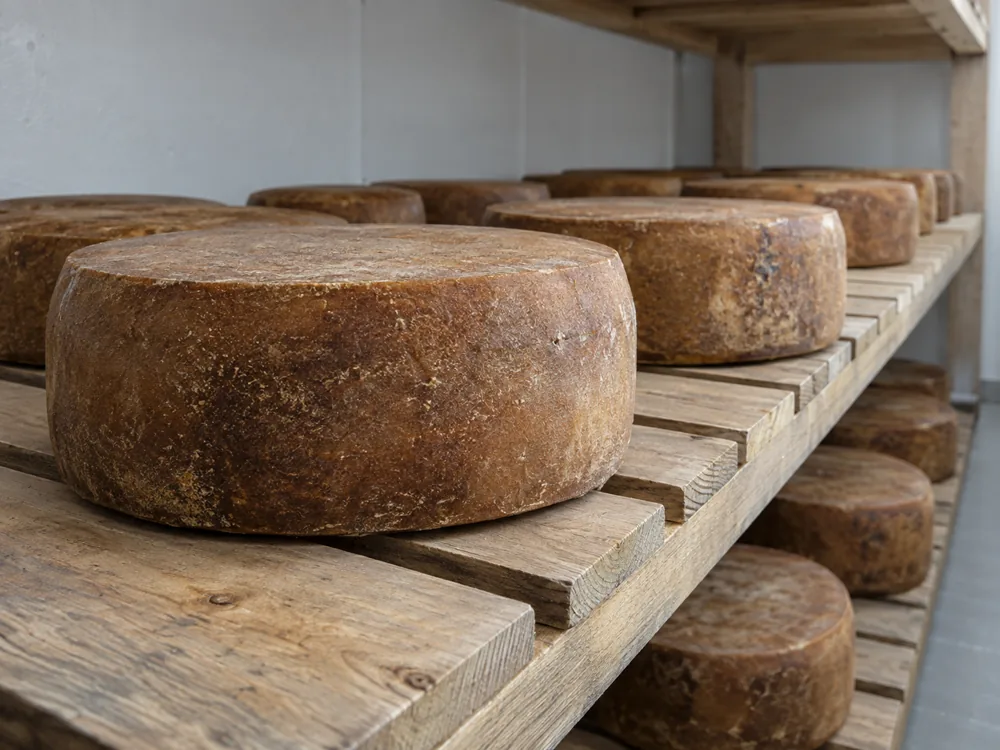
The pressed wheels enter brine, then rest on slatted shelves in a cool, humid room. During the first several weeks, each wheel is wiped and turned every evening, which builds the thin russet-brown natural rind instead of adding wax or cloth.
Why Is Cobb Hill Part of the Cheese's Identity?
Ascutney Mountain comes from more than a creamery with a Vermont address. Cobb Hill grew from two dairy farms combined in 1997 into a 260-acre cooperative community associated with systems thinker Donella Meadows.
About 50 residents live in 23 houses clustered on five acres, leaving most of the land for farming and other rural enterprises. Cheese sales support that community, so the wheel links the milk, the ageing room and the settlement's cooperative economy.
At roughly 260 acres, housing occupies a small part of a much larger working landscape.
The dairy herd, hay fields, creamery and ageing room operate inside that shared land rather than beside a conventional subdivision.
Lisa Marchetti took over cheesemaking in 2023 after longtime maker Jeanine Kilbride retired. That handover matters because farmstead cheese is a repeated practice, not a static recipe copied without human judgment.
The creamery's current range also includes Havarti, Caerphilly and several Gouda styles, while experiments have included caraway-studded Ascutney Mountain. Those cheeses show that the operation is not built around one imported alpine template.
How Can You Use Ascutney Mountain?
The standard cheese melts well and can be grated, shredded or shaved. It works over baked eggs, French onion soup, a parsnip gratin or an asparagus frittata, where its nuttiness adds depth without the sharp salt of a very dry grating cheese.
The published recipes use the texture in different ways: four ounces are shredded over baked eggs and mushrooms, six ounces are grated into a parsnip gratin, and thin shavings finish raw asparagus. Those examples let you choose the cut according to the dish instead of treating “melts well” as the only cooking instruction.
| Use | How It Works |
|---|---|
| French onion soup | A firm alpine-style wedge melts into a savoury cap while keeping more character than mild Swiss cheese. |
| Parsnip gratin | The nutty sweetness matches the root vegetable and the cheese browns across the top. |
| Baked eggs and mushrooms | Mushrooms meet the rind-side earthiness while shredded cheese softens over the eggs. |
| Raw asparagus salad | Thin shavings add salt, fat and a firm bite without turning the salad heavy. |
For a board, let a small piece warm enough to show its aroma, then compare the centre with the rind edge. A younger standard wedge can share a plate with fruit or bread, while Reserve deserves thinner shards and fewer competing flavours.
You do not need a prescribed drink pairing to make the cheese useful. Start with the age, the rind intensity and the food on the plate; a standard wedge can handle a busier meal, whereas Reserve is easier to understand with a restrained accompaniment.
How Should You Buy It?
Cobb Hill sells the cheese directly for shipment or farm-stand pickup, and specialist US cheesemongers carry cut pieces. Stock can be intermittent, so confirm whether a listing is the standard wheel or Reserve before comparing price and weight.
Specialist listings have offered pieces from half a pound to two pounds, while wholesale orders may require advance notice.
A smaller cut is the sensible first purchase because the natural-rind edge and the centre can taste different enough that you may prefer one part of the wheel.
If you need a substitute, Appenzeller is the closest guide to the recipe lineage and Gruyère is the easier guide to cooking performance. Neither reproduces the raw Vermont milk or the Cobb Hill ageing, so match the substitute to your dish rather than to the story.
How Does Raw Milk Change the Pregnancy Answer?
Ascutney Mountain is made from raw milk, and national guidance treats raw-milk hard cheese differently. NHS guidance permits unpasteurised hard cheese, while CDC guidance recommends avoiding raw milk products and identifies pasteurised hard cheese as the safer choice.
Because the cheese is described as firm, hard or semi-firm depending on the seller, you should not transfer a rule for soft cheese without checking the category used in your country. Follow the current pregnancy guidance for cheese where you live and ask your clinician when a raw-milk aged wheel does not fit neatly into the published examples.
Yes. Cobb Hill makes it with raw milk from pastured Jersey and Holstein cows.
Cobb Hill identifies its rennet as vegetarian and non-GMO.
Reserve is aged beyond thirteen months rather than the standard eight to ten. It is drier, flakier and more concentrated.
Appenzeller is the clearest recipe lineage, while Gruyère is a useful comparison for flavour, density and cooking. Both comparisons help, but neither makes the Vermont cheese a copy.