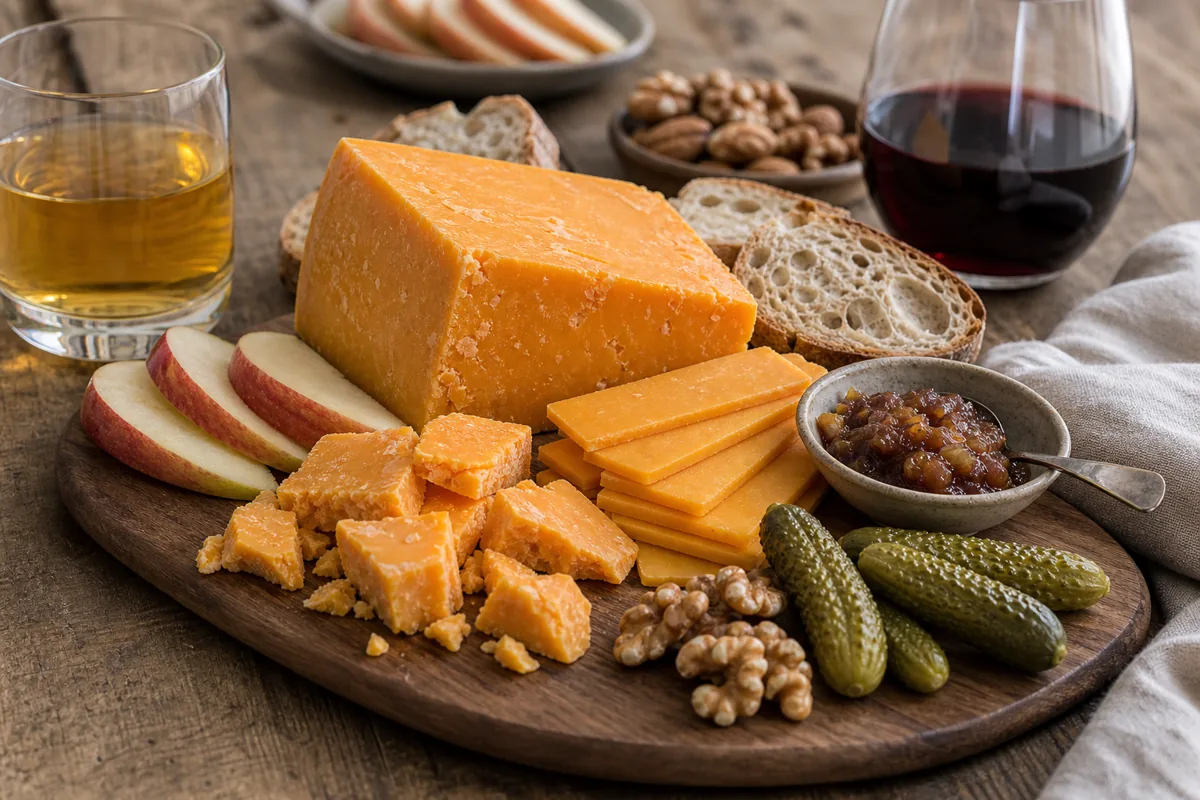
In our pairing library, cheddar is one of the few cheeses that works with both bold reds and hard cider. Its firm texture and sharp tang stand up to tannin and sweetness in ways softer cheeses cannot.
The pairing logic starts with age. Young goat cheeses can share cheddar's tang, but fresh tangy swaps do not bring cheddar's density or browned-butter depth.
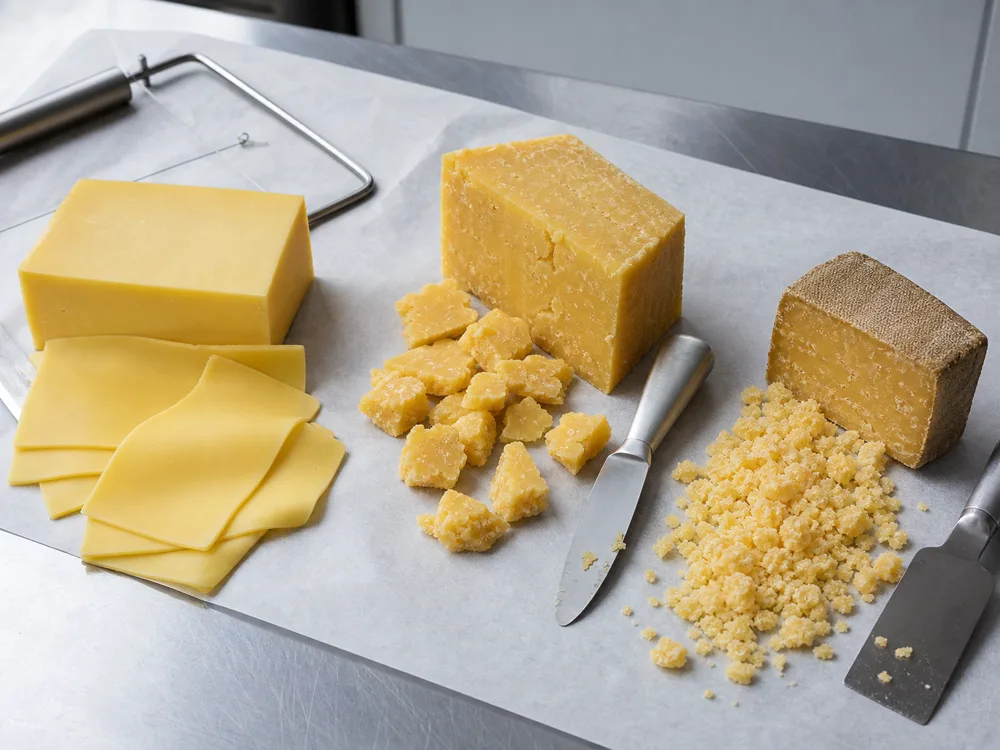
The aged cheddar texture develops the tang and crystals that drive these choices. Mild deli cheddar at two months needs different partners than clothbound farmhouse cheddar at two years.
In This Article
Best Drink Pairings for Cheddar
Cheddar changes dramatically with age. Cloth-bound aging shapes flavor through moisture loss, rind development, and slow breakdown inside the paste.
Remember it later
Planning to try this recipe soon? Save it for a quick find later!
Mild cheddar at two to three months is buttery and soft. Sharp cheddar at twelve months is firmer and tangy.
Extra-sharp at two years or more is crystalline, caramel-like, and intense.
If the question is bottle-first rather than snack-board-first, specific cheddar wine picks break the same age logic into red, white, and fortified bottle lanes.
Cabernet Sauvignon is the safest overall red because it brings enough body and tannin to stand alongside sharp, dense cheese. For everyday cheddar in sandwiches and salads, crisp whites and dry cider work better than reds.
Cheddar style matters before the drink does. Clothbound cheddar tastes earthy and brothy, while block cheddar tastes cleaner and more lactic.
Farmhouse styles can handle cider, ale, and structured reds. Supermarket mild cheddar usually needs brighter drinks because it has less savory depth.
Dry cider is the most flexible everyday match. Apple acidity mirrors a classic cheddar-and-apple bite while staying light enough for mild blocks.
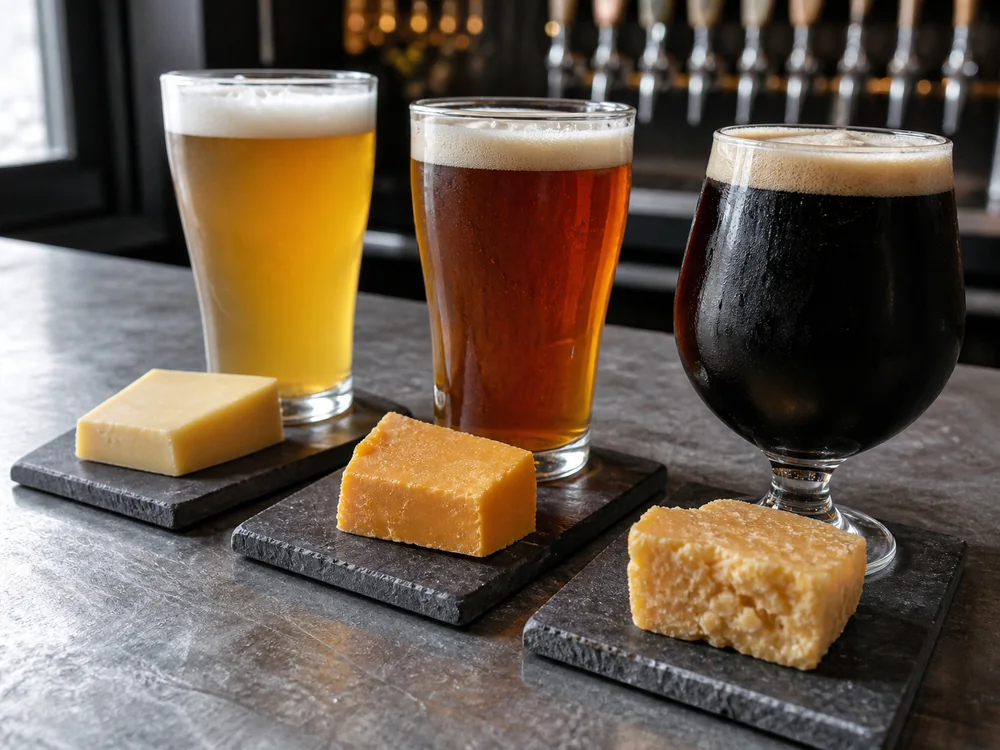
Brown ale is better for mature cheddar. Malt sweetness sits beside the cheese's browned-butter notes without needing a formal wine pairing.
| Pairing | Type | Why It Works |
|---|---|---|
| Cabernet Sauvignon | Red | The top all-around red for cheddar. Dark fruit, firm tannin, and full body stand alongside sharp aged cheddar without being overwhelmed. Best with 12-month or older wheels. |
| Tawny Port | Fortified | Caramel, dried fruit, and nutty sweetness in tawny Port mirror the butterscotch notes in extra-sharp aged cheddar. The best match for a closing cheese course. |
| Dry Cider | Beer | Dark spice, black pepper, and plum fruit complement medium to sharp cheddar. Australian Shiraz with its ripe fruit works especially well with Vermont or English farmhouse styles. |
| Syrah | ||
| Sauvignon Blanc | White | Crisp acidity and citrus make this the best white for mild cheddar in salads, sandwiches, and lighter dishes. Does not stand up to extra-sharp wheels. |
| Brown Ale | Malty sweetness and low bitterness complement cheddar's savory depth. The English pub classic with a ploughman's lunch. |
- Sharp aged cheddar: Cabernet Sauvignon or Syrah brings enough structure.
- Extra-sharp vintage: Tawny Port mirrors the caramel crystals.
- Mild deli cheddar: Sauvignon Blanc or dry cider keeps the pairing fresh.
- Pub lunch: brown ale with a ploughman's plate of cheddar, bread, and pickles.
The bottle-selection question sits in the wine-specific companion page. The pairing logic here focuses on the full board and food matches, not just the drink.
Apple, Chutney, and Sweet Pairings
Sweet and tangy is cheddar's strongest food lane. The cheese's sharp, slightly sour edge creates a natural contrast with fruit sweetness that few other cheeses match as well.
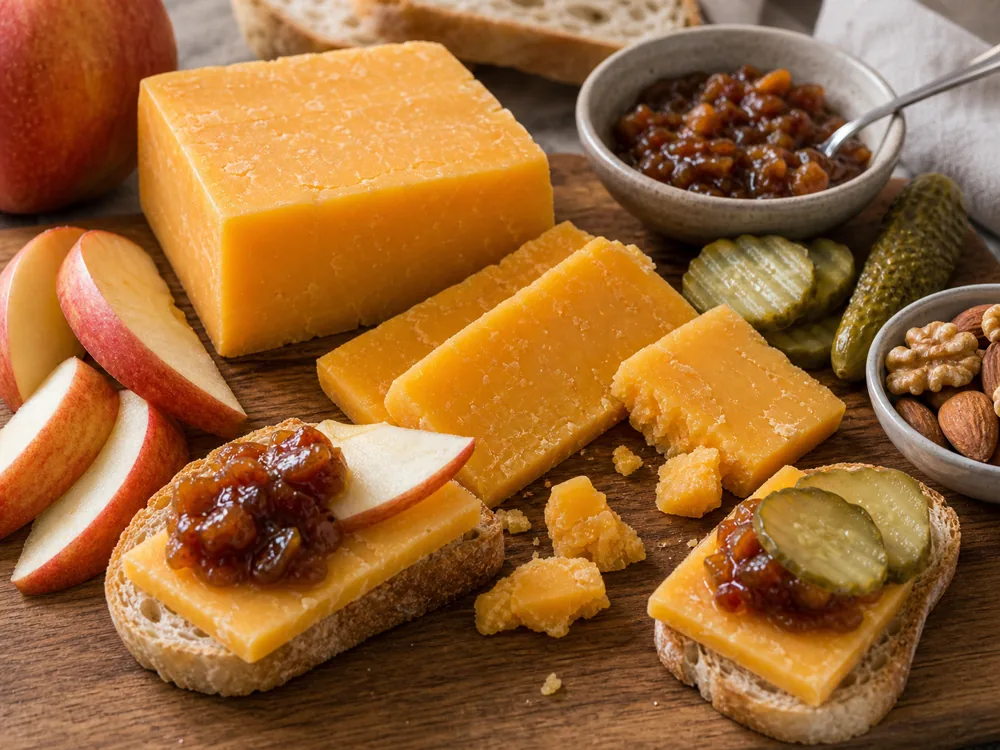
Fresh apple is the classic English pairing. The crisp, tart fruit balances cheddar's salt and fat in a single bite.
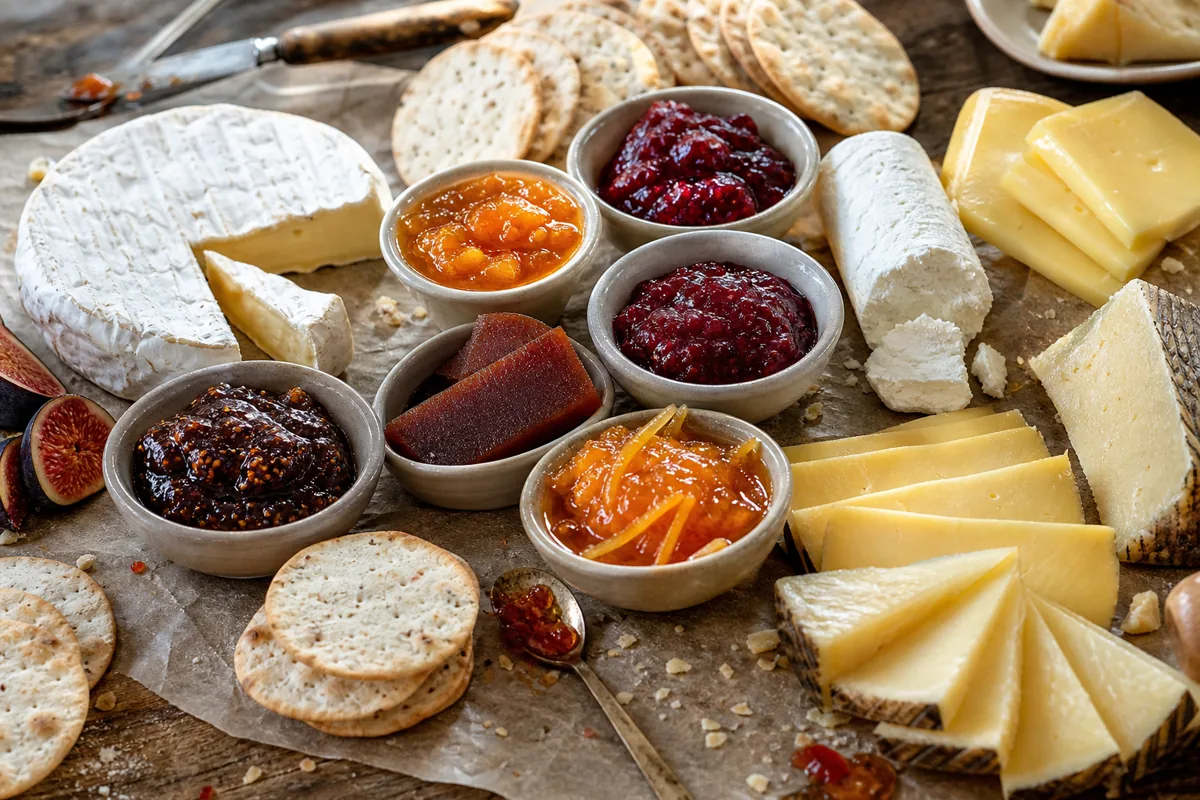
Chutney brings concentrated fruit sweetness with spice and acid.
Use tart apples with mature cheddar because the cheese already has enough sweetness. Sweeter apples work better with extra-sharp cheddar that tastes more acidic.
Chutney should be a condiment, not a blanket. Too much fruit paste hides the nutty finish that makes aged cheddar worth serving.
Pickled onions belong in the same lane. Their acid cuts cheddar's fat and gives the plate a sharper pub-style edge.
Honey is riskier with cheddar than with aged parmesan or blue cheese. Use it only with very sharp cheddar that can handle the sweetness.
- Fresh apple (Bramley or Granny Smith): crisp tartness cuts through sharp cheddar's richness.
- Piccalilli chutney: mustard, turmeric, and vegetables bring heat, acid, and sweetness.
- Onion marmalade: deep, sweet, and slightly bitter. Works with aged farmhouse cheddar.
- Pickled onions: acid and crunch balance the cheese's dense, fatty paste.
- Quince paste: concentrated fruit sweetness pairs with extra-sharp vintage wheels.
For a ploughman's lunch, serve sharp cheddar with sliced apple, pickled onions, crusty bread, and a pint of dry cider. That combination covers salt, sweet, acid, crunch, and effervescent in five components.
That five-component plate is the English pub standard for a reason. Each element fills a different sensory role alongside the cheese.
Cured-meat spreads use the same balance of salt, acid, fat, and crunch, while cold sandwich cheese shows why cheddar stays useful even away from heat.
Savory Food Pairings
Cheddar's firm texture and sharp tang make it one of the most versatile cooking cheeses. It melts into sauces, browns under a broiler, and grates over soups and baked dishes.
In cooked dishes, the pairing should match the dish, not just the cheese. A cheddar-topped burger needs a different wine than cheddar in a cheese sauce.
The cheese adapts to both.
For burgers, choose beer, cider, or a red with enough tannin for beef fat. The cheddar adds salt, but the meat owns the pairing.
For cheddar sauce, use crisp white wine or lager. The drink needs acid and bitterness to cut the sauce, not more weight.
For baked potatoes, lean on sour cream, chives, and lager. The potato softens the cheese, so the pairing needs freshness.
For tomato soup and cheddar, choose cider or Sauvignon Blanc. Tomato acidity and cheddar tang need a drink that stays sharp.
- Burger topping: sharp cheddar melted over beef. Pair with Zinfandel or brown ale.
- Cheese sauce: medium cheddar in a béchamel base. Pair with the dish's main ingredient.
- Gratin or baked potato: aged cheddar grated and browned. Pair with Chardonnay or cider.
- Ploughman's sandwich: cheddar with pickle and lettuce. Pair with dry cider or brown ale.
The gouda and cheddar contrast shows how two firm cheeses cook differently. Gouda melts more smoothly.
Cheddar stays sharper and tangier when heated. That sharper edge is why cheddar sauce dishes can handle richer drinks than mild melted cheeses.
How Age Changes the Pairing
Mild cheddar at two to three months is buttery and soft. Sharp cheddar at twelve months is firmer and tangy.
Extra-sharp at two years or more is crystalline, caramel-like, and intense. Each stage needs a different partner.
The transition point is around nine months. Before that, the cheese is mild enough for light whites and cider.
After that, the tang and density demand bolder partners.
At two years, serve smaller pieces and stronger partners. Extra-sharp cheddar can overwhelm mild fruit and delicate crackers.
At three months, keep the board simple. Apple, crackers, and cider are enough because the cheese is still soft and mild.
Cut mature cheddar into rough chunks rather than thin slices. Broken edges show the crumbly texture and hold chutney better.
Slice mild cheddar when it is part of a sandwich or picnic plate. It is softer, so neat slices make more sense.
- Mild (2-3 months): Sauvignon Blanc, dry cider, apple slices, and light salads.
- Medium (6-9 months): dry cider, brown ale, chutney, and pickled onions.
- Sharp (12+ months): Cabernet Sauvignon, Syrah, onion marmalade, and crusty bread.
- Extra-sharp (2+ years): Tawny Port, quince paste, walnuts, and dried figs.
Cheddar Pairing by Serving Format
The same cheddar changes partners when it moves from a sandwich to a board. Melted cheddar needs acid and bitterness, while cold aged cheddar needs fruit, malt, or tannin.
Think about surface area too. Thin slices taste sharper because more cheese touches the tongue at once, while chunks make aged crystals and savory depth easier to notice.
- Ploughman's plate: dry cider, apple, pickled onions, and chutney keep mature cheddar lively.
- Grilled sandwich: brown ale or crisp lager handles fat better than a heavy red.
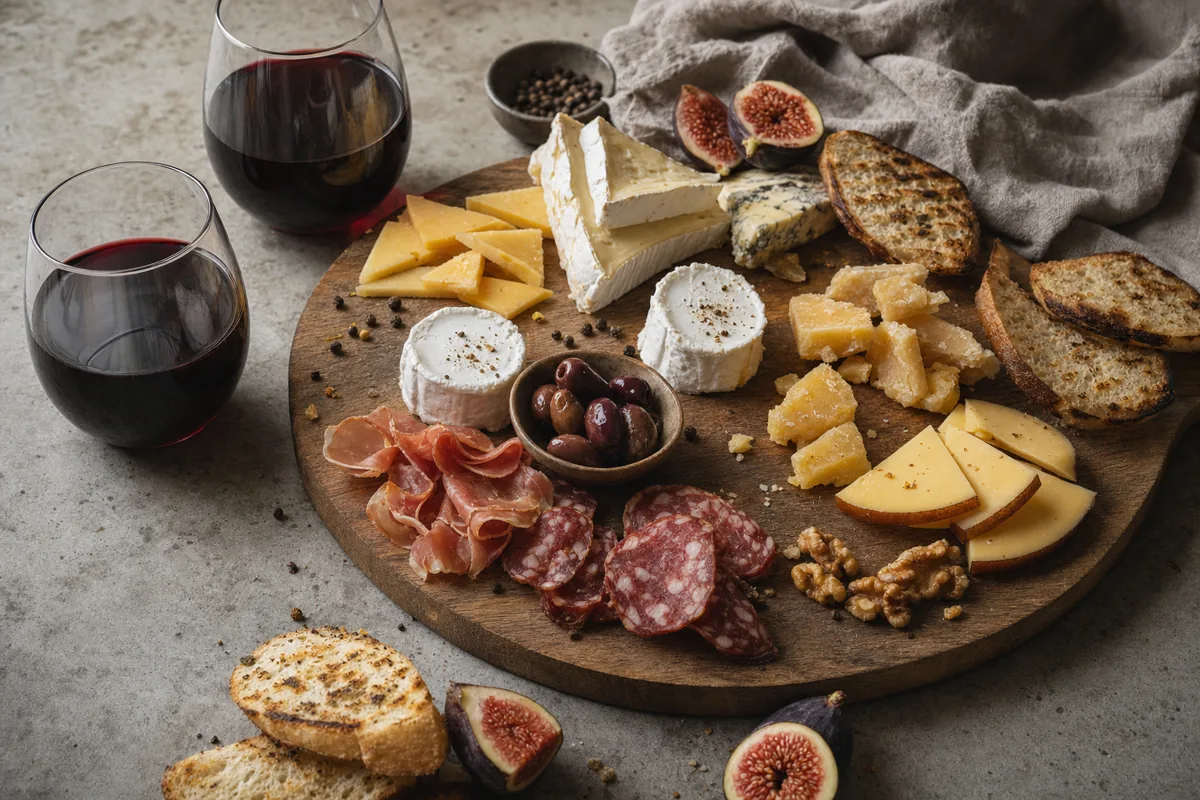
- Charcuterie board: Cabernet or Syrah works when cheddar is served in small firm pieces.
- Closing course: Tawny Port belongs with extra-sharp cheddar, walnuts, and a little dried fruit.
If cheddar is melted into a dish, pair the whole dish instead of only the cheese. Bacon, mustard, beef, and bread can change the drink faster than cheddar age does.
Pairings to Avoid
Some wines clash with cheddar regardless of age. Others fail at specific stages.
- Light Pinot Grigio: disappears against anything sharper than mild cheddar.
- Delicate Pinot Noir: gets overwhelmed by medium to sharp cheddar's density.
- Big oaky Chardonnay: butter and oak fight cheddar's savory edge.
- Off-dry Riesling: residual sugar clashes with cheddar's tang in most cases.
Cheddar with beer covers the pub side of the same problem. The common failure pattern is choosing a wine that is too light for the cheese.
Cheddar is dense, fatty, and often sharp. It needs a partner with enough structure to hold its own.
The broader wine-and-cheese structure works the same way: match intensity before chasing a clever flavor note.
Cabernet Sauvignon is the best red for sharp aged cheddar. Its firm tannin and dark fruit stand up to the cheese's intensity. For mild cheddar, Sauvignon Blanc or dry cider works better. For extra-sharp vintage cheddar, Tawny Port is the best match.
Yes, dry cider is the traditional English pairing for cheddar. The apple acidity and gentle fizz cut through the cheese's fat and salt. It works best with mild to medium cheddar on a lunch board or ploughman's plate.
Fresh apple, pickled onions, chutney, crusty bread, and quince paste are the strongest food partners. Each brings sweetness, acid, or crunch that balances cheddar's sharp tang and rich fat content.
Tawny Port is one of the best pairings for extra-sharp aged cheddar. The wine's caramel, dried fruit, and nutty sweetness mirror the butterscotch notes in long-aged wheels. Ruby Port works too, but tawny is the closer match.
Brown ale is the classic English beer pairing for cheddar. Its malty sweetness and low bitterness complement the cheese's savory depth. Indian Pale Ale works with sharp cheddar when you want hops to cut through the richness.
Avoid delicate, light wines. Pinot Grigio, light Pinot Noir, and heavily oaked Chardonnay all fail with sharp cheddar. The cheese needs a partner with enough body and either tannin or sweetness to match its intensity.