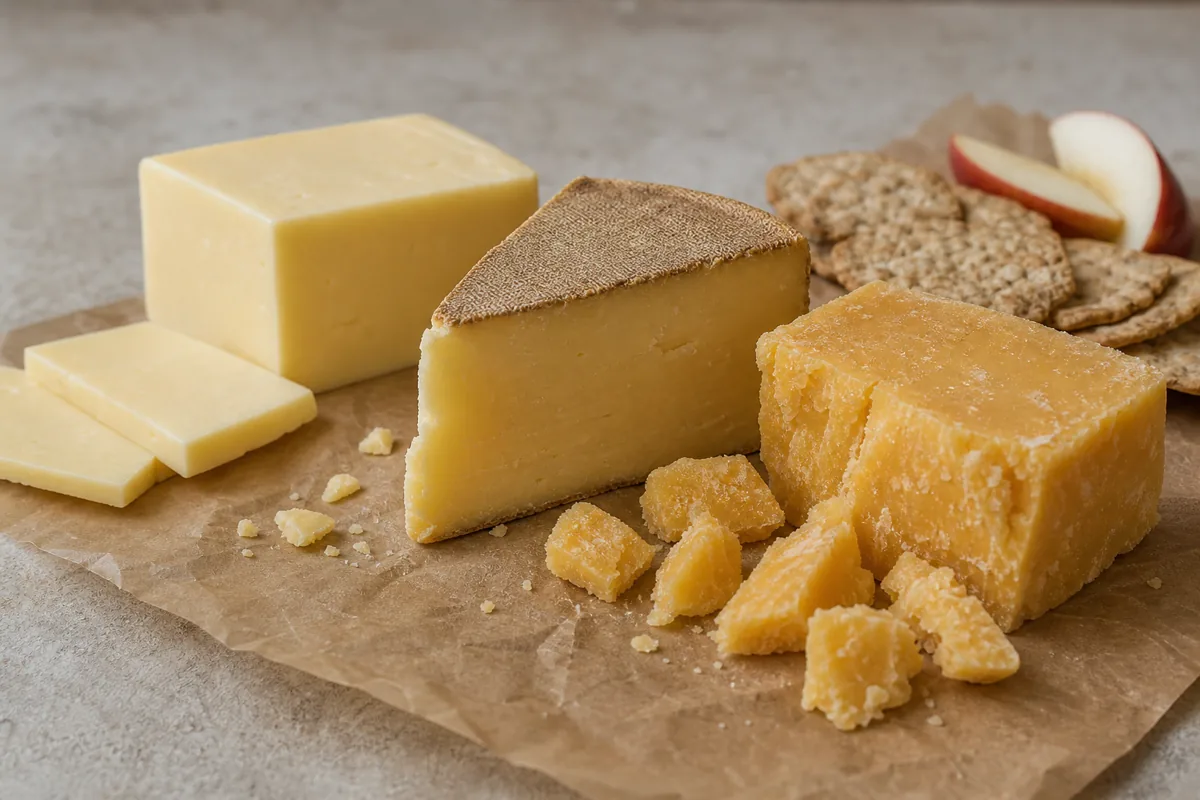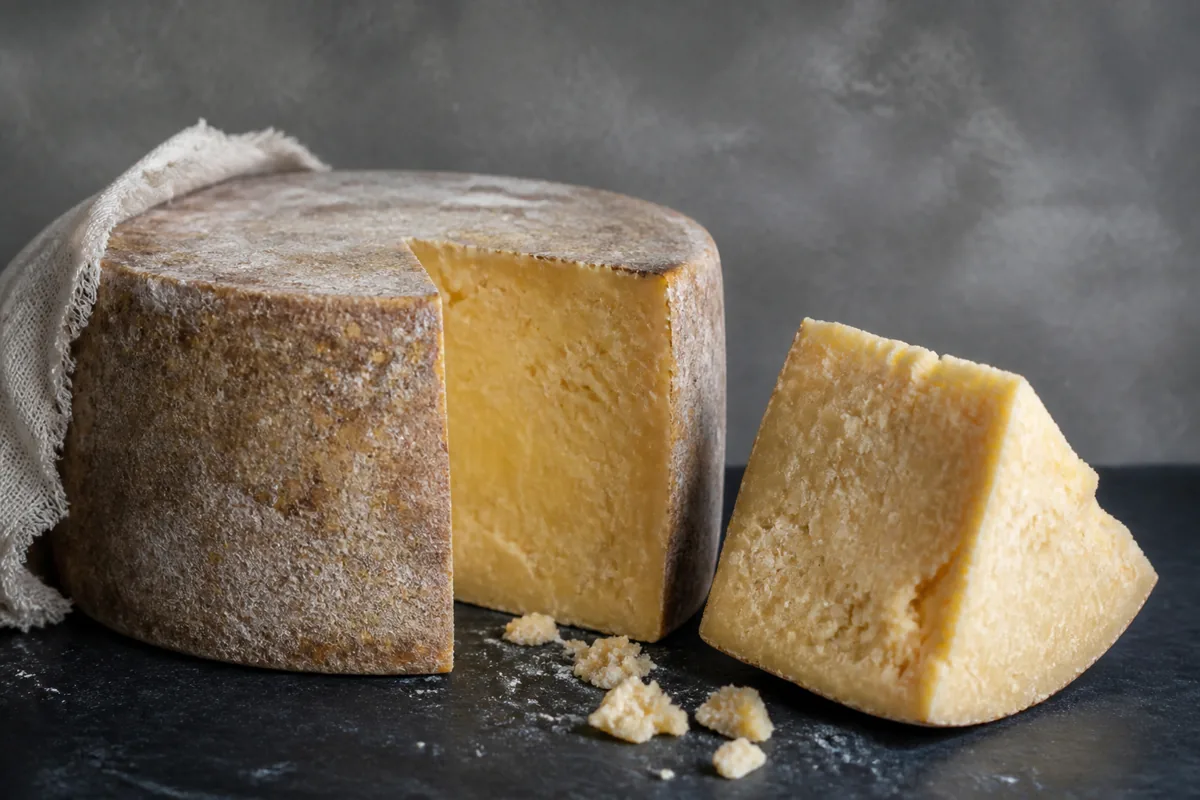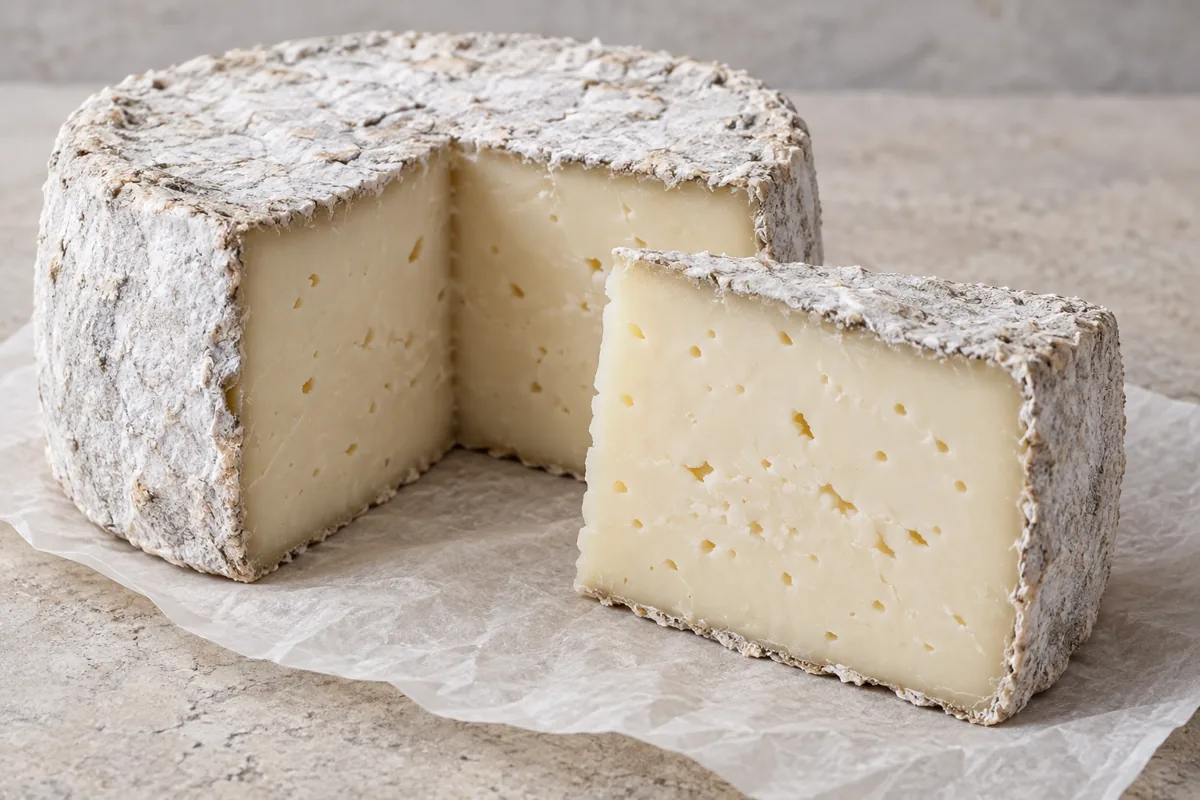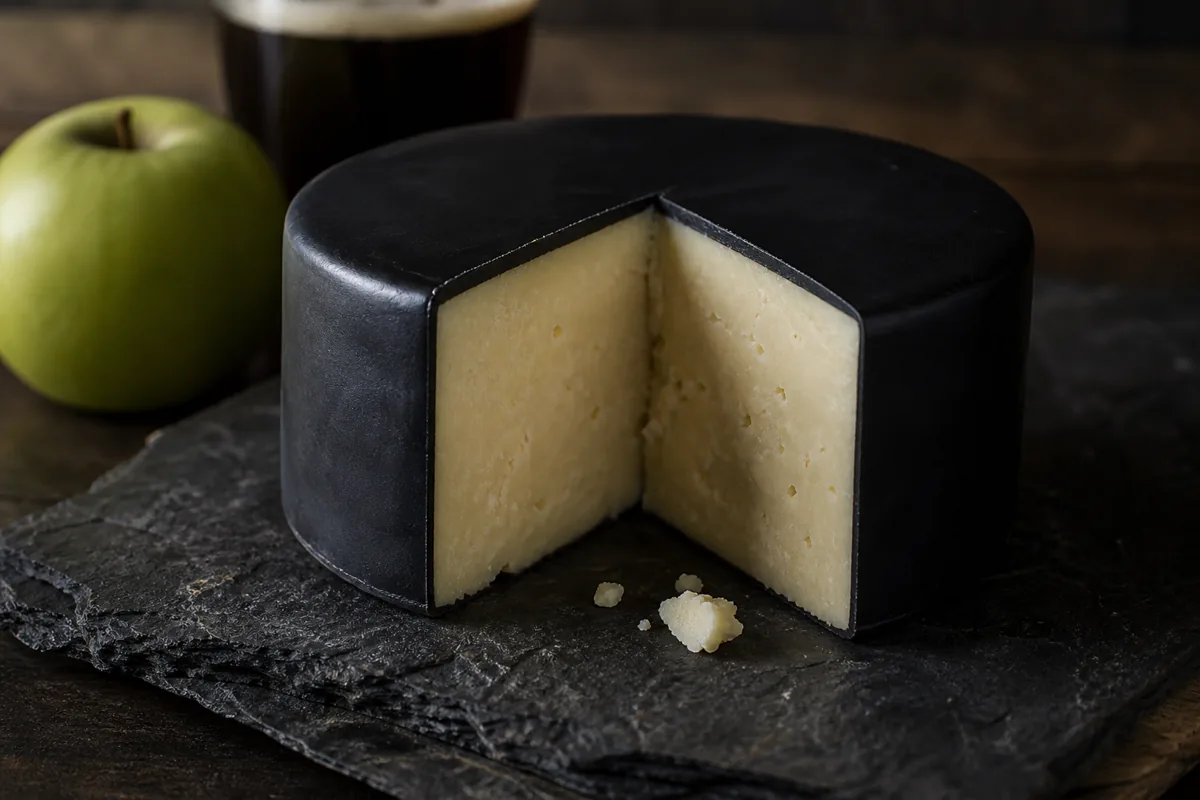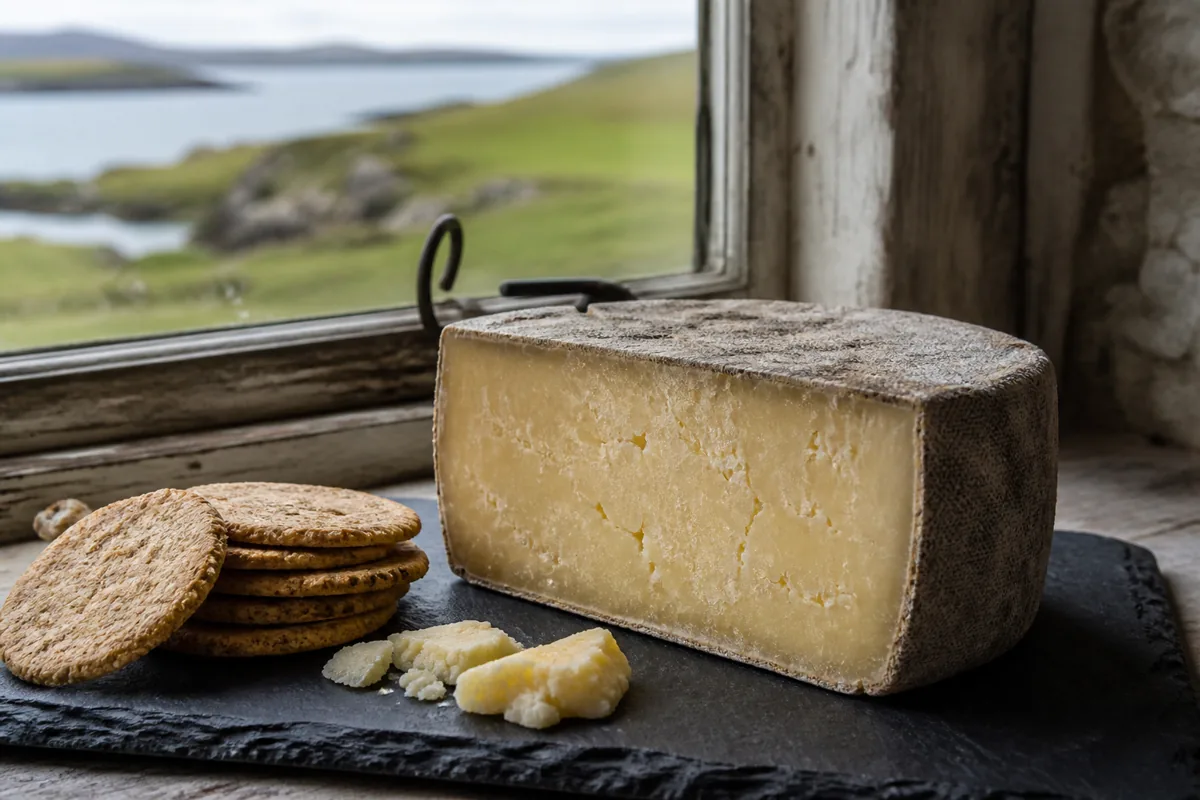
Isle of Mull cheese is a raw cow's milk cheddar that the Reade family makes on the Isle of Mull, wraps in cloth, and matures for about a year or more.
Sellers describe its texture in different terms: the producer calls it drier than other cheddars, while Neal's Yard Dairy calls it firm and fondant-like. The farm says no two batches are exactly the same, and the raw milk, the cows' feed and the season all appear in what sellers report.
In This Article
Who Makes Isle of Mull Cheese and What Goes Into It?
The farm's shop page says the Reade family has made Isle of Mull cheese since 1980, and its dairy page calls Sgriob-ruadh Farm the island's only dairy farm. Neal's Yard Dairy names Brendan Reade as the maker, and The Cambridge Cheese Company says Brendan and his brother Garth now run the farm.
Sellers date the Reades' move to the island differently: the farm's own story says 1980, The Cheese Lady says 1979, and Neal's Yard Dairy says 1982. Borough Market's profile gives 1983 for the year the Reades first saw the roofless, derelict farm, and The Cambridge Cheese Company says the whole move took two years after a 1979 holiday on Mull.
Only the two-year move offers a reason for the spread, and Borough Market's 1983 falls outside even that, so 1980 is best read as the farm's own date and not an agreed one.
Where the cheese was first made is also less settled than "since 1980" suggests: the farm's dairy page says the Reades began making cheese in the 1980s while they still lived on their Somerset farm. The Cambridge Cheese Company says the family first sold milk from 10 cows on a Tobermory milk round, then built a proper dairy and moved to cheese production with 130 cows, dating that step to 2000 in one passage and 1999 in another.
Borough Market's profile also puts milk before cheese: it says the island had no serious milk producer when the Reades arrived, with milk reaching the shops by ship or freight. Once milk was readily available, the family turned its attention entirely to cheese.
The milk is raw cow's milk from the farm's own herd, and the cheese is made with animal rennet, so it is not vegetarian. Borough Market says the herd began with British Friesians and later added Brown Swiss, Swedish and Norwegian Red cows, while The Cambridge Cheese Company calls it a Friesian herd.
Neal's Yard Dairy says the cows eat grass in summer and hay in winter, plus a supplement of fermented grain from the nearby Tobermory distillery throughout the year. The Cheese Lady calls that grain draff, meaning used whisky grain.
Neal's Yard Dairy explains the supplement as a result of the island's damp climate, which limits how long the cows can graze outdoors in summer. The Reades' search for extra feed led them to the distillery, which needed to dispose of its fermented grain.
The farm's own history says cheesemaking on the islands had long been a way to conserve the plentiful summer milk, because hard farmhouse cheeses lasted longer than softer cheeses or other milk products. Isle of Mull farmhouse cheese was the first cheese the Reades made.
How Is Isle of Mull Cheese Made and How Long Is It Matured?
Borough Market's 2021 profile says the milk goes from the parlor to the vat still warm, and that the cheese is neither pasteurized nor colored. The farm warms and curdles it using the milk's natural micro flora and a little extra starter culture.
The curd is separated from the whey and pressed into cylindrical rounds on a press the family built, which the farm says drains excess moisture and binds the curd into a wheel.
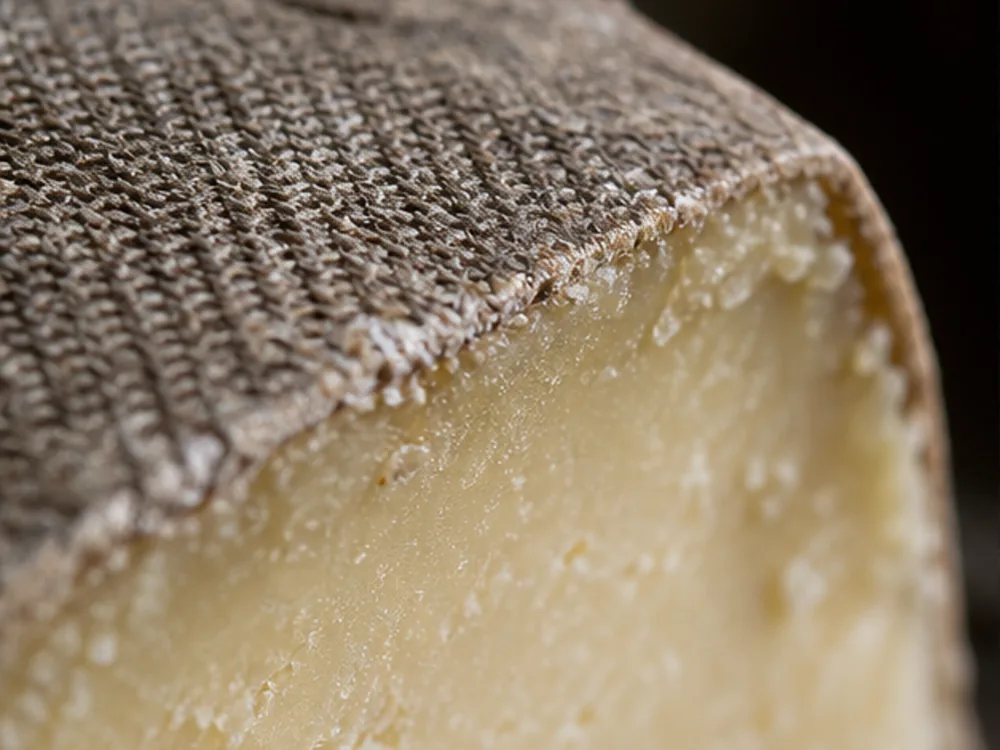
Each wheel is then wrapped in muslin and matured in rooms built into a hillside, which the farm says give the right temperature and humidity. Neal's Yard Dairy adds that the cheese is clothbound with lard and matures in an underground cellar.
Sellers quote different ages. The producer says 10 to 16 months, while Neal's Yard Dairy gives an average of 10 to 18 months.
Duke's Hill says up to 16 months and The Cheese Lady says at least a year, which both sit inside the span the farm and Neal's Yard Dairy give. In Borough Market's profile, Chris Reade describes making cheese in September and selling it the following June, a gap of about nine months, shorter than the 10 months at the low end of the farm's range.
The Cambridge Cheese Company says its pieces spent 10 to 16 months on Mull and then 6 to 18 more months in its own cellars, so the farm's age range does not describe a piece that a retailer matured further. Adding Cambridge's cellar time to the farm's range gives 16 to 34 months in total, and The Cheese Lady's 2022 post offered two truckles matured in its own maturation room that would be three years old by Christmas 2022.
A quoted age depends on whose cellar counted it: the farm gives 10 to 16 months, Neal's Yard Dairy averages 10 to 18, and The Cambridge Cheese Company adds 6 to 18 months of its own.
What Does Isle of Mull Cheese Taste Like?
Sellers agree on a sharp, savory flavor and split on how the paste feels in the mouth.
| Seller | Texture | Flavor |
|---|---|---|
| Isle of Mull Cheese (farm) | Drier than other cheddars | Upfront, richly savory and boozy |
| Neal's Yard Dairy | Firm and fondant-like, slightly more compact than other cheddars | Juicy and zesty to boozy and deeply savory |
| Duke's Hill | Dense, slightly crumbly | Strong and tangy, with a hint of whisky warmth |
| The Cheese Lady | Crumbly | Sharp and tangy |
| The Cambridge Cheese Company | Smooth and creamy | Full and fruity with no bitterness, deeply savory and broth-like |
The farm and The Cheese Lady point to dry or crumbly paste, while Neal's Yard Dairy and The Cambridge Cheese Company describe firm or smooth paste, with Duke's Hill between them.
The flavor words split along that line: strong, sharp and tangy from Duke's Hill and The Cheese Lady, savory and brothy from Neal's Yard Dairy and The Cambridge Cheese Company.
Neal's Yard Dairy's page shows how its description comes about: it says it visits the farm twice a year to taste and select, choosing where possible cheeses with a firm, appealingly waxy texture, a rich boozy flavor and a complex sweetness. That describes the wheels it picks and not every wheel the farm makes, which may account for part of the gap with the sellers who report dry or crumbly paste.
The farm attributes the variety to its unpasteurized milk, whose natural micro flora it says shape the texture and flavor of each batch.
Borough Market's profile quotes Phil, a Neal's Yard Dairy cheesemonger, describing batches with a tingling spikiness at the back of the throat, others that taste citrusy or almost boozy, and one with a slight chive note. The farm's dairy page words its farmhouse cheese in similar terms, tangy and savory and leaving a tingle on the tongue.
Does Isle of Mull Cheese Contain Whisky or Alcohol?
Neal's Yard Dairy's ingredient list is raw cow's milk, salt, cheese cultures and animal rennet, with no alcohol in it, and Duke's Hill's list of raw cows' milk, salt and animal rennet has none either.
The farm describes the flavor as upfront, richly savory and boozy, and Neal's Yard Dairy's range for the cheese runs from juicy and zesty to boozy and deeply savory. Neither says what produces the boozy note.
The link sellers draw is the feed. Duke's Hill credits the whisky grain diet with the cheese's depth of flavor and describes a hint of whisky warmth.
Borough Market's Phil ties the range of flavors, from spiky to citrusy to almost boozy, to what the cows have been eating, but none of the sources separates the distillery grain from the grass and hay in that diet.
Why Does One Piece Look and Taste Different from Another?
The farm does not pasteurize its milk and says no two batches of Isle of Mull cheese are exactly the same.
Season changes the color. Borough Market says summer batches are creamily yellow from the wild grasses and flowers the cows graze, while winter cheeses are paler because of the hay, and Duke's Hill describes summer wheels as a deeper golden and winter batches as paler.
Borough Market sets neither pasteurizing nor coloring against industrial-sized cheesemakers, where it says both are common, so the yellow of a summer wheel and the pale of a winter one come from the cows' diet. The Cheese Lady likewise says winter cheddar is whiter than cheese made earlier in the year.
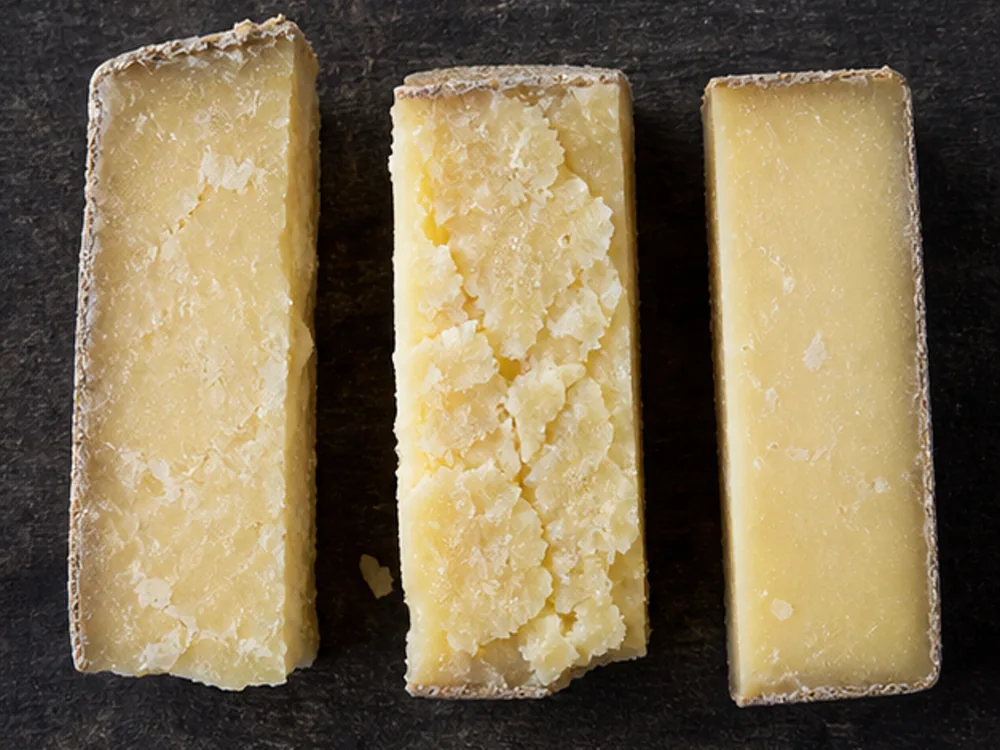
Fine blue veins turn up only occasionally, and sellers place them differently: The Cheese Lady says a slight vein occasionally appears, Borough Market in particularly mature wheels, and Duke's Hill in winter batches.
None of the three explains the veins, so the sources give a buyer no way to predict them; Borough Market calls them a flavoursome asset rather than a disadvantage, and The Cheese Lady says a slight vein adds to the flavor.
The cloth hides all of this until a wheel is opened: Chris Reade tells Borough Market she still loves cutting through a wheel without knowing what is inside.
Borough Market's profile quotes Brendan Reade, who now runs the farm day to day, saying the cheese is completely a result of where the cows grazed on a given day, and that the taste shifts slightly each time they move to a different field. That is why a seller's description of the current wheel says more than the cheese's name does.
How Do You Serve Isle of Mull Cheese?
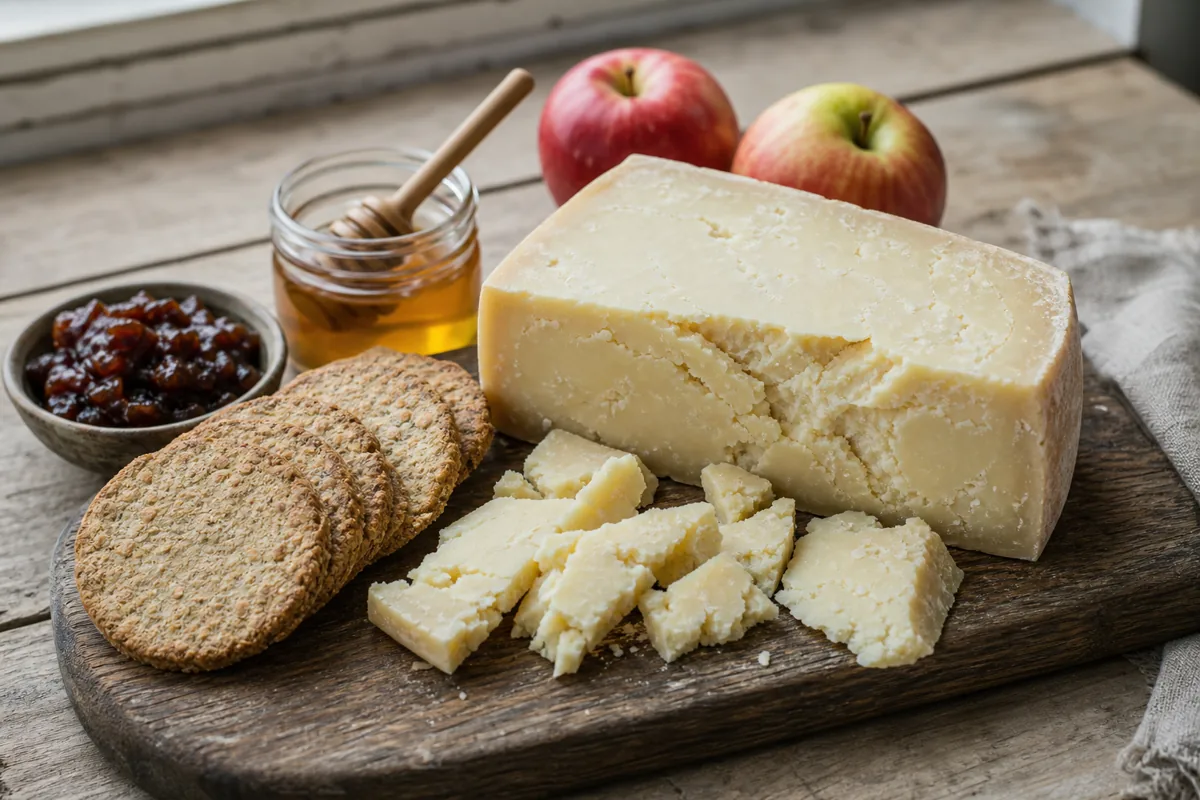
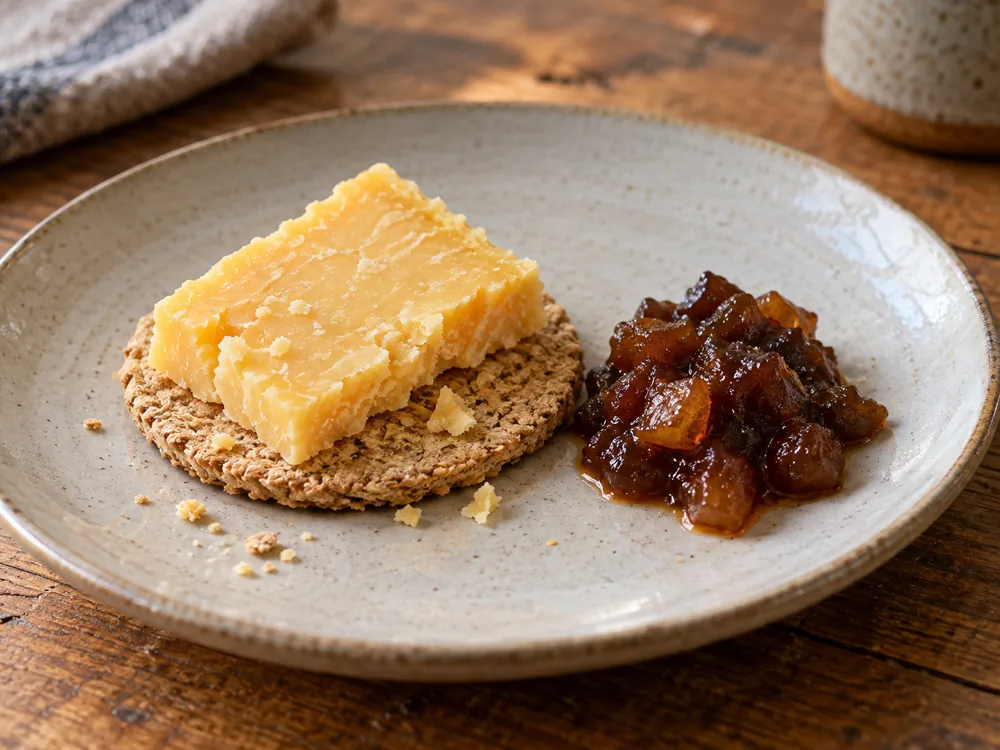
The farm's own steps are short: bring the cheese to room temperature before serving, cut a big enough chunk, plonk it on an oatcake, do not skimp on the chutney, and serve it before pudding.
| Suggested by | Pairings |
|---|---|
| Isle of Mull Cheese (farm) | Chutney and oatcakes |
| Duke's Hill | Boxing Day chutney, cracked black pepper crackers and piccalilli |
| The Cheese Lady | Craft ales, medium-bodied red wines and single malt whiskies |
Chutney appears in the farm's and Duke's Hill's sets, while The Cheese Lady suggests only drinks: craft ales, medium-bodied red wines and single malt whiskies. These are sellers' suggestions, and each is attributed to the seller who made it.
Neal's Yard Dairy's Phil, in Borough Market's profile, prefers it on a cheeseboard just as it is.
How Is Isle of Mull Cheese Used in Cooked Dishes?
Borough Market quotes Phil recommending a bit of raclette-style cheese in a toastie to make it stretch a bit, and no source measures how Isle of Mull itself melts.
Duke's Hill's product page lists six recipes that use the cheese, and all six also use ham, bacon or sausage. They include a Wiltshire ham and onion marmalade toastie, a ham dauphinoise, a bubble and squeak tart with ham, bacon jam and piccalilli, ham hock and bacon croquettes, a sausage rarebit and a sausage and black pudding rösti.
Two of them, the dauphinoise and the rarebit, pair it with Sparkenhoe Red Leicester, and the dauphinoise text gives each cheese a job: Isle of Mull for depth and richness, the Red Leicester for colour and subtle sweetness.
These are a retailer's recipe suggestions, so they show which dishes Duke's Hill pairs with the cheese and not how it behaves under heat, and the farm's and Neal's Yard Dairy's product pages give no cooking guidance.
What Sizes Does Isle of Mull Cheese Come In and How Long Does It Keep?
The farm cuts its wedges by hand from whole cheeses of about 25 kg, so every weight is approximate.
- Small wedge: 180 to 240 g
- Medium wedge: 350 to 410 g
- Large wedge: 720 to 830 g
- One sixteenth of a cheese: 1.4 to 1.7 kg
- One eighth of a cheese: 2.8 to 3.4 kg
- Whole cheese: 23 to 26 kg
Retailers cut their own portions: Neal's Yard Dairy sells 250 g, 500 g, 1 kg and 2 kg, Duke's Hill sells 200 g, and The Cambridge Cheese Company sells 200 g to 1 kg.
The farm's best-before date is 90 days from the day it cuts the cheese, and it says cutting usually happens only a few days before an order is posted.
For storage the farm says to keep the cheese between 8 °C and 15 °C and to let it breathe, while Duke's Hill's product page says to keep it refrigerated at 0 to 5 °C.
CDC's general guidance is to keep a refrigerator at 40°F (about 4 °C) or below, because bacteria multiply rapidly between 40°F and 140°F, and the farm's 8 to 15 °C range sits above that line.
How Much Fat, Salt and Protein Does Isle of Mull Cheese Have?
Duke's Hill's product page gives these typical values per 100 g, and the farm and Neal's Yard Dairy list none.
Saturated fat makes up 25.3 g of that fat, carbohydrate is 1.5 g of which sugars are 0.2 g, and the energy is also given as 1950 kJ.
A 200 g piece, the size Duke's Hill sells, holds twice these amounts by simple multiplication, so about 940 kcal, 81 g of fat and 3.4 g of salt.
Can You Eat Isle of Mull Cheese While Pregnant?
Isle of Mull cheese is made with raw, unpasteurized milk, and the two public-health agencies word the cheddar rule differently.
The NHS lists "pasteurised or unpasteurised hard cheeses, such as cheddar, gruyère and parmesan" among the cheeses that are safe in pregnancy.
CDC's milk row lists unpasteurized (raw) milk and dairy products made from raw milk as the riskier choice, and its safer cheese list names hard cheese such as cheddar only "when made with pasteurized milk". By CDC's wording, a raw-milk cheddar is therefore not on the safer list.
CDC's reason for caution is that pregnant women are 10 times more likely to get a Listeria infection.