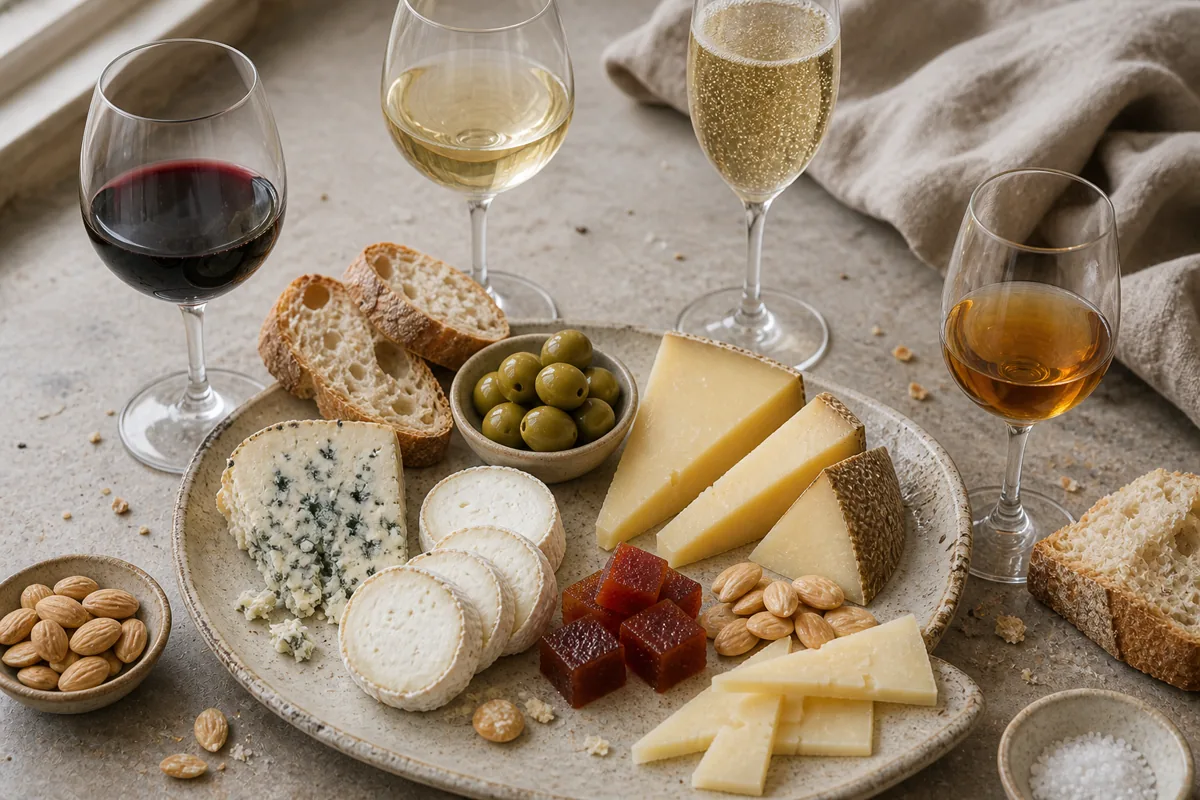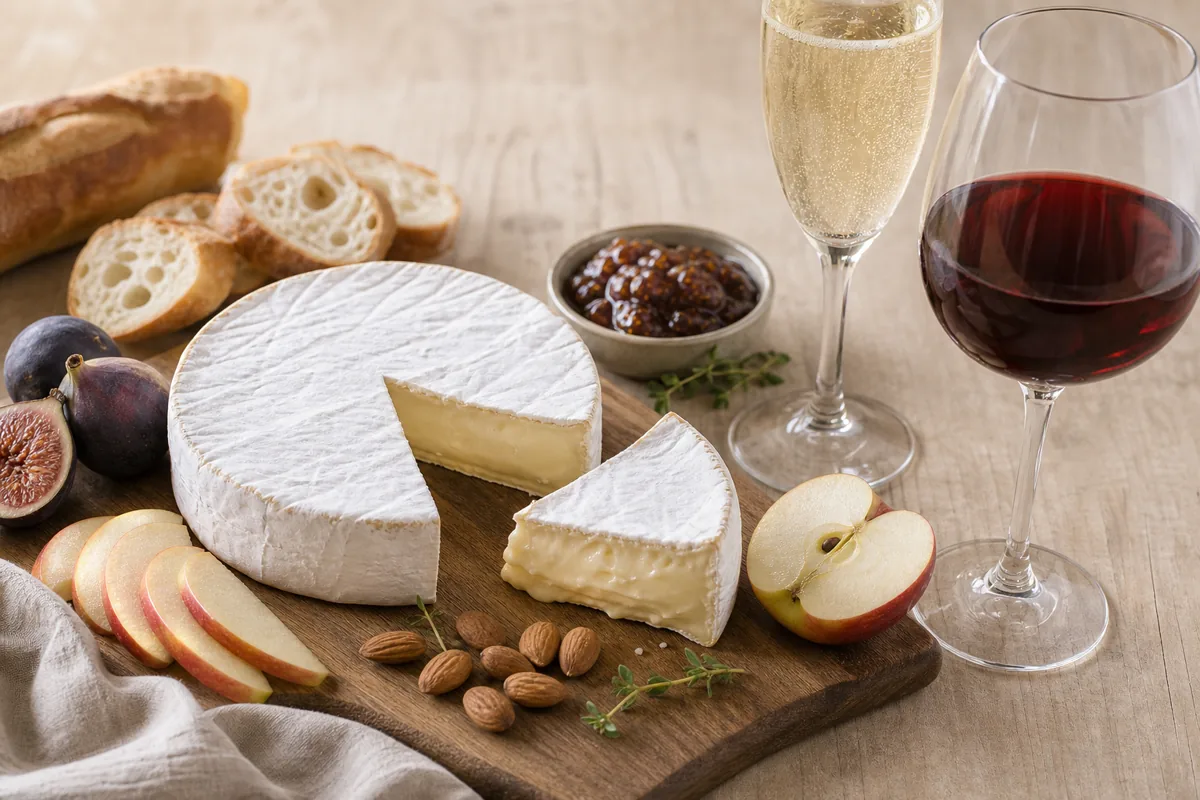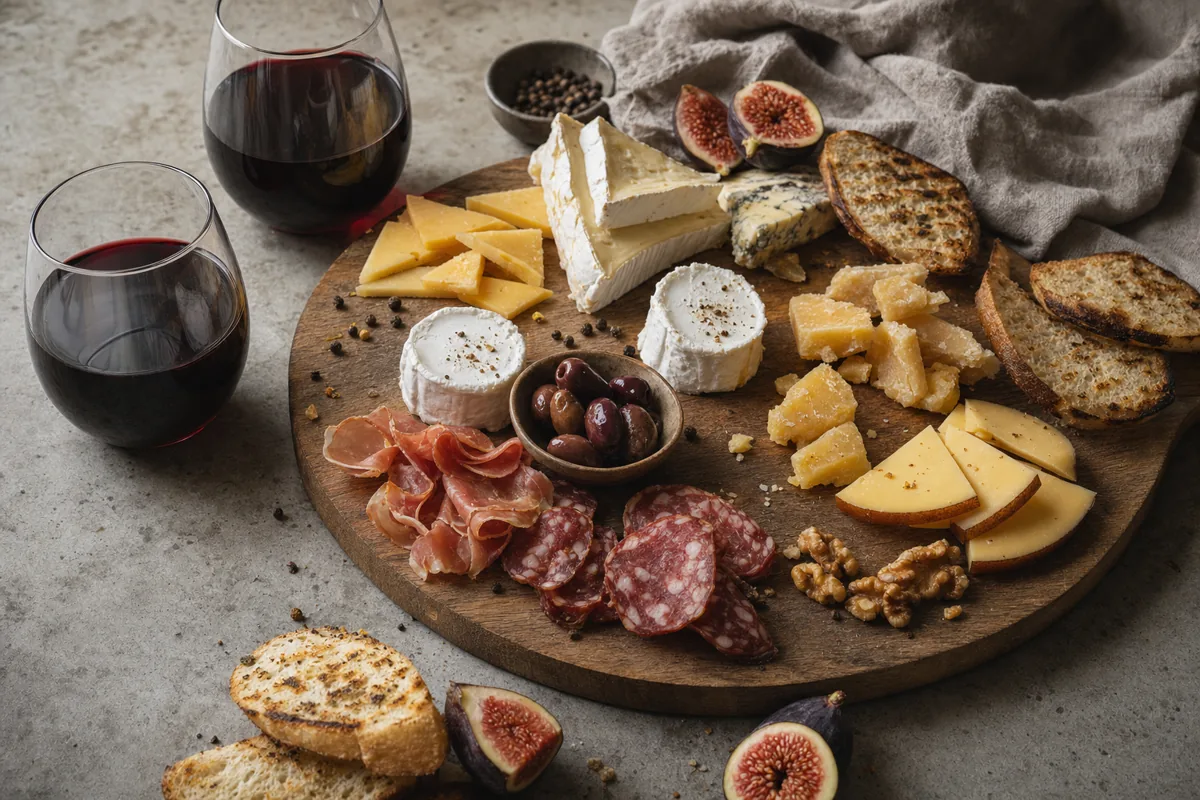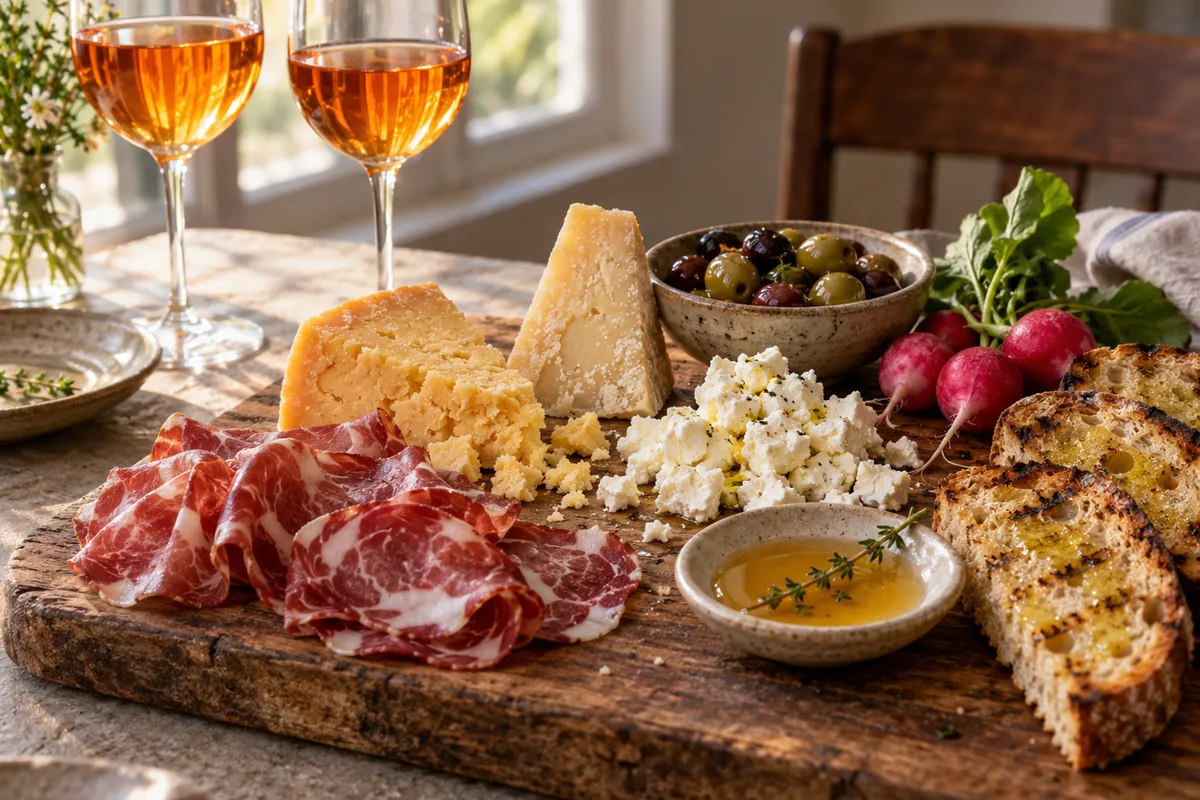
Orange wine's tannic grip needs a cheese with enough fat, salt or character to meet it. Culture magazine's Rebecca Haley-Park describes the astringency and the balancing effect of a fatty piece of cheese.
What you set against that grip depends on the bottle in your hand: salt for a tannic one, matching funk for a funky one, and a lighter cheese for a lighter one.
In This Article
Which Cheeses Go with Orange Wine?
Match the cheese to your bottle's style: the table runs from dark, tannic wines that take salty, aged cheeses to a lighter bottle that takes goat cheese, with the writer who names each match.
| Wine style | Cheeses named | Reason given |
|---|---|---|
| Dark, earthy Georgian wine | Comté (Marcel Petit), Pecorino Sardo PDO Maturo | Saltier cheeses stand up to rich tannins |
| Georgian Kisi (Pheasant's Tears 2011) | Pecorino, feta, kashkaval, aged Gouda | Full body and tannic structure cope with salty, aged cheese |
| Italian wine with citrus and bold aromatics | Sartori Espresso BellaVitano Reserve, casArrigoni Nababbo | A cheese with plenty of personality, as potent as the wine |
| US wine, funkier than imports | Vermont Creamery Bonne Bouche, Blue Ledge Farm Lake's Edge | Equally funky cheeses |
| Funky wine with a slightly sweet quince undertone | Feta, halloumi | Salty Eastern Mediterranean and Middle Eastern cheeses suit the quince note |
| Lighter-bodied orange wine | Goat cheese | Its funky flavor |
| Orange wine "for structure and depth" with capocollo | Aged sharp cheddar | Crumbly, bold, salty and slightly crystalline |
Two logics sit side by side in the table. Trapkin's Georgian matches, Feiring's Kisi matches and Mullen's feta and halloumi match use salt to answer the wine, while Trapkin's Italian and domestic matches raise the cheese to the wine's own level of character.
If your bottle is lighter-bodied, Winkler's goat cheese is the light end of the same scale, chosen for the lighter bottles in her advice.
In the wine's homeland the wine is not purposely matched with food. Thomas quotes Feiring saying Georgia is "so not a wine-and-food pairing culture," and that Georgians often layer seasonings on cheese, including mint over fresh cheese.
The region's substantial cuisine suits powerful bottles in Thomas's account, including khachapuri, boat-shaped breads filled with molten cheese.
Tannic or long-skin-contact bottle: salty aged hard cheese such as Comté, pecorino or aged Gouda. Funky bottle: feta, halloumi or an equally funky cheese, light bottle: goat cheese.
How Many Cheeses Does an Orange Wine Board Need?
Niman Ranch's guide puts a board at 2 to 4 cheeses, one soft, one firm and one tangy, and says smaller, more curated boards are in while overloaded ones are out.
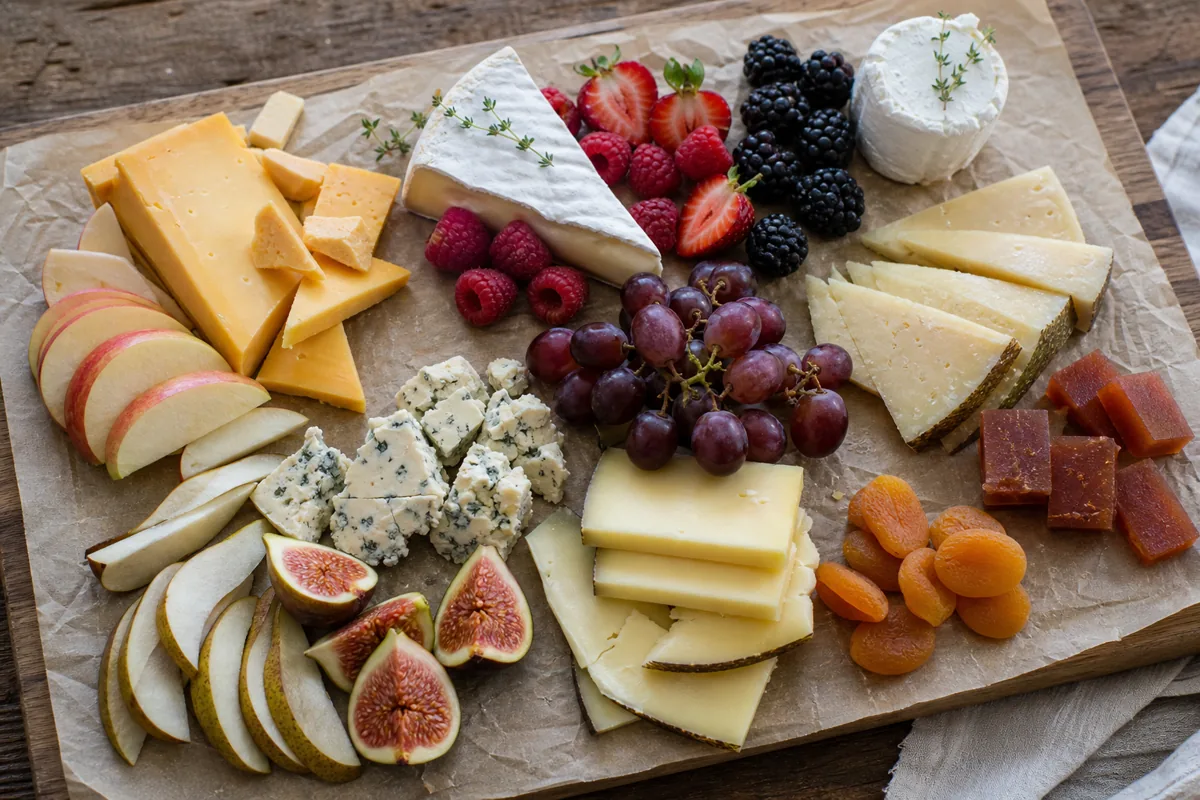
From the pairings above, we would split it as a salty aged hard cheese such as Comté or pecorino for the tannin, goat cheese or feta for tang, and one funkier cheese if the wine itself is funky.
Haley-Park describes belly wine bar labeling its cheeses with descriptors in place of names, such as "Butter" for Delice de Bourgogne and "Funk" for Willoughby, so that guests choose by character.
What Cheese Suits a Rich, Racy, Delicate or Fruity Orange Wine?
Colin McKee's team matched a rich orange wine with a rich blue, a racy one with a rosemary-rubbed sheep's milk cheese, a delicate one with a 12-month Gruyère, and a stone-fruit one with a sheep's milk Gouda carrying butterscotch and caramel. Those are the four pairings it settled on after testing 33 cheeses.
McKee, store manager and wine buyer at the Charleston, South Carolina, cheese shop goat.sheep.cow., told Haight that the shop usually looks for what it calls a "grows with, goes with" pairing. Skin-fermented white wines challenged that regional rule, so the team tried other routes.
| Pairing | Why It Works |
|---|---|
| Fior d'Arancio with Gulp Hablo Orange | A rich blue cheese against a rich Spanish wine. |
| Castilla la Mancha Romao with Pullus Haložan Orange | A rosemary-rubbed sheep's milk cheese against a racy Slovenian wine. |
| 12-month Swiss Gruyère with Fio 'Glou Glou' Orange | Salty crystals against a delicate German wine, McKee's favorite. |
| Cheeseland Ewephoria with Jolie-Laide Trousseau Gris | A Dutch sheep's milk Gouda with butterscotch and caramel against a California wine. |
The first pairing doubles down on richness. McKee calls the Gulp Hablo Orange rich and aromatic, with notes of orange peel and dried apricots, and says it needed a cheese that could stand up to it.
Fior d'Arancio is a fudgy Italian cow's milk blue soaked in Moscato, with sweet floral notes, a pop of salt and a generous rind of candied orange peel, so the cheese rivals the wine in richness.
The second aims for balance. Castilla la Mancha Romao is a semi-firm, creamy Spanish sheep's milk cheese rubbed by hand in lard and rolled in rosemary, which tempers the dry minerality of the Slovenian wine and echoes its herbal and graphite notes.
For McKee, the racy wine keeps the palate texture lighter and lifts the rosemary rind.
The Gruyère match was the team's favorite. McKee calls the German Fio 'Glou Glou' Orange delicate, with hints of orange blossom, green grass and lime peels, and says the cheese has just enough salty crystals to make the wine pop.
In return the wine sweetens the strong onion note that Gruyère often carries.
Stone Fruit, Butterscotch and the Fourth Match
Cheeseland Ewephoria, a Dutch sheep's milk Gouda, brings butterscotch and caramel to the Jolie-Laide, a staff-favorite wine with a nose of juicy stone fruit and a hint of minerality.
Each of the four answers a different trait of its wine, from richness to dry minerality, delicacy and stone fruit, which matches McKee's aim of finding cheeses that "complete the flavor wheel."
Which Cured Meats Go with Orange Wine?
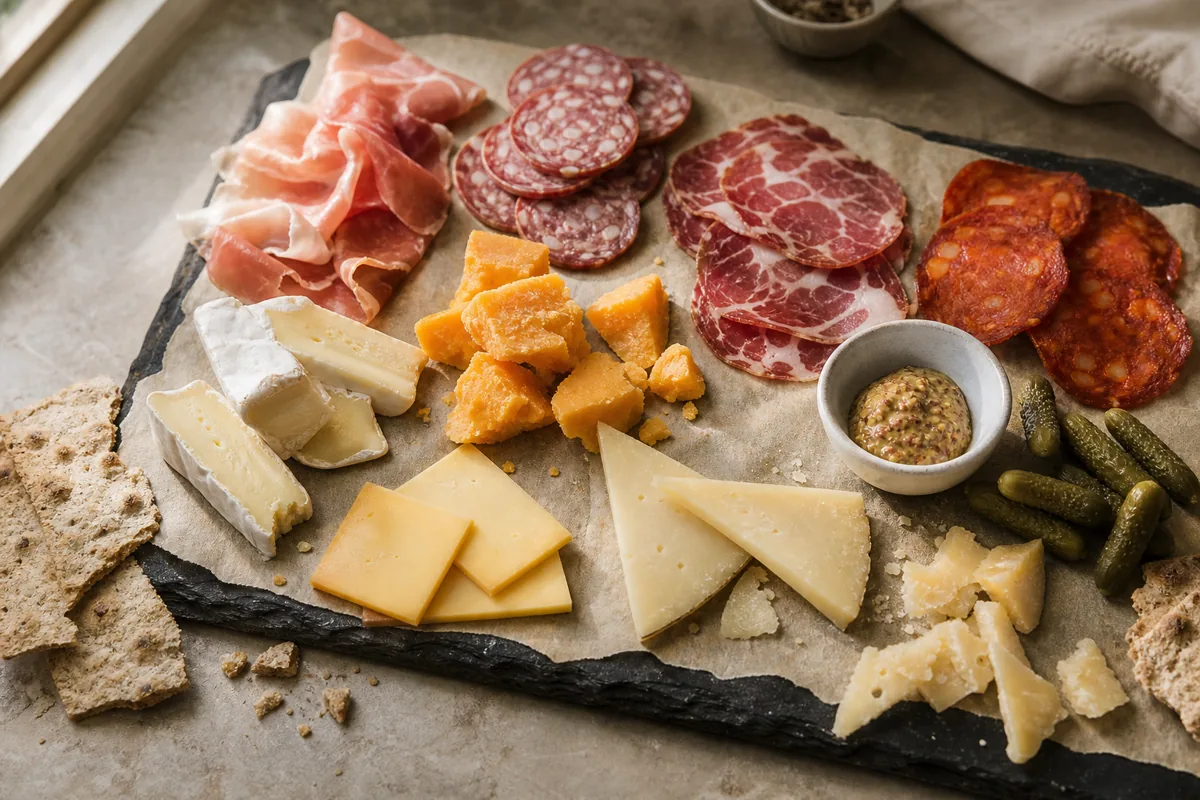
Capocollo is the one cured meat that Niman Ranch's charcuterie guide matches with orange wine, for structure and depth, out of five meats it pairs with wines and cheeses. Niman Ranch sells the meats it pairs, so the advice reflects the producer's own view of its products.
| Meat | Wine | Cheese |
|---|---|---|
| Prosciutto | Aligoté or dry sparkling wine | Truffled or herbed firm cheese such as Sottocenere |
| Genoa salame | Chillable red low in tannin, such as Gamay or Blaufränkisch | Aged sheep's milk gouda-style cheese |
| Capocollo | Txakoli or orange wine | Aged sharp cheddar |
| Hot sopressata | California Pinot Noir or Lambrusco | Triple-cream brie or La Tur-style cheese |
| Uncured pepperoni | Grolleau or another juicy, low-tannin red | Coupole, an aged goat cheese |
Four of the five meats go to sparkling, white or low-tannin red wines. The guide's stated principle is that fruity, low-tannin wines soften the saltiness of cured meats and aged cheeses.
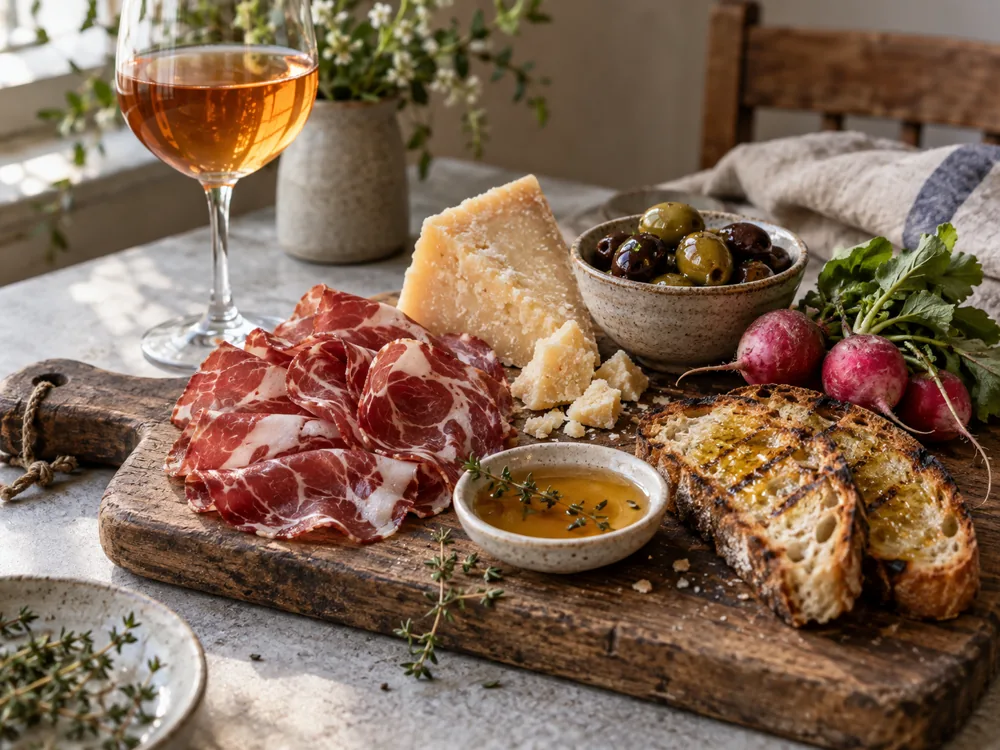
If you pour orange wine with capocollo, the guide's cheese is an aged sharp cheddar. Niman Ranch describes the capocollo as savory, with pockets of cured fat, and says its mild smokiness holds its own against the cheddar, whose slightly crystalline texture and salt make a complementary match.
Complete that producer's board with its suggested olives, radishes and olive-oil grilled bread.
The separate Brie combination in that guide uses hot sopressata with Pinot Noir or Lambrusco. For Niman Ranch, fully ripened Brie supplies the mushroomy, grassy notes suited to sopressata.
Doreen Winkler, founder of the orange-wine shop Orange Glou, tells Chowhound that still orange wines suit bold, savory flavors, spicy dishes and fermented, umami-rich foods such as kimchi.
At belly wine bar, Haley-Park reports, rich house-made charcuterie, cheese accompaniments and two orange wines were served together.
Do Jam, Honey and Fruit Work with Orange Wine?
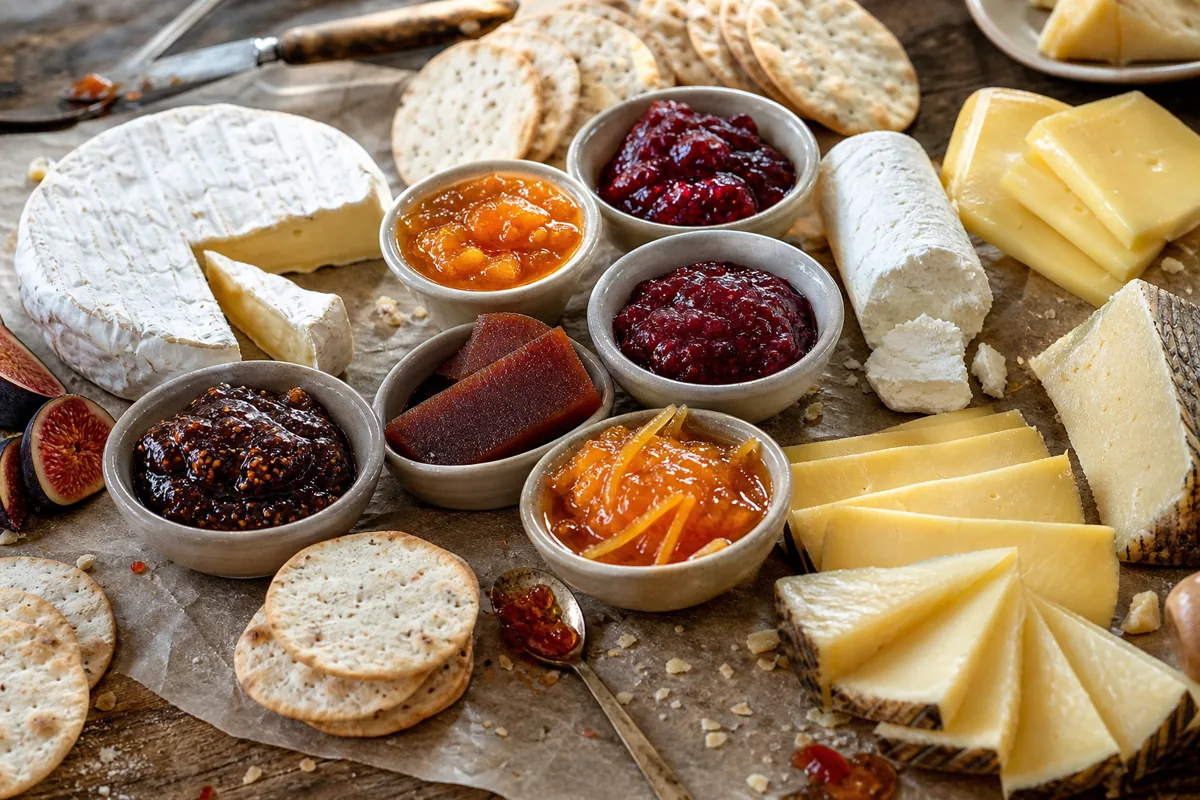
Jam and honey turn up on two orange-wine plates, each time as a small accent beside savory cheese or meat rather than as dessert. McKee suggests Francis Miot Pear Caramel Jam on the Ewephoria and Jolie-Laide pairing for a "luscious" trifecta, and Niman Ranch ties its capocollo plate together with thyme-infused honey.
Puckette's rule pulls the other way: a wine should be sweeter than the food it accompanies, because a wine less sweet than its food tends to taste bitter and tart.
Winkler applies the same logic to orange wine. Because of their dry finish, she says, orange wines do not always work with desserts, and the tannins counter sweet flavors, so for sweet dishes she suggests an orange wine vermouth or something else fortified.
If you add jam or honey, keep it beside savory cheese or meat the way both plates do. McKee's wine is the lightly macerated bottle from the table above.
How Cold Should Orange Wine Be on a Cheese Board?
Set the temperature by your bottle's style. For a heavier, more tannic orange wine, Woolf suggests serving it close to room temperature, tasting it at 12 to 14°C and warming it a little more if it does not seem expressive.
- Heavier, more tannic: taste at 12 to 14°C (about 54 to 57°F), and warm it further if it stays closed.
- Lighter, a few days on the skins: about 10 to 12°C (about 50 to 54°F).
Woolf compares the structure with light northern Italian reds such as Valpolicella or Bardolino, suggesting a light summer chill and a little more warmth for a mature example.
Niman Ranch's board advice sorts wines into three groups, with whites and sparkling cold, chillable reds lightly chilled and full-bodied reds at cool room temperature.
If your charcuterie is Niman Ranch's shelf-stable kind and has been stored in the fridge, the guide says it should come out 15 to 20 minutes before serving.
Thomas adds a practical note for a long evening: the tannins protect an ocher-colored orange wine, which she says will probably last well over a week once opened, with its flavors developing continually.
What Does Orange Wine Taste Like?
Thomas describes the flavor as more savory than fruity, with notes ranging from flowers and spice to beeswax, meat and herbal tea.
Haight puts the range from funky to tannic to tropical to floral, and says the skins and seeds give the wine a little body and bitterness. The notes McKee lists for the wines he paired include orange peel, dried apricots, orange blossom, green grass, lime peels and juicy stone fruit.
Trapkin's regional sketches, drawn from Friel, put Georgian bottles at the earthy end. Italian bottles show more citrus and bold aromatics, with Terra dei Preti, from Umbria, carrying notes of jasmine tea and honeysuckle.
American bottles can be funkier than imports, from the resinous, honeyed wines of Dirty & Rowdy in California to the downright earthy pours of La Garagista in Vermont.
The spread comes from the winemaker, the terroir, the grapes and the length of skin contact. Before you choose a cheese, place your bottle on that range, because the matches below run by wine style.
How Does Skin Contact Change an Orange Wine?
Orange wines spend anything from a few days to months on their skins, and the one-month minimum in the International Organisation of Vine and Wine description is not what every bottle follows.
| Wine or method | Skin contact | Result reported | Reported by |
|---|---|---|---|
| International Organisation of Vine and Wine description | Minimum 1 month | White wine with maceration | Wikipedia |
| Kakhetian method, eastern Georgia | Often about 6 months | Usually deep amber | Wikipedia |
| Imeretian method, western Georgia | Often 15 to 30 days, with less pomace, usually a third | Lighter, usually orange or yellow | Wikipedia |
| Jolie-Laide Trousseau Gris, California | 7 to 9 days | Only a kiss of orange hue, with a weighted palate | Cathryn Haight, Culture |
| Lighter orange wines | Only a few days | Lighter in style | Simon Woolf, Decanter |
The spread decides how much grip your board has to answer. The longer the skins and juice macerate, the more amber the wine's hue, and Woolf places Radikon and Gravner among the heavier, more tannic examples.
So the salty, aged-cheese matches below fit a bottle from the months-long end of the table most closely.
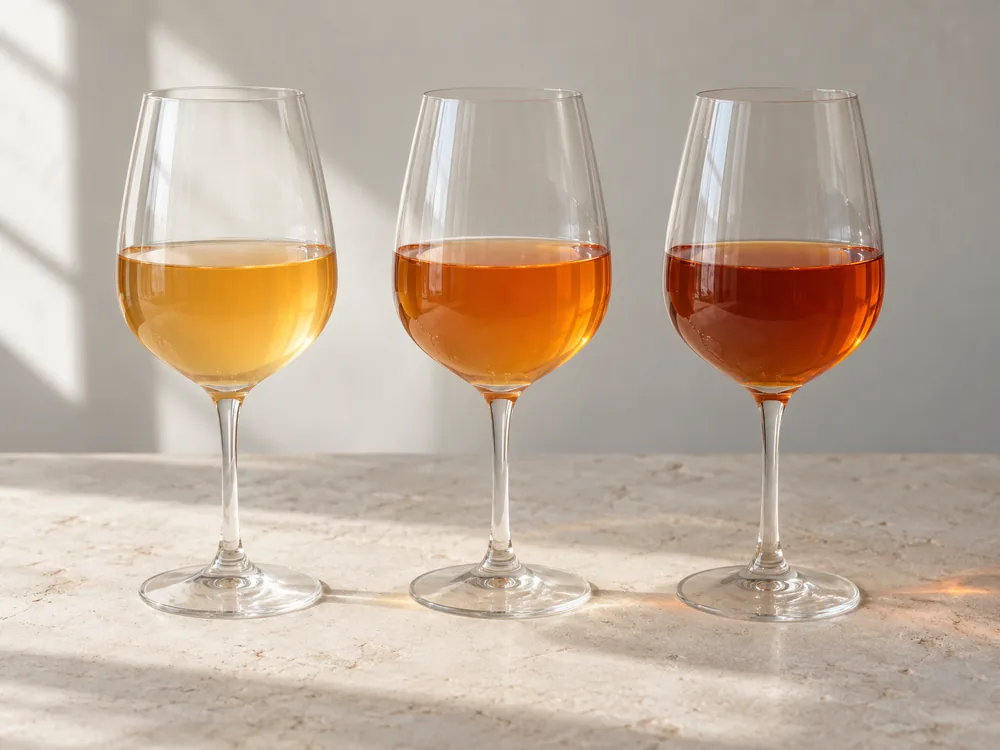
Color is only a loose guide to that. Orange wines can be made from any white grape and come in all shades, from baby orange to hues bordering on Cheeto, in Madison Trapkin's words.
Sommelier Lauren Friel tells Trapkin that requests for orange wine often concern a memorable experience rather than a specific colour.
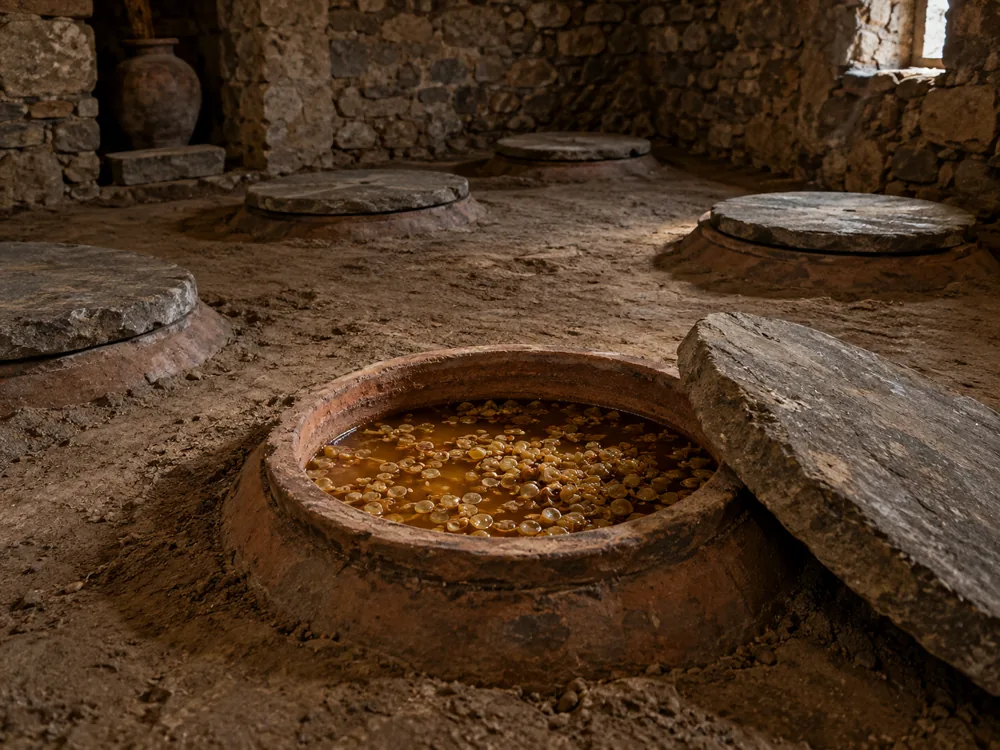
In Georgia the wine ferments in qvevri, clay vessels buried in the cellar, which hold a constant underground temperature of around 14 to 15°C.
The Friuli winemaker Josko Gravner traveled to Georgia in 2000, replaced his stainless-steel tanks with qvevri and left the skins on his white-wine grapes. His amber wines encouraged winemakers elsewhere to follow.
What Does Skin-Fermented White Wine Bring to Cheese?
Orange wine is made from white grapes, but the skins stay in the fermenting juice instead of being pressed off, so the wine takes up the color pigment, phenols and tannins that conventional white winemaking leaves behind.
Tara Thomas of Wine & Spirits, writing in Culture, says those tannins add breadth and texture and keep the wine fresher longer. Thomas finds the tannins and strong flavours striking on their own and recommends food with every orange wine.
Thomas recommends hard cheeses for the wine's full-bodied flavour and tannic structure, including salty aged cheeses that challenge conventional whites.
Madeline Puckette of Wine Folly states the general rule behind this for any high-tannin wine: look to foods with fat, umami and salt for balance, and avoid bitter foods, because taste buds are very sensitive to bitterness and the two add up.