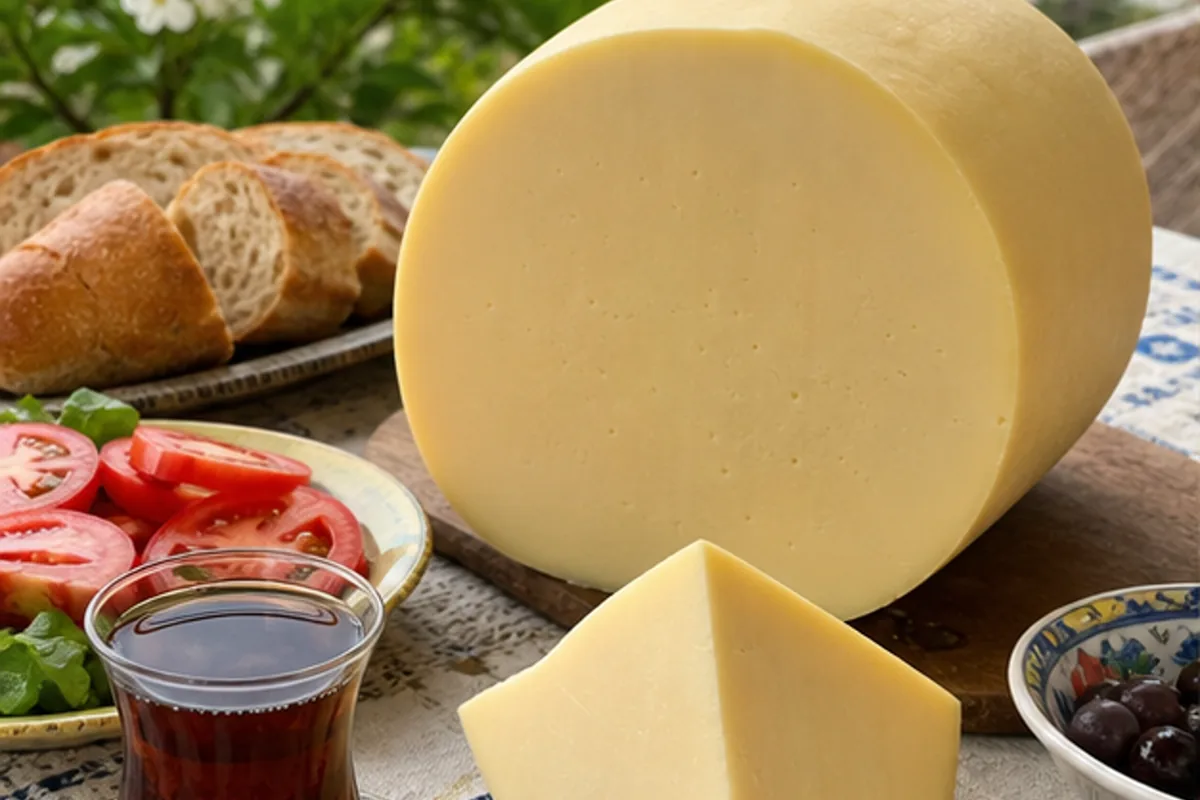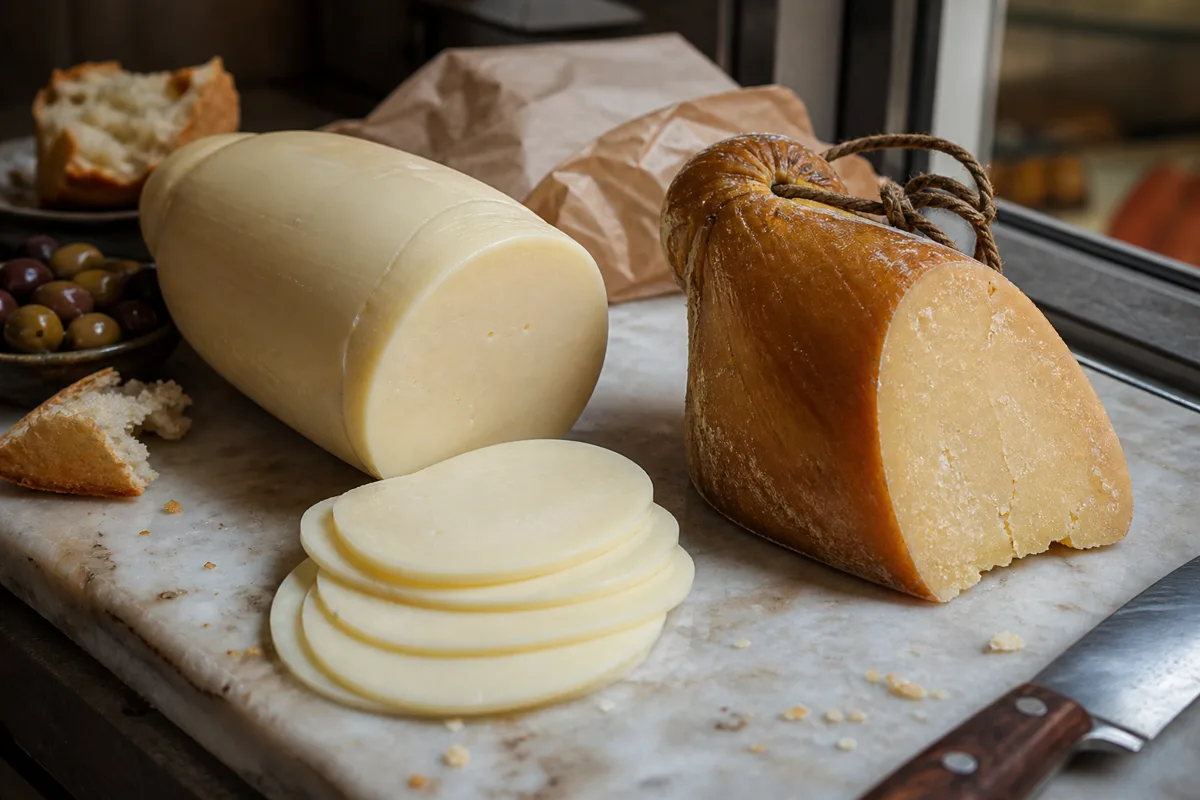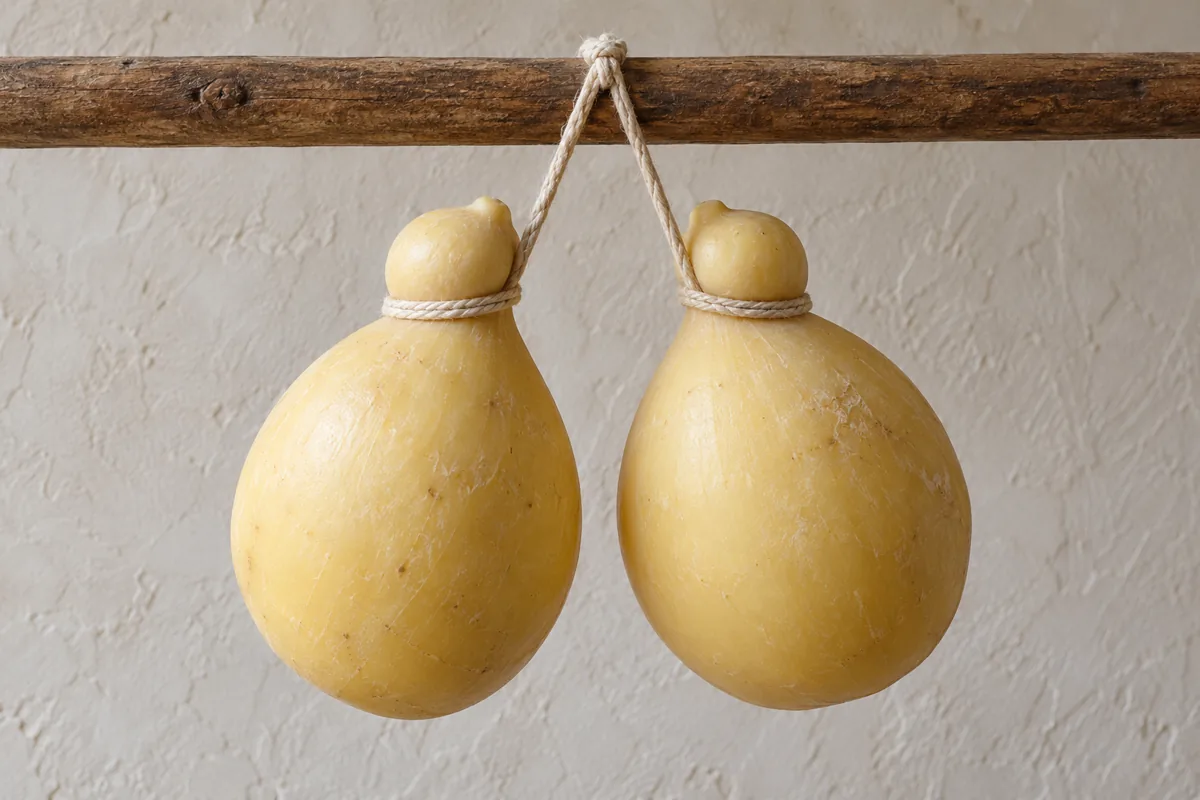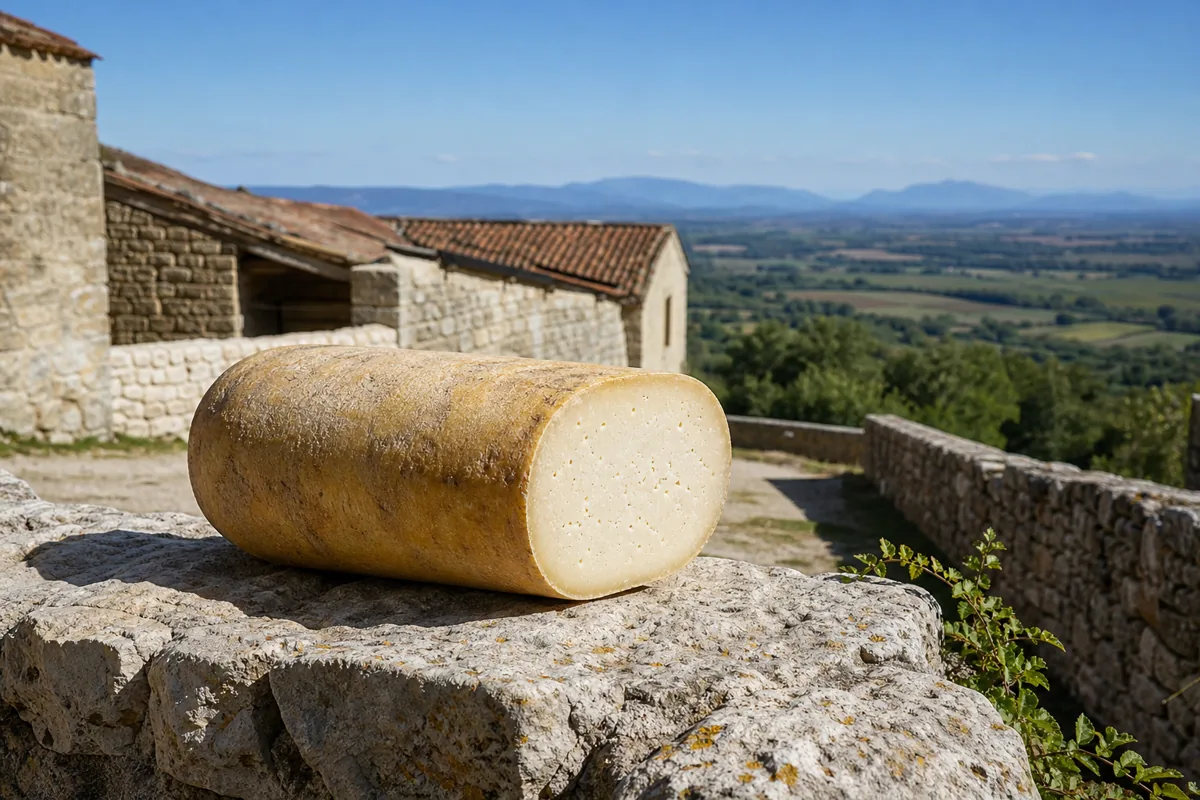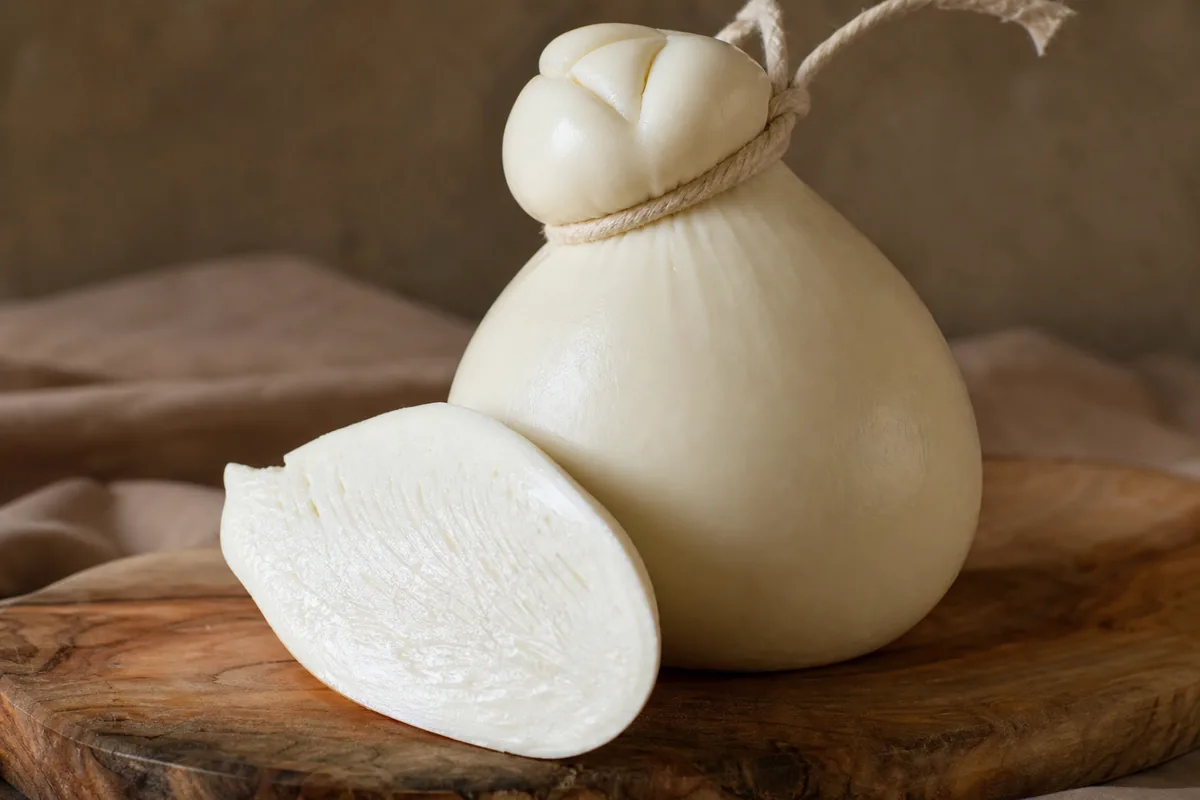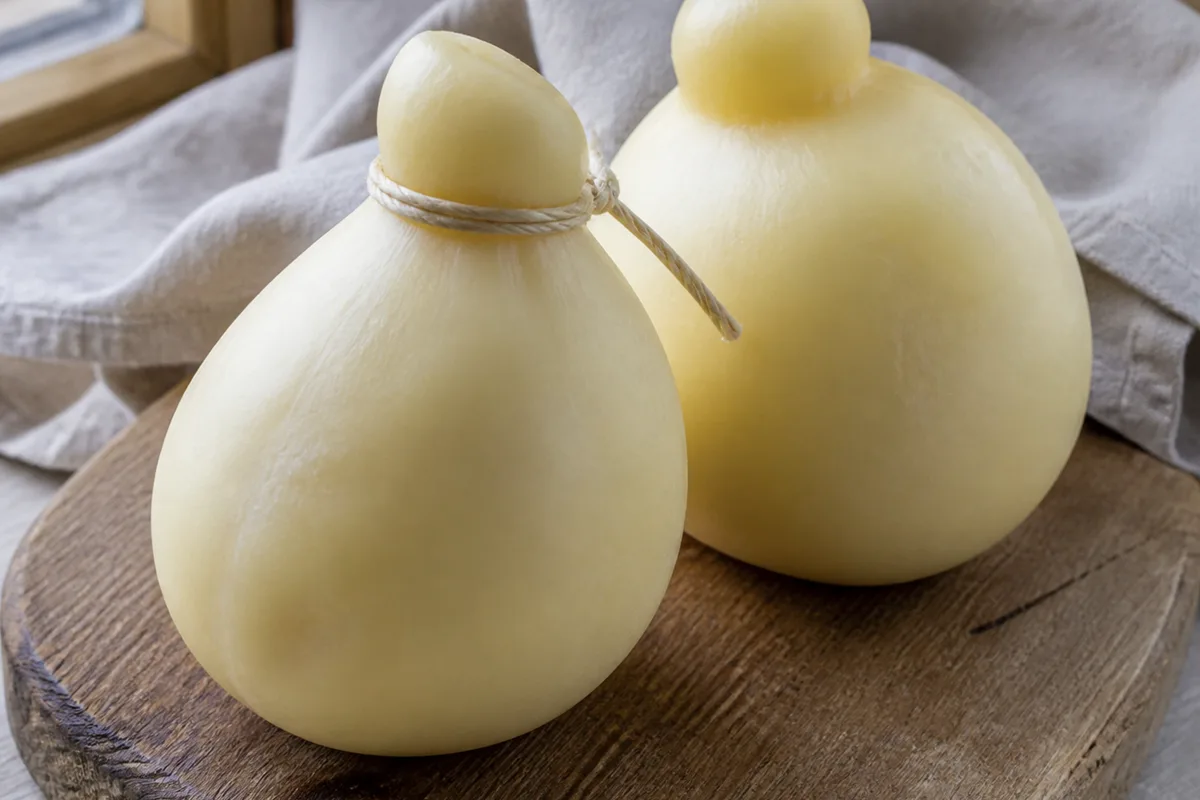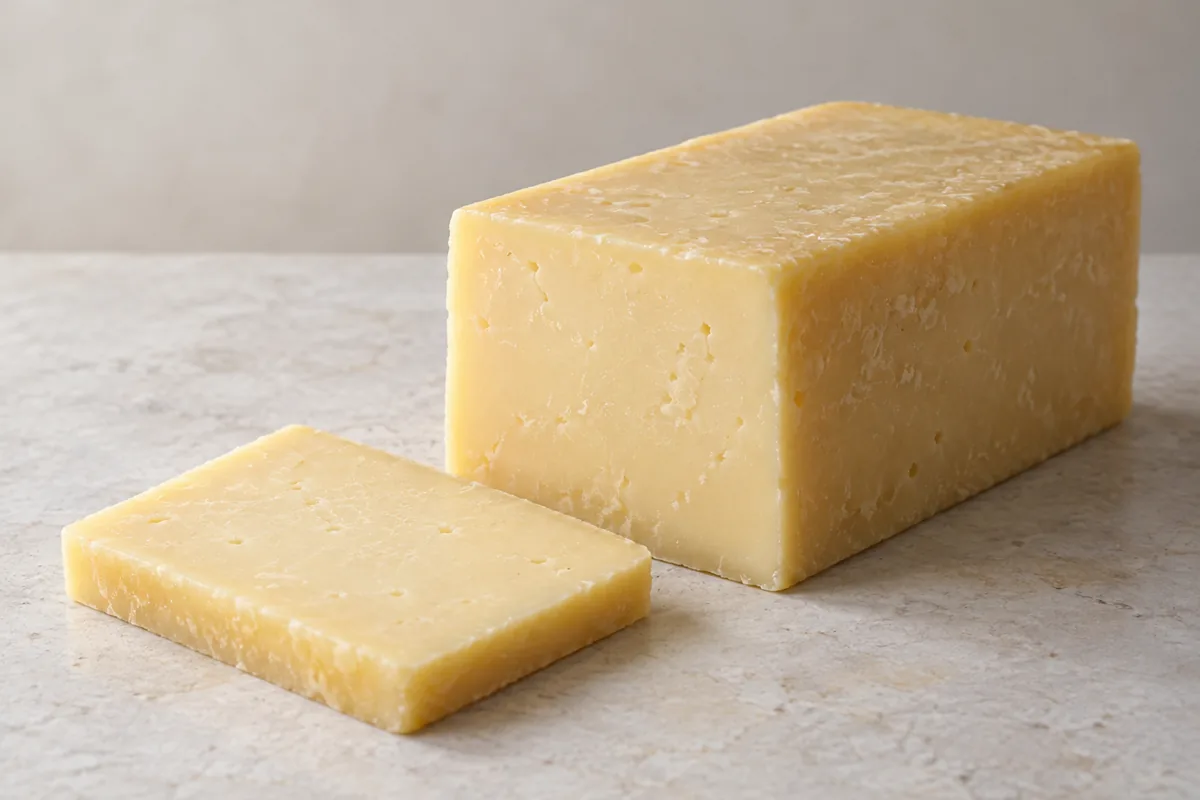
Kashkaval is a semi-hard yellow stretched-curd cheese, made across the Balkans, Turkey, and the Levant from cow's, sheep's, goat's, or mixed milk. The name carries no single specification, so the country of production, the milk, and the length of ageing decide what a given pack tastes and cooks like.
A pack that names its country, its milk, and whether the milk was pasteurised answers most of what the word kashkaval leaves open.
In This Article
What Is Kashkaval Cheese?
Cheese.com describes kashkaval as a semi-hard yellow cheese derived from Italian caciocavallo, and notes that it is famously called the Cheddar of the Balkans.
Wikipedia says the name possibly comes from caciocavallo, offers a second theory that links it to Romanian caș, meaning cheese, and leaves the origin of kaval unexplained.
The Kashkavali Pindou registration offers a third explanation: it says kashkaval roughly translates from Aromanian as "cheese transported by horses". It ties the name to nomadic herders in the Pindos mountains, who curdled their summer milk on the spot, sliced the curd mass, carried it down to lower ground on horseback, and mixed it with hot water there.
Wikipedia lists regional varieties in Albania, Bulgaria, Romania, Moldova, North Macedonia, Serbia, Hungary, Turkey, Ukraine, Russia, and several Levantine countries. Cheese.com files kasseri, cascaval, and kashkawan among the other names for the same cheese.
Wikipedia says that in Hungary kaskavál means this one cheese, while in the rest of the Balkans, Turkey, and the Levant the word is often used for all yellow cheeses, or even any cheese other than sirene. English menus in Bulgaria translate kashkaval as "yellow cheese" and sirene as "white cheese".
In Romania, Wikipedia adds, cașcaval is often used by extension for yellow semi-hard cheeses such as Emmental, Gouda, and Cheddar. Bulgarian Wikipedia separates Bulgarian kashkaval from the yellow cheeses known elsewhere in Europe, which it says are made with starter cultures that can be added after renneting.
Some of those names belong to cheeses with their own rules. Greece registered Kashkavali Pindou as a protected geographical indication, and Bulgaria's national standard names three kashkaval types by milk, so two packs sold as kashkaval can differ in milk, age, and firmness.
What Does Kashkaval Cheese Taste Like?
Cheese.com describes a creamy taste that is piquant, spicy, and somewhat salty, with a slight hint of olive oil and a rich aroma.
The Greek registration for Kashkavali Pindou words it differently, as a buttery, slightly sour, and slightly salty taste. Bulgarian Wikipedia summarises the sheep's milk Balkan type of the national standard as moderately firm with a pleasant lactic flavour.
The registration traces those notes to the milk and the salting: it credits the buttery taste partly to milk with a high fat content, at least 6 percent, and the slightly salty taste partly to the periodic addition of salt. It credits the strong, ripe aroma to sheep and goats grazing on aromatic Pindos plants, which it says leaves high levels of volatile terpenes and aldehydes in the milk.
Ageing moves the description again. Trevor Warmedahl, writing in his Milk Trekker newsletter about a Serbian dairy school in Pirot, calls the cheese he saw aged for three to six months sweet, sour, nutty, and juicy.
These descriptions belong to different cheeses: a Bulgarian-standard sheep's milk type, a Greek protected cheese, and a Serbian cheese aged for months. Which of them a shop's kashkaval resembles depends on where it was made and how long it aged.
How Is Kashkaval Cheese Made?
Every description of the process includes one step: the curd is heated in hot water until it can be stretched, which is what makes kashkaval a stretched-curd cheese. Warmedahl notes that mozzarella and just about any cheese with that stringy texture sits in the same group, also called pasta filata.
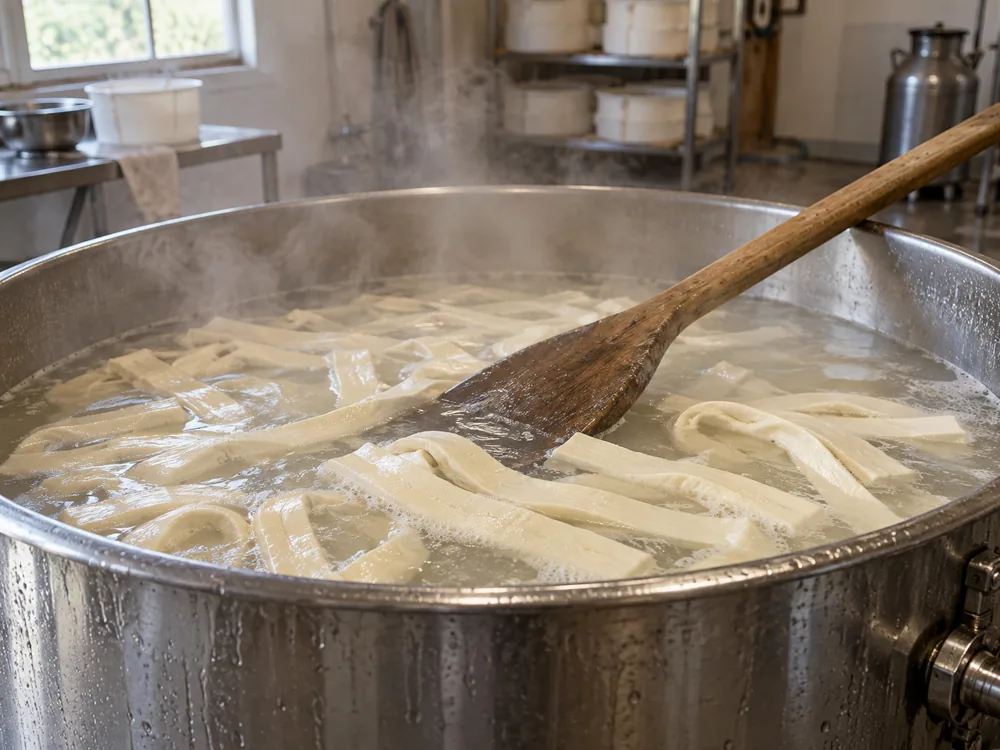
At the Pirot dairy school Warmedahl visited, raw milk fermented with no added starter culture, and the rennet curd was cut into blocks and left overnight. Warmedahl estimates that a pH meter would likely read between 5.4 and 5 by then, the window in which cow's milk curd stretches.
The next morning the shredded curd went into a basket that was dipped into a vat of 80 °C water while the curd was stirred with a stick. The cheese then rested for a week at 22 °C and spent three to six months in cold storage.
Other sources describe the same step with different numbers. Bulgarian Wikipedia gives a scalding temperature of 72 to 74 °C for about three to four minutes, and the Kashkavali Pindou registration describes curd cut into strips and submerged in hot water until pliable.
Bulgarian Wikipedia describes a factory sequence that adds a starter to the cooled, heat-treated milk, which then sets in 30 to 40 minutes. The curd is cut into pea-sized grains, stirred for about 20 minutes, and warmed to 38 to 39 °C before the whey is drained.
The drained curd then rests for 2 to 3 hours at 35 to 37 °C in a step called cheddaring, until its titratable acidity has risen, the curd has turned plastic, and it gives a drum-like sound when struck. Thin pieces are salted in a strong brine, scalded, kneaded into a paste, moulded, and taken out of the mould after a day.
| Production described | Milk and its treatment | Hot-water step | Ripening |
|---|---|---|---|
| Bulgarian process (Bulgarian Wikipedia) | Cow, sheep, or mixed; general process heats the milk to 60 to 63 °C for 20 seconds rather than pasteurising it (the Vitosha type is listed as pasteurised) | Scalded at 72 to 74 °C for 3 to 4 minutes | About 60 days |
| Pirot dairy school, Serbia (Milk Trekker) | Raw milk, no added starter culture | Curd stretched in 80 °C water while stirred | One week at 22 °C, then 3 to 6 months in cold storage |
| Kashkavali Pindou, Greece (EU PGI) | Sheep's milk, or sheep's and goat's milk with under 35 percent goat; raw or pasteurised | Curd cut into strips and submerged in hot water until pliable | Not stated |
The shared hot step explains why all three are called kashkaval. Milk treatment, starter, and ripening time differ by producer, so the name does not tell you how long a given cheese aged or whether its milk was pasteurised.
What Does the Hot-Water Step Do to the Cheese?
Bulgarian Wikipedia lists several aims for the scald, including joining the curd pieces into one mass with more plasticity, ending the cheddaring, and giving the cheese part of its salty taste. It adds that changing the temperature or the time of the scald hurts both the plasticity and the flavour.
All three descriptions time the scald by acidity: the registration says the matured curd mass is cut into strips and put into hot water "when the acidity is right", the Pirot curd waits through an overnight fermentation, and the Bulgarian sequence waits through cheddaring. The acid comes from different places, though, with raw-milk microbes at Pirot and an added starter in the Bulgarian sequence.
Salt goes in at a different point in each account. The Bulgarian sequence puts thin curd pieces in brine just before the scald, the Pirot cheese is hand-salted on the table during the stretch, and the Pindou registration describes frequent dry salting.
The hot mass also decides how closed the paste is: the registration says strips of matured curd mixed with hot water turn pliable like dough, shaped first in the water and then on the table. The mass then goes into the moulds uniform and homogeneous, with a firm, springy texture and no cracks.
How Long Is Kashkaval Aged?
Three schedules appear under one name: Bulgarian Wikipedia says about 60 days after moulding, the Pirot school keeps cheese three to six months in a cold store after a warm first week, and Cheese.com says six months.
Bulgarian Wikipedia explains what happens in that time. Heat-resistant microorganisms that survived the scald keep breaking down lactic acid, then gradually die and release enzymes that split monocalcium caseinate into amino acids.
Warmedahl describes a similar hand-off at Pirot, where the bacteria that grew first decompose and release enzymes that play a role in ripening. Microbes from the environment, people, and equipment settle back onto the cheese as it cools after the stretch.
His first week in the 22 °C room dries the cheese and starts yeast growing, and he recalls a strong, pleasant bread and fruit aroma there.
Cheese.com says the piquant, spicy taste develops during six months of ageing and compares it to British cheddar. Neither the Bulgarian type descriptions nor the Pindou registration gives its own ripening time, and both flavour accounts come from cheeses aged at least three months, so a younger cheese is not what they describe.
The word kashkaval does not fix age: documented figures range from about 60 days to six months for different cheeses. The piquant and nutty descriptions come from the longer end of that range.
Is Kashkaval Made From Cow's Milk or Sheep's Milk?
Either, and sometimes goat's milk: Wikipedia says kashkaval is made from the milk of cows, sheep, goats, or a mixture, while Cheese.com names cow's or sheep's milk.
Bulgarian Wikipedia lists three types under the national standard, BDS, each tied to a milk.
| Type | Milk | Dry matter | Fat in dry matter | Colour and structure |
|---|---|---|---|---|
| Balkan | Sheep's | At least 58% | At least 50% | White to light yellow; moderately firm |
| Vitosha | Full-fat cow's, pasteurised | At least 58% | At least 45% | White to light yellow; moderately elastic |
| Preslav | Mixed raw sheep's and raw cow's | Not listed | Not listed | Light yellow; firm and homogeneous, low in salt and water |
The two single-milk types share the same 58 percent dry matter floor, so the cow's milk Vitosha differs by a lower fat floor: 45 percent of dry matter against 50 percent for the sheep's milk Balkan. Fat in dry matter means the fat share left once the water is counted out.
Their colour range is also identical, so the shade of the paste cannot tell you which milk a Bulgarian kashkaval used. The summary separates them by texture, moderately elastic for Vitosha and moderately firm for Balkan, and by milk treatment: pasteurised for Vitosha and raw for Preslav.
Its introduction describes the mixed type as sheep's milk with skimmed cow's milk, while the Preslav entry names raw sheep's and raw cow's milk. English Wikipedia and the Greek registration also allow goat's milk, which the Bulgarian description of the types leaves out.
Warmedahl notes that many people have trouble getting sheep's and goat's milk to stretch the way cow's milk does. He has seen the Sicilian sheep's milk cheese Vastedda del Belice stretch splendidly and does not know why, naming the proteins, the breed's fat-to-protein ratio, sulla in the feed, and the fermentation as possibilities.
Wikipedia says kačkavalj in Serbia is traditionally made from sheep's milk and that the Pirot version is a protected brand. Warmedahl's 2024 newsletter reports that sheep's or sheep-and-cow milk is now rare in Pirot because the number of dairy sheep in the region has fallen, and that the protected Pirotski Kačkavalj he saw was made with cow's milk.
Is Kashkavali Pindou the Same as Kashkaval?
No. Kashkavali Pindou is a protected geographical indication (PGI) registered in the EU, and its rules cover one Greek cheese rather than the whole family.
The protection covers only the whole compound name. Germany opposed the registration, arguing that kashkaval is made and sold in many Member States and appears as a generic name in the customs tariff, and Greece confirmed it did not aim to reserve the word on its own.
Article 2 of the regulation says Kashkaval alone may keep being used in the Union for products that do not meet the Pindou specification, provided the rules of the legal order that applies are respected. A pack that says only kashkaval therefore makes no Pindou claim.
The registration specifies sheep's milk, or sheep's milk mixed with goat's milk where the goat's share stays under 35 percent, from raw or pasteurised milk.
It says this sets Pindou apart from similar cheeses with the same name made in Balkan countries from cow's milk. The only substance it allows into the milk is commercially available traditional Greek rennet, and added milk powder, milk protein, casein salts, colouring, and preservatives are barred.
The area is the whole Region of Epirus, the Kastoria, Grevena, and Kozani units of Western Macedonia, and the Trikala and Karditsa units of Thessaly, and every stage up to initial packaging must happen there.
The finished cheese is cylindrical or parallelepiped, off-white to pale yellow, firm and compact with very few openings and no rind.
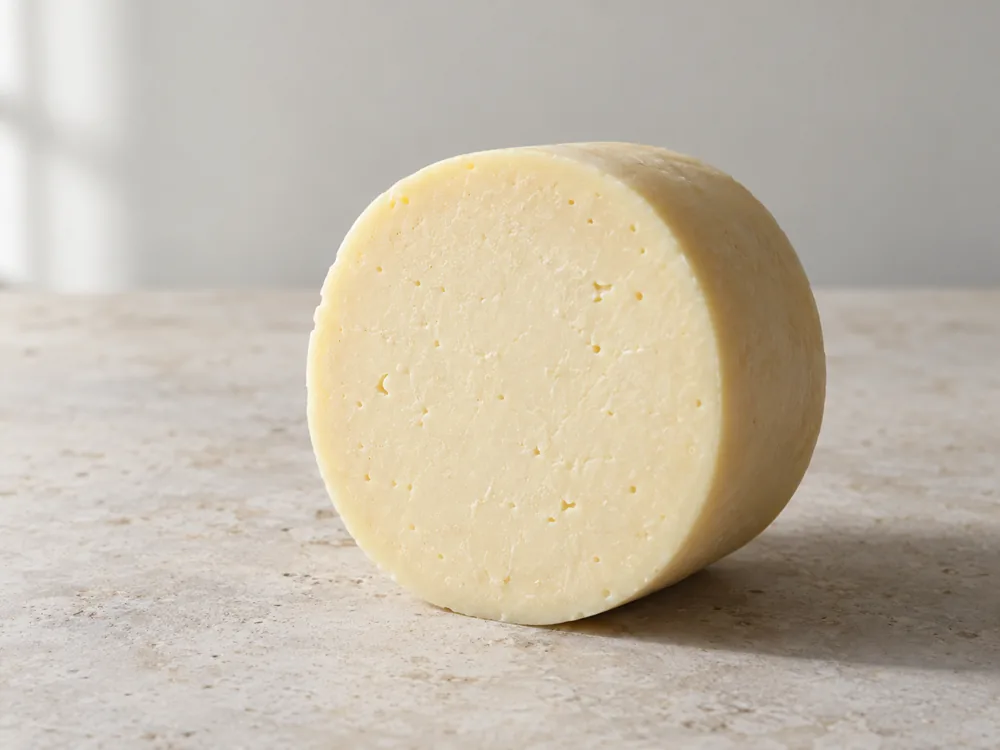
Its limits include a maximum moisture content of 40 to 45 percent, fat in dry matter above 45 percent, and a pH of 5.0 to 5.3. These limits belong to this cheese and not to kashkaval in general.
What Is Kashkaval Cheese Used For?
Wikipedia lists pizza topping across the Balkans and breakfast pastries, including the Bulgarian kashkavalka, a little pastry with kashkaval inside and on top.
In the Levant, Wikipedia says, qashqawān is widely used as a melting cheese, particularly in pastries.
Cheese.com adds salads, appetizers, pizzas, and lasagna. Bulgarian Wikipedia says the Vitosha type is eaten as an appetizer, used in dishes with other cheeses, and combined with meat products in sandwiches and on pizzas.
For Kashkavali Pindou, the registration cites Rosemary Barron's Flavours of Greece, which calls it a special meze cheese because of its flavour, and a Gastronomos article that says it makes excellent toasted cheese sandwiches.
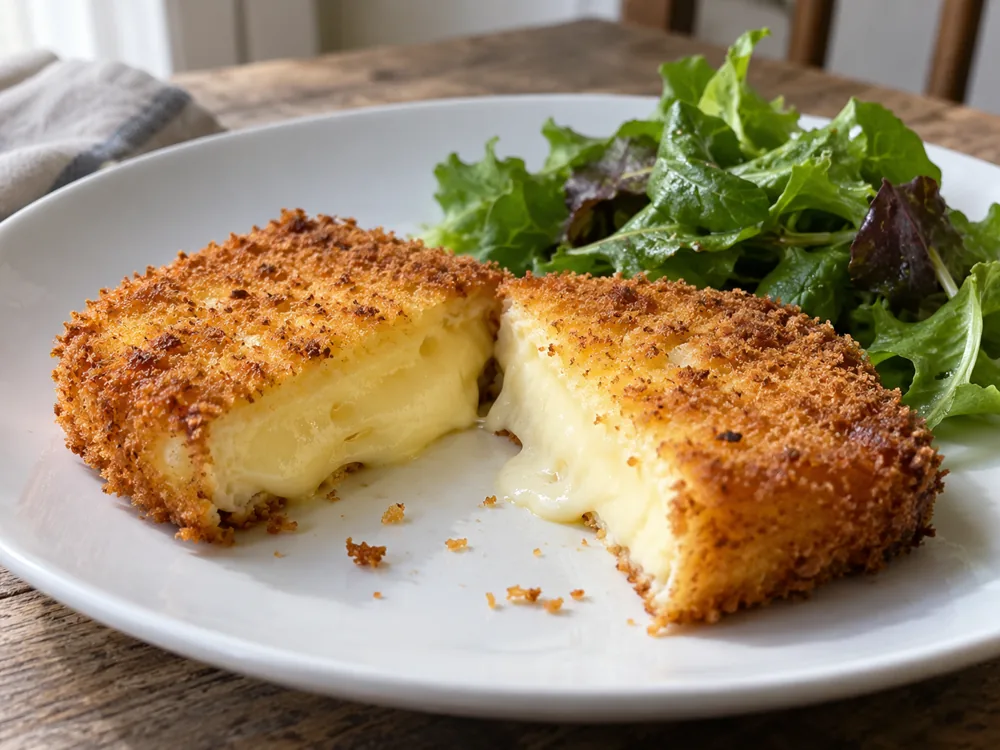
A popular cooked dish is kashkaval pane, a thick slice coated in flour, egg, and breadcrumbs and deep-fried until golden. Wikipedia describes a crunchy coating around a soft, partially melted interior.
Wikipedia's page on the dish says Bulgarian kashkaval is typically firmer and slightly more elastic than the cheeses used for the same dish in Romania and Hungary, which helps it hold its shape in the fryer. It leaks less and leaves a dense, chewy interior under the crisp crust.
Hungarian Trappist cheese is milder, softer, and melts more readily, so Hungarian cooks often use thicker slices, double-coat the breadcrumbs, or chill the cheese before frying to stop it leaking.
Romanian cașcaval is slightly sharper and saltier than the cheeses common in Central Europe, which gives the dish a more pronounced taste, and it is usually served as an appetizer with mămăligă (polenta), mujdei (garlic sauce), or French fries. Bulgarian versions come with salads, fries, or simple dipping sauces.
Cheese.com says the semi-hard texture of kashkaval makes it suitable for grilling and grating, and frying breaded slices and baking are the other high-heat uses these sources describe.
Which Kashkaval Should You Buy?
The word alone leaves milk, age, and treatment open, so the useful fields are the ones tied to a type: Balkan, Vitosha, or Preslav under the Bulgarian standard, Pirotski Kačkavalj for the protected Pirot cheese, and Kashkavali Pindou for the Greek one.
One Bulgarian cow's milk pack recorded on Open Food Facts, Rodna Stryaha, names the BDS standard in its product name. It lists 99.7 percent cow's milk, lactic cultures, rennet enzymes, table salt, and the acidity regulator calcium chloride.
The ingredient list says rennet enzymes without specifying the type, so a vegetarian cannot settle that question from the pack. The Pindou registration allows only traditional Greek rennet to be added to the milk, so cultures and calcium chloride like those on this pack fall outside it.
| Measure | Rodna Stryaha pack, 800 g (Open Food Facts) | Kashkavali Pindou limits (EU registration) |
|---|---|---|
| Fat | 28 g | 27 to 30 percent |
| Protein | 24 g | 25 to 28 percent |
| Salt | 1.8 g | 1.4 to 2 percent |
Fat at 28 g and salt at 1.8 g sit inside the Pindou ranges, while protein at 24 g is 1 g under the lowest figure, so these numbers do not set a Bulgarian cow's milk cheese apart from the Greek sheep's milk one.
Bulgarian Wikipedia says that, unlike other yellow cheeses, holes in kashkaval point to a fault in production, and the Pindou registration describes a compact paste with very few openings.
The pack also sets the keeping time. CDC says to keep a refrigerator at 40°F or below, and the date printed on the pack is the figure to follow.
Is Kashkaval Safe During Pregnancy?
It depends on how the milk was treated. NHS lists pasteurised semi-hard cheeses such as edam as safe in pregnancy, and both Cheese.com and Wikipedia call kashkaval semi-hard.
Bulgarian Wikipedia describes the general Bulgarian process as heating the milk to 60 to 63 °C for 20 seconds rather than pasteurising it, yet it lists Vitosha as made from pasteurised milk and Preslav from raw milk. The Kashkavali Pindou registration allows raw or pasteurised milk.
Bulgarian Wikipedia also calls kashkaval a hard cheese, and NHS lists pasteurised or unpasteurised hard cheeses as safe while naming only pasteurised semi-hard ones. Kashkaval is not named in either agency's list, so a pack that states pasteurised fits NHS wording under either label.
CDC lists hard cheese made with pasteurized milk among its safer choices, so a raw-milk hard kashkaval fits NHS wording but is not on CDC's safer list. CDC also notes that pregnant women are 10 times more likely to get a Listeria infection.
NHS also says any cheese cooked until steaming hot is safe, so a baked or fried dish counts once the cheese inside is steaming hot.